No Surprises

German citizens saluting Adolf Hitler at the opening of the 1936 Olympic Games. United States Holocaust Memorial Museum

Before the sun rose on Wednesday July 24, 2019, before the widely heralded appearance of Robert Mueller before committees of the U. S. House of Representatives, Donald Trump and his cohort had long since established their response. The game plan had been distributed to their colleagues in the Senate and to their buddies at FOX News. Most importantly, the plan had been well-rehearsed by Republican House committee members who would have a front row position from which to attempt to undermine the hearings.

There would be no outrage, no cry over the evidence presented. Republican committee members would discreetly and not so discreetly question Mueller’s competence and motivation. They would grandstand their outrage at the ongoing travesty against ‘their’ president. There would be no acknowledgement of any facts presented either about the collusion between the Trump campaign and Russian efforts to sway the vote or Trump’s various attempts to obstruct the investigation.

Afterwards, the tactic was to shrug off the hearings, ho hum, the Democrats beating a dead horse. Oh dear, how upset they must be after all this hoorah and still Mueller didn’t hand them a smoking gun. A big fat nothing.

In truth, the Democrats never expected a smoking gun from Mueller. Their strategy for Mueller’s testimony was to create a televised iteration of the Mueller report for all the Trump supporters out here in the countryside who never had and never would read the actual report. They wouldn’t even read news summaries of the report, instead willing—even eager—to take Trump’s word for it, whatever it said.

Trump had it right when he said he could shoot someone on 5th Avenue and no one would care. He took that to the bank. Get cozy with Russians endeavoring to subvert the election? No problem. Pretend it didn’t happen—they’ll believe it. Do everything possible to sidetrack the subsequent investigation? Whatever works. Nobody can prove it if Trump doesn’t talk and the testimony of key players like Don McGahn never sees the light of day.

Democrats should be credited for their effort to pull back the curtain on this shameful and arrogant corruption of American democracy. Their mistake, once again, is assuming that Trump supporters care about our nation more than they care about their boy. Trump legitimizes their ignorance with three-word sentences and double-speak. He shares their terror of “Other” whether other religion, other skin color, or other ethnicity, and they can’t chortle enough over their sense of ascendancy in a nation where religion, skin color, or ethnic background are not supposed to make a difference. A nation FOUNDED on the concept that all of us are created equal.

Democrats forgot that ignorance doesn’t recognize its own ignorance and isn’t eager to discover it.

The thread of idealism progressives have shared throughout our nation’s history has changed faces many times. It ran through the revolution even though many colonists clung to King George. It suffused the push to end slavery, to grant women the right to vote, and to form labor unions whose members sacrificed lives and livelihood to end child labor, gain a 40-hour work week, and ensure safe work environments. The same thread has continued through liberal ideas behind school integration, rights for the disabled, and a woman’s right to reproductive choice.

The same thread colors political discourse today, resisting the onslaught of racism and hate freed from its restraints by Donald Trump. It rises in the election of women, of people of color, to public office. It thrives in the hearts and minds of those who say “Vote Blue No Matter Who” as progressives seek to reclaim the dignity and honor of the presidency.

Trump and his horde of pitiful followers would rather risk the future of the nation than love their neighbors. They would rather spout hate speech than address the problems we face. There are solutions, and we can find them. Let’s keep our eye on the ball.


Why am I furious?

This is about the institutions and businesses we have to deal with on a daily basis. This is about the failure of corporations to serve the people who depend on them for necessities. This is about the breakdown of human civilization.

Today my daughter left home at 8 a.m. to pick up a rental car which would take her on a 200-mile journey to where she would stand for her oral exams to become licensed. When she arrived at the place where she was to pick up the rental car, she found an empty lot. Apparently the corporate representative she spoke with (on more than one occasion) has no idea what’s going on in the real world. The computer told the corporate representative there was a Fayetteville office. The computer told the corporate representative that my daughter could pick up the car at 8:30 a.m. The corporate representative believed what the computer told him. He lives in India.

This is one tiny example of the customer abuse increasingly rampant across the U.S.

Go into a Walmart store. Look for something you bought three months ago. Not only is it not where you last found it, no one in the store knows if it’s been discontinued or if it’s out of stock or where else in the store it might now be located. And since Walmart has been almost universally successful in under-pricing any local competition out of business, there is no place to find that item you want.

Consider my 95-year-old mother who a few years ago agreed to a switch of her phone from Southwestern Bell to Cox since she already had Cox cable. Touted as a money saving move, the switch has meant that when Cox service is down, she has no phone. For the last two days, this woman who will be 96 in August had to walk to a neighbor’s house to use a telephone, and that worked only because the neighbor had a cell phone. Because Cox is out all over town.

Who is responsible? Who cares that this fragile woman can’t use her phone? Will she or any of the Cox customers without phone or cable service be refunded for the days Cox didn’t provide its contracted services? Ha!

Consider my nine-month old refrigerator. As if anticipating the problem, installers set the refrigerator and freezer at their lowest temperature settings. Despite that, the refrigerator has never cooled below 45° even though the FDA says 40° is the highest safe temperature for storing food. Or my new range, also nine months old. The manufacturer saved money by downgrading the controls. The oven light doesn’t come on automatically. Oven temperature is set by ten degree increments instead of five like my former range. Heat pours up from the bottom of the oven door which gaps enough that I see the flames reflected on the floor.

A couple of months ago, I came into the cross hairs of an organized hate group because I said something they didn’t like in a public policy discussion on the Arkansas Times Facebook page. Not content with rationally arguing their views on that forum, they attacked me personally and professionally. One of the places they could harm me was on Amazon.com where my books are for sale. They proceeded to go to each of my books and post 1-star reviews.

In order to report a ‘problem’ with book reviews, you must use certain links. Then the workers (in the Philippines) check the review guidelines and if the reported review violates the guidelines, they are able to remove it. If it doesn’t violate the guidelines, they can’t remove it.

Of the 39 one-star reviews posted to my books on Amazon, fourteen now remain. It took two months and over thirty online requests and repeated phone calls to Amazon service representatives to achieve even this partial success. Amazon service representatives aren’t allowed to remove reviews. That’s only accomplished through a special department which has no phone access.

https://www.ft.com/content/a304a59e-2425-11e7-a34a-538b4cb30025

One service representative kindly explained that if the review change requests aren’t formatted in a specific way, the requests can’t be processed. He took my information and submitted the change requests in the required format and as a result, eight of the 39 reviews were removed. But I never could reach him again because there are thousands of customer service representatives (in Seattle) and the service requests go to whoever is next available and none of the other seven service representatives I spoke with offered any assistance, instead referring me back to the online review report system.

Now I have fourteen 1-star reviews written between March 24 and March 30, 2019, by people whose sole intent is to harm me and there is nothing I can do about it. You would think that any platform presenting itself to the public as a service to authors would carry some responsibility to protect said authors from attacks like this. So far I haven’t found an attorney who knows enough about online entities like Amazon to advise me on whether I can sue Amazon for failing to protect me from this harm.

But I haven’t stopped trying.

The problem, in part, lies with men like Jeff Bezos and Mark Zuckerberg who believe they can set up an enterprise and replace thinking human workers with lists of guidelines and/or algorithms. Anyone who’s ever had a problem on Facebook knows only too well that THERE IS NO PHONE NUMBER to call if you have a problem.

Zuckerberg has refused to delete a purposefully distorted Facebook video of Nancy Pelosi. His response? “We don’t have a policy that stipulates that the information you post on Facebook must be true.” So if it’s not their policy, it must be OK. No responsibility. No morals or ethical standards. Since Facebook is “free,” users have no rights.

I want to sit down with Bezos and explain why a list of review guidelines can never anticipate the myriad problems which might occur. I want him to invest in employees who have the authority to think on their feet. I want to punch him in the face if he doesn’t accept responsibility for the protection of authors whose books are sold on his website.

Companies routinely profit off your crisis whether it’s no rental car, no phone service, or intractable one-star reviews. By refusing to ensure employees are available for customer needs and capable of fully comprehending English and U.S. social norms, corporate moguls like Zuckerberg and Bezos zoom to the top echelons of the world’s wealthiest people along with bankers who can pull off mortgage fraud and the ultra-rich Walton heirs who insist they can’t possibly pay their employees a living wage.

News alert to the Waltons: It’s the employees who earn your fortunes.

Feeling so smug with their “success,” what these greedy MFs don’t realize (or care about) is the steady toll on our society, their contribution to the destruction of the marketplace, the rising level of anger and frustration, or the inevitable outcome when all that bottled up rage manifests itself in violence.

I like to think of a time when vacant big box stores have been converted into housing or indoor farmers markets, when I can wander into a mom and pop store and ask where to find that thing I bought three months ago and they lead me to the shelf where it’s now found. Or they tell me how long it will take for them to get the next order. You know, human interaction, smiles and apologies and gestures of good will.

I like to think of Zuckerberg spending his days sitting face to face with people subject to his data gathering and advertising, to hear real world crises with his genius setup so that he can actually understand the problem. I like to imagine Bezos being subjected to one-star reviews for his books – but then he’s never written a book, so…

I don’t have anything against the people of India or the Philippines or anywhere else where people need jobs. But I don’t think for one minute that the employment of foreign workers is about helping them. It’s about paying the cheapest possible labor in order to generate higher profits for the fat cats at the top.

It’s about pushing customers in need of those goods and services as far as possible toward the brink, of Bezos calculating that authors like me need to market on his website and will continue to use those services even if he doesn’t protect me from hate campaigns. It’s about Walmart knowing they’ve destroyed all the local stores and entire companies and product lines in order to create a monopoly on the majority of consumer goods.

None of this is new. It’s a creeping illness in our society—and the world—that has yet to hit bottom. We’re hooked on what they offer and can’t get off the hook.

How long before we revolt? The guillotine comes to mind.

~~~

Michael Douglas in Falling Down: https://www.youtube.com/watch?v=XkwQ6EjLdMQ

Jack Nicholson in Five Easy Pieces: https://www.youtube.com/watch?v=hdIXrF34Bz0

We Can’t Hide Behind a Wall

The New York Times — Central American migrants looked through the fence as a Border Patrol agent stood guard near the El Chaparral border crossing in Tijuana, Mexico.

We are responsible for the chaos south of our border. The Mexico tariff plan underway by the Stable Genius and his minions promises to make the refugee/immigration situation far worse. Now not only will the people of Honduras, El Salvador, and Guatemala be forced to flee their countries, but also the people of Mexico. If we thought the immigration ‘crisis’ was bad before, just wait.

Obviously Trump knows nothing of Central American history. He’s apparently incapable of thinking past his juvenile impulse to hit anything he doesn’t like. Now it’s up to Jared Kushner to meet with Mexican ambassadors to work out a plan that, in Trump’s view, would make Mexico responsible for stopping refugees from arriving at our southern border.

Jared Kushner is left to perform many duties for his father-in-law, not the least is to help craft a working relationship between Israel and Palestine. The qualifications for this 38-year-old’s work on behalf of the United States is that he grew up rich, is a Jew, and has experience in real estate. And he’s married to Trump’s daughter who is apparently the only person who can successful manage the Orange Toddler.

Kushner’s resume? “As a result of his father’s conviction for fraud and incarceration, he [Kushner] took over management of his father’s real estate company Kushner Companies, which launched his business career. He later also bought Observer Media, publisher of the New York Observer. He is the co-founder and part owner of Cadre, an online real-estate investment platform.[1]

In other words, Kushner has zero qualifications for his important role in foreign relations. Nor has he been vetted by Congress.

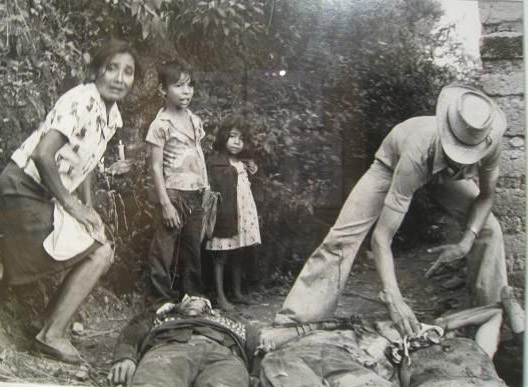
What we absolutely must recognize is that the situation at our southern border is entirely the result of our actions in those countries. Since the 19th century, we have intentionally worked to destabilize their governments in order to profit off their resources.

Guatemala was once the center of a sprawling Mayan empire. Then the Spanish came and destroyed their culture, stole their wealth, and enslaved the people. When the Spanish left,

From the mid to late 19th century, Guatemala experienced chronic instability and civil strife. Beginning in the early 20th century, it was ruled by a series of dictators backed by the United Fruit Company and the United States government. In 1944, authoritarian leader Jorge Ubicowas overthrown by a pro-democratic military coup, initiating a decade-long revolution that led to sweeping social and economic reforms. A U.S.-backed military coup in 1954 ended the revolution and installed a dictatorship.

From 1960 to 1996, Guatemala endured a bloody civil war fought between the US-backed government and leftist rebels, including genocidal massacres of the Maya population perpetrated by the military. Since a United Nations-negotiated peace accord, Guatemala has witnessed both economic growth and successful democratic elections, though it continues to struggle with high rates of poverty, crime, drug trade, and instability.[2]

In El Salvador, corporate agriculture took over the arable land to grow coffee. Peasants were left with few options for sustaining their families. Land reform efforts were brutally repressed with the support of the United States.

From the late 19th to the mid-20th century, El Salvador endured chronic political and economic instability characterized by coups, revolts, and a succession of authoritarian rulers. Persistent socioeconomic inequality and civil unrest culminated in the devastating Salvadoran Civil War (1979–1992), which was fought between the military-led government and a coalition of left-wing guerrilla groups.[3]

The fully-fledged civil war lasted for more than 12 years and included the deliberate terrorizing and targeting of civilians by death squads, the recruitment of child soldiers and other human rights violations, mostly by the military.[24] An unknown number of people disappeared while the UN reports that the war killed more than 75,000 people between 1980 and 1992… 

The United States contributed to the conflict by providing military aid of $1–2 million per day to the government of El Salvador during the Carter and Reagan administrations. The Salvadoran government was considered “friendly” and allies by the U.S. in the context of the Cold War. By May 1983, US officers took over positions in the top levels of the Salvadoran military, were making critical decisions and running the war.[4]

In Honduras, the third Central American source of refugees seeking asylum in the United States, Spanish invasion was followed by enslavement and occupation of cropland. The U.S. took over where the Spanish left off.

In the late nineteenth century, Honduras granted land and substantial exemptions to several US-based fruit and infrastructure companies in return for developing the country’s northern regions. Thousands of workers came to the north coast as a result to work in banana plantations and other businesses that grew up around the export industry. Banana-exporting companies, dominated until 1930 by the Cuyamel Fruit Company, as well as the United Fruit Company, and Standard Fruit Company, built an enclave economy in northern Honduras, controlling infrastructure and creating self-sufficient, tax-exempt sectors that contributed relatively little to economic growth. American troops landed in Honduras in 1903, 1907, 1911, 1912, 1919, 1924 and 1925.

https://libya360.wordpress.com/2017/12/19/salvador-nasralla-honduras-at-risk-of-civil-war/

In 1904, the writer O. Henry coined the term “banana republic” to describe Honduras, publishing a book called Cabbages and Kings, about a fictional country, Anchuria, inspired by his experiences in Honduras, where he had lived for six months. In The Admiral, O. Henry refers to the nation as a “small maritime banana republic”; naturally, the fruit was the entire basis of its economy. According to a literary analyst writing for The Economist, “his phrase neatly conjures up the image of a tropical, agrarian country. But its real meaning is sharper: it refers to the fruit companies from the United States that came to exert extraordinary influence over the politics of Honduras and its neighbors.”

…During the early 1980s, the United States established a continuing military presence in Honduras to support El Salvador, the Contra guerrillas fighting the Nicaraguan government, and also develop an airstrip and modern port in Honduras… The operation included a CIA-backed campaign of extrajudicial killings by government-backed units…[5]

The United States has substantially contributed not only to economic and political instability in Central America, but also to the proliferation of gang and their brutal impact on the people of these nations. Consider, for example, the gang situation in El Salvador.

The Salvadoran Civil War, which lasted from 1979 to 1992, took the lives of approximately 80,000 soldiers and civilians in El Salvador. Throughout the war, nearly half of the country’s population fled from violence and poverty, and children were recruited as soldiers by both the military-run government and the guerrilla group Farabundo Martí National Liberation Front (FMLN). Hundreds of thousands of Salvadorans relocated to Los Angeles, California. This conflict ended with the Chapultepec Peace Accords, but the violence in El Salvador has not stopped since.

Many of those who had relocated to Los Angeles during the war as refugees had gotten involved in gang violence [as victims of existing L.A. gangs]. During this time, the U.S. War on Drugs and anti-immigrant politics had been popularized. Following these sentiments, the Illegal Immigration Reform and Immigrant Responsibility Act of 1996 was passed, which called for deportation of “immigrants–documented or undocumented–with criminal records at the end of their jail sentences.” Throughout the years following, thousands of Salvadorans had been deported back to El Salvador. Gangs that had originated in Los Angeles, namely Mara Salvatrucha and Barrio 18, were spread transnationally through this process.[6]

The gangs learned on the streets of Los Angeles how to intimidate, rob, assault, kidnap for ransom, and murder with impunity. Their ability to run rampant over the native populations of Central America has not been addressed. President Obama understood the history of the situation and issued an official apology for our role in the violence.[7] He crafted a plan that addressed our immigration problem at its source. The plan involved aid to Central America and a program to screen vulnerable children there.

Trump not only reduced the aid, he killed part of the screening program.[8] No wonder that the steady stream of refugees only increases at our southern border. We should also not be surprised when Mexicans start to join that stream if the U.S. implements its tariff plan, putting Mexican jobs at risk. These problems deserve far more thought and understanding than Trump or his son-in-law are capable of providing.  


Where Trump voters come from

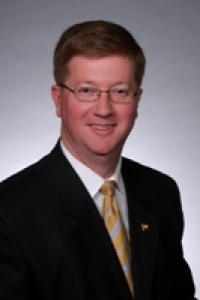
Arkansas continues its dereliction of duty in educating its young people with the May 22 announcement by Gov. Asa Hutchinson that he will promote current Education Commissioner Johnny Key to the governor’s new cabinet position of Education Secretary. With this promotion, Key will add another $3,450 per year to his already ridiculous salary of $239,540 and gain ever greater leverage over the hapless citizenry of our state.

Readers may remember the insidious maneuvering required to cram Key into the commissioner position in the first place. Back in 2015, Key’s work history and educational achievements did not qualify him for the job. The law required a master’s degree and ten years teaching experience. When Gov. Hutchinson seized on the idea of putting Key in the post, a bill rushed through the legislature allowed the commissioner to evade these requirements if the deputy commission held those credentials.  Not that the commissioner would be required to obtain the advice or consent of the deputy in any given matter.

Key graduated from Gurdon (Arkansas) High School then received a Bachelor of Science in Chemical Engineering in 1991 from the University of Arkansas at Fayetteville. He never taught a day in his life. That is, unless you count his and his wife’s operation of two pre-schools in Mountain Home, Noah’s Ark Preschool and Open Arms Living Center, operations that for years applied for and received tax-funded grants while flagrantly teaching religion. Another state legislator, Justin Harris (West Fork) also operated illegally with such dollars for his Growing God’s Kingdom preschool. All three schools received funding from the state under the Arkansas Better Choice (ABC) program administered by the Department of Human Service (DHS). After complaints were filed by Americans United for Separation of Church and State, the state had no choice but to amend its grant guidelines.

AU Staff Attorney Ian Smith told Church & State. “The administrators of the Arkansas Better Choice (ABC) program violated the Constitution by funding [these] religious activities.”

According to a 2011 Arkansas Times report, “Sen. Johnny Key gets almost $200,000 in public money a year in support of his Noah’s Ark Preschool in Mountain Home, which also provides Bible lessons and daily prayers. Nearly 300 agencies — many of them with religious roots — receive $100 million a year in public Arkansas Better Chance funding to provide preschool for poor children.”[1]

The stated mission of the Harris preschool was to “share the love of Jesus” with students, and the school operated with a Christian curriculum that included a “Bible time” for verses, stories and prayer. The school’s handbook also assured parents that staff members will “strive to ensure that your child feels the love of Jesus Christ while preparing them for Kindergarten.” The preschoolers, it continues, would be taught “the word of God” so that they can “spread the word of God to others.” They also prayed over students with disciplinary problems and laid on hands to “cast out demons.”

~~~

Key began his career in public service in 1997 when he was elected to serve as a justice of the peace on the Baxter County Quorum Court. He was elected to three two-year terms in the House of Representatives, followed by a tenure in the Senate that began in 2008. Term limited out of the legislature, Key served as associate vice president for university relations at the University of Arkansas system, a position he began in August 2014, a half-year before his friend the governor found him a cozy role at the helm of the state’s education system.

Yet even while in the legislature, Key demonstrated his dedication to the extremist religious agenda in education:

He was active in education issues, including responsibility for exploding the number of seats that receive state dollars to essentially finance home-schooling, by qualifying millions in spending on “virtual charter schools” that provide assistance to students who don’t attend conventional brick-and-mortar schools. His special language, never debated on the floor, lifted the cap on such payments from 500 to 5,000 students.[2]

Simultaneously, the state excused itself from any oversight of home-schooled students. There are no tests, no monitoring, no method by which to ensure thousands of Arkansas home-schooled kids are actually learning anything,

Key has also been a champion of public charter schools in the model promoted by the Walton heirs. While first lauded as a path for parents dissatisfied with their children’s education, charter schools have come under increasing scrutiny for siphoning money away from public schools with less than excellent results. Even worse, soon after taking over as education commissioner, Key became the default school board for Little Rock’s troubled schools. The district struggles with low-income, high minority populations where schools routinely earn “D” and “F” ratings in student outcomes. Key’s answer? Charters.

Much ink has been spilled over the Little Rock situation including Key’s desire to terminate the state’s Teacher Fair Dismissal Act and the Public School Employee Fair Hearing Act in the 22 traditional schools in Little Rock. As noted by one observer, “In the absence of democratic governance and oversight, Arkansas schools are hiring unqualified teachers without a public disclosure requirement, undermining labor standards for teachers, contributing to school re-segregation, and defrauding the public.”[3]

Tracking the details of the Little Rock fiasco, the Arkansas Times reported that the previous superintendent, Baker Kurrus, who was fired by Key before his takeover, thought charter schools “probably unconstitutional when operated as parallel, inefficient and not particularly innovative or successful ventures in Little Rock. He mentioned then that the loss of 120 students for this latest expansion potentially meant a loss of approaching another $1 million in annual state support to the Little Rock District for lost students.”[4]

~~~

No effort was made by the state to require Key or Harris to refund the millions in tax dollars they had appropriated over a period of years to operate their religious schools. And of course they didn’t honorably offer to do so. The ABC program only marginally amended its procedures for granting funding. The guidelines now require that no religious instruction occur during the “ABC day,” a set number of hours of purely secular instruction. Whether religious instruction occurs before the ABC day commences or after it ends is not the state’s concern. Since children are often picked up by school vans or dropped off by parents before the parents’ work hours and held until the end of the work day, anywhere from two to four hours of religious instruction is usually possible.

And who would know if these schools violate the ABC day with a little prayer at lunch or a few minutes of casting out demons?

The ABC program, as it stands, does not require any kind of viability test where a school would have to prove that its religious instruction could stand on its own two feet without the use of tax dollars. In fact, if tax dollars didn’t support the rent, utilities, insurance, and salaries for general operations, these schools would cease to exist. Repeated questioning of DHS / ABC money managers has yielded zero interest in developing or implementing such a test.

Neither Harris nor Key were censured for their illegal use of public funds for their religious schools. And while Harris quietly served out his remaining term in office before retreating to private life, Key has been awarded one of the highest paid positions in state government. If Key didn’t know he was breaking the law in accepting ABC grants, he’s incredibly stupid. Surely somewhere in his years of college he must have brushed up against the idea of separation of church and state and the hard line between tax dollars and religion. If he did know, he deliberately violated the U. S. Constitution, aided and abetted by the state’s willfully ignorant wink and nod.

Now Key reigns supreme over the state’s educational systems, welcomed with open arms by a governor whose own dedication to religion is no secret. After all, Asa Hutchinson is a proud graduate of none other than Bob Jones University, a private, non-denominational evangelical university in Greenville, South Carolina, known for its conservative cultural and religious stance. Refusing to admit African-American students until 1975, the school lost federal funding and ended up in court for not allowing interracial dating or marriage within its student body. BJU hit the news again in 2014 after a report revealed that administrators had discouraged students from reporting sexual abuse. [See the New York Times report.]

Apparently Johnny Key’s religious beliefs and willingness to breach the Constitution’s bright line between church and state are the primary criterion by which he has been judged the perfect man to be in charge of Arkansas education. It’s past time to assume ignorance as the underlying problem in Key’s malfeasance. The fact is that Hutchinson, Key, and every other complicit authority over our state’s educational systems knowingly evade the Constitutional separation of church and state in order to pursue their “higher calling” to religion.

~~~

See also this recent Forbes article on the failure of charter schools.

~~~

[1] https://arktimes.com/columns/max-brantley/2011/11/09/state-paid-bible-school

[2] https://arktimes.com/arkansas-blog/2015/02/10/whats-afoot-on-bill-to-change-qualifications-for-state-education-commissioner

[3] https://medium.com/orchestrating-change/272-broken-promises-the-lawless-aftermath-of-arkansas-act-1240-a8e26ce751e8

[4] https://arktimes.com/arkansas-blog/2016/05/07/johnny-key-fast-tracks-lr-charter-school-expansion-in-walton-helped-enterprise

The Genie is OUT!

A flood of state laws restricting abortion rights have moved us toward the Twilight Zone, a place where a woman no longer would hold agency over the functions of her body. But that genie is out of the bottle. Women will not give up their hard won freedom.

What are these state laws? Some require the doctor to give a woman information about reversing the procedure (part of the emotion strategy) or show her an ultrasound of the fetus (for an extra charge, part of the money strategy). Some ban abortions if a fetal heartbeat can be found (part of the medical strategy). Still other state laws have come in through the back door by restricting when or how abortion clinics can operate, or which medical personnel can provide abortion services (part of the access strategy).

Special interest zealots have pushed laws banning abortion if the fetus shows signs of Down syndrome. Other laws would ban abortion after six weeks or 12 weeks or some other arbitrary period which in many cases would cut off access before the woman even knows she’s pregnant or before prenatal testing could discover genetic or development abnormalities.

But wait. Before progressives stroke out over all this, keep in mind this is part of a long struggle over women’s rights that’s been going on since the beginning of time. Women are not going to accept a step backwards.

I grew up in a time when women weren’t supposed to enjoy sex. It was only men who might indulge in multiple partners while retaining their sterling reputations. In fact, experience with multiple sex partners enhanced a man’s reputation. As the receptacle of male seed whether through premarital or extramarital sex, rape, or marriage relations, women were left to deal with the problem of conception and unwanted pregnancies. The child might be put up for adoption, or for those wealthy enough, a quiet vacation overseas lasted long enough to dispose of the entire issue.

Women weren’t supposed to enjoy sex because receiving male seed and laboring to give birth was the punishment for tempting Adam to defy God’s order not to eat that forbidden apple. Of course Adam wasn’t responsible for what he did with the apple, a perfect metaphor for the male’s lack of responsibility for impregnating a woman.

That’s the story, in a nutshell, of the current furor over abortion rights. Men have to relieve their needs. Women have to clean up after them. If she chooses to abort, conservatives want the procedure to be high risk, out of the hands of medical professionals and back in the alleys so that the price she pays might be sterility or death.

The advent of modern medicine and the pharmaceutical industry gave women birth control pills. The basic research for the pill became possible when Russell Marker discovered that generations of Mexican women had been eating a certain wild yam — the Barbasco root, also called cabeza de negro — for contraception. It was from these yams that Marker was able to extract the progestin that Gregory Pincus combined with estrogen to formulate the first birth control pill. That was the 1950s.

It took another twenty years to clear regulatory and legal hurdles so that women could use the pill for contraception. At first, doctors wouldn’t prescribe it to unmarried women. A court case brought by Planned Parenthood finally cleared the way for all women to gain access to the pill.

In 1973, the Roe v Wade decision granted women the legal right to control what happened inside her body. The Court ruled 7–2 that a right to privacy under the Due Process Clause of the 14th Amendment extended to a woman’s decision to have an abortion, but that this right must be balanced against the state’s interests in regulating abortions: protecting women’s health and protecting the potentiality of human life. Arguing that these state interests became stronger over the course of a pregnancy, the Court resolved this balancing test by tying state regulation of abortion to the third trimester of pregnancy.[1]

Women still have to get a doctor’s prescription to obtain the pill. And religious and conservative groups have murdered doctors, burned clinics, and passed a long string of state laws to fight the Roe v Wade decision. One explanation of this opposition is explained as follows:

Birth control (BC) allows us to separate sex from its “true nature” as a solely procreative act that should be only happen in a heterosexual marriage for the purpose of (or, at least, with ‘openness to’) making babies. When we teach people about BC, allow them easy access to it and condone its use, it divorces sex from this purpose and allows it to become an activity for anyone, regardless of marital status, to partake in for fun, bonding, pleasure, etc. Essentially – because it allows people to have premarital sex without the proper, natural, consequences.

Then, as more people have sex without wanting kids, there is a higher chance that someone will have an unwanted pregnancy as all BC has some failure rate. If all women just practiced abstinence until they were married (which is the only moral and correct path), there would be no abortions…[2]

Never mind that many married women who already have children seek abortions for obvious reasons—more children to feed, clothe, and care for never mind providing suitable education so that each child has a realistic chance at success in life. It also ignores the terrible outcome of fetuses with extreme physical or genetic abnormalities and/or of high risk to the mother’s life.

That is all God’s will, according to the fundamentalists. But so is infertility and that doesn’t keep religionists from seeking artificial insemination. So are cancer and heart attacks and broken bones.

But aside from problems of conception amid the pleasures of sex, the ongoing culture war between conservatives and progressives is about male power and control. Conservative male testicles have been shrinking ever since the female genie emerged from the bottle, since women gained the right to vote, own property in her own name, or seek a divorce. But those little ‘nads have really shriveled since the pill and Roe v Wade.

Under patriarchal beliefs, women were created to serve men, produce his children, and see to their upkeep. This view of women undergirds the current Republican agenda and accounts for evangelical support of a president unfit for office but willing to grant their agenda in order to gain and stay in power.

Thus we have current efforts in various red states to draw the circle tighter around abortion. It’s their belief that the new lineup of SCOTUS justices will find one or more of these state laws as a staging point to overturn Roe. The die is cast. The conservatives finally will have their showdown.

But wait. Does anyone think for an instant that women will shrink back into the shadows and submit to a renewed reign of male authority?

If so, quickly disabuse yourself of that idea. Women will continue to access birth control and abortion, even if the entire industry has to go underground. After all, people drank like fish during alcohol prohibition and smoked marijuana during 90 years of reefer madness.

The genie is out and she’s not going back.

Genie by inSOLense.deviantart.com on @DeviantArt

~~~

[1] https://en.wikipedia.org/wiki/Roe_v._Wade

[2] https://www.reddit.com/r/Abortiondebate/comments/b7clk4/why_are_so_many_prolife_people_against_birth/

The Dark Side of change.org

A word of warning.

The online entity known as change.org is generally accepted as a wonderful progressive tool by which important issues can be appropriately addressed. The introductory page to the site states they are the “world platform for change” and “the go-to site for Web uprisings.” The Washington Post has stated: “Change.org has emerged as one of the most influential channels for activism in the country.”

But it’s important to ask what you’re adding your name to.  What kind of activism?

You might be surprised to learn that a change.org petition can be used to harm individuals or businesses who have done nothing wrong. You might be surprised to learn that change.org has no criteria by which to determine whether or not a petition is based on truth. You might be even more surprised to learn that even though anyone can start a change.org petition, stopping one is just about impossible.

If you happen to be the target of a hate campaign and want change.org to remove a petition that alleges false information about you, you must first negotiate a lengthy series of forms.

Then wait four or five days to receive this email:

Hello,

We’re sad to hear that you’re having a negative experience with a Change.org user’s petition.

Thank you for writing to us to flag this content as bullying. Change.org is an open platform with tens of thousands of petitions started by people with vastly different perspectives on our platform each month. As we can’t monitor all petitions, we rely on our users to report content that may violate our [Terms of Service](https://www.change.org/about/terms-of-service) and [Community Guideline](https://www.change.org/about/community-guidelines).
We will continue to monitor the petition and related complaints, and take action if the situation escalates. Please provide us more details on abuse around this petition – we will review it and take further action if appropriate.

Thanks again for contacting us, and do let us know if you have any questions.
Thank you,
Change.org
From US Office/Help Desk

So be warned – change.org takes no responsibility for the petitions initiated under their name and will only “take under consideration” any protests of foul play.

A second request with a reiteration of a petition’s false allegations result in this reply:

Hi there,

We’re sad to hear that you’re having a negative experience with a Change.org user’s petition, and we really appreciate you contacting us.

Change.org merely provides a platform for our users to create and publish petitions. We do not monitor content of users, and we are not in a position to determine whether any content is indeed in violation of our harassment policy. If you are able to obtain a policy order or a court order establishing that the content in this petition leads to harassment you are currently experiencing, we will be able to reconsider your request.

We have however informed the petition starter of your claim in order to give them a chance to modify or remove the allegedly defamatory content.

Thank you for contacting us, and do let us know if you have any questions.

Sincerely,

So more than a week after the first complaint, you are informed that in order to stop this petition, you must hire an attorney and wait for a court date.

As they say, “we are not in a position to determine whether any content is indeed in violation of our harassment policy.” Even though it is their policy, they’re not in a position to determine whether there is a violation of it.

Nice.

Also, change.org does not require a real person’s name be attached to a petition. Make up a name. Give a quick anonymous gmail address. Congratulations, you’re in!

Buried in the petition guidelines is the advice that if you don’t agree with a petition, rather than asking change.org to take it down, you should create an opposing petition and get into a social media campaign in order to gather more signatures than the petition that was started against you in the first place.

But this isn’t like voting. No one ‘wins’ except the people involved in this shadow campaign to discredit you or your business. There’s no hearing to determine right or wrong.

So be careful, friends. Read and think about what you’re signing before you rush in to align yourself with that next change.org petition. Anyone can use it, free, and make any allegations they wish without having to prove anything to do it. Entities targeted by such petitions are not given any benefit of the doubt or asked whether the allegation is true, and if they want the petition ended, they have to go to court.

This is mob rule.

Forced Birth

Amber Robbins “Woman In Chains One” https://www.absolutearts.com/painting_acrylic/amber_robbins-woman_in_chains_one-1297414115.html

This week the Arkansas legislature has exceeded its standards for ignorance and arrogance with Senate Bill 2, which outlaws abortion in cases where the fetus is genetically impaired with Down syndrome. The text of the bill, https://legiscan.com/AR/text/SB2/id/1959872/Arkansas-2019-SB2-Draft.pdf, specifies felony charges against any physician who performs an abortion for a woman with a Down syndrome fetus.

Let that sink in. A woman cannot terminate a genetically impaired fetus. She cannot save herself or her family or their future from the staggering workload of caring for someone with an IQ of 50, who in 80% of cases can never live independently or work to support his or herself, who will be subject to serious medical issues such as  congenital heart defectepilepsyleukemiathyroid diseases, and mental disorders. About half will suffer severe sleep apnea, throat infections, chronic constipation, and high rates of various cancers, to name but a few.

This is yet another play by the Forced Birth movement, not content to let women and couples decide when and how to put their unique sets of DNA into the world.

Who pays for this? Well, even though Arkansas has so far removed over 15,000 people from its Medicaid services for failing to report work hours, anyone born with Down syndrome is automatically qualified for Medicaid. For life.

Between medical costs and the sheer physical and emotional effort involved in raising a Down syndrome child, the state is seriously overstepping its moral authority to force this on anyone.

Also not mentioned in the discussion of this issue coming before the House next week is the very real problem of further contaminating the human genome, already under assault from chemical pollution that reduces sperm count and increases birth defects. According to Wikipedia, “Males with Down syndrome usually do not father children, while females have lower rates of fertility relative to those who are unaffected. Fertility is estimated to be present in 30–50% of females. …Around half of the children of someone with Down syndrome will also have the syndrome.”

No one is forcing women to abort a genetically impaired fetus. If a woman chooses to keep such a pregnancy and enter into the lifelong commitment of caring for the impaired child, that is her rightful choice. The state should leave it at that.

~~~

An End Run Around the Rights of the People

Arkansas stands at the brink of losing one of its most time-honored traditions, that being the rights of its citizens to gather signatures on petitions that would place a measure directly before voters. Since the success of the medical marijuana petition and the election of Republican Leslie Rutledge as state attorney general, the rush has been on to find a way undermine this right.

Last week, a Senate committee endorsed legislation that would make an enormous change to the process. With the sole dissent of Democrat Will Bond of Little Rock, the Senate State Agencies and Governmental Affairs Committee recommended full Senate approval of Senate Bill 346, sponsored by Senator Matt Pitsch, R-Fort Smith. Such Senate action usually predicts passage of a bill.

The problem lies within the requirement for a suitable ballot title, the text that must appear on the actual ballot for voters to read before casting their vote. Requirements are that the title must give an honest yet succinct explanation of what the measure would do in practice. The more complicated the proposed law, the more difficult to write an effective ballot title.

Article 5, Section 1 of the Arkansas Constitution:

Initiative and Referendum.

The legislative power of the people of this State shall be vested in a General Assembly, which shall consist of the Senate and House of Representatives, but the people reserve to themselves the power to propose legislative measures, laws and amendments to the Constitution, and to enact or reject the same at the polls independent of the General Assembly; and also reserve the power, at their own option to approve or reject at the polls any entire act or any item of an appropriation bill.

Initiative. The first power reserved by the people is the initiative. Eight per cent of the legal voters may propose any law and ten per cent may propose a constitutional amendment by initiative petition and every such petition shall include the full text of the measure so proposed. Initiative petitions for state-wide measures shall be filed with the Secretary of State not less than four months before the election at which they are to be voted upon; provided, that at least thirty days before the aforementioned filing, the proposed measure shall have been published once, at the expense of the petitioners, in some paper of general circulation.

Title. At the time of filing petitions the exact title to be used on the ballot shall by the petitioners be submitted with the petition, and on state-wide measures, shall be submitted to the State Board of Election Commissioners, who shall certify such title to the Secretary of State, to be placed upon the ballot; on county and municipal measures such title shall be submitted to the county election board and shall by said board be placed upon the ballot in such county or municipal election.

Unfortunately, this original wording does not provide a reasonable method by which petitioners might create a ballot title for such a measure. If the state follows the method describe above, petitioners would spend money and effort gathering signatures only to have the measure thrown out upon review by the election commissioners if they found the ballot title insufficient.

A 2013 interview of Arkansas Supreme Court Justice Elana Leigh Cunningham Wills (EW) by veteran journalist Ernest Dumas (ED) describes this problem encountered during a time she worked in the attorney general’s office.

EW: I would say that and I have said this before. It [ballot titles] was the most frustrating duty that I performed at that office. Different AGs approached it in different ways… It’s a very frustrating duty and I…When I was working for Winston Bryant we had a lot of ballot titles submitted and, you know the task of the attorney general is to be neutral on the proposal and yet to summarize it fairly and accurately. Well, the sponsor has to try to summarize it fairly and accurately first. Usually, a lot of times, they didn’t do it to the attorney general’s satisfaction, so we would try to edit that ballot title and make sure it was accurate and that the voters were not being misled by what they were being asked to vote on. Well, the problem we would run into is that sometimes it’s difficult to make a silk purse out of a sow’s ear.

ED: Yes.

EW: That’s the problem. You have a measure that may be neither concise nor clear nor, you know, sensible and yet we’re required to write a ballot title that is concise and clear and convey an accurate picture of what voters are being asked to vote on. …

ED: Well, they’re still having to rewrite the marijuana initiatives, and they’re just having to rewrite them over and over again, and the gaming things.

EW: Well, it’s frustrating. So I think when Mark Pryor came in he really took a hard look at what is wrong with this process and asked how can we get this fixed. So I think it was decided that if the text of their measure was too unclear or too uncertain for it to be summarized fairly that we had to send it back and say we can’t fix it for you but you’re going to have to fix it. Clarify this before we know how to summarize it in a ballot title. That’s led to a process of really sending it back and sending it back and sending it back until it’s…You know, the attorney general could take it over and completely redo it for them but it’s not his measure. He doesn’t know their intent and if he does that then it becomes his measure. So that’s tricky.

… I think the way you read it, it’s not required until you submit your signatures to the secretary of state. The statute providing for the attorney general’s review is not in the Constitution. It’s a statute that was passed in the ‘50s saying that the attorney general should review it.[1]

The 1950s statute led to the following rule:

Prior to circulating the petition and gathering signatures, a Sponsor of a statewide initiative or referendum petition must submit the proposal to the Arkansas Attorney General. The full text of the measure along with a proposed popular name and ballot title must be submitted. The Attorney General will issue an opinion on the popular name and ballot title. If rejected, the Sponsor can amend and resubmit to the Attorney General.[2]

Now Pitsch with his Senate Bill 346 seeks to reverse that rule and statute and put the petitioners in an untenable position. In last week’s hearing, Melissa Fults, the moving force behind the medical marijuana petition effort through three election cycles, testified at the hearing.

“So you have done all this work, and tried to do everything right, and at the end, the Election Commission can say, “Oh, no, we don’t like your word. It is done. You are out.” There’s no chance to correct anything they think is wrong [about the ballot title or popular name] and so people who have been out there working for over a year and spent anywhere from $50,000 to $200,000 even with volunteers, have done it for nothing because we don’t get to know if [the title or popular name] will be sufficient to go on the ballot.[3]

Ironically, also testifying against the bill was Family Council president Jerry Cox:

“For the last 100 years … everybody a has read the constitution a certain way and now we are reading the constitution a different way and that hinges on the word ‘certify’ and what does that word mean?”

Pitsch argues that the wording in the Arkansas constitution is “unequivocal.” His take on the law is that the details of its implementation have been misinterpreted. Pitsch admits that the requirements of SB346 will result in greater expense to petitioners. “There is going to be a fiscal impact to the people in the petition process,” he states.

That is an understatement and avoids the key point. Despite his advice that petitioners “find an attorney and make sure that on the ballot title, [it’s sufficient],” the fact is that without the review and certification of the ballot title before the collection of signatures, few if any citizen initiatives will be mounted.

Which, perhaps, is the underlying intent. It’s no secret that our governor along with many other conservatives now in control of state government are not happy that marijuana is now growing legally within the state’s borders, and that it will be available to thousands of Arkansans medically certified for its legal use. It’s also no secret that like many other states, a strong effort is underway to legalize, regulate and tax the production and sale of marijuana for recreational use.

Oh, the shame.

Somehow previous attorneys general managed to muddle through this process in the interest of upholding the intent of Article 5 until the election of the current AG, Leslie Rutledge, who was sued last year for stonewalling. The case was appealed to the Arkansas Supreme Court.

In a brief order today the Arkansas Supreme Court granted attorney David Couch’s request for an order requiring Attorney General Leslie Rutledge to approve his proposed initiated act to raise the minimum wage or submit a more acceptable version within three days.

Rutledge has refused 70 of 70 requests for ballot initiatives since 2016. She’s claimed they were unclear and said they were so unclear that she couldn’t fix them. She argued it was wholly in her discretion to decide on the sufficiency of the ballot titles.

Couch, who’d submitted a proposal for an increase in the minimum wage virtually identical to one approved for the ballot and adopted a couple of years ago, argued that the state law required Rutledge to approve or improve ballot submissions within three days. To do otherwise violates the Arkansas Constitution’s provision of initiative power to the people.[4]

In presenting his measure to committee, Pitsch argued rather disingenuously that petitioners can simply hire an attorney to write a ballot title and provide whatever other assistance might be needed for a petitioner to meet approval. But he has no idea what he’s talking about. In my personal experience in the early days of the medical marijuana efforts in 1999, a total of three ballot titles were written over a period of months by an attorney before the attorney general finally approved a version. In the case cited above, the litigant is an attorney.

The state moved in the right direction in the 1950s with its statute requiring AG review of a ballot title. The intent of the original Article 5 of the Constitution guaranteeing the right of citizens to petition must be upheld. Requiring petitioners to gather all signatures before learning whether the ballot title will be approved is in virtually all cases an insurmountable barrier to this right. If Ms. Rutledge can’t muster the wherewithal to do her duty, then it’s beholden on the state to make provisions.  The Pitsch bill takes the matter in the wrong direction.

~~~

[1] https://www.arcourts.gov/sites/default/files/…/Elana%20Wills%20Interview.pdf

[2] https://www.sos.arkansas.gov/uploads/elections/2017-2018_I__R_Handbook_Jan_2018.pdf

[3] “Proposal moves ballot measure,” Michael R. Wickline. Arkansas Democrat-Gazette. Friday February 22, 2019. 4B

[4] https://www.arktimes.com/ArkansasBlog/archives/2018/05/23/supreme-court-orders-rutledge-to-act-on-minimum-wage-petition

The Undiscovered Cost of Inclusion

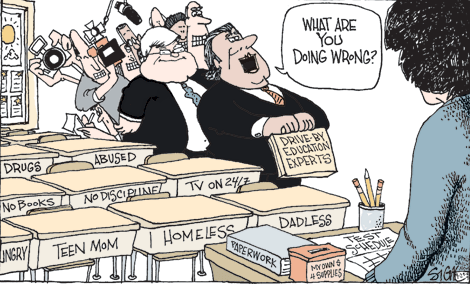
The mythology of bad teachers empowered by entrenched unions is only one part of a national disaster that has crept up on us over recent decades with the passage of the American with Disabilities Act (ADA) and the Individuals with Disabilities Education Act (IDEA). Meant to provide legal protections for the disabled, the side effects of these laws has been to undercut funding and appropriate learning environments for normal children.

By stating this fact, I am risking a rain of fire from incensed parents of disabled children. These parents have been a primary inciting force of these laws, alongside adults with disabilities, and have ensured federal and state tax dollars will flow into programs that aid the disabled.

Section 504 of the Rehabilitation Act of 1973 … assures certain protections to certain students with disabilities. §504 states that:

“No otherwise qualified individual with a disability in the United States . . . shall, solely by reason of her or his disability, be excluded from the participation in, be denied the benefits of, or be subjected to discrimination under any program or activity receiving Federal financial assistance . . . .”. 29 U.S.C. 794(a).[1]

One result of these laws has been the “mainstreaming” of students with disabilities into American public school classrooms. IDEA mandates that students with disabilities receive a “Free and Appropriate Education in the Least Restrictive Environment.”[2]  Previously, students with disabilities with conditions such as autism, developmental delay, emotional/behavior disturbance, intellectual disability, orthopedic impairment, learning disability, learning disabilities and speech and language impairment may have been placed in special schools where teachers with specialized training could focus directly on their special needs.

Mainstreaming works for many types of disabled students but does not work so well for many others. School districts face lawsuits from distraught parents if their disabled child is perceived not to be treated “equally” with other students. There’s also a cost factor, with estimates upwards to $100,000 per year per student for a special needs environment, according to one article detailing a situation in Georgia.[3] The risk of lawsuits and soaring costs for special needs education causes school districts to place disabled students into classrooms with “normal” children.

A veteran educator dealing with special needs students for over 30 years in a major metropolitan school district cited one example of the outcome of such policies.

“One of the things we tried was to put her in an art class. She sat there the entire hour voicing this loud moaning cry.” He imitated the sound. “I don’t know how anyone expected her to learn anything. She functioned at the intellectual level of a six-month-old infant.”

What this educator could not quantify was the effect of this person’s behavior on the rest of the class over the eight years this student remained in this secondary level school. Did anyone else learn anything in that art class or was this a wasted hour in their day, an hour when they might have learned how to draw perspective, or blend complimentary colors if not for the loud cries steadily emanating from the severely disabled person in their midst?

What’s been lost in our urge to help those with special needs is the primary mandate of our schools—to educate the next generation of scientists, artists, technicians, educators, workers, and leaders for our nation. The commendable stated objective of the ADA, to make it possible for everyone with a disability to live a life of freedom and equality, is deceptively simple and ignores the reality: people with many types of disability will NEVER be able to live a life of freedom and equality.

This is not something many parents of such children are willing to accept. Many of them believe if their child mingles with regular kids and attends the same classes, they will graduate high school and go on to college. It’s a heartbreaking situation.

In our public policy pursuit of this fantasy, we’re continuing to overlook the collateral damage. Consider one experience of an elementary teacher in a private Christian school in a small Midwestern state. At the start of the 2018 school year, a new student was introduced to her class. Neither parents nor administrators introduced the child to the teacher or explained her needs. Instead, the teacher soon discovered that she would be expected to change the child’s diapers, spoon feed her, and deal with increasingly loud, belligerent, and violent behavior. The teacher’s aide, meant to assist in teaching a class of over 30 young squirmy children, was forced to devote her entire schedule to managing the disabled girl.

“Finally, at the end of the semester,” the teacher remarked, “my documented chronology of abuses by this student forced the administration to contact the parents and the student was removed from the school. I feel like I’ve lost an entire semester with the rest of these kids.”

The decision by a private school to accept ID kids is often a financial one—the school needs the tuition money. Private schools are not under the same federal mandate to mainstream kids with disabilities because they don’t rely on public funding. This helps explain the push to channel tax dollars to private schools and may in part have to do with maintaining the freedom to deny admission to severely disabled students.

Not all disabilities lead to chaos in the classroom. Young people with physical disabilities may require specific desk heights and schools free of stairs, but they can still participate in the learning process alongside non-disabled students. It’s the intellectually disabled who pose the greatest challenge in mainstreaming.

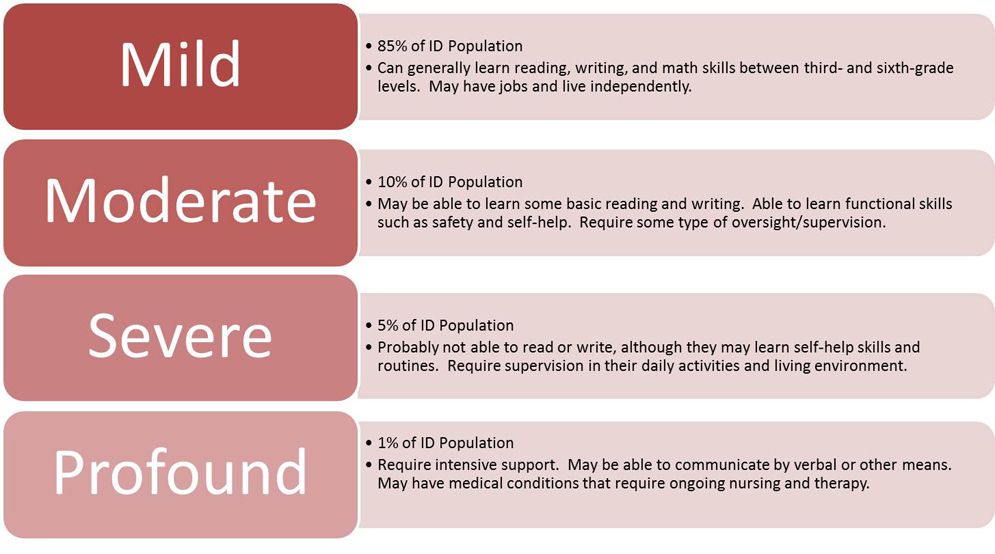
Intellectual Disability (ID), formerly known as mental retardation, is an ongoing and perhaps increasing condition in the U.S.[4]  Criteria for ID include an IQ under 70 in addition to deficits in two or more adaptive behaviors that affect everyday, general living although many variables move the determination up or down these markers. Conditions meeting this definition include Down syndrome and fragile X syndrome.

Intellectual disability affects about 2–3% of the general population. Seventy-five to ninety percent of the affected people have mild intellectual disability. Non-syndromic or idiopathic cases account for 30–50% of cases [An idiopathic disease is any disease with an unknown cause or mechanism of apparent spontaneous origin.] About a quarter of cases are caused by a genetic disorder, and about 5% of cases are inherited from a person’s parents. Cases of unknown cause affect about 95 million people as of 2013.[5]

Benefits of mainstreaming for both normal students and disabled students include exposure to diversity. But the majority of benefits are exclusive to the disabled: learning socialization skills, exposure to higher functioning children, and the challenge of competition. This says nothing about any benefit to normal children. As the 30-year veteran put it, “Here we’re spending big chunks of our limited budgets to provide an aide to accompany an ID student all day while spending nothing to assist or promote a kid with 140 IQ.”

The loss to our future society is incalculable.

Of equal concern is the inevitable observation by ID students who compare themselves to the social lives and interactions of normal students. ABC’s ongoing (2015 to present) television program “Born This Way” portrays one aspect of this effect by showcasing high functioning Downs syndrome children who aspire to marriage, stardom, and independent living. Many of the stars of this program are closely assisted by their mothers, leaving a question about what they’ve actually accomplished on their own. At times the program seems exploitative, showcasing anomalous humans for entertainment purposes. Encouraging their expectations for a normal life may ultimately prove cruel.

Before dumping severely disabled children into classrooms with normal students, schools need to ensure that teachers are prepared for the challenge. Many of them are not. Teacher education does not include techniques for changing diapers on physically mature ‘students.’

An estimated 1.8 million of the U.S. population are considered severely disabled, yet many of the disabled youth have parents who struggle to ensure their child’s future is as close to normal as possible. What parent wouldn’t?  Yet as observed by one special educator,

“… research also shows that students with disabilities, whether mild or severe, often have poorer social skills and are less accepted by their non-disabled peers. So we have to ask ourselves—who are we really thinking of when we talk about inclusion? Are we thinking of the student with a mild learning disability who may easily blend in and be accepted by their abled peers, or the student with cerebral palsy who uses a wheelchair and must be fed by a feeding tube, who just may stick out in a mainstream crowd? Speaking from experience, I’ve seen that the best communication skills, motor skills, and social skills are developed when students work alongside peers who are like themselves—peers who share their struggles, who know what it feels like to make huge gains in small steps.”[6]

It’s time to take a fresh look at the ADA and IDEA legislation and come to a new understanding based not only on what parents of disabled children dream for their child but also what is best for the rest of our children and the nation as a whole. The cost burden to schools is enormous. Specially trained aides are required to accompany disabled children through the day, to feed them, change diapers, and physically contain them. School budgets have not increased commensurate to the added expense of adequate staffing for meeting the needs of disabled children, and yet the nation wonders why classroom teachers are buying school supplies out of their own pockets.

Aside from the tremendous cost to taxpayers,[7] there is no real assessment of the cost to teachers, normal students, or society as a whole for these well-intended policies, but it surely is great. Many teachers are leaving the field with its low pay and unexpected demands. Yes, there are lousy teachers out there just as all levels of competence exist in any profession. This isn’t a problem of unions or incompetence—it’s a problem of well-intentioned public policy failing to take the big picture into consideration.

~~~

[1] See https://en.wikipedia.org/wiki/Individuals_with_Disabilities_Education_Act#Individualized_Family_Service_Plan_(IFSP) for more details about these laws

[2] https://www.eparent.com/education/mainstreaming-the-education-of-children-with-disabilities-the-teachers-perspective/

[3] https://www.theclassroom.com/the-cost-of-mainstreaming-vs-special-education-classes-12067245.html

[4] Multiple studies show a direct link between pollution and intellectual disabilities. See, for example, http://www.sci-news.com/medicine/link-air-pollution-intellectual-disabilities-06637.html

[5] https://en.wikipedia.org/wiki/Intellectual_disability

[6] Smith N. Takepart. Op-Ed: An argument against mainstreaming kids with disabilities. A special education teacher shares why she believes students with special needs thrive in schools solely for kids with disabilities. https://www.scoop.it/t/issues-in-special-education

[7] Approximately fifty percent of the current Medicaid budget pays out to children with disabilities. See https://www.kff.org/medicaid/issue-brief/medicaids-role-for-children-with-special-health-care-needs-a-look-at-eligibility-services-and-spending/

Change II: Gift to Our Future

What will make things better? Here are some ideas.

Social Support Programs: Address the Root

When a person applies for food stamps, unemployment, Medicaid, or other tax-supported programs, they face a stack of requirements to prove they’re worthy of help. Each application and benefit comes with its own separate process. Part of the problem for such applicants might be a lack of understanding about how to meet application requirements.

What’s needed is an advocate to guide the applicant through the process but also, more importantly, to assess the person’s situation, capabilities, and needs and to assist that person in moving beyond their current status. Education, job training, mental health care, and/or medical treatment are among the needs often experienced by those seeking government assistance, but rather than actually helping people get the help they need, current programs throw out random packages of aid without any comprehensive effort at addressing the root causes.

An advocate for such applicants could assist in the process of seeking help whether gaining access to the full array of needed services, completing the application process properly, or assigning a counselor to help the applicant sort out his/her current life situation (in which case the advocate and counselor become a team). Without expert advocates to steer each applicant through an increasingly complex system, we risk wasting billions on systemic inefficiencies and do nothing to solve the problems that cause these people to need help in the first place.

Of primary importance is assisting recipients in teaching them nutrition including cooking lessons.

Dispose of Outdated Laws

Drug laws

The drug war, like alcohol prohibition before it, frames the use of certain natural drugs as a moral failing. The result has been mass incarceration for private behavior.

All natural drugs should be immediately legalized, regulated like alcohol, and taxed. That includes marijuana, coca leaf, psilocybin mushrooms, peyote, opium, and Ayahuasca, among others. Persons wishing to consume any of these substances should be able to walk into a retail establishment like a liquor store anywhere in the country and buy a product that’s been certified for purity and dosage. Such products should not be controlled by pharmaceutical companies. Individual production of such substances for personal consumption should be allowed without taxation or regulation. Public venues which serve psychoactive drugs should be licensed in the same manner as establishments for consuming alcohol.

Anyone previously convicted or imprisoned for possession, “manufacture,” or sale of these substances should be released from incarceration and their convictions expunged from the record. Unfortunately, due to the massive numbers of persons involved, any compensation for their loss of income or other social costs is not feasible.

Substance abuse, like alcoholism, can become a serious problem for certain people. Currently, only the very rich can afford treatment programs that address the whole person through nutrition, counseling, and exercise, among other things. Tax revenues derived from retail sales should first provide for comprehensive treatment centers in every community where anyone suffering from addiction can be immediately admitted.

Performance testing for job safety should take the place of current drug testing. A brief interface with a computer terminal for tests tailored to immediately show competency to meet job requirements—attention, dexterity, coordination, etc.—should be part of the employee’s beginning of his/her work day.  A test failure, no matter what the cause of impairment—hangover, intoxication, fight with the spouse—could become part of that employee’s record with appropriate consequences for repeated failure.

Intoxicated driving will be prosecuted.

Sex Laws

Prostitution should be legalized, regulated, and taxed as any other business. If a person wants to sell the use of his/her body for sexual gratification, it should be within his or her right to do so. Government licensing should include regular health inspections to ensure public safety. Houses of prostitution could compete with luxurious settings, the most attractive employees, or the most innovative approach – for example, offer an immersive experience in an establishment with fantasy themes (medieval, harem, S&M dungeon, etc.). There should be no restriction on how houses of prostitution or individual practitioners might combine their services with other services such as massage, restaurants, intoxication venues (alcohol and/or drugs), or even mental health counseling.

Facilities/Resources

Eliminating drug and sex laws will result in decreased need for jails and prisons as well as employees of those criminal justice systems. Freed-up resources should be redirected to improving public defender salaries and providing for persons prosecuted for other offenses.

Reining in Greedmasters

CEOs and other top executives should receive pay based on the pay their workers receive. If the company is profitable enough to pay at CEO $27 million a year, workers should be earning far more than $15 or even $20 per hour. Prices for products that serve a lifesaving role for consumers should be regulated by the government just as utilities and other vital public services are regulated.

Healthcare

Medicare for everyone. Eliminate insurance companies unless they are non-profit. Hospitals and pharmaceutical companies must be non-profit. Drugs would be price controlled. Research for new treatments and new drugs would operate under federal grants.

Legal Services

Expand funding for free legal aid so that injured parties have full recourse to legal action.

Everyone is responsible

National service

Everyone reaching age 18 must serve whether Peace Corps, military, domestic infrastructure, civic duties or whatever else would benefit the public at large. No exceptions except for significant disability. Higher education, either college or vocational, can wait until the completion of two years’ public service. Serving in such duties should be in a location away from the family home, should provide food, shelter, and a minimal wage, and should result in free college/vocational training at its conclusion.

Education

All secondary schools should be required to offer a curriculum that includes literature/language, basic math, basic science, state and national history, music, art, and domestic duties including balancing a checkbook, changing a tire, and nutrition/how to cook. Males and females need the same courses. Domestic duty classes would include thorough sex education with a segment where kids have to carry a baby (doll) around 24-7. Dolls used for this teaching experience should be computerized to function as close to human behavior as possible including messy diapers, hunger, and crying. Birth control pills should be freely dispensed at school health clinics with or without parental permission.

Teacher salaries should be competitive with other professions requiring college degrees even in the most impoverished districts.

States which allow religious schools and home schooling should be required to regularly test home schooled and religious school students for the same course requirements as public schools students. Non-public school students who can’t pass the exams cannot receive a diploma. Repeated failure to pass exams would require the student to enter public schools. Public school students who fail to pass exams would be entered into a special unit of the school system and assessed for need of nutrition, mental health, and family problems, among other things, and individually tutored until learning improves.

Vocational training for all trades should be available and affordable as should college.

Homeless Population

An estimated 25-30% of homeless people suffer mental illness. Yet few programs addressing homelessness provide for treatment. Often these individuals end up in local jails because they can’t take care of themselves and there are no longer facilities dedicated to treating them.

“…during the Reagan administration, Federal funding for such institutions was shut down so that our wealthy class could pay less in taxes, and that put many thousands of mentally ill people out on the street corner. We have done nothing since to remedy this. A compassionate nation would care for these unfortunate people, and provide the mental facilities to house them where they could get the help they need that their conditions require.”[1]

Most homeless programs exhaust their resources in simply trying to feed and shelter the homeless. Successful efforts to address homelessness are based on meeting physical needs as well as mental health concerns. Addiction is another illness at the root of many homeless situations. Until systemic remedies are put into place, homelessness will continue to plague us.

Successful programs for the homeless are centered in tiny home villages or converted industrial/commercial properties. As shopping malls have become less viable, some cities and nonprofits have converted these sprawling spaces to homeless housing. Facilities serving the homeless would offer food service, counseling, health care, and job training. Refinement of services for homeless might include separation of persons by root cause of their homelessness; mentally ill might be separated from persons suffering addiction, for example.

Taxes

Poverty levels should be adjusted annually to meet the real costs of housing, food, and transportation in the location of each person. Persons earning above poverty level should pay income taxes on a sliding scale. Income at some level should pay a very high rate, as much as 70% of income.

In addition to legalized ‘sin’ transactions (drugs, sex) that would generate significant tax revenues, churches should be taxed like any other business. Penalties and additional taxes should be assessed against any corporation or individual found to be hiding income in foreign countries. No tax shelters.

MERRY CHRISTMAS and a happy future for all!

~~~

Have ideas or arguments about my list? Submit your own list of solutions to me at denele.campbell@gmail.com and I’ll publish reasonable submissions. Limit 1,500 words, one list per person.


[1] https://www.quora.com/What-is-the-most-successful-homeless-program