A Journey West, Part 2/5

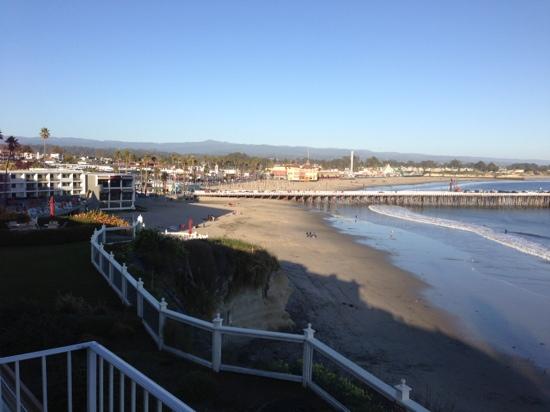
sc wharfThe narrow coastal rim west of the Santa Cruz Mountains is a world unto itself. Rich with moist ocean air and ornamented by unique flora, the land asserts a majestic presence in spite of roads, cars, houses, and other degradations inevitable in the presence of human population. I’ve been to Santa Cruz and its suburbs of Capitola, Soquel, and Aptos four or five times, and each time is a refreshing reminder of this unique environment.s c cliffs

All of it leads to the beach and  sheer cliffs eroded by towering waves. Stretches of sand crop up, narrow but pristine, fed by the constant motion of water. Detritus of the sea collects in meandering lines—kelp with rubbery flat leaves, seaweed in tangled blackish masses, bits of shell, and freshly exposed critters burrowing back under the swept-clean surface. The land gently rises from the shore to sweep up the slopes to the ridges of the densely forested mountains.
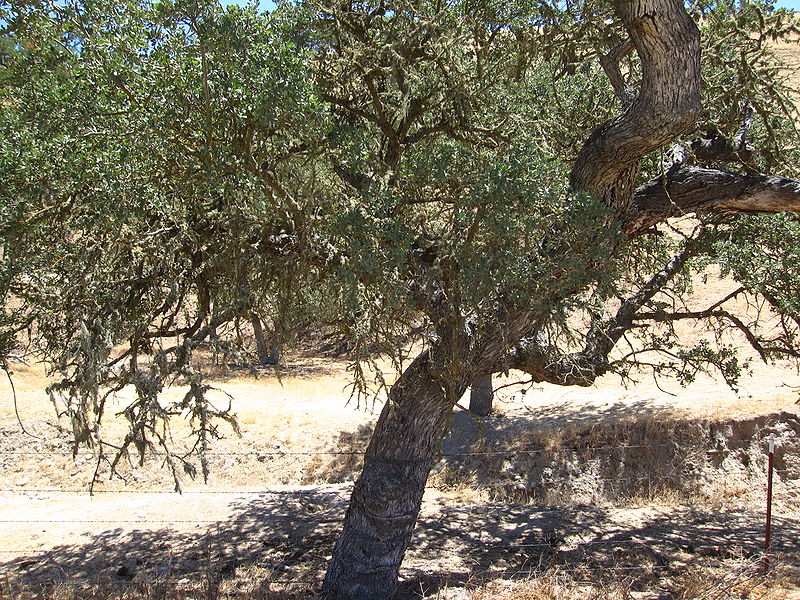
coast live oak
Coast Live Oak
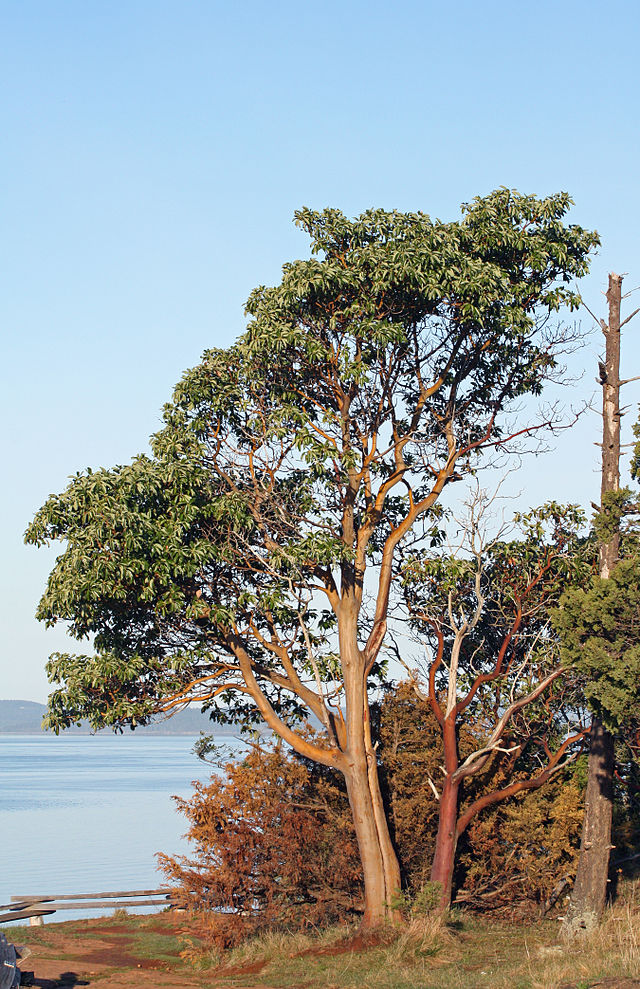
madrone
Madrone
eucalyptus
Eucalyptus

Tall palms dot the neighborhoods and commercial districts, delineating their unique architecture against a backdrop of coast live oak, coast Douglas fir, the enigmatic Pacific madrone, wax myrtle and bay laurel, and the ever-present clumps of towering invasive eucalyptus.

100_0025
Coast Redwoods

Here and there remain the native coast redwood standing as lone sentinels or in surviving groves on the steep hillsides. Everywhere the hand of man has interspersed the natural plantscape with domestic shrubbery and flowering plants. But much of the native vegetation also blossoms in vibrant color. Blooms in every shape and hue grace parking lots, highway medians, ditches, and landscaped surroundings of shopping centers, gas stations, and random shops.

chamise
Chamise

The University of California at Santa Cruz takes pride of place at its higher elevation overlooking the town and bay. The cleared sunny south slopes of campus host a more drought-resistant chaparral vegetation with manzanita, scrub oak, and chamise.
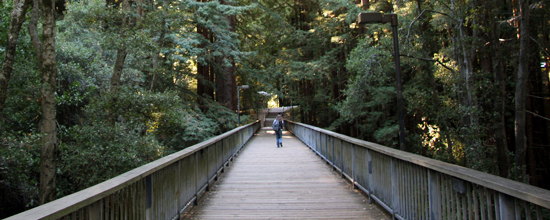
ucsc trees
One of many campus walkways over redwoods surging up from ravines.

Beyond the expanse of land claimed by state parks, ranchers, and the university are groves of redwoods deeply nestled in sharp ravines and stretching to the sky up steep slopes. From the road along UCSC’s east side, a panorama of the Monterey Bay opens its glorious expanse to the viewer, breathtaking in its fingernail-moon arc southward.ucsc view

I would be happy living here, I think. The community is joyously liberal and rebelliously semi-heathen in its irreverent embrace of life. Homeless people around the wharf and other public places might catch the tourist off guard, but there’s no implied threat if the request for money is denied. Seaside attractions, aside from the string of restaurants, coffee shops, and lodging, include an amusement park with Ferris wheel, fun house, and roller coaster. At a safer distance from the occasional tidal shift or storm surge are shops and stores favoring every conceivable interest. The sprawling imprint of human settlement stretches for miles.
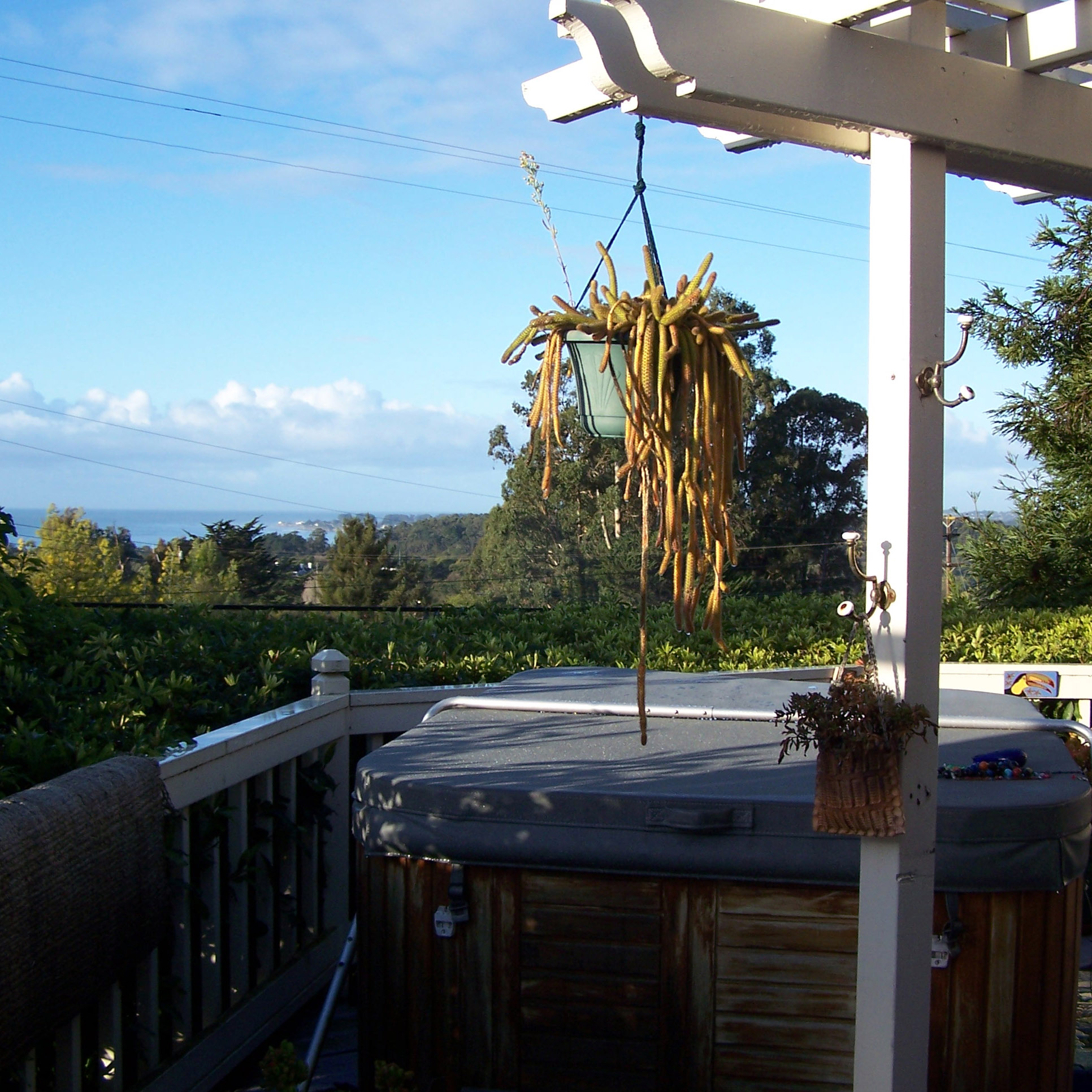
hot tub
View seaward from Ginny’s deck

A climate that rarely climbs past eighty degrees in the daytime or drops below forty degrees in the coldest night tempts me. My friend Ginny’s front deck faces the distant water from her perch halfway up a mountainside. From her hot tub or deck chair, I contemplate the fog bank lying like a thick silver blanket along the shore. On clear evenings, I watch the sun send its red-orange flare across the distant waves. I watch the whitecaps break at Soquel Point.

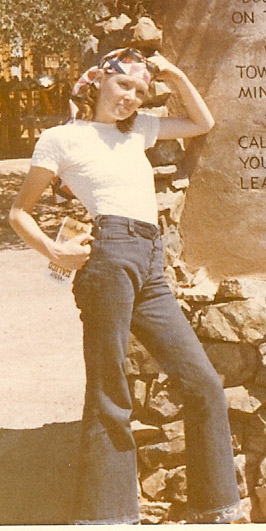
me & ginny
Ginny 1972
me & ginny copy
Me 1972

The miracle of close friendship never fails to amaze me. After forty-two years since we were cute young travelers to the Great American West, we’ve stayed friends. She left Northwest Arkansas for New York and then retired to California. Together maybe a total of two months in all that time, we start our conversation as if we’d never been apart. Her habits are familiar—the gurgle of her espresso machine starts the morning while I sit staring out at the foggy dawn. We giggle over her silly cat and talk about our plans for the day. I marvel at her ability to thrive in such a claustrophobic environment, but then, my God, she spent a couple of decades lawyering in New York City.

There are two key points that keep me from seriously entertaining a relocation plan. Money. And population density. People literally live on top of each other. Ginny’s home at nearly $2000 per month (plus utilities) is the top floor of a house divided into three living units. At the back fence mere feet away begins another house, perched higher up the hillside but close enough to hear conversation on their front porch.

Single family homes are palatial estates costing millions or small, side-by-side 1930s cottages with questionable structural integrity and still worth many thousands. If I cashed in my sixteen Boston Mountain acres with over 2000 square feet of home space and spring water, plus my two commercial rental properties in Fayetteville, I might end up with enough money to buy a house trailer in Santa Cruz. Okay, maybe a 1940s bungalow on a postage-stamp lot.

In spite of the occasional gut wrenching journey for the sheer pleasure of existing for a time in this other-worldly Shangri-la and the intense joy of sharing a few days with my kids and Ginny, I think I’ll stay put in the Ozarks.
A Journey West, Part 1

How could so much change in only six years? I had flown before, many times. Between 1968 and 2008, I lost count of the times I swallowed down excitement as the plane lifted me toward the sky. Airports were the threshold of adventure, the place where infinite possibilities scrolled down the flight departures screen.

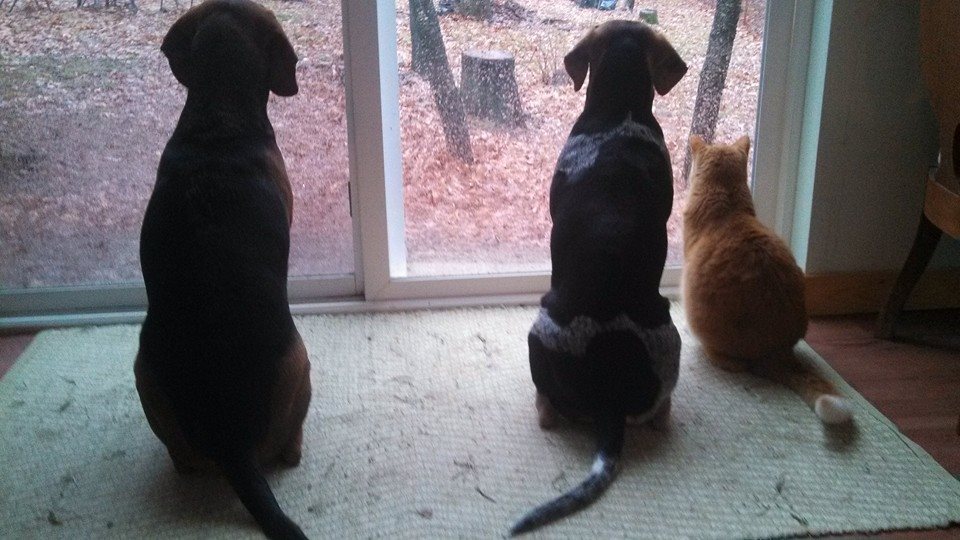
But in the intervening years since my last sojourn, I settled firmly at my desk. My adventures became mental journeys into the pages of my writing. I’m comfortable here with my dogs, the woods, my bed.DOGS

Okay, I’m getting old.

So when my friend Ginny extended her invitation, my immediate response was anxiety. Could I sleep well on an unfamiliar bed? What about air travel in these days of crazy passenger outbursts and terror threats? Did I really want to go?

My two older children live on the West Coast. I hadn’t seen Ginny for years, and her invitation made me contemplate not only spending time with her and seeing my kids, but also absorbing myself in that uniquely California environment of salty, kelp-flavored air and laid back attitudes. Of course I wanted to go, but couldn’t I please just instantly appear in Santa Cruz instead of going through the journey?

After weeks of increasing anxiety, I hardly slept the night before my departure. What if I didn’t arrive at the airport in time for my flight? What if I forgot to pack something important? What if there were problems with the flight? By the time I parked in the economy lot and hurried across the vast expanse of asphalt, my pulse hammered in my neck. Breathless, I scanned my ticket barcode to print out the boarding pass then mounted the escalator.

Swallowing over a dry throat, I handed the attendant my ticket and identification, moved forward to the screening line, and took refuge in the actions of those ahead of me. At least I could follow their lead. Carry-on luggage on the conveyor belt. Backpack with my purse inside. Take off shoes. No, attendant said. I didn’t have to take off my shoes, courtesy of the first attendant’s notation on my boarding pass which, I assume, had to do with my age. What are the characteristics one must exhibit at the Northwest Arkansas airport to qualify for remaining shod through security? That and another hundred questions and worries flooded my mind as I accompanied my baggage along the conveyor.

“What liquids…(blah)?” The uniformed guard’s words rolled over me as I tried to remember what I had packed. At the last minute, I had abandoned all hope of forcing my thick crème rinse into the tiny travel container. It globbed up at the rim and cascaded down the outside of the container. So I had stuck the entire bottle in my case. Hadn’t I read somewhere that larger containers were okay?

At this point, my voice had become husky and I shook. It wasn’t like they were going to take me outside and shoot me for packing an oversized container of crème rinse. But it was expensive. Other travelers piled up behind me while I tried to make an intelligent decision. The options for keeping it meant paying $25 to check my bag or walking back across the north forty to my car. No, I’d have to give it up. I watched my nearly full bottle of organic hair product land in their disposal bin.

That was only the first of a day of indignities. Maybe growing older and even more rigidly set in my ways preordained that travel by public conveyance would unfold as a series of rude shocks. Jostling in line to board. Wading to the next to last row of seats. Cramming myself into a tiny seat by a window—which I would have chosen if I had been willing to pay the extra money—but facing out over the wing, which I would not have chosen. Enduring the mind-boggling cacophony of human voices shouting over the engine noise as we made the short trip to Dallas-Fort Worth.

By the time we arrived at DFW, my back had spasmed in my effort not to rub against the passenger in the adjacent seat. Clearly comfortable with air travel and close association with whomever, she spent the trip jawing with the man across the aisle, her conversation frequently punctuated with loud laughter. That her leg touched mine or her elbow periodically brushed my arm seemed never to appear on her personal radar.

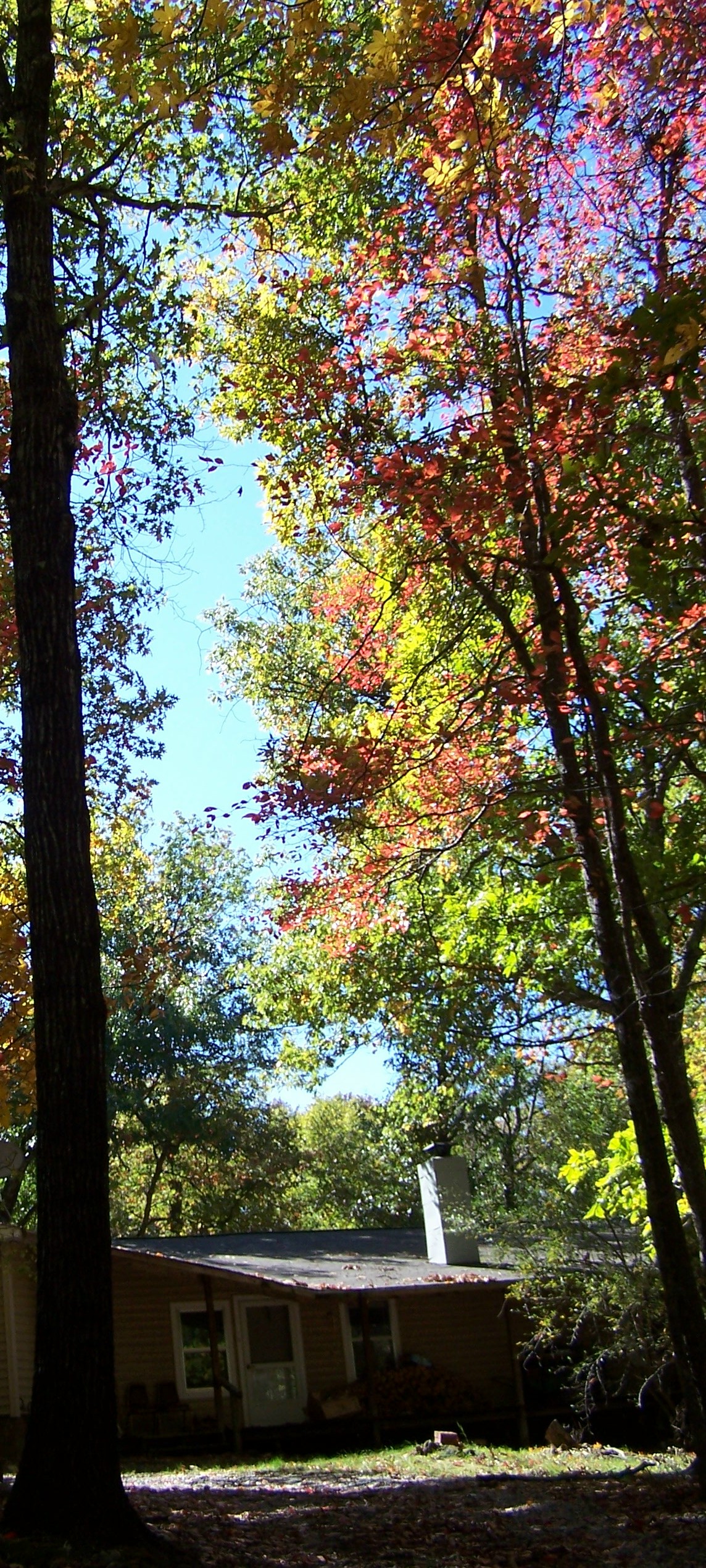
100_0575I live in near total isolation on an Ozark hilltop. I see more deer than people. Coyotes routinely howl at my back fence before disappearing back into the oak and hickory forest. Driving into town for groceries and random errands usually results in a hasty revision of my ambitious to-do list so that my time amid busy streets and crowded store aisles is reduced to only the most urgent items. I return home annoyed and clogged with Other People’s Energy.

Now, barely started on my journey, my back aching with don’t-touch-me tension, I hurry along the wide corridors of DFW’s Terminal C to find the trolley that will whisk me to Terminal A. I dodge businessmen and women wheeling fine leather cases, families straggling with children, retirees looking faintly lost and grumpy. After a fast jerky trolley ride clinging to a grab rail, I descend into Terminal A. Even greater throngs greet me there.

I’m hungry and wander along the crowded corridor. McDonalds swarms with customers, deterrent enough even if I could choke down the food. Starbucks isn’t lunch. I don’t want seafood. Taking a tentative space in the line at TGI Friday’s, I’m soon seated facing out over the hive activity in the corridors and presented a menu. After a heart-stopping moment of sticker shock, I order a cup of broccoli-cheddar soup for $7. It comes with four saltines.

Okay. I can do this. Refreshed from my cheesy lunch, I soon board the jet bound for San Jose. Blessedly, I am not seated in the back or over a wing. Cursedly, I am the first aisle seat in the three-seat side of economy class, meaning the aisle jogs right there as passengers move through from first class. Each passage jostles or brushes me in some way. Plenty of leg room, but since there are no seats in front of me, the tray table folds up from the chair arm. Which would be fine in a perfect world. However, I admit to a less than trim waistline and so the table fits snugly across my midsection. Embarrassing and uncomfortable. I drag out my book and try to concentrate on the lovely biography of Doc Holliday.

An hour into this three and a half hour flight, my back is killing me. The friendly lady on my right enjoys a gin and tonic while reading her Kindle. She’s relaxed and her arm touches mine. Her knee touches mine. My need not to touch someone else is so ingrained that I can’t relax even when I tell myself to get over it. Even when she’s asleep.

With perhaps an hour left in the flight, I lurch to the bathroom at the back of the cabin. Here, for a brief blissful moment, I am alone. But these hours of being crammed into a metal box with a hundred other people is taking its toll. My back muscles have seized. My head aches. My nose has become stuffy with breathing recycled air. The thoughts and emotions of a hundred other human beings have invaded my consciousness. Let me out!

Finally the jet screams down the runway and slams to a halt at Gate 18 of SJC. The blessing aspect of my seating reasserts itself as I follow first class passengers on an early disembarkation. I hurry down the terminal’s long passageways to emerge blinking into the bright San Jose afternoon. The air smells of ocean. Moments later, my daughter calls and then appears to pick me up in a borrowed car.

Strange how children always look the same and yet, at least initially after a long absence, appear as strangers. We plunge into happy conversation as if it was yesterday instead of 28 months since our last meeting. I luxuriate in the absence of strangers and the comfort of a well-padded car seat.

The drive over the mountains along Highway 17 is curvy and steep, plagued with heavy traffic. SoonDEST she turns onto a side route that leads into Soquel over the old San Jose Road. Her smile and the sound of her voice are beautiful.

The rich odor of pine sap and eucalyptus starts to clear my clogged nose. The narrow lane winds along sharp inclines cut into the face of newly minted earth—slabs of granite bedrock under hulking chunks of sandstone pushed up from the ocean floor as recently as the last three million years. Even after two years of drought, native vegetation maintains a stubborn gray-green grip on the land, all subordinated to the towering redwoods.

We talk about her flight from Oregon, her plans. The eight days we’ll have together. This is more like it. I have survived. I am here.

The Box of Christmas Past

heart ornament 0006Twenty years ago, I started putting things in a box, a big box that came to hold Christmas photos, greeting cards, graduation announcements, newspaper clippings. Everything that marked our days and years, things that in the previous twenty years had been carefully placed into a family album or one of the albums dedicated to each child, or special scrapbooks of family trips complete with dried flowers, matchbooks from restaurants, bits of seashells. Sooner or later, I consoled myself as the box grew fuller, I will deal with all that.

My marriage had ended, leaving me with three children aged 13, 15, and 17. I was self-employed as a piano tuner, partnered with my aging dad and an employee. An old commercial rental property provided extra income but its own litany of problems to solve. I drove kids to school from a rural home, split firewood, fed and butchered chickens, planned menus and cooked meals, and drove to an even further city for the youngest’s dance classes. I had a newspaper column to write in support of my environmental advocacy. There were surgeries, termites, and kidnapped dogs.

The previous year, my oldest had dropped out of her junior year in high school and lived on the streets before returning home a few months later to start her first year of college. Two years later, the second child quit his senior year in disgust–he only needed two credits to graduate, but they wouldn’t allow him to finish those credits in the fall term. He went off in a VW van to live with another couple in the remote countryside. The youngest alternated between rage and over-achieving.

Grief over the loss of a dream to live out life with my soul partner slowly subsided to the back of my mind. I lived large. I hosted dinner parties, hit the occasional nightclub, took a younger lover. Christmas trees in our living room were twelve feet tall and encrusted with ornaments and garlands. Gaily wrapped gifts heaped thick on the floor. The children grew older, in and out of college and romances, to New Mexico, the Caribbean, Florida, one of them in New York City when 9/11 happened. Time flew by.

In 2000, I spearheaded a statewide effort to allow medical use of marijuana. In a southern state like Arkansas, the “m” word was not spoken in polite company. Public appearances of any kind stressed me to the max, but I forced myself. I wanted to set an example for my children, how we must work for the changes that are needed. Trips to Washington D.C. Up and down the road to locations around the state. More years, more stuff in the box.

A few years later, my dad died and the next year, I retired from piano work. Thirty years at concert halls, churches, homes had taken their toll on my hearing. And my heart wasn’t in it. My activist work tapered off, taken up by younger, less-exhausted hands. Children were on their own and I lived alone with cats, dogs, watercolors, writing.

Rental property demanded action if it was to adequately support my retirement, and so a three-year investment of time and energy consumed me in a world of architects and engineers, construction, zoning hearings, easements. Carpenters, electricians, plumbers. Bankers. Cost overruns. Pleasure in brick and mortar accomplishment.

More surgery, termites, and dogs. (OK, you may wonder why the termites. But my house sits on a hill overlooking our spring-fed ponds, and the operative word is “spring.” Year round, this natural source of sweet, pure water supplies us even in drought. So you can understand my hesitancy to pump poison into the ground that sooner or later will make its way downhill.)

Construction projects finally ended. And I opened a café. For three years I chased the joy of preparing delicious food and exotic tea for an appreciative clientele. Christmas trees and scented candles ornamented the café. Decorated cookies and figgy pudding appeared on the menu. I had dreamed of the café for so many years. Proud I made it come true, but it was grueling. Employees, payroll, never enough profit to justify a wage for me. Financial suicide.

More stuff in the box.

Two years now since the café closed its doors, and I’ve been firmly lodged on this hill ever since. Writing. This year, no Christmas tree. A strand of colored lights drapes over my dresser top and office doorway. No gifts, I’m too broke. Rental property and family concerns are the only outside diversion, plenty for an increasingly crotchety woman. It will be years before I can break out of the debt incurred from real estate developments and the dream café project. I squeak by strangely content to be the impoverished writer. It’s what I always wanted to do.

But I’m so rich. I don’t need any more Christmas trees, trips to exotic places, dinner parties. Today was the day to stagger down the hallway with the big box full of the last twenty years, to sort through the mementos of all those times, a holiday gift to myself. A bit of detective work is required, examining haircuts, expressions, clothing, a calendar in the background to figure out what year…1998? 2002? How did we get to the eve of 2014?

An empty box will mark my progress as the contents slowly form stacks that swamp the dining room table. A stack per year. So many years. Each item, each photograph, will take its place on the scrapbook page. Each page will lead to the next, the next Christmas with its tree, gifts, laughter. The next year with its particular challenges, losses, rewards.

Some of the photos will end up on Facebook (oh brave new world) to be shared with my children, now in California, Oregon, the youngest at home in her own part of the house to pursue another master’s degree, their lives racing past. In each item I lift from the box, the long gone years will come alive, sights, smells, sounds of voices, music, feasts. All of it to be treasured, worthy of the effort to preserve it, think on it, remember.

In the spirit of the season, of cold, dark days and inevitable renewal, in memory of those now gone, I give thanks to every loved one, every moment, to every participant, acquaintance, to the wind in these trees. I won’t forget Janis Joplin, who exhorted me with inspired words so many years ago: Get it while you can, honey. Get it while you can.

Thank you, Janis. Thank you all. I got enough to last me if I never do another thing.