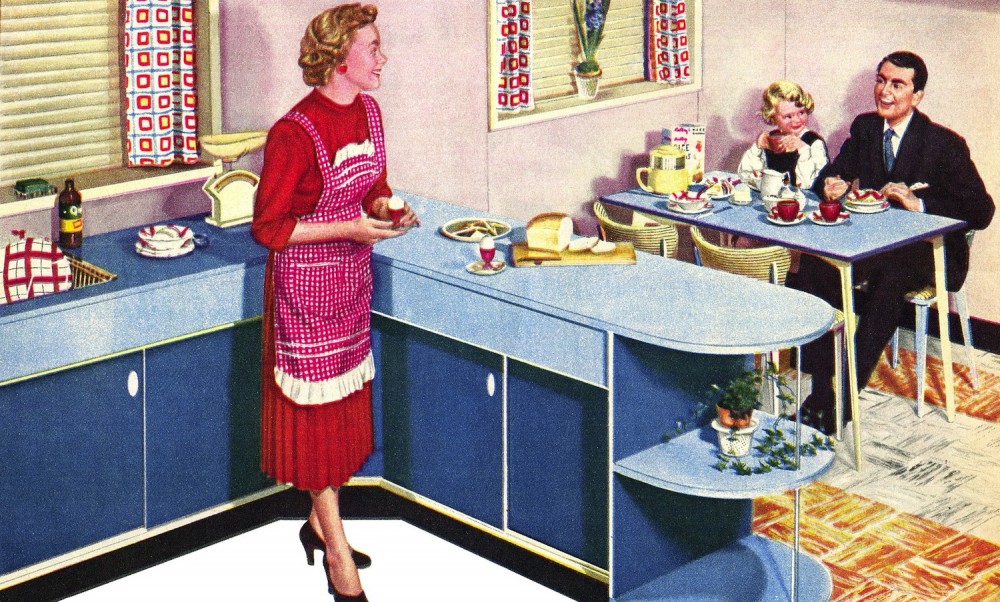
The Good Old Days

Back when … well, whenever, things were better. Right? People loved each other more, spent more time with family. Life was simpler.

Exactly when was that?

Was it the 1950s,

  • Back when the U. S. and Russia detonated nuclear weapons above ground, when milk tested positive for radiation? When school kids routinely practiced scuttling under their desks in case of a nuclear attack?
  • When everyone smoked cigarettes?
  • When women had to find a back alley abortionist to end an unwanted pregnancy and the only means of birth control were condoms and diaphragms? (Okay, plenty of people think this was a good thing because, you know, women who abort should die and sex is only for making babies.)
  • When schools and most businesses remained segregated? When homosexuals could be beaten to death? (Another good thing, right, for all the racists and bigots out there?)
  • Back when there weren’t any cell phones or cordless phones and television only came on three channels in black and white?

Oh, you meant earlier than that. Back in those halcyon days when folks sat on the front porch and ate homegrown food?
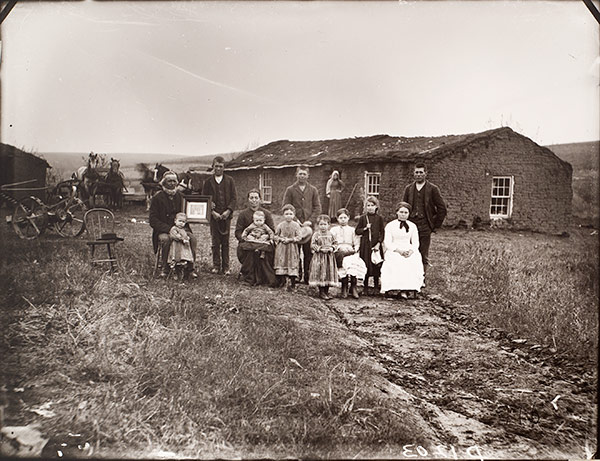
Like 1900,

  • Back when nobody had automobiles and you had to saddle up to go anywhere? When families traveled by wagon on the rare occasions they went to town? When horse dung littered city streets and nobody had indoor plumbing? We loved hanging ourselves over a stinking hole in the ground and freezing our privates while relieving our bowels in January. Right?
  • When three generations all lived in the same house?
  • Ah, the good old days before modern medicine invented antibiotics and people died of tuberculosis because nobody had figured out it was a curable, contagious disease.
  • Those days, so wonderful without any of these modern distractions like radio or television or rural electricity so everyone could enjoy dinner by the light of kerosene lamps or candles.
  • Yes, gee whiz, back before welfare and foodstamps and all those other pesky handouts to the slackers, how we miss working in the fields all day, milking cows, butchering hogs, because if we didn’t we wouldn’t have anything to eat.
  • And how we miss sewing all our own clothes and all the women wearing corsets and long skirts
  • When women couldn’t vote.
  • Those fabulous days when no one could talk about birth control or buy condoms because it was against the law.

Further back? Like 1850, when much of the labor to produce goods or foodstuffs was performed by African slaves? When it was legal for husbands to beat their wives as long as the stick they used was no wider than their thumb? When children worked in coal mines? When no one had heard of weekends or sick leave or vacation time or minimum wage?

How far back, exactly, did you think we’d have to go to get back to “the Good Old Days?”

The colonial era when poor people and random miscreants were rounded up to work on ships or turned into indentured servants and no one had the right to vote?

Or the 1600s when people who couldn’t pay their debts were imprisoned? When those who didn’t agree with the dominant religion could be burned as a witch?

Or the 1500s when Protestants and Catholics fought endless wars?
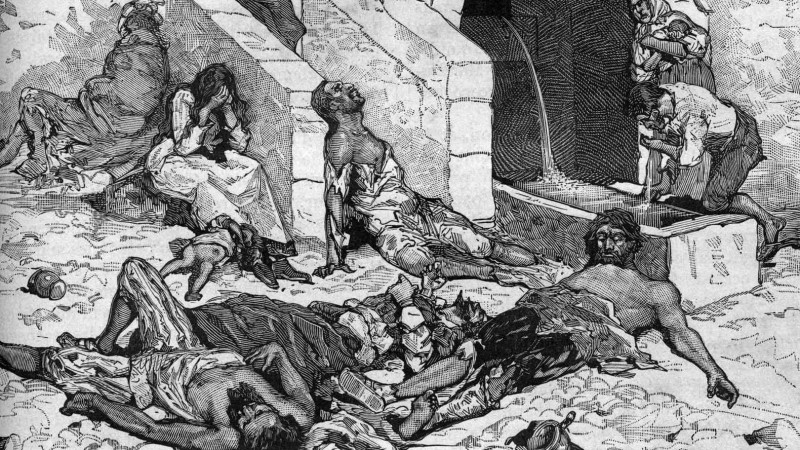
Or the 1300s and 1400s when bubonic plague killed one-third of the entire European population?

I mean, how far back do we go? The Crusades? The Roman Empire? Ancient Egypt?

In all those times, war ran rampant as nations ruled by kings fought over resources and territory. People starved and died of diseases that are now preventable or easily curable. Women died in childbirth and half the children born died before adulthood. All the inventions we now consider normal didn’t exist—heated homes, air conditioning, toilets, sinks, glass windows that open and close, motorized vehicles, air travel, ambulances, hospitals and medical doctors, understanding of planets, stars, and our sun, microscopes and the world of bacteria, viruses, cells, and atoms, organized educational systems and widespread literacy…

Could it be that the fondly remembered good old days were simply the days of our youth when we didn’t have to earn a living and didn’t know enough yet to worry? Could it be that those early years of playing in piles of leaves or swimming in a creek or coming home from school to savor a freshly made cookie were simply the experience of a decent childhood without any real application to the adult world? Or that our memories of childhood gloriously forget the bad stuff we don’t want to remember?

When exactly were the Good Old Days?

Lost Song

Lurking in the back of my mind, an emotional revelation waits. What it is, I couldn’t tell you. A memory from my past? An understanding about myself? About life in general, the world? I don’t know.

I think that if I waited long enough, carved away the distractions like a pending visit from one of my kids, or the telephone that might ring, or the dog barking outside at falling leaves, whatever It is might reveal itself. It might stand fully formed in front of me, shimmering in magnificence. Terrifying. Fulfilling.

It won’t come, though. I know this because I’ve felt this way before. It never comes, at least, not lately. Now when I need it the most.

In the past, it came with LSD and mescaline. It came with sex. It came when I pounded out the last bars of “The Long and Winding Road” on the piano and tears ran down my face. It came when I reeled off the walls, tequila rushing through my veins, and the truth was made known.

This is different.

I get nowhere with booze. Won’t even consider psychedelics or sex. I can’t look at a piano, much less sit down to play one.

This is like singing, something I once did well. Singing came out of me like some truth too profound to express any other way. I can’t sing now. My voice is old and broken. In my dreams, I can sing. In my dreams, I’m also younger, lovely, strong.

When I try to sing, my voice breaks around middle C, something I noticed after one of several surgeries and which I assign to a tube being forced down my throat. Vocal cords pushed aside, deformed or broken. I want to open my mouth and let a pure note emerge, then another and another until the last note shines off into the distance. I feel it inside me, waiting to come out.

One of my expectations, now that I think on it, was to surround my older years with the things I had no time for when I was young, things like painting where my brush would drift over the paper spreading colors into magical swirls and hues. Things like strumming a guitar again, forming chords that drifted off into the evening air. I would sing along, remember “Scotch and Soda,” “Girl from Ipanema,” “Turn Around”…

I can still paint. I have the supplies. The method has become rusty, but if I applied myself, I could remember how to make shadows while the paper is still damp. I could let orange fade into indigo along a sunset horizon.

Somewhere in all that is the thing I can’t quite reach.

Class Reunion

banquet
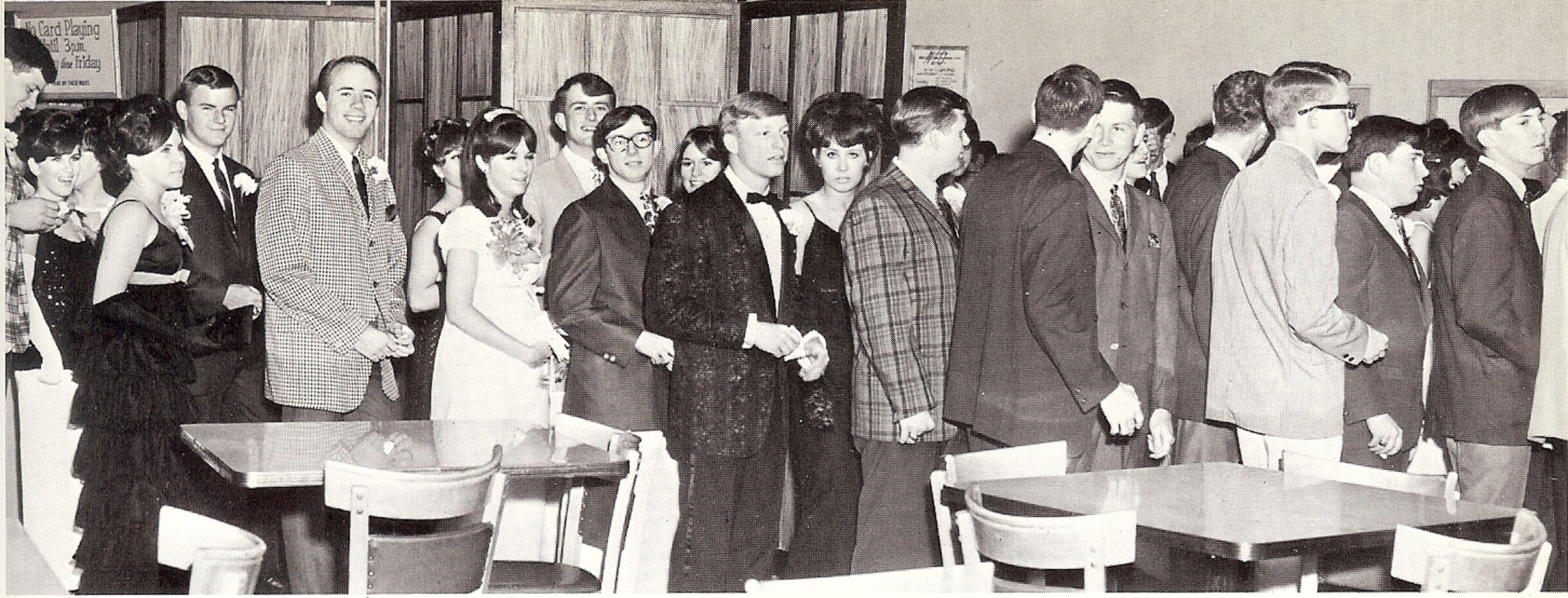
Senior Banquet 1966

Fifty minutes remains until the time arbitrarily assigned for my departure. Fifty minutes until I load the backpack I’ve borrowed from my daughter into my car. It contains the clothes and shoes I’ll wear tonight and the clothes I’ll wear tomorrow, along with toiletries and other items I may or may not need. Fifty minutes until I ease down my rain-rutted gravel drive and traverse the dusty dirt road to hit the county road and then the highway and then the route north.

I will drive for two and one half hours, hours to fidget in my seat as countless half-formed scenarios scroll through my head along with tentative smiles, greetings, and snatches of conversation I imagine making. Hours to panic further about this long anticipated event.

My fifty year class reunion.

Despite the cliché in all this, I’m not sure I’ll survive. But then of course I will, unless fate takes some kind of wicked glee in choosing this time and place to terminate my time on this earth. I’ve soothed my frayed nerves with the image of myself back home tomorrow night—not that far away—where I’ll sit on my familiar couch with my TV remote in my hand and try to let the static die away.

Forty-five minutes now. Mental checklist—underwear, toothpaste, my morning requirements of oolong tea in its strainer and a mango ready for my waking in a strange hotel room in a town I haven’t lived in for fifty years.

A town where so much of the tangled fabric of my life was woven in ways I, even now, have not untangled. It’s a place sadly diminished in the thirty years since its major industry closed up shop, yet signs of revival dot Main Street. Public housing covers the block where our venerable red brick school building once stood with its red-curtained stage, with its hallways that smelled faintly of janitorial chemicals and teenaged angst, with classrooms haunted by teachers we still hear explaining the details of osmosis and conjugation. Long dead.

This will be the fifth time I’ve returned. The first was for the funeral of a close friend when we were twenty-two. The rest of the visits have been class reunions. Since the 30th in 1996, I haven’t been back. Too much to stand in a room full of strangers knowing that once I could have called them by name. Too much to watch their faces as they read my name tag then glance at my face as if they too are staring at a stranger.

The fiftieth is different. People who’ve never been to a class reunion before are coming now. Fifty is a milestone. An arbitrary line in the sand. Those of us still living will step over it.

A half hour until I embark on this journey. I’ve tried to convince myself that it will be good to get out on the highway. It’s been too long since I set out on a road trip, let the wind blow my hair, watched the lines fly past on the pavement. I could be going anywhere.

A half hour to feel my stomach tighten even more. The first man I loved will be there. The cheerleaders will be there. The jocks. The money kids. The fellow nerds—members of the band, the choir, the thespians and class clowns. The girls who married young. The ones I didn’t really know. There were 235 of us.

Only a fraction will show up, maybe fifty or seventy. They will look old. They will look like that unrecognizable person who stares back at me in the mirror.

I think of prom and the formals I wore. I think of the shops I haunted on Main Street, the places that sold Vassarette lingerie and dyed to match satin high heels and Evening in Paris perfume, aisles I haunted in search of what it might mean to be a woman. I’ll revisit the drive-ins at either end of town where cars loaded with friends made the turn to once again ‘drag Main’ and remember the hours we spent forging our place in a world we hardly knew.

I don’t want to think of these things. I don’t want the tears that will undoubtedly sting my eyes as I look around the room tonight and see people who are like family in my memory and strangers to me now.

I’m on the road. A high sky of intense blue frames my journey. The land shifts from wooded hillsides to flat prairie. The town comes into view, the town where so much has changed and nothing has changed.

I wade into a room full of people I once knew. The dinner where we gather narrows and concentrates the experience as I try and fail to hold myself apart from the emotion. Hugs, laughter, squinting down to read name tags. Joy in reconnecting after so much time.

Hours pass as each in turn stands to tell of his or her life. How many children, grandchildren. Jobs, travels. Each one speaks on what defines them. Or what they thought everyone expected them to say. Or what they could remember of hastily gathered thoughts now scattered as the microphone shakes in their hands.

In my hotel room at midnight, I realize these hours will be forever reduced to an ephemeral moment in time.

The beauty of our youth transformed to the sags, lines, and the weight of adventures great and small, hopes fulfilled, dreams lost, loves too great to calculate, tragedies too terrible to remember. Burdened and enriched, we glance at each other from a vantage we’ve only just now gained.

These are our lives framed in this moment between where we face each other in this banquet room and the time we faced each other in caps and gowns. It’s a marking of the passage of time in a way more visceral than we anticipated, tears standing in our eyes as familiar young faces from our yearbook appear as big-screen images, a slow scroll of those who have died. Like we all will die, the reminder too close for comfort.

In this room, I see women where girls once stood, men in place of boys, our gaze reflecting our singular paths through time. The girl who played flute, the guy writing formulas at the chalk board. The intellectuals. The invisible ones. That’s not who they are now. And yet it is.

This man I loved when we were young—we’re still connected in ways beyond time. I value the time we spend together, catching up. Looking at the town, the places we thought we’d remember, but no, wait, wasn’t it another block down, that house where he once lived, another that once belonged to my family? He laughs and says Sonic chili dogs have lost none of their outrageous charm, he the transplant to the glittering northeast where that uniquely southern talent for perfect chili cheese dogs remains elusive.

All of us share this struggle to reacquaint ourselves with who we once were. We try to discover in each other’s faces what if anything it means about who we are now. Our eyes reflect our grief in the inexorable passage of time, a ticking clock quickly marking off this momentary memorial to our youth and all those years we saw each other day after day in class, across the gym at sock hops, at pep rallies and football games, in the cafeteria where even now, if ghosts still walked, the smell of yeasty rolls would lie heavy in the noontime air.

The essence of what we were then is what we are now. We are gentle with each other as we seek that affirmation.

Bittersweet thoughts rise and fall in the late afternoon sky that frames my journey home. Tattered white clouds drift across a faded azure dome. The road winds as I re-enter hill country. I’m tired. I want my own bed.

Overwhelming sadness edges in. The event has come and now gone. I doubt I’ll ever see most of these people again. There may be more reunions—a fifty-fifth, the sixtieth. When I took my mother to her seventy-third, no one else was there.

I am thankful to have shared a brief moment in time with others who remember the same teachers, the rattling locker doors and dim hallways, the same gossip and scandals. We shared a time in our lives when all things were possible, when everything seemed larger than life, rife with pivotal moments.

I have lingered too long in the past. Long ago when I left that town, I made a point to live without regret. I rushed out to embrace the adventure. What I knew then I know even more strongly now. I stand on all that came before. But life only moves forward.

Summer Vacation

ink bottle

It was 1972. A wedding in Long Beach requested our presence, a friend in our tight-knit group to join with his true love in holy matrimony. So we embarked on a road trip to the West Coast, that fabled land of golden sunsets and salty air. A 1930s wedding theme had been announced, so for weeks prior to the trip, I had worked feverishly to sew a gangsta-style three-piece suit in pink gabardine for my husband Frank and a long-waisted light yellow dotted Swiss dress for me. Our friend Virginia, who provided her bright yellow VW bug convertible for the journey, got busy sewing her own pink vintage-style dress for the occasion.

We had plenty of fun planning the trip, gathering wide brimmed hats, Frank’s fedora, the gloves, the hand-held fans. Freshly inspired by Hunter S. Thompson’s Fear and Loathing book, we gathered the requisite pharmacy, tame in comparison to his. The itinerary grew with each passing day. On the way out there, we’d see the sights traveling in tandem with Jeff, Robert, and Franz in Robert’s shiny blue Karmann Ghia convertible.

The day arrived. We loaded up at Jeff’s house and then headed west, tops down and hair flying in the wind. In those days, Interstate 40 had not been completed. Especially in Oklahoma we found ourselves detoured through small dusty towns on the well-worn two lanes of old Route 66.

Long before Oklahoma City, we put up the ragtop to stop the torrent of wind tearing around us. Somewhere before that, my beautiful paisley turquoise silk headscarf disappeared into the landscape. Late that night, past Tucumcari and facing into a storm front that lit up the sky with magnificent lightning, the front hood flew open and the garment bag with our wedding clothes blew out. Frank steered to the shoulder, latched the hood, and backed up until we found the bag lying unharmed in the median.

More hours passed. We made the last curve around a dark mountain and Albuquerque spread out below like a bowl of lights. The garment bag fiasco separated us from the other car but we couldn’t go another mile. A cheap motel room felt like the Hilton.

gr canyon
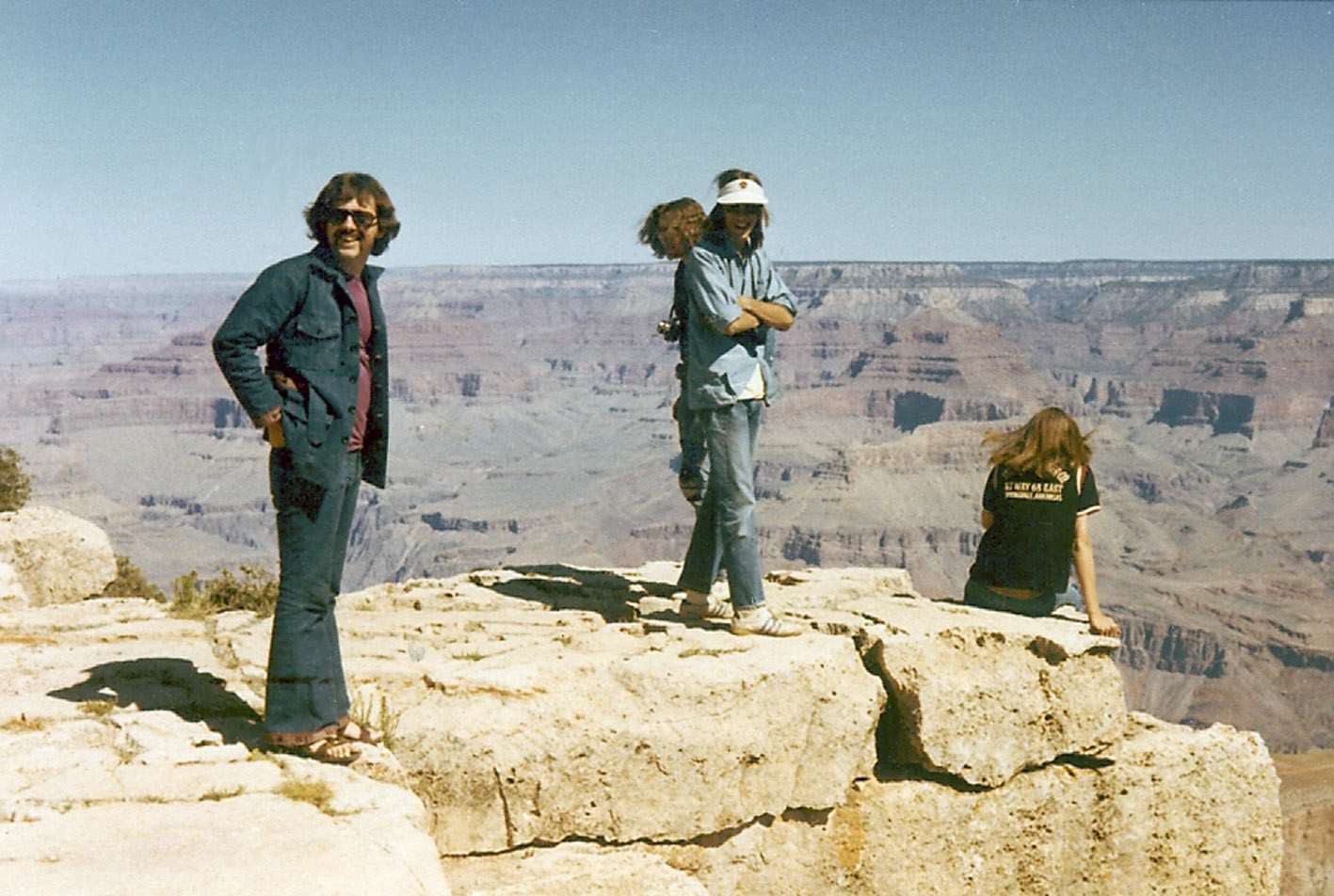
l-r: Frank, Robert with Franz hidden behind him, Jeff tempting death.

The next morning, a quick drive through the Painted Desert and Petrified Forest renewed our wonder in the natural world. We made our rendezvous with the other car late the second night at the Grand Canyon. I spent a miserable night freezing in a too-short sleeping bag on rocky ground, probably no worse off than the rest of us. The next morning some of us dropped acid for a walkabout along the south rim. The Grand Canyon is mind-blowing on its own. With LSD, it became a second-by-second discovery of bizarre vegetation, rocks of every epoch, and the mystery of distance, time, and existence. Then we were on our way again.

ghost town
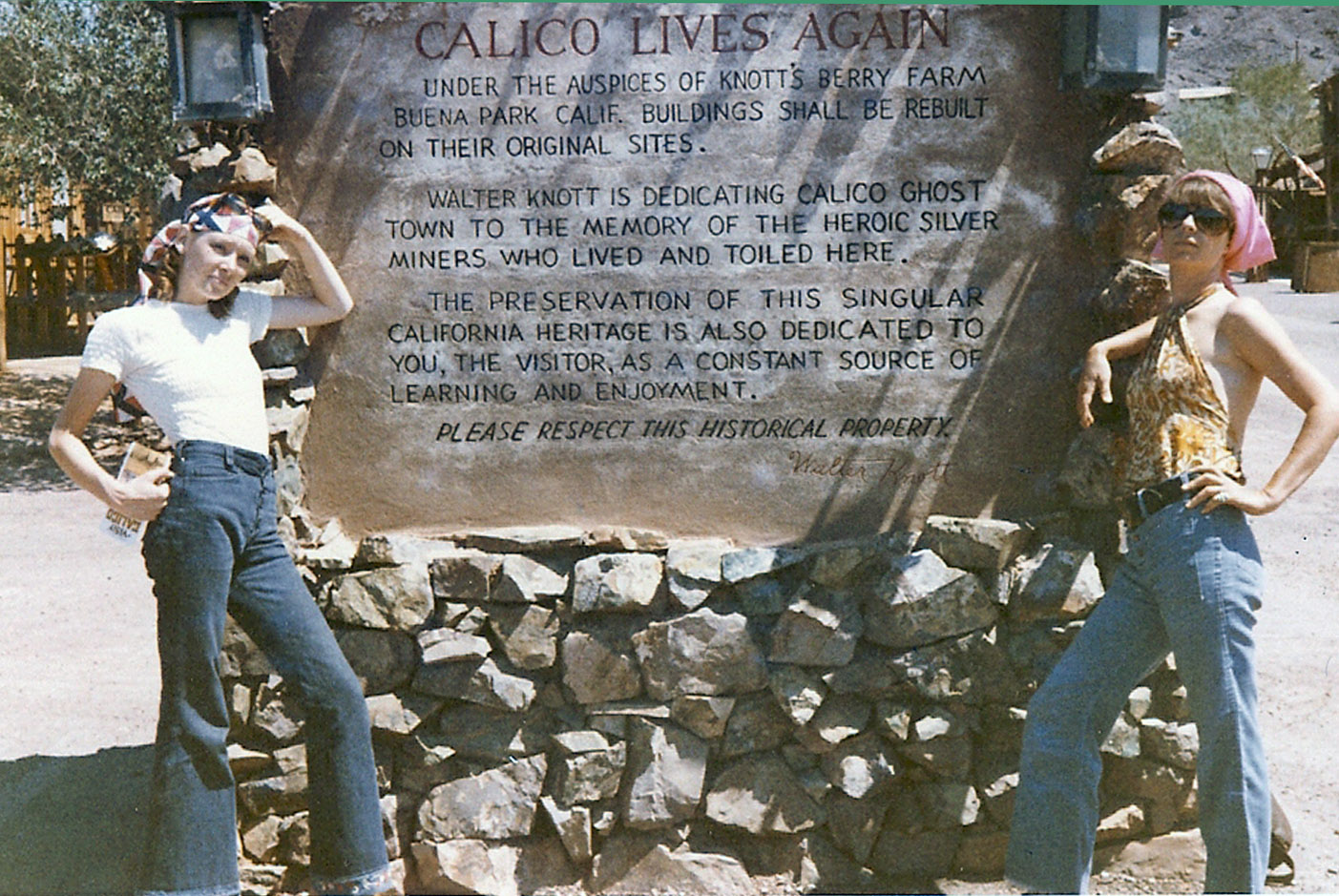
Me and Virginia at the Calico ghost town in the Mojave Desert

The wedding was complicated—people we didn’t know, extended family, a church and reception. Before and after, we wandered through L.A.’s farmers market, Hollywood, Venice Beach and other places along the seafront. With the happy couple off on their honeymoon and the Karmann Ghia headed home, we set off to the north. From Santa Barbara we followed Highway 1, that hair-raising winding roadway that clings to the cliffs along Big Sur. I don’t do well with heights. My knees start shaking at the third rung of a ladder. I alternated between sickening glances down at the waves smashing onto rocks and hiding my face in my hands.

frank at big sur
Frank and Virginia along Highway 1 at Big Sur. Arrow points to two people in the edge of the waves. Perspective.

Exhausted, we gave up just south of Monterey and parked at the side of the road for the night. Thanks to Frank’s heroic decision to sleep outside, Virginia took the front and I had the back. Neither of us could lie down since there was the matter of bucket seats and gearshift in the front and an ice chest and assorted miscellany in the back. As it turned out, we both had it better than Frank who woke us in the frigid pre-dawn fog desperate to get warm.

frank golden gate
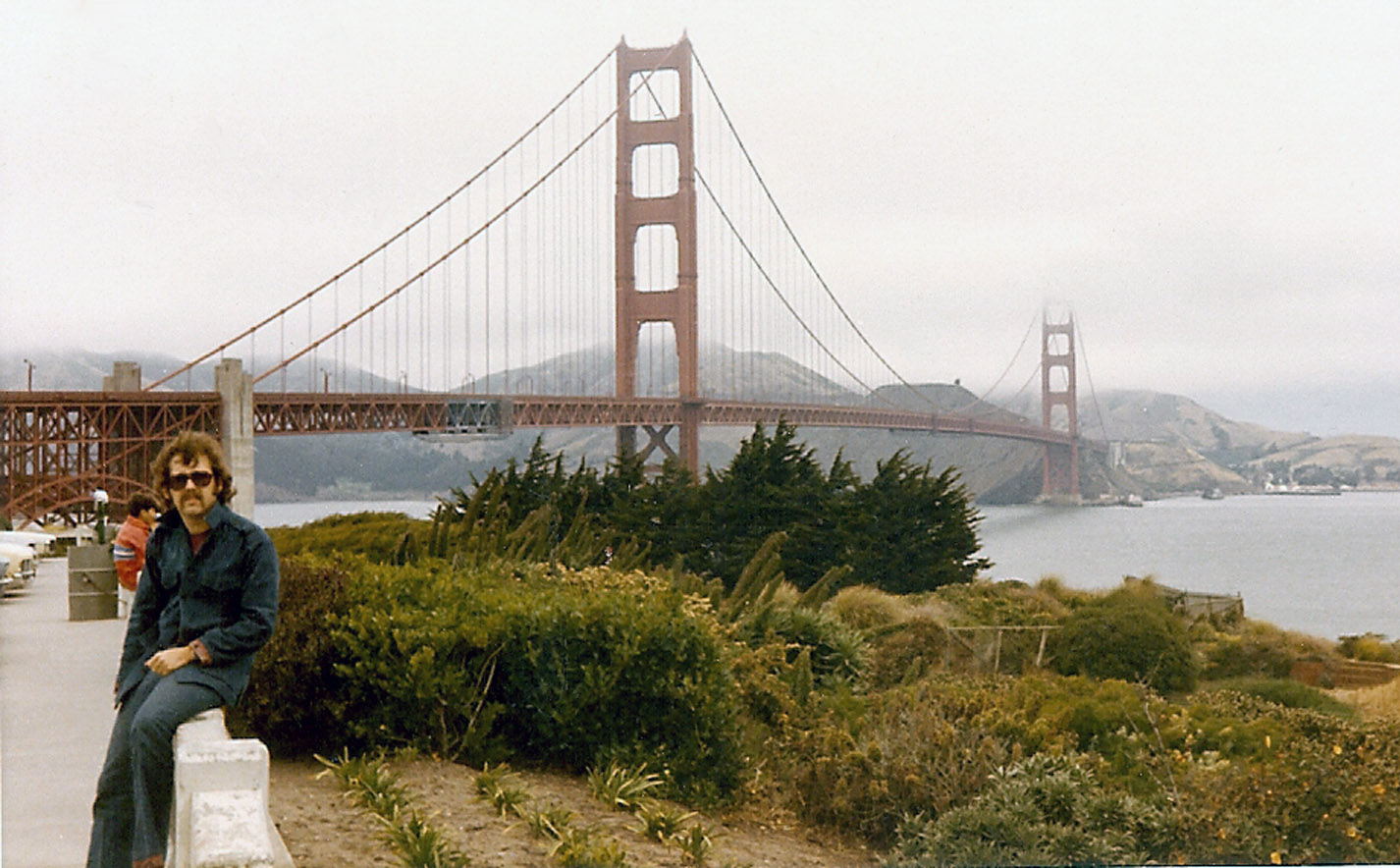
Frank at the Golden Gate

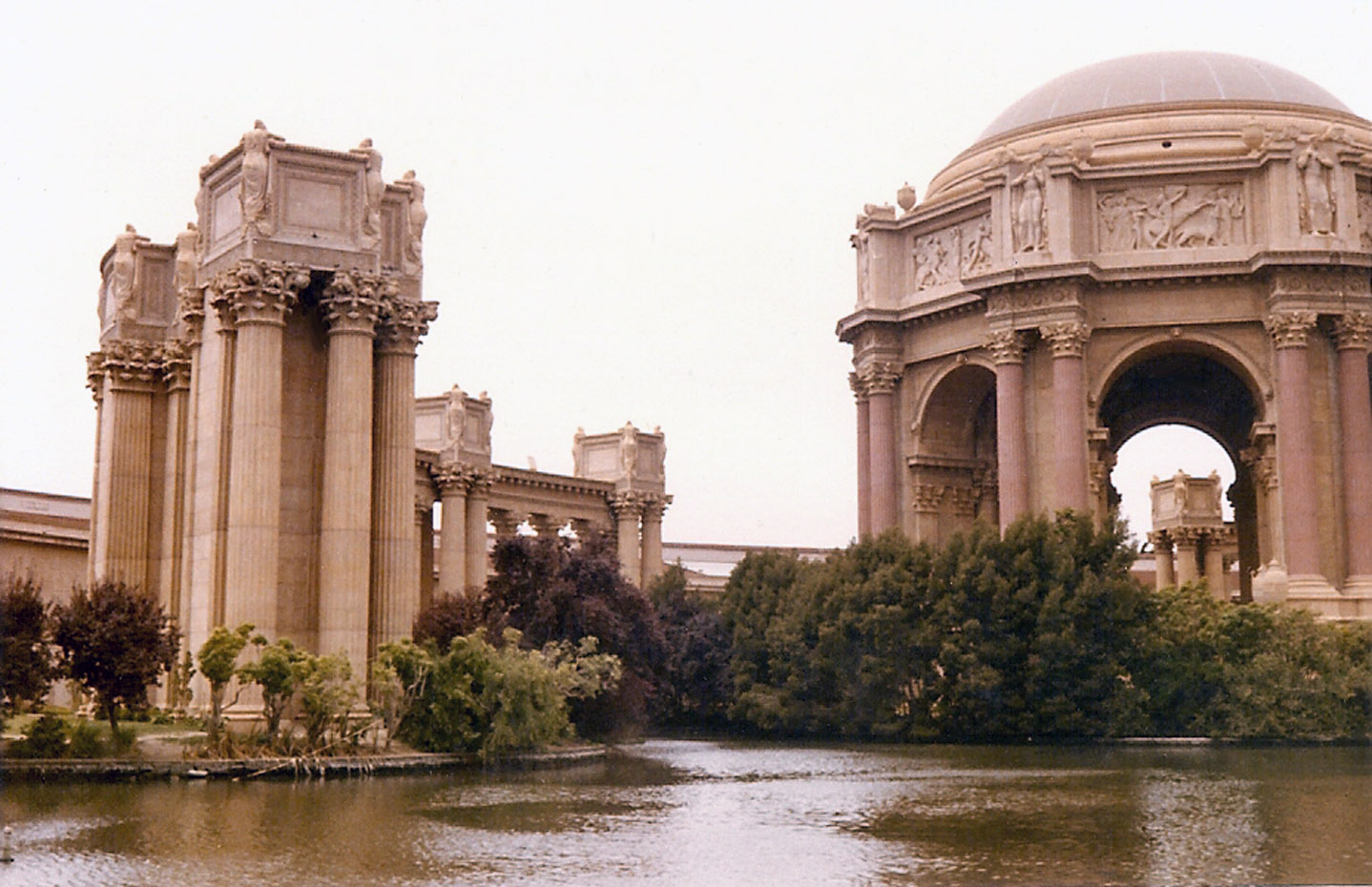
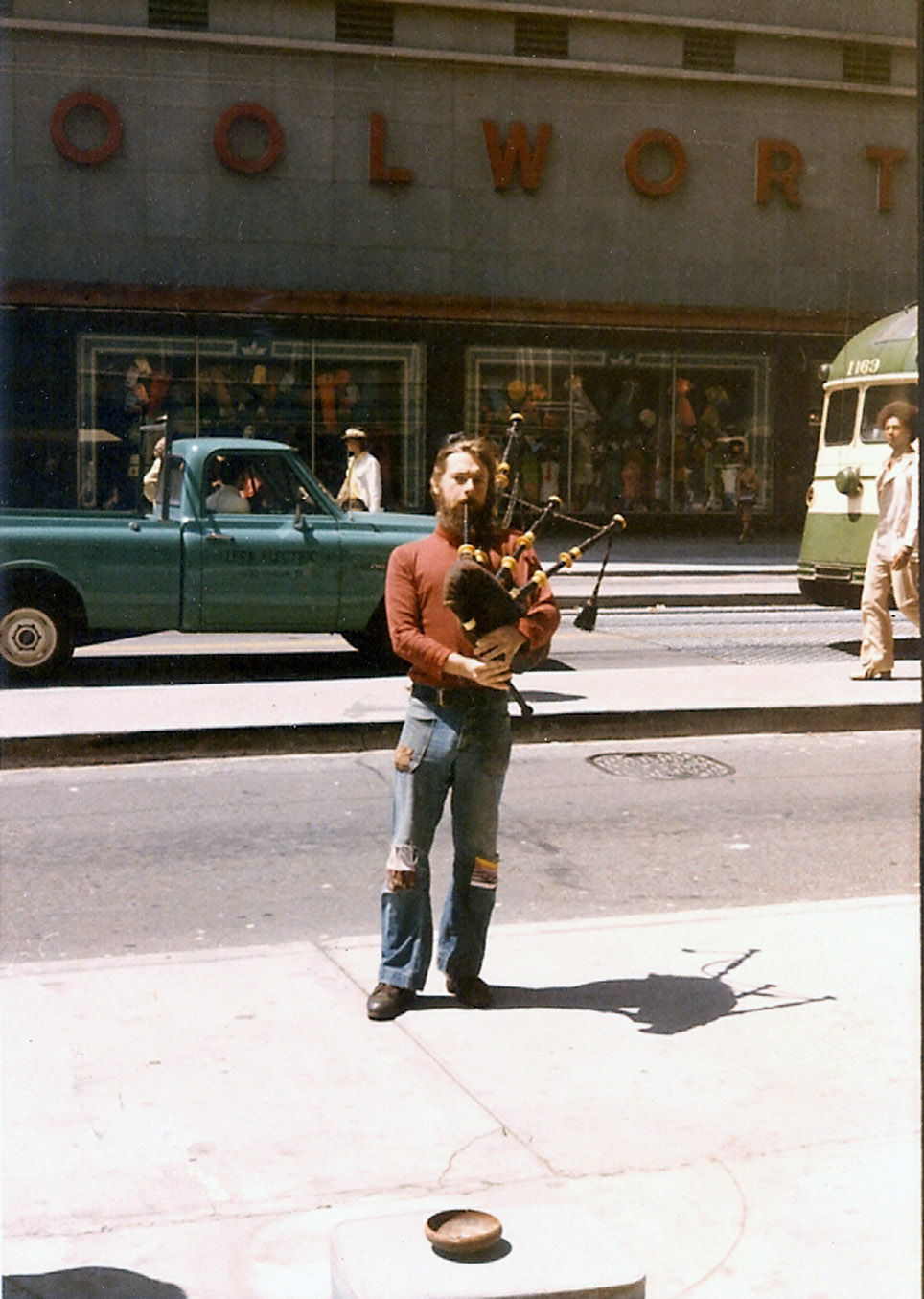
Disheveled and bone tired, we toured San Francisco, a drive-by effort to see the Presidio, Golden Gate bridge, and Fisherman’s Wharf. We walked through downtown, gawking up at tall buildings, dodging cable cars, and musing over oddities like the man playing bagpipes across the street from Woolworths. We wandered around the fabulous Palace of Fine Arts, a preserved portion of the original 1915 exhibit for the Panama-Pacific Exposition.

temple
Palace of Fine Arts

bagpipes

At this point we had sixty-five dollars to get us back to Northwest Arkansas. There would be no more cheap motels or souvenirs and precious little food. Even with gas at 35 cents per gallon, we hardly had enough to get us home. Fortunately, Virginia had a Gulf credit card. We drove all night, white lines blurring down the pavement as we crossed the gray-white moonscape of Nevada. We hit Salt Lake City sometime the next morning and found a truck stop with showers and a buffet, all of which we could charge on her card.

After a brief gander at Mormon temples, we stuffed ourselves back into the increasingly crowded VW and dove into the Rockies. Up and down we drove, steep inclines, terrifying drop-offs, and legitimate worries about the VW’s clutch and brakes. Frank’s old friend John and his wife lived on the other side of all those snow-capped peaks at a little mining town called Leadville. He welcomed us with cocktails, grilled steaks, and a loft sleeping area in his mountainside chalet.

Oh the joy.

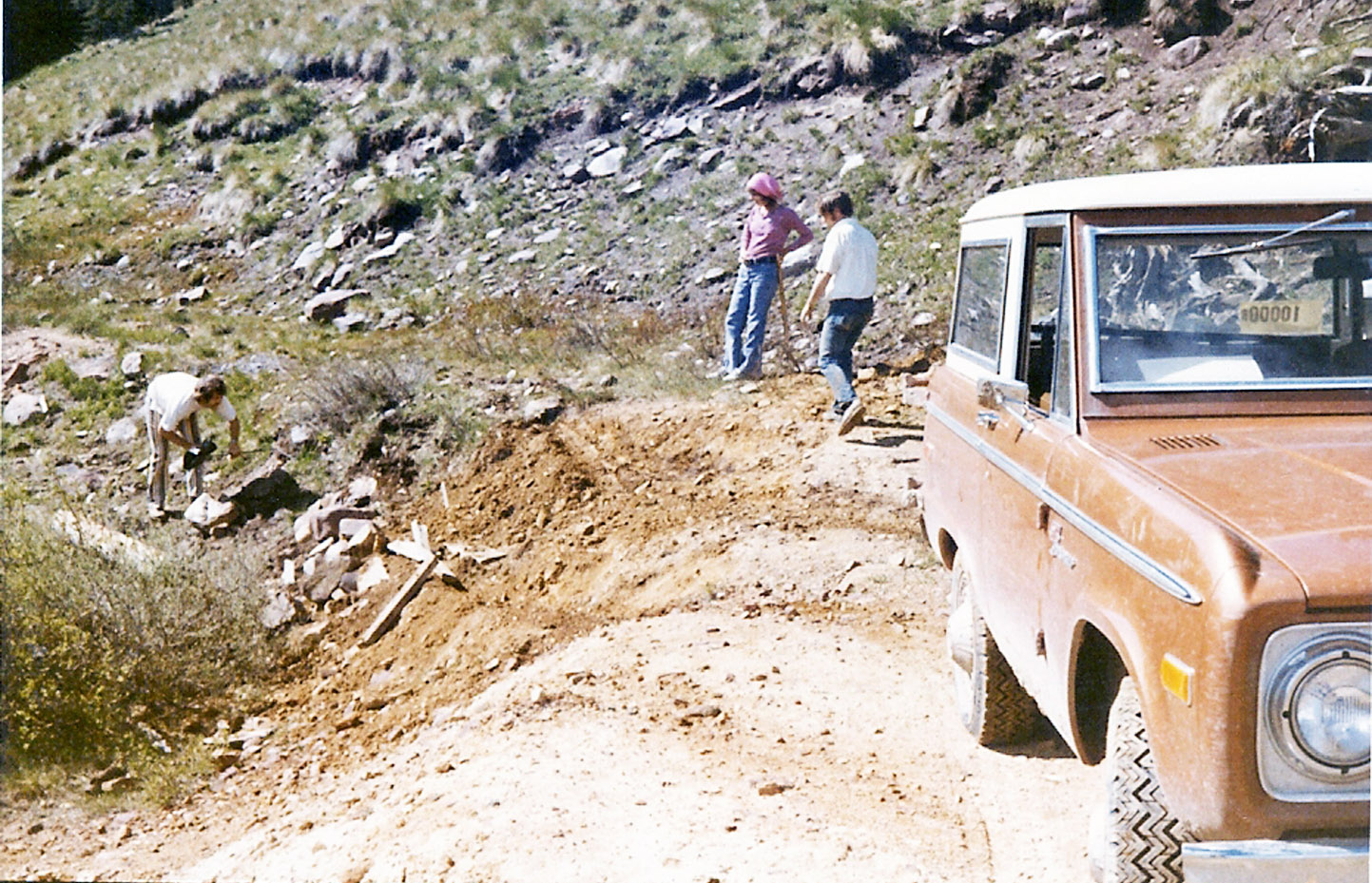
The next day, John took us sightseeing. Included in his agenda was an abandoned silver mine he’d discovered. What is commonly known as a road disappeared before we left the valley floor and soon we found ourselves clinging to the mountainside on a trail of sliding scree hardly wide enough for the Bronco’s wheel base. John was famous for his wild and crazy antics as a Kappa Sig in college, and he’d forged into Vietnam with the bravado only a lieutenant on point can respect. His patrol had walked into a land mine which nearly cost him his life, so when we neared the silver mine and the vehicle canted to a forty-five degree angle and he said ‘oh shit,’ it was truly an ‘oh shit’ moment.

bronco
After an hour of digging, Frank pushes uphill while John tries to pull out. Virginia watches.
slope
How far down is that?

We gingerly crawled out of the vehicle on the high side and while Virginia and I watched, John and Frank began digging out from under the wheels in an attempt to level the vehicle. We lost track of time out there in the thin air. The view was breathtaking. Unfortunately, my breath had already been taken by the vertical drop-off to the distant valley below where towering evergreens looked like matchsticks. I was sure we were all going to die.

bronco2
Success!

Over an hour later, John deemed the vehicle level enough that he dared climb inside to drive back up to level ground. With his success, I reluctantly re-entered the vehicle for the remaining terrifying jaunt to the mine. Scavengers had been here many times, but we wandered around thinking of the old timers who came up here with a mule and a pick to seek their fortunes.

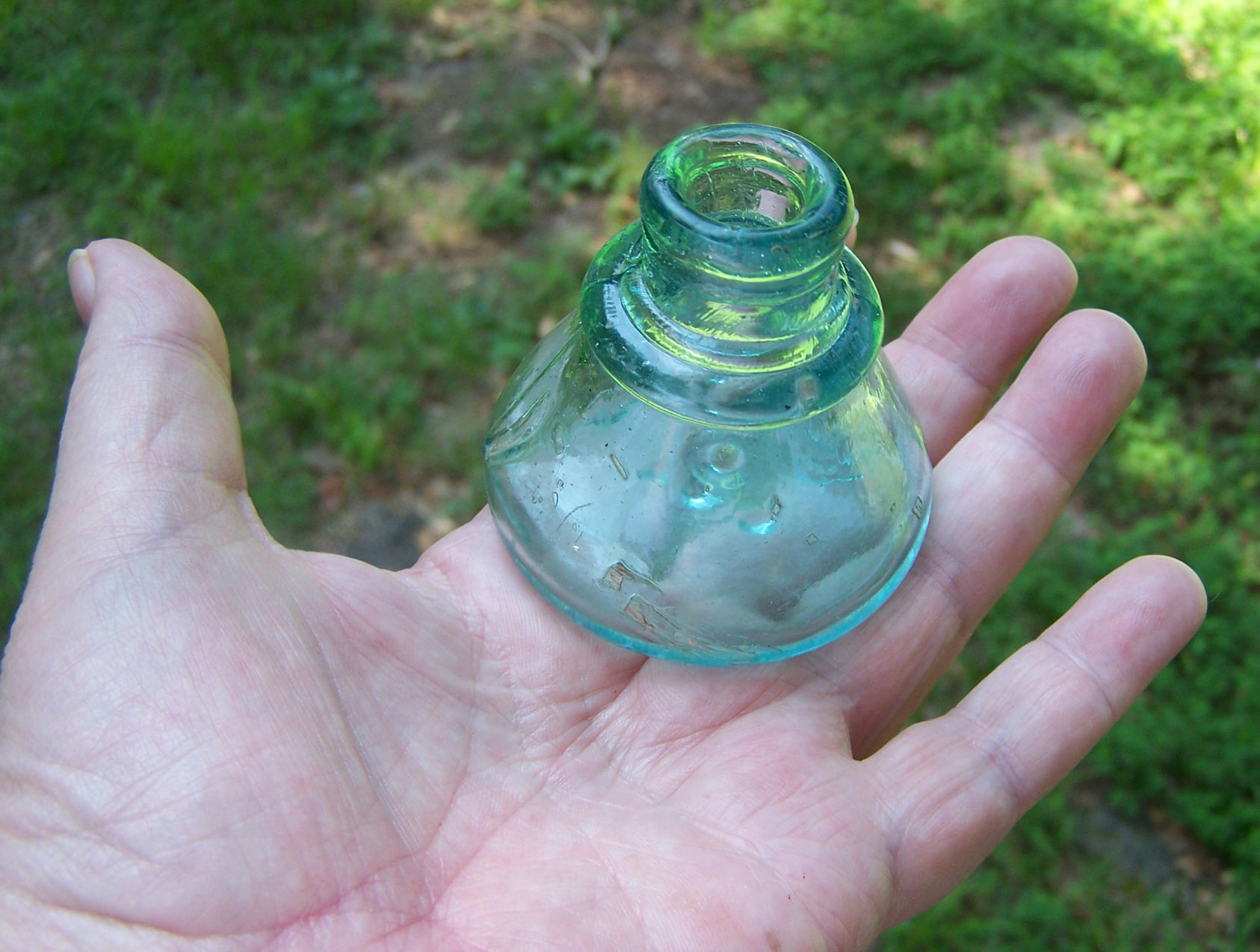
mine shackGlittering chunks of ore scattered over the rocky ground. The old log structure wasn’t safe to walk in, but we nosed around in the scattered remains where I found a little Carter’s Ink bottle buried bottom up in the dirt. It had turned blue-green in the decades since its contents had been used to pen letters home or tally the proceeds of a day’s hard work. I tucked it in my pocket and braced for the slip-slide trek back down.

From Leadville we hurried south to hit our planned stops at Garden of the Gods and Royal Gorge before turning east for the last leg of the journey. If you’ve never crossed Kansas, be warned—it’s the original never-ending story. You drive and drive and you’re still in the same place. We had cleverly planned what seemed the shortest route but which turned out to be a maze of two lane roads to nowhere. It got dark, the gas gauge sat on empty, and we were in the middle of corn fields with lightning forking across the sky.

Somehow we found our way to a tiny town and waited until the local gas station opened. Later that afternoon, crammed into the back seat with relics of our journey towering in the seat beside me, claustrophobia got me by the throat and I had to get out of the car. We stopped while I walked in the gravel along the side of the road and said I could not get back in that car. Finally Frank convinced me to try the front seat and he squeezed into the back for the rest of the way home.

So many memories, so many emotions. Frank is no longer among the living, nor is Robert. The rest of us keep growing older. But when I think about that summer vacation, I’m lost in the past, my hair flying in the wind, our laughter ringing up the hillsides. I hold that ink bottle in my hand and I’m back in the hot sun smelling pine in cool air and breaking my fingernails as I dig it out of that hard packed ground.

We did things, went places, had adventures. We experienced profound wonder that never left us. We grew. I see now—that’s what vacations are for.

A Gathering of the Tribe

scan0083
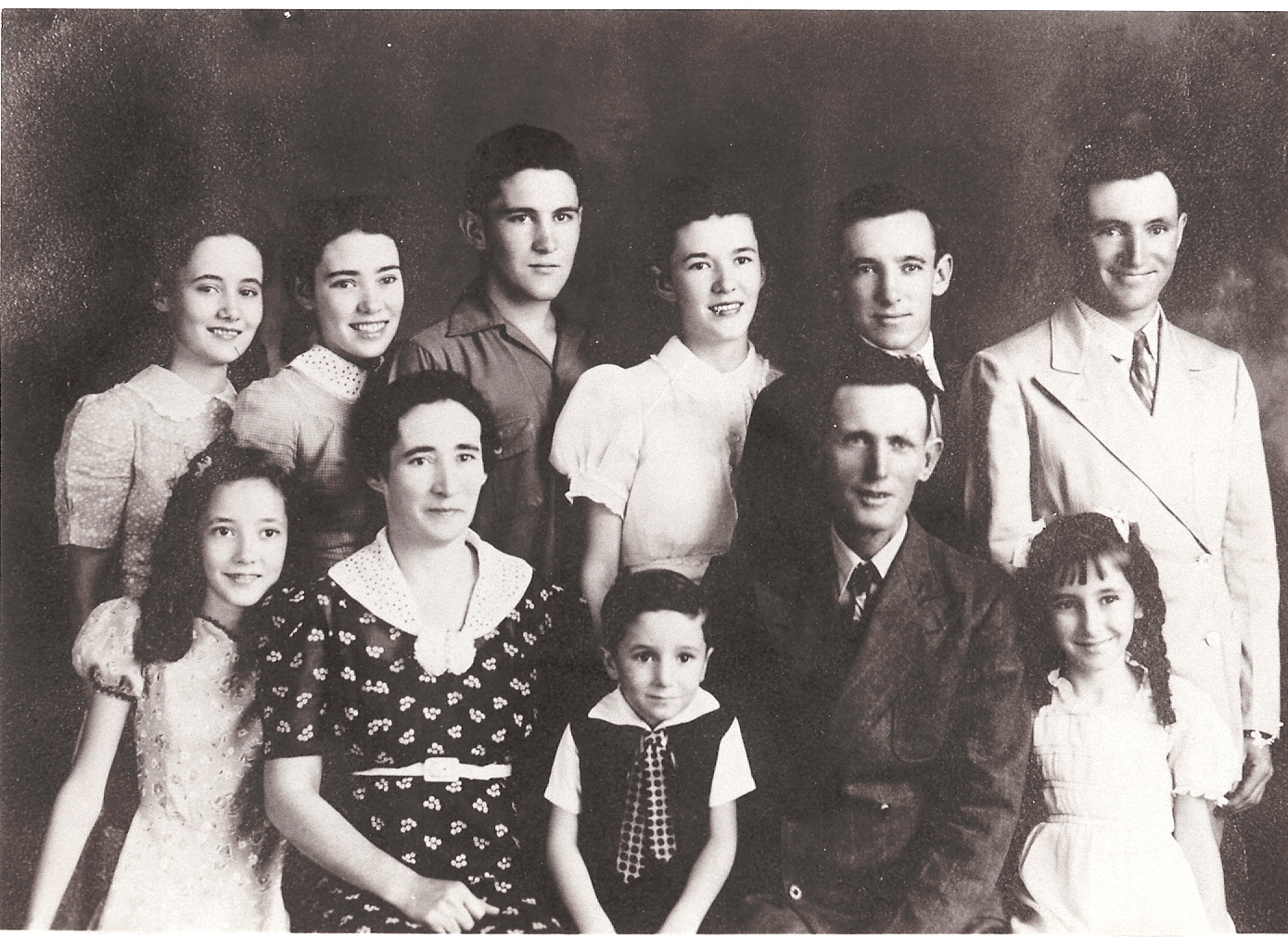
The Family of Sylvia and Tom. Left to right, front: Una, Sylvia, Thurston, Tom, and Sula. Back: Joy, Carmyn, Graydon, Tomazine, Douglas, and Durward.

Great strength comes from family tradition. I’ve seen it once again for myself, a gathering of elders I’ve known all my life. In the days and hours leading up to this October reunion, trepidation warred with exhilaration in the prospect of seeing my kin again. Three days past my last contact, I am only now able to let the anxiety fall away.

toma
Tomazine, oldest of the girls and third oldest of Sylvia’s children. Mother of seven who adopted four more orphaned children. Gardener, artist, advocate for common sense and women’s liberation.

Why anxiety? The clan was the community, at least for many of us older ones, and gathered each summer for a week of Rook tournaments, debates on myriad subjects, talent shows, and general mayhem. These people were my judges as well as my mentors, the audience for baby pranks and elementary accomplishments. Like my forty first cousins, of which I was the fifth oldest, I was subjected to quizzes and scrutiny on everything from the ruffles in my skirt to the cleverness of my retort.

A person would think that by the age of sixty-seven, I would have grown past the traumas and dramas of childhood. But no, like the genes we share, interactions with the pantheon of my mother’s family remain a strong influence. I should be glad of the genes—of my Grandmother Sylvia’s nine children, six remain among the living. The oldest recently celebrated her 96th birthday. The youngest, feted at this recent gathering for his 80th, remains—like all of them—in remarkably good health.

carm
My mother Carmyn, mother of five, gardener extraordinaire. College graduate, family historian. Early advocate for environmental protection and organic food.

Matriarch to her own tribe of five offspring, my mother was the middle child of nine born to an even sterner matriarch in Sylvia. Herself the oldest of nine, Sylvia followed a lineage of strong women who simultaneously chafed at the yoke of traditional wifedom while, at least in theory, subscribed to the religious role of subservient ‘helpmate.’ Sylvia’s mother Zeulia raised nine in a marriage with a man never far from his Bible but nonetheless willing to watch his aging wife wade out into mid-winter snow to gather firewood. Zeulia’s mother Armina enjoyed a few years of happy marriage to Jeptha Futrell and the arrival of two sons (one of whom, Junius Marion Futrell, became a governor of Arkansas) before losing Jeptha to pneumonia and remarrying during Arkansas’ devastating aftermath of the Civil War. Armina’s mother Frances Massey, as the fabled family account goes, grew up in the lap of southern luxury at her father’s plantation only to elope at age thirteen with the property’s caretaker Jimmy Eubanks. Their first child, born when she was fourteen, was said to have a head the size of a teacup and yet grew to robust male adulthood.

joy
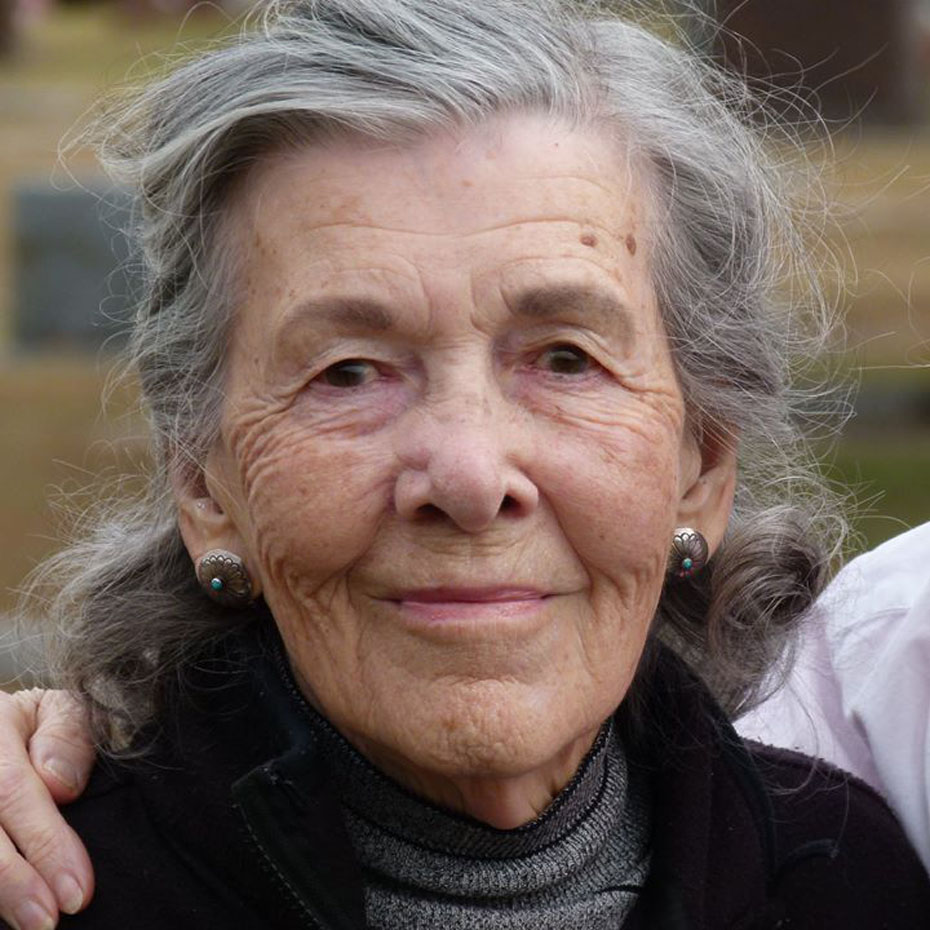
Joy, fourth youngest, mother of four. College graduate, school teacher, gardener, comforting presence.

By the mid-1840s, Jimmy and Frances crossed the Mississippi River on a barge and set up housekeeping in the northeast wilds of the new state of Arkansas. Subsequent generations married and lived in similar barebones circumstances in the farmlands near Crowley’s Ridge. After the Civil War, some of the family settled in Texas, and by the time my mother was born in 1923, entire households pulled up stakes each season to pick cotton in Texas before returning to “God’s Country” for the winter.

At the time Sylvia gave birth to her first child, her mother Zeulia was still producing children of her own. Both generations lived together at times in dog-trot houses on Ozark dirt farms, scraping up a livelihood from gardens, milk cows, and free range chickens and hogs. Despite their often desperate economic conditions, the families pursued education. Of my cousins, several hold graduate degrees and many more undergraduate degrees, while others have become successful entrepreneurs, engineers, and educators.

una
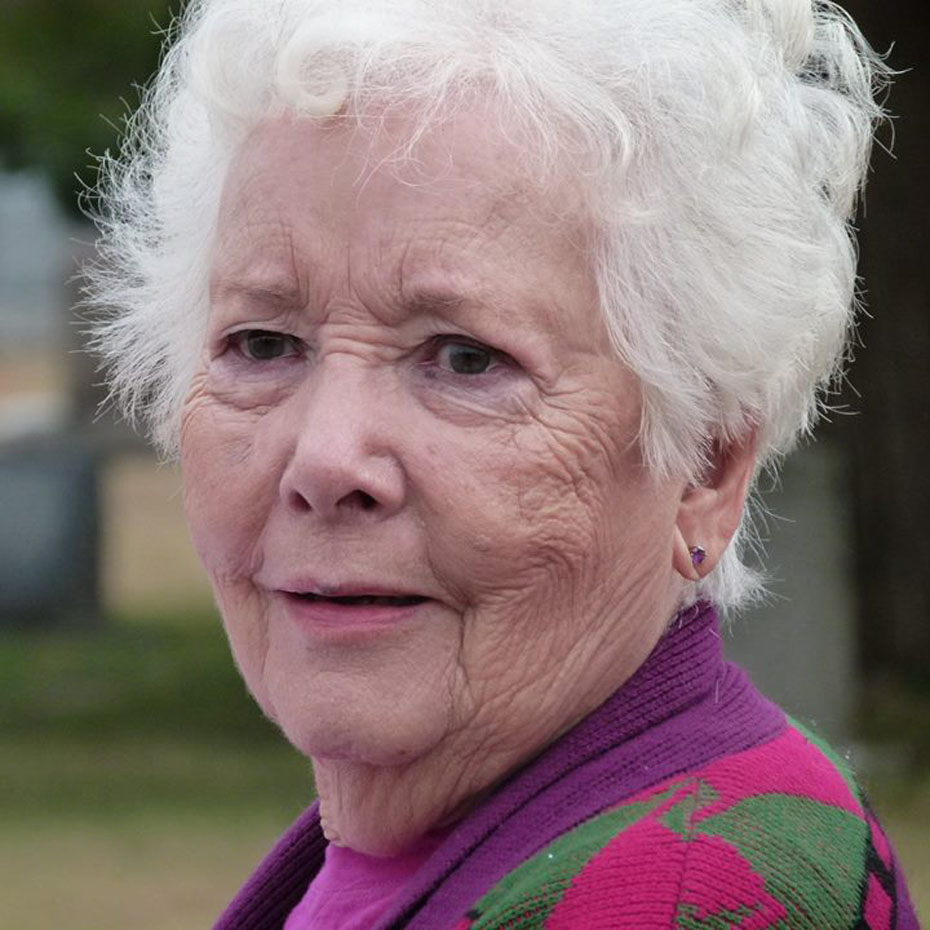
Una, mother of eight and third youngest of Sylvia’s children. College graduate, world traveler, genealogical researcher, firecracker in general.

We are told that our genes carry not only the codes for our biology, but also the encoded experiences of our ancestors. I’m left to wonder if my tendencies toward worry derive at least in part from the epigenetic traces of the Civil War and the Great Depression. Is my desire for solitude and rural landscapes the result not only of my own life but even more from the generations of ancestry that found safety and sustenance in the land?

As far back as genealogical research has taken us, efforts largely spearheaded by one of my aunts, the family follows a long tradition of yeoman farmers. Perhaps we were serfs not too many centuries ago, tuned to the change of seasons and the requirement to please a rich master. Our histories find sparse mention of cities and their trappings. We care more about the weather than women’s clubs, more for landscapes than local politics. Yet we do care, passionately, about our freedoms and the direction of the nation despite the fact that we divide fairly evenly between conservative and liberal.

sula
Sula, second youngest and mother of four. Avid Razorback fan, gardener, loving wife. Current holder of the Rook championship trophy.

Of the forty cousins, only fourteen made an appearance at this gathering. Only six or seven lingered for more than one evening. My oldest, now turning forty, waded in and was welcomed as were a few other grandchildren. My mother and two of her five siblings live in this area. Three others, two from Texas and one from New Mexico, stayed for six days, variously taking naps, visiting graves and old homesteads, and arguing over Rook scores. Wrenched to see them come and equally wrenched to see them go, I have since stared out my office window to contemplate the emotions set in play by the event.

The cousins who did attend agreed not to let our next meetings occur only at funerals. Inevitably, the funerals will come, not just for our aunts and uncle, but for us. There’s the strange comfort of time and conversation with those we’ve known all our lives, even though as adults we have little in common, hardly know each other at all. There are our children, grandchildren, even great grandchildren of which we are barely cognizant, yet each of them remain connected in these threads that grow ever thinner as the generations expand.

Thus is the history of all man’s tribes.

thurston
Thurston, youngest of the clan. Father of five, loving husband, modern day farmer and Razorback fan.

As children, my cousins and I not only played together at the annual family reunions but also at reunions of Sylvia’s siblings. We learned the names and faces of great aunts and second cousins, many of them still firmly entrenched in the lands of northeast Arkansas. The rest of us have remained as near as northwest Arkansas or as far as Georgia, California, and all points in between. There’s a mathematical impossibility to any attempt to acquaint the offspring of the forty cousins, or even to gather the forty cousins in one place.

Whether knowledge of one’s ancestry holds any relevance may be debated from various points of view. Whether I want to have these ties or not, I can’t imagine life without them. The huge array of people linked to me through family offers an oddly reassuring backdrop to any of my peculiar interests and life patterns. I’m no longer a child intimidated by their observation or awed by their arguments. They care about me as I care about them, not because we’ve done anything in particular to earn the caring, but simply because we are connected by inheritance.

We’re still a tribe.

The Red-Headed Bug

bug

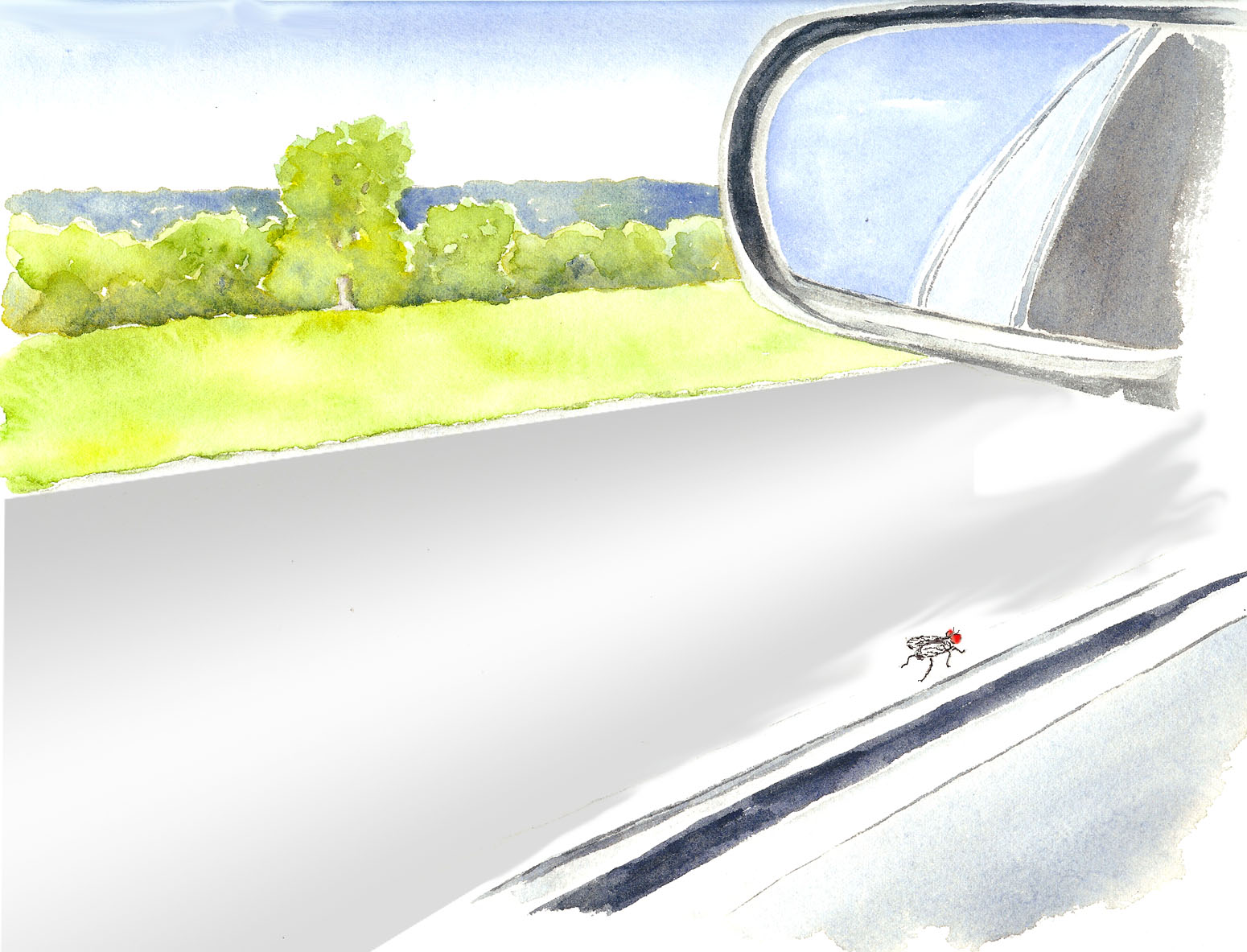
The car kicked up a cloud of dust as I hurtled down the long driveway. In my rush, I turned onto the county road and traveled another half mile before I noticed the creature that furiously held on just outside my side window, some kind of small waspish fly, its bulbous eyes perched like wire-rimmed glasses on its orangey-maroon head, its tidy black veined wings tucked sleekly along the sides of its narrow black thorax. Its thin legs flexed and strained to remain anchored in spite of the force of the air stream as I sped along.

This was not a singular event. My rural wooded property hosts bugs of infinite variety, some of which end up resting on my car.  On any given trip to town, I might inadvertently transport tan walking sticks, red, yellow, or black wasps, skinny dirt-dobbers, black, blue, or green flies, beetles of every conceivable shape and shade, spiders, ticks, bees, mosquitos, gallinippers, moths, ants of assorted size, and any other of so many multiple-legged beings that I suspect some of them have, to date, escaped scientific classification.

Notable creatures such as the saddle-backed, black stinkbug or the lime green preying mantis usually merit my immediate pull-over where I carefully remove them to roadside vegetation wondering if they find any advantage in new territory. I’ve considered whether higher insect intelligences, like flies, might purposefully plan for such transport. One large green fly made it all the way to town, having carefully positioned himself in a joint of the windshield wiper, perhaps with a particular lady city-fly in mind.

I rarely see them as I load in my gear, back up, and drive away, not until I have picked up speed, until they begin to slide, inexorably, across the waxed paint of the car’s body or the smooth glass of the windshield. They ride in ignorance, misunderstanding the threat. From their egocentric viewpoint, the problem is not that they are unwitting passengers on the rides of their lives, but simply that a strong wind has sprung up.

The challenge is to hold fast.

On this particular morning, the red-headed fly had arrived at my parked car door, at what seemed a perfectly fine spot to rest, groom, and digest his latest meal. As I began driving and the sudden gale blustered around him, he braced himself, securing every foot firmly to the spot. He had no concepts through which to anticipate that his greatest risk came with hanging on to what seemed familiar surroundings, that ultimately he would be farther away from what he knew and desired than he would have been if he had simply let go.

As I cruised along the road, the tiny red and black fly gripped ever more frantically to maintain his hold. In order to offer the least wind resistance, his body bent and contorted, stretched and elongated, the severity of his effort betrayed by erratic flare-ups of his wing tips.  Staring at me through the side window glass, he seemed to question me in panicky stares.

I advised him based on my previous experience.

Some bugs come to a forty mile per hour realization, I said. While I’m still on this back road, in a serendipitous flash of insight, they let go.

I waited for his response. He tensely adjusted his wings and aimed his head more into the wind.

After some scary free fall, I continued, they find themselves in the thickets near Miller’s pond. We drove farther and his stance remained resolute.

Or in the rocky ditch, I said, or in the middle of Mr. Breedlove’s herd of Angus. Wherever you might find yourself, I’m sure you could optimize the situation—you know, discover a trove of aphids or a lonely female.

I glanced to see if he was listening. The red-black fly showed no hint of a high-speed epiphany but instead re-exerted his desperate clench.

Ignoring the urging of my more generous side, I accepted little ongoing responsibility as to the fly’s future well-being. It was, after all, an insect. And I was in a hurry.

The road merged onto the highway, and I accelerated. Listening to the radio, absorbed in anticipating my day’s schedule, and maneuvering through heavy traffic, I failed to notice when his tiny sticky foot pads ripped loose from the slick paint of my car door.

Halfway into town, I realized he was gone.

Briefly, I suffered anxiety on his behalf. Had he made his leap at the right moment, I wondered? Was his grip torn free in the surge of a passing truck, bringing him to join countless distant kinsmen already pasted to its front grill?

Had he ever understood the threat?

Had he understood and somehow just hadn’t figured out the best timing?

I narrowed my thoughts to more pressing considerations. The city lay ahead. In a continuing ethical quandary about my role in the greater scheme of things, I decided to believe that he knew what he was doing all along and got off right where he intended.

From the collection I Met a Goat on the Road and other stories of life on this hill. Available in paperback with the original watercolor illustrations, or as an unillustrated paperback, or as an ebook.

Unillustrated paperback: http://www.amazon.com/dp/1500913197

Illustrated color paperback edition & Kindle edition: http://www.amazon.com/dp/B00DW9QLKO

Jars

100_1173

If I had considered the question in advance, I would have known that cleaning out the barn would precipitate a crisis. Memories long stored away for some magical future moment when that child’s toy, that handsaw, would again be needed—did I keep them simply for the memory? Furniture—small tables, wooden chairs, an ottoman frame, an old piano bench well made of oak and in need of a few repairs—would I someday find time and reason to fix them and return them to my house?

Too good to throw away. Largely irrelevant to my current life.

Becoming relevant at some future point? Probably not.

Determination to survive in a world lost to chaos drove the accumulation of this minor hoard. It was 1975. We had small children who would need to eat and thrive even if the bomb fell. We labored to renew skills our grandparents knew by heart, certain that within our lifetimes we would have to hide in our house until the fallout settled then emerge to plow, plant, and harvest our food, breed our pigs, chickens, and goats for future generations of meat and milk. We gathered meat saws and grinders, steel axes and shovels, nails and wire.

Time marched on. The Cold War ended and fingers moved away from the annihilation button.  The children are no longer dependent babies who might benefit from a collection of books on history, science, math. The goats departed in the late 80s, the garden in the early 90s, and the last of the chickens about ten years ago. The children have gone off like grown children do to find their own visions of the future.

Why do I need eight hand saws, ten hammers (of various sizes), buckets of random nails, screws, washers, bolts, and nuts? Feed scoops and cheesecloth, empty egg cartons, milk pails. What possible purpose could be met by random pieces of plywood or sheetrock, insulation, screen, tile? Why do I think that at some point I’ll make use of a decrepit power saw, drill, or grinder when, for the last twenty-five years, I have not?

I have created two piles. One is for the junkman to haul away. The other is for craigslist ads and friends who operate flea market booths. I am mildly optimistic that someone might buy the old wooden toolbox, child’s desk, or the sturdy small tables, the ten gallon pickling crock or the T-post driver. Never mind that for what I’d receive in dollars, I could restore only a fraction of this hoard.

In truth, what our energy and money bought in those early days was peace of mind. With our collection of tools, books, supplies, and know-how, we’d have a chance. Our kids would have a chance.

It served its purpose. The purpose no longer exists.

Sounds good. But what I haven’t put in either pile is the pressure canner. And the jars. Dozens and dozens of canning jars—quarts, pints, jelly jars. It’s the jars that have brought me to crisis.

When my firstborn child was two, my grandmother died. My dad’s mom, Nora. Always a country girl, Nora knew how to make soap, kill a chicken with a swing and stiff pop of its neck, and would can just about anything edible. She had jars. When they started clearing her property for the auction, I went down to Cane Hill and helped clean out her cellar. I hauled back cases of canned goods.

She had declined for a decade until her death at age 86. I wouldn’t dare eat any of the food in those jars. We had hogs and chickens at the time which allowed me to make use of Grandma’s labors. Each day I’d go out to the barn and pens and open more jars. Applesauce, whole plums, peaches, pears. Grapes and elderberries. Green beans, tomatoes, cabbage, mixed vegetables. Tallow. Jelly, jam, preserves. Juice. The critters were well fed that year.

We grew a huge garden. Neighbors had pear trees. We visited orchards and vineyards. Even with all of Grandma Nora’s jars, I sometimes ran short. My mother gave me jars. I bought jars.

In those heady days, each fall I stood in the storage closet and stared at my larder. The sight of all those jars filled me with the greatest pleasure that once again, by the labor of my hands, I had set aside enough green beans, tomatoes and sauce, peas, corn, and kraut to last a year. The jars lined up in colorful rows, golden tomato seeds swimming in crimson broth, finely shredded green cabbage fermented into tangy white kraut, wild plum jelly glowing fuscia in the dark.

Producing and preserving food challenged me like nothing I’d ever done. Even with a tractor and rototiller, even with liberal applications of goat manure and mulch, plants struggled to survive against drought, bugs, and predation. How many hours did I spend hoeing weeds or picking off potato bugs? How many hours peeling and chopping, sterilizing and packing, standing over the pressure gauge to ensure the right amount of intense heat and adequate time to prevent spoilage.

There’s a sound as jars cool, the snap of the canning lid sucking down, sealing the contents safely into the future—I loved that sound. Then it was time to use the grease pencil to write on the lid—July 1981.

Now I have all these jars. The cardboard boxes have suffered over the years. Faded brown paper hangs in shreds, the sides bow and buckle. Even if I keep the jars, I have to plow through generations of dead spiders and a healthy population of live ones to retrieve the jars from box wreckage. Why would I go to the trouble to re-package all these jars knowing that twenty years from now, it would all be to do over again? Would I be any more willing to let go of them then?

My children have no interest and no place to store jars. I wouldn’t mind storing them if my kids wanted them. But there’s no longer a tractor or rototiller. The half-acre garden has grown up in saplings and pasture grass. There are no goats to produce manure. Everything is different.

But here’s the argument. Certain things haven’t changed. We have to eat. We have the ability to grow food. With jars and a pressure canner, we could store food. Isn’t that incentive enough to save the jars?

What is my responsibility? For countless generations, as far back at least as civilization, my ancestors have planted, cultivated, harvested, and stored food. These are skills we’ve learned—how to measure the right time to plant onions or corn, what seeds to soak before pressing them into the dark earth, how to dig potatoes without piercing them. We raised our kids to know these things.

Do I simply walk away?

Why not? There are books. There are others still farming, still canning—the knowledge won’t fade simply because I relinquish my jars.

Even with the best of hoards, with all the tools and seeds saved and an endless supply of jars, at the end of the day, survival in a world gone mad would be a tenuous venture. What about grain? No bread, no pasta, no crackers. What about oil, salt, soda, sugar? We’d be dependent on venison and that requires guns and ammunition. My .22 rifle won’t bring down a deer.

At some point, even the most vehement survivalist will face what I face. How many times in your life do you restock your rations and water? How much is enough ammunition? Who are you prepared to kill to protect your hard won ark?

I’m working on a compromise with myself. Today I think I will keep a few jars as mementos of my grandmother, the tall green half gallon jars and a few of the older square-shoulder quarts. I will wash them periodically and keep them up on a shelf, decoration that tugs my heartstrings when I look up from my daily tasks. I will acknowledge the hard work and dedication that touched these jars, my hands, my mother’s hands, my grandmother’s hands.

All the grandmothers. All the jars. All the tomatoes and fine plum jam will not save the world.

Domes

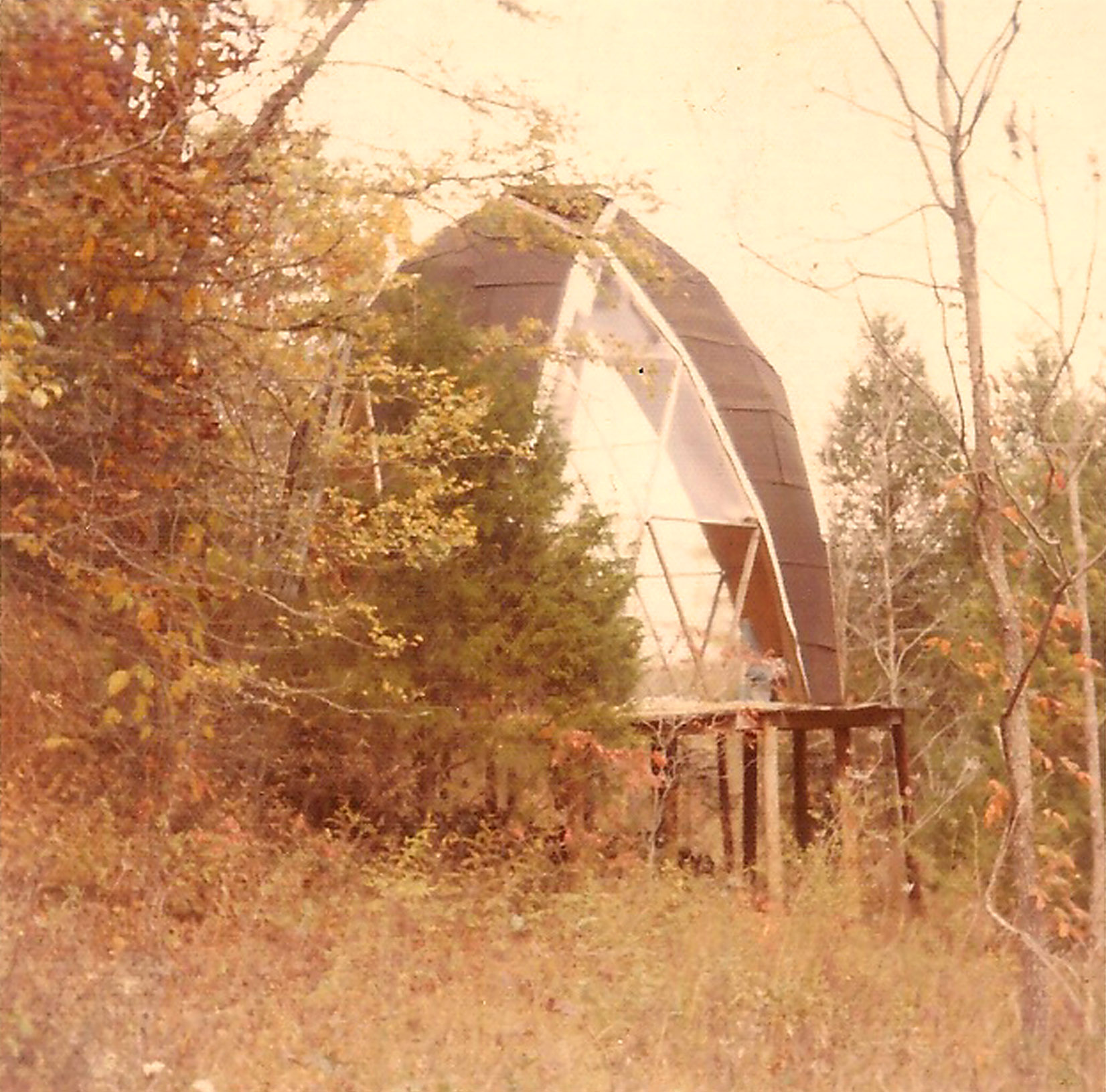
zome is stretched dome
A ‘zome,’ a stretched dome. One of several domes constructed in South Washington County Arkansas at a rural intentional community.

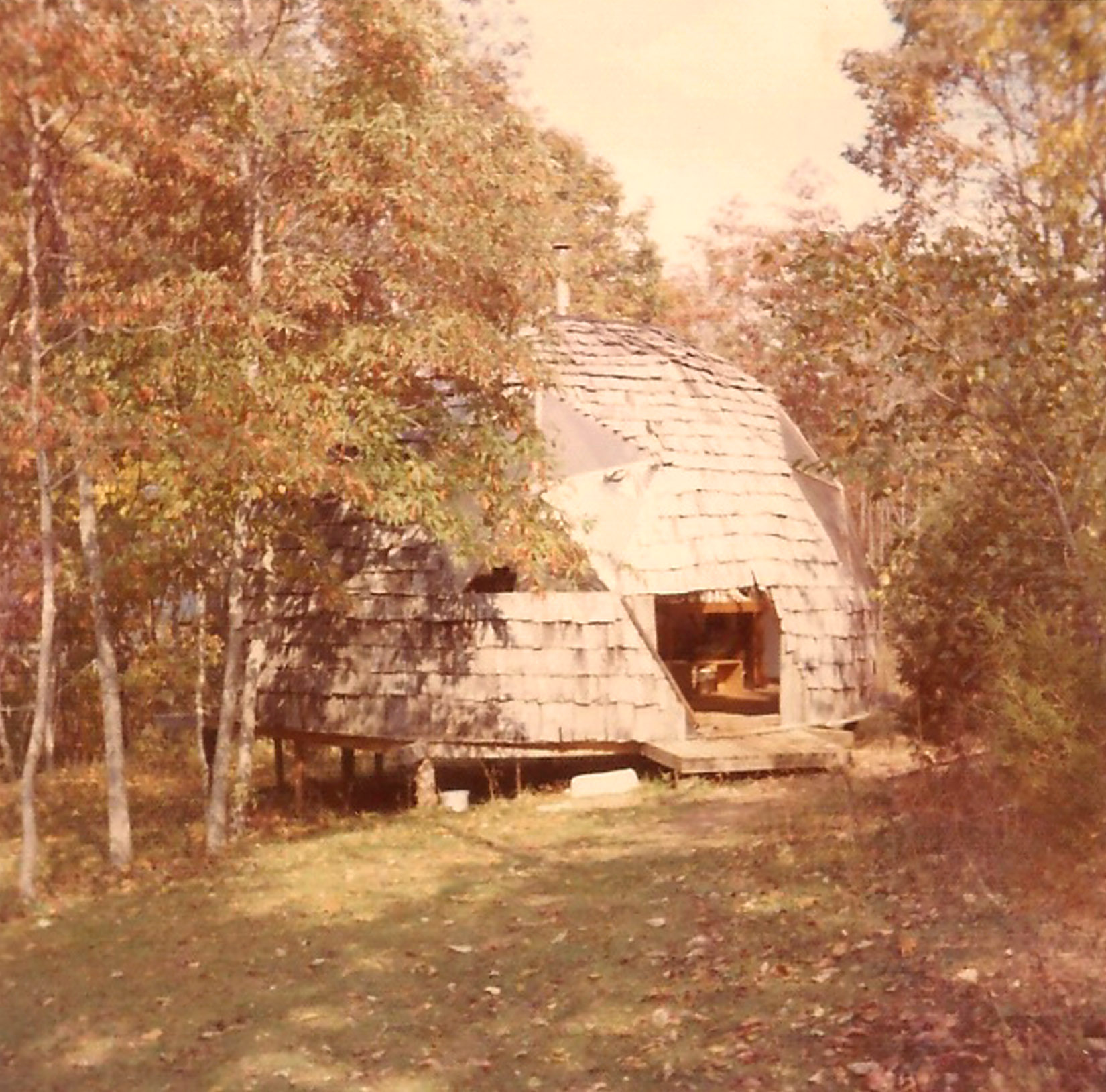
In the 1960s and into the early 1970s, geodesic dome structures cropped up around the world, including in Northwest Arkansas. Some lasted, many did not.

Based on the idea that what we see externally informs how we understand ourselves internally, domes epitomized a philosophical approach to human habitation.

dome1Traditional architecture with its multiple separate rooms leads to a segmented self view, according to this argument.  Rounded open space such as provided in a dome fosters a more holistic view of self and the world in general.

The dome concept was developed by Buckminster Fuller. Fuller discovered that if a spherical structure was created from triangles, it would have unparalleled strength.

3-8ths or half geodesicIn 1928, he wrote:

“These new homes are structured after the natural system of humans and trees with a central stem or backbone, from which all else is independently hung, utilizing gravity instead of opposing it. This results in a construction similar to an airplane, light, taut, and profoundly strong.”

looks like a zome
None of the eleven or more domes built at the intentional community have survived.

The sphere uses the “doing more with less” principle in that it encloses the largest volume of interior space with the least amount of surface area thus saving on materials and cost. Fuller reintroduced the idea that when the sphere’s diameter is doubled it will quadruple its square footage and produce eight times the volume.

Fuller worked towards the development of a Comprehensive Anticipatory Design Science which he defined as, “the effective application of the principles of science to the conscious design of our total environment in order to help make the Earth’s finite resources meet the needs of all humanity without disrupting the ecological processes of the planet.”[i]

eye doc dome
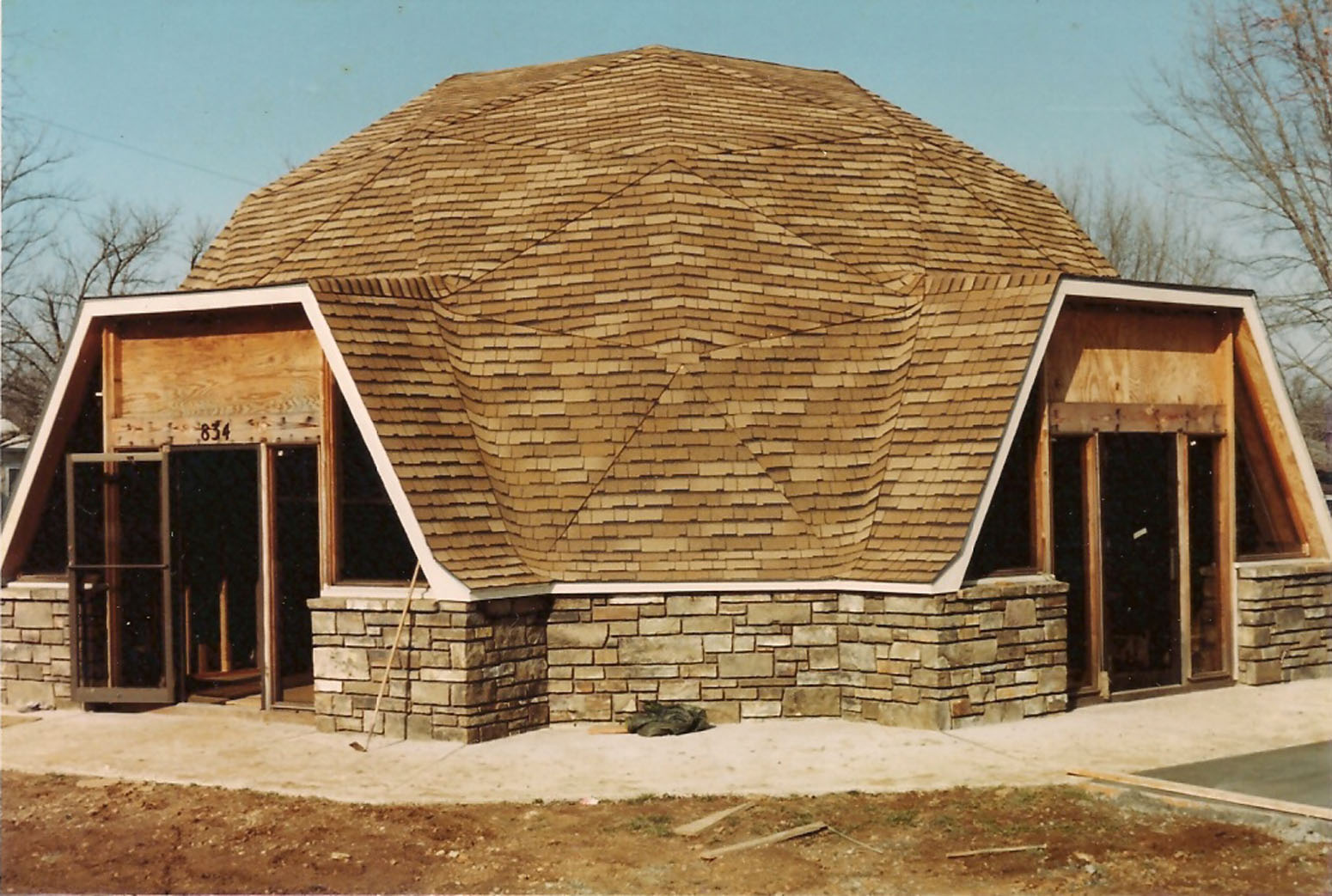
Optometrist office in Fayetteville, newly built in 1970s.

Domes were built not only by idealistic hippies pursuing an improved state of consciousness but also ended up in use at commercial locations. A enhanced dome built to house an optometry practice in Fayetteville, Arkansas remains in good condition.

Newman's dome homeOne of the surviving residential domes in the area includes bump-outs and other additions that make for a more family-friendly features. This one includes a basement and a rear deck.

Other commercial uses included the Southern Energy Fast Oxide Reactor (SEFOR) built in south Washington County near Stricker. SEFOR operated from 1969 to 1972, when the original program was completed as planned. It was privately operated by General Electric and funded by the United States government through the Southwest Atomic Energy Associates, a nonprofit consortium formed by 17 power companies of the Southwest Power Pool and European nuclear agencies.

Southern Energy Fast Oxide Reactor, Stricker, '78 (SEFOR)The facility was then acquired by the University of Arkansas in hopes that it could be used as a research facility. However that never happened and the university has been paying $50,000 in maintenance fees yearly since. SEFOR is still considered contaminated and the University continues to seek federal funds to clean up the site.

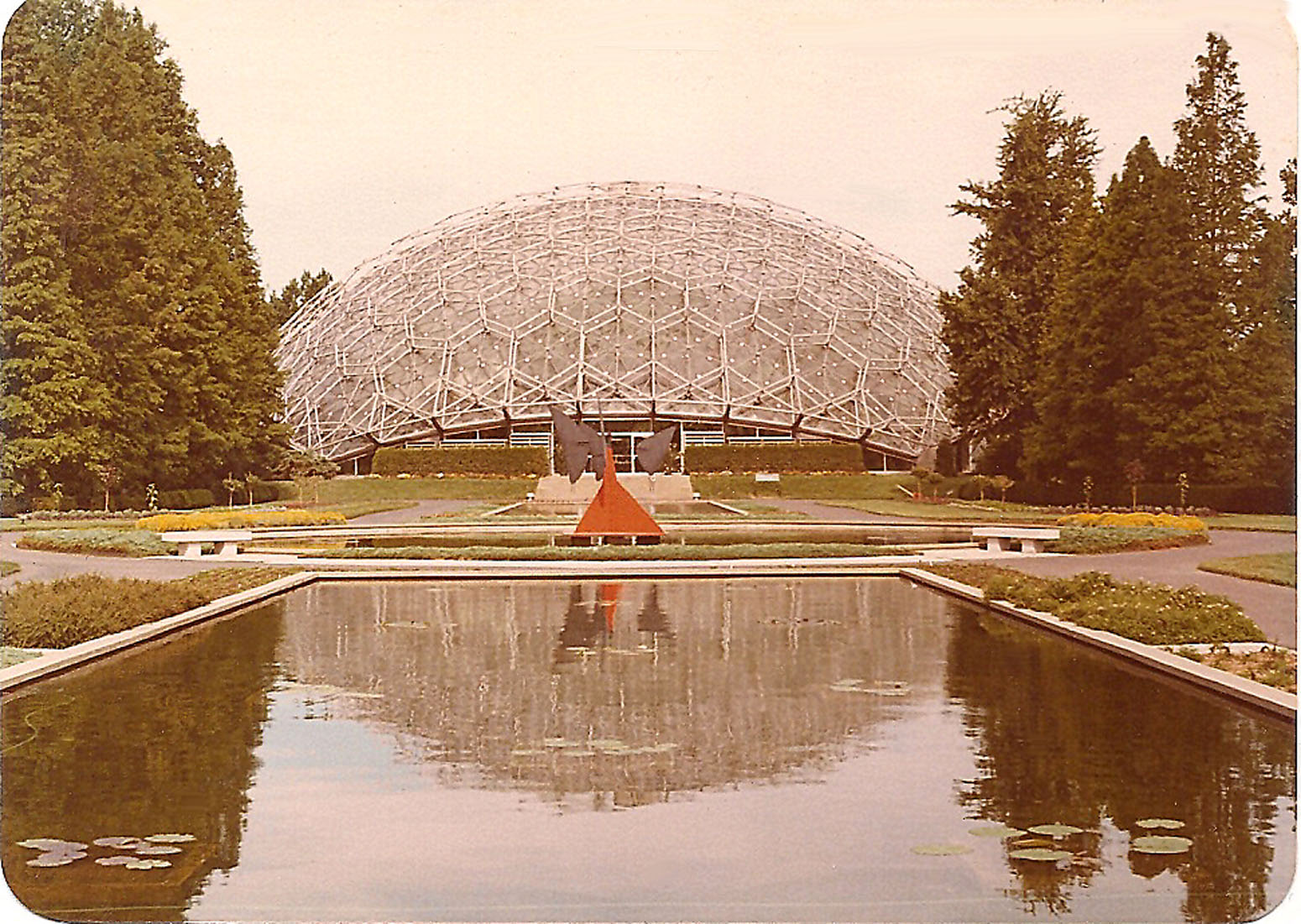
Climatron, St. Louis, '77Another example of dome construction in commercial application is the St. Louis Climatron, part of the Missouri Botanical Gardens built in 1960. Controlled environment in this large dome re-creates a lowland rain forest.

Due to limitations of materials and use requirements, domes today are built for only a few applications, most notably sports arenas and as a complement to other structures such as churches where a separate dome feature may add another dimension to sacred space.


Photographs courtesy of Denny Luke, a longtime resident of the area.

[i] http://bfi.org/design-science/primer/environmental-design-science-primer

Ten Lives

joy

I could spend ten lifetimes reading the stories of humankind and still not know enough. Sumeria, Greece, Egypt, Rome. China: the Records of the Grand Historian, Bamboo Annals, the Five Classics. Popol Vuh. Genghis Khan. Charlemagne. Tesla. Secret writings of ancient and medieval women.

I could spend ten lifetimes carrying out the ambitions of various parts of myself and still not do it all or well enough. Art—the swirl of vibrant color on thick white paper. Music—Bach fugue played a nine-foot grand. Literature—a turn of phrase that takes away breath, stories that ache to be told.

Plant, cultivate, and harvest, dry, freeze, slice—onion and butter sizzle in a hot iron skillet, ready for potato. Goats— chewing alfalfa hay at the barn door, watching me with yellow slit eyes. Weave and sew fine cloth, yards of it filling my arms. Gather fallen twigs to kindle a fire, add more wood and watch the flames spread, leap, fall to pulsing coals and pale ash.

I could love ten thousand men and a thousand women and still not have loved enough. Never have touched enough soft skin. Never have kissed enough lips or marveled enough at the mingling of color in the iris of an eye. Lens to the soul I worship with my body.

With endless days would come endless shapes of clouds racing across the sky, dark and turbulent rolling in with thunder, thin wisps high in frozen air. Rain lash the walls, wind bend the trees. Deep in the forest an open glade glows chartreuse. Sun sears dry ground, bakes the insects scuttling for shade. Hoar frost coats the grass and fence wire, forms iridescent lace of spider webs. Snow drifts down at dawn, five degrees and the air is blue.

In these things and countless more, the joy of physical being fills my heart, tells me why I exist. More than the grief, the suffering, the despair, it is the supreme excellence of incarnation that drives me to my stubborn end.

A Moveable Feast

dickson copyDickson Street, 1970. Old rock buildings with narrow profiles and high pressed-tin ceilings. An abandoned railroad depot that trembled when freight trains thundered past. A declining backwash between campus and the downtown square of a town still embracing its provincialism.

The university drew them, intense intellectuals seeking knowledge, misfits seeking community, young men determined not to die in Asian jungles. In between time in class and demonstrating against war, they settled into the street’s cheap real estate to paint murals and make free love. Abandoned warehouses and decrepit brick structures a hundred years old became head shops, bars, and art galleries. Downscale restaurants heaped alfalfa sprouts on whole wheat bread sandwiches—radical. Cooperatives sold tobacco and honey in bulk, locally made tofu—far out.

Sweet smoke hung in the air. Street festivals celebrated music of hope and rebellion. People wore crazy hats and stood on the corners laughing and hugging. Dickson Street crackled with excitement.

All this made it a place people wanted to be. Straight people, women wearing hosiery and high heels, men in suits—they loved the experience of freedom, even if they themselves couldn’t be free. They dared to step out of their establishment lives and feel the beat, smell the smoke they didn’t inhale. Well, maybe they inhaled—who would know? On the street, they became part of a separate world, joined a conspiracy in which all participants shared the secrets.

Not everyone loved the street where long-hairs had carved out a world of their own. What on earth went on down there, they lamented—police, city fathers, wives of husbands who slipped out for a drink at one of the dive bars and ogled the braless young women. Owners of real estate along the street stopped repairing the roof and the plumbing, inflated the prices so that the restaurants couldn’t own it for themselves, so the art galleries couldn’t afford the rent. The hippies needed to go.

By 1990, value created by the alternative culture gave the establishment reason to retake the street. There was money to be made. People wanted to eat there, shop there. The street was cool. Never mind that the coolness had been bestowed by starving artists, by inventive bohemians, by fledgling entrepreneurs selling worn-out blue jeans for respectable profits.

The rich bought the street. They demolished landmark gathering places to put in shops selling diamonds and art from back east. They came dressed in their finery to eat at chain restaurants and watch traveling Broadway shows.

The street is now a shell of its former raunchy self, an extravagant display of fakery in expensive plastic packaging—a back to the land scene where the joyful family piles out of their brand new SUV to view nature, a credit card ad with Beatles music playing in the background. There’s no getting it back. They don’t even understand what’s been lost.