Where Trump voters come from

Arkansas continues its dereliction of duty in educating its young people with the May 22 announcement by Gov. Asa Hutchinson that he will promote current Education Commissioner Johnny Key to the governor’s new cabinet position of Education Secretary. With this promotion, Key will add another $3,450 per year to his already ridiculous salary of $239,540 and gain ever greater leverage over the hapless citizenry of our state.

Readers may remember the insidious maneuvering required to cram Key into the commissioner position in the first place. Back in 2015, Key’s work history and educational achievements did not qualify him for the job. The law required a master’s degree and ten years teaching experience. When Gov. Hutchinson seized on the idea of putting Key in the post, a bill rushed through the legislature allowed the commissioner to evade these requirements if the deputy commission held those credentials.  Not that the commissioner would be required to obtain the advice or consent of the deputy in any given matter.

Key graduated from Gurdon (Arkansas) High School then received a Bachelor of Science in Chemical Engineering in 1991 from the University of Arkansas at Fayetteville. He never taught a day in his life. That is, unless you count his and his wife’s operation of two pre-schools in Mountain Home, Noah’s Ark Preschool and Open Arms Living Center, operations that for years applied for and received tax-funded grants while flagrantly teaching religion. Another state legislator, Justin Harris (West Fork) also operated illegally with such dollars for his Growing God’s Kingdom preschool. All three schools received funding from the state under the Arkansas Better Choice (ABC) program administered by the Department of Human Service (DHS). After complaints were filed by Americans United for Separation of Church and State, the state had no choice but to amend its grant guidelines.

AU Staff Attorney Ian Smith told Church & State. “The administrators of the Arkansas Better Choice (ABC) program violated the Constitution by funding [these] religious activities.”

According to a 2011 Arkansas Times report, “Sen. Johnny Key gets almost $200,000 in public money a year in support of his Noah’s Ark Preschool in Mountain Home, which also provides Bible lessons and daily prayers. Nearly 300 agencies — many of them with religious roots — receive $100 million a year in public Arkansas Better Chance funding to provide preschool for poor children.”[1]

The stated mission of the Harris preschool was to “share the love of Jesus” with students, and the school operated with a Christian curriculum that included a “Bible time” for verses, stories and prayer. The school’s handbook also assured parents that staff members will “strive to ensure that your child feels the love of Jesus Christ while preparing them for Kindergarten.” The preschoolers, it continues, would be taught “the word of God” so that they can “spread the word of God to others.” They also prayed over students with disciplinary problems and laid on hands to “cast out demons.”

~~~

Key began his career in public service in 1997 when he was elected to serve as a justice of the peace on the Baxter County Quorum Court. He was elected to three two-year terms in the House of Representatives, followed by a tenure in the Senate that began in 2008. Term limited out of the legislature, Key served as associate vice president for university relations at the University of Arkansas system, a position he began in August 2014, a half-year before his friend the governor found him a cozy role at the helm of the state’s education system.

Yet even while in the legislature, Key demonstrated his dedication to the extremist religious agenda in education:

He was active in education issues, including responsibility for exploding the number of seats that receive state dollars to essentially finance home-schooling, by qualifying millions in spending on “virtual charter schools” that provide assistance to students who don’t attend conventional brick-and-mortar schools. His special language, never debated on the floor, lifted the cap on such payments from 500 to 5,000 students.[2]

Simultaneously, the state excused itself from any oversight of home-schooled students. There are no tests, no monitoring, no method by which to ensure thousands of Arkansas home-schooled kids are actually learning anything,

Key has also been a champion of public charter schools in the model promoted by the Walton heirs. While first lauded as a path for parents dissatisfied with their children’s education, charter schools have come under increasing scrutiny for siphoning money away from public schools with less than excellent results. Even worse, soon after taking over as education commissioner, Key became the default school board for Little Rock’s troubled schools. The district struggles with low-income, high minority populations where schools routinely earn “D” and “F” ratings in student outcomes. Key’s answer? Charters.

Much ink has been spilled over the Little Rock situation including Key’s desire to terminate the state’s Teacher Fair Dismissal Act and the Public School Employee Fair Hearing Act in the 22 traditional schools in Little Rock. As noted by one observer, “In the absence of democratic governance and oversight, Arkansas schools are hiring unqualified teachers without a public disclosure requirement, undermining labor standards for teachers, contributing to school re-segregation, and defrauding the public.”[3]

Tracking the details of the Little Rock fiasco, the Arkansas Times reported that the previous superintendent, Baker Kurrus, who was fired by Key before his takeover, thought charter schools “probably unconstitutional when operated as parallel, inefficient and not particularly innovative or successful ventures in Little Rock. He mentioned then that the loss of 120 students for this latest expansion potentially meant a loss of approaching another $1 million in annual state support to the Little Rock District for lost students.”[4]

~~~

No effort was made by the state to require Key or Harris to refund the millions in tax dollars they had appropriated over a period of years to operate their religious schools. And of course they didn’t honorably offer to do so. The ABC program only marginally amended its procedures for granting funding. The guidelines now require that no religious instruction occur during the “ABC day,” a set number of hours of purely secular instruction. Whether religious instruction occurs before the ABC day commences or after it ends is not the state’s concern. Since children are often picked up by school vans or dropped off by parents before the parents’ work hours and held until the end of the work day, anywhere from two to four hours of religious instruction is usually possible.

And who would know if these schools violate the ABC day with a little prayer at lunch or a few minutes of casting out demons?

The ABC program, as it stands, does not require any kind of viability test where a school would have to prove that its religious instruction could stand on its own two feet without the use of tax dollars. In fact, if tax dollars didn’t support the rent, utilities, insurance, and salaries for general operations, these schools would cease to exist. Repeated questioning of DHS / ABC money managers has yielded zero interest in developing or implementing such a test.

Neither Harris nor Key were censured for their illegal use of public funds for their religious schools. And while Harris quietly served out his remaining term in office before retreating to private life, Key has been awarded one of the highest paid positions in state government. If Key didn’t know he was breaking the law in accepting ABC grants, he’s incredibly stupid. Surely somewhere in his years of college he must have brushed up against the idea of separation of church and state and the hard line between tax dollars and religion. If he did know, he deliberately violated the U. S. Constitution, aided and abetted by the state’s willfully ignorant wink and nod.

Now Key reigns supreme over the state’s educational systems, welcomed with open arms by a governor whose own dedication to religion is no secret. After all, Asa Hutchinson is a proud graduate of none other than Bob Jones University, a private, non-denominational evangelical university in Greenville, South Carolina, known for its conservative cultural and religious stance. Refusing to admit African-American students until 1975, the school lost federal funding and ended up in court for not allowing interracial dating or marriage within its student body. BJU hit the news again in 2014 after a report revealed that administrators had discouraged students from reporting sexual abuse. [See the New York Times report.]

Apparently Johnny Key’s religious beliefs and willingness to breach the Constitution’s bright line between church and state are the primary criterion by which he has been judged the perfect man to be in charge of Arkansas education. It’s past time to assume ignorance as the underlying problem in Key’s malfeasance. The fact is that Hutchinson, Key, and every other complicit authority over our state’s educational systems knowingly evade the Constitutional separation of church and state in order to pursue their “higher calling” to religion.

~~~

See also this recent Forbes article on the failure of charter schools.

~~~

[1] https://arktimes.com/columns/max-brantley/2011/11/09/state-paid-bible-school

[2] https://arktimes.com/arkansas-blog/2015/02/10/whats-afoot-on-bill-to-change-qualifications-for-state-education-commissioner

[3] https://medium.com/orchestrating-change/272-broken-promises-the-lawless-aftermath-of-arkansas-act-1240-a8e26ce751e8

[4] https://arktimes.com/arkansas-blog/2016/05/07/johnny-key-fast-tracks-lr-charter-school-expansion-in-walton-helped-enterprise

The Genie is OUT!

A flood of state laws restricting abortion rights have moved us toward the Twilight Zone, a place where a woman no longer would hold agency over the functions of her body. But that genie is out of the bottle. Women will not give up their hard won freedom.

What are these state laws? Some require the doctor to give a woman information about reversing the procedure (part of the emotion strategy) or show her an ultrasound of the fetus (for an extra charge, part of the money strategy). Some ban abortions if a fetal heartbeat can be found (part of the medical strategy). Still other state laws have come in through the back door by restricting when or how abortion clinics can operate, or which medical personnel can provide abortion services (part of the access strategy).

Special interest zealots have pushed laws banning abortion if the fetus shows signs of Down syndrome. Other laws would ban abortion after six weeks or 12 weeks or some other arbitrary period which in many cases would cut off access before the woman even knows she’s pregnant or before prenatal testing could discover genetic or development abnormalities.

But wait. Before progressives stroke out over all this, keep in mind this is part of a long struggle over women’s rights that’s been going on since the beginning of time. Women are not going to accept a step backwards.

I grew up in a time when women weren’t supposed to enjoy sex. It was only men who might indulge in multiple partners while retaining their sterling reputations. In fact, experience with multiple sex partners enhanced a man’s reputation. As the receptacle of male seed whether through premarital or extramarital sex, rape, or marriage relations, women were left to deal with the problem of conception and unwanted pregnancies. The child might be put up for adoption, or for those wealthy enough, a quiet vacation overseas lasted long enough to dispose of the entire issue.

Women weren’t supposed to enjoy sex because receiving male seed and laboring to give birth was the punishment for tempting Adam to defy God’s order not to eat that forbidden apple. Of course Adam wasn’t responsible for what he did with the apple, a perfect metaphor for the male’s lack of responsibility for impregnating a woman.

That’s the story, in a nutshell, of the current furor over abortion rights. Men have to relieve their needs. Women have to clean up after them. If she chooses to abort, conservatives want the procedure to be high risk, out of the hands of medical professionals and back in the alleys so that the price she pays might be sterility or death.

The advent of modern medicine and the pharmaceutical industry gave women birth control pills. The basic research for the pill became possible when Russell Marker discovered that generations of Mexican women had been eating a certain wild yam — the Barbasco root, also called cabeza de negro — for contraception. It was from these yams that Marker was able to extract the progestin that Gregory Pincus combined with estrogen to formulate the first birth control pill. That was the 1950s.

It took another twenty years to clear regulatory and legal hurdles so that women could use the pill for contraception. At first, doctors wouldn’t prescribe it to unmarried women. A court case brought by Planned Parenthood finally cleared the way for all women to gain access to the pill.

In 1973, the Roe v Wade decision granted women the legal right to control what happened inside her body. The Court ruled 7–2 that a right to privacy under the Due Process Clause of the 14th Amendment extended to a woman’s decision to have an abortion, but that this right must be balanced against the state’s interests in regulating abortions: protecting women’s health and protecting the potentiality of human life. Arguing that these state interests became stronger over the course of a pregnancy, the Court resolved this balancing test by tying state regulation of abortion to the third trimester of pregnancy.[1]

Women still have to get a doctor’s prescription to obtain the pill. And religious and conservative groups have murdered doctors, burned clinics, and passed a long string of state laws to fight the Roe v Wade decision. One explanation of this opposition is explained as follows:

Birth control (BC) allows us to separate sex from its “true nature” as a solely procreative act that should be only happen in a heterosexual marriage for the purpose of (or, at least, with ‘openness to’) making babies. When we teach people about BC, allow them easy access to it and condone its use, it divorces sex from this purpose and allows it to become an activity for anyone, regardless of marital status, to partake in for fun, bonding, pleasure, etc. Essentially – because it allows people to have premarital sex without the proper, natural, consequences.

Then, as more people have sex without wanting kids, there is a higher chance that someone will have an unwanted pregnancy as all BC has some failure rate. If all women just practiced abstinence until they were married (which is the only moral and correct path), there would be no abortions…[2]

Never mind that many married women who already have children seek abortions for obvious reasons—more children to feed, clothe, and care for never mind providing suitable education so that each child has a realistic chance at success in life. It also ignores the terrible outcome of fetuses with extreme physical or genetic abnormalities and/or of high risk to the mother’s life.

That is all God’s will, according to the fundamentalists. But so is infertility and that doesn’t keep religionists from seeking artificial insemination. So are cancer and heart attacks and broken bones.

But aside from problems of conception amid the pleasures of sex, the ongoing culture war between conservatives and progressives is about male power and control. Conservative male testicles have been shrinking ever since the female genie emerged from the bottle, since women gained the right to vote, own property in her own name, or seek a divorce. But those little ‘nads have really shriveled since the pill and Roe v Wade.

Under patriarchal beliefs, women were created to serve men, produce his children, and see to their upkeep. This view of women undergirds the current Republican agenda and accounts for evangelical support of a president unfit for office but willing to grant their agenda in order to gain and stay in power.

Thus we have current efforts in various red states to draw the circle tighter around abortion. It’s their belief that the new lineup of SCOTUS justices will find one or more of these state laws as a staging point to overturn Roe. The die is cast. The conservatives finally will have their showdown.

But wait. Does anyone think for an instant that women will shrink back into the shadows and submit to a renewed reign of male authority?

If so, quickly disabuse yourself of that idea. Women will continue to access birth control and abortion, even if the entire industry has to go underground. After all, people drank like fish during alcohol prohibition and smoked marijuana during 90 years of reefer madness.

The genie is out and she’s not going back.

Genie by inSOLense.deviantart.com on @DeviantArt

~~~

[1] https://en.wikipedia.org/wiki/Roe_v._Wade

[2] https://www.reddit.com/r/Abortiondebate/comments/b7clk4/why_are_so_many_prolife_people_against_birth/

100 Years of Hateful Ignorance

James Phillip Womack, age 31, was sentenced to nine years in prison in mid-April 2019 after pleading guilty to drug and firearm related charges. The drug charges included possession of a controlled substance, possession of a counterfeit substance with intent to deliver, and two counts of possession of drug paraphernalia. The firearms charge had to do with his previous felony conviction which barred him from possessing a firearm.

This isn’t a new problem for James. In 2010 at the age of 21, he pleaded guilty to conspiracy to deliver a controlled substance for which he received a ten year sentence. He mitigated that sentence by serving 105 days in a boot camp program where Army sergeant wannabes yelled, threatened, and physically and mentally harassed its inductees in the idea that this would scare them out of repeating the offense.

Clearly, it worked like a charm for James.

He was subsequently arrested for parole violations in 2011 and 2012, probably because he tested positive in mandated drug tests.

So by now James has racked up an extensive record of convictions which will never go away, which label him as a criminal: “lawbreaker, offender, villain, delinquent, malefactor, culprit, wrongdoer, transgressor, sinner.” Not a victim of one of the world’s most insidious illnesses, but rather a person purposefully doing wrong things.

This is typical for persons addicted to a substance of any kind. Incidentally, the substance involved in James’ misadventures is not named in arrest reports because the State of Arkansas records no longer name the substance involved in the arrest. That’s probably because back in the early 2000s, advocacy groups started releasing regular reports of arrests per substance, revealing that despite all the rhetoric about meth, the majority (up to 70%) of “drug arrests” were for marijuana.

Oops.

We don’t know if all this outrage over James is about marijuana. But his outlook isn’t good. He’s the son of Arkansas’ 3rd District Congressman Steve Womack, an ex-military strutting cock with a crewcut and firm ideas about authority. Womack went from thirty years in the Army National Guard to working as a consultant for Merrill Lynch, which pretty much reveals where his values lie.

For a clue to Steve Womack’s personality, consider that as Congressman, he voted against allowing veterans access to medical marijuana per their Veterans Health Administration doctor’s recommendation, even if legal in their state.

As a father, when asked about his son’s most recent conviction, Womack stated that “Phillip is just a young man that has an addiction. His family has been coping with it for years like thousands of other families. They (his family) love him and they have a lot of hope for his future and that he is going to turn his life around.”[1]

Wait.

Where did ‘love’ factor into this? As Congressman, Steve Womack has unlimited access to the latest studies and research findings showing that addiction is an illness, that treatment is the route to averting such tragedy. Punishment through incarceration is not an effective response to addiction. Even a fifteen-minute review of available literature on treatment versus incarceration makes it impossible to ignore the ineffectiveness of the criminal justice system in treating addiction.

That’s assuming this growing criminal record for James is about a serious drug like meth or opiates. If it’s all about marijuana, then he should never have been arrested in the first place.  Marijuana is not addictive.

Steve Womack is clearly not interested in learning anything. Anyone who pushes their 21-year-old child into a prison boot camp has only one thing in mind—punishment. Because spare the rod, spoil the child has been the guiding rule for this kind of parent. And Arkansas overflows with similar parenting.

Consider the governor, Asa Hutchinson. Ex-head of DEA, ex-Congressman and prosecutor of Clinton’s impeachment hearings. Disciplinarian, hard-core evangelical Christian. They’re thick on the ground in this state. Maybe that’s why Arkansas’ incarceration rate ranks sixth in the nation.

Hutchinson’s son, like Womack’s, has a drug and alcohol problem.  William Asa Hutchinson III, an attorney, was arrested on his fourth DWI in 2018, having previously been charged in 1996 when age twenty and again in 2001. He crashed his truck in 2016 for yet another DWI. In May of 2016, after receiving the DWI arrest, Hutchinson was arrested in Alabama on charges that alleged he tried to sneak a psychoactive drug into a music festival.

Oh, the outrage.

Congressman Womack, like Hutchinson as congressman and as head of the U. S. Drug Enforcement Agency, has had every opportunity to initiate legislation that would direct funding to community treatment centers where anyone can walk in and get the help they need. He has the power to work toward legalization of all drugs so that arrests for drug use don’t put young people on the devastating path to the criminal justice system. Labeling drug users as criminals only amplifies their inner demons, their sense of low self-worth that finds relief only in yet another dose.

Without doubt, these “loving” fathers have ruled their sons with an iron hand, ready to punish for any failing. So the congressman’s lament rings hollow. It’s not that he hopes his son is going to “turn his life around.” It’s that he hopes the authority of prison will succeed where his own personal authority has failed. He can’t see that this forceful approach only drives his son deeper into his need for drugs.

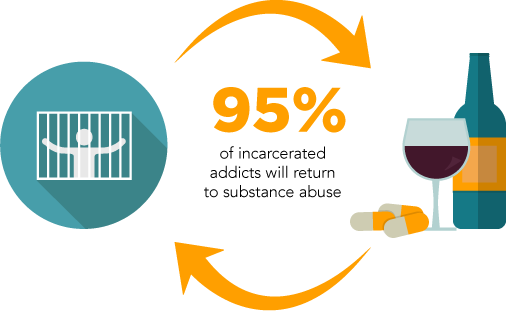
One would think that sooner or later these old patriarchal ideas would come into focus for such men. But no, even though it’s not working, they keep doing it. It’s their children who pay the price, they and the rest of us on the hook for upwards to $50,000 per year for each inmate in our state prisons, a cost that doesn’t include arrests, court time, and parole/probation expenses. It’s a sick system, and the sooner we shift to recognition of addiction as an illness instead of crime, the better off everyone will be.

Except, perhaps, the holy authority dinosaurs who would rather sacrifice their children than change.

***

[1] “Womack sentenced to nine years in prison,” Northwest Arkansas Democrat-Gazette. Apr 18, 2019. B1

The Dark Side of change.org

A word of warning.

The online entity known as change.org is generally accepted as a wonderful progressive tool by which important issues can be appropriately addressed. The introductory page to the site states they are the “world platform for change” and “the go-to site for Web uprisings.” The Washington Post has stated: “Change.org has emerged as one of the most influential channels for activism in the country.”

But it’s important to ask what you’re adding your name to.  What kind of activism?

You might be surprised to learn that a change.org petition can be used to harm individuals or businesses who have done nothing wrong. You might be surprised to learn that change.org has no criteria by which to determine whether or not a petition is based on truth. You might be even more surprised to learn that even though anyone can start a change.org petition, stopping one is just about impossible.

If you happen to be the target of a hate campaign and want change.org to remove a petition that alleges false information about you, you must first negotiate a lengthy series of forms.

Then wait four or five days to receive this email:

Hello,

We’re sad to hear that you’re having a negative experience with a Change.org user’s petition.

Thank you for writing to us to flag this content as bullying. Change.org is an open platform with tens of thousands of petitions started by people with vastly different perspectives on our platform each month. As we can’t monitor all petitions, we rely on our users to report content that may violate our [Terms of Service](https://www.change.org/about/terms-of-service) and [Community Guideline](https://www.change.org/about/community-guidelines).
We will continue to monitor the petition and related complaints, and take action if the situation escalates. Please provide us more details on abuse around this petition – we will review it and take further action if appropriate.

Thanks again for contacting us, and do let us know if you have any questions.
Thank you,
Change.org
From US Office/Help Desk

So be warned – change.org takes no responsibility for the petitions initiated under their name and will only “take under consideration” any protests of foul play.

A second request with a reiteration of a petition’s false allegations result in this reply:

Hi there,

We’re sad to hear that you’re having a negative experience with a Change.org user’s petition, and we really appreciate you contacting us.

Change.org merely provides a platform for our users to create and publish petitions. We do not monitor content of users, and we are not in a position to determine whether any content is indeed in violation of our harassment policy. If you are able to obtain a policy order or a court order establishing that the content in this petition leads to harassment you are currently experiencing, we will be able to reconsider your request.

We have however informed the petition starter of your claim in order to give them a chance to modify or remove the allegedly defamatory content.

Thank you for contacting us, and do let us know if you have any questions.

Sincerely,

So more than a week after the first complaint, you are informed that in order to stop this petition, you must hire an attorney and wait for a court date.

As they say, “we are not in a position to determine whether any content is indeed in violation of our harassment policy.” Even though it is their policy, they’re not in a position to determine whether there is a violation of it.

Nice.

Also, change.org does not require a real person’s name be attached to a petition. Make up a name. Give a quick anonymous gmail address. Congratulations, you’re in!

Buried in the petition guidelines is the advice that if you don’t agree with a petition, rather than asking change.org to take it down, you should create an opposing petition and get into a social media campaign in order to gather more signatures than the petition that was started against you in the first place.

But this isn’t like voting. No one ‘wins’ except the people involved in this shadow campaign to discredit you or your business. There’s no hearing to determine right or wrong.

So be careful, friends. Read and think about what you’re signing before you rush in to align yourself with that next change.org petition. Anyone can use it, free, and make any allegations they wish without having to prove anything to do it. Entities targeted by such petitions are not given any benefit of the doubt or asked whether the allegation is true, and if they want the petition ended, they have to go to court.

This is mob rule.

Forced Birth

Amber Robbins “Woman In Chains One” https://www.absolutearts.com/painting_acrylic/amber_robbins-woman_in_chains_one-1297414115.html

This week the Arkansas legislature has exceeded its standards for ignorance and arrogance with Senate Bill 2, which outlaws abortion in cases where the fetus is genetically impaired with Down syndrome. The text of the bill, https://legiscan.com/AR/text/SB2/id/1959872/Arkansas-2019-SB2-Draft.pdf, specifies felony charges against any physician who performs an abortion for a woman with a Down syndrome fetus.

Let that sink in. A woman cannot terminate a genetically impaired fetus. She cannot save herself or her family or their future from the staggering workload of caring for someone with an IQ of 50, who in 80% of cases can never live independently or work to support his or herself, who will be subject to serious medical issues such as  congenital heart defectepilepsyleukemiathyroid diseases, and mental disorders. About half will suffer severe sleep apnea, throat infections, chronic constipation, and high rates of various cancers, to name but a few.

This is yet another play by the Forced Birth movement, not content to let women and couples decide when and how to put their unique sets of DNA into the world.

Who pays for this? Well, even though Arkansas has so far removed over 15,000 people from its Medicaid services for failing to report work hours, anyone born with Down syndrome is automatically qualified for Medicaid. For life.

Between medical costs and the sheer physical and emotional effort involved in raising a Down syndrome child, the state is seriously overstepping its moral authority to force this on anyone.

Also not mentioned in the discussion of this issue coming before the House next week is the very real problem of further contaminating the human genome, already under assault from chemical pollution that reduces sperm count and increases birth defects. According to Wikipedia, “Males with Down syndrome usually do not father children, while females have lower rates of fertility relative to those who are unaffected. Fertility is estimated to be present in 30–50% of females. …Around half of the children of someone with Down syndrome will also have the syndrome.”

No one is forcing women to abort a genetically impaired fetus. If a woman chooses to keep such a pregnancy and enter into the lifelong commitment of caring for the impaired child, that is her rightful choice. The state should leave it at that.

~~~

Fayetteville Legends

Ronnie Hawkins, 1959. From his official website, http://www.ronniehawkins.com Toronto, Ontario Ron Scribner Agency, courtesy of Toronto Hawk Records

“I remember running the red light there,” Hawkins said, referring to Leverett at the top of Garland hill. “I had the daughter of one of the biggest lawyers in Arkansas with me, underage of course. We ran that red light. She did.”

Robert Cochran, interviewing Ronnie Hawkins: “I think I’ve heard that story. That’s where you switch places with her, so you’d take the hit.”

“Yes, I’d take the hit,” Hawkins said. “Pearl Watts was the sheriff. He smoked those old rolled Bull Durham tobaccos. He always had one a fraction of an inch long in the corner of his mouth, [smoke] going right up into his eye while he was interrogating you. Judge Packet said I was a menace to the highway, and I’d better straighten up… They were sitting right behind Leverett school. When we were going over that hill, we were in a hurry to get out to the university farm. That’s where everybody parked.”[1]

Hawkins was indeed in the company of an underage girl, none other than Marcia Perkins, daughter of Rex Perkins. Even though technically too young to hold a driver’s license, she drove a brand new 1956 red-and -white Chevy Bel-Air, courtesy of Rex’s close professional relationships with Fayetteville car dealers.

From Rex Perkins – A Biography:

“By the time Marcia was fourteen in 1955, she had developed a secretive months-long relationship with twenty-one-year-old Ronnie Hawkins, a fledgling star in the music world. Older sister Carole had started college, but Marcia had her own ideas about her future. One night, Marcia attended a slumber party and ended up on the phone with Hawkins. Whether the slumber party had been a strategic maneuver to give her a means to meet him is unknown. But the upshot was that she slipped out of the slumber party to join Hawkins at the golf course where he and other members of his popular group “Ronnie Hawkins and the Hawks” were hanging out and jamming in what turned out to be an all-nighter.

“One version of this story claims that Roy Orbison was in town for this jam session, which wasn’t completely unusual. The early form of rock and roll (later named ‘rockabilly’) blossomed around Huntsville-native Hawkins and his friend Levon Helm, along with other members of this group. Other music notables who came to Fayetteville to jam with Hawkins and/or to play at a favorite nightspot, the Rockwood Club, included Jerry Lee Lewis, Carl Perkins, and Conway Twitty.

“An acquaintance of Hawkins remembered those early years. ‘Ronnie was a natural athlete and a ‘Greek god’ of a life guard at the Wilson Park swimming pool. He understandably received lots of attention from a wide range of women.’[1]

“It was assumed that Marcia and Hawkins were sleeping together, although whether they were intimate during the night in question is not known. One of her slumber party friends confessed the story of Marcia slipping out to her mother, Jane McDonald. Jane told Georgia, Georgia told Rex, and the proverbial mess hit the fan. Marcia was Rex’s baby, Daddy’s little girl, and like most fathers in similar circumstances, Rex wasn’t prepared for another man in Marcia’s young life.

Rex Perkins

“As the story goes, even though fourteen was the legal age of consent at that time in Arkansas, a fired-up Rex gave the young man a choice: leave town or suffer my wrath. The result was that Ronnie Hawkins and the Hawks made a hasty departure from the region. The official version of Hawkins’ life story states he began touring Canada (date unspecified) and later made it his home (1958), and that he ventured there on advice from Conway Twitty.[2]

“Contacted regarding this biography, Hawkins confirmed that Rex made certain threats. ‘Rex was the biggest lawyer ever in Fayetteville at that time,’ Hawkins stated. ‘I would have married her but I was afraid somebody was gonna kill me.’”[3]

If Marcia’s girlfriend hadn’t spilled the beans, Rex would have found out anyway. Pearl Watts knew Marcia’s car and would have made sure Rex knew that his daughter had been found in the company of that rock-and-roller Hawkins, flying through that stoplight.

~~~

[1] “Long on Nerve: An Interview with Ronnie Hawkins,” Robert Cochran and Ronnie Hawkins. The Arkansas Historical Quarterly Vol 65, No. 2 (Summer 2006) pp. 99-115.

[1] Scott Lunsford interview, by email June 26, 2014. Author’s notes.

[2] From there, the story of Hawkins’ group is well known to music buffs. After 1964, fellow-Arkansan Helm and other band members regrouped to form ‘The Band,” toured with Bob Dylan in 1965-66, and went on to fame and fortune. Hawkins continued his musical career to become a mentor to other musicians as well as an award-winning performer.

[3] Scott Lunsford interview, his email relating phone conversation with Ronnie Hawkins August 15, 2014. Author’s notes.

~~~

Rex Perkins: A Biography, by Denele Campbell. Available in ebook or paperback,

An End Run Around the Rights of the People

Arkansas stands at the brink of losing one of its most time-honored traditions, that being the rights of its citizens to gather signatures on petitions that would place a measure directly before voters. Since the success of the medical marijuana petition and the election of Republican Leslie Rutledge as state attorney general, the rush has been on to find a way undermine this right.

Last week, a Senate committee endorsed legislation that would make an enormous change to the process. With the sole dissent of Democrat Will Bond of Little Rock, the Senate State Agencies and Governmental Affairs Committee recommended full Senate approval of Senate Bill 346, sponsored by Senator Matt Pitsch, R-Fort Smith. Such Senate action usually predicts passage of a bill.

The problem lies within the requirement for a suitable ballot title, the text that must appear on the actual ballot for voters to read before casting their vote. Requirements are that the title must give an honest yet succinct explanation of what the measure would do in practice. The more complicated the proposed law, the more difficult to write an effective ballot title.

Article 5, Section 1 of the Arkansas Constitution:

Initiative and Referendum.

The legislative power of the people of this State shall be vested in a General Assembly, which shall consist of the Senate and House of Representatives, but the people reserve to themselves the power to propose legislative measures, laws and amendments to the Constitution, and to enact or reject the same at the polls independent of the General Assembly; and also reserve the power, at their own option to approve or reject at the polls any entire act or any item of an appropriation bill.

Initiative. The first power reserved by the people is the initiative. Eight per cent of the legal voters may propose any law and ten per cent may propose a constitutional amendment by initiative petition and every such petition shall include the full text of the measure so proposed. Initiative petitions for state-wide measures shall be filed with the Secretary of State not less than four months before the election at which they are to be voted upon; provided, that at least thirty days before the aforementioned filing, the proposed measure shall have been published once, at the expense of the petitioners, in some paper of general circulation.

Title. At the time of filing petitions the exact title to be used on the ballot shall by the petitioners be submitted with the petition, and on state-wide measures, shall be submitted to the State Board of Election Commissioners, who shall certify such title to the Secretary of State, to be placed upon the ballot; on county and municipal measures such title shall be submitted to the county election board and shall by said board be placed upon the ballot in such county or municipal election.

Unfortunately, this original wording does not provide a reasonable method by which petitioners might create a ballot title for such a measure. If the state follows the method describe above, petitioners would spend money and effort gathering signatures only to have the measure thrown out upon review by the election commissioners if they found the ballot title insufficient.

A 2013 interview of Arkansas Supreme Court Justice Elana Leigh Cunningham Wills (EW) by veteran journalist Ernest Dumas (ED) describes this problem encountered during a time she worked in the attorney general’s office.

EW: I would say that and I have said this before. It [ballot titles] was the most frustrating duty that I performed at that office. Different AGs approached it in different ways… It’s a very frustrating duty and I…When I was working for Winston Bryant we had a lot of ballot titles submitted and, you know the task of the attorney general is to be neutral on the proposal and yet to summarize it fairly and accurately. Well, the sponsor has to try to summarize it fairly and accurately first. Usually, a lot of times, they didn’t do it to the attorney general’s satisfaction, so we would try to edit that ballot title and make sure it was accurate and that the voters were not being misled by what they were being asked to vote on. Well, the problem we would run into is that sometimes it’s difficult to make a silk purse out of a sow’s ear.

ED: Yes.

EW: That’s the problem. You have a measure that may be neither concise nor clear nor, you know, sensible and yet we’re required to write a ballot title that is concise and clear and convey an accurate picture of what voters are being asked to vote on. …

ED: Well, they’re still having to rewrite the marijuana initiatives, and they’re just having to rewrite them over and over again, and the gaming things.

EW: Well, it’s frustrating. So I think when Mark Pryor came in he really took a hard look at what is wrong with this process and asked how can we get this fixed. So I think it was decided that if the text of their measure was too unclear or too uncertain for it to be summarized fairly that we had to send it back and say we can’t fix it for you but you’re going to have to fix it. Clarify this before we know how to summarize it in a ballot title. That’s led to a process of really sending it back and sending it back and sending it back until it’s…You know, the attorney general could take it over and completely redo it for them but it’s not his measure. He doesn’t know their intent and if he does that then it becomes his measure. So that’s tricky.

… I think the way you read it, it’s not required until you submit your signatures to the secretary of state. The statute providing for the attorney general’s review is not in the Constitution. It’s a statute that was passed in the ‘50s saying that the attorney general should review it.[1]

The 1950s statute led to the following rule:

Prior to circulating the petition and gathering signatures, a Sponsor of a statewide initiative or referendum petition must submit the proposal to the Arkansas Attorney General. The full text of the measure along with a proposed popular name and ballot title must be submitted. The Attorney General will issue an opinion on the popular name and ballot title. If rejected, the Sponsor can amend and resubmit to the Attorney General.[2]

Now Pitsch with his Senate Bill 346 seeks to reverse that rule and statute and put the petitioners in an untenable position. In last week’s hearing, Melissa Fults, the moving force behind the medical marijuana petition effort through three election cycles, testified at the hearing.

“So you have done all this work, and tried to do everything right, and at the end, the Election Commission can say, “Oh, no, we don’t like your word. It is done. You are out.” There’s no chance to correct anything they think is wrong [about the ballot title or popular name] and so people who have been out there working for over a year and spent anywhere from $50,000 to $200,000 even with volunteers, have done it for nothing because we don’t get to know if [the title or popular name] will be sufficient to go on the ballot.[3]

Ironically, also testifying against the bill was Family Council president Jerry Cox:

“For the last 100 years … everybody a has read the constitution a certain way and now we are reading the constitution a different way and that hinges on the word ‘certify’ and what does that word mean?”

Pitsch argues that the wording in the Arkansas constitution is “unequivocal.” His take on the law is that the details of its implementation have been misinterpreted. Pitsch admits that the requirements of SB346 will result in greater expense to petitioners. “There is going to be a fiscal impact to the people in the petition process,” he states.

That is an understatement and avoids the key point. Despite his advice that petitioners “find an attorney and make sure that on the ballot title, [it’s sufficient],” the fact is that without the review and certification of the ballot title before the collection of signatures, few if any citizen initiatives will be mounted.

Which, perhaps, is the underlying intent. It’s no secret that our governor along with many other conservatives now in control of state government are not happy that marijuana is now growing legally within the state’s borders, and that it will be available to thousands of Arkansans medically certified for its legal use. It’s also no secret that like many other states, a strong effort is underway to legalize, regulate and tax the production and sale of marijuana for recreational use.

Oh, the shame.

Somehow previous attorneys general managed to muddle through this process in the interest of upholding the intent of Article 5 until the election of the current AG, Leslie Rutledge, who was sued last year for stonewalling. The case was appealed to the Arkansas Supreme Court.

In a brief order today the Arkansas Supreme Court granted attorney David Couch’s request for an order requiring Attorney General Leslie Rutledge to approve his proposed initiated act to raise the minimum wage or submit a more acceptable version within three days.

Rutledge has refused 70 of 70 requests for ballot initiatives since 2016. She’s claimed they were unclear and said they were so unclear that she couldn’t fix them. She argued it was wholly in her discretion to decide on the sufficiency of the ballot titles.

Couch, who’d submitted a proposal for an increase in the minimum wage virtually identical to one approved for the ballot and adopted a couple of years ago, argued that the state law required Rutledge to approve or improve ballot submissions within three days. To do otherwise violates the Arkansas Constitution’s provision of initiative power to the people.[4]

In presenting his measure to committee, Pitsch argued rather disingenuously that petitioners can simply hire an attorney to write a ballot title and provide whatever other assistance might be needed for a petitioner to meet approval. But he has no idea what he’s talking about. In my personal experience in the early days of the medical marijuana efforts in 1999, a total of three ballot titles were written over a period of months by an attorney before the attorney general finally approved a version. In the case cited above, the litigant is an attorney.

The state moved in the right direction in the 1950s with its statute requiring AG review of a ballot title. The intent of the original Article 5 of the Constitution guaranteeing the right of citizens to petition must be upheld. Requiring petitioners to gather all signatures before learning whether the ballot title will be approved is in virtually all cases an insurmountable barrier to this right. If Ms. Rutledge can’t muster the wherewithal to do her duty, then it’s beholden on the state to make provisions.  The Pitsch bill takes the matter in the wrong direction.

~~~

[1] https://www.arcourts.gov/sites/default/files/…/Elana%20Wills%20Interview.pdf

[2] https://www.sos.arkansas.gov/uploads/elections/2017-2018_I__R_Handbook_Jan_2018.pdf

[3] “Proposal moves ballot measure,” Michael R. Wickline. Arkansas Democrat-Gazette. Friday February 22, 2019. 4B

[4] https://www.arktimes.com/ArkansasBlog/archives/2018/05/23/supreme-court-orders-rutledge-to-act-on-minimum-wage-petition

Worlds Collide in One Man’s Heritage

One wonderful result of writing books is hearing from people who read them. Recently I heard from Jim Terry who was reading my collection of stories about 19th century murders in Washington County, Arkansas – Murder in the County. He wanted to know why a murder involving one of his ancestors wasn’t in the book. Once he gave me more information, it became clear that the murder involved members of the Cherokee tribe. That’s why it wasn’t in my book.

During those early years of Washington County, a steady traffic of bad actors flowed back and forth across the Arkansas-Indian Territory border. Cherokee lawmen attempting to make arrests in Indian Territory had no jurisdiction if the outlaw stood on the Arkansas side of the line. Similarly, federal marshals authorized out of Fort Smith were the only whites who had any jurisdiction in Indian Territory. Local lawmen like the Washington County sheriff couldn’t arrest anyone on Indian land. This made Evansville, Cane Hill, and other Washington County border towns hot spots for outlaw activity.

Jim’s ancestry includes a Cherokee outlaw named Isaac Gann, brother to a woman in Jim’s direct lineage. Not only that, Jim is directly descended from Susannah Harnage, an adopted child of the Harnage family, one of Washington County’s earliest settlers who was subsequently murdered. There’s an irony here and an interesting little story.

The earliest days of our county were fraught with the crisis of the Cherokee people, a powerful detached tribe of the Iroquoian family, formerly holding the whole mountain region of the south Alleghenies, in southwest Virginia, western North Carolina and South Carolina, north Georgia, east Tennessee, and northeast Alabama, and claiming even to the Ohio River. By the turn of the 19th century, increasing pressure by white settlers led to efforts by the federal government to force their move. Despite winning a case in the U. S. Supreme Court confirming they held an inalienable right to their lands, the Cherokee were forced to leave by President Andrew Jackson.

Previous to their removal, Cherokee had adopted much of the cultural amenities of the whites and intermarried with European settlers. This was the case of Ambrose Harnage, later a Washington County resident in the area near Cane Hill. Harnage, an ambitious, educated Englishman with clear leadership skills, married a Cherokee woman and built a large dwelling that served as a residence, public inn, and tavern. Located on the north Georgia federal road, the inn was built around 1805 and was designated a federal post office in 1819, earning the location its name of Harnageville.

After the Indian Removal Act of 1830, Harnage and others faced increasing pressure to abandon their property. He and other white men who had intermarried with Cherokee women negotiated for the best possible terms and made the move to new land in what is now Oklahoma. Upon their departure, Georgia passed a law to establish Cherokee County where Harnage’s tavern was chosen as a meeting place to conduct the business of court and county government.

In 1815, another white man, William H. Hendricks, had built his homestead near the Harnage home and married a full-blood Cherokee woman named Sokinny. She and her brother Youngdeer were orphaned at an early age and Sokinny was later adopted by the Harnage family where she was given the name Susannah Harnage. Whether this is the same Harnage family as Ambrose is not proven.

In 1832, William and Susannah/Sokinny Hendricks and the Ambrose Harnage family moved west, part of the first wave of Cherokee accepting the government’s offer to relocate in exchange for logistical and financial assistance for the move. Typically, extended families and neighbors moved to new territories as a group suggesting a close connection between the Ambrose Harnage family and Susannah/Sokinny.  After 1836, the Cherokee who had initially refused the removal order (Indian Removal Act of 1830) were forced west on the so-called Trail of Tears.

Also among Jim Terry’s ancestors was a woman named Ruth Gambold Gann, sister to Isaac Gann and two other siblings. Thanks to Jim’s research into his heritage, the rest of this odd irony comes to light.

In June 1847, twenty-year-old Isaac Ferguson Gann mustered in as private to Captain Enyart’s Company, Arkansas Mounted Infantry, at Fort Smith.  Military service provided a small monthly stipend as well as regular meals, and was the fallback option for many young men without other opportunities. His military records include one from January 12, 1848, that states “deserted from camp near Mier, Mexico, taking holsters and pistols belonging to the government.” Also, the muster roll for June 23, 1848, at Camargo, Mexico, lists him as “deserted.”

Thereafter, Isaac became an outlaw, partnering with a man named Ellis “Creek” Starr. They were active in the Cherokee Nation and Washington County, Arkansas.

Creek was among several members of the Starr clan, a Cherokee family notorious for whiskey, cattle, and horse thievery in the Indian Territory. If the “Starr” name sounds familiar, it’s because by the late 1800s, the family name had become famous for its association with Belle Starr, originally Maybelle Shirley.

In 1880 [after the death of her first husband Jim Reed], she [married] a Cherokee man named Sam Starr and settled with the Starr family in the Indian Territory. There, she learned ways of organizing, planning and fencing for the rustlers, horse thieves and bootleggers, as well as harboring them from the law. Belle’s illegal enterprises proved lucrative enough for her to employ bribery to free her cohorts from the law whenever they were caught.

In 1883, Belle and Sam were arrested by Bass Reeves, charged with horse theft and tried before “The Hanging Judge” Isaac Parker’s Federal District Court in Fort Smith, Arkansas; the prosecutor was United States Attorney W. H. H. Clayton. She was found guilty and served nine months at the Detroit House of Corrections in Detroit, Michigan. Belle proved to be a model prisoner and during her time in jail she won the respect of the prison matron, while Sam was more incorrigible and was assigned to hard labor.

In 1886, she escaped conviction on another theft charge, but on December 17, Sam Starr was involved in a gunfight with Officer Frank West. Both men were killed, while Belle’s life as an outlaw queen—and what had been the happiest relationship of her life—abruptly ended with her husband’s death.[1]

Jim Reed and Belle at their marriage 1866

Belle’s first husband Jim Reed was killed in Texas in the aftermath of the Civil War. Reed was friends with the Starrs which was how Belle became acquainted with them. After Belle’s murder in 1889, her daughter Rosie “Pearl” Reed-Starr built a tidy little home at Winslow where she sojourned in between stints at operating her houses of ill repute in Van Buren and Fort Smith.

Long before the heyday of Belle or Pearl Starr, Ellis “Creek” Starr alongside Isaac Gann pursued their own outlaw ways. An 1848 write-up in the Cherokee Advocate, Tahlequah, provides more insight into the efforts of the Cherokee Nation to address such criminal gangs:

We learn that a meeting composed of the persons engaged in the recent killing in Flint District, and a numbers of others, was held at the Court House of said district, some days since, for the purpose of adopting certain measures in relation to that affair.

A series of resolutions, commendatory of what has already been done, and urging the importance of freeing the country of the following persons, to wit: — Thos. Starr, Jas. Starr, Creek Starr, Wm. Starr, Ezekiel Rider, Shadrach Cordery, Isaac Gann, and Tre-gi-ske and Ult-tees-kee, were passed.

Writs have been taken out for the above-named persons. Several companies were organized to cooperate with the whites. These companies are actively engaged in scouting the country. We learn that a deputation was sent down, on last Tuesday, to advise the Executive upon the late proceedings, also with a reply to his protest. A second meeting has been held since this interview with the Executive, and we learn that the whole matter will soon be laid before the public.

From the evidence before us, we are under the necessity of disapproving, heartily, a part of the proceedings of our fellow citizens. Ellis Starr, Wash Starr, and John Rider, it is true, were once engaged openly in the most fiendish deeds that ever characterized any set of men, but by the treaty of 1846, though out-laws, they were pardoned—and by that act were again placed upon an equality with other citizens. And if they have since been guilty of misdemeanor, the law should be pushed against them, — and if, after the most ample opportunity has been afforded to test its efficacy, it should prove inadequate, then, though extremely humiliating to a regularly organized Government, the people may take upon themselves the management of affairs.

We learn that one of the companies above named surprised Creek Starr and Isaac Gann, the supposed murderers of the woman who was killed near Evansville [Washington County, Arkansas] on the 27th ult., at a dance in Washington Cove [probably a misprint of Washington County], Ark., some days since. Gann was killed in the attempt to arrest him. Creek Starr was made prisoner. On the return of the party with him, to the Nation, he made his escape—was fired upon, but supposed, only slightly wounded.[2]

Another source, the Van Buren newspaper Arkansas Intelligencer, reports on this murder in their June 12, 1848, edition.

Foul Murder – Creek Starr and Isaac Gann, half-blood Cherokees, killed a Cherokee woman near Evansville, on the 27th. Gann is a deserter from Capt. Enyart’s company of volunteers, now in Mexico.

This was the murder not included in my book.

This is where the murder of Ambrose Harnage joins the story.  Evidently with a history of seeing himself as a liaison between the Cherokee nation and whites, Harnage gave incriminating evidence against men accused of participating in the notorious 1839 Wright family murders at Cane Hill where a nighttime assault killed the father and several children and burned the family cabin to the ground. Initially, these murders were blamed on Indians. But Harnage overheard conversations between white neighbors that he reported to a committee investigating the murders. Several white men some believed innocent were subsequently hanged.

Whether Harnage’s report led to his murder is not known. No one saw his murder and all “evidence” was based on supposition leading to the accusation of a Cherokee named John Work for the crime. Many loose ends about Work’s supposed guilt for Harnage’s murder remain unresolved.

Harnage was also a close friend to Major John Ridge, a Cherokee leader who had signed the federal agreement to remove to new lands in Indian Territory, thereby earning the enmity of those in the tribe who didn’t agree with the removal act. In June 1839, Ridge spent the night at Harnage’s home before traveling south along the Line Road. En route, Ridge was assassinated.

Harnage’s friendship and influence on Ridge may have earned him a death warrant among the Cherokee. In the investigation of Harnage’s murder, which occurred in 1841, one line of inquiry yielded possible evidence of Gann’s involvement.

[John] Work wished to kill Dr. F. and John [George Ambrose] Harnage and leave the country. In watching the movements of Dr. F., he learned that he fed a lot of hogs near a thicket once every day about the same hour. He told Jake to steal the doctor’s fine mare and a bridle and saddle and to bring them to him a certain night, that he would kill the Dr. the next day and leave the country, leaving Harnage to Mat Feating or Isaac Gann.[3]

Major John Ridge

Whether it was Gann or the man ultimately arrested for the offense, John Work, who killed Harnage, the point is the peculiar heritage of Jim Terry. In his person, he juxtaposes the lineages of Gann and the adopted daughter of Harnage.

Was Ambrose Harnage’s murder a result of his close involvement with the Cherokee chief John Ridge or revenge for the Wright family murder hangings? Was Gann his killer?

Because Gann and Starr’s murder of the Cherokee woman fell under tribal jurisdiction, the records never appear in Washington County archives. No one can say how many other similar murders there might have been. This is just one of many stories whose tangled details have forever vanished with the passage of time. My thanks to Jim Terry for bringing this particular episode to light.

~~~

[1] https://en.wikipedia.org/wiki/Belle_Starr

[2] Cherokee Advocate, June 19, 1848.

[3] “A Man Named John Work,” Murder in the County. Denele Campbell 2017. 77

Is American Destiny Manifest?

American Progress, (1872) by John Gast, is an allegorical representation of the modernization of the new west. Columbia, a personification of the United States, is shown leading civilization westward with the American settlers. She is shown bringing light from the East into the West, stringing telegraph wire, holding a school textbook that will instill knowledge, and highlights different stages of economic activity and evolving forms of transportation. Wikipedia

Oddly enough, I had reached the same conclusion as Robert Kaplan in the process of writing my book on the West Fork valley. It was the West Fork of White River, tumbling northward along our long valley that carved the land where I live and thus the livelihoods and experiences of the people who live here. This is Kaplan’s thesis in his book, Earning the Rockies: How Geography Shapes American’s Role in the World.

Reading Kaplan took longer than I had expected. His prose forms dense thought clusters embroidered by quotes and references to a wide array of thinkers. But I was motivated soon after starting the book by his storyline which follows his journey from the east coast to the Pacific. And by the fact that from as far back as I can remember, I’ve loved geography.

Oh, not exactly the study of geography—although I’ve learned to appreciate that as well—but rather the experience of it. The varying shades of dirt and sand, the rise of hills and mountains, the sudden drop of arroyos and canyons carved by quick floods and persistent rivers. Rivers, desert, plains – all if it thrills me each with its own particular mood and energy. If I had been able to travel the world in my younger more flexible years, it wouldn’t have been to visit cities or museums, but rather to see the lay of the land.

But I digress. It’s not from that perspective that Kaplan examines geography’s role in the course of American history. Rather, he argues that by the unique circumstance of our nation’s particular framing by the world’s two largest oceans as well as our unique pioneer spirit, we are fated to serve as world leader. I’d have to read this book again—and his other books including The Revenge of Geography—in order to be convinced that I don’t agree with his conclusions, but as of this moment, I really don’t.

A U.S. soldier stands guard duty near a burning oil well in the Rumaila oil field, Iraq, April 2003 Wikipedia

Kaplan describes the conflict between America’s urge toward isolationism and the stake (and responsibility) we have in a global community. His narrative journey from east to west parallels (intentionally) the path of the pioneers, providing him the storyline needed to talk about how the experiences of pioneers created the unique American personality. In developing this view, Kaplan cites Bernard DeVoto and his student Arthur Schlesinger, Jr. in stating that “…the geography of the American West freighted the United States with a precise and unprecedented international destiny. DeVoto saw dynamic, westering America, in Schlesinger’s words, as ‘the redeemer, spreading its free institutions to less fortunate peoples.’”[1]

…The American character of today is still to some extent a frontier character born of those solitudes [the Rockies]. Our rapacious form of capitalism, as well as the natural, unspoken national consensus to deploy the navy and air force, and sometimes even the coast guard, to the four corners of the earth, are signs of it.[2]

Kaplan’s view of the American story – and the view of many others he cites – is based on the idea of Manifest Destiny:

In the 19th century, manifest destiny was a widely held belief in the United States that its settlers were destined to expand across North America. There are three basic themes to manifest destiny:

–The special virtues of the American people and their institutions

–The mission of the United States to redeem and remake the west in the image of agrarian America

–An irresistible destiny to accomplish this essential duty

Historian Frederick Merk says this concept was born out of “a sense of mission to redeem the Old World by high example … generated by the potentialities of a new earth for building a new heaven.”[3]

American westward expansion is idealized in Emanuel Leutze’s famous painting Westward the Course of Empire Takes Its Way (1861). The title of the painting, from a 1726 poem by Bishop Berkeley, was a phrase often quoted in the era of manifest destiny, expressing a widely held belief that civilization had steadily moved westward throughout history. Wikipedia

In this view, pioneers pushed west in order to escape the exhausted moral fiber of their European ancestors and to carve a new, more honest way of life. Pioneers faced unimaginable hardships that stiffened their spines and led to a national character found today in fighter pilots and bold inventors. Kaplan superimposes this foundation on the world of the 21st century and questions the proper role of our nation in the global community.

He concludes that we as a nation are fated by our geography to be the leader in a “post-imperial world.” Delving into brief analyses of other regions in an attempt to understand the possibilities for U.S. interaction and intervention, Kaplan posits a leadership role of post imperialism for the U.S. but refuses to acknowledge any self-serving intention for such a role. Rather, by our unique position with oceans on both sides and the determined character of our people, we have pursued globally what needed to be done with the same vision as we pursued the western frontier.

Although the book has stimulated intense thought, I could not escape arguments that popped into my mind against his conclusions. With random brief nods to our rampant capitalism, never in these nearly two hundred pages did Kaplan talk about the role of corporations or profit seeking-entrepreneurs in motivating modern U.S. foreign policy or the pioneers. Free land, or the exploitation of virgin forests and wildlife, or the unearthing of precious minerals were what motivated the pioneers as much as seeking freedom to live outside the dictates of European kings and classism. That same motivation for wealth is what governs our foreign policy today, whether it’s the protection of corporate interests in developing nascent oil fields (Middle East, Southeast Asia, South America) or in more obscure resources like the rare earth deposits in Afghanistan. We might appease our consciences about trampling indigenous tribes to build oil pipelines by the idea we’re bringing them the wonders of modern civilization, but it remains to be seen whether modern civilization is superior to millennia-old sustainable traditions.

My limited scholarship on these topics can’t stand against the background of an author and scholar of the stature of Robert D. Kaplan. I’d have to read all seventeen books plus the works of other knowledgeable scholars to even begin to claim any authority. But I’m discouraged by his failure to discuss even for one paragraph the role of wealth-seeking so intrinsic to the American experience or the influence of corporations in our imperialism. His assertion that our worldwide deployment of warships and air power is basically a function of our benign responsibility and exceptionalism strikes me as outrageously self-serving.

Manifest destiny excused the genocide of Native Americans. Kaplan tries to sidestep that reality in quoting Wallace Stegner’s Beyond the Hundredth Meridian (1954):

What destroyed the Indian was not primarily political greed, land hunger, or military power, not the white man’s germs or the white man’s rum. What destroyed him was the manufactured products of a culture, iron and steel, guns, needles, woolen cloth, things that once possessed could not be done without.[4]

I call bullshit.

Caricature showing Uncle Sam lecturing four children labelled Philippines, Hawaii, Puerto Rico and Cuba, in front of children holding books labelled with various U.S. states. A black boy is washing windows, a Native American sits separate from the class, and a Chinese boy is outside the door. The caption reads: “School Begins. Uncle Sam (to his new class in Civilization): Now, children, you’ve got to learn these lessons whether you want to or not! But just take a look at the class ahead of you, and remember that, in a little while, you will feel as glad to be here as they are!”

But Kaplan’s work also forces me to reassess what I’ve been taught throughout my lifetime about our role as a nation. I equivocate on whether to accept that our system of governance is the most enlightened in the world, but I can’t call to mind one that seems superior. I also can’t deny that we enjoy the highest standard of living and that our wealth, indisputably ill-gotten in many ways, has still been a life-saving resource to endangered, starving or sick people around the world. I can’t ignore the accomplishments of our technology in creating a global culture joined through the Internet, telephones, and television which in many ways may serve as the ultimate means of moral arbitration.

I’m bemused by Kaplan’s assertion that our national character and world role stems from our unique continental configuration in having an ocean both to our east and our west. But so does Mexico, Guatemala, Nicaragua, Costa Rica, Canada, South Africa, Great Britain, Italy, France, India, Australia, New Zealand, Japan, and more. Could it be that the wealth-building resources of these other nations had long since been exhausted either internally or by other empires before the modern age?  Why doesn’t Kaplan acknowledge that the American colonists stumbled onto a continent virtually untouched by human exploitation and it is from that harvest of Nature’s bounty that our wealth was captured?

Why doesn’t he talk about what might happen when our soil, rivers, and forests are as decimated as those that used to undergird the wealth of Europe or India?

No matter my arguments at various points in his work, I’m glad I read it. I will read it again. Kaplan’s previous positions as national security chair at the U.S. Naval Academy, as a member of the Pentagon’s Defense Policy Board, and a senior fellow at the Center for a New American Security means I need to know more about what he knows and how he thinks if I hope to consider myself informed on our nation’s foreign policy. This no doubt has been the rationale for his many readers/reviewers including James Mattis, David Petraeus, Henry Kissinger, and many other prominent Americans not to mention review boards and other authors.

~~~

[1] Kaplan, Robert. Earning the Rockies. New York: Random House. 19

[2] 24

[3] https://en.wikipedia.org/wiki/Manifest_destiny

[4] Kaplan 27

The Morality of Abortion

http://present5.com/anencephaly-what-is-it-how-is-it-what/

I usually look forward to the Friday evening PBS NewsHour when Mark Shields and David Brooks have a brief time to discuss current news. Not so last night, when both men voiced their dismay over the current effort in Virginia to extend abortion rights through the 3rd trimester.

Neither the so-called liberal (Mark Shields) or conservative (David Brooks) qualified their remarks with an acknowledgement that they were men and didn’t know what it meant to experience pregnancy. Neither one admitted that they had no idea what might force a woman to make such a traumatic decision. They both growled about “infanticide” and “what is this country coming to.”

For shame.

It doesn’t take much intellect or time to discover the reasons a rare late term termination might be needed. All you have to do is read the stories of women who have faced such a terrible choice. But first, let’s get something straight.

Women who go through months of pregnancy are not under any circumstances going to decide on a whim to terminate. Hormonal-driven instinct commands the woman to do everything possible to protect that soon-to-be child. But sometimes hard facts and common sense dictates she make a heart-wrenching decision.

Here’s one woman’s story:

The day of the MRI finally arrived. She was 35 weeks, 0 days. By the end of it, Kate and her husband had the hardest answers they’ve ever received.

Their daughter had moderate to severe Dandy-Walker malformation. But that wasn’t the only diagnosis; Laurel also had a brain condition in which fluid builds up in the ventricles, eventually developing into hydrocephalus and possibly crushing her brain. She had a congenital disorder too, in which there was complete or partial absence of the broad band of nerve fibers joining the two hemispheres of the brain.

What this meant was Laurel was expected to never walk, talk, or swallow. That was if she survived birth.

Kate asked her doctor: “What can a baby like mine do? Sleep all the time?”

“Babies like yours are not generally comfortable enough to sleep,” the neurologist said.

“That is when it became very clear what I wanted to do,” she says. “The MRI really ruled out the possibility of good health for my baby.”[1]

https://www.jcdr.net/ReadXMLFile.aspx?id=2818

Here’s another couple’s experience:

After seeing the ultrasound at UVA, Lindsey noticed the growth had enveloped half of Omara’s face and spread around her neck to the back of her head. When the doctor entered, they expected the worst. Again, the term lymphangioma came up. But so did cervical teratoma. Only an MRI could determine decisively, but whether it was malignant or benign, it could be fatal to the baby.

“You could just tell the energy in the room was like: you should end it, it’s not going to turn out well,” she says. The doctor told them they could terminate the pregnancy since Omara’s chances of survival were slim. Matt and Lindsey were crushed by the prospect. They wanted to fight.

Twenty days after seeing the first signs of trouble, they learned that Omara had an aggressive form of lymphangioma growing out of her neck. The diagnosis came in the form of a dense two-page MRI report. The fast-growing, inoperable tumor had grown into her brain, heart, and lungs. It had wrapped around her neck, eyes, and deep into her chest. It was so invasive, it was pushing her tongue out of her mouth.

Her chances of living to the age of viability or birth were slim. Lindsey and Matt made the heartbreaking decision to follow through with an abortion at about 24 weeks. They were just a few days away from it being an illegal termination.[2]

Or this:

…our child came with technical terms like hydrocephalus and spina bifida. The spine, she said, had not closed properly, and because of the location of the opening, it was as bad as it got. What they knew — that the baby would certainly be paralyzed and incontinent, that the baby’s brain was being tugged against the opening in the base of the skull and the cranium was full of fluid — was awful. What they didn’t know — whether the baby would live at all, and if so, with what sort of mental and developmental defects — was devastating. Countless surgeries would be required if the baby did live. None of them would repair the damage that was already done.[3]

http://www.jcnonweb.com/viewimage.asp?img=JClinNeonatol_2014_3_3_176_140415_f1.jpg

Other severe fetal abnormalities which might occur:

  • anencephaly, characterized by the absence of the brain and cranium above the base of the skull, leading to death before or shortly after birth.
  • renal agenesis, where the kidneys fail to materialize, leading to death before or shortly after birthlimb-body wall complex, where the organs develop outside of the body cavity
  • neural tube defects such as encephalocele (the protrusion of brain tissue through an opening in the skull), and severe hydrocephaly (severe accumulation of excessive fluid within the brain)
  • meningomyelocele, which is an opening in the vertebrae through which the meningeal sac may protrude
  • caudal regression syndrome, a structural defect of the lower spine leading to neurological impairment and incontinence
  • lethal skeletal dysplasias, where spinal and limb growth are grossly impaired leading to stillbirths, premature birth, and often death shortly after birth, often from respiratory failure[4]

One women described being in labor before the doctors discovered her baby had no skull (anencephaly). Data of such malformed fetuses show that:

7% died in utero
18% died during birth
26% lived between 1 and 60 minutes
27% lived between 1 and 24 hours
17% lived between 1 and 5 days
5% lived 6 or more days[5]

These are cases referred to in recent remarks by Ralph Northam, Virginia’s beleaguered governor, as newborns who would be made comfortable until they die of natural causes.

Let me state unequivocally that the ONLY person(s) who should be involved in a decision about abortion is the woman, her partner, and the physician. No one else can possibly understand all the elements involved in such a decision, nor does anyone have any right to a say in the decision. Certainly the government has no right to decide who is born.

http://www.pediatricneurosciences.com/article.asp?issn=1817-1745;year=2011;volume=6;issue=1;spage=94;epage=95;aulast=Agarwal

These are not only difficult decisions based on a woman’s ruined hopes of giving birth to a healthy child, but also difficult because of outrageous costs involved in keeping a deformed baby alive. Massive expense accrues daily when survival means intensive neonatal care for which most parents are ill-equipped to pay. The expense then falls to the medical community and in most cases is passed off to the government where taxpayers foot the bill.

Why? What is the benefit to taxpayers in keeping alive for a few hours/days/weeks – or in some cases, years—semi-human beings who can never function as a human being? In many ways, we’ve created this problem by advancing science and medicine to a point where extraordinary means can keep a newborn alive when nature would have terminated its life at birth. In many cases, both the mother and fetus would have died.

We as a nation need to get past the idea that every fertilized egg is going to become a normal person.

If you are allowed to abort a fetus that has a severe genetic defect, microcephaly, spina bifida, or so on, then why aren’t you able to euthanize that same fetus just after it’s born?  I see no substantive difference that would make the former act moral and the latter immoral. After all, newborn babies aren’t aware of death, aren’t nearly as sentient as an older child or adult, and have no rational faculties to make judgments (and if there’s severe mental disability, would never develop such faculties). It makes little sense to keep alive a suffering child who is doomed to die or suffer life in a vegetative or horribly painful state.[6]

We need to encourage women to seek medical opinions in every pregnancy and make use of prenatal testing to the greatest possible extent. When a fetus is found to be compromised, expectant couples should be encouraged to abort instead of shamed for even considering it. Abortion should be available through every gynecologist in every part of the nation.

Already fifty percent of Medicaid dollars are spent on children, many of whom were born with severe defects that can never be cured. These children won’t grow into normal adulthoods no matter how much they’re “mainstreamed” in public schools or how much special treatment they receive. Yet somehow this subject never comes up in discussions about the federal budget and the mushrooming costs of Medicaid.

Is life without mental function “human life”? Is life without capabilities beyond those of a six-month-old “human life?” An advanced civilization should seek quality of life, not quantity. As science and medicine learn more, we become more able to sustain life even in the most vegetative state. At a point where “life” can be created in a petri dish, it’s time we talk about what human life means.

Above all else, we need to respect the individuals confronted with terrible decisions about their potential offspring and let them decide what is best. It’s their DNA, their future. They have the right and responsibility to decide. No one else can.

~~~

[1] https://www.theguardian.com/society/2017/apr/18/late-term-abortion-experience-donald-trump

[2] Ibid

[3] https://www.ourbodiesourselves.org/stories/my-late-term-abortion/

[4] https://scienceprogress.org/2013/05/fetal-anomalies-undue-burdens-and-20-week-abortion-bans/

[5] http://www.anencephaly.info/e/report.php

[6] https://whyevolutionistrue.wordpress.com/2017/07/13/should-one-be-allowed-to-euthanize-severely-deformed-or-doomed-newborns/