

Who could have guessed, then or now, that in 1908, little old Fayetteville and the University of Arkansas would eagerly invite a gay man to their midst. Not that Henry Tovey advertised his sexual orientation or, perhaps, even acknowledged it to himself, much less others. But his role over the next 25 years as professor of piano and music as well as his larger-than-life presence in community, state, and even national arenas of music education could not help but reveal that he was not of the ‘traditional’ male ilk.
The fact is that homosexuality was widely tolerated and even admired in certain circles of American culture during that time period. As noted in a 2019 article, journalist Sarah Pruitt wrote:
- On a Friday night in February 1926, a crowd of some 1,500 packed the Renaissance Casino in New York City’s Harlem neighborhood for the 58th masquerade and civil ball of Hamilton Lodge. Nearly half of those attending the event, reported the New York Age, appeared to be “men of the class generally known as ‘fairies,’ and many Bohemians from the Greenwich Village section who…in their gorgeous evening gowns, wigs and powdered faces were hard to distinguish from many of the women.” The tradition of masquerade and civil balls, more commonly known as drag balls, had begun back in 1869 within Hamilton Lodge, a black fraternal organization in Harlem. By the mid-1920s, at the height of the Prohibition era, they were attracting as many as 7,000 people of various races and social classes—gay, lesbian, bisexual, transgender and straight alike.[1]
Whether this broader scope of acceptance had managed to trickle down to Northwest Arkansas is debatable, but Tovey’s credentials fit two very important priorities for the university and community. For one, he had graduated from one of the finest music conservatories Illinois had to offer, studied abroad with acclaimed artists, and had gained acclaim in a brief tenure at Ouachita College in Arkadelphia, Arkansas, provoking critics to pronounce he held a “warm place in the hearts of our music lovers.”[2] Such expertise in the performing arts had become a priority to the university on the heels of the Gilded Age. Secondly, then as now, university professors and their families occupied an elevated position in Fayetteville, deriving mostly from far-flung origins and bringing with them not only higher education but also more sophisticated cultural characteristics than those possessed by the ‘locals.’
Tovey immediately became the darling of the town’s elite, invited to join fledgling social groups determined to open Fayetteville to the wider world. For example,
- In November 1908, he joined Fayetteville’s Musical Coterie at its second meeting at the home of Mrs. F. O. Gully on Mont Nord, where the group declared “a most auspicious opening” for the beginning of the season. Their objective was to “arouse increased interest in the finest of all fine arts—music… We should have an annual Music Festival here every year… [which] would bring people from all parts of the state and from neighboring states to Fayetteville.”[3]
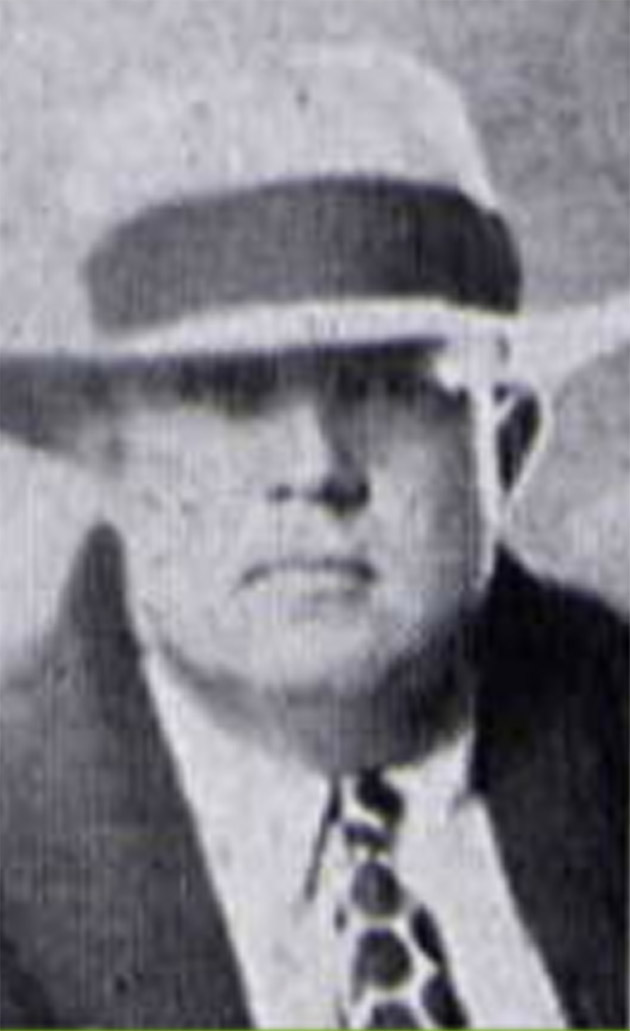
Tovey was uniquely suited to the task before him, and he set about his destiny with great zeal. Not only did he help build a greater appreciation of classical music in Fayetteville and the rest of the state with his innovative teaching method utilizing the Victrola and recordings, a method soon adopted across the nation, he also promoted civic efforts to include town beautification, music education in the public schools, and the establishment of a country club and the Fayetteville Rotary Club. Perhaps most laudable was Tovey’s embrace of the rural people of Arkansas:
- In a 1997 music journal article, Tovey is described as part of the Progressive effort to improve rural life with the use of music. “…[R]eformers focused on improving the economic and social conditions of rural people. Rural reformers expanded university offerings in music… In 1918, the Arkansas legislature voted to require music in the schools due largely to the efforts of Henry Doughty Tovey…
From his enormous musical talent to his elephant collection and regular hosting of delightful luncheons he prepared mostly for wives of prominent town and university notables and served at his home near campus, Tovey lived as a type of Renaissance Man. For example, one menu included “Bouillon * Toasted Wafers * Escalloped Oysters, Potatoes en Cream * French Peas * Chow Chow Pickle * Olives * Salt-rising Bread Sandwiches * Coffee * Tomato Aspic Moulded with Olives and Almonds * Mayonnaise Dressing * Cheese Sandwiches * Orange Parfait with Whipped Cream * Bon-Bons.”
The town and the state mourned his untimely end, but his contributions to his chosen community and state continue to resonate today. The story of this man and his amazing realm of accomplishments is part of The Music Men of Turn-of-the Century Fayetteville, available at the Washington County Historical Society, or from Amazon.com

MC 779 Lighton Family Papers, Box 28, Folder 7,
Photograph 888, Digital Collections,
Univ. of AR, Fayetteville
[1] Sarah Pruitt, “How Gay Culture Blossomed in the Roaring Twenties.” Accessed June 27, 2023 @ https://www.history.com/news/gay-culture-roaring-twenties-prohibition
[2] “Miss Croom’s Recital,” The Southern Standard, Nov 1, 1906, p. 3.
[3] FD, Nov 7, 1908, p. 3.

 denelecampbell