Fayetteville’s Black Diamond Orchestra

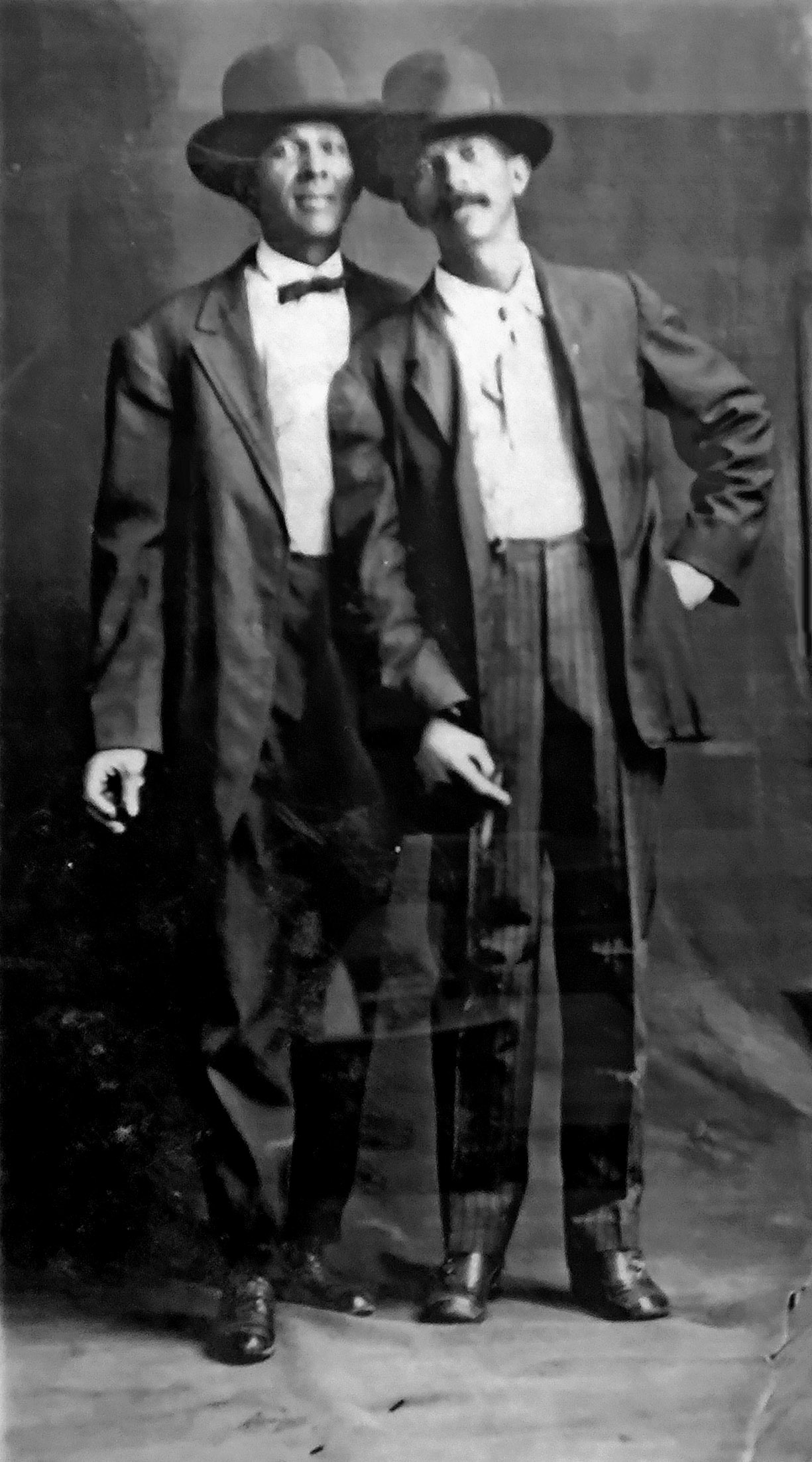
Believed to be a 1930s image of Embus Young and Odie Wright, this image hangs in the Fayetteville Public Library (Reference section) without attribution.

Jazz as a musical genre arose in the heart of Black America. Growing from so-called ‘plantation music,’ the style originally involved fiddle, five-string banjo, acoustic guitar, mandolin, upright bass and sometimes lap dulcimer.

“The music always had a strong ground beat, the rhythm of work, full of field hollers, forerunners of ‘the break,’ and insistent call and response patterns, blue notes, falsetto voices with melisma. …The plantation songs soon became drenched with the rhythms of the Southern churches, both offsprings of African drumming and went straight into Folk Blues and Country Music and Jazz…”[1]

Through touring vaudeville shows, widespread audiences came to love this exuberant musical style. And after Embus Young, a member of one of Fayetteville’s earliest Black families, performed with Al G. Field’s Minstrels, he spearheaded a local Black jazz group called the Black Diamond Orchestra. The group quickly came into wide demand, performing as early as 1903 at Monte Ne. Regular bookings continued through the 1920s and 1930s for all kinds of public and private events including sorority and fraternity dances at the University. Further commentary (1925) regarding benefit performances at the UA Peabody Hall and Leverett Elementary stated that “Colored programs are becoming quite the thing in Fayetteville, with an aroused interest in negro music and African folklore.”[2]   

This investigation of Fayetteville’s Black Diamond Orchestra portrays the group’s members and their local family histories as well as affiliated performers like the Jubilee Singers and Half Pint Thompson. The spotlight of fame shining on Fayetteville’s Black community brings to life a neglected part of local history, the concluding chapter of The Music Men of Turn-of-the-Century Fayetteville, available at the Washington County Historical Society and at Amazon.com

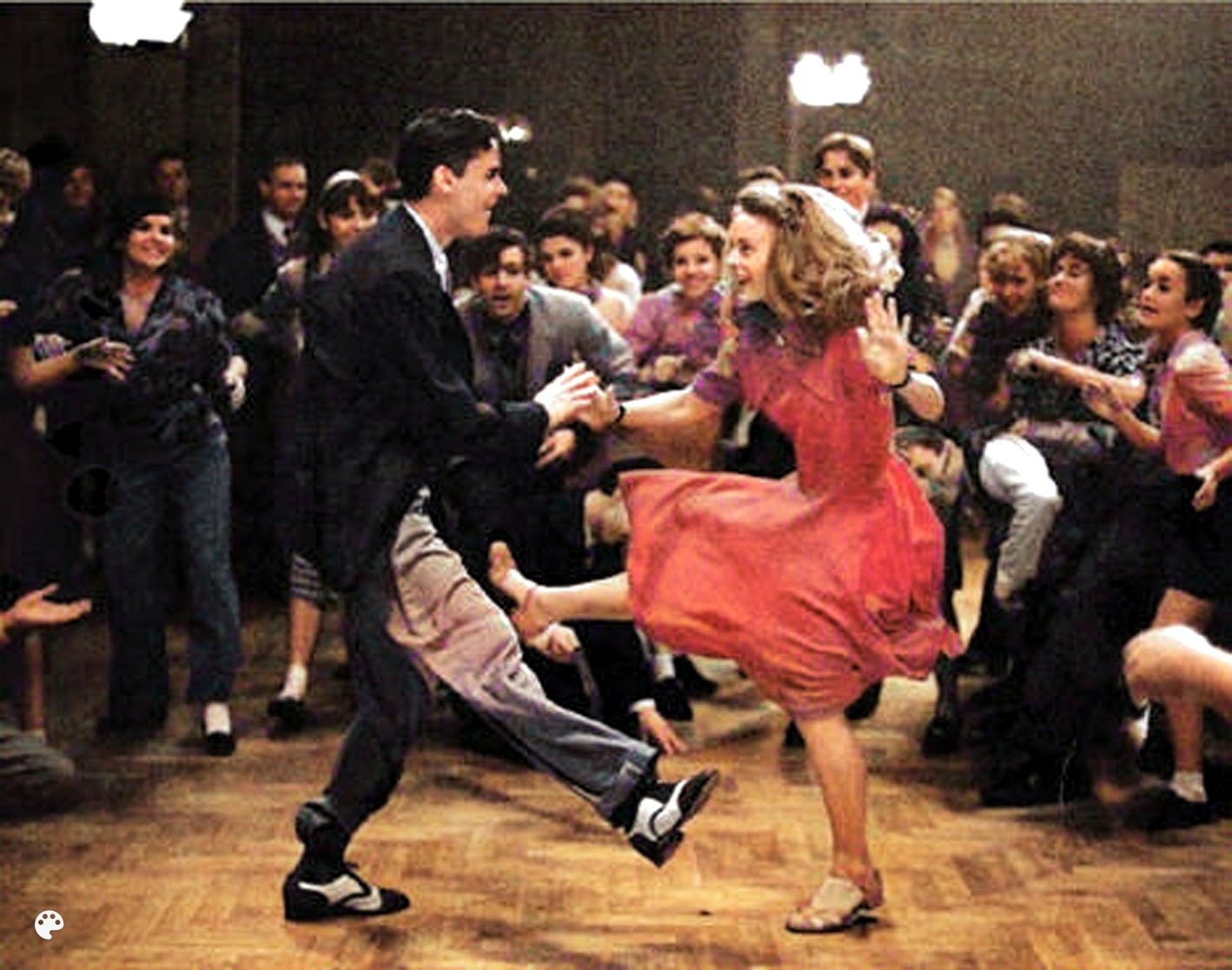
Unidentified dancers perform the Lindy Hop.

[1] “Plantation songs,” John P. Birchall Accessed Jun 1, 2022 @ https://www.themeister.co.uk/ dixie/plantation_songs. ‘Melisma’ is a musical style that allows several notes to be sung to one syllable of text.

[2] FDD Mar 26, 1925, p. 1.

Owen Mitchell, Jazz Man

Mitchell’s group ‘Arkansas Travelers,’ 1929 UA Yearbook. Mitchell seated at piano. Rex Perkins, violin, standing by piano

Owen Mitchell started teaching music when he was seven years old. A neighborhood boy wanted to learn to play piano so Owen shared what he knew. That was 1892. He would go on to become the first jazz band leader in Fayetteville.[1]

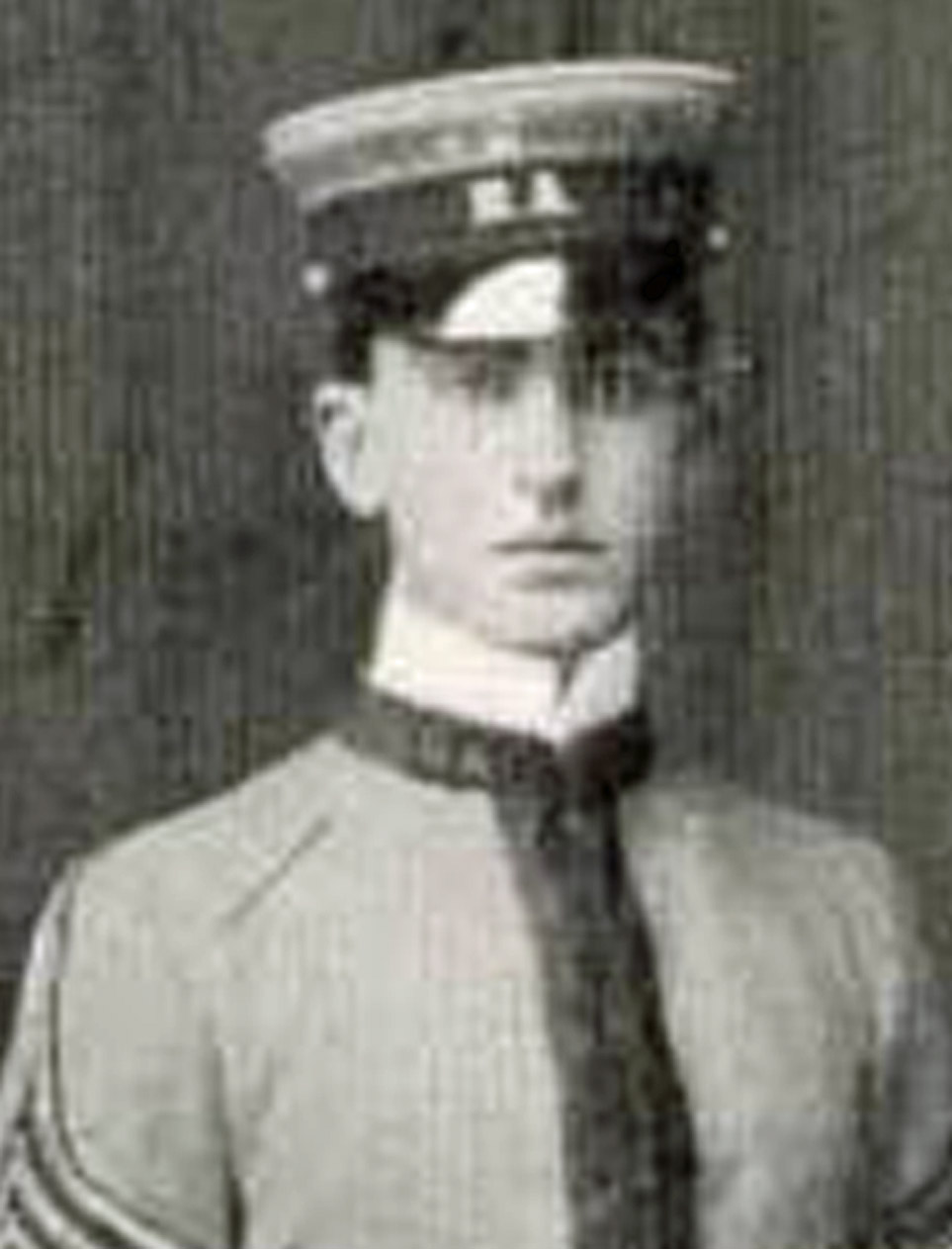
Owen Mitchell 1904, with Cadet Band

Mitchell didn’t start out with jazz. Upon entry to the University of Arkansas at Fayetteville in 1903, Mitchell pursued a degree in chemical engineering while continuing to follow his passion for music as a sideline. Mitchell graduated with a bachelor’s degree in chemistry in 1908 and for a time taught the subject at the University, probably as a graduate assistant. But he was never far from his love of music. Apparently something of a polymath in musical arts, described in one of many newspaper accounts of his performances as a “musician of unusual ability,” Mitchell played trombone, piano, and several other instruments. He understood music theory and composition, and served an important role in Frank Barr’s orchestra which performed at multiple social events around town.

During these early years, Mitchell traveled to St. Louis and Kansas City to experience what big city musicians had to offer, and he often accompanied Barr to help teach community bands in Cane Hill, Westville (Oklahoma), and other towns. [2] Eventually his love of music pulled him away from chemistry altogether, and he went on to lead Owen Mitchell’s Orchestra. The band was among the first to be heard on the new University radio station, KFMQ, in 1924. By January 1925, Mitchell’s radio programming split fifty-fifty between fox trots and waltzes. Within months, fox trot numbers filled two-thirds of the orchestra’s air time. Members of the group included violin, cello, and bass plus trumpet, clarinet, trombone, French horn, and drums. During summer months, the group played every evening at Riverside Park where a dance pavilion accommodated growing crowds.[3]

Other jazz groups quickly sprang up to meet public demand for popular new styles of jazz for community events, club gatherings, parties, and University dances. Through the 1920s and into the 1930s, Owen Mitchell kept ahead of the wave with music for dance fads like the Charleston, Black Bottom, and Lindy. Yet he maintained his ties to classical music both with University groups as well as teaching private piano lessons at his home on West Center. He traveled widely and advocated for the UA music department, making a plea in 1933 for better practice facilities. His leadership in innovative new musical styles fostered other jazz groups and informed a new generation of Fayetteville musicians.

The story of Mitchell’s contributions to Fayetteville’s music scene in the early 20th century is found in The Music Men of Turn-of-the-Century Fayetteville, available at the Washington County Historical Society and at Amazon.com

Swing dance remains a popular style and enjoys periodic revivals.

[1] “First” is not proven, since we do not know when he started his jazz group versus when the Black Diamond group started.

[2] The comment regarding his ability followed his solo piano performance of Grieg’s “Norwegian Bridal Procession.” Similar praise followed his performance of Grieg’s “Concerto in A Minor” the following month.  FD Apr 3, 1914, p. 4. and Jun 9, p. 1.

[3] Riverside Park was a project of the Parker Brothers who operated a large nursery where the Fayetteville airport is now located. They first intended the park as a swimming spot and built bathhouses, restrooms, and other accommodations alongside the West Fork of White River.

Owen Mitchell and Fayetteville’s Jazz Men

Mitchell’s jazz band circa 1930,
the Arkansas Travelers

Owen Mitchell started teaching music when he was seven years old. A neighborhood boy wanted to learn to play so Owen shared what he knew. That was 1892. He would go on to become the first jazz band leader in Fayetteville. … In increasing demand, the Owen Mitchell Orchestra performed for dances across the region to audiences eager to break out of the war years’ gloom and embrace the new styles of music and dance. The band was among the first to be heard on the new University radio station, KFMQ, in 1924. By January 1925, Mitchell’s radio programming split fifty-fifty between fox trots and waltzes.

… In a lengthy 1949 article in the Northwest Arkansas Times, reporter Doug Jones provided an overview of the local music scene.

“…What I’m talking about are the guys that have and are still living in and around Fayetteville that plenty of local citizens have heard about. All in all, there has been a lot of pretty good music produced in this area, homegrown and home-consumed.

“To those who have followed music, there have been trends in this town reflecting the jazz of the whole country. There might be a few raised eyebrows when I say jazz, but that’s what it was and still is. Jazz music is the basic foundation for all native American popular music. Even more important, to those who haven’t heard, jazz is the only original art form this country has produced. Everything else, Europe or China did first. But jazz is ours, and more and more it is becoming recognized by critics as a true art form.”

From Chapter 3, The Music Men of Turn-of-the-Century Fayetteville, available in paperback at Amazon. $19.95