All around us, every day, the people and events of the past still echo. What is better than to meet those memories and share them with your loved ones?
From 1835 to the present day, the City of Fayetteville in Washington County, Arkansas, has enjoyed a vibrant and colorful history. Its reputation as a regional center for arts, culture, and education began early in its history. Frequently named one of the nation’s Top 10 cities, Fayetteville hosts the University of Arkansas and its famous Razorback athletic teams.
In Glimpses of Fayetteville’s Past, history comes alive in stories of the town’s origins and development. The five articles contained in Glimpses of Fayetteville’s Past focus on under-reported aspects of that history. Published initially by the county’s historical society, these intensively-researched works have been revised and expanded with illustrations, photographs, and maps.
“The History of Fayette Junction and Washington County’s Timber Boom” now include not only an in-depth review of Fayetteville’s first major industry but also three appendices which examine wagon production in Fayetteville, the name and tradition of Sligo, and the Fulbright mill.
“Quicktown” delves into the story behind this quirky short-lived suburb in south Fayetteville.
“546 West Center” tracks the development of a landmark Fayetteville property from its earliest use as a site for an ice factory in the 1880s.
“The Rise and Fall of Alcohol Prohibition” documents the use, production, and regulation of alcoholic drink in Washington County from before statehood through the repeal of Prohibition in 1933, and features indictment and other crime data.
“175 Years of Groceries” follows the transition from country store to supermarkets to big box stores and includes newspaper advertisements showing price changes over those decades.
Whether a reader is interested in learning more about the history of Fayetteville or simply enjoys the peculiar details of how time changes all things, Glimpses of Fayetteville’s Past will inform and entertain.
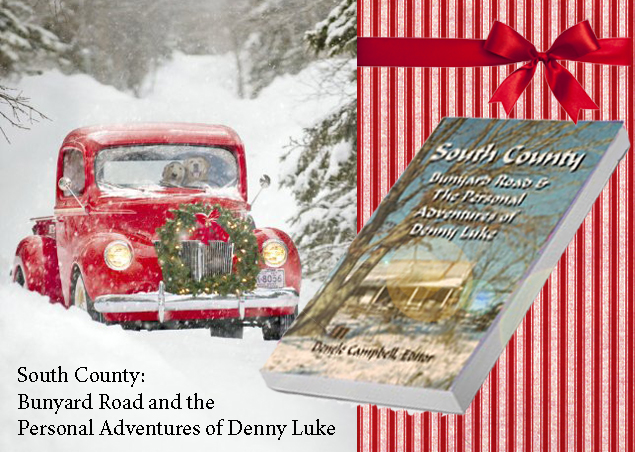
1972. A Yankee learns the Ozarks way and lives to tell his tales. Now almost a native, Denny fondly reminisces about the people and places of his adopted home.
Denny Luke is an adventurer. During his years as a Navy man, he built hot rods with money he made with shipboard loansharking. He returned to his native Ohio where he soon tired of the mechanic’s life. Computers had just started to break the surface in 1966, the perfect attraction to a young man with a sharp mind and plenty of ambition.
Hot cars and Enduro racing occupied Denny’s next few years as he helped usher in the computer age in Minneapolis. But another adventure awaited when in 1970 he fell in with a bunch of hippies. By 1972, he had found his way to the Ozarks.
An avid photographer and storyteller, Denny shares the adventures of his life as he recalls the outrageous backwoods tales and colorful characters who populate the southern fringe of Washington County in Northwest Arkansas.
Shameless self promotion can’t be avoided when authors have books to sell. While you’ve still got time to receive an Amazon order — or for that matter, time to order through your local bookstore and give them a piece of the pie, here are a few for your consideration.
Shown above: The Violent End of the Gilliland Boys
Christmas Day horse races 1872, Middle Fork Valley. Bud Gilliland waits, eager for another chance at Newton Jones. Only this time, after two years of sparring, Newton gallops up in a cloud of dust, aims his Spencer rifle, and sends Bud to a well-earned grave.
The death of Bud surely grieved his father. But before the curtains closed on these descendants of J. C. and Rebecca Gilliland in 1890, two other sons and a grandson would die a violent death while yet another grandson serves hard time for murder.
What was it about the Gillilands?
This recounting of the family tracks their ancestry, their pioneer years on untamed land, and the hard work that made them one of the wealthiest families in Washington County, Arkansas. A fascinating tale of brash ego, brave gallantry, and bad luck.
Serving everything from pita to peach cobbler, Trailside Café and Tea Room became a favorite destination for the few years of its existence. Plate lunches of Pot Roast or Ribs ‘n’ Kraut became overnight hits. Now with a new section on Sandwiches, and a greatly expanded last chapter including many more family recipes sure to be a hit in anyone’s kitchen, Recipes of Trailside Café and Tea Room offers the ‘how-to’ for delicious soups like Split Pea or Potato Leek, hearty salads including Wilted Lettuce, and scrumptious desserts like Lime Pie and the famous Brown Butter Cookies. Over 200 recipes for easy, down home food.
Contrary to popular notion, Arkansas was part of the Old West along with Texas and the rest of those more familiar dusty southwestern places. Its western border joined up with the Indian Nations where many a weary marshal rode out with his bedroll and pistol carrying writs from the U. S. District Court at Fort Smith in a search for a steady stream of men rustling livestock, stealing horses, selling whiskey, or running from the law.
From its earliest days, Washington County, Arkansas, experienced some of the worst the Old West had to offer. At unexpected moments, county settlers faced their fellow man in acts of fatal violence. These murderous events not only ended hopeful lives but also forever changed those who survived them. Not to say that the murders in the county all stemmed from conflict along
its western border—plenty of blood spilled within its communities and homesteads.
The fifty chapters of Murder in the County each focus on one violent incident. Through family histories, legal records, and newspaper accounts, the long-dead actors tell their shocking stories of rage, grief, retaliation, and despair. A thorough compendium of the county’s 19th century years.
I’m enjoying reading posts on a Facebook group page I’ve discovered, Legends of the Old West. Stories on just about everything the Old West had to offer, most recently a piece on George Maledon, the “Prince of Hangmen.” Reportedly holding the record for executing the most men, Maledon worked for Hanging Judge Parker at Fort Smith from the mid 1870s to the 1890s. Lots of fascinating details in the article.
The photo posted here is also from the Legends page. It’s the Crystal Palace Saloon, Tombstone, 1880.
There are over 8000 members in this Facebook group and you do have to ask permission to join. Of course not all those folks post to the group. They have strict rules banning advertisements or even bits from Western movies–just the real stuff, ma’am. Here’s the address: https://www.facebook.com/groups/724363704322984/
Back when … well, whenever, things were better. Right? People loved each other more, spent more time with family. Life was simpler.
Exactly when was that?
Was it the 1950s,
Back when the U. S. and Russia detonated nuclear weapons above ground, when milk tested positive for radiation? When school kids routinely practiced scuttling under their desks in case of a nuclear attack?
When everyone smoked cigarettes?
When women had to find a back alley abortionist to end an unwanted pregnancy and the only means of birth control were condoms and diaphragms? (Okay, plenty of people think this was a good thing because, you know, women who abort should die and sex is only for making babies.)
When schools and most businesses remained segregated? When homosexuals could be beaten to death? (Another good thing, right, for all the racists and bigots out there?)
Back when there weren’t any cell phones or cordless phones and television only came on three channels in black and white?
Oh, you meant earlier than that. Back in those halcyon days when folks sat on the front porch and ate homegrown food?
Like 1900,
Back when nobody had automobiles and you had to saddle up to go anywhere? When families traveled by wagon on the rare occasions they went to town? When horse dung littered city streets and nobody had indoor plumbing? We loved hanging ourselves over a stinking hole in the ground and freezing our privates while relieving our bowels in January. Right?
When three generations all lived in the same house?
Ah, the good old days before modern medicine invented antibiotics and people died of tuberculosis because nobody had figured out it was a curable, contagious disease.
Those days, so wonderful without any of these modern distractions like radio or television or rural electricity so everyone could enjoy dinner by the light of kerosene lamps or candles.
Yes, gee whiz, back before welfare and foodstamps and all those other pesky handouts to the slackers, how we miss working in the fields all day, milking cows, butchering hogs, because if we didn’t we wouldn’t have anything to eat.
And how we miss sewing all our own clothes and all the women wearing corsets and long skirts
When women couldn’t vote.
Those fabulous days when no one could talk about birth control or buy condoms because it was against the law.
Further back? Like 1850, when much of the labor to produce goods or foodstuffs was performed by African slaves? When it was legal for husbands to beat their wives as long as the stick they used was no wider than their thumb? When children worked in coal mines? When no one had heard of weekends or sick leave or vacation time or minimum wage?
How far back, exactly, did you think we’d have to go to get back to “the Good Old Days?”
The colonial era when poor people and random miscreants were rounded up to work on ships or turned into indentured servants and no one had the right to vote?
Or the 1600s when people who couldn’t pay their debts were imprisoned? When those who didn’t agree with the dominant religion could be burned as a witch?
Or the 1500s when Protestants and Catholics fought endless wars?
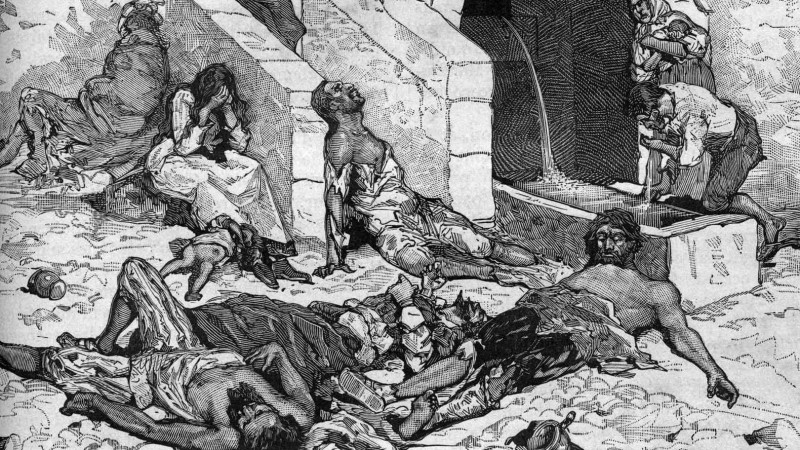
Or the 1300s and 1400s when bubonic plague killed one-third of the entire European population?
I mean, how far back do we go? The Crusades? The Roman Empire? Ancient Egypt?
In all those times, war ran rampant as nations ruled by kings fought over resources and territory. People starved and died of diseases that are now preventable or easily curable. Women died in childbirth and half the children born died before adulthood. All the inventions we now consider normal didn’t exist—heated homes, air conditioning, toilets, sinks, glass windows that open and close, motorized vehicles, air travel, ambulances, hospitals and medical doctors, understanding of planets, stars, and our sun, microscopes and the world of bacteria, viruses, cells, and atoms, organized educational systems and widespread literacy…
Could it be that the fondly remembered good old days were simply the days of our youth when we didn’t have to earn a living and didn’t know enough yet to worry? Could it be that those early years of playing in piles of leaves or swimming in a creek or coming home from school to savor a freshly made cookie were simply the experience of a decent childhood without any real application to the adult world? Or that our memories of childhood gloriously forget the bad stuff we don’t want to remember?
On Friday, Christmas Day 1874, and after more than two years of near-death tension, Bud Gilliland joined an energetic crowd at the Lewis Mills, a thriving Northwest Arkansas community along the Middle Fork of White River. In celebration of the season, proud horse owners lined up their snorting high-tempered steeds to compete in a favored recreation of those times, horse racing. The dusty race track stretched down the long valley. More than few friendly bets changed hands among the crowd as people craned their necks to see the red flag at the far end flapping in the stiff breeze.
Bud walked among the gathered horses, greeting people he’d known all his growing up years. He kept looking around, anxious to spot a particular face. If he saw Newton Jones, he knew what he’d do. He clapped his hand against the Colts pistol holstered at his hip. Hidden under his overcoat, the weapon wouldn’t provoke any outcry. At the right time, he’d put it to good use.
As it happened, this wasn’t a great place for someone feuding with a Jones.[1] The valley was the heart of Jones family lands. All the more reason for Bud to attend—he was sure to encounter Newton here. He paced a distance from the crowd, squinting under the overcast sky as he searched, finally satisfied the younger man wasn’t here yet. Bud squared his shoulders and lifted his chin. He’d waited long enough for this lily liver.
Newton had already saddled up when he got wind of Bud’s presence at the races. He’d been lying low, afraid of what Bud might do next. But as the season of holiday gathering approached, he’d decided he had to confront Bud, knowing the likelihood of his appearance at the races and infuriated over the near miss he’d suffered in Bud’s sights two years earlier. Bud’s brief time in jail hadn’t subdued him any. Those damn Gillilands thought they could get away with anything. And they damn near had.
Newton knew what it would take. He had a wife now and a baby on the way. The time for dangerous tomfoolery had ended.
A cold breeze ripped through the crowd as a man on a horse galloped in from the roadway. Bystanders had no time to react as Newton pulled up in a cloud of dust, whipped his Spencer rifle from its saddle scabbard, and quickly centered Bud in his sights. He took a deep breath and squeezed the trigger.
In a mere second, the leaden ball found its target. Shocked, Bud looked up into the eyes of his foe. A few men shouted amid the collective gasp as the gunshot echoed up the hillside.
The event would set off a chain reaction that would forever resonate through the region and the Gilliland and Jones families. Not only Bud but his two brothers Jeff and Fine would face other men at the point of a gun, and the killing didn’t stop there.
~~~
[1] On Arkansas Highway 74 between Arnett and Sulphur City, sometimes marked as Hicks, Arkansas
~~~
In the completion of my recent book, Murder in the County: 50 True Stories of the Old West, it became apparent that three of the fifty murders profiled there were committed by members of the same family! Intrigued, I researched more about these folks and the result is now published under the title The Violent End of the Gilliland Boys. Fascinating and shocking, this story features more twists and turns than an Ozarks dirt road.
The death of Bud surely grieved his father. But before the curtains closed on these descendants of J. C. and Rebecca Gilliland in 1890, two other sons and a grandson would die a violent death while yet another grandson serves hard time for murder.
What was it about the Gillilands?
This recounting of the family tracks their ancestry, their pioneer years on untamed land, and the hard work that made them one of the wealthiest families in Washington County, Arkansas. A fascinating tale of brash ego, brave gallantry, and bad luck.
1890 Photo of Guthrie looking southeast from 2nd Street and Oklahoma toward the U. S. Land Office, Hell’s Half Acre, Capitol Hotel, and Blue Belle Saloon. Believed to be a 4th of July parade. http://www.forensicgenealogy.info/contest_5_results.html
Police docket records for the first decade of existence for Guthrie (Logan County, Oklahoma Territory) reveal that government operations depended heavily on fines levied against prostitutes, those who maintained houses of gambling, and those who disturbed the peace by cursing, fighting, loitering, or other minor offenses. Taxes and licenses supplemented the city’s income. Major crimes such as murder fell under the jurisdiction of the federal court at Fort Smith.
Despite the heavy and persistent fines, gambling and prostitution flourished in this new frontier town. As shown in the following yearly summary of offenses, these activities tapered off slowly. By 1900, less than a third of the number of fines were levied against gamblers and prostitutes than had occurred in the peak year of 1893.
As the city gained its footing, additional laws were passed. For example, in 1891 fines were instituted for failure to license a dog, suggesting that dogs running loose had become a problem. With a continuing influx of people from other more settled places around the nation, greater pressure fell upon town fathers to clean up. Hogs and cattle became the subject of complaints as did the proper maintenance of outdoor privies. However, even by 1900, the number of arrests by Guthrie police for prostitution and gambling still topped any other offense.
As other sections of the former Indian Nations (Oklahoma) opened to white settlement, the front lines of gamblers and prostitutes moved to the newest places where largely male populations could be counted on as eager customers. Further west, mining of precious metals in California, Colorado, Arizona, New Mexico, and other areas formed the last frontier of rough and ready places where gamblers and ladies of the night could earn a profitable income.
At the time, journalist Frederick Barde reported on the gambling scene at Guthrie for the Kansas City Star, as recorded by Michael J. Hightower in his 2013 book Banking in Oklahoma Before Statehood:
Those who made it to Guthrie with their wallets intact might have visited the Reeves brothers’ gambling house operated by Dick and Bill Reeves. Opened on the day of the Run of ’89 in a big tent “where there was room enough for 1,500 men and women to gamble and drink and carouse,” the Reeves brothers ran their business in Guthrie for twenty years. Barde’s description of the famed honky-tonk confirms an image of the western saloon that has never yielded its place in our collective memory: “Gamblers from every State tackled the game that ran night and day in that sleepless place. Hundreds of thousands of dollars passed over its tables. The six-shooter and the dirk settled many a dispute, and the dead man was hauled away and the blood scrubbed from the floor as part of the day’s business. Outlaw gangs that infested Oklahoma in those days risked their loot against the faro bank and the roulette wheel—and usually lost.”[1]
As late as 1898, the situation in Guthrie continued to outrage the city’s more upstanding citizenry, as reflected in this editorial in the Guthrie Daily Leader.
Why is not some action taken toward driving out the hundreds of tramps, bums and tinhorn gamblers that infest the city? The streets and alleys fairly swarm with such vermin and with our present small police force the city is not safe. I hear daily of petty thieving done by this gentry. Such characters do a town no good and I think it high time to begin a crusade. Every night the joints on Second street are crowded with bums, who, after the lights go out, enter on a campaign of larceny. If the evil cannot be checked in any other way, then close the joints.[2]
Oklahoma Avenue 1893 Guthrie
Laws passed in 1893 in Oklahoma Territory allowed cities to levy an occupation tax on gaming tables, among many other activities including but not limited to auctioneers, contractors, druggists, restaurants, butchers, taverns, hawkers, peddlers, bankers, brokers, pawnbrokers, merchants of all kinds, grocers, wagons, carts, furniture dealers, real estate agents, and all kinds of exhibitions for pay.[3] The same 1893 law allowed cities to prohibit houses of gambling as well as prostitution, tippling shops, billiard tables, bowling alleys, etc., and specifically prohibits the granting of license for gambling or prostitution.[4] Observers might conclude that Guthrie’s town fathers deemed these activities too lucrative to completely banish, allowing gambling and prostitution to flourish in order to make the most of the fines they produced.
Also passed that year, a law stated that any officer of the law found to be drinking or gambling could be removed from office upon complaint by any citizen. This law may have been the cause of Bill Tilghman’s sudden change of career. After being appointed deputy marshal in Spring 1893, he gave up ownership of his gambling house.[5] Yet these stringent laws, including those that penalized property owners if their tenants pursued any such forbidden activities, seem to have been largely ignored by boom towns of those lawless years, as Guthrie’s police docket reveals.
Guthrie’s first decade of arrests were as follows:
1889 May thru Dec
Trespass 9
Trespass/Stealing 28
Assault/Fighting 8
Disturb Peace 14
Public Intoxication 1
Conduct Business w/o License 4
Fake Credentials 1 (doctor)
Maintain a House of Gambling 1 (Fine 10.00)
Maintain a Place for Prostitution 2 & Prostitution 46 (Range of fines: 8.50 – 36.00)
1890
Trespass 2
Assault/Fighting: 13
Failure to Pay Business Tax 7
Sell Beverage w/o License 1
Profane Language 6
Disturb Peace 5
Firearm 3
Public Intoxication 13
Maintain Public Nuisance 1
Maintain a House of Gambling 25 (Average fines: 10.75)
Maintain a Place for Prostitution 9 & Prostitution 43 (Average fine: 7.50)
1891
Assault 16 – 1 pitchfork, 1 w/ hoe
Disturb Peace/Fighting/Profanity 128
Discharge Firearm 3
Public Intoxication 30
Failure to Pay Business Tax 9
Maintain a House of Gambling 120 (Range of fines: 15.00 – 35.00)
Maintain a Place for Prostitution 9
Prostitution 148 (Range of fines: 7.50 – 10.00)
Unusual: Unregistered dog: 3
On Street w/o visible means of support 1
Left on ground exposed cow 1
Saloon open on Sunday or after hours: 3
1892
Assault 7
Disturb Peace/Fighting 156
Public Intoxication 52
Failure to Pay Business Tax 14
Maintain Public Nuisance 2 (one charge for hogs)
Maintain a House of Gambling 142 (Range of fines: 10.00 – 40.00)
Prostitution 202 (Range of fines: 7.50 – 10.00)
Unusual: Frequently found in house of prostitution, fined 46.55
Business open earlier than 5 am
Indecent exposure
Not burying dead pony
1893
Assault/Fighting 50
Disturb Peace 244 (many charges for “bad language”)
Loiter/Vagrant 24
Public Intoxication 84
Maintain a House of Gambling 29 (Range of fines: 8.50 – 40.00) (No arrests after March)
Prostitution 337 (Average fine: 10.15 – 13.65)
Unusual: Riding horse on sidewalk
Keep hogs in filthy condition
1894
Assault/Fighting 25
Disturb Peace 96
Loiter/Vagrant 6
Public Intoxication 93
Maintain a House of Gambling 1 arrest* (16.65 only recorded charge/fine, June)
Prostitution 270 (Average fine: 10.15 – 13.65)
(Terms used in booking: Place of Assignation, Bawdy House, Keeper, Inmate, House of Ill Fame)
Unusual: Allow horses to run at large
Carry on sexual intercourse at Arlington Hotel
Slaughter animals
Dress not belonging to his sex
* Mysteriously, arrests for gambling ceased entirely from April 1893 throughout 1894 and remained at a low rate in 1895.
1895
Assault 22
Disturb Peace 62
Loiter/Vagrant 16
Assault/Fighting 22
Public Intoxication 160
Maintain a House of Gambling 35 (Average fine: 16.65 – 31.65)
Prostitution 219 (Average fine: 11.65 – 31.65)
(Includes “occupy room for unlawful sexual activity”; “use room in restaurant for assignation”)
Unusual: Appear on street in lewd manner
Garbage in streets and alley
Allow cow to run at large
Hogs in city
Cow in dirty pen
Fail to close saloon at 12 a.m.
Group assault on John ‘Chinaman’
1896
Assault 30
Disturb Peace 77
Loiter/Vagrant 1
Public Intoxication 66
Maintain a House of Gambling 52 (Average fine: 16.65 – 31.65
Prostitution 152 (Average fine: 11.65 – 31.65)
Unusual: Leaving team of horses unattended
Keep meat market open after 9 a.m. Sunday
1897
Assault/Fighting 23
Disturb Peace 95
Loiter/Vagrant 27
Public Intoxication 147
Maintain a House of Gambling 61
Prostitution 207 (Three women filed physician certificates, assumed to verify state of health); arrests for cohabitation: 23
Unusual: Appear on street in unbecoming dress (female)
1898
Assault/Fighting 21
Disturb Peace 78
Loiter/Vagrant 30
Public Intoxication 95
Maintain a House of Gambling 41
Prostitution 169 (Cohabit: 36)
Unusual: Remove contents of privy without license
Sale of liquor on Sunday
1899
Assault/Fighting 34
Disturb Peace 55
Loiter/Vagrant 32
Public Intoxication 181
Maintain a House of Gambling 64 (Average fine $40)
Prostitution 136 (Cohabit: 28) (Average fine $10)
Unusual: Maintain filthy condition injurious to public health
Overflowing privy vault
Steal 27 hen’s eggs
1900
Assault/Fighting 30
Disturb Peace 73
Loiter/Vagrant 14
Public Intoxication 243
Maintain a House of Gambling 33
Prostitution 142
Unusual: Giving musical concert on the street without a license
Bill Tilghman posing with his Winchester rifle in a scene from 1915 movie “The Passing of the Oklahoma Outlaws” (Wikipedia)
Arrest records from Guthrie’s early days as Oklahoma Territorial capitol provide an interesting insight on famed lawman William “Bill” Tilghman, one of the Three Guardsmen (along with Chris Madsen and Heck Thomas) celebrated for their pursuit of the Dalton Gang and the Doolin Gang. Little has been written about Tilghman’s adventures on the wrong side of the law or his likely relationships with a variety of fallen women. One such woman appears in the Guthrie arrest records as Jessie Bond, probably the same person later known as Jessie Whitewings. These records suggest an illicit relationship between Bill and Jessie Whitewings/Bond.[1]
As soon as Oklahoma Territory opened to white settlers in 1889, Bill Tilghman joined the land rush to stake a claim in the place that would, overnight, become Guthrie. He left his wife, ranch, and livelihood behind in Dodge City, Kansas. At this point, he was 35 years old and had pursued many activities so far in his life, including buffalo hunting, service as deputy sheriff under Bat Masterson in Ford County, Kansas, operator of a saloon in Dodge City, and then service as marshal in Dodge City. Most writers of his biographies focus on Tilghman’s illustrious and dedicated years of duty as a law officer in large part due to the efforts of his widow who wrote a book aggrandizing his career.
Not unlike other famous Western lawmen, Tilghman played both sides of the law. Newspaper accounts contemporary to his deputy service in Kansas with Masterson stated that:
Within a month of his appointment, Tilghman was charged with being an accessory to an attempted train robbery. On February 12, 1878, the charges against Tilghman were dropped for lack of evidence. Tilghman was again suspected of a crime only two months later, on April 16, 1878, when he was arrested by his boss, Masterson, on a charge of horse theft. Once again the charges were dismissed.[2]
Tilghman wasn’t so fortunate at Guthrie where surviving police dockets reveal a string of arrests and fines. Early on the scene in the land rush of 1889, Tilghman nabbed a prized corner lot on the main street of the suddenly-forming town and, according to one account, he later used the rent from this commercial location to fund his endeavors as a rancher. This source also states that he obtained his ranch site during another land rush in 1891.[3]
The woman of our inquiry, Jessie Bond, first appeared in the Guthrie, Oklahoma Territory police records in September 1890, detained on the 6th of that month and fined fourteen cents for prostitution. Similar subsequent arrests that year occurred October 11 (fined $7.50), November 1 (no fine recorded), and December 9 (fined $7.50).
Evidence of Tilghman’s associations with ladies of the night also involves Jessie Whitewings. There is no arrest record for a person by this name, but in later newspaper reports (1894) she was described as a “a flaxen-haired woman about twenty three years old and now quite fleshy…[who was a] “well known Oklahoma sport” [and who had] “lived in Guthrie in the early days and had been the mistress of a gambler.”
Was Jessie Bond the same person as Jessie Whitewings? Records support this theory. On October 15, 1891, a person named “White Wings alias Duncan” was arrested in Guthrie for being “intoxicated on [the] street.” This is the only mention of the name “White Wings” in the Guthrie arrest record between 1889 and 1897. If Jessie Whitewings was a ‘well-known sport’ in Guthrie’s early days, she would have had an arrest record. This leads to the assumption that while she may have had the nickname of ‘Whitewings,’ perhaps due to her relationship with Duncan, her real name was in fact Jessie Bond. Assuming Bond and Whitewings are the same person, at the time of her first Guthrie arrest in 1890, she was approximately nineteen years old.[4]
Within a month of Jessie’s first arrest in Guthrie, William “Bill” Tilghman appears on the Guthrie arrest record for maintaining a house of gambling. He was booked on October 10 (no fine recorded) and again in November, no date specified, with a fine of $10.75. The following year, in 1891, Jessie and Bill were arrested multiple times. Jessie was booked January 25 (fined $8.40) for residing in a house of prostitution, and again April 20 ($7.50), May 11 ($10), and June 13 ($7.50).
Bill’s arrests in 1891 were considerably more numerous, all pertaining to his gambling house on the main street of town. The docket shows arrests and fines of January 20 ($11.70), February 12 ($10.30); June 1 ($15); July 14 ($15); July 22 ($15); August 15 ($15), along with his brother Frank ($15); Frank again September 15 ($15); Bill November 14 ($25), Frank November 16 ($15), and Bill December 1 ($40).
In 1892, Jessie Bond’s arrests for prostitution occurred February 1 ($7.50), April 12 ($7.50), May 18 (fourteen cents), August 15 ($8.50); October 19 ($8.50); November 14 ($8.50); and December 26 ($8.50). During the same year, Bill’s arrests for maintaining a house of gambling occurred January 21 ($40); February 15 ($50); March 30 ($25); April 26 ($20); May 15 ($40); June 15 ($20); July 15 ($15); and August 15 ($15). Frank Tilghman was arrested December 16 ($15).
The August 1892 docket listing was Bill Tilghman’s last arrest in Guthrie. His saloon/gambling house continued under his brother Frank’s direction. Frank’s arrests in 1893 were in January 25 ($15) and February 18 ($15). The last record of Frank Tilghman in Guthrie police dockets show four arrests in 1899 for running a gaming table/room.
Jessie Bond’s 1893 arrest record names the offense of “reside in house of prostitution,” with dates of January 16 ($11.50); February 16 ($11.50); March 15 ($8.50); April 15 ($11.50); May 15 ($11.50); June 19 ($11.50); July 17($10.15) (This arrest was recorded in mid-November.); and July 24 ($8.50). No further arrests of Jessie are recorded until December 30, 1893, at which time two arrests are documented with fines of $13.50 and $5.00.
Here’s where the story gets interesting. During the six-month period between July 24 and December 30, 1893 that Jessie Bond was not arrested in Guthrie, “Jessie Whitewings” was arrested in Perry. By Bill Tilghman. News accounts stated “Jessie had made her way to Fort Sill and El Reno, and at the opening of the Cherokee Strip, she was in Perry making the rounds of the saloons.”[5]
Jessie’s sojourn in Perry lasted only until November 1893, when she captured public attention in a drunken debacle which triggered her arrest by none other than her old buddy Bill Tilghman. After his move to Perry the previous year, he’d become the Perry marshal. No details have been found regarding the extent of this incident but after her arrest and quite mysteriously, Jessie made her escape from the Perry jail.
As reported, “after Tilghman jailed Whitewings, a fire broke out in the jail and it was first reported that she had set fire to her own bedclothes. Jess was taken from the jail and handed over to another police officer from whom she quickly escaped. … The next morning someone else confessed to setting the fire and was in turn placed in jail for that offense. By then Jess Whitewings was nowhere to be found.”[6]
After the Perry incident, Jessie Bond again appears in Guthrie arrest records beginning December 30, 1893. Evidently she settled back into her by-now familiar routine of plying the sex trade, with the exception that she now had moved up the professional ladder a rung or two. Some of the charges in 1894 were not simply for prostitution or for residing in a house of prostitution, but for being the proprietor of such a house.
Her 1894 arrest record ran like a regular monthly tithe to the local constabulary: January 29 ($13.65); February 26 ($10.15); April 16 ($13.65); May 16 ($13.65); July 18 ($13.65); September 13 ($14.65); September 19 ($13.65); October 18 ($10.15); December 15 ($13.65). For April’s arrest her charge was “maintain bawdy house.” For July’s arrest, the charge was “maintain house of ill fame.” For September’s arrests and December’s, the charge was “keep a bawdy house.”
~~~
Records show that Tilghman and Jessie Bond hit the Guthrie police docket within a month of each other in the fall of 1890. He ran a saloon and gambling operation at Guthrie triggering a string of 19 arrests for which he paid fines totaling more than $450, a considerable amount in those days equivalent to about $12,000 today. His last recorded episode on the creative side of the law was August 1892. According to his wife’s posthumous biography of Bill, he was appointed deputy U. S. marshal in May 1892. If true, he continued to operate a gambling house for at least three months after taking up a job in law enforcement.
After the opening of the Cherokee Outlet September 16, 1893, and Bill’s relocation to Perry, his next appearance in the public record as a lawman is confirmed in part by his November 1893 arrest of Jessie Whitewings and her subsequent mysterious escape.
An interpretive view of the public record offers an expanded theory of Tilghman’s story. As previously stated, court records and newspaper accounts support the opinion that Jessie Bond was Jessie Whitewings. Further, it seems likely that she was Tilghman’s sometimes mistress during Tilghman’s days in Guthrie from late 1890 through the first half of 1892, both of them enjoying the rowdy frontier life where she could conduct her private enterprise in and around his gambling establishment and Bill could keep an eye on the gaming tables. She would have seen Bill as a protector in the rough recreation of the boom town.
But by 1892 Bill’s fines had gone sky high and he was starting to see that the local authorities were coming to him for hefty allotments each month. Maybe some of the lawmen he had known in Kansas challenged him about the direction of his life in Guthrie or applied pressure which Bill felt gave him little choice but to clean up his act. Maybe his wife announced her plans to join Bill in the Territory. Likely, he saw a better future for himself in a paying job as a lawman.
For about one year from September 1892 until September 1893, Tilghman evidently traveled until ending up at Perry for the opening of the Outlet. He may have returned to his long-suffering wife and family in Kansas for part of that time and he may have traveled to Fort Sill and El Reno along with Jessie. When summoned to rambunctious Perry to employ his law enforcement expertise, Tilghman reportedly arrived there from Guthrie.
Jessie left Guthrie July 26, 1893, destined for the same town as Tilghman, suggesting she may have fallen for the big lout even though she knew he was married. She followed him to Perry when the Outlet opened for claims September 16, 1893.
But once she found Bill, she would have been bitterly disappointed when he let her know he had turned over a new leaf and was not interested in further dalliance. Trying to drown her sorrows in a bottle of whiskey, Jessie got soaked and went on a drunken rampage that resulted in a call for the marshal. It isn’t difficult to imagine that Bill still had a soft spot in his heart for her, so he took her off the street and locked her away until she could simmer down.
Jessie possessed plenty of incriminating information about him that he didn’t wish aired in his new town or before his wife and children. He could have easily arranged for Jessie to escape with the understanding she would leave town and allow him pursue his new life without her, possibly ensuring her exit with a monetary gift that helped her open her own brothel at Guthrie.
Jessie would have returned to Guthrie with a broken heart. But like many independent women of those times, she faced up to her limited options. Arrests of Jessie Bond continued through the following year (1894) and into 1895, when she was arrested January 2 for disturbing the peace, fined $11.65, and arrested again January 15 for keeping a bawdy house and fined $13.65. Another arrest for residing in a bawdy house occurred February 18, with a fine of $10.15.
Her girls were rounded up again for another monthly contribution to the city budget on March 15, 1895, when “Jess” had to pay $10.15. But the April 1895 bust of local prostitutes and gamblers did not include Jessie, nor did any subsequent month. For whatever reason, after five years on the public record, Jessie’s local infamy ended.
Maybe Jess couldn’t bear to continue in a place where she had enjoyed such a happy run of Bill’s attention. The town was getting too settled for the safe enjoyment of her profession. It’s no secret that once a frontier town aged a few years and the dust began to settle, preachers and churches took over. Like many women of the night, Jessie may have found a new location in which to set up trade farther west, maybe in a mining town. Or, like the luckier of her sisters, she may have found love and (or at least) marriage. The last known record of Jessie Bond is March 15, 1895.
Some researchers of Oklahoma’s frontier history claim a different Guthrie prostitute, Molly Morgan, was Tilghman’s mistress. That may be true. Molly’s record in Guthrie begins with a June 25, 1889, arrest for prostitution, and includes four additional arrests that year. In 1890, the year that Jessie Bond and Bill Tilghman first appear on the arrest record, Molly had five arrests, two of which were for maintaining a house of prostitution. One of those arrests, on November 1, 1890, occurred simultaneously with Jessie Bond’s arrest, strongly suggesting that Jessie worked at Mollie’s establishment and they knew each other.
Molly chalked up eleven arrests in 1891, two for disturbing the peace and the rest for prostitution. In one incident, her arrest occurred on the same date as one of Frank Tilghman’s arrests. On May 11, 1891, her arrest occurred simultaneously with an arrest for Jessie Bond, both of them for residing in a house of prostitution. In total, eleven women were arrested that day on the same charge. Also on that date, nine men were charged with maintaining a house of gambling—including Bill Duncan.
In 1892, two early arrests of Molly Morgan for prostitution on January 20 and February 15 are followed by an arrest for disturbing the peace on June 29. Molly’s last arrest in Guthrie was July 16, 1892, for prostitution, and her booking is listed next to a charge against Wm. Tilghman July 15 for maintaining a house of gambling. Tilghman’s last arrest in Guthrie is the following month.
Even if Bill Tilghman considered Molly his primary mistress during his gambling house days at Guthrie, nothing kept him from dabbling with Jessie on the side. Already married with a family back in Kansas, Tilghman obviously did not consider that relationship a barrier to his involvement with other women. He may have overseen prostitution traffic as a kind of pimp/protector for a slice of the profits. He may have whispered empty promises to Jessie at the appropriate times, leading the young girl to believe he loved her.
Once Jessie suffered his refusal in Perry and returned to Guthrie without him, it was little more than a year before she gave up in Oklahoma Territory and struck off for greener pastures. The 1900 census records do not show a Jessie Bond of the appropriate age, suggesting that by age 29, Jessie had died or become a bride.
As far as this less illustrious view of Tilghman, the record of his arrests and gambling operation are not as incongruous with his lawman reputation as it may seem. Many historians have remarked on the peculiar mindset among certain men of authority in those times. For example, William Howard recorded in his 1889 Harper’s Weekly report on the Guthrie land rush that the best lots were preempted by deputies and others empowered to be on site before the bulk of eager claimants arrived. He provided the following exchange:
I ran with the first of the crowd to get a good point of view from which to see the rush. When I had time to look about me I found that I was standing beside a tent, near which a man was leisurely chopping holes in the sod with a new axe.
“Where did you come from, that you have already pitched your tent?” I asked.
“Oh, I was here,” said he.
“How was that?”
“Why, I was a deputy United States marshal.”
“Did you resign?”
“No; I’m a deputy still.”
“But it is not legal for a deputy United States marshal, or any one in the employ of the government, to take up a town lot in this manner.”
“That may all be true, stranger; but I’ve got two lots here, just the same; and about fifty other deputies have got lots in the same way. In fact, the deputy-marshals laid out the town.”[7]
~~~
Life in the Old West abounds in tales of painted ladies with hearts of gold and lawmen with tarnished reputations. Tilghman’s record of saloon ownership in Kansas foreshadows such activity at Guthrie, as do the activities in both locations of his brother Frank. Bill was certainly not the only man of those times to serve the law while pouring drink. A contemporary in Dodge City plying both trades was Charlie Bassett, also friends with others Tilghman admired. The 1882 opening of the railroad in Texas immediately attracted Roy Bean to set up a tent saloon. Later named to a justice position, Judge Roy Bean’s saloon served as his courtroom. Wyatt Earp worked in saloons when he was between jobs as a lawman, and Bat Masterson in advancing years retired from lawman to run a Colorado saloon.
The 1893 photograph of Tilghman (shown above) reveals a man quite proud of himself. His first wife’s action for divorce in 1897 amid her struggles with tuberculosis suggests she had become disenchanted with his philandering. After her death, his 1903 marriage at age 48 to 22-year-old Zoe Stratton provides additional support to a theory that Tilghman enjoyed a certain celebrity among young women and did not hesitate to take advantage of that attraction. After his death, Zoe zealously scrubbed his reputation in her book, Marshal Of The Last Frontier: Life And Services Of William Matthew Bill, Tilghman, For Fifty Years One Of The Greatest Peace Officers Of The West.
Rather than writing a biography of himself, Tilghman took advantage of new technology in the film industry and formed a production company along with Evett Dumas Nix and Chris Madson. Their endeavor, named the Eagle Film Company, produced four films, the most famous entitled “The Passing of the Oklahoma Outlaws,” which premiered on May 25, 1915. Tilghman, one of the film’s stars, promoted the film in person, taking it on tour for several years during which he appeared on stage to lecture about his experiences. Later critics panned the 95-minute film for its staged scenes, naming them “a major source of popular disinformation.”[8]
Tilghman managed to keep his illicit activities out of the media, or at least a secret from his second wife Zoe. The standards of the day permitted men such liberties while at the same time stringently condemning the women they solicited. He was a man who wanted to be seen as a valuable and heroic public servant. In those times, even more than now, involvement with prostitutes or publicity about his arrests for operating a gaming establishment would have tarnished his desired reputation.
In the completion of my recent book, Murder in the County: 50 True Stories of the Old West, I discovered that three of the fifty murders profiled there were committed by members of the same family! Intrigued, I researched more about these folks and the result is now published under the title The Violent End of the Gilliland Boys. Fascinating and shocking, this story features more twists and turns than an Ozarks dirt road.
Christmas Day horse races 1872, Middle Fork Valley. Young Bud Gilliland waits, eager for another chance at his neighbor Newton Jones. Only this time, after two years of sparring, Newton gallops up in a cloud of dust, aims his Spencer rifle, and sends Bud to a well-earned grave.
The death of Bud surely grieved his father. But before the curtains closed on these descendants of J. C. and Rebecca Gilliland in 1891, two other sons and a grandson would die a violent death while yet another grandson served hard time for murder.
What was it about the Gillilands?
This recounting of the family tracks their ancestry, their pioneer years on untamed land, and the hard work that made them one of the wealthiest families in Washington County, Arkansas. A fascinating tale of brash ego, brave gallantry, and plain old bad luck.
Paperback now available for only $9.95 at. Don’t miss it!
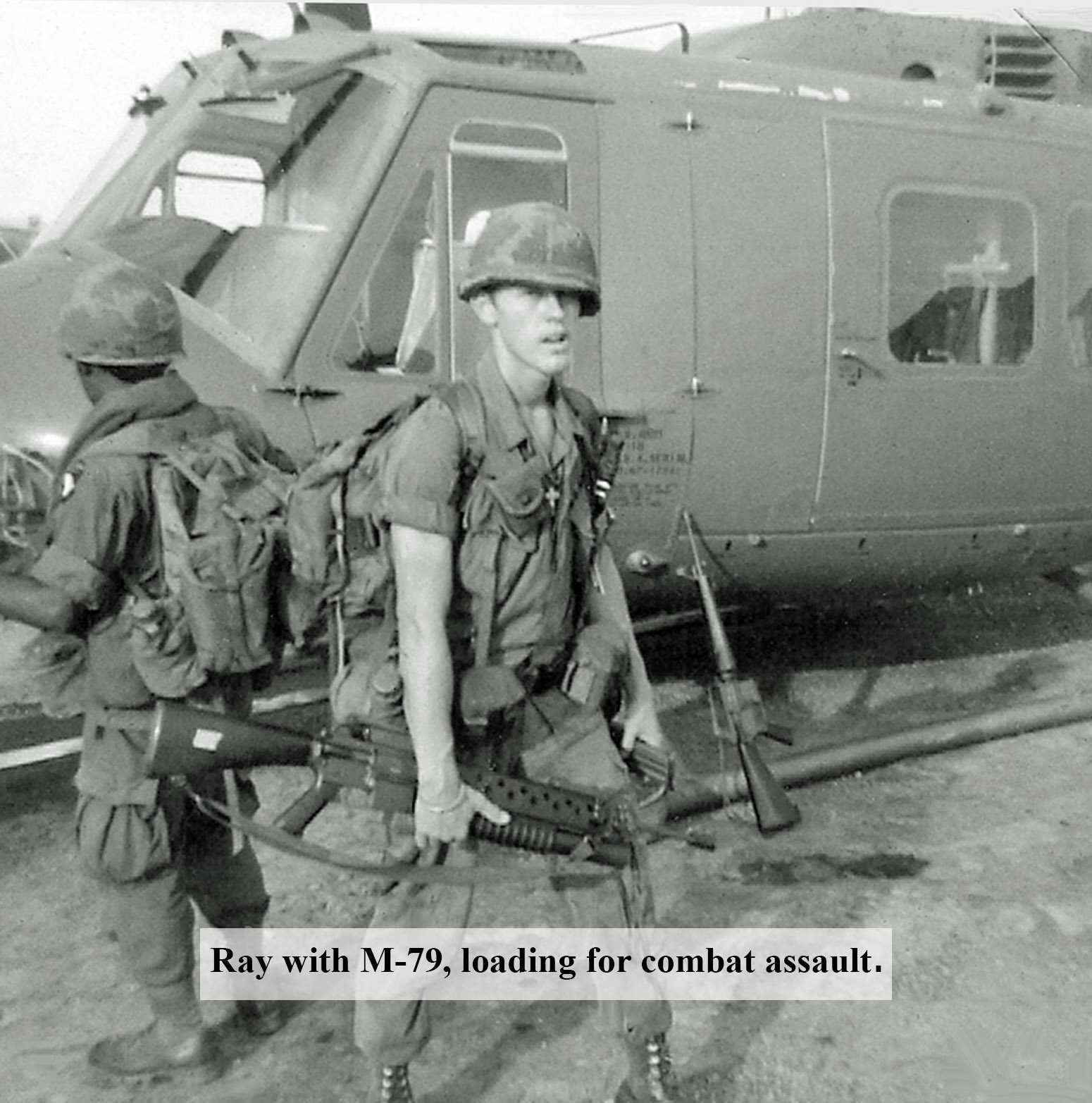
We went into A Shau valley at least four times, maybe five. Or into the mountains around the valley. The valley itself is something to talk about. They almost never shut the doors on those choppers. They’re up there, thousands of feet in the air. You’re flying straight for a long time. When they make that left hand swing, you see that valley. It’s a big green lush beautiful valley, lots of high mountains around it. It has a little haze on it, makes it looks eerie but beautiful. One of the prettiest things I’ve ever seen. But also one of the scariest.
We’d already heard about it, but once you’ve gone there, it’s scary. Once you know what’s on the ground, it’s different. When they make that left hand swing into the valley, no matter how brave you are, a cold chill goes thru you. You realize you may be about to die. The valley isn’t that big, and it comes quick. It’s always a combat assault, you never land. It was the most dangerous place on earth at the time.
We hit the valley, come in at the bottom at the foothills. We started out with two platoons and soon as we got there called in the reserve platoon. I remember we knew there’d already been contact and already long range patrols on the ground, some dead, some wounded. We were going after them and trying to get the dinks that were there. Before we landed, some of the wounded got out with medevac. What was left of the long range patrol, three, four was all that survived out of the six. Not from our troop, but they were from our regiment. Our sister companies, part of the same group. Our own long range patrols, just not our company.
I don’t know how those medevacs got them out. Their choppers were wobbling. The Cobras were trying to put in, Cobras above us spitting out machine gun fire trying to support our assault. Our chopper was the first one of the assault, one of twelve. The Cobras backed up a little to let us in.
We knew it was going to be a jump in. Harley was standing out on the skids and opened with his M-60 as we made the assault. That was extra fire they weren’t expecting. They usually try to take out door gunners, but they weren’t expecting somebody out front on the skids. It’s a bumpy ride, coming in to an assault. The copter comes in fast and then slows down fast, and I don’t know how Harley hung on. That last bump is when you have to jump because we’re under fire. Our assault was made without any casualties, at least in our bird.
Me and Shibe tried to stay together, but only half the time could we do that. We were the first team in that landing zone which was just jungle in the foothills. We throwed our backpacks, jumped on them, and then we done what we had to do trying to get some all-around security. There’s only six men on a bird. There was pretty much nobody in charge at that point but we knew what we had to do, which was secure the place and get to higher ground. We knew our lieutenant would be on the next bird.
We seen him get in and didn’t think anybody on his bird got hit, but we were taking fire. He started gathering up his men as they’re coming in. We’re trying to spread out and get further into the jungle. The long range patrol had told them there was still another man there, but the lieutenant was the only one who knew that. He was in communication with a different squad and headquarters. We knew other birds were coming in, and we’re trying to put out suppressant fire to help the other troops coming in. We couldn’t wait for our reserve platoon so at that point we only had 48 men. Four squads.
Fire is getting heavier. We’re starting to realize there’s a lot more NVA there than we realized. We realized they had us trapped because they were in the valley floor waiting for us. The official army report called this an ambush.
We’d landed just a little bit higher. The long range patrol was in a little higher elevation but they were already gone. We’re doing what we’d been trained to do, which was cover for the other choppers landing.
The valley floor has tall grass and holes the size of basketballs where they’re hiding to shoot at us. That’s why the valley is so scary. We’re starting to realize they’re above us and below us. They waited for us to get in there. They let us get our guys in there so we wouldn’t know they were waiting for us. The lieutenant came in, the other birds are down, we’ve got everybody who’s going to be there for at least forty minutes. We had them backed off, enough for everyone to land. It was done well. But the bastards were already above us.
The lieutenant starts leading. I mean, he’s out front. We’re starting to get into our sections and get more organized. Shibe and I were still together. We’re trying to find this other man. We figured we’d do what we’d done many times before, which was disappear in the jungle just like they did. In these hills above, they had tunnels and could fire at us through little damn holes. Pretty dangerous environment. Lots of cover but it was hard to move because the minute you move, you’re a target.
The jungle was wet. We were having a hell of a time trying to move. We had our 65 pound packs. We’d try to grab a plant and it would pull out of the dirt. These vines, dammit vines, have little thorns that catch on your clothes or helmet cover. They let you walk six to fifteen feet and then throw you back on your ass. When it throws you back like that, you’re on a slippery ass hill with nothing to hold onto with all this shit on your back. Once it throws you back, you’re unable to fight for a second or two and you’re completely vulnerable.
And it starts to drizzle rain. We realize time could be a factor. We’ve got to get out of there before we get stuck there. We didn’t have enough of anything to stay very long.
We get as high as we’re supposed to go. The lieutenant is scouting with Gator and somebody else. He’s gone out front. The lieutenant tells us to stop, says ‘When you see me coming back, pull up.’
We’re there maybe ten minutes. We don’t like being still. That’s a target too. We’re trying to hide. We’re still taking fire. We see the lieutenant come back from his scout and he’s on a small hill. We have to get to him, and that means going through a twenty to thirty foot patch of jungle that’s even thicker. So we went through that, and as me and Shibe pop out of that, the lieutenant pops up. It seemed like all of sudden he was there.
We were standing on a narrow ledge. We’d just stopped. He said, okay, we’ve got to go get a man down there. He pointed where that was, saying it was about thirty to fifty yards down there. We could hear things going on. As soon as he said that, Shibe and I stepped off. They said we volunteered, but we just went. Didn’t say a fucking thing.
Two other men and a sergeant went with us, an E6, good guy. This hill we’ve got to go down is really bad—mud, blood, and leaves. There’s massive jungle to our left and no cover to our right, the worst. Where the guy was at, as we started going down the hill, we could hear him then. Screams. Moans. Sometimes low, sometimes not so low. He’d been hit less than an hour before. He was trying to get out and we were coming after him. He was the last man of his LRP (long range patrol) team that was going to get out before he got hit. We’re going down the hill, trying to see if there’s any way to get more cover. There’s only five of us, and we’re completely exposed.
We get to this flat spot, about ten to twelve feet across with a little hill on the right that provided a tiny bit of cover, maybe half a guy could hide behind it. I seen that little knob, and because I was on the right and first, that’s where I went.
I’m three feet from this guy that’s hit. I’m trying to find a place to lay my rifle so I could get ahold of it with both hands in case we started taking fire. This guy is screaming. He was blowed in half. They shot him with a rocket propelled grenade (RPG). That was something they do demoralize the troops. No legs, no ass. I don’t know how he wasn’t already dead. Part of his ass was still there. His shirt was intact above the waist. He’s still alive and we’re trying our goddamnest to do this as quick as we can. The sergeant told me to keep it secure for a second while everyone else tried to do something. We were trying to pick him up…
~~~
The devastating account of Ray’s experience in Vietnam is only part of the even more devastating account of his life.
“I’ve had my jaw broke three times, my nose broke five times to the point that the VA had to do the operation they do to boxers. My hand’s been broke and on fire once, enough that the skin was gone clear back to my wrist. I’ve fell off buildings, ladders, and mountains. Somehow I survived all that craziness.”
How he survived the incredible journey of his life is indeed a question for the ages. Polio, combat assault jumps from helicopters in Vietnam, and three children by three different wives didn’t kill him. Neither did the flagrant murder of his father by his father’s latest wife. But the traumas changed him, as they would change any man.
Told in his own words, Ray’s life story rushes from one shocking experience to the next and brings him to the last days as he faces end stage lung disease. Turkey killer, outlaw, entrepreneur, and disabled vet, this boy from the horse farms and tobacco fields of Kentucky relates his adventures with wry wit and breathtaking honesty.







 denelecampbell