A Sword Cuts Both Ways

swordFor decades, the religious right has gained access to tax dollars by filling a niche in the education system. In addressing an ‘at risk’ population among children, these religious activists have made great strides toward the use of tax dollars for religious instruction.

It’s a clever end-run around the law. In Arkansas until 2012, a quietly growing swarm of such preschools illegally utilized millions of tax dollars for programs that began each day with prayer and Bible study. (Which they have never been required to pay back.) Classroom activities included coloring images of Biblical scenes, singing hymns, and the occasional time-out at the principal’s office where the recalcitrant child might be prayed over to cast out the demons causing his/her unruly behavior.

Tipped off by thoughtful journalists, Americans United for Separation of Church and State (AU) threatened a lawsuit against the state. Specifically cited in the complaint was the Growing God’s Kingdom preschool at West Fork. The Arkansas Times, arguably the state’s only non-rightwing media, reported that “According to the school’s handbook, parents are assured that staff members will ‘strive too [sic] ensure that your child feels the love of Jesus Christ while preparing them for Kindergarten.’ The preschoolers, it continues, will be taught ‘the word of God’ so that they can ‘spread the word of God to others.’”

Outrageous not only because the preschool blatantly advertised its religious intent in its name and literature without the state blinking an eye before handing over tax dollars, its owner/operator Justin Harris also served as an elected representative in the state’s legislature. And he wasn’t the only elected official sworn to uphold the Constitution who grabbed illegal tax dollars hand over fist. Similar preschools operated under the leadership of Johnny Key, also a legislator and – incredibly – in 2015 designated by the Republican governor Asa Hutchinson as head of the Department of Education, even though Hutchinson had to massage the state’s rules about qualifications for the department head because Key didn’t meet them.

Specifically targeted by religious preschools in order to boost their standing for ever greater grant funding, potential ‘students’ are rounded up from problematic environments.

  • The ABC Program serves educationally deprived children, ages birth through 5 years, excluding a kindergarten program. The Arkansas Better Chance for School Success Program serves children ages 3 and 4 years from families with gross income not exceeding 200% of the federal poverty level.
  • Eligible children for the ABC program shall have at least one of the following characteristics: § Family with gross income not exceeding exceeding 200% of FPL  § Has a demonstrable developmental delay as identified through screening  § Parents without a high school diploma or GED  § Eligible for services under IDEA  § Low birth weight (below 5 pounds, 9 ounces)  § Income eligible for Title I programs  § Parent is under 18 years of age at child’s birth  § Limited English Proficiency  § Immediate family member has a history of substance abuse/addiction  § Parent has history of abuse of neglect Or is a victim of abuse or neglect
  • An age-eligible child who falls into one of the following categories shall be exempt from family income requirements: § Foster child § Child with an incarcerated parent § Child in the custody of/living with a family member other than mother or father § Child with immediate family member arrested for or convicted of drug-related offenses § Child with a parent activated for overseas military duty

Further enticement for struggling parents is that ABC funded programs provide free child care and pick-up/delivery services for children. What low income parent would not rush to place their child in such a program whether or not they want their child indoctrinated in fundamentalist Christian religion?

State employees at the Department of Human Services, which oversees this particular realm of education and tax dollars and in charge of the Arkansas Better Chance (ABC) program, could not account for how the money was spent by these schools, citing chaotic bookkeeping methods. The state did not require any particular accounting method. The state then or now does not know whether tax dollars granted to preschools and other educational programs serving ‘at risk’ children actually are used for that purpose, only requiring that grants be kept in a separate bank account.

Despite the wimpy crackdown in 2012, random yet infrequent inspections by state enforcement personnel lack the ability to determine whether prayers, hymn singing, and exorcising of demons might yet continue, stopping only the moment an inspector walks through the door.

In the aftermath of unwanted scrutiny by AU, the state allowed these powerful religious entities to fabricate an imaginary line between religious instruction and the so-called ‘ABC Day,’ a block of seven hours where secular education supposedly occurs without any religious indoctrination. While delineating these requirements in a new section of is program codes (see Section 23 at the DHS website), the restrictions on how tax dollars might be used fail to include rent, insurance, utilities, and other overhead expenses of the overall operation. Children bused to the school before the ABC day begins or who remain after are immersed in religious instruction, a convenient sleight of hand since parents’ work hours rarely coincide with ABC instruction hours.

As specifically stated in Section 23.04.4 of ABC Rules:

  • No religious activity may occur during any ABC day and no ABC funds may be used to support religious services, instruction or programming at any time.

Without a viability test by which religious preschools must prove their religious instruction could continue without tax dollars, there is no method to determine if ABC funds are used to support religion. Such a viability test would have to show that without tax dollar grants, these schools generate enough income from other sources to keep the rent paid and the lights on. The state has made no effort to devise such a test.

Now let’s take a sharp turn to a similar situation on the other side of the coin. As the newly installed majority Republican Congress rubs its hands in glee over its sudden ascension to total control over the nation’s lawmaking, no issue is more eagerly addressed than the longstanding thorn in the abortion debate—Planned Parenthood. Early calls for defunding this nonprofit organization cite exactly the same argument as those opposed to tax dollars for religious education.

Recently questioned by CNN’s reporter Jake Tapper, Speaker of the House Paul Ryan explained the need to stop tax dollars from supporting Planned Parenthood.

Well, there is a long-standing principle that we’ve all believed in. And—by the way, this is for pro-choice, pro-life people—that we don’t want to commit taxpayer funding for abortion. And, Planned Parenthood is the largest abortion provider.

So, we don’t want to effectively commit taxpayer money to an organization providing abortions. But, we want to make sure that people get their coverage. That’s why there’s no conflict by making sure that these dollars go to federal community health centers, which provide these services and have a vast larger network than these Planned Parenthood clinics, which—which are surrounded by a lot of controversy.

And, we don’t want to commit people’s taxpayer dollars to effectively funding something that they believe is morally unconscionable. Not everybody believes that and I understand that. But, that’s a long-standing principle that we’ve had in this country that we want to maintain.

Tapper countered Ryan’s remarks by citing the Hyde Amendment which ensures that federal funding isn’t paying for abortion, Tapper asked “of course, taxpayers don’t fund abortions, right now, right?”

“Right,” Ryan fumbled. “But, they get a lot of money and—and you know, money is fungible and it effectively floats these organizations which then use other money. You know, money is fungible.”

Ah. Money is fungible.

Of course it’s beyond Ryan’s comprehension that anyone would consider early childhood religious indoctrination to be “morally unconscionable.”

If Ryan and his cabal of rightwing religionists pursue their effort to kill Planned Parenthood (and thereby leave millions of women without reproductive health care), their argument goes against them in the wholesale religious perversion of our nation’s youth.

Religionists cite the helpless condition of a fetus and the ruthless medical procedures which may be used to terminate its life all while they discount the agonized decision-making women engage in before choosing such a path. Yet what is more helpless than a barely verbal child relinquished to a daily dose of brainwashing?

More to the point central to any federal legislation, what has longer and more consequential ramifications for the nation? While those terminated in the womb are removed from the overall population, the clear agenda for youthful brainwashing is to “Grow God’s Kingdom.”

Let’s not kid ourselves. The Religious Right will not stop until they have forced the United States of America to fit their definition of a Christian nation.

Compare the two programs: one provides financial assistance for medical care to women old enough to bear children and therefore old enough for reasoned decision-making. The other takes children not old enough to reason or speak for themselves and forces them to undergo religious indoctrination.

Imagine, if you will, religious tax-funded preschools which teach Islam.

~~~

Note: The red herring in Ryan’s argument centers on his theory that community clinics could provide adequate replacement services for those now available through Planned Parenthood. It would take significant expansion and investment for such clinics to equal the services offered by PP to over five million people per year.

Make America Great Again – What Does It Mean?

way, sign, signal, symbol, self, conflict, disagreement, clash, quarrel, difference, warning, notice, sky, blue, white, black, words, my, your, self-centered, self-interest, self-seeking, egotistical, outside, outdoors, day, arrougant, proud, pull, tug, war, argue, fight,

Depends on who you ask.

If you ask a self-identified conservative, by definition that person will value the preservation of long-established traditions. The valuation of what was supersedes valuation of change, even in the face of problems that require change for resolution. Within this crowd, you’d likely find a few who don’t believe anyone has been to the moon.

The success of Trump in his presidential bid relied on his ability to push hot buttons on various conservative issues. His campaign slogan, “Make America Great Again,” claimed America was no longer great due to changes wrought against the wishes of conservatives. He alone could fix it.

Still waiting for the how.

Progressives, on the other hand, see the slogan and his subsequent win as a threat to hard won changes that have addressed many of the nation’s problems over the last fifty years. Included in the hard won changes has been the end of the Cold War, which if Trump’s ham-fisted approach fails to lighten, could easily reignite.

None of which worries a majority of conservatives who see the threat of Armageddon as fulfillment of God’s promise. Bring it, they whisper in their prayers.

Meanwhile, it’s the mundane stuff keeping the conservatives foaming at the mouth. Take, for example, the issue of welfare. Conservatives would prefer to eliminate aid for parents with dependent children, food stamps, and other support programs for the poor. Except for their Uncle Bob who only has one eye and is dying of Hepatitis C. Uncle Bob needs a government handout because without it, the Christian shame of a kinsman dying on the street means Bob would have to move into the back bedroom.

Bob’s not the only one who can’t take care of himself. Government provides food, shelter stipends, and medical care (until the Affordable Care Act gets blasted into last year) for handicapped, terminally ill, and mentally ill citizens as well as parents of minor children earning less than poverty wage. All those slackers need to get a job!

Progressives have tried to deal with the real problems faced by their fellow man. For example, before 1960, persons with mental illness lived in institutional settings. Patients with depression or autism lived alongside persons with various psychoses, truly a ‘snake pit’ environment. Aided by the advent of new psychoactive drugs and outpatient counseling, sanitariums were closed and most patients were released to the general population.

The mentally ill weren’t the only ones who triggered massive welfare efforts. The aged had gained Social Security decades earlier, but it was the late 1960s before Medicare came into existence. Then there were the rest who’d previously been left to die in unheated shanties.

The ‘needy’ had always been among us. But from the late 19th century to World War II, the industrialization of agriculture caused more people to move from the countryside to cities. Previous support networks of families and neighbors and local churches were disconnected from those who needed their help. That along with a tremendous increase in population resulted in the present welfare system.

It’s not like progressives saw a vision of ever higher taxes to support an ever increasing horde of needy. Their solution has been to spend more money in addressing the roots of poverty and ignorance: better schools, one-on-one casework to determine needs, more job training programs, more and better preschool options, higher teacher salaries, and health care for every person.

It should go without saying that a person who is mentally or physically ill can’t work. But one of the fondest dreams of conservatives is to kill Obamacare, aka the Affordable Care Act.

There’s no apparent effort to connect the dots.

The conservative ‘great again’ solution is to cut programs. They envision a pastoral scene where neighbors care for neighbors and local churches hand out food baskets. They cling to their fantasy because it’s simple. It worked a hundred years ago, so it should work now. Of course they’re not eager to revert to outdoor toilets, kerosene lamps, and horse and buggy.

Nothing about the modern world and its problems is as simple as conservatives want to make it.

If you ask evangelical Christians, ‘great again’ means turning back the clock to a time when a woman could not terminate a pregnancy without risking her life. Evangelicals do not accept that women have the Constitutional and moral right to determine what happens inside their own bodies. For many conservatives, a woman’s use of any form of birth control is questionable. Women belong in the home, not in the workplace competing with men, coming home with perhaps a larger paycheck and the ability to pack up and leave if he doesn’t treat her right, and pregnancy helped keep her there.

In the conservative Christian view, granting women these rights did not solve problems but created them. The fact that over 5000 women died annually from illegal abortion doesn’t faze them—it’s the fetus that matters.

Progressives sought solutions to the outrage suffered by atheists, Jews, Muslims, and followers of other faiths forced to hear Christian prayers announced over the intercom as a resonant baritone voice intoned the supplication. Whether in government meetings or public buildings, Christian beliefs and imagery dominated. The solution seemed simple enough—allow no advocacy or public recognition of any specific religion in commonly shared venues. Nothing of this restrained an individual from praying silently or at home or places of worship.

This small step toward consideration for others infuriates those who want to force Christian beliefs upon the entire population and declare the United States a “Christian nation.” Never mind what it says in the Constitution. As Vice-President Elect Pence says, God comes before country.

Allahu Akbar, ya’ll!

For men and women who desire and love those of their own sex, progress means allowing them the same rights under the law as enjoyed by all American citizens. Legal challenges affirmed the right to privacy in matters involving with whom and how sexual relations might occur. They affirmed the legal rights of marriage, of employment and housing and commerce.

To the evangelical right, ‘great again’ means reclaiming a time when nobody talked about homosexuality and if they did, they whispered. To legitimize such perceived deviation by granting rights to homosexuals is a moral outrage. And now transgender? Bathrooms? For this segment of voters, blocking such ‘progress’ is a dictate from God Himself.

For many conservatives, making American great again means going back at least to the 1950s if not the 1850s when African Americans knew their place. And that place wasn’t at the lunch counter beside respectable whites. It wasn’t at school mixing with white children. It wasn’t in interracial marriages.

Make America Great Again! Go back to a time before we knew so much, before incomprehensible terms like ‘climate change’ didn’t haunt the daily news. This topic alone creates great unease among the segment of the nation’s voters who never understood—or in many cases never accepted—basic scientific principles.

Because government has been the vehicle by which social progress has been required of everyone, conservative hatred centers on government. Government, not the need to care for the poor, not the need for fair and equal education, not the rights to liberty and justice for all, is the reason they have to sit next to a Muslim on the airplane.

Enshrining ignorance as a value is yet another gift of the religious right. Blind faith in God working magic and sufficient prayer time means no personal responsibility to think or learn or take action. Just keep having babies and ignoring evidence that much of the world’s current ills derive from overpopulation.

Real life-threatening problems face the people of the world. Tearing up treaties and trade agreements doesn’t solve them. Ignoring science doesn’t solve them. Removing environmental regulations doesn’t solve them. But at no time in the campaign or now in his appointments has Trump described a single solution to a single problem. He has so little intellectual grasp of his newly-acquired responsibilities that he plans to spend weekends at his penthouse. Because in his world of delegating to underlings, being president is a 9-5, M-F occupation.

If that.

In this dark hour, progressives cling to a promise that has gained momentum since this nation was founded, that we as Americans value and strive for equal rights, welcome the downtrodden to our shores, and treat all humanity as our brothers and sisters.

It’s the Golden Rule conservatives have forgotten.

Progressive: making use of new ideas, findings, or opportunities. Liberal: given in a generous and openhanded way; broadminded, not bound by authoritarianism, embracing ideals of economic freedom, greater individual participation in government, and institutional, political and administrative reforms.

Progress is forward—unless the future remains in the hands of conservatives.

The Futility of Standing Rock

american_progress
American Progress, an 1872 painting by John Gast, is an allegorical representation of the modernization of the new west. Here Columbia, a personification of the United States, leads civilization westward with American settlers. She then brings light from the East into the darkness of the West, stringing telegraph wire as she sweeps west; she holds a book that “represents learning and knowledge” as well. The different stages of economic activity of the pioneers are highlighted and, especially, the evolving forms of transportation.


Is Standing Rock the line in the sand where Americans demand a do-over? Does the heroic action of Natives suddenly provoke the nation to a change of heart?

I don’t think so.

Yes, there was a treaty with the Sioux in 1851. “The Treaty of Traverse des Sioux (10 Stat. 949) was a treaty signed on July 23, 1851, between the United States government and Sioux Indian bands in Minnesota Territory by which the Sioux ceded territory. The treaty was instigated by Alexander Ramsey, the first governor of Minnesota Territory, and Luke Lea, Commissioner of Indian Affairs in Washington, D.C. The United States wanted the treaty to gain control of agricultural lands for more settlers.”[1]

330px-sioux01
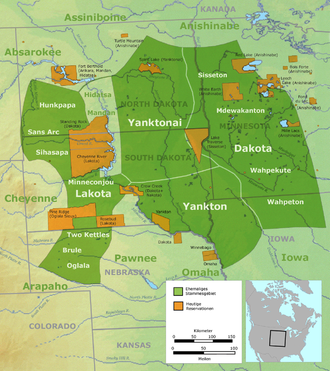
Location of Sioux tribes prior to 1770 (dark green) and their current reservations (orange) in the US

But that wasn’t the end of forced Sioux treaties. “The Treaty of Fort Laramie (also called the Sioux Treaty of 1868) was an agreement between the United States and the Oglala, Miniconjou, and Brulé bands of Lakota people, Yanktonai Dakota, and Arapaho Nation signed on April 29, 1868 at Fort Laramie in the Wyoming Territory, guaranteeing the Lakota ownership of the Black Hills, and further land and hunting rights in South Dakota, Wyoming, and Montana. The Powder River Country was to be henceforth closed to all whites.

“Repeated violations of the otherwise exclusive rights to the land by gold prospectors led to the Black Hills War. Migrant workers seeking gold had crossed the reservation borders, in violation of the treaty. Indians had assaulted these gold prospectors, in violation of the treaty, and war ensued. The U.S. government seized the Black Hills land in 1877.

450px-siouxreservationmap
Map of the 1868 Great Sioux Reservation, and the subsequent changes in reservation borders

“More than a century later, the Sioux nation won a victory in court. On June 30, 1980, in United States v. Sioux Nation of Indians, the United States Supreme Court upheld an award of $15.5 million for the market value of the land in 1877, along with 103 years’ worth of interest at 5 percent, for an additional $105 million. The Lakota Sioux, however, refused to accept payment and instead demanded the return of their territory from the United States.

“In more recent proceedings the U.S. Courts have seen that some of the monies associated with the claim have been expended and, as such, claim that the agreement is valid. In fact, several thousand tribal members have filed for and are awaiting for a final decision by the Court to decide to issue the resources to tribal members.”[2]

“In the summer of 2016, the Standing Rock Sioux Tribe began a protest against construction of the Dakota Access oil pipeline, also known as the Bakken pipeline, which, if completed, is designed to carry hydrofracked  crude oil from the Bakken oil fields of North Dakota to the oil storage and transfer hub of Patoka, Illinois. The pipeline travels only half a mile north of the Standing Rock Sioux reservation and is designed to pass underneath the Missouri River and upstream of the reservation, causing many concerns over the tribe’s drinking water safety, environmental protection, and harmful impacts on culture. The pipeline company claims that the pipeline will provide jobs, reduce American dependence on foreign oil and reduce the price of gas.”[3]

In the tradition of all ancient native people, the Standing Rock protesters’ view is broader and longer term than the typical white view. For ancient people, monetary gain has no standing compared to the value of drinkable water. Someday the pipeline will leak. Maybe not in our lifetime or even in our children’s lifetimes, but someday the pipeline will leak.

What then? The oil won’t just wash away in the next rain. It penetrates the soil where it continues to pollute for decades. Or longer.

There is no argument against this. The Sioux protest at Standing Rock is legitimate in its concern over the long term future of the water.

And what the hell difference does that make? When have the white invaders of North America (and South America, Central America, the Pacific Islands, etc.) ever considered the long term impact of their actions? Our ‘manifest destiny’ was to expand across the continent to ‘redeem’ and remake the land in the white vision of farms and villages. While not embraced by all political leaders of the 19th century, the concept of manifest destiny was widely held by whites and fit hand in glove with the view that we alone held special God-given virtues that granted us exclusive right to fulfill this destiny.[4]

It was our duty as whites to cleanse the lands of heathen beliefs and believers. It was our duty as whites to pursue progress even if it meant using slaves to do so. And so forth.

The reward for such noble efforts was to reap the bounty these lands had to offer. Gold and silver. Virgin timber. Animal skins and meat. Oil. The DAPL pipeline is more of the same. We found this oil and we need it.

A bigger issue looms behind this protest. If by some quirk the Sioux are the ultimate winners of this contest, think of what might happen next. If their treaties are to be honored, if their ancestral lands and holy places and burial grounds and natural resources are found to be theirs, what happens to all the white people who have bought those lands, built their houses, barns and fences, sent down roots for over four generations?

What happens with all the other Native tribes’ treaties that have similarly been ignored?

Are we ready to give up the majority of our homes, schools, cities, and workplaces in order to honor our treaties? Once we acknowledge the rights of the Sioux to determine the fate of the DAPL, we’re on a slippery slope toward that end. This is why you won’t see elected officials rushing to the side of the Standing Rock protesters. They’re sworn to uphold our laws. Our laws, not the long held beliefs of Natives.

We enforce our laws now just as always—by force. Our laws are part and parcel of manifest destiny. We made them to suit us, not the Natives. If we pick at one thread in our long history of occupation and oppression, the entire fabric of our way of life starts to unravel.

The law says protesters are occupying private land. The law says that Energy Transfer Partners, the Army Corps of Engineers, and others have met the legal (our law) requirements for building the pipeline. The law says that trespassers and obstructionists are subject to arrest for violating the law.

We want what we want. We want to drive our cars to the theater and grocery store. We want the internet, running water, and convenient heating and cooling. We’ve invented these things to further advance our well-being. To justify all that has come before including slavery and genocide, we can point to landing a man on the moon, modern medicine, and the microchip as a few examples of our superiority.

Our manifest destiny.

Even a win for the Standing Rock protest would not solve the bigger issue. Even if by some fiat the pipeline route is changed, or the oil piling up at the fracking sites is ultimately moved by truck or railcars, the bigger issue remains. We live on Native lands and harvest Native resources.

When the gold, silver, copper, rare earth, and every other microcosm of value have been mined, cut, harvested, and fished, then what? When the waters become too polluted to drink or feed our crops, then what? When the soil becomes too depleted and contaminated to grow our food, then what?

levcrpp1080012_1024_x_768
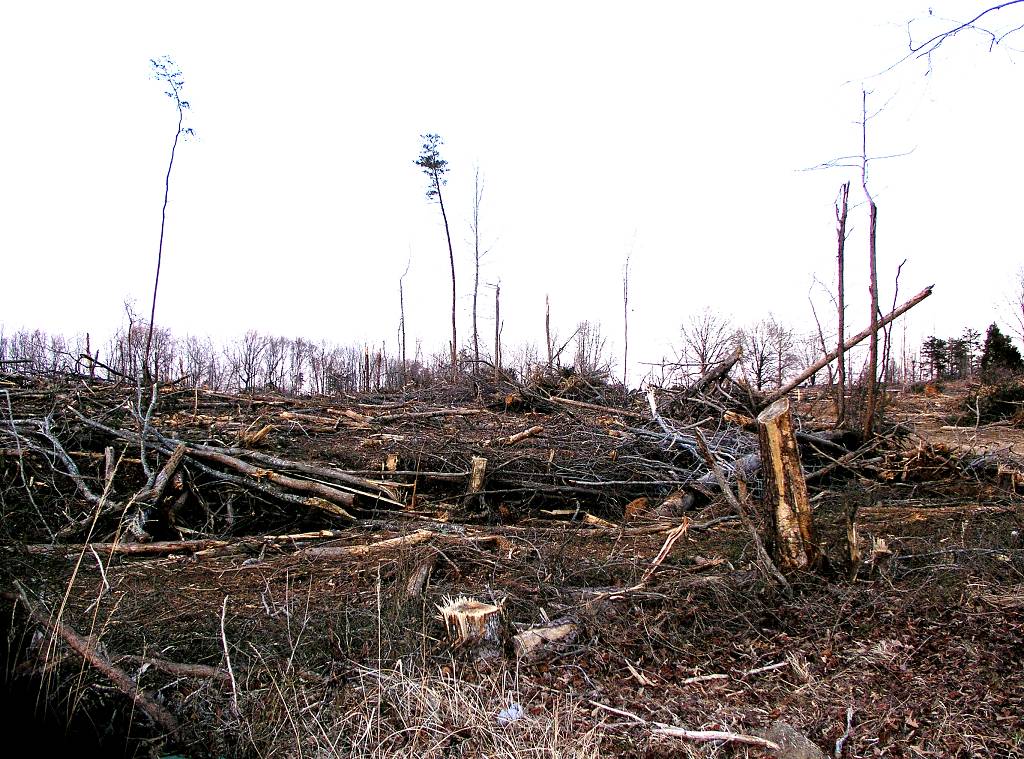
Deforestation is one of the main causes of climate change. It is the second largest anthropogenic source of carbon dioxide to the atmosphere, after fossil fuel combustion.

We’ve pretty much run out of new continents to exploit.

We already see the horizon. It is there in the wasteland of our industrial cities. It is there in the overflowing containment ponds leaking hazardous mining waste. It is there in the lost futures of whites who believed in their manifest destiny and now find themselves discarded as Destiny chooses robots instead of men to build cars.

Manifest destiny gave us this land. It gave us right to work laws that gutted the power of organized labor. It gave us multi-national corporations who have no allegiance except to money.

Manifest destiny still drives not only our national attitude about domestic affairs but our international policies as well. “The belief in an American mission to promote and defend democracy throughout the world, as expounded by Thomas Jefferson and his “Empire of Liberty” and Abraham Lincoln, was continued by Theodore Roosevelt and Woodrow Wilson. Under Harry Truman (and Douglas MacArthur) it was implemented in practice in the American rebuilding of Japan and Germany after World War II.

“George W. Bush in the 21st century applied it to the Middle East, in Afghanistan and Iraq. In proclaiming a mission to combat terror, Bush was continuing a long tradition of prophetic presidential action to be the beacon of freedom in the spirit of manifest destiny.”[5]

~~~

[1] https://en.wikipedia.org/wiki/Treaty_of_Traverse_des_Sioux

[2] https://en.wikipedia.org/wiki/Treaty_of_Fort_Laramie_(1868)

[3] https://en.wikipedia.org/wiki/Sioux

[4] https://en.wikipedia.org/wiki/Manifest_destiny

[5] https://en.wikipedia.org/wiki/Manifest_destiny

Smoke This!

Marijuana medical choice dilemma health care concept as a person standing in front of two paths with one offering traditional medicine and the other option with cannabis.

When considering the pros and cons of medical cannabis, voters benefit from knowing as many facts as possible. Most people are not aware that the human body manufactures chemicals identical to those found in the cannabis plant. This stunning nugget of information was discovered as recently as 1990.

Wikipedia: “The endocannabinoid system (ECS) is a group of endogenous cannabinoid receptors located in the mammalian brain and throughout the central and peripheral nervous systems, consisting of neuromodulatory lipids and their receptors. Known as ‘the body’s own cannabinoid system,’ the ECS is involved in a variety of physiological processes including…regulation of appetite, immune system functions and pain management…and are found in the brain and nervous system, as well as in peripheral organs and tissues.”[1]

Native to central Asian and the Indian subcontinent, the cannabis plant found in ancient literature and prehistoric burials served as medicine for seizures, pain, and other human ailments. Over time, three differing species have developed–sativaindica, and ruderalis— with the more psychoactive and medically useful plants diverging from a type containing less psychoactive agents—hemp–used for rope and textiles and farmed extensively through World War II.

At least 113 active cannabinoids have been identified in the plant, one of which—tetrahydrocannabinol (THC)—is the chemical cloned for medical use as the legal pharmaceutical drug Marinol. Many patients report better results from natural cannabis than with Marinol, perhaps due to the balancing effects of the plant’s other ingredients.

Another element of natural cannabis, cannabidiol (CBD), is highly effective in treating seizures and muscle spasms.[2] Families with children suffering seizures are pulling up stakes to move to states where their ailing child can access legal CBD oil. In natural proportions, all 113 active elements in cannabis balance each other in important ways that no synthetic isolated elements like Marinol could ever do.

Those advocating for more research and FDA approval before allowing medical use fail to acknowledge the fact that cannabis has been in the human pharmacopoeia for at least 5000 years. Compared to that, FDA approval means nothing. But aside from that, the fact is that drug companies are not going to invest the millions of dollars required to gain FDA approval of natural cannabis. They’d never recoup their investment on a plant that people can grow in their back yards. And they’ve started to understand that medical cannabis outshines many of their most profitable drugs both in effectiveness and in the absence of dangerous side effects. Drug companies are above all else profit-driven corporations.

It’s a little known fact that before the government will allow legal access to cannabis plant material for medical research, the researcher’s goal must be to find the harms that could be caused by the plant. If a researcher wants federal approval to research the potential medical benefits of natural cannabis, the request will be denied. These conditions are written into federal law.

Those in Arkansas voicing opposition to medical cannabis haven’t researched the issue with an open mind. They react based on old prejudices and discredited propaganda. There’s still the culture war specter haunting cannabis, that stinky weed that hippies used as part of their rebellion from the Establishment. It’s still a point of contention between parents and their teens in the ongoing generational battle over control.

Yet studies in states with legal medical cannabis have found reduced use of illegal drugs by teens and reduced rates of crime.  A multi-year study published by the journal Lancet Psychiatry found: “…When researchers looked at marijuana use over time in the 21 states where medical marijuana was legal by 2014, they found no change in marijuana use after a medical marijuana law was passed, compared with before. About 16 percent of teens said they had used marijuana in the past month before a law was passed, compared with 15 percent who said the same after a law was passed.”[3]

The fact is, the long anticipated ‘end of civilization as we know it if marijuana is legalized’ has simply failed to materialize.

A 2014 Texas study states: “Results did not indicate a crime exacerbating effect of MML on any of the Part I offenses. Alternatively, state MML may be correlated with a reduction in homicide and assault rates, net of other covariates. These findings run counter to arguments suggesting the legalization of marijuana for medical purposes poses a danger to public health in terms of exposure to violent crime and property crimes.”[4]

Researchers at the Norwegian School of Economics used FBI statistics “to investigate the effect of the legalization on two types of crime: theft and violence. In the study, they looked at the 18 states that had introduced such laws before 2012…The researchers found a clear decline in both theft and violent crime in the states that legalized marijuana and share a border with Mexico.”[5]

Arkansas’ governor and others who voice alarm about opioid addiction should think again about their opposition to medical cannabis. One notable result of medical cannabis laws is the reduction of prescription drug use. “Fewer people are using opioids in states that have legalized medical marijuana, according to a study published September 15 in the American Journal of Public Health that bolsters advocates’ claims that marijuana can substitute for more deadly drugs.”[6]

An extensive study by the RAND Corporation (2015) concluded that legal medical cannabis reduces opioid use: “The fact that opioid harms decline in response to medical marijuana dispensaries raises some interesting questions as to whether marijuana liberalization may be beneficial for public health. Marijuana is a far less addictive substance than opioids and the potential for overdosing is nearly zero.”[7]

On November 8, citizens of Arkansas have an opportunity to cast a vote for compassion and common sense in the Natural State by bringing back the right to use this natural medicine. In the process, they also have the opportunity to nudge this state a baby step closer to the vision and advantages enjoyed by citizens in 25 other states of this nation.


[1] https://en.wikipedia.org/wiki/Endocannabinoid_system

[2] https://en.wikipedia.org/wiki/Cannabidiol

[3] Quoted from http://www.ctvnews.ca/ctv-news-channel/medical-marijuana-laws-don-t-lead-to-increased-use-by-teens-large-u-s-study-1.2424012 ; Lancet study is at http://www.thelancet.com/pdfs/journals/lanpsy/PIIS2215-0366(15)00217-5.pdf

[4] http://journals.plos.org/plosone/article?id=10.1371/journal.pone.0092816

[5] http://sciencenordic.com/legalization-medical-marijuana-reduces-crime

[6] http://www.usnews.com/news/articles/2016-09-15/study-opioid-use-decreases-in-states-that-legalize-medical-marijuana

[7] https://www.rand.org/content/dam/rand/pubs/working_papers/WR1100/WR1130/RAND_WR1130.pdf


This Is For You, Donald

woman-slaps-man

I am so sick of this election campaign. Specifically Donald Trump. Throughout last night’s debate, I kept wishing Hillary would just walk over to that lying chump and slap his filthy mouth. What a jerk.

He respects women. *slap* Because all those nasty lying bitches out there telling the truth about what he did to them, touching without permission, treated like a sex object there for his taking, that was all just lies. *slap*

Because mean ole Hillary and her sleazy campaign set all that up, went out in the night and rounded up a bunch of random women who just happened to have documented prior contact with Trump which made them the perfect candidates for this massive con. Because if he loses this election, it will only be because everyone is so mean to him and he never did anything wrong. (whine whine) *slap slap*

Because the problem is Bill Clinton, because all those nice women accusing Bill are telling the truth. Worse, Hillary said bad things to them at the time. *slap*

Because it takes government and laws to decide what women can do inside their own bodies. *slap slap slap*

Trump’s words originate in the animal part of his brain, that ancient area where fear and hunger control behavior. It’s as if his frontal lobes are missing, you know, that part where analysis and rational thought processes occur. He was unable to outline any specific policies he plans to implement—because he doesn’t have any. His entire shtick is to pump up the fear and hatred rampant in his fan base.

And then once elected, you can hear between the lines—in what for him passes as thinking—that he’ll let Pence and Giuliani and Christie and the rest of his pathetic sycophants run the government.

That an educated, intelligent woman like Hillary Clinton would have to stand there and be repeatedly insulted by this ape infuriates me. His job in this debate was to answer the f***ing questions. He was supposed to demonstrate that he understands national policy issues and present his proposals—how, for example, would he identify and remove eleven million illegal immigrants and their four million children who have been legally born in this country?

He has no idea. It’s a sound bite, pandering to people afraid of people who are different.

How would he improve the situation in the Middle East? Do a Ted Cruz and ‘carpet bomb’ the region until the sand melted? No idea.

Trump knew just enough to look stupid, no doubt the result of exhaustive efforts by those few advisors who continue to believe Trump is worth saving. Our alliances with foreign nations aren’t one-sided deals, no matter how he and his followers manage to obfuscate the issue. I wanted Hillary to rebut his stupid claims, talk about how much we get from all our allies not only in trade and national defense but in outright payment for our goods and services. We haven’t become the most powerful nation in the world by making idiot choices in our foreign policy. And our alliances and foreign policies did not begin and end with Obama or his secretary of state.

Donald, get real. The war in Iraq was entirely on the Bush administration including the withdrawal that, you ignorantly complain, was Obama and Hillary opening the door to ISIS. *slap* The first Gulf war was also a Bush administration move, even though you’ve tried to say that if it had been done ‘right,’ we wouldn’t have had to go over there again.

Then there’s that horrible nasty NAFTA trade deal that Donald kept laying at the feet of Bill Clinton. Another huge lie. *slap slap* That deal started in 1991 when, again, a Bush administration held the reins of our national government. All the details had been worked out before Bill Clinton ever took office. Yes, he signed it into law in 1994, but it was done deal by then.

But you wouldn’t know the realities of foreign policy or anything else requiring thoughtful consideration because you were busy with your snout up some woman’s skirt.

And what about all that job loss you keep ranting about? Well, fact is, Donald, you conveniently ignore the reality about America’s lost labor force. It has little to do with trade deals and a lot to do with technology. Cars aren’t built by union men with high paying jobs because they’re now built by robots.

This is why education should be at the top of the list for anyone who really expects to improve opportunities for working Americans. Standing at an iron furnace is no longer required—computer-operated machines do that. Aging workers who lost jobs to advancing technology can be retrained but only if we invest as a nation in that retraining. Young people can be employed—if they’re computer literate or offered opportunities in technical training—just like Hillary talked about in between having to stand there listening to your ignorant drivel.

What manufacturing jobs remain have moved to Third World countries because corporations have pushed through laws that allow maximum profits and no accountability to their citizenship. They’ve gained legal permission not to pay taxes. Their allegiance is to their stockholders and CEOs. But this isn’t new, not a result of a Democratic administration or the single four-year term of a secretary of state. And I’m sorry, but did I hear you complain about these policies for the last forty years that you’ve taken full advantage of them?

This is a result of slow shifts in how products are made, the incorporation of digital technologies that increase productivity even as they make many old labor intensive jobs obsolete. This shift has been underway for fifty years or longer. It’s been at least since the 1970s that Americans were warned that a new service-based economy was on the horizon.

But Hillary was right not to get tangled up in rebutting his litany of lies. His followers wouldn’t believe anything she said even if they understood it. And Trump is not capable of learning. Anything.

Somewhere deep inside, Trump knows he’s a f***ing loser. That’s why he has to sneak up and cop a feel on women who wouldn’t give him the time of day if he asked. That’s why he can’t formulate a single specific policy plan for any of the issues he likes to rant about. That’s why he has to whine about rigged elections.

Little rich kid Trump never learned to take responsibility for anything—not his actions, not his business failures, not the miserable campaign he’s managed to run on the backs of a terrified and easily manipulated segment of the population. He never did the things he said he did to women—and it’s their fault for bringing it up.

Wait, what?

That he would deny the validity of the election out of his craven need to excuse his monumental failure not only as a candidate but as a human being is not just inexcusable. It’s treason.

And yes, I still want to slap him. Fortunately, I think the majority of American voters are about to do it for me.

Another War With The Indians

defend


This past weekend I attended my 50-year class reunion. I blogged about that last time around. While I was there, I visited the fabulous Coleman Theater, a restored 1930s opera house that graces the main street of Miami Oklahoma. The guided tour through its opulent staircases and gilded facades included a narrative about George Coleman himself.[1]

coleman_theater_interiorWhat lingered in my mind afterwards and grows ever more prominent in my thoughts even now is about how Mr. Coleman made his money. You see, in 1904 that area of Northeast Oklahoma was found to harbor vast deposits of lead and zinc. During the years of production, Oklahoma mines produced 1.3 million tons of recoverable lead and 5.2 million tons of recoverable zinc.[2] The discovery of such potential wealth undoubtedly helped drive the state’s push for statehood in 1907.

George and initially his brother Albert made such a success of this mining operation that they earned a million dollars a week. No wonder George could import African mahogany and commission a massive chandelier of Venetian glass, sparing no expense for a theater that would remind him of his summer home near Versailles. After Albert’s poor health forced his relocation to Colorado, George expanded his empire to build cattle ranches and finance local businesses.chandelier

This fabulous exploitation of natural resources supplied industrial processes which, for example, galvanized steel against corrosion. Zinc is also used to make die-cast alloys, brass and zinc oxides and chemicals. Prior to the early 1900s, lead was used in the United States primarily in ammunition, burial vault liners, ceramic glazes, leaded glass and crystal, paints or other protective coatings, pewter, and water lines and pipes. The first and second world wars placed such demand on the mines that crews worked around the clock. Automobiles boosted demand for lead not only for batteries but also as a fuel additive.

Safely buried underground by Mother Nature, lead never goes away once mined and brought to the surface.[3]

Once the tour ended, I was like, wait a minute.  I asked a question of my friend who lives there. “How is it that George Coleman made all this money? What about the Native Americans who supposedly owned these lands?”

He laughed. “They got five percent. There were a few rich Quapaws.”

picher18
Picher, Oklahoma

I’m still grappling with this. While the Colemans and a few connected business associates raked in millions, the local landowners made a few thousand. Worse, one hundred years later we see the real costs of this enterprise. Consider, for example, the nearby town of Picher, a ghost town now, formerly a major national center of lead and zinc mining at the heart of the Tri-State Mining District.

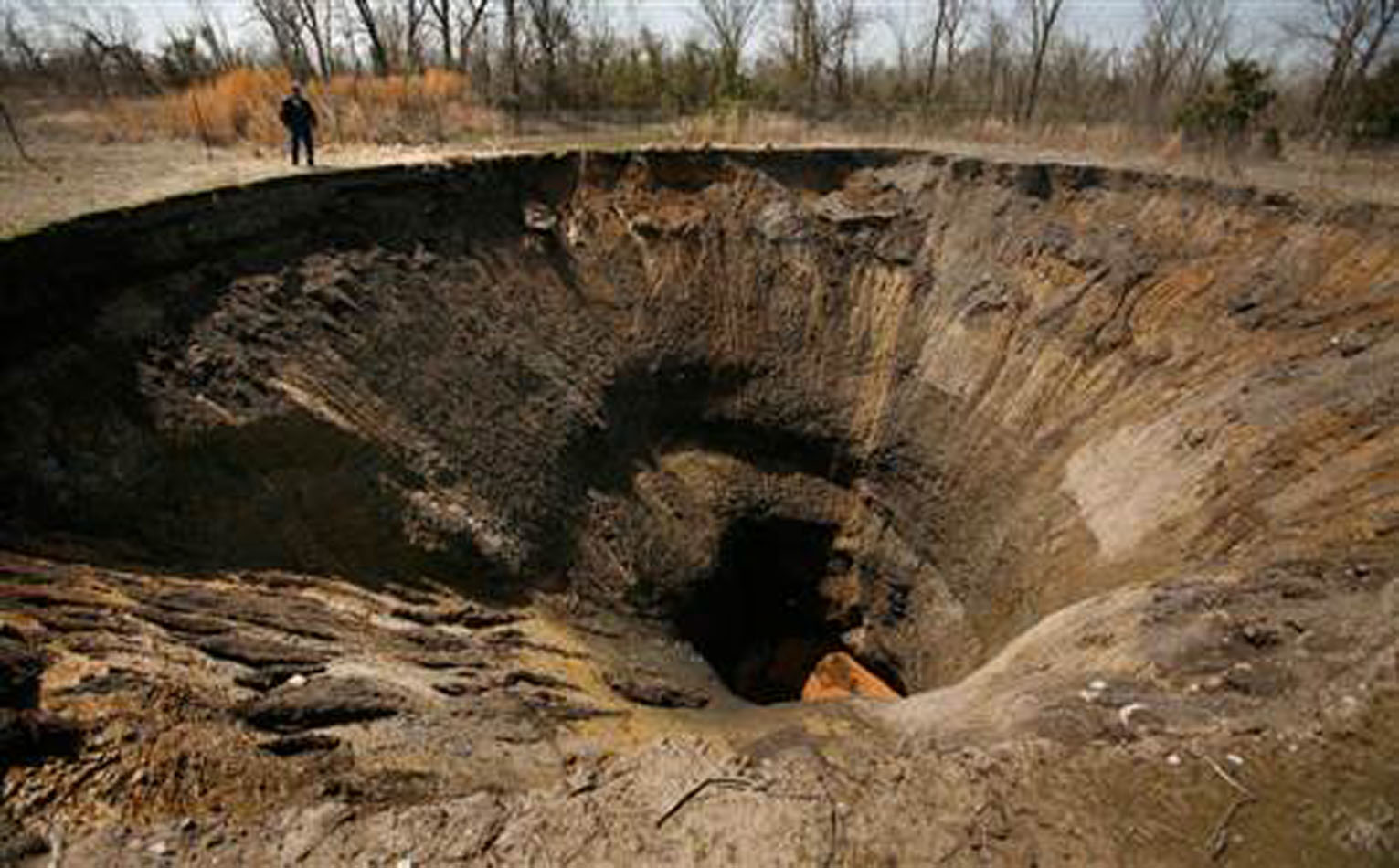
Wikipedia: “More than a century of unrestricted subsurface excavation dangerously undermined most of Picher’s town buildings and left giant piles of toxic metal-contaminated mine tailings (known as chat) heaped throughout the area. The discovery of the cave-in risks, groundwater contamination, and health effects associated with the chat piles and subsurface shafts resulted in the site being included in 1980 in the Tar Creek Superfund Site by the US Environmental Protection Agency. The state collaborated on mitigation and remediation measures, but a 1996 study found that 34% of the children in Picher suffered from lead poisoning due to these environmental effects, which could result in lifelong neurological problems. Eventually the EPA and the state of Oklahoma agreed to a mandatory evacuation and buyout of the entire township.”

080510-picher-bcol1-11a-grid-6x2
Collapsed mining pit near Picher

Naturally it was the Quapaw and other Native American tribes who suffered permanent damage from this exposure as well as the loss of lands. Even as recently as my school years in that region, it was a regular entertainment to hang out at the chat piles where guys would show off their skill with cars and motorcycles, stirring up clouds of dust as they scaled the steep inclines.

So it’s not enough that the original inhabitants of this continent were forced away from their homes and hunting grounds as white settlers took over. The insult and injury only deepened as we first gave them new lands with the promise they could be assured of controlling it for the rest of time. Less than eighty years later, Boomers, Sooners, and other massive in-migrations of white ownership swept in. And, as a bonus, left the tribes with irreversible damage to the land.

As a side note, this is similar to the standard practice of industry to locate their waste heaps and polluting processes in low-income and minority neighborhoods, both in the United States as well as Third World nations.

Which brings even more into focus the current stand-off in North Dakota over an oil pipeline. According to an Associated Press report, “the $3.8 billion, 1,172-mile project would carry nearly a half-million barrels of crude oil daily from North Dakota’s oil fields through South Dakota and Iowa to an existing pipeline in Patoka, Illinois, where shippers can access Midwest and Gulf Coast markets. Announced in 2014, supporters said the pipeline would create more markets and reduce truck and oil train traffic — the latter of which has been a growing concern after a spate of fiery derailments of trains carrying North Dakota crude.

“The Standing Rock Sioux’s lawsuit challenges the U.S. Army Corps of Engineers’ decision to grant permits at more than 200 water crossings. Filed on behalf of the tribe by environmental group Earthjustice, the suit says the project violates several federal laws, including the National Historic Preservation Act, and will disturb sacred sites outside of the 2.3-million acre reservation. A separate lawsuit filed Thursday by the Yankton Sioux tribe in South Dakota challenges the same thing.” The lawsuit alleges that the pipeline, which would be placed less than a mile upstream of the tribe’s reservation, could impact drinking water for more than 8,000 tribal members and millions who rely on it downstream.[4]

Dallas-based Energy Transfer Partners, the owners of the project, says the pipeline includes safeguards such as leak detection equipment, and workers monitoring the pipeline remotely in Texas could close block valves on it within three minutes if a breach is detected. Sounds good. Let’s ask the Quapaw how well those kinds of promises work out.

In a last ditch effort to stop the bulldozers, other Native American tribes and other supporters of the resistance have joined the Sioux in forming a human barrier to future work. Tribal leaders identified several sacred ceremonial sites and burial grounds which lie on private land in the path of the pipeline, citing these locations as even more reason to halt the project. The day after tribal officials identified these sites and added them to their lawsuit, pipeline crews bulldozed through them, an allegation which Energy Transfer Partners denies. This led to last Saturday’s clash between protesters and private security guards; law enforcement officials said four security guards and two guard dogs were injured, while a tribal spokesman said six people were bitten by the dogs and at least 30 people were pepper-sprayed.

animas_river_spill_2015-08-06There’s no end to the examples of white exploitation of resources discovered in supposedly guaranteed Indian lands. It’s an oft told tale of grab the money and run. The 2014 spill of a gold mine tailings pond in Colorado provided colorful images of a golden-colored stream as the pollution entered the Animas River. Workers accidentally destroyed the plug holding water trapped inside the mine, overflowing the pond and spilling three million gallons of mine waste water and tailings, including heavy metals such as cadmium and lead, and other toxic elements including arsenic, beryllium, zinc, iron and copper.[5] Downstream, the impact continues to be felt in three states most particularly in the Navaho Nation where they suffered damage to their crops, home gardens, and cattle herds. Arizona Senator John McCain has estimated that the tribe’s damages could exceed $335 million. So far, they’ve received $150,000.

Absurd that this kind of arrogance would occur time and time again. There is no excuse, no possible gain, that justifies more of the same. While this oil pipeline in North Dakota is not planned to cross Sioux land, any leak will compromise their water supply. There is no such thing as a foolproof technology. Sooner or later, the pipeline will fail.

It’s not just the Sioux who are fighting this pipeline. White landowners have gone to court and mounted protests as well. Conveniently and not surprisingly, laws of eminent domain may apply, forcing landowners to accept the pipeline’s passage whether they want it or not. As explained by attorneys, “existing South Dakota law allows for pipelines holding themselves out as ‘common carriers’ engaged in the sale of commodities, like crude oil, to utilize public condemnation when necessary.”[6]

At least when George Coleman set about raping Northeast Oklahoma, the residents got a nice vaudeville theater out of the deal. There is nothing anyone in the Dakotas or anywhere else in this pipeline’s route will gain other than a one-time payment for the easement rights. Somewhere down the line, the oil will out.

Want to help? Visit the resistance website for more information. http://sacredstonecamp.org/

raisedfist1

[1] http://www.colemantheatre.org/opening-weekend

[2] https://www.ok.gov/mines/Minerals_Program/Mineral_Information_by_Type/Lead_and_Zinc/

[3] https://www.thenation.com/article/secret-history-lead/

[4] http://bigstory.ap.org/article/c0db8074f3464835ab90b0400afaee71/ap-explains-whats-dakota-access-oil-pipeline

[5] https://en.wikipedia.org/wiki/2015_Gold_King_Mine_waste_water_spill

[6] http://www.lexenergy.net/pipeline-easements-a-fair-deal/

Ray: One Man’s Life

with M79


“Harley was standing out on the skids and opened with his M-60 as we made the assault. That was extra fire they weren’t expecting. They usually try to take out door gunners, but they weren’t expecting somebody out front on the skids. It’s a bumpy ride, coming in to an assault. The copter comes in fast and then slows down fast, and I don’t know how Harley hung on. That last bump is when you have to jump because we’re under fire.

“Fire is getting heavier. We’re starting to realize there’s a lot more NVA there than we realized. The valley floor has tall grass and holes the size of basketballs where they’re hiding to shoot at us. That’s why the valley is so scary. We’re starting to realize they’re above us and below us. They waited for us to get in there… I’m three feet from this guy that’s hit. I’m trying to find a place to lay my rifle so I could get ahold of it with both hands in case we started taking fire. This guy is screaming…”

Ray Mooney’s biography, Ray: One Man’s Life, is a new release making its debut this coming Saturday June 11. Join us if you can for his appearance at a book signing, 1 pm to 3 pm at Nightbird Books, 205 W. Dickson, Fayetteville, Arkansas.

“I’ve had my jaw broke three times, my nose broke five times to the point that the VA had to do the operation they do to boxers. My hand’s been broke and on fire once, enough that the skin was gone clear back to my wrist. I’ve fell off buildings, ladders, and mountains. Somehow I survived all that craziness.”

How Ray Mooney survived the incredible journey of his life is indeed a question for the ages. Polio, combat assault jumps from helicopters in Vietnam, and three children by three different wives didn’t kill him. Neither did the flagrant murder of his father by his father’s latest wife. But the traumas changed him, as they would change any man.

Told in his own words, Ray’s life story rushes from one shocking experience to the next and brings him to the last days as he faces end stage lung disease. Turkey killer, outlaw, entrepreneur, and disabled vet, this boy from the horse farms and tobacco fields of Kentucky relates his adventures with wry wit and breathtaking honesty.

 The paperback is available now through Amazon.

Jars

100_1173

If I had considered the question in advance, I would have known that cleaning out the barn would precipitate a crisis. Memories long stored away for some magical future moment when that child’s toy, that handsaw, would again be needed—did I keep them simply for the memory? Furniture—small tables, wooden chairs, an ottoman frame, an old piano bench well made of oak and in need of a few repairs—would I someday find time and reason to fix them and return them to my house?

Too good to throw away. Largely irrelevant to my current life.

Becoming relevant at some future point? Probably not.

Determination to survive in a world lost to chaos drove the accumulation of this minor hoard. It was 1975. We had small children who would need to eat and thrive even if the bomb fell. We labored to renew skills our grandparents knew by heart, certain that within our lifetimes we would have to hide in our house until the fallout settled then emerge to plow, plant, and harvest our food, breed our pigs, chickens, and goats for future generations of meat and milk. We gathered meat saws and grinders, steel axes and shovels, nails and wire.

Time marched on. The Cold War ended and fingers moved away from the annihilation button.  The children are no longer dependent babies who might benefit from a collection of books on history, science, math. The goats departed in the late 80s, the garden in the early 90s, and the last of the chickens about ten years ago. The children have gone off like grown children do to find their own visions of the future.

Why do I need eight hand saws, ten hammers (of various sizes), buckets of random nails, screws, washers, bolts, and nuts? Feed scoops and cheesecloth, empty egg cartons, milk pails. What possible purpose could be met by random pieces of plywood or sheetrock, insulation, screen, tile? Why do I think that at some point I’ll make use of a decrepit power saw, drill, or grinder when, for the last twenty-five years, I have not?

I have created two piles. One is for the junkman to haul away. The other is for craigslist ads and friends who operate flea market booths. I am mildly optimistic that someone might buy the old wooden toolbox, child’s desk, or the sturdy small tables, the ten gallon pickling crock or the T-post driver. Never mind that for what I’d receive in dollars, I could restore only a fraction of this hoard.

In truth, what our energy and money bought in those early days was peace of mind. With our collection of tools, books, supplies, and know-how, we’d have a chance. Our kids would have a chance.

It served its purpose. The purpose no longer exists.

Sounds good. But what I haven’t put in either pile is the pressure canner. And the jars. Dozens and dozens of canning jars—quarts, pints, jelly jars. It’s the jars that have brought me to crisis.

When my firstborn child was two, my grandmother died. My dad’s mom, Nora. Always a country girl, Nora knew how to make soap, kill a chicken with a swing and stiff pop of its neck, and would can just about anything edible. She had jars. When they started clearing her property for the auction, I went down to Cane Hill and helped clean out her cellar. I hauled back cases of canned goods.

She had declined for a decade until her death at age 86. I wouldn’t dare eat any of the food in those jars. We had hogs and chickens at the time which allowed me to make use of Grandma’s labors. Each day I’d go out to the barn and pens and open more jars. Applesauce, whole plums, peaches, pears. Grapes and elderberries. Green beans, tomatoes, cabbage, mixed vegetables. Tallow. Jelly, jam, preserves. Juice. The critters were well fed that year.

We grew a huge garden. Neighbors had pear trees. We visited orchards and vineyards. Even with all of Grandma Nora’s jars, I sometimes ran short. My mother gave me jars. I bought jars.

In those heady days, each fall I stood in the storage closet and stared at my larder. The sight of all those jars filled me with the greatest pleasure that once again, by the labor of my hands, I had set aside enough green beans, tomatoes and sauce, peas, corn, and kraut to last a year. The jars lined up in colorful rows, golden tomato seeds swimming in crimson broth, finely shredded green cabbage fermented into tangy white kraut, wild plum jelly glowing fuscia in the dark.

Producing and preserving food challenged me like nothing I’d ever done. Even with a tractor and rototiller, even with liberal applications of goat manure and mulch, plants struggled to survive against drought, bugs, and predation. How many hours did I spend hoeing weeds or picking off potato bugs? How many hours peeling and chopping, sterilizing and packing, standing over the pressure gauge to ensure the right amount of intense heat and adequate time to prevent spoilage.

There’s a sound as jars cool, the snap of the canning lid sucking down, sealing the contents safely into the future—I loved that sound. Then it was time to use the grease pencil to write on the lid—July 1981.

Now I have all these jars. The cardboard boxes have suffered over the years. Faded brown paper hangs in shreds, the sides bow and buckle. Even if I keep the jars, I have to plow through generations of dead spiders and a healthy population of live ones to retrieve the jars from box wreckage. Why would I go to the trouble to re-package all these jars knowing that twenty years from now, it would all be to do over again? Would I be any more willing to let go of them then?

My children have no interest and no place to store jars. I wouldn’t mind storing them if my kids wanted them. But there’s no longer a tractor or rototiller. The half-acre garden has grown up in saplings and pasture grass. There are no goats to produce manure. Everything is different.

But here’s the argument. Certain things haven’t changed. We have to eat. We have the ability to grow food. With jars and a pressure canner, we could store food. Isn’t that incentive enough to save the jars?

What is my responsibility? For countless generations, as far back at least as civilization, my ancestors have planted, cultivated, harvested, and stored food. These are skills we’ve learned—how to measure the right time to plant onions or corn, what seeds to soak before pressing them into the dark earth, how to dig potatoes without piercing them. We raised our kids to know these things.

Do I simply walk away?

Why not? There are books. There are others still farming, still canning—the knowledge won’t fade simply because I relinquish my jars.

Even with the best of hoards, with all the tools and seeds saved and an endless supply of jars, at the end of the day, survival in a world gone mad would be a tenuous venture. What about grain? No bread, no pasta, no crackers. What about oil, salt, soda, sugar? We’d be dependent on venison and that requires guns and ammunition. My .22 rifle won’t bring down a deer.

At some point, even the most vehement survivalist will face what I face. How many times in your life do you restock your rations and water? How much is enough ammunition? Who are you prepared to kill to protect your hard won ark?

I’m working on a compromise with myself. Today I think I will keep a few jars as mementos of my grandmother, the tall green half gallon jars and a few of the older square-shoulder quarts. I will wash them periodically and keep them up on a shelf, decoration that tugs my heartstrings when I look up from my daily tasks. I will acknowledge the hard work and dedication that touched these jars, my hands, my mother’s hands, my grandmother’s hands.

All the grandmothers. All the jars. All the tomatoes and fine plum jam will not save the world.

The Confederate Flag: Just Another Step

int l cyclopaedia vol 1 1 2f2 0021

I doubt I’ll ‘wow’ anyone with my observations about the problems of ‘Other’ in America. It’s all been said in one way or another. But I think it’s worth pointing out that we still don’t get it.

The recent take-down of the Confederate flag is a good example.

In this eight-second attention span world, it’s not difficult to understand why so many people find justification for their prejudices. Unless we know history and have learned to reason, we have little chance to appreciate other people’s reality. Instead we see anything not of our ‘in group’ with fear and anger—an eight-second take.

Racism, for example. The longer version goes like this. Ripped from their native lands and cultures, indigenous African people sold into slavery had no previous experience in Western norms. And aside from the lash of a whip, precious little of those norms were imbued when they arrived on our shores. In the fields of the American South, they weren’t here to learn our ways but to labor as a slightly more capable worker than a mule. For two hundred years, they weren’t educated or otherwise enabled to gain knowledge of Western customs.

Then one hundred fifty years ago, they were turned loose. This would have been a good time to wrap these folks in our arms and invest significant resources in education, social services, and other methods of making them part of our world. But few considered them ‘equal’ whether or not they believed slavery to be wrong.

And how could we consider them equal?

They weren’t like us. They didn’t talk like us, didn’t look like us, and didn’t act like us. They were ignorant, uneducated, unsophisticated. They suffered all the disabilities of their isolated and abused status: a poor grip on our language, cobbled together speech patterns, behaviors and beliefs that reflected their African roots.

These characteristics justified a continuing discrimination that hasn’t yet ended. Ample examples exist today of blacks who exhibit tribal behavior in angry demonstrations or celebrations, whose speech holds little in common with ‘white’ speech, whose appearances are different from the white norm. Unequal and inadequate education, poll taxes, economic exploitation, Jim Crow, and direct attacks on any and all aspects of Black community perpetuate this vicious cycle.

Yes, there were and are exceptions. Blacks who matriculated through the institutions of white culture, who intermingled and socialized with whites, became—surprise—just as educated, intelligent, and sophisticated as many whites!

Substitute ‘Mexican’ or ‘Native American’ or ‘Italian’ for the word ‘Black’ and the truth of our cultural tendency to operate from a hard-wired position of prejudice speaks for itself. But unlike other immigrants to American shores, Blacks suffer an additional stigma. Because we knew Blacks had been enslaved, beaten and abused, their families broken apart, and their traditions denigrated, it didn’t take a lot of mental arithmetic for us to believe that freed Blacks would have it in for us.

If you’d been treated that way, wouldn’t you be mad as hell?

So as soon as Blacks could walk freely among us, fear took over. The Ku Klux Klan formed to save white women from black men, because just as surely as white slave owners had ‘improved’ the black race by rape and interbreeding, why wouldn’t we assume that black men would want to do the same? Blacks who talked back, organized with labor unions, had the nerve to walk about in white society were quietly lynched or burned out of their churches and homes. If not at the end of a whip as slave, at least the black could be kept in his ‘place’ through systematic terrorism.

In its most recent incarnation, the preferred instrument of our racial prejudice has been drug laws. Laws against opium (1914, 1935) had to do with controlling increasingly unpopular Chinese immigrants. (The railroads were built and the mines had become mechanized. No more Chinese needed.) Laws against marijuana (1937) had to do with controlling Blacks and Mexicans. (During the Great Depression, these two groups were seen as competition for scarce jobs, especially in the agricultural South and Midwest.)

anslinger copyAs stated before Congress by Henry Anslinger, godfather of our federal drug control agencies, banning marijuana was a matter of protecting white women. Coming in off a heady run busting moonshiners, Anslinger probably hadn’t failed to notice that the 1932 end of alcohol prohibition could easily spell the end of his job unless he came up with more substances to demonize.

In a perhaps-not-so-coincidental coincidence, drug prohibition laws expanded in direct proportion to the success of the civil rights movement. Arguably, hippies were the intended target of stricter drug policy, but like any unenforceable law, drug prohibition became an easy tool to use selectively against anyone that law enforcement wanted to target. After the Seventies when the counterculture had gone underground, drug policy became a useful weapon against blacks, resulting in arrest and incarceration rates for blacks that far exceeded white rates. (This in spite of the fact that multiple studies have found that blacks were statistically less likely to use and traffic drugs than their white neighbors. More here.)

As progressive elements in American culture have worked to bring an end to racial discrimination, those most likely to be threatened by ‘Other’ have become more active in resistance. It hasn’t helped that cynical political interests have seized on racism as an easy button to push in gaining avid supporters. Hand in hand with religious extremism, racism is a reliable tool for galvanizing voters. In response, persons elected by these demographics are resistant to passing laws that could feasibly reduce racism or religious extremism.

As a result, racists and religious extremists have become key operatives in hate-fueled reactionary politics. Private schools and homeschooling have increased in direct proportion to forced school integration. Fights over academic standards and tax allocations to schools are essentially fights over whether minorities will have access to equal education. The development and expansion of suburban neighborhoods parallel the consolidation of minority groups in the inner cities. Every advantage offered to Blacks in order to help them break out of the poverty and cultural isolation spawned by their history in America is seen as a direct ‘taking’ by extremist whites.

Their kids. Their jobs. Their tax dollars given away to undeserving welfare queens. The depraved depth of this unreasoning mindset has come to the big screen with Barack Obama’s presidency. Who has more than eight seconds to spare?

Drug laws have spawned a vast and lucrative underworld where the uneducated and stigmatized minority can grab a piece of the American dream. This is the path whereby the white extremist’s worst nightmare comes true. The terrible ‘Other’ is not only clasped to our culture’s bosom through laws attempting to force equality but also empowered to own guns and defy police. That this point has been reached in an accelerating statistic of black on black crime fails to succor the terrified white extremist.

They are coming for you and they have guns, a fear not missed by the gun industry and its lobbyists. Another eight-second response.

The combination of white extremist fear, the fallout of drug prohibition, and the rise of militarized police forces has brought us to the brink of urban warfare.  What might be a routine administrative process in a white neighborhood becomes a major SWAT operation in the black one where fifty men in body armor and wielding assault rifles storm an apartment with flash-bangs and battering rams in order to arrest a single black man. It’s a bigger operation than the take-down of Osama bin Laden.

This would be almost comical if it wasn’t so outrageous. So horrifying. So un-American.

There is nothing that we can do to immediately change the key factors which maintain the ‘Otherness’ of Blacks. They are not going to become light-skinned nor are their facial features going to become more European. They can’t immediately overcome centuries of failure by American law and institutions to facilitate equal and adequate skills conducive to social assimilation.

Unfortunately, there is also little we can do to immediately change the key factors which maintain the prejudices of extremist whites. They are of a willfully ignorant tradition, raised to see the world from an essentially defensive position. Like the minorities they despise, this segment of the white population is more often undereducated and poor. The threat is a misunderstood and exaggerated ‘Other’—other races, other nationalities, other religious beliefs, other lifestyles, other sexualities.

Taking down the Confederate flag as a symbolic act might reassure minorities and awaken whites to the underlying problem. But the backlash isn’t going to quickly die away. The flag has been an important identifier used to mark others of their own kind. Its denigration and disappearance only increases the extremists’ sense of threat.

What we absolutely must understand both on a personal level as well in our politics and public life is how much more remains to be done. Yes, we’ve come a long way. But much remains to be done. Government must become less ambivalent in enforcing meaningful educational standards and in addressing the physical and mental needs of families and children, not just for Blacks who have long suffered the parental nightmare of their children falling through the cracks, but for whites who ironically have the same problem.

Both need better reasoning skills and understanding of history.

Both must be brought to the table where they can meet and become friends with ‘Other.’

We can’t bargain hunt for solutions. We have to put our money on our people. All of them.

A rising tide lifts all boats.

[If you’re wondering about my use of a capital ‘B’ for Blacks and not a capital for whites, here’s some explanation.]

A Moveable Feast

dickson copyDickson Street, 1970. Old rock buildings with narrow profiles and high pressed-tin ceilings. An abandoned railroad depot that trembled when freight trains thundered past. A declining backwash between campus and the downtown square of a town still embracing its provincialism.

The university drew them, intense intellectuals seeking knowledge, misfits seeking community, young men determined not to die in Asian jungles. In between time in class and demonstrating against war, they settled into the street’s cheap real estate to paint murals and make free love. Abandoned warehouses and decrepit brick structures a hundred years old became head shops, bars, and art galleries. Downscale restaurants heaped alfalfa sprouts on whole wheat bread sandwiches—radical. Cooperatives sold tobacco and honey in bulk, locally made tofu—far out.

Sweet smoke hung in the air. Street festivals celebrated music of hope and rebellion. People wore crazy hats and stood on the corners laughing and hugging. Dickson Street crackled with excitement.

All this made it a place people wanted to be. Straight people, women wearing hosiery and high heels, men in suits—they loved the experience of freedom, even if they themselves couldn’t be free. They dared to step out of their establishment lives and feel the beat, smell the smoke they didn’t inhale. Well, maybe they inhaled—who would know? On the street, they became part of a separate world, joined a conspiracy in which all participants shared the secrets.

Not everyone loved the street where long-hairs had carved out a world of their own. What on earth went on down there, they lamented—police, city fathers, wives of husbands who slipped out for a drink at one of the dive bars and ogled the braless young women. Owners of real estate along the street stopped repairing the roof and the plumbing, inflated the prices so that the restaurants couldn’t own it for themselves, so the art galleries couldn’t afford the rent. The hippies needed to go.

By 1990, value created by the alternative culture gave the establishment reason to retake the street. There was money to be made. People wanted to eat there, shop there. The street was cool. Never mind that the coolness had been bestowed by starving artists, by inventive bohemians, by fledgling entrepreneurs selling worn-out blue jeans for respectable profits.

The rich bought the street. They demolished landmark gathering places to put in shops selling diamonds and art from back east. They came dressed in their finery to eat at chain restaurants and watch traveling Broadway shows.

The street is now a shell of its former raunchy self, an extravagant display of fakery in expensive plastic packaging—a back to the land scene where the joyful family piles out of their brand new SUV to view nature, a credit card ad with Beatles music playing in the background. There’s no getting it back. They don’t even understand what’s been lost.