We Need An Internet Court

Picture this. You’ve voiced your opinion on a bill before your state senate on a public forum. The forum is the internet site of a statewide newspaper and comments are flying hot and heavy. A particular interest group takes issue with your stated opinion but instead of continuing to argue the salient points of the proposed legislation, this group begins to attack you personally.

Back in the day, ad hominem attacks were considered tacky if not downright stupid, and always discredited the attacker.[1] Any issue worth debating would naturally draw fire from all sides, but the beauty of a free society is that such debate serves the important purpose of refining the issue down to its merits and drawbacks, and the stronger side wins the day. Anyone veering off to attack the person voicing those points was swiftly dismissed as unfair and unreasonable.

Reasoned debate is the foundation of any free society wherein public policy becomes the law of the land. Without reasoned debate, policy is achieved by mob rule or dictatorial fiat. We’ve crept dangerously close to both in recent years when personal attacks have become the norm. Not satisfied to excoriate you for stating an opinion that disagreed with their own, the interest group mounts a campaign of personal destruction. Hundreds of hateful posts to your Facebook page filled with profanity and threats result in hours spent deleting and blocking such posts. Not satisfied with doxing you personally, the rabid mob also directs its attention to your professional or business Facebook page where again they curse and threaten. Again, you must delete, block, and reconfigure the page to keep future haters from adding more comments.

Clever insightful remarks from the mob aren’t their forte:

  • You are a disgrace to humanity. Glad we have your address. I have shared your comments with literally thousands of people.
  • you’re a PIG Karen!
  • Hateful cunt!!!!

But wait, there’s more. It’s a fine thing that Facebook allows account holders to regulate their pages in this way, but there are many more ways you can be harmed on the internet. For an author (or artist, musician, restaurant, club … the possibilities are endless), the ratings system gives haters a perfect avenue to close in for the kill. One star reviews or ratings for books or products listed on Amazon.com or a café or sports shop can be a fatal wound because people make decisions based on ratings.

Same for the reader/author site Goodreads.com.

On Amazon, if a review violates their guidelines, the victim can report the review. Unfortunately, this is not a one-time effort. In my case where over 50 1-star reviews were posted to my twelve books in a space of five days, it took months of repeated requests before the monitors paid any attention to my request that these reviews be removed. When the review clearly had nothing to do with the book and used hate speech against the author, Amazon removed it. But in cases where the review was more generic, it was not removed.

For example, this review was given the green light: “The author’s incoherent ramblings made watching my dog look for a place to take a dump more entertaining than this read.” Or this: “Mediocre at best. Quite a boring book actually….”[2]

At Goodreads, the staff were even less interested in enforcing their guidelines which include the obvious expectation that the reviewer has read the book. And after six months of repeated requests, they did remove the more egregious 1-star reviews. But like Amazon, there’s a catch in their guidelines. While the wording of a review is undeniable and therefore vulnerable to analysis, a 1-star rating (without a review) has no such qualities. And sadly, like Amazon, if the employee doesn’t have pertinent instruction in the guidelines about how to analyze 1-star ratings, they are powerless to think beyond that box.

In the Goodreads case, a total of 62 1-star reviews/ratings were posted to my books. Ultimately, after no small amount of effort and sleepless nights on my part, the explicitly unrelated reviews were removed. But 21 1-star ratings remain, a result of a platform operating on guidelines and no common sense. One reviewer, for example, posted fifteen 1-star ratings all on one day. That alone should be a clear sign that these reviews/ratings have nothing to do with the books AND that the reviewers never read the books. (My book sales figures also are good evidence that none of these reviewers read the books, but that’s evidence for a court case, not pleas to employees bound to follow inadequate guidelines.)

That’s not all. Special interest groups determined to attack the messenger of any information they don’t want to hear can also mount a petition at Change.org. I have signed plenty of Change.org petitions in these last several years since it came into existence. Social justice is one of my passions and what got me into this situation in the first place. Imagine my surprise to learn that Change.org does not require any evidence of the veracity of the petitioner’s cause. Like the recently publicized flap over Mark Zuckerberg’s refusal to remove patently false advertising from Facebook pages, Change.org also refuses to remove petitions even when they are libelous or slanderous.

The interest group in my case worded their petition with false claims about what I said and what I believe. No one from Change.org contacted me to determine if these claims were true before allowing the petition to move forward. The petition went out, misinformed recipients signed it, and the petition resulted in my loss of a statewide award for an article I had written the previous year. (The article had nothing to do with the subject of this particular debate. The purpose of the petition was to harm me personally.) Despite their claim that they take legal issues like libel seriously, repeated requests to Change.org were met with silence.

If these same accusations had been published in my local newspaper, I could have filed suit. But local courts have no jurisdiction in other states, much less a multitude of other states and even internationally, as the internet exists. After visiting with several attorneys and taking my complaints to the local prosecuting attorney, nothing happened. One attorney admitted that this is a black hole in law. Pressing charges against a faceless entity like Change.org or Amazon requires enough money to hire legal representation in each state where a perpetrator of the libel can be identified. That is beyond virtually every person who would ever need this kind of help.

That’s why we need an internet court, a panel of legal professionals who would hear any and all petitions from persons like me who have a case to plead. Globally, such a panel would be needed for each nation with its specific language and laws to be enforced. Instead of relying on generic ‘guidelines’ that can never fully apply to countless unique and compelling situations, the internet court would assess each case on its evidence and render thoughtful decisions based on law.

Payment for internet court attorneys would be assessed to each platform whose members are subject to harm by special interests, hate groups, and other potential attackers. The assessment would be based on the number of members/followers those platforms embrace. The controlling entity would be ICANN, a nonprofit organization composed of stakeholders from government organizations, members of private companies, and internet users from all over the world. As of 2016, ICANN has direct control over the Internet Assigned Numbers Authority (IANA), the body that manages the web’s domain name system (DNS).

If you’re in my house and someone causes you harm, the onus falls to me to control the situation. If I allow people to occupy my house without me being present to provide such policing, I’m still responsible. I might leave a set of generic instructions to be followed by anyone who enters my house in my absence, but the responsibility to enforce those instructions remains on me. It’s my house.

Likewise, setting up a platform whether Change.org or Amazon.com and abandoning all direct supervision to a set of generic guidelines is a situation ripe for abuse. Enforcement of the guidelines by employees who have neither the training nor the authority to think beyond the guidelines is a joke. There will always be unique situations that require fact finding and direct analysis by a person with the appropriate skills to make a judgement call.

Internet court. It can’t come soon enough.

~~~

[1] Ad hominem (Latin for “to the person”), short for argumentum ad hominem, typically refers to a fallacious argumentative strategy whereby genuine discussion of the topic at hand is avoided by instead attacking the character, motive, or other attribute of the person making the argument, or persons associated with the argument, rather than attacking the substance of the argument itself

[2] Yes, you can sue. Maybe. https://www.howtogeek.com/352302/can-you-get-sued-for-leaving-a-bad-review/
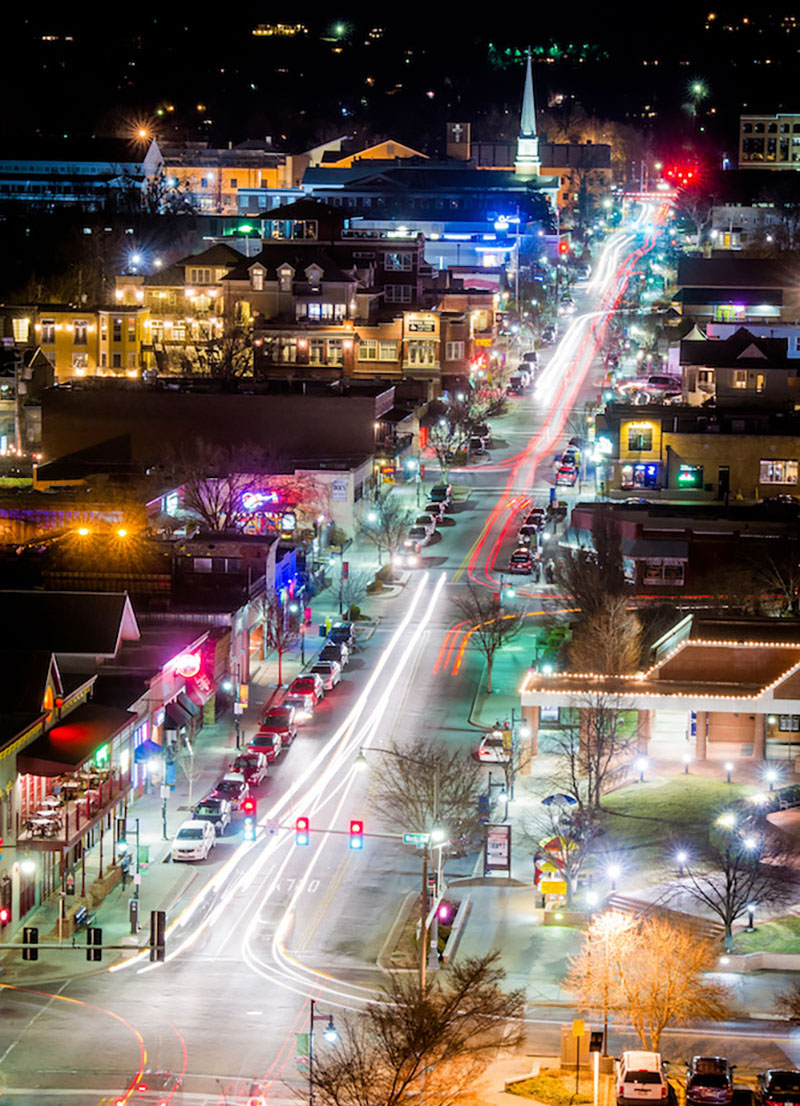
Dickson Street — Stayin’ Alive

Courtesy Fayetteville Visitor’s Bureau

The heart of Dickson Street runs six blocks east from the southeast corner of Fayetteville’s University of Arkansas campus. After one hundred years of industrial and commercial development that came with the railroad, entertainment took over. By the 1970s, bars and nightclubs thrived in the run-down buildings alongside old school barber shops, pawn shops, artist studios, restaurants, and head shops. The sound of live music filled the night air. Patrons from all over the region flocked to the street to mingle with co-eds, quaff a few beers and cheer on the rock ‘n’ roll. The alternative community centered at the street; walking down the sidewalk meant seeing and greeting old friends and meeting new ones.

The 80s saw further decline and the emergence of tawdriness and then with the arrival of the Walton Arts Center in the 1990s and concurrent rising rent, the magic started to drip away like water through fingers. Depending on the point of view, Dickson Street is now either a thriving commercial mecca or a faint shadow of its former glory. In 2004, an article in the bi-monthly tabloid All About Town addressed the issue of Dickson Street and the decline of the music scene. And not for the first time.  The first such complaints appeared in an earlier tabloid, The Grapevine, in the 1980s and periodically become the focus of community consternation. Some of it has to do with changing demographics. The people who packed the live music venues in the 1970s were staying at home to raise families in the 1980s. Each generation enjoys its high points on the street then subsides into other activities as years pass.

Nevertheless, the article does a good job of peeling back the layers to discover some basic issues. From that, city leaders, musicians, club owners, and other interested fans of the street might derive some workable ideas of how to ensure that the Dickson Street scene never dies.

Five reasons were cited, which have been added to for this piece.

1. Club owners have to pay the bills. That includes ever increasing costs for rent, utilities, wages for employees, advertising, insurance, supplies like glassware and napkins, and inventory of alcohol and any other items served. Back in the day, rent on Dickson Street reflected the run-down nature of the real estate. Now with gentrification all around, rent has skyrocketed. Also, there’s increasing pressure to pay higher wages, utilities keep going up, and … well, it’s all about the money. The clubs count on alcohol sales to generate the profits they need to keep their heads above water. Some bands don’t attract people who like to drink. And people who like to drink have increasingly begun to patronize stand-up bars.

“Stand-up bars are easier to operate,” said Dave Bass, formerly of Dave’s on Dickson and later yielding to the inevitable by opening two stand-up bars, The Blue Parrot and 414. “It’s impossible to make live music work during the week, and you can’t be open two days a week and make a living.” He admitted losing money with his live music at Dave’s.

2. People don’t want to pay a cover charge. Many people don’t realize that a cover charge is the only way to pay a band to play. As veteran performer Jed Clampit pointed out, “You don’t get free drinks, but you want free music. Think about going to your job and working for free.” Owner/operator of George’s, Brian Crowne said “People will think nothing of paying $7 or $8 for a two-hour movie but gripe about paying $5 for live, professional entertainment for four hours.”

Another problem for club owners and bands is that many young people today prefer to float from place to place depending on where their friends might be. A friend might text and want to meet them at a specific location. A half hour later, the two friends might decide to go to a third location. Cover charges don’t work for that kind of activity where the objective is socializing, not watching a particular band perform.

3. There are too many clubs and too many bands. Bringing live music to a particular venue requires a lot of upfront investment in securing the band, promoting the event, and doing as much as possible to bring in a crowd. If multiple venues compete for the club-going public, there’s less to go around. That’s the basic math. But there’s no shortage of aspiring bands whose goal of wealth and fame requires building a local following first. Also, painful as it is to recognize, there’s a big disconnect between the many musicians who want to write original songs and audiences who want to hear familiar music. This particular problem is exacerbated by the fact that record deals and other important steps on the road to wealth and fame depend on original music. Nobody wants to record the 38th cover of “Proud Mary.”

Wade Ogle, veteran of the Fayetteville music scene, says the quality of new bands isn’t what it used to be. “With today’s technology, practically everyone can record a CD cheaply. While I think it’s a good thing, the downside is that way too many new bands are looking to play live before they’re really ready.”

So bands thread a narrow line, forced to invest in decent equipment and hours/months of practice until they can get booked to play and then play covers of popular music in their chosen genre while at the same time working on original songs that might be worthy of record label or promoter interest. If they manage to get booked into a club and they’re not ready, people who bother to show up are turned off to live music in general.

4. There aren’t enough fans. This wasn’t so much a problem in the ‘70s when the Baby Boomers came through en masse, the right age and right mindset to thrive on live music. You could almost say that live music was part of their religion. Alas, those days have passed. Somewhat smaller subsequent generations don’t necessarily take song lyrics as their personal anthems. Some might even allege that popular music today can’t hold a candle to the music being created in the ‘60s and ‘70s. With the rise of digital media, music suited to personal taste is available any day, any time, and any place. Free. Why go to a club and pay a cover charge when you can listen to what you like at home? One benefit of live music will never change, however, and that is the attraction of mingling in a crowd of enthusiastic fans, dancing to the same beat and being part of the ‘family.’

5. The town and Dickson Street itself have changed. Yes, this is a big factor. Fayetteville’s population has tripled since the 1970s, and University enrollment has increased from around 15,000 in 1980 to over 50,000 in 2019. More cars and the infill of properties near Dickson means much less parking plus much of the available parking is now metered. Clubs with occasional live music have sprung up along North College Avenue and near the Northwest Arkansas Mall, meaning competition for Dickson Street. Also, until recent years, Dickson Street was the place to party for the entire region. Now that Benton County allows alcohol to be served, clubs have sprung up there like dandelions in early spring. In particular, the Arkansas Music Pavilion (AMP) at Rogers has created a major performance venue for big name performers that in the past would have appeared only in Fayetteville.

Slogans like “Keep Fayetteville Funky” notwithstanding, times change. We change. It’s inconceivable to think that a day might come when Dickson Street would no longer vibrate with the heartbeat of live music and of people streaming through the doors to hear it, commune with each other, and let their hair down. But the world is, after all, what we individually and collectively make it, and it behooves us to not let such a good thing slip unnoticed into the shadows of the past. Dickson Street has been an institution as well as a collective of our entertainment experiences. We have to pay attention and do what we must to keep it that way.


~~~

“A brief history of why artists are no longer making a living making music,” by Ian Tamblyn

Our Job as Citizens

As a nation operating under the concept of self-rule, we the people have to talk coherently about the issues. Mass shootings doesn’t solve our problems, but rather exemplifies our current failures as citizens. How did we get to this point?

Does the 2nd Amendment really grant the right to assault rifles and 100-round ammo clips? No, it does not. Nor do gun hoarders constitute a “well regulated militia.”

A well regulated Militia, being necessary to the security of a free State, the right of the people to keep and bear Arms, shall not be infringed.

How did we not understand that waging a drug war against our own people would embed domestic violence in our society? Did we learn nothing from alcohol prohibition when, for fifteen years, underworld gangs selling illegal alcohol used their wealth to purchase weapons and political protection? How could Reagan and Congress think it was a good idea for “surplus” military weapons and equipment to be sold to our city police forces and used in commando tactics within our neighborhoods? How could we not see the horrible outcome of spending more money on prisons than education?

https://money.cnn.com/infographic/economy/education-vs-prison-costs/

We have to talk about immigration—what will stop the mass migration of people to our borders? For over a century, our corporations have been aided and abetted by our military to plunder Latin America for its natural resources and cheap labor. We have blood on our hands in the same tradition as Spain for its 300-year devastating occupation of the same lands. Doesn’t it make more sense to invest more heavily in helping solve problems in these countries so the people don’t have to leave home in order to have an economic future free from violence? What kind of future are we creating for ourselves by destroying Latino families and traumatizing innocent children?

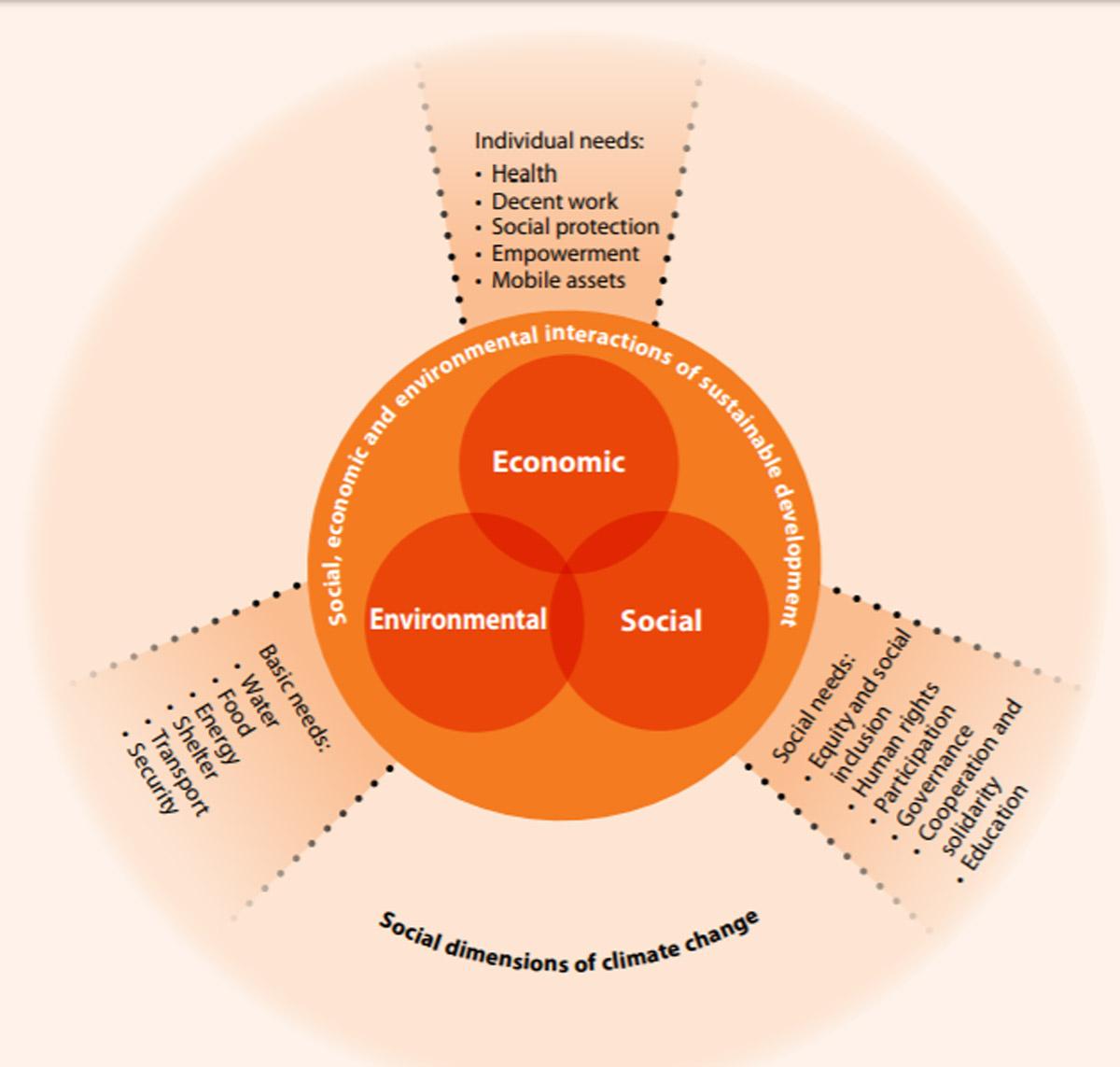
We have to talk about climate change. How can anyone still believe this is fake news? Are there truly so many people who don’t grasp the science of this issue that our entire nation’s public policy can get away with denying climate change exists? What happens when water supplies dry up, crops die on the ground, and there isn’t enough food?

https://www.who.int/globalchange/mediacentre/events/2011/social-dimensions-of-climate-change.pdf

The impacts of climate change will increasingly affect the daily lives of people everywhere in terms of employment and livelihoods, health, housing, water, food security and nutrition, and the realization of gender equality and other human rights. Impacts are expected to hit those living in poverty the hardest, partly due to their more prevalent dependency on the very natural resources affected by climate change and also because they have less capacity to protect themselves, adapt or recuperate losses.

New York Times: A Quarter of Humanity Faces Looming Water Crises By Somini Sengupta and Weiyi Cai Aug. 6, 2019

We have to talk about population—we can’t continue blindly producing more people who need food, jobs, and a place to live when all of those resources are simultaneously shrinking.

In 1950 there were 2.5 billion people on the planet. Now in 2019, there are 7.7 billion. By the end of the century the UN expects a global population of 11.2 billion.

In 2015, there were approximately 141 million births. In the same year, around 57 million people died. It’s clear why the global population is increasing: there are many more births each year than there are deaths. Around 2.5 times as many.

https://ourworldindata.org/world-population-growth

If we think we have an immigration problem now, just wait.

Each of us bears a responsibility to learn the facts on these and any other issues facing us as individuals, communities, and as a nation, engage in discussion with others with the goal of finding common ground, and then participate in the implementation of solutions through community action and voting.

The Great Killing Time

The killing won’t stop anytime soon. A subclass of white men can’t find the means to adapt to a world where they are not dominant. They don’t know how to see themselves except as warriors striking down those they perceive as enemies.

The enemies are not just people of color. The “enemies” are thick in the world around these sad failures of evolution. Social change driven by modern science and technology has left them with no fields to plow or wilderness to conquer, no tribal fires. Those were skills living deep in their DNA. Vacant of all but amorphous anger, they sit on their couches, helpless against their sense of violation in a time that requires reasoning and acceptance of Other.

Christian Picciolini, a white nationalist who has stepped away from that way of thinking, remarks on the mind-set: “Typically what I found is, people hate other people because they hate something very specifically about themselves, or are very angry about a situation within their own environment, and that is then projected onto other people.”[1]

Whatever the symbols of Other, they will hate. Their hate will fester. Their testosterone drives them to act. What act will satisfy the hate, the need to eradicate the threat?

Murder.

But it’s not just a failure to evolve that drives the urge to kill. As a society, we’ve failed to address the impact of rapid technological and social change. Our schools should be teaching logic, debate and rhetoric, critical tools for rational humankind. Reasoning skills are required if we are to control our emotions and peaceably resolve conflict.

Logic: sensible rational thought and argument rather than ideas that are influenced by emotion or whim; the branch of philosophy that deals with the theory of deductive and inductive arguments and aims to distinguish good from bad reasoning.

Rhetoric: the ability to use language effectively, especially to persuade or influence people.

Debate:  to talk about something at length and in detail, especially as part of a formal exchange of opinion

Shamefully, today public policy discussed even in the U.S. Senate, the highest arena of government, disintegrates into personal attack. The public square, now virtual instead of physical, suffers the same: personal attack instead of reasoned debate.

Shout down anyone who doesn’t agree with you. Call them names. Unleash rage against the Other.

The more we engage in personal attacks, the less progress we achieve in achieving public policy that works for us all. This time will go down in history as the Great Killing. Whether it’s the unevolving who will die or those who reason is yet to be seen.

Can we look forward to a change in educational programs? Can we retrofit people by demanding they go through some kind of training? Can we require our elected officials to focus on the goal instead of wading into partisan squabbling?

The killing will continue.

~~~

[1] https://www.theatlantic.com/politics/archive/2019/08/conversation-christian-picciolini/595543

No Surprises

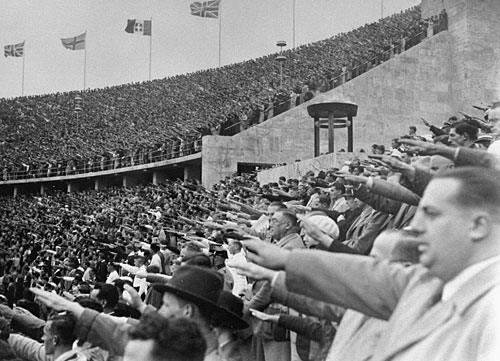
German citizens saluting Adolf Hitler at the opening of the 1936 Olympic Games. United States Holocaust Memorial Museum

Before the sun rose on Wednesday July 24, 2019, before the widely heralded appearance of Robert Mueller before committees of the U. S. House of Representatives, Donald Trump and his cohort had long since established their response. The game plan had been distributed to their colleagues in the Senate and to their buddies at FOX News. Most importantly, the plan had been well-rehearsed by Republican House committee members who would have a front row position from which to attempt to undermine the hearings.

There would be no outrage, no cry over the evidence presented. Republican committee members would discreetly and not so discreetly question Mueller’s competence and motivation. They would grandstand their outrage at the ongoing travesty against ‘their’ president. There would be no acknowledgement of any facts presented either about the collusion between the Trump campaign and Russian efforts to sway the vote or Trump’s various attempts to obstruct the investigation.

Afterwards, the tactic was to shrug off the hearings, ho hum, the Democrats beating a dead horse. Oh dear, how upset they must be after all this hoorah and still Mueller didn’t hand them a smoking gun. A big fat nothing.

In truth, the Democrats never expected a smoking gun from Mueller. Their strategy for Mueller’s testimony was to create a televised iteration of the Mueller report for all the Trump supporters out here in the countryside who never had and never would read the actual report. They wouldn’t even read news summaries of the report, instead willing—even eager—to take Trump’s word for it, whatever it said.

Trump had it right when he said he could shoot someone on 5th Avenue and no one would care. He took that to the bank. Get cozy with Russians endeavoring to subvert the election? No problem. Pretend it didn’t happen—they’ll believe it. Do everything possible to sidetrack the subsequent investigation? Whatever works. Nobody can prove it if Trump doesn’t talk and the testimony of key players like Don McGahn never sees the light of day.

Democrats should be credited for their effort to pull back the curtain on this shameful and arrogant corruption of American democracy. Their mistake, once again, is assuming that Trump supporters care about our nation more than they care about their boy. Trump legitimizes their ignorance with three-word sentences and double-speak. He shares their terror of “Other” whether other religion, other skin color, or other ethnicity, and they can’t chortle enough over their sense of ascendancy in a nation where religion, skin color, or ethnic background are not supposed to make a difference. A nation FOUNDED on the concept that all of us are created equal.

Democrats forgot that ignorance doesn’t recognize its own ignorance and isn’t eager to discover it.

The thread of idealism progressives have shared throughout our nation’s history has changed faces many times. It ran through the revolution even though many colonists clung to King George. It suffused the push to end slavery, to grant women the right to vote, and to form labor unions whose members sacrificed lives and livelihood to end child labor, gain a 40-hour work week, and ensure safe work environments. The same thread has continued through liberal ideas behind school integration, rights for the disabled, and a woman’s right to reproductive choice.

The same thread colors political discourse today, resisting the onslaught of racism and hate freed from its restraints by Donald Trump. It rises in the election of women, of people of color, to public office. It thrives in the hearts and minds of those who say “Vote Blue No Matter Who” as progressives seek to reclaim the dignity and honor of the presidency.

Trump and his horde of pitiful followers would rather risk the future of the nation than love their neighbors. They would rather spout hate speech than address the problems we face. There are solutions, and we can find them. Let’s keep our eye on the ball.


Why am I furious?

This is about the institutions and businesses we have to deal with on a daily basis. This is about the failure of corporations to serve the people who depend on them for necessities. This is about the breakdown of human civilization.

Today my daughter left home at 8 a.m. to pick up a rental car which would take her on a 200-mile journey to where she would stand for her oral exams to become licensed. When she arrived at the place where she was to pick up the rental car, she found an empty lot. Apparently the corporate representative she spoke with (on more than one occasion) has no idea what’s going on in the real world. The computer told the corporate representative there was a Fayetteville office. The computer told the corporate representative that my daughter could pick up the car at 8:30 a.m. The corporate representative believed what the computer told him. He lives in India.

This is one tiny example of the customer abuse increasingly rampant across the U.S.

Go into a Walmart store. Look for something you bought three months ago. Not only is it not where you last found it, no one in the store knows if it’s been discontinued or if it’s out of stock or where else in the store it might now be located. And since Walmart has been almost universally successful in under-pricing any local competition out of business, there is no place to find that item you want.

Consider my 95-year-old mother who a few years ago agreed to a switch of her phone from Southwestern Bell to Cox since she already had Cox cable. Touted as a money saving move, the switch has meant that when Cox service is down, she has no phone. For the last two days, this woman who will be 96 in August had to walk to a neighbor’s house to use a telephone, and that worked only because the neighbor had a cell phone. Because Cox is out all over town.

Who is responsible? Who cares that this fragile woman can’t use her phone? Will she or any of the Cox customers without phone or cable service be refunded for the days Cox didn’t provide its contracted services? Ha!

Consider my nine-month old refrigerator. As if anticipating the problem, installers set the refrigerator and freezer at their lowest temperature settings. Despite that, the refrigerator has never cooled below 45° even though the FDA says 40° is the highest safe temperature for storing food. Or my new range, also nine months old. The manufacturer saved money by downgrading the controls. The oven light doesn’t come on automatically. Oven temperature is set by ten degree increments instead of five like my former range. Heat pours up from the bottom of the oven door which gaps enough that I see the flames reflected on the floor.

A couple of months ago, I came into the cross hairs of an organized hate group because I said something they didn’t like in a public policy discussion on the Arkansas Times Facebook page. Not content with rationally arguing their views on that forum, they attacked me personally and professionally. One of the places they could harm me was on Amazon.com where my books are for sale. They proceeded to go to each of my books and post 1-star reviews.

In order to report a ‘problem’ with book reviews, you must use certain links. Then the workers (in the Philippines) check the review guidelines and if the reported review violates the guidelines, they are able to remove it. If it doesn’t violate the guidelines, they can’t remove it.

Of the 39 one-star reviews posted to my books on Amazon, fourteen now remain. It took two months and over thirty online requests and repeated phone calls to Amazon service representatives to achieve even this partial success. Amazon service representatives aren’t allowed to remove reviews. That’s only accomplished through a special department which has no phone access.

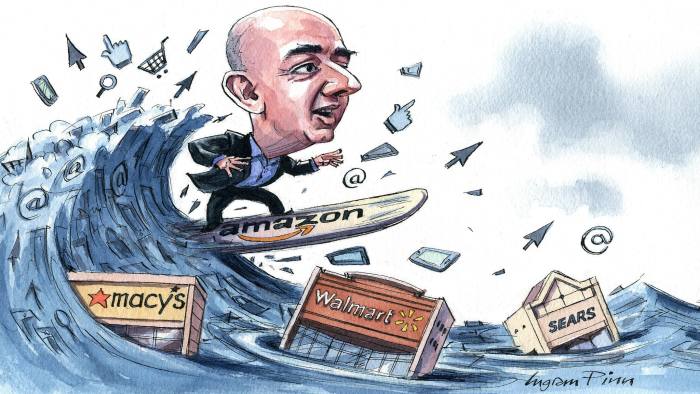
https://www.ft.com/content/a304a59e-2425-11e7-a34a-538b4cb30025

One service representative kindly explained that if the review change requests aren’t formatted in a specific way, the requests can’t be processed. He took my information and submitted the change requests in the required format and as a result, eight of the 39 reviews were removed. But I never could reach him again because there are thousands of customer service representatives (in Seattle) and the service requests go to whoever is next available and none of the other seven service representatives I spoke with offered any assistance, instead referring me back to the online review report system.

Now I have fourteen 1-star reviews written between March 24 and March 30, 2019, by people whose sole intent is to harm me and there is nothing I can do about it. You would think that any platform presenting itself to the public as a service to authors would carry some responsibility to protect said authors from attacks like this. So far I haven’t found an attorney who knows enough about online entities like Amazon to advise me on whether I can sue Amazon for failing to protect me from this harm.

But I haven’t stopped trying.

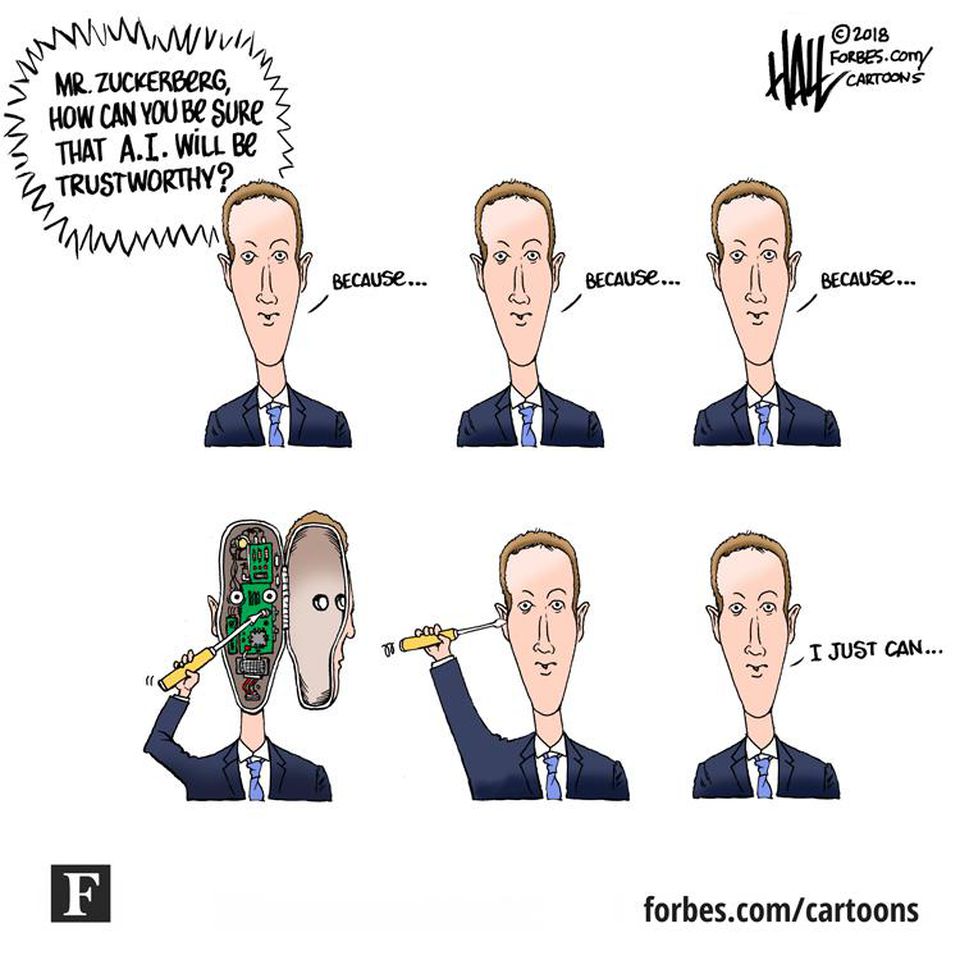
The problem, in part, lies with men like Jeff Bezos and Mark Zuckerberg who believe they can set up an enterprise and replace thinking human workers with lists of guidelines and/or algorithms. Anyone who’s ever had a problem on Facebook knows only too well that THERE IS NO PHONE NUMBER to call if you have a problem.

Zuckerberg has refused to delete a purposefully distorted Facebook video of Nancy Pelosi. His response? “We don’t have a policy that stipulates that the information you post on Facebook must be true.” So if it’s not their policy, it must be OK. No responsibility. No morals or ethical standards. Since Facebook is “free,” users have no rights.

I want to sit down with Bezos and explain why a list of review guidelines can never anticipate the myriad problems which might occur. I want him to invest in employees who have the authority to think on their feet. I want to punch him in the face if he doesn’t accept responsibility for the protection of authors whose books are sold on his website.

Companies routinely profit off your crisis whether it’s no rental car, no phone service, or intractable one-star reviews. By refusing to ensure employees are available for customer needs and capable of fully comprehending English and U.S. social norms, corporate moguls like Zuckerberg and Bezos zoom to the top echelons of the world’s wealthiest people along with bankers who can pull off mortgage fraud and the ultra-rich Walton heirs who insist they can’t possibly pay their employees a living wage.

News alert to the Waltons: It’s the employees who earn your fortunes.

Feeling so smug with their “success,” what these greedy MFs don’t realize (or care about) is the steady toll on our society, their contribution to the destruction of the marketplace, the rising level of anger and frustration, or the inevitable outcome when all that bottled up rage manifests itself in violence.

I like to think of a time when vacant big box stores have been converted into housing or indoor farmers markets, when I can wander into a mom and pop store and ask where to find that thing I bought three months ago and they lead me to the shelf where it’s now found. Or they tell me how long it will take for them to get the next order. You know, human interaction, smiles and apologies and gestures of good will.

I like to think of Zuckerberg spending his days sitting face to face with people subject to his data gathering and advertising, to hear real world crises with his genius setup so that he can actually understand the problem. I like to imagine Bezos being subjected to one-star reviews for his books – but then he’s never written a book, so…

I don’t have anything against the people of India or the Philippines or anywhere else where people need jobs. But I don’t think for one minute that the employment of foreign workers is about helping them. It’s about paying the cheapest possible labor in order to generate higher profits for the fat cats at the top.

It’s about pushing customers in need of those goods and services as far as possible toward the brink, of Bezos calculating that authors like me need to market on his website and will continue to use those services even if he doesn’t protect me from hate campaigns. It’s about Walmart knowing they’ve destroyed all the local stores and entire companies and product lines in order to create a monopoly on the majority of consumer goods.

None of this is new. It’s a creeping illness in our society—and the world—that has yet to hit bottom. We’re hooked on what they offer and can’t get off the hook.

How long before we revolt? The guillotine comes to mind.

~~~

Michael Douglas in Falling Down: https://www.youtube.com/watch?v=XkwQ6EjLdMQ

Jack Nicholson in Five Easy Pieces: https://www.youtube.com/watch?v=hdIXrF34Bz0

We Can’t Hide Behind a Wall

The New York Times — Central American migrants looked through the fence as a Border Patrol agent stood guard near the El Chaparral border crossing in Tijuana, Mexico.

We are responsible for the chaos south of our border. The Mexico tariff plan underway by the Stable Genius and his minions promises to make the refugee/immigration situation far worse. Now not only will the people of Honduras, El Salvador, and Guatemala be forced to flee their countries, but also the people of Mexico. If we thought the immigration ‘crisis’ was bad before, just wait.

Obviously Trump knows nothing of Central American history. He’s apparently incapable of thinking past his juvenile impulse to hit anything he doesn’t like. Now it’s up to Jared Kushner to meet with Mexican ambassadors to work out a plan that, in Trump’s view, would make Mexico responsible for stopping refugees from arriving at our southern border.

Jared Kushner is left to perform many duties for his father-in-law, not the least is to help craft a working relationship between Israel and Palestine. The qualifications for this 38-year-old’s work on behalf of the United States is that he grew up rich, is a Jew, and has experience in real estate. And he’s married to Trump’s daughter who is apparently the only person who can successful manage the Orange Toddler.

Kushner’s resume? “As a result of his father’s conviction for fraud and incarceration, he [Kushner] took over management of his father’s real estate company Kushner Companies, which launched his business career. He later also bought Observer Media, publisher of the New York Observer. He is the co-founder and part owner of Cadre, an online real-estate investment platform.[1]

In other words, Kushner has zero qualifications for his important role in foreign relations. Nor has he been vetted by Congress.

What we absolutely must recognize is that the situation at our southern border is entirely the result of our actions in those countries. Since the 19th century, we have intentionally worked to destabilize their governments in order to profit off their resources.

Guatemala was once the center of a sprawling Mayan empire. Then the Spanish came and destroyed their culture, stole their wealth, and enslaved the people. When the Spanish left,

From the mid to late 19th century, Guatemala experienced chronic instability and civil strife. Beginning in the early 20th century, it was ruled by a series of dictators backed by the United Fruit Company and the United States government. In 1944, authoritarian leader Jorge Ubicowas overthrown by a pro-democratic military coup, initiating a decade-long revolution that led to sweeping social and economic reforms. A U.S.-backed military coup in 1954 ended the revolution and installed a dictatorship.

From 1960 to 1996, Guatemala endured a bloody civil war fought between the US-backed government and leftist rebels, including genocidal massacres of the Maya population perpetrated by the military. Since a United Nations-negotiated peace accord, Guatemala has witnessed both economic growth and successful democratic elections, though it continues to struggle with high rates of poverty, crime, drug trade, and instability.[2]

In El Salvador, corporate agriculture took over the arable land to grow coffee. Peasants were left with few options for sustaining their families. Land reform efforts were brutally repressed with the support of the United States.

From the late 19th to the mid-20th century, El Salvador endured chronic political and economic instability characterized by coups, revolts, and a succession of authoritarian rulers. Persistent socioeconomic inequality and civil unrest culminated in the devastating Salvadoran Civil War (1979–1992), which was fought between the military-led government and a coalition of left-wing guerrilla groups.[3]

The fully-fledged civil war lasted for more than 12 years and included the deliberate terrorizing and targeting of civilians by death squads, the recruitment of child soldiers and other human rights violations, mostly by the military.[24] An unknown number of people disappeared while the UN reports that the war killed more than 75,000 people between 1980 and 1992… 

The United States contributed to the conflict by providing military aid of $1–2 million per day to the government of El Salvador during the Carter and Reagan administrations. The Salvadoran government was considered “friendly” and allies by the U.S. in the context of the Cold War. By May 1983, US officers took over positions in the top levels of the Salvadoran military, were making critical decisions and running the war.[4]

In Honduras, the third Central American source of refugees seeking asylum in the United States, Spanish invasion was followed by enslavement and occupation of cropland. The U.S. took over where the Spanish left off.

In the late nineteenth century, Honduras granted land and substantial exemptions to several US-based fruit and infrastructure companies in return for developing the country’s northern regions. Thousands of workers came to the north coast as a result to work in banana plantations and other businesses that grew up around the export industry. Banana-exporting companies, dominated until 1930 by the Cuyamel Fruit Company, as well as the United Fruit Company, and Standard Fruit Company, built an enclave economy in northern Honduras, controlling infrastructure and creating self-sufficient, tax-exempt sectors that contributed relatively little to economic growth. American troops landed in Honduras in 1903, 1907, 1911, 1912, 1919, 1924 and 1925.

https://libya360.wordpress.com/2017/12/19/salvador-nasralla-honduras-at-risk-of-civil-war/

In 1904, the writer O. Henry coined the term “banana republic” to describe Honduras, publishing a book called Cabbages and Kings, about a fictional country, Anchuria, inspired by his experiences in Honduras, where he had lived for six months. In The Admiral, O. Henry refers to the nation as a “small maritime banana republic”; naturally, the fruit was the entire basis of its economy. According to a literary analyst writing for The Economist, “his phrase neatly conjures up the image of a tropical, agrarian country. But its real meaning is sharper: it refers to the fruit companies from the United States that came to exert extraordinary influence over the politics of Honduras and its neighbors.”

…During the early 1980s, the United States established a continuing military presence in Honduras to support El Salvador, the Contra guerrillas fighting the Nicaraguan government, and also develop an airstrip and modern port in Honduras… The operation included a CIA-backed campaign of extrajudicial killings by government-backed units…[5]

The United States has substantially contributed not only to economic and political instability in Central America, but also to the proliferation of gang and their brutal impact on the people of these nations. Consider, for example, the gang situation in El Salvador.

The Salvadoran Civil War, which lasted from 1979 to 1992, took the lives of approximately 80,000 soldiers and civilians in El Salvador. Throughout the war, nearly half of the country’s population fled from violence and poverty, and children were recruited as soldiers by both the military-run government and the guerrilla group Farabundo Martí National Liberation Front (FMLN). Hundreds of thousands of Salvadorans relocated to Los Angeles, California. This conflict ended with the Chapultepec Peace Accords, but the violence in El Salvador has not stopped since.

Many of those who had relocated to Los Angeles during the war as refugees had gotten involved in gang violence [as victims of existing L.A. gangs]. During this time, the U.S. War on Drugs and anti-immigrant politics had been popularized. Following these sentiments, the Illegal Immigration Reform and Immigrant Responsibility Act of 1996 was passed, which called for deportation of “immigrants–documented or undocumented–with criminal records at the end of their jail sentences.” Throughout the years following, thousands of Salvadorans had been deported back to El Salvador. Gangs that had originated in Los Angeles, namely Mara Salvatrucha and Barrio 18, were spread transnationally through this process.[6]

The gangs learned on the streets of Los Angeles how to intimidate, rob, assault, kidnap for ransom, and murder with impunity. Their ability to run rampant over the native populations of Central America has not been addressed. President Obama understood the history of the situation and issued an official apology for our role in the violence.[7] He crafted a plan that addressed our immigration problem at its source. The plan involved aid to Central America and a program to screen vulnerable children there.

Trump not only reduced the aid, he killed part of the screening program.[8] No wonder that the steady stream of refugees only increases at our southern border. We should also not be surprised when Mexicans start to join that stream if the U.S. implements its tariff plan, putting Mexican jobs at risk. These problems deserve far more thought and understanding than Trump or his son-in-law are capable of providing.  


Where Trump voters come from

Arkansas continues its dereliction of duty in educating its young people with the May 22 announcement by Gov. Asa Hutchinson that he will promote current Education Commissioner Johnny Key to the governor’s new cabinet position of Education Secretary. With this promotion, Key will add another $3,450 per year to his already ridiculous salary of $239,540 and gain ever greater leverage over the hapless citizenry of our state.

Readers may remember the insidious maneuvering required to cram Key into the commissioner position in the first place. Back in 2015, Key’s work history and educational achievements did not qualify him for the job. The law required a master’s degree and ten years teaching experience. When Gov. Hutchinson seized on the idea of putting Key in the post, a bill rushed through the legislature allowed the commissioner to evade these requirements if the deputy commission held those credentials.  Not that the commissioner would be required to obtain the advice or consent of the deputy in any given matter.

Key graduated from Gurdon (Arkansas) High School then received a Bachelor of Science in Chemical Engineering in 1991 from the University of Arkansas at Fayetteville. He never taught a day in his life. That is, unless you count his and his wife’s operation of two pre-schools in Mountain Home, Noah’s Ark Preschool and Open Arms Living Center, operations that for years applied for and received tax-funded grants while flagrantly teaching religion. Another state legislator, Justin Harris (West Fork) also operated illegally with such dollars for his Growing God’s Kingdom preschool. All three schools received funding from the state under the Arkansas Better Choice (ABC) program administered by the Department of Human Service (DHS). After complaints were filed by Americans United for Separation of Church and State, the state had no choice but to amend its grant guidelines.

AU Staff Attorney Ian Smith told Church & State. “The administrators of the Arkansas Better Choice (ABC) program violated the Constitution by funding [these] religious activities.”

According to a 2011 Arkansas Times report, “Sen. Johnny Key gets almost $200,000 in public money a year in support of his Noah’s Ark Preschool in Mountain Home, which also provides Bible lessons and daily prayers. Nearly 300 agencies — many of them with religious roots — receive $100 million a year in public Arkansas Better Chance funding to provide preschool for poor children.”[1]

The stated mission of the Harris preschool was to “share the love of Jesus” with students, and the school operated with a Christian curriculum that included a “Bible time” for verses, stories and prayer. The school’s handbook also assured parents that staff members will “strive to ensure that your child feels the love of Jesus Christ while preparing them for Kindergarten.” The preschoolers, it continues, would be taught “the word of God” so that they can “spread the word of God to others.” They also prayed over students with disciplinary problems and laid on hands to “cast out demons.”

~~~

Key began his career in public service in 1997 when he was elected to serve as a justice of the peace on the Baxter County Quorum Court. He was elected to three two-year terms in the House of Representatives, followed by a tenure in the Senate that began in 2008. Term limited out of the legislature, Key served as associate vice president for university relations at the University of Arkansas system, a position he began in August 2014, a half-year before his friend the governor found him a cozy role at the helm of the state’s education system.

Yet even while in the legislature, Key demonstrated his dedication to the extremist religious agenda in education:

He was active in education issues, including responsibility for exploding the number of seats that receive state dollars to essentially finance home-schooling, by qualifying millions in spending on “virtual charter schools” that provide assistance to students who don’t attend conventional brick-and-mortar schools. His special language, never debated on the floor, lifted the cap on such payments from 500 to 5,000 students.[2]

Simultaneously, the state excused itself from any oversight of home-schooled students. There are no tests, no monitoring, no method by which to ensure thousands of Arkansas home-schooled kids are actually learning anything,

Key has also been a champion of public charter schools in the model promoted by the Walton heirs. While first lauded as a path for parents dissatisfied with their children’s education, charter schools have come under increasing scrutiny for siphoning money away from public schools with less than excellent results. Even worse, soon after taking over as education commissioner, Key became the default school board for Little Rock’s troubled schools. The district struggles with low-income, high minority populations where schools routinely earn “D” and “F” ratings in student outcomes. Key’s answer? Charters.

Much ink has been spilled over the Little Rock situation including Key’s desire to terminate the state’s Teacher Fair Dismissal Act and the Public School Employee Fair Hearing Act in the 22 traditional schools in Little Rock. As noted by one observer, “In the absence of democratic governance and oversight, Arkansas schools are hiring unqualified teachers without a public disclosure requirement, undermining labor standards for teachers, contributing to school re-segregation, and defrauding the public.”[3]

Tracking the details of the Little Rock fiasco, the Arkansas Times reported that the previous superintendent, Baker Kurrus, who was fired by Key before his takeover, thought charter schools “probably unconstitutional when operated as parallel, inefficient and not particularly innovative or successful ventures in Little Rock. He mentioned then that the loss of 120 students for this latest expansion potentially meant a loss of approaching another $1 million in annual state support to the Little Rock District for lost students.”[4]

~~~

No effort was made by the state to require Key or Harris to refund the millions in tax dollars they had appropriated over a period of years to operate their religious schools. And of course they didn’t honorably offer to do so. The ABC program only marginally amended its procedures for granting funding. The guidelines now require that no religious instruction occur during the “ABC day,” a set number of hours of purely secular instruction. Whether religious instruction occurs before the ABC day commences or after it ends is not the state’s concern. Since children are often picked up by school vans or dropped off by parents before the parents’ work hours and held until the end of the work day, anywhere from two to four hours of religious instruction is usually possible.

And who would know if these schools violate the ABC day with a little prayer at lunch or a few minutes of casting out demons?

The ABC program, as it stands, does not require any kind of viability test where a school would have to prove that its religious instruction could stand on its own two feet without the use of tax dollars. In fact, if tax dollars didn’t support the rent, utilities, insurance, and salaries for general operations, these schools would cease to exist. Repeated questioning of DHS / ABC money managers has yielded zero interest in developing or implementing such a test.

Neither Harris nor Key were censured for their illegal use of public funds for their religious schools. And while Harris quietly served out his remaining term in office before retreating to private life, Key has been awarded one of the highest paid positions in state government. If Key didn’t know he was breaking the law in accepting ABC grants, he’s incredibly stupid. Surely somewhere in his years of college he must have brushed up against the idea of separation of church and state and the hard line between tax dollars and religion. If he did know, he deliberately violated the U. S. Constitution, aided and abetted by the state’s willfully ignorant wink and nod.

Now Key reigns supreme over the state’s educational systems, welcomed with open arms by a governor whose own dedication to religion is no secret. After all, Asa Hutchinson is a proud graduate of none other than Bob Jones University, a private, non-denominational evangelical university in Greenville, South Carolina, known for its conservative cultural and religious stance. Refusing to admit African-American students until 1975, the school lost federal funding and ended up in court for not allowing interracial dating or marriage within its student body. BJU hit the news again in 2014 after a report revealed that administrators had discouraged students from reporting sexual abuse. [See the New York Times report.]

Apparently Johnny Key’s religious beliefs and willingness to breach the Constitution’s bright line between church and state are the primary criterion by which he has been judged the perfect man to be in charge of Arkansas education. It’s past time to assume ignorance as the underlying problem in Key’s malfeasance. The fact is that Hutchinson, Key, and every other complicit authority over our state’s educational systems knowingly evade the Constitutional separation of church and state in order to pursue their “higher calling” to religion.

~~~

See also this recent Forbes article on the failure of charter schools.

~~~

[1] https://arktimes.com/columns/max-brantley/2011/11/09/state-paid-bible-school

[2] https://arktimes.com/arkansas-blog/2015/02/10/whats-afoot-on-bill-to-change-qualifications-for-state-education-commissioner

[3] https://medium.com/orchestrating-change/272-broken-promises-the-lawless-aftermath-of-arkansas-act-1240-a8e26ce751e8

[4] https://arktimes.com/arkansas-blog/2016/05/07/johnny-key-fast-tracks-lr-charter-school-expansion-in-walton-helped-enterprise

The Genie is OUT!

A flood of state laws restricting abortion rights have moved us toward the Twilight Zone, a place where a woman no longer would hold agency over the functions of her body. But that genie is out of the bottle. Women will not give up their hard won freedom.

What are these state laws? Some require the doctor to give a woman information about reversing the procedure (part of the emotion strategy) or show her an ultrasound of the fetus (for an extra charge, part of the money strategy). Some ban abortions if a fetal heartbeat can be found (part of the medical strategy). Still other state laws have come in through the back door by restricting when or how abortion clinics can operate, or which medical personnel can provide abortion services (part of the access strategy).

Special interest zealots have pushed laws banning abortion if the fetus shows signs of Down syndrome. Other laws would ban abortion after six weeks or 12 weeks or some other arbitrary period which in many cases would cut off access before the woman even knows she’s pregnant or before prenatal testing could discover genetic or development abnormalities.

But wait. Before progressives stroke out over all this, keep in mind this is part of a long struggle over women’s rights that’s been going on since the beginning of time. Women are not going to accept a step backwards.

I grew up in a time when women weren’t supposed to enjoy sex. It was only men who might indulge in multiple partners while retaining their sterling reputations. In fact, experience with multiple sex partners enhanced a man’s reputation. As the receptacle of male seed whether through premarital or extramarital sex, rape, or marriage relations, women were left to deal with the problem of conception and unwanted pregnancies. The child might be put up for adoption, or for those wealthy enough, a quiet vacation overseas lasted long enough to dispose of the entire issue.

Women weren’t supposed to enjoy sex because receiving male seed and laboring to give birth was the punishment for tempting Adam to defy God’s order not to eat that forbidden apple. Of course Adam wasn’t responsible for what he did with the apple, a perfect metaphor for the male’s lack of responsibility for impregnating a woman.

That’s the story, in a nutshell, of the current furor over abortion rights. Men have to relieve their needs. Women have to clean up after them. If she chooses to abort, conservatives want the procedure to be high risk, out of the hands of medical professionals and back in the alleys so that the price she pays might be sterility or death.

The advent of modern medicine and the pharmaceutical industry gave women birth control pills. The basic research for the pill became possible when Russell Marker discovered that generations of Mexican women had been eating a certain wild yam — the Barbasco root, also called cabeza de negro — for contraception. It was from these yams that Marker was able to extract the progestin that Gregory Pincus combined with estrogen to formulate the first birth control pill. That was the 1950s.

It took another twenty years to clear regulatory and legal hurdles so that women could use the pill for contraception. At first, doctors wouldn’t prescribe it to unmarried women. A court case brought by Planned Parenthood finally cleared the way for all women to gain access to the pill.

In 1973, the Roe v Wade decision granted women the legal right to control what happened inside her body. The Court ruled 7–2 that a right to privacy under the Due Process Clause of the 14th Amendment extended to a woman’s decision to have an abortion, but that this right must be balanced against the state’s interests in regulating abortions: protecting women’s health and protecting the potentiality of human life. Arguing that these state interests became stronger over the course of a pregnancy, the Court resolved this balancing test by tying state regulation of abortion to the third trimester of pregnancy.[1]

Women still have to get a doctor’s prescription to obtain the pill. And religious and conservative groups have murdered doctors, burned clinics, and passed a long string of state laws to fight the Roe v Wade decision. One explanation of this opposition is explained as follows:

Birth control (BC) allows us to separate sex from its “true nature” as a solely procreative act that should be only happen in a heterosexual marriage for the purpose of (or, at least, with ‘openness to’) making babies. When we teach people about BC, allow them easy access to it and condone its use, it divorces sex from this purpose and allows it to become an activity for anyone, regardless of marital status, to partake in for fun, bonding, pleasure, etc. Essentially – because it allows people to have premarital sex without the proper, natural, consequences.

Then, as more people have sex without wanting kids, there is a higher chance that someone will have an unwanted pregnancy as all BC has some failure rate. If all women just practiced abstinence until they were married (which is the only moral and correct path), there would be no abortions…[2]

Never mind that many married women who already have children seek abortions for obvious reasons—more children to feed, clothe, and care for never mind providing suitable education so that each child has a realistic chance at success in life. It also ignores the terrible outcome of fetuses with extreme physical or genetic abnormalities and/or of high risk to the mother’s life.

That is all God’s will, according to the fundamentalists. But so is infertility and that doesn’t keep religionists from seeking artificial insemination. So are cancer and heart attacks and broken bones.

But aside from problems of conception amid the pleasures of sex, the ongoing culture war between conservatives and progressives is about male power and control. Conservative male testicles have been shrinking ever since the female genie emerged from the bottle, since women gained the right to vote, own property in her own name, or seek a divorce. But those little ‘nads have really shriveled since the pill and Roe v Wade.

Under patriarchal beliefs, women were created to serve men, produce his children, and see to their upkeep. This view of women undergirds the current Republican agenda and accounts for evangelical support of a president unfit for office but willing to grant their agenda in order to gain and stay in power.

Thus we have current efforts in various red states to draw the circle tighter around abortion. It’s their belief that the new lineup of SCOTUS justices will find one or more of these state laws as a staging point to overturn Roe. The die is cast. The conservatives finally will have their showdown.

But wait. Does anyone think for an instant that women will shrink back into the shadows and submit to a renewed reign of male authority?

If so, quickly disabuse yourself of that idea. Women will continue to access birth control and abortion, even if the entire industry has to go underground. After all, people drank like fish during alcohol prohibition and smoked marijuana during 90 years of reefer madness.

The genie is out and she’s not going back.

Genie by inSOLense.deviantart.com on @DeviantArt

~~~

[1] https://en.wikipedia.org/wiki/Roe_v._Wade

[2] https://www.reddit.com/r/Abortiondebate/comments/b7clk4/why_are_so_many_prolife_people_against_birth/

The Dark Side of change.org

A word of warning.

The online entity known as change.org is generally accepted as a wonderful progressive tool by which important issues can be appropriately addressed. The introductory page to the site states they are the “world platform for change” and “the go-to site for Web uprisings.” The Washington Post has stated: “Change.org has emerged as one of the most influential channels for activism in the country.”

But it’s important to ask what you’re adding your name to.  What kind of activism?

You might be surprised to learn that a change.org petition can be used to harm individuals or businesses who have done nothing wrong. You might be surprised to learn that change.org has no criteria by which to determine whether or not a petition is based on truth. You might be even more surprised to learn that even though anyone can start a change.org petition, stopping one is just about impossible.

If you happen to be the target of a hate campaign and want change.org to remove a petition that alleges false information about you, you must first negotiate a lengthy series of forms.

Then wait four or five days to receive this email:

Hello,

We’re sad to hear that you’re having a negative experience with a Change.org user’s petition.

Thank you for writing to us to flag this content as bullying. Change.org is an open platform with tens of thousands of petitions started by people with vastly different perspectives on our platform each month. As we can’t monitor all petitions, we rely on our users to report content that may violate our [Terms of Service](https://www.change.org/about/terms-of-service) and [Community Guideline](https://www.change.org/about/community-guidelines).
We will continue to monitor the petition and related complaints, and take action if the situation escalates. Please provide us more details on abuse around this petition – we will review it and take further action if appropriate.

Thanks again for contacting us, and do let us know if you have any questions.
Thank you,
Change.org
From US Office/Help Desk

So be warned – change.org takes no responsibility for the petitions initiated under their name and will only “take under consideration” any protests of foul play.

A second request with a reiteration of a petition’s false allegations result in this reply:

Hi there,

We’re sad to hear that you’re having a negative experience with a Change.org user’s petition, and we really appreciate you contacting us.

Change.org merely provides a platform for our users to create and publish petitions. We do not monitor content of users, and we are not in a position to determine whether any content is indeed in violation of our harassment policy. If you are able to obtain a policy order or a court order establishing that the content in this petition leads to harassment you are currently experiencing, we will be able to reconsider your request.

We have however informed the petition starter of your claim in order to give them a chance to modify or remove the allegedly defamatory content.

Thank you for contacting us, and do let us know if you have any questions.

Sincerely,

So more than a week after the first complaint, you are informed that in order to stop this petition, you must hire an attorney and wait for a court date.

As they say, “we are not in a position to determine whether any content is indeed in violation of our harassment policy.” Even though it is their policy, they’re not in a position to determine whether there is a violation of it.

Nice.

Also, change.org does not require a real person’s name be attached to a petition. Make up a name. Give a quick anonymous gmail address. Congratulations, you’re in!

Buried in the petition guidelines is the advice that if you don’t agree with a petition, rather than asking change.org to take it down, you should create an opposing petition and get into a social media campaign in order to gather more signatures than the petition that was started against you in the first place.

But this isn’t like voting. No one ‘wins’ except the people involved in this shadow campaign to discredit you or your business. There’s no hearing to determine right or wrong.

So be careful, friends. Read and think about what you’re signing before you rush in to align yourself with that next change.org petition. Anyone can use it, free, and make any allegations they wish without having to prove anything to do it. Entities targeted by such petitions are not given any benefit of the doubt or asked whether the allegation is true, and if they want the petition ended, they have to go to court.

This is mob rule.