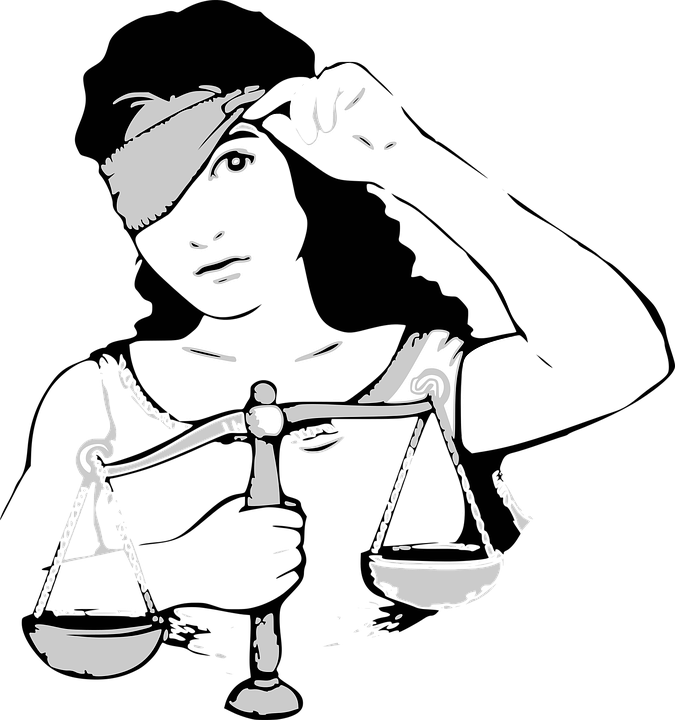
Picture this. You’ve voiced your opinion on a bill before your state senate on a public forum. The forum is the internet site of a statewide newspaper and comments are flying hot and heavy. A particular interest group takes issue with your stated opinion but instead of continuing to argue the salient points of the proposed legislation, this group begins to attack you personally.
Back in the day, ad hominem attacks were considered tacky if not downright stupid, and always discredited the attacker.[1] Any issue worth debating would naturally draw fire from all sides, but the beauty of a free society is that such debate serves the important purpose of refining the issue down to its merits and drawbacks, and the stronger side wins the day. Anyone veering off to attack the person voicing those points was swiftly dismissed as unfair and unreasonable.
Reasoned debate is the foundation of any free society wherein public policy becomes the law of the land. Without reasoned debate, policy is achieved by mob rule or dictatorial fiat. We’ve crept dangerously close to both in recent years when personal attacks have become the norm. Not satisfied to excoriate you for stating an opinion that disagreed with their own, the interest group mounts a campaign of personal destruction. Hundreds of hateful posts to your Facebook page filled with profanity and threats result in hours spent deleting and blocking such posts. Not satisfied with doxing you personally, the rabid mob also directs its attention to your professional or business Facebook page where again they curse and threaten. Again, you must delete, block, and reconfigure the page to keep future haters from adding more comments.
Clever insightful remarks from the mob aren’t their forte:
- You are a disgrace to humanity. Glad we have your address. I have shared your comments with literally thousands of people.
- you’re a PIG Karen!
- Hateful cunt!!!!
But wait, there’s more. It’s a fine thing that Facebook allows account holders to regulate their pages in this way, but there are many more ways you can be harmed on the internet. For an author (or artist, musician, restaurant, club … the possibilities are endless), the ratings system gives haters a perfect avenue to close in for the kill. One star reviews or ratings for books or products listed on Amazon.com or a café or sports shop can be a fatal wound because people make decisions based on ratings.
Same for the reader/author site Goodreads.com.
On Amazon, if a review violates their guidelines, the victim can report the review. Unfortunately, this is not a one-time effort. In my case where over 50 1-star reviews were posted to my twelve books in a space of five days, it took months of repeated requests before the monitors paid any attention to my request that these reviews be removed. When the review clearly had nothing to do with the book and used hate speech against the author, Amazon removed it. But in cases where the review was more generic, it was not removed.
For example, this review was given the green light: “The author’s incoherent ramblings made watching my dog look for a place to take a dump more entertaining than this read.” Or this: “Mediocre at best. Quite a boring book actually….”[2]
At Goodreads, the staff were even less interested in enforcing their guidelines which include the obvious expectation that the reviewer has read the book. And after six months of repeated requests, they did remove the more egregious 1-star reviews. But like Amazon, there’s a catch in their guidelines. While the wording of a review is undeniable and therefore vulnerable to analysis, a 1-star rating (without a review) has no such qualities. And sadly, like Amazon, if the employee doesn’t have pertinent instruction in the guidelines about how to analyze 1-star ratings, they are powerless to think beyond that box.
 In the Goodreads case, a total of 62 1-star reviews/ratings were posted to my books. Ultimately, after no small amount of effort and sleepless nights on my part, the explicitly unrelated reviews were removed. But 21 1-star ratings remain, a result of a platform operating on guidelines and no common sense. One reviewer, for example, posted fifteen 1-star ratings all on one day. That alone should be a clear sign that these reviews/ratings have nothing to do with the books AND that the reviewers never read the books. (My book sales figures also are good evidence that none of these reviewers read the books, but that’s evidence for a court case, not pleas to employees bound to follow inadequate guidelines.)
That’s not all. Special interest groups determined to attack the messenger of any information they don’t want to hear can also mount a petition at Change.org. I have signed plenty of Change.org petitions in these last several years since it came into existence. Social justice is one of my passions and what got me into this situation in the first place. Imagine my surprise to learn that Change.org does not require any evidence of the veracity of the petitioner’s cause. Like the recently publicized flap over Mark Zuckerberg’s refusal to remove patently false advertising from Facebook pages, Change.org also refuses to remove petitions even when they are libelous or slanderous.
The interest group in my case worded their petition with false claims about what I said and what I believe. No one from Change.org contacted me to determine if these claims were true before allowing the petition to move forward. The petition went out, misinformed recipients signed it, and the petition resulted in my loss of a statewide award for an article I had written the previous year. (The article had nothing to do with the subject of this particular debate. The purpose of the petition was to harm me personally.) Despite their claim that they take legal issues like libel seriously, repeated requests to Change.org were met with silence.
If these same accusations had been published in my local newspaper, I could have filed suit. But local courts have no jurisdiction in other states, much less a multitude of other states and even internationally, as the internet exists. After visiting with several attorneys and taking my complaints to the local prosecuting attorney, nothing happened. One attorney admitted that this is a black hole in law. Pressing charges against a faceless entity like Change.org or Amazon requires enough money to hire legal representation in each state where a perpetrator of the libel can be identified. That is beyond virtually every person who would ever need this kind of help.
That’s why we need an internet court, a panel of legal professionals who would hear any and all petitions from persons like me who have a case to plead. Globally, such a panel would be needed for each nation with its specific language and laws to be enforced. Instead of relying on generic ‘guidelines’ that can never fully apply to countless unique and compelling situations, the internet court would assess each case on its evidence and render thoughtful decisions based on law.
Payment for internet court attorneys would be assessed to each platform whose members are subject to harm by special interests, hate groups, and other potential attackers. The assessment would be based on the number of members/followers those platforms embrace. The controlling entity would be ICANN, a nonprofit organization composed of stakeholders from government organizations, members of private companies, and internet users from all over the world. As of 2016, ICANN has direct control over the Internet Assigned Numbers Authority (IANA), the body that manages the web’s domain name system (DNS).
If you’re in my house and someone causes you harm, the onus falls to me to control the situation. If I allow people to occupy my house without me being present to provide such policing, I’m still responsible. I might leave a set of generic instructions to be followed by anyone who enters my house in my absence, but the responsibility to enforce those instructions remains on me. It’s my house.
Likewise, setting up a platform whether Change.org or Amazon.com and abandoning all direct supervision to a set of generic guidelines is a situation ripe for abuse. Enforcement of the guidelines by employees who have neither the training nor the authority to think beyond the guidelines is a joke. There will always be unique situations that require fact finding and direct analysis by a person with the appropriate skills to make a judgement call.
Internet court. It can’t come soon enough.

~~~
[1] Ad hominem (Latin for “to the person”), short for argumentum ad hominem, typically refers to a fallacious argumentative strategy whereby genuine discussion of the topic at hand is avoided by instead attacking the character, motive, or other attribute of the person making the argument, or persons associated with the argument, rather than attacking the substance of the argument itself
[2] Yes, you can sue. Maybe. https://www.howtogeek.com/352302/can-you-get-sued-for-leaving-a-bad-review/