The Mysterious Criminality of John Work

5 Star Review: 5.0 out of 5 stars Violence, Courage, and Resilience:

This meticulously researched work will be particularly interesting to those with Cherokee ancestry. The book creates a personal narrative that allows the reader a first-hand look at the challenges, both personal and political, found in this era. The focus on John Work provides compelling insights into the times. You won’t be disappointed.

~~~

Fayetteville Weekly Democrat, January 11, 1889

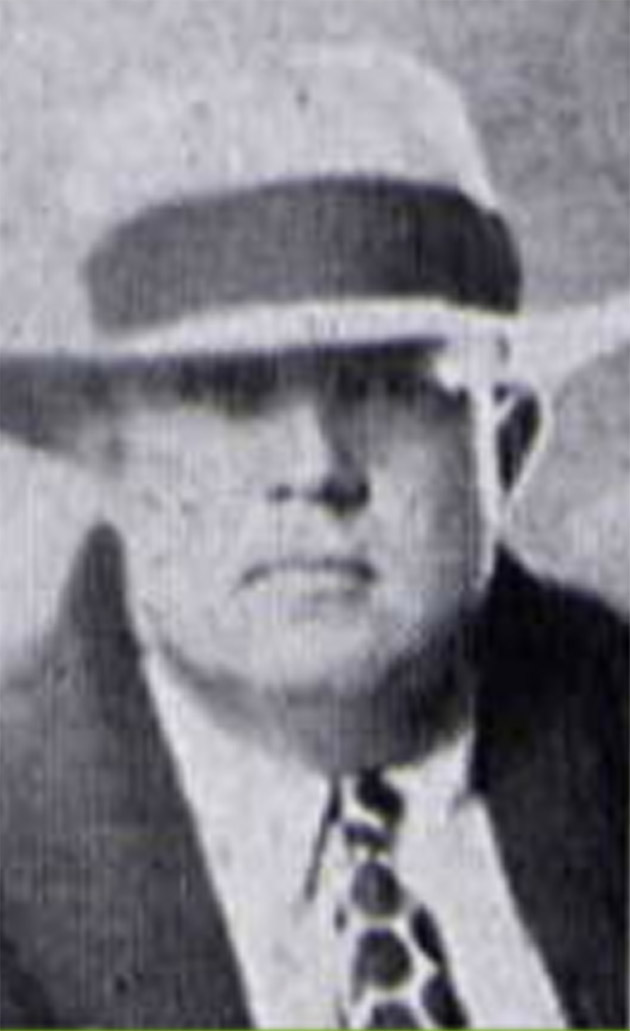
“John Work came to the West with John Ross and his party of Cherokee in 1838. He was then in appearance 25 or 30 years old, about six feet in height, weighing 180 or 190 pounds, dark complexion, black hair worn long like the Indians of that day. He was uneducated and unrefined but possessed a strong natural mind. His influence was felt in any crowd or community he associated with or resided amongst. He took up his abode along the line and soon became a frequenter of the gambling and drinking houses then so numerous on the border. He soon became notorious for his fighting and drinking qualities…”[1]

So begins a newspaper article written by Fayetteville attorney and historian James P. Neal (1820-1896). Neal was not alone in his fascination with John Work, a man who to this day remains an enigmatic and compelling figure. Work played an important role in the intertribal conflict of the Cherokee. But according to all reports, he was a white man.

For over 250 years, the Cherokee managed to exist alongside the increasing population of European immigrants before being pushed off their ancestral lands. With the 1836 signing of the Treaty of New Echota, the newly formed United States government sent military troops to force their move west, what became known as the Trail of Tears. Along with the Natives, their slaves, white spouses, and freedmen also made this journey.

John Work was not Cherokee, but he too trekked west on the thousand-mile passage. As he and the others struggled over mountains and rivers toward what is now Oklahoma, their fury grew, so that by the time they had built new homes and licked their wounds, certain selected assassins began killing the treaty signers. This ushered in an era of near civil war among the Cherokee.

One of the most notorious of the anti-treaty assassins was John Work. Little is known of this man whose skill with his Bowie knife became something of legend. Separate from his role in cold blooded murder, his story serves to tell the broader history of those years of vicious violence that spilled over the border into Washington County, Arkansas and helped shape the future of the county.


[1] Fayetteville Weekly Democrat Jan 11, 1889, p. 2. The story continued in the Jan 18 edition, p. 3. Neal never cites sources for his information.

NEW RELEASE!

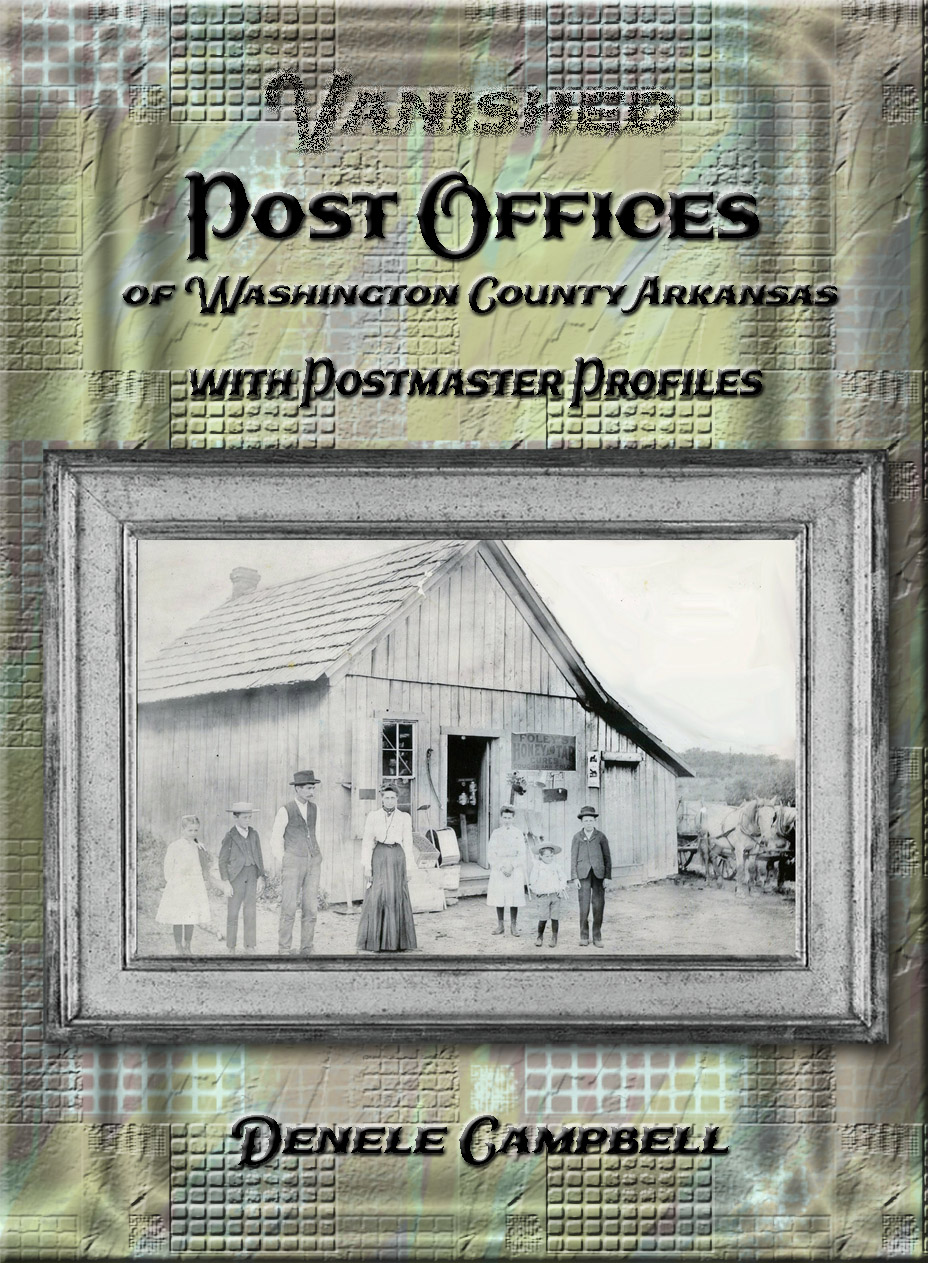
Today, mail seems almost quaint, often referred to as “snail mail” as we become more dependent on the easy flow of electronic email, texts, and messages. But in earlier times, as recently as 1900, communication beyond the in-person conversation or perhaps a written message sent across town by courier, mail was the only means of contact. The faithful transit of mail from place to place became an almost sacred duty for the people who established post offices.

Rural delivery to homes was not made available by the U.S. Postal Service until 1890. Even then, in the rugged landscape of parts of Washington County, mail delivery came by horse or mule to remote post offices into the early years of the 20th century. These post offices were gathering places, usually housed in small stores where a person might pick up mail and trade eggs for a fresh batch of crackers while catching up on news. As such, post offices served more than mail, also forging interpersonal connections and a sense of community.

A total of 104 post offices were established in Washington County, of which only fifteen survive today. The other 85 came and then vanished along with the community they served. The men (and a few women) who took the responsibility to provide mail service often became leaders in the county, holding the public trust, letter by letter, at their station at a dusty crossroads.

Nab your copy today! https://www.amazon.com/dp/B0DJJDD5M4

Another NEW Release: Winslow–Before & After

Most folks who live around these parts know the story of Winslow, Arkansas, a tiny village perched in the highest elevations of the Boston Mountains. They know about the railroad tunnel built back in 1881 that blasted through 1,700 feet of stubborn rock and shale. They know about the all-female city council, the so-called Petticoat Government, back in 1925. And most of them know about the pre-air conditioning turn-of-the-century influx of wealthy summer visitors eager to live in the cooler air found at that elevation.

But what most folks don’t know is what came before the railroad. And what came after the boom years ended in the 1930s. Winslow today is, in many ways, just as interesting and vital as it was in those boom years between 1881 and 1930. Its population remains steady at around 365 people, not counting the hundreds residing in the rugged hills and hollers surrounding the place, both groups peppered with eccentrics, artists, and others typical of the Arkansas Ozarks reputation. Sit a spell and visit.

Great companion read to the new WINFEST book! Check it out at Amazon!

NEW RELEASE! WINFEST!

WINFEST! Celebrating 40 years of music and fun, this little book showcases each year’s performers and T-shirts in full color! Whoever dreamed in 1983 that forty years later this upstart music festival would still be going strong, a beloved event treasured by locals and regional fans alike, not to mention the many musicians and performers who have graced the stage with their talent and sense of adventure! Each year, a new, colorful t-shirt design featuring the performer names as well as the event date have preserved the legend of Winfest and are now presented for posterity in the pages of this booklet. Created as a labor of love by those who saw a need to find financial support for local nonprofit ventures, Winfest has stood the test of time, weather, and changes in the culture, truly a testament to the determination and dedication of the entire community of Winslow, Arkansas. Buy now at Amazon!

Award!

I am grateful for this award from the Arkansas Historical Association, and for the many helpers and sources of information for this article about an amazing woman, Forrestina Bradley Campbell (no kin), otherwise known as White River Red. May she rest in peace. This article may be found in my book, “Around the County,” (available at https://www.amazon.com/Around-County…/dp/B0C126KF23) or in the Spring 2023 issue of “Flashback,” the quarterly journal of the Washington County Historical Society.

Fayetteville’s Black Diamond Orchestra

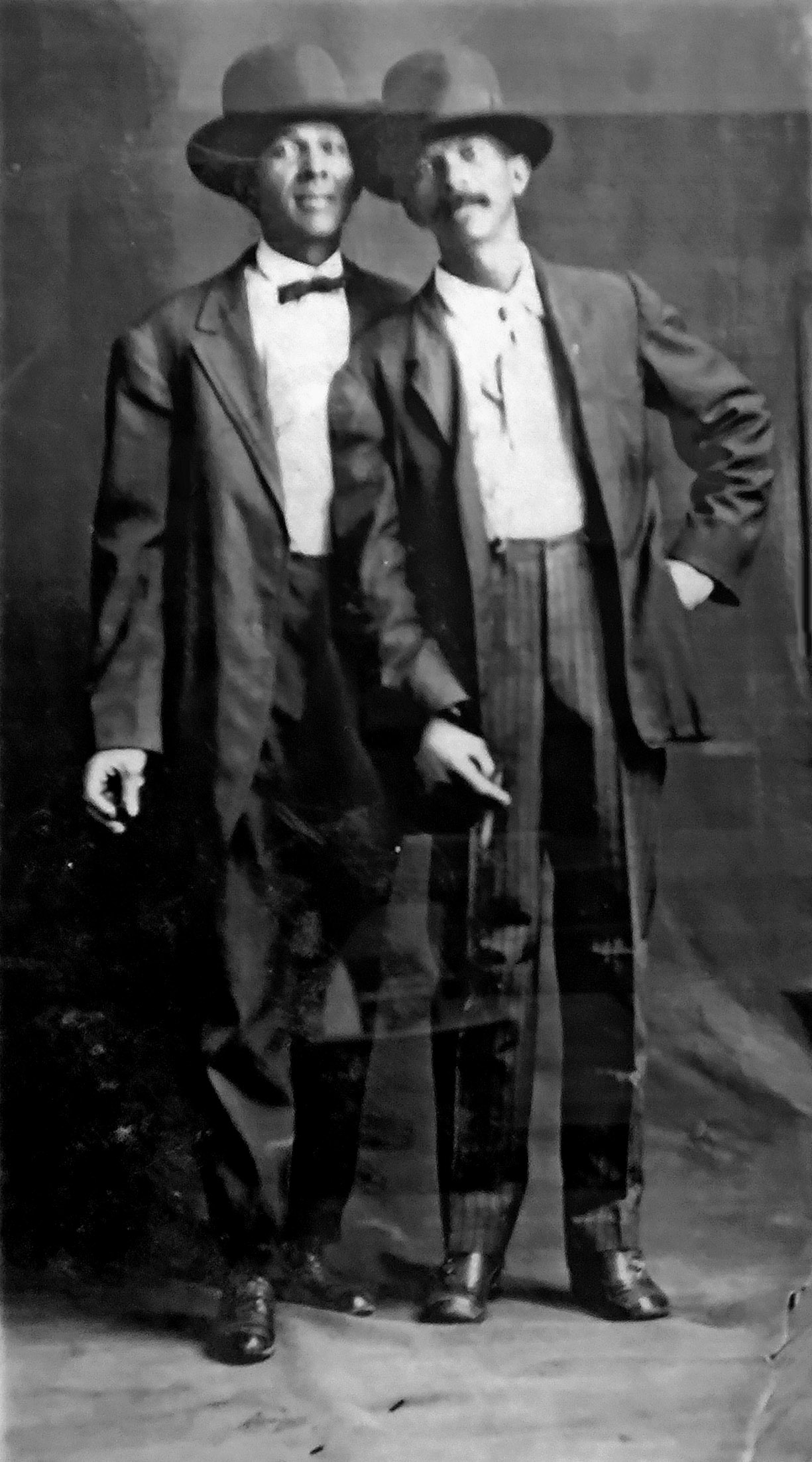
Believed to be a 1930s image of Embus Young and Odie Wright, this image hangs in the Fayetteville Public Library (Reference section) without attribution.

Jazz as a musical genre arose in the heart of Black America. Growing from so-called ‘plantation music,’ the style originally involved fiddle, five-string banjo, acoustic guitar, mandolin, upright bass and sometimes lap dulcimer.

“The music always had a strong ground beat, the rhythm of work, full of field hollers, forerunners of ‘the break,’ and insistent call and response patterns, blue notes, falsetto voices with melisma. …The plantation songs soon became drenched with the rhythms of the Southern churches, both offsprings of African drumming and went straight into Folk Blues and Country Music and Jazz…”[1]

Through touring vaudeville shows, widespread audiences came to love this exuberant musical style. And after Embus Young, a member of one of Fayetteville’s earliest Black families, performed with Al G. Field’s Minstrels, he spearheaded a local Black jazz group called the Black Diamond Orchestra. The group quickly came into wide demand, performing as early as 1903 at Monte Ne. Regular bookings continued through the 1920s and 1930s for all kinds of public and private events including sorority and fraternity dances at the University. Further commentary (1925) regarding benefit performances at the UA Peabody Hall and Leverett Elementary stated that “Colored programs are becoming quite the thing in Fayetteville, with an aroused interest in negro music and African folklore.”[2]   

This investigation of Fayetteville’s Black Diamond Orchestra portrays the group’s members and their local family histories as well as affiliated performers like the Jubilee Singers and Half Pint Thompson. The spotlight of fame shining on Fayetteville’s Black community brings to life a neglected part of local history, the concluding chapter of The Music Men of Turn-of-the-Century Fayetteville, available at the Washington County Historical Society and at Amazon.com

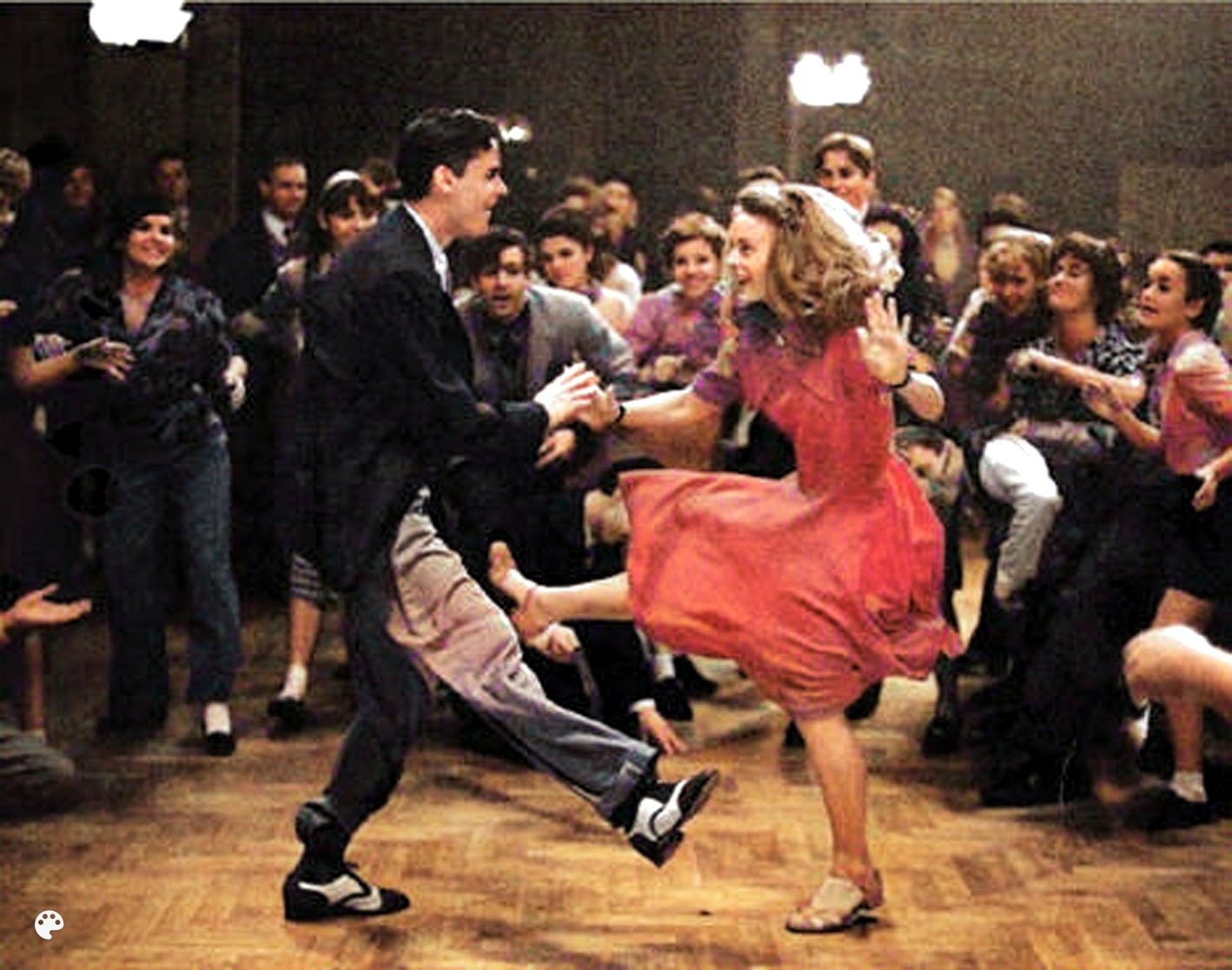
Unidentified dancers perform the Lindy Hop.

[1] “Plantation songs,” John P. Birchall Accessed Jun 1, 2022 @ https://www.themeister.co.uk/ dixie/plantation_songs. ‘Melisma’ is a musical style that allows several notes to be sung to one syllable of text.

[2] FDD Mar 26, 1925, p. 1.

Owen Mitchell, Jazz Man

Mitchell’s group ‘Arkansas Travelers,’ 1929 UA Yearbook. Mitchell seated at piano. Rex Perkins, violin, standing by piano

Owen Mitchell started teaching music when he was seven years old. A neighborhood boy wanted to learn to play piano so Owen shared what he knew. That was 1892. He would go on to become the first jazz band leader in Fayetteville.[1]

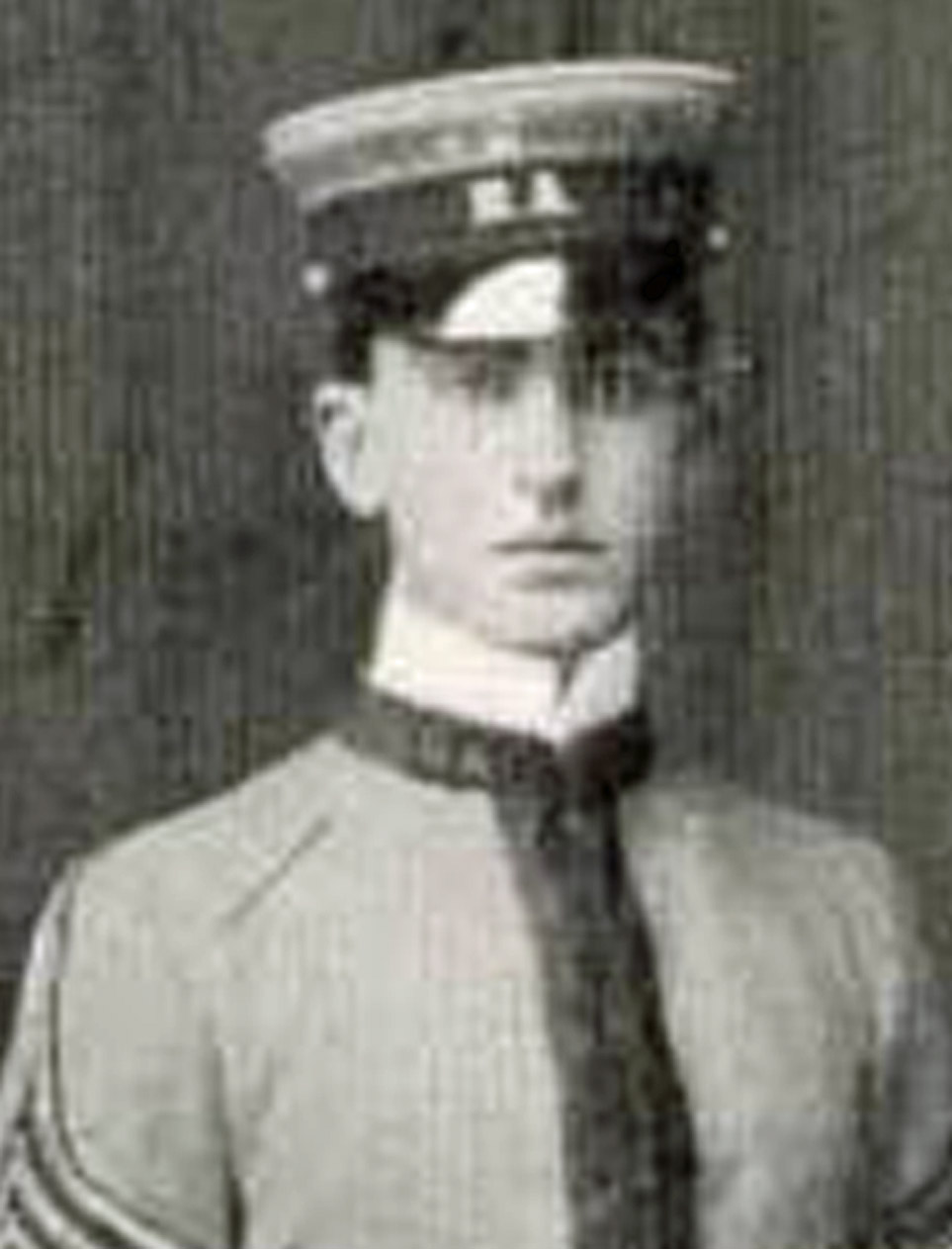
Owen Mitchell 1904, with Cadet Band

Mitchell didn’t start out with jazz. Upon entry to the University of Arkansas at Fayetteville in 1903, Mitchell pursued a degree in chemical engineering while continuing to follow his passion for music as a sideline. Mitchell graduated with a bachelor’s degree in chemistry in 1908 and for a time taught the subject at the University, probably as a graduate assistant. But he was never far from his love of music. Apparently something of a polymath in musical arts, described in one of many newspaper accounts of his performances as a “musician of unusual ability,” Mitchell played trombone, piano, and several other instruments. He understood music theory and composition, and served an important role in Frank Barr’s orchestra which performed at multiple social events around town.

During these early years, Mitchell traveled to St. Louis and Kansas City to experience what big city musicians had to offer, and he often accompanied Barr to help teach community bands in Cane Hill, Westville (Oklahoma), and other towns. [2] Eventually his love of music pulled him away from chemistry altogether, and he went on to lead Owen Mitchell’s Orchestra. The band was among the first to be heard on the new University radio station, KFMQ, in 1924. By January 1925, Mitchell’s radio programming split fifty-fifty between fox trots and waltzes. Within months, fox trot numbers filled two-thirds of the orchestra’s air time. Members of the group included violin, cello, and bass plus trumpet, clarinet, trombone, French horn, and drums. During summer months, the group played every evening at Riverside Park where a dance pavilion accommodated growing crowds.[3]

Other jazz groups quickly sprang up to meet public demand for popular new styles of jazz for community events, club gatherings, parties, and University dances. Through the 1920s and into the 1930s, Owen Mitchell kept ahead of the wave with music for dance fads like the Charleston, Black Bottom, and Lindy. Yet he maintained his ties to classical music both with University groups as well as teaching private piano lessons at his home on West Center. He traveled widely and advocated for the UA music department, making a plea in 1933 for better practice facilities. His leadership in innovative new musical styles fostered other jazz groups and informed a new generation of Fayetteville musicians.

The story of Mitchell’s contributions to Fayetteville’s music scene in the early 20th century is found in The Music Men of Turn-of-the-Century Fayetteville, available at the Washington County Historical Society and at Amazon.com

Swing dance remains a popular style and enjoys periodic revivals.

[1] “First” is not proven, since we do not know when he started his jazz group versus when the Black Diamond group started.

[2] The comment regarding his ability followed his solo piano performance of Grieg’s “Norwegian Bridal Procession.” Similar praise followed his performance of Grieg’s “Concerto in A Minor” the following month.  FD Apr 3, 1914, p. 4. and Jun 9, p. 1.

[3] Riverside Park was a project of the Parker Brothers who operated a large nursery where the Fayetteville airport is now located. They first intended the park as a swimming spot and built bathhouses, restrooms, and other accommodations alongside the West Fork of White River.

Henry Doughty Tovey, a man for all seasons

Henry Tovey circa 1905, from his graduation at Knox University. The same image appears in the University of Arkansas Cardinal yearbook, 1910.

Who could have guessed, then or now, that in 1908, little old Fayetteville and the University of Arkansas would eagerly invite a gay man to their midst. Not that Henry Tovey advertised his sexual orientation or, perhaps, even acknowledged it to himself, much less others. But his role over the next 25 years as professor of piano and music as well as his larger-than-life presence in community, state, and even national arenas of music education could not help but reveal that he was not of the ‘traditional’ male ilk.

The fact is that homosexuality was widely tolerated and even admired in certain circles of American culture during that time period. As noted in a 2019 article, journalist Sarah Pruitt wrote:

  • On a Friday night in February 1926, a crowd of some 1,500 packed the Renaissance Casino in New York City’s Harlem neighborhood for the 58th masquerade and civil ball of Hamilton Lodge. Nearly half of those attending the event, reported the New York Age, appeared to be “men of the class generally known as ‘fairies,’ and many Bohemians from the Greenwich Village section who…in their gorgeous evening gowns, wigs and powdered faces were hard to distinguish from many of the women.” The tradition of masquerade and civil balls, more commonly known as drag balls, had begun back in 1869 within Hamilton Lodge, a black fraternal organization in Harlem. By the mid-1920s, at the height of the Prohibition era, they were attracting as many as 7,000 people of various races and social classes—gay, lesbian, bisexual, transgender and straight alike.[1]

Whether this broader scope of acceptance had managed to trickle down to Northwest Arkansas is debatable, but Tovey’s credentials fit two very important priorities for the university and community. For one, he had graduated from one of the finest music conservatories Illinois had to offer, studied abroad with acclaimed artists, and had gained acclaim in a brief tenure at Ouachita College in Arkadelphia, Arkansas, provoking critics to pronounce he held a “warm place in the hearts of our music lovers.”[2] Such expertise in the performing arts had become a priority to the university on the heels of the Gilded Age. Secondly, then as now, university professors and their families occupied an elevated position in Fayetteville, deriving mostly from far-flung origins and bringing with them not only higher education but also more sophisticated cultural characteristics than those possessed by the ‘locals.’

Tovey immediately became the darling of the town’s elite, invited to join fledgling social groups determined to open Fayetteville to the wider world. For example,

  • In November 1908, he joined Fayetteville’s Musical Coterie at its second meeting at the home of Mrs. F. O. Gully on Mont Nord, where the group declared “a most auspicious opening” for the beginning of the season. Their objective was to “arouse increased interest in the finest of all fine arts—music… We should have an annual Music Festival here every year… [which] would bring people from all parts of the state and from neighboring states to Fayetteville.”[3]
Henry Tovey 1928

Tovey was uniquely suited to the task before him, and he set about his destiny with great zeal. Not only did he help build a greater appreciation of classical music in Fayetteville and the rest of the state with his innovative teaching method utilizing the Victrola and recordings, a method soon adopted across the nation, he also promoted civic efforts to include town beautification, music education in the public schools, and the establishment of a country club and the Fayetteville Rotary Club. Perhaps most laudable was Tovey’s embrace of the rural people of Arkansas:

  • In a 1997 music journal article, Tovey is described as part of the Progressive effort to improve rural life with the use of music. “…[R]eformers focused on improving the economic and social conditions of rural people. Rural reformers expanded university offerings in music… In 1918, the Arkansas legislature voted to require music in the schools due largely to the efforts of Henry Doughty Tovey…

From his enormous musical talent to his elephant collection and regular hosting of delightful luncheons he prepared mostly for wives of prominent town and university notables and served at his home near campus, Tovey lived as a type of Renaissance Man. For example, one menu included “Bouillon * Toasted Wafers * Escalloped Oysters, Potatoes en Cream * French Peas * Chow Chow Pickle * Olives * Salt-rising Bread Sandwiches * Coffee * Tomato Aspic Moulded with Olives and Almonds * Mayonnaise Dressing * Cheese Sandwiches * Orange Parfait with Whipped Cream * Bon-Bons.”

The town and the state mourned his untimely end, but his contributions to his chosen community and state continue to resonate today. The story of this man and his amazing realm of accomplishments is part of The Music Men of Turn-of-the Century Fayetteville, available at the Washington County Historical Society, or from Amazon.com

Tovey with his bulldog Stubby
MC 779 Lighton Family Papers, Box 28, Folder 7,
Photograph 888, Digital Collections,
Univ. of AR, Fayetteville

[1] Sarah Pruitt, “How Gay Culture Blossomed in the Roaring Twenties.” Accessed June 27, 2023 @ https://www.history.com/news/gay-culture-roaring-twenties-prohibition

[2] “Miss Croom’s Recital,” The Southern Standard, Nov 1, 1906, p. 3.

[3] FD, Nov 7, 1908, p. 3.

Frank Barr, Bandman

Barr in the UA Cadet Band, 1897
UA Cardinal Yearbook

The question of when and how Frank Barr picked up a cornet and learned to play remains unanswered in the mists of time. Yet at the age of eighteen as a student at the University of Arkansas in 1892, this young man not only played but would soon become the bandleader for the University Cadet Band. He would go on to direct the University band for twenty years as well as recruiting youth for “Barr’s Boys Band” through the 1930s. But these were not Frank Barr’s only contribution to the community of Fayetteville and the surrounding region.

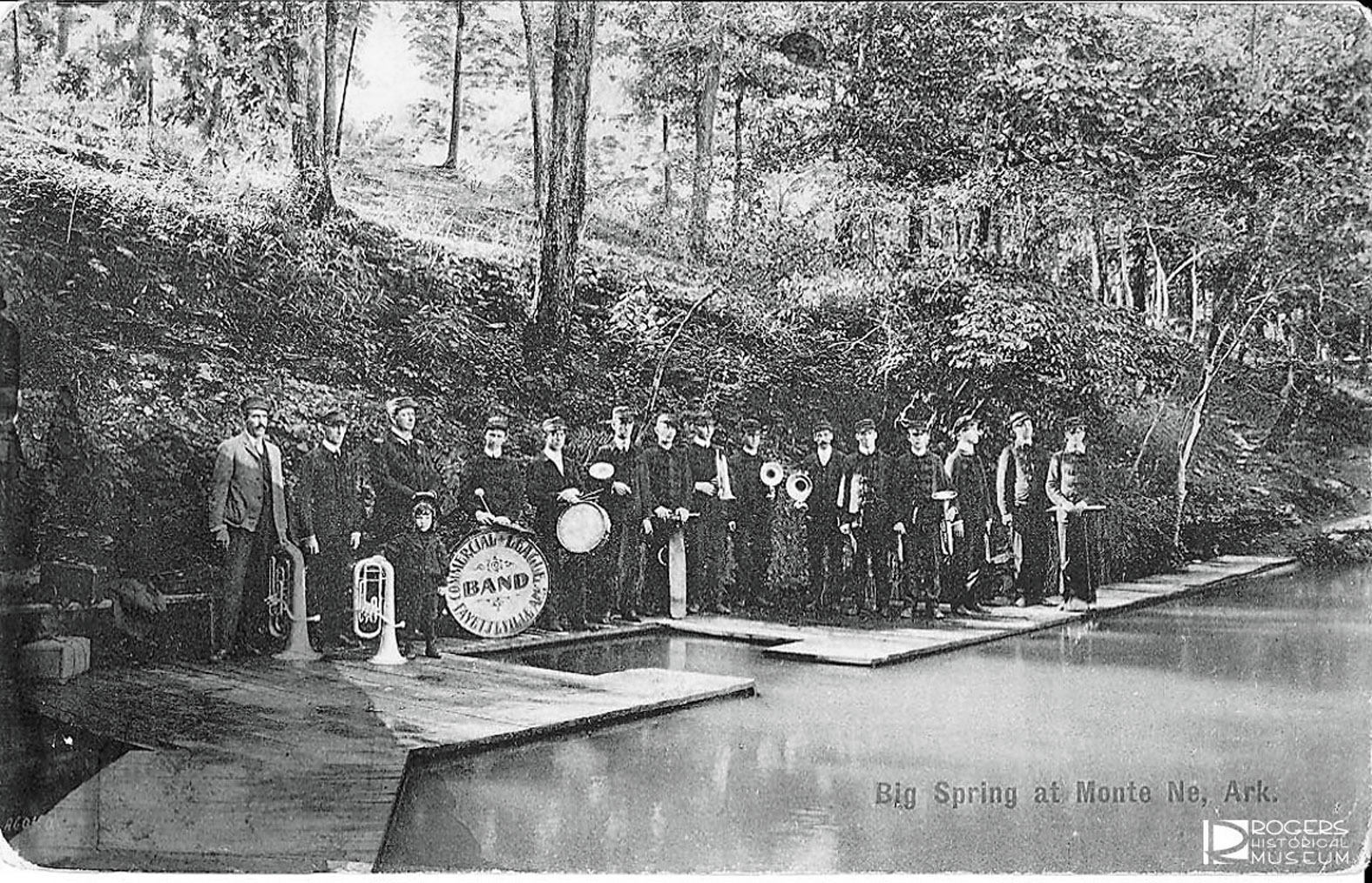
Ambitious and hard-working, Barr seemed to be in many places at once. He ventured throughout the region helping local community bands develop. He traveled in an ever larger arena to establish a string of silent movie theaters, perhaps because at that point in the media, music was expected to be performed while the movie reels rolled. He also prevailed upon Fayetteville town fathers to support a community band, to serve in various settings. The Commercial League Band went on to please multiple regional audiences.

Accessed Dec 5, 2021 @ https://www.facebook.com/RogersHistoricalMuseum/photos/a.124863646257/10160936223681258/

Above: At Monte Ne. Frank Barr third from left with his son Clinton standing in front of him. Monte Ne’s creator William “Coin” Harvey always ensured that his resort guests stayed entertained during their visit. Whether it was by going to plays, listening to music or attending dances, his guests were assured to have a good time while at Monte Ne. This 1910 photo of the Commercial League Band from Fayetteville shows the ensemble standing in uniform on the wooden walkway around the edge of Big Spring.

Barr’s work with the Commercial League Band expanded to include playing at the skating rink as well as dances, the park, and open air concerts on the Square. In 1909, Barr took over a fledgling silent picture project that had operated briefly at the Ozark Opera House. He began showing the films, first in an open air setting at the corner of West and Dickson, then within months at 17 N. Block which he named Lyric Theater. He soon built a new theater at the northwest corner of Block and Meadow, tailored to the needs of an audience with its sloped floor and state of the art ventilation.

Alongside his growing responsibilities to the University, the community, and his various pursuits in promoting music, Frank and his wife Annie suddenly found themselves confronted with unthinkable. Their only child Clinton developed a serious medical condition, an ailment of his lungs. In August 1912, Frank and wife Annie took Clinton to Mayo Clinic in Rochester, Minnesota where two operations were performed. Another operation was performed in early January 1913, and before the end of the month, Annie asked Frank to come to Rochester as Clinton would require yet another operation. By June 1913, the situation with Clinton Barr had not improved. In a telegram to close friend Al Rife, Frank Barr described what his family faced.

“Necessary for another operation, could not live without it. Operation not so serious as before, lungs in far worse condition than ever, the x-ray locating nest of pockets, some the size of walnuts. Don’t know when can get in hospital. Opening made by previous operation will assist in this operation.”

The complicated and amazing story of Frank Barr reveals a man of vision and formidable emotional strength as he managed to keep up with the many demands before him. He and Annie mortgaged their properties to pay for Clinton’s medical expenses. He poured his energy into his Boys Band, playing in local parades and providing music for the new Lyric Theater. First reported in August 1912 when they were praised for their performance at the A.H.T.A. (Anti-Horse Thief Association) picnic at Elkins, the Boys Band was soon in demand around the region. In June 1913, they traveled to St. Paul to play for a three-day reunion. “The reunion people can rest assured that they will be furnished with good music,” the paper reported. “And besides, it will be quite a novelty to hear the Kids play. They always make a big hit wherever they go, and it will be a big drawing card for the Reunion.” The band performed so nicely that fall at the Washington County Fair that they were invited to perform at the state fair at Hot Springs.

Barr’s life is a fascinating testament to one man’s love of music and for his family. Read the whole story in The Music Men of Turn-of-the Century Fayetteville, available at the Headquarters House offices of the Washington County Historical Society, or from Amazon.com


It’s Here! AROUND THE COUNTY: Histories of Washington County, Arkansas

This collection of articles covers an eclectic range of subjects from the earliest settlers (and their contribution to the development of the county and the nation) to the 20th century enigma of a former carnie known as White River Red. What about UFOs? What about the Old Wire Road and its storied history in south Washington County? Or the county’s 4 Riverside Parks, 12 skating rinks, and 8 flour mills are among the stories found here (umm, butter melting on hot BREAD!), each selection delving into some fascinating aspect of Washington County life. It’s a joyful and sometimes heartrending read, perfect for a home library or as a gift. Don’t miss this latest contribution to the archives of local history!

Paperback, $19.99, at Amazon.com