The Desk

man at deskFrom the desk, orders issue forth. Bits of paper and ideas settle into orderly stacks. Drawers open to reveal white paper, envelopes, pencils and pens, erasers, rulers, paperclips, checkbooks, random rubber bands and ephemera relevant to the civilization of mind.

The top of my father’s desk curved down at the front and back in a streamlined Art Deco style going out of fashion in the mid-Forties when my mother bought it for him. She purchased the desk new at a hardware store in Rogers, Arkansas, two years before I was born. It remains in the family household seventy years later.

The image of him sitting there with his big stubby fingers busily typing away on his massive old Royal typewriter stays in fresh my memory. Curses muttered in his deep rumbling voice signaled a mistake that required laborious erasures. Sometimes the errors ran so deep that the paper would be ripped from the carriage, accompanied by a mechanical zipping sound as the cylinder spun.

How satisfying, that ripping sound. The end to it, for once and for all! A new sheet of paper! A new start! And then the keys would tap again, clickety-clack, as he pursued the project at hand. A letter to a band parent? A notice to be posted on the bandroom bulletin board?

A bold red band graced the top border of his Bi-State Music Festival paper. It came in wrapped reams redolent of printers’ ink. Documents issued forth—letters to other band directors in the region, schedules of competing bands, ensembles, and soloists. I remember the watermarks on the heavy bond paper, the matching envelopes, the anticipation permeating our house as the festival neared. This was my father’s prize project for his years at Northside High School in Fort Smith, Arkansas.

Then there were the hours, late into the night, that he bent over pre-lined manuscript paper with his quill of India ink to join the lines into a musical staff. His practiced flourish produced treble and bass clef signs, quick jots of ink for quarter notes, and quirky flags at the top of the note stem designating its status as eighth note or sixteenth. The side of his hand brushed the heavy manila paper as quarter note rests took shape or as a long slur line arced over two measures.

His concentration palpable, his cigarettes burned down to the filter in the wide glass ashtray. There were the groans and curses when his efforts went awry, when the ink bottle spilled or the muse stopping whispering in his ear. When real life demanded his attention to wife and children, the lawn that needed mowing, the bills past due. An artist at heart, he never fully accepted his role in the world of the mundane.

Command center to the world around us or doorway to the ether of creation, desks are the place where business is done. Here I utter my own curses at the petty requirements of temporal life. Can’t you see I am far away, the whispers of characters and scent of distant meadows flowing from my fingertips? Yet the desk is not only the arena of creation but also where I organize my world, establish schedules for my time and finances, and write letters to compliment the helpful and excoriate the stupid. Here I sit to stare out the window as memories and worries rush onward, ever onward, in my unruly thoughts.

Now the world unfolds on my computer screen. Words scroll across virtual paper, easily erased and corrected. No more ripping paper from the typewriter. How much more music could my father have written with the tools of modern times? Playing a simple phrase on a digitally-connected keyboard would have produced perfectly crafted notes on a virtual page, no ink required.

Maybe the result of such ease in the mechanics of creation is that we are now drowning in a sea of mediocre art. Perhaps we were better served with pages ripped from typewriters and music penned with India ink. When the need to tease out a deeply held emotion, find words that best describe, or form scenes that best reveal, I drag out the paper. It sits expectantly on the desk, this thick pad of white paper. Sometimes even the use of a pen is too facile, and I dig up the Number 2 lead pencil. It makes a satisfying sound as my hand forces the tip over the paper.

What I write on paper with pencil is different from what appears with keystrokes on a digital keyboard. The words are more carefully chosen. The shapes of letters carry significance. The words have real weight and I use them in new ways, unexpectedly poignant.

I am at my desk with paper and pencil. I can see my father bent here, his profile etched against the dark of night in the light from his desk lamp. His quill scratches across the page.

Old Timers

100_0565I’d made it halfway down the dog food aisle when the woman’s words penetrated.

“Hey, aren’t you…? Didn’t you…?”

The woman had turned to look at me. I knew she thought she knew me. I looked at her closely, moving my cart against the bags of dog food so I didn’t block the aisle. She did look kind of familiar. I glanced at the man standing behind her. He looked slightly familiar too.

“Virginia Wilson,” she said. “Dennis,” she added, motioning to her husband.

“Of course! Wow, it’s been so long.” I studied them as my brain clicked backwards through decades. In 1974, when Steve and I first moved to the land his parents deeded us on this mountain, Dennis and Virginia had a place on past ours another two miles down the rough dirt road.

“Yeah, we thought that was you,” she said with a smile. “I hardly know anybody up there anymore. They’re all dying off.”

“I only know a few,” I replied. “Burkart, Northcutt—can’t call them anymore.” I pondered the sorry state of affairs. “After Art died, you know his wife hooked up with a guy named Ron Martin. They had a kid and raised Art’s son Tommy—he was only two when Art died, and he’s about thirty now.”

We shook our heads at the passage of time.

I continued with my story, because at some point it would make sense why I told it. “Ron, he moved out. He lives down there in that little house Williams built for his son out by the road. Lives with a guy named Chris. They work together.”

That brought the topic back to people who lived on the road. Names of people who used to live here. Who lived in their houses now.

I could have said a lot more about Ron and Chris. How Ron’s back is messed up bad, an injury he’s carried since his days in Vietnam when the 101st Airborne was jumping out of helicopters into jungle, when Ron was a skinny little eighteen-year-old kid with a fifty pound pack on his back. He’s missing a few teeth now, thin as a rail, damn proud of his ‘Nam days and the 101st. He still tries to work, has to work since he’s got a seventeen year old son and his military pension even for a disabled person isn’t enough. He’s not supposed to work.

He’s got COPD, has to use oxygen. Wakes up in the morning in agony. Has to take his pain meds and stand in a hot shower until his back settles down. He had to move out on his wife, Art’s widow. She’s got issues, mostly anger. So he moved in with Chris.

Chris never was in the service. He lost an eye when he was nine, one of those running wild in the neighborhood situations, somebody throwing rocks or using a slingshot. Nobody really took care of Chris. His alcoholic dad did things to him, to all his kids, but Chris loved him anyway. Like kids do. By the time Chris hooked up with Ron, he was in his forties, had done every drug long enough to see himself sliding down a hole. Managed to get himself off heroin, off meth.

But Chris will never give up alcohol. Somewhere he’s got grown kids. Once he had good jobs in construction. The man has an amazing talent—just understands how to put things together. And an artful eye—one. Painter, carpenter, drywall guy—he’s got the skills. But he works to drink. Soon as he knocks off the job for the day, he hits Roger’s Rec. Sometimes he has enough sense to give Ron his money and listen to Ron when he says it’s time to go home.

Sometimes he wakes up in the wee hours with police shaking him awake and pulling him from where he passed out in the bushes behind Roger’s. They don’t even book him. They just call Ron. Nobody can fix Chris.

“Yeah,” Virginia says. “Remember Foster Copeland? Lacy Barrett bought that house after he died. I think they rent it out.”

I remember Foster—tall, sandy red hair, big guy. His house sits across the road from Ron and Chris. Not the house he had when we moved up here. That one burned. Then all the Jehovah Witnesses came up to help their ‘brother’ build a new one, a house raising that lasted a weekend and put him and his family back into a home.

Foster sold tool handles. He’d drive around these parts, I don’t know how far his route extended, selling handles from the back of his car. We’d take tools down there for him to fix. Five dollars. Pitchfork, hoe, shovel, maddock, axe—he had all the right handles made of good strong hickory. Some of my tools still have Foster’s handles in them. He died of a brain hemorrhage sometime in the mid-Eighties.

“I know the guy that lives there now,” I said. “Sammy something. He’s friends with Ron and Chris. He and his wife live in Foster’s house.”

“Is there somebody new living in Randy Northcutt’s house?” Dennis asked. Randy’s house is next door to Foster’s. Next door as in, maybe a hundred yards down the road.

“Yeah, I guess it sold—the realtor sign is down and they’ve cleaned up the place. Too bad about Randy. He really let that place get messed up.”

“Oh, that wasn’t Randy,” Virginia said. She glanced at Dennis and he shook his head. I knew he missed Neal. For years, every day, late afternoon, Dennis’ dump truck would be parked up next to Neal Northcutt’s fence and they’d be inside having a beer and discussing things in general.

“He sold that house,” she continued. “Soon as Neal died, Randy sold it to his sister and left. Haven’t heard a word about him since.”

“She lived in that trailer for a while, the one that used to belong to Davenport?” Davenport was a skinny little ex-military who married a big German woman. He died of cancer, left the place to her. She gave up after a couple of years and sold everything to Neal.

“Yeah, her and her husband. They fixed it up then sold it to Wesley Harris, I think was his name. They added on a really nice house, but that trailer’s still in there.” She paused to scoot her cart over so another shopper could go by. “I think they’re there, but I don’t know. I can’t keep up.”

Virginia’s a cute little woman with a petite figure and friendly smile. I think she’s into Jesus. We never socialized much, even in those early years when Steve, his brother Art, and Dennis got together to drink, smoke, and cuss. The guys hung out while the women went about the business of fixing meals, taking care of kids, keeping house. I saw no reason to buck the system—they never talked about much of interest to me.

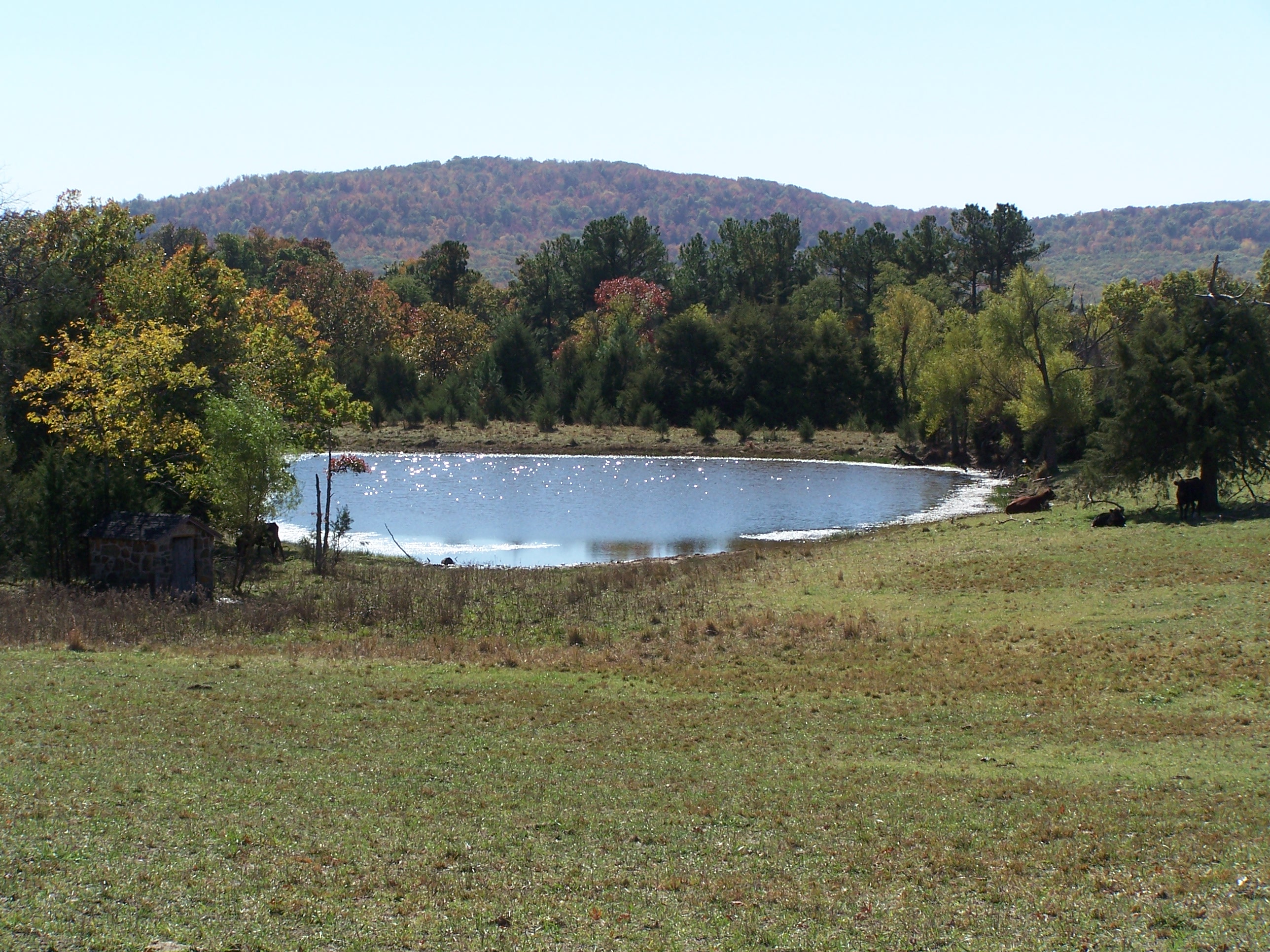
Early on, we hired Dennis to build us a nice pond below the first pond. He was in the hauling and heavy equipment business. We’d see him driving home, groaning up the mountain with his dump truck in first gear, hauling his bulldozer behind him on a beat-up flatbed. Once the pond filled up, Steve and I took the kids—I think we only had two at the time, late 70s—and drove over to Huntsville to a fish farm. Brought back buckets of fingerling catfish to stock it. Never once caught a catfish out of there, at least that I can remember.

Time changes everything. The dam settled and trees took hold. Now their roots have riven the red clay dam base and weakened it enough to erode. The overflow ditch to the side filled up with fescue and weeds, so water spilled over the top of the dam after heavy rains. A ditch developed across the top. The ditch is big now, maybe three feet across at the top and cutting down into the dam at least two feet. I keep thinking I’ll get somebody up here with a load of red clay to fix all that. I’d have them clean out the overflow ditch at the same time so water can’t top the dam again. But that’s at least $500 that I don’t have. So Dennis’s dam keeps getting worse.

We tried to keep it up. I dug out that overflow ditch. Steve dug it out. The kids got older and the deer population exploded and making a garden down there became a painful futility. Then Art died and a few years later Steve and I fell apart, and then I didn’t have the money or the heart to go down there and walk around in our ghosts.

But things with Dennis fell apart before the pond dam went bad. One day Steve came home from work furious. He’d stopped down at Neal’s. Neal was kind of the godfather of the road, him and Walter Burkart. Both were retired military, hiding out in the Ozark woods after a lifetime of being bossed around. Walter didn’t drink, so he didn’t hang out with the drinking crowd. Neal’s second home was the White Star Tavern, especially after Penny died. He called it his office. Everybody loved Neal and Walter.

So Steve came home from Neal’s where he’d seen a dead redtail hawk in the bed of Dennis’s pickup. Dennis admitted to shooting it, like there was sport in it. Proud of himself.

Steve loved redtails. He loved anything in nature, but especially hawks. When we first got together, he’d tell me the names of trees, types of birds, insects, snakes. I learned a lot in those twenty years until I couldn’t stand living with him anymore. Ironic that because of the kids, I stayed on the land and he moved to town.

Anyway, Steve stormed into the house ranting about the dead redtail and called the game warden. I remember his hands shaking while he looked up the number. Redtails are protected birds. You can’t even have a dead one you pick up off the road. Can’t have a feather off one. Red-shouldered hawks I think are the same, like eagles and other birds of prey mostly killed off by early settlers under the idea of protecting their chickens.

Dennis got in trouble on account of that hawk. I think Art would still socialize with Dennis, but Steve never did. Then when Art died in 1989, the mix of Campbell and Wilson at Mineral Springs just withered on the vine.

We stood there in Walmart, the Wilsons and I, talking about the old timers. We were the old timers now. As we were turning away to go on with our shopping, Virginia laughed and allowed as how I’d probably better not call if I needed anything, because she didn’t do much for anybody anymore. And I said yeah, I felt the same way. Besides, we agreed we didn’t know most of the people who lived up here now and wouldn’t be likely to take kindly to any neighborly overtures unless there was some kind of gawdawful emergency.

Lots of us who lived up here in those early days thought there would be a gawdawful emergency at any moment. Some lunatic would push the button and the world would go up in mushroom clouds. The Ozarks was one of the places where wind drift would save us from the worst of the fallout. We’d be the ones who could still grow food, pull clean water up from our wells, join together in a tribe to share what we had and fend off the savage hordes.

We learned how to raise and slaughter animals, grow and preserve food, and we stocked extra supplies of salt and bullets. Slowly our kids grew up. We started to understand we could never possess enough bullets.

Now we’re the old timers. Until our reunion in the dog food aisle, it had been at least twenty years since I saw Virginia and Dennis. People don’t move to the woods to socialize. We probably won’t live long enough to see each other again.
100_0571

A Journey West, Part 5/5

sc fog
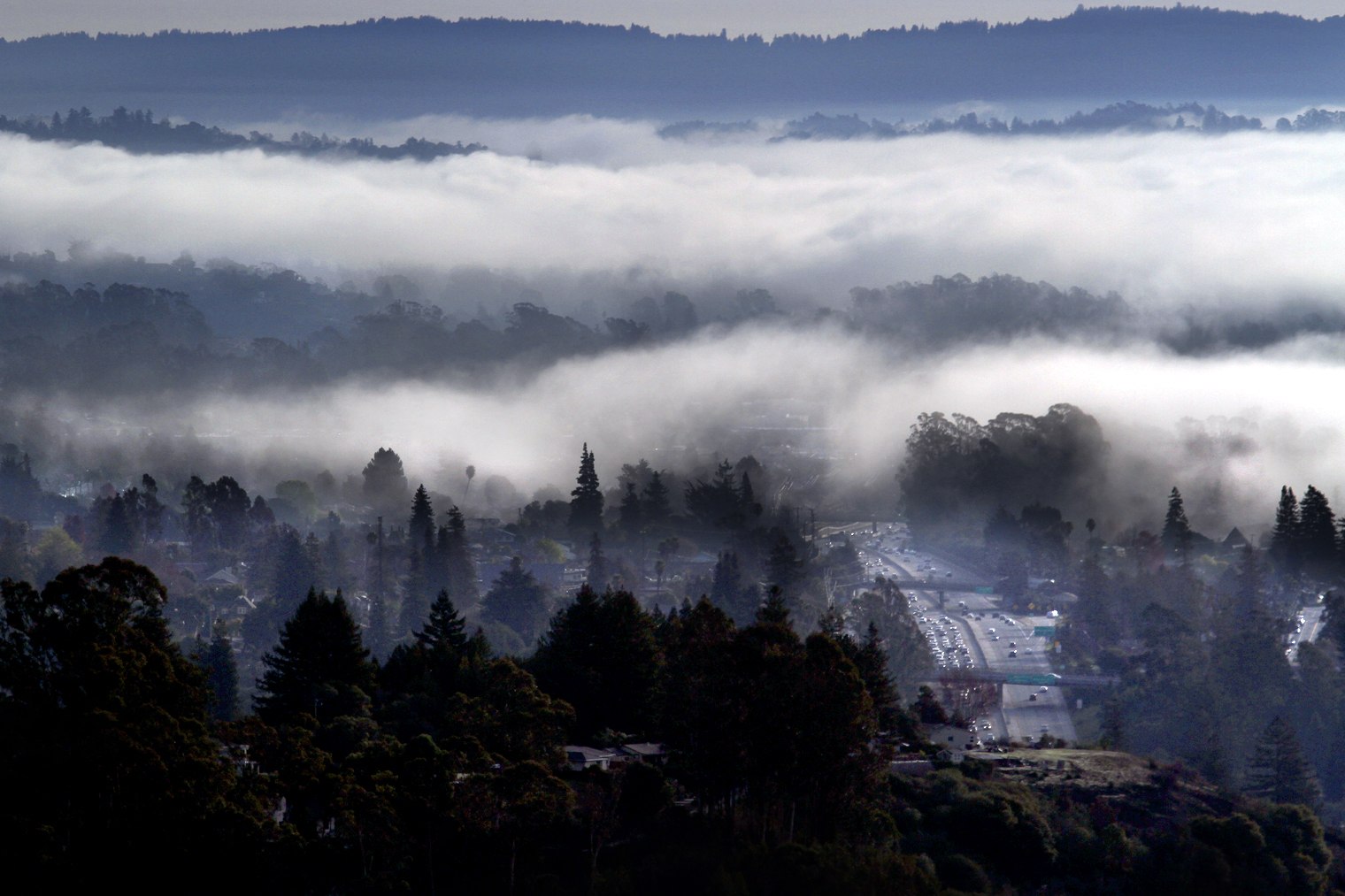
Highway One Santa Cruz, early morning fog

My last night, again too anxious to get a good night’s sleep, I rise early for my flight home. The fog is in along the coast. Overnight chill permeates the distinctly scented air. Stately redwoods stand in silent observation as we merge into Highway One’s rush hour traffic.

Much as I dreaded the journey, I feel nothing but happiness that I came. Spending time with loved ones wrenches me, lingers like a lump in my stomach. Good that aircraft exist. A hundred years earlier, anyone traveling this far left loved ones behind forever.

San Jose airport. I say goodbye to my first born, swallowing back tears. Again I am thrust into a sea of humanity also venturing out into the world. Security is less stressful, boarding less crowded. Maybe I’m slightly inured.san jose copy

The gods smile on my seating, this time next to a window and not over a wing. My forehead presses the glass as the lumbering beast leaves ground and the wheels thump into the plane’s belly. Below spreads San Francisco Bay, San Jose, and streets, buildings, cars, and lives growing smaller by the moment. In striking resemblance to a circuit board, a network of roads, industrial complexes, and neighborhoods form the landscape below. Each serves a critical function, interdependent, vital, alive. Civilization, California style, 2014.

Last distant view of the Pacific. Goodbye salty spray, kelp-scented air. Long gray-blue line beyond jagged dark blue mountains. Horizon.

Kluft-Photo-Aerial-I205-California-Aqueduct-Img_0038
Delta–Mendota Canal (left) and the California Aqueduct (right) near Tracy, California. Courtesy Ian Kluft

Soon the vista below changes to a patchwork of brown and green fields in the inner valley. Aqueducts glimmer blue-green. Bare brown hillocks become the southern Sierra Nevada range.

Across Nevada and then Utah, I marvel at the extent of this desolation. I’ve seen it all before, drove it more than once, but this time it seems even more a wasteland than I had previously considered. A handful of places feature a circular green patch and make me wonder who would struggle to pull water from the depths to grow anything in such a place. Even across New Mexico, the vista unfolds in desert tones of gray, tan, and ochre.desert copy

For the first time, I feel fear for us as a nation, for people everywhere, who confront the loss of rain as land slowly turns barren. For all our irrigation trenches, dams, and pipelines, in the end we are powerless to stay Mother Nature’s hand. Without fresh water, we can’t survive.

ozark scene
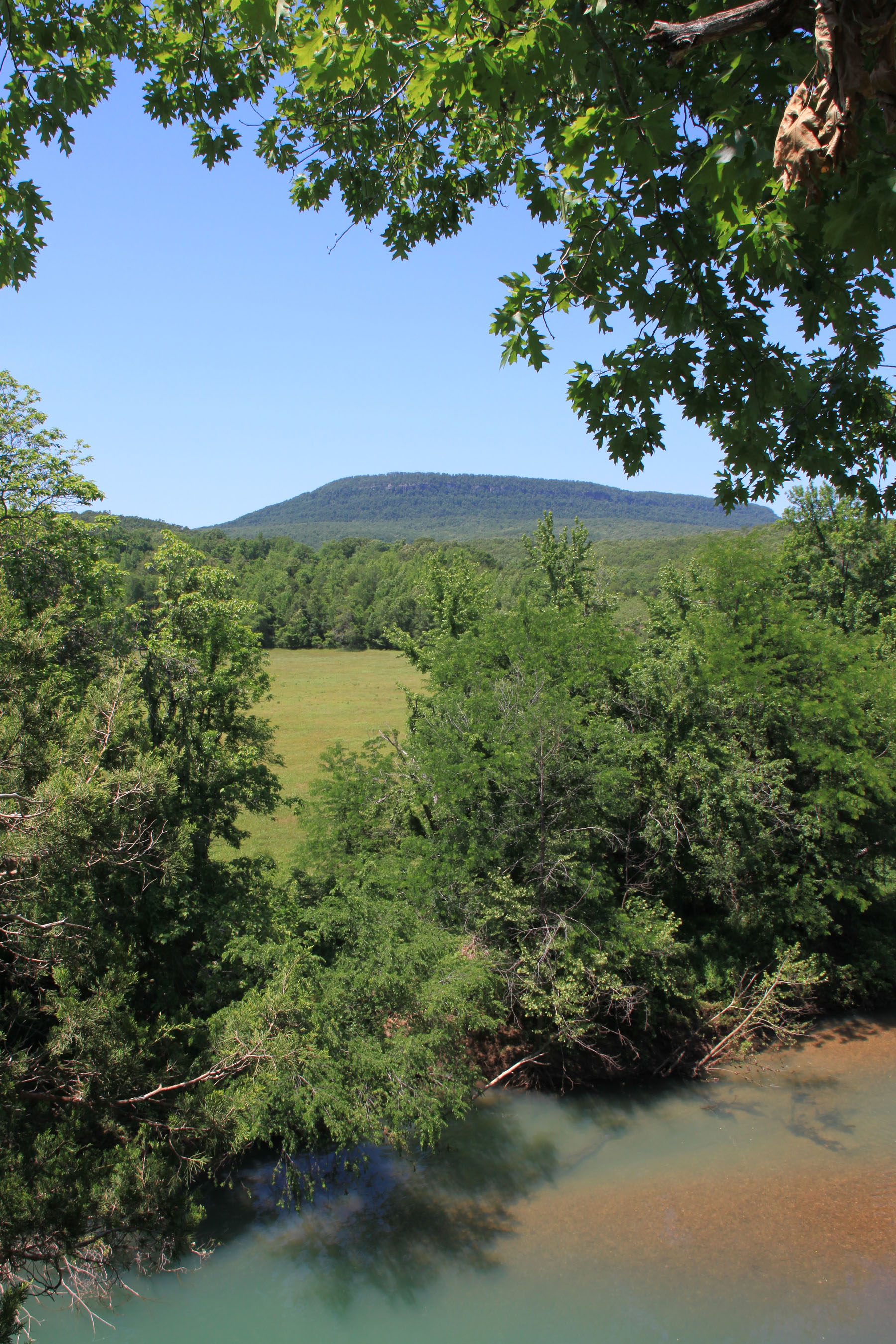
Ozarks. Courtesy http://btoellner.typepad.com

The land greens slightly in central Texas and by the time my commuter flight to Northwest Arkansas circles for landing, fertile green fields and thickly wooded hills welcome me home. Unlike the West Coast, the Ozark plateau is among the oldest land masses on the continent. I feel its old bones in me, welcoming me, holding me close in its eroded creek bottoms and smoothed down ridges.

Safely landed and walking to my car, I hear a familiar chorus of crickets and katydids. The air smells of cut hay and crushed weeds. For all my anxiety and curmudgeonly angst, I’m glad I went. I’ve been reintroduced to a world wider than me. I’ve shared a brief happy time with people I love and who love me. I’ve plugged myself into the Pacific for a deep charge of my psychic batteries.

I’ve been renewed.

A Journey West, Part 4/5

arti 2
Artichoke. Courtesy Jeb Campbell
lettuce
Fields of lettuce. Courtesy Jeb Campbell

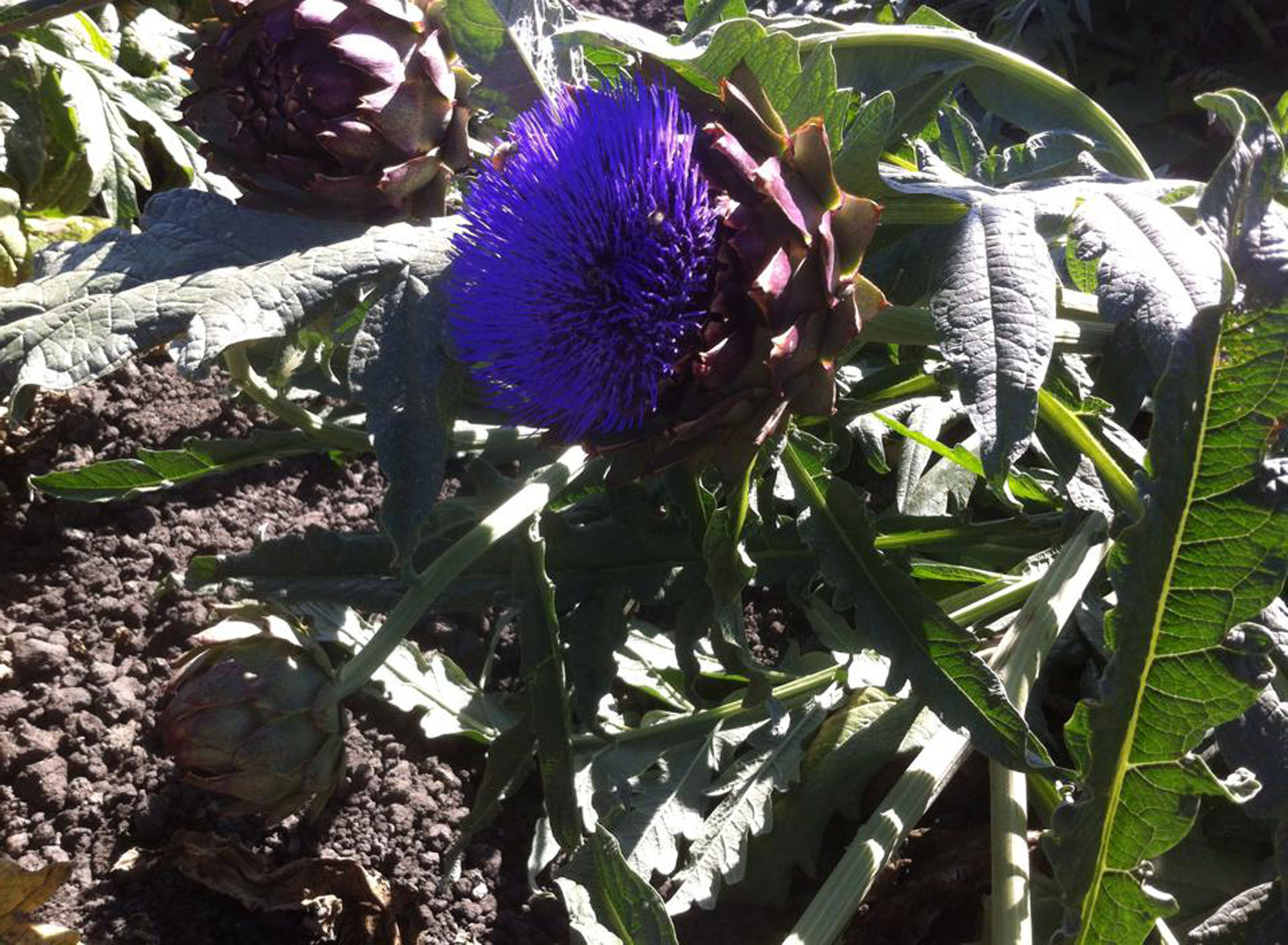
One of the last days of my California trip featured a venture to Monterey and Seaside where my son lives. The old coast road, Cabrillo Highway, Highway One, muddled south out of Santa Cruz, Soquel, and Aptos in heavy traffic that cleared some after Rio Del Mar. The four lanes narrowed to two for nine miles through fertile agricultural lands. Fields of artichoke, Brussel sprouts, strawberries, lettuce, and kale lined either side of the aging highway. I wondered about irrigation—more wells, more groundwater. How long do these farmers have if the drought continues?

dunes 7
Dunes. Courtesy Jeb Campbell

The fields gave way to huge sand dunes colonized by dune grass and invasive ice plant. Called ‘relic landscapes,’ the dunes occupy a wide swath between the road and the Pacific. According to local authorities, the dunes may shift but are thousands of years old. New ones aren’t forming. Older landscapes of rock and sand slightly more inland provide basis for roads, shopping centers, and neighborhoods. We followed the road around this last tip of the great Monterey Bay arc.

monterey-bay
Looking north to distant outline of Monterey Bay coast, from Sunset Drive, Monterey, California

It was a clear day, brilliant blue sky above and the bay vista stretched fogless twenty-four miles north to Santa Cruz. I thought of the Native Americans who made use of every living thing given by the sea and the fishermen who came on the heels of the Spanish missions to exploit the rich sealife nourished in the recesses of the three-thousand foot deep Monterey trench. I thought of the generations of immigrants—Chinese, Italian, Portugese—who settled here to wrest a living from the land and Pacific Ocean.

sea jewels
Jewels of the sea: kelp strand, mussels, anemone. Courtesy Deste Campbell

At the seaside route around the Asilomar retreat grounds, we parked and walked a short distance to the water’s edge. The tide was outbound. Waves curled onto the sand and crashed against rugged rock outcroppings. Gulls patrolled the beach, peeking into straggles of kelp torn from its offshore forest. Washed up kelp leaves flared from narrow stalks long as a bullwhip. Hordes of tiny insects swarmed the tangled kelp heaps. Tide pools hosted anemone communities and mussel thickets in colors too amazing to believe.

jelly
Jelly, one of many types in this bay. About two inches long. Courtesy Deste Campbell

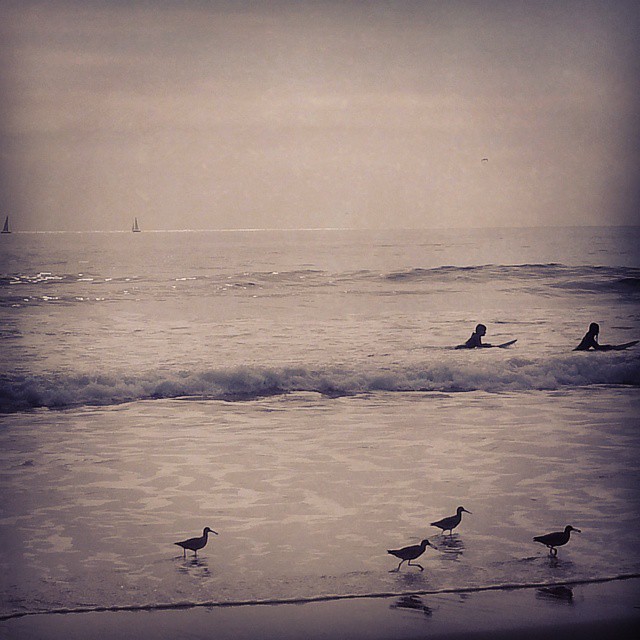
I could sit all day here, fully entertained by nothing more than the movement of the water. A few surfers in wet suits challenged themselves in the unforgiving breakers. Others, like me and my kids, were content to walk at the high water line, happy to be occasionally caught off guard by a stealthy wave whooshing up to wet our legs. If this was all there was—if there were no bills to pay, schedules, obligations—would I make my life about watching the sea?

3 on beach
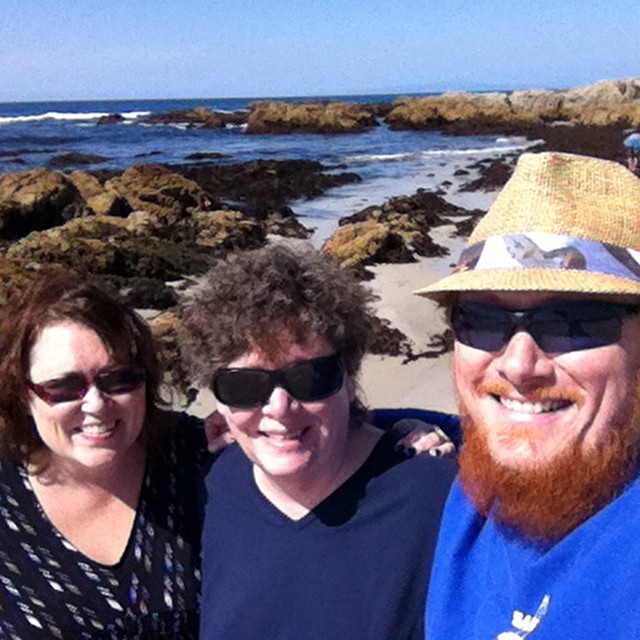
Me with Deste and Jeb at Asilomar beach. Thanks Jeb.

Too short is the time at my son’s home, sitting in his living room, touring his garden, smiling as I visit with his family. I’m envious of his ten-minute drive to the beach. Sad as my daughter and I pull away from his home, I can’t look back.

Is an oceanside sojourn the future for my son, this child who became a man when I wasn’t watching?

Or my daughter, happily settled in the hills of her new home near Eugene, Oregon, an hour and half drive from the coast?

Those are among a thousand alternate lives I could have lived close to the sea. The waves murmur and slosh, crash and growl. Another world. I miss it already.

beach filtered
Filtered beach shot. Courtesy Deste Campbell

A Journey West, Part 3/5

T.SanLorenzo
San Lorenzo River

Part of my agenda for this trip to Santa Cruz and environs had to do with a novel I’m writing. I arrived with a list of locations to scout. Thanks to Ginny and Jeb’s patient chauffeuring and on other days my daughter’s use of a borrowed car, we managed to tour neighborhoods, the campus, the business districts, and the beach. I made copious notes.

Questions arose. Why is the San Lorenzo River dry at the crossing of Highway 1 and full of water further downstream near the coast? Why is Fire Break Road shown on the map stretching from Empire Grade down to the backside of campus but doesn’t exist in the real world?

alemany
Alemany Farmers Market, Bernal Heights, San Francisco. First farmers market in California, established in 1943.

A flurry of investigation resulted in answers. The San Lorenzo is dry because of a two year drought, and the lower riverbed holds captured water because of a sand bar blocking the mouth where it drains into the Bay, creating what amounts to a long lake. No answer on the missing road.

california-san-francisco-fishermans-wharf-1
Fisherman’s Wharf area of San Francisco’s Embarcadero. Coit Tower on Telegraph Hill, on left. Courtesy http://www.planetware.com

We spent a day in San Francisco, tracking sites of my fictional events. The Alemany farmers market is surrounded by steep hillsides with rows and rows of colorful houses built literally wall to wall.

deste and me
Deste and I walk toward the point at Golden Gate

The Embarcadero  stretches along its long waterfront up to the Presidio—shops, wharfs, boats in sheltered marinas, mobs of tourists.

serpentine
Jeb and I ponder a large outcrop of serpentinite rock at the point. First pier of Golden Gate Bridge looms above. Photo courtesy Deste Campbell.

We walked along the old airplane landing strip, Crissy Field, and pondered the Civil War era red brick structures at Fort Point. Directly overhead, traffic thundered onto the Golden Gate Bridge. The narrow drive skirted a sharp embankment of crumbling pale green serpentinite that slopes down to sea level.

bunker
Standing on top of concrete bunker where guns were once mounted. Presidio, San Francisco. Photo courtesy Jeb Campbell

We drove up along the west-facing oceanfront cliffs of the Presidio where groves of redwoods shelter World War II artillery batteries. Ghosts of men in uniform seem to emerge from hovering redwood thickets. The urgent need to guard against invasion left its acrid residue in the air, in the massive concrete bunkers, along the pathways carved through the rugged terrain. What threats, real or imagined, kept these men awake at night, shivering in the cold coastal wind?

burmese
Burma Superstar, San Francisco

Lunch involved Ginny’s son Warren and his family at a hole-in-the-wall place on Clement Street serving Burmese food. After a wait on the sidewalk made friendly by a bench and hot tea, our party of eight was seated at a large round table.

How does one describe a Burmese feast? Savory catfish chowder, thick lentil/cabbage soup, lamb curry, coconut chicken rice noodle curry, tea leaf salad, crisp samusas—the large lazy susan kept turning as we sampled our way to gluttony.

Sated by our delicious meal, we said our goodbyes to Warren and his family. Our search for story settings then led south along the coast following the “Great Highway.” Densely populated streets disappeared behind us as the road merged with Highway 35. Soon our path became Skyline Boulevard as we neared Daly City. Our objective? The great and powerful magic spot at Mussel Beach, where the San Andreas Fault leaves land and enters the Pacific.

mussel rock
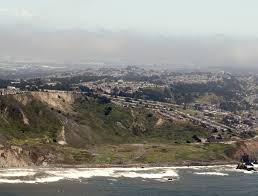
At Mussel Rock, looking north by northwest along the trajectory of the San Andreas Fault.

We missed the turn-off, assuming that such an important spot would be well marked. After doubling back, we found Mussel Beach disappointingly under-developed and lacking any signage that might describe the forces at work underfoot. The narrow shelf of land broke upward to the east with a steep eroding hillside and to the west down a sharp crumbling embankment to the turbulent surf below. Offshore, waves pounded the tilted outcrops of broken rock which continued the fault’s northward journey. The mostly paved ‘park’ area rolled and humped over conspicuously-disturbed ground. Multiple patches in the asphalt provided evidence of the fault line’s restless character.

houses at Mussel B
Mussel Rock shown with neighborhoods behind it. Rock outcrop from previous photo appears lower right.

Hovering above the precarious cliff faces and uneven terrain, housing developments cling to steep hillsides and beg the question of how anyone could in good conscience build houses literally on top of a major fault. The neighborhood centers on an elementary school and seems inhabited mostly by lower income residents. I took notes for my story as we rejoined Skyline Drive.

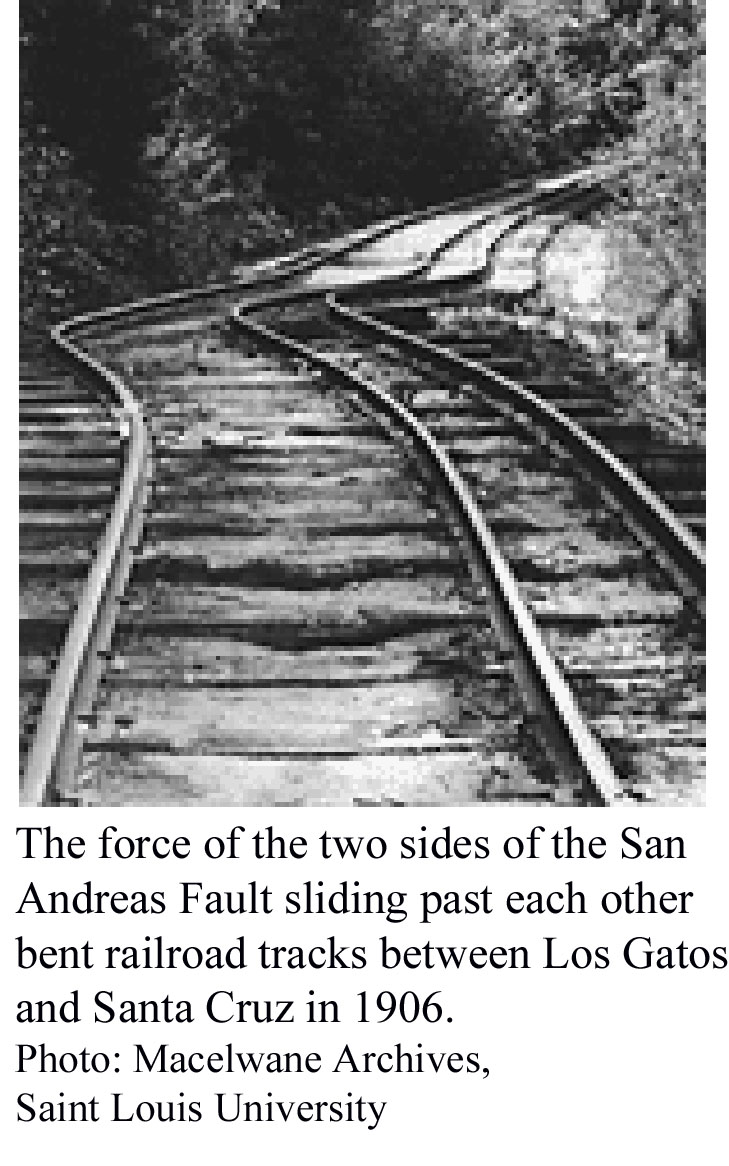
rr tracks Los Gatos copyThe drive back south along Highway 280 tracked the trajectory of the infamous fault. The miles-deep gash forms a valley between the Santa Cruz Mountains on the west and the less dramatic hills and rolling lands of the southern Bay communities of San Mateo, Redwood City, and Santa Clara. For part of the distance, San Andreas Lake glimmers in the day’s bright sunlight. Angling west onto Highway 85, and then Highway 17, we soon crossed over the fault itself at Los Gatos. The four-lane road jagged and bumped as it crossed the extended disturbance.

Then back to Santa Cruz. It struck me at this point that highways and landmarks tell only part of the story of what it means to be here. Less specific but more important is the feeling of the place. A unique scent permeates the air—pine, salt, kelp, eucalyptus. And something else I can’t name. It lingers in my clothing, on my skin.

The light is clean, thin, sharp. Fog rolls in and drapes over the roofs, hides the tree tops, waxes and wanes along the shore so that at one moment you see the lighthouse on the point, the next moment it disappears.

The whole place sits on an edge. The edge of the sea. The edge of light. The edge of visibility.

Here is the edge of North America, not part of the land mass that comprises the bulk of the continent but a sliver of earth’s crust emerging from the sea to shove eastward and cling to its reluctant partner continent. The energy of the rebel, the upstart, the adolescent swells from this nascent ground, lending its attitude to the human settlements that occupy it. From the shore eastward for a hundred miles, this new land presses its case, shoving up mountains and sliding along the tear called the San Andreas fault. Countless other faults branch off from it, all mute testimony to the mind-boggling forces at work on our planet.

You can’t live along the California coast and not feel the energy of this subterranean collision. What better place to set a novel that deals with the frontiers of human consciousness?

A Journey West, Part 2/5

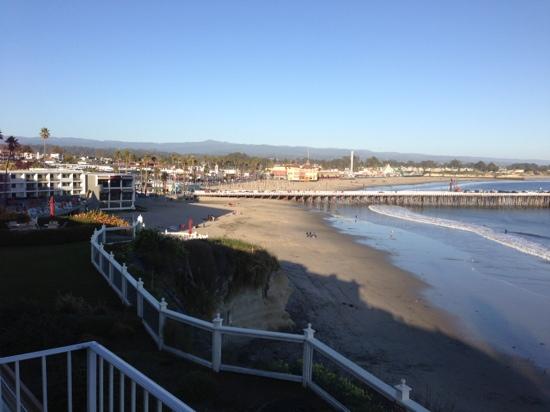
sc wharfThe narrow coastal rim west of the Santa Cruz Mountains is a world unto itself. Rich with moist ocean air and ornamented by unique flora, the land asserts a majestic presence in spite of roads, cars, houses, and other degradations inevitable in the presence of human population. I’ve been to Santa Cruz and its suburbs of Capitola, Soquel, and Aptos four or five times, and each time is a refreshing reminder of this unique environment.s c cliffs

All of it leads to the beach and  sheer cliffs eroded by towering waves. Stretches of sand crop up, narrow but pristine, fed by the constant motion of water. Detritus of the sea collects in meandering lines—kelp with rubbery flat leaves, seaweed in tangled blackish masses, bits of shell, and freshly exposed critters burrowing back under the swept-clean surface. The land gently rises from the shore to sweep up the slopes to the ridges of the densely forested mountains.

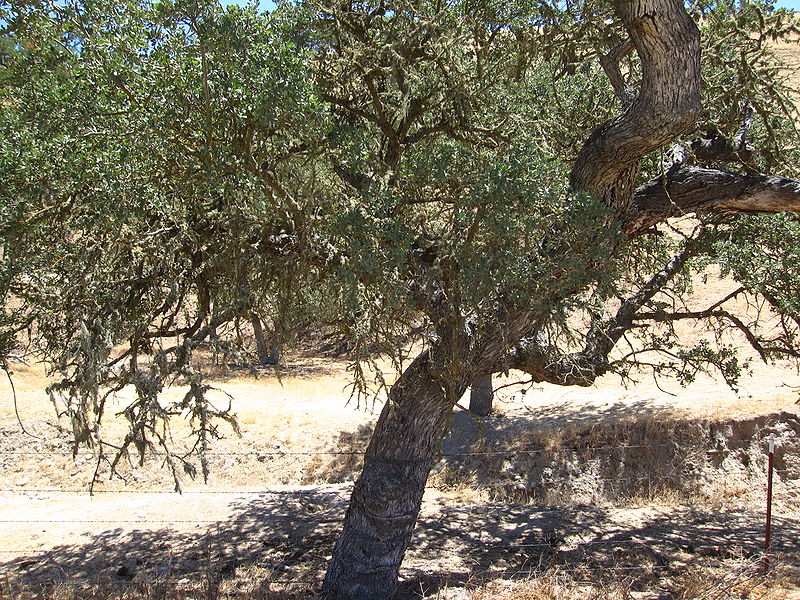
coast live oak
Coast Live Oak
madrone
Madrone
eucalyptus
Eucalyptus

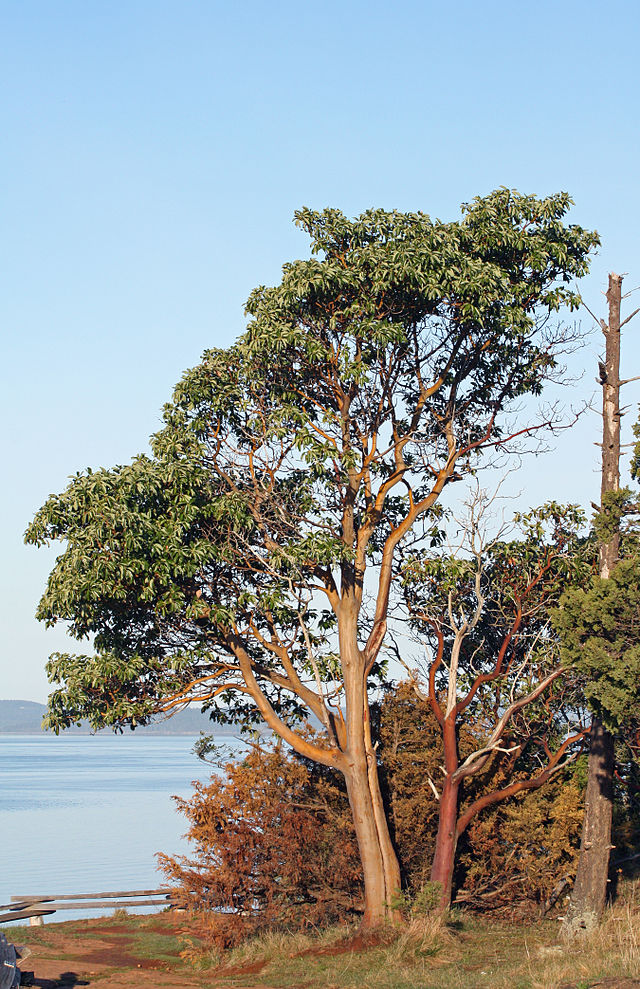
Tall palms dot the neighborhoods and commercial districts, delineating their unique architecture against a backdrop of coast live oak, coast Douglas fir, the enigmatic Pacific madrone, wax myrtle and bay laurel, and the ever-present clumps of towering invasive eucalyptus.

100_0025
Coast Redwoods

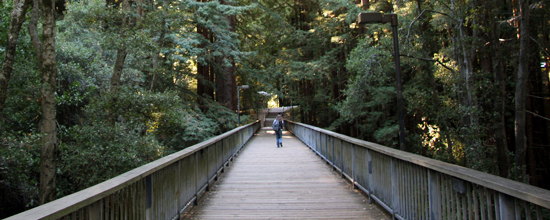
Here and there remain the native coast redwood standing as lone sentinels or in surviving groves on the steep hillsides. Everywhere the hand of man has interspersed the natural plantscape with domestic shrubbery and flowering plants. But much of the native vegetation also blossoms in vibrant color. Blooms in every shape and hue grace parking lots, highway medians, ditches, and landscaped surroundings of shopping centers, gas stations, and random shops.

chamise
Chamise

The University of California at Santa Cruz takes pride of place at its higher elevation overlooking the town and bay. The cleared sunny south slopes of campus host a more drought-resistant chaparral vegetation with manzanita, scrub oak, and chamise.

ucsc trees
One of many campus walkways over redwoods surging up from ravines.

Beyond the expanse of land claimed by state parks, ranchers, and the university are groves of redwoods deeply nestled in sharp ravines and stretching to the sky up steep slopes. From the road along UCSC’s east side, a panorama of the Monterey Bay opens its glorious expanse to the viewer, breathtaking in its fingernail-moon arc southward.ucsc view

I would be happy living here, I think. The community is joyously liberal and rebelliously semi-heathen in its irreverent embrace of life. Homeless people around the wharf and other public places might catch the tourist off guard, but there’s no implied threat if the request for money is denied. Seaside attractions, aside from the string of restaurants, coffee shops, and lodging, include an amusement park with Ferris wheel, fun house, and roller coaster. At a safer distance from the occasional tidal shift or storm surge are shops and stores favoring every conceivable interest. The sprawling imprint of human settlement stretches for miles.

hot tub
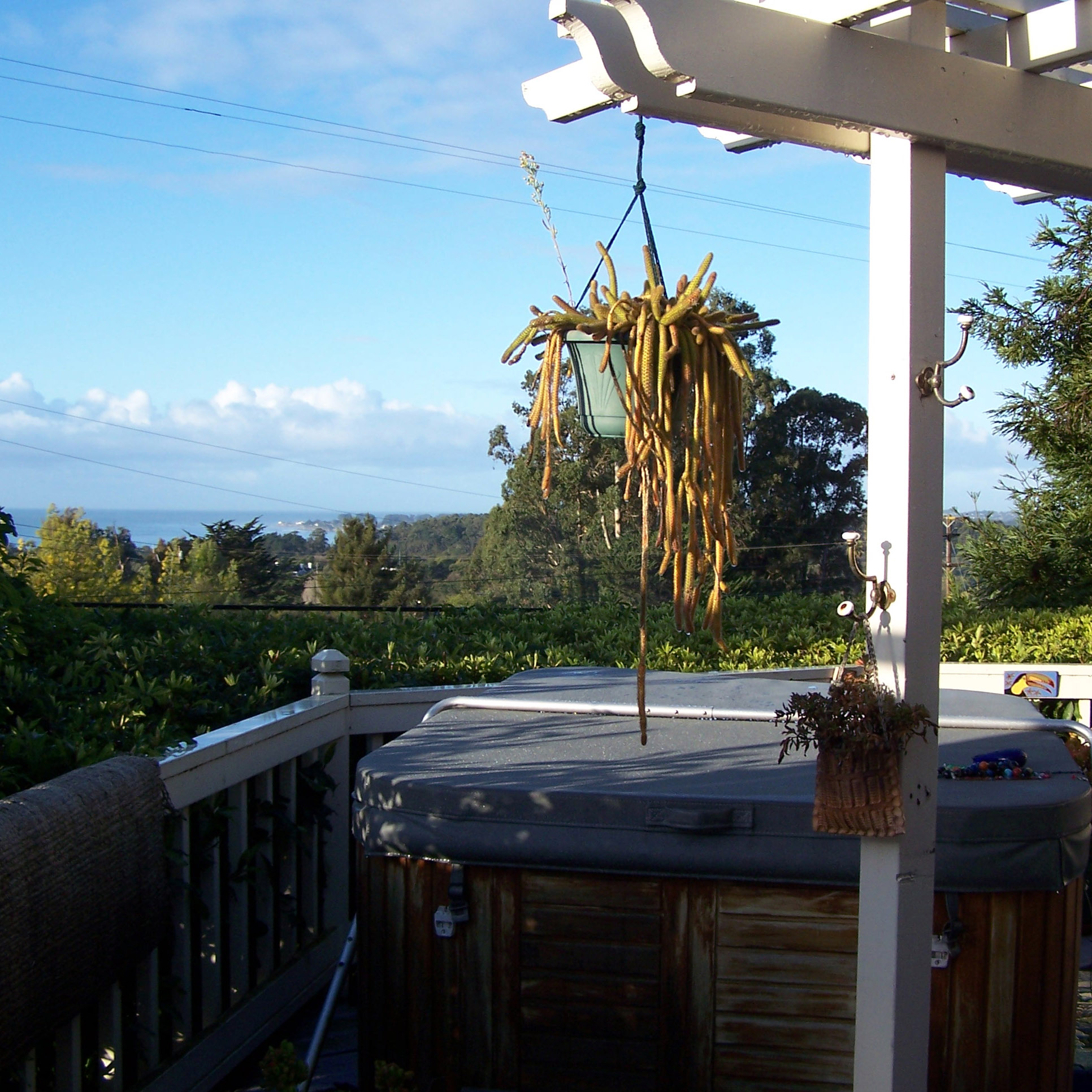
View seaward from Ginny’s deck

A climate that rarely climbs past eighty degrees in the daytime or drops below forty degrees in the coldest night tempts me. My friend Ginny’s front deck faces the distant water from her perch halfway up a mountainside. From her hot tub or deck chair, I contemplate the fog bank lying like a thick silver blanket along the shore. On clear evenings, I watch the sun send its red-orange flare across the distant waves. I watch the whitecaps break at Soquel Point.

me & ginny
Ginny 1972
me & ginny copy
Me 1972

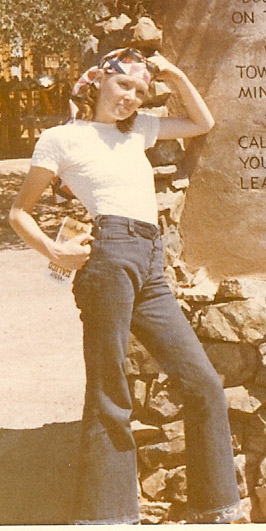
The miracle of close friendship never fails to amaze me. After forty-two years since we were cute young travelers to the Great American West, we’ve stayed friends. She left Northwest Arkansas for New York and then retired to California. Together maybe a total of two months in all that time, we start our conversation as if we’d never been apart. Her habits are familiar—the gurgle of her espresso machine starts the morning while I sit staring out at the foggy dawn. We giggle over her silly cat and talk about our plans for the day. I marvel at her ability to thrive in such a claustrophobic environment, but then, my God, she spent a couple of decades lawyering in New York City.

There are two key points that keep me from seriously entertaining a relocation plan. Money. And population density. People literally live on top of each other. Ginny’s home at nearly $2000 per month (plus utilities) is the top floor of a house divided into three living units. At the back fence mere feet away begins another house, perched higher up the hillside but close enough to hear conversation on their front porch.

Single family homes are palatial estates costing millions or small, side-by-side 1930s cottages with questionable structural integrity and still worth many thousands. If I cashed in my sixteen Boston Mountain acres with over 2000 square feet of home space and spring water, plus my two commercial rental properties in Fayetteville, I might end up with enough money to buy a house trailer in Santa Cruz. Okay, maybe a 1940s bungalow on a postage-stamp lot.

In spite of the occasional gut wrenching journey for the sheer pleasure of existing for a time in this other-worldly Shangri-la and the intense joy of sharing a few days with my kids and Ginny, I think I’ll stay put in the Ozarks.

A Journey West, Part 1

How could so much change in only six years? I had flown before, many times. Between 1968 and 2008, I lost count of the times I swallowed down excitement as the plane lifted me toward the sky. Airports were the threshold of adventure, the place where infinite possibilities scrolled down the flight departures screen.

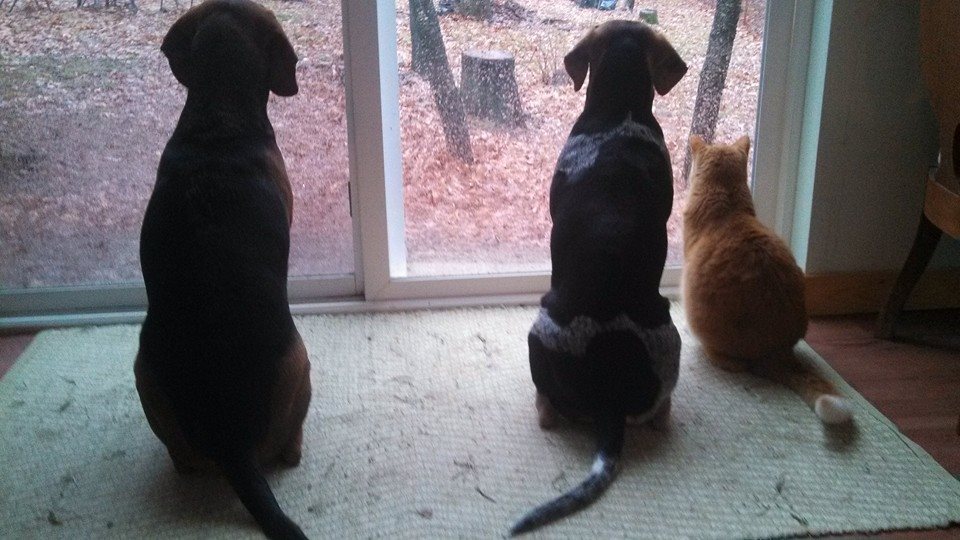
But in the intervening years since my last sojourn, I settled firmly at my desk. My adventures became mental journeys into the pages of my writing. I’m comfortable here with my dogs, the woods, my bed.DOGS

Okay, I’m getting old.

So when my friend Ginny extended her invitation, my immediate response was anxiety. Could I sleep well on an unfamiliar bed? What about air travel in these days of crazy passenger outbursts and terror threats? Did I really want to go?

My two older children live on the West Coast. I hadn’t seen Ginny for years, and her invitation made me contemplate not only spending time with her and seeing my kids, but also absorbing myself in that uniquely California environment of salty, kelp-flavored air and laid back attitudes. Of course I wanted to go, but couldn’t I please just instantly appear in Santa Cruz instead of going through the journey?

After weeks of increasing anxiety, I hardly slept the night before my departure. What if I didn’t arrive at the airport in time for my flight? What if I forgot to pack something important? What if there were problems with the flight? By the time I parked in the economy lot and hurried across the vast expanse of asphalt, my pulse hammered in my neck. Breathless, I scanned my ticket barcode to print out the boarding pass then mounted the escalator.

Swallowing over a dry throat, I handed the attendant my ticket and identification, moved forward to the screening line, and took refuge in the actions of those ahead of me. At least I could follow their lead. Carry-on luggage on the conveyor belt. Backpack with my purse inside. Take off shoes. No, attendant said. I didn’t have to take off my shoes, courtesy of the first attendant’s notation on my boarding pass which, I assume, had to do with my age. What are the characteristics one must exhibit at the Northwest Arkansas airport to qualify for remaining shod through security? That and another hundred questions and worries flooded my mind as I accompanied my baggage along the conveyor.

“What liquids…(blah)?” The uniformed guard’s words rolled over me as I tried to remember what I had packed. At the last minute, I had abandoned all hope of forcing my thick crème rinse into the tiny travel container. It globbed up at the rim and cascaded down the outside of the container. So I had stuck the entire bottle in my case. Hadn’t I read somewhere that larger containers were okay?

At this point, my voice had become husky and I shook. It wasn’t like they were going to take me outside and shoot me for packing an oversized container of crème rinse. But it was expensive. Other travelers piled up behind me while I tried to make an intelligent decision. The options for keeping it meant paying $25 to check my bag or walking back across the north forty to my car. No, I’d have to give it up. I watched my nearly full bottle of organic hair product land in their disposal bin.

That was only the first of a day of indignities. Maybe growing older and even more rigidly set in my ways preordained that travel by public conveyance would unfold as a series of rude shocks. Jostling in line to board. Wading to the next to last row of seats. Cramming myself into a tiny seat by a window—which I would have chosen if I had been willing to pay the extra money—but facing out over the wing, which I would not have chosen. Enduring the mind-boggling cacophony of human voices shouting over the engine noise as we made the short trip to Dallas-Fort Worth.

By the time we arrived at DFW, my back had spasmed in my effort not to rub against the passenger in the adjacent seat. Clearly comfortable with air travel and close association with whomever, she spent the trip jawing with the man across the aisle, her conversation frequently punctuated with loud laughter. That her leg touched mine or her elbow periodically brushed my arm seemed never to appear on her personal radar.

100_0575I live in near total isolation on an Ozark hilltop. I see more deer than people. Coyotes routinely howl at my back fence before disappearing back into the oak and hickory forest. Driving into town for groceries and random errands usually results in a hasty revision of my ambitious to-do list so that my time amid busy streets and crowded store aisles is reduced to only the most urgent items. I return home annoyed and clogged with Other People’s Energy.

Now, barely started on my journey, my back aching with don’t-touch-me tension, I hurry along the wide corridors of DFW’s Terminal C to find the trolley that will whisk me to Terminal A. I dodge businessmen and women wheeling fine leather cases, families straggling with children, retirees looking faintly lost and grumpy. After a fast jerky trolley ride clinging to a grab rail, I descend into Terminal A. Even greater throngs greet me there.

I’m hungry and wander along the crowded corridor. McDonalds swarms with customers, deterrent enough even if I could choke down the food. Starbucks isn’t lunch. I don’t want seafood. Taking a tentative space in the line at TGI Friday’s, I’m soon seated facing out over the hive activity in the corridors and presented a menu. After a heart-stopping moment of sticker shock, I order a cup of broccoli-cheddar soup for $7. It comes with four saltines.

Okay. I can do this. Refreshed from my cheesy lunch, I soon board the jet bound for San Jose. Blessedly, I am not seated in the back or over a wing. Cursedly, I am the first aisle seat in the three-seat side of economy class, meaning the aisle jogs right there as passengers move through from first class. Each passage jostles or brushes me in some way. Plenty of leg room, but since there are no seats in front of me, the tray table folds up from the chair arm. Which would be fine in a perfect world. However, I admit to a less than trim waistline and so the table fits snugly across my midsection. Embarrassing and uncomfortable. I drag out my book and try to concentrate on the lovely biography of Doc Holliday.

An hour into this three and a half hour flight, my back is killing me. The friendly lady on my right enjoys a gin and tonic while reading her Kindle. She’s relaxed and her arm touches mine. Her knee touches mine. My need not to touch someone else is so ingrained that I can’t relax even when I tell myself to get over it. Even when she’s asleep.

With perhaps an hour left in the flight, I lurch to the bathroom at the back of the cabin. Here, for a brief blissful moment, I am alone. But these hours of being crammed into a metal box with a hundred other people is taking its toll. My back muscles have seized. My head aches. My nose has become stuffy with breathing recycled air. The thoughts and emotions of a hundred other human beings have invaded my consciousness. Let me out!

Finally the jet screams down the runway and slams to a halt at Gate 18 of SJC. The blessing aspect of my seating reasserts itself as I follow first class passengers on an early disembarkation. I hurry down the terminal’s long passageways to emerge blinking into the bright San Jose afternoon. The air smells of ocean. Moments later, my daughter calls and then appears to pick me up in a borrowed car.

Strange how children always look the same and yet, at least initially after a long absence, appear as strangers. We plunge into happy conversation as if it was yesterday instead of 28 months since our last meeting. I luxuriate in the absence of strangers and the comfort of a well-padded car seat.

The drive over the mountains along Highway 17 is curvy and steep, plagued with heavy traffic. SoonDEST she turns onto a side route that leads into Soquel over the old San Jose Road. Her smile and the sound of her voice are beautiful.

The rich odor of pine sap and eucalyptus starts to clear my clogged nose. The narrow lane winds along sharp inclines cut into the face of newly minted earth—slabs of granite bedrock under hulking chunks of sandstone pushed up from the ocean floor as recently as the last three million years. Even after two years of drought, native vegetation maintains a stubborn gray-green grip on the land, all subordinated to the towering redwoods.

We talk about her flight from Oregon, her plans. The eight days we’ll have together. This is more like it. I have survived. I am here.

Love

farm house door 0001Slowly and over years, he broke her down. Where there had been joy and affection and spontaneity, her emotions shrank until now she could not cry. Or sing.

His arms held her, his mouth took her, and with his body he brought her to the pinnacle of love. What she had never known, she knew with him. And she gave in return, every moment of their pleasure a stream of heart-joy flowing between them. There were flowers, jewels, children, brilliant afternoons bathed in sunlight.

But the mornings, only hours after being consumed in their most intimate moments, the mornings found him as another man. This man did not bring flowers or smile. He woke raging. No hugs, no warm exchange of touch or conversation. Any sound, any dish out of place, and his fury exploded in shouts, slams, curses.

The excuses she made for him could fill a book. It was a dry drunk, his need for alcohol stronger than his ability to live without it. Therapy added more excuses, that he’d repressed a traumatic childhood, that he had a blood sugar problem, that he couldn’t handle the vulnerability that came with strong emotion.

He never made excuses for himself. To him, every angry moment had legitimate reason. Any attempt to force realization or ownership produced more anger.

It took on its own cycle. The buildup with friendly conversation, daily routines, desire slowly building to consummation. The eruption—door ripped off hinges, dog kicked, screaming as veins protruded in his neck. The alienation–her withdrawal, sheltering in herself, with her children, with a routine that slowly became more of the norm that any courtship, than any love.

“One of these days,” she told him, “it will all be gone.”

And after twenty years of trying, believing, hoping, when it was all gone, she asked him to leave. And he left.

And when another twenty years had passed, she still loved him. Still didn’t understand the anger, still couldn’t sing.

Winter Night

adding wood to boiler 0001By two a.m. the fire in the woodstove had died down enough that the cold took over. Under heavy blankets and comforter, I could feel the temperature dropping in the house. The electric radiator in the bedroom is no match for six degrees, even with window curtains pulled tight.

A quick trip to the bathroom brought me shivering back to the bed. With the covers pulled up to my nose, I imagined myself not in this last century of modern comforts but rather in the earlier vast millennia of human existence. The cave, skin-covered hut or even the wooden long house would have been far colder, warmed only by open hearth fires and our breath. Heavy furs of mammoth or bear lay under and over us as we curled our knees to our chest and ducked our cold ears into the hidden warmth.

Fire tenders dragged long dead limbs further into the blaze and tugged their fur cloaks around their shoulders, watching as sparks flew into the air and ensuring the fire stayed in its place. Cabbages, apples, onions, and turnips rested in straw lined pits, safe from the cold, and around the perimeter of the shelter, chunks of meat sat semi-frozen, waiting to be brought to the flat rocks at the fire’s edge to drip fat and send up tantalizing aroma. Even then, as food cooked, as men dragged in more wood from the pile near the shelter’s door, we kept our furs tucked over us, waiting for spring.

In the long hours of midwinter night, sleep comes and goes. Fantastical dreams shift us from our known world, so that we fly into the future or past. I relived the death of a loved one and the loss resonated through me, and then magic knowledge enabled me to speed backwards in time with him until I found a new path, a year when a different choice meant longer life, and even before that, an even better restart. Our lives moved forward from there and when we came to the fatal day, he lived.

What was the magic? In the dream, I told myself I would remember. But I don’t. I remember that it was simple, that if I had let myself know what I really know, it would have been obvious. But it’s not.

Other visions of long sleep arise and fade, memories recast in distorted frames, possible futures emblazoned on unfamiliar horizons. The mysteries of embodiment tease around the edges, other forms, foreign memories. Deep in the warm thicket of my bed, I am free to fly away and see it all.

My feet find warm spots at the dog’s side, where the cat lies curled. A screech owl screams its cry at the wood’s edge. At the three a.m. passing of the train, its distant warning echoes up from the valley and sets the coyotes singing. At four-thirty, I’m awake again, fresh from another restive dream, and wondering if I should brave the cold to start new fire.

I wait, snuggled in all my wealth of warmth, finding one comfortable position, then another, until the night starts to lighten and the dogs go outside. Now the quick wood catches  in its cove of dried twigs and crumpled newspaper, and the cast iron around it warms. I make tea, open the curtains to stare out at the pale blue and pink world of dawn. Winter sets its own rhythm, and I am content to follow.

The Box of Christmas Past

heart ornament 0006Twenty years ago, I started putting things in a box, a big box that came to hold Christmas photos, greeting cards, graduation announcements, newspaper clippings. Everything that marked our days and years, things that in the previous twenty years had been carefully placed into a family album or one of the albums dedicated to each child, or special scrapbooks of family trips complete with dried flowers, matchbooks from restaurants, bits of seashells. Sooner or later, I consoled myself as the box grew fuller, I will deal with all that.

My marriage had ended, leaving me with three children aged 13, 15, and 17. I was self-employed as a piano tuner, partnered with my aging dad and an employee. An old commercial rental property provided extra income but its own litany of problems to solve. I drove kids to school from a rural home, split firewood, fed and butchered chickens, planned menus and cooked meals, and drove to an even further city for the youngest’s dance classes. I had a newspaper column to write in support of my environmental advocacy. There were surgeries, termites, and kidnapped dogs.

The previous year, my oldest had dropped out of her junior year in high school and lived on the streets before returning home a few months later to start her first year of college. Two years later, the second child quit his senior year in disgust–he only needed two credits to graduate, but they wouldn’t allow him to finish those credits in the fall term. He went off in a VW van to live with another couple in the remote countryside. The youngest alternated between rage and over-achieving.

Grief over the loss of a dream to live out life with my soul partner slowly subsided to the back of my mind. I lived large. I hosted dinner parties, hit the occasional nightclub, took a younger lover. Christmas trees in our living room were twelve feet tall and encrusted with ornaments and garlands. Gaily wrapped gifts heaped thick on the floor. The children grew older, in and out of college and romances, to New Mexico, the Caribbean, Florida, one of them in New York City when 9/11 happened. Time flew by.
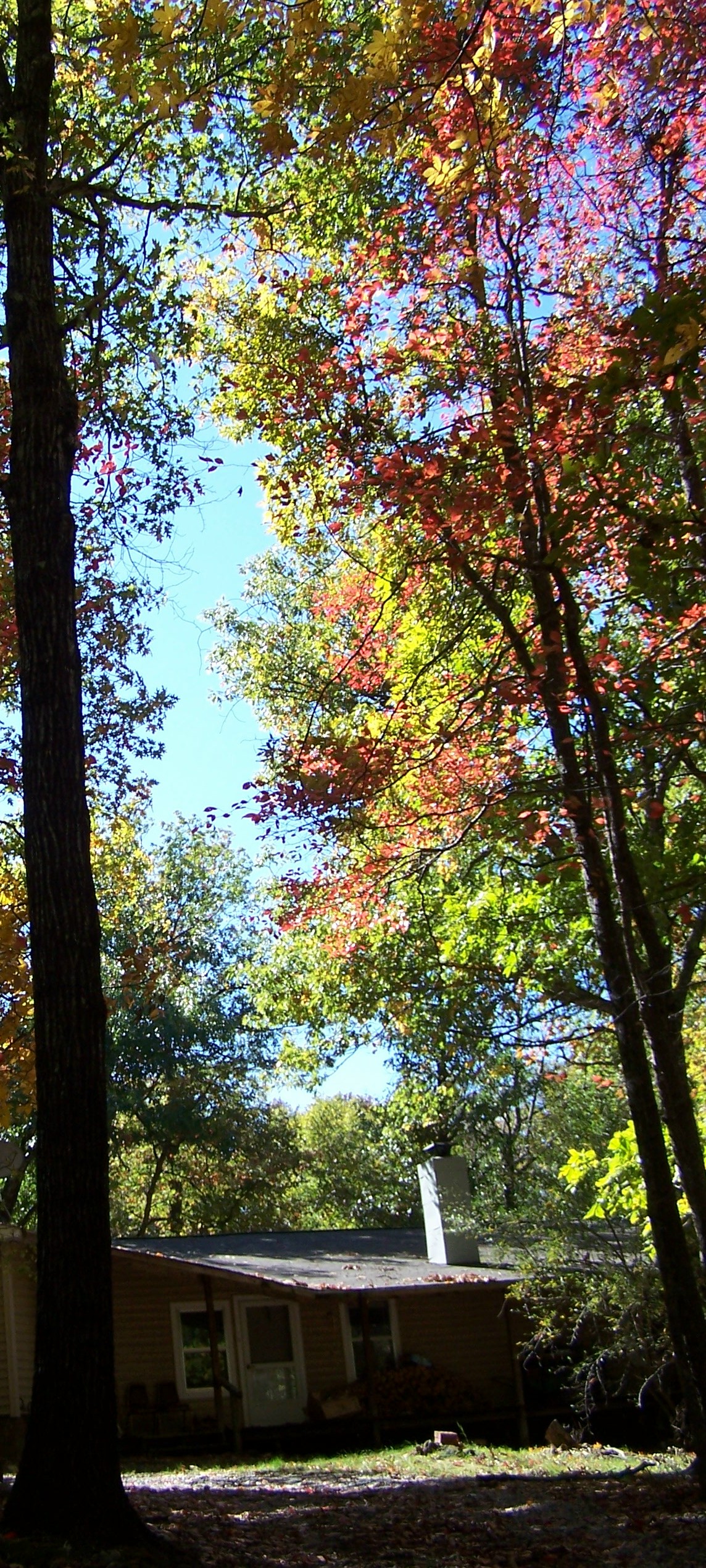
In 2000, I spearheaded a statewide effort to allow medical use of marijuana. In a southern state like Arkansas, the “m” word was not spoken in polite company. Public appearances of any kind stressed me to the max, but I forced myself. I wanted to set an example for my children, how we must work for the changes that are needed. Trips to Washington D.C. Up and down the road to locations around the state. More years, more stuff in the box.

A few years later, my dad died and the next year, I retired from piano work. Thirty years at concert halls, churches, homes had taken their toll on my hearing. And my heart wasn’t in it. My activist work tapered off, taken up by younger, less-exhausted hands. Children were on their own and I lived alone with cats, dogs, watercolors, writing.

Rental property demanded action if it was to adequately support my retirement, and so a three-year investment of time and energy consumed me in a world of architects and engineers, construction, zoning hearings, easements. Carpenters, electricians, plumbers. Bankers. Cost overruns. Pleasure in brick and mortar accomplishment.

More surgery, termites, and dogs. (OK, you may wonder why the termites. But my house sits on a hill overlooking our spring-fed ponds, and the operative word is “spring.” Year round, this natural source of sweet, pure water supplies us even in drought. So you can understand my hesitancy to pump poison into the ground that sooner or later will make its way downhill.)

Construction projects finally ended. And I opened a café. For three years I chased the joy of preparing delicious food and exotic tea for an appreciative clientele. Christmas trees and scented candles ornamented the café. Decorated cookies and figgy pudding appeared on the menu. I had dreamed of the café for so many years. Proud I made it come true, but it was grueling. Employees, payroll, never enough profit to justify a wage for me. Financial suicide.

More stuff in the box.

Two years now since the café closed its doors, and I’ve been firmly lodged on this hill ever since. Writing. This year, no Christmas tree. A strand of colored lights drapes over my dresser top and office doorway. No gifts, I’m too broke. Rental property and family concerns are the only outside diversion, plenty for an increasingly crotchety woman. It will be years before I can break out of the debt incurred from real estate developments and the dream café project. I squeak by strangely content to be the impoverished writer. It’s what I always wanted to do.

But I’m so rich. I don’t need any more Christmas trees, trips to exotic places, dinner parties. Today was the day to stagger down the hallway with the big box full of the last twenty years, to sort through the mementos of all those times, a holiday gift to myself. A bit of detective work is required, examining haircuts, expressions, clothing, a calendar in the background to figure out what year…1998? 2002? How did we get to the eve of 2014?

An empty box will mark my progress as the contents slowly form stacks that swamp the dining room table. A stack per year. So many years. Each item, each photograph, will take its place on the scrapbook page. Each page will lead to the next, the next Christmas with its tree, gifts, laughter. The next year with its particular challenges, losses, rewards.

Some of the photos will end up on Facebook (oh brave new world) to be shared with my children, now in California, Oregon, the youngest at home in her own part of the house to pursue another master’s degree, their lives racing past. In each item I lift from the box, the long gone years will come alive, sights, smells, sounds of voices, music, feasts. All of it to be treasured, worthy of the effort to preserve it, think on it, remember.

In the spirit of the season, of cold, dark days and inevitable renewal, in memory of those now gone, I give thanks to every loved one, every moment, to every participant, acquaintance, to the wind in these trees. I won’t forget Janis Joplin, who exhorted me with inspired words so many years ago: Get it while you can, honey. Get it while you can.

Thank you, Janis. Thank you all. I got enough to last me if I never do another thing.