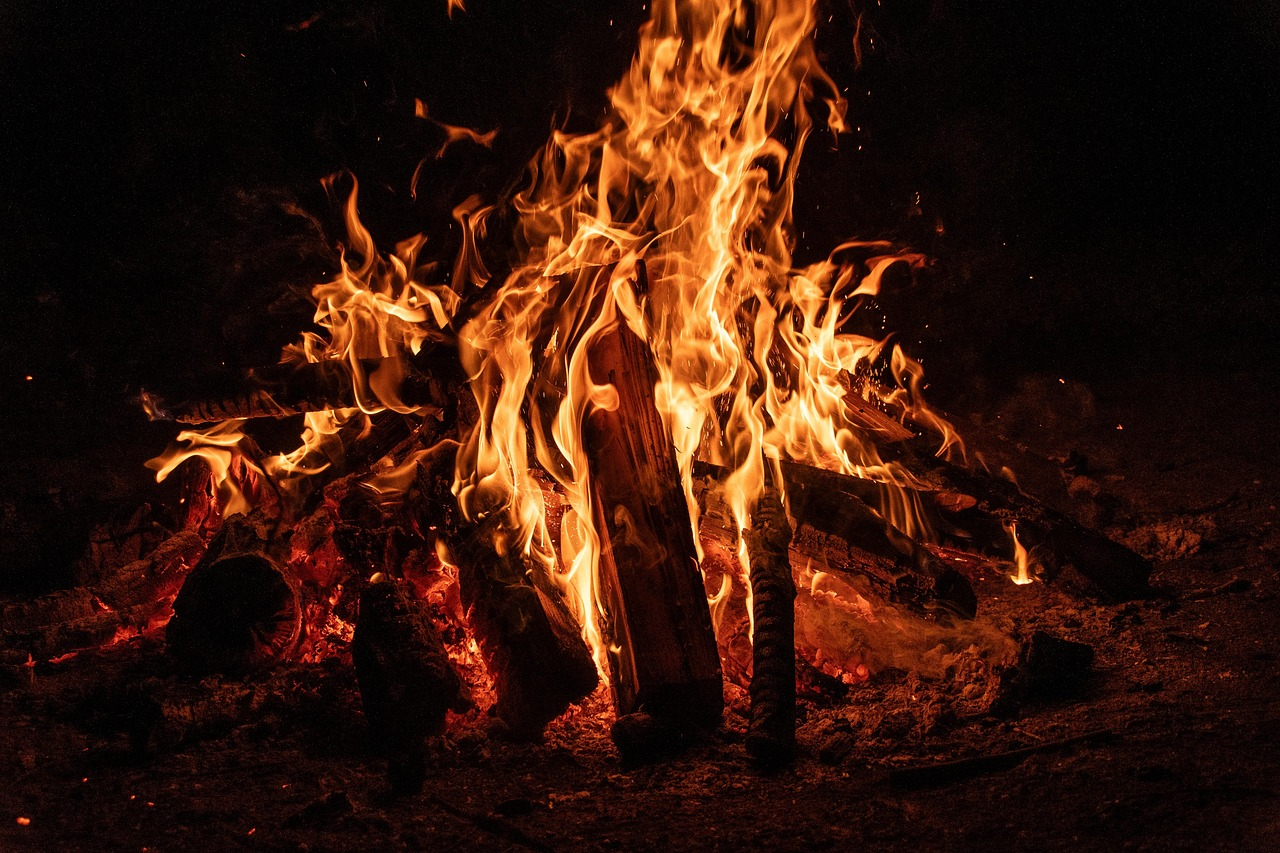
Woodstoves!

Bought a new wood stove lately? Who knew my longtime desire to buy one would bring me to the brink of despair. Let me tell you, my friend. This is not a step you should take without proper warning.

The old stove, fortunately still in my possession in case I give up this fight, was a Big Box model I inherited when my new husband and I moved into an old cabin. That was in 1974. Local lore claimed an old man named “Ringo” died in that cabin, tired of life, sick, and unable to gather wood. Reportedly, he froze to death.

Fire in the Big Box was simple. Two logs with space enough between them for some crumpled newspaper, a handful of twigs and other flammable bits gathered from the surrounding woods, and then another log across the top, positioned so that when the kindling burned up, the third member would not collapse into the middle but rather perch over the coals to burn freely. Air intake open and the damper open, a match set it off. It was safe to walk away to return a half hour later to shut the air intake and let that baby burn. Whenever fresh wood was needed, simply open the damper to let the smoke escape up the chimney, open the stove door to add wood as needed, and there you go! No smoke pouring into the room.

The problem with the Big Box was that by midnight, fast asleep, one started to sense the cold creeping in. Even the most magnificent fat cut of oak or hickory burned up in only 3-4 hours. That’s because any seal that might once have lined the top edges and front door was long gone and so even with all moveable parts closed, air still moved through the stove. Such things as seals or firebrick probably never existed as part of the stove—at least, in my fifty years with it, no such trace remains. So as my knees got worse with advancing age, trekking up and down the five steps to the living room where the Big Box held pride of place became a more troublesome issue especially at two a.m. when I slept past the life of the fire and only a few coals remained.

I lusted after those fabled wood stoves like Jøtul which held fire overnight. Not only would that solve my overnight heat problem, but it also offered a glass door so I would watch the flames leap and glow. Watching fire can lead to trance-like relaxation effects. These effects have been backed by research that shows that watching an open flame can decrease blood pressure. The longer you sit by the fire, the more relaxed you’ll feel. So when I finally had sufficient funds, I visited the local wood stove store and considered my options.

Admittedly, I failed utterly in the research-before-you-buy department. I’m here to share what I’ve learned.

News flash: Woodstoves now must meet new EPA standards, passed sometime in the 1990s, that specify several aspects of the device. Not only did this drive up the prices to absurd levels, but also led to the admonition by my two-man installation team who warned me that the stove would probably smoke. The Jøtul stoves meet EPA requirements with the use of a catalytic device that serves as a kind of filter, but as the EPA guidelines admit, the ‘catalyst’ can burn out within a couple of years.

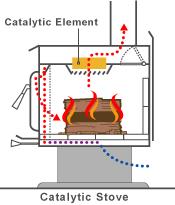
  • In catalytic combustion, the smoky exhaust is passed through a coated ceramic honeycomb inside the stove where the smoke gases and particles ignite and burn. Catalytic stoves are capable of producing a long, even heat output.
  • All catalytic stoves have a lever-operated catalyst bypass damper which is opened for starting and reloading. The catalytic honeycomb degrades over time and must be replaced, but its durability is largely in the hands of the stove user. The catalyst can last more than six seasons if the stove is used properly; but if the stove is over-fired, inappropriate fuel (like garbage and treated wood) is burned, and if regular cleaning and maintenance are not done, the catalyst may break down in as little as 2 years. 

Not that I would ever burn garbage or treated wood, but spending $300 every couple of years wasn’t on my list of things to do. And as I approach 80 years of age, I have little patience with machines that require “regular cleaning and maintenance.” So for nearly a month I lost sleep worrying about using the stove. It was still summer, so I had time to fret. Finally, after speaking with the store manager, they agreed to allow me to trade my unused Jøtul for a non-catalyst stove manufactured by Pacific Energy.

Beware! The store staff failed utterly to inform me that in many ways, the non-catalyst stove created more problems than the catalyst version.

But I didn’t know that yet. My decision narrowed to the model that allowed for 18” firewood, of which I already had over four ricks of seasoned wood. This model is Pacific Energy’s Alderlea T6. It’s a handsome stove, although several aspects of its construction are big problems.

One of the Alderlea’s many shortcomings is that while the manual states that maximum wood length is 20 inches, the only way to fit a log that size into the stove is on a diagonal from front corner to back corner. Even the owner’s manual phrase “Ideal Wood Length” of 16 to 18 inches placed “endwise” [does this mean end to end sideways or end to end from door to back of stove? No diagram.] leaves zero clearance between the burning wood and the door/firebrick, which means that the glass door quickly becomes coated with soot. So much for watching the fire. The fire box is exactly 18 inches square.

But I’m getting ahead of myself.

After multiple readings of the product manual, I began to break in the stove setting fires meant to burn off the ‘paint’ fumes with house windows open. Right away I noticed what is now a major problem: there is no way to manually vent the stove. Once wood starts burning, if I need to open the stove door to add more wood, or reposition wood, the only option is to open the door and do the task as fast as possible while smoke pours into the room.

Apparently Pacific Energy’s engineers believe the price of making the outside air ‘cleaner’ is to pollute my inside air. The manual fails utterly to address this issue. The instructions for ‘Lighting a Fire’ are:

  1. Adjust air control to “High” position (all the way to the left) and open door.
  2. Place crumpled newspaper in the center of the heater and crisscross with several pieces of dry kindling. Add a few small pieces of dry wood on top.
  3. Ignite the paper and leave the door ajar approximately ½” until the wood kindling is fully engulfed in flame.
  4. After the kindling is fully engulfed, [open the door while smoke pours into the room] add a few small logs. Close door.
  5. Begin normal operation after a good coal base exists and wood has charred. [In other words, spend a half hour watching the stove or make repeated trips to check on it.]

Further instructions follow for Normal Operation:

  1. Set air control to a desired setting. If smoke pours down across the glass, this indicates you have shut the control down too soon or you are using too low a setting. [Wrong. Smoke pours down across the glass with the air control wide open, max setting.]
  2. For extended or overnight burns, unsplit logs are preferred. Remember to char the wood completely on maximum setting before adjusting air control for overnight burn. [“Char” is defined as partially burn wood so that the surface is black.]
  3. Use wood of different shape, diameter and length (up to 18”). Load your wood endwise and try to place the logs so that the air can flow between them [while smoke pours into the room].
  4. Do not load fuel to a height or in such a manner that would be hazardous when opening the door [while smoke pours into the room].

The instructions continue with information about restarting after an overnight or extended burn:

  1. Open door and rake hot embers toward the front of the heater. Add a couple of dry, split logs on top of the embers [This assumes that you need to load wood ONLY when the previous load has burned to embers. What if you want to go to bed and the current load has only burned 75%? Even 90% burned wood smokes. You have to load while smoke pours into the room], close door.
  2. Adjust air control to high and in just a few minutes, logs should begin burning. [If they don’t start burning, open door to add kindling or reposition wood while smoke pours into the room.]
  3. After wood has charred, reset air control to desired setting.
  4. To achieve maximum firing rate, set control to high “H”. Do not use this setting other than for starting or preheating fresh fuel loads.

Nowhere in the manual does one find a drawing showing the “H” and “L” positions. The lever which moves left to right for this function goes a half inch past the H and L lettering, leaving one to wonder if maximum left or maximum right are the correct positions, or if the lever must be positioned exactly under the H or L.

More instructions follow, including how to use the ash clean out system which proposes one use the tiny opening in the bottom of the stove to dump ash into the ash pan that sits underneath the firebox. One is cautioned not to leave the ash dump door open afterwards. One is not shown the location of the ash dump handle, just informed that the handle is located under the ash lip [also not identified in any drawing] on the left hand side. This is a total waste of owner manual space and engineering salary, and a stupid idea to start with. Just shovel it out, for god’s sake.

An entire page of the manual (27 pages in all) is devoted to the door glass. The #1 instruction regards the potential [unavoidable] darkening of the glass:

  1. If glass becomes darkened through slow burning or poor wood, it can readily be cleaned with fireplace glass cleaner when stove is cold. Never scrape with an object that might scratch the glass. The type and amount of deposit on the glass is a good indication of the flue pipe and chimney buildup. A light brown dusty deposit in that is easily wiped off usually indicates good combustion and dry, well-seasoned wood and therefore relatively clean pipes and chimney. On the other hand, a black greasy deposit that is difficult to remove is a result of wet and green wood and too slow burning rate.
    1. WRONG! My wood is well seasoned hardwood (12-18 months) and I don’t adjust the control lever to “L” until the fire is fully engaged, but every morning I must clean the glass, especially the lower side corners where the ‘black greasy deposit’ requires a single-edge razor blade to remove in addition to several applications of glass cleaner. Is this a malfunction of the stove? Queries to the manufacturer are met with advice to contact the dealer! Does this mean that two months into using the stove, I need to have my chimney cleaned?!

Further warnings on that page caution that “excessive ash buildup” should be kept clear of the front of the firebox because it will block air flow. Here’s the problem: Where exactly is this mysterious air intake? It is not shown on any drawing. There are two stair-stepped lips along the front where air might enter, so “excessive” ash remains undefined. Consequently, I keep the fronts of both steps clear. Once again, would a diagram be so hard?

Item #8 on this page is especially informative:

  • Be aware that the hotter the fire, the less creosote is deposited. Weekly cleaning may be necessary in mild weather, even though monthly cleaning is usually enough in the coldest months when burning rates are higher. When wood is burned slowly, it produces tar and other organic vapours, which combine with expelled…

And there the text ends. But apparently the conclusion is that closing the air intake completely is not recommended even though an overnight burn would seem to call for minimal air flow. If the best fire method for this stove is a ‘hot burn’ in order the keep the glass clear, how is that compatible with overnight heat?

Old Faithful, Big Box

Not that it actually matters. There is an ugly creosote buildup on the glass in both lower corners even with ‘hot’ fires, with any level of air control, and if I want to watch the fire through the glass, I have to ignore the creosote or clean it daily, which doesn’t last until the end of the day.

The next page of the manual is about maintenance. Monthly, I’m supposed to check:

  • Brick rail tabs and brick rails
  • Air riser tube in the back of the firebox
  • Back slide of airwash chamber
  • Baffle locking pin
  • Boost tube cover

Not only are there NO DRAWINGS showing the location of these various important maintenance parts, my knees don’t work well enough to crawl around peering inside or under the stove. This would also require that no fire exist in the stove at the time of inspection, meaning my house would have NO HEAT except for little electric heaters in the bathrooms. The last few days have bottomed at sub-zero temps, at no time without fire. That would be a summer job, so I can only hope that the brick rail tabs and airwash chamber are OK for fire throughout the winter.

Genius.

Further, the maintenance instructions continue with “Cleaning the Chimney System”:

  • Top baffle board/blanket
  • Baffle
  • Top heat shield and mountain bolt
  • Baffle gasket
  • Brick rails
  • Manifold

Again, no drawings, diagrams, or other user aid.

I can only hope that I can keep my fires going until warm weather without having something fall apart and/or a chimney fire. Not exactly the peace of mind I had hoped for.

I’m refraining, with difficulty, from speaking of the overall worth of the owner’s manual. After all, I’m a writer and wordsmith dedicated to communicating clearly–not a stove engineer. Somebody apparently did their best with this booklet, sadly. The lack of drawings illustrating the key components of the stove is enough of a failure that the countless other shortcoming hardly bear mention. Pages 11 through 20 detail installation methods. Page 25 is blank. Hint to manual editor: PLENTY OF ROOM FOR DRAWINGS.

There is, however, a full page breakout drawing of the stove PARTS, as if the manufacturer was more interested in selling parts than in adequately explaining the stove’s functions.

At the moment, I’m not sorry I bought it. It does a better job than the old Big Box in keeping heat all night–with luck and holding my mouth right, coals are left in the morning ready for fresh wood. I do have to live with smoke pouring into the room while I try to load in wood and kindling, at which point I’m reminded that I could have stuck with the Jøtul. At least its Norwegian inventors/manufacturers figured out how to create a more environmentally-friendly wood stove without any need to allow smoke to pour into the room.

Note: Look for future updates on this saga once I try to find a person who can service this stove, the possible need for parts replacements, and the status of creosote buildup in the chimney.

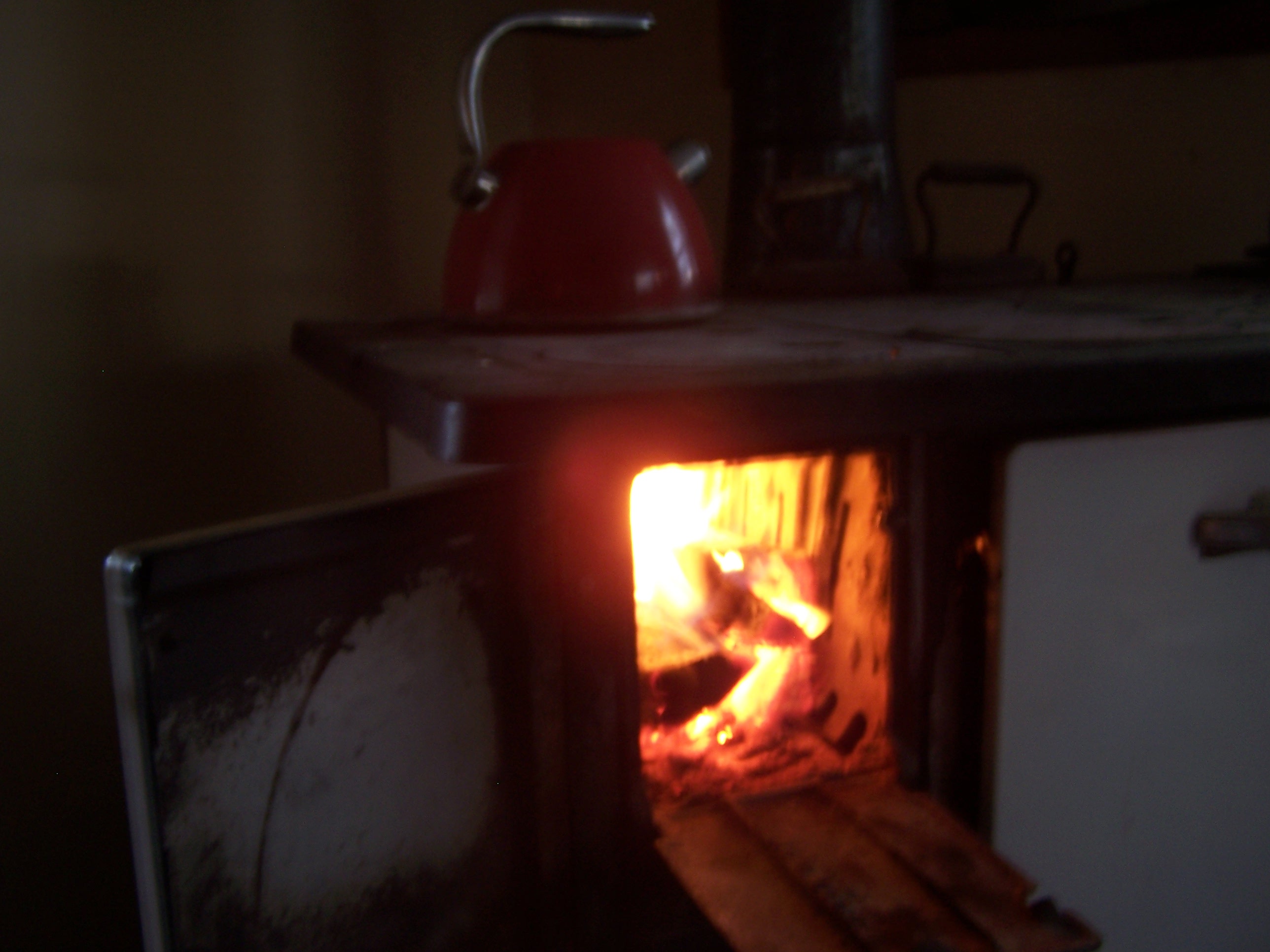
Another note: I failed to mention that I still have the Big Box in use at the back of the house and also have this jewel of an old wood cookstove in my dining room complete with hot water reservoir.

NEW RELEASE!

Today, mail seems almost quaint, often referred to as “snail mail” as we become more dependent on the easy flow of electronic email, texts, and messages. But in earlier times, as recently as 1900, communication beyond the in-person conversation or perhaps a written message sent across town by courier, mail was the only means of contact. The faithful transit of mail from place to place became an almost sacred duty for the people who established post offices.

Rural delivery to homes was not made available by the U.S. Postal Service until 1890. Even then, in the rugged landscape of parts of Washington County, mail delivery came by horse or mule to remote post offices into the early years of the 20th century. These post offices were gathering places, usually housed in small stores where a person might pick up mail and trade eggs for a fresh batch of crackers while catching up on news. As such, post offices served more than mail, also forging interpersonal connections and a sense of community.

A total of 104 post offices were established in Washington County, of which only fifteen survive today. The other 85 came and then vanished along with the community they served. The men (and a few women) who took the responsibility to provide mail service often became leaders in the county, holding the public trust, letter by letter, at their station at a dusty crossroads.

Nab your copy today! https://www.amazon.com/dp/B0DJJDD5M4

Another NEW Release: Winslow–Before & After

Most folks who live around these parts know the story of Winslow, Arkansas, a tiny village perched in the highest elevations of the Boston Mountains. They know about the railroad tunnel built back in 1881 that blasted through 1,700 feet of stubborn rock and shale. They know about the all-female city council, the so-called Petticoat Government, back in 1925. And most of them know about the pre-air conditioning turn-of-the-century influx of wealthy summer visitors eager to live in the cooler air found at that elevation.

But what most folks don’t know is what came before the railroad. And what came after the boom years ended in the 1930s. Winslow today is, in many ways, just as interesting and vital as it was in those boom years between 1881 and 1930. Its population remains steady at around 365 people, not counting the hundreds residing in the rugged hills and hollers surrounding the place, both groups peppered with eccentrics, artists, and others typical of the Arkansas Ozarks reputation. Sit a spell and visit.

Great companion read to the new WINFEST book! Check it out at Amazon!

Sammie

In the wake of Sammie’s death, aside from the grief, I am swamped with guilty feelings, that I should have known something was wrong, should have noticed his decline sooner. I was responsible, and he died on my watch.

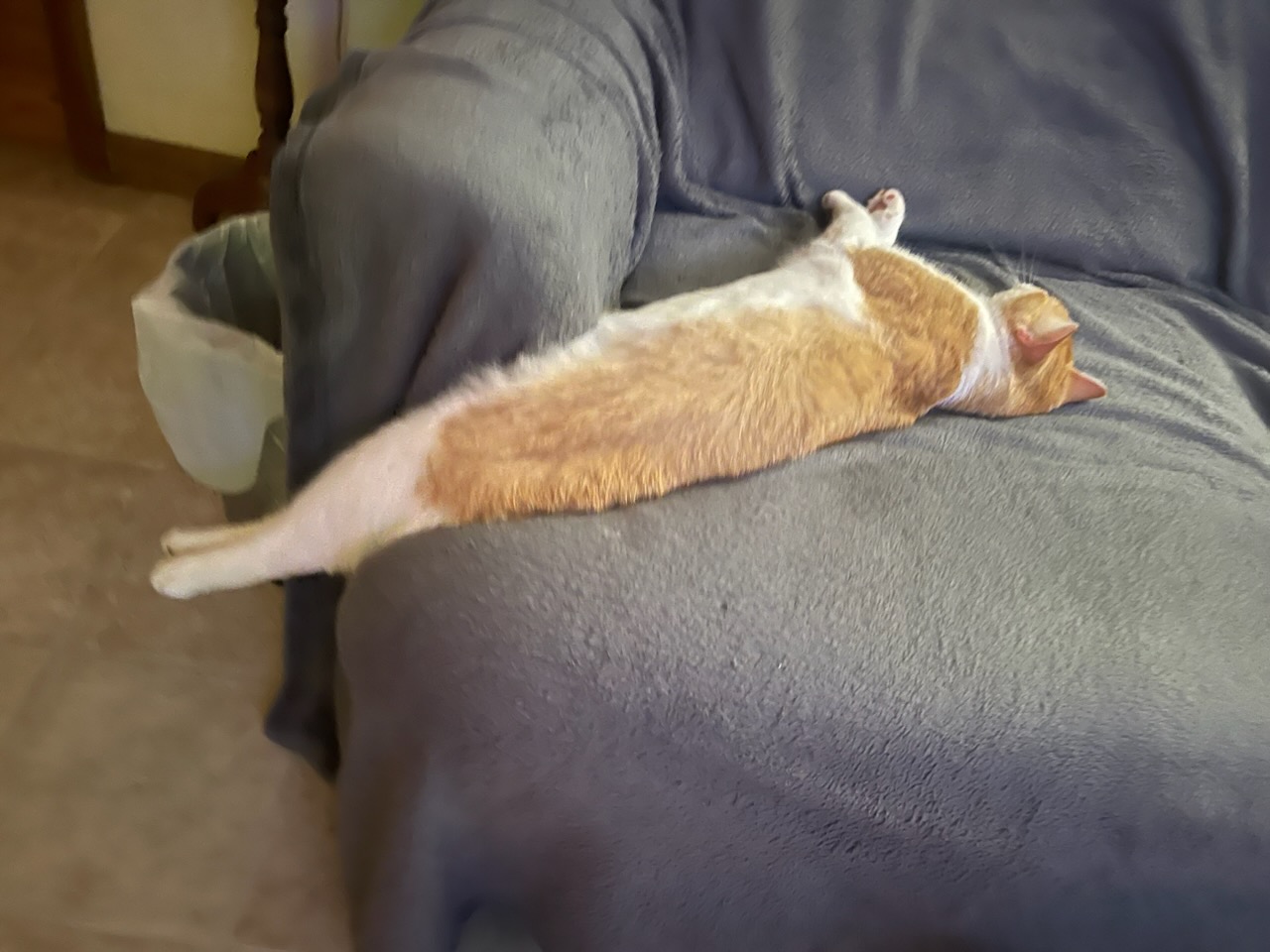
Sammie’s avorite snuggle spot

My mother would say, oh, for crying out loud, it was just a cat. Then I remembered an incident when I was 12 or 13, when I came home from school and noticed my pet chicken was not in her pen. Now this chicken was named Gemma, my name, because her feathers were the same auburn color as my hair. I’d had her since she was a tiny ball of yellow fluff, when I was, I think, about five. Unlike my first cat pet, Pinkie Tiptoes, who broke my heart when he couldn’t be found when we moved from Ft. Smith to Miami, Gemma had been crated up with a couple of other hens, and joined us in our new home. I don’t remember her accommodations at the first two rent houses where we lived that first year in Miami (4th and part of 5th grade) but at the last rent house on “B Northwest,” the pen was about 10’ x 12’ and the ‘barn’ was an upside-down enamel washing machine tub propped up on one side so the hens could get inside.

I would sit in the sunshine with Gemma, stroking her warm smooth feathers, making chicken noises just to be friendly. She knew me, would come to me and huddle next to my legs. I imagined she was lonely and bored in that tiny pen without a blade of grass left standing. Now she was gone.

Without Sammie’s help, the chair would float away

After growing increasingly panicked in my fruitless search for Gemma, I raced inside the house to ask my mother. She confirmed that she hadn’t seen Gemma and said I should look for her, that maybe she got out of the pen. She stated further that maybe I hadn’t given her water and that was the reason she got out of the pen.

I spent an hour wandering the neighborhood, especially the overgrown vacant lot across the street, swallowing down tears and calling “Here, chickey chickey chickey” until I was hoarse.

I don’t remember anything further from that day, but the guilt assigned to me by my mother has remained part of my psyche. It was years before I thought about that and asked my mother if she knew what had happened to Gemma. She had no memory of the event, only faintly remembered the chicken.

Sammie comforting my son

But I know what happened. My mother lied to me. She knew that Gemma had died and had been part of the parental decision to remove the dead body. I doubt my dad would have made up some story about her escaping her pen, much less assigning blame on me for her disappearance. But Mom never missed a chance to assign blame. For her, life was about assigning blame; this is still her default reaction to anything she judges to be problematic. Someone must be blamed.

It’s useless for me to attempt any further discussion of the issue with her, as her memory by now has disintegrated into a five-second attention span, if that. Now I mostly feel sorry for her, that her life as the middle child of nine had been so fraught that she could only adopt her mother’s habit of judging and negativity. I think I understand—to a mother or a child of the Depression, a person couldn’t afford to invest much emotion into the welfare of an animal when deprivation constantly lurked at the kitchen door.

What’s left for me to do is always remember, especially with my pets now, that I must go out of my way to take care of them—cats, primarily, as my medium and spirit animal. What happened to Sammie was a function of undiagnosed feline leukemia and feline immunodeficiency virus (cat AIDS). How or when he was infected with those viruses I have no idea. My neighbor, who obtained Sammie from an older man down the road, who more or less fed a feral female cat and generations of her kittens without a fucking care in the world that he should have had her spayed or at least vaccinated, belatedly confirmed to me that when he got the kitten, he did not have him vaccinated for anything.

Somehow, Sammie knew early on that he wanted to be here instead of next door with the neighbor, whose immaturity meant that Sammie might or might not get fed. I first saw him here when he’d been treed by Cu and Weezy, watching me call off the dogs from his perch high in an oak tree just outside my yard fence. After that he appeared at the edge of the yard, uneasy about the dogs but clearly very hungry. I started putting out food, talking to him. It was months later that finally I asked if I could ‘adopt’ Sammie.

The neighbor agreed, even though I could see the young man felt affection for the cat. But he knew he wasn’t being a good pet owner and, I think, was relieved. The first thing I did was have Sammie neutered, as the evidence of his masculine pursuit of females had begun to scar his face. I should have asked about vaccinations then, but I didn’t.

Sammie the ginger manx

Guilt.

So began a little more than two years of Sammie at my house, well fed and slowly being accepted by the existing cattery of four other cats. Hellion considered it her duty as top cat around here to run him off, while Esmerelda and Nali tolerated him, even came to play with him and respond to his polite throaty trilled greeting seeking permission to join their company. Finnegan was a different kind of adversary, being male (neutered) and seeing his duty to eliminate another male. But slowly they too settled into a benign tolerance, thanks to careful work by myself and whichever adult child of mine was spending time here as the two males often ended up in that part of the house.

Sammie the scholar

It occurred to me sometime over the past summer that Sammie had not been as active as usual but I put it off to the terrible heat. About a month ago, I noticed that he wasn’t always showing up for dinner, and I put that off as maybe another neighbor was feeding him. I didn’t notice that he was losing weight; it was subtle and over a long period of time. BUT, guilt, even if I had noticed sooner that he was struggling, there was nothing I could have done. He might have had these viruses since birth.

Sammie helping hold down the bed

I’m trying not to linger over my failures, as I have no clear evidence of any role I might have played in his death. I loved that damn cat. He was full of personality. A true gentleman, he never bullied the other cats, always took the submissive role, and just wanted to have a good time. Like other ginger cats, he was easy-going, a laid back cat, just wanna have fun. And eat whatever I might offer. And snuggle, get petted. His purr came readily, sometimes before a hand actually touched him.

As I watched the vet sedate him and then return a short time later with the slender hypodermic of bright pink death, I thought of so many other cats that need rescue, and tried not to cry.

But I did cry. I hardly made it out of the clinic before ugly sobs racked my throat. Hot tears ran down my cheeks and even though I’m an old woman worn with the losses in my life, I felt like my heart was breaking. I brought him home, wrapped him in a soft towel as his still-warm body lolled loosely in my arms, and laid him to rest in the hole I had already dug in my garden.

Sammie will be missed. He had a special talent for making me and my kids feel good, and that’s what pets are for. I will keep trying not to feel guilty, but when you take someone into your care, it’s part of the contract that you are responsible for his life. I’ll never escape that no matter what my mom might have said oh so many years ago.

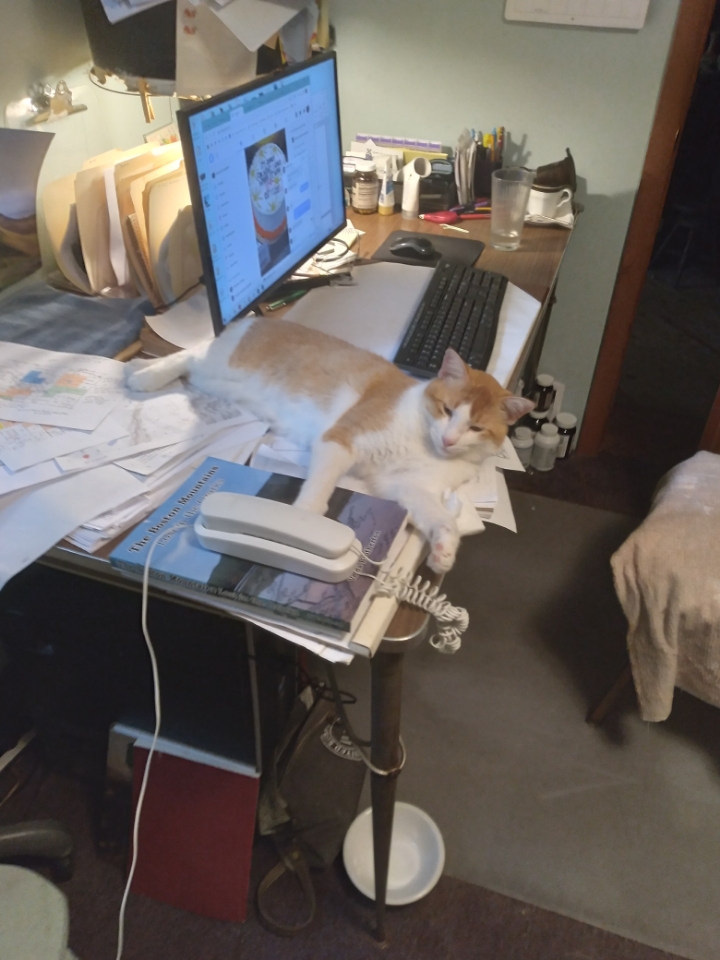
Sammie the Editor
Sammie the Guardian of all he surveys

It’s Here! AROUND THE COUNTY: Histories of Washington County, Arkansas

This collection of articles covers an eclectic range of subjects from the earliest settlers (and their contribution to the development of the county and the nation) to the 20th century enigma of a former carnie known as White River Red. What about UFOs? What about the Old Wire Road and its storied history in south Washington County? Or the county’s 4 Riverside Parks, 12 skating rinks, and 8 flour mills are among the stories found here (umm, butter melting on hot BREAD!), each selection delving into some fascinating aspect of Washington County life. It’s a joyful and sometimes heartrending read, perfect for a home library or as a gift. Don’t miss this latest contribution to the archives of local history!

Paperback, $19.99, at Amazon.com

The Spectacular ‘White River Red

Coming April 2 — AROUND THE COUNTY: Histories of Washington County, Arkansas

As the legend goes, by 1931 when Forrestina Magdalene (Bradley) Campbell settled in Washington County, Arkansas, she had run away from her “well-to-do” family as a teen, joined the circus, married “Big Broad Tosser” Keyes, and lost a pregnancy after falling from a trapeze. Local historian Phillip Steele described her as “a beautiful woman…with long gorgeous red hair.”

Beauty or not, her husband Keyes abandoned her when medical complications of her miscarriage cost her the ability to ever bear children. Maybe he would have left her anyway. No records of him have been found.

This was just the beginning of Forrestina’s fascinating life story which would continue into the 1970s from Head’s Ford and Springdale to the West Fork area along Highway 71 as she forged her unique path in local lore.

This article won the 2022 Washington County Historical Society’s Walter J. Lemke Award for the best article on Washington County History outside of Fayetteville and was published in the Spring issue of the WCHS quarterly journal Flashback. [This image of her appeared on the cover of Philip Steele’s booklet about her, circa 1970.]

May be an image of 1 person

UFOs in Washington County

Coming April 2 — AROUND THE COUNTY: Histories of Washington County, Arkansas

The people of Arkansas have reported UFO (Unidentified Flying Object) sightings since the late 19th century. In the 20th century, a cluster of sightings in Washington County occurred in 1965, when Bill Estep of Viney Grove reported his experience to the local newspaper:

“An unidentified flying object (UFO) “the size of a car” was reported at tree-top level eight miles north of Viney Grove last night. The Bill Estep family said they were seated in their living room around 10 p.m. when a flashing light outside attracted their attention. Mrs. Estep said when they went outside they saw a ‘long narrow, silver object with lighted windows and revolving light on top hovering in the air just above the trees.’”

More sightings have been reported, but it was a pilot’s 1952 observation of a ‘saucer-shaped’ UFO over Skylight Mountain that captured the attention of J. Allen Hynek, scientific observer for the U. S. Air Force and Project Blue Book. In recent years since the CIA released images and reports verifying such sightings, UFO incidents have become more accepted by a skeptical public. This article includes current reporting methods and sightings in our area.

May be an image of tree, sky, nature and text that says 'ব Photoshopped image'

Odell, Arkansas

Another article in the forthcoming AROUND The COUNTY: Histories of Washington County, Arkansas

Long forgotten villages dot the maps of Washington County, places like Floss, Sugar Hill, Clyde, and Arnett. Odell is another, no longer existing as more than a place name. For a time in the 19th century, this village was a tiny but important commercial center in that vicinity the southwest county. School No. 69, Shady Grove, was located there as well as a blacksmith shop, general store, and post office, all along a long established roadway mostly following the ridge tops in this western edge of the Boston Mountains.

Both Confederate and Union troops used this road, now County Road 295, as an alternative to the more heavily traveled routes like the Old Wire Road up the middle of the county, or the route later to become Highway 59 along the state’s boundary with Indian Territory, or the newly marked-out Cove Creek Road which rose from the depths of Crawford County and led directly to Prairie Grove.

Noah West, the owner of the Odell general store circa 1900, stands proudly at its entry with his extended family, a moment and place captured for all time.

May be an image of 12 people, people standing and outdoors

Riverside Park

Another chapter in the upcoming AROUND The COUNTY – “The County’s Four Riverside Parks”

One of the greatest attractions of Washington County is water, fresh flowing creeks and streams with fishing, swimming, and poking around in the shallows for fossils and arrowheads. Since the late 19th century, ‘Riverside Park’ has attracted all sorts of people to the banks of the West Fork of White River in Washington County, Arkansas. Picnics, restful scenic outings, and swimming were (and are) in the offing at Riverside Park, and even in winter visitors may be found there.

But which Riverside Park?

The first Riverside Park was established by 1882 with the construction of the Pacific & Great Eastern Railroad from Fayetteville east. Fun-seeking citizens rode the train to the park where they could enjoy picnics and events as well as the simple pleasures of the river. “Excursions were run every day out to Wyman during the hot seasons, where there was provision for boating and swimming. … a July 4th program in 1882 featured an all-day picnic. Trains were to run every two hours to accommodate the public, and a printed program announced the speakers of the day would be the Honorable William Walker Bishop on “The Tariff and Financial Questions of the Day” and “Arkansas As It Was and Is” by Uncle Ann Fitzgerald. An onion-eating contest offered prizes while order would be enforced by Sheriff Ike Combs.”

May be an image of tree, sky, body of water and nature

Arkansas Education: Part II—The Health Problem

Arkansans’ popular breakfast of biscuits and gravy is high in calories
and saturated fats and low in nutritional value.

Under-nourished or malnourished kids can’t learn. Arkansas ranks at the very top of states whose citizens die of chronic lower respiratory diseases (chronic obstructive pulmonary disease (COPD), chronic bronchitis, emphysema, and asthma) which are caused by tobacco smoking, indoor and outdoor air pollution, exposure to allergens and occupational agents, unhealthy diet, obesity, and physical inactivity. The state ranks 3rd nationally in deaths from heart disease, diabetes, and kidney disease, and 6th in death from cancer.[1] Clearly the population needs to learn about better nutrition.

First of all, consider that without proper nutrition, people are more likely to self-medicate with drugs including cigarettes and alcohol because these substances make people feel better even when they are in poor health.

One potential means of addressing some of these health problems would be to require public school education in nutrition, including practice in preparing healthy meals. At least one semester in this specific curriculum for both male and female students could break into this cycle of poor health. A two-week summer course (required) would bring students to work in community gardens as well as learning to cook with fresh produce.

Start Early

The Women, Infants, and Children (WIC) nutrition program in Arkansas is a first step toward better health, but fails to live up to its promise by setting income guidelines at 185% of poverty level. There is no guarantee that a person with an income $20 or $2,000 above the poverty line is adequately informed about nutrition. The WIC program also requires applicants to have a ‘nutritional need’ but the ‘needs’ outlined for acceptance do not approach all the real nutritional needs a woman might have for herself and her fetus/child. Most importantly, WIC is voluntary, and a person must apply in order to gain this support. Every pregnant woman, upon her first visit to a physician, should be assigned a caseworker who will ensure that nutritional education and support is provided. [A passing grade of C or above in a high school nutrition class would provide exemption.]

It goes without saying that the school breakfast/lunch program must serve as the best example of nutritious meals. Federal standards pushed by former First Lady Michelle Obama have gone a long way toward meeting this objective. The Healthy, Hunger-Free Kids Act changed nutrition standards for the National School Lunch Program by requiring that schools serve more fruits, vegetables, whole grains and fat-free and/or low-fat milk more frequently and less starchy vegetables or foods high in sodium and trans fat.[2]

Studies have shown the direct correlation between nutrition and academic performance.

Research suggests that diets high in trans and saturated fats can negatively impact learning and memory, nutritional deficiencies early in life can affect the cognitive development of school-aged children, and access to nutrition improves students’ cognition, concentration, and energy levels.[3]

A vast body of research shows that improved nutrition in schools leads to increased focus and attention, improved test scores and better classroom behavior. Support healthy habits and consistent messages: Nutritious school food helps students develop lifelong healthy eating habits.

Sadly, one of the first acts of Sanders’ mentor Donald Trump in gaining the presidency was to reduce the school nutrition standards. The Obama-era policy suffered a series of rollback measures which allow for less whole grain, more sodium, and more flavored milk despite a 2018 analysis of more than 90 popular chilled flavored dairy milks which revealed that a carton of flavored milk can contain as much sugar as a can of soft drink, with many of the bestselling brands containing more than a day’s worth of added sugar in a single serving.

The overweight condition of both Trump and Sanders (and her parents and siblings) illustrate their lack of understanding in nutritional matters. Nutrition is fundamental to a child’s future prospects, and without public investment in health, too many students will not succeed no matter what schooling they receive.

The Huckabee Family

[1] https://www.cdc.gov/nchs/pressroom/states/arkansas/arkansas.htm

[2] The Healthy, Hunger-Free Kids Act provides meals to children that normally could not afford those nutritious food items. It also allows schools to have more resources that they may not have had before. A study in Virginia and Massachusetts concluded that children in schools were eating significantly healthier meals when their parents or guardians were not choosing their food, but the school was. While looking at the nutrition value of 1.7 million meals selected by 7,200 students in three middle and three high schools in an urban school district in Washington state, where the data was collected and compared in the 16 months before the standards were carried out with data collected in the 15 months after implementation; the information found that there was an increase in six nutrients: fiber, iron, calcium, vitamin A, vitamin C, and protein. While providing new meals with improvements in fruits, vegetables, amount of variety, and portion sizes, the calorie intake has also transformed.

[3] https://www.wilder.org/sites/default/files/imports/Cargill_lit_review_1-14.pdf