Trump’s Drug War

The absurdity is overwhelming. Here we are as Americans, all party to the White House’s illegal murder of over eighty (so far) men in boats on the premise they are bringing drugs to the United States. As well remarked elsewhere, there is no evidence these boats are carrying drugs and no credibility in the idea these small vessels with a fuel range of 100-200 miles are embarking on a thousand mile journey to the U.S.

But even more insane is the idea that a nation under any government can stamp out drug use/abuse by ‘interdicting’ drugs enroute to this country. We can’t even stamp out drugs manufactured in within the borders of this country. Anyone who believes such nonsense needs to have these words tattooed onto their forehead: Supply-Demand. If people want a product, no matter how potentially dangerous, there will ALWAYS be a supplier. Basic economic fact. Reducing supply only results in higher prices for said product, i.e. better profits, more incentive to supply.

So let’s get real about illegal drugs. First, “drug users” include people who depend on caffeine in their morning coffee, iced tea at lunch or other caffeinated beverages, persons who ‘must have’ their cigarettes or other tobacco products, and persons prescribed any of a multitude of pharmaceuticals which address any of a multitude of human conditions from depression to headache to cancer. Secondly, there is an enormous difference between the use of and the abuse of any drug. Prohibitionists prefer to consider all illegal drug use as ‘abuse’ in order to justify draconian laws punishing users. We must keep in mind the blurred line dividing legal and illegal drugs is primarily based on their regulatory status and whether their production, sale, and use are permitted by law. Theoretically, this status is determined by government authorities based on factors like medical utility, potential for abuse, and perceived harm to the individual and society. In other words, there is no truly ‘illegal’ drug.

This theory supporting the prohibition of certain drugs has been shown to be a fabrication serving other less savory objectives. The drug war is a tool used by government to carry out activities which are illegal. For example, one might wonder about the president’s single-minded assault on alleged drug smugglers from Venezuela when coca leaf is grown in three other Latin American countries: Peru, Bolivia and Colombia. Surely the fact that Venezuela possesses the world’s largest oil reserves has nothing to do with it. Surely.

Never mind the fact that cocaine is hardly relevant in drug abuse circles since fentanyl hit the streets. In 2023, there were approximately 72,776 overdose deaths involving fentanyl (synthetic opioids other than methadone) compared to about 29,449 deaths involving cocaine.

Postcard showing an underground opium den in San Francisco, pre-1906 earthquake. By 1896, there were around 300 opium dens in San Francisco, mostly in Chinatown. In the 19th century and the early 20th century, opium smoking was common worldwide, especially in Asia, which was one of the sources of the opium poppy.

In order to better understand this absurdity, let’s go back more than a century to the country’s first ‘drug war’. The San Francisco Opium Den Ordinance of 1875 made it a misdemeanor to maintain or visit places where people smoked opium. These places were mainly in Chinese immigrant neighborhoods. Similar racially inflammatory state laws emerged. Soon after came the Chinese Exclusion Act of 1882, which barred Chinese laborers from entering the U.S., a ban expanded to all Chinese people in 1902 and not fully repealed until 1943. The first federal drug law, the 1909 Smoking Opium Exclusion Act, prohibited importing and using opium. It wasn’t that the government suddenly became concerned about opium use. In a nutshell, it was that the railroads powering the economic growth of that period were now built, and thousands of Chinese who had been welcomed to this country to do the backbreaking work of carving tunnels out of rock and laying steel track were no longer of use. Even worse, these immigrants, the primary users of opium, were inviting relatives to immigrate and their jobs were seen as threats to white workers.[1]

Then there was alcohol. After nearly a century of growing religious fervor stemming from massive evangelical movements, especially the “Second Great Awakening,” characterized by fiery camp meetings, frontier revivalism, and emotionally charged preaching, a rising cry against alcohol resulted in ‘prohibition,’ enacted on a federal basis in 1920 but in individual states as early as the 1880s.

Carrie Nation became famous for her attacks on alcohol-serving establishments, using rocks, bricks, and her signature hatchet to destroy liquor bottles, mirrors, and bar fixtures. Before resorting to violence, she would kneel outside saloons, sing hymns, and deliver strong sermons to patrons and owners, sometimes calling herself the “Destroyer of Men’s Souls”.

“A wide coalition of mostly Protestants, prohibitionists first attempted to end the trade in alcoholic drinks during the 19th century. They aimed to heal what they saw as an ill society beset by alcohol-related problems such as alcoholism, domestic violence, and saloon-based political corruption.”[2]

Alcohol prohibition led to massive increases in organized crime (bootlegging, speakeasies), rampant corruption of officials, dangerous unregulated alcohol leading to sickness/death, huge losses in government tax revenue, and a general disrespect for the law, with little measurable public health benefit, ultimately proving a costly failure. Ultimately, prohibition led to the development of the Federal Bureau of Investigation (FBI), significantly expanding the role and authority of the FBI’s predecessor, the Bureau of Investigation (BOI), making it central to federal law enforcement by creating massive new criminal enterprises (bootlegging) that required federal intervention, strained resources, spurred corruption, and ultimately led to bigger federal crime-fighting roles and the rise of modern organized crime, impacting federal investigations for decades.

This powerful new agency could have drifted into irrelevance when alcohol was once again legal in 1932, but instead there is evidence that the federal official who spearheaded cannabis prohibition saw it as a way to maintain his department’s relevance and budget. Harry Anslinger, the head of the Federal Bureau of Narcotics (FBN), needed a new focus for his agency after alcohol prohibition was repealed. He launched a public campaign against cannabis (often using the “marihuana” spelling to associate it with Mexican immigrants), portraying it as a dangerous substance to justify his department’s continued existence. Anslinger’s rhetoric carried strong undercurrents of racial prejudice and xenophobia, targeting Mexican immigrants and Black jazz musicians.

Then as the ‘60s ended with massive marches in support of equal rights for minorities and women, against the Vietnam war, and in support of gay rights, President Richard Nixon officially launched the “War on Drugs” in the early 1970s, declaring drug abuse a public enemy and enacting significant federal legislation like the Controlled Substances Act to combat drug production, distribution, and use, though policies intensified under subsequent administrations. 

One of Richard Nixon’s top advisers and a key figure in the Watergate scandal said the war on drugs was created as a political tool to fight blacks and hippies, according to a 22-year-old interview recently published in Harper’s Magazine.

“The Nixon campaign in 1968, and the Nixon White House after that, had two enemies: the antiwar left and black people,” former Nixon domestic policy chief John Ehrlichman told Harper’s writer Dan Baum for the April cover story published Tuesday.

“You understand what I’m saying? We knew we couldn’t make it illegal to be either against the war or black, but by getting the public to associate the hippies with marijuana and blacks with heroin and then criminalizing both heavily, we could disrupt those communities,” Ehrlichman said. “We could arrest their leaders, raid their homes, break up their meetings, and vilify them night after night on the evening news. Did we know we were lying about the drugs? Of course we did.”[3]
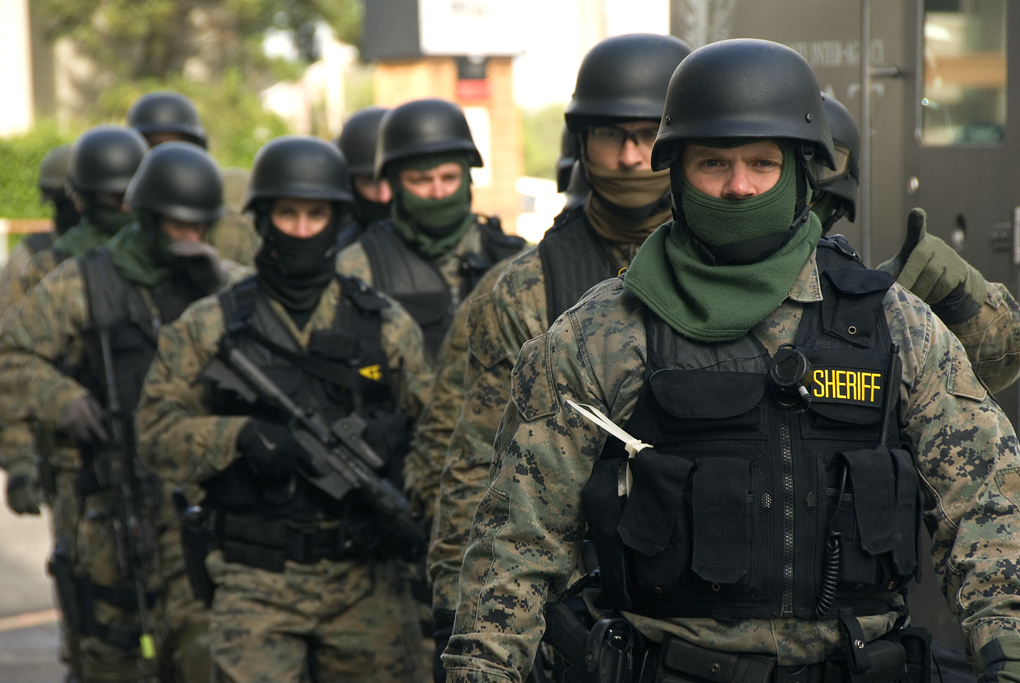
A 2017 study showed that police forces which received military equipment were more likely to have violent encounters with the public, regardless of local crime rates. A 2018 study found that militarized police units in the United States were more frequently deployed to communities with large shares of African-Americans, even after controlling for local crime rates. https://en.wikipedia.org/wiki/Militarization_of_police#cite_ref-17

In the next administration, First Lady Nancy Reagan famously addressed the drug “problem” with her “Just Say No.” advice, unwittingly illustrating the parental role now assumed by government over the private, consensual behavior of drug users. Reagan’s successor, George H.W. Bush, took it a step further. He promoted the 1033 Program (Defense Logistics Agency (DLA) Disposition Services) in the early 1990s to transfer surplus military gear to local law enforcement for the “War on Drugs.” Nowhere in this rush to judgement did anyone point out that M16/AR-15 rifles, grenade launchers, armored vehicles (APCs, MRAPs), night vision, tactical robots, and “less-lethal” gear (beanbag/pepperball guns, flashbangs) have absolutely no effect on drugs. These weapons and the “war” in which they are being used are against PEOPLE—American citizens, most of whom simply preferered to toke a joint after work rather than drink an alcoholic beverage.

This despite the fact that in the 1970s and ‘80s, marijuana was by far the most widely used of illegal drugs, was found in multiple studies not to be addictive and also found not to be a ‘gateway’ to harder drugs, as so often alleged in government reports. Even today, with drugs like cocaine and even fentanyl in the headlines, according to the United Nations Office on Drugs and Crime (UNODC) World Drug Report 2024, the estimated number of people who used various drugs at least once in the prior twelve months was: Cannabis (Marijuana): 228 million users; Opioids: 60 million users; Amphetamines: 30 million users; Cocaine: 23 million users; Ecstasy: 20 million users.

All the while, the drug war of those decades provided cover for illegal U.S. government operations in Central and South America as those nations began to resist colonization by American corporations seeking to exploit natural resources like oil, minerals, and agricultural opportunities. Fertile land and cheap labor could produce crops such as coffee, bananas, and other foods requiring year-round growing seasons.

According to Tim Weiner, the Central Intelligence Agency “has been accused of forming alliances of convenience with drug traffickers around the world in the name of anti-Communism” since its creation in 1947.[4] The CIA has a long, controversial history in South America, primarily during the Cold War, involving covert operations like coups, political destabilization, and support for right-wing regimes (e.g., Operation Condor) to counter perceived communist influence, leading to significant human rights abuses and democratic declines, with operations continuing into recent times, such as those in Venezuela. Key actions included overthrowing governments (Chile, Ecuador, Brazil), supporting anti-communist forces (Contras in Nicaragua, a major scandal where in U.S. operatives sold guns to Iran between 1981 and 1986, facilitated by senior officials of the Ronald Reagan administration. The administration hoped to use the proceeds of the arms sale to fund the Contras, an anti-Sandinista rebel group in Nicaragua.), and involvement in conflicts like the Salvadoran Civil War, with consequences like suppressed democracy and economic impacts.

This kind of interference in the affairs of other nations more or less permeates American history. In the early 20th century, during the “Banana Republic” era of Latin American history, the U.S. launched several interventions and invasions in the region (known as the Banana Wars) in order to promote American business interests. During the Cold War (1950s-1980s), the CIA carried out coordinated campaigns to install South American dictatorships (Argentina, Chile, Brazil, etc.) to track, kidnap, torture, and kill left-wing dissidents, with CIA support and intelligence sharing. In Guatemala (1954), the CIA overthrew the democratically elected President Jacobo Árbenz, linking to U.S. corporate interests, using exile forces and propaganda. In Chile (1970s), CIA efforts undermined President Salvador Allende, paving the way for a military coup. Same idea for Brazil (1964): Supported a coup against President João Goulart, leading to a military dictatorship. Nicaragua (1980s): Funded and trained the right-wing Contra rebels fighting the socialist Sandinista government, with alleged links to cocaine trafficking. El Salvador (1980s): Trained and equipped military units involved in massacres during the civil war.

CIA interventions often resulted in the collapse of democratic institutions, reduced civil liberties, and economic hardship, despite justifications of promoting democracy or fighting communism, according to research. The support ‘troops’ for these political objectives has become de facto occupation of these nations with armed agents of the U.S. Drug Enforcement Agency, with 87 foreign offices in 67 countries. For example, in the so-called “Southern Cone,” (Brazil, Chile, Argentina, Paraguay, Peru and Uruguay), are considered to be transit zones for the movement of cocaine base, cocaine HCL, and heroin being shipped from Colombia and Peru to markets in the U.S. and Europe, or producers of coca leaves. The end result of these often violent interventions in the affairs of our neighbors is the current and ongoing flood of desperate people arriving at our borders.

Not only are drug laws used outside our nation’s borders as cover for extra-judicial interference in international relations, they also serve domestically to selectively target specific individuals and politically inconvenient groups or based on racism or other prejudices, most recently undocumented immigrants. This is a useful tool for xenophobes determined to turn the United States into a white patriarchal “Christian” nation. The current administration manipulates this demographic by playing up the drug war.

Public support for prohibition policies relies on judgments of morality, that becoming intoxicated is immoral, an echo of the early 1800s temperance movement which reached its zenith with alcohol prohibition, the Eighteenth Amendment to the United States Constitution. This same moral judgment about private consensual activity remains a strong current in the United States where prostitution, gambling, and drug use (other than legal drugs) fall under strong government control. While government cannot (yet) spy on the living rooms and bedrooms of its citizens, government agents find such laws useful in targeting specific types of people, as previously illustrated.

“Today, police make more than 1.5 million drug arrests each year, and about 550,000 of those are for cannabis offenses alone. Almost 500,000 people are incarcerated for nothing more than a drug law violation, and Black and brown people are disproportionately impacted by drug enforcement and sentencing practices. Rates of drug use and sales are similar across racial and ethnic lines, but Black and Latinx people are far more likely than white people to be stopped, searched, arrested, convicted, harshly sentenced, and saddled with a lifelong criminal record.

“The wide-ranging consequences of a drug law violation aren’t limited to senseless incarceration: people with low incomes are denied food stamps and public assistance for past drug convictions; states including Texas and Florida suspend driver’s licenses for drug offenses totally unrelated to driving; and numerous other policies deny child custody, voting rights, employment, loans, and financial aid to people with criminal records.”[5]

Despite apparent national political resolve to deal with the drug problem, inherent contradictions regularly appear between U.S. anti-drug policy and other national policy goals and concerns. Pursuit of drug control policies can sometimes affect foreign policy interests and bring political instability and economic dislocation to countries where narcotics production has become entrenched economically and socially. Drug supply interdiction programs and U.S. systems to facilitate the international movement of goods, people, and wealth are often at odds.[6]

  • “We are still in the midst of the most devastating drug epidemic in U.S. history,” according to Vanda Felbab-Brown, senior fellow at the Center for Security, Strategy, and Technology at Brookings Institution. In 2020, overdose deaths in the United States exceeded 90,000, compared with 70,630 in 2019, according to research from the Commonwealth Fund. Yet, the federal government is spending more money than ever to enforce drug policies. In 1981, the federal budget for drug abuse prevention and control was just over a billion dollars. By 2020, that number had grown to $34.6 billion. When adjusted for inflation, CNBC found that it translates to a 1,090% increase in just 39 years.[7]

What if that money had instead been applied to individuals and programs that support individual ambitions and needs—tiny homes for the homeless, for example? What if the costs of our interference in foreign nations had instead been directed toward helping the people of those nations deal with loss of farmland to multinational corporations, climate-change induced drought and hurricane damage, and support for social programs, education, and entrepreneurship, thereby reducing the urgency of people in those countries to flood to U.S. borders in hope of better lives?

Without hot button issues like women’s reproductory rights and drugs, politicians would have to gain votes based on performance rather than propaganda. Stepping away from “government as nannies” and the idea of controlling private behavior would allow taxpayer dollars to support programs that help deter substance abuse in the same way that public education has helped reduce the use of cigarettes. No one knows better than addicts that they, individually, are the only ones who can control their addiction. Ultimately, as free people, we must claim the fundamental right to kill ourselves if we wish it. Most importantly, awareness of draconian drug policies as a cover for illegal objectives both in and outside our nation’s borders would forever eliminate travesties such as the murdering of likely-innocent people in boats leaving Venezuela.

And, in the case of the current administration, understanding the real agenda of the drug war could rightfully turn the public attention fully to the president’s dirty Epstein laundry.


[1] https://muse.jhu.edu/article/240064

[2] Wikipedia, https://en.wikipedia.org/wiki/Prohibition_in_the_United_States

[3] https://www.cnn.com/2016/03/23/politics/john-ehrlichman-richard-nixon-drug-war-blacks-hippie

[4] https://en.wikipedia.org/wiki/CIA_drug_trafficking_allegations

[5] https://www.vera.org/news/fifty-years-ago-today-president-nixon-declared-the-war-on-drugs

[6] https://www.everycrsreport.com/reports/RL33582.html

[7] https://www.cnbc.com/2021/06/17/the-us-has-spent-over-a-trillion-dollars-fighting-war-on-drugs.html

War on Americans by Americans

War as a behavioral concept has become so successful, so popular in American culture that a person can choose ‘entertainment’ from a menu of current ‘war’ themed television shows: Neighborhood Wars, Customer Wars, and even a December special called “Christmas Wars.” An endless array of ‘reality’ shows and movies feature one or another war, current or historical. Before the 1970s, war movies generally portrayed actual events in American and world history, serving as a type of education on the many failings and successes of humanity.

Wars on Americans actually began with the first colonists, who began a genocide against the Native Americans. Then there were the Black people, finally freed from slavery with the Civil War but thereafter denigrated, attacked, and lynched with impunity. The War on Black Americans escalated with the Civil Rights movement 1954-1968 when Blacks dared to stand up.

Richard Nixon ushered in a new war in 1971, the War on Drugs. In itself a misnomer, the war on drugs was actually a war on Americans who used, sold, or manufactured any non-sanctioned psychoactive substance including marijuana, hashish, opium/heroin, cocaine, LSD, peyote/mescaline, and psilocybin mushrooms, among others.

The term was popularized by the media shortly after a press conference given on June 18, 1971, by President Richard Nixon—the day after publication of a special message from President Nixon to the Congress on Drug Abuse Prevention and Control—during which he declared drug abuse “public enemy number one.” That message to the Congress included text about devoting more federal resources to the “prevention of new addicts, and the rehabilitation of those who are addicted” but that part did not receive the same public attention as the term “war on drugs.”

The target ‘enemy’ in this war was the Baby Boom generation for whom use of marijuana had become a rite of passage, along with use of psychedelics as a spiritual experience.

The motives behind Nixon’s campaign against drugs are disputed. John Ehrlichman, who was Assistant to the President for Domestic Affairs under Nixon, was quoted by Dan Baum as saying in 1994:

The Nixon campaign in 1968, and the Nixon White House after that, had two enemies: the antiwar left and black people. You understand what I’m saying? We knew we couldn’t make it illegal to be either against the war or black, but by getting the public to associate the hippies with marijuana and blacks with heroin, and then criminalizing both heavily, we could disrupt those communities. We could arrest their leaders, raid their homes, break up their meetings, and vilify them night after night on the evening news. Did we know we were lying about the drugs? Of course we did.[1]

Nixon’s alleged strategy was successful to the extent that many of the best and brightest of the generation were harmed in this war in various ways: imprisonment alongside actual criminals (often including rape, beatings, psychological abuse), loss of employment, disenfranchisement from voting or holding public office, loss of student loans and other financial aid, and outright physical harm including death at the hands of police.

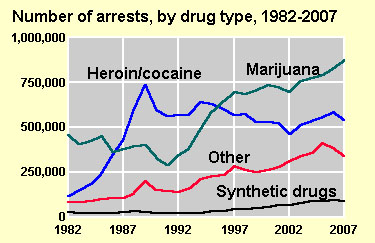
And yet despite this heavy toll on an entire generation and its successors, the drug war has failed utterly to eradicate drug use or addiction. Every 25 seconds, someone in America is arrested for drug possession. The number of Americans arrested for possession has tripled since 1980, reaching 1.3 million arrests per year in 2015. The harsher penalties led to a 1,216% increase in the state prison population for drug offenses, from 19,000 to 250,000 between 1980 and 2008.

An unexpected result of this ‘war’ on drugs was the rise of a widespread underground marketplace where illegal drugs were readily sold. To the detriment of the consumers, these black market drugs were not tested or labeled for purity, nor were buyers checked for age identification as required for alcohol, allowing sales to young teens. Further, this massively lucrative market paid no taxes.

But the least expected and most destructive result of this war on Americans was the rapid proliferation of inner city gangs which used the underground marketplace to reap enormous profits. The wealth flowing into these gangs fulfilled the American dream, allowing impoverished young entrepreneurs to sport nice clothes, new cars, and—most importantly—arsenals.

In the 1980s, Ronald Reagan’s presidency saw a significant expansion of the drug war.

In the first term of the presidency, Ronald Reagan signed the Comprehensive Crime Control Act of 1984, which expanded penalties towards possession of cannabis, established a federal system of mandatory minimum sentences, and established procedures for civil asset forfeiture. From 1980 to 1984, the federal annual budget of the FBI’s drug enforcement units went from 8 million to 95 million. …In 1982, Vice President George H. W. Bush and his aides began pushing for the involvement of the CIA and U.S. military in drug interdiction efforts.

…the number of arrests for all crimes had risen by 28%, the number of arrests for drug offenses rose 126%. The result of increased demand was the development of privatization and the for-profit prison industry. The U.S. Department of Justice, reporting on the effects of state initiatives, has stated that, from 1990 through 2000, “the increasing number of drug offenses accounted for 27% of the total growth among black inmates, 7% of the total growth among Hispanic inmates, and 15% of the growth among white inmates.” In addition to prison or jail, the United States provides for the deportation of many non-citizens convicted of drug offenses.

… during the Presidency of Ronald Reagan … the war on drugs [greatly expanded] a general trend towards the militarization of police. The 1981 Military Cooperation with Civilian Law Enforcement Agencies Act allows the U.S. military to cooperate with domestic and foreign law enforcement agencies. …This allows the U.S. military to give law enforcement agencies access to its military bases and its military equipment.[2]

In the misguided and enormously destructive American war on Americans, the harms have by far outweighed any slim benefit. A 2018 study published in the journal PNAS found that “militarized police units are more often deployed in communities with large shares of African American residents, even after controlling for local crime rates.” The study also found that “militarized policing fails to enhance officer safety or reduce local crime.”[3] The policies of prohibition and police militarization are responsible for the rampant violence inflicted by police on persons ‘suspected’ of criminal activity, most recently resulting in the January 2023 beating death of Tyre Nichols at the hands of five Memphis police officers.

The militarization of police escalated the war on Americans and was met with a more sophisticated response from street gangs and other outlaws. A 2014 ACLU report, War Comes Home: The Excessive Militarization of American Policing, concluded that “American policing has become unnecessarily and dangerously militarized …” The report cites an increase in unnecessarily aggressive raids, “tactics designed for the battlefield,” and equipment such as armored personnel carriers and flashbang grenades—as well as a lack of transparency and oversight. Drug cartels and their street dealers have met the challenge, acquiring semi-automatic weapons and other advanced weaponry.

Lured by the enormous profits involved, Latin Americans tapped into the illegal drug trade by growing fields of marijuana and acres of coca plants. The U.S. response was to send military and CIA operatives to these countries to help form paramilitary forces to eradicate the drug trade. The opposite has occurred, with Mexican and Colombian cartels now said to generate a total of $18 to $39 billion in wholesale drug proceeds per year. Latinos desperate to escape the escalating violence in their home countries settled into places like East Los Angeles and became subjects of white gang violence. Learning from their experience, the young male immigrants formed their own gangs. Ultimately, arrests for criminal activity resulted in deportation, and once deported, many of these men followed the blueprint by building gangs (cartels) in their home countries where they could intimidate local citizens, bribe police and elected officials, and ultimately create a reign of terror with kidnapping, blackmail, and murder that continues to drive terrified residents of those nations toward U.S. borders in an effort to find safety.

Since 2008, the U.S. Congress has supported the Central American Regional Security Initiative (CARSI) with approximately $800 million to “fund programs for narcotics interdiction, strengthening law enforcement and justice institutions and violence prevention through work with at-risk youth.” The CARSI offers equipment (vehicles and communication equipment), technical support and guidance to counter drug trade. The program also supports special units that cooperate with the U.S. Drug Enforcement Administration in Guatemala and Honduras to investigate drug cartels, share intelligence, and promote regional collaboration.[4]

Overall, the harm resulting from the War on Drugs far outweighs any supposed benefit. It has brought us to a point where aggressive policing results in regular beatings, shootings, and murders of Americans, especially Black males. It has drained the U. S. Treasury an estimated $1 trillion while drug use, abuse, and production have accelerated.[5] Currently, drug offenders form 47% of the federal prison population (2020) and 23.5% of Arkansas’ prison population (2019). It has fostered the immigration problem at our southern border.

Legalization of all drugs is the answer, and long past due. People can legally risk/ruin their lives with tobacco and alcohol, and illicit drugs must be regulated and taxed the same. Eliminating this travesty against Americans and the horrific expense of tax dollars will allow the funding of community clinics where anyone can seek help if they need it. Meanwhile, legalization eliminates the inner city police mindset of ‘war’ and moves us a step closer to ending our ‘war’ on our neighbors.   


[1] John Ehrlichman, to Dan Baum for Harper’s Magazine in 1994, about President Richard Nixon’s war on drugs, declared in 1971.

[2] https://en.wikipedia.org/wiki/Militarization_of_police

[3] Mummolo, Jonathan (2018). “Militarization fails to enhance police safety or reduce crime but may harm police reputation”. Proceedings of the National Academy of Sciences. 115 (37): 9181–9186.

[4] https://en.wikipedia.org/wiki/Illegal_drug_trade_in_throughout_Latin_America

[5] https://www.cnbc.com/2021/06/17/the-us-has-spent-over-a-trillion-dollars-fighting-war-on-drugs.html

Want to Disarm Police? Legalize Drugs.

A lot of talk is going on right now about not needing the police, but it’s just not true. We need police. There will always be robberies, rape, assault, murder, crazy people with a gun, and other crime.

It’s true we don’t need police in areas of our lives where they have been unnecessarily and destructively assigned duty by lawmakers eager to appease public sentiment or to garner support for re-election. The drug war has been one of those areas.

But it’s also true that law enforcement in the United States has always been armed. Shoot-outs in dusty frontier towns of the Old West come to mind. Those encounters were minor compared to what happened when do-gooders decided the American people shouldn’t have alcoholic drink.

Organized crime got its first foothold in American life thanks to the lucrative black market in liquor. This was also the golden age of bank robbery with figures like Bonnie and Clyde, Pretty Boy Floyd, and John Dillinger becoming folk heroes. The Thompson sub-machine gun and the Browning Automatic Rifle were increasingly used by these crime “stars.”

…the Prohibition Era saw domestic police departments using automatic weapons, armored vehicles, and ammo developed with the express purpose of being able to penetrate the early bulletproof vests worn by gangsters of the era.[1]

The first transfer of military weapons to civilian law enforcement occurred in the years immediately after World War II when surplus military supplies were made available to various civilian entities. With the rise of activism for African-American rights in the 1950s and 1960s, then the increasing public protests over the Vietnam War in the late ‘60s and early 1970s, police forces felt emboldened to use force.

…police militarization was escalated in the 1950s and 1960s, an era in which race riots and anti-war protests were common in many U.S. cities. Some believe that the seeming success of officers armed with military-style weapons and deployed to curtail the 1965 Watts riots, a six-day race riot sparked by conflicts with the Los Angeles Police Department (LAPD) that killed 34 people, gave way to the trend of arming and equipping law enforcement officers with battlefield weapons.  Joy Rohde, a professor at the University of Michigan’s Ford School of Public Policy, has published research indicating that “militarization is a mindset … is a tendency to see the world through the lens of national security, a tendency to exaggerate existing threats.” Rohde traces “the origins of modern militarized policing” to the Cold War-era anti-communist paranoia, and the idea that domestic civil rights activists were similar to foreign enemies, as manifested in activities such as the CIA’s Operation CHAOS.

…The 1981 Military Cooperation with Civilian Law Enforcement Agencies Act allows the U.S. military to cooperate with domestic and foreign law enforcement agencies. Operations in support of law enforcement include assistance in counter-drug operations, assistance for civil disturbances, special security operations, counter-terrorism, explosive ordnance disposal (EOD), and similar activities. Constitutional and statutory restrictions and corresponding directives and regulations limit the type of support provided in this area. This allows the U.S. military to give law enforcement agencies access to its military bases and its military equipment. [Emphasis mine.] The legislation was promoted during the Presidency of Ronald Reagan in the context of the War on Drugs, and is considered a part of a general trend towards the militarization of police.[2]

The process becomes circular. Tougher drug laws under Reagan meant police were legally empowered to invade private residences, stop and search vehicles, and frisk people on the street. In response, civilians trafficking in drugs or only using drugs became more likely to arm themselves. Which in turn led police to seek more protection and greater fire power like SWAT which are essentially militarized police squads.

Begun in 1965 in Philadelphia, SWAT teams were conceived as a way to restrain urban unrest, deal with hostage situations, or handle barricaded marksmen. The number of SWAT raids in the US grew dramatically from about 3,000 in 1980, to a whopping 50,000 SWAT raids in 2014.[3]

Unfortunately, too much of a potentially good thing has meant that 62 percent of all SWAT deployments were for drug raids, 79 percent of these were done on private residences, and only 7 percent of all raids were done for situations SWAT was invented for—namely barricades or hostage situations.

The result has been an increasingly armed and embattled police at war with the population whether white right-wing fanatics or inner city drug gangs. One begets the other. It’s hard to imagine sending disarmed police officers out on calls and equally hard to contemplate any attempt to disarm the public. Communities of color have become disproportionately impact by the war on drugs not only because they are disproportionately impoverished and therefore seeking any means of income, but also and most importantly because ALL LAWS are policed selectively. Officers would rarely if ever stop a white well-dressed man driving a late model Lexus but would not hesitate to stop a black or Hispanic man with any profiling features like certain hairstyles, jewelry, clothing, shoes, or automobile.

We have get smart about this. Yes, communities and the nation as a whole must do a better job of intervening in the preconditions of ‘crime’ by improving all forms of social support: better early childhood education, far more generous funding for public schools, and intensive efforts to improve health care and nutritional support to impoverished communities. Better job opportunities will require dedicated effort. It’s a long list of what might help and a very short list of funding to enable those programs.

It also makes sense to look at what drives much of the police violence, and the drug war is first in line. Young men in impoverished neighborhoods earn money by selling drugs. With their profits and to protect themselves from theft, they buy weapons. Shoot-outs with police are inevitable.

We need to face reality as a nation and legalize all drugs. People who want drugs are getting them now, so it’s a fantasy to think that prohibition is succeeding in its stated goal. We only need to look at what occurred as a result of alcohol prohibition to see the parallel to our current situation. More violence, more crime, and no real impact on the use or abuse of alcohol.

The money we spend on enforcing drug laws and punishing drug law violators could easily supply the funds needed for the social reforms mentioned above. “Since 1971, the war on drugs has cost the United States an estimated $1 trillion. In 2015, the federal government spent an estimated $9.2 million every day to incarcerate people charged with drug-related offenses—that’s more than $3.3 billion annually.”[4]

https://www.drugwarfacts.org/chapter/economics

The fact is that we can’t arrest our way out of the drug problem and treatment alone is not the answer. As shown on the adjacent chart, funding for ‘prevention’ is a slim portion of the overall budget. What we need to get at is WHY people abuse drugs, and in order to make meaningful headway on that question, we must first accept the reality that drug USE is not the same as drug ABUSE. Just as a beer or two isn’t alcoholism, neither does casual smoking of marijuana or exploring LSD on a weekend adventure constitute substance abuse.

If drugs were legal, labeled for purity and potency, and taxed like alcohol, our tax dollars could be concentrated on the true sources of substance abuse problems including:

– Genetic predisposition to addiction or abuse

– History of mental illness and lack of access to mental health care

– Neglect, abuse, or other childhood trauma

– Poor social skills or lack of social support structure

– Poor health and lack of access to health care

Data collected over recent decades shows a consistent 8-10% of the population are predisposed to addiction, the greatest percentage of which are alcoholics. In 2011, of persons meeting criteria for substance abuse, “2.9 million were classified with a substance use disorder of both alcohol and illicit drugs. 4.2 million were classified with a substance use disorder for illicit drugs but not alcohol. 15.0 million were classified with a substance use disorder for alcohol but not illicit drugs.”[5]

Obviously neither military weaponry nor SWAT teams have any real impact on addiction. By now we as a society should recognize that drug prohibition has almost singlehandedly pushed our police forces into armed combat on our city streets and given birth to gang warfare. This is one specific target upon which concerned citizens can and must take action – educate our elected representatives on the facts, advocate in support of change, and never rest until this arena of community conflict has been removed.

Police only enforce the laws. Voters are in control of who make laws. Let the healing begin.

~~~

[1] https://fee.org/articles/the-militarization-of-americas-police-a-brief-history/

[2] https://en.wikipedia.org/wiki/Militarization_of_police

[3] https://fee.org/articles/the-militarization-of-americas-police-a-brief-history/

[4] https://www.americanprogress.org/issues/criminal-justice/reports/2018/06/27/452819/ending-war-drugs-numbers/#:~:text=Since%201971%2C%20the%20war%20on,more%20than%20%243.3%20billion%20annually.

[5] https://www.mentalhelp.net/addiction/statistics/

Our Job as Citizens

As a nation operating under the concept of self-rule, we the people have to talk coherently about the issues. Mass shootings doesn’t solve our problems, but rather exemplifies our current failures as citizens. How did we get to this point?

Does the 2nd Amendment really grant the right to assault rifles and 100-round ammo clips? No, it does not. Nor do gun hoarders constitute a “well regulated militia.”

A well regulated Militia, being necessary to the security of a free State, the right of the people to keep and bear Arms, shall not be infringed.

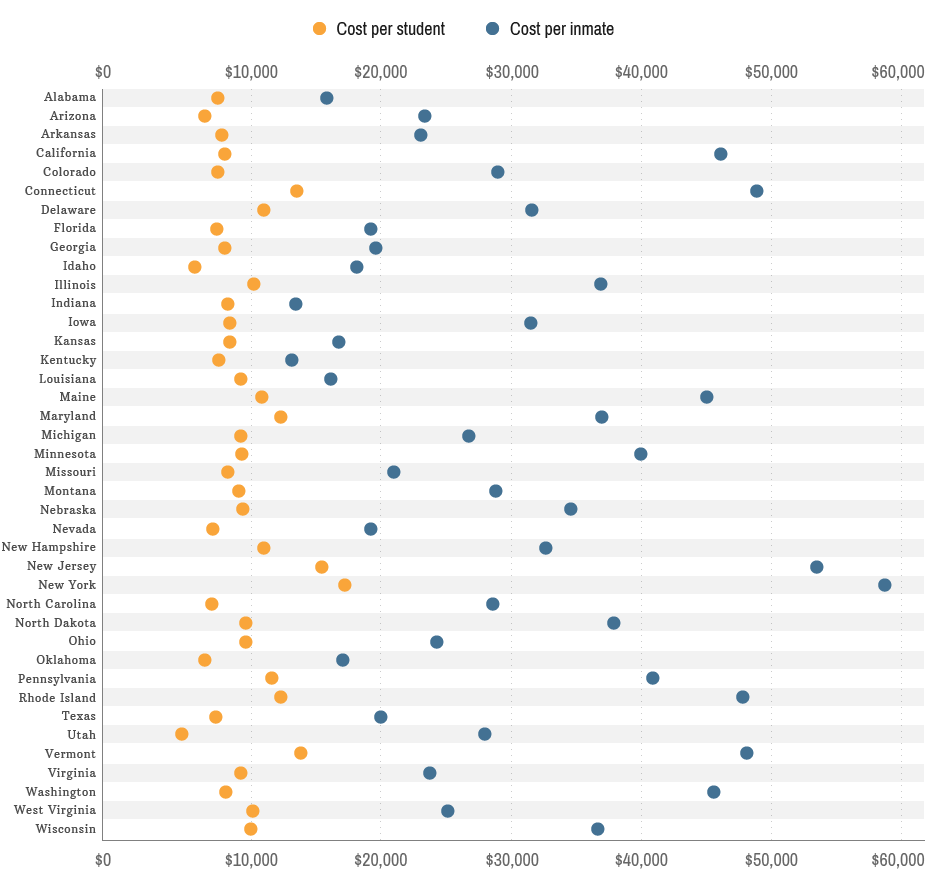
How did we not understand that waging a drug war against our own people would embed domestic violence in our society? Did we learn nothing from alcohol prohibition when, for fifteen years, underworld gangs selling illegal alcohol used their wealth to purchase weapons and political protection? How could Reagan and Congress think it was a good idea for “surplus” military weapons and equipment to be sold to our city police forces and used in commando tactics within our neighborhoods? How could we not see the horrible outcome of spending more money on prisons than education?

https://money.cnn.com/infographic/economy/education-vs-prison-costs/

We have to talk about immigration—what will stop the mass migration of people to our borders? For over a century, our corporations have been aided and abetted by our military to plunder Latin America for its natural resources and cheap labor. We have blood on our hands in the same tradition as Spain for its 300-year devastating occupation of the same lands. Doesn’t it make more sense to invest more heavily in helping solve problems in these countries so the people don’t have to leave home in order to have an economic future free from violence? What kind of future are we creating for ourselves by destroying Latino families and traumatizing innocent children?

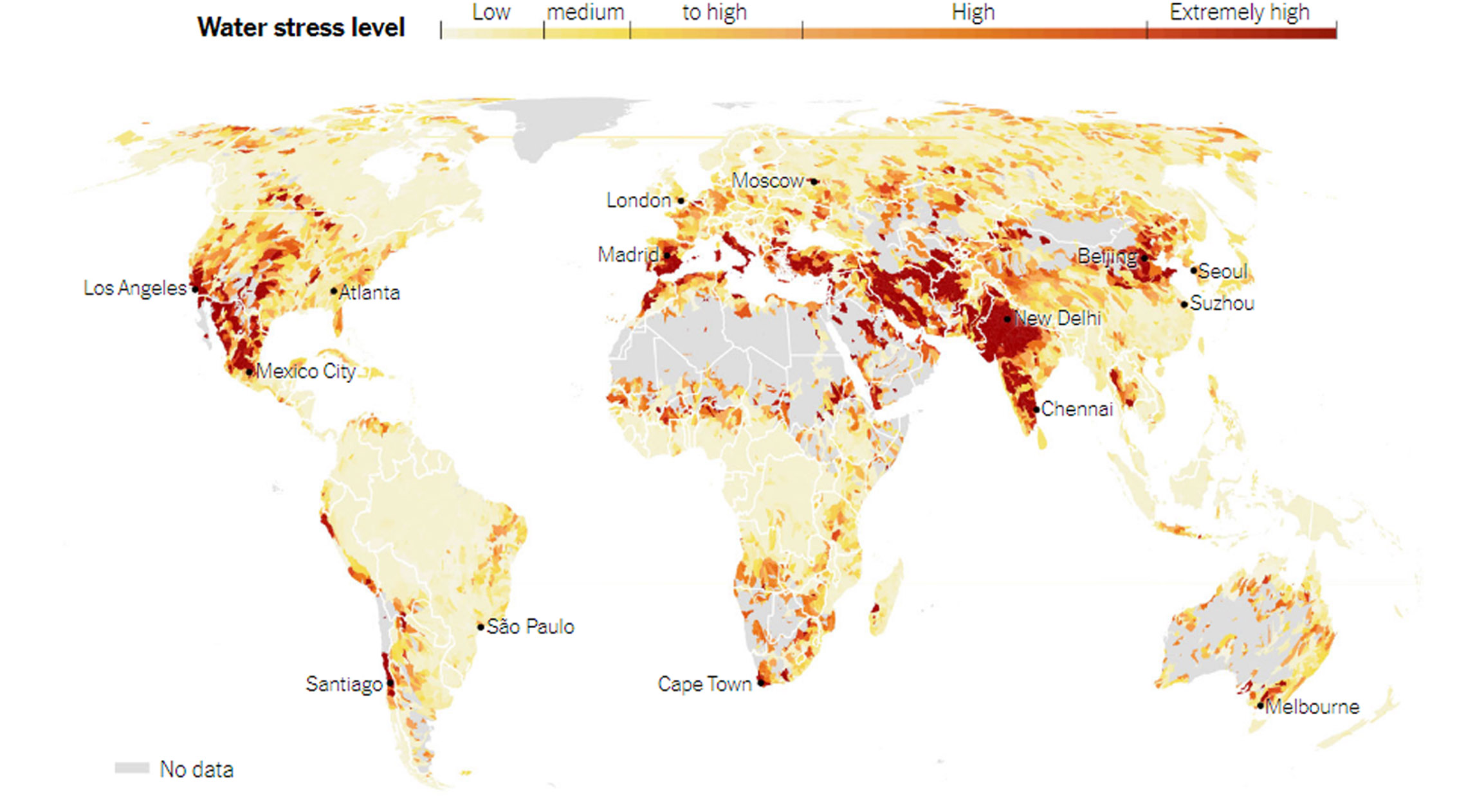
We have to talk about climate change. How can anyone still believe this is fake news? Are there truly so many people who don’t grasp the science of this issue that our entire nation’s public policy can get away with denying climate change exists? What happens when water supplies dry up, crops die on the ground, and there isn’t enough food?

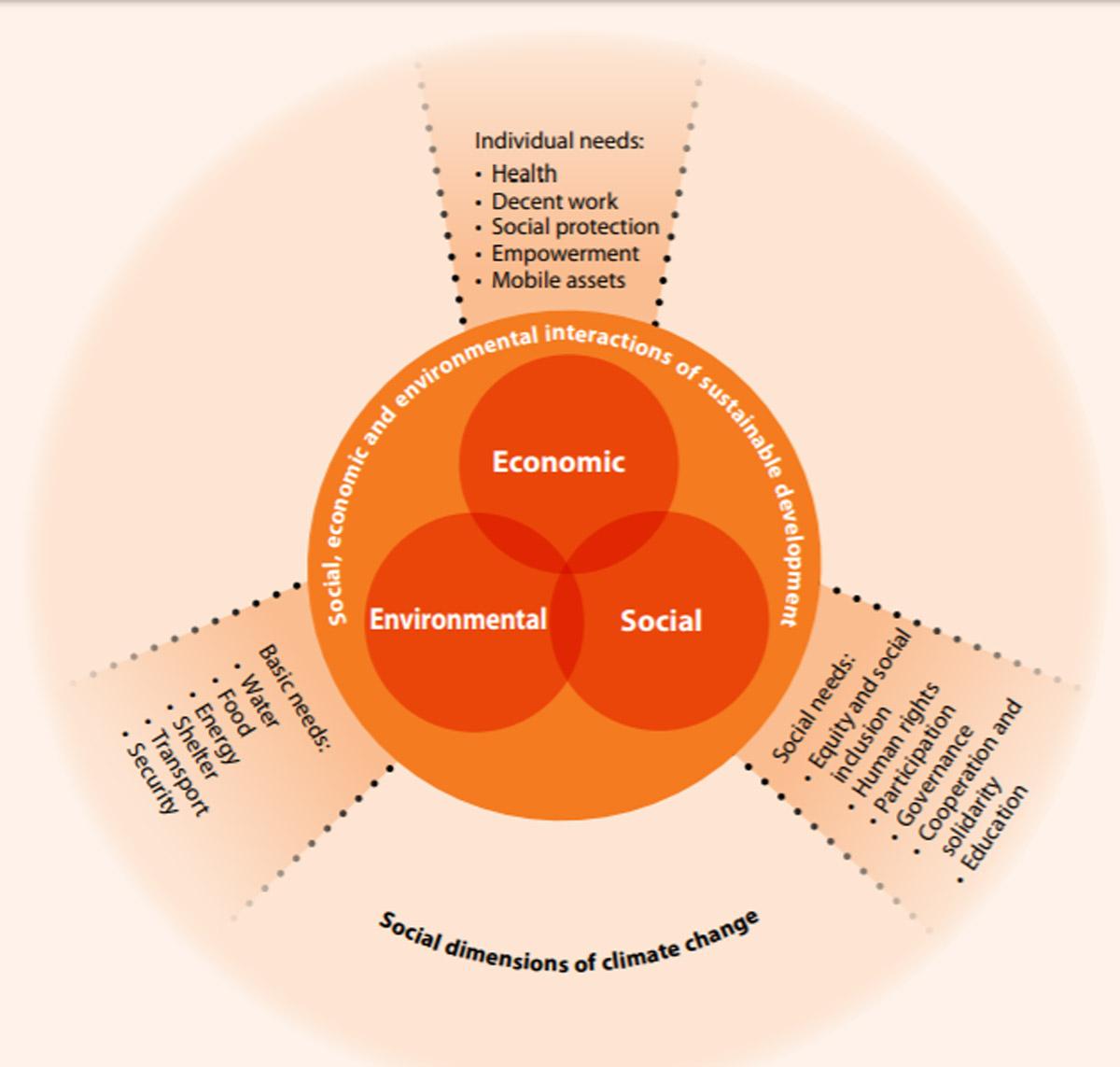
https://www.who.int/globalchange/mediacentre/events/2011/social-dimensions-of-climate-change.pdf

The impacts of climate change will increasingly affect the daily lives of people everywhere in terms of employment and livelihoods, health, housing, water, food security and nutrition, and the realization of gender equality and other human rights. Impacts are expected to hit those living in poverty the hardest, partly due to their more prevalent dependency on the very natural resources affected by climate change and also because they have less capacity to protect themselves, adapt or recuperate losses.

New York Times: A Quarter of Humanity Faces Looming Water Crises By Somini Sengupta and Weiyi Cai Aug. 6, 2019

We have to talk about population—we can’t continue blindly producing more people who need food, jobs, and a place to live when all of those resources are simultaneously shrinking.

In 1950 there were 2.5 billion people on the planet. Now in 2019, there are 7.7 billion. By the end of the century the UN expects a global population of 11.2 billion.

In 2015, there were approximately 141 million births. In the same year, around 57 million people died. It’s clear why the global population is increasing: there are many more births each year than there are deaths. Around 2.5 times as many.

https://ourworldindata.org/world-population-growth

If we think we have an immigration problem now, just wait.

Each of us bears a responsibility to learn the facts on these and any other issues facing us as individuals, communities, and as a nation, engage in discussion with others with the goal of finding common ground, and then participate in the implementation of solutions through community action and voting.

On Legalizing Drugs

“Americans must confront the reality that we are the market,” Secretary of State Rex Tillerson said this past Thursday. “We Americans must own this problem.”[1]

Meeting with his Mexican counterpart, Tillerson acknowledged the role of American drug consumption in the proliferation of violent Mexican drug cartels. Citing the enormous demand for heroin, cocaine, and marijuana by Americans eager to get high, he argued that “drug trafficking had to be addressed as a ‘business model,” attacking cash flow, gun procurement, production and distribution.’”

Oh, please. You’d think that an administration that promised new approaches would make some tiny effort to think outside the prohibition box. But never once in Tillerson’s comments or those of his colleague Homeland Security Secretary John Kelly did a new idea appear. Never once did they hint at any effort to consider the success of other nations where various types of legalization and regulation have greatly reduced drug problems.

Take, for example, the success of states like Colorado now in its fifth year of marijuana legalization. Sales of the legal herb generated tax revenues exceeding $150 million between January and October 2016, $50 million of which the state is using to pump up its school systems.[2] Significant shares of this revenue stream will support improved drug treatment, drug education programs, and various projects targeting at-risk populations.[3] All these expenditures help increase education, job skills, and opportunity for persons who might otherwise fall victim to substance abuse.

Yes, Americans are the market. But instead of devoting resources to learning more about why Americans are uniquely prone to drug use and abuse, outdated policies continue to treat Americans as children to be scolded and punished. This attitude helps foster voters’ disgust with government.

Punishment has become increasingly more severe as subsequent generations of policymakers have embraced the government-as-nanny model. Any incremental step away from prohibition has come wrapped in controversy, implemented only in states where the voice of reason has a chance to be heard. Now with the Trump Administration and its appointment of Jeff Sessions as head of the Justice Department, we face the prospect of a full-bore return to the good old failed policies of the past.

Why is there no discussion of legalization and regulation? A modest approach might be similar to that of Portugal, who years ago legalized all drugs. “Weed, cocaine, heroin, you name it – Portugal decided to treat possession and use of small quantities of these drugs as a public health issue, not a criminal one.”[4]

While our nation’s drug warriors lament that such an approach would lead to higher use rates among the young and greater ease of availability would increase use rates, the fact in Portugal is that youth aren’t using more, adults are using slightly less, the rates of HIV and Hep C infection are down, and – hear this – hardly anyone dies of overdose.

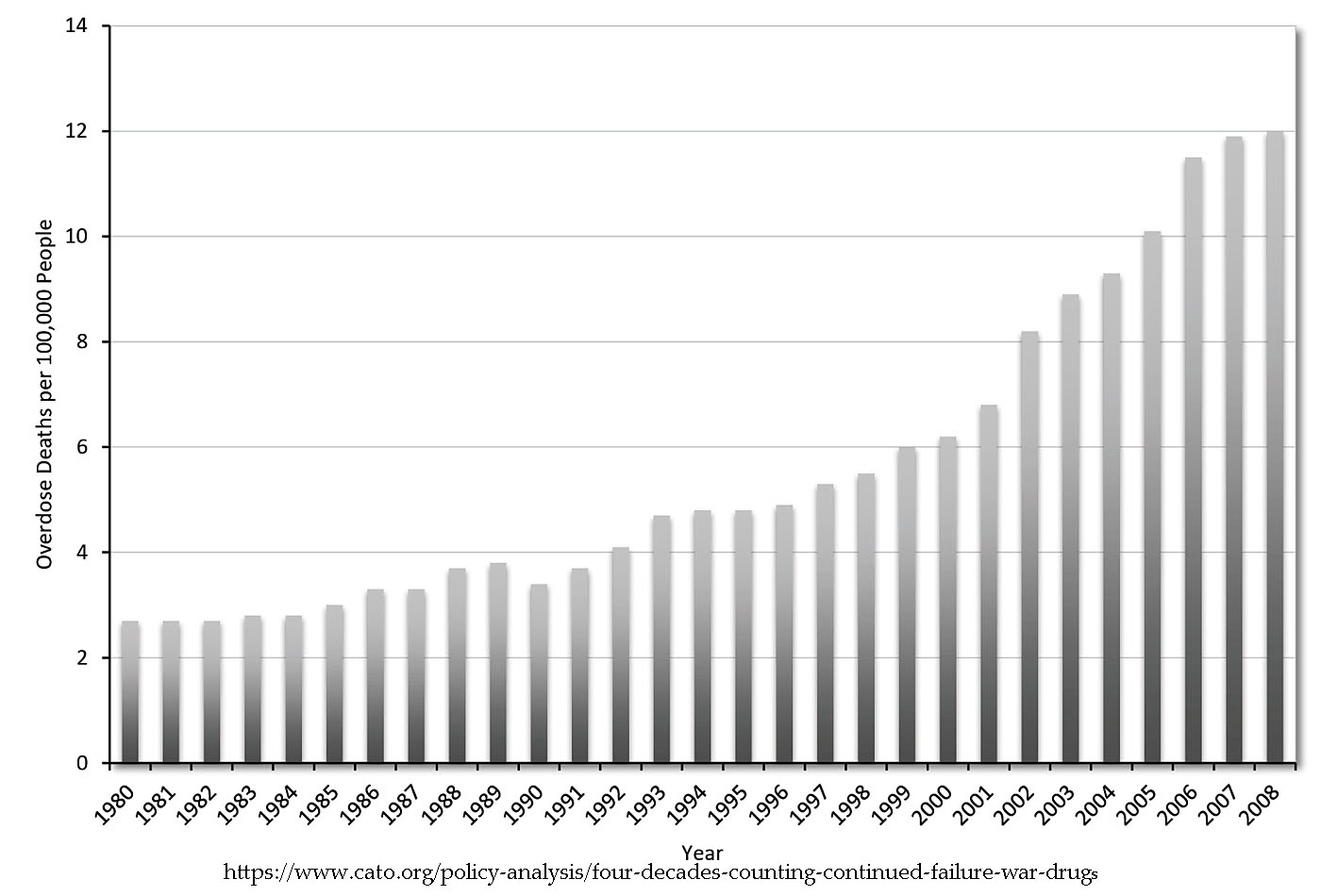
Compare that to the alarming rise in U. S. deaths from opiates which more than tripled between 2010 and 2015.

Drug overdose is the leading cause of accidental death in the US, with 52,404 lethal drug overdoses in 2015. Opioid addiction is driving this epidemic, with 20,101 overdose deaths related to prescription pain relievers, and 12,990 overdose deaths related to heroin.[5]

It’s way past time to face reality: people are going to use drugs. As far back as we can peer into human history, people have consumed everything from beer to cannabis to opium to hallucinogens. These practices are part of who we are, part of our religions, part of our ability to think outside or within ourselves.

Legitimate questions await answers about why various types of drug use throughout the millennia have transformed into today’s raging torrent of human suffering, but we’re not devoting any resources to answer those questions. Have the pressures of our fast-paced modern age forced us to seek refuge in intoxication? Is our multicultural society at fault in erasing old customs and rites of passage that could help us confront our existential crisis? Have the conveniences of our technological age created too much leisure time? What is the impact of a pharmaceutical industry’s marketing campaign flooding us with ads suggesting that the solution to every human ill is a drug?

We simply don’t know.

We should have learned a hundred years ago that criminalizing a popular intoxicant only creates bigger problems. Those who championed alcohol prohibition wanted to stamp out drunkenness. The blissful concept assumed that if alcohol were made illegal and its producers and users criminalized, everyone would simply stop drinking.

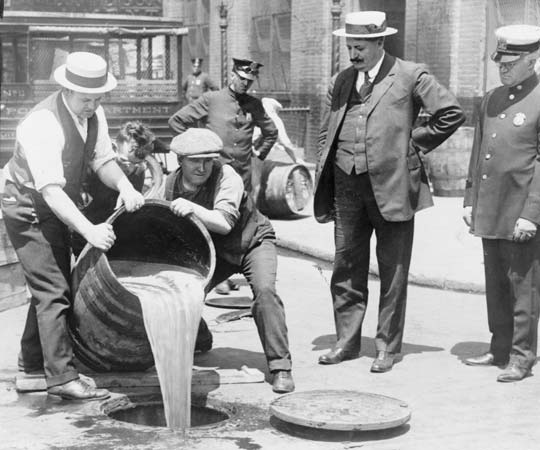
New York City Deputy Police Commissioner John A. Leach (right) watching agents pour liquor into the … New York World-Telegram and the Sun Newspaper Photograph Collection/Library of Congress, Washington, D.C. (neg. no. LC-USZ62-123257)

Far from it. For their trouble in passing the Eighteenth Amendment, the “dry” crusaders found their cities overrun by heavily armed criminals fighting over territory. People flaunted the law, patronizing highly popular speakeasies where drinking served as joyous rebellion against overweening authority.[6] No matter how many barrels of liquor were spilled into public gutters, ever more enterprising moonshiners set up shop in hidden hollows.

It took just over fourteen years for prohibition fervor to sour. Amendment Twenty reversed it in 1933.

As Lincoln famously said in 1840:

“Prohibition… goes beyond the bounds of reason in that it attempts to control a man’s appetite by legislation and makes a crime out of things that are not crimes… A prohibition law strikes a blow at the very principles upon which our government was founded.”[8]

Sadly, it seems little of this lesson actually sank in. Prohibition policies continue to frame our national approach to substance use and abuse, siphoning money into hit squads of heavily armed urban police and burgeoning prisons instead of desperately needed research and treatment of addiction.

Reality is that prohibition does nothing to reduce the market for drugs, but it does create a thriving underworld where dealers make huge profits. Stamp out every drug producer/dealer in the nation and tomorrow another crop will rise to the surface. Among the poor, especially those in marginal economies of Mexico and other Latin American countries, the potential benefits far outweigh the risks. Our inner city youth’s only hope of achieving the American dream seems to lie in the profitable drug trade. It’s about supply and demand.

The economics of prohibition can’t be overstated. Trade in illegal drugs generates so much profit that gangs can afford all the expensive weapons they might ever want. The spiraling up of urban warfare now involves military gear and tactics among the police and armor-piercing bullets in automatic weapons carried by adolescent criminals. The payoff comes in fancy cars, jewelry, and a lifestyle not achievable by legal means. Tax free.

A war on drugs is, after all, a war on our people, with rising collateral damage to our cities, institutions, and most of all, innocent bystanders.

Ironically, prohibition policies fail utterly to accomplish the goal of eradicating drug use/abuse. A smattering of evidence from states with legalized marijuana shows that teen use has dropped, suggesting that by removing the ‘forbidden fruit’ aspect of the drug, rebellions teens may lose interest. Meanwhile on the black market, no ID is required for purchase, and studies have found that teenagers can obtain marijuana more easily than beer. [9]

We the people have to decide what we’re going to do about this, because our so-called ‘leaders’ won’t make the first move. We have to decide and then make our voices heard. Compare:

  • a militarized police force versus friendly neighborhood police to protect and serve.
  • urban warfare versus reclaimed neighborhoods and inner cities
  • illegal search and seizure and loss of property even you’re not convicted of a crime versus government butting out of private lives
  • an overwhelmed judicial system versus our Constitutionally-guaranteed due process
  • half of federal prisoners in jail for drugs and the fact that drug offenses comprise the most serious offense for 16% of state prisoners versus an enormous reduction of prison population
  • our ever-growing investment in prisons versus a renewed investment in schools, mental health care, and state-of-the-art addiction treatment centers.
  • taxpayers struggling under drug war costs versus a regulated, taxed drug industry ensuring purity, restricting sales to adults only, and producing substantial new revenue streams
  • American citizens treated as children by government deciding what they can do in their personal lives versus each person responsible for his/her welfare. Want to be homeless, die in a ditch? Go ahead. Ask for help, we’ll be there for you.
  • overdose of drugs like heroin often resulting from zero information about purity or strength versus a regulated market that includes labeling for purity and precautions about use.

There are no upsides to the drug war. By any tally, this approach has been an enormous policy fiasco partly responsible for the decline of inner cities and disrespect for government in general. Government has never bothered to assess the effectiveness of its policies. No one can cite data showing that getting tough on drug traders and users has reduced supply or demand.

Indeed, judging by the rhetoric of our newest batch of politicos and the news flowing to our ears and eyes on a daily basis, we can say with certainty that drug prohibition continues to be an abysmal failure.

~~~

[1] http://www.latimes.com/politics/washington/la-na-essential-washington-updates-tillerson-puts-onus-of-drug-trafficking-1495131274-htmlstory.html

[2] http://fortune.com/2016/12/13/colorado-billion-legal-marijuana-sales/

[3] https://leg.colorado.gov/sites/default/files/15-10_distribution_of_marijuana_tax_revenue_issue_brief_1.pdf

[4] https://www.washingtonpost.com/news/wonk/wp/2015/06/05/why-hardly-anyone-dies-from-a-drug-overdose-in-portugal/

[5] http://www.asam.org/docs/default-source/advocacy/opioid-addiction-disease-facts-figures.pdf

[6] https://en.wikipedia.org/wiki/Prohibition_in_the_United_States

[7] http://www.autofoundry.com/293/the-best-moonshine-cars-of-all-time/

[8] http://www.americanantiquarian.org/proceedings/44807229.pdf

[9] http://www.cbsnews.com/news/teens-pot-easier-to-buy-than-beer/

The Confederate Flag: Just Another Step

int l cyclopaedia vol 1 1 2f2 0021

I doubt I’ll ‘wow’ anyone with my observations about the problems of ‘Other’ in America. It’s all been said in one way or another. But I think it’s worth pointing out that we still don’t get it.

The recent take-down of the Confederate flag is a good example.

In this eight-second attention span world, it’s not difficult to understand why so many people find justification for their prejudices. Unless we know history and have learned to reason, we have little chance to appreciate other people’s reality. Instead we see anything not of our ‘in group’ with fear and anger—an eight-second take.

Racism, for example. The longer version goes like this. Ripped from their native lands and cultures, indigenous African people sold into slavery had no previous experience in Western norms. And aside from the lash of a whip, precious little of those norms were imbued when they arrived on our shores. In the fields of the American South, they weren’t here to learn our ways but to labor as a slightly more capable worker than a mule. For two hundred years, they weren’t educated or otherwise enabled to gain knowledge of Western customs.

Then one hundred fifty years ago, they were turned loose. This would have been a good time to wrap these folks in our arms and invest significant resources in education, social services, and other methods of making them part of our world. But few considered them ‘equal’ whether or not they believed slavery to be wrong.

And how could we consider them equal?

They weren’t like us. They didn’t talk like us, didn’t look like us, and didn’t act like us. They were ignorant, uneducated, unsophisticated. They suffered all the disabilities of their isolated and abused status: a poor grip on our language, cobbled together speech patterns, behaviors and beliefs that reflected their African roots.

These characteristics justified a continuing discrimination that hasn’t yet ended. Ample examples exist today of blacks who exhibit tribal behavior in angry demonstrations or celebrations, whose speech holds little in common with ‘white’ speech, whose appearances are different from the white norm. Unequal and inadequate education, poll taxes, economic exploitation, Jim Crow, and direct attacks on any and all aspects of Black community perpetuate this vicious cycle.

Yes, there were and are exceptions. Blacks who matriculated through the institutions of white culture, who intermingled and socialized with whites, became—surprise—just as educated, intelligent, and sophisticated as many whites!

Substitute ‘Mexican’ or ‘Native American’ or ‘Italian’ for the word ‘Black’ and the truth of our cultural tendency to operate from a hard-wired position of prejudice speaks for itself. But unlike other immigrants to American shores, Blacks suffer an additional stigma. Because we knew Blacks had been enslaved, beaten and abused, their families broken apart, and their traditions denigrated, it didn’t take a lot of mental arithmetic for us to believe that freed Blacks would have it in for us.

If you’d been treated that way, wouldn’t you be mad as hell?

So as soon as Blacks could walk freely among us, fear took over. The Ku Klux Klan formed to save white women from black men, because just as surely as white slave owners had ‘improved’ the black race by rape and interbreeding, why wouldn’t we assume that black men would want to do the same? Blacks who talked back, organized with labor unions, had the nerve to walk about in white society were quietly lynched or burned out of their churches and homes. If not at the end of a whip as slave, at least the black could be kept in his ‘place’ through systematic terrorism.

In its most recent incarnation, the preferred instrument of our racial prejudice has been drug laws. Laws against opium (1914, 1935) had to do with controlling increasingly unpopular Chinese immigrants. (The railroads were built and the mines had become mechanized. No more Chinese needed.) Laws against marijuana (1937) had to do with controlling Blacks and Mexicans. (During the Great Depression, these two groups were seen as competition for scarce jobs, especially in the agricultural South and Midwest.)

anslinger copyAs stated before Congress by Henry Anslinger, godfather of our federal drug control agencies, banning marijuana was a matter of protecting white women. Coming in off a heady run busting moonshiners, Anslinger probably hadn’t failed to notice that the 1932 end of alcohol prohibition could easily spell the end of his job unless he came up with more substances to demonize.

In a perhaps-not-so-coincidental coincidence, drug prohibition laws expanded in direct proportion to the success of the civil rights movement. Arguably, hippies were the intended target of stricter drug policy, but like any unenforceable law, drug prohibition became an easy tool to use selectively against anyone that law enforcement wanted to target. After the Seventies when the counterculture had gone underground, drug policy became a useful weapon against blacks, resulting in arrest and incarceration rates for blacks that far exceeded white rates. (This in spite of the fact that multiple studies have found that blacks were statistically less likely to use and traffic drugs than their white neighbors. More here.)

As progressive elements in American culture have worked to bring an end to racial discrimination, those most likely to be threatened by ‘Other’ have become more active in resistance. It hasn’t helped that cynical political interests have seized on racism as an easy button to push in gaining avid supporters. Hand in hand with religious extremism, racism is a reliable tool for galvanizing voters. In response, persons elected by these demographics are resistant to passing laws that could feasibly reduce racism or religious extremism.

As a result, racists and religious extremists have become key operatives in hate-fueled reactionary politics. Private schools and homeschooling have increased in direct proportion to forced school integration. Fights over academic standards and tax allocations to schools are essentially fights over whether minorities will have access to equal education. The development and expansion of suburban neighborhoods parallel the consolidation of minority groups in the inner cities. Every advantage offered to Blacks in order to help them break out of the poverty and cultural isolation spawned by their history in America is seen as a direct ‘taking’ by extremist whites.

Their kids. Their jobs. Their tax dollars given away to undeserving welfare queens. The depraved depth of this unreasoning mindset has come to the big screen with Barack Obama’s presidency. Who has more than eight seconds to spare?

Drug laws have spawned a vast and lucrative underworld where the uneducated and stigmatized minority can grab a piece of the American dream. This is the path whereby the white extremist’s worst nightmare comes true. The terrible ‘Other’ is not only clasped to our culture’s bosom through laws attempting to force equality but also empowered to own guns and defy police. That this point has been reached in an accelerating statistic of black on black crime fails to succor the terrified white extremist.

They are coming for you and they have guns, a fear not missed by the gun industry and its lobbyists. Another eight-second response.

The combination of white extremist fear, the fallout of drug prohibition, and the rise of militarized police forces has brought us to the brink of urban warfare.  What might be a routine administrative process in a white neighborhood becomes a major SWAT operation in the black one where fifty men in body armor and wielding assault rifles storm an apartment with flash-bangs and battering rams in order to arrest a single black man. It’s a bigger operation than the take-down of Osama bin Laden.

This would be almost comical if it wasn’t so outrageous. So horrifying. So un-American.

There is nothing that we can do to immediately change the key factors which maintain the ‘Otherness’ of Blacks. They are not going to become light-skinned nor are their facial features going to become more European. They can’t immediately overcome centuries of failure by American law and institutions to facilitate equal and adequate skills conducive to social assimilation.

Unfortunately, there is also little we can do to immediately change the key factors which maintain the prejudices of extremist whites. They are of a willfully ignorant tradition, raised to see the world from an essentially defensive position. Like the minorities they despise, this segment of the white population is more often undereducated and poor. The threat is a misunderstood and exaggerated ‘Other’—other races, other nationalities, other religious beliefs, other lifestyles, other sexualities.

Taking down the Confederate flag as a symbolic act might reassure minorities and awaken whites to the underlying problem. But the backlash isn’t going to quickly die away. The flag has been an important identifier used to mark others of their own kind. Its denigration and disappearance only increases the extremists’ sense of threat.

What we absolutely must understand both on a personal level as well in our politics and public life is how much more remains to be done. Yes, we’ve come a long way. But much remains to be done. Government must become less ambivalent in enforcing meaningful educational standards and in addressing the physical and mental needs of families and children, not just for Blacks who have long suffered the parental nightmare of their children falling through the cracks, but for whites who ironically have the same problem.

Both need better reasoning skills and understanding of history.

Both must be brought to the table where they can meet and become friends with ‘Other.’

We can’t bargain hunt for solutions. We have to put our money on our people. All of them.

A rising tide lifts all boats.

[If you’re wondering about my use of a capital ‘B’ for Blacks and not a capital for whites, here’s some explanation.]