Smelser, Andrews, Clark, Hall, Massey, and Eubanks
Plus Lovelady and Futrell
in Greene County, Arkansas
Combining generations of family history and up-to-date genealogical information, this collection of ancestry information tracks a group of families which settled in Greene County, Arkansas in the first two decades of statehood. Family trees, deed records, census records, and other official records create a factual framework for personal narratives and vintage photographs, creating a fascinating archive of information for any descendant of these families as well as any fan of local history.
Each marriage between these pioneer families brought certain talents and backgrounds to the next generation. They farmed the rich land of Crowley’s Ridge and other Greene County areas, weathered the storms of poverty and loss, and suffered the losses to sickness and war. Yet they survived, and their great-grandchildren entered the twentieth century determined to continue as they had begun.
Now the 21st century brings us the internet with its vast collection of historical documents, making it finally possible to reflect on their adventures and aspirations. The story of these families is the story of thousands of us descended from them. Includes an extensive ‘vocabulary’ of downhome sayings.
My mother’s family at St. Paul, Arkansas, early 1920s. Mom is third from left.
Without question, discovering the people from whom you descend is an exhilarating and fascinating endeavor. Idiosyncrasies of your known kinsmen—and yourself—suddenly make a lot of sense, not to mention that red hair or tall stature. It’s remarkably emotional to learn of an ancestor who fought to the death in a war or whose wife–your 3x great grandmother–died in house fire.
Several internet sources for genealogical information are free—simply search “Name” “date of birth” and if you know it, “location” and you’ll discover a group of results with respectable information. Sadly, you’ll also discover a trove of spammers and click bait.
But a word to the wise. The most extensive and useful source, Ancestry.com, also can be less than forthcoming. Here are a few helpful hints.
Using the “Search” “All Collections” option yields the best results especially for a beginner. Once you’ve entered the name and whatever other information you may have on hand, you’ll find results that don’t exactly match up with what you’re looking for.
Refinements could include selecting the gender for your subject, isolating the location to “exact” as shown by the arrow, and narrowing the birth year to within a year or two of the assumed date of birth. Yet in the case of Albert Taylor as shown in the image, the search yields nothing more than the 1860 census where, at age 17, he and his 19-year-old sister Jane reside in the household of Alcie Haton [Heaton] to whom his relationship is not known.
My interest in Albert Taylor is his military record with the 1st Arkansas Cavalry, U.S., where he served in Company L as a private. His death in the regiment records occurred February 22, 1863, as shown on one of the most extensive records of Civil War military personnel, the Edward G. Gerdes Civil War homepage. He is also listed in this regiment at the National Park Service website. But in Ancestry.com, his name does not appear in military records.
One of the most frustrating of Ancestry.com problems is the tendency of many family historians to simply duplicate what someone else has posted to that lineage history without confirming any of the information. In an ideal situation, a search of Family Trees produces a lot of histories. For example, my search for information about Van Buren Covington, who lost his life in 1864 while serving in Co. A, 1st AR Cavalry, led to an Ancestry.com Family Tree record showing only one result, as seen below. The only option from here is to click on the name of his fourteen-year-old bride, which yields her family background, locations of family members, and other possibly useful leads.
But in many cases, Family Tree results show one or two trees with two or three ‘records’ or ‘sources’ and then the rest of the trees, of which there may be dozens, have no records and only one source, if any. Inevitably, these trees perpetuate inaccurate information and are simply not to be trusted. This problem grows exponentially as you track family trees back through generations because researching materials established before modern record keeping involves tedious attention to details often preserved in an arcane manner. So don’t just take the first couple of family trees as gospel; make a thorough investigation of those with the most sources and records, and compare the information before accepting it.
One option with a search result like this one with 0 records and 0 sources is to do another search on the father’s name. Or continue with this search until you find some with multiple records and sources.
Note: If your ancestry leads you to records in another country, you’ll have to pay Ancestry.com an additional subscription fee in order to access those records.
Ancestry.com is very much a user-created database assisted by an extensive organizational effort on the part of the company to provide as many institutional records as possible. But nothing is perfect. Subscribe if you want to search your genealogy, enjoy the nuggets of pure gold that you find, but always remain aware that in order to glean the greatest accuracy, you must not only limit your family tree searches to those with multiple records and sources, but also compare them to information found on other internet sites.
For Van Buren Covington, an internet search beyond Ancestry.com resulted in several discoveries. Geni.com shows his full name was Martin Van Buren Covington, born in 1839, not 1837. It also shows family members. But beware—Geni.com is one of those sites that requires membership before giving out any further info. You may find useful free resources at genealogy.com and many more. Bottom line? HAVE FUN!
A story passed down through William’s great grandson John Carl Campbell is that four Campbell brothers stowed away on a ship leaving Liverpool circa 1760 for passage to the American colonies. Upon landing at the Eastern seaboard, the brothers separated and lost contact with each other. One of the brothers, John Campbell, or his son, made his way to Tennessee or eastern Arkansas by the early 1800s.[1]
As stated earlier and by our relative David Dale Combs, another family historian, “After the war in Scotland of the 1700s, Scots came to America by the thousands. Among them were hundreds of Campbell families, and many of them had numerous children. To make matters worse, some of the most common given names in these Campbell families were William, John, and James. …The search for the parents of our William Campbell is equivalent to looking for the proverbial needle in the haystack.”
In researching this history, we have found no proof of the Atlantic crossing story. Known historical facts, however, support Dale’s statement.
William’s First Marriage
William’s name appears in public records in Independence County, Arkansas in 1845 when filed for a divorce from his wife Sarah.
A marriage record of William Campbell to Sarah Graves is found in Campbell County, Tennessee, stating that on April 21, 1842 by J. C. Petree, J.P. joined the couple in matrimony. He would have been 22-24 years old at this time, and Sarah 19.
On Thursday, February 6, 1845: PETITION FOR DIVORCE:[2]
William Campbell, complainant vs Sarah Campbell, defendant
William Campbell vs Sarah Campbell: BILL FOR DIVORCE
As now on this day comes the said complainant by his solicitor, and also comes the said defendant in her own proper person, and waives all process, and the service thereof, and files her answer to the complainant’s bill of complaint whereby she admits the charges in said bill. And it appearing to the satisfaction of the court here that the bond of matrimony here-to-fore entered into and none existing, between the said William Campbell and Sarah Campbell be and the same are hereby dissolved, set aside and held for naught, and the said parties and each of them, are hereby restored to all the rights, privileges and immunities of single and unmarried persons.
And it is further ordered and decreed by the court that the said complainant pay all the costs of this suit. Therefore, it is considered by the court that the said defendant do have and recover of and from said plaintiff all the costs in and about this suit expended.
The record makes clear that William was represented by his solicitor and did not show up in person, while Sarah was present “in her own proper person” and “admits the charges in said bill.” Apparently William and Sarah traveled from TN to AR together and came to Independence Co before February 1845. Divorces were extremely rare in those times, generally filed by only the husband in cases of adultery. The information contained here suggests he originated in Campbell County, TN. No further evidence of his place of origins has been found.
This marriage record linked to a death certificate of a male named Manuel Hickey Campbell born January 31, 1843 at Knox Co., TN, as the son of Sarah Graves and William Campbell.[4]
The 1850 census for Campbell Co., TN finds Sarah Graves age 27 living in the household of Ashley and Elizabeth Miller with their four children not including Sarah’s son Manuel. Elizabeth age 25 was the sister of Sarah.[5] This brings up the possibility that upon the divorce, William took Manuel into his household for some unknown period of time. This would be rare for a single man.
1860 census for Glenwood, Mills, IA finds Sarah Campbell age 31, b TN with personal estate of $200 as head of household with Manuel Campbell age 16 and William Campbell age 8. In this record, Sarah states no livelihood and cannot read or write. This record assigns a birth year for William at 1852.[6]
Military records for Manuel H. Campbell show he filed for a disability in 1906, and that he served in the Louisiana 4th Infantry Regiment, Company A, Confederate States of America.[7] The 4th Louisiana Infantry organized at New Orleans, Louisiana in April, 1861. The 4th was included in the surrender on May 4, 1865.Additional military records show he entered the military on 20 Oct 1861.[8]
1870 census found for Emmanuel Campbell, age 27, born TN, living at Haynie Post office, Lyons, Mills Co., IA where he works at farm labor. He has married to Mary Campbell and cannot read or write.
Manuel H. Campbell
Marriage records for M H Campbell shows marriage to Martha Leeky on Nov 8, 1886, at Roane Co., TN.
The 1900 census for William Campbell is taken at Rock Bluff, Cass Co., NE. He’s marked as single age 44, born Feb 1856. Sarah “Burchard” resides with him, age 75, born Dec 1824, widowed, b. TN, parents b TN.[9]
The 1910 census finds Sarah B. Campbell as head of household, age 86 living with William Campbell age 61, born 1849, at Rock Bluff, Cass Co Nebraska. Sarah is still illiterate.[10]
1920 census at Rock Bluff finds William alone, age 68, same data. Next door to two Campbell families apparently not related. Sarah’s death records have not been found. Clearly William (the son) loses track of his age/birth year. The 1900 census that gives Feb 1856 as his birthdate conflicts with the 1860 census when his mother states he was eight years old, i.e. born in 1852. Either way, either he is not the son of William (the older) or William was slipping out on Melinda (not likely).
Manuel’s Find a Grave records shows a birth day of Jan 31, 1843, at Knoxville, TN. His wife was named Martha Elizabeth and they had 13 children with Campbell sons named Clyde J., William Franklin, Manuel Howard, and James Lafayette. He died Mar 25, 1917 at Johnson City, Wash. Co., TN and is buried at Monte Vista Memorial Park.[11]
Was William actually the child of William? Did Sarah name her second son William out of spite, or because he was actually William’s son? If so, that means he slipped around on his new bride Melinda, an unlikely scenario.
William’s Land
Deed records for Independence County show a December 22, 1848 deed (Book G-625) by John L. Waggoner conveying title to William Campbell, both of the county, for the amount of $100 for land described as SE quarter of SW quarter Section 13, and NE quarter of NW quarter Section 24, both Township 12, Range 6 West. Witnessed by Thomas S. Coiles (?) and E. Morgan.
On November 30, 1849, Independence County Deed Book G-624 shows the transfer of land from John Agnew to William Campbell for $55, described as NW quarter of the NE quarter of Sect 24, Township 24, 12 N of Range 6 W, containing 40 acres. Wit. Wm. S. McGuire, Ringgold.
William’s Second Wife
William’s name appeared in the 1850 Arkansas census for Independence County, where he gave his age as 32, residing in Green Briar Township, working as a stone mason, and having real estate assets of $360. The following spring, on April 10, 1851, William married Melinda “Lennie, Lina” Lamberson at her father’s home in Independence County in services performed by Henry Powell, Minister of the Gospel, Methodist Episcopal Church, South. William was 32 and Lennie was 17.
Miss Lamberson was born February 13, 1832, in Gallatin County, Illinois. Her father, Peter Lamberson, was a farmer born 1799 in Pennsylvania. His wife Elizabeth (Knight), also born in 1799, was from North Carolina. According to the 1850 Arkansas census, their children besides Melinda were Leonard D. b. 1824, William Sira Norris “WSN” b. 1827, Catherine, Elizabeth b. 1831, and Eliza, age fourteen born Illinois. Living at an adjacent property was Peter and Elizabeth’s oldest child, Leonard Lamberson, age 26 and born in Tennessee, his wife Elizabeth age 22 born TN, and three children born in Arkansas: Nancy age four, James K. P. age three, and Thomas J., age one.
His Losses
Unfortunately, in December 1851, William lost a suit filed against him by Thomas E. Hughs [Hughes] for a debt of $19.25. Some time passed, perhaps in negotiation, before the final outcome would be decided. The following is shown in the Independence County Court Record M-170:
On October 29, 1857, Sheriff George W. Daugherty deeded to James B. Kimbro certain lands belonging to William Campbell in satisfaction of a writ Fiera Facias[12] in the name of Thomas E. Hughs presented to the sheriff July 29, 1857,
“that whereas the aforesaid Thomas B. Hughs on the 16th day of December AD 1851 did file in the office of the Clerk of the Circuit Court of the County of Independence a certified copy of a certain judgement rendered by Fleming Pate, Esq, a justice of the peace in and for the township of Round Pond, in the said County of Independence whereby it appears that the said Justice of the Peace did on the 15th day of November 1851 render judgment in his favor against William Campbell for nineteen dollars and forty cents”[13] with court costs of one dollar and eighty-five cents. Further, “an execution was issued thereon and the said execution has been returned that the defendant has no goods or chattels whereof to levy the same. And whereas the clerk of said circuit court did at the same time of filing such transcript as aforesaid enter such judgement in the docks of said circuit court for judgements and decrees in the manner and provided by law to the end that the same might have like effect and be carried into execution in the same manner as the judgements of said circuit court. You are therefore commanded that of the goods and chattels lands and tenements of the said William Campbell you cause to be made the debt damages and costs aforesaid together with the sum of – dollars and fifty cents additional cots for entering transcript and have the said debt damages and costs and additional costs before our said circuit court on the 7th day of September AD 1857 and then and there certify how you have executed this writ. And in obedience to the commands of said writ and in order that the same might be executed and satisfied, I did afterwards to wit: on the 30th day of July AD1857 in said county then and there levy upon and seize the following described property as the property of said William Campbell, to wit: The SE ¼ of the SW ¼ of Section 13 and the NE ¼ of the NW ¼ of Section 24 in Town 12 N, of Range 6 West containing in the aggregate 80 acres more or less.”
The record goes on to describe the sale of these lands at the courthouse door on Monday the 7th day of September 1857. The highest bidder was James B. Kimbro for $81.25 and the property was conveyed to Kimbro by the sheriff’s deed.[14]
This was not the first loss of land for William in his hopeful new start in Arkansas. The forty acres purchased in 1849 was sold just four years later on October 4, 1853, to J. H. Ringgold, the same man who had served as witness to the original sale and perhaps a neighbor to William.[15]
Ten years later, according to the 1860 Howell Co. Missouri census, William Campbell, his wife, and three children lived in Spring Creek Township, where he was a stone mason with $200 in assets. His wife Lennie was 28 at the time, John R. was three (this age must be an error because later records give an 1853 birthdate for John), James William was two, and Sarah E. was one month. Their second child, Mary Molly, born 1855, was probably next door at the home of her grandparents, Peter and Elizabeth Lamberson, aged sixty.
Efforts to determine when both families moved to Missouri have been fruitless. Howell County deed records went up in flames when the courthouse burned during the war, and nothing in the deed records of Independence County determine clearly when William moved away. It may be presumed that the 1853 sale of the forty acres was the point at which the family moved, and that the judgement rendered in 1851 against him lingered unattended to be finally decided in 1857 with William absent.
His Family
Determination of birthplaces for the three oldest children has been in question with many census records showing Arkansas as the place of birth. However, given that the 1860 census information was given by the parents rather than based on childhood memories, we accept the Howell County place of birth as the correct one. That would mean that William’s young wife was six months pregnant with their first child when they moved from Arkansas unless he had previously taken her to a new home in Missouri before returning to Arkansas to sell the land.
Arrow points to Pottersville, Missouri
Howell County, Missouri, is situated just north of the Arkansas state line above Fulton County, Arkansas, a distance of about one hundred miles from William’s previous home in Arkansas. The place of Campbell’s Missouri residency, Spring Creek Township, is in the central-western part of the county. The community of Pottersville is located in the center of the township, approximately ten miles west of West Plains and the site of an early village and post office some of which may have been the product of Campbell’s masonry work. Seven miles west of the village, an early water grist mill operated on Spring Creek. The mill and village pre-dated the Civil War. Early settlers arriving in this area by 1832 found plentiful game; cured hides were among items traded at the nearest post at Rolla, about 110 miles away.
Howell County was decimated by guerilla warfare before, during and after the Civil War. Factional gangs roamed the countryside taking what they found and killing anyone who got in their way. A small, wooden courthouse built on the square in West Plains in 1859 was burned in 1862. In the fall of 1863, guerrillas burned all of West Plains, devastating the community; historians state not one person remained. The county was reorganized three years later.
William Campbell enlisted September 25, 1862, in Oregon County, Missouri. He served in Company E, 8th Battalion, Missouri Infantry of the Confederate States of America. According to various histories of the Civil War, the 8th was a re-organized unit originally formed in 1861 by Missouri Governor Claiborne Fox Jackson in a last-ditch effort to keep Missouri neutral in the looming conflict. Placed under the command of former Missouri Governor Sterling Price, the unit fought in the “Bull Run of the West,” the Battle of Wilson’s Creek on August 10, 1861. Subsequent battles included Dry Woods Creek. The unit disbanded in the summer of 1862, although several of its members participated in the Battle of Pea Ridge in Northwest Arkansas. The unit reformed as the 8th in late summer 1862, which was the time William joined.
After a four-day march in early fall 1862, the unit arrived at Spring River in Northwest Arkansas. Recruits were pressured to join other units. The commander, Colonel Mitchell, moved his unit to Camp Bragg near Batesville, and then traveled to Little Rock in an effort to improve his troops’ situation. Upon his return, he moved the unit to the camp of Col. William Coleman. Later in the fall, the unit joined with massed Confederate troops under the command of General T. C. Hindman. Among 9,000 infantry, 2,000 cavalry, and 22 pieces of artillery, Company E’s men marched from Van Buren north for a major engagement with Union forces in early December 1862. On the morning of December 7th, they broke camp at 4 a.m. and marched fifteen miles to pasture land at Prairie Grove, Arkansas. In the massive conflict that ensued there, the Missouri 8th reported none killed and twenty wounded. After the Battle of Prairie Grove, the 8th was assigned garrison duty at Ft. Pleasant, Arkansas for five months.
Few soldiers enjoyed garrison duty, monotonous in the best of times. Discipline and morale deteriorated with drinking, gambling, and fighting. It was during the garrison duty of the 8th Missouri Infantry that William last appears present in the official military record, April 30, 1863.
What Happened to William?
A story passed down by the descendants of John Randolph is that once the war ended, William was mustered out of the Army with a mule, his bedroll, and a little money. As he approached his house (location not named), he saw his wife standing on the porch with an infant in her arms. Without dismounting, he inquired as to the paternity of the child, to which she replied “Wes Wallace.” (It is not clear whether Mr. Wallace had taken up residence.) After a pause, William nodded his head, spat over the mule’s withers, and rode off. The story is that he went to Texas and was never heard from again.[16]
Another oral tradition regarding his subsequent whereabouts, passed down through the family of William’s son James William, asserted that he deserted his Army post and fled to Scotland, where he married and raised another family.
Neither story is true. According to subsequent research and documentation, it is known that upon abandoning his service in the 8th Missouri, William did in fact go to Texas but not in the circumstance of departure as described in the family story. Whether in some official capacity with the Confederate forces or on his own, after April 30, 1863, he went to Red River County, Texas, where he joined his brother-in-law William Sira Norris “WSN” Lamberson. WSN operated a stagecoach stop for a stage line that ran to Missouri, likely along the old Southwest Trail. WSN was a blacksmith and driver and had enlisted in a Red River Volunteer Unit, the William B. Stout Company, on June 29, 1861, as a private.[17] It is believed that WSN and William “ran guns” for the Confederacy. This may also have included a return trip south with cotton for French blockage runners.[18]
In a letter written late in his life, WSN’s oldest son, Peter Abel Lamberson, states that “Wm. S. N. Lamberson died Jan 13 1864 (in south TX) in the confederate servis [sic] as a teamster.”
There is a historical marker at Clarksville, Red River County, TX which states:
“Across the street from this site and facing the county courthouse which was later (1885) torn down, the
Running from St. Louis to the Red River Valley, the Southwest Trail became a major immigration route in the 1820s. By the 1830s more than 80 percent of the Arkansas territory’s population had entered through the Southwest Trail. https://en.wikipedia.org/wiki/Southwest_Trail
Donoho Hotel and Stage Stand operated during the Civil War. Travel in those years was heavy. Soldiers arriving in Texas from Arkansas, Indian Territory, or elsewhere would catch the stage here for home. Many called by to give news to the Clarksville Standard, one of fewer than 20 Texas papers to be published throughout the war. The Standard’s emphasis on personal news from camps was valued by soldiers’ families… 31 stage lines in Confederate Texas hauled mail, soldiers, civilians. 26 made connections with railroads or steamships, expediting travel.”[19]
Was this location part of WSN’s route? We don’t know. WSN Lamberson’s place of death and burial has not been confirmed, but it is believed that he died within the vast area called Kings Ranch. During the Civil War, this wealthy landowner controlled a large portion of southernmost Texas, an area was known as Kings Ranch. This landowner allowed supplies and guns to flow from Mexico and Gulf ports into the hands of rebel forces. When Union soldiers eventually raided the ranch, they killed most of the men there. It is believed that WSN died in this raid.[20]
William Campbell survived this particular battle and lived until early the next year before suffering injuries somewhere south of Red River County. Injured, William became ill (reportedly measles) and tried to get home. He got as far as WSN’s house, where WSN’s widow Martha Jones Lamberson was dying of “brain fever.”[21] She died February 26, 1865. Within a few days or maybe weeks, William also died.
WSN’s oldest son, Peter Abel Lamberson, was fifteen years old and would have been the one, perhaps assisted by neighbors, responsible for caring for and then burying his mother and uncle. He and the rest of Martha and WSN’s orphaned children were taken by the Jones family, none of whom knew how to get in touch with the Campbell family and so the information of William’s end did not get back to Melinda or their children.[22]
According to Peter Lamberson’s later account, “…Uncal Bill discharged as Confederate soldier on acct bad health. Couldn’t get to his home in Mo, came to our hous in Red R. County and died in 1865.”[23]
It may have been intentional on William’s part that he did not inform his wife Melinda of his whereabouts or military activity. The southern counties of Missouri and the northern counties of Arkansas where Malinda and four young children lived were the site of continuous conflict throughout the Civil War with both armies vying for control and conducting a scorched earth policy. In the region of Arkansas where William and Melinda had married, military activity centered on navigable portions of the White River. Eighteen officially-documented war engagements occurred in Independence County beginning with a skirmish at Batesville May 3, 1862. Two skirmishes occurred at Oil Trough Bottom. Expeditions, skirmishes, scouting, and attacks occurred throughout the area, including an attack at Jacksonport April 20, 1864. Likewise, farms and settlements in Howell County, Missouri were repeatedly burned and raided by both sides. Knowledge of William’s whereabouts would have been a liability for Melinda.
Other family historians disagree that once William went off to war, Lennie and the children were left to their own devices. The likelihood is good that he took time to help her set up an alternative place to reside and periodically visited at the new location with whatever resources he could manage. The idea that WSN’s stage route ventured as far north as the Missouri line lends credence to this idea.
According to family history (through descendants of William’s son James William), Lennie and the children hitchhiked to Newton County, Arkansas after William enlisted or, in some version, after the end of the war. At this point she would have been around 30 years old.
She was now the head of the household and had to make a home and provide for her family … Most of the country had been devastated by the Civil War … carpetbaggers often stole what little the people had left. The price of most things had skyrocketed and Confederate money held no value. She had a two-wheel cart for horse or ox. She had no house and no money with which to buy or build one, so she constructed a lean-to on (under) a cliff near a stream, probably using small logs, stones, and bark.”
Here the family had shelter from the winter’s cold. According to her grandson Dale Comb’s account, “she grew a garden and gathered what she could from the land. She was a good herbalist, knowing every flower, berry, green leaves, that were edible … She also shot squirrels and rabbits, and fished … She was a very resourceful person, not only provided for the physical needs of her children, but also their medical needs. She was a midwife or ‘granny woman.’”[24] Her children would have been important helpers, especially oldest son John Randolph who would have been twelve by 1865.
Following the apparent disappearance of William, Melinda produced a child named Wesley Wallace /Wallis, but the exact date of birth is unknown. The assumption is that she married Wallace since she took that name, as shown in her record of marriage to her third husband John Briggs.
On December 29, 1873, “Lenny” Wallis age 40 married John Briggs age 52 in Independence County, Arkansas, joined by Justice of the Peace W. H. Palmer.[25] In the 1880 census, the family is shown at Ash Grove, Green County, Missouri with John Brigg age 67, occupied as ‘miner,’ Malinda Brigg age 45, and stepson Wesley Wallace age eleven (yielding a birth year of 1869).[26] The household also included two boarders. Briggs died in 1911.
The 1900 census for Independence County Arkansas lists Wes Wallace as age 35, with a birth date of April 1865. He was shown as a day laborer owning his own home, married 14 years, with a current wife of age 25, and with seven children but only three living. Wallace’s birth year has been recorded in various documents as 1862, 1865, and 1869.
Melinda lived later years of her life with her son James William and family in Woodruff County Arkansas, where she died March 3, 1922, age 94. She was buried in Pumpkin Bend Cemetery outside McCrory, Woodruff County, Arkansas in an unmarked grave.
[1]Interview with John Carl Campbell 1988, at his home in Winslow Arkansas
[2]Independence County, AR, Chancery Court Record A, Pgs 100 & 102
[6]Year: 1860; Census Place: Glenwood, Mills, Iowa; Roll: M653_336; Page: 82; Family History Library Film: 803336
[7]The National Archives at Washington, D.C.; Washington, D.C.; NAI Title: U.S., Civil War Pension Index: General Index to Pension Files, 1861-1934; NAI Number: T288; Record Group Title: Records of the Department of Veterans Affairs, 1773-2007; Record Group Number: 15; Series Title: U.S., Civil War Pension Index: General Index to Pension Files, 1861-1934; Series Number: T288; Roll: 70 The
[12] A fieri facias is a writ of execution after judgment obtained in a legal action for debt or damages for the sheriff to levy on goods of the judgment debtor.
[18] “Texas was the only Confederate state to border a foreign country. Trade with Mexico made more materials available to Texas than to other states. Confederates managed to smuggle 320,000 bales or 144 million pounds of cotton through Mexican ports and past the Union blockade. In return for cotton, Texans received military supplies, medicines, dry goods, food, iron goods, liquor, coffee, and tobacco.” https://www.tshaonline.org/handbook/entries/civil-war
[21]Brain fever is generally understood to have been encephalitis.
[22] Information in this paragraph from Judy Benson Nov 13 2003 email
[23]The letter revealing the nature and place of his death was from WSN’s son Peter Abel Lamberson who was fifteen at the time of William’s death. “In 1980, Virgie Campbell Combs was corresponding with Wilma Benson, a descendant of Peter and Elizabeth Lamberson. Their grandson [Peter Abel], and a nephew of Melinda Lamberson Campbell, had written a couple of letters detailing some family history. These were found in an old trunk belonging to Wilma’s aunt.” This material provided by Harriet Brantley Lane, a descendant of William Campbell, in an email to this author dated Jan 13, 2005.
[24]See “The Campbell Clan” by David Dale Combs later in this collection. (not included here)
In this chapter, we narrow our investigation to a particular William Campbell and his possible immediate ancestors.
Chapter 3 – Campbells in the Americas
We now come to the most feasible ancestor of William’s lineage if we descend from Scottish nobility. As noted in the previous chapter, Duncan The Black was the son of Colin The Grey Campbell, 6th of Glenurchy and his wife Katherine Ruthven, and we’ll back up enough to focus on him before moving on.
UPDATE: Recent DNA testing has shown that there is no connection between the Campbells of Glenorchy and Patrick Campabell of Barbados. This following material regarding Sir Duncan and his ‘natural’ son Patrick remains here only for information purposes. That does not rule out the relevance of what follows regarding the Barbados Campbell relationship to future generations.
Unknown artist – Sir Duncan Campbell of Glenorchy in 1601 at age 56 (1545–1631), Highland Improver – PG 2364 – National Galleries of Scotland Wikipedia
SIR DUNCAN “The Black” CAMPBELL
7 Aug 1550 -23 June 1631
Birth Place: Glenorchy, Argyllshire, Scotland Death Date: 23 Jun 1631 Death Place: Glenorchy, Lorn, Argyll, Scotland
Death Age: 80
Father: Colin “The Grey” Campbell Mother: Katherine Ruthven
Spouse: Jean/Janet Stewart (155?-1593), daughter of Earl John Stewart, 4th of Atholl & Lord Chancellor and Lady Elizabeth Gordon of Huntly. Married about December 1573 at Glenorchy.
Children: Margaret (1574-1598); Colin (1577-1640); Robert (1579-1657); Duncan (1580-1581); John (1581-1618); Jean (1584-1622); Archibald (1585-1640); Anne/Agnes (~1587-); Alexander Campbell (1589-1591); Duncan (1591-1591) Elizabeth (1593-1594).
Duncan was a busy fellow. After his wife Jean died in 1593, in October 1597, he married Lady Elizabeth Sinclair (1577-1654), daughter of Lord Henry Sinclair, 5th of Sinclair and Lady Elizabeth Forbes of Forbes. Their children were:
Patrick (1598-1648) on whom his father settled the lands of Edinample and others in 1624; John (1600-1631); William (1605-1620); Juliana (1606) Elizabeth (1608); Catharine (1610); Jean (1612).
Sowing his wild oats, Duncan also fathered two illegitimate sons by a woman named Janet Burdown, Patrick and John. More about these two later. These two wild oats sons are said to have been born before 1573 when Duncan married Lady Jean Stewart. Other records give Patrick’s birth date as 1592. [electricscotland.com/webclans/m/bighouse.pdf]
From The Scots Peerage, ed. By Sir James Balfour Paul, Vol II, Edinburgh, Scotland 1906, p 184-1889:
Sir Duncan Cambell of Glenurchy, the eldest son, born prior to 1555, received from his father dispositions of the lands of Port of Lochtay and others, and the barony of Finlarig, dated 5 March 1573-74, in implement of the contract of his marriage with Jean, daughter of John, Earl of Atholl, which was dated 18 November 1573. His father also disponed certain lands to that lady, in implement of said marriage contract, 20 November 1573.
He acquired the lands of Cretindewar and Craigvokin, 2 December 1575, bought from his brother, Archibald, as before mentioned a fourth part of Monzie, 21 August 1581.
On the occasion of the marriage of King James VI, he was knighted, about 17 May 1590.
He was one of the Lords of the Articles chosen to represent the barons in the Parliament held in Edinburgh in 1592, and was a commissioner for the smaller barons of Argyllshire to Parliament, 1593.
In 1594 he denied that he had any participation in the measures connected with the slaughter of the ‘Bonnie Earl of Moray.’
He also acquired from various parties certain lands in Menteith, Strathgartney and elsewhere.
King James feued [granted] to him the mill and mill lands of Mylnehorne.
On the resignation of Colin Campbell of Strachur, he acquired twenty-six merk lands in the barony of Glen Falloch; on the resignation of William Moncrieff of that Ilk, the lands of Culdares and Duneaves; and
On the resignation of William Moncrieff of that Ilk, the lands of Culdares and Duneaves
On the resignation of Alexander Balfour of Boghall, the lands of Emyrcrichane and Costinterrie in Menteith.
In 1599 he represented the smaller barons at the Convention of Estates of Parliament, and was a commissioner on the coin in that year.
He purchased from John, Earl of Atholl, and his wife, the lands of Wester Stuikis, on 18 September 1599.
He was warded in Edinburgh Castle in June 1601, “throch the occasion of certane fals leis and forged inventis,” and had to pay 40,000 merks to the courtiers of the King before he was released. Thereafter he went to England and Flanders for about a year.
Alexander Menzies of that Ilk, on 15 April 1602, sold to Sir Duncan in life rent, and his eldest son in fee, the lands of Morinche and others. He bought the lands of Drumquharg and others in the barony of Redgorton, 28 May 1611.
Two of his natural sons had letters of legitimation, 27 December 1614. They are Patrick and John.
He and his heirs-male were appointed foresters of Mamlorne, 22 July 1617
He acquired various lands in Strathgartney, 9 November 1618, and 31 October and 2 November 1618.
He purchased from Robert Robertson of Strowan, the four merk lands of Stronfernan, 21 December 1614, and the five merk lands of Candloch, 16 and 17 May 1616, and from Duncan Robertson, brother to Robert, Thometayvoir in Fernan, 14 August and ___ 1622.
He was created a baronet of Nova Scotia by patent dated 29 May 1625, and sealed 30 June 1627.
On 12 May 1627, King Charles I granted letters of remission to Sir Duncan, his sons Colin, Robert, and Patrick, and their natural brother, Patrick, for burning the town of Dewletter and the castle of Glenstrae in 1611, when engaged against the Clan Gregor.
Sir Duncan died at Balloch on 23 June 1631, aged eighty-one, and was buried in the chapel of Finlarig. His portrait, dated 1601, is given in the Black Book of Taymouth.
Kilchurn Castle
Duncan was chiefly known for his building of castles. In 1583 Duncan became the 7th Laird of Glenorchy at the death of his father, also inheriting Kilchurn Castle in Loch Awe, Argyll, Scotland and Balloch Castle in Kenmore, Perthshire, Scotland. It was also in 1583 that Duncan built Loch Dochart Castle in Stirlingshire, Scotland. Duncan now had three of his famed seven castles across Scotland.
“Loch Dochart is a fresh water loch fed by the River Fillan and connected to Loch Tay by the River Dochart. These waterways served as a major artery of movement and communication throughout the pre-industrial era and, via the River Tay, provided access all the way to the Firth of Tay and the North Sea. It was the presence of these excellent logistical links which prompted Sir Duncan Campbell of Glenorchy to build the castle. It was one of several fortified residences – including Achallader, Barcaldine, Edinample, Finlarig and Monzie castles – raised by Duncan between 1585 and 1631.
“The castle was built on a small island at the western end of Loch Dochart. It was built over the site of an earlier religious house that was probably linked with St Fillan’s Priory, located four miles up-river. The main structure was a three story Tower House constructed from rubble with ashlar dressings. The rectangular main block was augmented with protruding stair towers on the north and south sides. A circular tower occupied the eastern corner at the base of which was a pit prison. A rectangular chimney that survives to its original height, projected out of the south side. The tower would have been surrounded by ancillary buildings and foundations of two of these structures survive. A landing place was constructed at the eastern end of the island.
Achallader Castle – It is accepted that the Fletcher’s, known then as Macinleister “were the first to ‘raise smoke and boil water’ on the Braes of Glenorchy” although the MacGregors were also a ruling Clan of the area in the 15th century. Sir Duncan Campbell of Glen Orchy acquired the castle and surrounding lands through his treachery and betrayal of the Chief of the Mcinleisters in 1587.” Wikipedia
Loch Dochart Castle
“Duncan Campbell was followed by his son, Robert, who was the owner during the Wars of Three Kingdoms. Robert was an active Covenanter and supporter of the Scottish Government which prompted the Royalist commander, John McNab, to burn Loch Dochart Castle in 1646. It was not rebuilt following this destruction and drifted into ruin. In more recent years the castle has traditionally been linked with the Scottish outlaw Rob Roy MacGregor who had supported the 1689, 1715 and 1719 Jacobite rebellions. However, by this stage the castle was a gutted ruin and it is unlikely there was any actual link. During the late nineteenth century the ruins were consolidated.”[1]
Monzie Castle
The rest of Duncan’s seven castles were: Finlarig, at the west end of Loch Tay and Barcaldine, in Benderloch. He obtained Achallader, on the north end of his lands, guarding the entrance to Rannoch, from the Fletcher Family by trickery in 1590. In 1590 Sir Duncan Campbell built Edinample Castle in Lochearnhead, Perthshire, Scotland. One year later in 1591 Duncan built Barcaldine Castle in Benderloch, Argyll, Scotland. At the age of 41 Duncan had six of his seven castles. In addition, he repaired and added to Kilchurn Castle. Because of this, he went by the name of ‘Duncan of the Castles.'” [Alastair Campbell, “A History of Clan Campbell,” vol. 2, p. 99 (Edinburgh Univ. Press; 2002)]
Barcaldine Castle In 1692, the castle was attacked during the massacre of Glencoe. The castle fell into disrepair in the later 19th century, when Barcaldine House became the principal residence of the family. It was restored between 1897 and 1911. There is a ‘bottle’ dungeon and two hidden passageways. Wikipedia
In 1609 Duncan had finished building his 7th and final castle, Finlarig Castle in Killin, Perthshire, Scotland, this one he made the family home. Duncan Campbell finally reached his goal, at the age of 59, of being able to cross his vast expanse of land from one end to the other being able to spend every night in his own castle on his own land.
He was known as Black Duncan, Black Duncan of the Cowl, and Black Duncan of the Castles
In 1593 Duncan Campbell was a Member of Parliament (MP).
– In 1617 Duncan was appointed Keeper of the Forest of Mamlorn, Bendaskerlie, Scotland.
– On 29 May 1625 Sir Duncan became 1st Baronet Campbell, of Glenorchy.
– Duncan was also one of the six guardians of the young and appointed Sheriff of Perth for life.
During his life Duncan was able to extend the family land holding from Barcaldine Caste in the West to Balloch Castle in the East reaching over 100 miles with 438,696 acres. Duncan was ruthless in his politics to gain what he wanted even to the point of trying to take control of the Clan Campbell by the murder of Campbell of Cawdor. Yet during all this he managed to remain in good favor with the monarchy of both Scotland and England.
Edinample Castle — Built on land acquired by the Campbells after their campaign for proscription, and the subsequent demise of the MacGregors. It is said that Black Duncan pushed the castle’s architect off the roof, in part to avoid paying him, but also because he omitted to construct the ramparts that had been requested. It is also said that the ghost of the builder has been seen walking on the roof near the aforesaid ramparts. https://www.scotland.org.uk/guide/castles/edinample-castle
At his death on 23 Jun 1631, Duncan Campbell was buried in his last castle Finlarig, which was the family home. According to the Black Book of Taymouth by Ines, Cosmo Nelson (1798-1874) published 1855, Duncan Campbell was buried in the Chapel Mausoleum.
Finlarig Castle — The castle is an L-plan tower-house, formerly protected by an outer enclosure or barmekin, which is now in a dangerously ruinous condition. It was one of many strongholds built in Argyll and Perthshire by the Campbells of Breadalbane. Near the Castle’s north wall is a stone-lined pit which, legend has it, was used for beheading prisoners of noble blood. Commoners were hanged on a nearby oak tree. Near the Castle are the remnants of the Breadalbane Mausoleum, a mock-Tudor chapel erected in 1829 on the site of an earlier chapel and burial place founded in 1523 by an ancestor of the Earls of Breadalbane, Sir Colin Campbell. Allowed to decay over many years, this brick-built building has almost completely collapsed.
The above information as well as the castle information was extracted from the following sources:
The Complete Baronetage
The Peerage
Burke’s Landed Gentry of Great Britain
The Black Book of Taymouth
Wikipedia, the free encyclopedia
Dark Isle
Royal Commission on the Ancient and Historical Monuments of Scotland
PATRICK CAMPBELL +/-1592—March 28, 1678
Patrick Campbell, 1st of Barcaldine, was the ‘natural son’ [illegitimate] of Sir Duncan Campbell, 1st Baronet of Glenorchy and, allegedly, Janet Burdown. Born 1592 at Barcaldine, Ardchattan, Argyllshire, Scotland. He and his brother James were both legitimated on 27 Dec 1614. [Duncan and his wife Elizabeth Sinclair also legally parented a different Patrick b 1598 at Glenorchy and died before Dec 21, 1648 at Kilsyth. The legitimate Patrick married Margaret Campbell in 1625. Our narrative makes no further reference to the legitimate Patrick.]
From his father, the ‘natural’ Patrick received Inneerzeldies and other lands in Perthshire as well as Barcaldine Castle in Argyllshire. His nickname, “Para Dubh Beag,” means “Little Dark Pat.”
In 1620, Patrick married Annabel Campbell (1601-), daughter of Alexander Campbell, 7th captain of Dunstaffnage, and Ann Campbell 1564-. Patrick and Annabel had four children:
1. Jean Campbell
2. Giles Campbell
3. Annabella Campbell
4. John Campbell, 2nd of Barcaldine (c. 1625- c. 1690)
Patrick then married Bethia Murray (d 1632), daughter of William Murray of Ochtertyre and Barbara Pitcairn. http://www.thepeerage.com/p51908.htm #i519079 (According to these records, she married Patrick Murray, so…more than one) Patrick Campbell and Bethia had:
Colin Campbell, minister of Ardchattan (d. March 1726)
William “Dubh Beg” Campbell, minister of Balquhidder (1592-
Mary Campbell b 1640
Elizabeth Campbell (Married Sir John Campbell, 10th of Glenorchy, Baronet (1615-1677/1686) with children Elspeth; Patrick; Colin; William; Walter; Geills: Marjory
[From: The Peerage, M, #201145; Burke’s Genealogical and Heraldic History of Peerage, Baronetage, and Knightage. 1898 ed. 60:252.]
At the death of their father Duncan, June 23, 1631, Patrick’s older brother, Sir Colin Campbell of Glenorchy became new clan chief. Patrick traded the lands of Innerzeldies with Colin for the lands of Barcaldine. Patrick’s half-brother John was actually the first Baillie of Barcaldine. He had been granted the lands of Auchintyre by Duncan, but left no descendants which is probably the reason for the exchange of lands between Patrick and Sir Colin.
In 1644 Patrick was given 666 pounds sterling by Sir Robert Campbell of Glenorchy to fund a unit of Barcaldine men to join Argyll’s troop into England against the Royalists at the start of the English Civil War. [From:The heraldry of the Campbells: with notes on all the males of the family, descriptions of the arms, page 55]
1633: Occupation — a Commissioner for the suppression of Clan Gregor
Patrick Campbell had an illegitimate son or grandson named Patrick Campbell who ended up in Barbados, Caribbean. Pure speculation. Chances are that the Barbados Patrick is no direct relation to Patrick Campbell, natural son of Duncan. But we will proceed with our tenuous theory.
“The Scottish connection with the Caribbean started in 1611 with the voyage to the West Indies of the Janet of Leith. It was not until after 1626, however, that Scots actually settled in the Caribbean. In 1627 King Charles I appointed a Scot, James Hay, Earl of Carlisle, as Governor of the Caribbees. This appointment led to a steady migration of Scots to Barbados and other islands. While there was a degree of voluntary emigration, the majority of the Scots in the West Indies arrived unwillingly. In 1654, Oliver Cromwell transported five hundred Scots prisoners-of-war. Felons or political undesirables, such as the Covenanters, were sent to the islands in chains directly from Scotland. In addition, the English Privy Council regularly received petitions from planters requesting Scottish indentured servants. Because of this, a steady stream of indentured servants sailed from Scottish and English ports to the West Indies.
“During the 1660s the Glasgow-based organization called the Company Trading to Virginia, the Caribbee Islands, Barbados, New England, St. Kitts, Montserrat, and Other Colonies in America established economic links with the West Indies. By the latter part of the seventeenth century, Scots merchants, planters, seafarers, and transportees were to be found throughout the English and Dutch colonies of the Caribbean. In total, it is believed that as many as 5,000 Scots settled temporarily or permanently in the Caribbean before the Act of Union in 1707. The settlement of Scots in the West Indies was important from the point of view both of the colonist and the home country. Many of the colonists used the islands as a stopping-off point before continuing on to the mainland of America, where they then settled. Alexander Hamilton and Theodore Roosevelt are numbered among those who descend from Scots who initially settled in the Caribbean.
“Barbados Redlegs . As the demand for sugar grew so did the demand for labor, and it became the custom to “transport” political dissidents, felons, and other undesirables as an alternative to hanging. Oliver Cromwell “barbadoed” hundreds, and these were later joined by the remnants of the Army of the Duke of Monmouth, sent there after the Battle of Sedgemoor by Judge Jeffreys in 1686. Few survived in the climate, and although some of their descendants can still be seen in Barbados, where they are called “Redlegs,” another source of labor was sought, and it was found in Africa.
“Colonization of Barbados began in February 1626/7 with the arrival of the William and Mary, containing eighty settlers and ten negro slaves. Other vessels immediately followed, and a list of inhabitants possessing over ten acres each names 758 settlers living there in 1638. (This list was published in William Duke, Memoirs of the First Settlement of the Island of Barbadoes (I 743), and has been reprinted in NEHGR XXXIX:132-44.)
“Henry Whistler’s journal for March 1654/5 records of Barbados, “This Island is inhabited with all sortes: with English, french, Duch, Scotes, Irish, Spaniards thay being lues: with Ingones and miserabell Negors borne to perpetuall slauery.”
“Civil strife in England brought successive waves of emigrants: discontented Scots under the Stuarts, Cromwell’s opponents, Protestants following the bloody Monmouth reprisals, indentured servants, transported “vagrants, rogues and idle persons”, and various sorts of opportunists. These brought the white population to over 20,000, where it remained until near the end of the century.
“In this, its ‘golden age”, Barbados became the richest colony in English America-thanks largely to Sephardic Jewish capital, Brazilian Dutch expertise, and a thriving slave trade-and its most populous, except for Massachusetts and Virginia.
“…According to A. D. Chandler, “In the years 1660 to 1667 some ten thousand people, mainly landless freemen and small farmers, left Barbados, followed in 1668 to 1672 by four to five thousand people, mainly of the planter class, and in 1678 to 1681 by another two thousand planters.” (“Expansion of Barbados”, in Journal of the Barbados Museum and Historical Society XIII:II4, 124-34.)
“The generous provisions of the ‘Act to encourage the bringing in of Christian servants to this Island’ of June 20, 1696 brought in over 2,000 white servants. These were expected, at the end of their periods of indenture, to go off “as is customary … to Pensilvania, Carelena, and other Northern Colonies where provisions are more plenty and weather more temperate.” (C.O. 28:6.)”
Current research finds the following:
From: Caribbean, Select Births and Baptisms, 1590-1928
Name: Patric Campel
Arrival Year: 1679
Arrival Place: Barbados
Primary Immigrant: Campel, Patric
Family Members: Wife Ann
Source Publication Code: 3283
Annotation: Standard work. Includes lists of ships to Bermuda, Barbados, and continental North America. Indexes family names. Names of Jews are excerpted in Adler, no. 61. Care should be taken when using Hotten. There are two versions, one with accurate text and inde
Source Bibliography: HOTTEN, JOHN CAMDEN, editor. The Original Lists of Persons of Quality; Emigrants; Religious Exiles; Political Rebels; Serving Men Sold for a Term of Years; Apprentices; Children Stolen; Maidens Pressed; and Others Who Went from Great Britain to the American Plantations, 1600-1700. With Their Ages, the Localities Where They Formerly Lived in the Mother Country, the Names of the Ships in Which They Embarked, and Other Interesting Particulars. From MSS. Preserved in the State
Ann [McCoy] Campbell, wife of Patrick Campbell was buried Aug 4, 1679, St. Michaels Parish, Barbados
Soon after Ann’s death, Patrick and John Campbell arrived in the Virginia colony. Were these the same Patrick and John?
Attempts to answer these questions have occupied multiple researchers. The following from Tidewater Virginia Families by Virginia Lee Hutcheson Davis, published by Genealogical Publishing Company 1989. From Chapter 13 on the Campbells, pages 341-343:
Patrick Campbell probably came to Essex County after 1679. The death of his wife Ann occurred in St. Michael’s Parish, Barbados. “Ann Cambel wife of Patric buried 4 Aug 1679.” This may have been the same Patrick Campbell who owned land on Hoskins Creek [VA] and was identified as having married Sarah Kilman of Essex County in April 1691. She was the orphan of John Kilman, deceased, as her estate was held in the custody of Captain Thomas Goldman.
Patrick Campbell died by February 1695, on which date John Cammill and Sarah, his wife, purchased a moiety of land from Sarah’s sister, Ann (and husband Samuel Harware). [Moiety is a type of title to real estate in which the owner owns a share of the total land on the title and leases a certain portion of the land back for themselves from the other owner(s).] The land had been left them by their brother, George Kilman.
John Campbell was married first to Mary, sister of Sarah, who had died earlier. In 1697, John and Sarah sold the land to Henry Pickett that had belonged first to her father then to her brother. This land was “back in the woods” in the freshes of Pascatacon creek (later known as Cox’s creek.) Thomas Parker and John Gatewood were two of the witnesses to the deed. [more about the Kilman land]
John Campbell was living in 1705 when he witnessed a will in Essex County. He died before Feb 10, 1707 when “Sarah Camiell of the Parish of South Farnham in the County of Essex, widow’” sold 57 acres of land…
Later entries in the Essex Co court records show the following Campbell men and date of record: William 1707, John 1717, George 1717, Patrick 1718, and Alexander 1717 were in the county and transacted business. [describes land purchased]
[Text speculates that] James (estate appraised 1750), John. George II and Patrick were sons of Sarah.
Material by another researcher:
Patrick Campbell (no birth date-died before Oct 1691) married first to Sarah Kilman, d/o John Kilman of Essex Co, VA. They married in Essex Co VA on March 04, 1689/90. They had one child, Mary. Patrick died leaving Sarah Kilman Campbell a widow with one little girl.
John Campbell married Sarah’s sister, Mary Kilman before 1691, and had one son named John Campbell. But Mary Kilman Campbell died, leaving John Campbell a widower with a small son. So the two surviving partners married to keep the kids and the inheritance together. They married before October 11, 1692.
Genealogist Shirley Thompson Craft (STC) went to both Essex Co and Caroline Co VA and found all the marriage and land deeds and court documents which prove all of this.
There is not found a record of the country where Patrick and John left to come to Virginia. There is speculation Patrick is the same person named in the book, Barbados and Scotland Links 1627-1877 by David Dobson, as the widower of Ann Campbell who died in 1679 at St. Michael’s, Barbados.
Separately, but believed connected, by same researcher:
“A John Bayley was listed as a grantor in a land transaction in Old Rappahannock County in 1684. The entry in the court order book indicated that his real name was Camell, though he was forced by his brother to call himself Bayley. His name was legally changed to Camell. John Bayley was mentioned twice in the court orders of Essex County, but the entry concerning his name change was recorded in Embry’s Index and was not found in the court orders, nor was there any further.
“Did he arrive in the Colony as “Bayley?” I have found record of transport of “Jno. Bayley” in Feb. 1666; Jan. 1667; Oct. 1675; and 1678 in Cavaliers and Pioneers, but no record of Patrick Cammel on the same dates. Were John and Patrick brothers? Half-brothers? [Quoting STC in the following.]
According to (Old) Rappahannock Co., VA Orders (1683-1686) – “2 April 1684 – Whereas John Camell hath a long time been wrongfully called by the name of John Bayley, who came to this country as a lad, was forced by his brother (as he pretends) to change his name – therefore, he, the said Camell, did in open Court utterly deny and renounce the name of Bayley and do declare his name to be John Camell.”
[Denele’s comment: Barbados baptism record of John, son of Patrick is dated 1677. Eighteen years later would be 1695, so this is not the same person. That leaves the question of what happened to Patrick’s son John if the same Patrick came to VA with John, suggesting this is not the same Patrick. Or that Patrick and John were brothers, and Patrick’s son John had died? No record of his death. Or that the Patrick whose son John was baptized in 1677 was a different Patrick than the one who came to VA.]
Breaking this Order down, we know John Camell had to be of age before he could take this matter to Court on his own. So, we can estimate he was older than 18 years in 1684. This was important to him that he probably took this to court right away so did not own any land under the name of “John Bayley.”
The Order clearly states he came to this “country as a lad.” So, this tells us he was younger than 16 and dependent on his brother. Another obvious fact is we know he was not married. And, it clearly lets us know HE WAS NOT A PRISONER. [Many Scotsmen sent to the Caribbean were prisoners.]
It may appear that John Campbell and his brother Patrick entered Essex County from Barbados, Caribbean 1679. We believe that they got off the boat at Port Royal without having to show any immigration papers or any type of documentation. To travel to and from any of the British Colonies required no papers for British subjects until after the Revolutionary War.
Records for John Bayley/Campbell in VA include those named above, that he came to the colonies “as a lad” and that his brother, assumed to be Patrick, had forbidden him the last name of Campbell. Most compelling is the marriage record of Patrick and John Campbell with the Kilman sisters:
Patrick married Sarah Kilman in 1691. They had Mary. He died before 1695.
John married Sarah’s sister Mary Kilman. They had John. She also died.
John married Sarah before 1696-7, putting the children Mary and John in the same household and uniting properties and inheritance.
Name: John Cammill; Spouse’s Name: Sarah (his father’s 2nd wife) Marriage Date: 1696 Marriage Place: Old Rappahannock and Essex Counties Comment: Sarah, dau. John Kilman. Virginia, Compiled Marriages for Select Counties, Book D Original Source Page 74
Sarah and John had two children: George Thomas Campbell 1700 Essex, VA and William Campbell 1702, Essex, VA
Land records find John and Sarah’s properties:
1696/97 On Jan 20, John (X his mark) Camell, and Sarah his wife, of Southfarnham Parish, Essex County, for 2700 pounds of tobacco, convey to Henry Pickett , of the same parish and county, 100 acres in said Farnham parish, Essex county, back in the woods of Piscatacon Creek being part of land formerly belonging to John Kilman, father of the said Sarah Camell, and which descended on death of said John to his son George Kilman, by whose death it descended to his sister the said Sarah Camell; said land adjoins John Mitchell’s land, a branch called the Greene Swamp and the Beverdam Swamp. One of the witnesses to this deed was a Sarah Pickett.
1697 On May 10, John Campell and Sarah Kilman Campbell, his wife, appeared and acknowledged deed of sale of land to Henry Pickett … ordered recorded. The land, on Pascatacon Creek (later known as Cox’s Creek) was previously owned by George Kilman.
John Campbell died in 1707. Sarah remained in the same area and died in Caroline Co. in 1751. Wm Campbell petitioned the court to allow him to be the administrator of the estate. …
The business affairs of George and William Campbell were linked several times, and in 1752, Geo. had stored Wm’s tobacco for him. George II and his wife Caty [is this Elizabeth? Or Margaret?] sold land W. Deshazo in 1753. In 1767, William and his wife Elizabeth sold land to Anthony Thornton. It is thought that after 1767, both George II and William may have left the county, as their names did not seem to appear in the court records.
~~~
I have found ZERO additional records for William Campbell b 1702. However, there are compelling records for other Williams born 1730 and 1740, sons of George. We’re looking for John W. Campbell born 1730 who connects with previous ancestry. The 1730 John Campbell is most likely the son of the 1702 William Campbell, OR he could be the son of 1700 George.
John W. Campbell 1730-1805, King and Queen Court House, King and Queen, VA, son of William Campbell. To confuse matters even more thoroughly, William Campbell 1730-1805, believed brother to Whitaker Campbell 1727-1814, living in Old New Kent County, VA. Records show William gained 918 acres of land in 1782, a tract later called Shooter’s Hill. He married his first wife, Elizabeth Watkins and had John Campbell, who moved to Kentucky.
William Campbell, b 1740, was the son of George Campbell and Margaret __. He married Elizabeth Campbell and Mary Campbell. His children were John W. Campbell, Sr.; William Campbell; Elizabeth Campbell; James Campbell; Joseph Campbell and 6 others. Brother of Margaret Kincaid Tincher; Thomas Campbell; Archibald Campbell; James Campbell; Ruth Campbell; William Campbell; Joseph Campbell; Catherine Campbell; John Campbell.
Other records find William Campbell 1760-1806 married Elizabeth Watkins. This record states that William was the son of George 1700-1749 and Ann / Elizabeth Whitaker, who also had Whitaker b 1727 as brother to William 1730 and Joseph b 1740 linked by DNA to Whitaker. Which is absurd considering George died in 1749 and this Wm was born 11 years later. There was another George who died in 1777, so…
Possible Ancestry for John Campbell 1795-1850:
Is our ancestry from the 1740 William Campbell as the grandfather of John W. Campbell Jr. 1792, Hopkinsville, Christian Co, KY? Is the 1792 John W. Campbell the son of John W. Campbell Sr. and Elizabeth? It seems a definite ‘yes’ as John Sr. and wife Elizabeth’s children were Catherine 1784; George K. 1786; Benjamin P. 1787; William M. 1787; John W. 1792; Margaret 1796; Elizabeth Jane 1798.
Here’s the record:
John W. Campbell Sr. was son of William and Eliza Watkins Campbell. William died in 1805 of “sickness.” Records for William Campbell 1730-1805 King and Queen, VA, and Eliza Watkins 1736-1770 state that their son “John Campbell moved to Kentucky” Campbell-Watkins Records, (135) The Campbell Family,Old Kent County [Virginia]: Some Account of the Planters, Plantations, and Places” Vol. 1, p 494-495; Malcolm Harris 2006.
Is William the son of George Campbell (b 1700 Augusta Co. VA-1777 Amherst Co. VA) and Margaret Henderson?
Several records state George was son of Colonel Patrick Campbell I and Delilah Campbell. Husband of Margaret Henderson. Father of Archibald Campbell, Jr; Margaret Kincaid Tincher; Thomas Campbell; James Campbell; Ruth Campbell; William Campbell; Joseph Campbell; Catherine Campbell; John Campbell. [ Brother of Maj. Charles Campbell, of Beverley Manor; James Campbell; Griselda Abay McCutchen; Jane Campbell; William Campbell; Martha Campbell; Patrick Campbell, Jr.; Mary ‘Molly’ Christian (Campbell); Elizabeth Anderson and Margaret Sarah Steele. Half-brother of Percival Adam Campbell.]
We have not found any records verifying that George was the son of Patrick Campbell.
George’s will of May 5, 1777 named his wife Margret, daughter Catherine, son John, and other children Elizabeth, Archibald, George, Edley, Thomas, Margaret, and Ruth. Court records Amhurst Co, VA
Three children named in the will are not in the genealogical listing: Elizabeth, George, Edley. But then, three of those in the listing do not appear in the will: James, William, Joseph.
The will states that “in case any of the named children abscond or entirely go off before they come of age, then such child or children shall not receive on farthing.”
Of interest in the family of George are his brothers William and Patrick.
Or is this William the son of George Campbell (1700-1749), son of John Campbell and Sarah Kilman of Essex Co., VA?
George was husband of Elizabeth Catlett, father of James, William, and George Washington Campbell Jr.
George Sr.’s will was probated 10 Nov. 1749 naming James Campbell and Elizabeth, the widow, as executors. Elizabeth relinquished her right and an “heir-at-law” (not named) contested the probate, but the will was proved by William Deshazo, Morris Campbell, and Elinor Deshazo (wife of William Deshazo) per Caroline County court orders. Was the “heir-at-law” William or George (b. 1720)??? [Caroline Order Bk, p. 179 STC 2016]
His will was proved 11-10-1749. His wife Elizabeth was executor, along with James Campbell. Their sons were: George Campbell Jr (m. Caty) they moved to Piney River, Amherst Co VA; William Campbell (m. Elizabeth) who died in Amherst Co VA, November 1785; and James Campbell.
Ordered to appraise the state of George Campbell of Caroline Co, VA, Dec 1749, William Lawson, Charles Holloway, George Todd and William Buckner—pg 342 Tidewater Virginia Families by Virginia Lee Hutcheson Davis—Genealogy Publishing Co, Inc
U.S. and Canada, Passenger and Immigration Lists Index, 1500s-1900s Name: George Campbell Arrival year: 1743 Arrival Place: Virginia Primary Immigrant: Campbell, George Source Publication Code: 1229.10 Source Bibliography: COLDHAM, PETER WILSON. The Kings Passengers to Maryland and Virginia. Westminister, MD: Family Line Publications, 1997. 450p.
Virginia, Land, Marriage, and Probate Records, 1639-1850 Name: George Campbell Date: 19 Mar 1764 Location: Augusta Co., VA Property: 129 acres on the Pine Run on the south side of Beverley Manor in a line of Charles Campbell, and of James Robinson. Notes: This land record was originally published in Chronicles of the Scotch-Irish Settlement in Virginia, 1745-1800. Extracted from the Original Court Records of Augusta County by Lyman Chalkley. Remarks: 50 Description: Witness Book: 11-535
Note: it was the personal research of Shirley Thompson Craft, licensed genealogist, and descendant of George Campbell, as well as book author on her ancestors, who discovered in the summer of 2011 that this George Campbell 1720-1791 had originated in Caroline County, Virginia before moving into the area of Piney River, Amherst County, Virginia. Shirley Thompson Craft has been instrumental in groundbreaking discoveries, based on court documents and evidence which formed the basis of understanding about who the ancestors of George Campbell were.
Parents of George Campbell are JohnCampbell (no birth date-died abt 1706 VA) and Sarah Kilman.
Background:
The following are notations from what Essex and Caroline records STC has found so far to mention a William Campbell during the same generation as George (d. abt. 1749):
WILLIAM CAMPBELL (JOHN, UNKNOWN CAMMEL) Born abt. 1694 Essex Co., VA; died 1752 Caroline Co. VA
1743 Aug. 12 – Caroline County Order p. 212 – “Marear a negro girl belonging to William Cammell adjudged 12 years old.” No other comment.
9 July 1748 – Caroline Co. Order Book 1746-1654 – Action of debt. William Hunter agt. William Campbell p. 77.
15 July 1749 – Petition. John Sutherland agt. William Campbell. Judgment is granted the plaintiff for 2 pounds 1.3 current money .
1751 – Sarah Campbell died; William Campbell executor of her estate. Per Colonial Caroline by T. E. Campbell.
16 Dec 1752 – Suit on attachment. Robert Jackson agt. estate of William Campbell. The plaintiff proving his account, judgment is granted him 3 pounds current money. The sheriff attached a parcel of tobacco and fodder in the hands of George Campbell. It’s ordered the Sheriff to cause the tobacco to be sold. Ibid, p. 372. (Note: This George would have been George, Jr. because George, William’s brother died in 1749.)
1753 – William Campbell had died in late 1752 in Caroline Co. VA. Caroline Co. records name George Campbell, Jr. as executor of William’s estate.
8 Feb. 1753 – Suit on attachment. Mordica Abraham agt. the estate of William Camble. The plaintiff proving his account, judgment is granted him for 1 pound 17.9 current money. Ibid.
I believe the William who migrated to Amherst County about 1764 with wife Elizabeth to be William, Jr., grandson of John and Sarah. Shirley Thompson Craft, Jan. 2020. From https://www.wikitree.com/wiki/Campbell-33752
Full record of STC and other research on this lineage of Patrick/John/George is in my document “John Campbell aka Bailey”—Denele
Can we go further back than Patrick and John in Barbados? Not really. Many records attribute Patrick’s ancestry to Patrick Campbell (1592-1678), styled 1st of Barcaldine as discussed in the previous section. He was the ‘natural son’ [illegitimate] of Sir Duncan Campbell, 1st Baronet of Glenorchy, and there is great temptation to latch onto this ancestry. But there is every reason to find this implausible. For one, records in Scotland track the lifetime of Patrick 1592-1678 remaining in Scotland.
However, this does not rule out some kind of relationship between Barbados Patrick and Patrick the bastard son of Duncan. Perhaps Duncan’s Patrick had illegitimate issue of his own, not recorded in official documents. The most compelling evidence, aside from the name, is the time frame. Patrick son of Duncan was in his prime circa 1630 when the Barbados Patrick was allegedly born (according to one source). Taking this theory a bit further, Barbados Patrick and his brother John could easily have been sent there by Patrick son of Duncan in order to sidetrack any problems. They would have lived with their mother until of a certain age, then transported to a family plantation in Barbados.
There is nothing in the records of Virginia’s John Bailey/Bayley Campbell and Patrick Campbell that designates their ages. In fact, their death dates with their presumed births around 1670 means they died in their mid-30s, which is unusual. It would be more reasonable to assume an earlier birth date, and that they arrived in Barbados by 1650-1660.
It’s interesting to note that one entry in the Caribbean, Select Births and Baptisms, 1590-1928 lists Patrick Campbell was the father of John, baptized in 1677. In total, the text lists 17 entries for Campbell in the 1600s:
Alexander d 1677;
Alexander m 1689;
Alice wife of Patrick d 1691;
Ann wife of Patrick d 1679;
Daniel m 1663 to Mary Fenton;
Daniel m 1664 to Mary Gibbs,
Daniel husband to Anne, parents to Daniel 1674 and Charles 1677;
Daniel m 1697 to Avis Lord;
Dougal husband of Mary, parents of several children between 1660 and 1684, and a militiaman in 1679;
Duncan m 1671 to Susanna;
Edward m 1674;
James militiaman 1680;
John referred to in Daniel Campbell’s will 1668;
John militiaman 1679 (listed twice);
Patrick as noted above;
Robert militiaman 1679;
William mariner from Dumbarton to Barbados 1667
We must move on from this conundrum of Patrick, John, William and other Campbells which were thick on the ground in the newly won United States of America by the turn of the 19th century.
Campbell of Argyll: Duke of Argyll (S), Duke of Argyll (UK), Chief of Clan Campbell
Campbell of Breadalbane: Earl of Breadalbane and Holland
Campbell of Cawdor: Earl Cawdor, of Castlemartin in the County of Pembroke
Campbell of Loudoun: Earl of Loudoun
Cadet Houses of Clan Campbell
Campbell of Lochnell (Heirs should Argyll line fail.)
Campbell of Airds
Campbell of Ardkinglas
Campbell of Auchinbreck
Campbell of Caenmore & Melfort
Campbell of Craignish
Campbell of Dunstaffnage
Campbell of Duntroon
Campbell of Inverawe
Campbell of Strachur
Inveraray Castle, the principal family seat of the Dukes of Argyll
House of Argyll
Overview: Sir Colin Campbell of Lochow was knighted in 1280. In 1445 James II of Scotland raised Sir Colin’s descendant Sir Duncan Campbell to the peerage to become Duncan Campbell of Lochow, Lord of Argyll, Knight, 1st Lord Campbell. Colin Campbell (c. 1433–1493) succeeded his grandfather as the 2nd Lord Campbell in 1453 and was created Earl of Argyll in 1457.
The 8th Earl of Argyll was created a marquess in 1641, when Charles I visited Scotland and attempted to quell the rising political crisis (and the fall-out from the event known as The Incident). With Oliver Cromwell‘s victory in England, the marquess became the effective ruler of Scotland. Upon the restoration, the marquess offered his services to King Charles II but was charged with treason and executed in 1661. His lands and titles were forfeited but in 1663, they were restored to his son, Archibald, who became the 9th Earl of Argyll. In 1685 the 9th Earl was executed for his part in the Monmouth rebellion.
History
Gille Escoib (or Gilleasbaig of Menstrie)[1] is the earliest member of the Campbell family to be attested in contemporary sources, appearing in royal charters dating to the 1260s. His existence is confirmed by later Campbell pedigrees. According to these genealogies, he was the son of a man named Dubhghall (“Dugald”). However, nothing is known of this man, nor of the 4 or 5 generations of his ancestors who constitute the probable historical section these genealogies preceding Dubhghall.[2] Gilleasbaig’s first historical appearance dates to 1263, when he appeared in a charter of King Alexander III of Scotland, being named as “Gilascoppe Cambell.” He was granted the estates of Menstrie and Sauchie in Clackmannanshire (but then under the supervision of the sheriff of Stirling). His next appearance, and indeed his final appearance, is in 1266, when he witnessed another royal charter at Stirling granting favors to Lindores Abbey.[3] The genealogies, and indeed later 13th century patronymic appellations, tell us that Gilleasbaig was the father of Cailean Mór, probably by marriage to the Carrick noblewoman, Afraig, a daughter of Cailean of Carrick.
Cailean Mór Caimbeul (also known as Sir Colin Campbell; died after 1296) is one of the earliest attested members of Clan Campbell and an important ancestor figure of the later medieval Earls of Argyll. Cailean was the son of Gilleasbaig, a knight and lord of the estates of Menstrie and Sauchie in Clackmannanshire.[4] It was first suggested in the 1970s that Cailean’s mother was Afraig, a daughter of Cailean mac Dhonnchaidh,[5] the probable father of Niall, Earl of Carrick. Although it has also been suggested that this Afraig was the daughter of Niall himself, there is no doubt that Afraig was of the family of the Gaelic Earls of Carrick.[6] This means that Cailean himself was the cousin of the future king, Robert I of Scotland, which explains why the Campbells were so attached to the Bruce cause during the Wars of Scottish Independence.[7] Cailean himself took part in the Great Cause, and was one of the Bruce representative advocates to King Edward I of England in 1291.
He appears as a witness in various documents dating to the 1290s and relating to lordships in southwestern Scotland. He appears in the Newbattle Registrum of around 1293, where he is called the son of “Gylascop Kambel” (“Gilleasbaig Caimbeul”), obtaining from Sir Robert Lindsay the estate of Symington; the document, which has James Stewart, 5th High Steward of Scotland, Lord of Kyle, as one of Cailean’s pledgers, guarantees continued payment of rent to Newbattle Abbey. In 1295, Cailean appears as a witness in a charter of James Stewart granted to Paisley Abbey, and in 1296 appears again in the Paisley Registrum attesting the marriage of James to the sister of Richard de Burgh, Earl of Ulster. Cailean also witnessed a charter of Maol Choluim, the contemporary Mormaer or Earl of Lennox, and in another Lennox charter in which he is granted lands in Cowal by John Lamont, one of Maol Chaluim’s vassals.
By 1296, and perhaps by 1293, Cailean held the position of “Ballie” of Loch Awe and Ardscotnish, a position he was granted either by King John Balliol or Edward I of England. It was this position that made him the enemy of Iain of Lorn, the MacDougall Lord of Lorne. Sometime after September 1296, Cailean was killed by the MacDougalls at the “Red Ford” on the borders of Loch Awe and Lorne at a place known as the String of Lorne. A cairn called Carn Chailein, located within 2km of Kilmun on Loch Avich, is traditionally said to mark the place where Cailean was killed.[8] The age of the cairn is unknown, although it seems to have been in existence by the seventeenth century.
According to the 17th century compilation Ane Accompt of the Genealogie of the Campbells, Cailean married Janet Sinclair, daughter of Sir John Sinclair of Dunglass.[9] However, by its own admission, this document was not intended to be perfectly accurate, and there are no 13th century documents known to verify such a marriage took place. Ane Accompt states that they had the following children:
Domhnall mac Cailein
Neil (or Niall) Campbell, died 1315
Gillespic (or Archibald) Campbell
Dougall (or Dugald) Campbell
Sir Niall mac Cailein (died 1315), also known as Neil Campbell or Nigel Campbell, was a nobleman and warrior who spent his life in the service of King Robert I of Scotland. His Gaelic name means “Niall, Colin’s son” since he was the son of Cailean Mór. His services to the King elevated the Campbells into the higher ranks of the Scottish nobility.
By later Campbell tradition, Niall was the elder son of Cailean Mór; however, contemporary evidence seems to suggest that his brother Domhnall enjoyed this distinction.[10] Niall’s earliest appearance in the sources occurs in 1282 on a witness list to a royal charter in favor of Cambuskenneth Abbey. Niall disappears for 20 years, unless the “Master Niall” active in the service of the then Earl of Carrick, Robert, in the 1290s can be identified with Niall mac Cailein. This seems likely, because one official source styles him Mestre Neel Cambell. Another of the sources for “Master Niall” tells us that he came from the “county of Ayr”; this would tie in with the known background of the Campbells of the era, and with Niall’s later affiliation with King Robert. In 1293, Niall was sent to Norway to deliver personal items to Robert’s sister, Isabella Bruce, Queen of Norway. In 1296, this Master Niall swore fealty to King Edward I of England and was issued with a safe passage through England, on 12 June 1297, to return to Scotland.[11]
The Niall mac Cailein who appears again in the source in 1302 was still in the service of the English crown. Until 1306, he remained on the side of the officially Bruce-backed English regime. Niall served in the war band of Richard Óg de Burgh, 2nd Earl of Ulster and in the “English” army which besieged Stirling Castle in 1305. Niall and his brother Domhnall were rewarded for their services. In 1302, Niall was given lands in Cumberland. In the same year, Niall and his brother Domhnall received the guardianship of the heiresses of Andrew de Crawford, lord of the Baronies of Loudoun, Lochmartnaham and Draffan. However, Niall and Domhnall, like their lord the Earl of Carrick, were drifting towards renewing their war against the English conquest. Niall was at Westminster in 1305, because his rights were being challenged by a knight called Robert Keith. In Spring 1305, Edward decided in favor of Keith, judging “to allow [Keith] to have these children and to distrain Sir Dovenald Chambel and Sir Nel Chambel by their lands and bodies.”[12] In the same year, Edward granted some Campbell lands to an English knight, Sir John Dovedale. Such judgments were both a cause and effect of deteriorating relations with the English crown.
When Robert de Bruce decided to raise the Scottish banner in 1306, it is not surprising that Niall and Domhnall were among the would-be king’s first adherents. Niall was present at Scone in March 1306 when Robert was crowned King of Scots. After the defeats King Robert suffered at the Battle of Methven and Battle of Dalrigh, Niall was one of the men who remained faithful, as John Barbour testified later in the century.[13] All the evidence suggests that Niall remained in King Robert’s war band for the years to come, fighting both the English-side generally and the MacDougalls in the west of Scotland. Niall also acted as a representative of King Robert in negotiations with the English crown, on two occasions, in 1309 and 1314.
Arms of Campbell, Dukes of Argyll: Quarterly, 1st & 4th: Gyronny of eight or and sable (Campbell); 2nd & 3rd: Argent, a lymphad or ancient galley sails furled flags and pennants flying gules and oars in action sable (Lorne).
Niall married Robert de Bruce’s sister, Mary Bruce. The date of their marriage is unknown. Niall and Mary had a son, Iain (John). King Robert granted the couple the lands confiscated from David Strathbogie, almost certainly so that Iain would eventually become the Earl, which is indeed what happened. This was part of a general policy by Robert of redistributing lands and titles to his extended kin. Niall, however, had been married previously to Alyse de Crawford,[14] by whom he had at least two sons, Sir Colin Og Campbell of Lochawe and Dubhghall. In 1315, King Robert granted the baronies of Loch Awe and Ardscotnish to Cailean/Colin for the service of a 40-oared galley for 40 days per annum. This grant, in the view of the most recent historian of the subject, is the real beginning of the Campbell lordship of Lochawe. In 1326, King Robert created the post of sheriff of Argyll, and granted it to Niall’s son, Dougall.
Niall probably died in 1315-16, leaving a strong legacy of heroism and royal favor, from which his offspring would benefit enormously.
Sir Colin Og Campbell of Lochawe (died 1340 at Locale Argyle), also known as Cailean Óg Caimbeul, Sir Colyn Cambel,[15] Colin the Young, and Coline Oig Campbell,[16] was an early member of Clan Campbell and patrilineal ancestor of the Earls of Argyll. He was lord of Lochawe and Ardscotnish from 1316 until his death sometime before 1343.
Colin was the oldest son of Sir Neil Campbell and his first wife, likely Alyse Crawford.[17] His stepmother was Mary Bruce, sister of king Robert the Bruce. It has been theorized that Cailean of Carrick was Colin’s great-great grandfather, which would also make Robert the Bruce his second cousin once removed. Tradition has it that William Wallace’s mother was Margaret Crawford,[18] which if accurate, would make Wallace and Colin first cousins once removed.
In 1316, shortly after his father’s death, Colin was granted the entirety of Lochawe and Ardscotnish (lands along the shore of Loch Awe) as a free barony by Robert the Bruce. In exchange for this, Colin agreed to provide troops for Robert’s army and a single 40-oared ship when requested.[19] He served in Robert’s army during the Irish campaign of 1315-1318. The Brus relates a tale from this campaign in which Colin disobeyed Robert’s orders and charged a pair of English archers. While Colin killed the first archer, the second killed Colin’s horse. Robert himself intervened, riding to Colin and hitting him with a truncheon as punishment. During the reign of Edward Balliol, Colin sided with David II. Amidst the struggle, Dunoon Castle was captured by a force led by members of the Campbell clan, possibly Colin, and has remained held by the family ever since (though mostly in ruins today).
Archibald Campbell of Lochawe (died before 1394),[20] also known as Gillespic Campbell and Gillespig More, was an early member of Clan Campbell and patrilineal ancestor of the Earls of Argyll. Archibald was the son of Sir Colin Og Campbell of Lochawe and his wife Helena, a possible daughter of John de Menteith. He became Lord of Lochawe either through inheritance from his father or the disenfranchisement of his brother, Dougall. In 1342, King David II granted Archibald the forfeited lands of his brother Dougall as well as the barony of Melfort. Melfort was in turn granted to Archibald’s half-brother Neil, from whom the Campbells of Kenmore and Melfort descend. In the 1350s, Archibald was granted numerous properties in Argyll by John, Lord of Menteith and John’s cousin Mary de Menteith, most notably Castle Sween. In 1373, he received the lands of Finnart and Stronewhillen from Paul Glenn. In 1382, he and his son, Colin, were appointed the hereditary position of King’s Lieutenants and Special Commissioners in the Sheriffdom of Argyll, which would provide them income in exchange for performing various bureaucratic duties.
According to Ane Accompt of the Genealogie of the Campbells, Archibald married Isabella, daughter of John Lamont. She is referred to as Mary in other sources. Archibald and Isabella had the following children:
Colin ‘Iongantach’ Campbell, father of Duncan (1st Lord Campbell). Born about 1338 – Lochow, Argyllshire, Scotland. Deceased about 1413, aged about 75 years old. King’s Lieutenant, Special Commisioner,Knight,Sir.
Married to MacAlister ?1341- issue: Neal Campbell, Dean of Argyle ?1361-1442/
Married in 1362 to Catherine MacDougal, of Lorne ?1343- issue: Duncan Mor Campbell, of Glenshira ?1364-
Married to Margaret Drummond ?1362- (Parents : Sir John Drummond, of Stubhall ?1332- & ? ?)
Married before March 1387, Lochow, Argyllshire, Scotland, to sosa Mariota Campbell ca 1354- (Parents : sosa John Campbell, of Menstrie ?1331-1358..1366 & sosa Mary of Glenorchy ?1352-) with
sosa Colin Campbell, of Ardkinglass ?1370-1434
sosa Sir Duncan Campbell, Lord Campbell ca 1375-1453
John Campbell ?1389-
Dugald Campbell, 1st Captain av Dunstaffnage Castle ?1392-
Donald Campbell ?1394-1442/
Christian Campbell ?1395-
Helena Campbell
Duncan ‘Skeodanasach’ (or Skeodnish) Campbell
Duncan Campbell abt 1370-1453, 1st Lord Campbell (Classical Gaelic “Donnchadh mac Cailein,” and also called Donnchadh na-Adh (English: Duncan the fortunate) of Loch Awe, was a Scottish nobleman and politician. He was an important figure in Scottish affairs in the first half of the 15th century and Justiciar of Argyll. He was head of the Clan Campbell for 40 years.
Duncan’s date of birth date is uncertain but around 1370 in Lochow, Argyll.[21] He was the son of Colin Campbell of Lochawe and Mariota Campbell. Colin (called Colin Iongantach ‘Wonderful,’ and ‘Colin The Good Knight’) was the eldest son of Archibald Campbell of Lochawe, while Mariota was the daughter of John Campbell, and thus heiress to the lands of Ardscotnish and Glen Orchy. Colin obtained a dispensation by 13 January 1366 permitting the marriage of Mariota to his son John. He evidently changed his plans and married Mariota himself as in 1372 he obtained a second dispensation, this allowing Colin and Mariota to remarry, after a separation, having already married although within the prohibited degree of kinship.[22]
A 16th or 17th century illustration from The Black Book of Taymouth shows Duncan flanked by two of his descendants. On Duncan’s right stands his grandson Colin Campbell, 1st Earl of Argyll and on his left is his son Colin of Glenorchy. (Description after Boardman, The Campbells.) Wikipedia
Duncan may not have been their eldest son: a brother named John Annam, John the Weak, is said to have been passed over. Duncan was seemingly the chosen heir by 6 February 1393 when he was granted the lands of Menstrie by his father. On Colin’s death, sometime before 19 January 1414, Duncan became head of the Campbells of Loch Awe.
Duncan was twice married, his first wife was Marjorie/Marjory Stewart (sometimes identified as Marcellina Stewart), daughter of Robert Stewart, Duke of Albany, she died before August 1432, but not before giving Duncan a son, Archibald Campbell, Master of Campbell, also known as Celestin Campbell, and Gillespic or Gillaspy Campbell (d. 1440).
Archibald married Elizabeth Somerville, daughter of John Somerville, 3rd Lord Somerville; Archibald and Elizabeth were the parents of Colin Campbell, 2nd Lord Campbell (c. 1433–1493), created Earl of Argyll in 1457, also known as Colin M’Gillespic.
Duncan’s second wife was Margaret Stewart of Ardgowan (d. after August 1442), the daughter of John Stewart of Ardgowan and Blackhall, illegitimate son of King Robert III of Scotland. With Margaret, Duncan gained the following son:
Sir Colin Campbell “Black Colin” of Glenurchy, born c. 1395-1406, ancestor of the Breadalbane family. Duncan’s closeness to the Albany Stewarts led to King James I of Scotland viewing him with some suspicion, and James sent Duncan south as a hostage in England. The documentary record calls him Campbell of Argyll, and gives his share of the liability for the king’s ransom as 1500 merks, more than any other hostage save one.[23] In time Duncan and the king were somewhat reconciled and following James’s assassination Duncan was among the supporters of Queen Dowager Joan. (More below)
During the minority of King James II, Duncan professed support and loyalty to the regency, while constantly expanding his power in Argyll, often at the expense of the Crown. He was nevertheless knighted before March 1440 and created a Lord of Parliament as Lord Campbell of Lochawe by James II in 1445.
He died between February 1453 and 21 May 1454, and was buried in the collegiate church at Kilmun, which he and his wife Margaret Stewart had founded in 1442. Their effigies can still be seen in a niche with a wide cusped arch.[24]
His first successor was Archibald, Master of Campbell; also known as Archibald Roy of Kilbride since he was born in Kilbride, two miles from Inverary. Archibald Roy of Kilbride was the 14th Campbell, the Sixth McCailen More, and 16th Knight of Lochow.
Duncan’s son Colin, known later as Black Colin, head of the Campbells of Breadalbane, the leading family after the House of Argyll. His grandson Colin, son of Archibald ‘Gillespic,’ (d. 1440) his only child by his first wife, succeeded him as Chief of the Clan Campbell.[25]
Neil Campbell of Ormidale (fl. 1442), from whom it is said the houses of Ormidale and Ellengreig descend; father of a son named Colin.
Duncan Campbell of Auchinbreck (fl. 1452), said to have been first of the house of Auchinbreck.
Archibald Campbell (fl. 1452) ancestor of the old family of Otter, now extinct.
More about Black Colin1395-1406
Sir Duncan gave his son Glenorchy after throwing the MacGregors off it. With the dispersal of the MacGregors from Glenorchy during the late 15th century, Sir Duncan gifted the lands to Black Colin who, through marriage to the co-heiress of John, Lord of Lorne, also inherited one-third of the lands of Lorne. It was he who built the castle of Kilchurn at the north east end of Loch Awe, to command the gateway to the Western Highlands. By this stage, it was said, the Chief of Glenorchy could travel from the east end of Loch Tay to the coast of Argyll without leaving his own land.
Colin was much travelled, with his visits to Rome providing the by-name Black Colin of Rome (Cailean Dubh na Roimh). When fighting the Turks in Rhodes alongside the Knights Hospitallers, according to tradition, he was protected by the Glenorchy charm stone (now in the National Museum of Scotland). For his bravery during a Crusade to Palestine he became a Knight of Rhodes. He died in 1475 at Strathfillan and was buried at Kilmartin, in Argyll.
His son Duncan (c.1443-1513) had an equally long career, during which he made major territorial acquisitions in the Breadalbane region, in particular securing the strategically vital holdings at the east and west ends of Loch Tay. He was helped by the military power of his allies, the MacGregors, who expanded east alongside the Campbells. That alliance later disintegrated with a bitter feud between the kin groups starting when Grey Colin was laird.
Duncan’s considerable literary and artistic skills placed him at the center of the Gaelic literary circle. He patronized the Fortingall MacGregors who compiled The Book of the Dean of Lismore to which Duncan contributed nine humorous and bawdy poems.
For many years he worked closely with his cousin, the 2nd earl of Argyll, and when both were killed at the battle of Flodden (9 September 1513) they were buried side by side at Kilmun, Argyll. The subsequent family members were exceptional in their procurement of land and property, expanding into the lands of Finlarig, Glenlyon, and areas of Argyll and Perthshire.
Black Colin
As for other descendants of Black Colin, in 1625, ‘Black Duncan,’ 7th of Glenorchy, was created a baronet. Born Aug 7, 1551, at Kilchurn Castle in Glenorchy, he married Lady Jean/Janet Stewart of Atholl. This is the lineage we will pursue in the next chapter.
Another descendant of Black Colin was Sir John, 11th of Glenorchy, who was described in 1681 as “cunning as a fox, wise as a serpent, and slippery as an eel” and created the 1st Earl of Breadalbane. Still another descendant was John Campbell of Glenorchy, 1st Earl of Breadalbane and Holland, who in 1681, having won favor with William of Orange, was given the responsibility of ensuring that Highland Jacobite chiefs came to terms with King William’s invasion, although he is known to have taken a relatively impartial stance. This was totally compromised in 1692 when his cadet clan, Campbell of Glenlyon, implicated him in the massacre of the MacIan Macdonalds on Glencoe. The Campbells already had the slaughter of their neighbors, the Catholic MacDonalds of Glencoe, in mind. Dalrymple of Stair persuaded King William to sign the order, while the 1st Earl of Breadalbane was given a purse of public money to buy off the other Highland chiefs, though a measure of coercion was also required. The Earl skillfully concealed from the courts his part in the slaughter, but the Breadalbane line has suffered ill luck since then.
More about Breadalbane
Colin, 1480-1523, father of Colin the Grey
“Cailean Liath, Grey Colin, the youngest son of Sir Colin [Campbell], the third Laird, came into the family possessions on the death of his brother John. He was born in 1499, and had thus passed middle age at his succession; yet his career as laird extended to thirty-three years, and covered one of the most eventful periods in the history of Scotland. ***
“[He was intent on building a castle and did so at the East end of Loch Tay.] “The castle was built there, and it was called Caisteal Bhealaich, the Castle of Balloch, by the common people, but Taymouth by the gentry.” The Castle of Balloch appears to have been occupied by the Laird of Glenorchy some time before 12th October, 1560…..
“Sir Colin took a leading part in promoting the Reformation. He was a member of the Parliament of 1560 when the Protestant doctrines received the sanction of law….
“He was twice married. His first wife was Margaret, daughter of Alexander Stewart, Bishop of Moray, and widow of Patrick Grahame of Inchbrakie. By her he had two daughters…. Sir Colin’s second wife was Katherine, daughter of William, Lord Ruthven. By her he had a family of four sons and four daughters…. Sir Colin died at Balloch on 11th April, 1583, in the eighty-fourth year of his age….” (William A. Gillies, In Famed Breadalbane, pp. 120-124 (Perth, Scotland; The Munro Press: 1938)
According to The Black Book of Taymouth, p. 23 (Bannatyne Club, Edinburgh: 1855), Colin was “honorablie burreit in the chapell of Finlarg,” which now is, according to Wm. A. Gillies, supra p. 119, the Breadalbane family mausoleum.
Colin “The Grey” Campbell was the son of Colin Campbell (d. 1523, reckoned 3rd laird of Glenorchy), and Mariota/Margaret Stewart (d. 1524, daughter of John Stewart, 3rd Earl of Atholl). As a child he was fostered with Fearnan MacGregors.As a younger son he was given the lands of Crannich on the north shore of Loch Tay. He married Margaret Stewart, daughter of Andrew Stewart, Bishop of Moray, and widow of Patrick Graham of Inchbrakie.
He became laird of Glenorchy in 1550 upon the death of his older brother John in 1550. He married Katherine Ruthven, a daughter of William Ruthven, 2nd Lord Ruthven and Janet Haliburton, heiress of Patrick Haliburton of Dirleton and sister of Mariotta Haliburton, Countess of Home. In middle-age became known as “Grey Colin” or “Cailean Liath” because of his white hair and long flowing beard.
One of his first actions as laird, was to evict the Clan Gregor from Balloch at the east end of Loch Tay. In 1552 he built a tower house known then as Balloch Castle, and now as Taymouth Castle. Balloch means “house at the narrow pass.” Colin is said to have chosen the site of the castle in a novel manner. He was apparently instructed in a dream to found the castle on the spot where he first heard a blackbird sing, whilst making his way down the strath of the Tay.
On 3 August 1564 Mary, Queen of Scots wrote from Glen Tilt to Colin Campbell of Glenorchy, asking him to demolish a house of strength on an island in Loch Rannoch. The Clan Macdonald of Clanranald were rebuilding the house, which her father James V had previously ordered to be demolished.
There was a feud between the Campbells and the Clan Gregor. In 1569, when Colin captured the clan chief Gregor Roy whilst visiting his wife. On 7 April 1570, after securing the consent of the Regent Morton, Colin personally beheaded Gregor at Balloch, in the presence of the Earl of Atholl, the Justice Clerk. Gregor’s wife, Marion Campbell, who also witnessed her husband’s execution, wrote a bitter lament about the affair, called ‘Griogal Cridhe’. The fighting continued until a settlement was finally reached between the two clans in the winter of 1570.
As a landowner, Colin claimed to have ‘the power of pit and gallows’, which was the right to imprison and execute. In the Black Book of Taymouth, Sir Colin was described as a great ‘justiciar’ of his time who sustained the deadly feud with the Gregor clan and executed many notable lymmars (rogues).
James VI visited Balloch Castle in August 1582, tipping the gardener 40 shillings. However, only a few days later, the king was seized at the Ruthven Raid.
Colin died on 11 April 1583 and was buried at Finlarig.
Grey Colin wrote and kept a large number of letters.
Colin had eleven children from two marriages. Children from his first marriage with Margaret Stewart include Beatrix and Margaret.Children from his second marriage to Katherine Ruthven include:
Duncan Campbell “The Black” of Glenorchy, who married Jean Stewart, daughter of John Stewart, 4th Earl of Atholl and Margaret Fleming, on 11 July 1574.
Colin Campbell of Glenample
Patrick Campbell of Auchinyre
Archibald Campbell of Monzie
The member of a junior branch of Clan Campbell, Breadalbane was a descendant of Sir Colin Campbell, 1st of Glenorchy (died 1475), the son of Duncan Campbell, 1st Lord Campbell by his second wife Margaret Stewart and the half-brother of Archibald Campbell, Master of Campbell, ancestor of the Dukes of Argyll. Colin Campbell was granted Glenorchy and other lands by his father and built Kilchurn Castle on Loch Awe in Argyll. King James III knighted him and granted him land around Loch Tay in thanks for hunting down the local earls who had assassinated James II, and to end the power vacuum in the surrounding region that had resulted when they were executed. The land around Loch Tay formed Breadalbane, creating the association between the area and Colin Campbell’s descendants.
His son Sir Duncan “The Black” Campbell of Glenorchy was one of the many Scottish nobles killed at the Battle of Flodden in 1513. His great-grandson and namesake Duncan Campbell represented Argyllshire in the Scottish Parliament. He was knighted in 1590 and created a baronet, of Glenorchy in the County of Perth, in the Baronetage of Nova Scotia in 1625. His elder son, Sir Colin, the second Baronet, died childless and was succeeded by his younger brother, Sir Robert, the third Baronet. He represented Argyllshire in the Scottish Parliament. He was succeeded by his son, Sir John, the fourth Baronet. He also represented Argyllshire in Parliament. He was succeeded by his son by his first marriage, the aforementioned Sir John Campbell, the fifth Baronet, who was created Earl of Breadalbane and Holland in 1681.
Colin Campbell, 1st Earl of Argyll (c. 1433 – 10 May 1493) was a medieval Scottish nobleman, peer, and politician.[26] He was the son of Archibald Campbell, successor of Duncan and Master of Campbell and Elizabeth Somerville, daughter of John Somerville, 3rd Lord Somerville. He had the sobriquet Colin Mulle, Bold Earl Colin.[27]
In 1453, young Colin Campbell was placed in the custody of his uncle, Colin Campbell, 1st of Glenorchy, and succeeded his grandfather, Duncan “The Black” Campbell, 1st Lord Campbell, to become 2nd Lord Campbell. In 1457, he was created Earl of Argyll by King James II of Scotland, who was grateful for the loyalty of his father during the troubles early in his reign.[28] In 1460, Campbell had a commission as Bailie of Cowal.[29]
His uncle Colin arranged his marriage with Isabella Stewart, daughter and co-heiress of John Stewart, Lord Lorne (d.1463).[30] Through this marriage, he received Castle Gloom (he would change the name of the castle to “Castle Campbell” in February 1490), and the neighboring estate in the parish of Dollar in Clackmannanshire. Castle Campbell then became the primary seat of the Earls and Dukes of Argyll for the next two centuries.
The exact date of the marriage is unknown, but in 1460, shortly after the boy-king, James III of Scotland, came to the throne, Campbell was called upon to intervene in a feud in his wife’s family. Allan MacDougall (called Allan of Lorne of the Wood), desiring to hold the estates belonging to his elder brother, John Ker of Lorne, seized his brother and imprisoned him in a dungeon on the island of Kerrera, with the intention of starving him to death. Campbell appeared with a fleet of war galleys and completely defeated MacDougall, burning his fleet, killing most of his men, and restoring the elder brother to his rightful inheritance.[31]
Colin Campbell was often sent on diplomatic missions, the first in 1463, when King James III sent him to negotiate a truce with King Edward IV of England.[32] One of the main terms was that neither king would support the enemies of the other.[33]
In 1464, Campbell was made master of the King’s household.[34] In 1465, he was appointed Lord Justiciary of Scotland, south of the Firth of Forth, a position he held in conjunction with Robert Boyd, 1st Lord Boyd, until Boyd fell out with the King and fled to England later in 1469, at which time, Campbell held the position alone. In 1466, he founded a chapel dedicated to St. Ninian at Dunure in Ayrshire.[35]
As a result of his marriage with Isabel Stewart, Campbell acquired the title Lord Lorne in 1469, which had previously been held by his wife’s uncle, John Stewart. In exchange for this title, Campbell gave Stewart other lands, and Stewart received the title Lord Innermeath.[36] Having received the title Lord Lorne, Campbell took the symbol of the galley from the Lorne heraldry as part of his Achievement. In the event that he might never have a male heir, he entailed the lordship of Lorne to his uncle Colin; if his uncle were to die, to his other uncle, Duncan Campbell; then to Colin Campbell of Arduquholm and to the heirs male of his body, which failing, then to his brothers, Archibald and Robert. In 1471, he received the heritable offices of Justiciary and Sheriff of Lorne.
On 15 January 1472, King James III granted Dunoon Castle to Campbell and his heirs, with the power to appoint constables, porters, jailers, watermen, and other necessary offices. At the same time, he granted him the lands of Borland. On 20 February 1473, Campbell was made Justiciar, Chamberlain, Sheriff, and Bailie within the King’s lordship of Cowal. Then on 8 May 1474, he received a charter to erect his town of Inverary into a burgh of barony.
In 1474, Campbell was again sent as a commissioner to treat with King Edward IV, regarding breaches of the truce. In the resulting pact, which was to endure until July 1483, a marriage was arranged between Prince James Stewart of Scotland (King James III’s son) and Princess Cecily of England (King Edward IV’s daughter), a match which did not come to pass due to continued hostilities between the two nations.[37]
In 1475, when King James III was trying to subjugate John of Islay, Earl of Ross, Campbell was given a commission of lieutenancy to execute the forfeiture of the Earl of Ross’ lands.[38] In 1479, he was confirmed in the offices of Lieutenant and Commissary of Argyll, which had been held by his ancestors, Gillespic and Colin Campbell, since 1382.[39]
Further favors came to the Earl of Argyll in 1480, when the King granted him 160 marklands of the lordship of Knapdale, including the keeping of Castle Sween, for one silver penny in blench farm, i.e., nominal rent.[40] This property had formerly belonged to the Earl of Ross. Early in 1483, King James III appointed Campbell as Lord High Chancellor of Scotland and awarded him the lands of Pinkerton in the barony of Dunbar, probably for Campbell’s loyalty to the King during the rebellion of Archibald Douglas, Earl of Angus, which had led to the murder of some of King’s favorites, after the confrontation at Lauder in 1482.[41] These lands had previously been held by the King’s brother, Prince Alexander Stewart, Duke of Albany, who was in league with the Earl of Angus.
In 1484, Campbell was active in diplomatic campaigns. In July, he was sent as a commissioner to Paris to renew the “ancient league” between France and Scotland, a mission completed on 9 July. Then on 21 September, once King James III had gotten the upper hand against the rebels, he was part of the delegation who met with King Richard III of England at Nottingham to conclude peace, a treaty which was to run until September 1487. He was also appointed to periodically meet with the English at Berwick to determine whether or not the stipulations in the treaty were being followed. To strengthen the resolve of the parties and to keep the truce, a second marriage was arranged, between Prince James Stewart and Lady Ann de la Pole (1476–1495), daughter of John de la Pole, 2nd Duke of Suffolk, and a niece of King Richard III. This second marriage negotiation collapsed as a result of King Richard’s defeat at the Battle of Bosworth in 1485.[42]
Campbell threw in with the rebels, after Parliament had strengthened King James’s hand against the rebellious nobles in October 1487.[43] At about this time, the King forced Campbell out of the chancellorship in favor of William Elphinstone, Bishop of Aberdeen. In 1488, Campbell was not present at the Battle of Sauchieburn on 11 June, or in the days following, because he was in England on an embassy to King Henry VII of England, having been sent there on behalf of Prince James Stewart and the rebels to seek English help against King James III.
After Prince James was crowned as James IV, he restored Campbell to the position of High Chancellor. Furthermore, the new king gave him the lands of Rosneath in Dunbartonshire on 9 January 1490, which remained in the Campbell family until 1939.[44] Campbell continued in favor with King James IV, and on 21 December 1491, he was one of the conservators of the truce between England and Scotland, which was extended to 1496. One author has claimed that, one reason James III of Scotland has long had a sinister reputation is that “such accounts as we have of him are written by the partisans of his unruly nobles, such as the Earls of Argyll, Lennox, and Angus.”[45]
Colin Campbell, 1st Earl of Argyll, died in 1493, and was buried at Kilmun Parish Church on Cowal Peninsula. He was succeeded by his eldest son, Archibald Campbell.[46] By his wife Isabel Stewart, Campbell had two sons and seven daughters. His sons were:
• Archibald Campbell, 2nd Earl of Argyll
• Thomas Campbell, ancestor of the Campbells of Lundie in Forfarshire.
Gillespie Archibald Campbell, 2nd Earl of Argyll (c. 1465 – 9 September 1513) was a Scottish nobleman and politician who was killed at the Battle of Flodden. Archibald was the eldest son of Colin Campbell, 1st Earl of Argyll and Isabel Stewart, daughter of John Stewart, 2nd Lord Lorne.[47] He married Lady Elizabeth Stuart, first daughter of John Stuart, Earl of Lennox.
Their sons were:
Hon Colin Campbell, later 3rd Earl of Argyll
Hon Archibald Campbell of Skipnish (d. 18 Jul 1537), Married: bef. 1535 Lady Janet Lyon (widow of John Lyon, 6th Lord Glamis; d. 17 Jul 1537), sister of Archibald Douglas, 6th Earl of Angus, and 3rd dau. of Hon George Douglas, Master of Angus (by his wife Hon Elizabeth Drummond, 2nd dau. of John Drummond, 1st Lord Drummond), 1st son and heir ap. of Archibald Douglas, 5th Earl of Angus, by his first wife Elizabeth Boyd, 1st dau. of Robert Boyd, 1st Lord Boyd
Hon Sir John Campbell, 1st of Cawdor (d. 1 May 1546), Married: 1510 Muriel Cawdor (b. 13 Feb 1498; d. c. 1575), dau. and hrss. of Sir John Cawdor, 8th Thane of Cawdor, and had issue: Archibald (Campbell) Campbell 10th of Calder and 2nd of Cawdor (1510-1558), John Campbell (1512-1605), Alexander Calder (1518-1572), and daughters.
Hon Donald Campbell of Keithock, Abbot of Couper 1526-59 (b. 1492; d. 1562)
Archibald was made Master of the Royal Household of James IV of Scotland on 24 March 1495.[48] After a crisis of law and order in the west of Scotland, Argyll was made governor of Tarbert Castle and Baillie of Knapdale, and this was followed by an appointment as Royal Lieutenant in the former Lordship of the Isles on 22 April 1500.[49] Argyll eventually rose to the position of Lord High Chancellor of Scotland. His clan was rivalled only by Clan Gordon.
The Earls of Argyll were hereditary Sheriffs of Lorne and Argyll. However, a draft record of the 1504 Parliament of Scotland records a move to request Argyll to hold his Sherriff Court at Perth, where the King and his council could more easily oversee proceedings, if the Earl was found at fault. The historian Norman Macdougall suggests this clause may have been provoked by Argyll’s kinship with Torquil MacLeod and MacLean of Duart.[50] These western chiefs supported the suppressed Lordship of the Isles.
The Earl of Argyll was killed at the Battle of Flodden on 9 September 1513, with the king and many others. He is buried at Kilmun Parish Church.
Colin Campbell, known as “Cailen Malloch,” was the son of Archibald Campbell, 2nd Earl of Argyll and Lady Elizabeth Stuart, daughter of John Stewart, 1st Earl of Lennox. In 1506/07, he married Lady Jean Gordon, the eldest daughter of Alexander Gordon, 3rd Earl of Huntly by his first wife, Lady Jean Stewart and granddaughter of King James I by his youngest daughter Annabella. He succeeded as Earl of Argyll upon the death of his father on September 9, 1513.
Campbell led an army against the insurrection of various Highland chieftains; a few years later, he joined the court of King James V of Scotland. He was given the position of Lord Warden of the Marches, and in 1528, Lord Justice General of Scotland. He died on 9 October 1529, and was buried at Kilmun Parish Church in Cowal, ScotlandThe children of Colin Campbell and Jean Gordon were:
Archibald Campbell, 4th Earl of Argyll (d. bt 21 August 1558 – 2 December 1558), married three times.
John Campbell, 1st of Lochnell (d. 13 May 1568), was killed at the Battle of Langside.[2]
Lady Elizabeth Campbell (d. c. 1548), married: firstly, James Stewart, 1st Earl of Moray, an illegitimate son of King James IV of Scotland; secondly, John Gordon, 11th Earl of Sutherland
Lady Agnes Campbell (b. 1526, d. 1601), married: firstly, James MacDonald, 6th of Dunnyveg; secondly, Sir Turlough Luineach O’Neill of Tír Eoghain, Ireland.
Colin was born at Castle Glenurchy, Lorn, Argyllshire, Scotland and died October 9, 1529 at Ardkinglass, Lochgoilhead Parish, West Lothian, Argyll, Scotland. Janet was born August 11, 1479 at Huntly Castle, Aberdeenshire, Scotland, and died May 9, 1530, at Stirling, Stirlingshire, Scotland. He was succeeded by his son, Archibald Campbell. The Campbell family resided at Castle Campbell, near Dollar, Clackmannanshire, Scotland.[51]
While we enjoy the many twists and turns of the Campbell clan, since we can’t prove any connections to our lineage, we leave the successive generations in order to more closely examine the most likely progenitor of our own Campbell.
[1] The name Gilleasbaig is a modernization of “Gilla Escoib” (with a variety of related spellings, such as Gille Escoib), and is often rendered as “Archibald” in English or occasionally “Gillespie” or “Gillespic”
[2] David Sellar, “The Earliest Campbells – Norman, Briton, or Gael”, in Scottish Studies, 17 (1973), pp. 116-7.
[3] Stephen Boardman, The Campbells, 1250-1513, (Edinburgh, 2006), pp. 13, 29, n. 24
[4] Stephen Boardman, The Campbells, 1250-1513, (Edinburgh, 2006), pp. 10, 13, 15-7.
[5] David Sellar, “The Earliest Campbells – Norman, Briton, or Gael”, in Scottish Studies, 17 (1973), pp. 116-7.
[6] Stephen Boardman, op. cit., (Edinburgh, 2006), pp. 18, 32, notes 51-2.
[7] Boardman, op. cit., p. 18; for the staunch and unequivocal Campbell adherence to the Bruce cause, see pp. 36-55
[9] MacPhail, J. R. N. (Mar 1916). Highland Papers, Volume II (PDF). Publications of the Scottish Historical Society. XII (Second Series ed.). Edinburgh, Scotland: University Press. pp. 72–114. ISBN 978-0788400438.
[10] Stephen Boardman, The Campbells, 1250-1513, (Edinburgh, 2006), p.21
[11] Stevenson, Joseph (1870); Documents Illustrative of the History of Scotland from the Death of King Alexander the Third to the Accession of Robert Bruce. MCCLXXXVI-MCCCVI, Volume 2; p175
[12] quoted and translated in Boardman, op. cit., p. 24
[13] John Barbour, The Bruce: an edition with translation and notes by A.A.M. Duncan, (Edinburgh, 1997), p. 104.
[14] Campbell of Airds, Alastair (June 15, 2000). A History of Clan Campbell. Volume 1: From Origins to the Battle of Flodden. Edinburgh, Scotland: Polygon. ISBN 978-1902930176.
[16] MacPhail, J. R. N. (Mar 1916). Highland Papers, Volume II (PDF). Publications of the Scottish Historical Society. XII (Second Series ed.). Edinburgh, Scotland: University Press. pp. 72–114. ISBN 978-0788400438.
[22] Boardman, The Campbells, pp. 72–72, 102 & 104; Paul, The Scots Peerage, Vol I, p. 330.
[23] Boardman, The Campbells, p. 291. William Douglas, heir of the Lord of Dalkeith, was also assessed as liable for 1500 merks. See also Paul, The Scots Peerage, vol. I, p. 330, where the amount is described as Duncan’s income. The value of 1500 Scots merks in English Pounds sterling, in then-current gold coin was some 750 English merks or 500 pounds sterling. The Scots demy (108 pence Scots money) was considered to be of equal value to the English half-noble (54 pence English money); Grueber, Handbook, p. 171.
[47]Yearbook of the American Clan Gregor Society. 1978. “Archibald Campbell, 2nd Earl of Argyll. He was the son of Colin Campbell, second Lord Campbell and 1st Earl of Argyll, … In addition to five daughters, the 2nd Earl of Argyll had four sons: 1. Colin Campbell – who became 3rd Earl of …” A list of his offspring is found at https://en.wikipedia.org/wiki/Archibald_Campbell,_2nd_Earl_of_Argyll
[48] Macdougall, Norman, James IV, Tuckwell (1997), 107, citing Register of the Great Seal, vol. 2, no. 2240.
[49] Macdougall, Norman, James IV, Tuckwell (1997), 178, citing Register of the Privy Seal, vol. 1, nos. 413, 513, 520.
[50] MacDougall, Norman, James IV, Tuckwell (1997), 184–5, citing Acts of the Parliaments of Scotland, vol. 2, (1814), 241.
In this ensuing series, I lay out what I have found about the Campbells. Since I married one, I thought it would be good to investigate and share my findings with my children. As it turns out, this is pretty much an impossible task.
I’ve come up against ‘impossible’ before so I forged ahead. I’m presenting my discoveries in a series, made available here for anyone interested.
Preface
The following material from Chapter 1 through Chapter 3 has been lifted wholesale from other sources including Wikipedia and sites listed in footnotes. The purpose is to learn about the origins of Scotland and Clan Campbell as background to subsequent chapters which focus on generations closer to our own.
I am not, by birth, a Campbell. I married one and gained a rambunctious, intelligent and inscrutable family of in-laws who fulfilled some of my earlier affectionate regard for Scots that had grown from reading and education. I still find Scotland and Scots fascinating. The minute I hear the beginning drone and wail of the bagpipes, tears burn my eyes. The bold daring of Scotsmen in battle from the earliest times up to the present day earns my heartfelt admiration. And of course, there are men in kilts…
This project has been for our children and coming generations who are Campbells or especially descendants of this particular issue of William.
Watch this video of massed pipes and drums at Edinburgh Castle, starting with cannon fire. Note that the various clans are represented by their separate pipe and drum bands, as shown by the various tartans.
People lived in Scotland for at least 8,500 years before Britain’s recorded history. At times during the last interglacial period (130,000–70,000 BC), Europe had a climate warmer than today’s, and early humans may have made their way to Scotland, evidenced by the possible discovery of pre-Ice Age axes on Orkney and mainland Scotland. Glaciers then scoured their way across most of Britain, and only after the ice retreated did Scotland again become habitable, around 9600 BC. Upper Paleolithic hunter-gatherer encampments formed the first known settlements, and archaeologists have dated an encampment near Biggar to around 12,000 BC. Numerous other sites found around Scotland build up a picture of highly mobile boat-using people making tools from bone, stone and antlers. The oldest house for which there is evidence in Britain is the oval structure of wooden posts found at South Queensferry near the Firth of Forth, dating from the Mesolithic period, about 8240 BC.The earliest stone structures are probably the three hearths found at Jura, dated to about 6000 BC.
Neolithic farming brought permanent settlements. Evidence of these includes the well-preserved stone house at Knap Howar on Papa Westray, dating from around 3500 BC and the village of similar houses at Skara Brae on West Mainland, Orkney from about 500 years later. The settlers introduced chambered cairn tombs from around 3500 BC, as at Maeshowe, and from about 3000 BC the many standing stones and circles such as those at Stenness on the mainland of Orkney, which date from about 3100 BC, of four stones, the tallest of which is 16 feet in height. These were part of a pattern that developed in many regions across Europe at about the same time.
The creation of cairns and Megalithic monuments continued into the Bronze Age, which began in Scotland about 2000 BC.As elsewhere in Europe, hill forts were first introduced in this period, including the occupation of Eildon Hill near Melrose in the Scottish Borders, from around 1000 BC, which accommodated several hundred houses on a fortified hilltop. From the Early and Middle Bronze Age there is evidence of cellular round houses of stone, as at Jarlshof and Sumburgh in Shetland. There is also evidence of the occupation of crannogs, roundhouses partially or entirely built on artificial islands, usually in lakes, rivers and estuarine waters.
In the early Iron Age, from the seventh century BC, cellular houses began to be replaced on the northern isles by simple Atlantic roundhouses, substantial circular buildings with a dry stone construction. From about 400 BC, more complex Atlantic roundhouses began to be built, as at Howe, Orkney and Crosskirk, Caithness.The most massive constructions that date from this era are the circular broch towers, probably dating from about 200 BC. This period also saw the first wheelhouses, a roundhouse with a characteristic outer wall, within which was a circle of stone piers (bearing a resemblance to the spokes of a wheel), but these would flourish most in the era of Roman occupation. There is evidence for about 1,000 Iron Age hill forts in Scotland, most located below the Clyde-Forth line, which have suggested to some archaeologists the emergence of a society of petty rulers and warrior elites recognizable from Roman accounts.[1]
The Roman Invasion
The surviving pre-Roman accounts of Scotland originated with the Greek Pytheas of Massalia, who may have circumnavigated the British Isles of Albion (Britain) and Ierne (Ireland) sometime around 325 BC. The most northerly point of Britain was called Orcas (Orkney). By the time of Pliny the Elder, who died in AD 79, Roman knowledge of the geography of Scotland had extended to the Hebudes (The Hebrides), Dumna (probably the Outer Hebrides), the Caledonian Forest and the people of the Caledonii, from whom the Romans named the region north of their control Caledonia. Ptolemy, possibly drawing on earlier sources of information as well as more contemporary accounts from the Agricolan invasion, identified 18 tribes in Scotland in his Geography, but many of the names are obscure and the geography becomes less reliable in the north and west, suggesting early Roman knowledge of these areas was confined to observations from the sea.
The Roman invasion of Britain began in earnest in AD 43, leading to the establishment of the Roman province of Britannia in the south. By the year 71, the Roman governor Quintus Petillius Cerialis had launched an invasion of what is now Scotland. In the year 78, Gnaeus Julius Agricola arrived in Britain to take up his appointment as the new governor and began a series of major incursions. He is said to have pushed his armies to the estuary of the “River Taus” (usually assumed to be the River Tay) and established forts there, including a legionary fortress at Inchtuthil. After his victory over the northern tribes at Mons Graupius in 84, a series of forts and towers were established along the Gask Ridge, which marked the boundary between the Lowland and Highland zones, probably forming the first Roman limes or frontier in Scotland. Agricola’s successors were unable or unwilling to further subdue the far north. By the year 87, the occupation was limited to the Southern Uplands and by the end of the first century the northern limit of Roman expansion was a line drawn between the Tyne and Solway Firth. The Romans eventually withdrew to a line in what is now northern England, building the fortification known as Hadrian’s Wall from coast to coast.
Around 141, the Romans undertook a reoccupation of southern Scotland, moving up to construct a new line between the Firth of Forth and the Firth of Clyde, which became the Antonine Wall. The largest Roman construction inside Scotland, it is a sward-covered wall made of turf around 20 feet (6 m) high, with nineteen forts. It extended for 37 miles (60 km). Having taken twelve years to build, the wall was overrun and abandoned soon after 160. The Romans retreated to the line of Hadrian’s Wall.
Roman troops penetrated far into the north of modern Scotland several more times, with at least four major campaigns. The most notable invasion was in 209 when the emperor Septimius Severus led a major force north. After the death of Severus in 210 they withdrew south to Hadrian’s Wall, which would be Roman frontier until it collapsed in the 5th century. By the close of the Roman occupation of southern and central Britain in the 5th century, the Picts had emerged as the dominant force in northern Scotland, with the various Brythonic tribes the Romans had first encountered there occupying the southern half of the country. Roman influence on Scottish culture and history was not enduring.
In the centuries after the departure of the Romans from Britain, there were four groups within the borders of what is now Scotland. In the east were the Picts, with kingdoms between the river Forth and Shetland. In the late 6th century the dominant force was the Kingdom of Fortriu, whose lands were centered on Strathearn and Menteith and who raided along the eastern coast into modern England. In the west were the Gaelic (Goidelic)-speaking people of Dál Riata with their royal fortress at Dunadd in Argyll [including Campbell ancestry], with close links with the island of Ireland, from whom comes the name Scots. In the south was the British (Brythonic) Kingdom of Strathclyde, descendants of the peoples of the Roman influenced kingdoms of “Hen Ogledd” (Old north), often named Alt Clut, the Brythonic name for their capital at Dumbarton Rock. Finally, there were the English or “Angles”, Germanic invaders who had overrun much of southern Britain and held the Kingdom of Bernicia, in the south-east. The first English king in the historical record is Ida, who is said to have obtained the throne and the kingdom about 547. Ida’s grandson, Æthelfrith, united his kingdom with Deira to the south to form Northumbria around the year 604. There were changes of dynasty, and the kingdom was divided, but it was re-united under Æthelfrith’s son Oswald (r. 634–42).
Sidebar:
The images to the right are the ruins of Dunollie. This was a fortification on this high promontory in the Early Middle Ages, when Dunollie was the royal centre of the Cenél Loairn within the kingdom of Dál Riata. The Irish annals record that “Dun Ollaigh” was attacked or burned down three times, in 686, 698, and in 701. It was subsequently rebuilt in 714 by Selbach mac Ferchair (died 730), the King of Dál Riata credited with destroying the site in 701. Excavations in the 1970s suggest that this early fortification was abandoned sometime in the 10th century.
The area around Dunollie subsequently became part of the semi-independent Kingdom of the Isles, ruled over by Somerled in the 12th century. On his death the MacDougalls became Lords of Lorne. Dougall, Somerled’s son, held most of Argyll and also the islands of Mull, Lismore, Jura, Tiree, Coll and many others in the 12th century.
Excavations show that Dunollie was refortified with an earthwork castle in the 13th century or potentially the late 12th century. The builder may have been Dougall, or his son Duncan. Ewan MacDougall, great-grandson of Somerled and the third chief of the MacDougalls, switched the clan’s allegiance in the mid-13th century: initially allied with Haakon IV of Norway, from the 1250s, Ewan remained loyal to the kings of Scotland.
In the 14th century Ewan’s grandson John MacDougall, along with his kinsmen the Comyns, sided with the Balliols against the interests of Robert the Bruce. John MacDougall’s army defeated the Bruce at the Battle of Dalrigh in 1306, but Bruce returned in 1308 and crushed the MacDougalls at the Battle of the Pass of Brander. The MacDougall lands of Lorne were subsequently forfeit and were given to the Campbells, though Dunollie and other estates were regained later in the 14th century.
Scotland was largely converted to Christianity by Irish-Scots missions associated with figures such as St. Columba, from the fifth to the seventh centuries. These missions tended to found monastic institutions and collegiate churches that served large areas. Partly as a result of these factors, some scholars have identified a distinctive form of Celtic Christianity, in which abbots were more significant than bishops, attitudes to clerical celibacy were more relaxed and there were some significant differences in practice with Roman Christianity, particularly the form of tonsure and the method of calculating Easter, although most of these issues had been resolved by the mid-7th century.
Kingdom of Alba
Conversion to Christianity may have sped a long-term process of gaelicisation of the Pictish kingdoms, which adopted Gaelic language and customs. There was also a merger of the Gaelic and Pictish crowns, although historians debate whether it was a Pictish takeover of Dál Riata, or the other way around. This culminated in the rise of Cínaed mac Ailpín (Kenneth MacAlpin) in the 840s, which brought to power the House of Alpin. In 867 AD the Vikings seized the southern half of Northumbria, forming the Kingdom of York; three years later they stormed the Britons’ fortress of Dumbarton and subsequently conquered much of England except for a reduced Kingdom of Wessex, leaving the new combined Pictish and Gaelic kingdom almost encircled. When he died as king of the combined kingdom in 900, Domnall II (Donald II) was the first man to be called rí Alban (i.e. King of Alba). The term Scotia was increasingly used to describe the kingdom between North of the Forth and Clyde and eventually the entire area controlled by its kings was referred to as Scotland.
The long reign (900–942/3) of Causantín (Constantine II) is often regarded as the key to formation of the Kingdom of Alba. He was later credited with bringing Scottish Christianity into conformity with the Catholic Church. After fighting many battles, his defeat at Brunanburh was followed by his retirement as a Culdee monk at St. Andrews. The period between the accession of his successor Máel Coluim I (Malcolm I) and Máel Coluim mac Cináeda (Malcolm II) was marked by good relations with the Wessex rulers of England, intense internal dynastic disunity and relatively successful expansionary policies. In 945, Máel Coluim I annexed Strathclyde as part of a deal with King Edmund of England, where the kings of Alba had probably exercised some authority since the later 9th century, an event offset somewhat by loss of control in Moray. The reign of King Donnchad I (Duncan I) from 1034 was marred by failed military adventures, and he was defeated and killed by MacBeth, the Mormaer of Moray, who became king in 1040. MacBeth ruled for seventeen years before he was overthrown by Máel Coluim, the son of Donnchad, who some months later defeated MacBeth’s step-son and successor Lulach to become King Máel Coluim III (Malcolm III).
It was Máel Coluim III, who acquired the nickname “Canmore” (Cenn Mór, “Great Chief”), which he passed to his successors and who did most to create the Dunkeld dynasty that ruled Scotland for the following two centuries. Particularly important was his second marriage to the Anglo-Hungarian princess Margaret. This marriage, and raids on northern England, prompted William the Conqueror to invade and Máel Coluim submitted to his authority, opening up Scotland to later claims of sovereignty by English kings. When Malcolm died in 1093, his brother Domnall III (Donald III) succeeded him. However, William II of England backed Máel Coluim’s son by his first marriage, Donnchad, as a pretender to the throne and he seized power. His murder within a few months saw Domnall restored with one of Máel Coluim sons by his second marriage, Edmund, as his heir. The two ruled Scotland until two of Edmund’s younger brothers returned from exile in England, again with English military backing. Victorious, Edgar, the oldest of the three, became king in 1097. Shortly afterwards Edgar and the King of Norway Magnus Barefoot concluded a treaty recognizing Norwegian authority over the Western Isles. In practice, Norse control of the Isles was loose, with local chiefs enjoying a high degree of independence. He was succeeded by his brother Alexander, who reigned 1107–24.
When Alexander died in 1124, the crown passed to Margaret’s fourth son David I, who had spent most of his life as a Norman French baron in England. His reign saw what has been characterized as a “Davidian Revolution”, by which native institutions and personnel were replaced by English and French ones, underpinning the development of later Medieval Scotland. Members of the Anglo-Norman nobility took up places in the Scottish aristocracy and he introduced a system of feudal land tenure, which produced knight service, castles and an available body of heavily armed cavalry. He created an Anglo-Norman style of court, introduced the office of justicar to oversee justice, and local offices of sheriffs to administer localities. He established the first royal burghs in Scotland, granting rights to particular settlements, which led to the development of the first true Scottish towns and helped facilitate economic development as did the introduction of the first recorded Scottish coinage. He continued a process begun by his mother and brothers helping to establish foundations that brought reform to Scottish monasticism based on those at Cluny and he played a part in organizing diocese on lines closer to those in the rest of Western Europe.
These reforms were pursued under his successors and grandchildren Malcolm IV of Scotland and William I, with the crown now passing down the main line of descent through primogeniture, leading to the first of a series of minorities. The benefits of greater authority were reaped by William’s son Alexander II and his son Alexander III, who pursued a policy of peace with England to expand their authority in the Highlands and Islands. By the reign of Alexander III, the Scots were in a position to annex the remainder of the western seaboard, which they did following Haakon Haakonarson’s ill-fated invasion and the stalemate of the Battle of Largs with the Treaty of Perth in 1266.[2]
Clan Campbell
In traditional genealogies of the Clan Campbell, its origins are placed amongst the ancient Britons of Strathclyde; the earliest Campbell in written records is Gillespie who is recorded in 1263. Early grants to Gillespie and his relations were almost all in east-central Scotland, but the family’s connection with Argyll came some generations before, when a Campbell married the heiress of the O’Duines and she brought with her the Lordship of Loch Awe. Because of this the early clan name was Clan O’ Duine and this was later supplanted by the style Clann Diarmaid. This name came from a fancied connection to Diarmid the Boar, a great hero from early Celtic mythology.
Loch Awe
The original seat of the Clan Campbell was either Innis Chonnell Castle on Loch Awe or Caisteal na Nigheann Ruaidh on Loch Avich. The clan’s power soon spread throughout Argyll, though at first the Campbells were under the domination of the Lords of Lorne, chiefs of Clan MacDougall. The MacDougalls killed the Campbell chief Cailean Mór (Colin Campbell) in 1296. (See: Battle of Red Ford). All of the subsequent chiefs of Clan Campbell have taken MacCailean Mór as their Gaelic patronymic.
Between 1200 and 1500 the Campbells emerged as one of the most powerful families in Scotland, dominant in Argyll and capable of wielding a wider influence and authority from Edinburgh to the Hebrides and western Highlands.
The Name and Places
Allegedly, the Campbell name came from the Gaelic “cam” or crooked, and “beul” for mouth. Prior to this name arising, the clan was always known as the Clann O’Duibhne. Clan Duibhne derived its name from Diarmid O’ Duin, an individual from whom descended a long line of chiefs, the Lords of Lochawe.[3]
The first of the name Cambel (the original spelling) who can be found in the surviving records was one who owned lands near Stirling in 1263. The earliest written date for the main clan-lands in Argyll is that for Duncan Dubh, landowner in the Kintyre peninsular in 1293.
The first date which survives for the Cambels on Lochawe is the record of the killing of Sir Cailein Mor (Great Colin) of Lochawe in 1296 when he was attacked by men of the Clan Dougall on the Stringe of Lorne. His family had been long established on Lochawe and at that time at least two other Cambels owned land in Argyll; Sir Duncan Dubh and Sir Thomas in Kintyre.
Tradition holds that the first of the Campbell ancestors (still not yet called Campbell) who came into Argyll married Eva, daughter of Paul an Sporran and the heiress of the O’Duibhne tribe on northwestern Loch Awe in Argyll.
This ancestor may well have first been established in Argyll as a follower of the Earl of the neighboring Lennox clan when Alexander II, king of Scots, marched into Argyll to enforce the loyalty of its people. Alexander is said by Fordun, a medieval writer, to have visited Argyll in 1222, and this period for a Campbell ancestral arrival on Lochawe is supported by the Gaelic genealogies and later charters.
Argyll is a county on the west coast of Scotland, the second largest in the country, embracing a large tract of country on the mainland and a number of the Hebrides or Western Isles. The Argyll branch of the Clan Campbell controlled the area round Loch Awe, an inland loch in the ruddy heart of the Argyll region.
Map of Argyll region of Scotland. Starred location is Loch Awe.
The middle of the shire contains:- Inveraray Castle and furnishing the titles of earl and duke to the Campbells; – Cowall, between Loch Fyne and the Firth of Clyde, in which lie Dunoon and other favorite holiday resorts; – Knapdale between the Sound of Jura and Loch Fyne; and – Kintyre or Cantyre, a long narrow peninsula (which, at the isthmus of Tarbert, is little more than 1m. wide), the southernmost point of which is known as The Mull, the nearest part of Scotland to the coast of Ireland, only 13m. distant.
The mainland portion of the County of Argyll is bounded : – North by Inverness-shire; – East by Perth and Dumbarton, Loch Long and the Firth of Clyde; – South by the North Channel (Irish Sea); and – West by the Atlantic.
The principal districts are Ardnamurchan on the Atlantic, Ardnamurchan Point being the most westerly headland of Scotland; Morven or Morvern, bounded by Loch Sunart, the Sound of Mull and Loch Linnhe; Appin, on Loch Linnhe, with piers at Ballachulish and Port Appin; Benderloch, lying between Loch Creran and Loch Etive; Lorne, surrounding Loch Etive and giving the title of marquess to the Campbells.
The family of Colin Campbell went on to become firm supporters of King Robert the Bruce and benefited from his successes with grants of lands, titles and good marriages. During the Wars of Scottish Independence the Campbells fought for Scotland against the English at the Battle of Bannockburn in 1314. During the 14th century the Clan Campbell rapidly expanded its lands and power. This is partly explained by the loyalty of Sir Neil Campbell (Niall mac Caile), (d.1315), to the cause of Robert the Bruce – a loyalty which was rewarded with marriage to Bruce’s sister Mary. The family was also closely associated with the Stewarts as well as the Bruces in the time of Cailean Mór. Sir Neil, as a staunch ally of the Bruce was rewarded with extensive lands that had been taken from the forfeited MacDougall, Lords of Lorne and other enemies of the Bruces in Argyll.
~~~
Our hope has been to discover the ancestry of our known predecessors in the United States. We have not accomplished that goal. Indeed, such a pursuit has absorbed many genealogists in decades of study only to emerge dissatisfied. And while the older records are meticulous in tracking the descendants of Campbell lairds, no such effort was been made to track those not of the noble households, i.e. the commoners. Further problems arise when trying to discover the link between those records and the haphazard documentation, if any, of early American Campbells. As noted by Mary Turner of the University of Arizona at Flagstaff in her paper on this subject written February 28, 1996:
“The ways that led from Scotland to North America were many and diverse, often circuitous and usually hazardous to some degree. Those Campbells and other Highlanders who came to the new world in the 17th and 18th centuries were, perhaps, more ready to adapt to a raw frontier and to cope with life in an absolute wilderness than most travelers from Edinburgh or London.
“The Gaels who came from the lochs and glens of Argyll and Perthshire had already survived hardship and want, like as not, and they often came in groups when they could, families, kinsfolk and neighbors. Whether they came early or late it was very much a new world, with many adjustments to be made. Their shared memories of the scenes left behind must have been of great comfort. The legends they held in common and their mutual language were a strong support. Many a genealogical report begins with, “Three brothers left Argyll …” or, “There were the four brothers who sailed from Glasgow in the company of local families bound for …”
“The stories of these Campbell immigrants are as varied as the individuals. The reasons they came and the routes they took make fascinating reading. Many went to Ireland first – particularly those who fought in the ill-fated Monmouth Rebellion of 1685. Ireland was close; safety was near, and time was of the essence. But escape was of primary importance for those in political difficulties, so what then? America was farther and so safer and there was land for the winning.
“While in the late 18th and early 19th centuries there would be some ‘clearances’ or forced evictions of tenants from Breadalbane lands in Perthshire, there were very few in Argyll. The concept that most Campbells left Scotland due to clearances is a slight on their initiative and on the humanity of the Dukes of Argyll. Without a doubt most Campbells who left from Argyll left of their own free will and most often in search of land to own.
“Some had no choice but to come, being deported or indentured for being on the wrong side in politics or the law. But most came with the glow of promise, with the hope of better times and of land enough for all. Land was the greatest motivating factor for Highland people who were used to a predominantly cattle economy and wealth being counted on the hoof. From the younger sons of landowning families to the tacksmen and tenants and their servants, North America meant that all had the chance to become landowners.
“Some of the earliest Campbells in North America were likely privateers, traders and indentured servants working out their time until they were free to settle their own place. Then in the first part of the 18th century a large organized group from Argyll crossed the Atlantic to settle in the Cape Fear area of North Carolina. Their descendants spread down to Scotch Neck, the 96 District and over the Cumberland Gap to Kentucky and Tennessee.
“Later in the 18th century Captain Lachlan Campbell from Islay led several shiploads of people to New York State where some later gained their promised land in the Argyle Colony and others moved to New Jersey and further west. Those who came by Virginia and Philadelphia had descendants who crossed the hills into Pennsylvania and Ohio. Others still came to Boston and became New Englanders.
“In the French Indian Wars the Black Watch regiment, a number of whose officers and men were Campbells, landed in New York in 1756 among the first British regular soldiers sent to defend the colonies from the French. Some Campbells and others elected to stay when the regiment eventually left North America.
“Campbells fought on both sides in the Revolutionary War. Many of the Highland families in the Carolinas, remembering the 1745, were Loyalists and so obliged to leave for Canada.
“Early in the 19th century there were sailings from the west coast of Scotland to Nova Scotia and Cape Breton. In the later years of the 19th century more Campbells were attracted to the newly opened lands of eastern Canada in Ontario. And then in later generations some of the younger members of these families would move west to the high plains and Rocky Mountains of both the United States and Canada.
“When the rich lands of the Pacific coast territories were opened for settlement, Campbells left the rocky fields of the Appalachians, from New England to Kentucky, to cross the plains and mountains of the west. A Campbell from the South founded Campbell, California.
Campbells fought on both sides in the Civil War, the War Between the States. By then there was a Campbell judge on the Supreme Court whose actions in the infamous Dred Scott case helped to precipitate the war.”[4]
That said, in the next chapter we proceed to give detail on the earliest Campbells of both Argyll and Breadalbane in order to give the flavor of their lives even though we have no evidence that our lineage derives from these houses.
[3] Based on my personal experience with Campbells, I think this ‘crooked mouth’ could describe their compulsion to twist words and meanings. Word play at its best, obfuscation at its worst, never a straight comment or answer.
Make good use of that chaotic holiday family gathering! Record family history told by Aunt Tilley and Grandmother Joan while they’re still around or forever regret the history you’ve lost. Interview Granddad Hiram, racy jokes and all. These stories never go out of style! And your grandchildren will thank you.
Wait no longer! Take some time today to write down something, even a few words. Fifteen minutes. An hour. What you write doesn’t have to be a 400-page novel—it can be a list of things you remember about your grandmother. Put her full name at the top of the sheet of paper and then the date and place she was born, if you know it. Who did she marry and when, where? What places did they live? What were the names and birth dates of their children? Did she keep a garden? Crochet? Play tennis every week? Every detail you record will color in the lines of a story prized by your descendants.
Whatever direction your road leads, never doubt that your efforts will be greatly appreciated not only by other family members now but also by those who come after you. Knowing the names, activities, whereabouts, and personalities of our forefathers and foremothers offers each of us a comforting sense of place, a mirror to reflect our greater selves, and reassurance that life for your kind goes on no matter what. Personal and family histories are a critical tool for your descendants to more fully understand what has led to who they are.
Or maybe you’ve been thinking about telling your personal story, those life-changing moments you’ll never forget. This easy-to-follow guide walks you through the steps of making it real: gathering and organizing information, changing a bare-bones family tree or personal memoir into a fascinating narrative, and putting it into print – at no cost!
This book covers the fundamental stages of writing family history or an autobiography with pointers on fleshing out details into compelling narratives, how to organize your materials, and building a story.
The book also provides clear guidelines on how to self-publish: what software to use and how to use it, step-by-step guidance for working with Amazon’s Kindle Direct Publishing, and understanding important elements like genre. You’ll find discussion about getting reviews and marketing as well as useful hints about maintaining those tender creative sensibilities in the face of seemingly overwhelming obstacles.
Don’t miss your holiday opportunities to gather your family history and turn it into a record to be prized by generations to come. Grab your copy today at Amazon.com


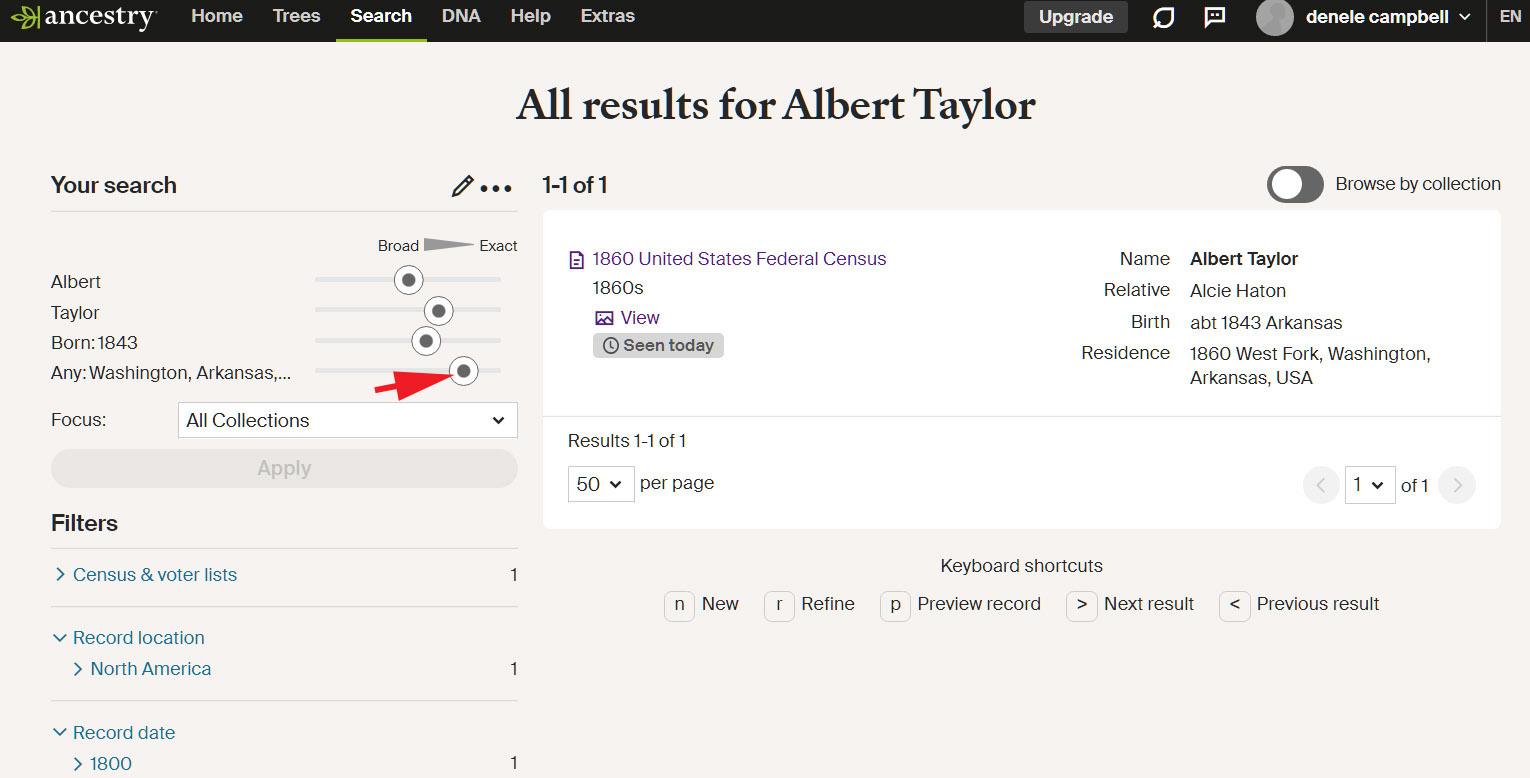

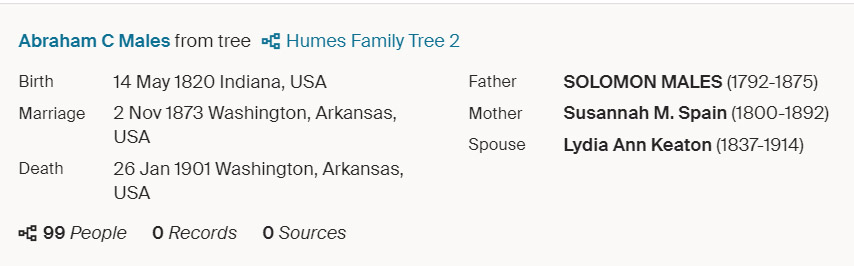


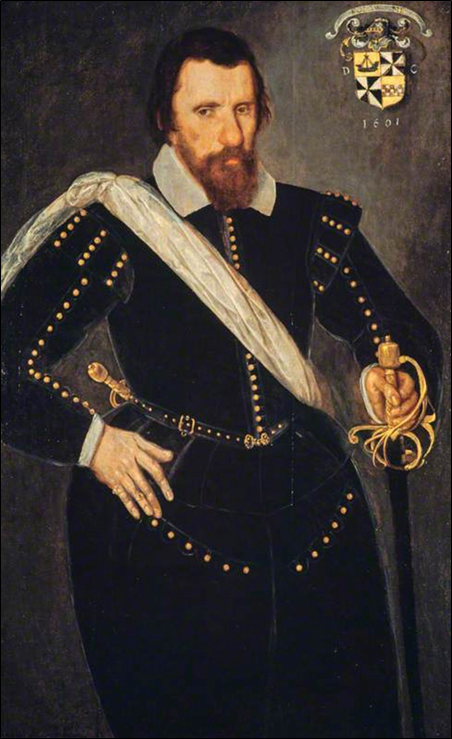
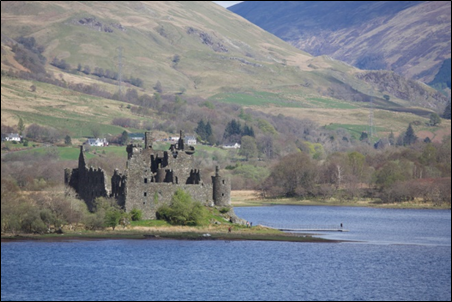
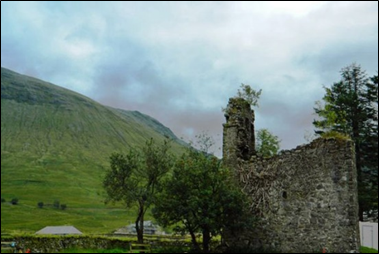
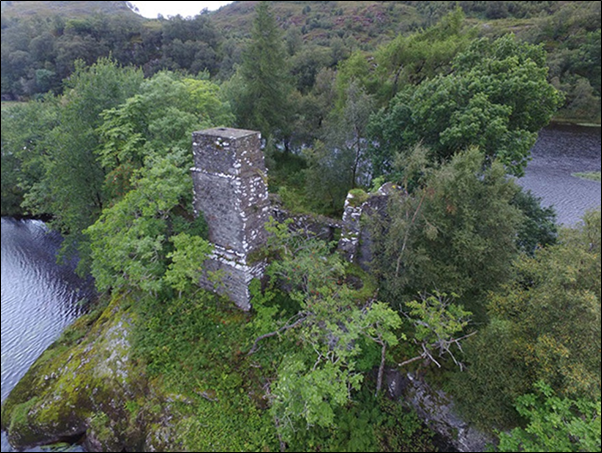
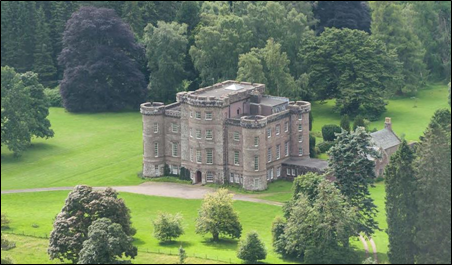
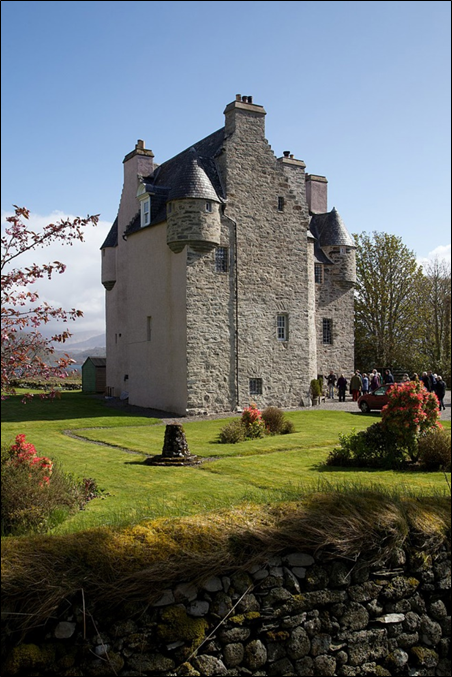
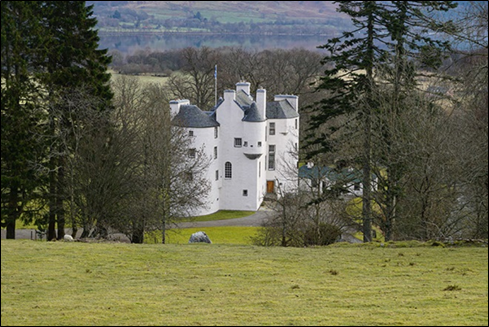
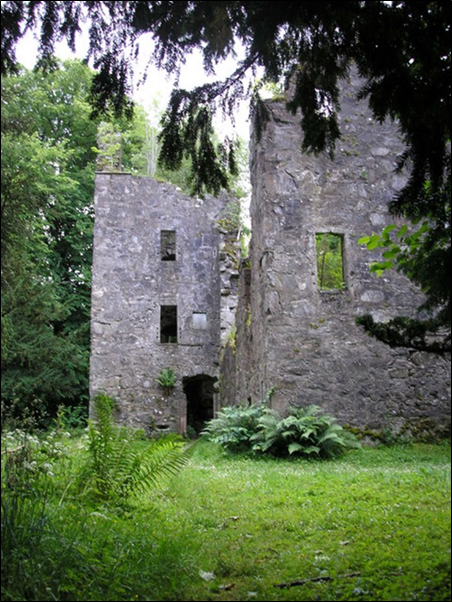
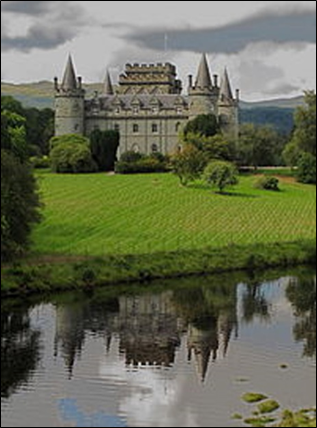
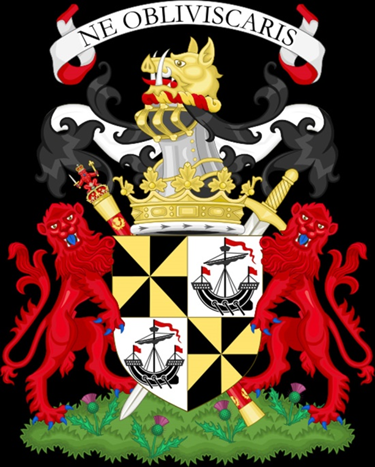
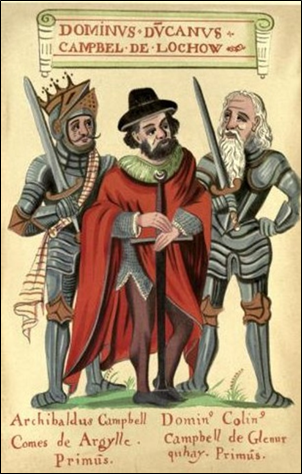
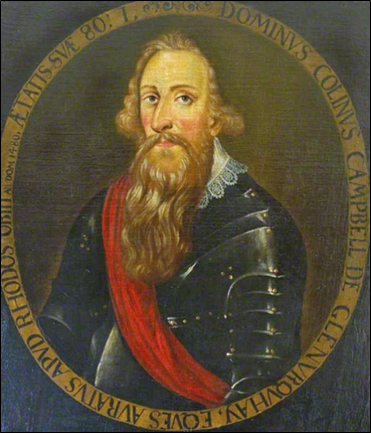
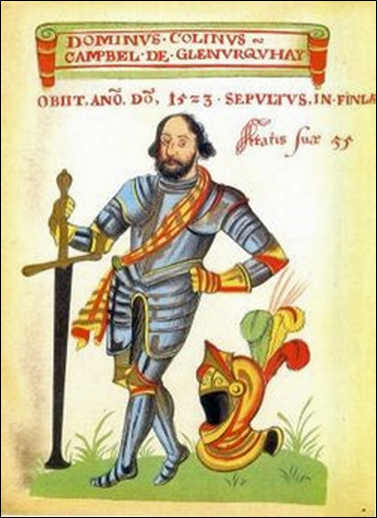
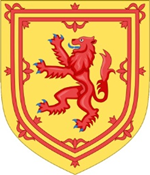
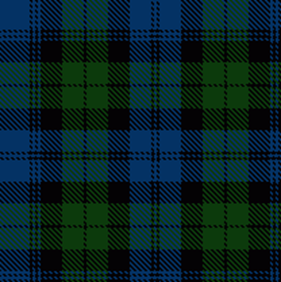
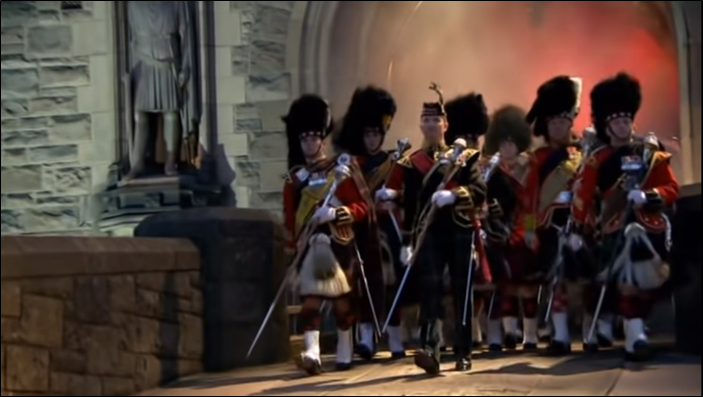
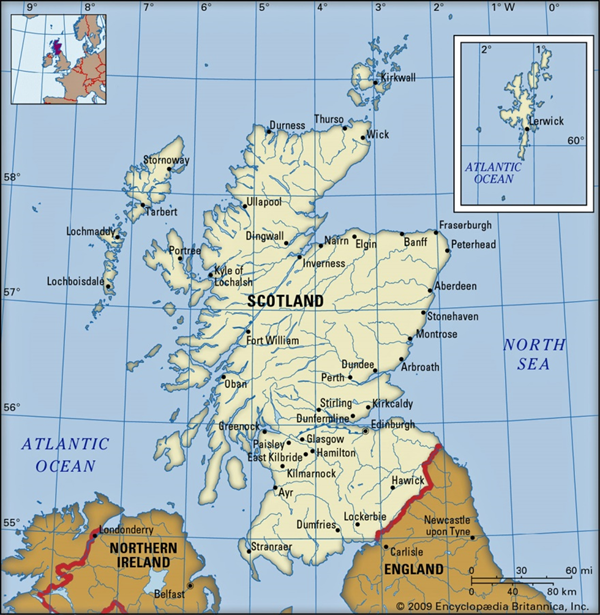
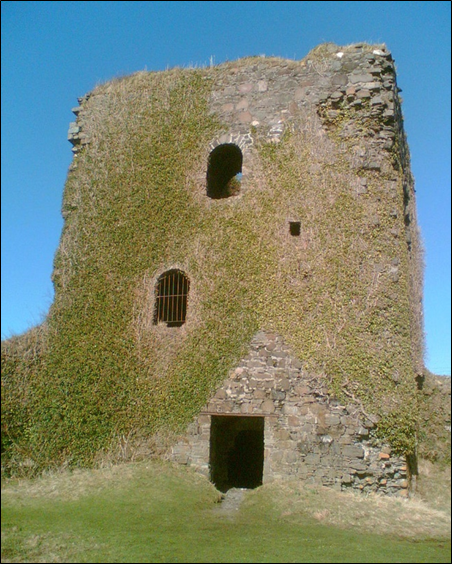
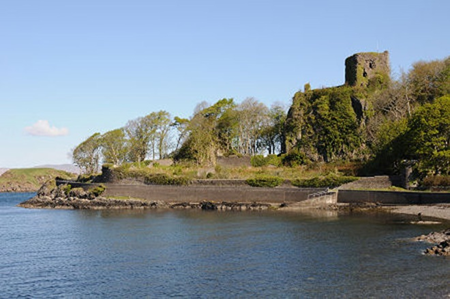
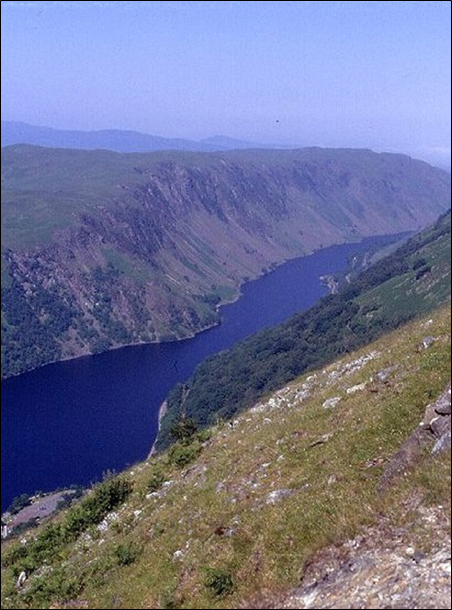
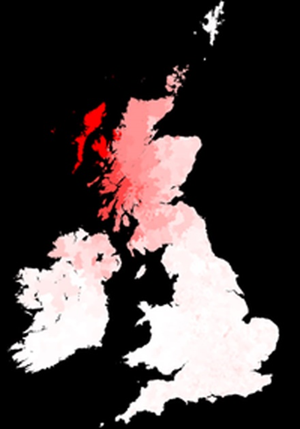
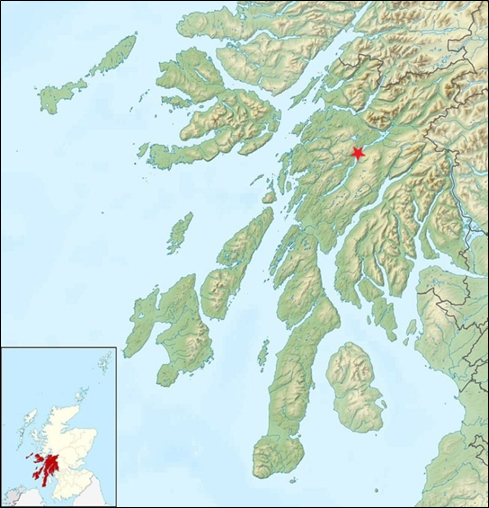
 denelecampbell