Israel & Palestine — My Two Cents

The utter absurdity of the current situation in Israel/Palestine could have been predicted for the last 75 years. Did anyone really believe that you could move into a man’s house and “give” him the hall closet to live in and he would accept it?

Yes, I understand that the Jews had suffered horribly under Hitler’s attempt to eradicate them. And long before that, the history of their horrific treatment deserves understanding and condemnation. But why did anyone think that what existed in Palestine could be rearranged like chess pieces and no one would care?

Jews, Arabs, and yes Christians all lived side by side before 1948. What was wrong with that? If Jews needed a safer place to live than mingled through other countries—which, by the way, is how ALL OTHER RELIGIOUS GROUPS exist—they had the freedom to relocate to Palestine without anyone declaring it a Jewish state.

Even then, after 1948, after Israel had been recreated as the homeland of “God’s Chosen People,” it still wasn’t enough. A settler movement to expand grew in this new nation. How many times have I watched news reports showing Israeli bulldozers pushing over the homes and ancient orchards of Palestinians? How many times have I worried that sooner or later there would be hell to pay for Israelis for their lack of respect, their utter disregard for the dignity and rights of Palestinians?

Recently, since the October attack occurred, I’ve learned that certain groups of American “Christians” have been funneling money to the West Bank to support the continuing spread of Jewish takeover of Palestinian lands.

  • But evangelicals’ support isn’t simply driven by a theology that compels them to love the Holy Land, detached from its convulsive domestic and global political implications. For many “Christians Zionists,” and particularly for popular evangelists with significant clout within the Republican Party, their support for Israel is rooted in its role in the supposed end times: Jesus’ return to Earth, a bloody final battle at Armageddon, and Jesus ruling the world from the Temple Mount in Jerusalem. In this scenario, war is not something to be avoided, but something inevitable, desired by God, and celebratory.[1]

Allow me to just say here that if God exists, if this is the message of divinity, HE/SHE/IT does not need evangelicals or Republicans to facilitate the “end times.” 

When you pull back the curtains in search of real answers to the conflict—or, frankly, just about any conflict—you need look no further than the nearest gathering of religionists. Israelis don’t respect Palestinians because they’re not Jews. In fact, just about any review of Israeli/Jewish attitudes about their position in the world, historically, will reveal a people convinced they are God’s Chosen People and their suffering is part of their destiny until God sends their Messiah to rescue them.

Also, I have a bridge to sell you.

Not that their perpetual victimhood doesn’t have legitimate legs to stand on. Ever since the establishment of the Christian religion back in 400 something AD, Jews have been the whipping boy. Read up. I won’t clog my narrative here with that history. Suffice it to say that they have been horribly abused, discriminated against, and otherwise mistreated.

And that is largely because CHRISTIANS blame the Jews for not becoming Christians, not accepting Jesus Christ as their Lord and Savior, and on top of all that, for being the instrument by which Jesus was crucified. Never mind that it apparently was God’s plan all along that Jesus would be crucified. Why not blame God?

But onward with my rant. This entire episode currently underway is a ridiculous, outrageous crime against humanity. I’m not talking about the despicable attack by Hamas on people, the beheadings, the mutilations, the kidnapping. I’ll get to that in a minute. I’m talking about the ongoing Israeli attack on civilians in Gaza. It is war crimes. It is genocide. It is the worst possible course of action that Netanyahu and his cohort could possible choose.

Why? Yes, of course Israel has the right to protect itself. But that’s just about the flimsiest excuse for the last 45 days of hate-fueled violence one could imagine. Yes, of course Hamas hides in tunnels, shelters behind civilians. Israel has one of the most advanced military forces in the world, thanks again to the Western powers. Without Hamas, there would be no ability by Palestinians to try to regain their pride, their homes, their independence. The United States, Britain and other Western powers that set this nightmare in motion back in 1948 have PROMISED to protect Israel, which is why the region bristles with our jets, helicopters, drones, aircraft carriers strike groups, nuclear powered submarines, and more men in addition to the troops already over there. According to the Pentagon,

  • The firepower from these warships is a deterrent, but it is also to help protect the 45,000 U.S. service members and contractors that are stationed in the Middle East. Most are in Kuwait, but thousands are in Qatar, Bahrain, Iraq, Saudi Arabia and the United Arab Emirates. The Pentagon has also deployed 1,200 troops to the Middle East, though not to Israel, since the war began. On Oct. 26, the Defense Department announced it was sending 900 troops, primarily for air defense, to the region. Another 300 troops, mostly ordnance disposal, communications and other support, were announced Oct. 31.[2]

Surely we all recognize that the U.S. and others see Israel as our surrogate in the Middle East. We could have cared less about the Middle East until oil came into the equation.

Meanwhile, Arab nations in the region are understandably “concerned” about the situation. They’ve never been pleased with the arrogance of Western European powers thinking they had the right to insert themselves in the middle of their lands, brush aside Palestinians, and install a Jewish state where none had previously existed for 2,000 years. Gee, imagine our outrage here in the U.S. if world powers decided to restore Native Americans to their original lands!

But onward to my primary point here—and yes, I have one. Or two.

Israelis are not uniformly in support of Netanyahu. For months reports have been broadcast of massive protests, not about the exact issue now burning up the airwaves, but about the heavy handed arrogance of Netanyahu and his right wing fanatics in not only their abuse of Palestinians and their lands, but also within Israel itself in the attempts to dilute the power of the judiciary in the march toward a more totalitarian regime. Sadly, too many Israelis are apparently willing to allow the right wing to control the country.

That march, by the way, is full steam ahead right now as Netanyahu envisions a complete takeover of the remaining shreds of Palestinians land, most assuredly Gaza “for an indefinite time,” but hinting at also taking over the West Bank. The purported goal is to eliminate Hamas for once and for all.

This is stupidity at its most absurd. Where the hell do they think Hamas came from in the first place? It came from Israeli disrespect and abuse. If they think Hamas is bad now, wait until the next generation of Palestinians rise up in memory of the current genocide. Because killing every single man who has identified with Hamas and taken up arms will not end Hamas. Even murdering every Palestinian, man, woman, and child, will not end Hamas. Hamas is an idea, an assertion of the right of a people to exist, and if Palestinians are wiped off the face of the earth, other Arabs will rise up in their place to continue to assert their right to exist.

On the other hand, Hamas has done themselves no favors with their barbaric methods of protest. The entire Arab jihad against the West is a disgrace to the history of Arab culture and accomplishment. Beheadings, burning people alive, torture, and other despicable methods of violence accomplish nothing except to convince the world that they are savages.

  • Since the late 20th century, the word jihad has gained remarkable currency: used by resistance, liberation, and terrorist movements alike to legitimate their cause and motivate their followers. The Afghan Mujahiddin, the Taliban and the Northern Alliance, have waged a jihad in Afghanistan against foreign powers and among themselves; Muslims in Kashmir, Chechnya, Daghestan and the southern Philippines, Bosnia and Kosovo have fashioned their struggles as jihads; Hizbollah, HAMAS, and Islamic Jihad Palestine have characterized war with Israel as a jihad; Algeria’s Armed Islamic Group has engaged in a jihad of terror against the government there and Osama Bin Laden and al-Qaeda have waged a global jihad against Muslim governments and the West. The importance of jihad is rooted in the Quran’s command to “struggle or exert” (the literal meaning of the word jihad) oneself in the path of God. The Quranic teachings have been of essential significance to Muslim self-understanding, piety, mobilization, expansion and defense. Jihad as struggle pertains to the difficulty and complexity of living a good life: struggling against the evil in oneself – to be virtuous and moral, making a serious effort to do good works and help to reform society. Depending on the circumstances in which one lives, it also can mean fighting injustice and oppression, spreading and defending Islam and creating a just society through preaching, teaching and, if necessary, armed struggle or holy war.[3]

So of course, like the Jewish extremists who waste hours bending and babbling at a wall, Islamist extremists waste hours bowing and babbling toward Mecca, all of them ready and eager to pick up the nearest weapon and hurt anyone who doesn’t believe what they believe.

Which brings me to my main point in all this. Basing 21st century actions on the fabled mythology of ANY religion is ridiculous, sickening, stupid, and otherwise despicable. Just as evangelicals support Israel in its takeover of Palestinian lands, so do Muslims support brutal treatment of ‘infidels.’ In my opinion, any ‘gods’ who advocated and/or condoned brutal treatment of any kind FOR ANY REASON have long since lost their right to be worshipped. These Abrahamic religions are long past due for elimination from human society.

Evangelicals around the world are to be condemned for their acceptance, even the embrace, of violence. Violence for revenge, for gaining some fulfilment of words written 2,000 years ago, is NOT what either Muhammed or Jesus Christ talked about. LOVE YOUR NEIGHBOR, they said.

  • Muhammed: “Never aspire for confronting your enemies (in a fight). Pray to God to be among those who seek living peacefully with others. But if ever you confront them (in a fight) be patient and know that Heaven is as close to you as the shades of the swords.”
  • Jesus: For he himself is our peace, who has made the two groups one and has destroyed the barrier, the dividing wall of hostility, by setting aside in his flesh the law with its commands and regulations. His purpose was to create in himself one new humanity out of the two, thus making peace, and in one body to reconcile both of them to God through the cross, by which he put to death their hostility. He came and preached peace to you who were far away and peace to those who were near. For through him we both have access to the Father by one Spirit. Ephesians 2:14-18

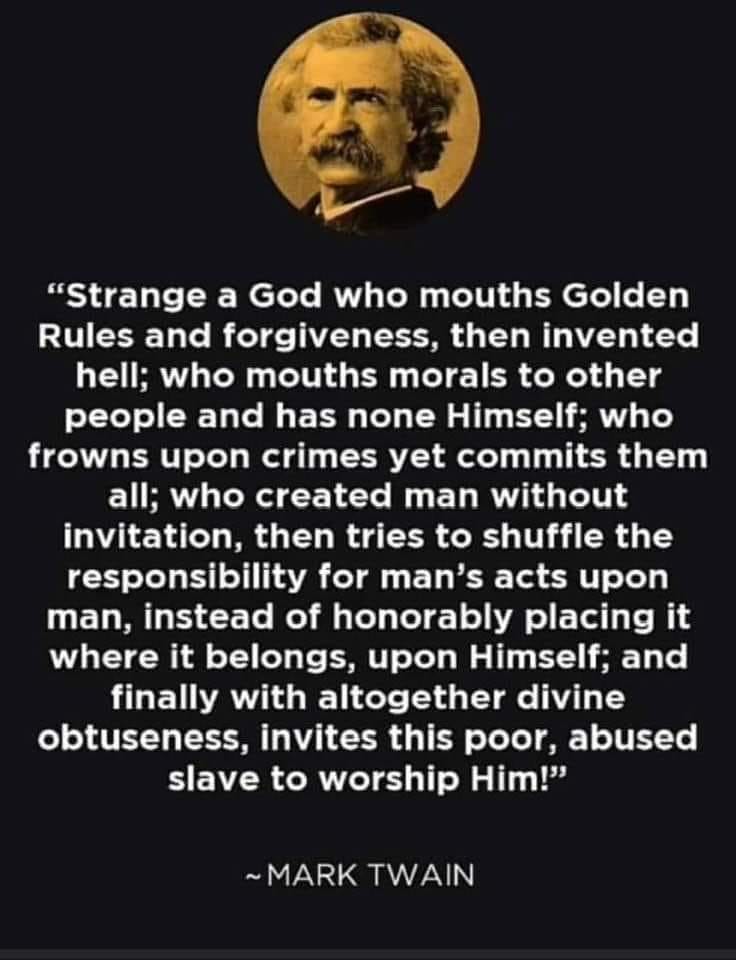
Obviously extremist Muslims and Christians don’t read their own literature; their ape brains have yet to evolve to higher forms of humanity. I take faint hope in the slow but steady deterioration of religious belief making progress, finally, toward a world without war. Without religion. It remains to be seen if the current conflict flashes over into the Armageddon so desired by evangelicals, or if sanity will prevail.

[1] https://www.msnbc.com/opinion/msnbc-opinion/truth-many-evangelical-christians-support-israel-rcna121481

[2] https://www.cbsnews.com/news/us-military-assets-in-middle-east/

[3] https://www.unaoc.org/repository/Esposito_Jihad_Holy_Unholy.pdf

Why Are We in the Middle East? A quick take.

US military bases in the Middle East. Afghanistan is not considered part of that region.

For a long time, oil was the lure to involve the U.S. in the affairs of the Middle East. An equally important factor in our presence there was to protect the newly established state of Israel. But since the end of the Cold War in 1980, the Middle East has become the battleground in our proxy war with Russia.

Oil

About 20% of the U.S. oil supply comes from the Middle East, largely Saudi Arabia. You can fill in the blanks about how that fact has affected our foreign policy—trillions in military spending, nearly 40,000 American deaths, and moral compromise are just a few.

Consider the outcome of walking away from the Middle East’s oil. At the worst, we’d lose 20% of our oil supply, although other suppliers wait in the wings making such an outcome rather unlikely. But let’s consider it.

Reduce your travel by 20%. Reduce your consumption of goods and services by 20% because these items are dependent on vehicles fueled by oil. Reduce your travel by common carrier such as busses, airplanes, boats. Reduce your use of plastics, since virtually all plastic currently produced derives from petroleum. Reduce your use of chemicals from prescription drugs to fertilizer.

Ethylene and propylene are the two dominant petrochemicals: in 2016, the U.S. produced over 26 million tons of ethylene and over 14 million tons of propylene. Ethylene is primarily converted into polyethylene (the most common plastic, used in thousands of applications), but is also used to make other plastics such as polyvinylchloride (PVC, for pipes and home siding) and polystyrene (used as a general plastic and as Styrofoam for insulation and packaging). Propylene is mostly converted into polypropylene for fibers, carpets, and hard plastic; some propylene produced during oil refining is used to make compounds that are added to gasoline to improve performance. Both ethylene and propylene are used to make many other chemicals and materials with many uses, including specialty plastics, detergents, solvents, lubricants, pharmaceuticals, synthetic rubbers, and more.

Fertilizers – hydrogen derived from methane (the main ingredient in natural gas) is combined at high temperatures with nitrogen extracted from air to make almost all of the ammonia in the world (a small amount of ammonia is produced using other sources of hydrogen such as propane, naphtha, or gasified coal). About 88% of U.S. ammonia consumption is used as the nitrogen source for fertilizer. Other important uses of ammonia include household and industrial cleaning products, refrigerants, and in the manufacturing of plastics, dyes and explosives.

Pharmaceuticals – almost all pharmaceuticals are made from chemical feedstocks manufactured from petrochemicals and their derivatives.

Many detergents and other cleaning products are made from petrochemicals.  Similar cleaning products made from plant oils are now widely available, although these products are often also produced using substances made from petrochemicals.

Road asphalt consists of roughly 95% crushed stone, sand, and gravel; the remaining 5% is a thick, dark oil known as asphalt or bitumen, which occurs naturally in some rocks but is also produced by oil refining.[1]

Other sources of oil to take up the 20% loss from Middle East oil? Consider Venezuela, where U.S. meddling in their political affairs has reduced the government to chaos and the people live in desperate poverty. [This is the Middle East of the future, complete with terrorists who hate us and don’t have to travel far to find us.] Oil supplies in Venezuela are estimated to last another 350 years. Surely that’s enough to get the U.S. through another fifty years or so, enough time for us to figure out viable alternatives to oil.

Israel

As for Israel, currently U.S. taxpayers are spending over $3 billion a year in support of Israel. Most assume this is to provide security for a small Jewish nation in the face of threats from the Muslim nations surrounding it. But that’s not it.

Were Israel’s security interests paramount in the eyes of American policymakers, U.S. aid to Israel would have been highest in the early years of the existence of the Jewish state, when its democratic institutions were strongest and its strategic situation most vulnerable, and would have declined as its military power grew dramatically and its repression against Palestinians in the occupied territories increased. Instead, the trend has been in just the opposite direction: major U.S. military and economic aid did not begin until after the 1967 war. Indeed, 99% of U.S. military assistance to Israel since its establishment came only after Israel proved itself to be far stronger than any combination of Arab armies and after Israeli occupation forces became the rulers of a large Palestinian population.

…In the hypothetical event that all U.S. aid to Israel were immediately cut off, it would be many years before Israel would be under significantly greater military threat than it is today. Israel has both a major domestic arms industry and an existing military force far more capable and powerful than any conceivable combination of opposing forces. There would be no question of Israel’s survival being at risk militarily in the foreseeable future.

…the continued high levels of U.S. aid to Israel comes not out of concern for Israel’s survival, but as a result of the U.S. desire for Israel to continue its political dominance of the Palestinians and its military dominance of the region.

There are other reasons than military for the billions of dollars sent by the U.S. to Israel each year. At the top of that list is religion, specifically evangelical Christians who believe Israel plays a pivotal role in the ‘second coming.’

Based in part on a messianic theology that sees the ingathering of Jews to the Holy Land as a precursor for the second coming of Christ, the battle between Israelis and Palestinians is, in their eyes, simply a continuation of the battle between the Israelites and the Philistines, with God in the role of a cosmic real estate agent who has deemed that the land belongs to Israel alone–secular notions regarding international law and the right of self-determination notwithstanding.[2]

Compared to the influence of the Christian Right, the role of Jewish interests is minimal but not without power. Not to discount the lobbying from the arms industry, which contributes five times more money to congressional campaigns than pro-Israeli groups. Those who argue for a continued close relationship with Israel cite trade benefits to both nations, but there’s nothing in that trade which requires a continuing U.S. payout of billions of dollars in foreign aid annually.

Military Presence

The U.S. role in the Middle East has become increasingly intractable and tenuous, with no end in sight. Virtually all the terrorist hatred of the U.S. leading to acts like 9/11 and their determination to destroy our nation results from our overwhelming presence in their backyards.  We might point to groups like the Kurds whose existence is under threat from Turkey as justification for our continuing military occupation of Middle Eastern nations, but is that really what it’s all about?

No, I don’t think so. Consider the money.

According to data compiled by the Forum on the Arms Trade from the U.S. Foreign Military Sales program, some $25.5 billion in deals have been agreed with nine countries around the Middle East and North Africa (MENA) so far this year (2019). That compares to just $11.8 billion in 2018, marking a 118% year-on-year rise. …Globally, U.S. arms sales have increased by 42% this year, to a total of $69.7 billion, the highest level since 2010.

Arms sales are often an issue in Congressional deliberations, but the current president encourages it. Over half of those sales goes to the Middle East, often ending up in the wrong hands.

President Donald Trump has often made arms sales a central element of his relationship with Gulf rulers and has vetoed Congressional moves to block the trade. This is despite evidence of how arms sold to the UAE and Saudi Arabia have at times ended up in the hands of Washington’s opponents. Analysts say the large arms sales of recent years from the U.S. and other suppliers have been a critical factor behind the rising instability around the Middle East.[3]

The role of the U.S. in military activities, foreign aid to Israel, and arms sales is responsible for the current trillion dollar deficit and an unconscionable moral failure in our nation’s leadership regarding the Middle East. We need to get out of our proxy war against Russia and stop the flow of money and arms. Our role in North Africa, Afghanistan, and other foreign hot spots also deserves strict reconsideration.


~~~

[1] https://www.americangeosciences.org/geoscience-currents/non-fuel-products-oil-and-gas

[2] https://ips-dc.org/why_the_us_supports_israel/

[3] https://www.forbes.com/sites/dominicdudley/2019/12/16/arms-sales-middle-east-soar/#54a63bfbfea8 

This Land Is Mine

map-story-of-palestinian-nationhood

As you may have noticed, I have an opinion on just about everything. I’m moderately well-read and yet readily admit I’m no expert. With that disclaimer in place, I’m about to wade into a controversial subject: Israel.

You’d think that Jewish people suddenly gaining the support of Western nations in establishing the State of Israel after 1948 would be thankful, grateful, and humbled. After all, their return to the Middle East after centuries of diaspora involved shoving aside a mixed Palestinian population that had enjoyed occupancy of those lands for more than a thousand years.

Supporters of Israel would say that Palestine didn’t really exist all that time, that the lands now contested by Israel had never been a Palestinian state. But that’s not exactly true.

  • Palestinians in Ottoman times were “[a]cutely aware of the distinctiveness of Palestinian history …” and “[a]lthough proud of their Arab heritage and ancestry, the Palestinians considered themselves to be descended not only from Arab conquerors of the seventh century but also from indigenous peoples who had lived in the country since time immemorial, including the ancient Hebrews and the Canaanites before them.[1]

In other words, before the 1948 effort to establish a new Zion, people of Christian, Islamic, and Jewish faith lived peaceably side by side.

I grant that a traumatized population of Jews needed a safe place to call their own. The so-called Zionist movement among Jews had gained strength since the late 1800s. After World War II, the time seemed right to create such a place amid the political chaos and horrors of concentration camps, and as the most recent controlling power over that region, Britain agreed to portion an area for this purpose.

The question of who has ‘rights’ to the lands designated now as Israel and Palestine quickly runs into quicksand of epic proportions. Britain had no more legitimacy in its occupation of that region than anyone else, so whatever it did stands on shaky ground. Before them, the Ottoman Turks controlled it and before that a series of strongmen and empires dating far before the Romans.

Does the Jewish claim hold any greater merit than the Palestinian claim?

Short answer: No.

In fact, if the same argument were used in the United States, Native Americans have the right to reclaim the entire continent because, after all, they ‘owned’ these lands for thousands of years up until four hundred years ago. For much of the land mass, Native ownership continued until less than two hundred years ago. Europeans committed genocide to gain control, just as many of the Jewish faith have been slaughtered over the centuries. Does that mean that foreign nations, working together, should come into the United States, champion the Native claim, and forcibly remove people from their farms and cities in order to return some of these lands to the Natives?

I’ll let you think about that for a minute.

Like it or not, lands of this planet change ownership. The Celts invaded the British Isles which were then invaded by the Romans then later invaded by Angles, Saxons, and other Germanic tribes, and then by marauding Danes and Norse until an amalgam began calling itself England. There’s no turning back the clock to some theoretical golden age of Israel when the Jewish faith controlled some portion of the Levant any more than Florida can be returned to the control of the Seminoles. So why do those currently in control of Israel’s politics think they have the right to seize ever more Palestinian lands?

More to the point, why would any American think we had a legitimate dog in this fight?

Yet, hearing the slander issuing from the assumed incoming president against President Obama (no doubt using words put in his mouth by his Jewish son-in-law and Christian radicals swarming into his nascent inner circle), you’d think that any criticism or restriction of continuing Jewish invasion of Palestinian lands was an act of treason on our part.

It’s way past time for the United States to join United Nations efforts to chastise Israel for its aggression.

You’d think a people long stigmatized by reputations for greed, insularity, and arrogance would be cautious about validating those prejudices by acting in exactly that way. But what else does the world see but Israeli settlers bulldozing Palestinian orchards and homes to make way for illegal settlements?

  • Three large clusters of traits are part of the Jewish stereotype (Wuthnow, 1982). First, Jews are seen as being powerful and manipulative. Second, they are accused of dividing their loyalties between the United States and Israel. A third set of traits concerns Jewish materialistic values, aggressiveness, clannishness.[2]

The U.S. agenda with Israel isn’t just a benevolent hand-up to downtrodden people devastated by the Holocaust. The mostly silent force behind the U. S. involvement in Israel are certain American Jews and Christians who, based on the Bible, believe that prophecies preordain that Israel will return to Jewish control in the end times, presaging the second coming. It has become a fanatical belief for some Christians (Arkansas Senator Tom Cotton, for example) that Israel must be protected at any cost.

  • We are living in exciting times when we can witness Bible prophecy being fulfilled before our very eyes. Many of these prophecies relate to the Jewish people and their nation. [See Christian Prophecy]

Aside from the push to implement Christian prophecies (an easy tool of wealth-driven politicos to gain support of credulous voters) and self-serving blather about Israel being the shining light of democracy in an otherwise benighted region, it’s highly likely that some of the U.S. agenda is far removed from benevolence and derives from our thirst for oil. We’ve covertly overthrown legitimate governments in retaliation against oil-rich Middle East nations trying to control their own natural resources.

  • In 1951, Mohammad Mosaddegh was elected as the prime minister [of Iran]. He became enormously popular in Iran after he nationalized Iran’s petroleum and oil reserves. He was deposed in the 1953 Iranian coup d’état, an Anglo-American covert operation that marked the first time the US had overthrown a foreign government during the Cold War.[3]

So much for the shining moral light of democracy.

Other reasons for our support of Israel might be that our money buys cooperation in a place where an imperialist nation like us needs a friend. Spying, meddling, and otherwise keeping oil-rich nations off balance improves the U.S. advantage and assures the continuing flow of oil. After all, why pump domestic when we can use theirs first?

Surely a complex hidden U.S. agenda includes strategies about Russia, China, and other powers that border the Middle East. If there must be conflict, let it happen there, far from our shores. It’s easy to see why we might hesitate about getting too tough on Israel.

Our annual tithing of foreign economic aid to Israel tops $347 for every man, woman, and Jewish child, courtesy of the American taxpayer. In 2013, the last year for which data is available, we gave Israel $2,943,230,000 in military aid alone, more than twice as much as any other country on earth.[4] We’ve ensured they have the latest in modern weaponry and nuclear technology.

When is it ever enough? America’s diplomacy toward the Middle East has favored Israel to the point that we tolerate their continuing arrogance in pushing into Palestinian lands, thus earning us the enmity of Islamic extremists. After all, suicide bombers didn’t spring fully formed from the forehead of Zeus.

While events in the Middle East may be based in part on territorial disputes and conflicts of cultures, the oil markets, and other political and economic realities, underneath it all is religion. At the heart of that is Judaism and its use by Jews to define themselves as a justified and holy people no matter how much blood is on their hands. As the old song goes, “This land is mine, God gave this land to me.” [An astute cartoon rendering of this song says it all.]

Why should the age of a religion be a criterion by which to judge its righteousness and therefore its legitimacy in world affairs? But then, when did righteousness have anything to do with it?

There’s nothing wrong with groups of people holding onto traditional religious beliefs and practices. That is, until those beliefs and practices lead to violence, until individuals, states, or churches use religion to justify taking power and wealth by force. But if religion justifies taking land to form a nation, where is the Catholic nation? Or the Buddhist nation? Or, for that matter, a nation of Wiccan?

Herein lies the inherent evil of religion and with it the current threat to our future. If we’re not careful, the incoming Trump Administration—led by a man who won’t learn or think and given over to his zealot minions to run—will plunge us headlong into World War III.

Over Israel.

~~~

Latest development: Dec 29 comments by US Secretary of State John Kerry on how Israel is committing suicide.

Don’t like the headline map? Check the comments pro and con.

[1] https://en.wikipedia.org/wiki/Palestinians

[2] From https://en.wikipedia.org/wiki/Stereotypes_of_Jews#cite_ref-26, citing Schneider, David J. (2004). The psychology of stereotyping. Guilford Press. p. 461.

[3] https://en.wikipedia.org/wiki/Iran#Contemporary_era

[4] https://en.wikipedia.org/wiki/United_States_foreign_aid


Creating ISIS

warrior


Some Facebook posts circulating since the Paris tragedy voice outrage that the U.S. and its allies failed to stop ISIS at its inception.

To those I ask what, pray tell, was the beginning?

Was it during the three hundred years of Crusades when Western European Christians invaded the Middle East to drive out Islam?

Was it after WWI when the Western powers reorganized the colonized Middle East, shifting borders to suit the desires of various Western nations regardless of existing ethnic, tribal, or religious boundaries?

Was it after WWII when Western powers again reorganized Arab lands, shoving the Palestinians aside to carve out a homeland for the Jews? Couldn’t we have predicted that Arabs would resist? Perhaps that would have been the best time to nuke the whole region.

Was it when we armed the Afghan Mujaheddin in the 1980s to help them overthrow Soviet occupation? Couldn’t we have predicted that once the Cold War ended, we would abandon Afghanistan and leave tribal leaders like Osama bin Laden to take what he’d been taught to organize his devastated homeland.

Was it when we marched into Iraq, toppling the strong man government of Saddam Hussein and unleashing sectarian violence between Sunnis and Shias?

Was it when the 2011 Arab spring spread from Egypt through other Middle Eastern nations and Syria’s President Assad fought back against his nation’s rebellion? The U.S. and allies hurried into Syria with support and secret ‘advisors’ to assist the rebels, bringing in sophisticated arms and other supplies that are now in the hands of ISIS. Gee, how could we have guessed?

The claim that the U. S. could have inflicted a fatal incisive strike against ISIS at any point along this tortured path shows ignorance and a single-minded obsession to heap criticism on President Obama. ISIS has never existed as a discrete target. Any attack on ISIS would result in massive collateral damage.

The entire mess points to one overarching conclusion: the more we intervene in the Middle East, the worse things get.

We’re good at meddling in other people’s affairs. At what point do we have an honest national dialogue centered on the question: Why are we in the Middle East at all?

I can tell you. It’s because of money, oil and religion. And money. Did I say money?[i]

According to a 2013 report, “over the last six decades, the U.S. has invested $299 billion in military and economic aid for Middle Eastern and Central Asian countries currently in turmoil. Egypt tops a list of ten nations, receiving $114 billion since the end of World War II. Iraq comes in second, getting nearly $60 billion from the U.S. (over and above war costs). Far outpacing those ten countries is Israel, an ally that received another $185 billion in U.S. aid in the same period.”[ii]

Why not just hand all that arms money over to the arms dealers and let them keep the weapons?

Are we getting what we paid for? If the objective is to keep the region destabilized so that we can maintain a level of control over the oil, yes. If the objective is to undermine Arab strength in order to further prop up Israel, yes.

We continue to send billions of dollars of foreign aid to the region, larding the already excessive oil profits lining the pockets of the region’s leaders. With all that money, leaders so inclined can invest in distant terrorists or add to their nation’s arsenal by purchasing arms and equipment manufactured in Western nations.

Supporters of Israel dismiss dollar amounts because their agenda is religious. People concerned about U. S. energy profits dismiss dollar amounts because their agenda is oil. Both groups fail to recognize the larger agenda behind their pet projects: money.

According to a 2013 report, “Each year, around $45-60 billion worth of arms sales are agreed. Most of these sales (something like 75%) are to developing countries. The five permanent members of the UN Security Council (U.S., Russia, France, United Kingdom and China), together with Germany and Italy account for around 85% of the arms sold between 2004 and 2011.[iii]

Nearly twenty years ago, an incisive review of our foreign aid pointed to this folly:

“An examination of $13.6 billion in U.S. foreign aid activity for Fiscal Year 1997 reveals that almost half of the aid is military in nature. This assistance, in conjunction with large-scale arms exports, may actually be working counter to many stated U.S. foreign policy objectives such as promoting sustainable development, protecting human health and fostering economic growth.”[iv]

George Washington famously cautioned against the quagmire in which we’re now floundering:

“The great rule of conduct for us in regard to foreign nations is in extending our commercial relations, to have with them as little political connection as possible.”[v]

Just six days ago, the columnist citing this wisdom called for an end to all but humanitarian aid to foreign nations. He’s not alone.

Opponents of a hands-off approach will cite the potential for increasing interference in the region from nations like Russia and China. In theory, our presence at the arms trade table balances their influence. But we have to ask ourselves, who was there first? I can tell you. It was us.[vi]

If we want the violence to stop, we’ll have to

  • stop giving our tax dollars to nations who spend it on arms,
  • eliminate any and all subsidies to arms dealers and manufacturers,
  • remove our forces entirely from the region and let them sort it out themselves, and
  • rescind and renegotiate any treaties with other nations so that any and all foreign aid is in the form of food, educational materials, medical supplies, and other humanitarian assistance.

Why not? It’s the only thing we haven’t tried.


[i] For an excellent overview of the money problem, see http://www.esquire.com/news-politics/politics/news/a39727/paris-attacks-middle-eastern-oligarchies/

[ii] A graph showing money received by various nations: http://www.huffingtonpost.com/2013/05/06/us-aid-middle-east_n_3223151.html

[iii] http://www.globalissues.org/issue/73/arms-trade-a-major-cause-of-suffering

[iv] http://www.bu.edu/globalbeat/usdefense/whelan0798.html

[v] http://www.washingtontimes.com/news/2015/nov/9/bruce-fein-end-mideast-arms-sales-nonhumanitarian-/?page=all

[vi] https://en.wikipedia.org/wiki/History_of_the_Middle_East