“Harley was standing out on the skids and opened with his M-60 as we made the assault. That was extra fire they weren’t expecting. They usually try to take out door gunners, but they weren’t expecting somebody out front on the skids. It’s a bumpy ride, coming in to an assault. The copter comes in fast and then slows down fast, and I don’t know how Harley hung on. That last bump is when you have to jump because we’re under fire.
“Fire is getting heavier. We’re starting to realize there’s a lot more NVA there than we realized. The valley floor has tall grass and holes the size of basketballs where they’re hiding to shoot at us. That’s why the valley is so scary. We’re starting to realize they’re above us and below us. They waited for us to get in there… I’m three feet from this guy that’s hit. I’m trying to find a place to lay my rifle so I could get ahold of it with both hands in case we started taking fire. This guy is screaming…”
Ray Mooney’s biography, Ray: One Man’s Life, is a new release making its debut this coming Saturday June 11. Join us if you can for his appearance at a book signing, 1 pm to 3 pm at Nightbird Books, 205 W. Dickson, Fayetteville, Arkansas.
“I’ve had my jaw broke three times, my nose broke five times to the point that the VA had to do the operation they do to boxers. My hand’s been broke and on fire once, enough that the skin was gone clear back to my wrist. I’ve fell off buildings, ladders, and mountains. Somehow I survived all that craziness.”
How Ray Mooney survived the incredible journey of his life is indeed a question for the ages. Polio, combat assault jumps from helicopters in Vietnam, and three children by three different wives didn’t kill him. Neither did the flagrant murder of his father by his father’s latest wife. But the traumas changed him, as they would change any man.
Told in his own words, Ray’s life story rushes from one shocking experience to the next and brings him to the last days as he faces end stage lung disease. Turkey killer, outlaw, entrepreneur, and disabled vet, this boy from the horse farms and tobacco fields of Kentucky relates his adventures with wry wit and breathtaking honesty.
As Robert Winn wrote in his book Winslow: Top of the Ozarks, “[Budd] had a large office with a staff of a dozen young ladies mailing out advertising for fence posts. He shipped out uncounted numbers of fence posts to western states. He also carried a complete line of clothing, shoes, feed, hardware, furniture, and groceries. Mr. Budd had branch stores at Brentwood, Woolsey, West Fork, Porter (Schaberg) Chester, Walker’s Switch, Mountainburg, and Rudy.”High-profile courtroom cases like the 1937 “Cabin Orgy” suit gained public attention for Rex Perkins. His fame as an outstanding trial lawyer spread. His name increasingly appeared in conjunction with front page headlines announcing the most recent sensational case. For example, in June 1943, he successfully defended Tuck Bishop, an admitted murderer of four people. In Bishop’s defense, Rex harped on Bishop’s status as a wounded veteran and filed a nolle prosequi declaration resulting in a precedent-setting life sentence for Mr. Bishop rather than the expected death penalty.
Rex’s success in gaining cases rose not only from his frequent mentions in local media, but also from his enthusiastic and tenacious pursuit of legal options for his clients. In addition to his sharp mind and voracious study of the law, Rex didn’t hesitate to skirt the edges of accepted practice. One anecdote recalls a time when Rex and his client faced a formidable team of well-heeled Little Rock attorneys who traveled to the Madison county courthouse to press their case. In those days, visual aids required to instruct jurors on logistics or scene layout usually depended on the use of a chalkboard. As the Little Rock legal team left the courtroom for a brief recess, Rex strolled past the chalkboard and palmed the chalk. Alas, no further use of the chalkboard could be made.[1]
Rose and E. A. Budd, probably at San Francisco. The careful staging of a prop in front of Rose was meant to disguise her delicate condition. Image courtesy Velda Brotherton. Originally published in the Washington County Observer and in the book Washington County by Velda Brotherton, published by Arcadia Publishers.
In 1944, Perkins and his partner Tom Sullins took up the case of Elwin A. Budd, founder of Budd Post and Hardwood Company and a longtime prominent businessman in the region. An Illinois native of impoverished background, Budd had built a fortune buying and selling hardwood fence posts during the peak years of Washington County’s timber boom, becoming known as “the man who fenced the West.”[2] He married Nettie Huey in 1903, settled on a place near Brentwood (south Washington County), and in 1908, the couple gained a son. A young woman named Rose Shackelford came to help with the baby and E. A. fell in love with her.
By this time, Budd had built his fence post fortunes into thriving mercantile operations along the railroad at Winslow and Chester, Arkansas, as the route cut south into virgin forest between Fayetteville to Fort Smith. He divorced Nettie and married Rose in 1909 when he was thirty-two and she was fifteen. His relationship with Rose ended tragically just six years later after the couple took an automobile trip to the 1915 Panama-Pacific International Exposition in San Francisco. Pregnant during the arduous journey, Rose gave birth to a stillborn child in October and died four days later.
It was said that the loss of Rose changed E. A. forever. He threw himself into his business. In the 1920s as the timber trade died down, he along with his brother Arthur invested in expansive commercial enterprises in Fayetteville. Their Royal Movie Theater, Royal Barber Shop, Royal Café, and Budd’s Department Store occupied virtually all of the south side of the Fayetteville Square. Budd’s fence post business continued in Fayetteville with warehouses stretching from South Hill Avenue east to South Government Avenue and filling a half block north of the railroad tracks toward Sixth Street (now Martin Luther King Boulevard). Another warehouse, ‘Budd’s Woodcraft and Spokes,’ fronted 808 South Government, a structure recently housing the ‘The Village Sculptor’ ironworks of the modern-day Fayetteville artist Hank Kaminsky and demolished in 2013.
Budd remarried several times, becoming increasingly more depressed and drinking heavily. Beloved by employees as a “likeable, hard-working, and shrewd man with a knack for making money” and credited with creating jobs during the Depression, his work habit was remembered that he “left home in a three-piece suit to sell posts up and down the river, then later in the day changed to a pair of overalls to do the manual labor.”[3]
Fire damage January 15, 1940. Headline, Northwest Arkansas Times: “Budd’s Mercantile, Royal Theater, Barber Shop, and Cafe Contents Total Loss” Caption underneath photo: “The front walls of the Royal theatre and Budd building were about all that remained today after fire destroyed the buildings and contents. Firemen remained at the smouldering ruins throughout the day.” Springdale firemen joined the Fayetteville forces in an effort to save other south side buildings.
Misfortune continued to find him, however. Fire swept through his Fayetteville mercantile, theater, barber shop and café on January 15, 1940, resulting in total loss to the contents, as well as destruction of several rented upstairs offices and apartments.
Four years later, on March 27, 1944, Budd allegedly inflicted fatal wounds to Miss Norma Smith, a Zion schoolteacher of long acquaintance with Budd. The trial opened July 11, 1944. The defense team included Perkins, Tom Sullins, and John Mayes. Prosecuting Attorney Jeff Duty was joined by Assistant Prosecutor Glen Wing and Van Buren attorney Dave Partain in Judge J. W. Trimble’s court. Opening testimony for the prosecution came from Pvt. Dale Fields, 26, who recounted his previous Saturday evening at Mitche’s Place with a crowd from Springdale. Upon exiting the building, he said Miss Smith “hollered” at him to come over to the car where she was sitting.
He went over and talked to her for a while, then got in the car and went to Springdale. She drove him home. He made a date with her to see her the next morning. They drove to Noel, Mo., in her car and visited his uncle, Fields said, returning to Fayetteville about 4:30, and that evening she again took him home to Springdale. ‘She asked me to come back and see her any time I wanted to,’ he said.
He didn’t see her any more until March 27, about 8 or 9 o’clock, Fields testified. ‘We were laying on the bed when Mr. Budd came in there…He walked up on the porch, came in the house, turned on the lights, came in the bedroom and told me “‘Time to leave.’”
When questioned by the defense, Fields said Budd did not say that in an angry tone. Fields got up and began to dress, but Miss Smith said that he wasn’t leaving. She went into the living room and argued with Budd. As Fields got the living room, he saw Budd slap her. She fell into a chair and Budd left.
Fields asked her who Budd was but she wouldn’t tell him…she just said he was a business man up town. Budd returned, threw eggs at the house and Norma ran out and stared hollering at him. One egg came through the door was she went out, and splattered on the wall…Fields said he next heard fighting in the yard. He said he had been sitting near the door and could hear the blows, and ‘it sounded like he was hitting her hard.’ Then she yelled for help. Fields went out and when he first saw them they were fighting in the corner of the yard near a tree. He saw Budd hit her in the face one lick with his fist, and…she hit the ground. “Then the law came down there…Budd started to his car.”
After about an hour at the police station, Fields returned to Miss Smith’s house where he found her lying on the bed. “There was a place on her chin and blood was running down the back of her neck coming from under her hair,” he said. He washed her and convinced her to go to a doctor, but when they got to the car, it wouldn’t start. The wires had been cut. Fields tried to find a doctor who would go to the house, but no one came. He stayed with her all night during which time Budd drove up and down the street blowing his horn…
~~
From Chapter 4 of Rex Perkins: A Biography. Available in Fayetteville and West Fork local bookstores. Or at Amazon.
[1] Bassett, Marynm. Interview with author May 23, 2014. Author’s notes.
[2] Brotherton, Velda. “Rose Budd the one true love of legendary businessman,” “Wandering the Ozarks with Velda Brotherton.” White River Valley News, June 23, 2005. Page 9
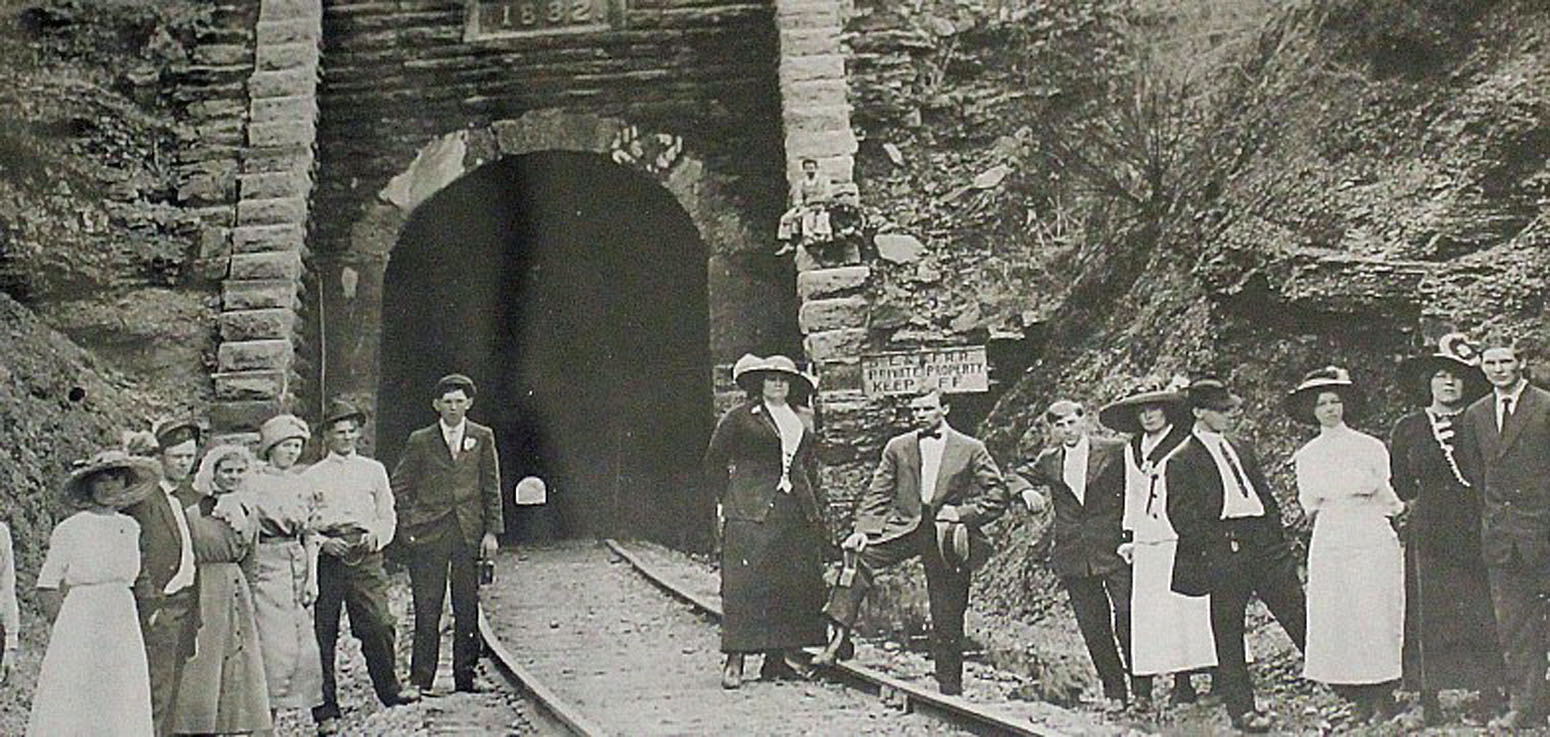
As early as 1855, Fayetteville city leaders had recognized the potential profit and growth that railway connections would bring to the rest of the county. The rugged Ozark terrain isolated their fledgling village, making commerce difficult and expensive for necessities and luxuries alike. Goods came north by ox cart from the Arkansas River at Van Buren or Ft. Gibson, or south from the railhead in Missouri. After the Civil War, in 1868 Arkansas legislators passed a bill granting aid to railroads which in turn prompted the St. Louis and San Francisco to start laying track south from Springfield, Missouri. The Frisco line made it to Fayetteville in 1881 with passenger service delayed until the completion of the Winslow tunnel. On July 4, 1882, a brass band and a crowd of 10,000 greeted the first passenger train at the Fayetteville Dickson Street station.
Winslow railroad tunnel circa 1885. Courtesy Arkansas Railroad Museum.
All kinds of goods traveled along the new line from Monett, Missouri to Fort Smith—product of a fourteen-year construction effort—encouraging the hopes of men and families seeking livelihood. The most plentiful and profitable local raw material available for the taking were the old-growth trees. Land sold for $1 per acre with an estimated available merchantable timber of 5000 board feet per acre. A flourishing trade blossomed along the track as virgin forest fell to the hands of hardworking men. Within the first decade after 1882, West Fork, Woolsey, Brentwood, Winslow, and several long-since vanished whistle stops became boom towns where railroad ties, fence posts, and rough-cut lumber were loaded onto railcars.
One of the most ambitious men to exploit the timber trade was Hugh F. McDaniel,[1] a railroad builder and tie contractor who had come to Fayetteville along with the Frisco. He purchased thousands of acres of land within hauling distance of the railroad and sent out teams of men to cut the timber. By the mid-1880s, after a frenzy of cutting in south Washington County, he turned his gaze to the untapped fortune of timber on the steep hillsides of southeast Washington County and southern Madison County, territory most readily accessed along a wide valley long since leveled by the east fork of White River.
Mr. McDaniel gathered a group of backers,[2] petitioned the state, and was granted a charter September 4, 1886, giving authority to issue capital stock valued at $1.5 million. This was the estimated cost to build a rail line through St. Paul and on to Lewisburg, which was a riverboat town on the Arkansas River near Morrilton. McDaniel began surveys while local businessman J. F. Mayes worked with property owners to secure rights of way. “On December 4, 1886, a switch was installed in the Frisco main line about a mile south of Fayetteville, and the spot was named Fayette Junction.” Within six months, 25 miles of track had been laid east by southeast through Baldwin, Harris, Elkins, Durham, Thompson, Crosses, Delaney, Patrick, Combs, and finally St. Paul.
Soon after, in 1887, the Frisco bought the so-called “Fayetteville and Little Rock” line from McDaniel. It was estimated that in the first year McDaniel and partners shipped out more than two million dollars’ worth of hand-hacked white oak railroad ties at an approximate value of twenty-five cents each. Mills ran day and night as people arrived “by train, wagon, on horseback, even afoot” to get a piece of the action along the new track, commonly referred to as the “St. Paul line.” Saloons, hotels, banks, stores, and services from smithing to tailoring sprang up in rail stop communities.
As the Fayetteville & Little Rock track extended to Dutton and its final easternmost point at Pettigrew in 1897, local sawmills processed massive logs of oak, walnut, maple, and hickory into rough lumber before it was loaded onto the railcars. “Wagons loaded with hardwood timber—cross ties, fence posts, rives, felloes, sawed lumber to be finished into buggy and wagon wheels and spokes, single trees, neck yokes, handles for hammers and plows, and building materials” streamed into the rail yards along the St. Paul line. Overnight, men became wealthy according to their ability to take advantage of the timber trade.
With the railroad came enormous population growth and the need for more homes, churches, offices, and commercial enterprise. Sufficient supply of building materials depended upon ever more distant timber harvest and upon the increasingly mechanized production of lumber. This frenzy of lumber and milling enterprises fed off the forests of southern Washington and Madison counties, with mills and factories located at various sites around Fayetteville. White oak was preferred for railroad ties, while red oak was the resilient wood of choice for wagon stock, especially bows, hubs, and spokes. Other woods milled included walnut, hickory, ash, and cherry.
All of the trains carrying lumber from the St. Paul line steamed through Fayette Junction, where loads of posts, ties, and raw materials for milling jammed the side tracks. The 1904 Fayetteville City Directory authors summarize: “Those industries which have to do with the manufacture of various articles from hard wood timber are probably among Fayetteville’s most important enterprises. There are four factories devoted to the manufacture of wood wagon materials alone. Their product is shipped to many foreign parts, to the new Island possessions, as well as to every large manufacturing center in our own country.”
~~~
All the timber from points east and south came through Fayette Junction where railroad crews tended the engines, hooked up or dropped off cars on the sidings, threw appropriate switches, and communicated by telegraph, written messages, and word of mouth with various station agents about activities along the tracks. Serving as conductor along the early St. Paul line required a special breed of man, epitomized by the fabled “Irish” John Mulrenin who took on the job after three predecessors had quit in quick succession. For the next thirty years he handled the passengers of the St. Paul line, not just families and businessmen but backwoods lumberjacks and diamond-jeweled card sharks. He became skilled in quick decisions such as cutting short the Pettigrew switching chores to leave drunks stranded at the depot.
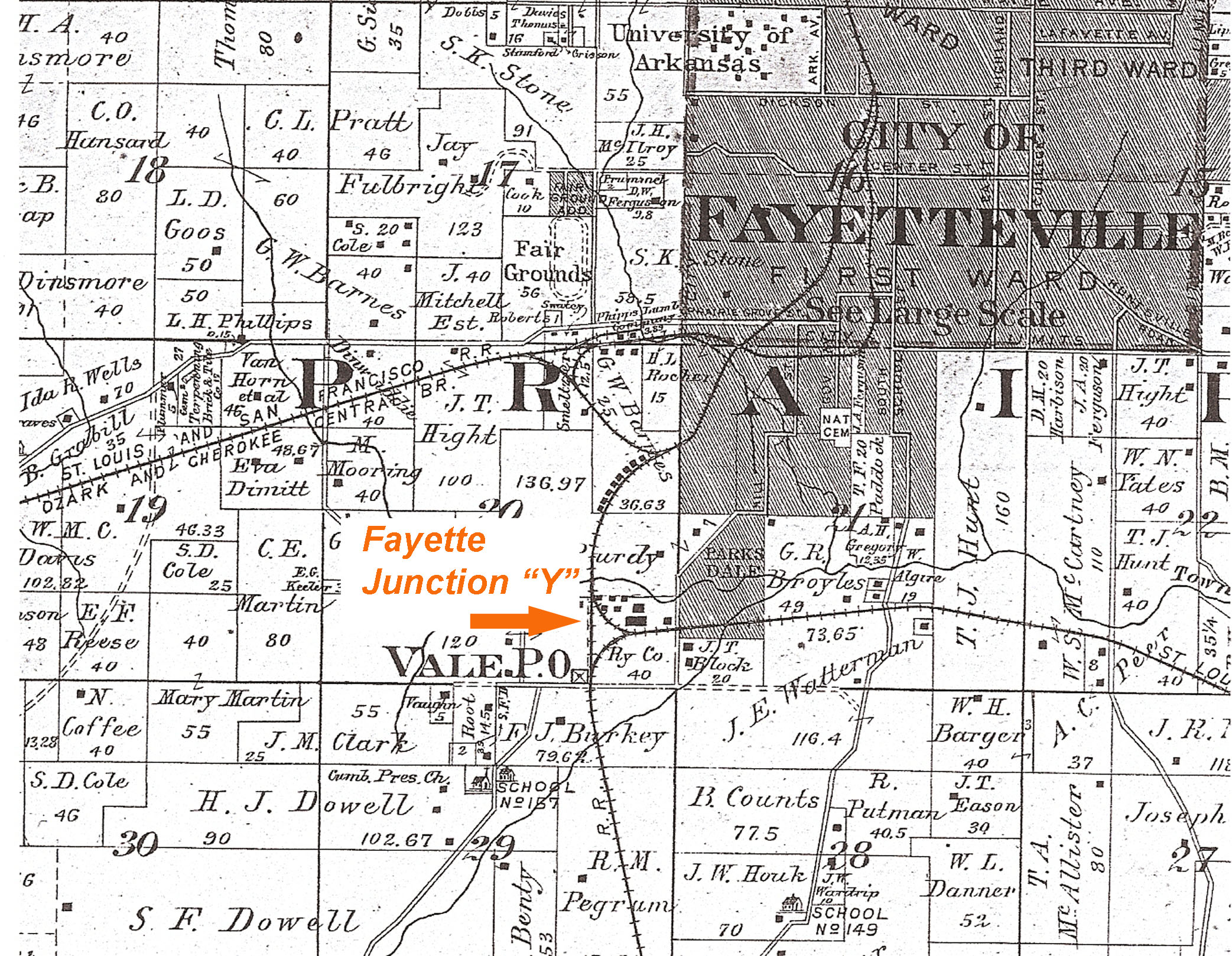
Circa 1890 map of Fayetteville Arkansas and the railroad ‘wye’ at Fayette Junction.
The Fayette Junction tracks formed a “Y”, with the southern “wye” used for “storage” and the northern for “industry”. Where the northern “wye” joined the main track near the northernmost point of present-day Vale Avenue, there was a gravel platform, water tank, and depot, although there was never a passenger depot at Fayette Junction. Inside the “Y,” Frisco built mechanical department buildings including a shop and storeroom, an 813 foot long “cinder pit” track, and a 416 foot long “depress” track, according to the 1916 Frisco map. At the southern end of the “Y” was a coal chute track, a coaling plant, boiler room, and a sand house.
The November 19, 1905 train schedule from Fayetteville to Pettigrew left the Dickson Street station at 8:10 a.m., passed through Fayette Junction at 8:40 a.m., and arrived at Pettigrew at 11:50 a.m., with stops at Baldwin, Harris, Elkins, Durham, Thompson, Crosses, Delaney, Patrick, Combs, Brashears, St. Paul, and Dutton. After turning the engine on the roundhouse at Pettigrew, the train departed at 12:55 p.m., and arrived at Fayetteville at 4:15 p.m. In 1915, the train ran approximately fifteen minutes earlier, with the stop at Baldwin now named “Leith.” Return run arrived in Fayetteville at 3:30 p.m. The same schedule and stops were in place in 1927.
The Frisco Fayette Junction Roundhouse was listed in the 1932 Fayetteville directory with a telephone number of 641 under “Railroads” in the Yellow Pages. The Personal Data Book of the Division Superintendent for the Ft. Smith station reported the Fayette Junction population that year was fifty, but it is not clear what area he considered “Fayette Junction.” Three years later, Superintendent S. T. Cantrell inventoried the 75 steam engines and other assets of the division. The oldest engine of the bunch, a “ten-wheeler” No. 488 Baldwin 1910, was in mixed service on the St. Paul to Bentonville line. Also in use to St. Paul was another oil-burner 4-6-0, No. 552 Pittsburgh 1901. Cantrell reported the following locomotive assignments to Fayette Junction as of February 26, 1935. In the shop: #598, 4-6-0, oil, Dickson 1903. In storage: #648, 4-6-0, oil, Baldwin 1904; #750 4-6-0, oil, Baldwin 1902; #755, 4-6-0, oil, Baldwin 1902; #779 4-6-0, oil, Baldwin 1903; #3651 0-6-0, oil, Baldwin 1906; #3676 0-6-0, coal, Baldwin 1905#3695 0-6-0, coal, Baldwin 1906. Later observers remarked on the number of engines in storage as evidence of the “sorry state” of the railroads by 1935.
The Fayette Junction station force in 1932 included an agent-telegraph operator working 6 a.m. until 3 p.m., with a stipend of $0.67 per day. Holidays the hours were 6:15 a.m. until 8:15 a.m. The schedule by 1931 for ‘St. Paul Branch’ showed a mixed train daily (passengers and freight), starting from Fayetteville at 7:45 a.m., arriving Pettigrew at 11a.m., leaving Pettigrew at 12:01 p.m. to return to Fayetteville, where it arrived at 3:10 p.m. All the intermediate stations were shown as flag stops except for Combs, where the train stopped at 9:54 a.m. on the outbound trip and 12:50 p.m. on the return trip, and St. Paul at 10:15 a.m. on the outbound trip and 12:30 p.m. on the return trip.
The fifty years from 1887 to 1937 had seen it all come and go through Fayette Junction. According to favored accounts, the last train to St. Paul ran July 30, 1937, “when ‘Irish’ Mulrenin had in his charge one wheezing locomotive, Mogul #345, and one empty, creaking old wooden coach” with a crate of two hound dogs for passengers. The logging boom had come to an end. The tracks were taken up some time after, but remained across south Fayetteville accommodating various manufacturers in the new Fayetteville industrial park (east of City Lake Road, south of Hwy 16 East) and the shipment of new and recycled metal to and from Ozark Steel Company on South School as late as the 1970s.
This a condensed excerpt from my article on Fayette Junction, a location in South Fayetteville (Washington County, Arkansas) where the 1880s logging boom centered. For the full article, look for my book Glimpses of Fayetteville’s Past, available in local bookstore or at Amazon.
[1] Hugh McDanield, b 1843 to B. F. and Sarah (Terrell), fought for the Union in the Civil War, worked in mercantile trade in Kansas City until 1873, built the Kansas Midland Railway from Kansas City to Topeka, and then operated a ranch in west Texas. After completing the Texas Western Railway in 1877, he turned his attention to Northwest Arkansas and began selling ties in 1881. He bought, logged, and sold thousands of acres of Washington County land and later Madison and Franklin counties over the next seven years and made a fortune furnishing the Santa Fe Railway nearly all its ties for the railroad west. He is credited as founder of St. Paul by the 1889 Goodspeed. He died at age 45 (1888) in Fayetteville of a month-long, unnamed illness.
[2] Backers included F. H. Fairbanks, J. F. Mayes, and J. S. Van Hoose, along with McDaniel’s brother J. S. McDaniel, all of Fayetteville, and D. B. Elliott of Delaney, J. Pickens of Eversonville, Missouri, J. W. Brown of Brentwood, and another brother, B. F. McDaniel of Bonner Springs, Kansas.
They were the hippies, the drop-outs, the radicals. They came from New York, Detroit, Chicago, Los Angeles, New Orleans, and bought cheap Arkansas land where they could build lives with meaning. Often the topic of heated rhetoric and armchair analysis, those who went ‘back to the land’ rarely speak in their own voice. Now documented in these personal interviews, their stories reveal the guts, glory, and grief of the 1960s social revolution.
Previously listed at $15.95, now for a limited time the paperback is available for $11.95. A lasting gift! Amazon buy link
“Denele Campbell’s informative ‘Aquarian Revolution: Back to the Land’ fills a much-needed niche in the history of the Counter-Culture movement. Unlike in more crowded Europe, America’s rural expanse offered an escape, a new beginning in the 1960s, from a social cancer spreading through the dominant culture. The dream of finding land to till and an alternative life style had been an American dream since its founding. America’s cities, mired in racism, sexism, poverty, and riots, seemed doomed. The ‘baby boomers’ sought escape by going to the land, many for the first time. Denele Campbell has carefully chronicled the personal stories of thirty-two pioneers who opted to create their utopian vision in the Ozarks. As such, their quest is at times fascinating, amusing, and often painful. Yet, it is a good read for those who lived through this era as well as today’s young.” —-T. Zane Reeves, Regents’ Professor Emeritus, University of New Mexico and author of Shoes along the Danube.
A visiting guinea? A ‘possum in the dining room? What strange and wondrous occurrences can one expect while living on an Ozark mountaintop for thirty-five years?
These lyrical adventure stories feature chickens, raccoons, bugs, dogs, cats, and natural critters of this woodland home. Throw in a few neighbors who shoot copperheads or remodel the dirt road. Ponder the passage of time through a philosophical lens of wonder and delight. The seasons bring summer heat, winter snow, pouring rain, the power of fire. Lessons learned, questions posed-who has lived and died on this land? What is our responsibility to this place, its creatures, each other?
Come meet the goat on the road.
Now available for only $6.95. A lovely gift for anyone. Amazon buy link
“I enjoyed all these stories and especially admired the author’s ability to describe the creatures she encounters with a naturalist’s eye and a pet lover’s emotions. My favorite story was ‘Summer,’ a languorous description of a 102-degree day on the mountain where the smallest movement seems difficult and time slows down. The author’s prose is lyrical and yet unsentimental. You can feel the heat and the sense of relief when the day draws to a close. A beautifully-written series of stories…” Reviewed by Annamaria Farbizio for Readers’ Favorite
Denny Luke, far right, next to Arkansas Governor Mike Beebe on one of his whistlestop tours of the state. 2006. On left, Ron Johns and in center, Dan Kerlin. At Dan’s store in Winslow.
1972. A Yankee moves to the Ozarks and lives to tell his tales. Now captured in a tidy little book along with plenty of photographs, these stories track Denny Luke’s life experiences from childhood in Ohio to the backwoods hills of Arkansas.
This man is an adventurer. During his years in the Navy, he built hot rods with money he made with shipboard loansharking. He returned to his native Ohio where he soon tired of the mechanic’s life. Computers had just started to break the surface in 1966, the perfect attraction to a young man with a sharp mind and plenty of ambition.
Denny with his mom in his Corvette. This photo not included in the book.
Money rolled in as he built databases, a brand new idea in the mid-Sixties. A ‘63 Corvette and soon after a new Triumph dirt bike put him in the fast lane for weekend jaunts to the Playboy Club in Chicago and Enduro racing in Wisconsin’s back country.
Then, like so many of his generation, he stepped out of the fast lane and moved to a primitive life in the country. Among his most important first acquaintances was Ray Brown.
Ray Brown teaching hog killin’ to Denny. This photo not in the book.
“We rented a little cabin near Devil’s Den from Ray Brown. He was a genuine hillbilly. His family lived in a little old log cabin. He raised a few cows, cut posts, whatever he could do to make a living. He was smart, smartest man I ever knew, had lots of common sense. His cabin had a big old fireplace that barely kept the place warm. He sat in this big chair over in one corner, and he could reach around behind his chair and grab a big handful of snow—that much would blow in through the cracks.”
Denny and his buddy Butch scouted cheap land all over Northwest Arkansas and ended up with an old log cabin on Bunyard Road. They also learned to be stone masons in order to earn their way.
Denny rustling up some grub at the Bunyard cabin December 1974. This amazing stove had a gas burning side and a wood burning side. Hauled from Wisconsin to the Ozarks.
“There are two or three families out on Bunyard that are cliquish. I wasn’t accepted out there. I was from the north, and I didn’t go to church. The first thing they wanted me to do was go to church. Plus I wasn’t born there. And I owned the old Omie Wood home place and they might have resented that some.”
An avid photographer and storyteller, Denny shares the adventures of his life with Author Denele Campbell as he recalls the outrageous backwoods tales and colorful characters who populate this neck of the woods.
Join us Sunday September 13 in the Connie Wright Gallery of Ozark Folkways at Winslow for live music, refreshments, Author Denele Campbell’s comments on this collaboration, and Denny’s readings from the book. Autographed copies will be available for sale.
Can’t make the event? The book is available at Amazon.com or at your favorite bookstore.
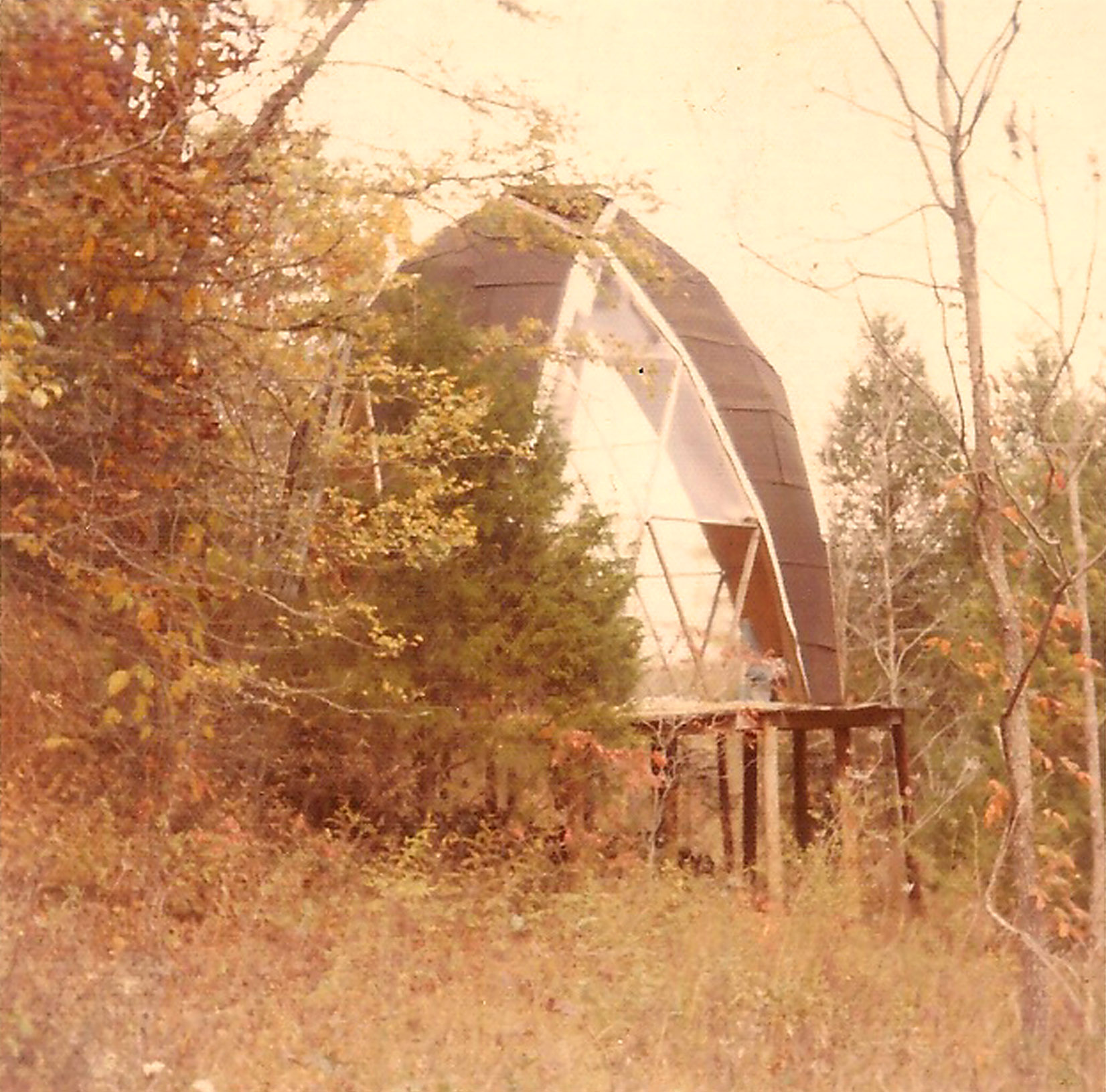
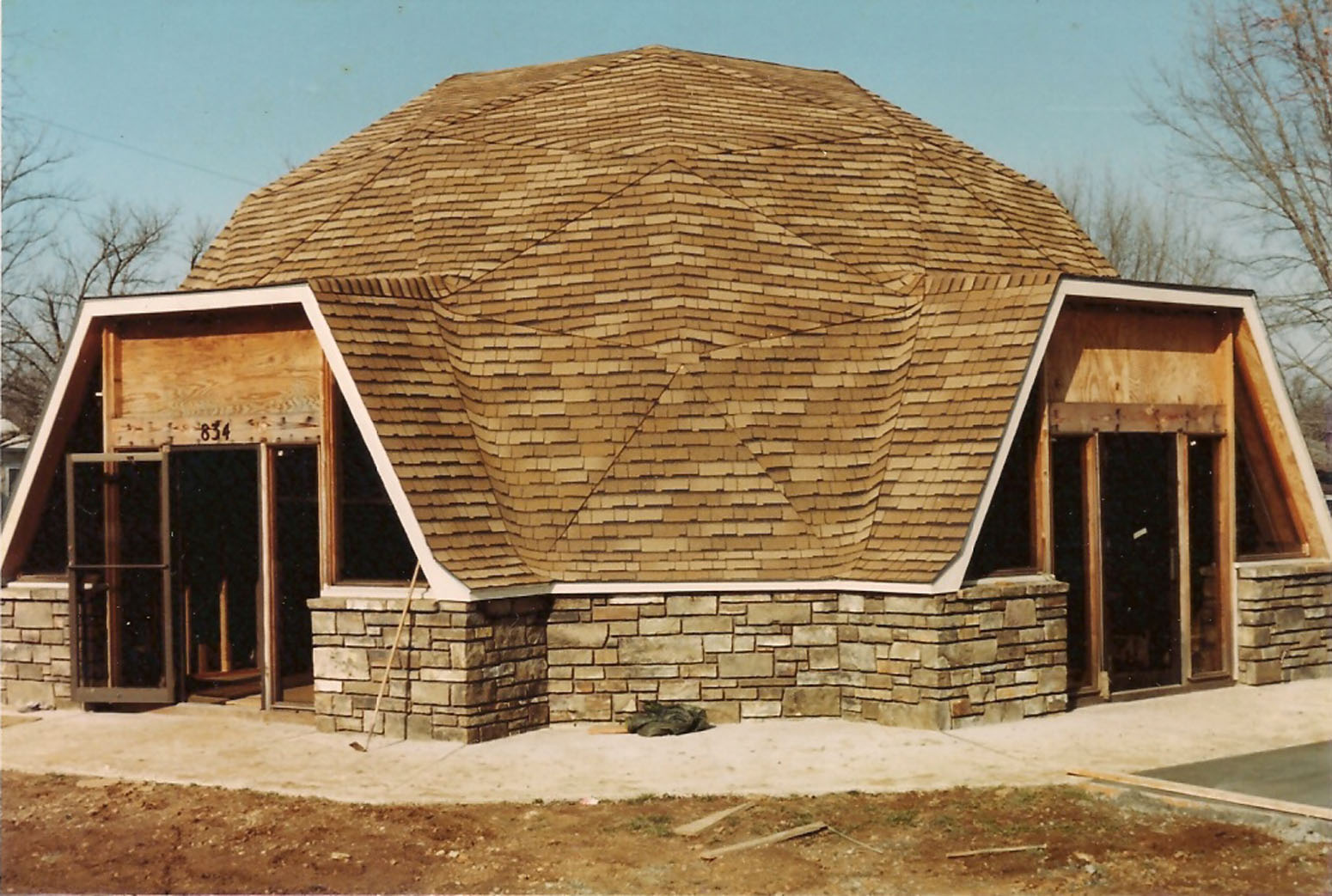
A ‘zome,’ a stretched dome. One of several domes constructed in South Washington County Arkansas at a rural intentional community.
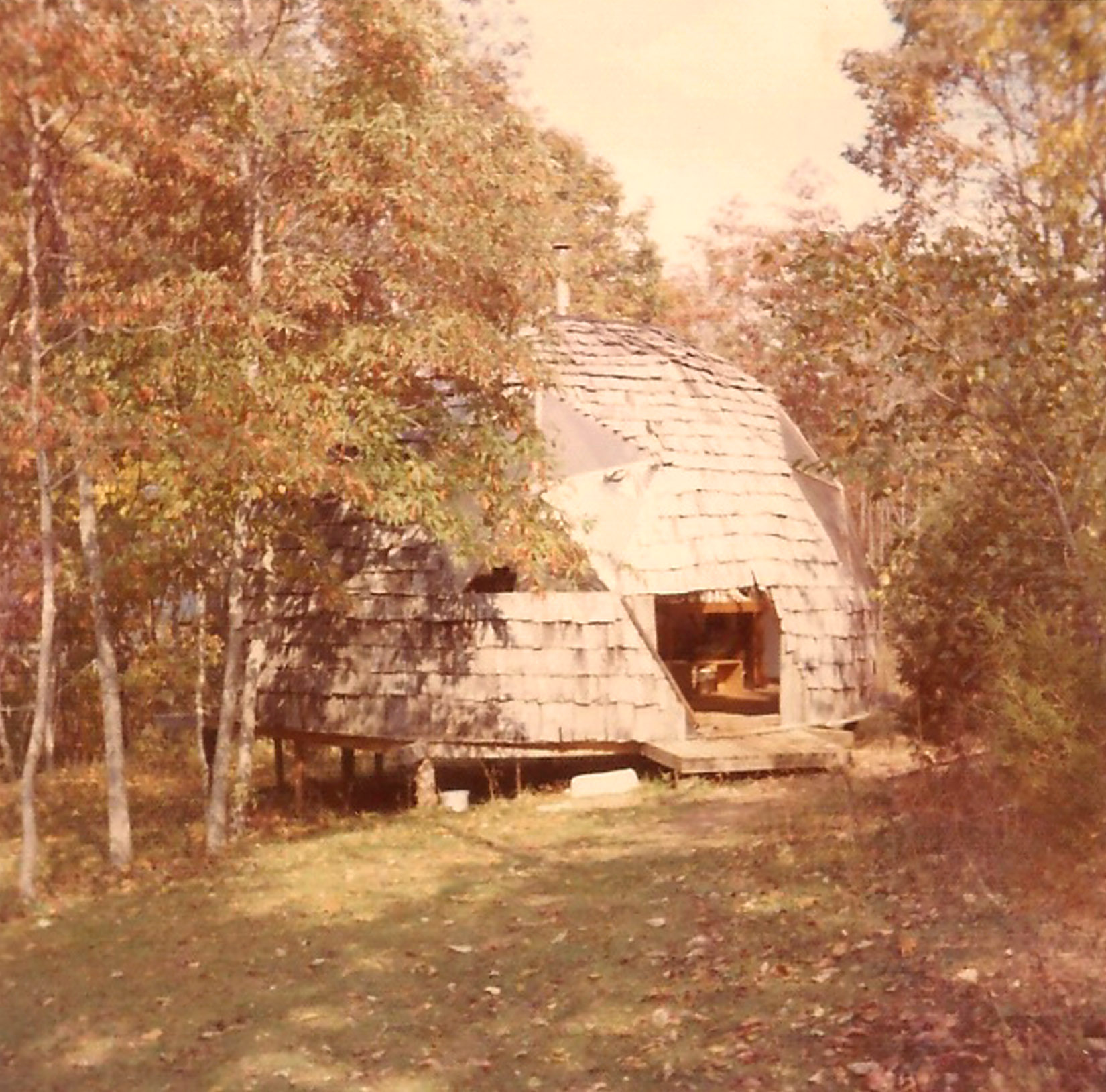
In the 1960s and into the early 1970s, geodesic dome structures cropped up around the world, including in Northwest Arkansas. Some lasted, many did not.
Based on the idea that what we see externally informs how we understand ourselves internally, domes epitomized a philosophical approach to human habitation.
Traditional architecture with its multiple separate rooms leads to a segmented self view, according to this argument. Rounded open space such as provided in a dome fosters a more holistic view of self and the world in general.
The dome concept was developed by Buckminster Fuller. Fuller discovered that if a spherical structure was created from triangles, it would have unparalleled strength.
In 1928, he wrote:
“These new homes are structured after the natural system of humans and trees with a central stem or backbone, from which all else is independently hung, utilizing gravity instead of opposing it. This results in a construction similar to an airplane, light, taut, and profoundly strong.”
None of the eleven or more domes built at the intentional community have survived.
The sphere uses the “doing more with less” principle in that it encloses the largest volume of interior space with the least amount of surface area thus saving on materials and cost. Fuller reintroduced the idea that when the sphere’s diameter is doubled it will quadruple its square footage and produce eight times the volume.
Fuller worked towards the development of a Comprehensive Anticipatory Design Science which he defined as, “the effective application of the principles of science to the conscious design of our total environment in order to help make the Earth’s finite resources meet the needs of all humanity without disrupting the ecological processes of the planet.”[i]
Optometrist office in Fayetteville, newly built in 1970s.
Domes were built not only by idealistic hippies pursuing an improved state of consciousness but also ended up in use at commercial locations. A enhanced dome built to house an optometry practice in Fayetteville, Arkansas remains in good condition.
One of the surviving residential domes in the area includes bump-outs and other additions that make for a more family-friendly features. This one includes a basement and a rear deck.
Other commercial uses included the Southern Energy Fast Oxide Reactor (SEFOR) built in south Washington County near Stricker. SEFOR operated from 1969 to 1972, when the original program was completed as planned. It was privately operated by General Electric and funded by the United States government through the Southwest Atomic Energy Associates, a nonprofit consortium formed by 17 power companies of the Southwest Power Pool and European nuclear agencies.
The facility was then acquired by the University of Arkansas in hopes that it could be used as a research facility. However that never happened and the university has been paying $50,000 in maintenance fees yearly since. SEFOR is still considered contaminated and the University continues to seek federal funds to clean up the site.
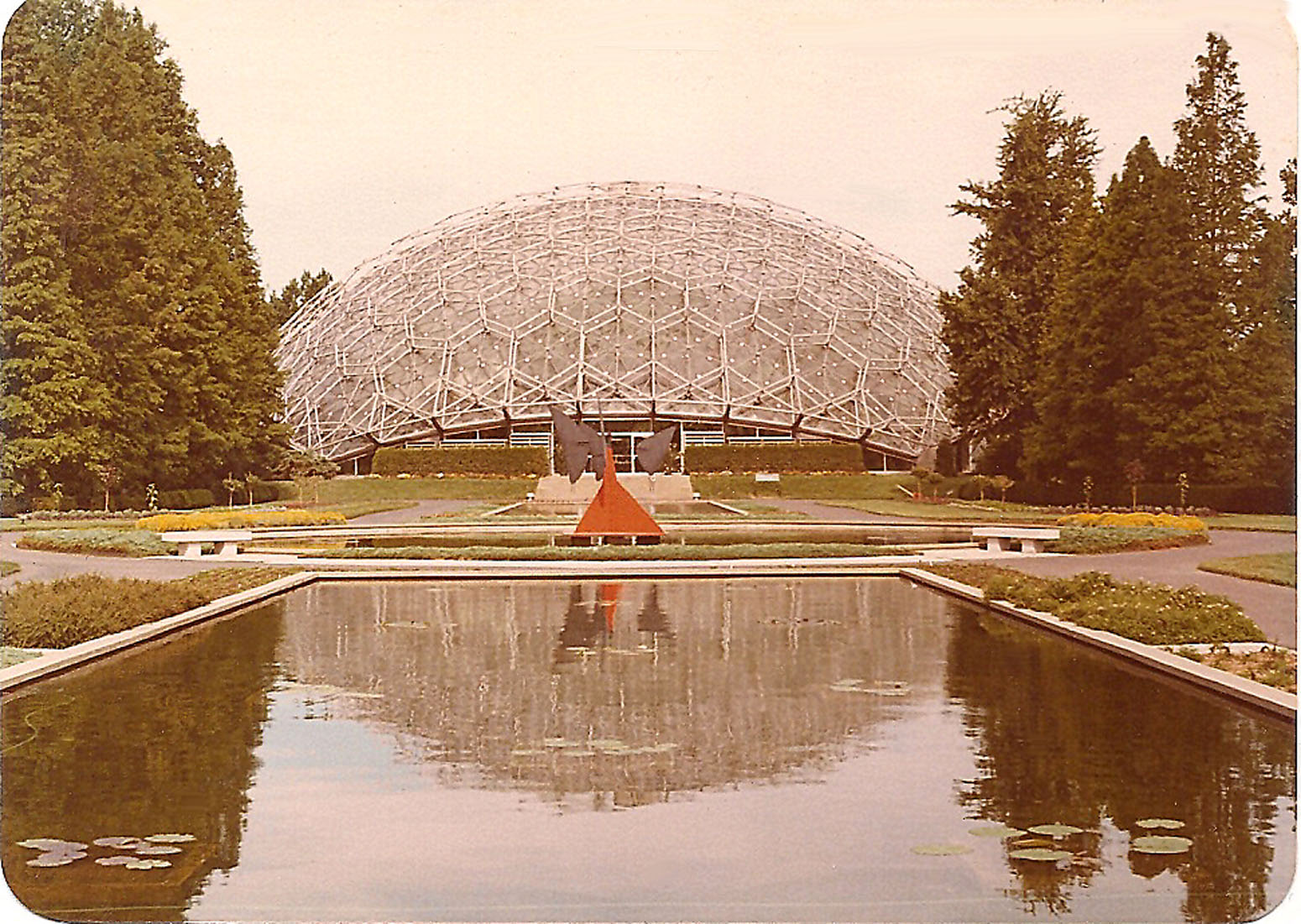
Another example of dome construction in commercial application is the St. Louis Climatron, part of the Missouri Botanical Gardens built in 1960. Controlled environment in this large dome re-creates a lowland rain forest.
Due to limitations of materials and use requirements, domes today are built for only a few applications, most notably sports arenas and as a complement to other structures such as churches where a separate dome feature may add another dimension to sacred space.
Photographs courtesy of Denny Luke, a longtime resident of the area.
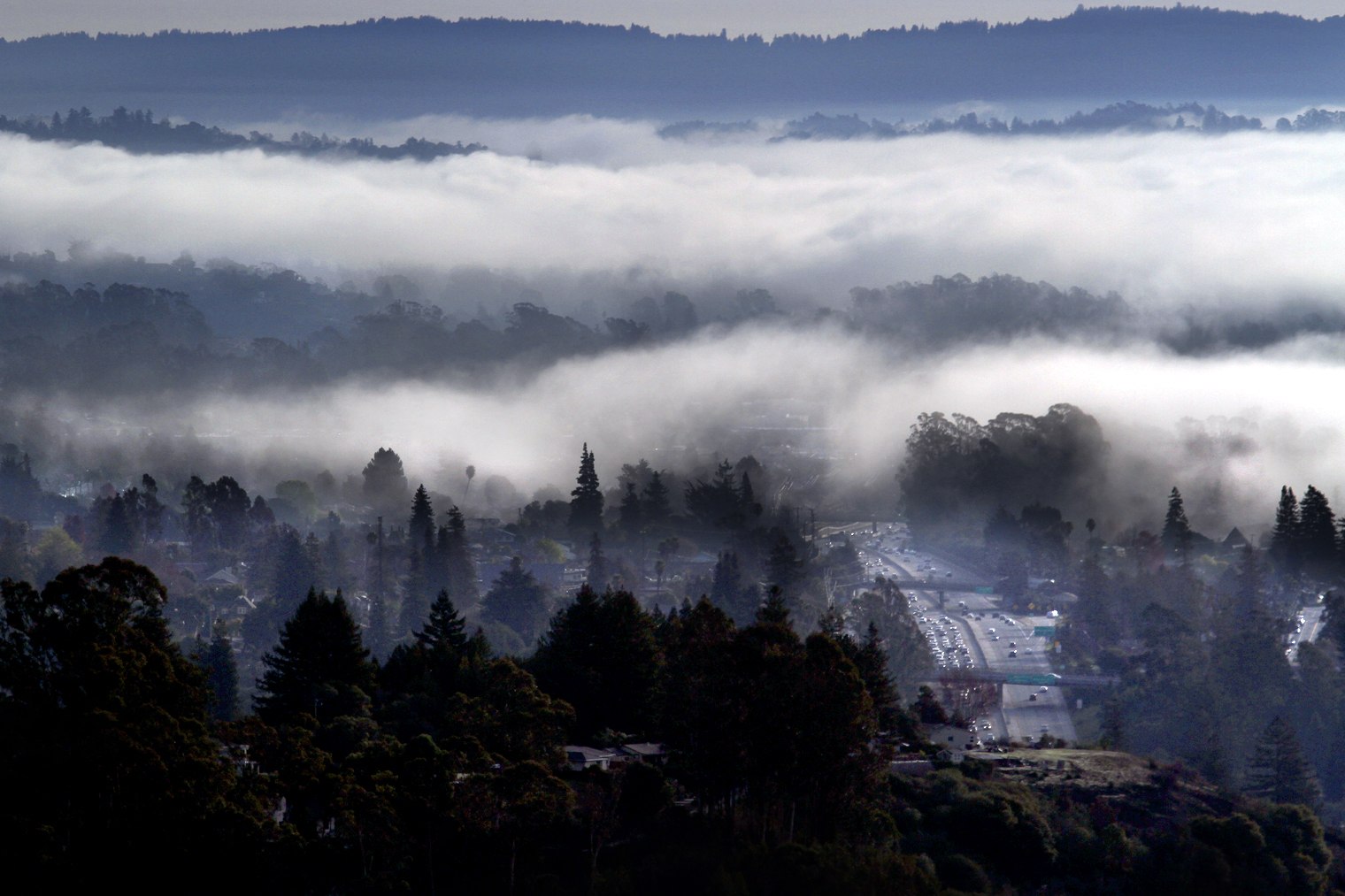
My last night, again too anxious to get a good night’s sleep, I rise early for my flight home. The fog is in along the coast. Overnight chill permeates the distinctly scented air. Stately redwoods stand in silent observation as we merge into Highway One’s rush hour traffic.
Much as I dreaded the journey, I feel nothing but happiness that I came. Spending time with loved ones wrenches me, lingers like a lump in my stomach. Good that aircraft exist. A hundred years earlier, anyone traveling this far left loved ones behind forever.
San Jose airport. I say goodbye to my first born, swallowing back tears. Again I am thrust into a sea of humanity also venturing out into the world. Security is less stressful, boarding less crowded. Maybe I’m slightly inured.
The gods smile on my seating, this time next to a window and not over a wing. My forehead presses the glass as the lumbering beast leaves ground and the wheels thump into the plane’s belly. Below spreads San Francisco Bay, San Jose, and streets, buildings, cars, and lives growing smaller by the moment. In striking resemblance to a circuit board, a network of roads, industrial complexes, and neighborhoods form the landscape below. Each serves a critical function, interdependent, vital, alive. Civilization, California style, 2014.
Last distant view of the Pacific. Goodbye salty spray, kelp-scented air. Long gray-blue line beyond jagged dark blue mountains. Horizon.
Delta–Mendota Canal (left) and the California Aqueduct (right) near Tracy, California. Courtesy Ian Kluft
Soon the vista below changes to a patchwork of brown and green fields in the inner valley. Aqueducts glimmer blue-green. Bare brown hillocks become the southern Sierra Nevada range.
Across Nevada and then Utah, I marvel at the extent of this desolation. I’ve seen it all before, drove it more than once, but this time it seems even more a wasteland than I had previously considered. A handful of places feature a circular green patch and make me wonder who would struggle to pull water from the depths to grow anything in such a place. Even across New Mexico, the vista unfolds in desert tones of gray, tan, and ochre.
For the first time, I feel fear for us as a nation, for people everywhere, who confront the loss of rain as land slowly turns barren. For all our irrigation trenches, dams, and pipelines, in the end we are powerless to stay Mother Nature’s hand. Without fresh water, we can’t survive.
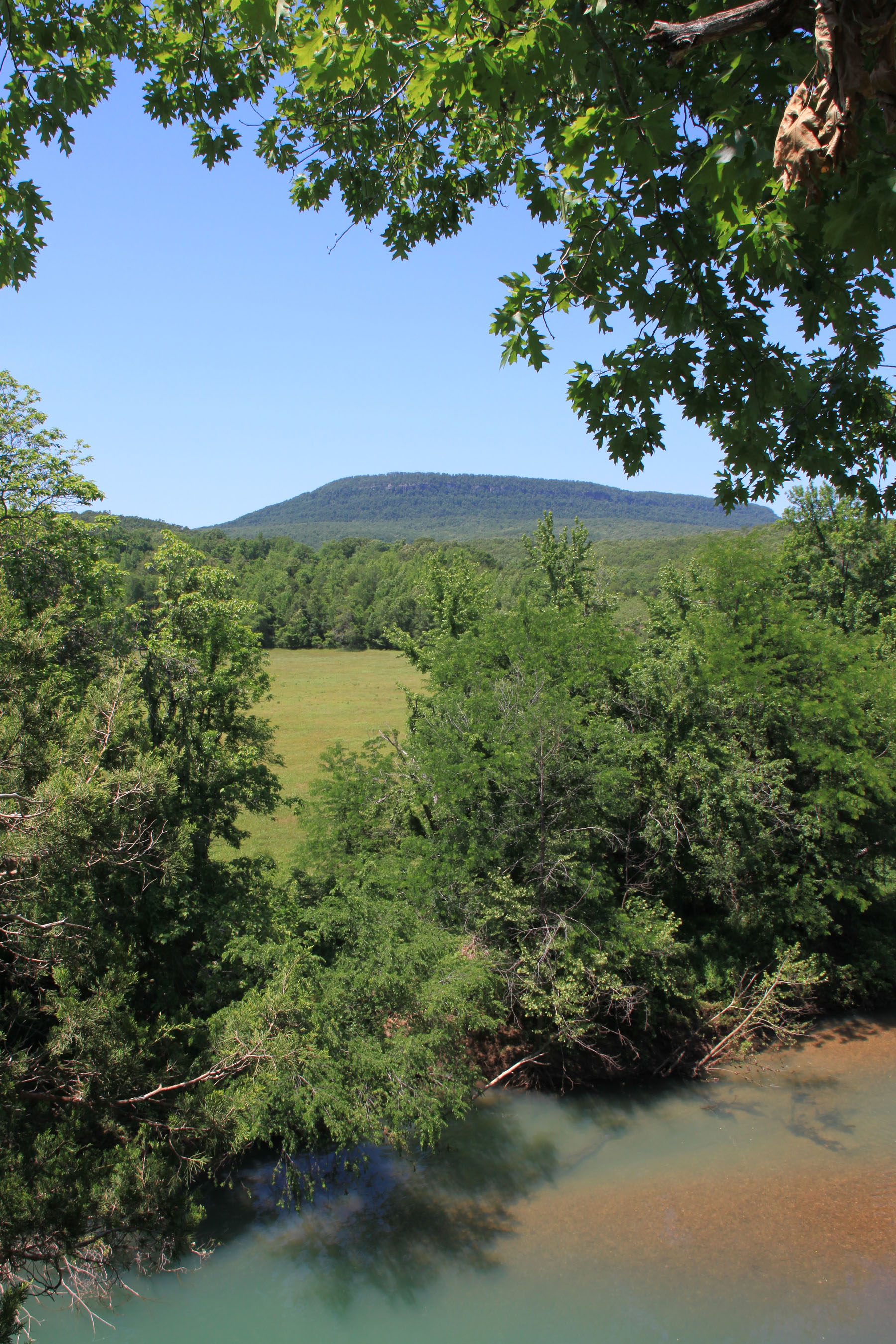
The land greens slightly in central Texas and by the time my commuter flight to Northwest Arkansas circles for landing, fertile green fields and thickly wooded hills welcome me home. Unlike the West Coast, the Ozark plateau is among the oldest land masses on the continent. I feel its old bones in me, welcoming me, holding me close in its eroded creek bottoms and smoothed down ridges.
Safely landed and walking to my car, I hear a familiar chorus of crickets and katydids. The air smells of cut hay and crushed weeds. For all my anxiety and curmudgeonly angst, I’m glad I went. I’ve been reintroduced to a world wider than me. I’ve shared a brief happy time with people I love and who love me. I’ve plugged myself into the Pacific for a deep charge of my psychic batteries.
How could so much change in only six years? I had flown before, many times. Between 1968 and 2008, I lost count of the times I swallowed down excitement as the plane lifted me toward the sky. Airports were the threshold of adventure, the place where infinite possibilities scrolled down the flight departures screen.
But in the intervening years since my last sojourn, I settled firmly at my desk. My adventures became mental journeys into the pages of my writing. I’m comfortable here with my dogs, the woods, my bed.
Okay, I’m getting old.
So when my friend Ginny extended her invitation, my immediate response was anxiety. Could I sleep well on an unfamiliar bed? What about air travel in these days of crazy passenger outbursts and terror threats? Did I really want to go?
My two older children live on the West Coast. I hadn’t seen Ginny for years, and her invitation made me contemplate not only spending time with her and seeing my kids, but also absorbing myself in that uniquely California environment of salty, kelp-flavored air and laid back attitudes. Of course I wanted to go, but couldn’t I please just instantly appear in Santa Cruz instead of going through the journey?
After weeks of increasing anxiety, I hardly slept the night before my departure. What if I didn’t arrive at the airport in time for my flight? What if I forgot to pack something important? What if there were problems with the flight? By the time I parked in the economy lot and hurried across the vast expanse of asphalt, my pulse hammered in my neck. Breathless, I scanned my ticket barcode to print out the boarding pass then mounted the escalator.
Swallowing over a dry throat, I handed the attendant my ticket and identification, moved forward to the screening line, and took refuge in the actions of those ahead of me. At least I could follow their lead. Carry-on luggage on the conveyor belt. Backpack with my purse inside. Take off shoes. No, attendant said. I didn’t have to take off my shoes, courtesy of the first attendant’s notation on my boarding pass which, I assume, had to do with my age. What are the characteristics one must exhibit at the Northwest Arkansas airport to qualify for remaining shod through security? That and another hundred questions and worries flooded my mind as I accompanied my baggage along the conveyor.
“What liquids…(blah)?” The uniformed guard’s words rolled over me as I tried to remember what I had packed. At the last minute, I had abandoned all hope of forcing my thick crème rinse into the tiny travel container. It globbed up at the rim and cascaded down the outside of the container. So I had stuck the entire bottle in my case. Hadn’t I read somewhere that larger containers were okay?
At this point, my voice had become husky and I shook. It wasn’t like they were going to take me outside and shoot me for packing an oversized container of crème rinse. But it was expensive. Other travelers piled up behind me while I tried to make an intelligent decision. The options for keeping it meant paying $25 to check my bag or walking back across the north forty to my car. No, I’d have to give it up. I watched my nearly full bottle of organic hair product land in their disposal bin.
That was only the first of a day of indignities. Maybe growing older and even more rigidly set in my ways preordained that travel by public conveyance would unfold as a series of rude shocks. Jostling in line to board. Wading to the next to last row of seats. Cramming myself into a tiny seat by a window—which I would have chosen if I had been willing to pay the extra money—but facing out over the wing, which I would not have chosen. Enduring the mind-boggling cacophony of human voices shouting over the engine noise as we made the short trip to Dallas-Fort Worth.
By the time we arrived at DFW, my back had spasmed in my effort not to rub against the passenger in the adjacent seat. Clearly comfortable with air travel and close association with whomever, she spent the trip jawing with the man across the aisle, her conversation frequently punctuated with loud laughter. That her leg touched mine or her elbow periodically brushed my arm seemed never to appear on her personal radar.
I live in near total isolation on an Ozark hilltop. I see more deer than people. Coyotes routinely howl at my back fence before disappearing back into the oak and hickory forest. Driving into town for groceries and random errands usually results in a hasty revision of my ambitious to-do list so that my time amid busy streets and crowded store aisles is reduced to only the most urgent items. I return home annoyed and clogged with Other People’s Energy.
Now, barely started on my journey, my back aching with don’t-touch-me tension, I hurry along the wide corridors of DFW’s Terminal C to find the trolley that will whisk me to Terminal A. I dodge businessmen and women wheeling fine leather cases, families straggling with children, retirees looking faintly lost and grumpy. After a fast jerky trolley ride clinging to a grab rail, I descend into Terminal A. Even greater throngs greet me there.
I’m hungry and wander along the crowded corridor. McDonalds swarms with customers, deterrent enough even if I could choke down the food. Starbucks isn’t lunch. I don’t want seafood. Taking a tentative space in the line at TGI Friday’s, I’m soon seated facing out over the hive activity in the corridors and presented a menu. After a heart-stopping moment of sticker shock, I order a cup of broccoli-cheddar soup for $7. It comes with four saltines.
Okay. I can do this. Refreshed from my cheesy lunch, I soon board the jet bound for San Jose. Blessedly, I am not seated in the back or over a wing. Cursedly, I am the first aisle seat in the three-seat side of economy class, meaning the aisle jogs right there as passengers move through from first class. Each passage jostles or brushes me in some way. Plenty of leg room, but since there are no seats in front of me, the tray table folds up from the chair arm. Which would be fine in a perfect world. However, I admit to a less than trim waistline and so the table fits snugly across my midsection. Embarrassing and uncomfortable. I drag out my book and try to concentrate on the lovely biography of Doc Holliday.
An hour into this three and a half hour flight, my back is killing me. The friendly lady on my right enjoys a gin and tonic while reading her Kindle. She’s relaxed and her arm touches mine. Her knee touches mine. My need not to touch someone else is so ingrained that I can’t relax even when I tell myself to get over it. Even when she’s asleep.
With perhaps an hour left in the flight, I lurch to the bathroom at the back of the cabin. Here, for a brief blissful moment, I am alone. But these hours of being crammed into a metal box with a hundred other people is taking its toll. My back muscles have seized. My head aches. My nose has become stuffy with breathing recycled air. The thoughts and emotions of a hundred other human beings have invaded my consciousness. Let me out!
Finally the jet screams down the runway and slams to a halt at Gate 18 of SJC. The blessing aspect of my seating reasserts itself as I follow first class passengers on an early disembarkation. I hurry down the terminal’s long passageways to emerge blinking into the bright San Jose afternoon. The air smells of ocean. Moments later, my daughter calls and then appears to pick me up in a borrowed car.
Strange how children always look the same and yet, at least initially after a long absence, appear as strangers. We plunge into happy conversation as if it was yesterday instead of 28 months since our last meeting. I luxuriate in the absence of strangers and the comfort of a well-padded car seat.
The drive over the mountains along Highway 17 is curvy and steep, plagued with heavy traffic. Soon she turns onto a side route that leads into Soquel over the old San Jose Road. Her smile and the sound of her voice are beautiful.
The rich odor of pine sap and eucalyptus starts to clear my clogged nose. The narrow lane winds along sharp inclines cut into the face of newly minted earth—slabs of granite bedrock under hulking chunks of sandstone pushed up from the ocean floor as recently as the last three million years. Even after two years of drought, native vegetation maintains a stubborn gray-green grip on the land, all subordinated to the towering redwoods.
We talk about her flight from Oregon, her plans. The eight days we’ll have together. This is more like it. I have survived. I am here.
Last night, my faithful yellow cat Mao brought me a late supper of Rat. He’s generous that way, concerned that my regular offerings of crunchies and delectable leftovers not go without reciprocation. And unlike some ungrateful cat owners, I accept his offerings with praise, petting, and a token nudge at the critter before turning off the light and trying to get back to sleep.
As usual, Mao became slightly perturbed that I didn’t actually taste his hard-won offering. I admit it’s rude not to appreciate the no-doubt rich flavor of a fine, plump, mostly grown Rattus norvegicus. He resorted to his usual tactic, which was to continue with his breathy purring and occasional trills while tossing the rat across my throw rug and otherwise demonstrating its near-life status in order to tempt my appetite. Eating small mammals while still technically alive is a code among cat-kind and he must think me thick-headed not to take advantage of such a careful presentation.
Sometimes this last flurry of playing with the food results in escapes that require human intervention, such as opening the closet door under which the frenzied furry thing wriggled away or otherwise facilitating the rediscovery of prey. Mostly, Mao is far too skilled to allow real escape. However, he does encourage fake escapes so that the fleeting thrill of capture can be enjoyed multiple times with any given victim.
The half-grown rabbit he brought in a couple of weeks ago managed to escape and get re-caught countless times over what seemed a period of hours. Sleep became a fiction of half-dreams punctuated by shrill bunny screams. It was a relief when the inevitable crunching of skull broke the wee hour silence.
They always start with the head.
Conceding to the gentle reader’s possible horror at these goings-on, allow me to explain that I live in the Ozark woods where Nature exhibits her ruthless beauty on a daily basis. In spite of forty years of living here, always in company of cats and various other domesticated creatures, there has been no diminution of birds or small mammals. I’ve learned to respect the flow of things and step aside for the ways of everything from snakes to ground hornets to the occasional bear. And cats.
Mao came to me as an injured feral stray who even now tolerates contact with few humans besides me and who goes completely nuts when put into a cat carrier. When he appeared at my front steps, he’d been shot. The wounds had mostly healed, but one area on his left shoulder kept abscessing. Over a period of months, I fed him and watched his wounds fester then drain in a desperate cycle that increasingly weakened him until even my tempting roast chicken failed to put much meat on his bones.
I lured him to a cage and the vet discovered a dozen BB-sized pellets lodged in his body, some of which remain ten years later. But the shoulder injury that kept him on death’s door responded to treatment, which involved me locking him in a spare bathroom for ten days in order to visit him twice a day with antibiotics. He literally climbed the walls in that room. Closed doors remain cause for terror.
The vet estimated his age at about one year at the time of his capture. Who am I to get between this cat and the means of survival he learned living alone in the woods? More than most cats, his hunting is part of his life. There’s no shortage of prey. He brings me gifts, heralding his delivery as soon as he hits the pet door. I thank him.
The rat had already succumbed to unconsciousness by the time Mao woke me to announce that the food order had arrived. In order to preserve the relatively unstained state of my new bedside rug, I subtly dragged the senseless limp rat body several feet away. Mao promptly brought it back. I haven’t figured out if the attraction to my bedside rug is based in its proximity to my sleeping body, or if it has to do with the textural similarities between a natural land surface and a rug. But after four futile attempts to relocate this particular feast to the easily-mopped surfaces nearby, I gave up and let Mao have his way.
It took him quite some time to dispose of the rat, due in part to my inconsiderate lack of interest in a meal meant for two. I found a tiny bundle of leftovers this morning, the gall bladder and the skin and tail of the rat’s hindquarters. This phenomena continues to intrigue me, as all cats who have ever patrolled my woodland property and delivered rats to my bedside have left the rat’s ass on the floor. All other creatures are consumed in their entirety, every last bit of fur, nails, feet, and tails of rabbits, moles, voles, and squirrels. But not the rear ends of rats. Quel mysterieux!
I’ve provided the image of last night’s leftovers in order to share Mao’s impressive abilities. The hide of the hindquarters is turned inside-out with tail and foot protruding so that the hip meat could be consumed without touching the anal region. Meticulous butchery, to say the least. I’ve written about this before, my conviction that this particular eccentricity in the cat-rat dynamic is the basis of the old saying that someone wouldn’t give a rat’s ass.















 denelecampbell