 I’d made it halfway down the dog food aisle when the woman’s words penetrated.
“Hey, aren’t you…? Didn’t you…?”
The woman had turned to look at me. I knew she thought she knew me. I looked at her closely, moving my cart against the bags of dog food so I didn’t block the aisle. She did look kind of familiar. I glanced at the man standing behind her. He looked slightly familiar too.
“Virginia Wilson,” she said. “Dennis,” she added, motioning to her husband.
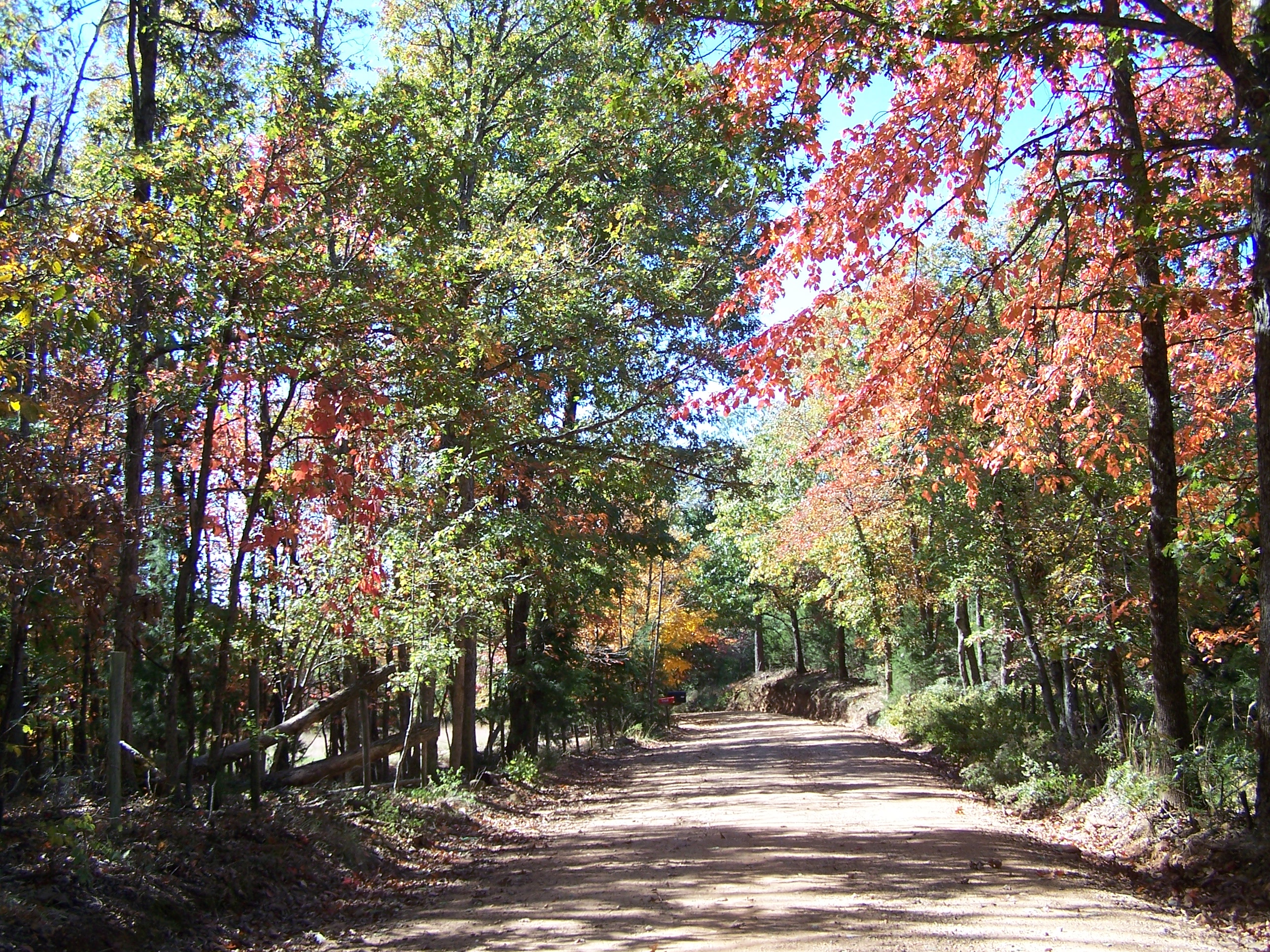
“Of course! Wow, it’s been so long.” I studied them as my brain clicked backwards through decades. In 1974, when Steve and I first moved to the land his parents deeded us on this mountain, Dennis and Virginia had a place on past ours another two miles down the rough dirt road.
“Yeah, we thought that was you,” she said with a smile. “I hardly know anybody up there anymore. They’re all dying off.”
“I only know a few,” I replied. “Burkart, Northcutt—can’t call them anymore.” I pondered the sorry state of affairs. “After Art died, you know his wife hooked up with a guy named Ron Martin. They had a kid and raised Art’s son Tommy—he was only two when Art died, and he’s about thirty now.”
We shook our heads at the passage of time.
I continued with my story, because at some point it would make sense why I told it. “Ron, he moved out. He lives down there in that little house Williams built for his son out by the road. Lives with a guy named Chris. They work together.”
That brought the topic back to people who lived on the road. Names of people who used to live here. Who lived in their houses now.
I could have said a lot more about Ron and Chris. How Ron’s back is messed up bad, an injury he’s carried since his days in Vietnam when the 101st Airborne was jumping out of helicopters into jungle, when Ron was a skinny little eighteen-year-old kid with a fifty pound pack on his back. He’s missing a few teeth now, thin as a rail, damn proud of his ‘Nam days and the 101st. He still tries to work, has to work since he’s got a seventeen year old son and his military pension even for a disabled person isn’t enough. He’s not supposed to work.
He’s got COPD, has to use oxygen. Wakes up in the morning in agony. Has to take his pain meds and stand in a hot shower until his back settles down. He had to move out on his wife, Art’s widow. She’s got issues, mostly anger. So he moved in with Chris.
Chris never was in the service. He lost an eye when he was nine, one of those running wild in the neighborhood situations, somebody throwing rocks or using a slingshot. Nobody really took care of Chris. His alcoholic dad did things to him, to all his kids, but Chris loved him anyway. Like kids do. By the time Chris hooked up with Ron, he was in his forties, had done every drug long enough to see himself sliding down a hole. Managed to get himself off heroin, off meth.
But Chris will never give up alcohol. Somewhere he’s got grown kids. Once he had good jobs in construction. The man has an amazing talent—just understands how to put things together. And an artful eye—one. Painter, carpenter, drywall guy—he’s got the skills. But he works to drink. Soon as he knocks off the job for the day, he hits Roger’s Rec. Sometimes he has enough sense to give Ron his money and listen to Ron when he says it’s time to go home.
Sometimes he wakes up in the wee hours with police shaking him awake and pulling him from where he passed out in the bushes behind Roger’s. They don’t even book him. They just call Ron. Nobody can fix Chris.
“Yeah,” Virginia says. “Remember Foster Copeland? Lacy Barrett bought that house after he died. I think they rent it out.”
I remember Foster—tall, sandy red hair, big guy. His house sits across the road from Ron and Chris. Not the house he had when we moved up here. That one burned. Then all the Jehovah Witnesses came up to help their ‘brother’ build a new one, a house raising that lasted a weekend and put him and his family back into a home.
Foster sold tool handles. He’d drive around these parts, I don’t know how far his route extended, selling handles from the back of his car. We’d take tools down there for him to fix. Five dollars. Pitchfork, hoe, shovel, maddock, axe—he had all the right handles made of good strong hickory. Some of my tools still have Foster’s handles in them. He died of a brain hemorrhage sometime in the mid-Eighties.
“I know the guy that lives there now,” I said. “Sammy something. He’s friends with Ron and Chris. He and his wife live in Foster’s house.”
“Is there somebody new living in Randy Northcutt’s house?” Dennis asked. Randy’s house is next door to Foster’s. Next door as in, maybe a hundred yards down the road.
“Yeah, I guess it sold—the realtor sign is down and they’ve cleaned up the place. Too bad about Randy. He really let that place get messed up.”
“Oh, that wasn’t Randy,” Virginia said. She glanced at Dennis and he shook his head. I knew he missed Neal. For years, every day, late afternoon, Dennis’ dump truck would be parked up next to Neal Northcutt’s fence and they’d be inside having a beer and discussing things in general.
“He sold that house,” she continued. “Soon as Neal died, Randy sold it to his sister and left. Haven’t heard a word about him since.”
“She lived in that trailer for a while, the one that used to belong to Davenport?” Davenport was a skinny little ex-military who married a big German woman. He died of cancer, left the place to her. She gave up after a couple of years and sold everything to Neal.
“Yeah, her and her husband. They fixed it up then sold it to Wesley Harris, I think was his name. They added on a really nice house, but that trailer’s still in there.” She paused to scoot her cart over so another shopper could go by. “I think they’re there, but I don’t know. I can’t keep up.”
Virginia’s a cute little woman with a petite figure and friendly smile. I think she’s into Jesus. We never socialized much, even in those early years when Steve, his brother Art, and Dennis got together to drink, smoke, and cuss. The guys hung out while the women went about the business of fixing meals, taking care of kids, keeping house. I saw no reason to buck the system—they never talked about much of interest to me.
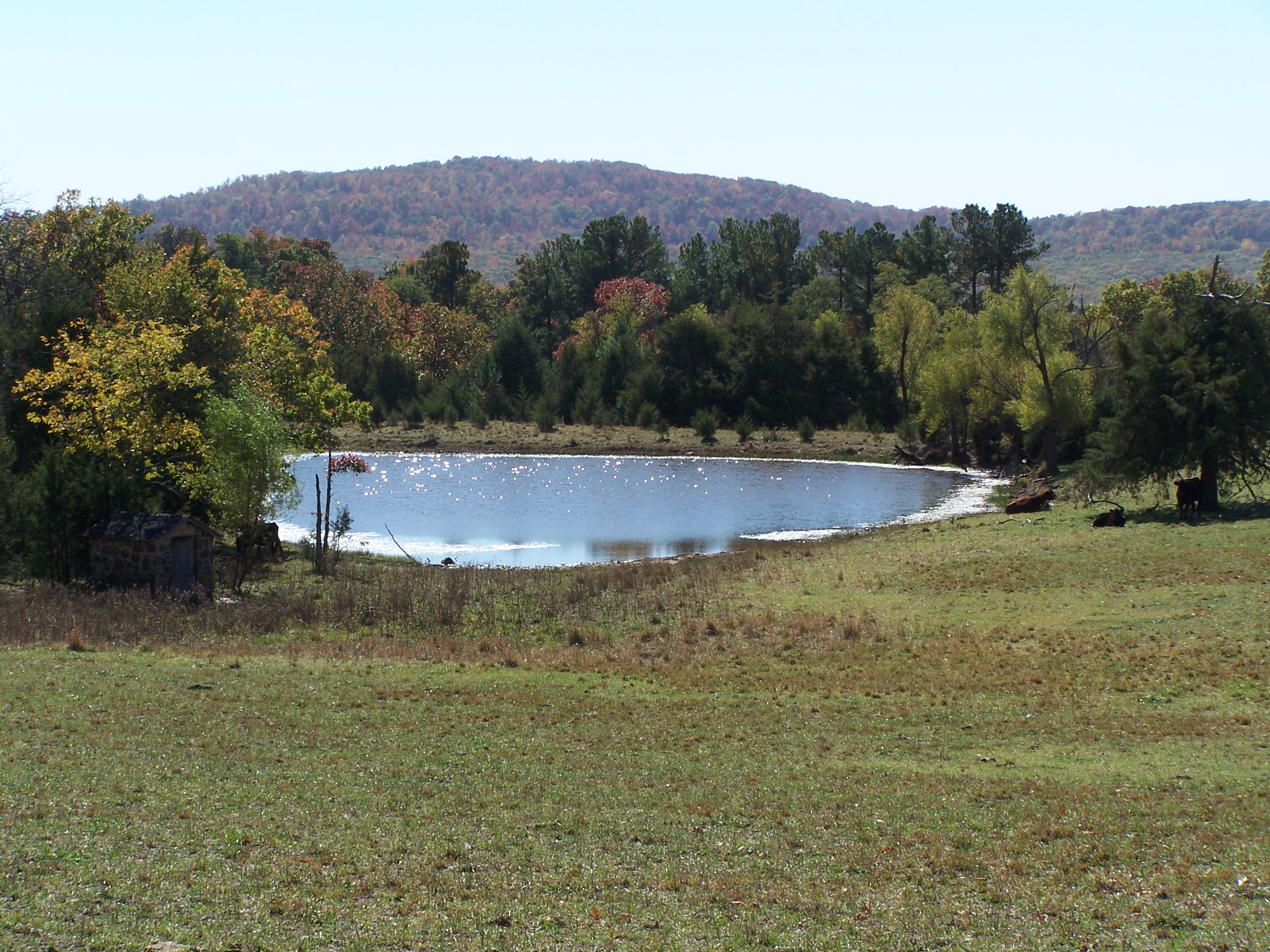
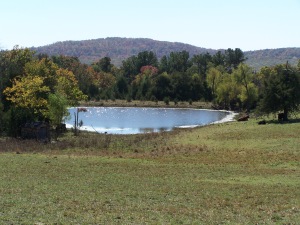
Early on, we hired Dennis to build us a nice pond below the first pond. He was in the hauling and heavy equipment business. We’d see him driving home, groaning up the mountain with his dump truck in first gear, hauling his bulldozer behind him on a beat-up flatbed. Once the pond filled up, Steve and I took the kids—I think we only had two at the time, late 70s—and drove over to Huntsville to a fish farm. Brought back buckets of fingerling catfish to stock it. Never once caught a catfish out of there, at least that I can remember.
Time changes everything. The dam settled and trees took hold. Now their roots have riven the red clay dam base and weakened it enough to erode. The overflow ditch to the side filled up with fescue and weeds, so water spilled over the top of the dam after heavy rains. A ditch developed across the top. The ditch is big now, maybe three feet across at the top and cutting down into the dam at least two feet. I keep thinking I’ll get somebody up here with a load of red clay to fix all that. I’d have them clean out the overflow ditch at the same time so water can’t top the dam again. But that’s at least $500 that I don’t have. So Dennis’s dam keeps getting worse.
We tried to keep it up. I dug out that overflow ditch. Steve dug it out. The kids got older and the deer population exploded and making a garden down there became a painful futility. Then Art died and a few years later Steve and I fell apart, and then I didn’t have the money or the heart to go down there and walk around in our ghosts.
But things with Dennis fell apart before the pond dam went bad. One day Steve came home from work furious. He’d stopped down at Neal’s. Neal was kind of the godfather of the road, him and Walter Burkart. Both were retired military, hiding out in the Ozark woods after a lifetime of being bossed around. Walter didn’t drink, so he didn’t hang out with the drinking crowd. Neal’s second home was the White Star Tavern, especially after Penny died. He called it his office. Everybody loved Neal and Walter.
So Steve came home from Neal’s where he’d seen a dead redtail hawk in the bed of Dennis’s pickup. Dennis admitted to shooting it, like there was sport in it. Proud of himself.
Steve loved redtails. He loved anything in nature, but especially hawks. When we first got together, he’d tell me the names of trees, types of birds, insects, snakes. I learned a lot in those twenty years until I couldn’t stand living with him anymore. Ironic that because of the kids, I stayed on the land and he moved to town.
Anyway, Steve stormed into the house ranting about the dead redtail and called the game warden. I remember his hands shaking while he looked up the number. Redtails are protected birds. You can’t even have a dead one you pick up off the road. Can’t have a feather off one. Red-shouldered hawks I think are the same, like eagles and other birds of prey mostly killed off by early settlers under the idea of protecting their chickens.
Dennis got in trouble on account of that hawk. I think Art would still socialize with Dennis, but Steve never did. Then when Art died in 1989, the mix of Campbell and Wilson at Mineral Springs just withered on the vine.
We stood there in Walmart, the Wilsons and I, talking about the old timers. We were the old timers now. As we were turning away to go on with our shopping, Virginia laughed and allowed as how I’d probably better not call if I needed anything, because she didn’t do much for anybody anymore. And I said yeah, I felt the same way. Besides, we agreed we didn’t know most of the people who lived up here now and wouldn’t be likely to take kindly to any neighborly overtures unless there was some kind of gawdawful emergency.
Lots of us who lived up here in those early days thought there would be a gawdawful emergency at any moment. Some lunatic would push the button and the world would go up in mushroom clouds. The Ozarks was one of the places where wind drift would save us from the worst of the fallout. We’d be the ones who could still grow food, pull clean water up from our wells, join together in a tribe to share what we had and fend off the savage hordes.
We learned how to raise and slaughter animals, grow and preserve food, and we stocked extra supplies of salt and bullets. Slowly our kids grew up. We started to understand we could never possess enough bullets.
Now we’re the old timers. Until our reunion in the dog food aisle, it had been at least twenty years since I saw Virginia and Dennis. People don’t move to the woods to socialize. We probably won’t live long enough to see each other again.