The Critical Need for Dental Care

A friend of mine I’ll call Tom is a Vietnam vet. His back is so wrecked he has to take a pain pill before he gets out of bed. He lies there in pain waiting for the drug to kick in. Then he stands in a hot shower until the muscles relax enough for him to walk. For years, he did this each morning before packing up his tools and heading out to work. Now he can’t work.

Jumping out of helicopters into the jungle with a heavy pack did this to Tom’s back. He was a skinny little kid to start with. But his back is not why Tom is in crisis now.

For years, Tom had bad teeth. He finally managed to save up enough to get them pulled but it took more months to save sufficient money to buy dentures. Tom’s down to skin and bones because he couldn’t bear the pain of chewing.

Two years ago, the Veterans Administration Hospital discovered Tom has COPD. Since then, he’s been on oxygen plus inhalers and struggles for each breath. The damage from a lifetime of work as a painting contractor can’t be undone, all those jobs of clearing away old asbestos insulation and sheetrock dust without wearing proper respiration masks. It wasn’t just a matter of not having money for a mask or not wanting the hindrance of something that restricts vision and mobility, although both those things applied. It was even more a matter of not realizing what atomized paint and volatile chemicals could do inside his body.

Now the VA has found that he has a faulty heart valve. Fixing it will be tricky because the vessel adjacent to the faulty valve has an ominous bulge, otherwise known as an aneurysm.

Inhaled particulate aside, how much of Tom’s predicament can be attributed to years of living with bad teeth? Plenty. As it turns out, respiratory disease can be a direct result of poor dental health:

Bacteria from periodontal disease can travel through the bloodstream to the lungs where it can aggravate respiratory systems, especially in patients who already have respiratory problems. A study published in the Journal of Periodontology uncovered a link between gum disease and an increased risk of pneumonia and acute bronchitis.

Or how about dementia, a condition increasingly suspect in Tom’s case?

Tooth loss due to poor dental health is also a risk factor for memory loss and early stage Alzheimer’s disease. One study, published in Behavioral and Brain Functions, found that infections in the gums release inflammatory substances which in turn increase brain inflammation that can cause neuronal (brain cell) death.

The U. S. Surgeon General in 2000 stated: “…oral health is intimately connected to general health and can be implicated in or exacerbate diabetes, heart disease and stroke, and complications during pregnancy.” And that’s the tip of an iceberg of ailments including erectile dysfunction and even cancer.

… a study published in Immunity earlier this year also hinted that a bacterium implicated in gum disease, Fusobacterium nucleatum, can reduce the ability of the immune system to recognize and destroy cancer cells.

Veterans theoretically get all their health care needs met. But there’s no veterans’ coverage for dental. Medicare and Medicaid also don’t cover oral health. It’s as if our mouths don’t matter.

In the seventeen years since the surgeon general issued his report clearly outlining the devastating systemic harm caused by poor dental health, nothing has been done to expand dental care to those who need it. Awful images jokingly posted on social media about “Walmartians” invariably include people with horribly decayed teeth. Or no teeth at all.

A 2016 Alternet article, “Why in Heaven’s Name Aren’t Teeth Considered Part of our Health?,” reveals that over 106 million Americans have no dental coverage and that one in four has untreated dental decay.

The social cost is as high or higher than the medical cost. We are immediately disgusted by those with visibly bad teeth. People with rotted teeth have a hard time finding employment and are shunned in social circles. Bad teeth are a marker of the lower classes. As noted by Susan Sered, author of the Alternet article,

The reality is that tooth decay signifies poverty in pernicious ways. Without expanding insurance to cover oral health, millions of Americans will continue to live with pain, stigma and the risks of systemic diseases that could be averted through an accessible and integrated system of dental care.

Even before the surgeon general issued his report, common sense told us that decaying teeth sent infection into our bloodstream and compromised our immune system. A steady drip of pus into the body’s blood and lymph systems overwhelms not only the body’s ability to resist infection but also damages otherwise healthy tissue in vital organs.

No wonder Tom has a diseased heart, diseased lungs, and a poor prognosis. He lived with rotten teeth for years. Nobody in the VA stepped up and advised him about this problem. It’s not in their job description.

Likewise, as noted in the Alternet article, the lack of dental coverage in Medicare and Medicaid leaves out large segments of the population most in need of care. It’s estimated that 70% of seniors lack dental care precisely at a time in life when dental problems are most likely to appear.

Except for the random ‘free’ clinic for those qualified (and those lucky enough to live near one and who find their way through the tedious process of discovering where and how such clinics function), those without expensive dental insurance are on their own in addressing this vital and overlooked medical need. Many, like Tom, go without attention to their dental health until they can literally pluck teeth out of their inflamed gums like so many ripe plums.

There’s no excuse for this country to continue to ignore dental health. As one of the fundamental causes underlying so many severe medical conditions, dental disease should rank near the top of conditions covered fully by all insurance programs. In addressing oral health, insurance companies could help prevent or reduce many long-term ailments that cost untold millions and generate incalculable pain and suffering.

There’s no help for Tom. Even after saving enough of his meager pension to purchase dentures, he has continued to decline. It takes all his effort to simply walk across the room. While the VA gropes with surgical options for his heart and keeps him supplied with pain meds and oxygen, Tom lives at home alone without access to Meals on Wheels or other resources that could bring him at least one hot meal a day. He lies in bed watching television, dependent on liquid nutrition drinks and microwaved meals for food. His family chips in when they can, but that’s not a daily meal.

Tom insists he’s not interested in assisted living in the veterans’ home because he’s heard bad things about how people there are treated. He’s also not close enough to death to qualify for hospice. He’s stubborn and proud and thinks he might be able to work again.

This travesty stems largely from the failure of our nation to recognize the insidious creeping harm of poor dental health or the true preventative nature of proper dental care. It’s hardly news that there’s little to no respect for prevention—the lack of understanding about nutrition and poor food preparation skills are a big part of the nation’s mushrooming health care costs, driven in part by the rise of fast food and the barrage of advertisements for unhealthy foods.

“We are what we eat” has never been a more important thought. Especially when we consume bacteria from rotting teeth.

His Fight, Our Fight

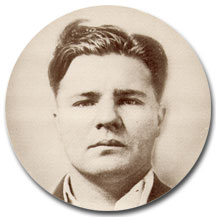
According to the brief description that accompanied this photo that crossed my Facebook timeline the other day, the funeral of Pretty Boy Floyd drew the largest attendance of any such event in Oklahoma history. The image gives me goosebumps, almost puts a lump in my throat. It’s not the coffin—I can’t even discern where it is. It’s the people, backs straight, their attention focused entirely on the dead man.

On what he represented.

My dad sometimes talked about Pretty Boy Floyd although at the time of Floyd’s death, my dad was only seventeen. For him, like so many, Floyd stood as a heroic symbol to survival in their times. Dust bowl, economic depression, most of all the shift of worlds. From the independent farmer working alongside his wife and children to wrest of living from the land to the new reality of the need for money and consequently, jobs in town.

Giving up the farm and its creeks and horses and the smell of fresh cut hay. Learning to work for someone else. Breathing exhaust. Street lights burning the dark. Rigid hours to serve someone else’s profit. Dependent on the dollar instead of the land.

There were men who couldn’t make the change. Men who rebelled, who clung to the old ways. Men who’d rather die than portion out his life in the 9 to 5. They didn’t willingly give up the tradition of their fathers, but rather borrowed money on the hope of better times, more rain, abundant crops. The loans came due before better times arrived.

According to his biography in Wikipedia, “[Charles Arthur] Floyd was viewed positively by the general public. When he robbed banks he allegedly destroyed mortgage documents, but this has never been confirmed and may be myth. He was often protected by locals of Oklahoma, who referred to him as ‘Robin Hood of the Cookson Hills.’” He was thirty when he died.

Floyd’s robberies of banks made him a target for the fledgling FBI and the true manner of his death became one of the agency’s earliest cover-ups. After he was downed by rifle shot, another agent shot him with an automatic weapon at point blank range. Not widely known at the time, the unfairness of his killing nevertheless was understood at a visceral level by the common man.

Woody Guthrie, a native of Oklahoma, penned a song about it in 1939, five years after Floyd’s death. Called “The Ballad of Pretty Boy Floyd,” the song has the form of a  Broadside “come-all-ye” ballad opening with the lines:

If you’ll gather ’round me, children, a story I will tell ‘Bout Pretty Boy Floyd, an Outlaw, Oklahoma knew him well.

The lyrics recount Floyd’s supposed generosity to the poor and contain the famous lines comparing foreclosing bankers to outlaws:

As through this world you travel, you’ll meet some funny men; Some will rob you with a six-gun, and some with a fountain pen. And as through your life you travel, yes, as through your life you roam, You won’t never see an outlaw drive a family from their home.

Many other artists have recorded this song, among them Bob Dylan, Joan Baez, and James Taylor as another generation’s anthem to the tragedy of corporate takeover.

It’s easy to see Floyd as a martyr. In his short life, he did what so many others wanted to do. Like the young Chinese man who dared to stand in the path of an oncoming tank, Floyd like similar ‘criminals’ of the early 20th century defied the banks and credit systems that threatened everything that mattered in rural American lives. They instinctively understood they were being swept into a capitalist system that had no sense of morality, no obligation to human circumstance. They fought back the only way they knew how.

The battle that cost Charles Floyd his life has not ended.

~~~


Wikipedia: https://en.wikipedia.org/wiki/Pretty_Boy_Floyd

Today’s Big Lie

Topping today’s fake news is the Republican mantra that Obamacare is failing and whatever faults their replacement plan may have, nothing can save Obamacare. Cited as evidence is a decrease in the number of insurance companies serving certain states. Aside from the obvious option of the federal government providing coverage as it does in Medicare, which no one mentions, is the quiet Republican sabotage that brought about this situation.

For the last seven years since the Affordable Care Act (aka Obamacare) came into law, Republicans have not only claimed they had a better plan (when they obviously didn’t),  they have worked behind the scenes to gut key elements of the ACA. Now, disingenuously, they act as though they had nothing to do with the problems they cite as evidence of its failure.

If these were decent people, they wouldn’t be able to face themselves in the mirror. But extremists have never let a little basic human decency get in the way of their agenda.

Back in 2015, as the ACA took effect and more people were for the first time able to gain desperately needed medical care, Republicans saw that they would never be able to tear this coverage out of the hands of sick and dying people without suffering political blow-back. So with their midterm election wins giving them legislative authority, they eagerly set about gutting key elements of the ACA in a strategy meant to guarantee its failure.

The law had made provisions for early insurance company losses described in the bill as a ‘risk corridor.’ Expected to decreasingly occur as the bill’s mandatory enrollment requirements gradually built up the number of healthy insured persons, the risk corridor would eventually die off. In the interim, companies were guaranteed government reimbursement to cover such losses.

So in 2015, Senator Marco Rubio led an effort to gut the risk corridor provision. Slipped into a massive spending law late that year, their meddling cut the payments to insurance companies from $2.9 billion to around $400 million. This left insurance companies no choice but to begin withdrawing from low income/high illness states.

Now we hear Rubio, Ryan, et al crowing about how the ACA failed as if they had no hand in that failure.

It’s not that these men want to really hurt their less fortunate brothers. It’s that they worship only two gods—money and so-called conservative values.

As noted in an excellent discussion of the Republican conundrum about health care, “Republicans will not increase the role of government [in health care] for political and ideological reasons” which is why they cannot now or ever develop a plan that is better and cheaper than the ACA.

The conservative agenda is clearly stated as limited government, a healthy culture, and a strong defense. I’ll refrain from ranting about their idea of a healthy culture, code words for “White” and “Christian.”  Sticking to the topic of this post, I’ll point out that “limited government” does not include mandating health care or providing for health care in any way. Worshiping at the feet of so-called ‘free markets,’ conservatives want the sick left to die. If relatives, neighbors or churches don’t help them and they haven’t managed to make enough money to help themselves, then it’s their fault and God’s will that they suffer.

Limited government is a loosely applied term, however. If it comes to invading private homes to rout out pot smokers, conservative lawmakers are all about it. Yet if it comes to corporate polluters lying about profitable chemicals that cause birth defects and cancer, it’s hands off. This means government is limited only when it comes to policing entities that are too big for any citizen or group of citizens to fight alone and unlimited when it comes to bringing the full police powers of the state against individuals who violate conservative cultural norms.

In one tiny example of the absurdity of the health care debate currently underway is the fact that over half of Medicaid recipients are children under the age of six who have developmental disabilities. I blogged about this last week. While seeking to reduce or eliminate Medicaid that serves such children, the Republicans simultaneously are eliminating government oversight of chemical pollution from which many such disabled children arise.

If legislators had the real interests of the American people at heart, they would throw out their replacement plan and the Affordable Care Act and expand Medicare to the entire population. They would remove profiteering insurance companies from the mix. They would instill cost controls on drug companies and medical providers.

After all, if utilities are such a vital need that they deserve government price controls, surely health care is an even greater vital need.

It doesn’t take a genius to figure out that without insurance companies taking a healthy slice of every health care dollar, costs would go down. Or that there’s a screaming need for cost controls when pharmaceutical industry profits routinely equal the profits of banks at nearly 20%, some as high as 40%.

Drug companies are quick to cry how much they need all that money so they can develop new drugs. But reality is that despite investment in new drugs and abusive advertising campaigns, their profits exceed most other industries. With that kind of loose change, it’s no wonder that one of the heaviest contributors to political candidates are drug companies, coming in right after big banks and weapons manufacturers.

World’s largest pharmaceutical firms
Company Total revenue ($bn) R&D spend ($bn) Sales and marketing spend($bn) Profit ($bn) Profit margin (%)
Johnson & Johnson (US) 71.3 8.2 17.5 13.8 19
Novartis (Swiss) 58.8 9.9 14.6 9.2 16
Pfizer (US) 51.6 6.6 11.4 22.0 43
Hoffmann-La Roche (Swiss) 50.3 9.3 9.0 12.0 24
Sanofi (France) 44.4 6.3 9.1 8.5 11
Merck (US) 44.0 7.5 9.5 4.4 10
GSK (UK) 41.4 5.3 9.9 8.5 21
AstraZeneca (UK) 25.7 4.3 7.3 2.6 10
Eli Lilly (US) 23.1 5.5 5.7 4.7 20
AbbVie (US) 18.8 2.9 4.3 4.1 22
Source: GlobalData

In fact, if you take a look at the list of corporate donors to the 2016 campaign, you can pretty much determine the current legislative agenda: more military spending, Wall-Street friendly cabinet members, and no serious effort to provide for the health and well-being of the American people.


Medicaid and the Chemical Industry

Figure 4: Medicaid is the third largest domestic program in the federal budget.

As of 2002, the majority of Medicaid beneficiaries (54%) were children under the age of six years. Contrary to the popular myth of aging slackers, drug addicts, and welfare queens sucking at the national teat, this majority of Medicaid provides healthcare to children and adolescents with limitation of activity due to chronic health conditions. Their numbers quadrupled from two percent in 1960 to over eight percent in 2012.[1],[2]

This increase parallels the growth in manufacture and use of agricultural chemicals.

One of the fastest growing patient groups covered by Medicaid is children with developmental disabilities. Over the last 12 years, the prevalence of developmental disabilities (DDs) has increased 17.1%—that’s about 1.8 million more children with DDs in 2006–2008 compared to a decade earlier: autism increased 289.5% and ADHD increased 33.0%.

According to a recently released study, children with special health care needs suffer conditions that include

autism, Down syndrome, and other intellectual and developmental disabilities (I/DD); physical disabilities such as cerebral palsy, spina bifida, and muscular dystrophy; mental health needs such as depression and anxiety; and complications arising from premature birth. They may need nursing care to live safely at home with a tracheotomy or feeding tube; attendant care to develop community living skills; medical equipment and supplies; mental health counseling; and/or regular therapies to address developmental delays.[3]

One source puts the annual cost of caring for a child with severe autism at $72,000.

What is happening?

Consider the case of Eva Galindos, a twelve-year-old girl with autism. At age three, she was diagnosed by her pediatrician, but he could not answer the parents’ urgent questions about why this happened to their child. Seeking answers, the Galindos family participated in a study. At the time of Magda Galindos’ pregnancy with Eva, “the family was living in Salida, a small town in central California surrounded by fields of almonds, corn, and peaches. The Galindos could see the planted fields just down the street from their stucco house.” Magda recalled the acrid smell of chemicals sprayed on the fields, very different from the fertilizer odor.

The study revealed that during pregnancy, Magda had been exposed to chlorpyrifos.

In 2014, the first and most comprehensive look at the environmental causes of autism and developmental delay, known as the CHARGE study, found that the nearby application of agricultural pesticides greatly increases the risk of autism.[4] Women who lived less than a mile from fields where chlorpyrifos was sprayed during their second trimesters of pregnancy, as Magda did, had their chances of giving birth to an autistic child more than triple. And it was just one of dozens of recent studies that have linked even small amounts of fetal chlorpyrifos exposure to neurodevelopmental problems, including ADHD, intelligence deficits, and learning difficulties.[5]

The American use of chemicals to eradicate insects both in homes and crops dates back to lead arsenate in 1892, but as early as 900 AD, poisonous arsenic sulfides were used in China.

The search for a substitute [to lead arsenate] commenced in 1919, when it was found that its residues remain in the products despite washing their surfaces. Alternatives were found to be less effective or more toxic to plants and animals, until 1947 when DDT was found. The use of lead arsenate in the US continued until the mid-1960s. It was officially banned as an insecticide on August 1, 1988.[6]

Total global pesticide production and global pesticide imports (1940s-2000) – Tillman et al. (2002)0

DDT (Dichlorodiphenyltrichloroethane) quickly took the place of lead arsenate, even though research as early the 1940s had shown its harmful effects. After Rachel Carson’s expose Silent Spring pointed the finger at DDT for poisoning wildlife and the environment and endangering public health, the chemical was targeted by a growing anti-chemical movement. In 1967, a group of scientists and lawyers founded the Environmental Defense Fund with the specific goal of banning DDT. Despite continuing efforts, DDT is still produced for ‘vector control’ and for agricultural purposes in India, North Korea, and possibly other locations. At least three to four thousand tons of the chemical is produced annually.

Like many chemicals, DDT persists in the environment as well as in tissue of all life forms. Its biological half-life in soil is up to thirty years. Organisms at the top of the food chain suffer greater exposure as the chemical and its major metabolites of DDE and DDD accumulate in animals and plants which are then consumed by other animals.[7] Among its effects, DDT is an endocrine disruptor which can cause cancerous tumors, birth defects, and other developmental disorders.

Specifically, “endocrine disruptors may be associated with the development of learning disabilities, severe attention deficit disorder, cognitive and brain development problems; deformations of the body (including limbs); breast cancer, prostate cancer, thyroid and other cancers; sexual development problems such as feminizing of males or masculinizing effects on females, etc.”[8]

With the ban on DDT, farmers and other chemical consumers turned to chlorpyrifos.

Estimated worldwide annual sales of pesticides 1960 to 1999 in billions of dollars (Herbicides, Insecticides, Fungicides, and others) – Agrios (2005)0Despite the overwhelming evidence that chemicals lead to ever-increasing negative health effects, chemical companies are willing to spend whatever it takes to discredit the evidence in efforts to delay any meaningful regulation of those chemicals. In a lengthy article published January 14, 2017, in The Intercept, an online newsletter, author Sharon Lerner details the efforts of Dow Chemical to protect its lucrative products from EPA regulation.[9] It’s a staggering indictment not only of Dow’s strong-arm tactics but also of the willingness of legislators and government agencies to ignore their duties to American citizens.

Exposure to chemicals which are wreaking havoc on the nation’s children is suffered disproportionately by the poor. Agricultural workers live near fields where chemical sprays drift in through open windows. Inner-city poor live in housing that is routinely sprayed with pesticides despite the presence of children and pregnant women. Long-term exposure plus ingesting food laden with pesticides means that while autism rates among children across the U. S. population is one in 68, for women in poor neighborhoods or near commercial agriculture, the rate of impaired children is one in 21.

Parents such as Magda Galindos can’t afford to move away from the fields where chemicals are sprayed. She also can’t afford to buy organic food, which is often twice as expensive. Her household income and the medical needs of her daughter Eva qualify for state and federal assistance.

Which brings us back to Medicaid.

Figure 1: Type of health insurance among children with special health care needs

Despite compelling and well-documented scientific studies showing the strong link between certain chemicals and a slate of neurodevelopmental disabilities including autism, the EPA has for decades postponed any meaningful action to more strictly regulate (or ban) the culprits. In a recent publication, scientists stated:[10]

In 2006, we did a systematic review and identified five industrial chemicals as developmental neurotoxicants: lead, methylmercury, polychlorinated biphenyls, arsenic, and toluene. Since 2006, epidemiological studies have documented six additional developmental neurotoxicants—manganese, fluoride, chlorpyrifos, dichlorodiphenyltrichloroethane, tetrachloroethylene, and the polybrominated diphenyl ethers. We postulate that even more neurotoxicants remain undiscovered.

This is the tip of a massive iceberg. As reported in a 2016 PBS report on “Science Friday,”

There are more than 80,000 chemicals registered for use today, many of which haven’t been studied for safety by any government agency. But that’s about to change…somewhat. President Obama today signed into law the Frank R. Lautenberg Chemical Safety for the 21st Century Act, named after the late senator who introduced a version of the bill in 2013. This marks the first overhaul in 40 years to the Toxic Substances Control Act of 1976, the nation’s main law governing toxic chemicals.

Absurdly, the law only requires the EPA to test twenty chemicals at a time and each one has a seven-year test deadline before a five-year period during which industry is supposed to comply with any new regulation. At that rate, it will take over a century for all the current chemicals to be tested, all while about 20,000 new chemicals hit the market each year.

New EPA head Scott Pruitt, who voted for the Lautenberg bill, has stated that the law “guarantees protection of the most vulnerable by placing emphasis on the effects of exposure to chemicals on infants, children, pregnant women, workers and the elderly.”[11]

This should be a hopeful note, but even in a best-case scenario where President Trump’s EPA enacts swift meaningful restrictions on chlorpyrifos and other chemicals saturating our soil, air, and waterways, the incidence of fetal exposure and the resultant impairment of so many of our nation’s young will not abate any time soon. These chemicals wash down our rivers and linger in oceans where we harvest seafood. They soak into the walls and floors of our homes, survive in cropland that produces our fruits and vegetables, and become even more concentrated in livestock feeding on those plants.

Since developmentally disabled children form over half the nation’s Medicaid caseload at an estimated cost of about $300 billion (2015), legislators looking to reduce Medicaid expenditures should turn first to the nation’s agrochemical industries. In 2015, for example, Dow AgroSciences reported a full year profit of $962 million. In 2016, even after some losses, the company still enjoyed an $859 million profit.  Monsanto and DuPont reported similar numbers.

Why not impose a 50% tax on such profits? This would yield a modest $1.5 billion toward the Medicaid costs resulting (in part) from their products and serve as a powerful incentive to ensure such products are safe before they’re marketed.

~~~

[1] https://www.nap.edu/read/10537/chapter/4#50

[2] http://www.deseretnews.com/article/865609389/10-common-disabilities-American-children-have.html

[3] http://kff.org/medicaid/issue-brief/medicaid-and-children-with-special-health-care-needs/

[4] https://ehp.niehs.nih.gov/wp-content/uploads/122/10/ehp.1307044.alt.pdf

[5] https://theintercept.com/2017/01/14/dow-chemical-wants-farmers-to-keep-using-a-pesticide-linked-to-autism-and-adhd/

[6] https://en.wikipedia.org/wiki/Lead_hydrogen_arsenate

[7] https://en.wikipedia.org/wiki/Dichlorodiphenyltrichloroethane

[8] https://en.wikipedia.org/wiki/Endocrine_disruptor

[9] See Footnote 5 above

[10] http://thelancet.com/journals/laneur/article/PIIS1474-4422(13)70278-3/abstract

[11] https://www.bna.com/trumps-pick-lead-n73014449061/

Talkin’ About My Generation

Last week a friend posted on his Facebook page a Boston Globe guest article by Bruce Cannon Gibney, author of a book released today, March 7. The article summarizes Mr. Gibney’s polemic entitled A Generation of Sociopaths: How The Baby Boomers Betrayed America.

Apparently failing at careers as a hedge fund manager and attorney, Mr. Gibney now claims to be an author. In choosing an inflammatory topic, perhaps he hopes to igniting interest and hence, sales.

I doubt he’ll gain either. The target of his scorn, the Boomer generation, are the primary buyers of books and there’s little chance they’ll spend money to hear his half-baked allegations.

Gibney, like my young friend who praised the article as “what he’d been waiting for,” has fallen for a half century of corporate propaganda meant to discredit Boomers.

In defense of my generation, here are a few rebuttals to his claims:

The author claims:

In 1971, Alan Shepard was playing golf on the moon. Today, America can’t put a man into orbit (or, allegedly, the Oval Office) without Russian assistance.

The truth is that Russian/American cooperation in space programs saves both nations money and furthers efforts to discover distant worlds, investigate dark matter, and watch for potentially deadly asteroids that may need to be diverted from direct impact. We are, after all, one planet facing a daunting universe. Space program advances not only include men and women living in space but also such amazing technological feats as the Hubble telescope.

The author states:

Improvidence is reflected in low levels of savings and high levels of bankruptcy. 

Assertions are free, so Gibney spends nothing but his credibility asserting that this state of affairs rests solely on some deficiency of the boomer generation and has nothing to do with old-money one-percenters and corporate profiteering over fifty years of gobbling up an increasing share of the economy.

Further, he states:

Interpersonal failures and unbridled hostility appeared in unusually high levels of divorce and crime from the 1970s to early 1990s. 

Hard to know how crime and divorce should be considered jointly, but here’s the thing about divorce. Until women gained better footing in the job market circa 1970s, divorce meant losing financial support. Women stayed with abusive husbands who, like Don Draper of “Mad Men,” caroused at their pleasure while the little woman stayed home to suck it up.

As far as rising crime rates, one only must look at the Nixon/Reagan drug war to figure out why the numbers went through the roof. Drug prohibition creates flourishing criminal markets and a marketplace that can only be policed by underworld gangs. It’s been 80+ years since alcohol prohibition, apparently too long for us to remember the lessons it taught us.

Gibney continues:

[Boomers] were the first generation to be raised permissively, the first reared on television and subject to its developmental harms, and the only living group raised in an era of seemingly effortless prosperity. 

Few of the Boomer generations escaped physical punishment by parents and teachers, so this idea of being raised ‘permissively’ is Gibney’s fantasy. We were also raised with regular schoolhouse drills to hide under our desks if nuclear war erupted. So much for the laissez-faire childhood the author imagines.

As far as ‘developmental harms’ caused by television, granted Boomers weren’t out in the fields each day hoeing cotton. But television made them more aware than any previous generation of the world around them—the plight of children starving in Africa, the devastation of the environment, and the butchery of war, a war that plucked brothers, lovers, and classmates up from whatever they were doing and dropped them into a fetid jungle with napalm and guerilla fighters. The world suddenly wasn’t what they’d been told, all those fairy tales about happy endings and the greatness of America. Watching their illusions die on television screens motivated Boomers to try to make America what the Founders had promised.

The author continues:

 In the 1970s, the older establishment had already begun bending to boomer power, though not always cravenly enough, a problem boomers resolved by becoming the establishment itself.

Patently absurd. The older generation never bent to boomer power. It bowed up as Boomers tried to stop the war, stop environmental destruction, and gain liberty and justice for minorities, disabled and women, not only beating demonstrators (and at Kent State killing  them), but more pervasively by sending them to jail. The drug war specifically targeted Boomers and provided a government tool to disenfranchise, bankrupt, and discredit an entire generation.

Gibney evidently has zero understanding how Boomers transformed from the materialism embedded in 50s upbringing to a New Age of awareness. Mind-altering drugs along with the events of the times fostered a change in consciousness. Boomers walked away from corporate jobs, fancy houses, and the latest fashion in shoes.

Nothing could have terrified the corporations more. Their entire marketplace was at risk of going bankrupt. Together with government already in bed with the military-industrial complex, corporate power brokers destroyed what they could of the Boomer generation’s credibility and co-opted the rest. By the end of the 70s, ‘hippie’ had become a dirty word.

So no, the “older establishment” did not bend. They came back with Reagan and it’s been a street fight ever since.

The author conveniently skips over the 80s when Reagan handed a death sentence to worker unions and then Geo W Bush followed on his heels, both the manifestation of corporate power and ‘older establishment” control. To claim that Clinton served the selfish Boomer agenda with disastrous results is simply making it up as you go along.

But hey, this guy has a book to sell.

Gibney tries to have it both ways as he explains that all the excesses, failures, and wrongheadedness currently facing the nation is a result of this sociopathic generation when in fact every possible side of politics and social attitudes can be found within this large population of people. To claim that despite the staggering diversity of the generation, they somehow all arrived at a more or less equal degree of selfishness and shortsightedness is clear evidence that Gibney has a theory in need of real facts.

He states, for example, that

The 1 percent is, by definition, just 1 percent, unable to dictate national policy on its own.

But that’s exactly what the one percent does with ownership of the jobs, real estate, and the wealth upon which the other 99% must depend for survival. It also owns the government, most assuredly since the SCOTUS decided that corporations had the same rights as real people.

In his desperation to bend reality to support his paper-thin thesis, Gibney states that

Reagan lowered taxes on income while raising them on capital gains (when boomers had salaries but not portfolios)

as if Reagan, hero of the aging Silent Majority, suddenly reversed his position and catered to the Boomers.

Then there’s Gibney’s outrageous claim that the increase of the national debt is due to Boomer extravagance while he ignores all the other factors that have created the debt, towering above all else the corporate exodus to third world countries for cheap labor and lack of environmental regulations.

The author states:

Finding decent growth requires stretching all the way back to the 1990s, and even so, the 1990s barely edged out 1970s’ squalor on a per capita GDP basis. Thanks to boomer policies, the new normal is 1.6 percent real growth, well below the 2.5 to 3.5 percent rates prevailing from the 1950s to the 1980s. For the young, the price will be incomes 30 percent to 50 percent lower than they could have been.

In truth, real growth has been dropping as the nation exploited the vast trove of natural resources gained when settlers killed off the native population. Within a relatively short time, the gold and silver was mined, most of the forests cut, and natural fisheries depleted. A modest growth spurt occurred with the development of technologies that produced food without armies of people hoeing crops or steel girders without men scorching their faces as they poured molten metal into molds. The downside was that with each wonderful technical advancement, people lost jobs. As more and more jobs fell to technology and cheap foreign labor overseas, more of the per capita GDP dropped.

The author’s whine is loud and long. ‘If only’ those self-indulgent shithead Boomers hadn’t been such sociopaths, incomes today for the ‘young’ would be 30 to 50% higher. I’m wondering what magical metric he used to arrive at these statistics.

Mr. Gibney’s vantage point is that of a disillusioned young man with enough anger to fuel him well into his 50s. I suggest he get out of his suit and out of the big city and wade around in the real world for a while where millions of Boomers go about their lives with dedication, caring, and enthusiasm. I could almost forgive him for this screed, considering that I know how hard it is to sell books. But I won’t. His immature ideas malign an entire generation without offering any rational solution for his litany of woes. Short of nuking the entire generation, I’m not clear on what Gibney wants to do about it. [I won’t be reading his book to find out.] At the least, his writing outlines a self-serving excuse for his failures.

One thing is certain. If it weren’t for the Boomers, he and his fellow millennials along with the rest of those younger folks looking to assign blame would live in a much more dismal, broken world.

Yes, Get Over It — Constructively

16832288_10208629742763961_1882694048835745391_n
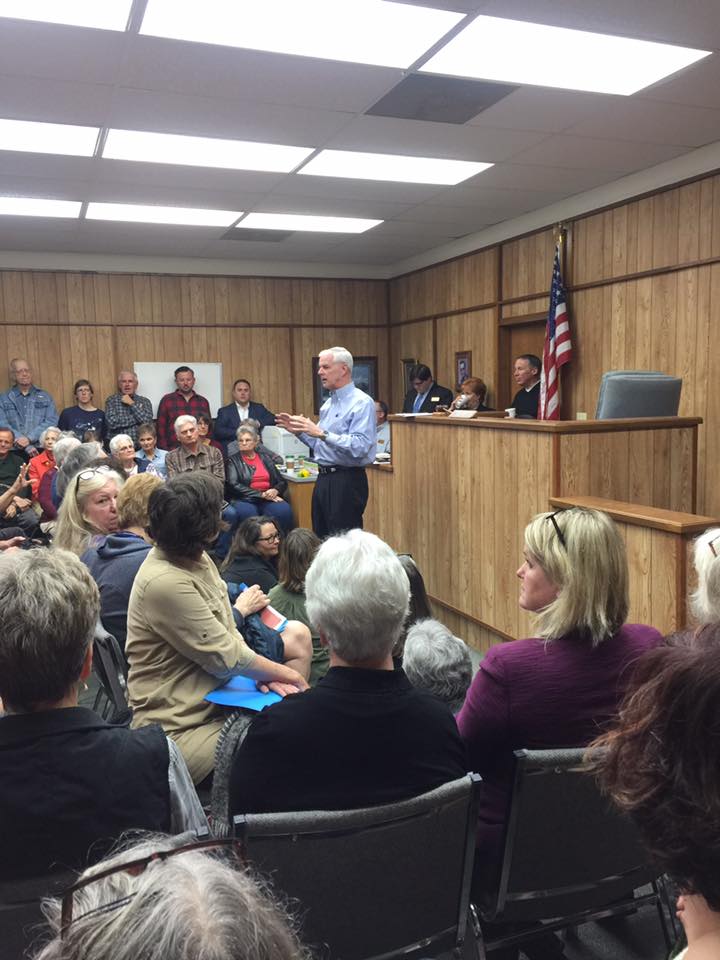
Rep. Steve Womack addressing an overflowing crowd at town hall Feb 21, 2017

Yesterday I attended a town hall meeting sponsored by Rep. Steve Womack (Republican) of our 3rd Congressional District (Northwest Arkansas). The room would comfortably hold thirty people. Over 200 showed up. With the hallways and doorways and standing room thronged, half the people ended up standing outside in the parking lot for the 1.5 hour event. In light rain and a heavy temper.

Womack could have taken charge of the situation by reconvening five blocks away in the much larger community center. He chose not to do so. He could have opened the meeting by immediately taking questions, but instead he spent at least twenty minutes talking about his agenda. His primary concern was the national debt which he elaborated citing numbers and projections intended to shock and awe.

Not surprising for Col. Womack, a 30-year national guard veteran who commanded the 2nd Battalion, 153rd Infantry, 39th Separate Infantry Brigade in the Sinai, Egypt, between 2002 and 2009. He’s a member of Cross Church, earthly kingdom of Ronnie Floyd who has served in a leadership role of the world’s largest Southern Baptist denomination and the largest Protestant body in the United States, with over 15 million members as of 2016. Womack is a poster child for the right wing.

The Arkansas 3rd district rolled to the Republican side in 1967 following continuous Democratic control since Reconstruction and has remained in Republican hands ever since. Only a couple of times have strong Democratic candidates come close (1992: 47.2% to 50.2%) to regaining the seat while generally Republicans enjoy over 70% majority on Election Day. Womack is serving his fourth term.

Despite this position of strength for Womack, the crowd wasn’t having it. In a surly mood in a room whose temperature approached one hundred degrees due to severe overcrowding, people jostled signs, interrupted, and talked over Rep. Womack in what became the norm for the entire exchange. His temper flared on occasion, telling people to shut-up and reiterating his party line position on issues ranging from the EPA to National Endowment for the Arts to Medicare. Less than a quarter of those who wanted to ask questions were actually able to do so before his ‘drop dead’ quit time of 10 a.m.

Driving home, I kept wondering what people actually expected. Did anyone think for an instant that he would agree to demands that he personally ‘do something’ about the ‘man-child Trump,’ as one speaker requested? Did anyone think that he would suddenly veer off the positions in which the political right has grown increasingly entrenched for the last fifty years?

I didn’t. I know lots of people like him. They’re my relatives and my neighbors. They’re positive they’re right. Nothing is going to change them.

But after a lifetime of advocacy on various impossible causes (women’s rights, environment, and most recently drug policy reform), I remain optimistic that in some small demilitarized zone between right and left, a productive dialogue can lead to some understanding. At the least, a grudging mutual respect.

Few in the crowd seemed to understand that philosophy. They had an ax to grind in their outrage over Donald Trump and his agenda. They wanted to shout and hurl accusations. Whatever ground might have been gained in building a tenuous link of communication died under the stomping feet of those who only wanted to protest what has come to be the current reality: Republicans control the government.

Despite a few well-considered questions that earned a thoughtful response from Rep. Womack, less than a quarter of those who kept raising hands ever had a chance to speak. Womack avoided replying to demands for increasing taxes on the so-called ‘one percent’ as he explaining how government had exceeded its mandate and was spending two-thirds of its income on ‘mandatory’ programs compared to the 1960s when mandatory only consumed one third.

Womack, along with the Republican majority, condemn food stamps and other social support programs as well as protections for waterways and the air we breathe. This isn’t a new conflict. It’s been picking up steam for five decades. Aligned on the side of the protesters are the progressives who—many of them—have worked to enact those very programs. Aligned on Womack’s side are those who see those programs as a symptom of moral decay.

Railing about the national debt is a convenient cover for such moralistic thinking. Every president since Calvin Coolidge had added to the national debt, most recently George W. Bush by 101% and Obama by 68%. The elephant in the room (literally) is the wars started by Bush after 9/11. The cost of the Iraq War tops two trillion and in Afghanistan, over four trillion with no end in sight.[1]

As we all know, financing what we want when we want it ends up with the ugly reality of paying off debt without getting anything in return. With interest. This is the staggering problem keeping Womack and other legislators awake at night, Democrats among them. But while the portion of national revenues dedicated to mandatory spending has increased, military spending now gobbles up fifty percent of discretionary spending. So while Womack et al set their sights on cutting other discretionary spending such as public broadcasting,[2] none of them mention the possibility of letting the Middle East sink or swim on its own.

Republicans seem hell bent on continuing to wage war on behalf of Israel and oil, throwing in the specter of terrorism and a nuclear Iran for good measure. The truth is, none of these ‘reasons’ hold water. The U. S. could fully withdraw from the Middle East without suffering any real threat here at home.[3] But that would outrage the special interests: military contractors, oil sheikdoms, the Israel lobby, and a hypnotized electorate who equates patriotism and war.

Unless we culturally divest from war, even a massive cut in non-military discretionary spending would do little to offset the debt, much less make a dent in the mandatory side of the scales.[4] And while Social Security and Medicare are theoretically paid for through payroll tax deductions, the increasingly longer projected life expectancy of Americans means that people far outlive the amount they’ve paid in.[5] Fewer workers paying for increasing numbers of retirees leads to the brick wall ahead.

One of the main arguments raised against Womack’s insistence on cutting programs, including ‘restructuring’ mandatory spending programs, was the repeated cry to increase taxes on the rich. He never once acknowledged the question or attempted to answer. The facts are that in the 1950s and ‘60s, the time praised by Womack when mandatory spending only constituted about a third of the national revenue, the wealthiest Americans paid a top income tax rate of 91%. Today, the top rate is 43.4%. In 2014, after deductions, the richest one-percent paid an effective federal income tax rate of 24.7%.[6]

Loopholes which allow billionaires like Trump to pay zero taxes have been skillfully placed into the tax code by cooperative legislators benefiting from generous campaign contributions and other perks. These same legislators prize their own interests above their constituents, catering to corporate profits instead of forcing lower prices on essentials like prescription drugs. This outrages Americans, causes distrust in government, and propels a demagogue like Trump into power.

Meanwhile, in the guise of addressing the debt, Republicans gleefully set about righting the perceived moral decay they’ve campaigned on since Ronald Reagan. They’re eager to cut federal spending for Planned Parenthood (further restrict abortion rights), public radio and television (stifle the progressive agenda), and especially social support programs like unemployment and food stamps (force slackers to work), but such changes promise little more than a drop in the bucket of deficits.

As in yesterday’s meeting with Womack, progressives repeatedly fail to make a strong case for their agenda or provide meaningful solutions to the nation’s fiscal distress. Angry demonstrations only delay what progressives must do to take back leadership of the political spectrum. We must show why improving conditions for the poor, the jobless, and the weakest among us is the only path to solvency, why strong environmental protection must be preserved, why women must be allowed to decide who gets born.

These arguments must be made, and in order for them to gain purchase in the near term, dialogue with elected officials like Womack is essential. Public tantrums are counterproductive. In the long term, refinement of and spirited advocacy for progressive policies will form the platform by which a progressive political party can regain control. Among us, we must find those willing to sacrifice themselves to the public arena as candidates capable of inciting voters’ imaginations with such an agenda.

Then will be the time to shout.

~~~


[1] https://www.theatlantic.com/international/archive/2016/09/cost-wars-iraq-afghanistan/499007/

[2] https://www.nationalpriorities.org/campaigns/military-spending-united-states/

[3]  http://www.huffingtonpost.com/jeff-faux/why-are-we-in-the-middle_b_7301370.html

[4] https://www.nationalpriorities.org/budget-basics/federal-budget-101/spending/

[5] https://www.thebalance.com/current-federal-mandatory-spending-3305772

[6] http://americansfortaxfairness.org/tax-fairness-briefing-booklet/fact-sheet-taxing-wealthy-americans/


One Person, One Vote

electoral-college-vs-popular-vote

I live in Arkansas. Arkansas went for Trump in a big way. But wait—34% of voters cast their ballot for Hillary. So before you start defending the electoral college by talking about the great divide between the elites in cities and the downhome rednecks in the nation’s midsection, think about that.

Think about all the conservatives who live in Los Angeles, my brother among them. They voted for Trump.

Think about all the liberal votes cast in Oklahoma (28.9%), arguably the most conservative state in the nation. In Kansas, Hillary got 36% of the vote. Same in Tennessee.

The fact is that everyone’s vote should count. The Founding Fathers could not have conceived of a time like ours with mechanized, industrialized food production and the majority of the population living in urban centers. Their wildest imaginings couldn’t have conjured the internet or all the other new ways of communication and information sharing.

The future of our nation depends on getting this right. We’ve amended the constitution 27 times, ten of those coming right after they wrote it. If the Fathers thought their document was perfectly suited for all future times, they wouldn’t have included a provision for amendments.

I admit there’s an icicle’s chance in hell that such an amendment would be put forth by a power-drunk Congress in the coming session. But any patriot concerned about the nation’s future needs to work for this change until it happens. One person, one vote.

As a side note, I’d like to advocate for a direct vote on state offices as well. No more of this majority win in the county where all the county votes go for that winner.

Representation means all votes count.

Frankenpot

frankenpot-scientist-final

Last night PBS NewsHour featured a story about the new cannabis derivatives. Mostly it focused on 99% pure THC and how dangerous it is. How it can be addictive. How it can be abused.

This is what we do, we humans. We take something that’s pretty much perfect the way Nature makes it then we fuck it up. Gild the lily.

I predicted this, actually. Not that I’m taking in satisfaction in seeing my prediction come true.

The push behind 99% pure THC isn’t from pot heads. It’s from pharmaceutical companies. It’s from doctors who want to prescribe an exact dose of some chemical that they think will provide x-result. It’s from legislators whose balls shrink when facing a question of whether to legalize cannabis for people to use as they see fit—because the culture war is still going on.

You know, that war where the bulk of an entire generation smoked weed and saw truth no one wanted them to see. That truth about how America talks out of both sides of its mouth—oh, we’re a Christian nation. Oh, let’s go to war. Let’s segregate blacks. Let’s be complete and utter jackasses to anyone not exactly like us.

Weed opened a generation’s eyes to chemicals poisoning our food, air, and water, to the worship of wealth, to our rights to our bodies and our lives, our innate morality. In the epiphany of getting high with friends, we saw love was the answer. Peace was the answer.

We said fuck off to the corporations and war machine and went back to the land.

They didn’t take it lying down. They waded into our pot parties with batons, guns, and arrest warrants. Some of us stuck it out. We grew weed in ditches and creek banks. They came with their helicopters and tracking dogs. We grew weed in spare bedrooms and closets. They came with their infrared cameras.

Then we started the real work—political work, outing ourselves as advocates for cannabis. The result is currently 26 states with laws allowing medical use and a growing tide of states allowing recreational use.

In response, the Establishment has said, oh, grow your own? Smoking weed? That can’t possibly be allowed. It’s not real medicine. Real medicine comes in pills and needles that doctors can prescribe in exact dosage because, as we all know, people don’t know shit about what they need. They can’t tell if one puff is enough. Or three.

This is how it works. You take a perfect God-given plant and make it dangerous. This arrogant strategy has worked with just about every magical plant our ancestors relied on. Only with our clever modern techniques of science, we have made them deadly. Opium – a natural anesthetic used as far back as history takes us. Useful, relatively safe. But let’s improve that, because doctors, science, politicians. Let’s make morphine.

Decades pass. Oh, wait, morphine is addictive. Let’s fix that—let’s make heroin.

Decades pass. Oh wait, heroin is addictive even worse than morphine. Let’s make opiate clones, you know, OxyContin and Oxycodone and all that.

Uh-huh. How’s that working out?

It happened to coca leaf. A simple leaf. Stuff a few in between your back teeth and your cheek and let it work while you hike up the Andes and hoe your potato crop. Then the geniuses got ahold of it. Cocaine! Wonderful—let’s put it in snake-oil tonics and feel-good drinks so we can make money.

Then, no, wait, people get hooked on this feel good stuff. Let’s make it more scientific. Voila! We have amphetamine, methamphetamine, and Adderall we hand out to our kids like candy. Gee, anyone have any idea how we got so many people addicted to meth?

Now we’re on the same road with cannabis. Not enough to take what we’ve been given. No, we’ve got to meddle, ‘improve,’ synthesize and concentrate. Satisfy the corporate agenda to create something they can profit from. Take away a person’s right to grow his own poppy, his own cannabis alongside the tomatoes and peppers. Separate him from his instincts toward health and well-being and put him in the hands of doctors and pills.

It’s always about the money.

And about taking personal responsibility away from individuals.

The cycle of harmful effects from this new Frankenpot is just beginning.  But the harmful effect of this mindset should be familiar by now. It screams to us from our militarized police forces and our overcrowded prisons, from the violent underworld spawned by prohibition, from the desperate alleyways where homeless addicts hide.

What happens when you gild a lily?

To gild refined gold, to paint the lily, to throw a perfume on the violet, to smooth the ice, or add another hue unto the rainbow, or with taper-light to seek the beauteous eye of heaven to garnish, is wasteful and ridiculous excess.” William Shakespeare‘s 1595 play King John, iv.2

The lily dies.

MEAN (and stupid)

gatesofhellwriting

There are six definitions of the word ‘mean’ as an adjective, according to the Merriam Webster Dictionary.  Trump voters fit all of them. Stupid, too.

There may be a day when I can philosophize about the outcome of this election, but today is not one of them. I’m deeply angry that the progress we’ve made as a culture has been stopped with the stated objective of turning back the clock. I’m terrified that my sick and dying friends will lose health care. I’m heartbroken that friends who married same sex partners may now face complete loss of their legal rights. And so much more.

The election of white trash to the White House rode on the backs of evangelicals who were willing to ignore Trump’s adultery, profanity, sexual assault, lack of respect for women, intellectual poverty, and pathological narcissism in order to accomplish one of their long term goals: make abortion illegal. In doing so, they believed they could put the genie back in the bottle and return women to their rightful place in the home, barefoot and pregnant.

Meanness: penurious, stingy, characterized by petty selfishness or malice. Eager to judge women who face one of the most traumatic and difficult decisions of her lifetime. Willing to sacrifice her life in order to save a fetus.

Stupid: given to unintelligent decisions or acts. Assuming that a radical right appointment to the SCOTUS somehow guarantees that Roe v Wade will be overturned. Ignoring that a woman’s right to privacy in this matter has been upheld many times even by conservative justices.

Stupid: slow of mind. Not understanding that women have always aborted unwanted pregnancies and always will, whether or not the laws of the nation allow them access to legal medical care.

In a Pavlovian response to four decades of careful brainwashing, evangelical voters convinced themselves that God wanted Donald Trump elected, that Trump was blessed, taken to the bosom of God, forgiven his sins, and worthy of being elevated to the nation’s highest office. Preached illegally in the nation’s tax exempt churches, this sermon echoes off the lips of evangelicals.

After all, Trump must be blessed by God because he’s rich. Bow down to the rich man who was born with a silver white-supremacist spoon in his mouth.

Giddy in their hallucinations, evangelicals dismiss questions about Trump’s character. Believe he never really molested women, never incited violence. Because we all know that a seventy-year-old man rich guy who never took responsibility for anything in his life is going to suddenly become completely different. Because, well, God.

Stupid: slow witted or dazed state of mind

Mean: lacking distinction; a poor shabby inferior quality or status.

Meanness characterizes much of the Trump base. Arrogant in their narrow-minded thinking—I don’t care what anybody says, I’m right. Proud of their willful ignorance—Don’t bother me with facts, my mind’s made up. Enshrined in the character and mindset of now Vice President Pence who refutes the scientific theory of evolution and wants to force women to fund funerals for miscarried fetuses. Yes, the epitome of male privilege.

Stupid: thickheaded imperviousness to ideas

According to exit polls, Trump was pretty much elected by older, married, small town, white, conservative Christian males making $50,000 or more. These are the men who hate women having power and parity. They hate Hispanics and Blacks for thinking they’re somehow equal. They’ll do anything to try to recapture that Elysian field where they rode tall in the saddle and the world was theirs for the taking.

In the narrow primitive view of this group of men, every freedom won by the disabled, women, minorities, or gays directly threatens their righteous authority. Their God-given authority. Because for these spiritually impoverished men, without someone to look down on, how could they possibly stand above?

Because after all, granting women reproductive rights took control of women away from men.

Because after all, God Himself is a white male.

Stupid: lacking intelligence or reason.

Mean: worthy of little regard; contemptible.

The election of white trash to the White House sprang from a cesspool of hatred toward anyone not like them. Hate spawned by ignorance ignited by fear. Names hard to pronounce. Unusual appearances. Hatred of anyone not white, not Christian, not heterosexual or clearly gendered. Hatred of anything they don’t understand.

Anything that doesn’t look like them in the mirror.

There’s a tight correlation between the mindset of Trump voters and the fact that the states they represent rank near the bottom in per capita income, economic growth, and citizen rights and near the top in teen pregnancy, poor health, and persons with addiction and/or disabilities.

People who have little to no experience with the operations of government—at any level—are the ones who claim government is corrupt, the ones who believe that dismantling government will solve their problems, that electing a sleazy real estate developer on his third wife will somehow make all their dreams come true.

These are the same brilliant lights who never learned about the balance of powers, the history of political parties in the U.S., or the background of any nation past or present. They’re arrogant, ill-informed armchair quarterbacks looking for quick and easy targets for their discontent.

Stupid: resulting from unreasoned thinking.

Not making enough money? Must be the government’s fault. Couldn’t possibly be that your skill set simply doesn’t match up with jobs that pay a hundred grand a year. Couldn’t possibly mean that the world has moved forward and you need to retrain to fit the new job market.

No, better to stop the world and go back. How far back? Back to horse drawn wagons?

Not happy with social changes that disrupt your comfort zone? Those g**damn government bastards. Couldn’t possibly be that other humans have the right to life, liberty and the pursuit of happiness just like white guys—yeah, those minorities, women, and weirdos who freak you out.

Not happy that your religion doesn’t rule the nation? Couldn’t possibly be that the Founding Fathers wrote the Constitution specifically to keep religion out of government.

Yet while foaming at the mouth about putting God back in ‘Merica, all these Christian folks can’t wait to terminate the Affordable Care Act. Go back to the good old days when insurance companies could deny coverage for pre-existing conditions, when sick people lost their homes and everything they owned because they couldn’t afford health care. When the poor simply died without medical treatment.

What are the poor anyway but failed humans obviously unloved by God. Who don’t try hard enough. Who have something wrong with them. They don’t deserve to be helped.

Let’s elect Trump because he promises to end the ACA his first day in office.

There’s nothing Christian in denying sick people legal access to health care. It’s simply mean to do so.

But let’s go back to a nation ruled by prejudice when women, blacks, gays, Mexicans and anyone else outside the white male norm could be beaten or murdered with impunity. Let’s get rid of the idea that each person possesses inherent rights. Let’s make America great again.

Mean: “Ignoble, abject, sordid mean being below the normal standards of human decency and dignity, suggests having such repellent characteristics as small-mindedness and ill temper, lack of some essential high quality of mind or spirit.”

Oh, my brother!

primate-to-people-ploys


There are people I love who are planning to vote for Trump. This hurts me in ways I can’t fully express. Both of my brothers, for example. These are men with master’s degrees, men who endeavor to do good in this world. How can they vote for Donald Trump?

They tell me it’s because they’re Republicans. Because they don’t embrace the ‘liberal’ agenda. They’ve fallen hook line and sinker for the hate-hillary propaganda that she’s a liar, that she’s committed countless crimes and has only escaped proper justice by pulling strings in the power structure she is part of.

They’re also fervent Christians. I say, surely you don’t think Trump is a Christian. They say they’re not voting for a pope.

They tell me Trump is just a flawed man like the rest of us and he cares about this country. They say he knows business and that’s what we need. Somebody who knows what it means to sign paychecks. As if running a nation is the same as running a business.

They say they’d never vote for Hillary because she’s pro-abortion. I say she’s not pro-abortion, she’s pro-choice. Meaning that in a free society that respects individual rights, government can never force women to carry pregnancies that might kill them, that might produce a severely impaired child, that will bring undue hardship to her or her already existing children.

They say homosexuality and transgender is an abomination of God’s will, that they’d never vote for the gay agenda that Hillary supports. I say, what is a gay agenda? That two people who love each other possess legal rights as next of kin, as property owners, as parents? That everyone deserves to be treated with respect?

I’ve tried to make them understand. They’re not listening.

They’ve latched onto the Benghazi rhetoric. They believe Clinton will flood the U. S. with unvetted refugees and bring a holocaust of terrorism to our front steps. They believe every single hateful lie that has been broadcast about her not just in the last year, but over the last three decades.

Yet they say Trump is just a flawed man who cares about this country. God will guide him. They believe in him. I say, so God won’t guide Hillary? She doesn’t care about this country?

I’ve asked them, what if Hillary was the one who’d been a serial adulterer? What if she’d been sued 3,500 times? What if her companies had filed bankruptcy multiple times?

What if Hillary had refused to release her taxes? Or her health records? Taken money from her charitable foundations for personal use? Not contributed to her charitable foundations with a dime of personal money for the last eight years?

Of course they’d be outraged.

I don’t even try to point out the inherent sexism in their lives that may undergird their instinctual rejection of Clinton. They both have subservient wives. They both enjoy the full measure of white male privilege. For them, God is unquestionably male and all else flows from that. They’re seeking a strong authoritative male as leader and can’t tell the difference between a patriarch like God and a bully like Trump.

It’s not that my brothers don’t have the capacity of reason to examine the facts about each candidate. It’s that their minds are already made up. Why should they ‘waste’ their time reading about Hillary or hearing criticism of Trump?

Which—in an otherwise normal election cycle—might be enough said. After all, we all have the right to be just as stupid and obstinate as the next guy. It’s a free country.

But this is not a normal election. Trump is not normal. Trump doesn’t have policies or plans. Trump has bluster, braggadocio, and unbridled ego. His base instincts feed on anger and fear. He incites and revels in violence, loves to see fury in the eyes of his audience.

Yes, he’s a flawed man, flawed in the worst possible ways for someone who would be granted unlimited access to our nation’s most important secrets, to hold the reins of our military, to direct the future course of our educational systems, to oversee the protection of our air, water, and wildlife. To become the leader of the free world. His flaws go beyond his stated positions on immigration or national defense, beyond his inability to grasp basic human rights or due process of law.

His flaws threaten everything we as Americans hold dear.

To believe, as my brothers do, that Trump can tend to the myriad duties and responsibilities of the presidency is simply to ignore what’s right in front of their faces. Trump is not a reasonable or educated or sane man. He’s ignorant of basic facts. He does not have the equanimity or the patience to negotiate with Congress. He does things by fiat because that’s what you do when you’re the tyrant at the top of a corporate empire.

But government is very much NOT a business. It’s a delicate balancing act of hearing all sides even if you don’t agree with them. It’s a patient practice of enforcing what the Founders set down in the Constitution whether it fits your personal agenda or not. Trump is not capable of reasoning the finer points of anything. It’s his way or the highway. It’s ‘You’re fired.’

What my brothers don’t understand – or refuse to see – is that electing Trump isn’t just a matter of whether he’s anti-abortion or has signed a paycheck. It’s not that he (theoretically) will carry forth the traditional Republican agenda of smaller government and traditional values. Electing Trump goes beyond issues.

Electing Trump is about putting a mentally ill man in the White House. About giving unfettered authority to a man without basic human decency. About expecting leadership from a man who can’t order his own thoughts.

It’s about the future of the world, about everything we’ve gained in thousands of years of human progress. It’s about what can happen in one raged-fueled moment with an undisciplined man who would become more powerful than he’d ever imagined and sees it as his right and his responsibility to punish whoever enraged him.

Martial law? Stop and frisk anyone who might be suspicious.

Mass deportation? The enemy is anyone without white skin.

Genocide? He’s said it—not only ISIS leaders but their families.

Nuclear? Sure. He’s already touted it as an option.

I’m sick with worry, not so much about Trump actually winning the presidency. I have too much faith in a majority of American voters to think he might actually win.

I’m sick with worry that I’m losing all respect for my brothers. Not just in their choice to vote for Trump, but what’s behind that choice—intellectual laziness, a narrow-minded focus on a few social issues, their choice of religion over country.

I’m losing respect over their refusal to evolve.