Why am I furious?

This is about the institutions and businesses we have to deal with on a daily basis. This is about the failure of corporations to serve the people who depend on them for necessities. This is about the breakdown of human civilization.

Today my daughter left home at 8 a.m. to pick up a rental car which would take her on a 200-mile journey to where she would stand for her oral exams to become licensed. When she arrived at the place where she was to pick up the rental car, she found an empty lot. Apparently the corporate representative she spoke with (on more than one occasion) has no idea what’s going on in the real world. The computer told the corporate representative there was a Fayetteville office. The computer told the corporate representative that my daughter could pick up the car at 8:30 a.m. The corporate representative believed what the computer told him. He lives in India.

This is one tiny example of the customer abuse increasingly rampant across the U.S.

Go into a Walmart store. Look for something you bought three months ago. Not only is it not where you last found it, no one in the store knows if it’s been discontinued or if it’s out of stock or where else in the store it might now be located. And since Walmart has been almost universally successful in under-pricing any local competition out of business, there is no place to find that item you want.

Consider my 95-year-old mother who a few years ago agreed to a switch of her phone from Southwestern Bell to Cox since she already had Cox cable. Touted as a money saving move, the switch has meant that when Cox service is down, she has no phone. For the last two days, this woman who will be 96 in August had to walk to a neighbor’s house to use a telephone, and that worked only because the neighbor had a cell phone. Because Cox is out all over town.

Who is responsible? Who cares that this fragile woman can’t use her phone? Will she or any of the Cox customers without phone or cable service be refunded for the days Cox didn’t provide its contracted services? Ha!

Consider my nine-month old refrigerator. As if anticipating the problem, installers set the refrigerator and freezer at their lowest temperature settings. Despite that, the refrigerator has never cooled below 45° even though the FDA says 40° is the highest safe temperature for storing food. Or my new range, also nine months old. The manufacturer saved money by downgrading the controls. The oven light doesn’t come on automatically. Oven temperature is set by ten degree increments instead of five like my former range. Heat pours up from the bottom of the oven door which gaps enough that I see the flames reflected on the floor.

A couple of months ago, I came into the cross hairs of an organized hate group because I said something they didn’t like in a public policy discussion on the Arkansas Times Facebook page. Not content with rationally arguing their views on that forum, they attacked me personally and professionally. One of the places they could harm me was on Amazon.com where my books are for sale. They proceeded to go to each of my books and post 1-star reviews.

In order to report a ‘problem’ with book reviews, you must use certain links. Then the workers (in the Philippines) check the review guidelines and if the reported review violates the guidelines, they are able to remove it. If it doesn’t violate the guidelines, they can’t remove it.

Of the 39 one-star reviews posted to my books on Amazon, fourteen now remain. It took two months and over thirty online requests and repeated phone calls to Amazon service representatives to achieve even this partial success. Amazon service representatives aren’t allowed to remove reviews. That’s only accomplished through a special department which has no phone access.

https://www.ft.com/content/a304a59e-2425-11e7-a34a-538b4cb30025

One service representative kindly explained that if the review change requests aren’t formatted in a specific way, the requests can’t be processed. He took my information and submitted the change requests in the required format and as a result, eight of the 39 reviews were removed. But I never could reach him again because there are thousands of customer service representatives (in Seattle) and the service requests go to whoever is next available and none of the other seven service representatives I spoke with offered any assistance, instead referring me back to the online review report system.

Now I have fourteen 1-star reviews written between March 24 and March 30, 2019, by people whose sole intent is to harm me and there is nothing I can do about it. You would think that any platform presenting itself to the public as a service to authors would carry some responsibility to protect said authors from attacks like this. So far I haven’t found an attorney who knows enough about online entities like Amazon to advise me on whether I can sue Amazon for failing to protect me from this harm.

But I haven’t stopped trying.
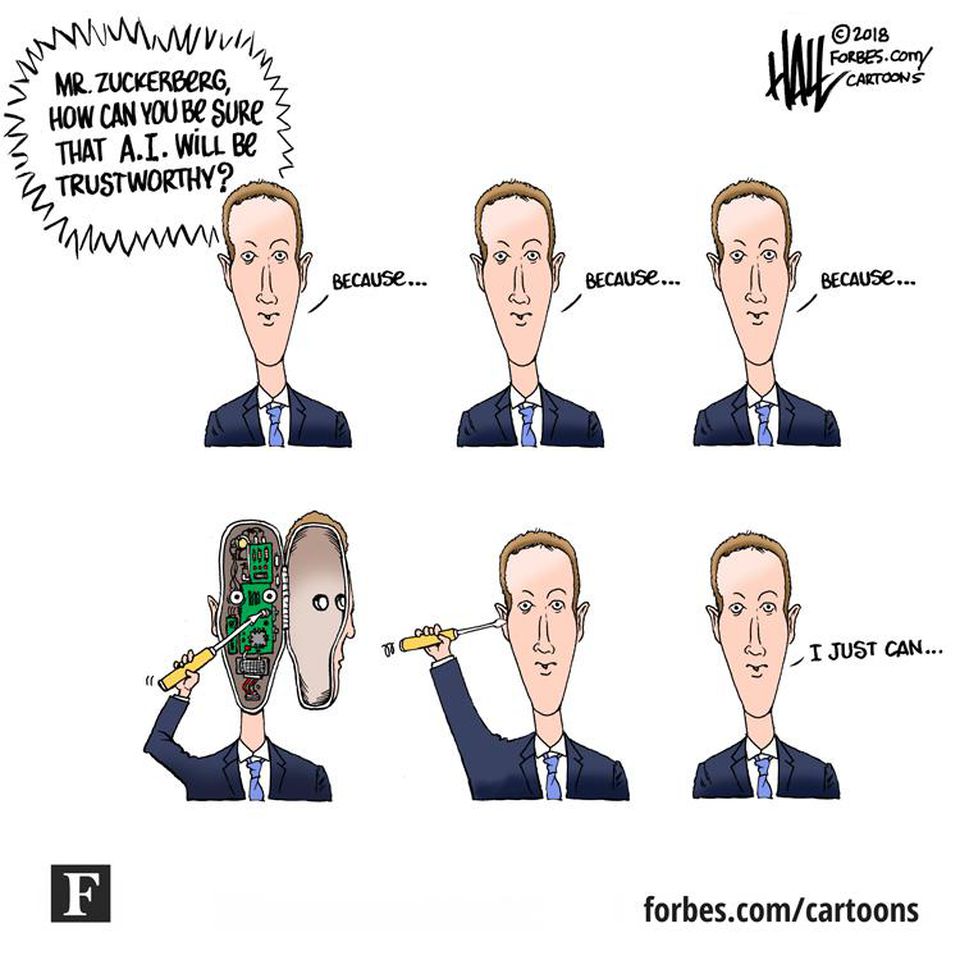
The problem, in part, lies with men like Jeff Bezos and Mark Zuckerberg who believe they can set up an enterprise and replace thinking human workers with lists of guidelines and/or algorithms. Anyone who’s ever had a problem on Facebook knows only too well that THERE IS NO PHONE NUMBER to call if you have a problem.

Zuckerberg has refused to delete a purposefully distorted Facebook video of Nancy Pelosi. His response? “We don’t have a policy that stipulates that the information you post on Facebook must be true.” So if it’s not their policy, it must be OK. No responsibility. No morals or ethical standards. Since Facebook is “free,” users have no rights.

I want to sit down with Bezos and explain why a list of review guidelines can never anticipate the myriad problems which might occur. I want him to invest in employees who have the authority to think on their feet. I want to punch him in the face if he doesn’t accept responsibility for the protection of authors whose books are sold on his website.

Companies routinely profit off your crisis whether it’s no rental car, no phone service, or intractable one-star reviews. By refusing to ensure employees are available for customer needs and capable of fully comprehending English and U.S. social norms, corporate moguls like Zuckerberg and Bezos zoom to the top echelons of the world’s wealthiest people along with bankers who can pull off mortgage fraud and the ultra-rich Walton heirs who insist they can’t possibly pay their employees a living wage.

News alert to the Waltons: It’s the employees who earn your fortunes.

Feeling so smug with their “success,” what these greedy MFs don’t realize (or care about) is the steady toll on our society, their contribution to the destruction of the marketplace, the rising level of anger and frustration, or the inevitable outcome when all that bottled up rage manifests itself in violence.

I like to think of a time when vacant big box stores have been converted into housing or indoor farmers markets, when I can wander into a mom and pop store and ask where to find that thing I bought three months ago and they lead me to the shelf where it’s now found. Or they tell me how long it will take for them to get the next order. You know, human interaction, smiles and apologies and gestures of good will.

I like to think of Zuckerberg spending his days sitting face to face with people subject to his data gathering and advertising, to hear real world crises with his genius setup so that he can actually understand the problem. I like to imagine Bezos being subjected to one-star reviews for his books – but then he’s never written a book, so…

I don’t have anything against the people of India or the Philippines or anywhere else where people need jobs. But I don’t think for one minute that the employment of foreign workers is about helping them. It’s about paying the cheapest possible labor in order to generate higher profits for the fat cats at the top.

It’s about pushing customers in need of those goods and services as far as possible toward the brink, of Bezos calculating that authors like me need to market on his website and will continue to use those services even if he doesn’t protect me from hate campaigns. It’s about Walmart knowing they’ve destroyed all the local stores and entire companies and product lines in order to create a monopoly on the majority of consumer goods.

None of this is new. It’s a creeping illness in our society—and the world—that has yet to hit bottom. We’re hooked on what they offer and can’t get off the hook.

How long before we revolt? The guillotine comes to mind.

~~~

Michael Douglas in Falling Down: https://www.youtube.com/watch?v=XkwQ6EjLdMQ

Jack Nicholson in Five Easy Pieces: https://www.youtube.com/watch?v=hdIXrF34Bz0

Where Trump voters come from

Arkansas continues its dereliction of duty in educating its young people with the May 22 announcement by Gov. Asa Hutchinson that he will promote current Education Commissioner Johnny Key to the governor’s new cabinet position of Education Secretary. With this promotion, Key will add another $3,450 per year to his already ridiculous salary of $239,540 and gain ever greater leverage over the hapless citizenry of our state.

Readers may remember the insidious maneuvering required to cram Key into the commissioner position in the first place. Back in 2015, Key’s work history and educational achievements did not qualify him for the job. The law required a master’s degree and ten years teaching experience. When Gov. Hutchinson seized on the idea of putting Key in the post, a bill rushed through the legislature allowed the commissioner to evade these requirements if the deputy commission held those credentials.  Not that the commissioner would be required to obtain the advice or consent of the deputy in any given matter.

Key graduated from Gurdon (Arkansas) High School then received a Bachelor of Science in Chemical Engineering in 1991 from the University of Arkansas at Fayetteville. He never taught a day in his life. That is, unless you count his and his wife’s operation of two pre-schools in Mountain Home, Noah’s Ark Preschool and Open Arms Living Center, operations that for years applied for and received tax-funded grants while flagrantly teaching religion. Another state legislator, Justin Harris (West Fork) also operated illegally with such dollars for his Growing God’s Kingdom preschool. All three schools received funding from the state under the Arkansas Better Choice (ABC) program administered by the Department of Human Service (DHS). After complaints were filed by Americans United for Separation of Church and State, the state had no choice but to amend its grant guidelines.

AU Staff Attorney Ian Smith told Church & State. “The administrators of the Arkansas Better Choice (ABC) program violated the Constitution by funding [these] religious activities.”

According to a 2011 Arkansas Times report, “Sen. Johnny Key gets almost $200,000 in public money a year in support of his Noah’s Ark Preschool in Mountain Home, which also provides Bible lessons and daily prayers. Nearly 300 agencies — many of them with religious roots — receive $100 million a year in public Arkansas Better Chance funding to provide preschool for poor children.”[1]

The stated mission of the Harris preschool was to “share the love of Jesus” with students, and the school operated with a Christian curriculum that included a “Bible time” for verses, stories and prayer. The school’s handbook also assured parents that staff members will “strive to ensure that your child feels the love of Jesus Christ while preparing them for Kindergarten.” The preschoolers, it continues, would be taught “the word of God” so that they can “spread the word of God to others.” They also prayed over students with disciplinary problems and laid on hands to “cast out demons.”

~~~

Key began his career in public service in 1997 when he was elected to serve as a justice of the peace on the Baxter County Quorum Court. He was elected to three two-year terms in the House of Representatives, followed by a tenure in the Senate that began in 2008. Term limited out of the legislature, Key served as associate vice president for university relations at the University of Arkansas system, a position he began in August 2014, a half-year before his friend the governor found him a cozy role at the helm of the state’s education system.

Yet even while in the legislature, Key demonstrated his dedication to the extremist religious agenda in education:

He was active in education issues, including responsibility for exploding the number of seats that receive state dollars to essentially finance home-schooling, by qualifying millions in spending on “virtual charter schools” that provide assistance to students who don’t attend conventional brick-and-mortar schools. His special language, never debated on the floor, lifted the cap on such payments from 500 to 5,000 students.[2]

Simultaneously, the state excused itself from any oversight of home-schooled students. There are no tests, no monitoring, no method by which to ensure thousands of Arkansas home-schooled kids are actually learning anything,

Key has also been a champion of public charter schools in the model promoted by the Walton heirs. While first lauded as a path for parents dissatisfied with their children’s education, charter schools have come under increasing scrutiny for siphoning money away from public schools with less than excellent results. Even worse, soon after taking over as education commissioner, Key became the default school board for Little Rock’s troubled schools. The district struggles with low-income, high minority populations where schools routinely earn “D” and “F” ratings in student outcomes. Key’s answer? Charters.

Much ink has been spilled over the Little Rock situation including Key’s desire to terminate the state’s Teacher Fair Dismissal Act and the Public School Employee Fair Hearing Act in the 22 traditional schools in Little Rock. As noted by one observer, “In the absence of democratic governance and oversight, Arkansas schools are hiring unqualified teachers without a public disclosure requirement, undermining labor standards for teachers, contributing to school re-segregation, and defrauding the public.”[3]

Tracking the details of the Little Rock fiasco, the Arkansas Times reported that the previous superintendent, Baker Kurrus, who was fired by Key before his takeover, thought charter schools “probably unconstitutional when operated as parallel, inefficient and not particularly innovative or successful ventures in Little Rock. He mentioned then that the loss of 120 students for this latest expansion potentially meant a loss of approaching another $1 million in annual state support to the Little Rock District for lost students.”[4]

~~~

No effort was made by the state to require Key or Harris to refund the millions in tax dollars they had appropriated over a period of years to operate their religious schools. And of course they didn’t honorably offer to do so. The ABC program only marginally amended its procedures for granting funding. The guidelines now require that no religious instruction occur during the “ABC day,” a set number of hours of purely secular instruction. Whether religious instruction occurs before the ABC day commences or after it ends is not the state’s concern. Since children are often picked up by school vans or dropped off by parents before the parents’ work hours and held until the end of the work day, anywhere from two to four hours of religious instruction is usually possible.

And who would know if these schools violate the ABC day with a little prayer at lunch or a few minutes of casting out demons?

The ABC program, as it stands, does not require any kind of viability test where a school would have to prove that its religious instruction could stand on its own two feet without the use of tax dollars. In fact, if tax dollars didn’t support the rent, utilities, insurance, and salaries for general operations, these schools would cease to exist. Repeated questioning of DHS / ABC money managers has yielded zero interest in developing or implementing such a test.

Neither Harris nor Key were censured for their illegal use of public funds for their religious schools. And while Harris quietly served out his remaining term in office before retreating to private life, Key has been awarded one of the highest paid positions in state government. If Key didn’t know he was breaking the law in accepting ABC grants, he’s incredibly stupid. Surely somewhere in his years of college he must have brushed up against the idea of separation of church and state and the hard line between tax dollars and religion. If he did know, he deliberately violated the U. S. Constitution, aided and abetted by the state’s willfully ignorant wink and nod.

Now Key reigns supreme over the state’s educational systems, welcomed with open arms by a governor whose own dedication to religion is no secret. After all, Asa Hutchinson is a proud graduate of none other than Bob Jones University, a private, non-denominational evangelical university in Greenville, South Carolina, known for its conservative cultural and religious stance. Refusing to admit African-American students until 1975, the school lost federal funding and ended up in court for not allowing interracial dating or marriage within its student body. BJU hit the news again in 2014 after a report revealed that administrators had discouraged students from reporting sexual abuse. [See the New York Times report.]

Apparently Johnny Key’s religious beliefs and willingness to breach the Constitution’s bright line between church and state are the primary criterion by which he has been judged the perfect man to be in charge of Arkansas education. It’s past time to assume ignorance as the underlying problem in Key’s malfeasance. The fact is that Hutchinson, Key, and every other complicit authority over our state’s educational systems knowingly evade the Constitutional separation of church and state in order to pursue their “higher calling” to religion.

~~~

See also this recent Forbes article on the failure of charter schools.

~~~

[1] https://arktimes.com/columns/max-brantley/2011/11/09/state-paid-bible-school

[2] https://arktimes.com/arkansas-blog/2015/02/10/whats-afoot-on-bill-to-change-qualifications-for-state-education-commissioner

[3] https://medium.com/orchestrating-change/272-broken-promises-the-lawless-aftermath-of-arkansas-act-1240-a8e26ce751e8

[4] https://arktimes.com/arkansas-blog/2016/05/07/johnny-key-fast-tracks-lr-charter-school-expansion-in-walton-helped-enterprise

The Genie is OUT!

A flood of state laws restricting abortion rights have moved us toward the Twilight Zone, a place where a woman no longer would hold agency over the functions of her body. But that genie is out of the bottle. Women will not give up their hard won freedom.

What are these state laws? Some require the doctor to give a woman information about reversing the procedure (part of the emotion strategy) or show her an ultrasound of the fetus (for an extra charge, part of the money strategy). Some ban abortions if a fetal heartbeat can be found (part of the medical strategy). Still other state laws have come in through the back door by restricting when or how abortion clinics can operate, or which medical personnel can provide abortion services (part of the access strategy).

Special interest zealots have pushed laws banning abortion if the fetus shows signs of Down syndrome. Other laws would ban abortion after six weeks or 12 weeks or some other arbitrary period which in many cases would cut off access before the woman even knows she’s pregnant or before prenatal testing could discover genetic or development abnormalities.

But wait. Before progressives stroke out over all this, keep in mind this is part of a long struggle over women’s rights that’s been going on since the beginning of time. Women are not going to accept a step backwards.

I grew up in a time when women weren’t supposed to enjoy sex. It was only men who might indulge in multiple partners while retaining their sterling reputations. In fact, experience with multiple sex partners enhanced a man’s reputation. As the receptacle of male seed whether through premarital or extramarital sex, rape, or marriage relations, women were left to deal with the problem of conception and unwanted pregnancies. The child might be put up for adoption, or for those wealthy enough, a quiet vacation overseas lasted long enough to dispose of the entire issue.

Women weren’t supposed to enjoy sex because receiving male seed and laboring to give birth was the punishment for tempting Adam to defy God’s order not to eat that forbidden apple. Of course Adam wasn’t responsible for what he did with the apple, a perfect metaphor for the male’s lack of responsibility for impregnating a woman.

That’s the story, in a nutshell, of the current furor over abortion rights. Men have to relieve their needs. Women have to clean up after them. If she chooses to abort, conservatives want the procedure to be high risk, out of the hands of medical professionals and back in the alleys so that the price she pays might be sterility or death.

The advent of modern medicine and the pharmaceutical industry gave women birth control pills. The basic research for the pill became possible when Russell Marker discovered that generations of Mexican women had been eating a certain wild yam — the Barbasco root, also called cabeza de negro — for contraception. It was from these yams that Marker was able to extract the progestin that Gregory Pincus combined with estrogen to formulate the first birth control pill. That was the 1950s.

It took another twenty years to clear regulatory and legal hurdles so that women could use the pill for contraception. At first, doctors wouldn’t prescribe it to unmarried women. A court case brought by Planned Parenthood finally cleared the way for all women to gain access to the pill.

In 1973, the Roe v Wade decision granted women the legal right to control what happened inside her body. The Court ruled 7–2 that a right to privacy under the Due Process Clause of the 14th Amendment extended to a woman’s decision to have an abortion, but that this right must be balanced against the state’s interests in regulating abortions: protecting women’s health and protecting the potentiality of human life. Arguing that these state interests became stronger over the course of a pregnancy, the Court resolved this balancing test by tying state regulation of abortion to the third trimester of pregnancy.[1]

Women still have to get a doctor’s prescription to obtain the pill. And religious and conservative groups have murdered doctors, burned clinics, and passed a long string of state laws to fight the Roe v Wade decision. One explanation of this opposition is explained as follows:

Birth control (BC) allows us to separate sex from its “true nature” as a solely procreative act that should be only happen in a heterosexual marriage for the purpose of (or, at least, with ‘openness to’) making babies. When we teach people about BC, allow them easy access to it and condone its use, it divorces sex from this purpose and allows it to become an activity for anyone, regardless of marital status, to partake in for fun, bonding, pleasure, etc. Essentially – because it allows people to have premarital sex without the proper, natural, consequences.

Then, as more people have sex without wanting kids, there is a higher chance that someone will have an unwanted pregnancy as all BC has some failure rate. If all women just practiced abstinence until they were married (which is the only moral and correct path), there would be no abortions…[2]

Never mind that many married women who already have children seek abortions for obvious reasons—more children to feed, clothe, and care for never mind providing suitable education so that each child has a realistic chance at success in life. It also ignores the terrible outcome of fetuses with extreme physical or genetic abnormalities and/or of high risk to the mother’s life.

That is all God’s will, according to the fundamentalists. But so is infertility and that doesn’t keep religionists from seeking artificial insemination. So are cancer and heart attacks and broken bones.

But aside from problems of conception amid the pleasures of sex, the ongoing culture war between conservatives and progressives is about male power and control. Conservative male testicles have been shrinking ever since the female genie emerged from the bottle, since women gained the right to vote, own property in her own name, or seek a divorce. But those little ‘nads have really shriveled since the pill and Roe v Wade.

Under patriarchal beliefs, women were created to serve men, produce his children, and see to their upkeep. This view of women undergirds the current Republican agenda and accounts for evangelical support of a president unfit for office but willing to grant their agenda in order to gain and stay in power.

Thus we have current efforts in various red states to draw the circle tighter around abortion. It’s their belief that the new lineup of SCOTUS justices will find one or more of these state laws as a staging point to overturn Roe. The die is cast. The conservatives finally will have their showdown.

But wait. Does anyone think for an instant that women will shrink back into the shadows and submit to a renewed reign of male authority?

If so, quickly disabuse yourself of that idea. Women will continue to access birth control and abortion, even if the entire industry has to go underground. After all, people drank like fish during alcohol prohibition and smoked marijuana during 90 years of reefer madness.

The genie is out and she’s not going back.

Genie by inSOLense.deviantart.com on @DeviantArt

~~~

[1] https://en.wikipedia.org/wiki/Roe_v._Wade

[2] https://www.reddit.com/r/Abortiondebate/comments/b7clk4/why_are_so_many_prolife_people_against_birth/

100 Years of Hateful Ignorance

James Phillip Womack, age 31, was sentenced to nine years in prison in mid-April 2019 after pleading guilty to drug and firearm related charges. The drug charges included possession of a controlled substance, possession of a counterfeit substance with intent to deliver, and two counts of possession of drug paraphernalia. The firearms charge had to do with his previous felony conviction which barred him from possessing a firearm.

This isn’t a new problem for James. In 2010 at the age of 21, he pleaded guilty to conspiracy to deliver a controlled substance for which he received a ten year sentence. He mitigated that sentence by serving 105 days in a boot camp program where Army sergeant wannabes yelled, threatened, and physically and mentally harassed its inductees in the idea that this would scare them out of repeating the offense.

Clearly, it worked like a charm for James.

He was subsequently arrested for parole violations in 2011 and 2012, probably because he tested positive in mandated drug tests.

So by now James has racked up an extensive record of convictions which will never go away, which label him as a criminal: “lawbreaker, offender, villain, delinquent, malefactor, culprit, wrongdoer, transgressor, sinner.” Not a victim of one of the world’s most insidious illnesses, but rather a person purposefully doing wrong things.

This is typical for persons addicted to a substance of any kind. Incidentally, the substance involved in James’ misadventures is not named in arrest reports because the State of Arkansas records no longer name the substance involved in the arrest. That’s probably because back in the early 2000s, advocacy groups started releasing regular reports of arrests per substance, revealing that despite all the rhetoric about meth, the majority (up to 70%) of “drug arrests” were for marijuana.

Oops.

We don’t know if all this outrage over James is about marijuana. But his outlook isn’t good. He’s the son of Arkansas’ 3rd District Congressman Steve Womack, an ex-military strutting cock with a crewcut and firm ideas about authority. Womack went from thirty years in the Army National Guard to working as a consultant for Merrill Lynch, which pretty much reveals where his values lie.

For a clue to Steve Womack’s personality, consider that as Congressman, he voted against allowing veterans access to medical marijuana per their Veterans Health Administration doctor’s recommendation, even if legal in their state.

As a father, when asked about his son’s most recent conviction, Womack stated that “Phillip is just a young man that has an addiction. His family has been coping with it for years like thousands of other families. They (his family) love him and they have a lot of hope for his future and that he is going to turn his life around.”[1]

Wait.

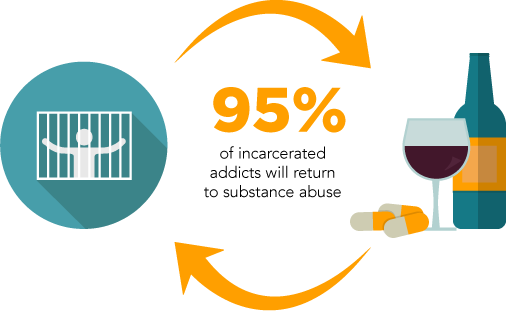
Where did ‘love’ factor into this? As Congressman, Steve Womack has unlimited access to the latest studies and research findings showing that addiction is an illness, that treatment is the route to averting such tragedy. Punishment through incarceration is not an effective response to addiction. Even a fifteen-minute review of available literature on treatment versus incarceration makes it impossible to ignore the ineffectiveness of the criminal justice system in treating addiction.

That’s assuming this growing criminal record for James is about a serious drug like meth or opiates. If it’s all about marijuana, then he should never have been arrested in the first place.  Marijuana is not addictive.

Steve Womack is clearly not interested in learning anything. Anyone who pushes their 21-year-old child into a prison boot camp has only one thing in mind—punishment. Because spare the rod, spoil the child has been the guiding rule for this kind of parent. And Arkansas overflows with similar parenting.

Consider the governor, Asa Hutchinson. Ex-head of DEA, ex-Congressman and prosecutor of Clinton’s impeachment hearings. Disciplinarian, hard-core evangelical Christian. They’re thick on the ground in this state. Maybe that’s why Arkansas’ incarceration rate ranks sixth in the nation.

Hutchinson’s son, like Womack’s, has a drug and alcohol problem.  William Asa Hutchinson III, an attorney, was arrested on his fourth DWI in 2018, having previously been charged in 1996 when age twenty and again in 2001. He crashed his truck in 2016 for yet another DWI. In May of 2016, after receiving the DWI arrest, Hutchinson was arrested in Alabama on charges that alleged he tried to sneak a psychoactive drug into a music festival.

Oh, the outrage.

Congressman Womack, like Hutchinson as congressman and as head of the U. S. Drug Enforcement Agency, has had every opportunity to initiate legislation that would direct funding to community treatment centers where anyone can walk in and get the help they need. He has the power to work toward legalization of all drugs so that arrests for drug use don’t put young people on the devastating path to the criminal justice system. Labeling drug users as criminals only amplifies their inner demons, their sense of low self-worth that finds relief only in yet another dose.

Without doubt, these “loving” fathers have ruled their sons with an iron hand, ready to punish for any failing. So the congressman’s lament rings hollow. It’s not that he hopes his son is going to “turn his life around.” It’s that he hopes the authority of prison will succeed where his own personal authority has failed. He can’t see that this forceful approach only drives his son deeper into his need for drugs.

One would think that sooner or later these old patriarchal ideas would come into focus for such men. But no, even though it’s not working, they keep doing it. It’s their children who pay the price, they and the rest of us on the hook for upwards to $50,000 per year for each inmate in our state prisons, a cost that doesn’t include arrests, court time, and parole/probation expenses. It’s a sick system, and the sooner we shift to recognition of addiction as an illness instead of crime, the better off everyone will be.

Except, perhaps, the holy authority dinosaurs who would rather sacrifice their children than change.

***

[1] “Womack sentenced to nine years in prison,” Northwest Arkansas Democrat-Gazette. Apr 18, 2019. B1

Is American Destiny Manifest?

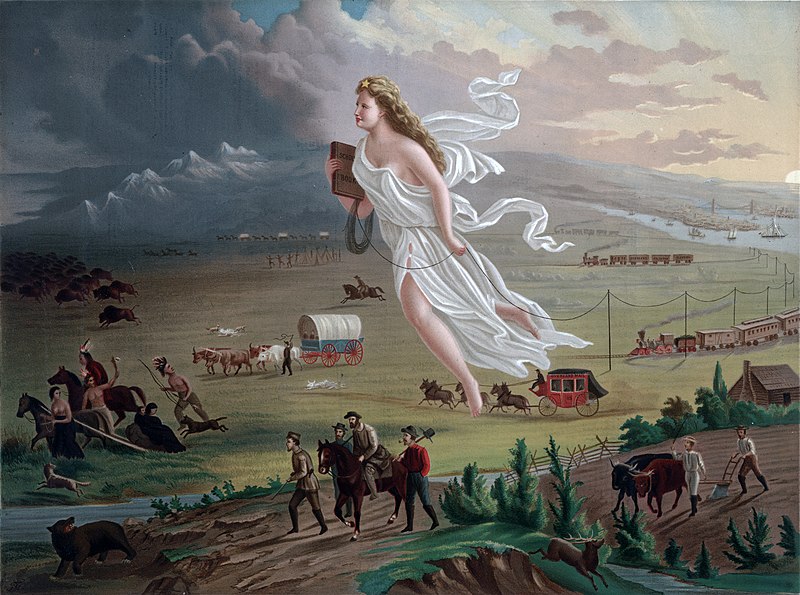
American Progress, (1872) by John Gast, is an allegorical representation of the modernization of the new west. Columbia, a personification of the United States, is shown leading civilization westward with the American settlers. She is shown bringing light from the East into the West, stringing telegraph wire, holding a school textbook that will instill knowledge, and highlights different stages of economic activity and evolving forms of transportation. Wikipedia

Oddly enough, I had reached the same conclusion as Robert Kaplan in the process of writing my book on the West Fork valley. It was the West Fork of White River, tumbling northward along our long valley that carved the land where I live and thus the livelihoods and experiences of the people who live here. This is Kaplan’s thesis in his book, Earning the Rockies: How Geography Shapes American’s Role in the World.

Reading Kaplan took longer than I had expected. His prose forms dense thought clusters embroidered by quotes and references to a wide array of thinkers. But I was motivated soon after starting the book by his storyline which follows his journey from the east coast to the Pacific. And by the fact that from as far back as I can remember, I’ve loved geography.

Oh, not exactly the study of geography—although I’ve learned to appreciate that as well—but rather the experience of it. The varying shades of dirt and sand, the rise of hills and mountains, the sudden drop of arroyos and canyons carved by quick floods and persistent rivers. Rivers, desert, plains – all if it thrills me each with its own particular mood and energy. If I had been able to travel the world in my younger more flexible years, it wouldn’t have been to visit cities or museums, but rather to see the lay of the land.

But I digress. It’s not from that perspective that Kaplan examines geography’s role in the course of American history. Rather, he argues that by the unique circumstance of our nation’s particular framing by the world’s two largest oceans as well as our unique pioneer spirit, we are fated to serve as world leader. I’d have to read this book again—and his other books including The Revenge of Geography—in order to be convinced that I don’t agree with his conclusions, but as of this moment, I really don’t.

A U.S. soldier stands guard duty near a burning oil well in the Rumaila oil field, Iraq, April 2003 Wikipedia

Kaplan describes the conflict between America’s urge toward isolationism and the stake (and responsibility) we have in a global community. His narrative journey from east to west parallels (intentionally) the path of the pioneers, providing him the storyline needed to talk about how the experiences of pioneers created the unique American personality. In developing this view, Kaplan cites Bernard DeVoto and his student Arthur Schlesinger, Jr. in stating that “…the geography of the American West freighted the United States with a precise and unprecedented international destiny. DeVoto saw dynamic, westering America, in Schlesinger’s words, as ‘the redeemer, spreading its free institutions to less fortunate peoples.’”[1]

…The American character of today is still to some extent a frontier character born of those solitudes [the Rockies]. Our rapacious form of capitalism, as well as the natural, unspoken national consensus to deploy the navy and air force, and sometimes even the coast guard, to the four corners of the earth, are signs of it.[2]

Kaplan’s view of the American story – and the view of many others he cites – is based on the idea of Manifest Destiny:

In the 19th century, manifest destiny was a widely held belief in the United States that its settlers were destined to expand across North America. There are three basic themes to manifest destiny:

–The special virtues of the American people and their institutions

–The mission of the United States to redeem and remake the west in the image of agrarian America

–An irresistible destiny to accomplish this essential duty

Historian Frederick Merk says this concept was born out of “a sense of mission to redeem the Old World by high example … generated by the potentialities of a new earth for building a new heaven.”[3]

American westward expansion is idealized in Emanuel Leutze’s famous painting Westward the Course of Empire Takes Its Way (1861). The title of the painting, from a 1726 poem by Bishop Berkeley, was a phrase often quoted in the era of manifest destiny, expressing a widely held belief that civilization had steadily moved westward throughout history. Wikipedia

In this view, pioneers pushed west in order to escape the exhausted moral fiber of their European ancestors and to carve a new, more honest way of life. Pioneers faced unimaginable hardships that stiffened their spines and led to a national character found today in fighter pilots and bold inventors. Kaplan superimposes this foundation on the world of the 21st century and questions the proper role of our nation in the global community.

He concludes that we as a nation are fated by our geography to be the leader in a “post-imperial world.” Delving into brief analyses of other regions in an attempt to understand the possibilities for U.S. interaction and intervention, Kaplan posits a leadership role of post imperialism for the U.S. but refuses to acknowledge any self-serving intention for such a role. Rather, by our unique position with oceans on both sides and the determined character of our people, we have pursued globally what needed to be done with the same vision as we pursued the western frontier.

Although the book has stimulated intense thought, I could not escape arguments that popped into my mind against his conclusions. With random brief nods to our rampant capitalism, never in these nearly two hundred pages did Kaplan talk about the role of corporations or profit seeking-entrepreneurs in motivating modern U.S. foreign policy or the pioneers. Free land, or the exploitation of virgin forests and wildlife, or the unearthing of precious minerals were what motivated the pioneers as much as seeking freedom to live outside the dictates of European kings and classism. That same motivation for wealth is what governs our foreign policy today, whether it’s the protection of corporate interests in developing nascent oil fields (Middle East, Southeast Asia, South America) or in more obscure resources like the rare earth deposits in Afghanistan. We might appease our consciences about trampling indigenous tribes to build oil pipelines by the idea we’re bringing them the wonders of modern civilization, but it remains to be seen whether modern civilization is superior to millennia-old sustainable traditions.

My limited scholarship on these topics can’t stand against the background of an author and scholar of the stature of Robert D. Kaplan. I’d have to read all seventeen books plus the works of other knowledgeable scholars to even begin to claim any authority. But I’m discouraged by his failure to discuss even for one paragraph the role of wealth-seeking so intrinsic to the American experience or the influence of corporations in our imperialism. His assertion that our worldwide deployment of warships and air power is basically a function of our benign responsibility and exceptionalism strikes me as outrageously self-serving.

Manifest destiny excused the genocide of Native Americans. Kaplan tries to sidestep that reality in quoting Wallace Stegner’s Beyond the Hundredth Meridian (1954):

What destroyed the Indian was not primarily political greed, land hunger, or military power, not the white man’s germs or the white man’s rum. What destroyed him was the manufactured products of a culture, iron and steel, guns, needles, woolen cloth, things that once possessed could not be done without.[4]

I call bullshit.

Caricature showing Uncle Sam lecturing four children labelled Philippines, Hawaii, Puerto Rico and Cuba, in front of children holding books labelled with various U.S. states. A black boy is washing windows, a Native American sits separate from the class, and a Chinese boy is outside the door. The caption reads: “School Begins. Uncle Sam (to his new class in Civilization): Now, children, you’ve got to learn these lessons whether you want to or not! But just take a look at the class ahead of you, and remember that, in a little while, you will feel as glad to be here as they are!”

But Kaplan’s work also forces me to reassess what I’ve been taught throughout my lifetime about our role as a nation. I equivocate on whether to accept that our system of governance is the most enlightened in the world, but I can’t call to mind one that seems superior. I also can’t deny that we enjoy the highest standard of living and that our wealth, indisputably ill-gotten in many ways, has still been a life-saving resource to endangered, starving or sick people around the world. I can’t ignore the accomplishments of our technology in creating a global culture joined through the Internet, telephones, and television which in many ways may serve as the ultimate means of moral arbitration.

I’m bemused by Kaplan’s assertion that our national character and world role stems from our unique continental configuration in having an ocean both to our east and our west. But so does Mexico, Guatemala, Nicaragua, Costa Rica, Canada, South Africa, Great Britain, Italy, France, India, Australia, New Zealand, Japan, and more. Could it be that the wealth-building resources of these other nations had long since been exhausted either internally or by other empires before the modern age?  Why doesn’t Kaplan acknowledge that the American colonists stumbled onto a continent virtually untouched by human exploitation and it is from that harvest of Nature’s bounty that our wealth was captured?

Why doesn’t he talk about what might happen when our soil, rivers, and forests are as decimated as those that used to undergird the wealth of Europe or India?

No matter my arguments at various points in his work, I’m glad I read it. I will read it again. Kaplan’s previous positions as national security chair at the U.S. Naval Academy, as a member of the Pentagon’s Defense Policy Board, and a senior fellow at the Center for a New American Security means I need to know more about what he knows and how he thinks if I hope to consider myself informed on our nation’s foreign policy. This no doubt has been the rationale for his many readers/reviewers including James Mattis, David Petraeus, Henry Kissinger, and many other prominent Americans not to mention review boards and other authors.

~~~

[1] Kaplan, Robert. Earning the Rockies. New York: Random House. 19

[2] 24

[3] https://en.wikipedia.org/wiki/Manifest_destiny

[4] Kaplan 27

The Undiscovered Cost of Inclusion

The mythology of bad teachers empowered by entrenched unions is only one part of a national disaster that has crept up on us over recent decades with the passage of the American with Disabilities Act (ADA) and the Individuals with Disabilities Education Act (IDEA). Meant to provide legal protections for the disabled, the side effects of these laws has been to undercut funding and appropriate learning environments for normal children.

By stating this fact, I am risking a rain of fire from incensed parents of disabled children. These parents have been a primary inciting force of these laws, alongside adults with disabilities, and have ensured federal and state tax dollars will flow into programs that aid the disabled.

Section 504 of the Rehabilitation Act of 1973 … assures certain protections to certain students with disabilities. §504 states that:

“No otherwise qualified individual with a disability in the United States . . . shall, solely by reason of her or his disability, be excluded from the participation in, be denied the benefits of, or be subjected to discrimination under any program or activity receiving Federal financial assistance . . . .”. 29 U.S.C. 794(a).[1]

One result of these laws has been the “mainstreaming” of students with disabilities into American public school classrooms. IDEA mandates that students with disabilities receive a “Free and Appropriate Education in the Least Restrictive Environment.”[2]  Previously, students with disabilities with conditions such as autism, developmental delay, emotional/behavior disturbance, intellectual disability, orthopedic impairment, learning disability, learning disabilities and speech and language impairment may have been placed in special schools where teachers with specialized training could focus directly on their special needs.

Mainstreaming works for many types of disabled students but does not work so well for many others. School districts face lawsuits from distraught parents if their disabled child is perceived not to be treated “equally” with other students. There’s also a cost factor, with estimates upwards to $100,000 per year per student for a special needs environment, according to one article detailing a situation in Georgia.[3] The risk of lawsuits and soaring costs for special needs education causes school districts to place disabled students into classrooms with “normal” children.

A veteran educator dealing with special needs students for over 30 years in a major metropolitan school district cited one example of the outcome of such policies.

“One of the things we tried was to put her in an art class. She sat there the entire hour voicing this loud moaning cry.” He imitated the sound. “I don’t know how anyone expected her to learn anything. She functioned at the intellectual level of a six-month-old infant.”

What this educator could not quantify was the effect of this person’s behavior on the rest of the class over the eight years this student remained in this secondary level school. Did anyone else learn anything in that art class or was this a wasted hour in their day, an hour when they might have learned how to draw perspective, or blend complimentary colors if not for the loud cries steadily emanating from the severely disabled person in their midst?

What’s been lost in our urge to help those with special needs is the primary mandate of our schools—to educate the next generation of scientists, artists, technicians, educators, workers, and leaders for our nation. The commendable stated objective of the ADA, to make it possible for everyone with a disability to live a life of freedom and equality, is deceptively simple and ignores the reality: people with many types of disability will NEVER be able to live a life of freedom and equality.

This is not something many parents of such children are willing to accept. Many of them believe if their child mingles with regular kids and attends the same classes, they will graduate high school and go on to college. It’s a heartbreaking situation.

In our public policy pursuit of this fantasy, we’re continuing to overlook the collateral damage. Consider one experience of an elementary teacher in a private Christian school in a small Midwestern state. At the start of the 2018 school year, a new student was introduced to her class. Neither parents nor administrators introduced the child to the teacher or explained her needs. Instead, the teacher soon discovered that she would be expected to change the child’s diapers, spoon feed her, and deal with increasingly loud, belligerent, and violent behavior. The teacher’s aide, meant to assist in teaching a class of over 30 young squirmy children, was forced to devote her entire schedule to managing the disabled girl.

“Finally, at the end of the semester,” the teacher remarked, “my documented chronology of abuses by this student forced the administration to contact the parents and the student was removed from the school. I feel like I’ve lost an entire semester with the rest of these kids.”

The decision by a private school to accept ID kids is often a financial one—the school needs the tuition money. Private schools are not under the same federal mandate to mainstream kids with disabilities because they don’t rely on public funding. This helps explain the push to channel tax dollars to private schools and may in part have to do with maintaining the freedom to deny admission to severely disabled students.

Not all disabilities lead to chaos in the classroom. Young people with physical disabilities may require specific desk heights and schools free of stairs, but they can still participate in the learning process alongside non-disabled students. It’s the intellectually disabled who pose the greatest challenge in mainstreaming.

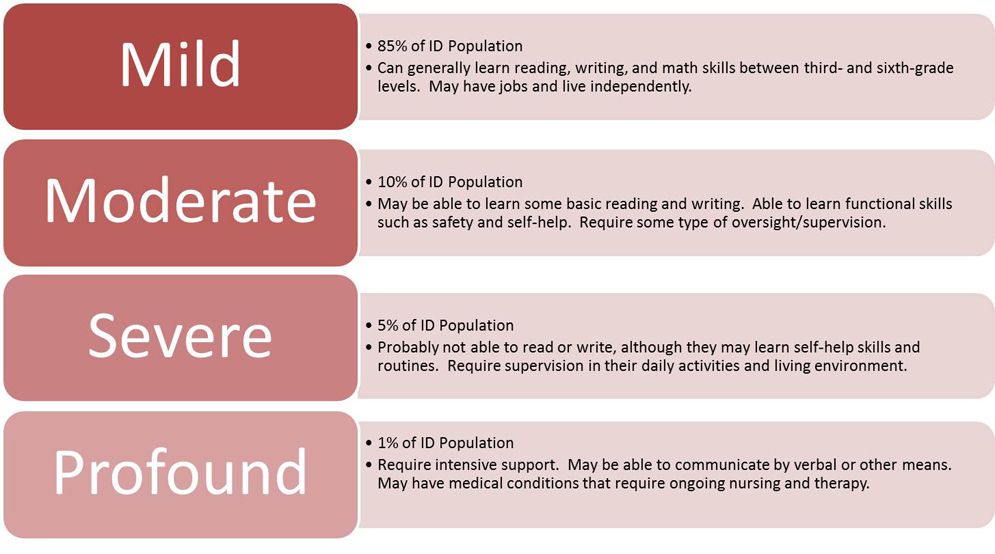
Intellectual Disability (ID), formerly known as mental retardation, is an ongoing and perhaps increasing condition in the U.S.[4]  Criteria for ID include an IQ under 70 in addition to deficits in two or more adaptive behaviors that affect everyday, general living although many variables move the determination up or down these markers. Conditions meeting this definition include Down syndrome and fragile X syndrome.

Intellectual disability affects about 2–3% of the general population. Seventy-five to ninety percent of the affected people have mild intellectual disability. Non-syndromic or idiopathic cases account for 30–50% of cases [An idiopathic disease is any disease with an unknown cause or mechanism of apparent spontaneous origin.] About a quarter of cases are caused by a genetic disorder, and about 5% of cases are inherited from a person’s parents. Cases of unknown cause affect about 95 million people as of 2013.[5]

Benefits of mainstreaming for both normal students and disabled students include exposure to diversity. But the majority of benefits are exclusive to the disabled: learning socialization skills, exposure to higher functioning children, and the challenge of competition. This says nothing about any benefit to normal children. As the 30-year veteran put it, “Here we’re spending big chunks of our limited budgets to provide an aide to accompany an ID student all day while spending nothing to assist or promote a kid with 140 IQ.”

The loss to our future society is incalculable.

Of equal concern is the inevitable observation by ID students who compare themselves to the social lives and interactions of normal students. ABC’s ongoing (2015 to present) television program “Born This Way” portrays one aspect of this effect by showcasing high functioning Downs syndrome children who aspire to marriage, stardom, and independent living. Many of the stars of this program are closely assisted by their mothers, leaving a question about what they’ve actually accomplished on their own. At times the program seems exploitative, showcasing anomalous humans for entertainment purposes. Encouraging their expectations for a normal life may ultimately prove cruel.

Before dumping severely disabled children into classrooms with normal students, schools need to ensure that teachers are prepared for the challenge. Many of them are not. Teacher education does not include techniques for changing diapers on physically mature ‘students.’

An estimated 1.8 million of the U.S. population are considered severely disabled, yet many of the disabled youth have parents who struggle to ensure their child’s future is as close to normal as possible. What parent wouldn’t?  Yet as observed by one special educator,

“… research also shows that students with disabilities, whether mild or severe, often have poorer social skills and are less accepted by their non-disabled peers. So we have to ask ourselves—who are we really thinking of when we talk about inclusion? Are we thinking of the student with a mild learning disability who may easily blend in and be accepted by their abled peers, or the student with cerebral palsy who uses a wheelchair and must be fed by a feeding tube, who just may stick out in a mainstream crowd? Speaking from experience, I’ve seen that the best communication skills, motor skills, and social skills are developed when students work alongside peers who are like themselves—peers who share their struggles, who know what it feels like to make huge gains in small steps.”[6]

It’s time to take a fresh look at the ADA and IDEA legislation and come to a new understanding based not only on what parents of disabled children dream for their child but also what is best for the rest of our children and the nation as a whole. The cost burden to schools is enormous. Specially trained aides are required to accompany disabled children through the day, to feed them, change diapers, and physically contain them. School budgets have not increased commensurate to the added expense of adequate staffing for meeting the needs of disabled children, and yet the nation wonders why classroom teachers are buying school supplies out of their own pockets.

Aside from the tremendous cost to taxpayers,[7] there is no real assessment of the cost to teachers, normal students, or society as a whole for these well-intended policies, but it surely is great. Many teachers are leaving the field with its low pay and unexpected demands. Yes, there are lousy teachers out there just as all levels of competence exist in any profession. This isn’t a problem of unions or incompetence—it’s a problem of well-intentioned public policy failing to take the big picture into consideration.

~~~

[1] See https://en.wikipedia.org/wiki/Individuals_with_Disabilities_Education_Act#Individualized_Family_Service_Plan_(IFSP) for more details about these laws

[2] https://www.eparent.com/education/mainstreaming-the-education-of-children-with-disabilities-the-teachers-perspective/

[3] https://www.theclassroom.com/the-cost-of-mainstreaming-vs-special-education-classes-12067245.html

[4] Multiple studies show a direct link between pollution and intellectual disabilities. See, for example, http://www.sci-news.com/medicine/link-air-pollution-intellectual-disabilities-06637.html

[5] https://en.wikipedia.org/wiki/Intellectual_disability

[6] Smith N. Takepart. Op-Ed: An argument against mainstreaming kids with disabilities. A special education teacher shares why she believes students with special needs thrive in schools solely for kids with disabilities. https://www.scoop.it/t/issues-in-special-education

[7] Approximately fifty percent of the current Medicaid budget pays out to children with disabilities. See https://www.kff.org/medicaid/issue-brief/medicaids-role-for-children-with-special-health-care-needs-a-look-at-eligibility-services-and-spending/

Change II: Gift to Our Future

What will make things better? Here are some ideas.

Social Support Programs: Address the Root

When a person applies for food stamps, unemployment, Medicaid, or other tax-supported programs, they face a stack of requirements to prove they’re worthy of help. Each application and benefit comes with its own separate process. Part of the problem for such applicants might be a lack of understanding about how to meet application requirements.

What’s needed is an advocate to guide the applicant through the process but also, more importantly, to assess the person’s situation, capabilities, and needs and to assist that person in moving beyond their current status. Education, job training, mental health care, and/or medical treatment are among the needs often experienced by those seeking government assistance, but rather than actually helping people get the help they need, current programs throw out random packages of aid without any comprehensive effort at addressing the root causes.

An advocate for such applicants could assist in the process of seeking help whether gaining access to the full array of needed services, completing the application process properly, or assigning a counselor to help the applicant sort out his/her current life situation (in which case the advocate and counselor become a team). Without expert advocates to steer each applicant through an increasingly complex system, we risk wasting billions on systemic inefficiencies and do nothing to solve the problems that cause these people to need help in the first place.

Of primary importance is assisting recipients in teaching them nutrition including cooking lessons.

Dispose of Outdated Laws

Drug laws

The drug war, like alcohol prohibition before it, frames the use of certain natural drugs as a moral failing. The result has been mass incarceration for private behavior.

All natural drugs should be immediately legalized, regulated like alcohol, and taxed. That includes marijuana, coca leaf, psilocybin mushrooms, peyote, opium, and Ayahuasca, among others. Persons wishing to consume any of these substances should be able to walk into a retail establishment like a liquor store anywhere in the country and buy a product that’s been certified for purity and dosage. Such products should not be controlled by pharmaceutical companies. Individual production of such substances for personal consumption should be allowed without taxation or regulation. Public venues which serve psychoactive drugs should be licensed in the same manner as establishments for consuming alcohol.

Anyone previously convicted or imprisoned for possession, “manufacture,” or sale of these substances should be released from incarceration and their convictions expunged from the record. Unfortunately, due to the massive numbers of persons involved, any compensation for their loss of income or other social costs is not feasible.

Substance abuse, like alcoholism, can become a serious problem for certain people. Currently, only the very rich can afford treatment programs that address the whole person through nutrition, counseling, and exercise, among other things. Tax revenues derived from retail sales should first provide for comprehensive treatment centers in every community where anyone suffering from addiction can be immediately admitted.

Performance testing for job safety should take the place of current drug testing. A brief interface with a computer terminal for tests tailored to immediately show competency to meet job requirements—attention, dexterity, coordination, etc.—should be part of the employee’s beginning of his/her work day.  A test failure, no matter what the cause of impairment—hangover, intoxication, fight with the spouse—could become part of that employee’s record with appropriate consequences for repeated failure.

Intoxicated driving will be prosecuted.

Sex Laws

Prostitution should be legalized, regulated, and taxed as any other business. If a person wants to sell the use of his/her body for sexual gratification, it should be within his or her right to do so. Government licensing should include regular health inspections to ensure public safety. Houses of prostitution could compete with luxurious settings, the most attractive employees, or the most innovative approach – for example, offer an immersive experience in an establishment with fantasy themes (medieval, harem, S&M dungeon, etc.). There should be no restriction on how houses of prostitution or individual practitioners might combine their services with other services such as massage, restaurants, intoxication venues (alcohol and/or drugs), or even mental health counseling.

Facilities/Resources

Eliminating drug and sex laws will result in decreased need for jails and prisons as well as employees of those criminal justice systems. Freed-up resources should be redirected to improving public defender salaries and providing for persons prosecuted for other offenses.

Reining in Greedmasters

CEOs and other top executives should receive pay based on the pay their workers receive. If the company is profitable enough to pay at CEO $27 million a year, workers should be earning far more than $15 or even $20 per hour. Prices for products that serve a lifesaving role for consumers should be regulated by the government just as utilities and other vital public services are regulated.

Healthcare

Medicare for everyone. Eliminate insurance companies unless they are non-profit. Hospitals and pharmaceutical companies must be non-profit. Drugs would be price controlled. Research for new treatments and new drugs would operate under federal grants.

Legal Services

Expand funding for free legal aid so that injured parties have full recourse to legal action.

Everyone is responsible

National service

Everyone reaching age 18 must serve whether Peace Corps, military, domestic infrastructure, civic duties or whatever else would benefit the public at large. No exceptions except for significant disability. Higher education, either college or vocational, can wait until the completion of two years’ public service. Serving in such duties should be in a location away from the family home, should provide food, shelter, and a minimal wage, and should result in free college/vocational training at its conclusion.

Education

All secondary schools should be required to offer a curriculum that includes literature/language, basic math, basic science, state and national history, music, art, and domestic duties including balancing a checkbook, changing a tire, and nutrition/how to cook. Males and females need the same courses. Domestic duty classes would include thorough sex education with a segment where kids have to carry a baby (doll) around 24-7. Dolls used for this teaching experience should be computerized to function as close to human behavior as possible including messy diapers, hunger, and crying. Birth control pills should be freely dispensed at school health clinics with or without parental permission.

Teacher salaries should be competitive with other professions requiring college degrees even in the most impoverished districts.

States which allow religious schools and home schooling should be required to regularly test home schooled and religious school students for the same course requirements as public schools students. Non-public school students who can’t pass the exams cannot receive a diploma. Repeated failure to pass exams would require the student to enter public schools. Public school students who fail to pass exams would be entered into a special unit of the school system and assessed for need of nutrition, mental health, and family problems, among other things, and individually tutored until learning improves.

Vocational training for all trades should be available and affordable as should college.

Homeless Population

An estimated 25-30% of homeless people suffer mental illness. Yet few programs addressing homelessness provide for treatment. Often these individuals end up in local jails because they can’t take care of themselves and there are no longer facilities dedicated to treating them.

“…during the Reagan administration, Federal funding for such institutions was shut down so that our wealthy class could pay less in taxes, and that put many thousands of mentally ill people out on the street corner. We have done nothing since to remedy this. A compassionate nation would care for these unfortunate people, and provide the mental facilities to house them where they could get the help they need that their conditions require.”[1]

Most homeless programs exhaust their resources in simply trying to feed and shelter the homeless. Successful efforts to address homelessness are based on meeting physical needs as well as mental health concerns. Addiction is another illness at the root of many homeless situations. Until systemic remedies are put into place, homelessness will continue to plague us.

Successful programs for the homeless are centered in tiny home villages or converted industrial/commercial properties. As shopping malls have become less viable, some cities and nonprofits have converted these sprawling spaces to homeless housing. Facilities serving the homeless would offer food service, counseling, health care, and job training. Refinement of services for homeless might include separation of persons by root cause of their homelessness; mentally ill might be separated from persons suffering addiction, for example.

Taxes

Poverty levels should be adjusted annually to meet the real costs of housing, food, and transportation in the location of each person. Persons earning above poverty level should pay income taxes on a sliding scale. Income at some level should pay a very high rate, as much as 70% of income.

In addition to legalized ‘sin’ transactions (drugs, sex) that would generate significant tax revenues, churches should be taxed like any other business. Penalties and additional taxes should be assessed against any corporation or individual found to be hiding income in foreign countries. No tax shelters.

MERRY CHRISTMAS and a happy future for all!

~~~

Have ideas or arguments about my list? Submit your own list of solutions to me at denele.campbell@gmail.com and I’ll publish reasonable submissions. Limit 1,500 words, one list per person.


[1] https://www.quora.com/What-is-the-most-successful-homeless-program

Thoughts on Graduation

As I sat in the massive sports arena, outfitted in its overhead screens meant for close-ups to penalty shots, I thought of the other times I’ve joined such crowds for ceremonies deemed important in our society. People of all kinds rubbed shoulders in the steep rows of seats, all of us suffering the interminable wait for things to happen. A brass quintet played, their image projected onscreen so that we could see the puffing of the tuba player’s cheeks, the hand stuffed in the bell of the French horn. August cadences of heraldic composition by Bach and other Baroque composers echoed off the high dome of steel and glass. Attendants rushed from place to place.

http://www.ox.ac.uk/news-and-events/The-University-Year/Encaenia/academic-dress#

Finally the processional began, resonate strains of that long familiar “Pomp and Circumstance” March No. 1 in D by Sir Edward Elgar (1901). Led by deans and faculty and pages carrying medieval banners announcing the insignia and names of colleges that would be conferring degrees, leadership of the university headed the long lines of graduating students, their robes descended from Middle Age dress just as many buildings on campus continue an ancient architectural tradition.

The caps or tams and variously colored hoods or stoles designated the degree and college—doctoral robes with three velvet sleeve bars, master’s robes with the pointed sleeve extension, or bachelor’s degree regalia with their open sleeves.

Once seated, the 1,700 graduates and attending university trustees, chancellor, and deans joined the audience in standing for the performance of the national anthem and a musical invocation by the university’s Schola Cantorum, yet another name and tradition of the Middle Ages originally organized to perform plainchant in the early church. The music brought a catch to my throat. How many times had I experienced the rush of emotion at this music, each occasion a milestone in my life or the life of someone dear?

Then the speeches, a reminder that from education comes what we value most as a society—the rule of law, the exploration of science, the marvelous inventions of mathematics and engineering, the preservation and creation of language through literature, history, philosophy, the magic of the arts.

Then the graduates, no longer embroiled in intense study and eager to harvest the product of their long labor and expense—a diploma. One by one their eager faces appeared on the big overhead screen, each called by name, each striding toward the dean of their college to accept the red leather folder with its heavy parchment page bearing their name and the title of their accomplishment.

My mother, at 95 hardly able to stay current with the rapid changes of our times, expressed muted shock at all the “foreign” names. “They live here, too,” I whispered.

Later, as I drove her home, I thanked her for coming to this ceremony honoring her granddaughter. “So many people,” she mused. “Nothing like when I went there.”

“No,” I said laughing. “A lot has changed in seventy-five years.”

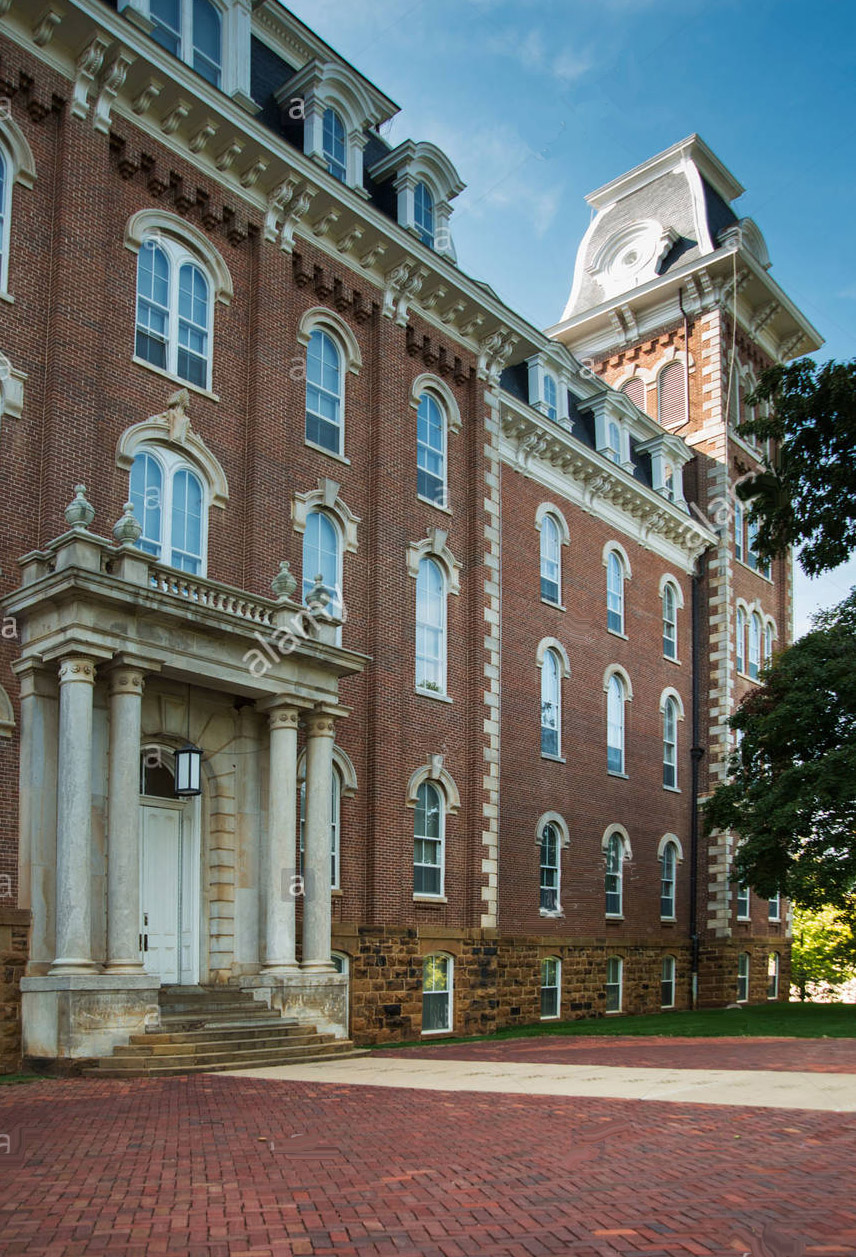
Old Main, University of Arkansas Fayetteville

Later as I reflected on the emotion still swelling in my chest, the realization came again as it has in the past. Especially in times changing as rapidly as ours, we need our traditions, our ceremonies, to remind us of why we are what we are. Education forms the heart of our civilization. No wonder we house our institutions of learning in buildings modeled on the earliest designs of Western culture. No wonder the prestige of educational leadership appears in the same garment style as medieval Oxford dons wore a thousand years ago.

Graduation isn’t simply the conferring of degrees. It’s a rite of passage into a special tier of human endeavor celebrated by those who have committed to heart and memory the facts, rules, and practices of a particular profession. They have taken the traditions of our ancestors to their own safekeeping in order to serve us all, to preserve and enhance, to invent and expand the talents and knowledge upon which our lives depend.

The fact that a winter commencement at the modest yet ambitious flagship university of a lesser state such as Arkansas has advanced the ambitions of 1,700 individuals gives me good cheer in a time when so much about our world seems dark. From these and thousands of kindred graduates across our land will come the solutions. This is the future. I’m thrilled to see it.

http://www.medievalists.net/2017/04/medieval-hazing-freshmen-orientation-mid

Change: It’s Up to Us

The current conservative narrative revolves around the imagined horrors of Socialism. Apparently without awareness of the many socialist programs upon which they depend, the reactionary segment of the U.S. voting population has taken up the latest incarnation of the old Red Scare.

A “Red Scare” is promotion of widespread fear by a society or state about a potential rise of communism, anarchism, or radical leftism. The term is most often used to refer to two periods in the history of the United States with this name. The First Red Scare, which occurred immediately after World War I, revolved around a perceived threat from the American labor movement, anarchist revolution, and political radicalism.  The Second Red Scare, which occurred immediately after World War II, was preoccupied with national or foreign communists infiltrating or subverting U.S. society or the federal government…

…the Red Scare was “a nationwide anti-radical hysteria provoked by a mounting fear and anxiety that a Bolshevik revolution in America was imminent—a revolution that would change church, home, marriage, civility, and the American way of life”…[1]

If any of this sounds familiar within the context of current political debate in the U.S., well, it should. The same argument has been fomented now for 100 years. Hysteria about the creeping plague of socialism undergirded the Cold War, our disastrous policies in Latin America, and the war in Vietnam. The hue and cry of those terrified of socialism and its big brother communism has motivated the expenditure of trillions of U.S. dollars and spilled the blood of tens of thousands of our young men. The damage worldwide is incalculable.

So what exactly should we fear about these philosophies of social order? For one thing, we should avoid conflating the differing ideas. Socialism is not communism. Democratic Socialism is not Socialism. All Societies employ socialism to some degree. For example as a minimum in the United States: the public library, public works, social security, the military, the fire department, police, health care (state hospitals, Medicaid, and Medicare). All of these functions and more can operate quite well under a capitalistic democracy.

Countries that have a strong central government tend to exhibit more acceptance to social programs. The idea that people can do more as a group rather than as individuals is accepted by the population under a strong central government and are more willing to surrender certain personal rights. In North America, two similar countries can be compared. Canada, for example, has a strong central government as evident in her national gun laws and criminal codes applied across all provinces and territories, and at the political level a healthy socialist political party…

The United States, on the other hand, has strong state rights over a central government resulting in various gun laws and criminal codes across the country, and does not have a party with socialist leanings (although the Democratic Party is often referred to as liberal). Therefore, individualism is a characteristic in the United States that is highly regarded and individuals are less likely to surrender certain personal rights. Social programs greater than the absolute minimum are considered charity at best and at its worst seen as diluting individualism and reducing personal wealth.

Americans, therefore, view socialism as a threat to their individualism and coupled with the McCarthy Era’s effective propaganda have developed an unrealistic definition between it and communism supported by fear.[2]

Face it. We’re no longer a society dominated by small close-knit communities where caring neighbors or a church provided care for those in need. Many of us don’t even know our neighbors. Neither churches nor charitable giving offer systematic methods of determining whether someone is truly needy or simply playing on sympathies. Nor do local charities have a method to ensure that assistance is available to all who might need it rather than the select few who appear at the church house door. Nor is there any assurance that the amount of support provided by a charity is appropriate to the need at hand. Charities themselves are often cookies jars raided by their operators.These are the exact reasons a federal system became vitally important as our nation grew beyond its early days of small rural communities.

While we thumb through our Twitter feed or view video from around the world, why do we expect that despite all the advances in technology and global economies that we’re somehow able to exist socially in a previous century? We are not what we were in 1850 or 1900 or even 1950.

As for that mythical freedom to pursue our fortunes, it’s time to recognize that those days are long gone – if, indeed they ever existed. There is no free land given to veterans of war or government projects, no expanses of virgin timber, no undiscovered gold. Our population in 1800 was 5,308,483. Now it’s 291,421,906.

If a rich man can afford five houses, two yachts, and countless other luxuries, why is it a hardship to take enough of his money so that he can only afford two houses and one yacht? Chances are high that he didn’t create that wealth by himself but rather workers hired at the lowest possible rate of pay in order to profit off their labor. Or he inherited his fortune from someone who did the same.

If a poor man is homeless, what do we do about it—let him die on the street?

From NPR. https://www.npr.org/sections/health-shots/2010/11/08/131166492/when-disabled-child-turns-21-parents-face-new-care-challenge

If a newborn is the one out of 33 born with a medical problem like a heart defect, spina bifida, cleft palate, clubfoot, or congenital dislocated hip, and her parents have no medical insurance, what’s the right thing to do?

If people don’t have enough to eat, do we feed them?

If we are faced with a life-threatening illness, should we lose our home and everything we own to get medical care?

Is it truly our morality as a nation to allow the pharmaceutical industry to gain billions in profits while forcing the poor to die without the medication they need to survive? To allow doctors to live like royalty? To allow hospitals to generate profit off the sick and dying?

What is socialism, anyway? By its old definition, a socialist economy was owned by the people. Factories, offices, and industry in general were either worker cooperatives or government owned. No one in the U.S. except perhaps the extreme left advocates for such a system. The problems of this approach included worker apathy and potential for corruption, not that capitalist systems don’t suffer similar downsides. The benefit was that everyone had means of support and a job to do.

A new approach to social problems is called democratic socialism. Let’s look at what that means.

…in many of the societies of Western Europe which have adopted progress toward democratic socialism, productivity, standards of living, incentives, and markers of personal happiness and security are very high. Social democracy is a kind of socialism that tries to mix parts of socialism with capitalism. In this system, the government takes wealth (money) from the rich and gives it to the poor… but despite there being more government control and less chance to make a very large amount of money, people can still run their own businesses and own private property. Unlike communism, where all private property is taken to be owned publicly, people and businesses pay taxes on their property, and this money is spent on public services after taking out the costs of running the government and collecting the taxes. [3]

We as a democratic nation have an ongoing opportunity to craft a society that allows for entrepreneurship while also providing a safety net for those who need our help. We’re already pretty far along this path but much more work remains to be done. The question is, do we go backwards now, undo laws governing labor (sick leave, vacation time, 40-hour work week, workplace safety, retirement benefits)? Cancel policies providing food, medical care, and minimal living support for the disabled and poor? Do we go back to subscription schools where only those who can afford it are able to educate their children?

Or do we make clear-eyed decisions about how to best provide an equitable existence for our fellow man? Because, yes, we are our brothers’ keepers. We live in a nation still rich in opportunity. We’re not stupid. We need to approach these questions with open minds and do what we as Americans do best – move forward with meaningful solutions. That’s what will make America great.

~~~

[1] https://en.wikipedia.org/wiki/Red_Scare

[2] https://www.quora.com/Why-are-Americans-so-scared-of-socialism

[3] https://simple.wikipedia.org/wiki/Socialism


Further reading: Saving Capitalism, by Robert Reich 

“Perhaps no one is better acquainted with the intersection of economics and politics than Robert B. Reich, and now he reveals how power and influence have created a new American oligarchy, a shrinking middle class, and the greatest income inequality and wealth disparity in eighty years. He makes clear how centrally problematic our veneration of the “free market” is, and how it has masked the power of moneyed interests to tilt the market to their benefit.

“Reich exposes the falsehoods that have been bolstered by the corruption of our democracy by huge corporations and the revolving door between Washington and Wall Street: that all workers are paid what they’re “worth,” that a higher minimum wage equals fewer jobs, and that corporations must serve shareholders before employees. He shows that the critical choices ahead are not about the size of government but about who government is for: that we must choose not between a free market and “big” government but between a market organized for broadly based prosperity and one designed to deliver the most gains to the top. Ever the pragmatist, ever the optimist, Reich sees hope for reversing our slide toward inequality and diminished opportunity when we shore up the countervailing power of everyone else.

“Passionate yet practical, sweeping yet exactingly argued, Saving Capitalism is a revelatory indictment of our economic status quo and an empowering call to civic action.”


“What Causes Poverty” by Mike Sosteric

July 8, 2015

“…Poverty causes nothing but hardship and struggle for the people. Children who grow up in poverty have poor health, poor hygiene, poor diet, poor housing, lousy experiences at school (as evinced by higher absenteeism and lower scholastic achievement), more behavioural and mental problems, and long term employment difficulties. Adults who are poor have the same difficulties as their children, getting sicker more often, being unemployed for longer periods, taking more time off work, living shorter lives, and so on. There is no doubt about it, being poor is a liability: it causes disability, disease, and even death…”

My Personal Consumerism, Part II

So the appliances.

With this latest wrinkle in my life that has provided a modest financial margin to do things like put a new roof on my house, I’ve also invested in new appliances. This will be the first time in my life I’ve been able to have nice new kitchen appliances. How thrilling!

One would think that purchasing something new would lend a warm feeling of excitement and satisfaction. That’s what we see in advertisements, isn’t it – smiling happy faces with shiny new products? Well, let me tell you…

Previously, I purchased what I had to have from Lowes because I had a charge account there. Never mind their interest rate of 21-25%. No, never mind that. (This is the quiet assault on the poor, those who never can lay out $1,200 for a new fridge when the old one suddenly stops working and so end up paying far more because of interest.)

But now, with my new cash budget in hand, I didn’t need to charge anything!

So I went to Lowe’s for a new stove and dishwasher.  My existing stove had been in service for about 20 years, a purchase made on a credit card at a store in Springdale that carries new stuff but specializes in scratched or dented appliances. The stove was bashed in on the right side and the bottom drawer never worked properly, but the burners and oven performed well until the last several years during which time the right front burner stopped working. Mice had periodically invaded the insulation behind the oven, and so baking produced a slightly mousy odor.

Plus, you know how stoves get – janky – no matter how carefully you clean. Scratched enamel and burnt on film on the burner grids.

Then there was the over-the-range microwave, used when I got it with a break in the bottom door frame. In order to replace the light bulb, a series of tiny screws had to be removed to drop a glass panel. The front grill for ventilation could not be completely cleaned as the intake grid vanished into the upper areas of the microwave. No turntable. Not 1000 watt.

Then there was the dishwasher, installed sometime in the early ‘90s. The panels on the door had long since developed a rich array of rust spots. The door spring busted years ago and I replaced it with a semi-functional spring that made loud squawking noises when the door opened. The bottom spray arm lost part of its assembly at some point, so washing the lower rack became hit or miss with plates spaced widely apart and requiring pre-washing by hand. So yeah, give me a new dishwasher!

Back in August, my early-90s refrigerator died and the new one I got at Lowe’s needed matching stainless steel appliances, although I will admit to feeling disgusted with myself for jumping on the bandwagon for ‘all stainless steel appliances.’ How many times have I rolled my eyes while watching Home and Garden channel and other home improvement programming where invariably someone says they want all stainless steel appliances? It’s like a club of avid consumer cliquishness.

But here I am, trying to obtain all stainless steel appliances. At least my washer and dryer are white.

So at Lowe’s I quickly discovered that all their ranges have five burners with metal gridwork completely covering the top of the stove and reminiscent of a medieval drawbridge gate. What the hell? Who decided this? Who wants to lift (and clean) massive metal burners? Where are we supposed to place spoons or spatulas we use while cooking?

At Lowe’s website, I found four-burner stoves in stainless. Problem solved. But no – wait. I read the fine print, then called the store, and learned that installation of said stove-microwave-dishwasher involved a whole new level of expense. For the range, they’d require $60 to convert to propane and another $155 to send a plumber for the installation. (Turn off gas supply, unscrew old hose, screw on new hose…)

For the microwave, they’d require $105 to install and would not touch installation if the old microwave had been direct wired. Well, of course mine had been.

Then for the dishwasher, they’d require $139 for a plumber to install plus $20 for the new water connection hose. And, same as microwave, they wouldn’t touch it if it had been hardwired. (See previous paragraph.)

No, they didn’t offer a combination of plumber duties between stove and dishwasher in order to reduce the cost.

Hell, I could have bought an entire additional appliance for all that.

Then I checked in with the place in Springdale. Sure enough, a very friendly salesman got on the phone and told me everything I wanted to hear. Stove – slightly cheaper, no problem. Dishwasher, cheaper. Microwave cheaper. And all installed by one guy for about $150. Get outta here!

Plus – they would haul off all my old stuff at no charge. Lowe’s wanted $20 for each old appliance.

So several days later the truck arrives and right away I see problems. The microwave is enormous and dented on the right side. The range is white – and not adjusted for propane. At least the dishwasher seemed ok. But no one had lined up the installer.

Thus began a three week saga that is still not finished. The store agreed to switch the massive dented microwave (dent NOT mentioned by salesman) for a small countertop model plus range hood. Dishwasher doesn’t really dry the dishes unless I put it on a long ‘heated dry’ cycle, but that’s part of the slow deterioration of manufacturing quality, not a problem caused by the store. Second delivery of range, adjusted for propane, was a FIVE BURNER model. Are you serious?

Went to store where they admitted they had zero four-burner stainless ranges in stock. What? After I put my fists on my hips and shifted to a slightly louder tone of voice, they finally agreed to order a four-burner, stainless steel range.

Here’s the model I really wanted but they didn’t have him in stock.

Even though I loathe driving to Springdale, I will visit the store BEFORE they deliver the range to see if they’ve adjusted the burners properly because the white stove currently in my kitchen, which they ‘adjusted’ at the store, has no low flame. Turn the burner to ‘low’ and the flames are just as high as they are on ‘high.’ They said that had to be a problem with my propane tank pressure. But it wasn’t a problem with my old stove, so it can’t be that my propane tank has spontaneously jacked up the pressure.

Also, it turned out the installer’s fee wasn’t part of what I paid the store, which wasn’t made clear. (In one of my six phone conversations with the store manager, I asked if they’d fired the salesman yet. They have not.) Plus installer had tried to call me to coordinate his arrival with the delivery but the store hadn’t given him the right phone numbers, so everything on the first delivery arrival had to be rescheduled to match his availability. And the installation fee wasn’t $150 but $275 because he had to wire two outlets at $50 each and connect a new drain line for the dishwasher. Still, even at $275, it was cheaper than Lowe’s.

Highway robbery: Fifty bucks to wire an outlet to an existing wire.

I’m not sure how much more of this consumer joy ride I can stand.