A Not So Modest Proposal

Social Support Programs: Address the Root

People Need Assistance in Accessing Support Programs. Will is a 61-year-old alcoholic who has managed to support himself through his excellent construction skills. After his work partner died four years ago, he lived in the attic of the man’s house until summer 2024 when the man’s 26-year-old son was jailed for beating up Will. When the son was released after four months, the widow chose to protect her son from future conflicts by telling Will he had to move out. He is currently living in a camper on a rural property by the generosity of an acquaintance. A wheel broke off his truck and he has no money to fix it, but without transportation, he can’t earn any money. He needs food stamps but has no computer or other means of applying. His phone ran out of minutes back in August.

Will is just one example of the problems facing people who need social support. What’s needed for Will and many others is an advocate who can assist him through the process but also, more importantly, to assess the person’s situation, capabilities, and needs and to assist that person in moving beyond their current status. Education, job training, mental health care, and/or medical treatment are among the needs often experienced by those seeking government assistance, but rather than actually helping people get the help they need, current programs throw out random packages of aid without any comprehensive effort at addressing the root causes.

An advocate for such applicants could assist in the process of seeking help as minimal as obtaining food stamps, but also gaining access to the full array of needed services, completing the application process properly, or assigning a counselor to help the applicant sort out his/her current life situation (in which case the advocate and counselor become a team). Without expert advocates to steer each applicant through an increasingly complex system, we risk wasting billions on systemic inefficiencies and do nothing to solve the problems that cause these people to need help in the first place.

Dispose of Outdated Laws

Drug laws: The drug war, like alcohol prohibition before it, frames the use of certain intoxicants as a moral failing. The result has been mass incarceration for private behavior.

All natural drugs should be immediately legalized, regulated like alcohol, and taxed. Tax proceeds for legal sales in Colorado, for example, have paid for homeless housing while reducing expenditures for law enforcement and prisons. This should include marijuana, coca leaf, psilocybin mushrooms, peyote, opium, and Ayahuasca, among others. Persons wishing to consume any of these substances should be able to walk into a retail establishment like a liquor store anywhere in the country and buy a product that’s been certified for purity and dosage. Such products should not be controlled by pharmaceutical companies. Individual production of such substances for personal consumption should be allowed without taxation or regulation. Public venues which serve psychoactive drugs should be licensed in the same manner as establishments for consuming alcohol.

Anyone previously convicted or imprisoned for possession, “manufacture,” or sale of these substances should be released from incarceration and their convictions expunged from the record. Unfortunately, due to the massive numbers of persons involved, any compensation for their loss of income or other social costs is not feasible.

Substance abuse, like alcoholism, can become a serious problem for certain people. Currently, only the very rich can afford treatment programs that address the whole person through nutrition, counseling, and exercise, among other things. Tax revenues derived from retail sales should first provide for comprehensive treatment centers in every community where anyone suffering from addiction can be immediately admitted.

Performance testing for job safety should take the place of current drug testing. A brief interface with a computer terminal for tests tailored to immediately show competency to meet job requirements—attention, dexterity, coordination, etc.—should be part of the employee’s work day.  A test failure, no matter what the cause of impairment—hangover, intoxication, fight with the spouse—could become part of that employee’s record with appropriate consequences for repeated failure. Intoxicated driving will be prosecuted.

Sex Laws: Prostitution should be legalized, regulated, and taxed as any other business. If a person wants to sell the use of his/her body for sexual gratification, it should be within his or her right to do so. Government licensing should include regular health inspections to ensure public safety. Houses of prostitution could include luxurious settings, the most attractive employees, or the most innovative approach – for example, offer an immersive experience in an establishment with fantasy themes (medieval, harem, S&M dungeon, etc.). There should be no restriction on how houses of prostitution or individual practitioners might combine their services with other services such as massage, restaurants, intoxication venues (alcohol and/or drugs), or even mental health counseling.

Nudity Laws: Allocation of designated locations where people can go without clothing should be legal in all states.

Facilities/Resources: Eliminating drug and sex laws will result in decreased need for jails and prisons as well as employees of the criminal justice system. Freed-up resources should be redirected to improving public defender salaries and providing for persons prosecuted for other offenses.

Reining in Corporate Greedmasters
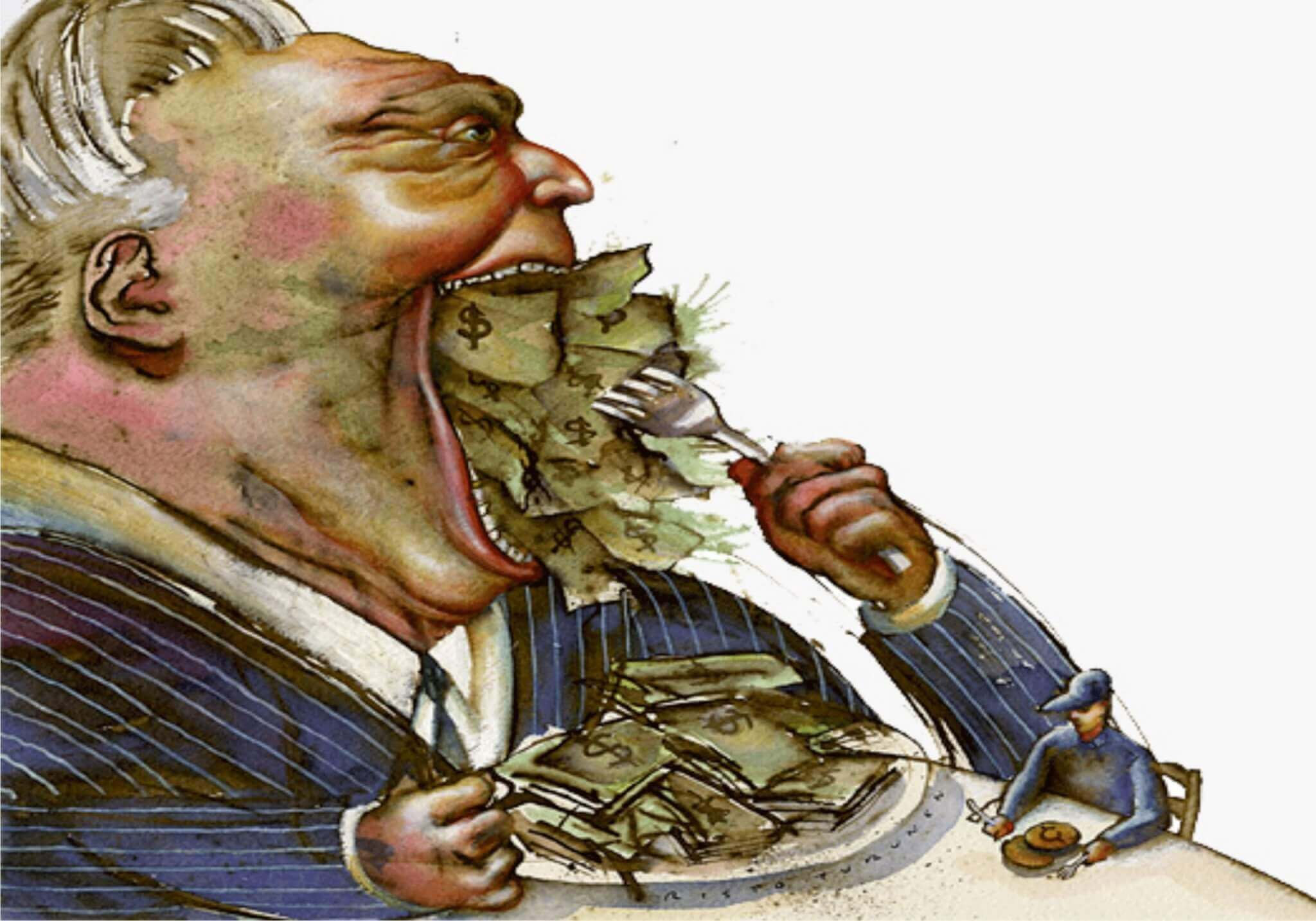
CEOs and other top executives should receive pay based on the pay their workers receive. If the company is profitable enough to pay at CEO $27 million a year, workers should be earning far more than $15-$20 per hour. Likewise, prices for products that serve a lifesaving role for consumers should be regulated by the government just as utilities and other vital public services are regulated.

Healthcare: Medicare for everyone. Eliminate insurance companies unless they are non-profit. Hospitals and pharmaceutical companies must be non-profit. Drugs would be price controlled. Research for new treatments and new drugs would operate under federal grants.

Legal Services: Expand funding for free legal aid so that injured parties have full recourse to legal action.

Everyone is responsible
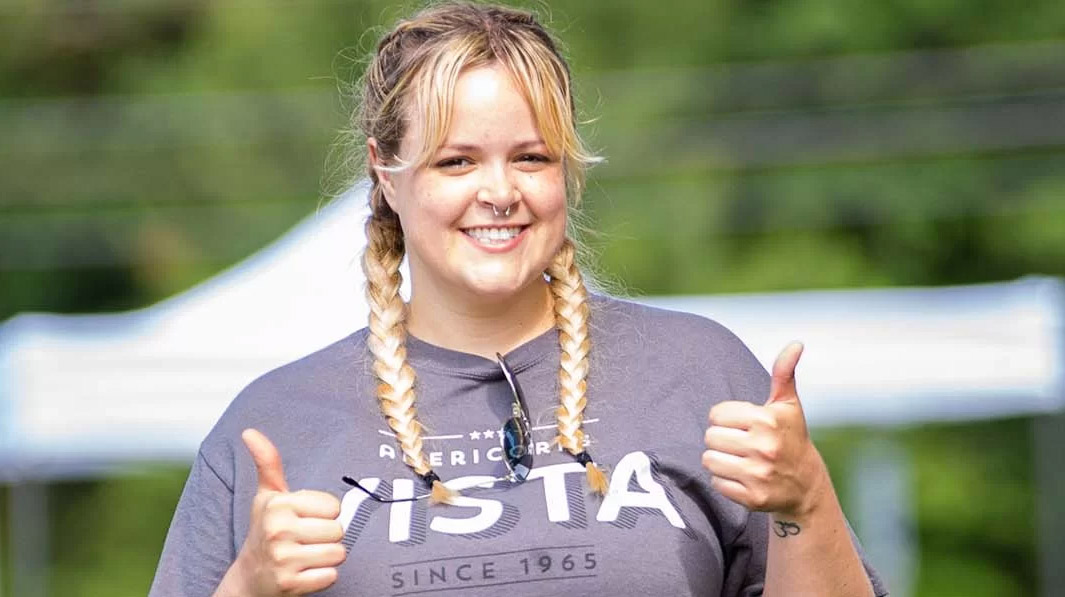
National service: Everyone reaching age 18 must serve whether Peace Corps, military, domestic infrastructure, civic duties or whatever else would benefit the public at large. No exceptions except for significant disability. Higher education, either college or vocational, can wait until the completion of two years’ public service. Serving in such duties should be in a location away from the family home, should provide food, shelter, and a minimal wage, and should result in free college/vocational training at its conclusion similar to the G.I. Bill.

Education

All secondary schools should be required to offer a curriculum that includes literature/language, basic math, basic science, state and national history, speech/debate, music, art, and domestic duties including balancing a checkbook, changing a tire, and nutrition/how to cook. Males and females need the same courses. Domestic duty classes would include thorough sex education with a segment where kids have to carry a baby (doll) around 24-7. Dolls used for this teaching experience should be computerized to function as close to human behavior as possible including messy diapers, hunger, and crying. Birth control pills should be freely dispensed at school health clinics with or without parental permission.

Teacher salaries should be competitive with other professions requiring college degrees even in the most impoverished districts.

States which allow religious schools and home schooling should be required to regularly test home schooled and religious school students for the same course requirements as public schools students. Non-public school students who can’t pass the exams cannot receive a diploma. Repeated failure to pass exams would require the student to enter public schools. Public school students who fail to pass exams would be entered into a special unit of the school system and assessed for need of nutrition, mental health, and family problems, among other things, and individually tutored until learning improves. Vocational training for all trades should be available and affordable as should college.

Homeless Population

An estimated 25-30% of homeless people suffer mental illness. Yet few programs addressing homelessness provide for treatment. Often these individuals end up in local jails because they can’t take care of themselves and there are no longer facilities dedicated to treating them.
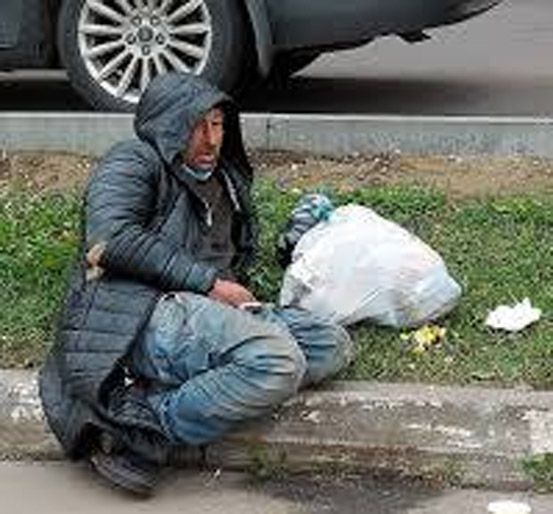
“…during the Reagan administration, Federal funding for such institutions was shut down so that our wealthy class could pay less in taxes, and that put many thousands of mentally ill people out on the street corner. We have done nothing since to remedy this. A compassionate nation would care for these unfortunate people, and provide the mental facilities to house them where they could get the help they need that their conditions require.”[1]

Most homeless programs exhaust their resources in simply trying to feed and shelter the homeless. Most of them fall short even of that. Successful efforts to address homelessness are based on meeting physical needs as well as mental health concerns. Addiction is another illness at the root of many homeless situations. Until systemic remedies are put into place, homelessness will continue to plague us.

The more successful programs for the homeless are centered in tiny home villages or converted industrial/commercial properties. As shopping malls have become less viable, some cities and nonprofits have converted these sprawling spaces to homeless housing. Facilities serving the homeless would offer food service, counseling, health care, and job training.

Taxes

Poverty levels should be adjusted annually to meet the real costs of housing, food, and transportation. Persons earning above poverty level should pay income taxes on a sliding scale. Income at some level, say above five million, should pay a very high rate, as much as 70% of income.

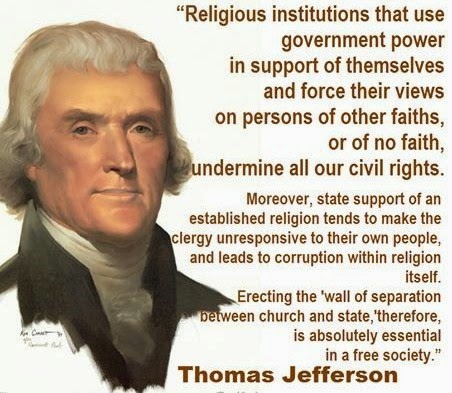
In addition to legalized ‘sin’ transactions (drugs, sex) that would generate significant tax revenues, churches should be taxed like any other business. Penalties and additional taxes should be assessed against any corporation or individual found to be hiding income in foreign countries. No tax shelters.


[1] https://www.quora.com/What-is-the-most-successful-homeless-program

What Democrats Did Wrong

Party leaders failed to see the long term need for younger, more vigorous candidates. The bulk of Biden’s term suffered from his shuffling gait, whispery voice, and apparent mental decline. Not that Trump is so much younger, but his demeanor as a bully conveys a message of strength. Sadly.

Dems also failed to foresee Biden’s inability to win a second term and consequently failed to hold a 2024 primary that would have introduced all best possible candidates. Call it allegiance to a venerable old warrior (Biden) or inability to break out of an established order of candidate precedence, or fear of the unknown, this lack of a so-called ‘fair’ fight in selecting a presidential candidate played a significant role in Harris’ defeat.

Sorry, but Kamala Harris was not popular in the 2020 primaries from which she withdrew for lack of funding. Built-in negatives aside from her mixed race and being female included her speech affectations which make her seem smug. One would think that the defeat of Hillary would have been lesson enough. For now, the fight is still between present day realities which are incomprehensible to conservatives and the “good old days” when men were ‘successful’ if they knew how to saddle a horse.

During Biden’s term, there was no apparent coherent approach to illegal immigration. This played into Harris’ weakness on this issue, which Biden appointed her to address. Whatever policy recommendations she made failed to make news cycles. As noted by the Washington Post, “Harris, in fact, has never been in charge of the border. The Department of Homeland Security manages migration. Her immigration role for the Biden administration has included boosting U.S. aid to Central America, traveling to the region and discouraging potential migrants from making the dangerous journey to the United States.” Be that as it may, if there had been a strong Biden policy on illegal immigration and prominent promotion of those policies, Trump wouldn’t have been able to make that topic a centerpiece of his campaign.

Yes, boosting U.S. aid to Central America is foundational to stemming the tide, as Harris knew. Sadly, the fact is that coherent immigration policies addressing root causes aren’t enough to stop people seeking better opportunities for themselves and their children. If your children are starving and your home and livelihood are daily threatened by violent gangs rampaging through neighborhoods, you too would leave behind everything you’ve ever known and walk to the promised land.

THERE IS NO GOOD SOLUTION to illegal immigration. There is no fence high enough, or military/border guard personnel vast enough to make illegal entry impossible. As climate change advances, more and more populations will face starvation and violent domestic turmoil. The U.S. cannot take them all. No one can. This message must be made clear. Trump’s plan to deport millions WILL NOT SOLVE THE PROBLEM. This is whack-a-mole thinking.

Biden, in the seeming tradition of Democrats and, in the words of Michelle Obama, “went high” when the Republicans “went low.” But we’re dealing with primitive thinking where the hero bashes the villain over the head. With no head bashing, there’s no hero. The villain wins. It’s past time for the Democrats to develop more than one track and start bashing. To greatest possible extent, yes, don’t give up the vision of a better world—peace, love, good vibes. But we also must carry a big stick and when somebody needs to get bashed over the head, bash the son of a bitch. The Biden administration’s justice department took waaaay too long quibbling over how/when/why to prosecute Trump for his shocking illegal acts. He should never have been free to run for re-election.

Not that Biden or the justice department had control over local and state prosecutions, but the failure of appropriate federal action left the door open for Trump to escape from prosecution in lower courts, as is now obvious. It was the first Trump presidency which allowed him to stack the Supreme Court, and that will be the case again. His sponsors are playing the long game, moves that have been feverishly planned since at least the 1950s. The strategy is to whip up fear and hatred to drive conservative voters to the polls, desperate to buy God’s favor by forcing the entire nation into a theocracy. None of this matters to Trump, whose entire plan involves self-enrichment, self-aggrandizement, and eluding justice.

True to their religious belief system, conservatives prefer government which regulates what the population does in their bedrooms and allows the business segment to run wild. The opposite is true for liberals, who believe what people do in their bedrooms is no one’s business and what the business community does can ONLY be regulated by government. Who else can force corporations not to dump industrial waste in our rivers? Ensure clean drinking water and safe food supplies? Mitigate the onslaught of pandemics? Enforce design and construction standards for roadways, bridges, and buildings?

These requirements of government are easily forgotten by a fearful, angry electorate who is not educated to understand these fundamental duties, an electorate even more distracted by a wannabe dictator whose success depends on agitating division with lies and false promises. This can only be effectively countered by an equally vociferous Democrat whose presence and actions meet the pseudo-strength of a candidate like Trump. Potential right-wing demagogues have the advantage of money flowing from a huge array of business interests. Liberals have only the People to carry on the framework for freedom established by the Founding Fathers:

  • We the People of the United States, in Order to form a more perfect Union, establish Justice, insure domestic Tranquility, provide for the common defense, promote the general Welfare, and secure the Blessings of Liberty to ourselves and our Posterity, do ordain and establish this Constitution for the United States of America.

Foundational to this vision was EDUCATION. Public education was not an afterthought of the American Revolution – it was a core ideal of our Founders. They maintained that a well-educated population was the only means of ensuring America’s future. The roots of taxpayer-funded public education in the United States can be traced back to the Massachusetts Bay Colony in 1647. The colony passed a law that required towns to establish schools, made children attend school, and allowed the state to levy taxes to support schools. This traditional determination now stands at risk from religious forces who have managed to divert tax dollars into support for private, religious schools which often slant their programs to fit a religious agenda.[1]

Could Obama have warded off this SCOTUS situation with his nomination of Merrick Garland for the post by steamrolling the Senate?

  • It is in full accord with traditional notions of waiver to say that the Senate, having been given a reasonable opportunity to provide advice and consent to the president with respect to the [Supreme Court] nomination of [Judge Merrick] Garland, and having failed to do so, can fairly be deemed to have waived its right.  Here’s how that would work. The president has nominated Garland and submitted his nomination to the Senate.  The president should advise the Senate that he will deem its failure to act by a specified reasonable date in the future to constitute a deliberate waiver of the right to give advice and consent.  What date?…90 days is a perfectly reasonable amount of time.

– Excerpt from an op-ed column in The Washington Post on April 10 by Washington, D.C., lawyer Gregory L. Diskant, who is in private practice and also serves as a member of the national governing board of the liberal advocacy group, Common Cause.

  • “The Appointments Clause [of Article II] clearly implies a power of the Senate to give advice on and, if it chooses to do so, to consent to a nomination, but it says nothing about how the Senate should go about exercising that power.  The text of the Constitution thus leaves the Senate free to exercise that power however it sees fit.  Throughout American history, the Senate has frequently – surely, thousands of times – exercised its power over nominations by declining to act on them.

 – Excerpt from a commentary about the Diskant column by M. Edward Whalen, president of the conservative advocacy group, the Washington-based Ethics and Public Policy Center, published April 10 on the National Review Online’s Bench Memo.[2]

Equally appalling was the lack of foresight by none other than Justice Ruth Bader Ginsberg who refused to retire during Obama’s presidency, which would have allowed another justice to step in on her coattails. Despite her excellent record and unfailing support for liberal causes, a bit of hubris caused her to cheat the future of a suitable replacement.

Democrats need to wake up! Making nice is not always the best course of action when we’re dealing with not only ignorant tyrants like Trump but also foreign bad actors with their thumbs on the scales.


[1] In June 2022, in Carson v. Makin, the high court held that when governments choose to subsidize private schools, they must allow such funds to pay for religious schools. A majority of current justices appear to believe that excluding religious groups from government programs is a violation of the First Amendment’s free exercise clause. Although court precedents prohibit direct funding of religion under the establishment clause, the current court could decide that if the state funds secular public charter schools, religious public charter schools cannot be excluded from such funding.  See https://www.freedomforum.org/government-fund-religious-schools/

[2] https://constitutioncenter.org/blog/constitution-check-could-obama-bypass-the-senate-on-garland-nomination

The New Peasants

We need to stop thinking like peasants. We no longer live under the rule of a king or an aristocratic lineage of dukes, earls, and what not. We citizens of the United States (and most modern democracies) hold equal shares of power over ourselves, each of us with the right to assemble, speak our mind, and vote in order to maintain a government that protects us from any force threatening to bar our path to life, liberty, and the pursuit of happiness.

Apparently some among us have forgotten, or more likely never learned, that this is our gift as Americans. They are the 21st century serfs who plod along ignoring their rights—and their duties—as American citizens. Observers most often label these new age serfs as ignorant, but that’s not entirely the reality. These modern serfs are willfully ignorant, a choice they have made in order to avoid thinking.

True, thinking is a troublesome exercise. Thinking requires the gathering of all pertinent facts on any particular issue. Such fact gathering requires not only the time and effort of the exercise, but also possession of skills in such areas as rationality and research. These skills are taught to children in their school years, but the teaching is clearly inadequate. This inadequacy is not necessarily the fault of the teacher or the school system or the curriculum, although all three can be at fault to some degree. More likely the inadequacy is due to parents not practicing thinking at home.

This kind of generational non-thinking used to be the norm, back when most of us were serfs. Those were the days when a few traditional skills sufficed in meeting life goals. A serf served his/her lord—the duke, earl, or even the king—who made his expectations clear. A woodsman was to cut and haul wood. A farmer was to plant, cultivate, and harvest crops.

As explained in Wikipedia:

  • Serfdom is the forced labor of serfs in a feudal society. In medieval Europe, serfs were peasant farmers who worked without pay for a lord. In exchange, they got to live and work on the lord’s manor. They also got the lord’s protection. Serfs had more rights than slaves (for example, serfs could own property). However, they were not completely free. They could not move, marry, or leave the manor without the lord’s permission. In most serfdoms, serfs were legally part of the land. If the land was sold, they were sold with it. Serfs worked in their lord’s fields. They sometimes did other things related to agriculture, like forestry and transportation (by both land and river). Some also worked in craft and manufacturing … like the village blacksmith, miller or innkeeper. Serfdom developed from agricultural slavery in the Roman Empire. It spread through Europe around the 10th century. During the Middle Ages, most European people lived in serfdoms.

Serf children grew up learning about life from their parents, a life that followed the rules set down by their lord’s demands. The sawyer’s sons were sawyers. The tanner’s sons were tanners. Owned by their fathers as girls, females were handed over to their husbands to serve as wives and mothers, subject to his absolute control.

Those rules made it easy to decide what to do without having to think about it.

Ah, those were the days. There were established rules about not only what work to do each day, but what to wear (same homespun garments as the day before), what to eat (same basic gruel and bread as the day before), what to believe (acceptance of one’s humble place in life because the Bible said so), and so forth. Even a free man could become a serf if he owed a large debt. He would make an agreement with the lord of the land. The lord would keep him safe, give money to pay his debt, and give him land to work on. In return, he would work for the lord. All his children would become serfs.

So while our early ancestors arrived in the American colonies fresh from their peasantry, only a few of them brought with them the practice of thinking. This is the resistant strain of human nature, to do what the parents did, to blindly accept a set of rules to follow, to spend our days laboring to satisfy our lord and master. The goal has shifted only slightly in that we labor in the belief that if we work hard enough, we too can be a lord. This is the fantasy that controls so many, that someday when we’re lords, we won’t want the government to tax us. This is the thinking that allows the rich to pay taxes at the same rate as the rest of us, when their incomes surpass by billions the amounts we earn. Meanwhile, we bow down (at least mentally) to the lords who have achieved ‘greatness’ through wealth or power.

After all, peasants believe, how could lowly persons such as ourselves manage to decipher the intricacies of big business or political process much less discern the many aspects of personality and manipulation employed by the lords? How are we supposed to know what is true? We must believe what our chosen leaders tells us. Never mind what news source may or may not employ actual journalists, or who provide ‘news’ instead of ‘entertainment.’ It’s all a lie anyway, they say, throwing up their hands, disheartened.

Well, yes, these are difficult mental tasks for people who never learned how to research or reason. Besides, we’re busy trying to keep a roof over our head and food on the table.

A full 34% of the voting-eligible population did not vote in 2020, which saw the highest voter turnout since 1914. Even more concerning is the popularity of wannabe dictators like Donald Trump whose supporters openly ridicule education, basking in the praise of a man who “loves the poorly educated.” It should be no surprise that Democrats control 77% of the U.S.’s most highly educated Congressional districts (107 districts) while Republicans control 64% of districts where the fewest people went to college (107 districts).[1]

There is no controlling force that coerces individuals into peasant thinking. Such a role is heavily influenced by tradition and hardly mitigated by many educational opportunities. Community plays a role as well, either offering role models who use thought and action to move beyond peasantry, or by warning of negative results for those who try to move beyond their family traditions of non-thinking. It is often easier to remain in the trenches than to climb out, especially when one has failed to grasp the tools which make climbing possible. Plus, who wants the responsibility of stepping up to the plate? I might swing and miss.

Our society and especially our educational systems are failing to penetrate the mental laziness of lingering peasantry enticing us to depend on lists of rules handed down by lords. Curriculum for all schools, public, private or religious, should provide the methods of rational thinking in order to protect malingering peasants from their self-destructive (and democracy-destroying) behavior. Curriculum requirements should include debate where fact-based points are presented on a chosen topic. A thorough understanding of civics and history should form the core of classes that also teach language arts and mathematics/logic. At strategic points in those school years, there should be lessons in conflict resolution as well as introduction to introspection.

The answer is stepping up to our human potential, NOT to install a wannabe king.


[1] https://www.politico.com/interactives/2022/midterm-election-house-districts-by-education/

Academic AND Vocational Education

Sidetracking traditional education and leaning into vocational training at an early age will only exacerbate cultural division in the U.S. Much of what currently upsets under-educated Americans is that they do not understand much of what they have to deal with on a daily basis. It’s not news that people fear the unknown.

The anti-vaxxers are a perfect example—people who know nothing about viruses or how they function in the human body or how vaccines work to provide a level of immunity. So there’s all this pressure from the educated (scientists, doctors) and the government (tasked with protected public health) for people to get vaccinated, and the anti-vaxxers just feel pushed around and outraged. Conspiracy theories substitute for knowledge, that health spokespeople are on the take, that they create the virus to make money, that it’s better to take horse wormer than listen to the doctors.

Meanwhile, the virus finds unprotected human bodies to infect and starts happily mutating, a standard activity of viruses and other invisible meanies. Pretty soon the old vaccine doesn’t work against the new variant, and the anti-vaxxers say, “Ha! See?” without realizing that they are the weak link in allowing the virus to gain the upper hand. If the virus has no hosts in which to breed and mutate, the virus dies.

And so it goes.

  • The know-nothings dismiss all journalism because they don’t know the difference between legitimate journalism and fake news from ‘announcers’ who could care less about the principles of professional journalism.
  • The know-nothing avidly embraces sensational claims of wannabe tough guys like Trump whose records clearly reveals his lifelong failure in business and his bankrupt character.
  • The know-nothing passionately puts forth ad hominem arguments without understanding the principles of legitimate fact-based debate.
  • The know-nothing votes only for president because it’s the most high profile without understanding that every level of political office is essential to healthy function of our government.
  • The know-nothing hoards arms and joins with likeminded know-things in fantasizing about civil war when they can get rid of the ‘enemy’ without having any awareness of the real tragedy of civil war.
  • Worst of all, the know-nothing is defenseless against propaganda.

Living in the modern world requires that people are educated not only in math (yes, even algebra, which is not so much about remembering theorems as it is training the brain in logic) and English (grammar, spelling, literature, and essay writing all contribute to a person’s ability to read and understand as well as his/her ability to communicate with others),  but also in biology, speech, civics, and history. Our young people also need full access to learning in the arts whether music or visual arts; for some, these are the only pathways to a fruitful future. We must provide these many facets of a nourishing preparation for life.

So we need to be very careful about any ‘reforms’ to the education system or required curriculum. Yes, vocational skills are great for a significant portion of the population in terms of future jobs. There will always be a need for plumbers, electricians, carpenters, welders, car mechanics, and so forth, and these can be lucrative careers. But that alone does not equip the population to succeed in these times.

We do not need to make a choice, either/or, with our educational system. We must have both.


Arkansas and CRT

Arkansas’ new governor, Sarah Huckabee Sanders, has raised the colors for her term at the helm of the ship of this state. Not that these are ‘her’ colors, per se, but rather edicts scripted for her by her bosses behind the Republican curtain. These are the same entities who put her in front of a microphone to lie for Trump as his press secretary, apparently under the promise that they would support her efforts toward future political office.

Evidence of her bought-and-paid-for status can be found in the immediate issuance of her ban on Critical Race Theory (CRT) in the public schools. The boiler-plate executive order commands, in part, that the Arkansas Department of Education:

Review the rules, regulations, policies, materials, and communications of the Department of Education to identify any items that may, purposely or otherwise, promote teaching that would indoctrinate students with ideologies, such as CRT, that conflict with the principle of equal protection under the law or encourage students to discriminate against someone based on the individual’s color, creed, race, ethnicity, sex, age, marital status, familial status, disability, religion, national origin, or any other characteristic protected by federal or state law.

Sanders’ measure is put forth as enforcement of Title IV and Title VI of the Civil Rights Act of 1964 (P.L. 88-352, 78 Stat. 241), which was established to ensure equal rights to everyone.

People of one color, creed, race, ethnicity, sex, age, marital status, familial status, disability, religion, national origin, or any other characteristic protected by federal or state law are inherently superior or inferior to people of another color, creed, race, ethnicity, sex, age, marital status, familial status, disability, religion, national origin, or any other characteristic protected by federal or state law…

This and similar bans present three absurdities. One, the ban alleges that efforts to reduce and/or eliminate the negative impact of entrenched racism are a form of racism. Two, the ban demonstrates either an utter lack of understanding of CRT or an ingrained denial of systemic racism, either of which would be remedied by a study of CRT. The rightwing furor over CRT is a perfect example of racist thinking and reassures its racist followers that rightwing Republicans will resist any effort to encourage white people to think equitably of their darker-skinned brethren.

Critical Race Theory advances the idea that multiple aspects of American law, institutions, and social structures enshrine racist ideas. Wikipedia describes the tenets of CRT as follows:

Scholars of CRT say that race is not “biologically grounded and natural”; rather, it is a socially constructed category used to oppress and exploit people of color; and that racism is not an aberration, but a normalized feature of American society. According to CRT, negative stereotypes assigned to members of minority groups benefit white people and increase racial oppression. Individuals can belong to a number of different identity groups…

Derrick Albert Bell Jr. (1930 – 2011), an American lawyer, professor, and civil rights activist, writes that racial equality is ”impossible and illusory” and that racism in the U.S. is permanent. According to Bell, civil-rights legislation will not on its own bring about progress in race relations; alleged improvements or advantages to people of color “tend to serve the interests of dominant white groups,” in what Bell calls “interest convergence.” These changes do not typically affect—and at times even reinforce—racial hierarchies. This is representative of the shift in the 1970s, in Bell’s re-assessment of his earlier desegregation work as a civil rights lawyer. He was responding to the Supreme Court’s decisions that had resulted in the re-segregation of schools.

The concept of standpoint theory became particularly relevant to CRT when it was expanded to include a black feminist standpoint by Patricia Hill Collins. First introduced by feminist sociologists in the 1980s, standpoint theory holds that people in marginalized groups, who share similar experiences, can bring a collective wisdom and a unique voice to discussions on decreasing oppression. In this view, insights into racism can be uncovered by examining the nature of the U.S. legal system through the perspective of the everyday lived experiences of people of color.

According to Encyclopedia Britannica, tenets of CRT have spread beyond academia, and are used to deepen understanding of socio-economic issues such as “poverty, police brutality, and voting rights violations,” that are impacted by the ways in which race and racism are “understood and misunderstood” in the United States.[1]

Conservatives, including Governor Sanders’ managers, look for any advances toward greater social equity as a destructive force to their world view. Or, perhaps more to the point, greater acceptance of social equity would reduce or eliminate race as a hot button issue in driving Republican voters to the ballot box.

One conservative organization, the Heritage Foundation, recently attributed a whole host of issues to CRT, including the 2020 Black Lives Matter protests, LGBTQ clubs in schools, diversity training in federal agencies and organizations, California’s recent ethnic studies model curriculum, the free-speech debate on college campuses, and alternatives to exclusionary discipline—such as the Promise program in Broward County, Fla., that some parents blame for the Parkland school shootings. “When followed to its logical conclusion, CRT is destructive and rejects the fundamental ideas on which our constitutional republic is based,” the organization claimed.[2]

[On the other hand,] Leading critical race theory scholars view the GOP-led measures as hijacking the national conversation about racial inequality that gained momentum after the killing of George Floyd by a white police officer in Minnesota. Some say the ways Republicans describe it are unrecognizable to them. Cheryl Harris, a UCLA law professor who teaches a course on the topic, said it’s a myth that critical race theory teaches hatred of white people and is designed to perpetuate divisions in American society. Instead, she said she believes the proposals limiting how racism can be discussed in the classroom have a clear political goal: “to ensure that Republicans can win in 2022.”[3]

With all cannons on deck loaded with her preprogrammed agenda, we can be certain this is only the beginning of pushing Arkansas further into the sea floor. Ironically, argument can be made that the label ‘ideologies’ such as forbidden in the CRT ban could be assigned to religion, i.e. “the beliefs and practices of that religion [which] support powerful groups in society, effectively keeping the existing ruling class, or elites, in power.”[4]

Oh, and the third absurdity? Critical Race Theory is not part of public school curriculum. It’s a college level subject.


[1] https://en.wikipedia.org/wiki/Critical_race_theory

[2] Sawchuk, Stephen. “What Is Critical Race Theory and Why Is It Under Attack?” Education Week, Ma 18, 2021. Accessed Jan 12, 2023 @  https://www.edweek.org/leadership/what-is-critical-race-theory-and-why-is-it-under-attack/2021/05

[3]  “Critical race theory is a flashpoint for conservatives, but what does it mean?” PBS Newshour, Nov 4, 2021. Accessed Jan 12, 2023 @ https://www.pbs.org/newshour/education/so-much-buzz-but-what-is-critical-race-theory

[4] https://revisesociology.com/2018/11/09/is-religion-ideological/

Arkansas Education: Part III—The Money Problem

Governor Sarah Huckabee Sanders has announced her plan to allow parents to shift their child’s ‘education dollars’ from public schools to private or religious schools. Surely she is aware of legal reasons such an action cannot occur: diverting school money to religious schools violates the First Amendment of the Constitution, which requires a separation of church and state. As a taxpayer, I am not alone in refusing to allow my tax dollars to pay for religious schooling.

Sanders makes it sound simple: Parents would take their child’s share that helps finance public schools and instead pay that amount to a private or religious school. But what an individual parent might pay toward their child’s education is a drop in the bucket compared to the money required to education a child, an approximate $10,414 for one school year. These funds come from federal taxpayers, state taxpayers, and local school district taxpayers, not an individual parent. Appropriating that $10,414 to be funneled to a private school, religious school, or homeschool is, plain and simple, a theft of public money.

Sanders promises tax cuts, but only a small portion of each child’s education cost comes from a parent’s real estate taxes.

  • Arkansas K-12 schools receive $638,279,000, or $1,289 per pupil, from the federal government, and would without question be withheld if any portion was directed to religious schools, at the least.
  • State funding, which comes from ALL Arkansas taxpayers including those without children and those who do not wish their taxes to support private or religious schools, totals $2,971,791,000 or $6,002 per pupil.
  • Local funding, which includes ALL local taxpayers not just the parents who demand a voucher program, totals $2,201,220,000 or an average of $4,445 per pupil.[1]

Sanders apparently believes that allowing parents to direct funding to schools they prefer would result in the best possible education of that child, but there is no guarantee that parents have any real comprehension of what constitutes suitable education. Arkansas is one of the most poorly educated states, meaning in general that parents are not well educated. Likewise, school districts—especially small rural districts—are often governed by school boards which are often without any college-educated members.

It’s important to note that the per capita income in Arkansas averages only $29,200. And while some Arkansas counties enjoy per capita incomes which average over $27,334 per year, in other counties that number drops to $13,103.[2] Nearly 20% of the state’s residents live in poverty. This further illustrates the vicious cycle involved:

Poverty has many causes including a lack of education and skills to bring to the work force, a family’s geographic location, a lack of community support, family structure (specifically the number of earners in a family impacts the ability to make ends meet), incarceration, and income inequality. Children in poverty experience additional problems in educational and cognitive development, health outcomes, social and emotional development and are more likely to live in poverty as adults.[3]

Further complicating the problem are teen pregnancies. The state leads the nation in teen births, 27.8 per 1,000 (2022), due largely to a lack of contraceptives and proper sex education. A 2022 study reported the need for the following policy changes:

Create mandatory statewide curriculum for medically accurate sexual education. • Provide free access to Long-Acting Reversible Contraception. • Eliminate restriction to distribution of contraceptives in School-Based Clinics. • Target communities whose birth rates are far above the norm for their groups nationally, including White and Pacific Islander teens. • Expand access and eliminate barriers to health care for Black women and girls, whose teen birth rates are higher than the state average. • Increase educational opportunities as a protective factor. • Continue access to Medicaid, WIC, and SNAP benefits as a protective factor.[4]

It’s a safe bet that the new governor will not champion sex education and better access to birth control for teens, even though this would be a strong step toward breaking into the cycle of low income, poorly educated residents unable to afford medical care. Young women with children are the most common household qualifying for financial assistance including Medicaid—90% of welfare recipients are single mothers. DHS forecasts total federal and state Medicaid funding of $9.46 billion in fiscal 2023 — up from $9.39 billion in the current fiscal 2022. Arkansas taxpayers contribute about 30% of this total.

Does Sanders propose to cut the state’s Medicaid funding? This is part of the Republican effort to reduce the budget. But Medicaid plays a major role in funding for mainstreaming students with disabilities.

In the 2017-18 school year, there were 61,553 students with disabilities aged 5-21 in Arkansas public schools or 12.9% of total student enrollment in the state. This does not include students in the Arkansas School for the Deaf, Arkansas School for the Blind, Division of Youth Services, the Department of Corrections, or the Conway Human Development Center. This is up from 55,874 students (11.7% of total student enrollment) in 2014-15.[5]

It’s no surprise that the big dream of Sanders grows thornier as bill writing progresses. Surely the state’s legal advisors will warn of the potential loss of federal dollars in state education funding if she proceeds with her plan. The best path through this tangle is to eliminate the voucher section from her education plan and instead plow all available funding into public schools where students learn, collaborate, and grow alongside their peers. It will be a tragedy for Arkansas if Sanders succeeds in dividing our youth into potentially prejudicial interest groups that will expand the current culture wars.


[1] https://educationdata.org/public-education-spending-statistics

[2] Per capita income is used to determine the average per-person income for an area and to evaluate the standard of living and quality of life of the population. https://en.wikipedia.org/wiki/List_of_Arkansas_locations_by_per_capita_income

[3] https://www.aradvocates.org/5-things-you-need-to-know-about-poverty-in-arkansas/

[4] https://www.aradvocates.org/wp-content/uploads/AACF.teen_.birth_.webfinal.9.30.2022.pdf

[5] See https://www.arkleg.state.ar.us/Bureau/Document?type=pdf&source=education%2FK12/AdequacyReports/2018%2F2018-06-18&filename=SpecialEducationReport_BLR_21

Arkansas Education: Part II—The Health Problem

Arkansans’ popular breakfast of biscuits and gravy is high in calories
and saturated fats and low in nutritional value.

Under-nourished or malnourished kids can’t learn. Arkansas ranks at the very top of states whose citizens die of chronic lower respiratory diseases (chronic obstructive pulmonary disease (COPD), chronic bronchitis, emphysema, and asthma) which are caused by tobacco smoking, indoor and outdoor air pollution, exposure to allergens and occupational agents, unhealthy diet, obesity, and physical inactivity. The state ranks 3rd nationally in deaths from heart disease, diabetes, and kidney disease, and 6th in death from cancer.[1] Clearly the population needs to learn about better nutrition.

First of all, consider that without proper nutrition, people are more likely to self-medicate with drugs including cigarettes and alcohol because these substances make people feel better even when they are in poor health.

One potential means of addressing some of these health problems would be to require public school education in nutrition, including practice in preparing healthy meals. At least one semester in this specific curriculum for both male and female students could break into this cycle of poor health. A two-week summer course (required) would bring students to work in community gardens as well as learning to cook with fresh produce.

Start Early

The Women, Infants, and Children (WIC) nutrition program in Arkansas is a first step toward better health, but fails to live up to its promise by setting income guidelines at 185% of poverty level. There is no guarantee that a person with an income $20 or $2,000 above the poverty line is adequately informed about nutrition. The WIC program also requires applicants to have a ‘nutritional need’ but the ‘needs’ outlined for acceptance do not approach all the real nutritional needs a woman might have for herself and her fetus/child. Most importantly, WIC is voluntary, and a person must apply in order to gain this support. Every pregnant woman, upon her first visit to a physician, should be assigned a caseworker who will ensure that nutritional education and support is provided. [A passing grade of C or above in a high school nutrition class would provide exemption.]

It goes without saying that the school breakfast/lunch program must serve as the best example of nutritious meals. Federal standards pushed by former First Lady Michelle Obama have gone a long way toward meeting this objective. The Healthy, Hunger-Free Kids Act changed nutrition standards for the National School Lunch Program by requiring that schools serve more fruits, vegetables, whole grains and fat-free and/or low-fat milk more frequently and less starchy vegetables or foods high in sodium and trans fat.[2]

Studies have shown the direct correlation between nutrition and academic performance.

Research suggests that diets high in trans and saturated fats can negatively impact learning and memory, nutritional deficiencies early in life can affect the cognitive development of school-aged children, and access to nutrition improves students’ cognition, concentration, and energy levels.[3]

A vast body of research shows that improved nutrition in schools leads to increased focus and attention, improved test scores and better classroom behavior. Support healthy habits and consistent messages: Nutritious school food helps students develop lifelong healthy eating habits.

Sadly, one of the first acts of Sanders’ mentor Donald Trump in gaining the presidency was to reduce the school nutrition standards. The Obama-era policy suffered a series of rollback measures which allow for less whole grain, more sodium, and more flavored milk despite a 2018 analysis of more than 90 popular chilled flavored dairy milks which revealed that a carton of flavored milk can contain as much sugar as a can of soft drink, with many of the bestselling brands containing more than a day’s worth of added sugar in a single serving.

The overweight condition of both Trump and Sanders (and her parents and siblings) illustrate their lack of understanding in nutritional matters. Nutrition is fundamental to a child’s future prospects, and without public investment in health, too many students will not succeed no matter what schooling they receive.

The Huckabee Family

[1] https://www.cdc.gov/nchs/pressroom/states/arkansas/arkansas.htm

[2] The Healthy, Hunger-Free Kids Act provides meals to children that normally could not afford those nutritious food items. It also allows schools to have more resources that they may not have had before. A study in Virginia and Massachusetts concluded that children in schools were eating significantly healthier meals when their parents or guardians were not choosing their food, but the school was. While looking at the nutrition value of 1.7 million meals selected by 7,200 students in three middle and three high schools in an urban school district in Washington state, where the data was collected and compared in the 16 months before the standards were carried out with data collected in the 15 months after implementation; the information found that there was an increase in six nutrients: fiber, iron, calcium, vitamin A, vitamin C, and protein. While providing new meals with improvements in fruits, vegetables, amount of variety, and portion sizes, the calorie intake has also transformed.

[3] https://www.wilder.org/sites/default/files/imports/Cargill_lit_review_1-14.pdf

Arkansas Education: Part I—Education is the foundation of democracy

“Educate and inform the whole mass of the people. They are the only sure reliance for the preservation of our liberty.”   ~Thomas Jefferson

But what if the ‘education’ informing the whole mass is inconsistent? What if some students learn that God created the earth in seven days while others are taught Earth has been evolving for five billion years? What if some students learn the biology of cellular activity while others students never learn about cells at all?

Consider this:

Earlier this year [2017], Naftuli Moster, executive director of YAFFED (Young Advocates for Fair Education) drew attention to the plight of young Jewish boys attending yeshivas instead of public schools.[1] According to Moster, nearly 50,000 yeshiva students in the New York City area “are not being taught science, history, and geography among other subjects,” even though the NY State Department of Education “requires non-public schools to teach a variety of subjects, including English, math, science, history, geography, art and more.” Misinformation and omission of subject matter are problems not just relegated to New York or to yeshivas.

As Dana Hunter wrote in Scientific American, millions of children are being taught in Christian private schools and through religious homeschooling that the earth is less than 10,000 years old and that Noah’s flood is “the event that formed most of the geologic record.” Many of these schools, as well as parents who homeschool their children for religious reasons, use non-accredited science books, such as Science of the Physical Creation in Christian Perspective, that inject religious ideology into ‘lessons’ about science.

And according to Valerie Strauss and Emily Wax of the Washington Post, tens of thousands of American schoolchildren attending Islamic schools face a similar underexposure to important secular subject matter. As an example, Strauss and Wax point to the Islamic Saudi Academy in Virginia, which doesn’t require students to take classes in US history or government. Moreover, their textbooks include religious instruction that fosters conflict. One, for example, states: “The Day of Judgment can’t come until Jesus Christ returns to Earth, breaks the cross and converts everyone to Islam, and until Muslims start attacking Jews.”[2]

These situations must change.

The United States notably does not have an established national curriculum after the idea was explicitly banned in 1965, in Section 604 of the Elementary and Secondary Education Act (since moved to Section 2302 and codified at 20 U.S.C. § 6692). This act provided federal funding for primary and secondary education (‘Title I funding’) as part of President Lyndon B. Johnson’s War on Poverty. However, most states [including Arkansas] in the United States voluntarily abide by the Common Core State Standards Initiative, which provides certain uniform standards.[3]

There are no requirements for accreditation, registration, licensing, or approval from the state for private or religious schools in Arkansas. Teacher do not have to be certified. Curriculum does not have to follow any standards.

…In the 2020-21 homeschool report from the Arkansas Department of Education, there were just over 30,000 homeschooled students reported last year. In that same year, the Arkansas DOE reported that there were 473,000 students enrolled in Arkansas public schools, and approximately 27,000 students enrolled in private schools in the state.

Aside from the obvious negative effects on students who find themselves at odds with the accepted knowledge of American society, the greater harm affects the entire nation. Pockets of ‘believers’ of one particular faith or another become ‘hardwired’ to see nonbelievers (of their particular faith) as ‘wrong’ and therefore a type of enemy. People outraged that Latino immigrants don’t speak ‘English’ are often the same people who demand their right to isolate their families from other ‘wrong’ cultures.

Since the passage of the Massachusetts Act of 1647, Americans have established the right of the state to require communities to create and maintain elementary schools in all towns for every child and secondary schools for youth in larger towns. These schools were expected to provide the knowledge each child would need to lead a productive, responsible life as an American citizen. This law also established the tradition that these schools should be funded through local property tax as land was considered to be a valid measure of wealth.

Even before the United States had a Constitution, its founders were advocating for the creation of public education systems. The United States was an experiment in democracy unlike anything the world had ever seen, turning away from government dominated by elites and hoping that the common man could rule himself. If this experiment had any chance of standing the test of time, the nation needed far more schools to prepare everyday citizens for self-government. As James Madison, the father of our Constitution, remarked: “a popular Government, without popular information, or the means of acquiring it, is but a Prologue to a Farce or a Tragedy.” Thomas Jefferson similarly argued that governments “deriv[e] their just powers from the consent of the governed,” but that it is education that makes that consent possible. President Washington, in his last annual message to Congress, added that expanding education was essential to the perpetuation of nation’s common values and the chance of a “permanent Union.”[4]

Clearly the failure of Arkansas’ current education system is directly responsible for our miserable political situation where only half of eligible voters bother to vote, and of those, many rely on propagandized rhetoric to decide their vote. In the 2022 election, Sanders won her governorship with 36% of the eligible voters.

Other states have figured out how to produce well-educated students. Arkansas should take a lesson. The state must require a specific curriculum for all K-12 education, homeschooled, private, whatever. Currently, the State of Arkansas exerts no supervision or testing of homeschooled students.[5]

The idea that K-12 education should include religion is absurd. Any specific religion is just one more belief system among hundreds of myth-based belief systems. Leave such indoctrination to parents and churches.

Make no mistake–this proposed shift of tax dollars toward private and religious schools in Arkansas is a key element of the evangelical effort to control education. If our children do not all learn the same truths about our history, science, and politics, we have no chance of preserving our republic. No matter what faith one might follow, we must agree on the basic tenants of logic, language, and the scientific method. Without that common ground, the United States of America will dissolve into violent, partisan chaos, just as the Founding Fathers warned.


[1] Yeshivas are Orthodox Jewish schools

[2] https://www.huffpost.com/entry/religious-schools-are-fai_b_9431334

[3] Arkansas has adopted Common Core standards as well as the Next Generation Science Standards. Sadly, many states opted out of the Common Core standards which only applied to math and language arts. https://en.wikipedia.org/wiki/Common_Core   Subsequently, Next Generation Science Standards have established standards for science, but social studies and history remain ungoverned. See https://en.wikipedia.org/wiki/Next_Generation_Science_Standards

[4] https://time.com/5891261/early-american-education-history/

[5] https://www.time4learning.com/homeschooling/arkansas/laws-requirements.html

Bailout or Investment? Student loan debt

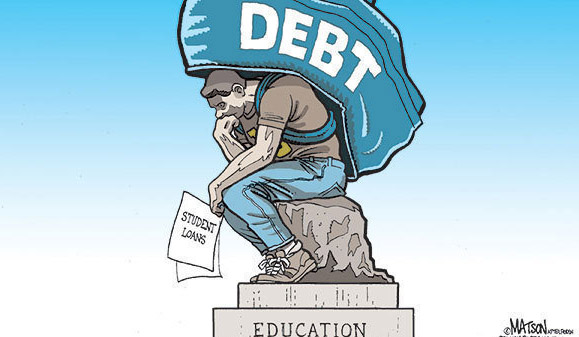
It’s not a student’s fault that the government shifted student loans over to private lenders who started increasing the interest rates on the loans. It’s also beyond a student’s power to determine what college costs. In 1980, the price to attend a four-year college full-time was $10,231 annually—including tuition, fees, room and board, and adjusted for inflation—according to the National Center for Education Statistics. By 2019-20, the total price increased to $28,775. That’s a 180% increase.

Needless to say, the income to be earned with the degree did not also increase by 180%.

Tuition prices alone increased 36% from 2008 to 2018, while the real median income in the U.S. grew just over 2.1% in the same period, according to data from the Center on Budget and Policy Priorities.

Zane Heflin, policy analyst at The New Center and author of the report titled “The New American Dream: Alleviating the Student Debt Crisis,” says the ramifications of the 2008 Great Recession are still hitting the higher education world, and students are paying the price.

“The two main drivers of the rising cost of tuition are reduced state funding and the incentive for tuition raises as an unrestricted revenue to benefit colleges,” meaning colleges can choose to spend tuition money however they wish, Heflin says. “States and local communities are spending less per student. Someone has to take on that cost, and unfortunately it’s been the student.”[1]

2019 report from Center on Budget and Policy Priorities points to cuts in statewide higher education funding for the rapid tuition increase in the last decade.

“Overall state funding for public two- and four-year colleges in the school year ending in 2018 was more than $6.6 billion below what it was in 2008 just before the Great Recession fully took hold, after adjusting for inflation,” the report reads. “In the most difficult years after the recession, colleges responded to significant funding cuts by increasing tuition, reducing faculty, limiting course offerings, and in some cases closing campuses.”[2]

One way or the other, all of us will pay for this outrageous increase in costs for college. One way we’ll pay is to not have access to physicians, dentists, engineers, architects, therapists and counselors, school teachers (happening now), and other professionals who learn what they must know by going to college.

Don’t want to subsidize college education? Schedule an appointment with your friendly plumber for your next dental care.

A second way to address this issue would be for those professionals to charge a lot more when you obtain their services. If you think medical care or attorneys’ fees are high now, just wait until the cost of college means fewer professionals available for your needs AND the higher costs the remaining professionals will charge you.

A third route to address student debt is for policy makers to move past partisan bickering to formulate realistic policy changes regarding higher education. One option would be to remove interest from student loans, or fix it at a very low rate, in order to reduce the cost. It is absurd to allow higher education debt to exist in a marketplace alongside, for example, consumer debt. The need for a new car or a vacation in the Bahamas is far less a priority than the societal need for medical science researchers.

Another option for policymakers would be to reformulate the Pell grant program, expanding the amounts it provides to a more realistic total and allowing the grants to cover graduate school. Perhaps even more critical is the need for government to control the interest rates on student loans. Interest on graduate loans are higher than on undergraduate loans, yet a growing majority of jobs—public school teachers, for example—demand a master’s degree plus regular continuing education credits. Currently, unsubsidized loans for graduate students have a 6.54% interest rate (for the 2022-2023 academic year), while undergraduate students get a 4.99% rate on both unsubsidized and subsidized loans. 

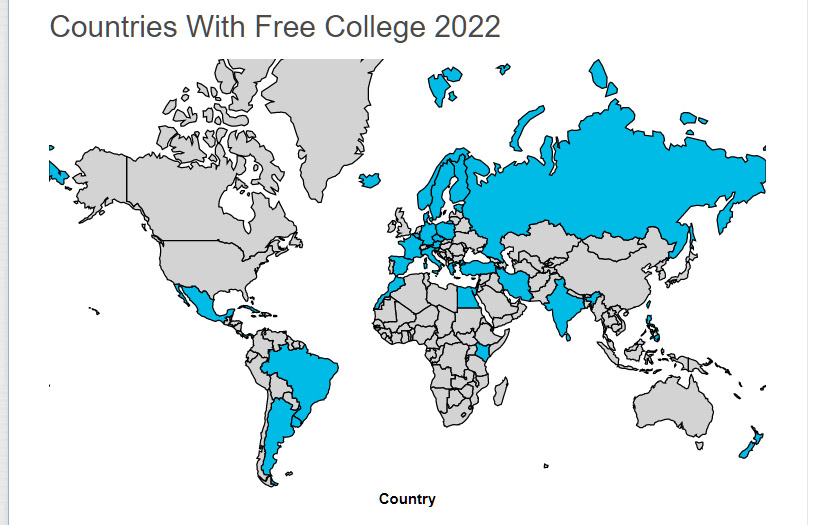
The topic again brings up the comparison between the United States and other nations which provide free college. Even India provides free higher education.

But even if compromise is the only way forward, the U. S. needs to develop a plan that does not bury the poorest students in debt. Sliding scale tuition is one idea. There are already Pell Grants, which provide some money for poor students toward the costs of higher education, and expanding those grants to apply to a broader need is a good point to consider. After decades of providing free college, Britain has taken this approach with policies where “students pick up the bill for, on average, around 65 percent of the cost of the education they receive, with taxpayers plugging the gap. More students are enrolled than ever before and those students benefit from more per student funding than the generations that paid nothing for college.” [3] 

 According to a recent article at online magazine The Best Schools:

“Why is college so expensive? There are a lot of reasons — growing demand, rising financial aid, lower state funding, the exploding cost of administrators, bloated student amenities packages. The most expensive colleges — Columbia, Vassar, Duke — will run you well over $50K a year just for tuition. That doesn’t even include housing!

“…Administrative costs: These costs account for roughly $23,000 per student every year. This is double the amount that Finland, Sweden or Germany — all boasting top-performing education cultures — spend on the same essentials.

“[Yet] professor salaries have barely budged since 1970. According to the New York Times, “salaries of full-time faculty members are, on average, barely higher than they were in 1970. Moreover, while 45 years ago 78 percent of college and university professors were full time, today half of postsecondary faculty members are lower-paid part-time employees, meaning that the average salaries of the people who do the teaching in American higher education are actually quite a bit lower than they were in 1970.”

“By contrast, ‘According to the Department of Education data, administrative positions at colleges and universities grew by 60 percent between 1993 and 2009, which Bloomberg reported was 10 times the rate of growth of tenured faculty positions.’ The New York Times uses the massive California State University system as a case example, noting that between 1975 and 2008, the number of faculty grew from 11,614 to 12,019. By quite a sharp contrast, the total number of administrators grew from 3,800 to 12,183. That’s a 221% increase.”

These increases are driven by greater demand. As society advances with more technological change, fewer jobs are available to those who do not have a college education. Yes, vocational training and trade schools are important, and those programs should be respected and made available as early as high school. In many states, trades like carpentry and electricians are part of apprenticeship programs subsidized and integrated with unions. Right-to-work states suffer the loss.

Finally, it is incumbent on loan and grant programs as well as colleges and universities to ensure that borrowing students receive clear information about their debt. Many financial aid counselors, especially in public universities, fail miserably in providing necessary information as well as making sure that students have a real-world understanding of the debt they’re incurring.

As summarized in Prudential’s Student Loan Debt: Implications on Financial and Emotional Wellness, there is a wholesale lack of understanding of college loan debt among students and graduates: Many student borrowers—53 percent—didn’t know their future monthly repayment amounts. Most—74 percent—were unsure of how long they would be making payments, and 25 percent had no idea whether they had private or government loans.                                                                                                              

Those who are outraged by the idea of student debt forgiveness might take some initiative here to help solve the problem. It will take all of us thinking and contributing to the dialogue in order to best serve the future needs of our nation.

Research has drawn a correlation between education level and living longer, as well as indicating that individuals with a college degree tend to be healthier and happier. Other benefits accrue as well. https://www.utep.edu/extendeduniversity/utepconnect/blog/march-2019/the-hidden-benefits-of-earning-a-college-degree.html

[1] https://www.usnews.com/education/best-colleges/paying-for-college/articles/2019-11-04/why-is-college-so-expensive

[2] https://www.bankrate.com/loans/student-loans/why-is-college-expensive/

[3] https://reason.com/2019/08/22/democrats-love-to-promise-free-college-but-why-did-u-k-recently-started-charging-tuition/

[4] https://www.nytimes.com/2015/04/05/opinion/sunday/the-real-reason-college-tuition-costs-so-much.html

Freedom from Religion

Book burning on the rise

Senior year in high school included the long-feared ‘senior paper.’ A project of English class, the paper’s thesis had to be approved first then the long drudgery of research would begin. The paper itself, to be footnoted and typed, would form a significant part of the final grade in that class.

I was no stranger to research and looked forward to hours at the local library, which was located only a block from the high school. Unexplored wonders could be found in that quiet place, books on the history of the world and the various exploits of human kind. As I sought further information to prove my thesis, I jotted my notes on 4×6 index cards, another requirement for the project.

My thesis asked the question: Why did existential thought that existed throughout the history of mankind suddenly become an overwhelming condition of modern mankind?

The material I explored included Will Durant’s The Story of Civilization, James Gutman’s Philosophy A to Z, John Killinger’s The English Journal, and a long list of citations from the Bible as well as ancient writings from world cultures. In reading these materials and processing the information into a coherent statement in proof of my thesis, I realized that much of what I had come to believe in my eighteen years was right: Christianity—indeed, all organized religion—was a construct of humanity meant to salve our existential despair.

The difference with the modern age, as so clearly delineated in philosophical examination, is/was that by the very process of advancing civilization, humans have cut themselves off from key partnerships that once provided balm to our woe: Nature, tribal life, our gods, and ourselves, the latter with our frenetic pace and endless amusements. With these alienations, we find ourselves utterly alone, a condition so difficult that we endlessly seek escape in intoxicants, entertainment, and work.

The paper earned me an “A.” I packed it away along with the notecards in their little clasp envelope. I’ve always remembered the paper and the education I gained in my research, but I never looked at those cards again. If the question ever arose, I would have guessed they had been tossed out a long time ago.

Not so. My mother saved them, and they once again entered my domain when a few years ago she handed me a couple of boxes crammed with souvenirs of my life—photographs of junior high and high school friends, letters home from California or the Philippine Islands, clippings of my various public activities through the years. And the notecards.

At first, I picked up the small packet of cards not knowing what it contained. On the outside, at some point my mother had written “Denele’s – what helped her turn away from God!”

Well.

Yes, insomuch as I indeed turned away from the Church of Christ’s concept of God, this project helped. But what my mother could never grasp is that I had been questioning God, or more to the point, religion in general, since age five. By eight years of age, I had settled on key questions no one wanted to answer, typical questions for young people such as ‘Where did God come from?” and “Who did Adam and Eve’s children marry?” The answer always condensed down to “Don’t ask.”

Fast forward six or seven decades while I continued to read and question and discover. I have no regrets that I discarded the blinders imposed by my parents’ fundamentalist faith. I’m happy that my curiosity led me to explore philosophy, natural history, and science with the many mysteries of human existence. What makes me sad is that even today parents still seek to limit their children’s exposure to knowledge that exists outside the boundaries of their rigid belief systems or which violates the dogma of their faith.

The burning of the pantheistic Amalrician heretics in 1210, in the presence of King Philip II Augustus. In the background is the Gibbet of Montfaucon and, anachronistically, the Grosse Tour of the Temple. Illumination from the Grandes Chroniques de France, c. AD 1455–1460.

For example, I once lamented the limited extracurricular activities available at the small rural school my children attended, pointing out that so many opportunities were being lost. Where was the encouragement to attend college, learn music or art, explore the wonders of the world? The response from one parent actually struck me speechless. “Well, honey, somebody’s got to flip the burgers,” she said, fist propped on her hip. “What about that?”

Indeed, what about that? How tragic that her children and so many others would be trapped in that mindset.

The price of limiting the thinking of our children is immeasurable. We see it every day in intolerance even hatred for anyone different, whether ethnic, racial, or gender differences. We see it in embrace of authoritarian figures like Trump who fit a distorted concept of leadership based on an authoritarian god. We see it in the fear of change that leads to violence against those perceived as ‘Other.’

Frans Hals – Portret van René Descartes, Wikipedia

Much of what is written on those cards is nonsensical taken in isolation, like quotes from Heidegger’s book Being and Time (1927) about the two kinds of being, “Sein” meaning all things, and “Dasein” meaning only mankind. Or the postulation of Descartes in his 1637 Discourse on the Method wherein he wrote: Ego Ergo Sic, or “I am, therefore I am thus,” or more widely conceived as “I think, therefore I am.” Pondering these kinds of concepts is not easy and tends to take oneself out of the hum of routine. And away from the strict belief systems of doctrines undergirding religion.

What my mother exclaimed in her quickly penned remark about my notecards is true. Those learning experiences helped me abandon religion entirely. Another big step on that path was a college course in English Bible, where the three authors of the Books of Moses were examined with comparisons of material in Genesis to the Sumerian books of Gilgamesh—and much more. It’s been a lifelong study, full of empathy for others who, like me, struggle with the very essence of existence, remarked by feminist French philosopher Simone de Beauvoir in her book The Ethics of Ambiguity (1948):

“The sub-man is not very clear about what he has to lose, since he has nothing, but this very uncertainty re-enforces his terror. Indeed, what he fears is that the shock of the unforeseen may remind him of the agonizing consciousness of himself. …Everything is a threat to him, since the thing which he has set up as an idol is an externality and is thus in relationship with the whole universe; and since, despite all precautions, he will never be the master of this exterior world to which he has consented to submit, he will be constantly upset by the uncontrollable course of events.”

For de Beauvoir, freedom comes in the act of trying to be free and accepting that this journey is the freedom.[1] Freedom to believe, to act, to question, to reach out to others in individual acts of kindness—these fulfill us in myriad ways that counter the existential despair of modern life. Understanding that, and the awareness that our personal journey is best seen as an opportunity to make the world a better place, has helped me live a rich life.

I thank the notecards. I thank the Founding Fathers for enshrining my freedom of thought within the Constitution. And I thank my parents and ancestors for giving me the intelligence, if not the freedom, to choose.


[1] Summarized at https://fs.blog/simone-de-beauvoir-ethics-freedom/