Smoking

I kind of quit smoking when I was 33 after having incessant heart palpitations. I think the actual trigger had been the exhaust we breathed stuck in traffic the night before after watching fireworks at the mall. Plus I’d had a lot of dental work done which involved repeated doses of ephedrine. Whatever. The doc looked at my EKG and said I had to quit smoking. And drinking caffeine.

I loved smoking. Maybe I imprinted on my father’s lifelong relationship with Winstons. Maybe I was just a natural addict. Maybe the boost I got from nicotine helped me jumpstart the confidence I so badly needed.

Pretty much within the first several weeks of college, I bought Winstons and started smoking. I learned how to French inhale. I learned how to flip ashes and thump butts out of car windows. After a year or so, I gave it up temporarily because my soon-to-be husband didn’t like me to smoke and I wanted him more than I wanted cigarettes.

For a while.

I could write an entire story about my life with cigarettes, about the on again, off again drama while married to him. About the shift to Kools after I met a particular man who was my lover for three months. One spring night as a thunderstorm raged outside, I ran out of Winstons. He offered me a Kool and that was that.

Smoking felt even more exhilarating with Kools, the intense menthol burn on the inhale, the slightly sweet smoky exhale. I loved each new pack in its clean white and green colors, the ceremony of tapping the pack, of pulling the little cellophane thread that opened the top, the careful tearing off one side of the foil interior wrap and the skilled thump on the side of my finger to knock the first lovely white cylinder loose. These were gifts, objects of beauty. That first puff felt wonderful, but it was the second hit that filled my lungs and my body with the full tobacco experience.

If anyone ever wanted a hit of my cigarette, they did not get the second hit.

Cigarettes were my best friend. They were there for me when the rest of my world dissolved into runny shit. In lonely moments, in anger, in grief, I turned to my faithful companion. In the dark of night, I relied on the warm cheery glow of a cigarette’s lit end. In hunger, in drunkenness, in the hours of tripping my brains out, the cigarette was there, centering me, reminding me of myself. Being the lighthouse in the storm.

With my first pregnancy at age twenty-seven, I bravely stopped smoking. Time slowed to a crawl. I so wanted to do right by the future child growing inside me. Then one night my husband and I had a vicious fight. I leapt into the old Ford 150 and drove to the nearest gas station where I purchased a pack of Kools. Then I drove to a vacant parking lot and lit that old friend and sat there crying and smoking. I subsequently smoked through all three of my pregnancies.

I required a cigarette when on the telephone. Otherwise I might leap out of my skin in annoyance with yet another incessant nonsensical blathering about whatever, or another tale of romantic angst, or whatever the fuck it was someone else had to tell me and I thought I had to listen as the minutes of wasted life ticked by. Without cigarettes, I finally learned to just draw my line in the sand and make whatever excuse was necessary to end the call.

After the doc said I had to quit and pointed out that I risked having some other woman mother my young children because I could fucking die, I stumbled out of the building into the glare of July sunlight and sat in my blazing hot car with the windows down while I smoked my last cigarette. I cried. Deep body shaking sobs. Then I drove up North Street, finished the last drag on that luscious Kool then tossed the rest of the pack out the window. Yes, I looked back. The little green and white pack lay forlorn on the pavement.

That wasn’t the end of my smoking. I went through a period where I’d meet a friend for a beer and she smoked my brand and I’d luxuriate in the pleasure of ‘just one.’ Only I never could smoke just one. ‘Just one’ after weeks or even days of abstinence resulted in dizziness and nausea. I had to smoke more often if I wanted to tolerate the effects. And I did smoke more. I stopped and started smoking so many times I lost count. The craving would get so bad, I’d buy a pack, smoke one then throw the pack away. Then I’d buy a pack, smoke one, and keep the pack in my glove box until the next insurmountable craving forced my hand.

It took nearly ten years before I really quit. I’d have dreams of smoking, feel the pleasure of smoke curling over my tongue, drawing deep into my lungs, brushing past my lips as I exhaled. In the dream, I’d panic that I’d started smoking again, that I’d never be free of it, that I’d always be tortured by an addiction I couldn’t beat. Even now, nearly thirty years later, I sometimes have that dream. In recent years when the dream occurs, I know in my dream that it’s a dream. For years, though, I’d wake up not sure if I had started again.

Side note: Maybe I have this dream often. I don’t know because I mostly can’t remember my dreams anymore. Why is that? My life is crumbling away before my very eyes.

I understood my thing with cigarettes was a real addiction. To me, addiction is the ability of a chemical to make a place for itself in the recesses of a human brain and take up residence there. A more refined understanding is that it isn’t the chemical itself that takes up residence, but the effect that chemical has inside the body. The whole endorphin receptor thing. The euphoria that results from those effects will live forever inside me, always ready for that moment when I might finally lay down my guard and say ‘why not?’ and bring flame to the tip and inhale.

Knowing that, I sometimes lament my father’s last request for me to bring him a cigarette. Or, more accurately, I lament my response.

We all knew he was dying. Eighty-five years of life and Winstons finally came to collect its debt in atrophied heart muscle and congested lungs. He spent his days and nights those last weeks in a hospital bed in the family room, unable to walk and perhaps in pain. But he never said he hurt. He didn’t complain.

On one of my last visits before he died, he held my hand and asked if I’d get ‘the old man’ a cigarette. I said no, you know you can’t smoke, you’re on oxygen. But later I thought, what the hell was I thinking? I could have turned off the oxygen. I could have bought a pack and wheeled him to the porch and watched him enjoy the hell out of that damn thing.

It would have been the rational, kind thing for me to do. He hadn’t smoked in nearly a year at that point, so I’m not sure how dizzy it would have made him. Maybe it wouldn’t have been the joyous sensation he expected. Maybe he would have coughed or choked. But he was dying anyway.

I should have done it.

I Met a Goat on the Road

A visiting guinea? A ‘possum in the dining room? What strange and wondrous occurrences can one expect while living on an Ozark mountaintop for over forty years?

These lyrical adventure stories feature chickens, raccoons, bugs, dogs, cats, and natural critters of this woodland home. Throw in a few neighbors who shoot copperheads or remodel the dirt road. Ponder the passage of time through a philosophical lens of wonder and delight. The seasons bring summer heat, winter snow, pouring rain, the power of fire. Lessons learned, questions posed–who has lived and died on this land? What is our responsibility to this place, its creatures, each other?

Come meet the goat on the road.

Amazon buy link

The Old West

In the completion of my recent book, Murder in the County: 50 True Stories of the Old West, I discovered that three of the fifty murders profiled there were committed by members of the same family! Intrigued, I researched more about these folks and the result is now published under the title The Violent End of the Gilliland Boys. Fascinating and shocking, this story features more twists and turns than an Ozarks dirt road.

Christmas Day horse races 1872, Middle Fork Valley.  Young Bud Gilliland waits, eager for another chance at his neighbor Newton Jones. Only this time, after two years of sparring, Newton gallops up in a cloud of dust, aims his Spencer rifle, and sends Bud to a well-earned grave.

The death of Bud surely grieved his father. But before the curtains closed on these descendants of J. C. and Rebecca Gilliland in 1891, two other sons and a grandson would die a violent death while yet another grandson served hard time for murder.

What was it about the Gillilands?

This recounting of the family tracks their ancestry, their pioneer years on untamed land, and the hard work that made them one of the wealthiest families in Washington County, Arkansas. A fascinating tale of brash ego, brave gallantry, and plain old bad luck.

Paperback now available for only $9.95 at. Don’t miss it!


Oh, my brother!

primate-to-people-ploys


There are people I love who are planning to vote for Trump. This hurts me in ways I can’t fully express. Both of my brothers, for example. These are men with master’s degrees, men who endeavor to do good in this world. How can they vote for Donald Trump?

They tell me it’s because they’re Republicans. Because they don’t embrace the ‘liberal’ agenda. They’ve fallen hook line and sinker for the hate-hillary propaganda that she’s a liar, that she’s committed countless crimes and has only escaped proper justice by pulling strings in the power structure she is part of.

They’re also fervent Christians. I say, surely you don’t think Trump is a Christian. They say they’re not voting for a pope.

They tell me Trump is just a flawed man like the rest of us and he cares about this country. They say he knows business and that’s what we need. Somebody who knows what it means to sign paychecks. As if running a nation is the same as running a business.

They say they’d never vote for Hillary because she’s pro-abortion. I say she’s not pro-abortion, she’s pro-choice. Meaning that in a free society that respects individual rights, government can never force women to carry pregnancies that might kill them, that might produce a severely impaired child, that will bring undue hardship to her or her already existing children.

They say homosexuality and transgender is an abomination of God’s will, that they’d never vote for the gay agenda that Hillary supports. I say, what is a gay agenda? That two people who love each other possess legal rights as next of kin, as property owners, as parents? That everyone deserves to be treated with respect?

I’ve tried to make them understand. They’re not listening.

They’ve latched onto the Benghazi rhetoric. They believe Clinton will flood the U. S. with unvetted refugees and bring a holocaust of terrorism to our front steps. They believe every single hateful lie that has been broadcast about her not just in the last year, but over the last three decades.

Yet they say Trump is just a flawed man who cares about this country. God will guide him. They believe in him. I say, so God won’t guide Hillary? She doesn’t care about this country?

I’ve asked them, what if Hillary was the one who’d been a serial adulterer? What if she’d been sued 3,500 times? What if her companies had filed bankruptcy multiple times?

What if Hillary had refused to release her taxes? Or her health records? Taken money from her charitable foundations for personal use? Not contributed to her charitable foundations with a dime of personal money for the last eight years?

Of course they’d be outraged.

I don’t even try to point out the inherent sexism in their lives that may undergird their instinctual rejection of Clinton. They both have subservient wives. They both enjoy the full measure of white male privilege. For them, God is unquestionably male and all else flows from that. They’re seeking a strong authoritative male as leader and can’t tell the difference between a patriarch like God and a bully like Trump.

It’s not that my brothers don’t have the capacity of reason to examine the facts about each candidate. It’s that their minds are already made up. Why should they ‘waste’ their time reading about Hillary or hearing criticism of Trump?

Which—in an otherwise normal election cycle—might be enough said. After all, we all have the right to be just as stupid and obstinate as the next guy. It’s a free country.

But this is not a normal election. Trump is not normal. Trump doesn’t have policies or plans. Trump has bluster, braggadocio, and unbridled ego. His base instincts feed on anger and fear. He incites and revels in violence, loves to see fury in the eyes of his audience.

Yes, he’s a flawed man, flawed in the worst possible ways for someone who would be granted unlimited access to our nation’s most important secrets, to hold the reins of our military, to direct the future course of our educational systems, to oversee the protection of our air, water, and wildlife. To become the leader of the free world. His flaws go beyond his stated positions on immigration or national defense, beyond his inability to grasp basic human rights or due process of law.

His flaws threaten everything we as Americans hold dear.

To believe, as my brothers do, that Trump can tend to the myriad duties and responsibilities of the presidency is simply to ignore what’s right in front of their faces. Trump is not a reasonable or educated or sane man. He’s ignorant of basic facts. He does not have the equanimity or the patience to negotiate with Congress. He does things by fiat because that’s what you do when you’re the tyrant at the top of a corporate empire.

But government is very much NOT a business. It’s a delicate balancing act of hearing all sides even if you don’t agree with them. It’s a patient practice of enforcing what the Founders set down in the Constitution whether it fits your personal agenda or not. Trump is not capable of reasoning the finer points of anything. It’s his way or the highway. It’s ‘You’re fired.’

What my brothers don’t understand – or refuse to see – is that electing Trump isn’t just a matter of whether he’s anti-abortion or has signed a paycheck. It’s not that he (theoretically) will carry forth the traditional Republican agenda of smaller government and traditional values. Electing Trump goes beyond issues.

Electing Trump is about putting a mentally ill man in the White House. About giving unfettered authority to a man without basic human decency. About expecting leadership from a man who can’t order his own thoughts.

It’s about the future of the world, about everything we’ve gained in thousands of years of human progress. It’s about what can happen in one raged-fueled moment with an undisciplined man who would become more powerful than he’d ever imagined and sees it as his right and his responsibility to punish whoever enraged him.

Martial law? Stop and frisk anyone who might be suspicious.

Mass deportation? The enemy is anyone without white skin.

Genocide? He’s said it—not only ISIS leaders but their families.

Nuclear? Sure. He’s already touted it as an option.

I’m sick with worry, not so much about Trump actually winning the presidency. I have too much faith in a majority of American voters to think he might actually win.

I’m sick with worry that I’m losing all respect for my brothers. Not just in their choice to vote for Trump, but what’s behind that choice—intellectual laziness, a narrow-minded focus on a few social issues, their choice of religion over country.

I’m losing respect over their refusal to evolve.

A Gathering of the Tribe

scan0083
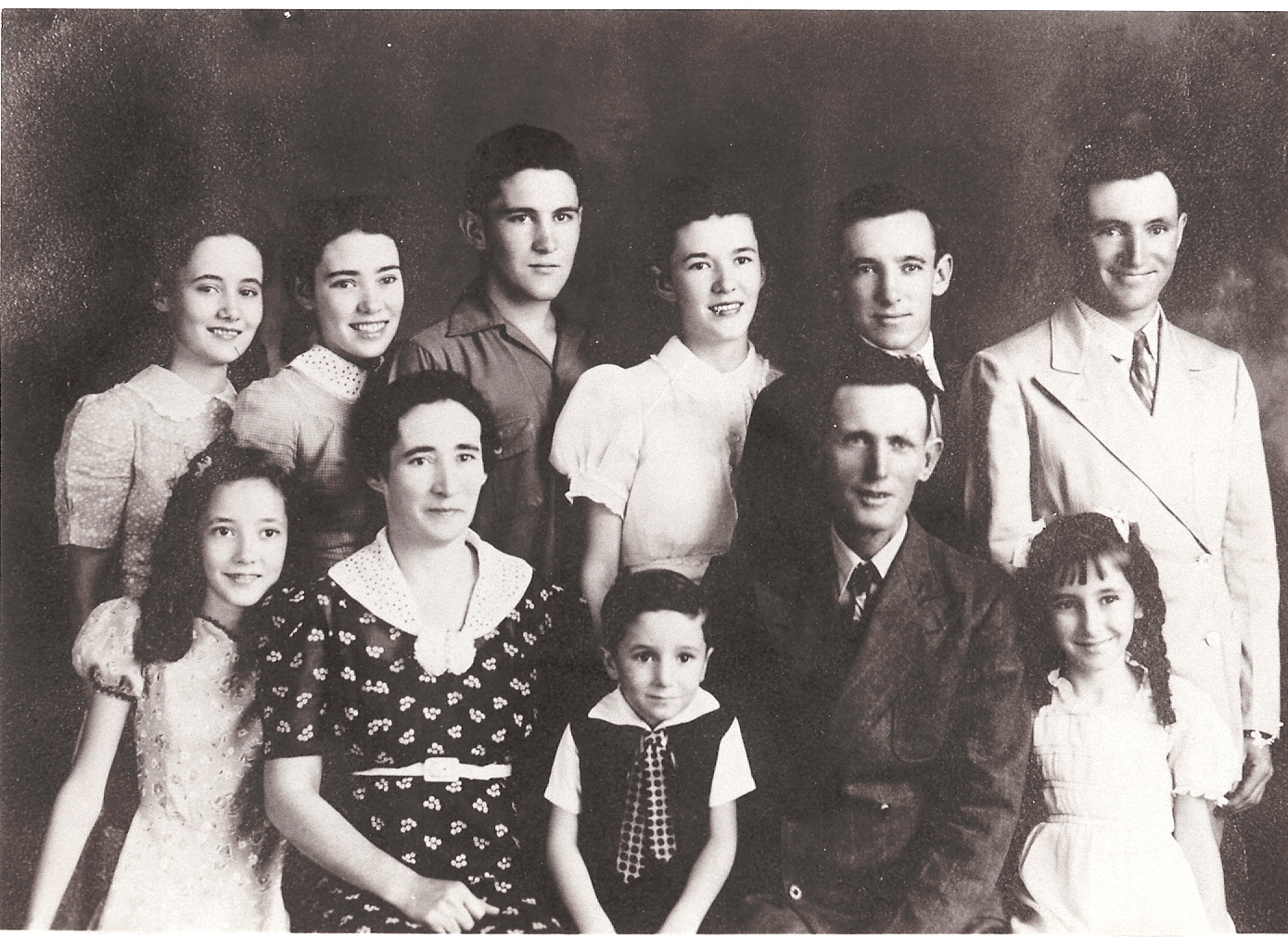
The Family of Sylvia and Tom. Left to right, front: Una, Sylvia, Thurston, Tom, and Sula. Back: Joy, Carmyn, Graydon, Tomazine, Douglas, and Durward.

Great strength comes from family tradition. I’ve seen it once again for myself, a gathering of elders I’ve known all my life. In the days and hours leading up to this October reunion, trepidation warred with exhilaration in the prospect of seeing my kin again. Three days past my last contact, I am only now able to let the anxiety fall away.

toma
Tomazine, oldest of the girls and third oldest of Sylvia’s children. Mother of seven who adopted four more orphaned children. Gardener, artist, advocate for common sense and women’s liberation.

Why anxiety? The clan was the community, at least for many of us older ones, and gathered each summer for a week of Rook tournaments, debates on myriad subjects, talent shows, and general mayhem. These people were my judges as well as my mentors, the audience for baby pranks and elementary accomplishments. Like my forty first cousins, of which I was the fifth oldest, I was subjected to quizzes and scrutiny on everything from the ruffles in my skirt to the cleverness of my retort.

A person would think that by the age of sixty-seven, I would have grown past the traumas and dramas of childhood. But no, like the genes we share, interactions with the pantheon of my mother’s family remain a strong influence. I should be glad of the genes—of my Grandmother Sylvia’s nine children, six remain among the living. The oldest recently celebrated her 96th birthday. The youngest, feted at this recent gathering for his 80th, remains—like all of them—in remarkably good health.

carm
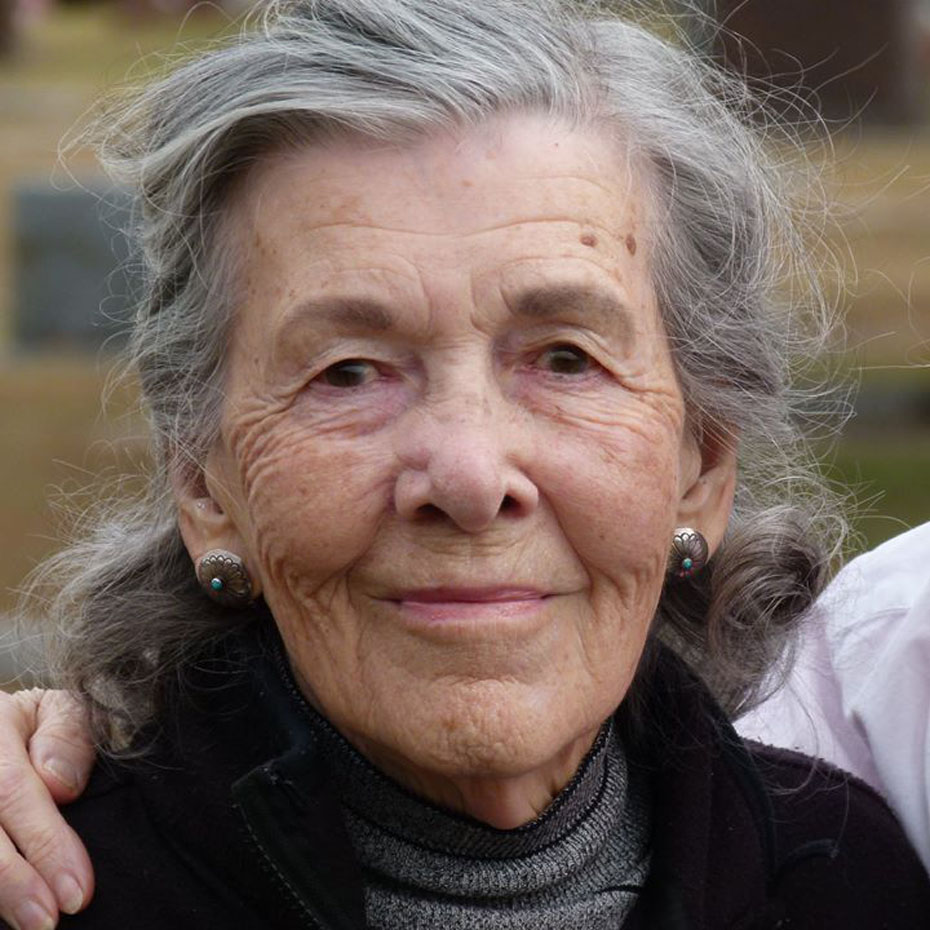
My mother Carmyn, mother of five, gardener extraordinaire. College graduate, family historian. Early advocate for environmental protection and organic food.

Matriarch to her own tribe of five offspring, my mother was the middle child of nine born to an even sterner matriarch in Sylvia. Herself the oldest of nine, Sylvia followed a lineage of strong women who simultaneously chafed at the yoke of traditional wifedom while, at least in theory, subscribed to the religious role of subservient ‘helpmate.’ Sylvia’s mother Zeulia raised nine in a marriage with a man never far from his Bible but nonetheless willing to watch his aging wife wade out into mid-winter snow to gather firewood. Zeulia’s mother Armina enjoyed a few years of happy marriage to Jeptha Futrell and the arrival of two sons (one of whom, Junius Marion Futrell, became a governor of Arkansas) before losing Jeptha to pneumonia and remarrying during Arkansas’ devastating aftermath of the Civil War. Armina’s mother Frances Massey, as the fabled family account goes, grew up in the lap of southern luxury at her father’s plantation only to elope at age thirteen with the property’s caretaker Jimmy Eubanks. Their first child, born when she was fourteen, was said to have a head the size of a teacup and yet grew to robust male adulthood.

joy
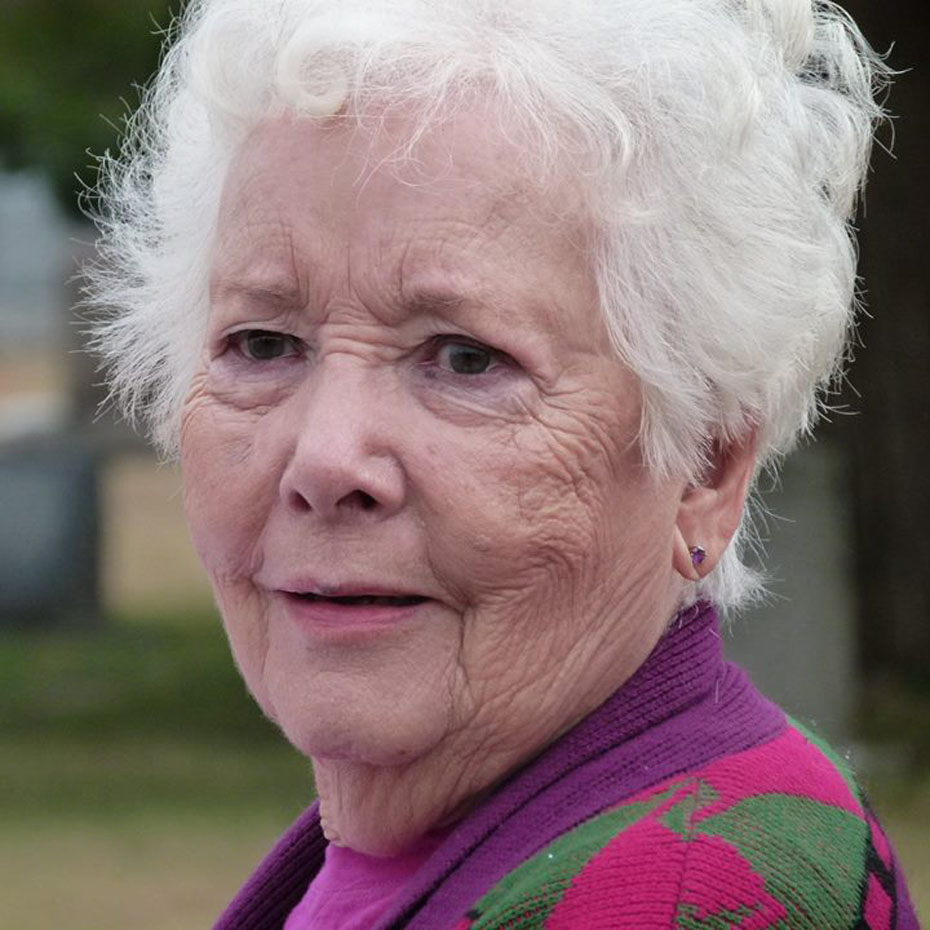
Joy, fourth youngest, mother of four. College graduate, school teacher, gardener, comforting presence.

By the mid-1840s, Jimmy and Frances crossed the Mississippi River on a barge and set up housekeeping in the northeast wilds of the new state of Arkansas. Subsequent generations married and lived in similar barebones circumstances in the farmlands near Crowley’s Ridge. After the Civil War, some of the family settled in Texas, and by the time my mother was born in 1923, entire households pulled up stakes each season to pick cotton in Texas before returning to “God’s Country” for the winter.

At the time Sylvia gave birth to her first child, her mother Zeulia was still producing children of her own. Both generations lived together at times in dog-trot houses on Ozark dirt farms, scraping up a livelihood from gardens, milk cows, and free range chickens and hogs. Despite their often desperate economic conditions, the families pursued education. Of my cousins, several hold graduate degrees and many more undergraduate degrees, while others have become successful entrepreneurs, engineers, and educators.

una
Una, mother of eight and third youngest of Sylvia’s children. College graduate, world traveler, genealogical researcher, firecracker in general.

We are told that our genes carry not only the codes for our biology, but also the encoded experiences of our ancestors. I’m left to wonder if my tendencies toward worry derive at least in part from the epigenetic traces of the Civil War and the Great Depression. Is my desire for solitude and rural landscapes the result not only of my own life but even more from the generations of ancestry that found safety and sustenance in the land?

As far back as genealogical research has taken us, efforts largely spearheaded by one of my aunts, the family follows a long tradition of yeoman farmers. Perhaps we were serfs not too many centuries ago, tuned to the change of seasons and the requirement to please a rich master. Our histories find sparse mention of cities and their trappings. We care more about the weather than women’s clubs, more for landscapes than local politics. Yet we do care, passionately, about our freedoms and the direction of the nation despite the fact that we divide fairly evenly between conservative and liberal.

sula
Sula, second youngest and mother of four. Avid Razorback fan, gardener, loving wife. Current holder of the Rook championship trophy.

Of the forty cousins, only fourteen made an appearance at this gathering. Only six or seven lingered for more than one evening. My oldest, now turning forty, waded in and was welcomed as were a few other grandchildren. My mother and two of her five siblings live in this area. Three others, two from Texas and one from New Mexico, stayed for six days, variously taking naps, visiting graves and old homesteads, and arguing over Rook scores. Wrenched to see them come and equally wrenched to see them go, I have since stared out my office window to contemplate the emotions set in play by the event.

The cousins who did attend agreed not to let our next meetings occur only at funerals. Inevitably, the funerals will come, not just for our aunts and uncle, but for us. There’s the strange comfort of time and conversation with those we’ve known all our lives, even though as adults we have little in common, hardly know each other at all. There are our children, grandchildren, even great grandchildren of which we are barely cognizant, yet each of them remain connected in these threads that grow ever thinner as the generations expand.

Thus is the history of all man’s tribes.

thurston
Thurston, youngest of the clan. Father of five, loving husband, modern day farmer and Razorback fan.

As children, my cousins and I not only played together at the annual family reunions but also at reunions of Sylvia’s siblings. We learned the names and faces of great aunts and second cousins, many of them still firmly entrenched in the lands of northeast Arkansas. The rest of us have remained as near as northwest Arkansas or as far as Georgia, California, and all points in between. There’s a mathematical impossibility to any attempt to acquaint the offspring of the forty cousins, or even to gather the forty cousins in one place.

Whether knowledge of one’s ancestry holds any relevance may be debated from various points of view. Whether I want to have these ties or not, I can’t imagine life without them. The huge array of people linked to me through family offers an oddly reassuring backdrop to any of my peculiar interests and life patterns. I’m no longer a child intimidated by their observation or awed by their arguments. They care about me as I care about them, not because we’ve done anything in particular to earn the caring, but simply because we are connected by inheritance.

We’re still a tribe.

Jars

100_1173

If I had considered the question in advance, I would have known that cleaning out the barn would precipitate a crisis. Memories long stored away for some magical future moment when that child’s toy, that handsaw, would again be needed—did I keep them simply for the memory? Furniture—small tables, wooden chairs, an ottoman frame, an old piano bench well made of oak and in need of a few repairs—would I someday find time and reason to fix them and return them to my house?

Too good to throw away. Largely irrelevant to my current life.

Becoming relevant at some future point? Probably not.

Determination to survive in a world lost to chaos drove the accumulation of this minor hoard. It was 1975. We had small children who would need to eat and thrive even if the bomb fell. We labored to renew skills our grandparents knew by heart, certain that within our lifetimes we would have to hide in our house until the fallout settled then emerge to plow, plant, and harvest our food, breed our pigs, chickens, and goats for future generations of meat and milk. We gathered meat saws and grinders, steel axes and shovels, nails and wire.

Time marched on. The Cold War ended and fingers moved away from the annihilation button.  The children are no longer dependent babies who might benefit from a collection of books on history, science, math. The goats departed in the late 80s, the garden in the early 90s, and the last of the chickens about ten years ago. The children have gone off like grown children do to find their own visions of the future.

Why do I need eight hand saws, ten hammers (of various sizes), buckets of random nails, screws, washers, bolts, and nuts? Feed scoops and cheesecloth, empty egg cartons, milk pails. What possible purpose could be met by random pieces of plywood or sheetrock, insulation, screen, tile? Why do I think that at some point I’ll make use of a decrepit power saw, drill, or grinder when, for the last twenty-five years, I have not?

I have created two piles. One is for the junkman to haul away. The other is for craigslist ads and friends who operate flea market booths. I am mildly optimistic that someone might buy the old wooden toolbox, child’s desk, or the sturdy small tables, the ten gallon pickling crock or the T-post driver. Never mind that for what I’d receive in dollars, I could restore only a fraction of this hoard.

In truth, what our energy and money bought in those early days was peace of mind. With our collection of tools, books, supplies, and know-how, we’d have a chance. Our kids would have a chance.

It served its purpose. The purpose no longer exists.

Sounds good. But what I haven’t put in either pile is the pressure canner. And the jars. Dozens and dozens of canning jars—quarts, pints, jelly jars. It’s the jars that have brought me to crisis.

When my firstborn child was two, my grandmother died. My dad’s mom, Nora. Always a country girl, Nora knew how to make soap, kill a chicken with a swing and stiff pop of its neck, and would can just about anything edible. She had jars. When they started clearing her property for the auction, I went down to Cane Hill and helped clean out her cellar. I hauled back cases of canned goods.

She had declined for a decade until her death at age 86. I wouldn’t dare eat any of the food in those jars. We had hogs and chickens at the time which allowed me to make use of Grandma’s labors. Each day I’d go out to the barn and pens and open more jars. Applesauce, whole plums, peaches, pears. Grapes and elderberries. Green beans, tomatoes, cabbage, mixed vegetables. Tallow. Jelly, jam, preserves. Juice. The critters were well fed that year.

We grew a huge garden. Neighbors had pear trees. We visited orchards and vineyards. Even with all of Grandma Nora’s jars, I sometimes ran short. My mother gave me jars. I bought jars.

In those heady days, each fall I stood in the storage closet and stared at my larder. The sight of all those jars filled me with the greatest pleasure that once again, by the labor of my hands, I had set aside enough green beans, tomatoes and sauce, peas, corn, and kraut to last a year. The jars lined up in colorful rows, golden tomato seeds swimming in crimson broth, finely shredded green cabbage fermented into tangy white kraut, wild plum jelly glowing fuscia in the dark.

Producing and preserving food challenged me like nothing I’d ever done. Even with a tractor and rototiller, even with liberal applications of goat manure and mulch, plants struggled to survive against drought, bugs, and predation. How many hours did I spend hoeing weeds or picking off potato bugs? How many hours peeling and chopping, sterilizing and packing, standing over the pressure gauge to ensure the right amount of intense heat and adequate time to prevent spoilage.

There’s a sound as jars cool, the snap of the canning lid sucking down, sealing the contents safely into the future—I loved that sound. Then it was time to use the grease pencil to write on the lid—July 1981.

Now I have all these jars. The cardboard boxes have suffered over the years. Faded brown paper hangs in shreds, the sides bow and buckle. Even if I keep the jars, I have to plow through generations of dead spiders and a healthy population of live ones to retrieve the jars from box wreckage. Why would I go to the trouble to re-package all these jars knowing that twenty years from now, it would all be to do over again? Would I be any more willing to let go of them then?

My children have no interest and no place to store jars. I wouldn’t mind storing them if my kids wanted them. But there’s no longer a tractor or rototiller. The half-acre garden has grown up in saplings and pasture grass. There are no goats to produce manure. Everything is different.

But here’s the argument. Certain things haven’t changed. We have to eat. We have the ability to grow food. With jars and a pressure canner, we could store food. Isn’t that incentive enough to save the jars?

What is my responsibility? For countless generations, as far back at least as civilization, my ancestors have planted, cultivated, harvested, and stored food. These are skills we’ve learned—how to measure the right time to plant onions or corn, what seeds to soak before pressing them into the dark earth, how to dig potatoes without piercing them. We raised our kids to know these things.

Do I simply walk away?

Why not? There are books. There are others still farming, still canning—the knowledge won’t fade simply because I relinquish my jars.

Even with the best of hoards, with all the tools and seeds saved and an endless supply of jars, at the end of the day, survival in a world gone mad would be a tenuous venture. What about grain? No bread, no pasta, no crackers. What about oil, salt, soda, sugar? We’d be dependent on venison and that requires guns and ammunition. My .22 rifle won’t bring down a deer.

At some point, even the most vehement survivalist will face what I face. How many times in your life do you restock your rations and water? How much is enough ammunition? Who are you prepared to kill to protect your hard won ark?

I’m working on a compromise with myself. Today I think I will keep a few jars as mementos of my grandmother, the tall green half gallon jars and a few of the older square-shoulder quarts. I will wash them periodically and keep them up on a shelf, decoration that tugs my heartstrings when I look up from my daily tasks. I will acknowledge the hard work and dedication that touched these jars, my hands, my mother’s hands, my grandmother’s hands.

All the grandmothers. All the jars. All the tomatoes and fine plum jam will not save the world.

The Desk

man at deskFrom the desk, orders issue forth. Bits of paper and ideas settle into orderly stacks. Drawers open to reveal white paper, envelopes, pencils and pens, erasers, rulers, paperclips, checkbooks, random rubber bands and ephemera relevant to the civilization of mind.

The top of my father’s desk curved down at the front and back in a streamlined Art Deco style going out of fashion in the mid-Forties when my mother bought it for him. She purchased the desk new at a hardware store in Rogers, Arkansas, two years before I was born. It remains in the family household seventy years later.

The image of him sitting there with his big stubby fingers busily typing away on his massive old Royal typewriter stays in fresh my memory. Curses muttered in his deep rumbling voice signaled a mistake that required laborious erasures. Sometimes the errors ran so deep that the paper would be ripped from the carriage, accompanied by a mechanical zipping sound as the cylinder spun.

How satisfying, that ripping sound. The end to it, for once and for all! A new sheet of paper! A new start! And then the keys would tap again, clickety-clack, as he pursued the project at hand. A letter to a band parent? A notice to be posted on the bandroom bulletin board?

A bold red band graced the top border of his Bi-State Music Festival paper. It came in wrapped reams redolent of printers’ ink. Documents issued forth—letters to other band directors in the region, schedules of competing bands, ensembles, and soloists. I remember the watermarks on the heavy bond paper, the matching envelopes, the anticipation permeating our house as the festival neared. This was my father’s prize project for his years at Northside High School in Fort Smith, Arkansas.

Then there were the hours, late into the night, that he bent over pre-lined manuscript paper with his quill of India ink to join the lines into a musical staff. His practiced flourish produced treble and bass clef signs, quick jots of ink for quarter notes, and quirky flags at the top of the note stem designating its status as eighth note or sixteenth. The side of his hand brushed the heavy manila paper as quarter note rests took shape or as a long slur line arced over two measures.

His concentration palpable, his cigarettes burned down to the filter in the wide glass ashtray. There were the groans and curses when his efforts went awry, when the ink bottle spilled or the muse stopping whispering in his ear. When real life demanded his attention to wife and children, the lawn that needed mowing, the bills past due. An artist at heart, he never fully accepted his role in the world of the mundane.

Command center to the world around us or doorway to the ether of creation, desks are the place where business is done. Here I utter my own curses at the petty requirements of temporal life. Can’t you see I am far away, the whispers of characters and scent of distant meadows flowing from my fingertips? Yet the desk is not only the arena of creation but also where I organize my world, establish schedules for my time and finances, and write letters to compliment the helpful and excoriate the stupid. Here I sit to stare out the window as memories and worries rush onward, ever onward, in my unruly thoughts.

Now the world unfolds on my computer screen. Words scroll across virtual paper, easily erased and corrected. No more ripping paper from the typewriter. How much more music could my father have written with the tools of modern times? Playing a simple phrase on a digitally-connected keyboard would have produced perfectly crafted notes on a virtual page, no ink required.

Maybe the result of such ease in the mechanics of creation is that we are now drowning in a sea of mediocre art. Perhaps we were better served with pages ripped from typewriters and music penned with India ink. When the need to tease out a deeply held emotion, find words that best describe, or form scenes that best reveal, I drag out the paper. It sits expectantly on the desk, this thick pad of white paper. Sometimes even the use of a pen is too facile, and I dig up the Number 2 lead pencil. It makes a satisfying sound as my hand forces the tip over the paper.

What I write on paper with pencil is different from what appears with keystrokes on a digital keyboard. The words are more carefully chosen. The shapes of letters carry significance. The words have real weight and I use them in new ways, unexpectedly poignant.

I am at my desk with paper and pencil. I can see my father bent here, his profile etched against the dark of night in the light from his desk lamp. His quill scratches across the page.

A Journey West, Part 5/5

sc fog
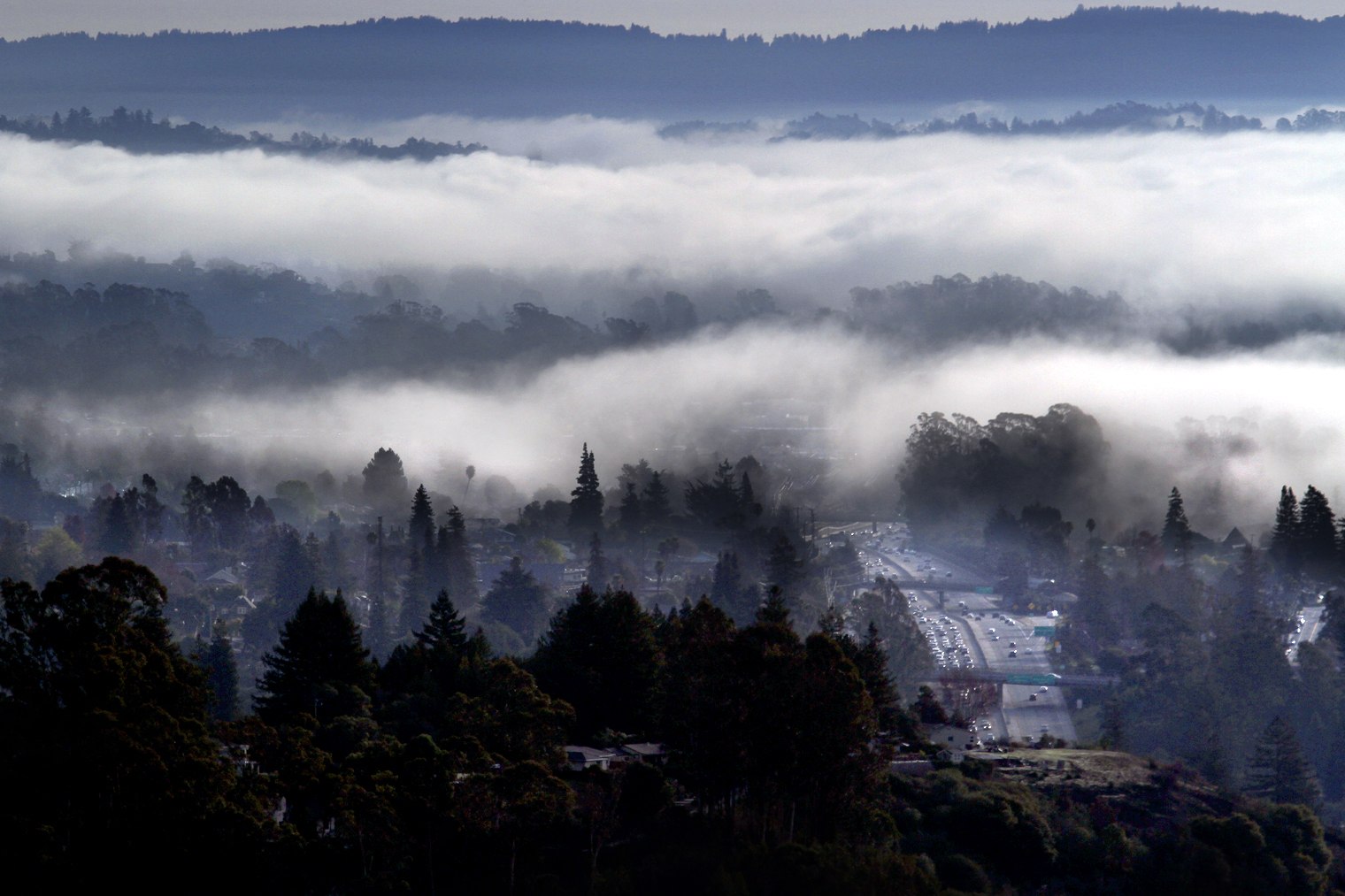
Highway One Santa Cruz, early morning fog

My last night, again too anxious to get a good night’s sleep, I rise early for my flight home. The fog is in along the coast. Overnight chill permeates the distinctly scented air. Stately redwoods stand in silent observation as we merge into Highway One’s rush hour traffic.

Much as I dreaded the journey, I feel nothing but happiness that I came. Spending time with loved ones wrenches me, lingers like a lump in my stomach. Good that aircraft exist. A hundred years earlier, anyone traveling this far left loved ones behind forever.

San Jose airport. I say goodbye to my first born, swallowing back tears. Again I am thrust into a sea of humanity also venturing out into the world. Security is less stressful, boarding less crowded. Maybe I’m slightly inured.san jose copy

The gods smile on my seating, this time next to a window and not over a wing. My forehead presses the glass as the lumbering beast leaves ground and the wheels thump into the plane’s belly. Below spreads San Francisco Bay, San Jose, and streets, buildings, cars, and lives growing smaller by the moment. In striking resemblance to a circuit board, a network of roads, industrial complexes, and neighborhoods form the landscape below. Each serves a critical function, interdependent, vital, alive. Civilization, California style, 2014.

Last distant view of the Pacific. Goodbye salty spray, kelp-scented air. Long gray-blue line beyond jagged dark blue mountains. Horizon.

Kluft-Photo-Aerial-I205-California-Aqueduct-Img_0038
Delta–Mendota Canal (left) and the California Aqueduct (right) near Tracy, California. Courtesy Ian Kluft

Soon the vista below changes to a patchwork of brown and green fields in the inner valley. Aqueducts glimmer blue-green. Bare brown hillocks become the southern Sierra Nevada range.

Across Nevada and then Utah, I marvel at the extent of this desolation. I’ve seen it all before, drove it more than once, but this time it seems even more a wasteland than I had previously considered. A handful of places feature a circular green patch and make me wonder who would struggle to pull water from the depths to grow anything in such a place. Even across New Mexico, the vista unfolds in desert tones of gray, tan, and ochre.desert copy

For the first time, I feel fear for us as a nation, for people everywhere, who confront the loss of rain as land slowly turns barren. For all our irrigation trenches, dams, and pipelines, in the end we are powerless to stay Mother Nature’s hand. Without fresh water, we can’t survive.

ozark scene
Ozarks. Courtesy http://btoellner.typepad.com

The land greens slightly in central Texas and by the time my commuter flight to Northwest Arkansas circles for landing, fertile green fields and thickly wooded hills welcome me home. Unlike the West Coast, the Ozark plateau is among the oldest land masses on the continent. I feel its old bones in me, welcoming me, holding me close in its eroded creek bottoms and smoothed down ridges.

Safely landed and walking to my car, I hear a familiar chorus of crickets and katydids. The air smells of cut hay and crushed weeds. For all my anxiety and curmudgeonly angst, I’m glad I went. I’ve been reintroduced to a world wider than me. I’ve shared a brief happy time with people I love and who love me. I’ve plugged myself into the Pacific for a deep charge of my psychic batteries.

I’ve been renewed.

A Journey West, Part 4/5

arti 2
Artichoke. Courtesy Jeb Campbell
lettuce
Fields of lettuce. Courtesy Jeb Campbell

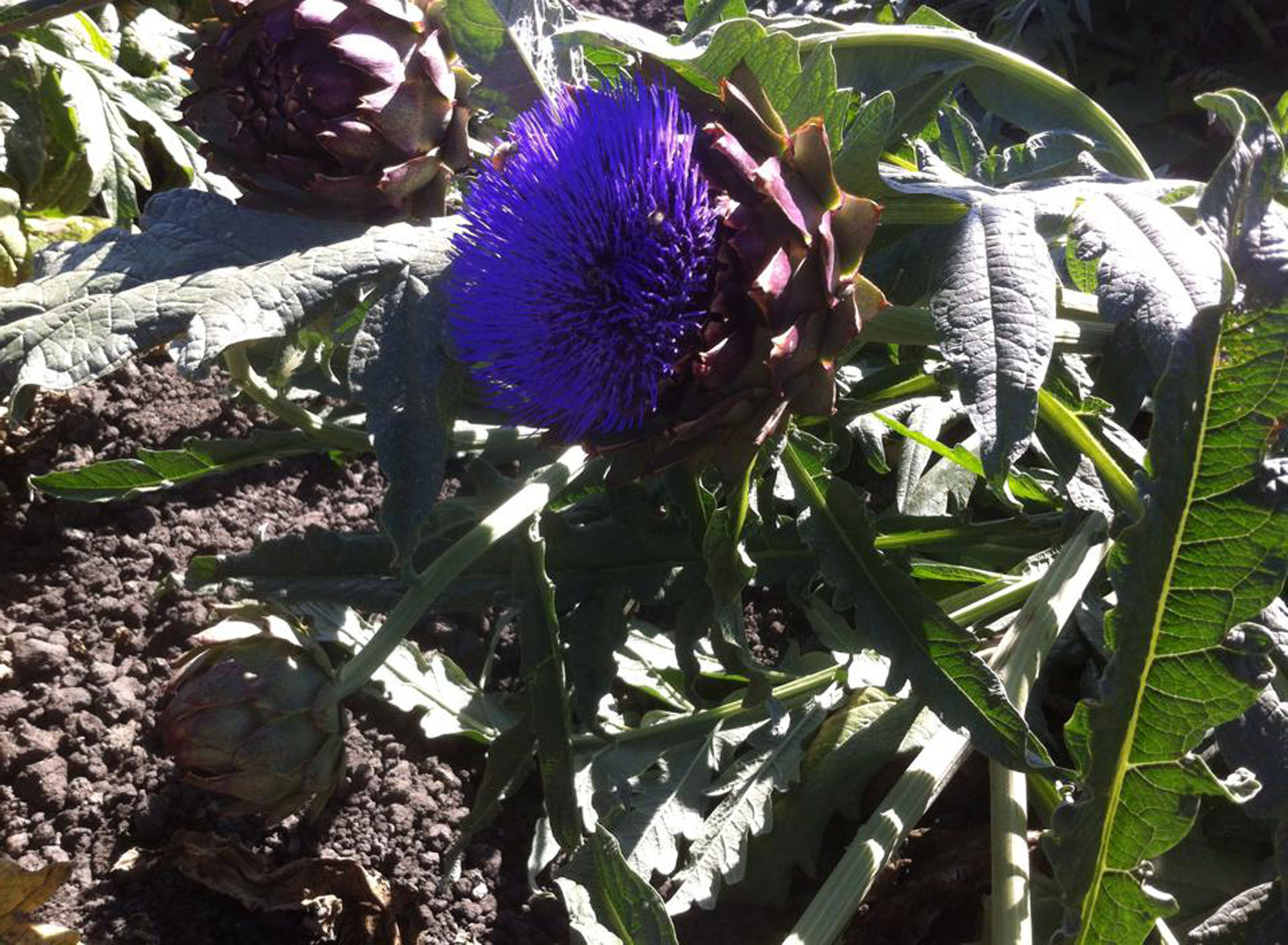
One of the last days of my California trip featured a venture to Monterey and Seaside where my son lives. The old coast road, Cabrillo Highway, Highway One, muddled south out of Santa Cruz, Soquel, and Aptos in heavy traffic that cleared some after Rio Del Mar. The four lanes narrowed to two for nine miles through fertile agricultural lands. Fields of artichoke, Brussel sprouts, strawberries, lettuce, and kale lined either side of the aging highway. I wondered about irrigation—more wells, more groundwater. How long do these farmers have if the drought continues?

dunes 7
Dunes. Courtesy Jeb Campbell

The fields gave way to huge sand dunes colonized by dune grass and invasive ice plant. Called ‘relic landscapes,’ the dunes occupy a wide swath between the road and the Pacific. According to local authorities, the dunes may shift but are thousands of years old. New ones aren’t forming. Older landscapes of rock and sand slightly more inland provide basis for roads, shopping centers, and neighborhoods. We followed the road around this last tip of the great Monterey Bay arc.

monterey-bay
Looking north to distant outline of Monterey Bay coast, from Sunset Drive, Monterey, California

It was a clear day, brilliant blue sky above and the bay vista stretched fogless twenty-four miles north to Santa Cruz. I thought of the Native Americans who made use of every living thing given by the sea and the fishermen who came on the heels of the Spanish missions to exploit the rich sealife nourished in the recesses of the three-thousand foot deep Monterey trench. I thought of the generations of immigrants—Chinese, Italian, Portugese—who settled here to wrest a living from the land and Pacific Ocean.

sea jewels
Jewels of the sea: kelp strand, mussels, anemone. Courtesy Deste Campbell

At the seaside route around the Asilomar retreat grounds, we parked and walked a short distance to the water’s edge. The tide was outbound. Waves curled onto the sand and crashed against rugged rock outcroppings. Gulls patrolled the beach, peeking into straggles of kelp torn from its offshore forest. Washed up kelp leaves flared from narrow stalks long as a bullwhip. Hordes of tiny insects swarmed the tangled kelp heaps. Tide pools hosted anemone communities and mussel thickets in colors too amazing to believe.

jelly
Jelly, one of many types in this bay. About two inches long. Courtesy Deste Campbell

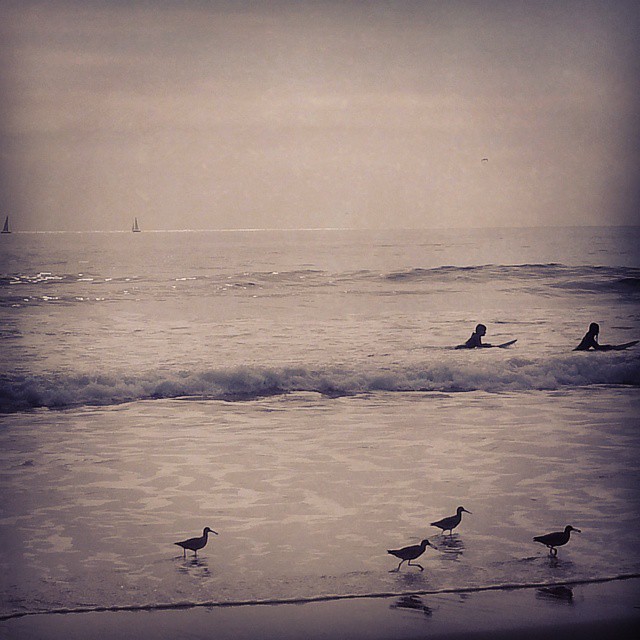
I could sit all day here, fully entertained by nothing more than the movement of the water. A few surfers in wet suits challenged themselves in the unforgiving breakers. Others, like me and my kids, were content to walk at the high water line, happy to be occasionally caught off guard by a stealthy wave whooshing up to wet our legs. If this was all there was—if there were no bills to pay, schedules, obligations—would I make my life about watching the sea?

3 on beach
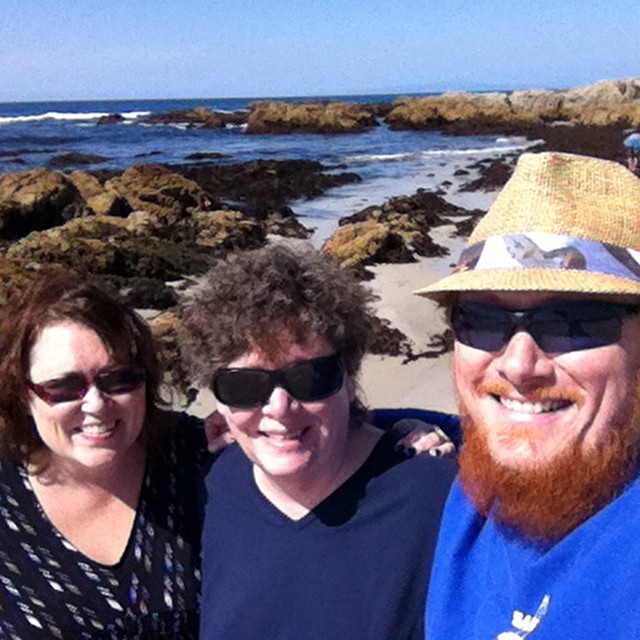
Me with Deste and Jeb at Asilomar beach. Thanks Jeb.

Too short is the time at my son’s home, sitting in his living room, touring his garden, smiling as I visit with his family. I’m envious of his ten-minute drive to the beach. Sad as my daughter and I pull away from his home, I can’t look back.

Is an oceanside sojourn the future for my son, this child who became a man when I wasn’t watching?

Or my daughter, happily settled in the hills of her new home near Eugene, Oregon, an hour and half drive from the coast?

Those are among a thousand alternate lives I could have lived close to the sea. The waves murmur and slosh, crash and growl. Another world. I miss it already.

beach filtered
Filtered beach shot. Courtesy Deste Campbell

A Journey West, Part 3/5

T.SanLorenzo
San Lorenzo River

Part of my agenda for this trip to Santa Cruz and environs had to do with a novel I’m writing. I arrived with a list of locations to scout. Thanks to Ginny and Jeb’s patient chauffeuring and on other days my daughter’s use of a borrowed car, we managed to tour neighborhoods, the campus, the business districts, and the beach. I made copious notes.

Questions arose. Why is the San Lorenzo River dry at the crossing of Highway 1 and full of water further downstream near the coast? Why is Fire Break Road shown on the map stretching from Empire Grade down to the backside of campus but doesn’t exist in the real world?

alemany
Alemany Farmers Market, Bernal Heights, San Francisco. First farmers market in California, established in 1943.

A flurry of investigation resulted in answers. The San Lorenzo is dry because of a two year drought, and the lower riverbed holds captured water because of a sand bar blocking the mouth where it drains into the Bay, creating what amounts to a long lake. No answer on the missing road.

california-san-francisco-fishermans-wharf-1
Fisherman’s Wharf area of San Francisco’s Embarcadero. Coit Tower on Telegraph Hill, on left. Courtesy http://www.planetware.com

We spent a day in San Francisco, tracking sites of my fictional events. The Alemany farmers market is surrounded by steep hillsides with rows and rows of colorful houses built literally wall to wall.

deste and me
Deste and I walk toward the point at Golden Gate

The Embarcadero  stretches along its long waterfront up to the Presidio—shops, wharfs, boats in sheltered marinas, mobs of tourists.

serpentine
Jeb and I ponder a large outcrop of serpentinite rock at the point. First pier of Golden Gate Bridge looms above. Photo courtesy Deste Campbell.

We walked along the old airplane landing strip, Crissy Field, and pondered the Civil War era red brick structures at Fort Point. Directly overhead, traffic thundered onto the Golden Gate Bridge. The narrow drive skirted a sharp embankment of crumbling pale green serpentinite that slopes down to sea level.

bunker
Standing on top of concrete bunker where guns were once mounted. Presidio, San Francisco. Photo courtesy Jeb Campbell

We drove up along the west-facing oceanfront cliffs of the Presidio where groves of redwoods shelter World War II artillery batteries. Ghosts of men in uniform seem to emerge from hovering redwood thickets. The urgent need to guard against invasion left its acrid residue in the air, in the massive concrete bunkers, along the pathways carved through the rugged terrain. What threats, real or imagined, kept these men awake at night, shivering in the cold coastal wind?

burmese
Burma Superstar, San Francisco

Lunch involved Ginny’s son Warren and his family at a hole-in-the-wall place on Clement Street serving Burmese food. After a wait on the sidewalk made friendly by a bench and hot tea, our party of eight was seated at a large round table.

How does one describe a Burmese feast? Savory catfish chowder, thick lentil/cabbage soup, lamb curry, coconut chicken rice noodle curry, tea leaf salad, crisp samusas—the large lazy susan kept turning as we sampled our way to gluttony.

Sated by our delicious meal, we said our goodbyes to Warren and his family. Our search for story settings then led south along the coast following the “Great Highway.” Densely populated streets disappeared behind us as the road merged with Highway 35. Soon our path became Skyline Boulevard as we neared Daly City. Our objective? The great and powerful magic spot at Mussel Beach, where the San Andreas Fault leaves land and enters the Pacific.

mussel rock
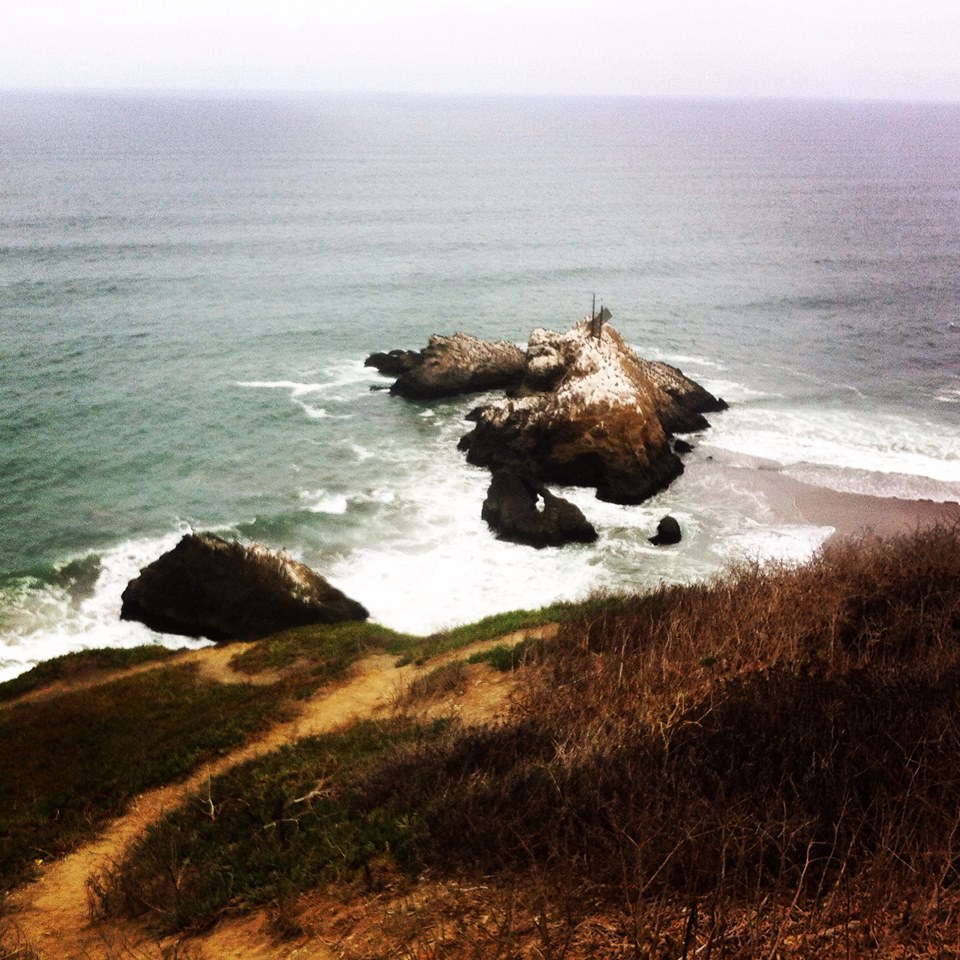
At Mussel Rock, looking north by northwest along the trajectory of the San Andreas Fault.

We missed the turn-off, assuming that such an important spot would be well marked. After doubling back, we found Mussel Beach disappointingly under-developed and lacking any signage that might describe the forces at work underfoot. The narrow shelf of land broke upward to the east with a steep eroding hillside and to the west down a sharp crumbling embankment to the turbulent surf below. Offshore, waves pounded the tilted outcrops of broken rock which continued the fault’s northward journey. The mostly paved ‘park’ area rolled and humped over conspicuously-disturbed ground. Multiple patches in the asphalt provided evidence of the fault line’s restless character.

houses at Mussel B
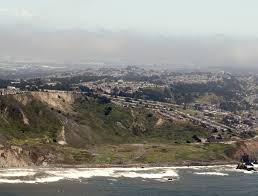
Mussel Rock shown with neighborhoods behind it. Rock outcrop from previous photo appears lower right.

Hovering above the precarious cliff faces and uneven terrain, housing developments cling to steep hillsides and beg the question of how anyone could in good conscience build houses literally on top of a major fault. The neighborhood centers on an elementary school and seems inhabited mostly by lower income residents. I took notes for my story as we rejoined Skyline Drive.

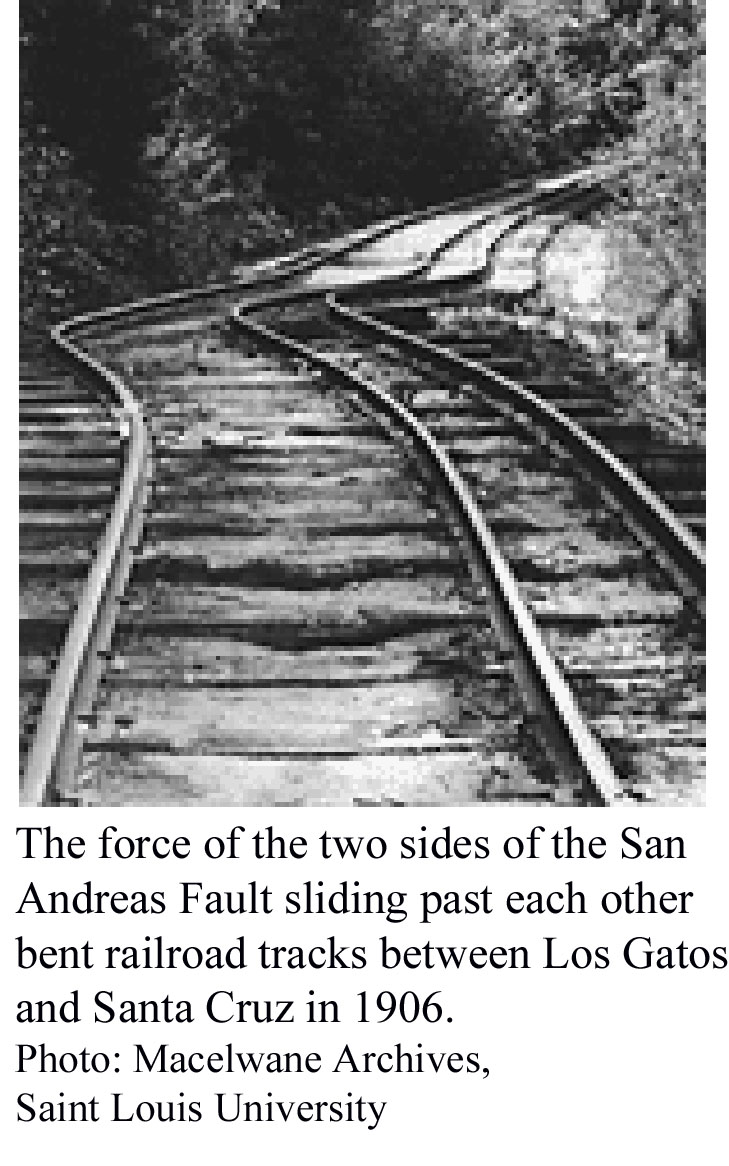
rr tracks Los Gatos copyThe drive back south along Highway 280 tracked the trajectory of the infamous fault. The miles-deep gash forms a valley between the Santa Cruz Mountains on the west and the less dramatic hills and rolling lands of the southern Bay communities of San Mateo, Redwood City, and Santa Clara. For part of the distance, San Andreas Lake glimmers in the day’s bright sunlight. Angling west onto Highway 85, and then Highway 17, we soon crossed over the fault itself at Los Gatos. The four-lane road jagged and bumped as it crossed the extended disturbance.

Then back to Santa Cruz. It struck me at this point that highways and landmarks tell only part of the story of what it means to be here. Less specific but more important is the feeling of the place. A unique scent permeates the air—pine, salt, kelp, eucalyptus. And something else I can’t name. It lingers in my clothing, on my skin.

The light is clean, thin, sharp. Fog rolls in and drapes over the roofs, hides the tree tops, waxes and wanes along the shore so that at one moment you see the lighthouse on the point, the next moment it disappears.

The whole place sits on an edge. The edge of the sea. The edge of light. The edge of visibility.

Here is the edge of North America, not part of the land mass that comprises the bulk of the continent but a sliver of earth’s crust emerging from the sea to shove eastward and cling to its reluctant partner continent. The energy of the rebel, the upstart, the adolescent swells from this nascent ground, lending its attitude to the human settlements that occupy it. From the shore eastward for a hundred miles, this new land presses its case, shoving up mountains and sliding along the tear called the San Andreas fault. Countless other faults branch off from it, all mute testimony to the mind-boggling forces at work on our planet.

You can’t live along the California coast and not feel the energy of this subterranean collision. What better place to set a novel that deals with the frontiers of human consciousness?