A Presidential Stain

Just like in every other aspect of his privileged yet miserable life, Donald Trump can see only the surface. His “shithole” description of nations like Haiti or those in Africa is apt if you only see the poverty and political chaos. A thoughtful educated person would see beyond that surface to the culpability for all that of white Europeans.

African tribes lived fruitful happy lives in their native state, just as did the natives of the Americas. But their natural progress was interrupted by those from more developed cultures who took them as slaves and exploited the resources indigenous to their lands. Since emerging from the dark ages, European countries have sailed around the world trying to enforce their religious beliefs while at the same time seeking slaves and resources to enrich their nations.

That’s how Haiti became a predominantly black society. When Spanish explorers arrived in 1492, they found a widespread population of the Taino people, a Native American tribe. Disease and genocide pretty well eradicated the Taino by 1625 when Spain’s grip on the island loosened in the face of French, English, and Dutch incursions. France seized control of Haiti and by 1700, France had established plantations for tobacco and cotton and imported African slaves to work the fields. Within the next century, the agricultural focus turned to sugar cane.[1]

Intimidating slaves with unimaginable brutalities didn’t require many whites. Accounts of horrific tortures are preserved in Haitian histories. The island’s populations suffered not only the brutalities of enslavement but also the irregular devastation of earthquakes and tidal waves. The current status of Haiti resulted from the most recent earthquake eight years ago with “a death toll estimated by the Haitian government at over 300,000, and by non-Haitian sources from 50,000 to 220,000.” The quake destroyed the country’s capital city and in the intervening years, hundreds of thousands have died of starvation.

Clone this story of Haiti into a long list of other “shithole” countries referenced by our Moron-in-Chief, with a few tweaks and details thrown in. No one in Africa asked for Europeans to come into their midst to enslave their people and steal their natural resources. Just as Native American tribes had enjoyed a sustainable lifestyle in the lands now called the United States,  African tribes maintained long-held religious practices and lived in stable communities.

Facts about the exploitation of places now referred to as “Third World” are available to anyone with a modicum of curiosity and reason. In a world before Trump, knowledge of these facts by a person elected president would have been taken for granted. Such knowledge would inform attitudes as well as foreign policy, most especially our immigration policies as, allegedly, the most advanced nation on earth.

Slavery became common within much of Europe during the Dark Ages and it continued into the Middle Ages. The Dutch, French, Spanish, Portuguese, British, Arabs and a number of West African kingdoms played a prominent role in the Atlantic slave trade, especially after 1600. David P. Forsythe wrote: “The fact remained that at the beginning of the nineteenth century an estimated three-quarters of all people alive were trapped in bondage against their will either in some form of slavery or serfdom.”[2]

The conquest of African nations occurred for two reasons: Christian zealotry convinced of its supremacy and the acquisition of wealth. Christian and Muslim missionaries still plague Africa, preaching sin and redemption to people who originally possessed sophisticated spiritual beliefs that had served them well for millennia. Social disruption and war resulted—my religion is the true one and infidels must die. Much of the warfare in Africa today is based on conflicts between Christians, Muslims, and tribal traditions. This serves several objectives—it keeps the local people at a disadvantage so they’re more easily exploited and it sells weapons of war, fattening the wallets of First World industrialists.

As for the direct acquisition of wealth, in the ages before modern machinery, slaves were the machines who tilled, planted, cultivated, and harvested the crops. Crops for food, crops for textiles like cotton, and crops for rope and other industrial materials enriched farmers. More slaves equaled more money. If advancing social conscience hadn’t eliminated slavery, likely the advance of the machines would have accomplished much of the same thing. (Or, arguably, the elimination of slavery helped push the development of machines.)

More maps in this series at http://exploringafrica.matrix.msu.edu/colonial-exploration-and-conquest-in-africa-explore/

But slaves weren’t the only wealth captured from these “shithole” countries and exploited by European conquerors.[3] “Africa has a large quantity of natural resources, including diamonds, salt, gold, iron, cobalt, uranium, copper, bauxite, silver, petroleum and cocoa beans, but also woods and tropical fruits.”[4] Once European nations discovered these resources, they couldn’t keep their hands off. Using primarily enslaved indigenous people to perform the labor in mining these resources, European nations built their wealth on the backs of African people and their native wealth.

This smash-and-grab mentality continues today. Much of the chaos of Central and South American countries is a result of American agricultural interests controlling the vast majority of suitable cropland. Here in these winter-free zones, crops can grow year round and keep the supermarket shelves full even in January. The story of American exploitation and criminal interference among our neighbors to the south portends a timebomb waiting to go off in our faces.

Under previous presidents and as the United States has tried to become more than an imperialist power in the world, programs to help improve conditions in “shithole” countries have been an important objective. Unlike our current president, previous holders of that formerly-prestigious office have supported programs to help improve conditions for native peoples. Education, health care, and social reforms have been part of an outreach that included a proportioned immigration quota.

The denigration of nations and even an entire continent by racist labeling shows nothing about those places or their people compared to what it shows about the person uttering the denigration. What Trump’s profanity reveals is a man totally bereft of curiosity, respect, and knowledge about the world around him, a man whose only goal in life is self-aggrandizement. That his petulant narrow vision should spread such shame over our entire nation is a horror that can end none too soon.

~~~

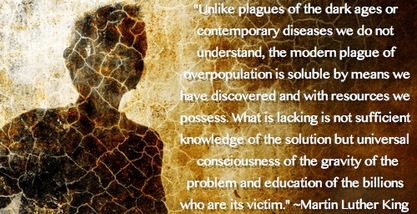
This post is dedicated to Martin Luther King, a man who rose to the pinnacle of human achievement, unlike the man current soiling the White House.


[1] https://en.wikipedia.org/wiki/History_of_Haiti

[2] https://en.wikipedia.org/wiki/History_of_slavery

[3] https://en.wikipedia.org/wiki/Exploitation_colonialism

[4] https://en.wikipedia.org/wiki/Natural_resources_of_Africa

Linsey-Woolsey

While working on one of my current projects, a history of 19th century development along the valley of the West Fork of White River here in Northwest Arkansas, I thought to search newspapers for any mention of Woolsey, a small community along the river’s passage.

I found only a slim assortment of news items mentioning the location of Woolsey. The dominant mention of the word “woolsey” came in conjunction with the word “linsey,” as in linsey-woolsey, a type of fabric. As often occurs in my wanderings through Internet storehouses, I’m now sidetracked into this fascinating bit:

Linsey-woolsey (less often, woolsey-linsey or in Scottish English, wincey) is a coarse twill or plain-woven fabric woven with a linen warp and a woollen weft. Similar fabrics woven with a cotton warp and woollen weft in Colonial America were also called linsey-woolsey or wincey.[1][2] The name derives from a combination of lin (an archaic word for flax, whence “linen”) and wool. This textile has been known since ancient times; known as Shatnez in Hebrew, the Torah and hence Jewish law explicitly forbid wearing it.[3]

Well who knew?

The fabric served an important role in 19th century clothing, as noted in multiple merchant advertisements published for William Vance and Brothers, East Main Street in Little Rock, “in the store formerly occupied by Messrs. McLain & Badgett,” :

Clothing: Fine, wool and piece dyed black cloth dress and frock coats; blue, brown, claret and mixed cloth, do. [ditto]; fin black, blue, and other colors of cloth, Palto, sack and surtout coats; Tweed, cassimere [cashmere], jeans and linsey sack and frock coats; green, blue and white blanket and blue flushing over-coats; fancy and lain, black, blue, and other colored cloth and cassimere pantaloons; blue, grey mixed, drag and cadet mixed sattinett [worsted wool in satin weave] and tweed cassimere, linsey and jeans pantaloons; blue, grey, drab and black cloth vests; fancy colored, woolen and silk velvet, do.; black velvet and satin, do.; also jeans, cassinet [English twilled stout trousering and waistcoating in various colors, made of fine cotton warp and woolen yarn dyed in the wool] and linsey-woolsey, do.; together with a good assortment of flannel shirts and drawers; ribbed and plain knit lambswool and cotton, do.; linen and muslin shirts; fancy satin, Lutestrong Italian and India, cravats; and also, gum-elastic, silk, cotton and worsted suspenders; stocks, collars, bosoms, gloves &c, &c.

Another source explains that “Back in Tudor times in England there was a coarse linen material called linsey, whose name was formerly believed to have come from the dialect word line for linen, but is now thought to be from Lindsey, the name of the village in Suffolk where it was first made. Linen was woven with wool to make a less costly fabric that became known as linsey-woolsey, with the ending of wool changed to make a rhyming couplet.”

Henry Smith, who was a Church of England clergyman and a renowned preacher — he was known as Silver-Tongued Smith — included this comment in his sermon, A Preparative to Marriage, that was published in 1591: “God forbad the people to weare linsey wolsey, because it was a signe of inconstancie.” He was referring to the Biblical prohibition against wearing clothes made from a mixture of linen and wool.

Rather later, linsey-woolsey became an inferior coarse cloth of wool woven on cotton. You can tell its humble status from Elizabeth Gaskell’s mention of it in Sylvia’s Lovers of 1863: “How well it was, thought the young girl, that she had doffed her bed-gown and linsey-woolsey petticoat, her working-dress, and made herself smart in her stuff gown, when she sat down to work with her mother.”

The Ohio Democrat commented in 1869 on local small farmers who had come into Charlotte, North Carolina, to sell their cotton crop: “They were uniformly dressed in the roughest sort of homemade linsey-wolsey.”[1]

Another source gives the following examples of the phrase as used in sentences:

Often overlooked, in fact, is the clothing worn by the four million American slaves created from what was called “plantation cloth,” “slave cloth” or “negro cloth”: coarse, thick bolts of linsey-woolsey, kersey and osnaburg.  New York Times May 5, 2014

Her dress was a shapeless linsey-woolsey gown, and home-made list slippers covered her long, lank feet ‘Be that the fashion?’ she asked, pointing to my short, closely fitting walking-dress.  Woolson, Constance Fenimore

Let us imagine he enters one of our fashionable churches, with his “rough and ready” linsey-woolsey, seamless garment on, made of wild sea-grass, thus presenting a very forbidding appearance, and what would be the result?  Graves, Kersey

Very few made long excursions from home, except the manufacturers of Kendal, many of whom travelled on foot in quest of orders for their worsted stockings and linsey-woolsey. Scott, Daniel

The women wore dresses of linsey-woolsey and coarse flax.  Purcell, Martha Grassham

But in this present day we find, alas, too frequently a linsey-woolsey religion. Shepard, W. E.

Their petticoats of linsey-woolsey, were striped with a variety of gorgeous dyes, and all of their own manufacture.  Various[2]

In an 1835 book, The South-West, the author comments on the yeomen of Mississippi.

These small farmers form a peculiar class and include the majority of the inhabitants in the east part of this state. With the awkwardness of the Yankee countryman, they are destitute of his morals, education, and reverence for religion. With the rude and bold qualities of the chivalrous Kentuckian, they are destitute of his intelligence, and the humour which tempers and renders amusing his very vices. They are in general uneducated, and their apparel consists of a coarse linsey-woolsey, of a dingy yellow or blue, with broad-brimmed hats; though they usually follow their teams barefooted and bareheaded, with their long locks hanging over their eyes and shoulders, giving them a wild appearance…[3]

The phrase entered the Congressional record in an 1846 speech by Mr. Magnum of Oregon when he stated that “When every man carried with him a portion of the national sovereignty, it required no preparation of the national heart for war when the national honor was supposed to be affected. Their plain fellow-citizens, attired in linsey-woolsey, were more keenly alive to national insult, or imagined national insult, than any other people on the face of the earth.”[4]

Because the fabric could be obtained and/or created at low cost, linsey-woolsey clothing long defined a certain class of person. In an extended rant about Colonel Hindman published in the Fayetteville, Arkansas newspaper, the author referred to “linsey-woolsey democrats.” (The Arkansian, Fayetteville, Arkansas, Aug 19, 1859 p 2).

According to William Edward Shepard, a Holiness preacher of the late 19th and early 20th centuries, linsey-woolsey meant “made of linen and woolen mixed; hence, made of unsuitable components; ill-assorted; anything unsuitably mixed; a motley composition; medley or absurdities;  balderdash;  jargon;  gibberish.”[5]

And there you have it, dear friends, for what it might be worth. My tolerance toward my wild-hair tangent being fully exhausted, I go back to the task I had at hand two hours ago.

~~~

[1] http://www.worldwidewords.org/weirdwords/ww-lin2.htm

[2] https://www.vocabulary.com/dictionary/linsey-woolsey

[3] The South-West. In Two Volumes. Vol II. By a Yankee. New  York: Harper & Brothers, Cliff-St. 1835. P 171

[4] Abridgment of the Debates of Congress, from 1789 to 1856: Dec. 4, 1843-June 18, 1846. United States. Congress, Thomas Hart Benton. D. Appleton, 1861 – Law

[5] https://www.bol.com/nl/p/linsey-woolsey-religion/9200000045861560/

What About Cherry Pie?

I love cherry pie. Baking cherry pie as a must-have part of family tradition goes back at least as far as my maternal grandmother and the early 20th century. For the last few years, I’ve skipped the cherry pie not out of intent but out of convenience. With the kids grown and my waistline growing, baking for the holidays has become a questionable activity.

This year I really wanted a cherry pie. So I looked for cherries. Not the fat sweet fruit that can be found canned, frozen, or in the fresh fruit department, but those tart cherries that produce such a fabulous flavor when paired with delicate pastry crust. Yum!

After searching my regular grocery stores, I realized there must be a cherry Grinch out there. Not only were there no tart cherries frozen, canned, or otherwise, there weren’t any empty places on the shelves where they might have been. What is going on?

[For the record, canned cherry ‘pie filling’ is so far off the mark that I refuse to take it into consideration. Mostly sugar and cornstarch, these fillings are no substitute for the real thing.]

I searched online and discovered that for a mere $76.60, I can order five pounds of frozen tart cherries. That’s right—a staggering $15.32 per pound. Plus shipping. Other sources offered slightly better deals. Organic tart cherries, 4.5 pounds for $69.89. Three 24-ounce jars of cherries for $51.95. Or my old standby brand of canned tart cherries, Oregon, only $4.31 per 14.5 ounce can. Plus $8 shipping.

That brings a nine-inch pie, which requires a minimum of two cans, coming in at a cost of $16.60 for the cherries alone.

I’m priced out of my pie!

More research starts to reveal some basic truths. A few years ago, some genius discovered that tart cherries offer all kinds of health benefits including the big headliner, antioxidant effects. A plethora of publications heralded the news, such as an article in Men’s Health citing a study published in the The American Journal of Clinical Nutrition.

In the study, mice with Alzheimer’s symptoms were fed cherry extract, fish oil, and emu oil. Mice running on tart cherry extract performed better on cognitive tests like object recognition than did the control group.[1]

The kicker bit of that study revealed that tart cherry juice performed better in reducing high blood pressure than expensive medications!

No wonder the price of cherries has gone through the roof. They’re in demand as a juice (32 ounces of organic juice for $18.99 from one source) as well as a nutritional supplement (200 capsules of tart cherry 4:1 extract from 300 milligrams and mixed with rice powder—for $11.21).

What is the curious tree at the center of this health versus culinary pleasures conflict?

Prunus cerasus (sour cherry, tart cherry, or dwarf cherry) is a species of Prunus in the subgenus Cerasus (cherries), native to much of Europe and southwest Asia. It is closely related to the sweet cherry (Prunus avium), but has a fruit that is more acidic.

The tree is smaller than the sweet cherry (growing to a height of 4–10 m), has twiggy branches, and its crimson-to-near-black cherries are borne upon shorter stalks. There are several varieties of the sour cherry: the dark-red morello cherry and the lighter-red varieties including the amarelle cherry, and the popular Montmorency cherry. The Montmorency cherry is the most popular type of sour cherry. The reason for its popularity is its use in baking and recipe creation including cherry pies, cherry desserts and other cherry-based recipes.

Well, maybe not so much anymore, now that the harvest is almost entirely devoted to diversions like cherry juice and cherry nutritional supplements.

The fruit’s discovery and popularity dates back to the Romans:

The history of the ‘Montmorency’ tart cherry extends back to ancient Rome. The Romans are credited with discovering this tiny red fruit along the Black Sea in Asia Minor. After Roman legionnaires discovered the tart cherries, they carried them with them and introduced them to the rest of Roman territory. They planted cherry trees alongside Roman roads and soldiers used the fruit for food and the wood to build weapons and repair equipment.[2]

Seems the Romans knew a good thing when they saw it.

The problem isn’t just that newly discovered health benefits have cornered the cherry market. The sour cherry tree likes cooler climates, so much of the domestic crop in the United States grows across the upper regions of the country. And that, according to one farmer’s account as stated in a 2017 report on National Public Radio, is key to my lack of a cherry pie.

The tree is “very cold hardy” in the dead of winter, he says, and grows well in the state. But it is susceptible to damage from spring frost, making it very sensitive to the extreme weather shifts made more likely by climate change… In 2002 and 2012, freezing spring temperatures wiped out almost the entire tart cherry crop here [in Michigan].[3]

Farmers faced with this problem point to efforts underway since the 1980s to produce a new strain of sour cherry tree that would be more forgiving of weather anomalies, but such developments take a long term of trial and error. The farmer quoted in this article questions whether the Montmorency will still be around in fifty years.

Also suffering the effects of climate change, bee populations needed for cherry tree pollination have plunged, forcing many cherry farmers to make extreme efforts to sustain their own bee colonies.

Sadly, many farmers refuse to consider climate change as a factor in their troubles with sour cherry production and thus a potentially powerful lobbying voice is not yet making enough noise for the government to pay attention.

Even if the government turned massive attention and resources to this issue, it’s questionable whether anything can be done. At best estimates, the current rate of climate change won’t be changed any time soon. But there is hope, although I wonder if it will come in time for sour cherries.

We emit greenhouse gases like carbon dioxide when we burn fossil fuels like coal—or when the cattle that get turned into burgers fart. When those emissions enter the atmosphere, they trap the sun’s heat, warming the planet. It’s basic physics. The increased heat can become catastrophic by melting the polar ice caps, raising sea levels, and creating weather patterns that are less predictable, more volatile, and more dangerous. Because we’ve been warming the planet this way since the early days of the industrial revolution, we can’t completely avoid the effects of climate change. But by lowering our emissions now, we can avoid the worst effects.[4]

The article goes on to describe a few key changes individuals can make in life choices that will strongly impact climate change including having fewer children and cutting way back on meat consumption. Uh huh.

At my age, I won’t live long enough to see the worst of climate change or the ultimate fate of my beloved tart cherries. That’s just one of many regrets facing me and everyone else as we grow older. But I may experiment with dried cherries to see if rehydrating produces a decent pie. The least expensive source I’ve found offers a one-pound bag for $11.99.[5]

Here’s a recipe I’m going to try, assuming I can afford the shipping:

  • 3 c. dried cherries
  • 3 c. boiling water – some recipes suggest cherry juice instead of water
  • ¼ c. cornstarch
  • 1 c. sugar
  • 1 tsp. almond extract or ⅛ tsp. lemon juice (alternatively, try brandy or Amaretto)

Cover cherries with boiling water, cover and let soak for 30 minutes. Turn burner on medium, simmer and add sugar and flour to thicken. Remove from heat, add almond extract. Pour into prepared pie crust and add top crust. Bake at 400 degrees for about 35 minutes.[6]

I’ll let you know if it’s worth the effort.

~~~

[1] https://www.mensfitness.com/nutrition/what-to-eat/5-health-benefits-tart-cherries

[2] https://en.wikipedia.org/wiki/Montmorency_cherry

[3] https://www.npr.org/sections/thesalt/2017/04/07/523004370/michigans-tart-cherry-orchards-struggle-to-cope-with-erratic-spring-weather

[4] Excellent article “How You Can Actually Help Stop Climate Change” by Kendra Pierre-Louis, published July 12, 2017, in Popular Science magazine. https://www.popsci.com/how-to-stop-climate-change

[5] https://nuts.com/driedfruit/cherries/sour-tart.html

[6] Adapted from https://www.justapinch.com/recipes/dessert/pie/homemade-cherry-pie-filling.html

FREE READ — Chroma: Light Being Human

FREE Ebook Monday Dec 18 thru Wednesday Dec 20 only

Chroma: Light Being Human is not what you expect.

Step into the evolutionary continuum in this alternate history of humanity. A saga of discovery—of consciousness, of being, of life. A love story that spans millennia. A mystery of the ages. Who are the Aspects of Chroma and how did they become us?

Download Today at Amazon.com


Oh, the Opioids!

Courtesy http://www.sleek-mag.com/2016/12/21/magnum-photos-holiday/

It’s the season of giving, of looking back and looking forward as one year ends and another begins. What better time to consider a fresh outlook on drugs?

Here we are amid the Opioid Crisis, the latest in a long line of similarly heralded events sparking fear, outrage, and call for action. One hundred years ago, it was the Cocaine Crisis quickly followed by the Marijuana Crisis, then the Heroin Crisis. By the late 60s, it was LSD that elicited our fear and loathing.

Doomed to fail from the start, the so-called Drug War was about ‘just saying no’ alongside arming our friendly local cops with military weapons. What we’ve since discovered is that ‘saying no’ meant not talking about it, and that’s a direct route to where we are now. Even worse, we failed to recognize that a war on drugs was actually a war on Americans who use drugs. Now we have embattled inner cities rampant with gun violence and police who dress/act/think like commandos.

What we as a society desperately need to realize is that DRUGS ARE NOT THE PROBLEM. Substance abuse is a SYMPTOM of a much larger and more insidious problem. We’re self-medicating for existential despair.

Existential philosophy arose in the 1950s and early 60s as a way to discuss the unique condition of modern man. Due to mechanization and urban living, the ancient traditions that have helped us cope no longer apply. We are isolated from Nature and its rhythms and lessons that used to sustain us. We are isolated from the sorcery and magic we used to believe was God. We are isolated from our fellow man, often living alone or in nuclear family settings instead of tribal or extended family groups. And most difficult, we are isolated from ourselves, distracted from our thoughts and feelings by constant chatter and material diversions. This is, briefly, the four-fold alienation that describes modern existentialism.

Exacerbating the problem of our modern age are the failures of education, lack of job opportunities, lack of self-esteem, and poor health.

Public or private, schools are missing the target for many youngsters who desperately need logic and critical thinking. Trades we’ll always use, from plumbers to carpenters to seamstresses, are not taught nor are the fundamentals of operating a self-owned business.

Our culture fails to offer a buy-in for young people who need to know they matter. Public service options in avenues other than military are few and far between. Self-esteem has been relegated to displays of material wealth even when no such wealth exists. Debt to last a lifetime is the price we pay for these trappings of social status.

Even more critical is our declining health. Not only are fast food and prepared meals low in nutrition, they’re more expensive than basic foods prepared at home. We’re overeating and starving at the same time, piling on calories in sugar and fat while missing out on the micronutrients, vitamins, and proteins that lead to an uplifted mood and greater energy. No one is advertising chard sautéed with garlic.

Yet the greatest fraud about drugs is perpetuated by the very industries that bear the name of ‘drug manufacturer.’ Since the 1950s, the insidious promotion of drugs by companies like Pfizer, Eli Lilly, or Merck (to name a few) has increased proportionately to the nation’s substance abuse problem.

Slick advertising convinces consumers that with one magic pill, all of life’s ills will go away.

Television especially holds out the false promise. The suffering victim is cast in a muted gray-tone atmosphere while around them everyone else is blissful. With the magic pill, suddenly the victim joins the bliss, bathed in golden light. Meanwhile the precautions about negative effects from the medication are described in a hurried low monotone that fails utterly to overcome the visual imagery.

The message? Consume a drug and your life will be better.

It’s a message that’s not lost on the audience, young and old alike. Who doesn’t want to be part of that golden bliss? Who doesn’t want to live without pain, without worry? All you have to do is take a drug.

It’s exactly this message that has led to the current opioid crisis. It’s not that doctors are overprescribing, although some are. It’s not that manufacturers falsely claimed that OxyContin and its family of synthetic opioids are safe to use, although some undoubtedly did. It’s that all of it is part of a bigger scam wrought upon the American citizenry—that the inevitable aches and pains of life can be made painless.

When we read about the pioneers and ‘old timers,’ we’re aghast at what they endured. No indoor plumbing? No central heat? No food unless they grew it? We marvel at their toughness, their ingenuity.

Yet amid all the labor saving devices and easy consumer goods, we find ourselves without any test of our endurance or strength. We spend too much time in activities that show us nothing at the end of the day. How can we prove ourselves without any proof?

We’re looking for adventure and new horizons. Our natural tendencies as humans drive us toward activities that may result in trauma, pain, or even death. How do we turn back the very features of our make-up that have brought us out of the caves?

The hazard of certain drugs that lead to laws against them is the fear that persons under the influence will harm us. By escaping rationality through intoxication, people may unleash violent tendencies. No abused substance in history lives up to this threat more than alcohol, but our failed war on alcohol should have taught us important lessons about the harm such policies cause.

The need for a national conversation about drugs is long past due. All drugs. Pharmaceutical advertisements should be banned, particularly those requiring a prescription. After all, why are we encouraging people to decide what drugs they need instead of allowing doctors to do their job? Profits for pharmaceuticals should be heavily taxed despite the persistent whine that the money only funds research.

… evidence that Gilead itself uses its profits to “innovate” is thin at best. In 2016, the company reported profit of $13.5 billion. It spent $11 billion to repurchase its own shares, and about $2.5 billion on stock dividends.[1]

Drug manufacturing ranks among the most profitable industries in the world.

Until we set aside our conditioned response to the drug problem, we cannot solve this escalating crisis. We are throwing people away by failing to address fundamental issues that lead people to hide in a drugged haze. We are throwing them away a second time when we stigmatize their drug problem by involving them in the criminal justice system. Or when we force them into a drug court program with limited resources and over-dependence on 12-step programs and which fail to address underlying conditions such as inadequate nutrition.

Treatment programs generally fail in many ways partly because they are set up to create profit. Instead of looking to make money off of people suffering from addiction, we should be looking for ways to express our collection compassion and concern. We should make sure that intake is immediately available for any and all comers, that they’ll be offered a safe setting full of comfort and light, that individual counseling is the best money can buy. When we invest in our fellow man, it’s a win-win for everyone.

So I urge you to give it some thought and talk about this over the holidays as you meet with friends and family. Enjoy that glass of wine as you celebrate the season. Acknowledge the difference between use and abuse. Love your neighbor as yourself. Be part of the change we so desperately need.

~~~

[1] http://www.latimes.com/business/hiltzik/la-fi-hiltzik-gilead-profits-20171023-story.html

The Good Old Days

Back when … well, whenever, things were better. Right? People loved each other more, spent more time with family. Life was simpler.

Exactly when was that?

Was it the 1950s,

  • Back when the U. S. and Russia detonated nuclear weapons above ground, when milk tested positive for radiation? When school kids routinely practiced scuttling under their desks in case of a nuclear attack?
  • When everyone smoked cigarettes?
  • When women had to find a back alley abortionist to end an unwanted pregnancy and the only means of birth control were condoms and diaphragms? (Okay, plenty of people think this was a good thing because, you know, women who abort should die and sex is only for making babies.)
  • When schools and most businesses remained segregated? When homosexuals could be beaten to death? (Another good thing, right, for all the racists and bigots out there?)
  • Back when there weren’t any cell phones or cordless phones and television only came on three channels in black and white?

Oh, you meant earlier than that. Back in those halcyon days when folks sat on the front porch and ate homegrown food?

Like 1900,

  • Back when nobody had automobiles and you had to saddle up to go anywhere? When families traveled by wagon on the rare occasions they went to town? When horse dung littered city streets and nobody had indoor plumbing? We loved hanging ourselves over a stinking hole in the ground and freezing our privates while relieving our bowels in January. Right?
  • When three generations all lived in the same house?
  • Ah, the good old days before modern medicine invented antibiotics and people died of tuberculosis because nobody had figured out it was a curable, contagious disease.
  • Those days, so wonderful without any of these modern distractions like radio or television or rural electricity so everyone could enjoy dinner by the light of kerosene lamps or candles.
  • Yes, gee whiz, back before welfare and foodstamps and all those other pesky handouts to the slackers, how we miss working in the fields all day, milking cows, butchering hogs, because if we didn’t we wouldn’t have anything to eat.
  • And how we miss sewing all our own clothes and all the women wearing corsets and long skirts
  • When women couldn’t vote.
  • Those fabulous days when no one could talk about birth control or buy condoms because it was against the law.

Further back? Like 1850, when much of the labor to produce goods or foodstuffs was performed by African slaves? When it was legal for husbands to beat their wives as long as the stick they used was no wider than their thumb? When children worked in coal mines? When no one had heard of weekends or sick leave or vacation time or minimum wage?

How far back, exactly, did you think we’d have to go to get back to “the Good Old Days?”

The colonial era when poor people and random miscreants were rounded up to work on ships or turned into indentured servants and no one had the right to vote?

Or the 1600s when people who couldn’t pay their debts were imprisoned? When those who didn’t agree with the dominant religion could be burned as a witch?

Or the 1500s when Protestants and Catholics fought endless wars?

Or the 1300s and 1400s when bubonic plague killed one-third of the entire European population?

I mean, how far back do we go? The Crusades? The Roman Empire? Ancient Egypt?

In all those times, war ran rampant as nations ruled by kings fought over resources and territory. People starved and died of diseases that are now preventable or easily curable. Women died in childbirth and half the children born died before adulthood. All the inventions we now consider normal didn’t exist—heated homes, air conditioning, toilets, sinks, glass windows that open and close, motorized vehicles, air travel, ambulances, hospitals and medical doctors, understanding of planets, stars, and our sun, microscopes and the world of bacteria, viruses, cells, and atoms, organized educational systems and widespread literacy…

Could it be that the fondly remembered good old days were simply the days of our youth when we didn’t have to earn a living and didn’t know enough yet to worry? Could it be that those early years of playing in piles of leaves or swimming in a creek or coming home from school to savor a freshly made cookie were simply the experience of a decent childhood without any real application to the adult world? Or that our memories of childhood gloriously forget the bad stuff we don’t want to remember?

When exactly were the Good Old Days?

The Poverty of Conservatism


A continuing crisis plagues Arkansas. Like a snake eating its tail, poverty, addiction and mental illness, teen pregnancy, sexual violence against women, and low educational achievement perpetuate themselves as a result of entrenched conservative thinking. Costs for addressing these problems continue to skyrocket while the state’s earning power lingers near the bottom.

Where do we cut the snake?

Arkansas ranks 48th out of 50 states in terms of poverty. In 2015, 19.1% percent of the state’s households—one fifth—have incomes below the federal poverty line of $24,250 for a family of four.[1]  For 2016, the state’s population of 2,887,337 included 550,508 people living in poverty.[2]

In a direct correlation to the poverty rate, the state ranks 39 out of 50 states in how well students are educated.[3] The state slips further down the scale for persons 25 years of age when considering the following factors: Only 84.8% graduate high school. Only 21.1% obtain a bachelor’s degree, a ranking that puts Arkansas at 48th out of 50. And only 7.5% obtain graduate degrees, a rank of 49 out of 50.[4]

We hover near the bottom at 46 in terms of mental illness in a compilation of 15 factors including all ages, availability of treatment, and addiction rates.[5] Between 2010 and 2014, over one third of teens in need of mental health treatment did not receive it while over 53% of adults did not. Only 20% of Arkansas residents with drug dependence and 10% with alcohol dependence received treatment.[6]

The state consistently ranks in the top five for teen pregnancies with up to 80 births per 1000 occurring among teen girls ages 15 to 19. Of these, 60% are white, 27% are black, and 11% are Hispanic. Counties with the highest rates included Sevier, Nevada, Arkansas, St. Francis, Mississippi, Jackson, and Randolph.[7]

According to a 2014 report by the National Conference of State Legislatures:

Children born to teen parents are more likely to enter the child welfare or juvenile justice systems and to become teen parents themselves. Every year, thousands of young Arkansans enter one or both systems. Research shows that, nationwide, the children of teen mothers are twice as likely to be placed in foster care as their peers born to slightly older parents. Sons of teen mothers are 2.2 times more likely to be incarcerated than the sons of mothers aged 20 to 21.[8]

The crisis becomes most apparent in the number of Arkansas children in foster care. From March 2015 to March 2016, the total number of available and in-use beds in foster homes increased from 2,801 to 3,306, but the number of foster children also increased, from 4,178 to 4,791. A 2016 report states that substance abuse by caregivers accounts for over 50% of children in foster care.[9]

Despite such high rates of teen pregnancies, many Arkansas school districts do not provide any sex education. Many others offer abstinence-only education including a virginity pledge (14 districts[10]), a ridiculous non-starter since census records show that over 52% of Arkansas teens are sexually active. Only seven school districts provide comprehensive sex education addressing contraceptives, sexually transmitted infection, abortion, and sexual orientation.

The Centers for Disease Control report that 37.4% to 38.5% of women in Arkansas experience at least one event of sexual violence during their lifetimes. These experiences include rape, sexual coercion, and/or unwanted sexual contact.[11] Among sexually active teens, 18% of females report acts of violence (being hit, slammed into something, or injured with an object or weapon on purpose by someone they were dating) and 16% reported being raped.[12]

Are Arkansas citizens somehow genetically predisposed to suffer these conditions? Is it something in the water? Or might the answer be found in the conservative mindset of a majority of Arkansas citizens?

Arkansas ranks 5th in the number of churches per capita. Seventy percent of adults define themselves as ‘highly religious’ with 65% saying they pray daily and 77% saying they believe in God with absolute certainty.[13] The predominant religion practiced in Arkansas is Southern Baptist, a conservative Protestant sect which believes in a literal interpretation of the Bible.

Predictably, any push for sex education and contraceptives in public schools provokes conservative outrage. By religious thinking, unwanted pregnancies serve as punishment for illicit sex. The burden borne by women in unwanted pregnancy, childbirth, and childcare is God’s retaliation for the sins of Eve. As stated in Southern Baptist doctrine, “A wife is to submit herself graciously to the servant leadership of her husband.”[14] Prevention either through birth control or abortion upends the natural order of things as ordained by God.

The prevailing idea of conservative parents is that talking about sex and especially advocating for birth control of any kind creates a permissive attitude wherein teens are more likely to have sex. Data clearly dispute this belief. But the refusal to accept widely accepted evidence about the effectiveness of sex ed fits perfectly with the greater mindset of religious conservatives: willful ignorance about any and all information that doesn’t square with religious teachings.

Under the belief that addiction or non-marital sexual activity are moral failings, many efforts to address non-marital sex, sexual abuse or substance abuse rely on faith-based programs. Yet as noted by a counselor with twenty years in faith-based addiction treatment, “Often times, Christian programs view the secular approach to recovery as counterproductive to their message and will often discredit and even disregard medical or empirical based advice to addiction recovery.”[15]

While embracing some aspects of modern science and the advances of civilization such as automobiles, cell phones, DVRs, and medical progress, conservatives refuse to acknowledge other key findings of our times. Early religions strictly regulated a woman’s sexual activity out of concern for proving paternity and reducing conflict between competing males, among other things.  None of that matters today. Genetic testing quickly solves questions of paternity. But religion has become so institutionalized its practitioners can’t back up far enough to consider its origins or usefulness.

There’s a blind adherence to the tradition of making babies as the primary goal in life.

It doesn’t take a genius to figure out that teen pregnancy leads to lack of education which in turn leads to poor employment opportunities, or that a state with a high rate of poorly educated adults won’t attract many employers. It also doesn’t take a rocket scientist to understand that poorly educated people with poor job opportunities are more likely to turn to drugs or alcohol or suffer other forms of mental illness. Inadequate nutrition also plays a role, another cause and result of mental illness and poverty.

Further, an embattled position in poverty with subpar education leads people directly to unreasoned fear of Other—xenophobia and racism.

We have to start with the head of the snake. If we hold any hope of interrupting this vicious cycle, our state and national educational standards must require sex education. Such requirements must be imposed even in private, religious, and home school settings.

The requirements can’t stop there. All children must be required to learn the basics of science, history, political science, and other fields that serve as major elements in critical thinking about the modern world. While the state cannot dictate whether someone embraces any particular religion, we can dictate that our children are adequately prepared to make an informed choice about what to believe.

We cannot allow reactionary religious beliefs and tribalism to undo what civilization has achieved thus far.

The hue and cry against such reforms in education will be loud and long. State and federal legislators will be hard pressed to maintain a firm stance in the face of entrenched dogmatic beliefs. It will take true leaders to enact reforms in a time when leadership seems missing from public life. That means we must elect educated progressives who will carry the weight. The future of our nation depends on it.

~~~


[1] https://en.wikipedia.org/wiki/List_of_U.S._states_by_poverty_rate

[2] https://talkpoverty.org/state-year-report/arkansas-2016-report/

[3] https://www.usnews.com/news/best-states/rankings/education  The

[4] https://en.wikipedia.org/wiki/List_of_U.S._states_by_educational_attainment

[5] http://www.mentalhealthamerica.net/issues/ranking-states

[6] https://www.samhsa.gov/data/sites/default/files/2015_Arkansas_BHBarometer.pdf

[7] “Say no to sex, most state districts teach,” Ginny Monk. Arkansas Democrat Gazette. Sunday September 24, 2017. Page 1.

[8] http://www.ncsl.org/research/health/teen-pregnancy-in-arkansas.aspx

[9] “Children in foster care in Arkansas reaches all-tine high.” Brian Fanney. Arkansas Democrat-Gazette, August 22, 2016. Online access October 18, 2017

[10] “Say no to sex, most state districts teach”

[11] https://www.cdc.gov/violenceprevention/pdf/NISVS-StateReportBook.pdf

[12] https://www.hhs.gov/ash/oah/facts-and-stats/national-and-state-data-sheets/adolescent-reproductive-health/arkansas/index.html

[13] http://www.pewresearch.org/fact-tank/2016/02/29/how-religious-is-your-state/?state=arkansas

[14] http://www.sbc.net/aboutus/basicbeliefs.asp

[15] http://www.addictioncampuses.com/resources/addiction-campuses-blog/3-reasons-christian-rehabs-dont-work-according-to-a-pastor/


The Old West

In the completion of my recent book, Murder in the County: 50 True Stories of the Old West, I discovered that three of the fifty murders profiled there were committed by members of the same family! Intrigued, I researched more about these folks and the result is now published under the title The Violent End of the Gilliland Boys. Fascinating and shocking, this story features more twists and turns than an Ozarks dirt road.

Christmas Day horse races 1872, Middle Fork Valley.  Young Bud Gilliland waits, eager for another chance at his neighbor Newton Jones. Only this time, after two years of sparring, Newton gallops up in a cloud of dust, aims his Spencer rifle, and sends Bud to a well-earned grave.

The death of Bud surely grieved his father. But before the curtains closed on these descendants of J. C. and Rebecca Gilliland in 1891, two other sons and a grandson would die a violent death while yet another grandson served hard time for murder.

What was it about the Gillilands?

This recounting of the family tracks their ancestry, their pioneer years on untamed land, and the hard work that made them one of the wealthiest families in Washington County, Arkansas. A fascinating tale of brash ego, brave gallantry, and plain old bad luck.

Paperback now available for only $9.95 at. Don’t miss it!


Behind Chroma

Feedback from readers of my novel Chroma: Light Being Human has revealed the need for some clarification. Specifically, there’s an issue with the character names, which are a series of numbers along with color names. As one reader said, the numbers made it hard to remember the characters and reminded her of the Dewey decimal system.

While her point of reference here might have something to do with her career as a librarian, I realize that many readers may not ‘get it.’

So here’s the thing. The characters are manifestation of sound and light. The numbers refer to frequencies of sound waves as measured in Hertz. The light is broken into the spectral array of the rainbow. They are called  the Aspects of Chroma in the story because they are aspects of electromagnetic and sound energy, ‘chroma’ meaning ‘chromatic’ as in all the notes of a musical scale and also ‘chroma’ meaning color.

With the main character B4 Indigo, her frequency of ‘B’ refers to the note in our Western musical scale that falls on the keyboard just below Middle C. But as most know from exposure to keyboards, there are several ‘B’ notes on a keyboard. B4 is the 4th B when you start counting from the bottom. Her kinsmen are all the B range; the next B up the keyboard would be B5.

B4’s color is indigo, a bluish purple color at the far end of the electromagnetic spectrum of visible light between 420 and 450 nanometers. At this point, she is the fundamental waveband, a role that drives her story.

Several connotations of Indigo as a spiritual aspect, as a cited in Wikipedia, are:

  • The color electric indigo is used in New Age philosophy to symbolically represent the sixth chakra (called Ajna), which is said to include the third eye. This chakra is believed to be related to intuition and gnosis (spiritual knowledge).
  • Alice A. Bailey used indigo as the “second ray,” representing “Love-Wisdom,” in her Seven Rays system classifying people into seven metaphysical psychological types.
  • Psychics often associate indigo paranormal auras with an interest in religion or with intense spirituality and intuition. Indigo children are said to have predominantly indigo auras.
  • People with indigo auras are said to favor occupations such as computer analyst, animal caretaker, and counselor.

To an aware reader, these spiritual connotations add depth to the understanding of B4 Indigo’s character and her role in the story of Chroma.

The premise of Chroma is that light energy traveling through space/time sought the experience of embodiment. In reaching the threshold of this pursuit, they came into the physical by forming in sound and color light energy. Their explorations after this threshold comprise the rest of their story, at least to the point of full embodiment. If I live long enough, I hope to write a couple more books that continue this story line into the year 2540.

I hesitated to delve into these details in any kind of preface for the book and hoped that readers would be able to enjoy the story by accepting the character names such as B4 Indigo, D3 Red, A4 Blue, etc. But I concede that these names especially in their full presentation as B493.883 Hertz or D293.665 or especially B4’s ancient partner F369.994 (F-sharp) may not immediately appear in an understandable way to the average reader. For those who don’t have a musical background, I can only say that B and F-sharp are acoustic partners in what is called a perfect 5th, and conversely, they are a perfect 4th, thus their inescapable partnership in acoustical phenomena.

Similarly, Indigo and Yellow are complimentary on the color wheel. In the mid-1600s, Isaac Newton linked the seven notes of the Western scale with the array of prismatic colors. In painting, complimentary colors yield useful applications. For example, when painting in yellow or gold, to create shadow effects, the artist would not darken with gray or black, but rather indigo or purple.

A reader’s understanding of these arcane details is not necessary to enjoy the story of Chroma. But for those like the librarian who are frustrated by the apparent nonsensical nature of the naming, hopefully this explanation will be helpful.

Chroma wasn’t an easy story to write. How do you assign emotion to sound and light? The main characters can’t cry or hit or sleep, at least not for several millennia. Yet emotional responses and physical actions form traditional elements in fiction, so that  norm further complicates the telling of this alternative-history story.

I wanted to present a creation story of humanity on Earth that explored possibilities of extraterrestrial influence that didn’t involve little green men. Some form of man does appear, but those are visions of a future or a past that isn’t fully revealed. I also wanted to express the idea that music and its deep appeal to us on a non-verbal level suggests that there may be more to our connection to musical tones than we have previously known. Same theory applies to our appreciation of color.

Chroma is a story that wouldn’t go away. I chewed on it, wrote it, tossed it, recreated it and labored over it for over twenty years. I’ve never been completely happy with it. I’m tormented with the second book, partially written, elusive, and inescapable. I have to do it, so please–wish me luck!


Conscious Evolution

Conscious evolution. We know enough. We know why. We know how.

Back when we wore skins and only knew our own tribe, we needed clues to identify the ‘Other.’ They would kill us, take our women and homes and food. We noted their skin color, how they dressed, what insignia they carried. We didn’t need to greet them or get to know them. We killed them before they had a chance to kill us.

Our fear and hatred of Other has followed us. It’s embedded in our DNA. Our survival depended on it.

Today, our survival no longer depends on fearing and hating Other. Now our survival depends on recognizing shared humanity. The majority of people understand this. But there’s that tiny minority, emboldened now by Trump, who just don’t get it.

We need to investigate what some white men fear that pushes them to march in the street with torches. Why they resort to violence. Why they feel oppressed.

They fear losing their concept of themselves as the best, most important, top-of-the-food chain guy. Their very identity is threatened.

Their fear derives from

  • Ignorance, a failure of our public schools in educating about history and anthropology. Supremacists assume that because whites have been predominant in the development of machines and other hallmarks of modern civilization, whites are therefore superior. This view fails to acknowledge the advanced machinery of ancient cultures like China, India, and the Middle East—non-white civilizations. This view also fails to reflect the harm machines have brought to all life forms on the planet—pollution, disease, and arguably a pace of living that destroy human peace and health.
  • Rapid change in requirements for earning a living. It’s no longer enough to hunt, fish, manage livestock, plow fields, and stack rock fences, occupations that served men well for thousands of years.
  • Loss of primacy in male-female relationships. That’s not to say alt-right men don’t seek out submissive women who will stroke their egos. Many do, and sadly there are plenty of women who accept, even enjoy, this kind of relationship. But in the workplace, on the streets, and elsewhere in our culture, women have gained a more equal position. They can vote, earn a living, and walk away from men who refuse to relinquish outdated ideas. They can abort rape impregnation, an age-old tool of male domination.
  • Loss of control over formerly subordinate groups. Such as slaves (African). Such as field workers (Hispanic). Such as ethnic groups (Jew). Now their kids go to school together. At least, until pressure from the alt-right succeeds in shifting sufficient tax dollars to private and ‘religious’ schools to allow low and middle income racists to send their kids to the same segregated right-wing private schools that the more affluent racists have been sending their kids to since integration.
  • Loss of power to control the terms by which our society operates. Through the courts, America’s promise of liberty and justice for all has gradually gained greater implementation. This has fueled the swelling alt-right push to place sympathetic right-wingers on the SCOTUS as well as lower courts across the country. They want courts that will give men the primacy they once enjoyed over women. They want courts to reinforce alt-right beliefs about marriage, sexuality, race, and all the other arenas where white male dominant beliefs have been challenged.
  • For many modern men, their ability to consider themselves men has been compromised by loss of sexual function or diminished genitalia as a result of exposure to toxic chemicals. This is only going to get worse as exposures increase. If such exposure doesn’t affect them personally, it may affect their sons. If they have any. Researchers confirm that sperm count continues to drop at a rapid pace. They also remark on the increase of boys born with compromised genitalia, now up to one in 350 male births. ‘Endocrine-disrupting chemicals are substances present in the environment that can interfere with normal hormonal balance and thus exert potentially adverse health effects on the human organism. Male reproductive system development and function may be susceptible to the effects of such environmental toxicants.’ Endocrine disruptors include multiple chemicals routinely appearing in pesticides, herbicides, plastics, and many other products as well as in chemicals that have now been outlawed such as PCBs, DDT, and atrazine, to name a few. Effects of exposure to these chemicals can carry through to subsequent generations.  (Also this article.)
  • Fear of Other derives from conscious and subconscious effects. A man may have a normal penis size and function fine sexually yet still feel insecure about his sexuality. He may experience urges that he can’t explain, which repulse him and defy his religious beliefs, such as same-sex attraction. In many cases, a man’s ability to feel secure in his sexuality depends on his ability to see himself in a dominant role both at home and in society. Yet many jobs require men to work under the supervision of a woman or a gay man or a racial or ethnic minority, all of which some men consider subordinates.
  • Desire for clear lines of authority. Hierarchy serves men well by defining exact ranks of dominance. Men can accept not being at the top of a hierarchy if at the same time they see that others rank below them. With hierarchy come prescribed methods of moving up through the ranks as well as methods for working within the system. Complaints flow up the chain of command. Men know who they’re working for and what to do if problems arise. In our modern world, traditional chains of command have been interrupted. Even in the military, men today may find themselves working alongside or even in lower rank than a woman or a transgender person. This flies in the face of many men’s instinctive expectation that those within the hierarchy are their peers, their own kind. Admiration and support for Trump derives in part from his authoritarian stance, his willingness to invoke violence, and other aspects of his personality which hearken back to old white hierarchical traditions. Hierarchy as a mind-set also dictates that people believe what their parents believed, and before that their grandparents.
  • Authority for racist views are encoded in the Old Testament, at least as alt-right adherents believe. “Genesis 9:18–29 has been popularly understood to mean that Ham was cursed, and this understanding has often been used to justify oppression of African people, the descendants of Ham. In this view Ham offended his father, Noah, and because of this his descendants are also cursed, and Ham is presented as the father of African people. The text does give the impression that Ham was cursed, but a more careful reading of the passage reveals that this is not so.” (quote source)

Efforts to stamp out alt-right beliefs only succeed in escalating the problem. We must re-think our approach to this threatening yet benighted portion of the population and consider them as injured children who must be nurtured through a re-training process. Many are under-employed, and must be taught how to perform jobs that fit into the modern workplace. Many are suffering severe emotional and psychological problems and need the best therapy our professionals can provide. Many also suffer illness including obesity, sexual dysfunction, and other medical conditions that impinge on their ability to feel whole. Many may suffer the effects of poor nutrition either from ignorance about proper diet or insufficient income.

For all these ills, men of the alt-right seek someone to blame other than the person they see in the mirror.

  • It can’t possibly be that they themselves have fallen into poor health through lack of exercise or poor nutrition. Rather, the reason they feel bad is that ‘commies’ and Jews have taken over their country.
  • It can’t possibly be that their workplace exposure to hazardous endocrine-disrupting chemicals has caused their impotence. Rather, it’s ball-busting women in general.
  • It can’t possibly be that their lack of curiosity or inability to learn has caused them to slip to the bottom in job skills or educational achievement. Rather, it’s the government sending their jobs overseas. It’s immigrants taking up jobs they might have had.

The alt-right is a manifestation of a pervasive illness affecting a certain portion of our population. They are the unevolved among us. We need to immediately start to design interventions that will effectively address their fears and failings. We need to tighten the standards of education to significantly limit homeschooling and improve curriculum for political science and history. We need to implement laws that punish those advocating violence against others and require attendance in appropriate therapy, job training, and/or health and nutrition treatment, just as in earlier years we have required certain groups to attend ‘sensitivity’ training.

These challenged humans suffer from delusions that they alone see the truth. Without an effective strategy to encourage their conscious evolution, there will be more blood in the streets.