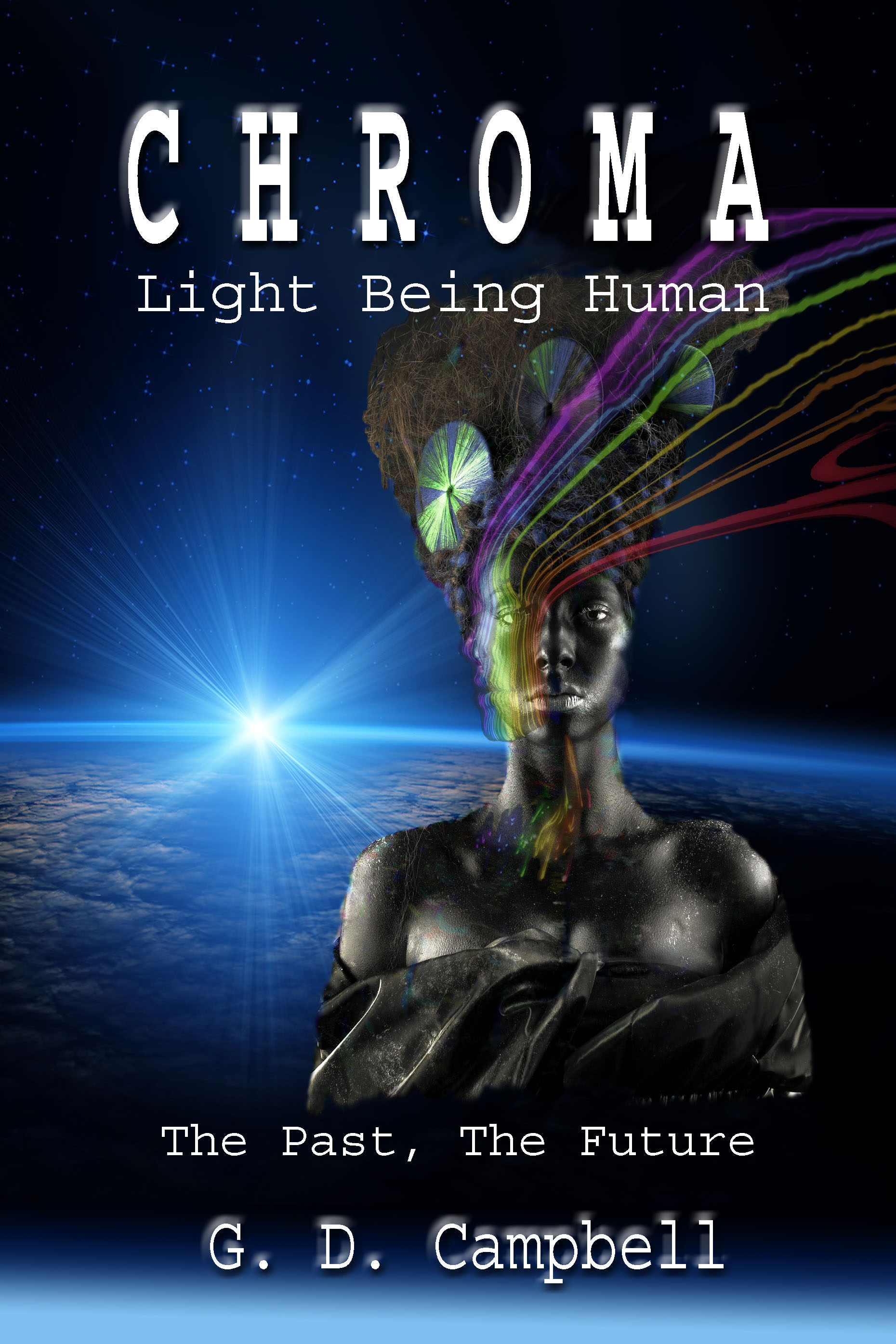
New Release: Murder Stories!

Murder in the County: 50 True Stories of the Old West

Contrary to popular notion, Arkansas was part of the Old West along with Texas and the rest of those more familiar dusty southwestern places. Its western border joined up with the Indian Nations where many a weary marshal rode out with his bedroll and pistol carrying writs from the U. S. District Court at Fort Smith in a search for a steady stream of men rustling livestock, stealing horses, selling whiskey, or running from the law.

From its earliest days, Washington County, Arkansas, experienced some of the worst the Old West had to offer. At unexpected moments, county settlers faced their fellow man in acts of fatal violence. These murderous events not only ended hopeful lives but also forever changed those who survived them. Not to say that the murders in the county all stemmed from conflict along its western border—plenty of blood spilled within its communities and homesteads.

The fifty chapters of this collection each focus on one violent incident. Through family histories, legal records, and newspaper accounts, the long-dead actors tell their shocking stories of rage, grief, retaliation, and despair.

Available now at Amazon.com

Those Southern Baptists!

From “Our Great American Heritage” at http://www.ourgreatamericanheritage.com/2015/11/slavery-was-supported-by-white-southern-pastors/

Behold the Southern Baptists! Meeting recently for their annual conference, they decided to extend the warm hand of evangelical brotherhood to Blacks and Native Americans. As one headline put it: “American Indians seen in need of evangelism.” Because, you know, those folks are struggling. Who better to help than the Baptists?

Surely this benevolence isn’t due to the continuing drop in the denomination’s membership. No, surely not. And with that drop, we might point out, tithes flowing to the denomination’s treasury also dropped.

Oh my God!

Okay, there are undoubtedly those within these ranks who honestly and sincerely want to help the downtrodden. But the group’s recent convention exposed a painful truth: on a personal level, racism is alive and well among the Southern Baptists.

There’s nothing new about the Southern Baptist’s narrow-minded view. While they’re courting membership from Blacks and Natives, they’re at the same time refusing to have anything to do with the LBGTQ community. Guess they don’t need membership that bad. Yet.

It’s only been 170 years since the Southern Baptist denomination sprang into existence to embrace racism. In a 2015 article in The Atlantic by Emma Green, she reviewed that year’s Southern Baptist convention, citing the founding rationale:

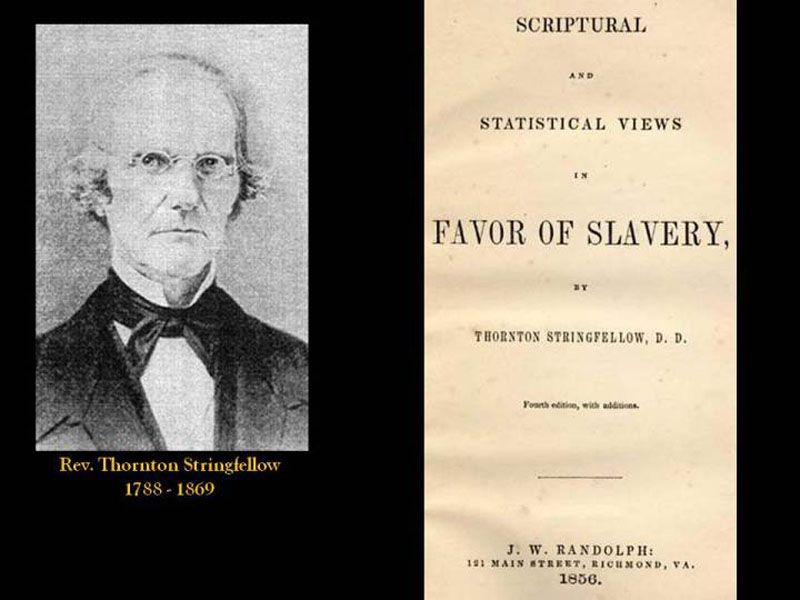
In 1860, a Southern Baptist pastor from Virginia, Thornton Stringfellow, defended the institution of forced enslavement of millions of African men and women in Cotton Is King, and Pro-Slavery Arguments, with the full force of scripture: “Jesus Christ has not abolished slavery by a prohibitory command. … Under the gospel, [slavery] has brought within the range of gospel influence, millions of Ham’s descendant’s among ourselves, who but for this institution, would have sunk down to eternal ruin.”[1]

To the Southern Baptists (and many others), God’s chosen people are white, descended from God’s favored sons of Noah. That was not Ham. As the story goes, Noah got pretty deep into the wine and passed out naked. Ham saw this and told his two brothers Shem and Japheth. These two backed up to their father with a blanket between them so as to cover Noah without looking on his nakedness. So when ole Noah sobered up and learned what had happened, he cursed Ham as the progenitor of Canaan:

And Noah awoke from his wine, and knew what his younger son had done unto him. 25 And he said, Cursed be Canaan; a servant of servants shall he be unto his brethren. 26 And he said, Blessed be the LORD God of Shem; and Canaan shall be his servant.

27 God shall enlarge Japheth, and he shall dwell in the tents of Shem; and Canaan shall be his servant.

Multiple interpretations of this scripture lead pretty much anywhere you’d want to go. Noah was supposedly over 500 years old when this happened and pretty tight with God. Why God let him get away with cursing one of his sons for something he himself did remains an unanswered question. Some interpretations claim the event actually involved Ham giving his dad oral sex. Another says he castrated Noah. These quirky ideas are based on scholars’ erudite studies of Biblical text.[2]

This is why there are over 33,000 Protestant denominations, a number argued when the concerned parties take a breath from discussing what happened with Noah and Ham as well as countless other minutia preserved in religious writings. According to one Catholic observer, 33,000 is an inflated number.[3] Be that as it may, the point is that when modern-day beliefs, laws, and actions are based on materials passed down orally for centuries before ever gaining the permanence of writing, and then those written records are subjected to successive centuries of translation, revision, and interpretation, these beliefs might as well have been snatched out of midair.

Which is exactly what happens when people formalize their spiritual beliefs in a way that excludes, discriminates, and otherwise separates them from other groups of people. These aren’t spiritual teachings. They are an outward expression of the smallest darkest part of primitive humans, fearful and ready to do violence. The only legitimacy such beliefs can claim is that our animal instinct assesses threat from another human first by how they look. If they look like us and talk like us, then there’s less chance they’re going to harm us.

In the times of slavery, any spiritual belief system other than the Baptist belief was counter to God’s will. Any effort to see minorities as ‘equal’ came hard up against the reality of life circumstances of minorities, a self-fulfilling prophecy of a sort, that there they are, those ignorant Africans, not well educated, not able to even clearly speak English, living in poverty—how can you say we are equal?

Or the Natives, living like savages in shelters made of skins, painting their faces, hunting with spears. They’re not like us.

A rational analysis points out that as slaves, Blacks were purposefully kept from learning to read or write, denied the right of marriage, and not taught skills of any trade other than the manual labor for which they were kept. In their homelands of Africa, from which they were torn against their will, they enjoyed well-established social order. They had family structures, spoke their language fluently, and otherwise had achieved a culture that succeeded for millennia.

As whites, we’ve got a few more millennia to go before we can say the same.

The same level of prejudice supported violent racism against Native Americans. Aside from genocidal acts such as outright slaughter or distributing blankets contaminated with smallpox, white invaders of the North American continent mitigated their murderous inclinations with attempts to bestow a “relationship with Christ” upon the Natives.

Take, for example, the ripping away of Native American children from their parents and forcing them into residency at schools where they were forbidden use of their native language. The schools intended to teach them to live like white men. In all ways—clothing, language, and worship—Native children were cut off from their ancient heritage and forced into a social construct for which they had no foundation or kinship.[4]

Like taking Africans from their successful societies and forcing them to labor at white’s man pursuit of wealth, ripping Natives from their ancient traditions and cramming them into reservations under the supervision of white law destroyed their foundations of belief and self-worth. They held value only by the metric of white civilization. In that, they hardly reached the scales.

Which makes it all the more outrageous that now, in 2017, as Southern Baptist membership continues to plummet, the conference decides to target reservations because “American Indians are 510% more likely to die of alcoholism and 62% more likely to commit suicide in comparison with the rest of the U. S. population.”[5]

Gee, can they possible be more ridiculous?

It’s not that the Southern Baptists don’t understand that their predecessors were wrong in declaring slavery the will of God or in trampling the ancient traditions of the Natives. They do. Some even claim to pray for forgiveness for their previous ignorance and the misdeeds committed against these minorities.

It’s that no matter what they do, these and other religionists seem to always conclude that their current decision is righteous and unerring and God’s will. They embrace their decision with fervor, rushing out to force the rest of the world to follow.

This is the hubris that created the Southern Baptists in the first place, and all the other evangelical denominations, and arguably every single religion that has plagued the world since such organized activities began. With the force of God’s blessing behind them, they have mounted wars and inquisitions and executions, overthrown governments and imprisoned the wayward, and marched across the globe leaving devastation in their path.

~~~

Recently with the shooting of Rep. Steve Scalise, Arkansas’ own Southern Baptist Pastor Ronnie Floyd opined that this level of violence against the Trump Administration is a new and abominable level of hatred.

In my life, I have never seen a more volatile political environment. Hyperbolized speech, wild accusations and blatant character assassinations have taken stage front and center … as a society we must be able to recognize that celebrating an ideology that says violence, especially against our elected officials, affects the way we think. Words have power. As the ancient biblical proverb says, “The tongue has the power of life and death.”

Floyd never once blinked in the face of the hypocrisy of his remarks despite living through eight years of outrages perpetrated against former-President Barack Obama that included effigies of Obama being lynched and burned, his daughters and wife smeared in every possible way, and the conservative Christian stance embodied in a Republican Party that obstructed every effort of Obama’s rightful governance.[6]

This year’s Southern Baptist conference heard a resolution put forth by Dwight McKissic, a black pastor from Texas, that would have affirmed the denomination’s opposition to white supremacy and the so-called ‘alt-right.’ At first, the committee in charge of resolutions refused to advance McKissic’s contribution to the full assembly. After all, they had resolutions about Planned Parenthood and gambling that needed consideration.

The next day, McKissic attempted to present it on the floor. According to one observer, “Chaos reigned.”

Once more attendees realized what had happened (and the glaring hypocrisy of their actions), “a number of leaders started lobbying to get the motion reconsidered.” After emotional debate on both sides of the issue and another twenty-four hours to confront the situation, leaders brought an amended version of the resolution to a vote.[7] Newly-elected leader Steve Gaines announced the results: “The affirmative has it. Praise the living God.”[8]

Oh yeah, membership.

~~~

[1] https://www.theatlantic.com/politics/archive/2015/04/southern-baptists-wrestle-with-the-sin-of-racism/389808/

[2] Wikipedia article on Ham: https://en.wikipedia.org/wiki/Ham_(son_of_Noah)

[3] http://www.ncregister.com/blog/scottericalt/we-need-to-stop-saying-that-there-are-33000-protestant-denominations

[4] https://en.wikipedia.org/wiki/American_Indian_boarding_schools

[5] Quoting the National Congress of American Indians, from an article by Francisca Jones, “American Indians seen in need of evangelism,” Northwest Arkansas Democrat Gazette, Tuesday, June 13, 2017. Pages 1 and 4.

[6] http://www.christianpost.com/news/america-dont-forget-words-have-power-188393/

[7] Amended resolution may be found at https://static.coreapps.net/sbc-am2017/documents/f618b2f02b1fc085697b4f5d147cb58e.pdf

[8] http://www.npr.org/sections/thetwo-way/2017/06/14/532998287/southern-baptist-convention-votes-to-condemn-white-supremacy

The Luddites Were Right

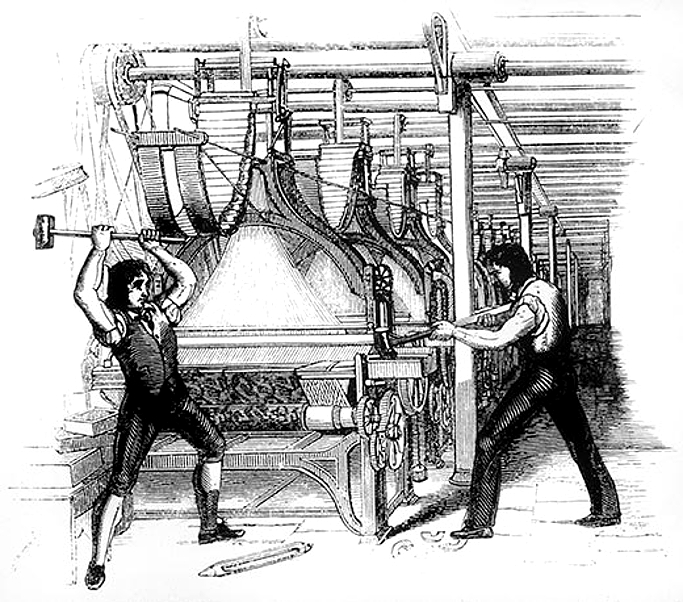
On March 11, 1811, hand loom weavers swarmed the streets of Arnold, Nottingham in the dark of night. They broke into textile factories equipped with the latest technologies, smashed pieces of factory equipment and burned the mills. Over the next five years, the movement spread throughout England. Industrialists invested in safe rooms inside their factories to protect themselves from attack.

The movement died in its tracks when the government stepped in with mass trials, with over thirty men ultimately executed or transported to penal colonies in Australia. The government went on to pass legislation making equipment destruction a capital offense.[1]

The Luddites didn’t start with violence. Rather, like regular hardworking people, they expected their industrialist employers to make nice as new machines were brought in to replace workers. The employers didn’t bother because nobody made them. They found that higher profits fit quite nicely into their fattening pocketbooks.

The Luddite eruption speaks to a trend that ticked up to light speed in the twentieth century.  More and more workers are forced to find new careers. No one could argue that this has been a bad thing. Gone are the backbreaking labors of producing food, clothing, and life’s many necessities. We have refrigeration, vacuum cleaners, washing machines, automobiles, and iPhones. But for each of these inventions, there has been a devastating impact on jobs.

Without the sense of accomplishment and self-respect that a job well done provides, modern people face an unexpected dilemma. Latest job forecasts say if you want a job in the next twenty years, you’ll need to plan for one of the following careers: registered nurse, retail salesperson, home health aide, personal care aide, office clerk, food service, customer service representative, truck driver, laborers and movers in freight, or post-secondary teaching.

Jobs that have no future include farming and ranching, postal workers, sewing machine operators, telephone operators including answering services, and data entry.[2] Some might argue that even these forecasts are overly optimistic. Consider this May 2017 report from Pew Research:

Machines are eating humans’ jobs talents. And it’s not just about jobs that are repetitive and low-skill. Automation, robotics, algorithms and artificial intelligence (AI) in recent times have shown they can do equal or sometimes even better work than humans who are dermatologists, insurance claims adjusters, lawyers, seismic testers in oil fields, sports journalists and financial reporters, psychological testers, crew members on guided missile destroyers, retail salespeople, and border patrol agents. Moreover, there is growing anxiety that technology developments on the near horizon will crush the jobs of the millions who drive cars and trucks, analyze medical tests and data, perform middle management chores, dispense medicine, trade stocks and evaluate markets, fight on battlefields, perform government functions, and even replace those who program software – that is, the creators of algorithms.[3]

Observers from all sides are split pretty much 50-50 on whether the result of increased technology in the workplace will be a vast reduction in available jobs or a burgeoning growth of new jobs. One could argue that for every robot providing legal services, there will be a robot repair person lingering in the hallway. Yet present-day robotics in factories don’t require a repair person for every job lost to a former factory worker, and there’s no reason to believe this would change in the future.

Especially since robotic repairs are increasingly performed primarily by robots.

Complicating the labor marketplace of the future is the rapid rate of change in our technology. Retraining workers for new jobs, some argue, can’t keep up with the rate of change. John Sniadowski, a systems architect and participant in the Pew Study noted:

By the time the training programs are widely available, the required skills will no longer be required. The whole emphasis of training must now be directed towards personal life skills development rather than the traditional working career-based approach.[4]

Whether or not education and training programs can keep up with the rate of technological change, none of that addresses the more personal issues of job loss. Does a former factory worker yank his kids out of school to move to another city? What about trying to sell the family home in a city that has become a ghost town? What about the aging parents who live down the street and depend on you for care?

What about that skill set so laboriously learned now heaped in the trash bin as a machine produces a crude facsimile?

Personal losses mount up as jobs disappear, even if free training and relocation costs are provided—which mostly they aren’t. Loss of community means, in many cases, loss of identity. Who are you in a new town where nobody knows your name?

The success of Donald Trump in playing these emotions depended on his promise to workers to get their old jobs back. In just a few months since he took office, it’s become increasingly clear that those were empty promises. Coal jobs aren’t coming back. Factory jobs aren’t coming back. It doesn’t matter how many grandstanding press conferences Trump holds.

In opposition to Trump’s promises to turn back the clock, the harsh realities are that not only is automation and not immigration increasingly displacing America’s middle and lower-class workers but also that the government must step in to provide relief. While conservatives fervently argue that shrinking government will reduce taxes and therefore provide much needed economic relief for Americans, the opposite is true. Government is the only entity that can solve the problem of job loss resulting from increased automation. Government must grow in order to accomplish such a gargantuan task.

Luddites didn’t hate machinery nor did they wish to turn back the clock to eliminate machinery. They recognized that a reduction in body-breaking labor served people well. At its core, their movement hoped to bring workers together into unions that could bargain for better working conditions, protection in cases of sickness, and in general promote solidarity among workers. This in turn would offset the power of capital’s investment in machines instead of workers and its disregard for labor as a disposable element in production.

As noted in a recent Smithsonian article:

People of the time recognized all the astonishing new benefits the Industrial Revolution conferred, but they also worried, as Carlyle put it in 1829, that technology was causing a “mighty change” in their “modes of thought and feeling. Men are grown mechanical in head and in heart, as well as in hand.” Over time, worry about that kind of change led people to transform the original Luddites into the heroic defenders of a pre-technological way of life.[5]

The same anxiety led to the ‘back to the land’ movement of the 1960s and ‘70s where college-educated young people left the cities to occupy remote rural farms where they consulted with old timers and publications like the Foxfire books about how to farm, tend animals, and put in sufficient stores to survive the winter in makeshift homes.

Once traditional knowledge is lost, whether it’s how to grow and preserve food or how to build hand looms to knit stockings, how many millennia would it take to re-invent those skills? What repository of knowledge exists, outside of libraries which require literacy and—even more fragile—digital information, that can transfer thousands of years of human learning to the next generation?

Once we rely on automatons to build our homes, provide our medication dosages, and produce our crops, what happens when they fail?

At its core, the Luddite movement sought protection for workers so that in the case of advancing technology, mechanisms installed by the industrialist and enforced by the government would provide for the workers’ welfare. Whether retraining, retirement, or a modest stipend in unemployment income, some provision must be made to care for those displaced by technology. After all, machines vastly increase profits by speeding up production. Some of those profits should benefit the former workers instead of lining the pockets of the already wealthy.

The discussion needs to be had. We need to understand that corporate investment in advancing automation does not necessarily mean that it rests on the workers alone to solve their under- or unemployment problems. They didn’t cause the problem. Corporations should be taxed at rates sufficient to provide better options for cast-off workers. Increased profits resulting from automation should automatically be taxed at a very high rate to offset worker losses from displacement.

Modern culture needs to recognize that as we move deeper into a post-industrial, automated world, increasing numbers of people will not have jobs as we understand them today. Political leaders are sorely needed who will clearly voice this reality and put forth meaningful alternatives to ridiculous and empty proposals like Trump’s promise to bring back coal jobs.

~~~

More discussion on this:

Michael Coren’s article “Luddites have been getting a bad rap for 200 years. But, turns out, they were right.” at Quartz

David Auerbach’s article: “It’s OK To Be a Luddite.” at Slate

Bryan Appleyard’s article: “The new Luddites: why former digital prophets are turning against tech” at New Statesman

Paul Krugman’s column: “Sympathy for the Luddites” in the New York Times


[1] https://en.wikipedia.org/wiki/Luddite

[2] https://www.forbes.com/forbes/welcome/?toURL=https%3A//www.forbes.com/pictures/efkk45fmhd/the-jobs-with-the-brightest-future-2/&refURL=https%3A//www.google.com/&referrer=https%3A//www.google.com/

[3] http://www.pewinternet.org/2017/05/03/the-future-of-jobs-and-jobs-training/

[4] Ibid

[5] http://www.smithsonianmag.com/history/what-the-luddites-really-fought-against-264412/

A Thin Man Watches Me

A thin man watches me

From across the room

Arms folded across his chest,

His gray suit hanging too big

For the man he has become.

~

One day the suit fit closely

Over muscled arms and broad shoulders.

Time has worn him away,

Waiting.

~

In my sleep, I forget him.

Chase through meadows amid spring flowers

Wrestle with the fullness of flesh

Savor the taste of beef on my tongue.

~

He’s there in dawn shadows,

His arms crossed, bunching the fabric of his suit.

Eyes narrowed as if at any moment I might

Spring free from his gaze, escape into woodland

Where so many shadows and meadows await

That he might never find me.

~

At first light, he fills me with dread,

Banishes my dreams,

Reminds me.

There is no escape.

Talkin’ About My Generation

Last week a friend posted on his Facebook page a Boston Globe guest article by Bruce Cannon Gibney, author of a book released today, March 7. The article summarizes Mr. Gibney’s polemic entitled A Generation of Sociopaths: How The Baby Boomers Betrayed America.

Apparently failing at careers as a hedge fund manager and attorney, Mr. Gibney now claims to be an author. In choosing an inflammatory topic, perhaps he hopes to igniting interest and hence, sales.

I doubt he’ll gain either. The target of his scorn, the Boomer generation, are the primary buyers of books and there’s little chance they’ll spend money to hear his half-baked allegations.

Gibney, like my young friend who praised the article as “what he’d been waiting for,” has fallen for a half century of corporate propaganda meant to discredit Boomers.

In defense of my generation, here are a few rebuttals to his claims:

The author claims:

In 1971, Alan Shepard was playing golf on the moon. Today, America can’t put a man into orbit (or, allegedly, the Oval Office) without Russian assistance.

The truth is that Russian/American cooperation in space programs saves both nations money and furthers efforts to discover distant worlds, investigate dark matter, and watch for potentially deadly asteroids that may need to be diverted from direct impact. We are, after all, one planet facing a daunting universe. Space program advances not only include men and women living in space but also such amazing technological feats as the Hubble telescope.

The author states:

Improvidence is reflected in low levels of savings and high levels of bankruptcy. 

Assertions are free, so Gibney spends nothing but his credibility asserting that this state of affairs rests solely on some deficiency of the boomer generation and has nothing to do with old-money one-percenters and corporate profiteering over fifty years of gobbling up an increasing share of the economy.

Further, he states:

Interpersonal failures and unbridled hostility appeared in unusually high levels of divorce and crime from the 1970s to early 1990s. 

Hard to know how crime and divorce should be considered jointly, but here’s the thing about divorce. Until women gained better footing in the job market circa 1970s, divorce meant losing financial support. Women stayed with abusive husbands who, like Don Draper of “Mad Men,” caroused at their pleasure while the little woman stayed home to suck it up.

As far as rising crime rates, one only must look at the Nixon/Reagan drug war to figure out why the numbers went through the roof. Drug prohibition creates flourishing criminal markets and a marketplace that can only be policed by underworld gangs. It’s been 80+ years since alcohol prohibition, apparently too long for us to remember the lessons it taught us.

Gibney continues:

[Boomers] were the first generation to be raised permissively, the first reared on television and subject to its developmental harms, and the only living group raised in an era of seemingly effortless prosperity. 

Few of the Boomer generations escaped physical punishment by parents and teachers, so this idea of being raised ‘permissively’ is Gibney’s fantasy. We were also raised with regular schoolhouse drills to hide under our desks if nuclear war erupted. So much for the laissez-faire childhood the author imagines.

As far as ‘developmental harms’ caused by television, granted Boomers weren’t out in the fields each day hoeing cotton. But television made them more aware than any previous generation of the world around them—the plight of children starving in Africa, the devastation of the environment, and the butchery of war, a war that plucked brothers, lovers, and classmates up from whatever they were doing and dropped them into a fetid jungle with napalm and guerilla fighters. The world suddenly wasn’t what they’d been told, all those fairy tales about happy endings and the greatness of America. Watching their illusions die on television screens motivated Boomers to try to make America what the Founders had promised.

The author continues:

 In the 1970s, the older establishment had already begun bending to boomer power, though not always cravenly enough, a problem boomers resolved by becoming the establishment itself.

Patently absurd. The older generation never bent to boomer power. It bowed up as Boomers tried to stop the war, stop environmental destruction, and gain liberty and justice for minorities, disabled and women, not only beating demonstrators (and at Kent State killing  them), but more pervasively by sending them to jail. The drug war specifically targeted Boomers and provided a government tool to disenfranchise, bankrupt, and discredit an entire generation.

Gibney evidently has zero understanding how Boomers transformed from the materialism embedded in 50s upbringing to a New Age of awareness. Mind-altering drugs along with the events of the times fostered a change in consciousness. Boomers walked away from corporate jobs, fancy houses, and the latest fashion in shoes.

Nothing could have terrified the corporations more. Their entire marketplace was at risk of going bankrupt. Together with government already in bed with the military-industrial complex, corporate power brokers destroyed what they could of the Boomer generation’s credibility and co-opted the rest. By the end of the 70s, ‘hippie’ had become a dirty word.

So no, the “older establishment” did not bend. They came back with Reagan and it’s been a street fight ever since.

The author conveniently skips over the 80s when Reagan handed a death sentence to worker unions and then Geo W Bush followed on his heels, both the manifestation of corporate power and ‘older establishment” control. To claim that Clinton served the selfish Boomer agenda with disastrous results is simply making it up as you go along.

But hey, this guy has a book to sell.

Gibney tries to have it both ways as he explains that all the excesses, failures, and wrongheadedness currently facing the nation is a result of this sociopathic generation when in fact every possible side of politics and social attitudes can be found within this large population of people. To claim that despite the staggering diversity of the generation, they somehow all arrived at a more or less equal degree of selfishness and shortsightedness is clear evidence that Gibney has a theory in need of real facts.

He states, for example, that

The 1 percent is, by definition, just 1 percent, unable to dictate national policy on its own.

But that’s exactly what the one percent does with ownership of the jobs, real estate, and the wealth upon which the other 99% must depend for survival. It also owns the government, most assuredly since the SCOTUS decided that corporations had the same rights as real people.

In his desperation to bend reality to support his paper-thin thesis, Gibney states that

Reagan lowered taxes on income while raising them on capital gains (when boomers had salaries but not portfolios)

as if Reagan, hero of the aging Silent Majority, suddenly reversed his position and catered to the Boomers.

Then there’s Gibney’s outrageous claim that the increase of the national debt is due to Boomer extravagance while he ignores all the other factors that have created the debt, towering above all else the corporate exodus to third world countries for cheap labor and lack of environmental regulations.

The author states:

Finding decent growth requires stretching all the way back to the 1990s, and even so, the 1990s barely edged out 1970s’ squalor on a per capita GDP basis. Thanks to boomer policies, the new normal is 1.6 percent real growth, well below the 2.5 to 3.5 percent rates prevailing from the 1950s to the 1980s. For the young, the price will be incomes 30 percent to 50 percent lower than they could have been.

In truth, real growth has been dropping as the nation exploited the vast trove of natural resources gained when settlers killed off the native population. Within a relatively short time, the gold and silver was mined, most of the forests cut, and natural fisheries depleted. A modest growth spurt occurred with the development of technologies that produced food without armies of people hoeing crops or steel girders without men scorching their faces as they poured molten metal into molds. The downside was that with each wonderful technical advancement, people lost jobs. As more and more jobs fell to technology and cheap foreign labor overseas, more of the per capita GDP dropped.

The author’s whine is loud and long. ‘If only’ those self-indulgent shithead Boomers hadn’t been such sociopaths, incomes today for the ‘young’ would be 30 to 50% higher. I’m wondering what magical metric he used to arrive at these statistics.

Mr. Gibney’s vantage point is that of a disillusioned young man with enough anger to fuel him well into his 50s. I suggest he get out of his suit and out of the big city and wade around in the real world for a while where millions of Boomers go about their lives with dedication, caring, and enthusiasm. I could almost forgive him for this screed, considering that I know how hard it is to sell books. But I won’t. His immature ideas malign an entire generation without offering any rational solution for his litany of woes. Short of nuking the entire generation, I’m not clear on what Gibney wants to do about it. [I won’t be reading his book to find out.] At the least, his writing outlines a self-serving excuse for his failures.

One thing is certain. If it weren’t for the Boomers, he and his fellow millennials along with the rest of those younger folks looking to assign blame would live in a much more dismal, broken world.

Treason In The Name of God Is Still Treason

chknvegw0aisix5

The United States now faces a Republican government whose members openly state their wish to make the country a Christian nation. Vice President Pence, among others, has proudly proclaimed that his God comes before country. Legislators compete to ‘out-Christian’ each other in conservative Congressional districts.

What are these people thinking?

The Founding Fathers set down rules about this new nation. The constitution specifically restricts government establishment of religion. Do Pence et al not know this? Or are they too wrapped up in zealotry to realize what’s at stake?

A recent Pew Research Center poll delivers the news that while only 71% of Americans identify as “Christian,” over 90% of legislators do so.

Why have the ‘nones’ grown in the public, but not among Congress?” asked Greg Smith, associate director for research at Pew, referring to people who check “none” on surveys asking their religion.

One possible explanation is people tell us they would rather vote for an elected representative who is religious than for one who is not religious.[1]

Evidently voters assume that a religious legislator is more trustworthy, this despite the fact that a long list of religious elected officials have been indicted and/or convicted of  crimes ranging from sexual abuse to fraud. In the Obama Administration alone, the dirty laundry of seven legislators (three Democrats, four Republicans) came to light. Under George W. Bush, six legislators fell from grace (three and three) while five members of his executive branch—all Republicans—also were found guilty of various crimes.[2]

That doesn’t touch the continuing eruption of scandals involving Christian church leaders. In 2015, Christian TV celebrity Josh Duggar was outed for molesting his younger sisters and was soon thereafter found to have joined (twice) an online service for cheating on your spouse. In 2016, just one of many church leader sex eruptions involved another Arkansas preacher, lay pastor David Reynolds, “who in addition to “discern[ing] the will of Christ through study, mutual exhortation and prayer,” to quote his former(?) church’s website, allegedly had a habit of exchanging child pornography on the Internet—with irresistible social media screennames ‘sweetoothcandy3,’ ‘Ethanluvsts,’ and ‘Luvsomecandy.’”[3]

Then there are the Catholic priests and little boys.

You’d think that some of this would tip off the voting public that Christians hold no moral high ground. Religion and morality are not synonymous. Morality does not depend upon religion, though for some, this is “an almost automatic assumption.”[4]

Yet the cognitive dissonance between the reality of Christian misdeeds and the public’s continuing belief that Christians are somehow less flawed than the average human continues unabated. Add that to the decades of Republican strategists wielding hot-button issues like abortion and prayer in schools, and it helps explain how well-intentioned voters simply do not understand that the foundations of our great nation cannot be trusted to Christians.

If Republican voters read a bit more history, they would appreciate the context of our constitutional mandate. They would understand that it was state-sponsored religion that drove early colonists to brave the Atlantic Ocean. History has a lot to teach about our hard-won freedom to live and worship as we see fit.

In 300 AD, the late Roman Empire enforced Christianity at the point of a sword. The useful concept of government empowered by God’s will spread through Europe. Those who wouldn’t swear fealty to a Christian God and the anointed King died a brutal death. Along the way, compulsory tithing (crops, coin, whatever you’ve got) supported both kingdoms.

As Europe descended into the Dark Ages (450 – 1100 AD), only the priests knew how to read and write. People were captive of whatever the priests told them. Religion became a tool of strong men who gained power and wealth at the expense of the working man. It’s a model that apparently hasn’t lost its usefulness.

This week for example, Trump and his Congressional minions installed an education secretary who plans to divert tax dollars toward religious schools that don’t have to meet standards.

… In a 2001 interview for The Gathering, a group focused on advancing Christian faith through philanthropy, [DeVos] and her husband offered a rare public glimpse of their views. Asked whether Christian schools should continue to rely on giving—rather than pushing for taxpayer money through vouchers—Betsy DeVos replied, “There are not enough philanthropic dollars in America to fund what is currently the need in education…Our desire is to confront the culture in ways that will continue to advance God’s kingdom.[5]

The European religious wars between 1524 and 1648 erupted after Martin Luther protested Catholic corruption such as buying forgiveness and ignoring priestly orgies with prostitutes. In response to this heretical bunch of Protestants, the Catholic inquisition targeted anyone who questioned the teachings or practices of the church. Thousands of Protestants, Jews, and other heathens were tortured and burned at the stake.[6]

The religious persecution that drove settlers from Europe to the British North American colonies sprang from the conviction, held by Protestants and Catholics alike, the uniformity of religion must exist in any given society. This conviction rested on the belief that there was one true religion and that it was the duty of the civil authorities to impose it, forcibly if necessary, in the interest of saving the souls of all citizens. Nonconformists could expect no mercy and might be executed as heretics …[7]

In 1659, the first enactment of religious liberty in the new colonies, the Maryland Toleration Act, drafted by Lord Baltimore, provided: “No person or persons…shall from henceforth be any waies troubled, molested or discountenanced for or in respect of his or her religion nor in the free exercise thereof.”

This became the central theme of the First Amendment which states, in part: Congress shall make no law respecting an establishment of religion.

All this is lost in the inflamed rhetoric of today’s evangelical right-wingers. Hard lessons won over the centuries leading up to the founding of the United States are now at risk of being entirely forgotten in a growing rush to create a Christian nation.

The 20th century saw the most rapid social and economic change of any time in human history. Conservatives, by definition, loath change. Spotting opportunity amid the fear provoked by such radical change, Republican strategists began inciting certain segments of the voting public. The so-called Silent Majority elected Reagan on the promise that their traditional lifestyles would once again become the national norm.

Despite the impossibility of this promise, Reagan’s 1983 “evil empire” speech—one of the most significant speeches of the 20th century—was delivered to the National Association of Evangelicals. That speech included references to C.S. Lewis’s Screwtape Letters, “a great spiritual awakening in America,” America’s own “legacy of evil,” school prayer, the Ten Commandments, and this telling litany: “an overwhelming majority of Americans disapprove of adultery, teenage sex, pornography, abortion, and hard drugs.”[8]

In the face of such resistance and without pretending to be a religion, progressives have pursued very Christ-like goals for generations. Ending slavery was part of that. Banning child labor was another. The long string of progressive political change has produced everything from a five-day work week to Social Security. There’s no equivalent political agenda whose objective is to benefit the human condition. All the conservatives can offer is an appeal for the good old days.

The great American experiment has been a fraught journey of defining what it means to offer ‘liberty and justice for all.’ The courts have relied on the constitution and its amendments in deciding what those promises meant. Their decisions have confirmed the rights of women, minorities, and homosexuals and sharpened the separating line between church and state.

Not happy with how all that has filtered out, extremists now want a ‘go-back’ option that takes away those rights and blurs the line so that teachers can lead prayers in schools, churches can campaign for candidates, and Christian teachings dictate national policy. Too many have been led to believe this is possible, thanks to Republican strategy in motivating voters through inciting religious passions.

Well, it is possible. We can make the United States a Christian nation. But it won’t be the nation our Founders intended. It would be like primitive nations where students are told what—not how—to think, where nonbelievers are subject to torture and brutal execution, where religion instead of reason dictates policy.

By overturning the fundamental concept upon which this nation was founded, every effort to convert the United States into a Christian nation is an act of high treason.

~~~

[1] http://religionnews.com/2017/01/03/religious-make-up-of-the-new-congress-overwhelmingly-christian/

[2] https://en.wikipedia.org/wiki/List_of_American_federal_politicians_convicted_of_crimes#Executive_branch

[3] http://www.thedailybeast.com/articles/2016/05/22/why-do-conservative-christian-clergy-keep-screwing-around.html

[4] https://en.wikipedia.org/wiki/Morality_and_religion

[5] http://www.motherjones.com/politics/2017/01/betsy-devos-christian-schools-vouchers-charter-education-secretary

[6] https://en.wikipedia.org/wiki/European_wars_of_religion and  https://en.wikipedia.org/wiki/Inquisition

[7] https://www.loc.gov/exhibits/religion/rel01.htm

[8] http://www.christianitytoday.com/ct/2004/juneweb-only/6-7-12.0.html

Frankenpot

frankenpot-scientist-final

Last night PBS NewsHour featured a story about the new cannabis derivatives. Mostly it focused on 99% pure THC and how dangerous it is. How it can be addictive. How it can be abused.

This is what we do, we humans. We take something that’s pretty much perfect the way Nature makes it then we fuck it up. Gild the lily.

I predicted this, actually. Not that I’m taking in satisfaction in seeing my prediction come true.

The push behind 99% pure THC isn’t from pot heads. It’s from pharmaceutical companies. It’s from doctors who want to prescribe an exact dose of some chemical that they think will provide x-result. It’s from legislators whose balls shrink when facing a question of whether to legalize cannabis for people to use as they see fit—because the culture war is still going on.

You know, that war where the bulk of an entire generation smoked weed and saw truth no one wanted them to see. That truth about how America talks out of both sides of its mouth—oh, we’re a Christian nation. Oh, let’s go to war. Let’s segregate blacks. Let’s be complete and utter jackasses to anyone not exactly like us.

Weed opened a generation’s eyes to chemicals poisoning our food, air, and water, to the worship of wealth, to our rights to our bodies and our lives, our innate morality. In the epiphany of getting high with friends, we saw love was the answer. Peace was the answer.

We said fuck off to the corporations and war machine and went back to the land.

They didn’t take it lying down. They waded into our pot parties with batons, guns, and arrest warrants. Some of us stuck it out. We grew weed in ditches and creek banks. They came with their helicopters and tracking dogs. We grew weed in spare bedrooms and closets. They came with their infrared cameras.

Then we started the real work—political work, outing ourselves as advocates for cannabis. The result is currently 26 states with laws allowing medical use and a growing tide of states allowing recreational use.

In response, the Establishment has said, oh, grow your own? Smoking weed? That can’t possibly be allowed. It’s not real medicine. Real medicine comes in pills and needles that doctors can prescribe in exact dosage because, as we all know, people don’t know shit about what they need. They can’t tell if one puff is enough. Or three.

This is how it works. You take a perfect God-given plant and make it dangerous. This arrogant strategy has worked with just about every magical plant our ancestors relied on. Only with our clever modern techniques of science, we have made them deadly. Opium – a natural anesthetic used as far back as history takes us. Useful, relatively safe. But let’s improve that, because doctors, science, politicians. Let’s make morphine.

Decades pass. Oh, wait, morphine is addictive. Let’s fix that—let’s make heroin.

Decades pass. Oh wait, heroin is addictive even worse than morphine. Let’s make opiate clones, you know, OxyContin and Oxycodone and all that.

Uh-huh. How’s that working out?

It happened to coca leaf. A simple leaf. Stuff a few in between your back teeth and your cheek and let it work while you hike up the Andes and hoe your potato crop. Then the geniuses got ahold of it. Cocaine! Wonderful—let’s put it in snake-oil tonics and feel-good drinks so we can make money.

Then, no, wait, people get hooked on this feel good stuff. Let’s make it more scientific. Voila! We have amphetamine, methamphetamine, and Adderall we hand out to our kids like candy. Gee, anyone have any idea how we got so many people addicted to meth?

Now we’re on the same road with cannabis. Not enough to take what we’ve been given. No, we’ve got to meddle, ‘improve,’ synthesize and concentrate. Satisfy the corporate agenda to create something they can profit from. Take away a person’s right to grow his own poppy, his own cannabis alongside the tomatoes and peppers. Separate him from his instincts toward health and well-being and put him in the hands of doctors and pills.

It’s always about the money.

And about taking personal responsibility away from individuals.

The cycle of harmful effects from this new Frankenpot is just beginning.  But the harmful effect of this mindset should be familiar by now. It screams to us from our militarized police forces and our overcrowded prisons, from the violent underworld spawned by prohibition, from the desperate alleyways where homeless addicts hide.

What happens when you gild a lily?

To gild refined gold, to paint the lily, to throw a perfume on the violet, to smooth the ice, or add another hue unto the rainbow, or with taper-light to seek the beauteous eye of heaven to garnish, is wasteful and ridiculous excess.” William Shakespeare‘s 1595 play King John, iv.2

The lily dies.

CHROMA Excerpt

chroma-coverMuch of what I write is history. My blog posts are usually about current events or my publications about local history. This is different.

My new novel, Chroma, is history of an entirely different sort. Theoretical history firmly rooted in factual evidence of human evolution. It’s available in ebook format at half price now until November 15 release date.

They were aware of nothing. Not movement, even though they existed within a stream of photons traveling at the speed of light. Not thought, even though they contained among them all the knowledge that could be known.

They were One, Chroma.

A world of physical existence unfolded before them as they encountered a blue planet and its cycles of life, forms already ancient in their traditions of birth, life, and death. The Aspects of Chroma begin to question. How would it be to know embodiment? Could they learn the pleasure of food, of rest and procreation?

Among them, B4 Indigo—more precisely 493.883 Hertz in her spectral array between 420 and 450 nanometers of visible light—flourished into her own identity. Immediately resonating with her harmonic companion F369.994 Yellow and his fellow octaves of F sharp, B4 pursued a fateful agenda. What could be known? What could be changed?

Chroma: Light Being Human submerges readers in the intimate process of becoming human.

Excerpt:

Several entities manipulate dials and adjust various screens and mechanisms. The green glow of instrumentation reflects on their thin metallic arms and black sensory lens. Outside, visible through a wide expanse of glass that spreads above the console, the curve of the ship’s upper hull shines faintly silver as we pass a nearby sun, a reflection that repeats in luminous arcs along the huge outer ring as it revolves around the ship. Our vessel emits its own light, a faint glow of pink and yellow, pastel blue and green. The pale kaleidoscope of color changes as the ring rotates. A faint jingling sound emanates from the ring.

The crystal from which we flow stands in the midst of the upper deck, mounted at the heart of an elegant curving focular. The metal device reaches up to a clear dome in the ceiling, the portal through which our photons flow. At the heart of the focular, the tall crystal pulses with light. Each facet sparks with color, throwing my existence—the existence of us all—into the cabin.

You can’t imagine seeing all this at once. Without any understanding. I can’t imagine it either, not any more. It’s been too long. What’s left for me now, for any of us in Light, is the faint dying away of sound from a bell long after it’s been struck.

What lingers more clearly is the question ‘why’? I’ve come up with countless answers, but my cigarette has gone out. Its ashes and butt have already been incorporated into the cabin’s refuse bin. What can I say? I always want to smoke. It calms me.

~~~

We were so innocent then. None of us knew how long we’d been traveling or even that we were. I speak for us all because back then, we were One.

We’d been speeding through the soup of space-time. It could be said that we didn’t move at all, that we were in all places at once, and that would have been closer to the actual physics of the situation. We understood so little.

As if we understand now. Get that straight. I can look back now and say, oh, yeah, this and that. But we blew into this excruciating process without knowing anything. You’d think after all this time we’d have the answers. Everyone thinks we know everything. I’m telling this story because you need to understand—we don’t know.

At the time, we didn’t have human reference. Consider yourself lucky that I can use these terms. Otherwise, I’d have to present a symphony with flashing lights and you wouldn’t get it.

Please allow me to introduce us, the Aspects of Chroma. I’m of the electromagnetic range known as Indigo, and my frequency is of the musical tone B at the fourth octave of human perception, 493.883 Hertz. Call me B4. From me up the diatonic scale and across the visible spectrum are C Violet, D Red, E Orange, F Yellow, G Green, and A Blue, each like me with countless shades and sub-tones just as there are infinite fractions between the number one and the number two. These are my kinsmen and companions. Part of me, at least in the beginning.

Beginning? Again, that’s an amorphous concept. What we’ve learned so far is that our piercing column of white light, this stream of photons, originates somewhere past Sirius. The big star’s gravity bends our trajectory and slings us on a new path like a stone from a slingshot.

In the moment of our awakening, we existed as a refraction off the face of a doubly terminated clear quartz crystal, SiO4 tetrahedra. We broke into brilliant shapes of every color: red lines and blue spheres, violet spirals and yellow-orange loops, green and turquoise, russet and tan, swirling and sparkling, our voice a mighty chorus throbbing with the vibration of our existence.

This is the armchair quarterback version. Like I said, we didn’t know any of this. We just were. Ambulatory entities moved around us in a physical existence unlike ours. They could travel from place to place as discrete beings. Do things. Move things. I envied them.

Looking back, I’m amazed at how easy it was to take the next step. I can’t tell you when. We’re talking infinities of time, at least in human terms. And that’s how I’m trying to keep this, in human terms.

At a random moment, I the fourth octave of Indigo separated my wave of sound and light from the others. I clung to one of these ambulatory forms as it passed near the crystal. I had been part of the full sound of Chroma, a band of its electromagnetic spectra. Suddenly I wasn’t.

I admit it was a thrilling moment. That first taste of discrete existence riveted my attention. This physiognomy went places, did things. I went with it. Interacted. I became able to think and speak of things not previously known, concepts not known to us in One.

That was how it started.

~~~

I rode the Phiz, these gray physiognomies with their gleaming black eyes and dexterous fingers, around our contained metal vessel. On its shoulders, I dove deep into the belly of the ship where sleek engines chewed through harvested dark matter and thrust us ever onward. I swept along corridors to technical rooms where Phiz performed maintenance on each other and the ship’s devices. With the Phiz, I found that my suggestions resulted in certain responses so that when I wanted to see beyond a particular door, whichever Phiz I rode opened it. When I wanted to alter the direction of the ship so that it turned more toward the nearby nebulae or a particular galaxy, the Phiz manipulated the controls accordingly.

What pleasure I found in these interactions! The heady exercise of power, autonomy, control, adventure! The gratification of cause and effect, initiation and conclusion, hunger and satiety—I couldn’t get enough. How could one ever forget such things, once tasted?

My fellow Aspects twirled and tumbled in a constantly changing wash of rainbow hues and choirs of sound. Calculations of mathematics, rhymes of words and phrases, patterns of triangles, squares, octagons, words merging into other words that grew from combinations of letters, new meanings and ideas forming from old meanings and old ideas, scenes of color shifting constantly into different color—all of it poured out in a continuing stream, all of it made audible by the rush of sound, each tone carrying its own frequency and pitch, each color merging upward or downward into the next hue, each pitch sliding upward or downward through infinite frequencies.

Indigo posed our fateful question to the thought stream pulsing within our One: Could we have form as do the Phiz?

Immediately the texture of light in the room changed. Shades of color diminished until only the primary hue of each band remained. The wild disarray of sound subsided as sub-tones, flats and sharps and semi-notes aligned with their dominant pitches. One next to each other, each of the Aspects formed their primary hue of colored light in a single prismatic emission from the crystal face.

“What would you have us do, B Indigo?” asked D293.665 Red, surging in a beam of crimson. “Will it be pleasurable?”

“What will form accomplish?” A440 Blue said, his cobalt column intense. “I admit to some interest in your idea, but I have no data that support this proposal.”

“No data,” said the sphere of E329.628 Orange.

F369.994 Yellow rippled over the room, casting everything in golden brilliance. “A challenging proposal, my dear B4,” he said. “I’ve seen you coming this. I’ve felt your excitement. Why would you change us?”

Even separated from them as I had become in my questioning, I could not overcome the pull of our vibrational unity. But among them all, none had greater fundamental frequency with me than the energy of F369.994 and his fellow octaves of F sharp. For a moment, I couldn’t control my visceral response, an emission of sound that rang out beside his pitch in perfect intervals of fourths and fifths.

Such joy! Tremors of luxurious warmth swept along my wavelength. I wanted him always with me.

“Don’t spoil this, Yellow.” I wrested away, shivering in the rush of our harmonic joining. “Think of what I ask.”

His tone settled on one note. “Do you know what you ask?”

“Surely we have other purpose than endless play,” I said, resisting the urge to acknowledge his doubt. “What do we know of our beginning? Where are we going? What is our purpose? Is this all there is?”

None of them replied. Only the faintest choir of sound emanated from us.

“What of this adjacent plane, these physical constructs that force us from One into many, that contain us and attend us?” I said, swirling toward the crystal and the Phiz then laying my purple ribbon of light along the glass that separated our enclosed space from the streaming vista ahead. I couldn’t express, then or now, the swelling up I felt, the urgency pushing me. “What are the natures of the bodies we pass, these suns and novas, the congregates?”

The room remained abnormally silent with faint spikes of color flickering on the lustrous high ceiling.  I couldn’t blame them for their reaction. Part of me remained in sync with them, stunned at my rebellion.

“These are challenging observations, B4,” Blue intoned.

Green flourished in chartreuse, emerald, lime, as octaves of G echoed. “We could instruct the Phiz to such a task. I sense creative possibilities.”

“Yes, exactly,” I said, my Indigo family growing more intense. “How can we wait one more moment to explore?”

“Dearest B4, we have everything here,” Violet C murmured. “Existence in its purest form. We are One. Why would we want to disturb this with unknowns?”

“But we are no longer One…” I said.

“Theoretical questions, Violet,” F Yellow said. “Questioning within unity is not the same as chasing ideas on your own. What B4 proposes takes us outside anything we’ve known.”

“The risks of unknowns, statistically speaking…the odds are quite staggering that we would have any success in finding an equivalent amount of pleasure, if I respond to Red’s posed question,” Orange said. She calculated, sending up waves of mathematical images to the upper deck walls. “Drawing from Phiz data stores—they have no specific description of pleasure or any other subjective experience, but they do record a significant number of potentially damaging interactions between our containment here and various elements of the external environment. If we extrapolated that we, like the vessel around us, would also encounter a variety of similar interactions, we could assume that pleasure would not be the only feature of such a ‘physical’ experience.”

“A blind leap, it seems to me,” Blue said. “Why would we risk it? I believe Indigo’s ideas stem from disengagement from our union. We should be reminded—it’s been a long time since we acknowledged the primal energy of our source. A joining can’t be far off. Until the time when our One is reenergized, we should focus on discussion, perhaps expanding our theoretical analyses. We can generate ideas and experiences among us that are new and challenging—Orange alone has infinite sequences of formulae—without shifting the fundamental nature of our experience. We are, after all, physical in the sense that we exist in light and sound beyond the energy stream radiated at the grating. The possibilities…”

“And what of my offerings—spontaneous, organic…” Green said.

“Take my D,” Red said. “Tones seducing to the sharp, to the flat …”

The column of light swirled brighter. Choirs of sound pulsed the air and rose to the walls, to the high ceiling, until the shades of color painted the room in song. I saw their hesitation. I slipped away, allowing my bandwidth to drift into shadows. I don’t know what I expected. The old songs resonated through the conversation.

Whether my fellows agreed or not, whether Indigo might later suffer regret, I could not stop myself. I see now that my destiny would find outlet no matter what. Ironically, I understand it now in terms of the physical world. My fate advanced like a sudden rivulet of rainwater caught behind a clump of leaves and silt which pile up in a widening dam until, finding fresh course to its inevitable downhill destiny, the flood rushes around and through the obstacle.

~~~

Amazon purchase link, only $2.99!

Smashwords purchase link, only $2.99 — includes all formats

What’s New with Gender?

09164402431cd5749db37663e66a8459

Is LGBT new? Is it the craven abandon of our modern godless age that foments such perversion, as social conservatives believe?

Briefly, no.

The Greek island of Lesbos, currently under pressure in the route of refugees seeking safe harbor from war in Syria and Iraq, gave its name to the practice of female-female sexuality. That was 2500 years ago.

Male-male relations aren’t new nor is bisexuality. Greek and Roman men routinely married and produced children with their wives while finding pleasure with other males.

Among the indigenous peoples of the Americas prior to European colonization, a number of nations had respected roles for homosexual, bisexual, and gender-nonconforming individuals; in many Indigenous communities, these roles still exist.[1]

So what’s really new?

Consider this:

“If you ask experts at medical centers how often a child is born so noticeably atypical in terms of genitalia that a specialist in sex differentiation is called in, the number comes out to about 1 in 1500 to 1 in 2000 births. But a lot more people than that are born with subtler forms of sex anatomy variations, some of which won’t show up until later in life.”[2]

Even at the lesser rate of one in two thousand, this is an astonishing number of newborns with ‘ambiguous’ genitalia.

“For 50 years, the medical response to such external abnormalities has been the same: operate quickly to make the genitals as “normal” as possible, then hide the child’s medical history even from parents in the hope of reinforcing the new gender. Convinced they were doing the best for their patients, doctors in the past labeled ambiguous children boys or girls according to the alteration that seemed most feasible and performed highly invasive, irreversible surgeries accordingly. Thus a boy with a tiny penis might be castrated, given a rudimentary vagina, and designated a girl. Even more commonly, in cases in which a girl’s clitoris looked larger than the norm, her clitoris would be cut away entirely.”[3]

Now consider this:

“Over the past decades, an increasing trend in male external genital malformations such as cryptorchidism and hypospadias has led to the suspicion that environmental chemicals are detrimental to male fetal sexual development. Several environmental pollutants, including organochlorine pesticides, polychlorinated biphenyls, bisphenol A, phthalates, dioxins and furans have estrogenic and anti-androgenic activity and are thus considered as endocrine-disrupting chemicals (EDCs). Since male sex differentiation is critically dependent on the normal production and action of androgens during fetal life, EDCs may be able to alter normal male sex differentiation.”[4]

Elementary arithmetic is hardly required to connect these dots.

Not surprisingly, most of the research on the effect of environmental pollutants on gender/sexuality has focused on males rather than females. Male sexuality is easier to “measure” and of urgent interest to males who dominate arenas of research and funding. That doesn’t negate the high likelihood that environmental contaminants produce hormonal effects in females.

Since there has never been a ‘norm’ determined for an average number of LGBTs in any population, there’s no way to determine whether the current LGBT ‘movement’ is a result of increasing numbers or simply the result of a freer society. Conversely, we can hardly deny the gender effects resulting from increasing pollution.

Data is data.

Given that data proving climate change seems beyond comprehension for social conservatives, there’s little hope these medievalists would be capable of understanding data showing that any ‘increase’ in the number of LGBTs could be a direct result of fetal exposure to contaminants.

Separate from the effects of increasingly pervasive chemicals and considering that so-called sexual deviance has been a standard throughout human history, maybe it’s safe to conclude that deviance is the norm.


[1] https://en.wikipedia.org/wiki/History_of_homosexuality

[2] https://en.wikipedia.org/wiki/Intersex or http://www.isna.org/faq/frequency

[3] http://www.slate.com/articles/health_and_science/medical_examiner/2004/06/the_cutting_edge.html

[4] http://www.ncbi.nlm.nih.gov/pubmed/21868402

Have a Sexy Easter, Y’all

Genrich_Ippolitovich_Semiradsky_-_Roma,_1889 (1)
Henryk Siemiradzki. Phryne in Eleusus (1889)

This morning my Facebook newsfeed included an image of a bloody thorn-crowned Christ on the cross. I’ve never understood why death is enshrined in our culture, especially at a time we’re seeing the natural world revive from winter. This is spring. Why worship death?

In reality, spring equinox and the celebration of Easter are simply new names for one of the oldest observances of mankind—the renewal of life. For millennia, sex has animated the celebration. Without sex, life would stop in its tracks.

So why has our celebration of spring has been stripped of its sexual origins and reframed in death?

Judeo-Christian religion has led the war against sex, somehow missing the point that perfect life in the Garden of Eden must have included sex. If not, then if Eve hadn’t tasted the apple, we wouldn’t be here. So it hardly follows that humans weren’t intended to have sex. Otherwise, what was the point of God’s fabulous creation if Adam and Eve were going to be the whole enchilada?

So right off the bat we can see that Eve and sex got a bad rap. Here we’ve been led to believe that sex and those troubling genitalia are intricately linked with sin and that’s why women are less than men and why men need to rule women with an iron hand.

No one can argue that religious rules came before sex. Sex existed from Day One, before primates, before cities. Unless of course you believe that God created Man and then crafted Woman from Adam’s rib and then boom, you had people without sex. (This story gets complicated if you ask how these two people produced the rest of us without incest.)

In the days before Christianity, civilizations worshipped sex as the best possible ceremony for welcoming spring. Now, not so much.

Unless spring break counts.

In case you haven’t already figured this out, I’ll warn you in advance that modern ceremonies tied to the spring equinox have little to do with celebrating the magical renewal of life and everything to do about controlling sex. Here’s my take on how that happened.

Among hunter-gatherers, women found it useful for men to bring food, skins, firewood, or other ‘gifts’ to exchange for sexual favors, sewn leggings, and a slab of fry bread. Women, stuck with staying home with the children, tended the fire and performed other more sedentary tasks while men ranged far afield in search of mammoth. Slowly, they began to connect the amazing dots between sex and reproduction. It was women who performed the magic.

Sex magic became ritualized as fortified settlements developed in fertile lands and material wealth could be accumulated. Pesky traveling salesmen entered the community. With wealth inheritance, keeping track of paternity became an issue. Rules governing and restricting females and their sex were necessary. Who wants his hard-earned herd of goats going to a son who looks at lot like that visiting salt dealer?

As the need for powerful enforcer gods developed to control unruly masses in crowded cities, traditions celebrating the springtime renewal of life became more complicated. They still needed sex magic to ensure fertility in their herds and crops. So they came up with ritualized sex.

In Sumeria, one of the earliest known civilizations, sex was celebrated at the spring equinox as part of fertility rites. A young woman would sit on the grounds of the goddess Ishtar’s temple and wait for a man to couple with her, a requirement to be fulfilled before she could get married.

Similarly, ancient Egyptians enshrined the sacred sex ritual in their god stories. Osiris was murdered and dismembered by his jealous brother Set then revived by his beloved sister and wife Isis, who found all the discarded parts of him except his phallus. So she crafted one out of gold and mated with him, producing the god Horus. Osiris thus died and was reborn. For sex.

In ancient Greece, the god of the spring equinox was Dionysus. He was associated with flowering plants and fruitful vines and survived a painful winter to celebrate the revival of life. Not surprisingly, the spring festival of Dionysia involved obscene songs and erotic dances intended to stimulate plant growth. In a continuation of tradition from prehistoric Crete, peasants participated in sex orgies on freshly plowed fields.

Slowly, power shifted away from the female’s sex magic as men took over. The idea of a male hero’s death and rebirth gained traction. Temple prostitutes might perform spring rites with the king or priests, but let’s not have the wives and daughters randomly consorting with men in freshly plowed fields. Gradually priestesses originally reserved for sex rituals became virgins dedicated to the (male) gods.

Our old friend Dionysus ranks among the most famous stories of death and rebirth in ancient religions. His mother Semele, a mortal impregnated by none other than Zeus, became the target of jealousy from Zeus’ aging wife Hera who suggested that the Zeus Semele thought got her with child wasn’t really the god Zeus. Acting on the idea Hera planted, Semele demanded Zeus show proof that the father of her child was in fact the All-Powerful Zeus.

  • Though Zeus begged her not to ask this, she persisted and he agreed. Therefore, he came to her wreathed in bolts of lightning; mortals, however, could not look upon an undisguised god without dying, and she perished in the ensuing blaze. Zeus rescued the unborn Dionysus by sewing him into his thigh.[1]

Scottish anthropologist Sir James George Frazer reached the obvious conclusion that old religions were at heart fertility cults that revolved around the worship and periodic sacrifice of a sacred king. In his work The Golden Bough, he argued that the king was the incarnation of a dying and reviving god, a solar deity who underwent a mystic marriage to a goddess of the Earth. He died at the harvest and was reincarnated in the spring.[2]

So how did we get to a spring equinox religious ritual called Easter that includes not even a hint of sex? I mean, what is less erotic than the crucifixion? Last time I checked, Christ never enjoyed marriage, mystic or otherwise.

By now, everyone knows that Christianity superimposed itself onto old pagan traditions and holy days. So it’s no surprise that the Germanic custom to celebrate the lunar goddess Ostara on the first full moon after the spring equinox has become the Catholic Church’s method to set the date for Easter. And—you might have guessed—there’s also a direct connection between Ostara and Easter. The Germanic Saxon word for Ostara was Eostre: Easter.

Circa the time of Christ, folks needed to spruce up those old spring revival traditions from our pastoral past. What could be more logical than to replace the fecund female with the dying hero? The symbolism says the same thing—important stuff dies and then comes back to life. Only now, renewal of abundant crops gives way to life in an immortal hereafter gifted to humanity by a male Trinity bereft of any female sex.

You see how this works. Discredited by her pas de deux with a snake, Eve is the cause of God’s displeasure. She’s got no traction. It’s now up to the guys to keep the gods happy.

Meanwhile, with fairly little recognition for what lies beneath our modern customs and under the benign tolerance of the Church, we continue with a few of the old pagan accouterments of the Easter season—bunnies (an ancient symbol of fertility and new life) and eggs.

  • “The egg as a symbol of fertility and of renewed life goes back to the ancient Egyptians and Persians, who had also the custom of coloring and eating eggs during their spring festival.”[3]

Robbed of her sexuality by divine insemination, the most revered female of the modern Christian church—Mary—becomes little more than a uterus by which the Divine Male is born to become the savior of humanity.

There’s something wrong with this picture.

~~~~~


A local (Northwest Arkansas) event celebrates women and the rites of spring through March 27. To learn more, visit The Goddess Festival.

A good source for an overview of the topic is Ancient Origins.

[1] https://en.wikipedia.org/wiki/Dionysus

[2] https://en.wikipedia.org/wiki/The_Golden_Bough

[3] – See more at: http://www.ancient-origins.net/myths-legends/ancient-pagan-origins-easter-001571?page=0%2C1#sthash.xUSOEla5.dpuf