Trump’s Drug War

The absurdity is overwhelming. Here we are as Americans, all party to the White House’s illegal murder of over eighty (so far) men in boats on the premise they are bringing drugs to the United States. As well remarked elsewhere, there is no evidence these boats are carrying drugs and no credibility in the idea these small vessels with a fuel range of 100-200 miles are embarking on a thousand mile journey to the U.S.

But even more insane is the idea that a nation under any government can stamp out drug use/abuse by ‘interdicting’ drugs enroute to this country. We can’t even stamp out drugs manufactured in within the borders of this country. Anyone who believes such nonsense needs to have these words tattooed onto their forehead: Supply-Demand. If people want a product, no matter how potentially dangerous, there will ALWAYS be a supplier. Basic economic fact. Reducing supply only results in higher prices for said product, i.e. better profits, more incentive to supply.

So let’s get real about illegal drugs. First, “drug users” include people who depend on caffeine in their morning coffee, iced tea at lunch or other caffeinated beverages, persons who ‘must have’ their cigarettes or other tobacco products, and persons prescribed any of a multitude of pharmaceuticals which address any of a multitude of human conditions from depression to headache to cancer. Secondly, there is an enormous difference between the use of and the abuse of any drug. Prohibitionists prefer to consider all illegal drug use as ‘abuse’ in order to justify draconian laws punishing users. We must keep in mind the blurred line dividing legal and illegal drugs is primarily based on their regulatory status and whether their production, sale, and use are permitted by law. Theoretically, this status is determined by government authorities based on factors like medical utility, potential for abuse, and perceived harm to the individual and society. In other words, there is no truly ‘illegal’ drug.

This theory supporting the prohibition of certain drugs has been shown to be a fabrication serving other less savory objectives. The drug war is a tool used by government to carry out activities which are illegal. For example, one might wonder about the president’s single-minded assault on alleged drug smugglers from Venezuela when coca leaf is grown in three other Latin American countries: Peru, Bolivia and Colombia. Surely the fact that Venezuela possesses the world’s largest oil reserves has nothing to do with it. Surely.

Never mind the fact that cocaine is hardly relevant in drug abuse circles since fentanyl hit the streets. In 2023, there were approximately 72,776 overdose deaths involving fentanyl (synthetic opioids other than methadone) compared to about 29,449 deaths involving cocaine.

Postcard showing an underground opium den in San Francisco, pre-1906 earthquake. By 1896, there were around 300 opium dens in San Francisco, mostly in Chinatown. In the 19th century and the early 20th century, opium smoking was common worldwide, especially in Asia, which was one of the sources of the opium poppy.

In order to better understand this absurdity, let’s go back more than a century to the country’s first ‘drug war’. The San Francisco Opium Den Ordinance of 1875 made it a misdemeanor to maintain or visit places where people smoked opium. These places were mainly in Chinese immigrant neighborhoods. Similar racially inflammatory state laws emerged. Soon after came the Chinese Exclusion Act of 1882, which barred Chinese laborers from entering the U.S., a ban expanded to all Chinese people in 1902 and not fully repealed until 1943. The first federal drug law, the 1909 Smoking Opium Exclusion Act, prohibited importing and using opium. It wasn’t that the government suddenly became concerned about opium use. In a nutshell, it was that the railroads powering the economic growth of that period were now built, and thousands of Chinese who had been welcomed to this country to do the backbreaking work of carving tunnels out of rock and laying steel track were no longer of use. Even worse, these immigrants, the primary users of opium, were inviting relatives to immigrate and their jobs were seen as threats to white workers.[1]

Then there was alcohol. After nearly a century of growing religious fervor stemming from massive evangelical movements, especially the “Second Great Awakening,” characterized by fiery camp meetings, frontier revivalism, and emotionally charged preaching, a rising cry against alcohol resulted in ‘prohibition,’ enacted on a federal basis in 1920 but in individual states as early as the 1880s.

Carrie Nation became famous for her attacks on alcohol-serving establishments, using rocks, bricks, and her signature hatchet to destroy liquor bottles, mirrors, and bar fixtures. Before resorting to violence, she would kneel outside saloons, sing hymns, and deliver strong sermons to patrons and owners, sometimes calling herself the “Destroyer of Men’s Souls”.

“A wide coalition of mostly Protestants, prohibitionists first attempted to end the trade in alcoholic drinks during the 19th century. They aimed to heal what they saw as an ill society beset by alcohol-related problems such as alcoholism, domestic violence, and saloon-based political corruption.”[2]

Alcohol prohibition led to massive increases in organized crime (bootlegging, speakeasies), rampant corruption of officials, dangerous unregulated alcohol leading to sickness/death, huge losses in government tax revenue, and a general disrespect for the law, with little measurable public health benefit, ultimately proving a costly failure. Ultimately, prohibition led to the development of the Federal Bureau of Investigation (FBI), significantly expanding the role and authority of the FBI’s predecessor, the Bureau of Investigation (BOI), making it central to federal law enforcement by creating massive new criminal enterprises (bootlegging) that required federal intervention, strained resources, spurred corruption, and ultimately led to bigger federal crime-fighting roles and the rise of modern organized crime, impacting federal investigations for decades.

This powerful new agency could have drifted into irrelevance when alcohol was once again legal in 1932, but instead there is evidence that the federal official who spearheaded cannabis prohibition saw it as a way to maintain his department’s relevance and budget. Harry Anslinger, the head of the Federal Bureau of Narcotics (FBN), needed a new focus for his agency after alcohol prohibition was repealed. He launched a public campaign against cannabis (often using the “marihuana” spelling to associate it with Mexican immigrants), portraying it as a dangerous substance to justify his department’s continued existence. Anslinger’s rhetoric carried strong undercurrents of racial prejudice and xenophobia, targeting Mexican immigrants and Black jazz musicians.

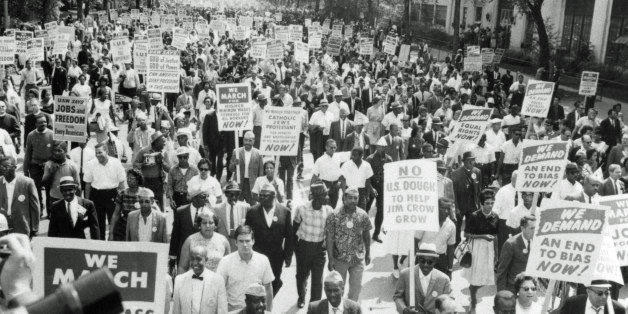
Then as the ‘60s ended with massive marches in support of equal rights for minorities and women, against the Vietnam war, and in support of gay rights, President Richard Nixon officially launched the “War on Drugs” in the early 1970s, declaring drug abuse a public enemy and enacting significant federal legislation like the Controlled Substances Act to combat drug production, distribution, and use, though policies intensified under subsequent administrations. 

One of Richard Nixon’s top advisers and a key figure in the Watergate scandal said the war on drugs was created as a political tool to fight blacks and hippies, according to a 22-year-old interview recently published in Harper’s Magazine.

“The Nixon campaign in 1968, and the Nixon White House after that, had two enemies: the antiwar left and black people,” former Nixon domestic policy chief John Ehrlichman told Harper’s writer Dan Baum for the April cover story published Tuesday.

“You understand what I’m saying? We knew we couldn’t make it illegal to be either against the war or black, but by getting the public to associate the hippies with marijuana and blacks with heroin and then criminalizing both heavily, we could disrupt those communities,” Ehrlichman said. “We could arrest their leaders, raid their homes, break up their meetings, and vilify them night after night on the evening news. Did we know we were lying about the drugs? Of course we did.”[3]
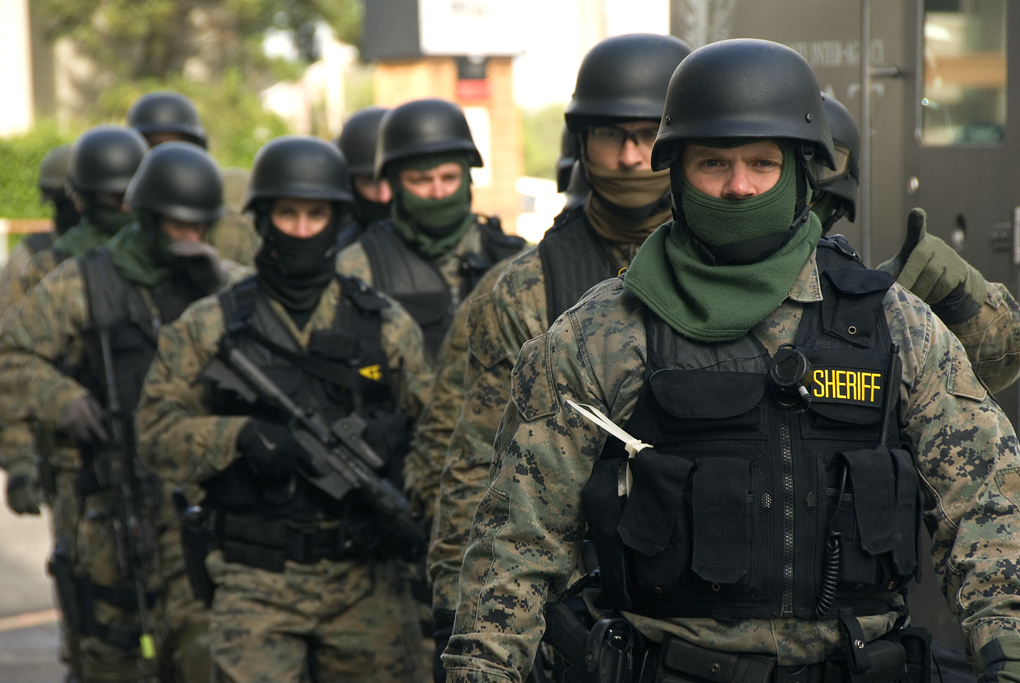
A 2017 study showed that police forces which received military equipment were more likely to have violent encounters with the public, regardless of local crime rates. A 2018 study found that militarized police units in the United States were more frequently deployed to communities with large shares of African-Americans, even after controlling for local crime rates. https://en.wikipedia.org/wiki/Militarization_of_police#cite_ref-17

In the next administration, First Lady Nancy Reagan famously addressed the drug “problem” with her “Just Say No.” advice, unwittingly illustrating the parental role now assumed by government over the private, consensual behavior of drug users. Reagan’s successor, George H.W. Bush, took it a step further. He promoted the 1033 Program (Defense Logistics Agency (DLA) Disposition Services) in the early 1990s to transfer surplus military gear to local law enforcement for the “War on Drugs.” Nowhere in this rush to judgement did anyone point out that M16/AR-15 rifles, grenade launchers, armored vehicles (APCs, MRAPs), night vision, tactical robots, and “less-lethal” gear (beanbag/pepperball guns, flashbangs) have absolutely no effect on drugs. These weapons and the “war” in which they are being used are against PEOPLE—American citizens, most of whom simply preferered to toke a joint after work rather than drink an alcoholic beverage.

This despite the fact that in the 1970s and ‘80s, marijuana was by far the most widely used of illegal drugs, was found in multiple studies not to be addictive and also found not to be a ‘gateway’ to harder drugs, as so often alleged in government reports. Even today, with drugs like cocaine and even fentanyl in the headlines, according to the United Nations Office on Drugs and Crime (UNODC) World Drug Report 2024, the estimated number of people who used various drugs at least once in the prior twelve months was: Cannabis (Marijuana): 228 million users; Opioids: 60 million users; Amphetamines: 30 million users; Cocaine: 23 million users; Ecstasy: 20 million users.

All the while, the drug war of those decades provided cover for illegal U.S. government operations in Central and South America as those nations began to resist colonization by American corporations seeking to exploit natural resources like oil, minerals, and agricultural opportunities. Fertile land and cheap labor could produce crops such as coffee, bananas, and other foods requiring year-round growing seasons.

According to Tim Weiner, the Central Intelligence Agency “has been accused of forming alliances of convenience with drug traffickers around the world in the name of anti-Communism” since its creation in 1947.[4] The CIA has a long, controversial history in South America, primarily during the Cold War, involving covert operations like coups, political destabilization, and support for right-wing regimes (e.g., Operation Condor) to counter perceived communist influence, leading to significant human rights abuses and democratic declines, with operations continuing into recent times, such as those in Venezuela. Key actions included overthrowing governments (Chile, Ecuador, Brazil), supporting anti-communist forces (Contras in Nicaragua, a major scandal where in U.S. operatives sold guns to Iran between 1981 and 1986, facilitated by senior officials of the Ronald Reagan administration. The administration hoped to use the proceeds of the arms sale to fund the Contras, an anti-Sandinista rebel group in Nicaragua.), and involvement in conflicts like the Salvadoran Civil War, with consequences like suppressed democracy and economic impacts.

This kind of interference in the affairs of other nations more or less permeates American history. In the early 20th century, during the “Banana Republic” era of Latin American history, the U.S. launched several interventions and invasions in the region (known as the Banana Wars) in order to promote American business interests. During the Cold War (1950s-1980s), the CIA carried out coordinated campaigns to install South American dictatorships (Argentina, Chile, Brazil, etc.) to track, kidnap, torture, and kill left-wing dissidents, with CIA support and intelligence sharing. In Guatemala (1954), the CIA overthrew the democratically elected President Jacobo Árbenz, linking to U.S. corporate interests, using exile forces and propaganda. In Chile (1970s), CIA efforts undermined President Salvador Allende, paving the way for a military coup. Same idea for Brazil (1964): Supported a coup against President João Goulart, leading to a military dictatorship. Nicaragua (1980s): Funded and trained the right-wing Contra rebels fighting the socialist Sandinista government, with alleged links to cocaine trafficking. El Salvador (1980s): Trained and equipped military units involved in massacres during the civil war.

CIA interventions often resulted in the collapse of democratic institutions, reduced civil liberties, and economic hardship, despite justifications of promoting democracy or fighting communism, according to research. The support ‘troops’ for these political objectives has become de facto occupation of these nations with armed agents of the U.S. Drug Enforcement Agency, with 87 foreign offices in 67 countries. For example, in the so-called “Southern Cone,” (Brazil, Chile, Argentina, Paraguay, Peru and Uruguay), are considered to be transit zones for the movement of cocaine base, cocaine HCL, and heroin being shipped from Colombia and Peru to markets in the U.S. and Europe, or producers of coca leaves. The end result of these often violent interventions in the affairs of our neighbors is the current and ongoing flood of desperate people arriving at our borders.

Not only are drug laws used outside our nation’s borders as cover for extra-judicial interference in international relations, they also serve domestically to selectively target specific individuals and politically inconvenient groups or based on racism or other prejudices, most recently undocumented immigrants. This is a useful tool for xenophobes determined to turn the United States into a white patriarchal “Christian” nation. The current administration manipulates this demographic by playing up the drug war.

Public support for prohibition policies relies on judgments of morality, that becoming intoxicated is immoral, an echo of the early 1800s temperance movement which reached its zenith with alcohol prohibition, the Eighteenth Amendment to the United States Constitution. This same moral judgment about private consensual activity remains a strong current in the United States where prostitution, gambling, and drug use (other than legal drugs) fall under strong government control. While government cannot (yet) spy on the living rooms and bedrooms of its citizens, government agents find such laws useful in targeting specific types of people, as previously illustrated.

“Today, police make more than 1.5 million drug arrests each year, and about 550,000 of those are for cannabis offenses alone. Almost 500,000 people are incarcerated for nothing more than a drug law violation, and Black and brown people are disproportionately impacted by drug enforcement and sentencing practices. Rates of drug use and sales are similar across racial and ethnic lines, but Black and Latinx people are far more likely than white people to be stopped, searched, arrested, convicted, harshly sentenced, and saddled with a lifelong criminal record.

“The wide-ranging consequences of a drug law violation aren’t limited to senseless incarceration: people with low incomes are denied food stamps and public assistance for past drug convictions; states including Texas and Florida suspend driver’s licenses for drug offenses totally unrelated to driving; and numerous other policies deny child custody, voting rights, employment, loans, and financial aid to people with criminal records.”[5]

Despite apparent national political resolve to deal with the drug problem, inherent contradictions regularly appear between U.S. anti-drug policy and other national policy goals and concerns. Pursuit of drug control policies can sometimes affect foreign policy interests and bring political instability and economic dislocation to countries where narcotics production has become entrenched economically and socially. Drug supply interdiction programs and U.S. systems to facilitate the international movement of goods, people, and wealth are often at odds.[6]

  • “We are still in the midst of the most devastating drug epidemic in U.S. history,” according to Vanda Felbab-Brown, senior fellow at the Center for Security, Strategy, and Technology at Brookings Institution. In 2020, overdose deaths in the United States exceeded 90,000, compared with 70,630 in 2019, according to research from the Commonwealth Fund. Yet, the federal government is spending more money than ever to enforce drug policies. In 1981, the federal budget for drug abuse prevention and control was just over a billion dollars. By 2020, that number had grown to $34.6 billion. When adjusted for inflation, CNBC found that it translates to a 1,090% increase in just 39 years.[7]

What if that money had instead been applied to individuals and programs that support individual ambitions and needs—tiny homes for the homeless, for example? What if the costs of our interference in foreign nations had instead been directed toward helping the people of those nations deal with loss of farmland to multinational corporations, climate-change induced drought and hurricane damage, and support for social programs, education, and entrepreneurship, thereby reducing the urgency of people in those countries to flood to U.S. borders in hope of better lives?

Without hot button issues like women’s reproductory rights and drugs, politicians would have to gain votes based on performance rather than propaganda. Stepping away from “government as nannies” and the idea of controlling private behavior would allow taxpayer dollars to support programs that help deter substance abuse in the same way that public education has helped reduce the use of cigarettes. No one knows better than addicts that they, individually, are the only ones who can control their addiction. Ultimately, as free people, we must claim the fundamental right to kill ourselves if we wish it. Most importantly, awareness of draconian drug policies as a cover for illegal objectives both in and outside our nation’s borders would forever eliminate travesties such as the murdering of likely-innocent people in boats leaving Venezuela.

And, in the case of the current administration, understanding the real agenda of the drug war could rightfully turn the public attention fully to the president’s dirty Epstein laundry.


[1] https://muse.jhu.edu/article/240064

[2] Wikipedia, https://en.wikipedia.org/wiki/Prohibition_in_the_United_States

[3] https://www.cnn.com/2016/03/23/politics/john-ehrlichman-richard-nixon-drug-war-blacks-hippie

[4] https://en.wikipedia.org/wiki/CIA_drug_trafficking_allegations

[5] https://www.vera.org/news/fifty-years-ago-today-president-nixon-declared-the-war-on-drugs

[6] https://www.everycrsreport.com/reports/RL33582.html

[7] https://www.cnbc.com/2021/06/17/the-us-has-spent-over-a-trillion-dollars-fighting-war-on-drugs.html

A Not So Modest Proposal

Social Support Programs: Address the Root

People Need Assistance in Accessing Support Programs. Will is a 61-year-old alcoholic who has managed to support himself through his excellent construction skills. After his work partner died four years ago, he lived in the attic of the man’s house until summer 2024 when the man’s 26-year-old son was jailed for beating up Will. When the son was released after four months, the widow chose to protect her son from future conflicts by telling Will he had to move out. He is currently living in a camper on a rural property by the generosity of an acquaintance. A wheel broke off his truck and he has no money to fix it, but without transportation, he can’t earn any money. He needs food stamps but has no computer or other means of applying. His phone ran out of minutes back in August.

Will is just one example of the problems facing people who need social support. What’s needed for Will and many others is an advocate who can assist him through the process but also, more importantly, to assess the person’s situation, capabilities, and needs and to assist that person in moving beyond their current status. Education, job training, mental health care, and/or medical treatment are among the needs often experienced by those seeking government assistance, but rather than actually helping people get the help they need, current programs throw out random packages of aid without any comprehensive effort at addressing the root causes.

An advocate for such applicants could assist in the process of seeking help as minimal as obtaining food stamps, but also gaining access to the full array of needed services, completing the application process properly, or assigning a counselor to help the applicant sort out his/her current life situation (in which case the advocate and counselor become a team). Without expert advocates to steer each applicant through an increasingly complex system, we risk wasting billions on systemic inefficiencies and do nothing to solve the problems that cause these people to need help in the first place.

Dispose of Outdated Laws

Drug laws: The drug war, like alcohol prohibition before it, frames the use of certain intoxicants as a moral failing. The result has been mass incarceration for private behavior.

All natural drugs should be immediately legalized, regulated like alcohol, and taxed. Tax proceeds for legal sales in Colorado, for example, have paid for homeless housing while reducing expenditures for law enforcement and prisons. This should include marijuana, coca leaf, psilocybin mushrooms, peyote, opium, and Ayahuasca, among others. Persons wishing to consume any of these substances should be able to walk into a retail establishment like a liquor store anywhere in the country and buy a product that’s been certified for purity and dosage. Such products should not be controlled by pharmaceutical companies. Individual production of such substances for personal consumption should be allowed without taxation or regulation. Public venues which serve psychoactive drugs should be licensed in the same manner as establishments for consuming alcohol.

Anyone previously convicted or imprisoned for possession, “manufacture,” or sale of these substances should be released from incarceration and their convictions expunged from the record. Unfortunately, due to the massive numbers of persons involved, any compensation for their loss of income or other social costs is not feasible.

Substance abuse, like alcoholism, can become a serious problem for certain people. Currently, only the very rich can afford treatment programs that address the whole person through nutrition, counseling, and exercise, among other things. Tax revenues derived from retail sales should first provide for comprehensive treatment centers in every community where anyone suffering from addiction can be immediately admitted.

Performance testing for job safety should take the place of current drug testing. A brief interface with a computer terminal for tests tailored to immediately show competency to meet job requirements—attention, dexterity, coordination, etc.—should be part of the employee’s work day.  A test failure, no matter what the cause of impairment—hangover, intoxication, fight with the spouse—could become part of that employee’s record with appropriate consequences for repeated failure. Intoxicated driving will be prosecuted.

Sex Laws: Prostitution should be legalized, regulated, and taxed as any other business. If a person wants to sell the use of his/her body for sexual gratification, it should be within his or her right to do so. Government licensing should include regular health inspections to ensure public safety. Houses of prostitution could include luxurious settings, the most attractive employees, or the most innovative approach – for example, offer an immersive experience in an establishment with fantasy themes (medieval, harem, S&M dungeon, etc.). There should be no restriction on how houses of prostitution or individual practitioners might combine their services with other services such as massage, restaurants, intoxication venues (alcohol and/or drugs), or even mental health counseling.

Nudity Laws: Allocation of designated locations where people can go without clothing should be legal in all states.

Facilities/Resources: Eliminating drug and sex laws will result in decreased need for jails and prisons as well as employees of the criminal justice system. Freed-up resources should be redirected to improving public defender salaries and providing for persons prosecuted for other offenses.

Reining in Corporate Greedmasters

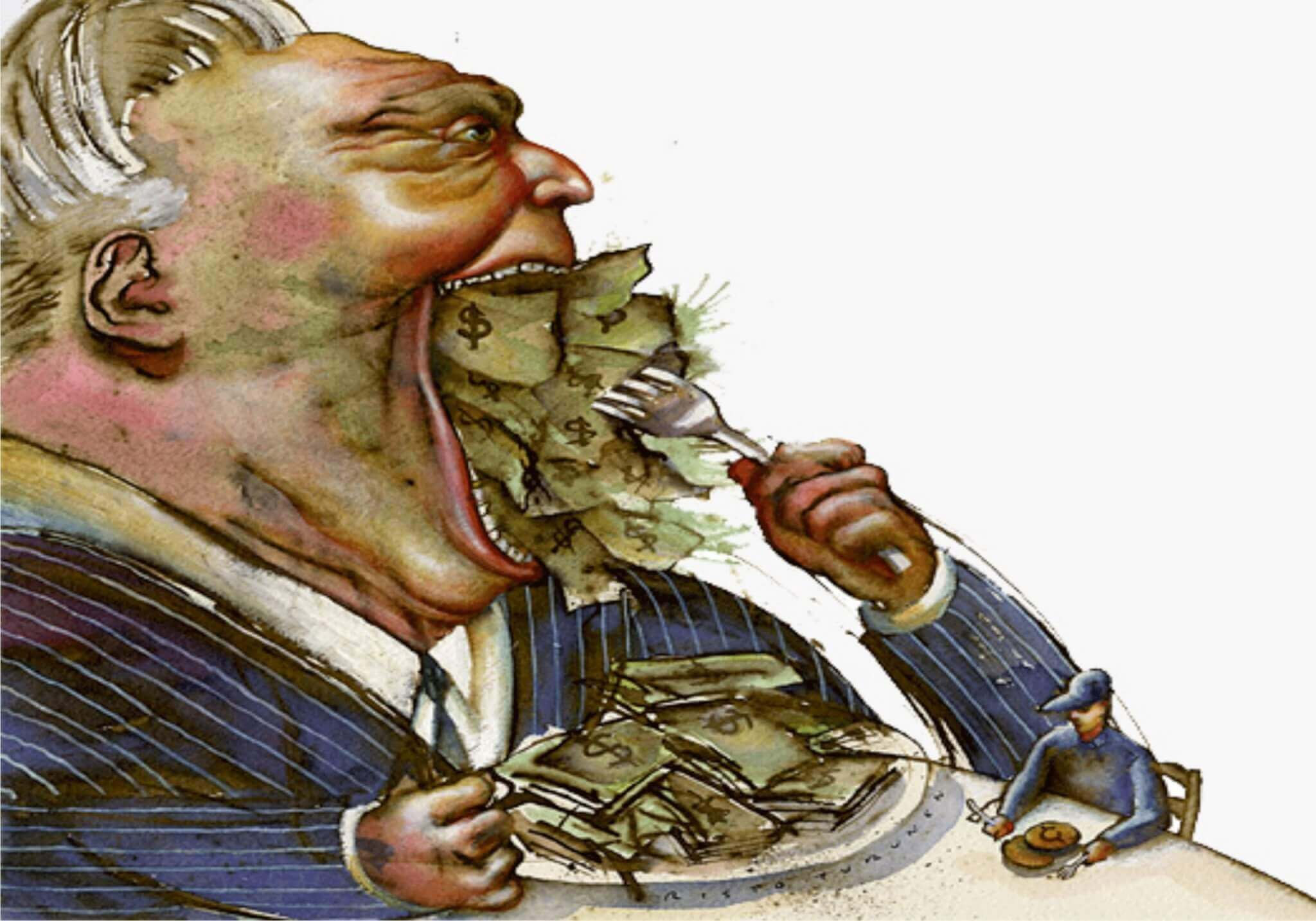
CEOs and other top executives should receive pay based on the pay their workers receive. If the company is profitable enough to pay at CEO $27 million a year, workers should be earning far more than $15-$20 per hour. Likewise, prices for products that serve a lifesaving role for consumers should be regulated by the government just as utilities and other vital public services are regulated.

Healthcare: Medicare for everyone. Eliminate insurance companies unless they are non-profit. Hospitals and pharmaceutical companies must be non-profit. Drugs would be price controlled. Research for new treatments and new drugs would operate under federal grants.

Legal Services: Expand funding for free legal aid so that injured parties have full recourse to legal action.

Everyone is responsible

National service: Everyone reaching age 18 must serve whether Peace Corps, military, domestic infrastructure, civic duties or whatever else would benefit the public at large. No exceptions except for significant disability. Higher education, either college or vocational, can wait until the completion of two years’ public service. Serving in such duties should be in a location away from the family home, should provide food, shelter, and a minimal wage, and should result in free college/vocational training at its conclusion similar to the G.I. Bill.

Education

All secondary schools should be required to offer a curriculum that includes literature/language, basic math, basic science, state and national history, speech/debate, music, art, and domestic duties including balancing a checkbook, changing a tire, and nutrition/how to cook. Males and females need the same courses. Domestic duty classes would include thorough sex education with a segment where kids have to carry a baby (doll) around 24-7. Dolls used for this teaching experience should be computerized to function as close to human behavior as possible including messy diapers, hunger, and crying. Birth control pills should be freely dispensed at school health clinics with or without parental permission.

Teacher salaries should be competitive with other professions requiring college degrees even in the most impoverished districts.

States which allow religious schools and home schooling should be required to regularly test home schooled and religious school students for the same course requirements as public schools students. Non-public school students who can’t pass the exams cannot receive a diploma. Repeated failure to pass exams would require the student to enter public schools. Public school students who fail to pass exams would be entered into a special unit of the school system and assessed for need of nutrition, mental health, and family problems, among other things, and individually tutored until learning improves. Vocational training for all trades should be available and affordable as should college.

Homeless Population

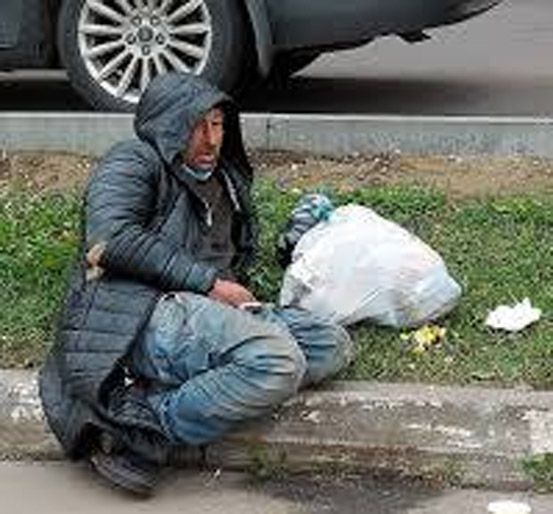
An estimated 25-30% of homeless people suffer mental illness. Yet few programs addressing homelessness provide for treatment. Often these individuals end up in local jails because they can’t take care of themselves and there are no longer facilities dedicated to treating them.

“…during the Reagan administration, Federal funding for such institutions was shut down so that our wealthy class could pay less in taxes, and that put many thousands of mentally ill people out on the street corner. We have done nothing since to remedy this. A compassionate nation would care for these unfortunate people, and provide the mental facilities to house them where they could get the help they need that their conditions require.”[1]

Most homeless programs exhaust their resources in simply trying to feed and shelter the homeless. Most of them fall short even of that. Successful efforts to address homelessness are based on meeting physical needs as well as mental health concerns. Addiction is another illness at the root of many homeless situations. Until systemic remedies are put into place, homelessness will continue to plague us.

The more successful programs for the homeless are centered in tiny home villages or converted industrial/commercial properties. As shopping malls have become less viable, some cities and nonprofits have converted these sprawling spaces to homeless housing. Facilities serving the homeless would offer food service, counseling, health care, and job training.

Taxes

Poverty levels should be adjusted annually to meet the real costs of housing, food, and transportation. Persons earning above poverty level should pay income taxes on a sliding scale. Income at some level, say above five million, should pay a very high rate, as much as 70% of income.

In addition to legalized ‘sin’ transactions (drugs, sex) that would generate significant tax revenues, churches should be taxed like any other business. Penalties and additional taxes should be assessed against any corporation or individual found to be hiding income in foreign countries. No tax shelters.


[1] https://www.quora.com/What-is-the-most-successful-homeless-program

We Know the Answers; If Only We Would Listen

The continuing search for solutions to the massive influx of immigrants has yielded some outrageous ideas, such as Trump’s ‘solution,’ ridiculed by Rep. Robert Garcia, who on January 31 reminded the Republican caucus that the plan they have rallied behind consists of moats filled with alligators, fences with spikes on top, bombing northern Mexico, and shooting asylum seekers. “Trump only speaks about creating misery at the border, there is no plan to improve anyone situation here,” Garcia pointed out.

Serious efforts to address these problems more realistically have been ongoing. For example, on June 26, 2023, a conference addressing the root causes of migration in the Western Hemisphere convened in Washington D.C. under the auspices of the Council on Foreign Relations. Speakers included Katharine M. Donato (Donald G. Herzberg Professor of International Migration and Former Director, Institute for the Study of International Migration, Georgetown University; CFR Member), Silvia Giorguli (President, El Colegio de México, A.C.),  Manuel Orozco (Director, Migration, Remittances and Development Program, Inter-American Dialogue), and Presider Kellie Meiman Hock (Managing Partner, McLarty Associates; CFR Member). What follows are excerpts from their discussion.

HOCK:  We’ve got the socioeconomic realities of Mexico and Central America in an environment of increasing violence, and we’ve got on our side the U.S. failure to enact a coherent immigration reform to try to permit more regular flows despite our having a labor shortage, despite the efforts of the Biden administration to try to enact some more regularity through the regional processing centers and other efforts. It’s still difficult, and an election in 2024 will not make it more easier.

GEORGULI: First is this idea that we do need a comprehensive and regional approach to the management of migration more than unilateral or bilateral agreements to look at more in a—in an open perspective. Of course, one of the acts of the centers of the management of migration goes to addressing the drivers of migration—economic drivers; environmental drivers; and now in Central America—well, in North and Central America, and in Mexico also, violence-driven migration.

One of the main conclusions of the group was the idea of increasing the legal pathways to migration, both in terms of labor opportunities but also in terms of humanitarian protection. And another lesson learned from what we have seen in the region is the importance of civil society and the work that they have done, that in many cases they have been more effective than certain states to respond to the urgent needs and the humanitarian needs of population on the move.

DONATO: … the historical context is complex. It is an area of the world where there was a lot of civil war and civil strife in the 1980s in El Salvador, in a variety of countries in Central America. There was not only a lot of violence then, but there was a lot of displacement. And that started a pattern of, you know, fairly significant internal displacement, which then translated into movement through Mexico and coming up to the U.S. border.

And even though that kind of violence began to dissipate in the 1990s, it’s an area of the world that has continued to—since the mid-1990s that continues to not be totally on stable ground with respect to democracy, democratic processes, with respect to the belief in the legitimacy of the state to take care of me if I’m—something happens. And it’s also an area of the world where there’s been a fair amount of environmental events, big natural disasters—so Hurricane Mitch in 1998, I believe; Hurricane Stan in, I think, 2003 or (200)4; very big storms coming through. And actually, in 1998 when that happened, the U.S. implemented temporary protected status for hundreds of thousands of Salvadorans and Hondurans who were in the U.S. and could not return.

So the thing is, none of these drivers—the initial drivers—operate by themselves. They all interact. But they’ve created enough of a push so that many, many people have left. And I think about 4 million—not counting the recent years of entry, I think 4 million persons born in northern Central American nations live in the United States, and that’s not counting the last few years.

And so the population has grown in the U.S. It’s grown because not only of these drivers, but then all of the family networks. You know, someone gets to the U.S. They get TPS, temporary protected status, which has to be renewed on a yearly or, you know, every-two-year basis. But then those families who then have a foothold here then can help bring others here.

So this has been a process that’s been going on now for decades. It’s going to be fairly hard to stop even if life, let’s say, in Guatemala and Honduras became less violent and more predictable with respect to climate and therefore food supplies. Even if those structural problems lessen, it still will take quite some time because now family connections are cross-border. And you know, if I haven’t been able to cross and my family’s been in the U.S. for fifteen years, odds are very, very high that I’m going to come.

GIORGULI: … addressing the drivers of migration, keeping the strategy of cooperation for development in order to attend the causes of migration, is still a very important and one of the main strategic lines to follow when you talk about the regional management of migration. But there are two things that we have learned from the Mexico-U.S. experience for more than one hundred years.

First, that it will take time to have results on one side. And secondly—and that’s new—that, usefully, I think that in a certain way we are—still think a lot of this lever, economic migration, and that’s why it has been so difficult to move to a different way of managing Central American migration in Mexico and in the U.S., no? So, like, trying to change that chip and trying to emphasize more of these challenges, such as the rule of law, and strengthening the local institutions, no?

For example, in the case of Mexico, of course there has been a change in terms of refugee and asylum because the way the applications have increased in the last three years. There has been a lot of work with UNHCR—with ACNUR in Spanish, UNHCR in English—but still the institution that is responsible for processing and receiving all the applications is very weak in terms of financial resources and human resources, no? So that would be, like, very close to the U.S. case, where the strengthening of the institutions can be one way to build this more comprehensive management.

DONATO: … in the United States any significant change to legal pathways has to come from U.S. Congress, and we are stuck, right? Congress is stuck and unable to develop out legal pathways. So, as a result, the legal visa system that we have in place currently comes from an act of Congress that took place in 1990. And I don’t know one employer in the world that wouldn’t have changed their hiring procedures over the course of three or four decades. So we are talking about an antiquated system.

…[With] the Biden administration—there have been some changes, small, some recommendations from the task force that sync with what the Biden administration has done in the U.S. The regional processing centers, it’s going to take a while to figure out if they’re going to work. But the idea is that perhaps we should have a place where people can go that’s more accessible than coming all the way from Venezuela … all the way up through Mexico, and all the risks that are associated with that kind of movement. … can we develop a place—and the U.S. government is working on this now with two other partners, Canada and Spain.

~~~

OROZCO: …the administration wants to extend DACA to this crowd of kids, and we’re talking about five hundred thousand people now. You know, between 2019 and 2022, five million people tried to come to this country. I mean, five million is a lot—it’s a country moved to the U.S. border. Maybe half made it, or two million made it. The other ones were returned, and billions of dollars spent on that is a big hassle that we haven’t even talked about, all because there is a broken system.

GIORGULI: … something that I learned from working with the task force, and especially from the colleagues from Central America, is that it has to do not only with economic opportunities, but working side by side with the rule of law, with the construction of institutions in the countries and communities of origin, no? So I do agree with Manuel that economics is probably one of the strongest and most continuous drivers of migration, but I also think, from the field work that we have been conducting and from the experiences that we heard within the task force, that if you don’t have this other part, it’s just economic investment, or creating job opportunities in the communities of origin by themselves will not be enough.

QUESTION FROM THE AUDIENCE: I’d like to go back to something that Manuel said. Very specifically he talked moral hazard—moral hazard in migration, taking migration seriously. Silvia talked about UNHCR giving money to COMAR in Mexico to help with refugees, and so on—not enough money, not enough.

But I would say the same thing happens in the United States. The United States invests, creates a whole new bureaucracy when they create the Department of Homeland Security, and starts giving money almost specifically, almost exclusively to ICE and to CBP. USCIS is lost out there somewhere, right? And the problem with enforcement, with thinking that you are going to stop water from flowing, is that it’s self-perpetuating. The more you invest in that, the more you have to invest. The more walls you build, the more you trap people behind those walls, and it gives you exactly what you say you don’t want.

~~~

The group further discussed inequities in existing agricultural programs as well as the increasing effects of climate change and poor quality education in these countries where so many immigrants originate. A complete manuscript is available at https://www.cfr.org/event/addressing-root-causes-migration-western-hemisphere Video of the discussion is found at https://www.youtube.com/watch?v=Gc3CG7SRvrE&t=23s.

Without addressing the root causes of the increasing immigration, the U.S. has no chance of enacting meaningful controls. This conference was one of many ongoing efforts to better understand what we can do without killing people or otherwise fantasizing about inanely cruel–and ultimately ineffective–policies.

Academic AND Vocational Education

Sidetracking traditional education and leaning into vocational training at an early age will only exacerbate cultural division in the U.S. Much of what currently upsets under-educated Americans is that they do not understand much of what they have to deal with on a daily basis. It’s not news that people fear the unknown.

The anti-vaxxers are a perfect example—people who know nothing about viruses or how they function in the human body or how vaccines work to provide a level of immunity. So there’s all this pressure from the educated (scientists, doctors) and the government (tasked with protected public health) for people to get vaccinated, and the anti-vaxxers just feel pushed around and outraged. Conspiracy theories substitute for knowledge, that health spokespeople are on the take, that they create the virus to make money, that it’s better to take horse wormer than listen to the doctors.

Meanwhile, the virus finds unprotected human bodies to infect and starts happily mutating, a standard activity of viruses and other invisible meanies. Pretty soon the old vaccine doesn’t work against the new variant, and the anti-vaxxers say, “Ha! See?” without realizing that they are the weak link in allowing the virus to gain the upper hand. If the virus has no hosts in which to breed and mutate, the virus dies.

And so it goes.

  • The know-nothings dismiss all journalism because they don’t know the difference between legitimate journalism and fake news from ‘announcers’ who could care less about the principles of professional journalism.
  • The know-nothing avidly embraces sensational claims of wannabe tough guys like Trump whose records clearly reveals his lifelong failure in business and his bankrupt character.
  • The know-nothing passionately puts forth ad hominem arguments without understanding the principles of legitimate fact-based debate.
  • The know-nothing votes only for president because it’s the most high profile without understanding that every level of political office is essential to healthy function of our government.
  • The know-nothing hoards arms and joins with likeminded know-things in fantasizing about civil war when they can get rid of the ‘enemy’ without having any awareness of the real tragedy of civil war.
  • Worst of all, the know-nothing is defenseless against propaganda.

Living in the modern world requires that people are educated not only in math (yes, even algebra, which is not so much about remembering theorems as it is training the brain in logic) and English (grammar, spelling, literature, and essay writing all contribute to a person’s ability to read and understand as well as his/her ability to communicate with others),  but also in biology, speech, civics, and history. Our young people also need full access to learning in the arts whether music or visual arts; for some, these are the only pathways to a fruitful future. We must provide these many facets of a nourishing preparation for life.

So we need to be very careful about any ‘reforms’ to the education system or required curriculum. Yes, vocational skills are great for a significant portion of the population in terms of future jobs. There will always be a need for plumbers, electricians, carpenters, welders, car mechanics, and so forth, and these can be lucrative careers. But that alone does not equip the population to succeed in these times.

We do not need to make a choice, either/or, with our educational system. We must have both.


The Gifts of Evangelicals

Religion got us here, all this chaos surrounding our government and the unmitigated shitshow of Donald Trump.

Religion, where believers must suspend disbelief in order to believe—perfect practice for falling for snake oil salesmen and political bullshit.

Knowing this, since at least the 1960s, the back rooms of the Republican Party have carried out a bold plan to enlist evangelical Christians in their pursuit of power. Hot button issues became hotter under their rhetoric—abortion isn’t just about women making medical choices about their bodies and lives, it’s killing babies. Even newborns!

It seems not to matter how absurd the argument when twisted to fit this agenda. True Believers fall for it every time. They surge out their doors on Election Day, ready and eager to vote. Otherwise, God won’t love them.

Well meaning, intelligent, even well-educated evangelical Christians can’t help themselves in the face of God’s wrath. And yes, there are such things, although the majority seems less than intelligent or educated. Do they love the country more than God? Do they love the Constitution more than God? No, they can’t. There’s a lake of fire and brimstone waiting just below their feet if they don’t love God the most.

Whatever God actually said, if anything, doesn’t matter. It’s what the puppet masters behind the Church and the Republican Party say that matters, their interpretation, spin, whatever you want to call it. Ever more outrageous, the lies keep coming.

Poor Donald, never did anything but exercise his free speech. He just wanted to make sure the vote count was accurate. He now suffers the slings and arrows of an ungrateful nation and misguided justice system because he stood up for ‘his’ people.

I wonder if Donald ever knew he was a token, a pawn used to stir up the perfect demographic to push him into office. Will he ever know?

It’s doubtful. The aspect of Donald that made/makes him a perfect pawn is his utter and complete hubris which allows him to believe he became president on his own merits. Yes, he submitted to being prayed over, signing Bibles left and right, giving the peasants the bread and circus they craved with his court appointments, his mouthing of the correct words. He probably saw/sees this evangelical fawning as yet more evidence of his personal greatness.

Yes, there were other factors. There was and remains a dedicated faction of racists among us, so fearfully enraged by darker skin that they would tear down the walls of government for the chance to (kill) take away all rights from anyone not lily white.

There was and is a dedicated faction of anarchists who salivate over the dream of no government, no laws, no rules, just each man for himself and the guy with the most guns wins.

Wasn’t it ever thus? A few malcontents and nihilists among the mobs of true believers eager to please whatever god(s) reigned supreme in that time and place? True believers, hands clasped in reverence, bow down to that man who stands before them claiming his special gift, to speak for the god, to lead the people to the god’s promises? The anointed one, showing the path to god’s love, god’s promised way of life, no matter the sacrifice. (Cue trumpets and drums, the rattling of swords against shields)

We have seen it and know it. This is the time when humanity must evolve beyond the tired hatred of religious fervor, the idea that god loves you but not me, that promise that god will send your soul to eternal torment if you don’t do what he says, what his pawn says he says.

It is time to strip away the false promises of religion, division of race or belief, and embrace each other. We are one world of one people.

When the wise men of this nation’s early years enacted policies that ensured education for all children, they had a specific rationale. Thomas Jefferson said “Above all things I hope the education of the common people will be attended to; convinced that on their good sense we may rely with the most security for the preservation of a due degree of liberty.”

Through much of the 1800s, the central role of public schools was to preserve the American democracy and inculcate democratic values. After all, an ignorant man can be persuaded by all kinds of rhetoric to vote one way or the other. Only the educated man has the ability to consider a multitude of facts and reason his way to a vote for the honorable candidate best qualified to lead the nation (town, county, state).

“Education” which teaches religion cares not for reason. In fact, reason is the enemy to religion. Among the many objectives of the nascent fascist force in the Republican arsenal is this awareness, thus their denigration of public education, their determination to replace it with religious ‘education’ so that they can recruit armies of dedicated zombies utterly devoid of logical reasoning.

Ironically, if the evangelicals and behind-the-scenes thugs of the Republican Party succeed in gutting the promise of our democracy, they will be heralding their own demise. Fundamentally, it is our very system of government, free from religious directives, which guarantees the right of each person to pursue his particular religious beliefs. But understanding this truth requires reasoning, and zombies don’t reason.

WHAT THEY FEAR

Upon reading stories about people serving forty (or more) years sentences in prison for the crime of selling marijuana, one is left with the uncomfortable feeling that something is missing from the picture. People who commit rape or murder serve less time.

What was/is so terrible about selling marijuana? Especially now that multitudes of people are making lots of money selling marijuana LEGALLY.[1]

At least in the 22 states that have legalized marijuana, shouldn’t all the previous such ‘crimes’ be dismissed and their ‘criminals’ be pardoned?[2]

Why is the boot of the government still on the necks of marijuana users and traffickers?

Historically, the first notable enthusiasm for marijuana prohibition came from law enforcement.[3], [4] It was no accident that the big push to criminalize marijuana came exactly at the moment alcohol prohibition ended. It gave fresh hope for employment to all the ‘revenuers’ who’d been busy tracking down and destroying bootleg stills. After Nixon declared a war on drugs, particularly marijuana, pot users became a nest on the ground for police looking to boost their arrest numbers, hence the money they could gain for the department. It didn’t hurt that arresting a pot head meant, in many places, police pocketing whatever money the hapless victim might have had in his pocket, even if it was his week’s pay meant to cover rent.

Seizure/forfeiture proceedings also led to police profiting from taking the car in which said culprit had been driving, or if at home, the house, land, equipment on the land, as well as jewelry and other valuables in the home which could be claimed as implements of a crime and therefore suitable for forfeiture to the state. The thing about seized assets is that the victim doesn’t have to be found guilty of a crime; the assets are guilty separately, and public defenders are not appointed to defend property. If the victim, now penniless, can scrape up enough money to defend his property, he might stand a chance of having it returned to him. But in many cases, his rights regarding his property are obscured in an Orwellian maze of legal procedures designed to profit the state and the arresting police department.[5]

There has never been a calculation of the loss to individuals, families, and society resulting from these prohibition tactics—loss of employment, loss of opportunity to parent children and preserve home and wellbeing for a family (and the family’s subsequent need for welfare), disenfranchisement not only from citizenship, but also from community standing—a permanent blow against that person for getting high on marijuana instead of beer.

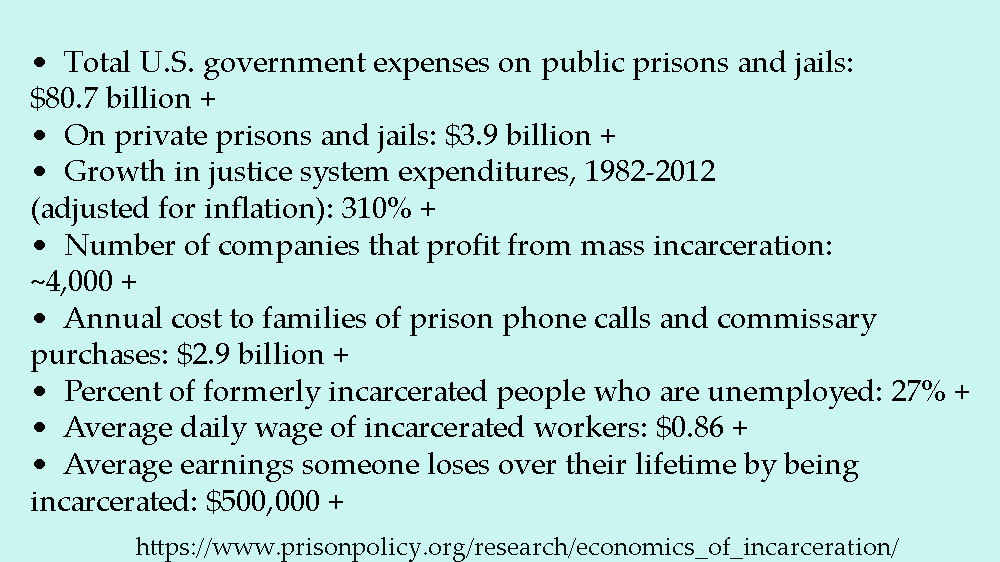
Jobs and money were not the only motivations for marijuana prohibition within the nation’s criminal justice system. Most state inmates are required to work at jobs within the prison system. In Arkansas, much of that labor was/is in prison farms which produce millions of dollars’ worth of crops which does not necessarily end up on prison cafeteria tables but rather is sold to profit the system.[6] Other types of prison jobs pay a minimal wages, which benefit whichever corporate employer is able to gain this work force. The growth of for-profit prisons has increased exponentially, with states giving up their prison industry for a package deal with the corporates. [7]

More to the point, the lingering extremism of marijuana prohibition has been a half-assed effort to stop the awakening of an entire generation. Amid the civil rights movement whereby former enslaved persons and their descendants might gain their rightful place in society and the growing outrage over the war in Vietnam, the Baby Boom generation came of age as if awakening from a 1950s dream where their parents and America were right in the world. Slowly, as the scales fell from their eyes, facilitated by the enlightening effects of marijuana, young people were shocked then horrified by the catalogue of wrongs unfolding on their television screens and in their city streets. Police were beating people over the head for protesting. Young men of the generation were dying by the thousands in an unwarranted ‘war’ no one authorized or understood.

Slowly, the awakening of the generation produced a new vision of a righteous society. Women’s rights, minority rights, gay rights, rights for the handicapped. Organic food and natural medicine including natural childbirth. Protection of the environment. Free sex for the pleasure of it now that women had gained the right to control their bodies. These were topics of conversation among the thousands of young people as they sat in circles passing a joint. Their awakening sent shock waves through the established culture as Boomers turned their backs on corporate jobs and material consumption to live in teepees and grow their own food (and marijuana), as they joined with minorities and war veterans to demand justice. More importantly, they didn’t keep quiet about their awakening, but took to the streets to force institutions like universities and government to hear the good news.[8]

Therein lies the slavering hatred against pot dealers/traffickers/users that has permeated American culture in the ensuing 60 years. Not only did a generation of well-fed, highly educated 1950s youth turn their backs on all their parents and grandparents held dear, they had the gall to demand those folks accept revolutionary change. Perhaps most outrageous to the older generations was the embrace of alternative spiritual belief, practices like meditation and non-violence, or the growing movement toward no adherence to religion whatsoever.

This fight is far from ending. Presidents Nixon then Reagan came to power in a backlash against this revolution. Newt Gingrich and Rush Limbaugh recognized an opportunity to motivate their audiences through hateful rhetoric, forging a new kind of political mood that empowered religious extremists. Today, the rotten fruit of their blind self-aggrandizement is harvested almost daily in mass shootings and a population at war with itself as Republican powerbrokers use these differences like a cudgel to drive hysterical evangelical voters to the voting booth.

The misguided effort to put the genie back in the bottle has led and continues to lead to the legally-sanctioned crucifixion of entrepreneurs who dare to meet the market demand for marijuana. It is capitalism turned on its head. The cost of imprisonment in 2015 averaged an annual cost of $33,274 per inmate. Best estimates for the current marijuana prison population comes in around 40,000. A quick moment at the handy calculator shows that taxpayers of the United States are spending $1.33 billion dollars annually to punish the users and purveyors of this modest weed.[9]

Alongside the drug war and all its collateral damage has come the arming of local police forces with weapons of war and the glorification of guns. As citizen petitions slowly win some degree of sanity in nearly half our states, prisoners of this war still languish in prison cells.[10]

What ‘they’ fear is change. When will this tragedy of fear and loathing come to its rightful end?


[1] https://norml.org/laws/arkansas-penalties/

[2] https://www.usnews.com/news/best-states/articles/where-is-marijuana-legal-a-guide-to-marijuana-legalization

[3] https://www.cbp.gov/about/history/did-you-know/marijuana

[4] https://www.cbsnews.com/news/harry-anslinger-the-man-behind-the-marijuana-ban/The man behind the marijuana ban for all the wrong reasons” by Cydney Adams, November 17, 2016 / 5:45 PM / CBS News

If you look for the roots of America’s ban on cannabis, you’ll find nearly all roads lead to a man named Harry Anslinger. He was the first commissioner of the Federal Bureau of Narcotics, which laid the ground work for the modern-day DEA, and the first architect of the war on drugs.

Anslinger was appointed in 1930, just as the prohibition of alcohol was beginning to crumble (it was finally repealed in 1933), and remained in power for 32 years. Early on, he was on record essentially saying cannabis use was no big deal. He called the idea that it made people mad or violent an “absurd fallacy.”

But when Anslinger was put in charge of the FBN, he changed his position entirely.

“From the moment he took charge of the bureau, Harry was aware of the weakness of his new position. A war on narcotics alone — cocaine and heroin, outlawed in 1914 — wasn’t enough,” author Johann Hari wrote in his book, “Chasing the Scream: The First and Last Days of the War on Drugs.” “They were used only by a tiny minority, and you couldn’t keep an entire department alive on such small crumbs. He needed more.” 

Consequently, Anslinger made it his mission to rid the U.S. of all drugs — including cannabis. His influence played a major role in the introduction and passage of the Marijuana Tax Act of 1937, which outlawed possessing or selling pot.

Fueled by a handful of 1920s newspaper stories about crazed or violent episodes after marijuana use, Anslinger first claimed that the drug could cause psychosis and eventually insanity. In a radio address, he stated young people are “slaves to this narcotic, continuing addiction until they deteriorate mentally, become insane, turn to violent crime and murder.” 

In particular, he latched on to the story of a young man named Victor Licata, who had hacked his family to death with an ax, supposedly while high on cannabis. It was discovered many years later, however, that Licata had a history of mental illness in his family, and there was no proof he ever used the drug.

The problem was, there was little scientific evidence that supported Anslinger’s claims. He contacted 30 scientists, according to Hari, and 29 told him cannabis was not a dangerous drug. But it was the theory of the single expert who agreed with him that he presented to the public — cannabis was an evil that should be banned — and the press ran with this sensationalized version.

The second component to Anslinger’s strategy was racial. He claimed that black people and Latinos were the primary users of marijuana, and it made them forget their place in the fabric of American society. He even went so far as to argue that jazz musicians were creating “Satanic” music all thanks to the influence of pot. This obsession eventually led to a sort of witch hunt against the legendary singer Billie Holiday, who struggled with heroin addiction; she lost her license to perform in New York cabarets and continued to be dogged by law enforcement until her death.

“The insanity of the racism is a thing to behold when you go into his archives,” Hari told CBS News. “He claims that cannabis promotes interracial mixing, interracial relationships.”

The word “marijuana” itself was part of this approach. What was commonly known as  cannabis until the early 1900s was instead called marihuana, a Spanish word more likely to be associated with Mexicans.

“He was able to do this because he was tapping into very deep anxieties in the culture that were not to do with drugs — and attaching them to this drug,” Hari said. Essentially, in 1930s America, it wasn’t hard to use racist rhetoric to associate the supposed harms of cannabis with minorities and immigrants. 

So as the nationwide attitude towards cannabis began to fall in line with Anslinger’s, he testified before Congress in hearings for the Marijuana Tax Act. His testimony centered around the ideas he had been pushing all along — including a provocative letter from a local newspaper editor in Colorado, saying “I wish I could show you what a small marihuana cigaret can do to one of our degenerate Spanish-speaking residents.”

All these years later, many of the threads in Anslinger’s arguments are still present in the American conversation about legalizing marijuana. The act was passed in 1937, and the rest, they say, is history.

[5] It was not until the year 2000 that Arkansas instituted a system requiring police to record seizure of any asset including cash and vehicles, and establishing a method of tracking the distribution of those assets . See https://ij.org/report/policing-for-profit-3/?state=AR

[6] https://en.wikipedia.org/wiki/Prison_farm

[7] https://www.investopedia.com/articles/investing/062215/business-model-private-prisons.asp

[8] https://www.theatlantic.com/politics/archive/2020/06/todays-protest-movements-are-as-big-as-the-1960s/613207/

The Rage Unifying Boomers and Gen Z, By Ronald Brownstein, JUNE 18, 2020 The ATLANTIC

The 1960s have achieved almost mythic status as a hinge point in American history. Both those who welcomed and those who feared the convulsive changes the decade brought can agree on one thing: Socially, culturally, and politically, the nation was a very different place when the ’60s ended than when they began.

This could be another such moment.

The ’60s watershed moments—the civil-rights campaigns in Birmingham and Selma, Alabama; Martin Luther King Jr.’s March on Washington and the anti-war March on the Pentagon; the outpouring of demonstrations following the shootings at Kent State—can seem in retrospect like towering peaks of transformative activism far beyond any contemporary experience. But history may look back on this period as a comparable transition in the nation’s politics and culture, driven primarily by the largest generation of young Americans since the Baby Boomers who flooded the streets decades ago.

Enormous differences separate the two periods. But they may ultimately prove united by the magnitude of the change they impose.

The 1960s saw the emergence of social movements around civil rights, opposition to the Vietnam War, feminism, Mexican American activism, and environmentalism, as well as the first stirrings of gay rights. The past decade has seen youth-led movements around climate change, gun control, immigration, and inequities of gender (#MeToo) and race (Black Lives Matter).

Seen as one long wave of change, modern activism “has the sweep of the ’60s,” says Todd Gitlin, a historian (and veteran) of those protest movements and a sociologist at Columbia University. And just as the 1960s triggered big changes in American attitudes on issues from premarital sex to trust in authority, the past few years have also witnessed big shifts toward greater support for gay rightsmore agreement that human activities are causing climate change; and recognition that systemic racism remains embedded in American life, a consensus that has rapidly solidified since the death of George Floyd in Minneapolis. Young people have been at the forefront of each of these changes.

Today’s long wave of protest shares one other quality with its predecessor: It has changed popular culture and the contours of public opinion more quickly than it has public policy or the nation’s electoral landscape. Now, as then, an electoral system that favors older generations—through structural imbalances that favor rural states with older and less diverse voters—is responding slowly to calls for change from younger Americans.

And yet, just as with the Baby Boomers before them, Millennials, Gen Z, and the generation following them will eventually define the new American mainstream through their priorities and viewpoints, as over time they become a majority of the nation’s population. In that way, the huge number of people on the streets of America’s major cities this month may offer a preview of how profoundly these younger generations may reshape the country’s politics once they vote in numbers that more closely approximate their growing presence in the population overall. “This transition is inevitable,” says Ben Wessel, the executive director of NextGen America, a group that organizes young people for progressive causes. “The question is: How quickly is it going to get here?”

The differences between Baby Boomers and today’s young people are easy enough to see. Younger generations now are far more diverse: White people made up four-fifths of the Baby Boom (defined as those born between 1946 and 1964), but represent only three-fifths of Millennials (born 1981 through 1996) and only a little more than half of Gen Z (tentatively defined as those born from 1997 through 2014).Allen Matusow, the author of The Unraveling of America, a seminal history of the country during the 1960s, noted another key difference in an email: Back then, many of the protests grew out of an assumption of abundance after two decades of the nation’s post–World War II boom; young people today face more precarious prospects. While the white, college-attending component of the ’60s generation “assumed unending growth, abundant consumption, and good jobs when they were ready to take them,” young people now face “environmental degradation, rising sea level, [and] concentrations of wealth that threaten democracy,” among other challenges, said Matusow, who is also a fellow at the Baker Institute of Public Policy at Rice University. Put another way: One movement was a revolution of rising expectations; the other is a struggle to gain a foothold.

And while the great social movements of the 1960s and early 1970s had clearly identified leaders who became iconic figures—King and Malcolm X for civil rights; Abbie Hoffman, Jerry Rubin, and Tom Hayden for the anti-war and student movements; Cesar Chavez for farmworkers; Betty Friedan and Gloria Steinem for the feminist movement—today’s activism is largely leaderless, notes Kirsten John Foy, the founder of the Brooklyn-based activist group The Arc of Justice. Particularly within the Black Lives Matter network and the broader uprising against discriminatory policing, Foy says, “We have moved beyond this messianic notion of leadership, even in the black community. It has democratized the movement and it has reenergized the movement.”

In both decades, the fulcrum of change was the emergence of a vast new generation determined to question the rules and priorities that it inherited. Young people were hardly the only voices agitating for change during the 1960s, just as they are not the sole source of activism now. But in each case, the sheer bulk of the rising generation provided a critical mass for social movements.

At its peak in 1964, members of the Baby Boom represented 37 percent of America’s total population, according to Census figures provided by the demographer William Frey. Frey calculates that, at their peak in 2015, Millennials constituted a little less than one-fourth of the population. But Frey projects that, combined, Millennials and Gen Z will exceed two-fifths of the population from 2013 to 2035. They’ll fall only to slightly below that level through 2050. (Surprisingly, there were about 11 million more births during the Gen Z years than during the Millennial years.)

In the ’60s, the huge pool of baby boomers receptive to change provided the infantry for the succession of protest movements. “The rise of organized movements among previously marginalized groups was indeed contagious in these years,” wrote the historian James T. Patterson in Grand Expectations, his sweeping history of America in the first decades after World War II. The visibility and impact of the early movements—those in support of civil rights and against the war—encouraged the development of those that came later: for environmental protection and rights for women, Chicanos and farmworkers, and, finally, the gay community. Each helped clear the path for the next.

Although today’s social movements have largely been viewed as independent, even isolated, efforts, a similar progression is visible over roughly the past decade.

  • The Black Lives Matter movement coalesced in 2013 after George Zimmerman was acquitted for shooting the African American teenager Trayvon Martin, and the movement took a huge leap forward in public consciousness following the fatal police shooting of Michael Brown in Ferguson, Missouri, in 2014.
  • Young people brought to the country illegally by their parents—the so-called Dreamers—have kept up a steady drumbeat of protest throughout the decade to achieve, and then protect, their legal status.
  • The women’s marches against Donald Trump’s administration in January 2017 brought out massive crowds in cities across the country.
  • The #MeToo movement that grew rapidly in fall 2017 after exposés on the sexual-harassment and assault allegations against Harvey Weinstein and other powerful men has forced sweeping changes in Hollywood, the restaurant and fashion industries, and other institutions.
  • Students who survived the mass shooting at Marjory Stoneman Douglas High School in Parkland, Florida, organized mass marches for gun control in Washington, D.C., and hundreds of other cities in March 2018.
  • Protesters likewise turned out that June in Washington and cities across the country to oppose Trump’s family-separation policy at the southern border.

The massive nationwide demonstrations since Floyd’s death in Minneapolis have provided a kind of culmination for these disparate strands of activism. The protests have been notable for the racial diversity of their crowds. A poll released Thursday by the nonpartisan Kaiser Family Foundation found that while young people ages 18 to 29 account for 52 percent of all adults who have protested—more than double their share of the overall population—participants closely tracked the nation’s overall racial breakdown. “All of those things are coming together in this moment,” Foy, a Pentecostal reverend, told me. “You have not just black people on the streets … You have all of diverse America on the streets.”

Despite the legendary status of the ’60s demonstrations, recent protests have likely involved more people. King’s March on Washington attracted 200,000 to 300,000 people to the Lincoln Memorial in August 1963; the anti-war March on the Pentagon brought probably 50,000 to 100,000 people in October 1967. Although exact numbers aren’t available, millions of Americans may have participated in protests since Floyd’s death. In the Kaiser poll, 10 percent of American adults say they have joined in the demonstrations, a result that would translate to some 25 million people.

The women’s marches the day after Trump’s inauguration also brought out millions, but only for a single day. The ongoing Floyd protests may represent the most Americans who have protested in the streets on a sustained basis since the demonstrations that followed the killing of four anti-war protesters at Kent State University in May 1970, when about half the nation’s college campuses erupted in discontent.

Nor have the current protests shown any sign of flickering out. Foy’s group, for instance, is organizing motor caravans in 33 cities on Juneteenth to demand independent investigations into people who have died at the hands of law enforcement and call for sweeping reforms in police procedures. One distinctive element of the project is that the local groups will also be encouraging participants to register to vote.

That latter focus represents one of the biggest uncertainties about the current wave of protest. The ’60s movements were divided between those who wanted to influence elections and engage with elected leaders (an instinct strongest within much of the civil-rights movement’s leadership) and those who disdained traditional politics as unlikely to produce fundamental change (a tendency strongest in the initial years of the anti-war and student movements). “There were very few people who came out of the new left who were ready to plunge into electoral politics,” says Gitlin, who served as president of Students for a Democratic Society during the ’60s and later wrote a classic history of the period, Years of Hope, Days of Rage.

Reporters following the current protests have found no shortage of local activist leaders equally suspicious of mainstream electoral organizing. One of the pivotal questions of American politics over the next decade may be how quickly, if at all, the young people now protesting in the street develop electoral clout comparable to their numbers. While the Baby Boomers changed social attitudes and popular culture relatively quickly, they did not elect one of their own as president until Bill Clinton, in 1992. In fact, with only one four-year interruption (Jimmy Carter), Republican presidents who largely positioned themselves against the cultural changes that the ’60s unleashed occupied the White House from 1968 until Clinton’s victory.

While the ’60s movements contributed to important changes in law on issues from civil rights and voting rights to the environment and decriminalizing private sexual behavior, their supporters’ failure to win subsequent presidential elections is the reason why Gitlin summarized their impact this way: They were “a great political defeat and a great cultural success. That’s how we ended up with the left marching on the English department while the right took Washington.”

The next decade could produce a similarly bifurcated outcome for Millennials, Gen Z, and the even younger (and more diverse) cohort following them. Their preferences already dominate popular culture, and their tolerance of diversity has lit the path for broader changes in social attitudes, such as public support for gay marriage.

But their electoral impact remains less defined. There’s widespread agreement among activists and observers alike that the election of Trump—a candidate who overtly defined himself in opposition to racial and cultural change—has created a sense of embattlement that’s fueled the expanding protest. “We are seeing those accomplishments, the things that people died for, Martin Luther King and Malcolm X died for, literally being stripped from us,” Foy said.

But, despite their animosity toward Trump, only about half of eligible Millennials and Gen Zers voted in 2016. And while turnout among younger voters was much higher in 2018 than in the previous midterm election, in 2014, many surveys have found only modest enthusiasm among them for presumptive Democratic nominee Joe Biden. Significant numbers of younger voters say they are considering either voting for a third-party candidate or not voting at all.

The energy coursing through the current protests—as well as Trump’s decision to position himself against them—might offer Biden a new opportunity to engage younger voters who have been cool to him so far. The payoff would be enormous if he can: Frey calculates that Millennials and Gen Z will comprise almost exactly as large a share of eligible voters in November as Baby Boomers and their elders do now (just under two-fifths in each case). By 2024, that balance will tip toward the younger generations, and the gap will widen steadily after that.

“Millennials are a bridge between the white-baby-boom-dominated culture of the past and the diverse America that will define the nation in the 21st century,” Frey told me. “I think these protests, made up of multiethnic Millennials and Gen Zers, are the tipping point of this shift.”

While the past decade’s social movements focus on discrete issues, all of them, as Wessel notes, are drawing on “the same frustration: We have an unequal society that benefits the few—the old, the white—over the many: the young, people of color. That is the crux of all these conversations.” Trump’s political strategy relies on mobilizing the Americans on the winning side of that contrast. Like the Baby Boomers during the 1960s, the younger generations dissatisfied with those arrangements have demonstrated, year after year, that they can fill the streets in protest. Their next test is to do what the baby boom could not: tip the outcome of national elections while they are still young.

Ronald Brownstein is a senior editor at The Atlantic and a senior political analyst for CNN.

[9] https://www.lastprisonerproject.org/cannabis-prisoner-scale

[10] https://www.usatoday.com/in-depth/opinion/todaysdebate/2022/08/02/marijuana-40-years-edwin-rubis-legalize-cannabis/10100749002/

Putin’s Coup

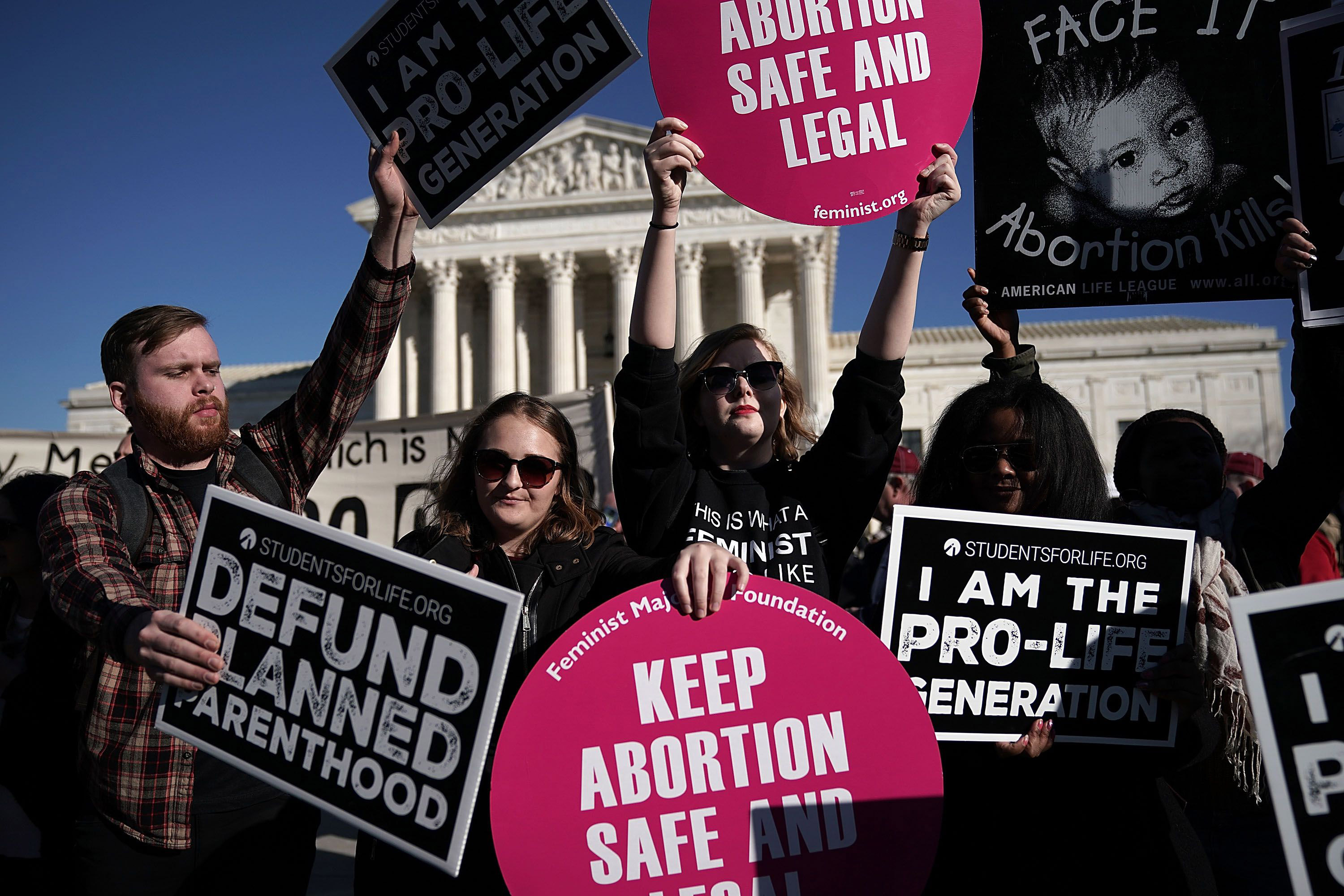
Abortion has been, and continues to be, a vital weapon in the Republican toolbox, a means to gain control over a multitude of less savory objectives. With this hot button, they have been able to whip up energy within their ranks. Over the last fifty years, a growing mob of zealots have taken to the streets and the halls of government with placards showing the pitiful fetus so wronged by evil women and their fiendish abortion doctors.

The truth is that the flap over abortion was never as much about the ‘unborn baby’ as it was about political capital. Powerbrokers saw right away that this issue aroused emotion like nothing else. Yet what the Republican Party stood for, then as now, also enshrined racial prejudice, but it had become impossible to openly advocate for white supremacy.

The mass migration of voters from Democratic ranks to the shelter of the Republican Party began not with Roe v Wade, but with the 1952 Brown vs Board of Education decision and followed more decisively with the Kennedy-Johnson push for civil rights. The Civil Rights Act of 1964 forbade discrimination on the basis of sex as well as race in hiring, promoting, and firing. The Act prohibited discrimination in public accommodations and federally funded programs. It also strengthened the enforcement of voting rights and the desegregation of schools.

Police dogs, held by officers, jump at a man with torn trousers during a non-violent demonstration, Birmingham, Alabama, May 3, 1963. Police officers used both dogs and firehoses to break up the rally.

After the 1964 Civil Rights Act, many white, conservative Southern Democrats became Republicans. The South had been mostly Democratic before 1964; it was mostly Republican after (although on the local level continued to be heavily Democratic for decades). Many “values voters” became Republicans.[1]

The 1973 Roe v Wade decision legalizing abortion did not have nearly the same impact as the Civil Rights Act as far as political response. For a time, other issues sidetracked voter attention, such as the winding down of the Vietnam War and the Watergate scandal that shoved Nixon out of office. The Arab oil embargo also diverted public interest with skyrocketing gasoline prices. In reality, the behind-the-scene Republican strategists were slow in coming around to a full understanding of how to use the abortion issue to represent the real interests of conservatives.

Early in Reagan’s presidency, developing tactics on the abortion issue spread through the nation in the hands of then-fledgling evangelical groups wielding signage of dismembered fetuses (remarkably mature for the gestation dates named) and demonstrations by women crying for the lost babies or, more heart-rendering, testimonials by women who had obtained abortions and later regretted it. (This vanishingly small group remains an active feature of anti-choice campaigns. One could sum up their position as yet another demonstration of ignorance.)

At first, Democrats yielded ground on the matter, not firmly convinced enough about women’s right to bodily autonomy to take a firm stand. Lamentably lacking in early opposition to the anti-abortion crowd were strategies to fight back with their own weaponry, for example, citing Biblical scriptures showing that personhood began at birth.

After God formed man in Genesis 2:7, He “breathed into his nostrils the breath of life and it was then that the man became a living being”. Although the man was fully formed by God in all respects, he was not a living being until after taking his first breath.[2]

Democrats have finally taken a stronger stance on the topic, linking the party to “their support of ‘human rights’ and of groups whose rights have been long suppressed – African Americans and other minority groups, women seeking to vote and enjoy full property rights, LGBTQ people and immigrants.”[3]

To Republicans, the abortion issue is a coded message about the party’s stance on longstanding prejudices, not only uppity women but also African Americans and other minorities, LBGTQ people, and non-white immigrants. Without having to advertise racism or other prejudices, Republican strategists can push voters to champion the rights of the fetus while avoiding the party’s full agenda.

It is not the facts of an issue which drive evangelical voters. As a general rule, evangelicals don’t embrace facts. Their hands are full of Bibles, which they don’t precisely understand, but they do hear what preachers tell them. What the preachers tell them is intended not to elucidate the facts but rather to stoke FEAR of God’s wrath. And, in these narrow hallways of evangelical mentality, God will punish them if they don’t stop women from killing fetuses.

It’s not that evangelist preachers are pursuing a goal they understand in terms of social policy. Their vehement sermons about abortion and their endorsement of specific political candidates derive from their urgent personal desire to make money off of Jesus. Evangelicals are an easy mark. See, for example, the fundraising headline at Focus on the Family’s website: “SAVE 2X THE BABIES FROM ABORTION!  Double Your Gift to Save Lives!”

The more insidious objective of the Republican agenda is to continue shifting power to corporations and the super wealthy while the frontmen lure evangelical voters with the promise of a Christian nation. Sadly, evangelicals lack any understanding of the threat posed in religion as government, a condition that increases exponentially as more private religious schools and homeschooling take the place of public education.

Remedies for the current crisis would include regulations that deny diplomas to any student, homeschooled or otherwise, who cannot pass examinations proving understanding of American history and government, among other subjects required of public school students. If U. S. citizens cannot begin adulthood on the same page, we have no hope of continuing as a nation.

One thing such an education would ensure is the awareness that the Republican/evangelical drive toward a Christian nation is a form of sedition, “an overt conduct, such as speech and organization, that tends toward rebellion against the established order. Sedition often includes subversion of a constitution and incitement of discontent toward, or insurrection against, established authority.”

Vladimir Putin personally authorized a secret spy agency operation to support a “mentally unstable” Donald Trump in the 2016 US presidential election during a closed session of Russia’s national security council, according to what are assessed to be leaked Kremlin documents. https://www.theguardian.com/world/2021/jul/15/kremlin-papers-appear-to-show-putins-plot-to-put-trump-in-white-house

Equally tragic is while Republican power brokers chortle over wins for the One Percent, they have failed to recognize the puppet master profiting from their maneuvers: Putin.

Trump’s victory lap over the demise of Roe v Wade unveils one of the subtle purposes of Vladimir Putin’s support. The Russian ploy to undermine U.S. society gained a witless ally in Trump, who pulled his best con job in his election to the presidency, aided and abetted by the machinations of Russian interference.

What has now been made clear is that Russian trolls and automated bots not only promoted explicitly pro-Donald Trump messaging, but also used social media to sow social divisions in America by stoking disagreement and division around a plethora of controversial topics such as immigration and Islamophobia.

The overarching goal for Russia, during the election and now, analysts say, is to expand and exploit divisions, attacking the American social fabric where it is most vulnerable, along lines of race, gender, class and creed.

“The broader Russian strategy is pretty clearly about destabilizing the country by focusing on and amplifying existing divisions, rather than supporting any one political party,” said Jonathon Morgan, a former state department adviser on digital responses to terrorism whose company, New Knowledge, analyzes the manipulation of public discourse.[4]

Russia’s desired outcome in the months before Donald Trump’s election in 2016 was not simply to see him elected. It aimed, instead, to more broadly “undermine the US-led liberal democratic order” (in the words of a January 2017 intelligence assessment), an effort that Russia believed would be aided far more by Trump’s election than Hillary Clinton’s. This overlapped with its desire to “provoke and amplify political and social discord in the United States” (in the words of special counsel Robert S. Mueller III), leading it to weigh in not only on electoral politics but cultural fights — investing in amplifying and exacerbating contentious social debates.[5]


[1] https://simple.wikipedia.org/wiki/Party_realignment_in_the_United_States

[2] Also Job 33:4: “The spirit of God has made me, and the breath of the Almighty gives me life.”

Ezekiel 37:5, 6: “Thus says the Lord God to these bones:   Behold, I will cause breath to enter you, and you shall live.   And I will lay sinews upon you, and will cause flesh to come upon you, and cover you with skin, and put breath in you, and you shall live; and you shall know that I am the Lord.”

Exodus 21:22: If a man causes a woman to have a miscarriage, he shall be fined; however, if the woman dies then he will be put to death. It should be apparent from this that the aborted fetus is not considered a living human being since the resulting punishment for the abortion is nothing more than a fine; it is not classified by the bible as a capital offense.

[3] https://www.npr.org/2022/05/08/1097118409/the-leaked-abortion-decision-blew-up-overnight-in-1973-roe-had-a-longer-fuse

[4] https://www.theguardian.com/us-news/2017/oct/14/russia-us-politics-social-media-facebook

[5] https://www.washingtonpost.com/politics/2022/02/24/bump-russia-american-unity-undermined/

Dumping Dogs

They lounged at the rim of the pond across the road from my mail box, three of them in a small friendly pack that had made that place their own. In the first few days they were here, I only saw them at the pond or alongside the dirt road. They were half grown, headed toward big dog adulthood, one with a whitish face and the markings of a German Shepherd, the other two some combination of hound, maybe some shepherd.

They watched me drive by with the hopeful curiosity of dogs who recently knew a home. There had been people, regular food, a few words now and then. Now there was nothing and they didn’t know what to do about it.

One morning a week or so later, agitated barking by my dogs brought me outside to discover the strays had moved further up in the woods. They sat about sixty feet from my house, watching the deer that always move through that section of forest at that time of day. Maybe they recognized the scent of deer from some primal instinct that spelled out ‘food.’ Maybe they were attracted to the smells and sounds of my fenced yard, where scraps might be thrown out, where my well-fed animals come and go in comfort.  I didn’t see them chasing deer, but I didn’t try to watch.

Better to not see, not know, I’ve learned from experience, what animals go through once they’ve been dumped.

Don Miller called a few days later, early in the morning like he does on the rare occasions when he needs to talk to me about something. Stray dogs had been chasing his cattle in the pasture he leases next to my land. He had asked around. Nobody claimed them.

“We could try to catch them,” I said. “Take them down to the animal shelter.”

“Tried that. They won’t come to me.”

He was planning to shoot them. I said I wouldn’t want to try, since I only had my .22 with bullets so small that even a perfect shot might leave an animal alive for hours, bleeding, suffering. He said he knew his aim and his shotgun would bring them down quick. He planned to do it the next morning.

I never heard the gunshots, but then, I tried not to. The dogs weren’t there on the lip of the pond or at the edge of the road when I left for town. I felt relief that I didn’t have to worry about them anymore, didn’t have to think about how hungry they were or whether they had been hit by a passing car.

But several days later, I saw one of them pacing along the perimeter of my yard fence. It was the one with German Shepherd markings, his whitish face staring at me through the wire. I had put a pan of leftovers for my dogs out in the yard and he had picked up the smell. He ran at the sight of me. At the far end, he came to a weedy rise and then I saw his companion, another one of the original trio. When the companion tried to join with his white-faced friend, both of them skinny and tantalized by the smell of the leftovers, he hobbled along, unable to move one of his back legs. They disappeared into the woods.

What had happened to Don Miller’s dead eye aim with a shotgun? It wasn’t hard to guess the scene: managed to kill one, shot at the second one and injured it, and missed the third altogether. It had been days. The two survivors had been hiding out, maybe stealing food from the neighbors’ dogs.

Then I didn’t see them anymore. More days passed. One morning as I pulled out of the driveway, there was white face, sitting at the edge of the road. There was no sign of his crippled companion. He watched me pass by.

How could he forget the people who had once been his family? This must have been the spot where they had left him and his friends. How long would he come back here, waiting, hoping?

Last night, I heard the wild dogs in the canyon. I’ve heard their long piercing howls before, some years more than others. Some say they’ve mingled with the native Red Wolf that used to hunt this land during the time of the Native Americans. I never see the wild dogs but I hear them. They come close in the winter. On some long cold nights their howls seem just outside my fence.

Last night, there was one howl and it was close. There was something about it, something that held meaning. It caught my attention and I went out to stand on the porch. I didn’t hear it again after that. But I think White Face found them. I think they welcomed him, as long as he behaved respectfully, took his place in their established hierarchy. After all, they’ve known for a long time where to find water, when to kill deer, how to find rabbit nests and eggs on the ground.

He’s proven himself, I guess, after all these weeks since his human family threw him out, left him and his brothers to die on some back road far enough out of town that they didn’t have to worry about looking up one day to see that their Lassies had ‘come home.’

Maybe they thought that out here, dog food grows on every stalk of blackberry vine and somehow the seeds ticks of July won’t stick to their pet. Maybe they didn’t wonder about the cold of winter, when ice covers the ground for days and even the ponds are frozen. Maybe they assumed that country people like me don’t have enough dogs of our own and are just sitting out here waiting for more dogs to appear on our roads so we can take them in, pet them, feed them, and let them sleep on the floor by our beds when the wind blows at five degrees.

Or maybe they didn’t think at all. In all the years, all the dogs and cats that have been left at the roadside on this mountain, I’ve never been able to understand, to assign any rational process to the phenomena of dumping animals. I’ve made a few wishes, though, like the morning when Don Miller planned to load his shotgun, when I stayed in the shower a little longer than usual so I would miss the sound of the blasts, the dying howls.

I wish that the minds and the hides of the people who leave them were unavoidably linked to the minds and hides of the dogs, so that every pellet of buckshot, every hot burning injury bleeding out life, crippling to a long lingering death in the bitter cold of winter, that every moment of hunger and terror and longing known by those dogs would be known by the people, felt in every moment, every waking hour, every dream, until they could no longer bear the pain and they too would have to track half-starved down to the canyon, seek out the wild ones, and beg for a home.

Is Racism In Our DNA?

Typical Western European/American representation of Jesus Christ as a white man with light hair and blue eyes

If we track the roots of Western civilization to its earliest evidence in language and genetics, we find that our language and other markers of our ancestry track the spread of the Proto-Indo-European (PIE) language from its roots in the Eurasian steppe circa 4,500 years ago. This expansion can be traced through word relationships as well as commonalities of myth and religion, but also through similarities in social behaviors. From Bronze Age Greeks, Indo-Iranians, and Anatolian (Hittite) people, this cultural thread weaves through Iron Age Indo-Aryans, Iranians and, most importantly for our consideration, European groups including Celts, Germanic peoples, Italic peoples, and other Western European populations.

Recent DNA analyses of these populations support the theory of PIE migration and conquest over earlier human settlements.[1] By the Middle Ages, ancient Indo-European traditions, myths, and languages had reached Scandinavian cultures and spread across medieval Europe. Genetic information shows that certain characteristics currently attributed to European ancestry such as blue eyes first appeared in the genetic record around 13,000 to 14,000 years ago in Italy and the Caucasus. Light skin is less easily tracked as a genetic factor but researchers believe this feature spread through Western Europe between 19,000 and 11,000 BCE (Before Current Era). Other physical characteristics also follow this migration, including taller height and blond hair.

This movement from east to west parallels the penetration of farming practices into hunter-gatherer populations. Farming required settling into one location to oversee the planting, cultivation, and harvesting of farmed crops, meaning that people were able to accumulate more worldly goods which in turn led to inequalities as well as the need to determine paternity of children who might inherit such goods. Social rules proliferated to govern communal norms including the sexual behavior of women.

Migrations that spread PIE language and culture

By around 3500 BCE, people of the PIE traditions had domesticated the horse, adapted the wheel to chariots and wagons, and begun herding food animals such as cattle. The growth of grazing herds led to conquest of neighboring lands to expand grazing space. Increasing use of metals for weaponry (copper, bronze, iron) alongside war chariots pulled by domesticated horses led to the rise of empires from Greece and Rome to the European colonialism that shaped the modern world starting in 1500s. Just like their PIE ancestors, early Western civilizations seized power by conquering bordering indigenous populations and usurping any natural resources native to those lands.

Operating in the arrogance of supremacy, or the ‘might-makes-right ideology,’ expansionists viewed the world as theirs for the taking. If the tools of conquest could overcome native defenses, then it was conveniently considered a God-given right to take whatever the natives might have, not limited to their possessions and lands but also their very lives. Enslaved to their new masters, conquered people endured the various brutal labors required of empire building whether mining lead, tin, or salt or building roads, temples, and coliseums where even more slaves could be forced to ‘entertain’ their masters with fights to the death.

Rising from the ashes of the vast Roman Empire, by 1500 CE, Western European powers traveled the world, spiking their nation’s flags into new lands to claim it for king and country. During the next five hundred years, Spain ‘discovered’ the so-called New World. France, Great Britain, Portugal, and Holland (Netherlands) quickly joined the land grab, swooping in to establish their own satellites in the Americas and then around the globe. Most of these conquered people were people of color, therefore automatically considered inferior and suitable for genocide or enslavement.

Ironically, all these Western European powers were themselves shaped by invasions by outsiders, virtually all of which were also PIE cultures. For example, after the Celts penetrated the British Isles sometime around 2000 BCE, continuing waves of foreign invaders included the Romans (circa 55 BCE); Germanic Angles, Saxons, and Jutes (circa 400-500 CE); Norse, Danes and other ‘Viking’ entities (700-900 CE); and finally the conquest by Normans (1066). The influence of Scandinavian influence on British culture and language can’t be understated, since the Normans (Northmen) themselves were Norse Viking invaders of France circa 900 CE who agreed to stop pillaging Paris in exchange for lands along France’s western coast.[2]

England and subsequently the British Empire staked its claim first on Ireland and Scotland, but also on North America, India, Australia, Egypt and a major swath of Africa along with portions of China, Indonesia, and various Pacific islands.[3] Spain plundered most of South America as well as the western half of the present-day United States and the Philippine Islands. Not wanting miss out on native hoards of gold, silver, and precious gems, the Catholic Church worked through both Spain and Portugal to destroy indigenous religious traditions and take possession of their wealth.[4] France suffered the loss of much of their colonized territories to the British in the Seven Years War (1756-1763) including a large swath of the United States heartland and much of eastern Canada, then made up its losses with the occupation of northwest Africa, parts of India, and various parts of Indochina.[5]

Along the way, racism stood as a primary justification for enslaving not only Africans to produce wealth in American and Caribbean colonies, but virtually any indigenous peoples who fell before the advance of Western Europeans. A standard concept undergirded these actions, perhaps best stated in 1884 by the Frenchman Jules Ferry: “”The higher races have a right over the lower races, they have a duty to civilize the inferior races.”

The western European colonial powers claimed that, as Christian nations, they were duty-bound to disseminate Western civilization to what Europeans perceived as the heathen and primitive cultures… In addition to economic exploitation and imposition of imperialist government, the ideology of the civilizing mission required the cultural assimilation of “primitive peoples,” as the nonwhite Other, into the colonial subaltern of eastern Europe.[6]

Then, just like that, there were no more new lands to conquer and movement westward turned back on itself. Throughout the rush to ‘conquer’ the American West, freed slaves, migrant laborers from Mexico and the rest of Central America, and imported Chinese performed the backbreaking labor of building railroads, mining, and agriculture. Today’s U. S. agricultural industries depend heavily on the descendants of mixed Spanish-Native peoples.

For a time, the tradition of colonization continued into the 20th century in the form of wars against lesser nations. In a belated effort to rein in this long tradition of conquest, “In 1941, President Franklin D. Roosevelt and British Prime Minister Winston Churchill jointly released the Atlantic Charter, which broadly outlined the goals of the U.S. and British governments. One of the main clauses of the charter acknowledged the right of all people to choose their own government. The document became the foundation for the United Nations and all of its components were integrated into the UN Charter, giving the organization a mandate to pursue global decolonization.”[7]

Meanwhile, domestic discrimination by whites takes form in laws that are used selectively in the United States to disproportionately imprison Blacks and Latinos where they are used as a labor force and whose imprisonment enriches the rapidly growing private prison industry. The racist white-supremacy inheritance of PIE ancestry continues in the 21st century, thriving in right-wing hate groups and political party movements across the United States and Western Europe.

The racialist perspective of the Western world during the 18th and 19th centuries was invented with the Othering of non-white peoples, which also was supported with the fabrications of scientific racism, such as the pseudo-science of phrenology, which claimed that, in relation to a white-man’s head, the head-size of the non-European Other indicated inferior intelligence; e.g. the apartheid-era cultural representations of coloured people in South Africa (1948–94).

…Despite the UN’s factual dismissal of racialism, in the U.S., institutional Othering continues in government forms that ask a citizen to identify and place him or herself into a racial category; thus, institutional Othering produces the cultural misrepresentation of political refugees as illegal immigrants (from overseas) and of immigrants as illegal aliens (usually from México).[8]

The same science that has tracked white ancestry over thousands of years has not only provided modern civilization with countless amenities but also clear evidence that underneath our skin and other outward appearances, humans are all the same.

https://themetamodernist.com/2017/12/27/why-god-is-a-white-man-god-the-father-in-western-art/

See Part II coming soon: “Are Whites Superior?”


[1] https://en.wikipedia.org/wiki/Genetic_history_of_Europe

[2] https://en.wikipedia.org/wiki/Normans

[3] https://en.wikipedia.org/wiki/British_Empire

[4] https://en.wikipedia.org/wiki/Spanish_Empire

[5] https://en.wikipedia.org/wiki/French_colonial_empire

[6] https://en.wikipedia.org/wiki/Civilizing_mission

[7] https://en.wikipedia.org/wiki/Analysis_of_Western_European_colonialism_and_colonization

[8] https://en.wikipedia.org/wiki/Other_(philosophy)

Fearing Other

What if we all had the same color of skin?

Who would you hate then?

What if we all had the same religion?

What if we all had the same warmth in winter, cool in summer?

Who would we fight then?

What if we eliminated the industries of war, destroyed all guns and other weapons?

Would we kill each other with rocks and clubs?

What if our jobs all paid the same and my stainless steel appliances were no newer than yours? What if our furniture was exactly the same, our lawns just as nicely tended, our cars the same year and model?

Would you still resent me then?

What if we were all born with the same color of hair, the same color of eyes, grew to the same height, the same musculature?

Would you still be jealous because my nose was slightly longer? Or my lips slightly fuller? Would you still pay for surgery to make your nose and lips more like mine?

What if we sat side by side through all twelve grades and received the same education and yet somehow I went to college and became a lawyer while you went to trade school and became a plumber? Would you call me a libtard and resent my career? Would I look down on you as you installed my new toilet?

Will we always find something to resent, something to be jealous of, something to fight about?

Will it always be our nature to fear the Other, even if their Otherness is only birthmark, a broken tooth, a different hairstyle?

How does the skin color, the religion, the material wealth of Others make us fearful?

How do we make all Other into Ours?