Let the rains come. Let it seal me inside my house, all gray and dark. I will turn on lamps, pools of yellow light that warm me, bring me to my favored place at the end of the couch. Books and magazines and yesterday’s newspaper beckon me with tidbits from the obituaries and the editorial columns. I will clean my nails and stare at the wall that needs painting.
The rain overcomes my senses, filling my nostrils with its unmistakable scent.
Let the rain pour. Sheets of rain, pounding on the roof, obscuring the profile of houses down the hill. Taking away my worries of the bills that are due, the tires that need replacing. Thankful I am home. The noise of the rain on the roof takes away the noise of the world.
Soup for dinner. Quiet, hot food, soft in my mouth, accompaniment to the cacophony of thoughts that clamor for my time, my attention. When the repairs to the bathroom tile? When the vet for the cat’s injured ear? When the time to wander in the yard, staring at moths and yellow-flowering weeds and the lighted distance through low tree limbs? To contemplate the sky, radiant blue, outlined in the mid-summer green of oak leaves?
Pour, rain. Let me sit in my robe on the side of my bed, cooled, moistened, lulled by the steady drone on the roof. Let me ignore the phone that rings shrilly in the far room, its third ring aborted by my pre-recorded voice, apologizing, placating. Go away, all of you. Can’t you see it’s raining?
I need to be alone. Time to consider the meaning of it all. Why the frantic awakenings and driving and worrying, this and that, meetings, advising, bank deposits, expectant friends. I need to step aside, look at the curve of the neck of my child, where the hair meets the skin of her neck and small new hair curls in the heat of the July afternoon, in the heat of her temper.
I need to contemplate the reasons I exist.
Thank you, rain. Thanks for the time you drowned out the world. Poured water across the ground in streams, in newfound passages of water across red clay dirt, across rocky, pebbly ground. Across pavement, steaming in the sun.
Let it rain.
~~~
This series of lyrical essays express the author’s love of nature and the wonders of life on an Ozark hilltop. Throw in a few neighbors who shoot copperheads or remodel the dirt road. Ask what is the role of human privilege over the fate of raccoon, opossum, reckless chickens, and random cats? Ponder the passage of time through a philosophical lens of wonder and delight. The seasons bring summer heat, winter snow, pouring rain, the power of fire. Lessons learned, questions posed–who has lived and died on this land? What is our responsibility to this place, its creatures, each other?
Come meet the goat on the road. Available at Amazon.com
This morning I received a query from a friend of mine asking where he could buy one of my books. He didn’t want to buy from Amazon and further line the pockets of Jeff Bezos.
This widespread reaction to Bezos’ fortune and his choices of how to spend his money has reached the point where I feel obligated to fully explain why my books are marketed at Amazon and why we might need to take deep breath and cut Bezos a tiny bit of slack.
In 1994 at the age of 32, Bezos decided to establish an online bookselling enterprise. Within the next twenty years, his company Amazon had expanded to offer an enormous range of products. But his original idea was about books. By the early 2000s, Bezos had expanded his concept to allow authors to publish their own books.
Before this, authors faced two options. Traditionally, a printed submission letter with an outline of the proposed book would be submitted to a publishing house for consideration. If interested, the publisher would request the manuscript for review. With a slim chance of acceptance, the book could easily languish in these dead end processes for years before a) a publisher somewhere accepted the book or b) the author gave up in despair.
By the end of the 20th century, publishing houses increasingly refused this first layer of submission from authors. Instead, authors were directed to find an agent who, after screening the manuscript, might deign to take the book under his wing and offer various revisions and plot recommendations before then trying to market the book to a publishing house. The publishing house still could refuse the book, but if they saw any promise in the project, their editors would pick through the manuscript for yet more revisions. Again, months turned into years while authors held onto hope, usually to ultimately meet with rejection.
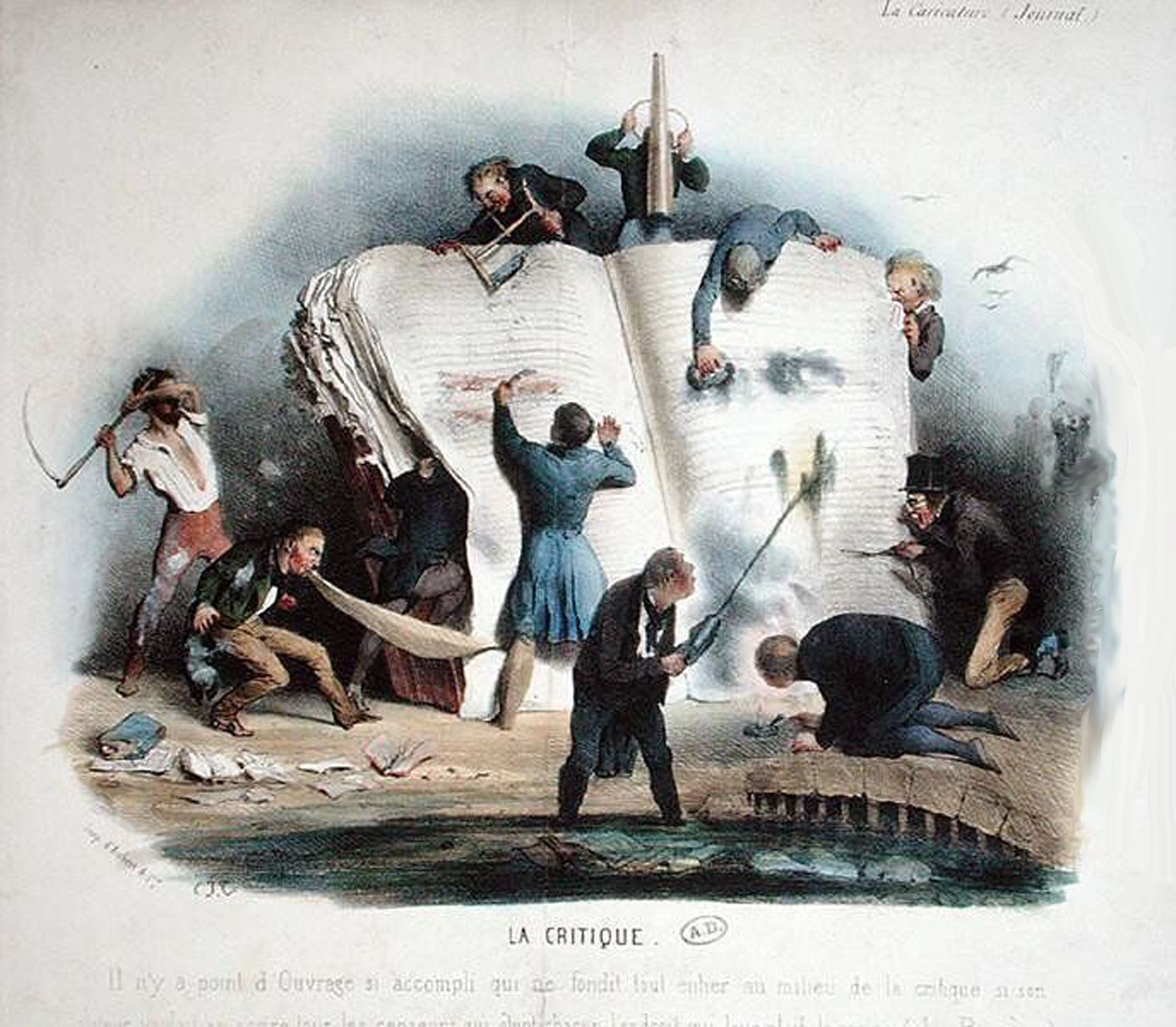
Literary Criticism, caricature of literary critics removing passages from books that displease them, c.1830 Charles Joseph Travis de Villiers
Or worse. Two books of mine submitted in the late 1990s through this Sisyphean process ended up published by other people. I’ve described these infuriating experiences of intellectual property theft in previous blog posts here, here, and here.
The other option for authors was to self-publish. This path was taken by my mother who paid nearly $2,000 for her family history to appear in print. A friend of mine also took this route when she paid a vanity press to print a few thousand copies of her book, which she had to store in her garage and distribute herself. But along with the internet and the engineering genius of Bezos, Amazon formed a branch known as Kindle Direct Publishing (KDP) where an author had total control over the publication of her/his book.
Print on demand simply means that when someone purchases a certain book, it is then printed and shipped. An author using KDP must prepare the manuscript by certain layout guidelines, but is then free to choose page size, white or cream paper, and certain other formatting options. The manuscript is uploaded at the KDP website and after proofing, the book is ready to purchase. The author can either use KDP’s cover templates to create the book’s cover or upload a cover file created entirely by the author. (I use Photoshop and thoroughly enjoy the use of color, imagery, and font choices.)
The freedom this provides an author is absolutely stunning.
A few print-on-demand enterprises co-exist with KDP, but KDP’s software is supremely user friendly and allows for maximum author flexibility. KDP also offers swift interaction with staff via email, chat, or phone if/when questions arise. KDP pricing, at least for paperbacks, means that authors gain a higher share of the sale price than is available through any other publishing outlet. Ebook pricing is not quite as competitive as a few other entities such as Smashwords, but promotional options are much wider.
My first book, Notes of a Piano Tuner, published in 1996 by a traditional small regional press, sold for $16.95. My royalty was one dollar. Through KDP, a recent book that retails for $26.95 pays me $8.70. KDP retains $7.47 for printing costs, and the rest is KDP profit. While that is a sizeable profit for KDP and its parent Amazon, I am still ahead of the 5.8% profit I received through traditional publishing. At $8.70, that’s over 32% profit.
Book market in India
Perhaps even more important for most authors is that self-pub books at KDP remain on their virtual bookshelves forever and essentially worldwide. These services are available to authors in India, China, Japan, and many other far flung locations and in their own language. KDP provides the services needed to register my ISBN number with the Library of Congress. They provide marketing tools I can use to promote my books. I don’t have to do anything for my books to be found in online searches for my subject matter.
While all this is wonderful and amazing and possibly would have occurred sooner or later without Jeff Bezos, the fact is that he was the one who made it happen.
Not to say there hasn’t been a downside to the avalanche of author-published books his brain child has created. Key to the bookselling industry have been the various filters through which a manuscript would pass—agents, editors, and ultimately reviewers who offer insight into the nature and quality of any particular book, thereby providing a prospective reader a guideline of sorts to measure whether plopping down the requisite dollars is a wise decision. But as this Indie avalanche hit mainstream reviewers like Book Review Digest, Booklist, Book World, Kirkus Reviews, and Library Journal or other traditional book review sources including Saturday Review, Observer, New York Times Book Review, and The New Yorker, the welcome mat quickly rolled up.
Self-publishing authors, known as Indies (independent), suffer no such critiques either before or after publishing. Some are able to pay a few of these review entities to gain a review, but the price is steep. Kirkus, for example, wants $500 per review for the onerous task. Most turn up their noses entirely.
The reason for this bottleneck in the literary pipeline is painfully clear to anyone who reads Indie books at random. The writing can be abysmally awful, everything from misspelled words to dangling modifiers and other grammatical abominations to outright absurdity in balanced presentation or research authenticity or, in fiction, plot line or character development. Furthermore, the Indie risk of showing one’s bare behind, i.e. complete lack of literary talent, is compounded at the review stand by the sheer quantity of self-published books flooding the marketplace.
For a few genres, most notably romance fiction, a review option of sorts has sprung up to fill the gap. Facebook pages, groups, and multiple websites have proliferated where authors can submit a romance book for review. For a modest fee, usually $50 to $100, a promoter will set up review ‘tours’ that take a book through several such entities and can, in theory, rack up a nice quantity of reviews for that particular book which are then posted to the Amazon book listing page as well as to other book promotion sites like Goodreads. A rating of 5 stars is a sure path to reader interest, and most of these reviewers won’t post a review of less than 3 stars.
The Caxton Celebration – William Caxton showing specimens of his printing to King Edward IV and his Queen By The Graphic, June 30, 1877, p617. Retrieved from old-print.com. Printing up through the end of the 18th century was largely a product of wealthy patrons who paid for the books they wanted in print.
No such wondrous option exists for most other types of books. A few exist for science fiction, a few for historical fiction, but virtually none for nonfiction. Authors must find creative ways to let the public know about their books, which up to a few years ago could include setting up an author page on Facebook alongside a personal page. One author I know had gained nearly one thousand ‘followers’ on her Facebook author page, and each time she published a new book or wanted to promote an existing book, she simply posted an enticing bit on her author page and the majority of her followers would receive the notice on their newsfeed.
Sadly, those days ended with Facebook’s corporate rush for money. Now my friend’s author page posts are seen only by a half dozen or less of her followers. The only way she can make a bigger splash is to pay Facebook to promote her posts. Depending on her choice of audience, the number of days the post should run, and her spending limit, Facebook will promote the product. It has reached the point, however, where Facebook newsfeeds are so spammed with similar “sponsored” ads that people usually just scroll past.
Ironically, even traditional publishing has stopped most expenditures on book promotion. Publishing is less about literary accomplishment and more about profits, and the trimming has proceeded at pace. Authors whether Indie or not are expected to pay their way through book signing tours and public appearances.
Despite these stumbling blocks in Indie publishing, the old publishing world has crumbled. Few corporate-owned publishers are willing to risk possible low returns on an investment of manpower, ink, warehousing, and distribution unless the odds are good that an adequate return is more or less guaranteed. That’s why books by celebrities and known authors crowd the shelves and why libraries, which depend on mainstream reviews to determine acquisitions, will rarely if ever shelve Indie books.
In my case, where the majority of my books are focused on local history, I can promote my books through networks of friends and in local outlets. In the case of the book my friend wants to purchase, Good Times: A History of Night Spots and Live Music in Fayetteville, Arkansas, the demand has been great enough that I have partnered with the Washington County Historical Society to serve as an outlet through which they gain a decent percentage of the sale price and which offers the interested public a local source for the book.
However, the book is still published by KDP. As the author, I pay only the printing cost and receive no royalty from the sale. Whatever margin I wish to receive is gained in the wholesale price I charge the historical society. But, simply put, that and the rest of my books likely would not exist without Bezos.
On Friday, Christmas Day 1874, and after more than two years of near-death tension, Calvin “Bud” Gilliland joined an energetic crowd at the Lewis Mills, a thriving Northwest Arkansas community along the Middle Fork of White River. In celebration of the season, proud horse owners lined up their snorting high-tempered steeds to compete in a favored recreation of those times, horse racing. The dusty race track stretched down the long valley. More than few friendly bets changed hands among the crowd as people craned their necks to see the red flag at the far end flapping in the stiff breeze.
Bud walked among the gathered horses, greeting people he’d known all his growing up years. He kept looking around, anxious to spot a particular face. If he saw Newton Jones, he knew what he’d do. He clapped his hand against the Colts pistol holstered at his hip. Hidden under his overcoat, the weapon wouldn’t provoke any outcry. At the right time, he’d put it to good use.
As it happened, lands around the Middle Fork of White River wasn’t a great place for someone feuding with a Jones. The valley was the heart of Jones family lands. All the more reason for Bud to attend—he was sure to encounter Newton here. He paced a distance from the crowd, squinting under the overcast sky as he searched, finally satisfied the younger man wasn’t here yet. Bud squared his shoulders and lifted his chin. He’d waited long enough for this lily liver.
Newton had already saddled up when he got wind of Bud’s presence at the races. He’d been lying low, afraid of what Bud might do next. But as the season of holiday gathering approached, he’d decided he had to confront Bud, knowing the likelihood of his appearance at the races and infuriated over the near miss he’d suffered in Bud’s sights two years earlier. Bud’s brief time in jail hadn’t subdued him any. Those damn Gillilands thought they could get away with anything. And they damn near had.
Newton knew what it would take. He had a wife now and a baby on the way. The time for dangerous tomfoolery had ended.
A cold breeze ripped through the crowd as a man on a horse galloped in from the roadway. Bystanders had no time to react as Newton pulled up in a cloud of dust, whipped his Spencer rifle from its saddle scabbard, and quickly centered Bud in his sights. He took a deep breath and squeezed the trigger.
In a mere second, the leaden ball found its target. Shocked, Bud looked up into the eyes of his foe. A few men shouted amid the collective gasp as the gunshot echoed up the hillside.
The event would set off a chain reaction that would forever resonate through the region and the Gilliland and Jones families. Not only Bud but his two brothers Jeff and Fine would face other men at the point of a gun, and the killing didn’t stop there.
What was it about the Gillilands?
This recounting of the family tracks their ancestry, their pioneer years on untamed land, and the hard work that made them one of the wealthiest families in Washington County, Arkansas. A fascinating tale of brash ego, brave gallantry, and bad luck. Grab your copy today and ENJOY!
Pioneers who settled Washington County and other areas of the state in the early 1800s would have been shocked and highly annoyed with laws passed before the end of the century which regulated and ultimately prohibited the production and use of alcoholic drink. Personal freedoms taken for granted by men who forged the frontier slowly eroded as reform elements in society attempted to change the nation’s drinking habits. Instead of men guiding their own ‘manifest destiny,’ those who considered themselves “God’s defenders” presumed to know what was best for every man. Along with such moral regulations, however, came an onerous cost to the young nation as commonly accepted behavior became criminalized. Inevitably, the rule of morality would be replaced by the rule of outlaws.
…Washington County’s county seat Fayetteville hosted a well-established temperance movement by 1841, at which time the local chapter was humiliated by the discovery that its vice president had fled to Texas after embezzling over $20,000 through his job at the bank. Stirred to greater vigilance by this event, the society publicly excoriated a member who confessed to drinking wine. In another “outing,” the society issued a summons against such noteworthy local citizens as Joseph J. Wood, John J. Stirman, and H. J. Sanderson for “the violation of their pledge to said Society.” According to an account of the Fayetteville Temperance Society 1841-1844, published in the Arkansas Historical Quarterly, “Sanderson arose and publicly confessed that he frequently drank Ardent spirits and sometimes to excess.” The Society approved a motion to report him as a person unworthy of membership.
Reflecting the increasing regulation and growing public hysteria about alcohol use under the incitement of temperance activists, the issuance of licenses in Washington County dropped off dramatically by the mid-1850s. In 1855, the Arkansas legislature passed a law allowing local townships to vote whether to allow alcohol sales within their boundaries. Fayetteville’s newspaper the South-West Independent carried frequent comment on this state of affairs, the tenor of which insinuates the editor’s low regard for such efforts, such as this February 10, 1855, piece:
“Bear it in mind, that the law now in force, in regard to retailing ardent spirits, requires the individual wishing to set up a dram shop to present to the county court a petition signed by a majority of the voters of the township in which the grocery is to be located, before he can obtain license to retail drams!
“Some of these petitions are already before the people, and it will soon be tested whether a majority of voters of Washington county are in favor of retail liquor shops or not. We believe, however, that there is, at present, only one licensed grocery in the county, and it may be that the hundred dollar tax will prevent the test from being applied to all but Prairie township; if so, the present law will affect only the people in and about Fayetteville. Practically, the passage of this law can affect Washington county but little. Still, for its moral effect, the public mind ought to be wide awake upon the subject, and act from principle.
“How would it do to hold public meetings and have a little free discussion upon the subject? We make the suggestion and hope to see it acted upon; in this way both sides of the question may be freely and fairly presented to the public. We want the test to be a fair one.”
A local establishment selling alcohol had its own ideas about the call for stricter regulation, as noted in this advertisement published in the Fayetteville newspaper.
Don’t miss these fascinating stories of early Fayetteville available in Glimpses of Fayetteville’s Past. Available at Amazon.com
From 1835 to the present day, the City of Fayetteville in Washington County, Arkansas, has enjoyed a vibrant and colorful history. Its reputation as a regional center for arts, culture, and education began early in its history. Frequently named one of the nation’s Top 10 cities, Fayetteville hosts the University of Arkansas and its famous Razorback athletic teams.
The five articles contained in “Glimpses of Fayetteville’s Past” focus on under-reported aspects of that history. Published initially by the county’s historical society, these intensively-researched works have been revised and expanded with illustrations, photographs, and maps.
“The History of Fayette Junction and Washington County’s Timber Boom” now include not only an in-depth review of its first major industry but also three appendices which examine wagon production in Fayetteville, the name and tradition of Sligo, and the Fulbright mill.
“Quicktown” delves into the story behind this quirky short-lived suburb in south Fayetteville.
“546 West Center” tracks the development of a landmark Fayetteville property from its earliest use as a site for an ice factory in the 1880s.
“The Rise and Fall of Alcohol Prohibition” documents the use, production, and regulation of alcoholic drink in Washington County from before statehood through the repeal of Prohibition in 1933, and features indictment and other crime data.
“175 Years of Groceries” follows the transition from country store to supermarkets to big box stores and includes newspaper advertisements showing price changes over those decades.
As chronicled in the massive history of Fayetteville’s music scene, the 1970s overflowed with great music that echoed down the length of Dickson Street. The Charles Tuberville Band was among them.
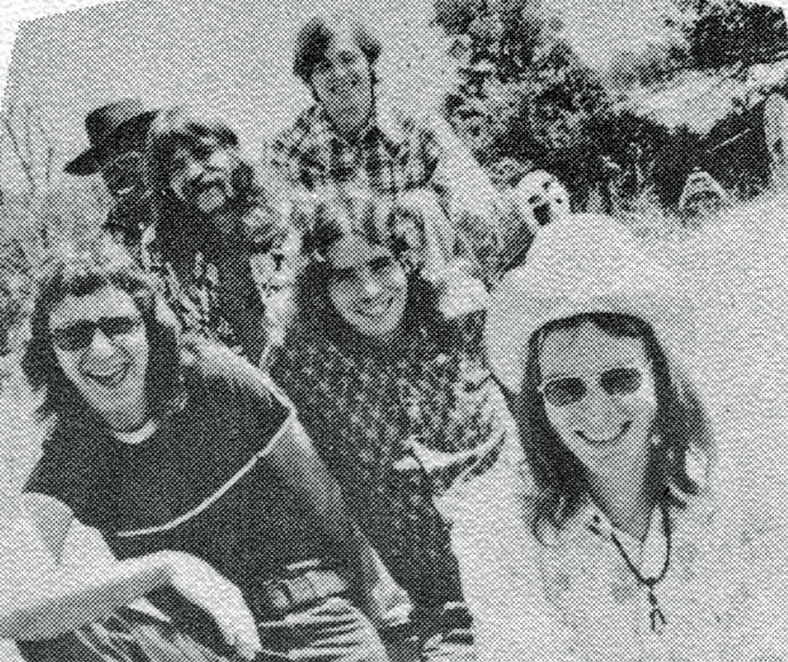
Back: Singleton, Smith, Billy Osteen Front: Ellis, Tuberville, Womack Photo courtesy Joe Phelps
Charles Tuberville Band
Charles Tuberville became hooked on the guitar after watching an older cousin plug his “machine” into an amp and began playing a song by The Ventures. Then when The Beatles took rock n’ roll by storm, that changed everything. Charles got his first guitar, an electric Harmony Bobcat, for Christmas in the 7th grade. “‘At the time, I was playing trumpet in the school band. The day I got my electric guitar, that trumpet never again came out of the case,’’ he recalled in an interview for Blues News.[1]
His Fayetteville band formed in the early 1970s and played popular clubs like Notchy’s and The Library. In 1976 when the Brass Monkey took over the former Gaslight space in the basement of the Mountain Inn Annex, the Charles Tuberville Band served as the house band. Members of this powerhouse group were Charles Tuberville and Billy Osteen (Cal Jackson still in Memphis) on guitar; Albert Singleton then later Cherry Brooks, vocals; Lance Womack, drums; Jimmy Smith, keyboards; Jim Sweeney (Tulsa), Joe Ellis, bass. Members of this band later appeared in other groups. Charles Tuberville moved to Tulsa in 1979 and went on to ply his guitar craft in multiple formats, performing on an album with Tulsa musician Jimmy Markham including Get Ya’ Head Right (2018) and producing his own album, Somethin’ in the Water in 2019.
Don’t miss these great stories of creativity, ambition, and craziness that permeates the 550+ pages of GOOD TIMES: A History of Nightspots and Live Music in Fayetteville, Arkansas — available at Amazon.com and the local Washington County Historical Society offices.
[1] Bill Martin, “Charles Tuberville,” Blues News, Sept/Oct 2019, p. 3
From our great recipe collection, Recipes of Trailside Cafe and Tea Room, here’s the answer to all that produce! YUM!
2 English cucumbers, halved, seeded, not peeled
2 red bell peppers, cored and seeded
2 green bell pepper, cored and seeded
2 red onions or one if large
2-3 pounds tomatoes, cored and peeled (boiling water method **)
5 cloves minced garlic
6 cups tomato juice
½ cup white wine vinegar
½ cup olive oil
1 tablespoon kosher salt
2 teaspoon black pepper
¼ teaspoon cayenne
1 tablespoon Worcestershire sauce
Juice of one lime
5-6 springs fresh thyme, tied in bundle
❧ Cut all vegetables into 1 inch chunks. Process each vegetable separately in food processor until coarsely chopped. Add to large bowl until all are processed.
❧ Process garlic with vinegar, oil, salt, pepper, cayenne, lime juice and Worcestershire sauce until fully blended. Pour into bowl with vegetables. Add tomato juice and stir all together.
❧ Add tied bundle of fresh thyme, immersing it into the soup, and chill overnight. Remove thyme before serving. Garnish with diced avocado.
** To easily peel tomatoes (or other soft fruit like peaches), bring a pan of water to boil. Use strainer or slotted spoon to gently immerse tomatoes into the water for about 30 seconds. Remove to ice water. Skins will slip off.
~~~
Serving everything from pita to peach cobbler, Trailside Café and Tea Room became a favorite destination for the few years of its existence. Plate lunches of Pot Roast or Ribs ‘n’ Kraut became overnight hits. Now with a new section on Sandwiches, and a greatly expanded last chapter including many more family recipes sure to be a hit in anyone’s kitchen, Recipes of Trailside Café and Tea Room offers the ‘how-to’ for delicious soups like Split Pea or Potato Leek, hearty salads including Wilted Lettuce, and scrumptious desserts like Lime Pie and the infamous Brown Butter Cookies. Over 200 recipes for easy, down home food.
They lounged at the rim of the pond across the road from my mail box, three of them in a small friendly pack that had made that place their own. In the first few days they were here, I only saw them at the pond or alongside the dirt road. They were half grown, headed toward big dog adulthood, one with a whitish face and the markings of a German Shepherd, the other two some combination of hound, maybe some shepherd.
They watched me drive by with the hopeful curiosity of dogs who recently knew a home. There had been people, regular food, a few words now and then. Now there was nothing and they didn’t know what to do about it.
One morning a week or so later, agitated barking by my dogs brought me outside to discover the strays had moved further up in the woods. They sat about sixty feet from my house, watching the deer that always move through that section of forest at that time of day. Maybe they recognized the scent of deer from some primal instinct that spelled out ‘food.’ Maybe they were attracted to the smells and sounds of my fenced yard, where scraps might be thrown out, where my well-fed animals come and go in comfort. I didn’t see them chasing deer, but I didn’t try to watch.
Better to not see, not know, I’ve learned from experience, what animals go through once they’ve been dumped.
Don Miller called a few days later, early in the morning like he does on the rare occasions when he needs to talk to me about something. Stray dogs had been chasing his cattle in the pasture he leases next to my land. He had asked around. Nobody claimed them.
“We could try to catch them,” I said. “Take them down to the animal shelter.”
“Tried that. They won’t come to me.”
He was planning to shoot them. I said I wouldn’t want to try, since I only had my .22 with bullets so small that even a perfect shot might leave an animal alive for hours, bleeding, suffering. He said he knew his aim and his shotgun would bring them down quick. He planned to do it the next morning.
I never heard the gunshots, but then, I tried not to. The dogs weren’t there on the lip of the pond or at the edge of the road when I left for town. I felt relief that I didn’t have to worry about them anymore, didn’t have to think about how hungry they were or whether they had been hit by a passing car.
But several days later, I saw one of them pacing along the perimeter of my yard fence. It was the one with German Shepherd markings, his whitish face staring at me through the wire. I had put a pan of leftovers for my dogs out in the yard and he had picked up the smell. He ran at the sight of me. At the far end, he came to a weedy rise and then I saw his companion, another one of the original trio. When the companion tried to join with his white-faced friend, both of them skinny and tantalized by the smell of the leftovers, he hobbled along, unable to move one of his back legs. They disappeared into the woods.
What had happened to Don Miller’s dead eye aim with a shotgun? It wasn’t hard to guess the scene: managed to kill one, shot at the second one and injured it, and missed the third altogether. It had been days. The two survivors had been hiding out, maybe stealing food from the neighbors’ dogs.
Then I didn’t see them anymore. More days passed. One morning as I pulled out of the driveway, there was white face, sitting at the edge of the road. There was no sign of his crippled companion. He watched me pass by.
How could he forget the people who had once been his family? This must have been the spot where they had left him and his friends. How long would he come back here, waiting, hoping?
Last night, I heard the wild dogs in the canyon. I’ve heard their long piercing howls before, some years more than others. Some say they’ve mingled with the native Red Wolf that used to hunt this land during the time of the Native Americans. I never see the wild dogs but I hear them. They come close in the winter. On some long cold nights their howls seem just outside my fence.
Last night, there was one howl and it was close. There was something about it, something that held meaning. It caught my attention and I went out to stand on the porch. I didn’t hear it again after that. But I think White Face found them. I think they welcomed him, as long as he behaved respectfully, took his place in their established hierarchy. After all, they’ve known for a long time where to find water, when to kill deer, how to find rabbit nests and eggs on the ground.
He’s proven himself, I guess, after all these weeks since his human family threw him out, left him and his brothers to die on some back road far enough out of town that they didn’t have to worry about looking up one day to see that their Lassies had ‘come home.’
Maybe they thought that out here, dog food grows on every stalk of blackberry vine and somehow the seeds ticks of July won’t stick to their pet. Maybe they didn’t wonder about the cold of winter, when ice covers the ground for days and even the ponds are frozen. Maybe they assumed that country people like me don’t have enough dogs of our own and are just sitting out here waiting for more dogs to appear on our roads so we can take them in, pet them, feed them, and let them sleep on the floor by our beds when the wind blows at five degrees.
Or maybe they didn’t think at all. In all the years, all the dogs and cats that have been left at the roadside on this mountain, I’ve never been able to understand, to assign any rational process to the phenomena of dumping animals. I’ve made a few wishes, though, like the morning when Don Miller planned to load his shotgun, when I stayed in the shower a little longer than usual so I would miss the sound of the blasts, the dying howls.
I wish that the minds and the hides of the people who leave them were unavoidably linked to the minds and hides of the dogs, so that every pellet of buckshot, every hot burning injury bleeding out life, crippling to a long lingering death in the bitter cold of winter, that every moment of hunger and terror and longing known by those dogs would be known by the people, felt in every moment, every waking hour, every dream, until they could no longer bear the pain and they too would have to track half-starved down to the canyon, seek out the wild ones, and beg for a home.
In an ideal world, government provides for its citizens by addressing problems so complex or so large in scope that citizens alone or even in groups cannot address them. Our tax dollars support government agencies that regulate the costs of necessary utilities, the purity of our food and drugs, and the safety of our mass transportation systems such as airlines and trains, among many other things. Under our U. S. Constitution, matters of personal conscience such as privacy and religious belief are left to the individual.
At the local level, we here in Washington County, Arkansas now find ourselves with a county government which has forgotten—if indeed they ever knew—their proper role. For example, about a year ago, the county government closed their south Fayetteville hazardous waste collection center. There was no public notice of this decision.
Meanwhile, a resolution introduced by Quorum Court Republican Patrick Deacon and passed through committee last night quotes a Bible passage and presumes to embed certain religious beliefs into county law. A more experienced county judge would have stopped this presumption in its tracks.
A deeper look at the county judge’s tenure finds that upon taking office, he not only fired experienced county employees but replaced them with cronies from his former position at Ecclesia College. He gutted several of the county’s departments and ended up defending his actions in court.[1] Environmental affairs, tasked with protecting our natural springs, streams, and the rest of our land, was reduced to one employee. The county archives, a priceless repository of old deeds, marriage records, and other arcane and fascinating bits of our local history, was relieved of its professional archivist and its open hours reduced to a few hours one day a week. Other departments suffered similar cutbacks, all in the name of saving money and, to the Republican mantra, reducing government.
Hazardous waste isn’t something to toy with. These subtle poisons are found in virtually every household—cleaning products, solvent-based paints, pesticides, weed-killers, and other garden chemicals, batteries, motor oil, kerosene, swimming pool or hot tub chemicals, pharmaceuticals (all medicines), obsolete computer equipment and televisions, thermometers, barometers, thermostats, fluorescent tubes and compact fluorescent globes (CFLs), and more. Educating the public about household hazardous waste (HHW) over the last thirty years has been a major effort for community recycling and solid waste departments.
Washington County had made some headway not only in educating residents about the nature of HHW but also in providing a convenient drop-off location where such items could be safely collected for appropriate disposal. This has meant that tons of these chemicals have NOT ended up being poured on the ground or dumped into landfills where someday, no matter how great the liners, they will leak into the ground. Chemicals in the ground don’t just sit there. They don’t decompose into harmless biomass. They migrate through fragmented limestone and clay and every other type of strata until at some point they join groundwater. And sooner or later, that groundwater becomes the water we must drink.
Now perhaps Judge Wood and his cohort were not aware of the dangers inherent in HHW. Perhaps their only thought was to make other use of that small building on the county’s south campus that would save the county a few dollars. (The building is currently used for storage.) And perhaps their thought was that any solid waste issue, including HHW, properly fell into the domain of the Boston Mountain Solid Waste District (BMSWD).
Whatever the considerations which entered into the decision to close the HHW collection center, these considerations did not include the cardinal rule about the safe disposal of HHW: disposal should be convenient for the greatest number of people.
In a society acculturated to the concept of convenience, it is the burden of public officials to ensure that the solution to important problems like proper HHW disposal is made as convenient as possible. Number 1 consideration should be to accommodate the operation of a facility which has become well known and well used by area residents.
When the county closed its HHW collection center in south Fayetteville, BMSWD scrambled to open a new collection center in Prairie Grove. However, Prairie Grove has a population of about 5,800 people whereas Fayetteville’s population is over 85,000, which raises the question of who is being served with this location change. The tenuous justification for the move hinted that it wasn’t the county’s responsibility to collect HHW for Fayetteville. Also, that Prairie Grove was more rural and therefore more suitable for HHW collection from county residents.
Questions posed in early April to Judge Wood were diverted to Brian Lester, formerly county attorney and now assistant to the judge.
Q: How much money did the county spend on the south Fayetteville HHW collection center?
Didn’t know.
Q: What was the tonnage collected annually at the Fayetteville HHW center? Has that tonnage increased or decreased in the year since the south Fayetteville facility closed?
Didn’t have any data.
Q: Why did the county not notify Fayetteville solid waste officials about the planned termination of the south Fayetteville site and ask for a cost sharing solution?
No answer.
Q: Is the county’s population center at or near Prairie Grove?
A: No, the center is just south of Fayetteville.
Mr. Lester alleged that BMSWD now offers local HHW pickup at various outlying communities such as Elkins. Not true. The district’s plan for HHW collection is that if a community decides it needs a HHW collection, it will provide a location and staff and the district will provide education and disposal of said waste. At the present time, the only HHW collection service in the county is a weekly one-day collection event in Fayetteville, which began AFTER early April when we circulated our questions to not only Mr. Lester, but also a quorum court member, BMSWD employees, and Fayetteville solid waste representatives.
BMSWD confirms that they received no advance warning that the county judge planned to terminate their contract to use the county’s building in south Fayetteville for the HHW collection center. Likewise, Fayetteville solid waste officials confirm that they received no warning or offer of cost sharing or other arrangements to secure the south Fayetteville location for the program.
No one advising Judge Wood or his staff on this decision seems to have considered that lots of residents of small towns and rural areas of Washington County used the Fay’vl HHW facility because Fayetteville is the largest city and the county seat and serves as the shopping, entertainment, and employment destination for most of the small town/rural residents of the entire county. Which, obviously, means Fayetteville is the most convenient HHW disposal location for most county citizens.
The allegation that Prairie Grove is a more convenient disposal location for rural citizens than Fayetteville is a fabrication based on the need to cover ass after the issue was raised with hard questions.
Government and only government has the power and scope to make decisions that provide protection for the region’s water supply for decades and centuries to come. Unfortunately, Judge Wood and his cohort’s interests seem to center on his religious beliefs and how to best impose those beliefs on individual county residents.
Despite Judge Wood’s administrative experience in various posts, his primary interest seems to follow his Masters of Christian Leadership degree (2016). Aside from imposing religious beliefs on county government, Joseph Wood’s righteousness apparently suffers lapses.
“In the 2016 race for County Judge, former Ecclesia board member Joseph Wood replaced Republican nominee Micah Neal when he abruptly withdrew from the race. Neal later pled guilty to federal bribery charges over state funds he directed to the school. Wood’s first actions as judge were to fire employees without cause, and violate county policy by hiring Ecclesia cronies without posting the position. It’s not gotten any better from there. Despite running on fiscally conservative credentials, Wood has presided over dwindling reserves and a budget shortfall in the county.”[2]
Not only Neal, but another state senator Jon Woods (appealing a fifteen-year sentence) and a well-known lobbyist Rusty Cranford (serving a seven year sentence) were part of this scheme to divert tax dollars to a religious school while lining their own pockets. As investigators ultimately discovered, the scam involved sixteen people in two states.
“As part of his guilty plea, Neal admitted that, between January 2013 and January 2015, while serving in the Arkansas House of Representatives, he conspired with an Arkansas state senator [Jon Woods –ed.] to use their official positions to appropriate government money known as General Improvement Funds (GIF) to a pair of non-profit entities in exchange for bribes.”
While Joseph Wood may not have been complicit in this scheme, his position as Ecclesia College board member made him responsible for the activities of its representatives. If he knew about this illegal scheme, perhaps he viewed it in the same way he views the unconstitutional overreach of the proposed resolution declaring the county ‘pro-life’ – that the end justifies the means. The end, in this case, would be a ‘Christian nation.’
Joseph Wood announced in May 2021 that he is running for lieutenant governor, a position one step away from the power of state leadership. In his lengthy press release announcing his candidacy, Wood extolls his career and adds his blessings to the Trump presidency:
“President Trump will go down in history as one of the greatest Presidents because he pushed ahead in the face of adversity and delivered results. Arkansas needs a proven leader for the future of Arkansas. I am running as a strategic thinker and leader who consistently delivers results. I am running as a conservative, committed to faith, family, and fighting for what’s possible in Arkansas.”
The tenure of Judge Wood has been a black mark on our county’s reputation. If elected to state office, this man and his supporters will only drag the state further down, and we’re already scraping the bottom.
We aren’t the only person to speak out about egregious behavior by Republicans on the Quorum Court. This letter to the editor was published in the Northwest Arkansas edition of the Democrat-Gazette on February 7, 2021. Please note that this Patrick Deakins is the same member of the court who put forth the pro-life resolution cited above.
“Public’s voice provided little time in meetings
“On Tuesday, Feb. 9, after months of the public calling for a public discussion regarding over $4 million in CARES Act relief funds being sent to Washington County, the public was finally offered an opportunity for discussion. Or so we thought.
“I was excited for this opportunity as my own Justice of the Peace, Lance Johnson, will not respond to my other attempts to reach him. At the beginning of the meeting, JP Patrick Deakins was elected chair of the committee, then rudely and sarcastically breezed his way through the entire agenda and insisted the only time for public comment would be at the very end, even though an agenda item was named for “public discussion.” At the end, under a brand new rule, only 12 minutes were allowed total for the entire agenda, 10 items in total.
“Five members of the community, in a county of over 230,000, were allowed to speak. Five. And, the last person speaking was yelled over and cut off, on an item that hundreds of us have waited months to discuss.
“I hope the public is aware that whether for or against any items, we have been completely shut out of participating in our local government. This 12-minute rule applies to all county business. The county received “reimbursement” for over $4 million dollars in funds they claim they spent on covid-related expenses, yet detailed as their justification were expenses that were budgeted prior to the pandemic. They have hijacked our tax dollars and our democracy. That is our money and our Quorum Court, and we are not allowed to have an opinion? This should rock every one of us to our core and they should be ashamed of themselves.
“Start talking to your neighbors, friends or family about running. We have a Quorum Court to take back.” Written by ReBecca Graham.
Seeking a self-sustaining life outside the city and a new start for her marriage, this twenty-five-year old woman boldly embarks on proprietorship of a full-service gas station along a highway in rural Arkansas. Her hope to live and work at her own place of business soon encounters not only the end of her marriage but also the entrenched conservatism of the rural South. Joyful in recounting her experiences with an endlessly astonishing parade of human nature, Campbell portrays a unique slice of American life at a pivotal time with the fall of Richard Nixon’s presidency and the end of the Vietnam War. Buoyed by a wellspring of support and companionship, Campbell struggles to hang on to her dream of independence.
Excerpt:
At that time, the University of Arkansas split its football season between the Fayetteville campus and War Memorial Stadium in Little Rock, a concession to the Little Rock elite who considered it their prerogative to host ‘home’ games. So on the three weekends that Fayetteville hosted the games, traffic from Central Arkansas and elsewhere backed up for miles along Highway 71 as game time approached. After the game, the Conoco could count on plenty of sales as the out-of-town football fans headed home.
We stayed open late on those nights, bugs flying into the lights shining down from their high perch over the gas pumps, the steady hum of traffic on the road. If the Razorbacks had lost the game, the line of taillights carried with them a somber quiet acceptance that not every game in life is a win. If the team won, the nighttime traffic diminished as rowdy fans lingered in town to celebrate in the raucous bars along Dickson Street, guitar licks and drum beats echoing into the night. George’s, the Swingin’ Door, The Library and more were standing room only, their floors sticky with spilled drink.
I recruited helpers from Cousin Dave’s gang although Dave himself wasn’t having any of it. He’d worked enough for his folks when they owned the Conoco, he said. One of the friends I hired for a late night of football traffic was Mark Y. His lanky frame stood well over six feet tall, his twenty-year-old body filled out with field work on his family’s farm. Despite a thicket of light blond hair and a handsome face, he was miserably shy, but he needed money, and so that night and several other times, he forced himself into the public eye. Dave, JR, and the rest of the gang encouraged him to do the work—none of the rest of them wanted to pump gas until ten p.m.
One of those nights, the guys were watching television with me in the apartment when Mark suddenly appeared at the door, a red flush on his cheeks.
“There’s a woman out there,” he gasped. “Big fancy Continental. She’s… she…”
We all sprang up and crowded around Mark, trying to guess the crisis.
“What? Is she sick? Hurt?” I said.
“No, she…” He glanced around at the guys standing there, waiting to hear then his gaze came back to me. His head dropped forward as he looked down. “Lordie,” he muttered.
“What?!”
He stammered more then finally got a few words out. “I…I walked up to the window and the window was down, and… Well, first, she smiled at me.”
“She smiled at you?” Dave bent over laughing. “What the hell?”
“No, she, uh, she… her skirt was pulled up and I could see…Lord help me.”
“What?” JR demanded. “Could you see her panties?”
Another uproarious surge of laughter poured out the open door into the night. Mark’s face had turned beet red.
“No, damn it,” he said, jaw twitching. “There weren’t no panties.” …
Yanomami, Brazil [https://www.survivalinternational.org/articles/3162-yanomami-botanical-knowledge]
On first glance, it seems as though people descended through Western European ancestry are, by far, superior to people of color, those primitive folks who lived in tribal groups as hunter-gatherers in Africa, Australia, and the Pacific Islands—and American Natives. Let’s not leave out those strange people from Asia whose skin color isn’t exactly white. None of them look like us with our pale skin, light colored hair, and elegant facial features.
We are, after all, the ones who invented the marvels of our modern age from electricity to computer chips. It’s been the Americans and other Western Europeans, the penultimate of PIE western expansion and ingenuous invention, who have won the wars with our aircraft carriers and jets, sent men to walk on the moon, and just met the latest challenge from the viral netherworld to invent vaccines to conquer COVID-19. What more evidence do we need?
That’s the first and only consideration given to such a question by those who want—need—to believe they are superior. It was this thread of ancestry that supported Hitler’s quest to create a ‘pure’ Aryan race, thereby justifying the horrors of the Holocaust.
A second glances pulls back the curtain to reveal much more.
In truth, what white Indo-European descendants have created would not exist were it not for the earlier works of other cultures. The modern world and its many marvels exist not because of white supremacy but rather as a result of all cultures of all times.
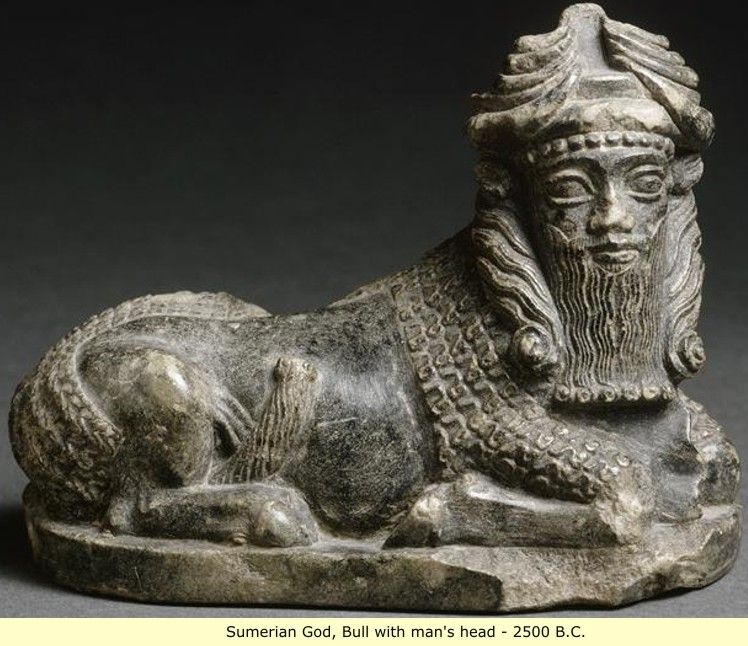
It was the Sumerians (Iraq, Mesopotamia) who developed number systems, the wheel, a set of laws, and invented the earliest writing.
“Scholars now recognize that writing may have independently developed in at least four ancient civilizations: Mesopotamia (between 3400 and 3100 BCE), Egypt (around 3250 BCE), China (1200 BCE), and lowland areas of Southern Mexico and Guatemala (by 500 BCE).
“…The Phoenician alphabet is simply the Proto-Canaanite alphabet as it was continued into the Iron Age (conventionally taken from a cut-off date of 1050 BCE). This alphabet gave rise to the Aramaic and Greek alphabets. These in turn led to the writing systems used throughout regions ranging from Western Asia to Africa and Europe.[1] [Phoenicia was located in Lebanon (Middle East) from about 1100 to 200 BCE.]
Black eggshell pottery of the Longshan culture (China, c. 3000–2000 B.C.E.)
Most of the foundations of modern science appeared first in China and/or the Middle East, neither of which were white people. In Babylon, successor to Sumer in the lands of modern Iraq, medical practices, metallurgy, animal anatomy, and astronomy were documented as early as 2000 BCE. Egypt developed astronomy, medicine, and mathematics including geometry as well early concepts in neuroscience and in the empirical method of scientific study. By the first century BCE, the Chinese had advanced the use of decimals and fractions, kept records of astronomical events such as sunspots, supernovas, and eclipses, and are credited with a long list of other discoveries and inventions including gunpowder which, upon discovery by Western explorers in the early Renaissance, were lifted wholesale into Western cultures.[2]
While Islamic achievements between 786 and 1258 CE encompassed a wide range of advancements, especially in astronomy, mathematics, and medicine, white people of Western Europe lived in fortified tribal encampments, waged war with swords, and did not read or write except in cryptic runes or enclaves of monks using the remnants of Roman literacy.[3] These earliest non-white cultures advanced the inventions of Greece and Rome.
Hindu-Arabic numerals, set of 10 symbols—1, 2, 3, 4, 5, 6, 7, 8, 9, 0—that represent numbers in the decimal number system. They originated in India in the 6th or 7th century and were introduced to Europe through the writings of Middle Eastern mathematicians, especially al-Khwarizmi and al-Kindi, about the 12th century.
Western Europe’s invasion of Latin America brought diseases which wiped out nearly 90% of the native population, with the remainder subjugated into slavery to see their religious texts burned and accumulated wealth loaded onto ships bound for Europe. Yet before this invasion by the Catholic Spanish and Portuguese into Central and South America, the native cultures there had developed some of the world’s most advanced mathematical and astronomical expertise, calendars that equal anything invented so far, and agricultural refinements that produced corn, peppers, squash, potatoes, and tomatoes along with many of the bean types in popular use today.
An artistic recreation of The Kincaid Site from the prehistoric Mississippian culture as it may have looked at its peak 1050–1400 CE.
The myth perpetuated by such invasions, including the stories taught to generations of white Indo-European descendants in the United States, is that the Native tribes of our lands were uncivilized people who benefited from the teachings of European religion, speech, and cultural traditions. But for over 15,000 years before European diseases killed tens of thousands of them and deliberate genocide killed thousands more, Natives had lived quite well on this land, following their spiritual practices and developing extensive trading routes. Their general philosophy encompassed “harmony with nature, endurance of suffering, respect and non- interference toward others, a strong belief that man is inherently good and should be respected for his decisions.”[4]
Just as with the so-called primitive cultures in Africa, Australia, the Pacific Islands, and—closer to home—the Natives of the Americas, the civilizations they built did not wipe out their forests or pollute their rivers and air. They enjoyed communal life, unlike modern America where hardly a day passes without a mass shooting by frustrated Indo-European males who cannot go off ‘a-Viking’ to loot and plunder. The longing for a return to the violent ways of medieval ancestry is reflected in everything from the hue and cry over gun ownership to the rabid insurrection of January 6, 2021, when men carried Confederate flags symbolizing their supremacy.
Today, those finding unacceptable differences among persons wishing to make their homes in the United States (and other Western European countries of PIE descent) chose to discriminate not only for skin or hair color but also for religion, cultural practices, and even styles of dress. This is not new. As noted in a recent article in The Atlantic, “the United States has never been a “diverse nation of immigrants,” a phrase that first appeared in the national dialogue in the late 1890s. The U.S. has consistently favored immigration by Northern Europeans (PIE DNA) and, since 1882, has “deported more than 57 million people, most of them Latino.”[5]
Like so many other revelations resulting from modern science, DNA research clearly reveals that behaviors ascribed to our white ancestry are not in fact hardwired into our minds.
“Further studies finally debunked race as a biological marker for humans for two key reasons. First, we cannot distinguish a “white” person, for example, from a “black” person by looking at their genetics, alone. Skin color is determined by a number of genes, and so even if a certain set of genes suggests someone may have dark skin, an entirely separate set of genes could also make their skin lighter. In addition, humans are so mixed that any physical features that may have arisen, such as height or skin color, do not clearly “belong” to one group of people. Moreover, the traits we might see in a particular white person — blond hair, blue eyes, light skin — are not grouped together in our DNA. In other words, many characteristics that we consider as racial traits are not inherited as a fixed combination. Having light skin has nothing to do with one’s having blue eyes (or being tall, or liking math, for that matter).”[6]
The evidence is clear that racism is not an inheritance based on our DNA but rather a choice taught by parents or cultural institutions and perpetrated by those who refuse to learn. Increasing numbers of white men and women of Indo-European ancestry have evolved to accept all humans as equals and embrace progressive reforms that overcome earlier, prejudiced views. Of the 255,200,373 Americans eligible to vote in 2020, only 159,633,396 actually cast a ballot (66.3%). Of those, supporters of an entrenched Indo-European view gained 46.9% and the progressives gained 51.3%, neither of which is a majority of the nation’s eligible voters. In the greater eligible voter population, only 32% voted for Biden and only 29% voted for Trump.
The slow trend toward an increasingly evolved view of the world based on science and acceptance gives hope that human intelligence can overcome the ancestral influence of PIE DNA’s long traditions. But only if we try.

















 denelecampbell