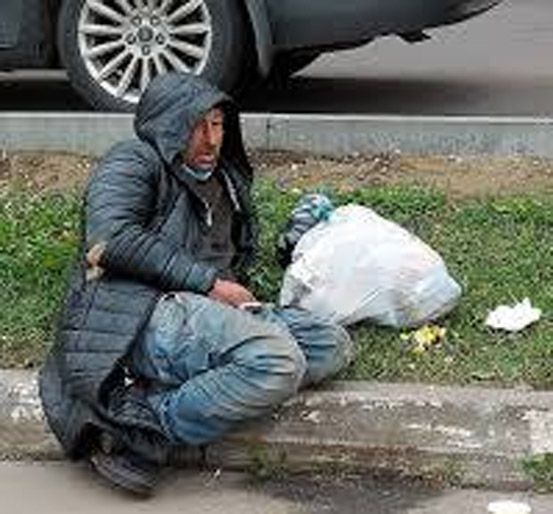
What Trump Will Bring

In the pending Trump presidency, there will be no support for Ukraine or Palestinians, and it will be the desperate people of those countries who suffer. That suffering will spill over, from Ukraine into more of Europe, from Palestinian lands into Lebanon and the broader Middle East. Trump’s buddy Vladimir Putin is thrilled. The wealth of Ukraine in natural resources and rich cropland will strengthen the weaknesses of Russia and move Putin closer to seeing his lifelong dream realized, the re-creation of the Soviet empire.

If Trump et al succeed in tearing down the U.S. Constitution and all we stand for, pretty soon the war will be on our land, in our towns and farmland. Communist nations like Russia, Iran, and China will simply walk in through the doors Trump is leaving open.

There will be no acknowledgement of climate change or its inevitable, already-apparent crises as insurance rates skyrocket in a futile effort to mitigate losses from flooding, storms, and other weather extremes. If we’re troubled by immigration now, wait a few more years of uncontrolled climate change when entire nations are unable to house or feed their populations due to floods or lack of agriculture. Do we shoot them at the border? Let them starve?

What would Jesus do?

Most telling will be the nosedive of our economy, not just in the four years of Trump’s legal term of office, but thereafter as his exploitation of U.S. oil reserves undermines our future energy independence. Trump’s ‘drill baby drill’ cries ignore the wisdom of alternative energy. He is simply too stupid to understand why we should use anything but oil even though all known reserves will run out by 2070. Theoretically, we may never run out of oil because, given the depth of the Earth’s core, there will be new wells to discover. That said, it’s highly unlikely that the practice of mining such depths will become economically viable.

Trump’s second presidency will expand on his previous dismissal of health crises preparation which left us vulnerable to the COVID outbreak after he liquidated the pandemic preparedness established by previous presidents. What will happen with the next pandemic? Researchers say there’s as much as a 50 percent chance that we’ll see something like this again in the next twenty-five years. Trump’s lack of intellect leaves the entire nation unprepared.

Even more concerning is his ignorance of history, which allows him to pursue his fantasy of shifting civil service jobs to political appointments in direct violation of the United States Constitution. Traditionally, the civil service has been a sector of government that operates under a merit-based system to ensure that government jobs are filled by the most qualified individuals. This system protects civil servants from political influence and allows them to make independent decisions without fear of reprisal. The civil service is a key part of the constitutional framework because it helps to uphold the rule of law and ensure that the government is run by merit, not political affiliation. Trump’s affection for the idea of government work force composed of loyalists completely overturns this tradition.

Trump doesn’t care what happens in the future as long as he stays out of prison for his multitude of felonies. He doesn’t care about the lives of anyone besides himself. He’s eager to turn over the economy to people like Elon Musk, who acknowledges he is autistic, a condition marked by impaired social interactions, verbal and nonverbal communication deficits, and restricted, repetitive behavior patterns and associated with poor emotional control. To place the future of the U.S. economy in the hands of such a person means loss of critical social support for the weakest and neediest among us. Such suffering would not be a concern to Musk. Or Trump, who, when confronted with the disability of his nephew’s son, famously told his nephew ““Those people…” Donald said, trailing off. “The shape they’re in, all the expenses, maybe those kinds of people should just die.”

Similarly, Trump has nominated Robert Kennedy Jr. to head the U. S. departments in charge of public health including the Department of Health and Human Services, the Center for Disease Control, and the Food and Drug Administration. But Kennedy has no science or medical background, other than claiming to have had worms in his brain. He also reported that at one point, mercury poisoning in his body reached ten times safe levels. Studies show that high exposure to mercury induces changes in the central nervous system, potentially resulting in irritability, fatigue, behavioral changes, tremors, headaches, hearing and cognitive loss, and dysarthria (a speech disorder that makes it difficult to speak due to issues with the muscles, nerves, or brain that control speech). Kennedy’s negative attitude about vaccines no doubt attracted voters who were petulantly annoyed by public health measures enforced during COVID like wearing masks and being vaccinated to prevent spread of the virus.

Perhaps the most immediately dangerous is Pete Hegseth, a FOX News commentator and host of “Fox & Friends” now nominated to be Secretary of Defense. An Army veteran of eight years, he plans a “frontal assault” to reform the Department of Defense from the top down, including by purging “woke” generals, limiting women from some combat roles, eliminating diversity goals and utilizing the ‘real threat of violence’ to reassert the United States as a global power.” (ABC News) He has called the United Nations a ‘farce’ and “giant joke’ and believes military action is the best plan to solve world problems. Aside from his warmongering ideas, he has advocated for the pardon of war criminals. He holds no sympathy for Palestinians and embraces Israelis as “God’s chosen people” with “Zionism and Americanism at the front lines of Western civilization.” (Wikipedia) His concept of “civilization” apparently follows the same moral codes as Trump. “Hegseth and his first wife, Meredith Schwarz, divorced in 2009. He married his second wife, Samantha Deering, in 2010; they have three children. In August 2017, while still married to Deering, Hegseth had a daughter with Fox executive producer Jennifer Rauchet, with whom he was having an extramarital relationship. He and Deering divorced in August 2017. Hegseth and Rauchet, who has three young children from her first marriage, married in August 2019.” (Wiki)

Miller, left. Goebbels, right

Even if the new Republican majority in the Senate rejects one or more of these nominations, there’s little likelihood that Trump’s subsequent appointments would be any less unsuitable for government positions. He has already put extremist Stephen Miller in a position that will control immigration, our very own Joseph Goebbels, a German Nazi politician who was the chief propagandist for the Nazi Party and then Reich Minister of Propaganda from 1933 to 1945. He was one of Adolf Hitler’s closest and most devoted followers, known for his deeply virulent antisemitism which was evident in his publicly voiced views. He advocated progressively harsher discrimination, including the extermination of the Jews in the Holocaust.

Finally, there is the nomination of Tulsi Gabbard as the head of our national intelligence agencies. As noted by news media, Gabbard’s record “reflects an alarming pattern of siding with Russia and other authoritarian regimes, raising questions about whether she should serve as America’s top-ranking intelligence official. Her selection has alarmed lawmakers on both sides of the aisle, though most Republicans have refrained from public criticism. …[She] lacks deep intelligence experience and is seen as soft on Russia and Syria. …Among the risks, say current and former intelligence officials and independent experts, are that top advisers could feed the incoming Republican president a distorted view of global threats based on what they believe will please him and that foreign allies may be reluctant to share vital information.” (Reuters)

But Trump’s voters don’t care about such details. He was elected because he made promises to enact policies which reflect old prejudices and enshrine ignorance under an authoritarian ruler. Old habits don’t vanish simply because new opportunities are presented, not when those habits have been ingrained for tens of thousands of years. The brain wiring isn’t there. The ‘conservative’ clings to the past because it is familiar.

Not better.

Coming soon: What the Democrats Did Wrong

In the United States today, apparently…

https://carolbodensteiner.com/2014/01/13/what-did-rural-life-look-like-1910/

Progress came too fast for the evolutionary capabilities of humans. Suddenly, within one hundred years, men were expected to accept women as equals after millennia of their submission. Men were expected to adjust to working with their minds instead of their hands, their bodies eager and waiting for the first throw of the spear, the first clubbing of an enemy. The majority of men needed those physical triumphs to feel like man, and they still do.

A significant percentage of women still believe men are their superiors, the representative of their male god who tells them how to live in submission. It’s too much to expect that suddenly after only 100 years of having the right to vote and the right to contraception, women would universally embrace the responsibility of citizenship, of bodily autonomy.

Sadly, an official return to policies constructed of old fears and prejudices destroys people, most of whom have worked for decades—lifetimes—to ensure that Americans are able to pursue our personal needs and dreams, to become who we want and need to be despite centuries of repression and exploitation. Progress means making the world a better place where people don’t suffer from old hatreds and fears. Now women are losing the right to control what happens to their own bodies. Men and women risk losing their right to live and love as they are—gay, lesbian, bisexual, transgender and more. Anyone who isn’t white need not exist.

While attempting to fling us backwards to a time without electricity, running water, or air conditioning, not to mention television, cell phones, and antibiotics, conservatives seem to think society could obtain all those things WITHOUT concurrent changes in social norms. That’s not how it works. Advances in technologies and sciences go hand in hand with social change. In a democratic society, education sufficient to produce people who invent cell phones also produces realization of our innate value as individuals—no matter what gender, skin color, or ethnic background.

Back in the ‘good ole days’ women made the cloth. “Heagerty family members demonstrating the steps needed to spin cotton, Cave Springs (Benton County), about 1900. From right: removing the seeds, carding the fibers, spinning the thread, and winding it on a reel.” Jerry Ritter Collection (S-2004-20-6)

Irony is when people vote for policies that are oppositional to their personal needs. Irony occurs when those voters cherish their cell phones while remaining ignorant of the high levels of education required for their invention or the vast technological network that serves them. Irony occurs when those voters flock to doctors to deal with cancer and other life-threatening conditions whose increasingly successful treatments come about at the hands of highly educated scientists who understand the cellular function of DNA and RNA, terms about which those voters are utterly ignorant. Undoubtedly, key figures in those fields are women and/or LBGTQ+.

It’s called shooting yourself in the foot.

Next: What Trump Will Bring

NEW RELEASE!

Today, mail seems almost quaint, often referred to as “snail mail” as we become more dependent on the easy flow of electronic email, texts, and messages. But in earlier times, as recently as 1900, communication beyond the in-person conversation or perhaps a written message sent across town by courier, mail was the only means of contact. The faithful transit of mail from place to place became an almost sacred duty for the people who established post offices.

Rural delivery to homes was not made available by the U.S. Postal Service until 1890. Even then, in the rugged landscape of parts of Washington County, mail delivery came by horse or mule to remote post offices into the early years of the 20th century. These post offices were gathering places, usually housed in small stores where a person might pick up mail and trade eggs for a fresh batch of crackers while catching up on news. As such, post offices served more than mail, also forging interpersonal connections and a sense of community.

A total of 104 post offices were established in Washington County, of which only fifteen survive today. The other 85 came and then vanished along with the community they served. The men (and a few women) who took the responsibility to provide mail service often became leaders in the county, holding the public trust, letter by letter, at their station at a dusty crossroads.

Nab your copy today! https://www.amazon.com/dp/B0DJJDD5M4

The Rich and Social Security

I’m sorry to burst everyone’s bubble about the rich and Social Security, but I believe it’s flat out wrong to think it’s as simple as the rich should pay “their fair share.” Compared to everyone else, they already pay their fair share because what each of us pays in Social Security tax is based on our income. The rich earn more, so they pay more.

The sticking point is the cap, the amount of the tax to be collected before the assessment stops. So what “pay their share” actually means to those hoping for reform is “get rid of the cap.”

But what would that mean?

“In 2024, the maximum amount of earnings subject to Social Security tax is $168,600, which is up from $160,200 in 2023. This limit [cap] is also known as the contribution and benefit base or the taxable maximum. The tax rate for wages paid in 2024 is set by statute at 6.2 percent for employees and employers, each. This means that an individual with wages equal to or larger than $168,600 would contribute $10,453.20 to the OASDI program in 2024.” And no more.

“The federal government adjusts the Social Security cap annually to keep pace with inflation based on changes in the National Average Wage Index. Earnings above this amount are not subject to Social Security tax or factored into Social Security payments in retirement.”

So at the maximum level of taxation this year, a person would pay a total $10,453.20 into the system.

And what does this person draw in benefits?

“The maximum Social Security benefit depends on age, earnings, and when benefits are taken. In 2024, the maximum benefit is $3,822 per month for those who retire at full retirement age, which is between 66 and 67. For those who retire at age 62, the maximum benefit is $2,710 per month, and for those who retire at age 70, the maximum benefit is $4,873 per month.” 

To earn the maximum Social Security benefit, individuals must have been a high earner for 35 years and wait until full retirement age to claim benefits.

The ‘high earner’ contributing to the fund based on $168,600 for 35 years would have a pension balance of over $5,901,000 by retirement. At the $4,873 maximum monthly payout for the retiree, this amount would be depleted in 100.87 years, hardly a likely remaining life span after retirement age. Even living 20 years past retirement age, that person would only recoup about 20% of what he paid in.

On the other end of the tax calculation, a low income earner of $35,000/year might contribute far less than he/she will actually be able to receive at retirement. An employee sees 6.2% of his earnings withheld from his paycheck while his employer pays another 6.2%, for a total of $4,340/year based on $35,000/year. A self-employed person has to pay the entire 12.4% into the fund. Either way, thirty-five years later, that person will have accumulated $151,900 in his benefit fund.

Depending on the age at retirement, let’s say 66 years, his monthly benefit amount would be $1,846. Fortunately for him, if he lives twenty years after retirement, he will receive a total of $443,040 in benefits, a total of $291,140 MORE than he paid into the system.

Yes, there are significant numbers of men who die before they can claim any benefits, although their widows and/or minor children can draw on those accounts. A widow who never earned an income can live on her dead spouse’s benefits for the rest of her life, an amount which can easily skyrocket into large sums as about 16% of the men and about 34% of the women live to ninety or beyond.

Currently, life expectancy for women is 80.2 years while for men, it is 74.8 years. About half of women drawing benefits receive amounts based on their husbands’ earnings. Calculating by averages alone, the 5.4 years that women live past the male average death age creates a disproportionate amount of benefits paid that exceeds taxed earnings.

There is no cap on how many years a person can receive benefits. The benefits continue until death. The longer we live, the more benefits we receive.

So there’s no method by which the “rich must pay their fair share” when it comes to Social Security. Nor is the equity in promising widows a lifetime of benefits based on the husband’s contributions.

But wait! Aside from Social Security, a far simpler method of taxing excessive wealth is a more effective income tax rate. Consider the following:

  • According to a 2021 White House study, the wealthiest 400 billionaire families in the U.S. paid an average federal individual tax rate of just 8.2 percent. For comparison, the average American taxpayer in the same year paid 13 percent.
  • According to leaked tax returns highlighted in a ProPublica investigation, the 25 richest Americans paid $13.6 billion in taxes from 2014-2018—a “true” tax rate of just 3.4 percent on $401 billion of income.[1]

That’s not paying your fair share. Instead of rewarding wealth over work, our tax system should ensure that billionaires play by the same set of rules as the rest of us. It’s good for the planet, and it’s essential to the preservation of our democracy.[2] An easy method of capturing a greater portion of excessive income is the wealth tax plan advocated by Sen. Bernie Sanders:

Key Points:

  • Establish an annual tax on the extreme wealth of the top 0.1 percent of U.S. households.
  • It would only apply to net worth of over $32 million. Anyone who has a net worth of less than $32 million would not see their taxes go up at all under this plan.
  • This would raise an estimated $4.35 trillion over the next decade and cut the wealth of billionaires in half over 15 years, which would substantially break up the concentration of wealth and power of this small privileged class.
  • Ensure that the wealthy are not able to evade the tax by implementing strong enforcement policies.[3]

Aside from higher income taxes on the 1% super wealthy, another major misconception about Social Security is the idea that the government has “borrowed” money from the fund and that’s why it seems to be running out. Yes, the federal government borrows Social Security funds. This is a mechanism that was built in when the program began. The point being, the government is required to pay the money back with interest.

  • Social Security income is deposited into two financial accounts called trust funds – the Old-Age Survivors Insurance (OASI) Trust Fund and the Disability Insurance (DI) Trust Fund. The trust funds are used to pay out Social Security benefits and cover administrative costs.
  • The trust funds hold money that isn’t needed in the current year to pay benefits and other expenses. By law, that money is invested in special Treasury bonds that are guaranteed by the U.S. government and earn interest. This adds to the fund. The Treasury is obligated to pay back the money it borrows with interest, according to AARP and the Congressional Research Service, and the SSA says the federal government has never failed to do so.[4]

Another misunderstood program is the Supplemental Security Income, or SSI, similar to Social Security, which guarantees a minimum level of income for aged, blind, or disabled individuals. It acts as a safety net for individuals who have limited resources and little or no Social Security or other income. Individual States have the option to supplement Federal payments for SSI. Currently, states fund about 33% of the program while the federal government puts up the remaining 66% ($55.4 billion in 2021). SSI is financed by general funds of the U.S. Treasury — personal income taxes, corporate taxes, and other taxes. Social Security taxes collected under the Federal Insurance Contributions Act (FICA) or the Self-Employment Contributions Act (SECA) do not fund the SSI program.[5]

We can and should argue for change. But we need to start out with the facts.


[1] https://www.oxfamamerica.org/explore/stories/do-the-rich-pay-their-fair-share/

[2] Ibid

[3] https://berniesanders.com/issues/tax-extreme-wealth/

[4] https://www.verifythis.com/article/news/verify/social-security-verify/how-government-borrows-social-security-trust-funds/

[5] https://www.ssa.gov/pubs/EN-17-008.pdf

Another NEW Release: Winslow–Before & After

Most folks who live around these parts know the story of Winslow, Arkansas, a tiny village perched in the highest elevations of the Boston Mountains. They know about the railroad tunnel built back in 1881 that blasted through 1,700 feet of stubborn rock and shale. They know about the all-female city council, the so-called Petticoat Government, back in 1925. And most of them know about the pre-air conditioning turn-of-the-century influx of wealthy summer visitors eager to live in the cooler air found at that elevation.

But what most folks don’t know is what came before the railroad. And what came after the boom years ended in the 1930s. Winslow today is, in many ways, just as interesting and vital as it was in those boom years between 1881 and 1930. Its population remains steady at around 365 people, not counting the hundreds residing in the rugged hills and hollers surrounding the place, both groups peppered with eccentrics, artists, and others typical of the Arkansas Ozarks reputation. Sit a spell and visit.

Great companion read to the new WINFEST book! Check it out at Amazon!

NEW RELEASE! WINFEST!

WINFEST! Celebrating 40 years of music and fun, this little book showcases each year’s performers and T-shirts in full color! Whoever dreamed in 1983 that forty years later this upstart music festival would still be going strong, a beloved event treasured by locals and regional fans alike, not to mention the many musicians and performers who have graced the stage with their talent and sense of adventure! Each year, a new, colorful t-shirt design featuring the performer names as well as the event date have preserved the legend of Winfest and are now presented for posterity in the pages of this booklet. Created as a labor of love by those who saw a need to find financial support for local nonprofit ventures, Winfest has stood the test of time, weather, and changes in the culture, truly a testament to the determination and dedication of the entire community of Winslow, Arkansas. Buy now at Amazon!

Award!

I am grateful for this award from the Arkansas Historical Association, and for the many helpers and sources of information for this article about an amazing woman, Forrestina Bradley Campbell (no kin), otherwise known as White River Red. May she rest in peace. This article may be found in my book, “Around the County,” (available at https://www.amazon.com/Around-County…/dp/B0C126KF23) or in the Spring 2023 issue of “Flashback,” the quarterly journal of the Washington County Historical Society.

Next Step

On Thursday, May 9, 2024, Senators Katie Britt (R-AL), Marco Rubio (R-FL), and Kevin Cramer (R-ND) introduced the More Opportunities for Moms to Succeed (MOMS) act. Britt … said the measure would provide a federal database of resources for pregnant women and women parenting young children, but that information excludes anything that touches on abortion. The measure is clear that it enlists the government in opposition to abortion, but more than that, it establishes that the government will create a database of the names and contact information of pregnant women, which the government can then use “to follow up with users on additional resources that would be helpful for the users to review.” Heather Cox Richardson, May 13, 2024 (Monday)

Then,

  1. Create a database of all females of child bearing age.
  2. Require monthly reports of pregnancy tests from all females in the database, on penalty of felony prosecution.
  3. Once pregnancy is reported, the female will be confined in a gestation facility.
  4. Any employment or domestic duties of that female will be suspended until she gives birth.
  5. If complications occur in the pregnancy, the embryo/fetus will be the priority consideration.
  6. Upon birthing, the female and newborn will be returned to her former place in the community.

We Know the Answers; If Only We Would Listen

The continuing search for solutions to the massive influx of immigrants has yielded some outrageous ideas, such as Trump’s ‘solution,’ ridiculed by Rep. Robert Garcia, who on January 31 reminded the Republican caucus that the plan they have rallied behind consists of moats filled with alligators, fences with spikes on top, bombing northern Mexico, and shooting asylum seekers. “Trump only speaks about creating misery at the border, there is no plan to improve anyone situation here,” Garcia pointed out.

Serious efforts to address these problems more realistically have been ongoing. For example, on June 26, 2023, a conference addressing the root causes of migration in the Western Hemisphere convened in Washington D.C. under the auspices of the Council on Foreign Relations. Speakers included Katharine M. Donato (Donald G. Herzberg Professor of International Migration and Former Director, Institute for the Study of International Migration, Georgetown University; CFR Member), Silvia Giorguli (President, El Colegio de México, A.C.),  Manuel Orozco (Director, Migration, Remittances and Development Program, Inter-American Dialogue), and Presider Kellie Meiman Hock (Managing Partner, McLarty Associates; CFR Member). What follows are excerpts from their discussion.

HOCK:  We’ve got the socioeconomic realities of Mexico and Central America in an environment of increasing violence, and we’ve got on our side the U.S. failure to enact a coherent immigration reform to try to permit more regular flows despite our having a labor shortage, despite the efforts of the Biden administration to try to enact some more regularity through the regional processing centers and other efforts. It’s still difficult, and an election in 2024 will not make it more easier.

GEORGULI: First is this idea that we do need a comprehensive and regional approach to the management of migration more than unilateral or bilateral agreements to look at more in a—in an open perspective. Of course, one of the acts of the centers of the management of migration goes to addressing the drivers of migration—economic drivers; environmental drivers; and now in Central America—well, in North and Central America, and in Mexico also, violence-driven migration.

One of the main conclusions of the group was the idea of increasing the legal pathways to migration, both in terms of labor opportunities but also in terms of humanitarian protection. And another lesson learned from what we have seen in the region is the importance of civil society and the work that they have done, that in many cases they have been more effective than certain states to respond to the urgent needs and the humanitarian needs of population on the move.

DONATO: … the historical context is complex. It is an area of the world where there was a lot of civil war and civil strife in the 1980s in El Salvador, in a variety of countries in Central America. There was not only a lot of violence then, but there was a lot of displacement. And that started a pattern of, you know, fairly significant internal displacement, which then translated into movement through Mexico and coming up to the U.S. border.

And even though that kind of violence began to dissipate in the 1990s, it’s an area of the world that has continued to—since the mid-1990s that continues to not be totally on stable ground with respect to democracy, democratic processes, with respect to the belief in the legitimacy of the state to take care of me if I’m—something happens. And it’s also an area of the world where there’s been a fair amount of environmental events, big natural disasters—so Hurricane Mitch in 1998, I believe; Hurricane Stan in, I think, 2003 or (200)4; very big storms coming through. And actually, in 1998 when that happened, the U.S. implemented temporary protected status for hundreds of thousands of Salvadorans and Hondurans who were in the U.S. and could not return.

So the thing is, none of these drivers—the initial drivers—operate by themselves. They all interact. But they’ve created enough of a push so that many, many people have left. And I think about 4 million—not counting the recent years of entry, I think 4 million persons born in northern Central American nations live in the United States, and that’s not counting the last few years.

And so the population has grown in the U.S. It’s grown because not only of these drivers, but then all of the family networks. You know, someone gets to the U.S. They get TPS, temporary protected status, which has to be renewed on a yearly or, you know, every-two-year basis. But then those families who then have a foothold here then can help bring others here.

So this has been a process that’s been going on now for decades. It’s going to be fairly hard to stop even if life, let’s say, in Guatemala and Honduras became less violent and more predictable with respect to climate and therefore food supplies. Even if those structural problems lessen, it still will take quite some time because now family connections are cross-border. And you know, if I haven’t been able to cross and my family’s been in the U.S. for fifteen years, odds are very, very high that I’m going to come.

GIORGULI: … addressing the drivers of migration, keeping the strategy of cooperation for development in order to attend the causes of migration, is still a very important and one of the main strategic lines to follow when you talk about the regional management of migration. But there are two things that we have learned from the Mexico-U.S. experience for more than one hundred years.

First, that it will take time to have results on one side. And secondly—and that’s new—that, usefully, I think that in a certain way we are—still think a lot of this lever, economic migration, and that’s why it has been so difficult to move to a different way of managing Central American migration in Mexico and in the U.S., no? So, like, trying to change that chip and trying to emphasize more of these challenges, such as the rule of law, and strengthening the local institutions, no?

For example, in the case of Mexico, of course there has been a change in terms of refugee and asylum because the way the applications have increased in the last three years. There has been a lot of work with UNHCR—with ACNUR in Spanish, UNHCR in English—but still the institution that is responsible for processing and receiving all the applications is very weak in terms of financial resources and human resources, no? So that would be, like, very close to the U.S. case, where the strengthening of the institutions can be one way to build this more comprehensive management.

DONATO: … in the United States any significant change to legal pathways has to come from U.S. Congress, and we are stuck, right? Congress is stuck and unable to develop out legal pathways. So, as a result, the legal visa system that we have in place currently comes from an act of Congress that took place in 1990. And I don’t know one employer in the world that wouldn’t have changed their hiring procedures over the course of three or four decades. So we are talking about an antiquated system.

…[With] the Biden administration—there have been some changes, small, some recommendations from the task force that sync with what the Biden administration has done in the U.S. The regional processing centers, it’s going to take a while to figure out if they’re going to work. But the idea is that perhaps we should have a place where people can go that’s more accessible than coming all the way from Venezuela … all the way up through Mexico, and all the risks that are associated with that kind of movement. … can we develop a place—and the U.S. government is working on this now with two other partners, Canada and Spain.

~~~

OROZCO: …the administration wants to extend DACA to this crowd of kids, and we’re talking about five hundred thousand people now. You know, between 2019 and 2022, five million people tried to come to this country. I mean, five million is a lot—it’s a country moved to the U.S. border. Maybe half made it, or two million made it. The other ones were returned, and billions of dollars spent on that is a big hassle that we haven’t even talked about, all because there is a broken system.

GIORGULI: … something that I learned from working with the task force, and especially from the colleagues from Central America, is that it has to do not only with economic opportunities, but working side by side with the rule of law, with the construction of institutions in the countries and communities of origin, no? So I do agree with Manuel that economics is probably one of the strongest and most continuous drivers of migration, but I also think, from the field work that we have been conducting and from the experiences that we heard within the task force, that if you don’t have this other part, it’s just economic investment, or creating job opportunities in the communities of origin by themselves will not be enough.

QUESTION FROM THE AUDIENCE: I’d like to go back to something that Manuel said. Very specifically he talked moral hazard—moral hazard in migration, taking migration seriously. Silvia talked about UNHCR giving money to COMAR in Mexico to help with refugees, and so on—not enough money, not enough.

But I would say the same thing happens in the United States. The United States invests, creates a whole new bureaucracy when they create the Department of Homeland Security, and starts giving money almost specifically, almost exclusively to ICE and to CBP. USCIS is lost out there somewhere, right? And the problem with enforcement, with thinking that you are going to stop water from flowing, is that it’s self-perpetuating. The more you invest in that, the more you have to invest. The more walls you build, the more you trap people behind those walls, and it gives you exactly what you say you don’t want.

~~~

The group further discussed inequities in existing agricultural programs as well as the increasing effects of climate change and poor quality education in these countries where so many immigrants originate. A complete manuscript is available at https://www.cfr.org/event/addressing-root-causes-migration-western-hemisphere Video of the discussion is found at https://www.youtube.com/watch?v=Gc3CG7SRvrE&t=23s.

Without addressing the root causes of the increasing immigration, the U.S. has no chance of enacting meaningful controls. This conference was one of many ongoing efforts to better understand what we can do without killing people or otherwise fantasizing about inanely cruel–and ultimately ineffective–policies.

The New Peasants

We need to stop thinking like peasants. We no longer live under the rule of a king or an aristocratic lineage of dukes, earls, and what not. We citizens of the United States (and most modern democracies) hold equal shares of power over ourselves, each of us with the right to assemble, speak our mind, and vote in order to maintain a government that protects us from any force threatening to bar our path to life, liberty, and the pursuit of happiness.

Apparently some among us have forgotten, or more likely never learned, that this is our gift as Americans. They are the 21st century serfs who plod along ignoring their rights—and their duties—as American citizens. Observers most often label these new age serfs as ignorant, but that’s not entirely the reality. These modern serfs are willfully ignorant, a choice they have made in order to avoid thinking.

True, thinking is a troublesome exercise. Thinking requires the gathering of all pertinent facts on any particular issue. Such fact gathering requires not only the time and effort of the exercise, but also possession of skills in such areas as rationality and research. These skills are taught to children in their school years, but the teaching is clearly inadequate. This inadequacy is not necessarily the fault of the teacher or the school system or the curriculum, although all three can be at fault to some degree. More likely the inadequacy is due to parents not practicing thinking at home.

This kind of generational non-thinking used to be the norm, back when most of us were serfs. Those were the days when a few traditional skills sufficed in meeting life goals. A serf served his/her lord—the duke, earl, or even the king—who made his expectations clear. A woodsman was to cut and haul wood. A farmer was to plant, cultivate, and harvest crops.

As explained in Wikipedia:

  • Serfdom is the forced labor of serfs in a feudal society. In medieval Europe, serfs were peasant farmers who worked without pay for a lord. In exchange, they got to live and work on the lord’s manor. They also got the lord’s protection. Serfs had more rights than slaves (for example, serfs could own property). However, they were not completely free. They could not move, marry, or leave the manor without the lord’s permission. In most serfdoms, serfs were legally part of the land. If the land was sold, they were sold with it. Serfs worked in their lord’s fields. They sometimes did other things related to agriculture, like forestry and transportation (by both land and river). Some also worked in craft and manufacturing … like the village blacksmith, miller or innkeeper. Serfdom developed from agricultural slavery in the Roman Empire. It spread through Europe around the 10th century. During the Middle Ages, most European people lived in serfdoms.

Serf children grew up learning about life from their parents, a life that followed the rules set down by their lord’s demands. The sawyer’s sons were sawyers. The tanner’s sons were tanners. Owned by their fathers as girls, females were handed over to their husbands to serve as wives and mothers, subject to his absolute control.

Those rules made it easy to decide what to do without having to think about it.

Ah, those were the days. There were established rules about not only what work to do each day, but what to wear (same homespun garments as the day before), what to eat (same basic gruel and bread as the day before), what to believe (acceptance of one’s humble place in life because the Bible said so), and so forth. Even a free man could become a serf if he owed a large debt. He would make an agreement with the lord of the land. The lord would keep him safe, give money to pay his debt, and give him land to work on. In return, he would work for the lord. All his children would become serfs.

So while our early ancestors arrived in the American colonies fresh from their peasantry, only a few of them brought with them the practice of thinking. This is the resistant strain of human nature, to do what the parents did, to blindly accept a set of rules to follow, to spend our days laboring to satisfy our lord and master. The goal has shifted only slightly in that we labor in the belief that if we work hard enough, we too can be a lord. This is the fantasy that controls so many, that someday when we’re lords, we won’t want the government to tax us. This is the thinking that allows the rich to pay taxes at the same rate as the rest of us, when their incomes surpass by billions the amounts we earn. Meanwhile, we bow down (at least mentally) to the lords who have achieved ‘greatness’ through wealth or power.

After all, peasants believe, how could lowly persons such as ourselves manage to decipher the intricacies of big business or political process much less discern the many aspects of personality and manipulation employed by the lords? How are we supposed to know what is true? We must believe what our chosen leaders tells us. Never mind what news source may or may not employ actual journalists, or who provide ‘news’ instead of ‘entertainment.’ It’s all a lie anyway, they say, throwing up their hands, disheartened.

Well, yes, these are difficult mental tasks for people who never learned how to research or reason. Besides, we’re busy trying to keep a roof over our head and food on the table.

A full 34% of the voting-eligible population did not vote in 2020, which saw the highest voter turnout since 1914. Even more concerning is the popularity of wannabe dictators like Donald Trump whose supporters openly ridicule education, basking in the praise of a man who “loves the poorly educated.” It should be no surprise that Democrats control 77% of the U.S.’s most highly educated Congressional districts (107 districts) while Republicans control 64% of districts where the fewest people went to college (107 districts).[1]

There is no controlling force that coerces individuals into peasant thinking. Such a role is heavily influenced by tradition and hardly mitigated by many educational opportunities. Community plays a role as well, either offering role models who use thought and action to move beyond peasantry, or by warning of negative results for those who try to move beyond their family traditions of non-thinking. It is often easier to remain in the trenches than to climb out, especially when one has failed to grasp the tools which make climbing possible. Plus, who wants the responsibility of stepping up to the plate? I might swing and miss.

Our society and especially our educational systems are failing to penetrate the mental laziness of lingering peasantry enticing us to depend on lists of rules handed down by lords. Curriculum for all schools, public, private or religious, should provide the methods of rational thinking in order to protect malingering peasants from their self-destructive (and democracy-destroying) behavior. Curriculum requirements should include debate where fact-based points are presented on a chosen topic. A thorough understanding of civics and history should form the core of classes that also teach language arts and mathematics/logic. At strategic points in those school years, there should be lessons in conflict resolution as well as introduction to introspection.

The answer is stepping up to our human potential, NOT to install a wannabe king.


[1] https://www.politico.com/interactives/2022/midterm-election-house-districts-by-education/