Over a period of weeks, sometimes months, my dad would collect bits of debris to burn in the big garden beside their house in town. At the edge of the dormant garden, he would back up to his growing stack of brush, the bed of his rusted blue Ford Ranger piled high with dead limbs and old fence posts and oddly shaped pieces of wood that he might find alongside the road. The truck unloading was ceremonial, it seemed to me one day when I watched him, a kind of ritualistic process where he lifted each piece from the truck, carried it slowly in his now-halting pace across the soft, plowed dirt, and strategically placed it on the rising, unruly mound. Even the very last, tiny pieces merited his attention, scraped from the truck bed with his worn-out broom and thrown in fistfuls onto the top of the pile.
Sometimes I watched my father with his fires. Early into the process, he studied the future shape of it, how high it would blaze, whether the base would attract a good draft, whether unwanted combustibles had been suitably removed from the perimeter. He stacked his fuel accordingly, bits of wood and old lumber and limbs broken in winter storms, piled akimbo with large against small, thick against thin in a perfect formula for flame.
He would light it in the morning, when his footsteps tracked rich green across the silvery coat of dew on the lawn. His time at the donut shop for six a.m. coffee with the old liars, as he called them, would be cut short for the fire.
Usually he stood to the side of the shimmering heat, shovel in hand. After one of the last fires, my mother complained that he stood so close that the skin on his forehead turned red and later peeled. Standing in the dining room with them, I looked at my dad as she pointed out the damaged skin. He raised his eyebrows and smiled, offering no excuse except to agreeably remark that it had been hot.
I know his mind traveled to his past while he watched the fire. The flames would dance and reflect in his eyes while he talked about fields they had burned when he was growing up, his dad, his brothers, and how the mules had to plow a line around the field to keep the fire from jumping the fence. He remembered his mother and how she burned off her garden in the winter, leaving the ground filmed in ash for the early planting of onion, cabbage, and potato. He talked about the cold of the night, when the feather bed kept him warm until his father got up to build a fire the stove and his mother would mix biscuits.
A friend once remarked on the task of clearing out the old family house after his grandmother died, particularly the basement. It seems during her waning years, she had stockpiled kindling carefully gleaned from her wooded yard. Grocery sacks and cardboard boxes, each one stuffed with dried twigs and broken limbs, filled the space like so many sockets in a wasp’s nest. She had prepared a hive of future warmth. He said it took seven pickup truck loads to remove her cache of carefully prepared comfort.
At first, I discounted my friend’s grandmother’s collection of kindling as some kind of mental or emotional disorder. But today, as I picked up fallen oak twigs in my own yard, the wind tearing through the woods glowing orange with autumn, I thought about this wealth of fuel and one of the more opportune swaps in my life—my old refrigerator for a wood cookstove.
Neighbors had inherited the stove when they bought the old house down the road from me. A “Royal” brand, its heavy cast iron top features six burner plates and a water warming bin on the right. There’s a small firebox and ash bin on the left and an oven in the middle. The sides and front are white enamel, and a glass-covered chromed dial on the oven door features a double-ended needle which simultaneously points to a number and a description of the temperature: slow, warm, medium, hot, and very hot, the intervals also marked at the other end of the needle at 100, 200, up to 600.
I pick up more dead wood and stack it by the door, worrying that my bundles of twigs will be similarly disparaged someday, a burden requiring disposal by patient descendants. But I must plan for future winters when ice coats the electric lines and snow piles up on the roads and I end up with several days of splendid isolation, maybe without running water or the benefit of electricity. Then the old cookstove will spring to life, its grate glowing in a steady bed of coals, lids jiggling as food simmers on its top, the rocked chimney a beacon of warmth into the gray sky outside my window where wind will whip streams of smoke into the icy mist. In a bad winter, a person might need a basement full of kindling.
But I suspect it is not completely the need for fire that pushed my friend’s grandmother or my father in their almost religious attendance to the needs of fire. As much as they might have needed the bodily comfort the fire would assure, they had a greater, more present need—the need to accomplish. In my father’s later years, he could not show much to account for the hours of his days. But he could still build a superior fire.
When he was eighty-five and suffering mini-strokes that, he said, was like hearing distant music, we had taken away his truck keys and he couldn’t go for donuts with the old liars or gather wood for a fire. I found him one day by an old wood pile at the side of his house. He had the sledge hammer in one hand, gripped up close to the head, and a foot-diameter length of oak sitting upright on a nearby stump. He had driven a splitting wedge into the center of the oak, sweat pouring off his forehead, his slight frame bent to the task.
In response to my concerned questioning, he replied: “The ole dad is still worth something.”
I turned away so he couldn’t see my tears.
~~~
Back when his neighbor Cotton was still alive, my dad would call out to him on the morning of a fire.
“Come on over,” he’d wave his arm.
And Cotton would bring over a few limbs he’d been saving or anything wooden he wanted to get rid of, set up his lawn chair next to Dad’s, and they’d tend the fire together. Dad would stick his cigarette lighter down to the bits of paper and cardboard he had crumpled at the base of the heap, and then light a fresh Winston and draw on the cigarette strong and deep while the blaze flared into the brush and started working its way up the near side of the pile.
The fire merited their full attention. Orange-red flames would tear through the heap of wood, picking up speed. They listened to the snapping and popping of it, smelled the scent of wood smoke. Dad would take another drag off the Winston and then launch into one or another of his stories.
In one of his tales, he recalled high school at Morrow. Among his buddies there, he joined with three friends in a quartet that performed on the Fayetteville radio station. They were late one day, racing down the road in a Model T. As they approached the railroad crossing between Cane Hill and Prairie Grove, the freight train whistle sounded loud and long. In those days, the trains were endless. The quarter didn’t have time to wait. So the driver floored that old car, and they barreled through the turn on two left wheels and a cloud of dust seconds before the steam engines roared across the road, whistles blaring and the engineer shaking his fist at them.
He’d have to stop and laugh about that, full of renewed vigor.
On occasion, my dad would muse over his adventures teaching singing school. The shaped note method simplified the more arcane aspects of reading music, and folks would flock to these gatherings, although the popularity had as much to do with socializing as it did with music. He liked to reminisce about the time he forded the White River at Goshen to teach singing school there. Mid-river, he fell off the mule and wore wet clothes the rest of the day.
His father’s job with the railroad gave way to the Depression, and after trying to make his way with blacksmithing, in 1933 the family moved to West Memphis. Dad was in his last year of high school, so he stayed at Morrow in an arrangement with the folks who owned the general store. He would live at the store and keep the fire going in the wood stove overnight so the canned goods didn’t freeze. After a few months, he got word his mother was sick, and he had to hitchhike to West Memphis. He had nothing but an apple in his pocket.
When he told his stories, Dad didn’t have to look at Cotton to know he was paying attention. Cotton came from the same times.
The flames would leap high in the air, twice as high as the shimmering cone of wood, twisting into the air like a curling orange hand with only a faint grey vapor of smoke rushing from the top of it. Periodically Dad or Cotton would walk around to the side or back of the pile and pick up ends of logs or still-burning sticks that had fallen out of the path of the flame and throw them back onto the fire. Each thrown piece caused a great cavalcade of sparks to explode into the air, a celebration of new fuel, of longer life to the fire.
Cotton would stay with my dad while the fire burned down, sometimes for the rest of the afternoon, poking at it, throwing on newly discovered fallen twigs or dead weeds to keep it alive. By that time, there was little talking. Dad would use the shovel to drag the last few little unburned pieces over to the center of the ash circle where the coals ate them up in quick yellow blazes.
Finally Cotton’s wife would call him home to dinner. Mom could have called Dad too, but he wouldn’t have come. He would lean on the shovel, watching the red embers swell and throb in the slight breeze of dusk, until the last bit of fire had died.
My friend’s grandmother probably labored slowly, moving from place to place in her yard to collect the fallen twigs, carrying the brown paper grocery bag in her stiffened hand. Breezes would have lifted the tendrils of white hair that had escaped her tidy braid, and she would have stopped on occasion to stare off in memory of past times, when young she might have run laughing through green spring fields chased by a lover, perhaps examined in close intensity the phosphorescent emerald glow of new moss at the base of a big tree. Each time she bent to a fallen twig, a fresh scene spilled into her mind and she was transported to a better time. Later, she may have sat on her porch to review the tidied yard and the merits of her life.
That hasn’t happened to me yet but I expect it. For now, gathering fallen twigs is a practical exercise when I have come outside to put scraps in the compost or rake a few more leaves. But gathering twigs and preparing for fire leads me to examine the purpose of my existence. In the long tradition of humans and fire, I seek proper reverence for the knowledge I carry forward, the experience of my father, of all the grandmothers, who depended on fire for survival. We are removed from that now. My children in their comfortable homes have no need to build fire.
Yet there is ceremony in every fire. When I begin to clear a brush pile or dispose of too many fallen leaves, I think of composition, how the tiny start of flame will need room and air to burn upward, where larger limbs should be placed to catch early and burn long. After all the fires of my life, each new one is still an experiment testing whether I can prove my worth.
The flames of my success warm me and encourage me. My success is the fire. Its flames live on my arrangement of wood and air, orange and red, leaping and cracking. Embers fall to the ground and glow in the gathering bed of hot ash. My thoughts and life rush outwards in a vision of times more than my own, more than my father’s.
The ancient tribe has gathered and their shadows circle my fire.
Upon reading stories about people serving forty (or more) years sentences in prison for the crime of selling marijuana, one is left with the uncomfortable feeling that something is missing from the picture. People who commit rape or murder serve less time.
What was/is so terrible about selling marijuana? Especially now that multitudes of people are making lots of money selling marijuana LEGALLY.[1]
At least in the 22 states that have legalized marijuana, shouldn’t all the previous such ‘crimes’ be dismissed and their ‘criminals’ be pardoned?[2]
Why is the boot of the government still on the necks of marijuana users and traffickers?
Historically, the first notable enthusiasm for marijuana prohibition came from law enforcement.[3], [4] It was no accident that the big push to criminalize marijuana came exactly at the moment alcohol prohibition ended. It gave fresh hope for employment to all the ‘revenuers’ who’d been busy tracking down and destroying bootleg stills. After Nixon declared a war on drugs, particularly marijuana, pot users became a nest on the ground for police looking to boost their arrest numbers, hence the money they could gain for the department. It didn’t hurt that arresting a pot head meant, in many places, police pocketing whatever money the hapless victim might have had in his pocket, even if it was his week’s pay meant to cover rent.
Seizure/forfeiture proceedings also led to police profiting from taking the car in which said culprit had been driving, or if at home, the house, land, equipment on the land, as well as jewelry and other valuables in the home which could be claimed as implements of a crime and therefore suitable for forfeiture to the state. The thing about seized assets is that the victim doesn’t have to be found guilty of a crime; the assets are guilty separately, and public defenders are not appointed to defend property. If the victim, now penniless, can scrape up enough money to defend his property, he might stand a chance of having it returned to him. But in many cases, his rights regarding his property are obscured in an Orwellian maze of legal procedures designed to profit the state and the arresting police department.[5]
There has never been a calculation of the loss to individuals, families, and society resulting from these prohibition tactics—loss of employment, loss of opportunity to parent children and preserve home and wellbeing for a family (and the family’s subsequent need for welfare), disenfranchisement not only from citizenship, but also from community standing—a permanent blow against that person for getting high on marijuana instead of beer.
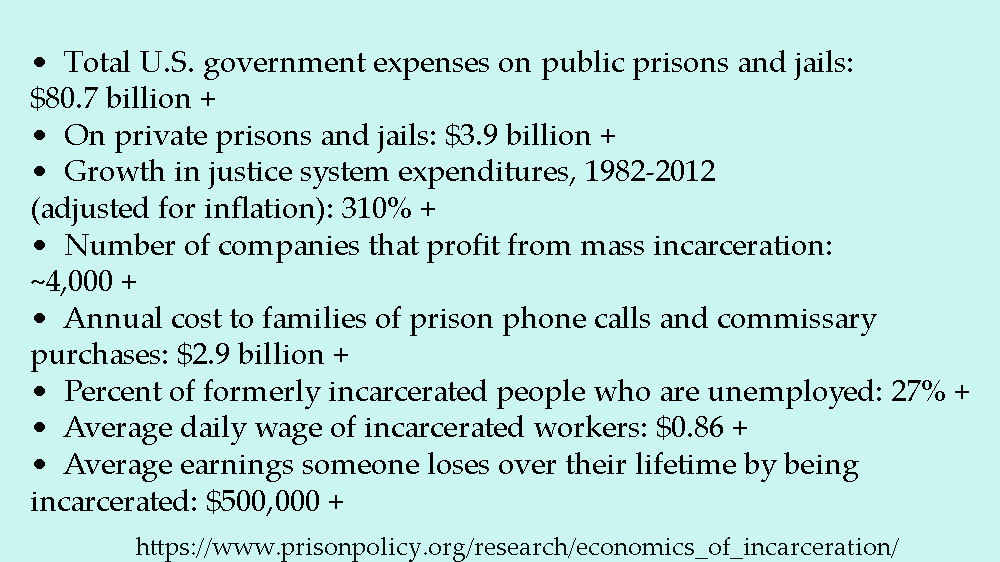
Jobs and money were not the only motivations for marijuana prohibition within the nation’s criminal justice system. Most state inmates are required to work at jobs within the prison system. In Arkansas, much of that labor was/is in prison farms which produce millions of dollars’ worth of crops which does not necessarily end up on prison cafeteria tables but rather is sold to profit the system.[6] Other types of prison jobs pay a minimal wages, which benefit whichever corporate employer is able to gain this work force. The growth of for-profit prisons has increased exponentially, with states giving up their prison industry for a package deal with the corporates. [7]
More to the point, the lingering extremism of marijuana prohibition has been a half-assed effort to stop the awakening of an entire generation. Amid the civil rights movement whereby former enslaved persons and their descendants might gain their rightful place in society and the growing outrage over the war in Vietnam, the Baby Boom generation came of age as if awakening from a 1950s dream where their parents and America were right in the world. Slowly, as the scales fell from their eyes, facilitated by the enlightening effects of marijuana, young people were shocked then horrified by the catalogue of wrongs unfolding on their television screens and in their city streets. Police were beating people over the head for protesting. Young men of the generation were dying by the thousands in an unwarranted ‘war’ no one authorized or understood.
Slowly, the awakening of the generation produced a new vision of a righteous society. Women’s rights, minority rights, gay rights, rights for the handicapped. Organic food and natural medicine including natural childbirth. Protection of the environment. Free sex for the pleasure of it now that women had gained the right to control their bodies. These were topics of conversation among the thousands of young people as they sat in circles passing a joint. Their awakening sent shock waves through the established culture as Boomers turned their backs on corporate jobs and material consumption to live in teepees and grow their own food (and marijuana), as they joined with minorities and war veterans to demand justice. More importantly, they didn’t keep quiet about their awakening, but took to the streets to force institutions like universities and government to hear the good news.[8]
Therein lies the slavering hatred against pot dealers/traffickers/users that has permeated American culture in the ensuing 60 years. Not only did a generation of well-fed, highly educated 1950s youth turn their backs on all their parents and grandparents held dear, they had the gall to demand those folks accept revolutionary change. Perhaps most outrageous to the older generations was the embrace of alternative spiritual belief, practices like meditation and non-violence, or the growing movement toward no adherence to religion whatsoever.
This fight is far from ending. Presidents Nixon then Reagan came to power in a backlash against this revolution. Newt Gingrich and Rush Limbaugh recognized an opportunity to motivate their audiences through hateful rhetoric, forging a new kind of political mood that empowered religious extremists. Today, the rotten fruit of their blind self-aggrandizement is harvested almost daily in mass shootings and a population at war with itself as Republican powerbrokers use these differences like a cudgel to drive hysterical evangelical voters to the voting booth.
The misguided effort to put the genie back in the bottle has led and continues to lead to the legally-sanctioned crucifixion of entrepreneurs who dare to meet the market demand for marijuana. It is capitalism turned on its head. The cost of imprisonment in 2015 averaged an annual cost of $33,274 per inmate. Best estimates for the current marijuana prison population comes in around 40,000. A quick moment at the handy calculator shows that taxpayers of the United States are spending $1.33 billion dollars annually to punish the users and purveyors of this modest weed.[9]
Alongside the drug war and all its collateral damage has come the arming of local police forces with weapons of war and the glorification of guns. As citizen petitions slowly win some degree of sanity in nearly half our states, prisoners of this war still languish in prison cells.[10]
What ‘they’ fear is change. When will this tragedy of fear and loathing come to its rightful end?
If you look for the roots of America’s ban on cannabis, you’ll find nearly all roads lead to a man named Harry Anslinger. He was the first commissioner of the Federal Bureau of Narcotics, which laid the ground work for the modern-day DEA, and the first architect of the war on drugs.
Anslinger was appointed in 1930, just as the prohibition of alcohol was beginning to crumble (it was finally repealed in 1933), and remained in power for 32 years. Early on, he was on record essentially saying cannabis use was no big deal. He called the idea that it made people mad or violent an “absurd fallacy.”
But when Anslinger was put in charge of the FBN, he changed his position entirely.
“From the moment he took charge of the bureau, Harry was aware of the weakness of his new position. A war on narcotics alone — cocaine and heroin, outlawed in 1914 — wasn’t enough,” author Johann Hari wrote in his book, “Chasing the Scream: The First and Last Days of the War on Drugs.” “They were used only by a tiny minority, and you couldn’t keep an entire department alive on such small crumbs. He needed more.”
Consequently, Anslinger made it his mission to rid the U.S. of all drugs — including cannabis. His influence played a major role in the introduction and passage of the Marijuana Tax Act of 1937, which outlawed possessing or selling pot.
Fueled by a handful of 1920s newspaper stories about crazed or violent episodes after marijuana use, Anslinger first claimed that the drug could cause psychosis and eventually insanity. In a radio address, he stated young people are “slaves to this narcotic, continuing addiction until they deteriorate mentally, become insane, turn to violent crime and murder.”
In particular, he latched on to the story of a young man named Victor Licata, who had hacked his family to death with an ax, supposedly while high on cannabis. It was discovered many years later, however, that Licata had a history of mental illness in his family, and there was no proof he ever used the drug.
The problem was, there was little scientific evidence that supported Anslinger’s claims. He contacted 30 scientists, according to Hari, and 29 told him cannabis was not a dangerous drug. But it was the theory of the single expert who agreed with him that he presented to the public — cannabis was an evil that should be banned — and the press ran with this sensationalized version.
The second component to Anslinger’s strategy was racial. He claimed that black people and Latinos were the primary users of marijuana, and it made them forget their place in the fabric of American society. He even went so far as to argue that jazz musicians were creating “Satanic” music all thanks to the influence of pot. This obsession eventually led to a sort of witch hunt against the legendary singer Billie Holiday, who struggled with heroin addiction; she lost her license to perform in New York cabarets and continued to be dogged by law enforcement until her death.
“The insanity of the racism is a thing to behold when you go into his archives,” Hari told CBS News. “He claims that cannabis promotes interracial mixing, interracial relationships.”
The word “marijuana” itself was part of this approach. What was commonly known as cannabis until the early 1900s was instead called marihuana, a Spanish word more likely to be associated with Mexicans.
“He was able to do this because he was tapping into very deep anxieties in the culture that were not to do with drugs — and attaching them to this drug,” Hari said. Essentially, in 1930s America, it wasn’t hard to use racist rhetoric to associate the supposed harms of cannabis with minorities and immigrants.
So as the nationwide attitude towards cannabis began to fall in line with Anslinger’s, he testified before Congress in hearings for the Marijuana Tax Act. His testimony centered around the ideas he had been pushing all along — including a provocative letter from a local newspaper editor in Colorado, saying “I wish I could show you what a small marihuana cigaret can do to one of our degenerate Spanish-speaking residents.”
All these years later, many of the threads in Anslinger’s arguments are still present in the American conversation about legalizing marijuana. The act was passed in 1937, and the rest, they say, is history.
[5] It was not until the year 2000 that Arkansas instituted a system requiring police to record seizure of any asset including cash and vehicles, and establishing a method of tracking the distribution of those assets . See https://ij.org/report/policing-for-profit-3/?state=AR
The Rage Unifying Boomers and Gen Z, By Ronald Brownstein, JUNE 18, 2020 The ATLANTIC
The 1960s have achieved almost mythic status as a hinge point in American history. Both those who welcomed and those who feared the convulsive changes the decade brought can agree on one thing: Socially, culturally, and politically, the nation was a very different place when the ’60s ended than when they began.
This could be another such moment.
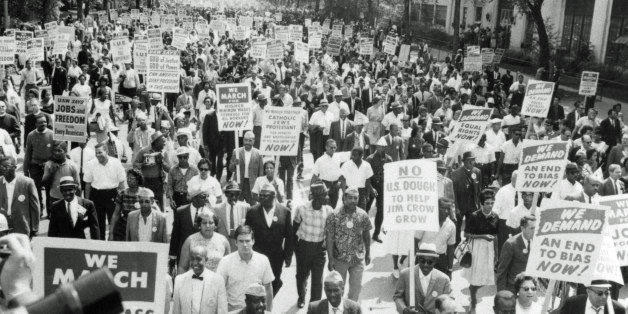
The ’60s watershed moments—the civil-rights campaigns in Birmingham and Selma, Alabama; Martin Luther King Jr.’s March on Washington and the anti-war March on the Pentagon; the outpouring of demonstrations following the shootings at Kent State—can seem in retrospect like towering peaks of transformative activism far beyond any contemporary experience. But history may look back on this period as a comparable transition in the nation’s politics and culture, driven primarily by the largest generation of young Americans since the Baby Boomers who flooded the streets decades ago.
Enormous differences separate the two periods. But they may ultimately prove united by the magnitude of the change they impose.
The 1960s saw the emergence of social movements around civil rights, opposition to the Vietnam War, feminism, Mexican American activism, and environmentalism, as well as the first stirrings of gay rights. The past decade has seen youth-led movements around climate change, gun control, immigration, and inequities of gender (#MeToo) and race (Black Lives Matter).
Seen as one long wave of change, modern activism “has the sweep of the ’60s,” says Todd Gitlin, a historian (and veteran) of those protest movements and a sociologist at Columbia University. And just as the 1960s triggered big changes in American attitudes on issues from premarital sex to trust in authority, the past few years have also witnessed big shifts toward greater support for gay rights; more agreement that human activities are causing climate change; and recognition that systemic racism remains embedded in American life, a consensus that has rapidly solidified since the death of George Floyd in Minneapolis. Young people have been at the forefront of each of these changes.
Today’s long wave of protest shares one other quality with its predecessor: It has changed popular culture and the contours of public opinion more quickly than it has public policy or the nation’s electoral landscape. Now, as then, an electoral system that favors older generations—through structural imbalances that favor rural states with older and less diverse voters—is responding slowly to calls for change from younger Americans.
And yet, just as with the Baby Boomers before them, Millennials, Gen Z, and the generation following them will eventually define the new American mainstream through their priorities and viewpoints, as over time they become a majority of the nation’s population. In that way, the huge number of people on the streets of America’s major cities this month may offer a preview of how profoundly these younger generations may reshape the country’s politics once they vote in numbers that more closely approximate their growing presence in the population overall. “This transition is inevitable,” says Ben Wessel, the executive director of NextGen America, a group that organizes young people for progressive causes. “The question is: How quickly is it going to get here?”
The differences between Baby Boomers and today’s young people are easy enough to see. Younger generations now are far more diverse: White people made up four-fifths of the Baby Boom (defined as those born between 1946 and 1964), but represent only three-fifths of Millennials (born 1981 through 1996) and only a little more than half of Gen Z (tentatively defined as those born from 1997 through 2014).Allen Matusow, the author of The Unraveling of America, a seminal history of the country during the 1960s, noted another key difference in an email: Back then, many of the protests grew out of an assumption of abundance after two decades of the nation’s post–World War II boom; young people today face more precarious prospects. While the white, college-attending component of the ’60s generation “assumed unending growth, abundant consumption, and good jobs when they were ready to take them,” young people now face “environmental degradation, rising sea level, [and] concentrations of wealth that threaten democracy,” among other challenges, said Matusow, who is also a fellow at the Baker Institute of Public Policy at Rice University. Put another way: One movement was a revolution of rising expectations; the other is a struggle to gain a foothold.
And while the great social movements of the 1960s and early 1970s had clearly identified leaders who became iconic figures—King and Malcolm X for civil rights; Abbie Hoffman, Jerry Rubin, and Tom Hayden for the anti-war and student movements; Cesar Chavez for farmworkers; Betty Friedan and Gloria Steinem for the feminist movement—today’s activism is largely leaderless, notes Kirsten John Foy, the founder of the Brooklyn-based activist group The Arc of Justice. Particularly within the Black Lives Matter network and the broader uprising against discriminatory policing, Foy says, “We have moved beyond this messianic notion of leadership, even in the black community. It has democratized the movement and it has reenergized the movement.”
In both decades, the fulcrum of change was the emergence of a vast new generation determined to question the rules and priorities that it inherited. Young people were hardly the only voices agitating for change during the 1960s, just as they are not the sole source of activism now. But in each case, the sheer bulk of the rising generation provided a critical mass for social movements.
At its peak in 1964, members of the Baby Boom represented 37 percent of America’s total population, according to Census figures provided by the demographer William Frey. Frey calculates that, at their peak in 2015, Millennials constituted a little less than one-fourth of the population. But Frey projects that, combined, Millennials and Gen Z will exceed two-fifths of the population from 2013 to 2035. They’ll fall only to slightly below that level through 2050. (Surprisingly, there were about 11 million more births during the Gen Z years than during the Millennial years.)
In the ’60s, the huge pool of baby boomers receptive to change provided the infantry for the succession of protest movements. “The rise of organized movements among previously marginalized groups was indeed contagious in these years,” wrote the historian James T. Patterson in Grand Expectations, his sweeping history of America in the first decades after World War II. The visibility and impact of the early movements—those in support of civil rights and against the war—encouraged the development of those that came later: for environmental protection and rights for women, Chicanos and farmworkers, and, finally, the gay community. Each helped clear the path for the next.
Although today’s social movements have largely been viewed as independent, even isolated, efforts, a similar progression is visible over roughly the past decade.
The Black Lives Matter movement coalesced in 2013 after George Zimmerman was acquitted for shooting the African American teenager Trayvon Martin, and the movement took a huge leap forward in public consciousness following the fatal police shooting of Michael Brown in Ferguson, Missouri, in 2014.
Young people brought to the country illegally by their parents—the so-called Dreamers—have kept up a steady drumbeat of protest throughout the decade to achieve, and then protect, their legal status.
The women’s marches against Donald Trump’s administration in January 2017 brought out massive crowds in cities across the country.
The #MeToo movement that grew rapidly in fall 2017 after exposés on the sexual-harassment and assault allegations against Harvey Weinstein and other powerful men has forced sweeping changes in Hollywood, the restaurant and fashion industries, and other institutions.
Students who survived the mass shooting at Marjory Stoneman Douglas High School in Parkland, Florida, organized mass marches for gun control in Washington, D.C., and hundreds of other cities in March 2018.
Protesters likewise turned out that June in Washington and cities across the country to oppose Trump’s family-separation policy at the southern border.
The massive nationwide demonstrations since Floyd’s death in Minneapolis have provided a kind of culmination for these disparate strands of activism. The protests have been notable for the racial diversity of their crowds. A poll released Thursday by the nonpartisan Kaiser Family Foundation found that while young people ages 18 to 29 account for 52 percent of all adults who have protested—more than double their share of the overall population—participants closely tracked the nation’s overall racial breakdown. “All of those things are coming together in this moment,” Foy, a Pentecostal reverend, told me. “You have not just black people on the streets … You have all of diverse America on the streets.”
Despite the legendary status of the ’60s demonstrations, recent protests have likely involved more people. King’s March on Washington attracted 200,000 to 300,000 people to the Lincoln Memorial in August 1963; the anti-war March on the Pentagon brought probably 50,000 to 100,000 people in October 1967. Although exact numbers aren’t available, millions of Americans may have participated in protests since Floyd’s death. In the Kaiser poll, 10 percent of American adults say they have joined in the demonstrations, a result that would translate to some 25 million people.
The women’s marches the day after Trump’s inauguration also brought out millions, but only for a single day. The ongoing Floyd protests may represent the most Americans who have protested in the streets on a sustained basis since the demonstrations that followed the killing of four anti-war protesters at Kent State University in May 1970, when about half the nation’s college campuses erupted in discontent.
Nor have the current protests shown any sign of flickering out. Foy’s group, for instance, is organizing motor caravans in 33 cities on Juneteenth to demand independent investigations into people who have died at the hands of law enforcement and call for sweeping reforms in police procedures. One distinctive element of the project is that the local groups will also be encouraging participants to register to vote.
That latter focus represents one of the biggest uncertainties about the current wave of protest. The ’60s movements were divided between those who wanted to influence elections and engage with elected leaders (an instinct strongest within much of the civil-rights movement’s leadership) and those who disdained traditional politics as unlikely to produce fundamental change (a tendency strongest in the initial years of the anti-war and student movements). “There were very few people who came out of the new left who were ready to plunge into electoral politics,” says Gitlin, who served as president of Students for a Democratic Society during the ’60s and later wrote a classic history of the period, Years of Hope, Days of Rage.
Reporters following the current protests have found no shortage of local activist leaders equally suspicious of mainstream electoral organizing. One of the pivotal questions of American politics over the next decade may be how quickly, if at all, the young people now protesting in the street develop electoral clout comparable to their numbers. While the Baby Boomers changed social attitudes and popular culture relatively quickly, they did not elect one of their own as president until Bill Clinton, in 1992. In fact, with only one four-year interruption (Jimmy Carter), Republican presidents who largely positioned themselves against the cultural changes that the ’60s unleashed occupied the White House from 1968 until Clinton’s victory.
While the ’60s movements contributed to important changes in law on issues from civil rights and voting rights to the environment and decriminalizing private sexual behavior, their supporters’ failure to win subsequent presidential elections is the reason why Gitlin summarized their impact this way: They were “a great political defeat and a great cultural success. That’s how we ended up with the left marching on the English department while the right took Washington.”
The next decade could produce a similarly bifurcated outcome for Millennials, Gen Z, and the even younger (and more diverse) cohort following them. Their preferences already dominate popular culture, and their tolerance of diversity has lit the path for broader changes in social attitudes, such as public support for gay marriage.
But their electoral impact remains less defined. There’s widespread agreement among activists and observers alike that the election of Trump—a candidate who overtly defined himself in opposition to racial and cultural change—has created a sense of embattlement that’s fueled the expanding protest. “We are seeing those accomplishments, the things that people died for, Martin Luther King and Malcolm X died for, literally being stripped from us,” Foy said.
But, despite their animosity toward Trump, only about half of eligible Millennials and Gen Zers voted in 2016. And while turnout among younger voters was much higher in 2018 than in the previous midterm election, in 2014, many surveys have found only modest enthusiasm among them for presumptive Democratic nominee Joe Biden. Significant numbers of younger voters say they are considering either voting for a third-party candidate or not voting at all.
The energy coursing through the current protests—as well as Trump’s decision to position himself against them—might offer Biden a new opportunity to engage younger voters who have been cool to him so far. The payoff would be enormous if he can: Frey calculates that Millennials and Gen Z will comprise almost exactly as large a share of eligible voters in November as Baby Boomers and their elders do now (just under two-fifths in each case). By 2024, that balance will tip toward the younger generations, and the gap will widen steadily after that.
“Millennials are a bridge between the white-baby-boom-dominated culture of the past and the diverse America that will define the nation in the 21st century,” Frey told me. “I think these protests, made up of multiethnic Millennials and Gen Zers, are the tipping point of this shift.”
While the past decade’s social movements focus on discrete issues, all of them, as Wessel notes, are drawing on “the same frustration: We have an unequal society that benefits the few—the old, the white—over the many: the young, people of color. That is the crux of all these conversations.” Trump’s political strategy relies on mobilizing the Americans on the winning side of that contrast. Like the Baby Boomers during the 1960s, the younger generations dissatisfied with those arrangements have demonstrated, year after year, that they can fill the streets in protest. Their next test is to do what the baby boom could not: tip the outcome of national elections while they are still young.
Ronald Brownstein is a senior editor at The Atlantic and a senior political analyst for CNN.
Arkansans’ popular breakfast of biscuits and gravy is high in calories and saturated fats and low in nutritional value.
Under-nourished or malnourished kids can’t learn. Arkansas ranks at the very top of states whose citizens die of chronic lower respiratory diseases (chronic obstructive pulmonary disease (COPD), chronic bronchitis, emphysema, and asthma) which are caused by tobacco smoking, indoor and outdoor air pollution, exposure to allergens and occupational agents, unhealthy diet, obesity, and physical inactivity. The state ranks 3rd nationally in deaths from heart disease, diabetes, and kidney disease, and 6th in death from cancer.[1] Clearly the population needs to learn about better nutrition.
First of all, consider that without proper nutrition, people are more likely to self-medicate with drugs including cigarettes and alcohol because these substances make people feel better even when they are in poor health.
One potential means of addressing some of these health problems would be to require public school education in nutrition, including practice in preparing healthy meals. At least one semester in this specific curriculum for both male and female students could break into this cycle of poor health. A two-week summer course (required) would bring students to work in community gardens as well as learning to cook with fresh produce.
Start Early
The Women, Infants, and Children (WIC) nutrition program in Arkansas is a first step toward better health, but fails to live up to its promise by setting income guidelines at 185% of poverty level. There is no guarantee that a person with an income $20 or $2,000 above the poverty line is adequately informed about nutrition. The WIC program also requires applicants to have a ‘nutritional need’ but the ‘needs’ outlined for acceptance do not approach all the real nutritional needs a woman might have for herself and her fetus/child. Most importantly, WIC is voluntary, and a person must apply in order to gain this support. Every pregnant woman, upon her first visit to a physician, should be assigned a caseworker who will ensure that nutritional education and support is provided. [A passing grade of C or above in a high school nutrition class would provide exemption.]
It goes without saying that the school breakfast/lunch program must serve as the best example of nutritious meals. Federal standards pushed by former First Lady Michelle Obama have gone a long way toward meeting this objective. The Healthy, Hunger-Free Kids Act changed nutrition standards for the National School Lunch Program by requiring that schools serve more fruits, vegetables, whole grains and fat-free and/or low-fat milk more frequently and less starchy vegetables or foods high in sodium and trans fat.[2]
Studies have shown the direct correlation between nutrition and academic performance.
Research suggests that diets high in trans and saturated fats can negatively impact learning and memory, nutritional deficiencies early in life can affect the cognitive development of school-aged children, and access to nutrition improves students’ cognition, concentration, and energy levels.[3]
A vast body of research shows that improved nutrition in schools leads to increased focus and attention, improved test scores and better classroom behavior. Support healthy habits and consistent messages: Nutritious school food helps students develop lifelong healthy eating habits.
Sadly, one of the first acts of Sanders’ mentor Donald Trump in gaining the presidency was to reduce the school nutrition standards. The Obama-era policy suffered a series of rollback measures which allow for less whole grain, more sodium, and more flavored milk despite a 2018 analysis of more than 90 popular chilled flavored dairy milks which revealed that a carton of flavored milk can contain as much sugar as a can of soft drink, with many of the bestselling brands containing more than a day’s worth of added sugar in a single serving.
The overweight condition of both Trump and Sanders (and her parents and siblings) illustrate their lack of understanding in nutritional matters. Nutrition is fundamental to a child’s future prospects, and without public investment in health, too many students will not succeed no matter what schooling they receive.
[2] The Healthy, Hunger-Free Kids Act provides meals to children that normally could not afford those nutritious food items. It also allows schools to have more resources that they may not have had before. A study in Virginia and Massachusetts concluded that children in schools were eating significantly healthier meals when their parents or guardians were not choosing their food, but the school was. While looking at the nutrition value of 1.7 million meals selected by 7,200 students in three middle and three high schools in an urban school district in Washington state, where the data was collected and compared in the 16 months before the standards were carried out with data collected in the 15 months after implementation; the information found that there was an increase in six nutrients: fiber, iron, calcium, vitamin A, vitamin C, and protein. While providing new meals with improvements in fruits, vegetables, amount of variety, and portion sizes, the calorie intake has also transformed.
“Educate and inform the whole mass of the people. They are the only sure reliance for the preservation of our liberty.” ~Thomas Jefferson
But what if the ‘education’ informing the whole mass is inconsistent? What if some students learn that God created the earth in seven days while others are taught Earth has been evolving for five billion years? What if some students learn the biology of cellular activity while others students never learn about cells at all?
Consider this:
Earlier this year [2017], Naftuli Moster, executive director of YAFFED (Young Advocates for Fair Education) drew attention to the plight of young Jewish boys attending yeshivas instead of public schools.[1] According to Moster, nearly 50,000 yeshiva students in the New York City area “are not being taught science, history, and geography among other subjects,” even though the NY State Department of Education “requires non-public schools to teach a variety of subjects, including English, math, science, history, geography, art and more.” Misinformation and omission of subject matter are problems not just relegated to New York or to yeshivas.
As Dana Hunter wrote in Scientific American, millions of children are being taught in Christian private schools and through religious homeschooling that the earth is less than 10,000 years old and that Noah’s flood is “the event that formed most of the geologic record.” Many of these schools, as well as parents who homeschool their children for religious reasons, use non-accredited science books, such as Science of the Physical Creation in Christian Perspective, that inject religious ideology into ‘lessons’ about science.
And according to Valerie Strauss and Emily Wax of the Washington Post, tens of thousands of American schoolchildren attending Islamic schools face a similar underexposure to important secular subject matter. As an example, Strauss and Wax point to the Islamic Saudi Academy in Virginia, which doesn’t require students to take classes in US history or government. Moreover, their textbooks include religious instruction that fosters conflict. One, for example, states: “The Day of Judgment can’t come until Jesus Christ returns to Earth, breaks the cross and converts everyone to Islam, and until Muslims start attacking Jews.”[2]
These situations must change.
The United States notably does not have an established national curriculum after the idea was explicitly banned in 1965, in Section 604 of the Elementary and Secondary Education Act (since moved to Section 2302 and codified at 20 U.S.C. § 6692). This act provided federal funding for primary and secondary education (‘Title I funding’) as part of President Lyndon B. Johnson’s War on Poverty. However, most states [including Arkansas] in the United States voluntarily abide by the Common Core State Standards Initiative, which provides certain uniform standards.[3]
There are no requirements for accreditation, registration, licensing, or approval from the state for private or religious schools in Arkansas. Teacher do not have to be certified. Curriculum does not have to follow any standards.
…In the 2020-21 homeschool report from the Arkansas Department of Education, there were just over 30,000 homeschooled students reported last year. In that same year, the Arkansas DOE reported that there were 473,000 students enrolled in Arkansas public schools, and approximately 27,000 students enrolled in private schools in the state.
Aside from the obvious negative effects on students who find themselves at odds with the accepted knowledge of American society, the greater harm affects the entire nation. Pockets of ‘believers’ of one particular faith or another become ‘hardwired’ to see nonbelievers (of their particular faith) as ‘wrong’ and therefore a type of enemy. People outraged that Latino immigrants don’t speak ‘English’ are often the same people who demand their right to isolate their families from other ‘wrong’ cultures.
Since the passage of the Massachusetts Act of 1647, Americans have established the right of the state to require communities to create and maintain elementary schools in all towns for every child and secondary schools for youth in larger towns. These schools were expected to provide the knowledge each child would need to lead a productive, responsible life as an American citizen. This law also established the tradition that these schools should be funded through local property tax as land was considered to be a valid measure of wealth.
Even before the United States had a Constitution, its founders were advocating for the creation of public education systems. The United States was an experiment in democracy unlike anything the world had ever seen, turning away from government dominated by elites and hoping that the common man could rule himself. If this experiment had any chance of standing the test of time, the nation needed far more schools to prepare everyday citizens for self-government. As James Madison, the father of our Constitution, remarked: “a popular Government, without popular information, or the means of acquiring it, is but a Prologue to a Farce or a Tragedy.” Thomas Jefferson similarly argued that governments “deriv[e] their just powers from the consent of the governed,” but that it is education that makes that consent possible. President Washington, in his last annual message to Congress, added that expanding education was essential to the perpetuation of nation’s common values and the chance of a “permanent Union.”[4]
Clearly the failure of Arkansas’ current education system is directly responsible for our miserable political situation where only half of eligible voters bother to vote, and of those, many rely on propagandized rhetoric to decide their vote. In the 2022 election, Sanders won her governorship with 36% of the eligible voters.
Other states have figured out how to produce well-educated students. Arkansas should take a lesson. The state must require a specific curriculum for all K-12 education, homeschooled, private, whatever. Currently, the State of Arkansas exerts no supervision or testing of homeschooled students.[5]
The idea that K-12 education should include religion is absurd. Any specific religion is just one more belief system among hundreds of myth-based belief systems. Leave such indoctrination to parents and churches.
Make no mistake–this proposed shift of tax dollars toward private and religious schools in Arkansas is a key element of the evangelical effort to control education. If our children do not all learn the same truths about our history, science, and politics, we have no chance of preserving our republic. No matter what faith one might follow, we must agree on the basic tenants of logic, language, and the scientific method. Without that common ground, the United States of America will dissolve into violent, partisan chaos, just as the Founding Fathers warned.
[3] Arkansas has adopted Common Core standards as well as the Next Generation Science Standards. Sadly, many states opted out of the Common Core standards which only applied to math and language arts. https://en.wikipedia.org/wiki/Common_Core Subsequently, Next Generation Science Standards have established standards for science, but social studies and history remain ungoverned. See https://en.wikipedia.org/wiki/Next_Generation_Science_Standards
Newly installed Arkansas Governor Sanders could have picked any number of other issues more critical to the welfare of Arkansas residents than CRT. Her decision to address Critical Race Theory signals her lack of insight or, more likely, her debt to her behind-the-scenes bosses who care nothing for Arkansas citizens—with the exception of manipulating them into voting Republican.
Like her predecessors in the Arkansas state house, Sanders won office with the votes of a minority of eligible voters. Over 1.79 million Arkansans are eligible, but only 50.8% of them voted, meaning that Sanders won office with the votes of only 31.9% of eligible voters. Arkansas ranks last in both voter turnout and registration and has the highest absentee ballot rejection rate in the nation. This parallels other low rankings of the state:
44th in health matters. Measures contributing to Arkansas’s low overall performance include the number of adults who have lost six or more teeth, adults without dental visits, and premature deaths from treatable causes — all measures for which Arkansas is ranked last among states. Other factors include the number of children who are overweight or obese, the number of adults with any mental illness reporting unmet needs, and preventable hospitalizations for adults ages 18–64.[1]
47th in education, based on factors including educational attainment, school quality and achievement gaps between genders and races[2]
43rd in economic activity, economic health, and a state’s innovation potential[3]
4th worst state to live in, with the breakdown as follows:
2nd unhappiest state based on employment, leisure activities, mental health, personal finance, personal relationships, physical health, and social policies[5]
2nd in teen pregnancy with 27.8 per 1,000 – Sex education is allowed but not required, and local districts largely sidestep the topic. Arkansas schools are not required to offer instruction on HIV or STIs. Further, sex education—in the rare instances it is offered—is hamstrung with multiple restrictions:
If sex education is offered, curriculum must stress abstinence.
If sex education is offered, curriculum is not required to include instruction on consent.
If sex education is offered, curriculum is not required to include instruction on sexual orientation or gender identity.
Arkansas has no standard regarding the ability of parents and guardians to remove their children from sex education instruction.
Arkansas has no standard regarding medically accurate sex education instruction. However, instruction on dating violence must be based on scientific research.
Children in foster care (2022): 4,127. Households with grandparents responsible for grandchildren under age 18: 70,290[7]
5th highest incarceration rate of all states, higher than the national rate[8]
Poverty rate
Extreme poverty 9%
Poverty rate 16.2%
Working family under 200% of poverty line 39.4%
Percent of jobs that are low-wage 30.1%
In a 2014 study, of the total eligible voters in the state, 46% were Republican, 38% Democrat, and 16% non-affiliated. Evangelicals comprise 61% of Republican voters, 29% of Democrat, and 11% of non-affiliated. Predictably, Republican voters are less educated, with 42% with high school or less, 34% with some college, 17% with a college degree, and 6% with post-graduate degree compared to Democratic voters with 52% high school or less, 30% some college, 9% college graduate, and 9% with post graduate degree.[9]
While Sanders states her priority is education improvement, the areas of education which she targeted in her statement are very limited. Aside from banning CRT, she has nominated Jacob Oliva to head the Department of Education. Oliva has previously served that role in Florida, where ‘Don’t Say Gay’ has been one of the guiding mantras of the DeSantis administration; the measure “contains language to prevent the ‘instruction’ or ‘discussion’ of sexual orientation and gender identity at certain grade levels and in an ‘age-appropriate’ way. The vagueness of the law has called into question how teachers could handle teaching history or questions raised in class about sexual orientation.”[10]
Undoubtedly the most destructive education measure touted by Sanders is the voucher option for parents, which Sanders vows to enact. The National Education Association explains why vouchers are not in America’s best interests:
No matter how you look at it, vouchers undermine strong public education and student opportunity. They take scarce funding from public schools—which serve 90 percent of students—and give it to private schools—institutions that are not accountable to taxpayers. This means public school students have less access to music instruments and science equipment, modern technology and textbooks, and after-school programs. Moreover, there is ZERO statistical significance that voucher programs improve overall student success, and some programs have even shown to have a NEGATIVE effect for students receiving a voucher. Furthermore, vouchers have been shown to not support students with disabilities, they fail to protect the human and civil rights of students, and they exacerbate segregation.
Vouchers were first created after the Supreme Court banned school segregation with its ruling in Brown v Board of Education. School districts used vouchers to enable white students to attend private schools, which could (and still can) limit admission based on race. As a result, the schools that served those white students were closed, and schools that served black students remained chronically underfunded. The pattern of discrimination continues with vouchers today. Unlike public schools, private schools can (and some do) limit their admission based on race, gender, sexual orientation, ability, and any other number of factors. Furthermore, vouchers rarely cover the full tuition, so families who were promised a better education are left footing the bill.
Many Arkansas parents are strongly evangelical and would prefer religion and prayer be included in their children’s education. But we’ve already been there.
The Supreme Court entered the evolution debate in 1968, when it ruled, in Epperson v. Arkansas, that Arkansas could not eliminate from the high school biology curriculum the teaching of “the theory that mankind descended from a lower order of animals.” Arkansas’ exclusion of that aspect of evolutionary theory, the court reasoned, was based on a preference for the account of creation in the book of Genesis and thus violated the state’s constitutional obligation of religious neutrality.
We’ve seen what can occur when religious belief usurps rational education. The Duggar family homeschooled their children in ‘devout Christian beliefs’ including oldest child Josh Duggar who, after molesting his younger sisters and their friends, is serving a twelve-year prison term for ‘receiving’ child pornography. Reports state that Jim Bob Duggar consulted ‘church elders’ who apparently did not urge him to report his son’s abuse to the authorities. Josh’s parents kept it secret until the statute of limitations had expired.
In fact, it was this nest of evangelical excess in Springdale from which sprang the Reverend Ronnie Floyd. The following is excerpted from Wikipedia’s page on Floyd:
A strong advocate of evangelism and discipleship, Floyd was a member of the “conservative resurgence” that retook control of the Southern Baptist Convention (SBC) during the 1980s. In 1989 he was a candidate to become president of the Arkansas Baptist State Convention, but was defeated by Mike Huckabee. …On June 10, 2014, Dr. Floyd was elected president of the Southern Baptist Convention at the SBC’s annual gathering held in Baltimore. Upon close of the meeting, he became the 61st president of the SBC, succeeding the Rev. Fred Lute. …In October, 2019, at a conference regarding care for those who have been sexually abused in Christian contexts, Rachael Denhollander referenced abusive treatment of a sexual abuse victim by Dr. Floyd and other leaders at the Executive Committee as an example of why those who are abused are reticent to report.
Subsequently, in May, 2021, multiple internal whistle blower reports alleged Dr. Floyd had actively sought to intimidate victims, advocates, and stall progress in the sexual abuse inquiry within the Southern Baptist Convention. …In an unprecedented move following weeks of turmoil over allegations of Floyd’s handling of the sexual abuse crisis in the Southern Baptist Convention, the delegates to the Southern Baptist Convention voted to mandate an independent third party investigation into the Executive Committee’s handling of sexual abuse cases, victims, and advocates, including an investigation into Dr. Floyd’s actions.
…Floyd’s leadership was marked by yet another unprecedented milestone for the Southern Baptist Convention when he and the Executive Committee trustees failed to fully comply with the directive of the Convention’s delegates when, amidst calls for his removal and a tumultuous trustee meeting, Floyd’s resistance to complete transparency and participation in the commissioned abuse task force was supported by the Executive Committee trustees.
Floyd subsequently resigned after the independent investigation revealed that Floyd’s committee members responded to sexual abuse survivors with “resistance, stonewalling and even outright hostility” to nearly two decades of allegations against clergy. According to the report, the group kept a secret, running list of accused Baptist ministers to avoid being sued – even as the committee publicly claimed it didn’t have the authority to create such a list. A LIST OF BAPTIST MINISTERS ACCUSED OF SEXUAL ABUSE!
While multiple sexual abuse scandals within churches is not the topic at hand, hardly a week passes without yet another report of sexual misdeeds by pastors, youth counselors, or other church personnel. To a disinterested bystander, it seems the frantic outrage over drag queens (who, incidentally, are rarely if ever accused of sexual misconduct) would be more appropriately directed toward religious leaders. To assume that children are ‘safer’ or more lovingly educated within the context of parochial schools is yet another example of willful ignorance. Yet Sanders, herself the child of a Baptist minister, is apparently blind to this hypocrisy.
Republicans routinely cultivate a receptive audience of voters by spotlighting hot button issues such as abortion, homosexuality, ‘woke’ culture, and religion, yet there is scant evidence that any of their radical rhetoric or legislation has any positive impact on the troubles Arkansas faces. [Based on the outraged edicts from evangelicals, a casual observer might assume that it’s drag queens abusing all these children rather than religious leaders. Strangely, no record of drag queen abuses is found.] Children still leave their school years without the ability to read or reason, without understanding of how the government works or the scientific method, without the skills necessary to negotiate life in the modern world.
Some of this results from the parents’ inadequacy in time or knowledge, a generational failing in many Arkansas households. But it can be argued that the greater failing is in Arkansas’ penchant for electing more of the same, people like Sanders, who can’t seem to grasp the actual needs of Arkansas children—not banning CRT or saying ‘gay,’ not siphoning tax dollars away from public schools, not school prayer or any of the other worthless ideas promoted by Republicans. What is needed is for government to get its foot off the neck of teachers and offer much higher pay in order to attract skilled instructors who know how to engage students in the love of learning.
Arkansas’ new governor, Sarah Huckabee Sanders, has raised the colors for her term at the helm of the ship of this state. Not that these are ‘her’ colors, per se, but rather edicts scripted for her by her bosses behind the Republican curtain. These are the same entities who put her in front of a microphone to lie for Trump as his press secretary, apparently under the promise that they would support her efforts toward future political office.
Evidence of her bought-and-paid-for status can be found in the immediate issuance of her ban on Critical Race Theory (CRT) in the public schools. The boiler-plate executive order commands, in part, that the Arkansas Department of Education:
“Review the rules, regulations, policies, materials, and communications of the Department of Education to identify any items that may, purposely or otherwise, promote teaching that would indoctrinate students with ideologies, such as CRT, that conflict with the principle of equal protection under the law or encourage students to discriminate against someone based on the individual’s color, creed, race, ethnicity, sex, age, marital status, familial status, disability, religion, national origin, or any other characteristic protected by federal or state law.”
Sanders’ measure is put forth as enforcement of Title IV and Title VI of the Civil Rights Act of 1964 (P.L. 88-352, 78 Stat. 241), which was established to ensure equal rights to everyone.
“People of one color, creed, race, ethnicity, sex, age, marital status, familial status, disability, religion, national origin, or any other characteristic protected by federal or state law are inherently superior or inferior to people of another color, creed, race, ethnicity, sex, age, marital status, familial status, disability, religion, national origin, or any other characteristic protected by federal or state law…”
This and similar bans present two absurdities. One, the ban alleges that efforts to reduce and/or eliminate the negative impact of entrenched racism are a form of racism. Two, the ban demonstrates either an utter lack of understanding of CRT or an ingrained denial of systemic racism, either of which would be remedied by a study of CRT. The rightwing furor over CRT is a perfect example of racist thinking and reassures its racist followers that rightwing Republicans will resist any effort to encourage white people to think equitably of their darker-skinned brethren.
Critical Race Theory advances the idea that multiple aspects of American law, institutions, and social structures enshrine racist ideas. Wikipedia describes the tenets of CRT as follows:
“Scholars of CRT say that race is not “biologically grounded and natural”; rather, it is a socially constructed category used to oppress and exploit people of color; and that racism is not an aberration, but a normalized feature of American society. According to CRT, negative stereotypes assigned to members of minority groups benefit white people and increase racial oppression. Individuals can belong to a number of different identity groups…
“Derrick Albert Bell Jr. (1930 – 2011), an American lawyer, professor, and civil rights activist, writes that racial equality is ”impossible and illusory” and that racism in the U.S. is permanent. According to Bell, civil-rights legislation will not on its own bring about progress in race relations; alleged improvements or advantages to people of color “tend to serve the interests of dominant white groups,” in what Bell calls “interest convergence.” These changes do not typically affect—and at times even reinforce—racial hierarchies. This is representative of the shift in the 1970s, in Bell’s re-assessment of his earlier desegregation work as a civil rights lawyer. He was responding to the Supreme Court’s decisions that had resulted in the re-segregation of schools.
“The concept of standpoint theory became particularly relevant to CRT when it was expanded to include a black feminist standpoint by Patricia Hill Collins. First introduced by feminist sociologists in the 1980s, standpoint theory holds that people in marginalized groups, who share similar experiences, can bring a collective wisdom and a unique voice to discussions on decreasing oppression. In this view, insights into racism can be uncovered by examining the nature of the U.S. legal system through the perspective of the everyday lived experiences of people of color.
“According to Encyclopedia Britannica, tenets of CRT have spread beyond academia, and are used to deepen understanding of socio-economic issues such as “poverty, police brutality, and voting rights violations,” that are impacted by the ways in which race and racism are “understood and misunderstood” in the United States.[1]
Conservatives, including Governor Sanders’ managers, look for any advances toward greater social equity as a destructive force to their world view. Or, perhaps more to the point, greater acceptance of social equity would reduce or eliminate race as a hot button issue in driving Republican voters to the ballot box.
“One conservative organization, the Heritage Foundation, recently attributed a whole host of issues to CRT, including the 2020 Black Lives Matter protests, LGBTQ clubs in schools, diversity training in federal agencies and organizations, California’s recent ethnic studies model curriculum, the free-speech debate on college campuses, and alternatives to exclusionary discipline—such as the Promise program in Broward County, Fla., that some parents blame for the Parkland school shootings. “When followed to its logical conclusion, CRT is destructive and rejects the fundamental ideas on which our constitutional republic is based,” the organization claimed.”[2]
“[On the other hand,] Leading critical race theory scholars view the GOP-led measures as hijacking the national conversation about racial inequality that gained momentum after the killing of George Floyd by a white police officer in Minnesota. Some say the ways Republicans describe it are unrecognizable to them. Cheryl Harris, a UCLA law professor who teaches a course on the topic, said it’s a myth that critical race theory teaches hatred of white people and is designed to perpetuate divisions in American society. Instead, she said she believes the proposals limiting how racism can be discussed in the classroom have a clear political goal: “to ensure that Republicans can win in 2022.”[3]
Other early signals from oligarchs behind Sanders’ governorship include her push for school vouchers whereby tax dollars can be funneled into religious and private schools who can offer non-scientific theories of human origin and alternative histories while ignoring important preparation for citizenship such as debate and civics. Sanders also has plans to address the state’s shortcomings in prison space, although it is doubtful this will translate into an innovative look at ways to reduce the demand. More likely, her ‘reforms’ will mean spending more of the state’s scarce tax dollars on building more prisons in order to, as she has stated, requiring prisoners to serve out their full terms.
Speaking of tax dollars, Sanders also plans to reduce taxes with the goal of eliminating income tax. Her plan for accomplishing this pipe dream is to find ways for the state to operate more efficiently. Her campaign statement on this topic hints at the real goal:
“When I take office, we will work on responsibly phasing out the state income tax to reward work – NOT government dependency – and let you keep more of your hard-earned money in the failing Biden economy,” Sanders said in a Twitter post.
According to critics, this is simply the latest Republican iteration of their efforts to please their masters: “to wreck the state’s fiscal system so that people of inherited riches or high incomes will never again have to worry about paying much in the way of taxes to support education, health care and law enforcement — i.e. government services for the needy and the commoners, for which a few comfortable people think they should not have to pay.”[4]
With all cannons on deck loaded with her preprogrammed agenda, we can be certain this is only the beginning of pushing Arkansas further into the sea floor. Ironically, argument can be made that the label ‘ideologies’ such as forbidden in the CRT ban could be assigned to religion, i.e. “the beliefs and practices of that religion [which] support powerful groups in society, effectively keeping the existing ruling class, or elites, in power.”[5]
While five of the articles in this collection are entirely new, the other four have been previously published in Flashback, the quarterly journal of the Washington County Historical Society, Fayetteville, Arkansas, or in one of my books, as follows:
Chapter 1 – New! Daguerreotype was the first form of photography, and Washington County had several daguerreotype professionals in the years before the Civil War. The story follows Anderson Frieze and documents others in this image-making profession circa 1850-1880.
Chapter 2 – This article has been expanded with additional information about the Yoes family from the time of their immigration from Germany through three generations. Previously published in various parts in The West Fork Valley: The West Fork of White River, Arkansas, Its Environs & Settlement before 1900.
Chapter 3 – This award-winning article about Jesse Gilstrap tracks his travel to the gold fields of 1850 California, his inventions and millwright operations in south Washington County, and his efforts on behalf of the Union during the Civil War. Published in 2018, Flashback.
Chapter 4 – Mostly new! An earlier brief version of this story examining the murder of a man on a downtown sidewalk in Fayetteville appeared in Murder in the County: 50 True Stories of the Old West.
Chapter 5 – New! “The Final Abuse of Ann Jarvis” recounts the horrific murder of a wife and mother in a case of extreme domestic violence and mental illness.
Chapter 6 – New! “Fayetteville’s Immoral Houses” uncovers the previously hidden world of prostitution in Fayetteville.
Chapter 7 – This exposé of an auto theft ring operating in Fayetteville in the 1930s previously appeared in Flashback.
Chapter 8 – New! Circuses drew enormous crowds through the 19th and early 20th centuries, even to locations like Fayetteville whose population at the time of the first circus was less than 1,000 people.
Chapter 9 – The story of the Brumfields and their fated dream to build Fayetteville’s Downtown Motor Lodge appeared previously in Flashback. This article tracks the rise and fall of that dream to the vacant lot that scars Fayetteville’s downtown today.
Smelser, Andrews, Clark, Hall, Massey, and Eubanks
Plus Lovelady and Futrell
in Greene County, Arkansas
Combining generations of family history and up-to-date genealogical information, this collection of ancestry information tracks a group of families which settled in Greene County, Arkansas in the first two decades of statehood. Family trees, deed records, census records, and other official records create a factual framework for personal narratives and vintage photographs, creating a fascinating archive of information for any descendant of these families as well as any fan of local history.
Each marriage between these pioneer families brought certain talents and backgrounds to the next generation. They farmed the rich land of Crowley’s Ridge and other Greene County areas, weathered the storms of poverty and loss, and suffered the losses to sickness and war. Yet they survived, and their great-grandchildren entered the twentieth century determined to continue as they had begun.
Now the 21st century brings us the internet with its vast collection of historical documents, making it finally possible to reflect on their adventures and aspirations. The story of these families is the story of thousands of us descended from them. Includes an extensive ‘vocabulary’ of downhome sayings.
In 2019, Fayetteville, Arkansas found itself named among the top three American cities for live music, placing third after Austin, Texas and New Orleans, Louisiana. In this history of Fayetteville’s nightspots and musicians, we celebrate the ancient human tradition of music and dance. These were – and still are – the places where live music finds its most enthusiastic audience, where musicians practice a craft as old as time, where the drumbeat and lyrical voice travel straight to the heart.
Among the hundreds of start-up bands pursuing their moment in the spotlight, some of Fayetteville’s bands and musicians have gone on to national, even international fame. Standing behind these musicians are the promoters, nightclubs, and rehearsal spaces that supported and encouraged them.
Perhaps more importantly, a steady stream of new talent, new sounds, new ideas attract passionate new audiences to join in the good times. How can this be? What strange cocktail of talent and public appreciation come together here to produce such a rich legacy of irresistible music and the places and professionals who enable its existence? Only a historical view of this Ozark city, its musical artists, and its creative commons can begin to illustrate the full picture.
Christmas Day horse races 1872, Middle Fork Valley. Bud Gilliland waits, eager for another chance at Newton Jones. Only this time, after two years of sparring, Newton gallops up in a cloud of dust, lifts his Spencer rifle to his shoulder to find Bud in his sights, and pulls the trigger, sending Bud to a well-earned grave.
Determined to wreak vengeance on his little brother’s killer, William Jefferson “Jeff” Gilliland takes control of a posse meant to bring Newton Jones to justice. But Jeff’s plan for the posse to kill “every last son of a bitch” goes horribly wrong and brings indictments for murder against Jeff and the rest of his posse.
Before the curtains closed in 1890 on these descendants of West Fork pioneers J. C. and Rebecca Gilliland, two other sons and a grandson would die violent deaths while yet another grandson serves hard time for murder.
What was it about the Gillilands?
This recounting of the family tracks their ancestry, their pioneer years on untamed land, and the hard work that made them one of the wealthiest families in Washington County, Arkansas. A fascinating tale of brash ego, brave gallantry, and plain old bad luck.







 denelecampbell