The Arkansas Situation

Arkansas is a textbook example of what happens when the government is controlled by Christian extremists. The state ranks among the top states in the nation for support of fundamentalist views, with studies indicating that roughly 54% of residents hold these viewpoints. As of 2026, Arkansas ranks 1st in the nation for support of Christian Nationalism, with Mississippi (52%), West Virginia (51%), and Oklahoma (49%) close behind.

It follows that Arkansas generally falls in the bottom tier of U.S. states for education, frequently appearing between 34th and 47th depending on the metric (e.g., K-12 achievement or overall attainment). While 86% of residents hold a high school diploma, the state faces challenges with reading proficiency and higher education attainment. Arkansas consistently ranks in the bottom ten states for education due to high poverty rates, low college attainment, and historical underfunding. Challenges include a 16.3% poverty rate (above the 11.6% national average), significant rural divides, and low teacher salaries, contributing to achievement gaps and lower academic performance in math and reading.

Predictably, Arkansas also consistently ranks among the top two states with the highest teen birth rates in the U.S., frequently appearing at 1st or 2nd place. With around 23.8 to 27.8 births per 1,000 females aged 15–19, the state’s rate is over 90% higher than the national average. Arkansas also consistently holds pride of place among the worst states for maternal mortality in the U.S., often appearing in the bottom three. Recent reports place Arkansas with one of the highest rates in the nation (e.g., 44 deaths per 100,000 live births from 2018-2021), with 92% of these deaths deemed preventable, often driven by rural health deserts.

As of 2024–2026 data, Arkansas stands among the worst states in the U.S. for sexual violence, holding the 2nd highest rate of rape in the nation and ranking 3rd highest in registered sex offenders per capita. As of late 2024, Arkansas had the second-highest rate of registered sex offenders in the nation, with roughly 640 offenders per 100,000 residents. Reports indicate roughly 77 rapes per 100,000 residents. Reports indicate that the state has often ranked at or near the top nationwide for these instances.

Arkansas has historically ranked as the highest state in the nation for the rate of child sexual abuse reports. The state’s highest rate of child sexual abuse reports in 2020 was 254 cases per 100,000 children; in 2022, the numbers had increased to 267 per 100,000. During SFY 2025, sexual abuse accounted for 20% (1,384) of the 6,922 victim children involved in “true” maltreatment investigations. Neglect accounted for 64% of cases, and physical abuse accounted for 23%. That year the Arkansas Child Abuse Hotline processed over 32,574 reports for investigation or differential response through the Department of Human Services (DHS) and the Arkansas State Police Crimes Against Children Division (CACD). Of the substantiated victims, 48% were ages 5 and under, 54% were female, and 61% were white.

According to the 2025 America’s Health Rankings report, Arkansas shines forth as 49th out of 50 states, placing it among the lowest in the nation for overall population health for metrics like smoking rates, obesity, and dental visits, although it has shown improvements in reducing drug-related deaths, dropping from 637 in 2021 to 371 in 2025. Nevertheless, despite the recent drop in fatal overdoses, a 2026 study by WalletHub ranked Arkansas as the 2nd worst state in the nation for overall drug abuse, lagging due to a high rate of opioid prescriptions per capita and a scarcity of substance abuse counselors.

Arkansas typically stands among the lowest in the nation for median household income, usually appearing in the bottom three to five states, often ranking 47th or 48th. Recent data indicates a median household income of roughly $55,000 to $60,773, which is significantly lower than the national median, though the state also has a lower cost of living.

As of 2024-2025, the state was distinguished to sit in the bottom five for child well-being (45th) and has a child poverty rate of 21-22%. In keeping with the state’s abysmal performance in all these arenas, its school voucher program ranks near the top, among the top three to four states nationwide for school choice, specifically regarding its Education Freedom Accounts (EFA) program. The program has grown rapidly since implementation in 2023, with over 46,000 students approved for the 2025-26 school year. The 2026 Arkansas state budget for the upcoming fiscal year includes a base allocation of $309 million for the Educational Freedom Account school voucher program. Lawmakers set aside an additional $70 million in surplus funds to account for further anticipated growth in the voucher program.

Money

One might argue that the voucher program is meant to lead Arkansas to higher rankings in all these important areas. Would that this were so. But 95% of Arkansas students attend public schools, which were already under-financed and otherwise hamstrung from adequately educating the state’s youth. Now, with vouchers sucking down tax dollars, public schools will be even less able to provide adequate education to the majority of the state’s youth.

The increasing adoption of universal voucher policies threatens to divert even more funds away from public-school systems and to worsen the quality of education for students remaining in public schools. In recent years, debates about banning books and diversity, equity, and inclusion curricula decisions have eclipsed discussions on the damage caused by pulling back resources from public schools. Wherever one comes down on debates about the precise curricula taught in public schools, arguing that it should be taught with less funding and under-resourced teachers and classrooms is misguided at best.

The Arkansas voucher programs are not without critics.

For the upcoming school year (2026-2027), all parents in Arkansas qualify for about $6,800 in state subsidies for private school tuition or homeschool expenses, no matter how much money they make or the test results of the public schools their children attend. So not surprisingly, as of this writing, 45,500 applicants have stepped up to the trough, blowing through not only the $187 million legislators appropriated for the program in the state budget but another $90 million in reserve funds set aside just in case the appropriation ran out. …Whether the money runs out this year or not, what’s clear is that the vouchers program, [Governor] Sanders’ pet project, has become a voracious consumer of taxpayer dollars, with more than $374 million spent in the first three years — on a program that hasn’t, doesn’t, and won’t improve a single public school anywhere in Arkansas and which research shows will negatively affect educational outcomes for students who use it.

More than a few taxpayers might also be chagrined that voucher money has been used to subsidize enrichment activities for homeschool students that include horseback riding, ninja warrior training, cooking classes, and archery — activities that parents of public school students must pay for themselves. Or that vendors getting money from the program operate largely on an honor system when it comes to complying with program rules.

…They could pay for vouchers by raising taxes, clearly a nonstarter for the Republican supermajority. They could also keep costs in check by limiting the number of participants. However, telling parents no after promising them free money would create intolerable political pressures, given that the point of the program is to allow parents with ideological opposition to public schools to escape from them. [1]

This last bit is key to understanding the embrace of school vouchers in Republican-majority states like Arkansas. Over the past five years, 14 states—all with Republican-dominated governments—passed universal Education Savings Account (ESA) or voucher laws, allowing public funds for private tuition. These programs face significant criticism for draining funding from public school districts, showing mixed or negative student achievement results, and lacking academic and financial accountability. These programs benefit families already enrolled in private school rather than low-income families.

During the 2021-22 academic school year, six percent of Arkansas’ K-12 students were homeschooled, more than the number of students in the state who attend private schools. In some areas of the state, the percentage is much higher, with districts like Eureka Springs and Searcy topping out at twenty percent. As of late 2025, 6.7% to over 8% of Arkansas K-12 students are taught at home, with recent data estimating over 32,000 students. Homeschooling in Arkansas surged post-pandemic and continues to grow, representing one of the highest percentages in the nation, particularly in Northwest and Central Arkansas. [2]

Arkansas pays families for homeschooling and for private school costs, as described in the Tulane study cited on Page 38. Funds are deposited quarterly into a ClassWallet account and are not given directly to parents as cash. Parents can use the funds to purchase:

  • Curriculum and instructional materials;
  • Tutoring services and educational therapies;
  • Extracurricular activities (e.g., gymnastics, dance, music);
  • Technology (computers, printers, software); and
  • Transportation costs.

While payments through the ClassWallet program are meant to ensure money goes specifically to allowed materials and activities, some lawmakers and critics have raised concerns that, once goods are purchased, the program relies on an “honor system” to ensure the items are actually used for education; physical home checks are not conducted. While expensive items like computers are intended for educational use, they do not remain the property of the state once purchased by the family, a de facto gift of taxpayer dollars to that household.[3]

These expenditures might be justified if there were some method in place to test the academic success (or lack thereof) of homeschooled students. But following the repeal of testing requirements by Act 832 of 2015, Arkansas does not require any state-standardized testing for homeschool students. Parents have complete autonomy in choosing their own assessments for academic progress, and there are no mandatory subject tests, even for high school “graduation.” If the parents wish, some school students can participate in optional state-funded tests, such as the PSAT (10th grade) or ACT (11th grade). To opt for homeschool, parents only must file an annual “Notice of Intent” with their local school district superintendent between June 15 and August 15, declaring responsibility for their child’s education. No state-mandated curriculum, teacher qualifications, testing, or hours of instruction are required.

Once an Arkansas parent has filed notice of intent to homeschool with the local school superintendent, the parent is free to choose his/her own curriculum. Parents are blissfully free to do whatever they like, including nothing at all, toward the ability of their child to function productively and with understanding of their responsibility as a citizen in American society.

Apparently, “Education Freedom” means two things—the ‘freedom’ to demand tax dollars for religious teaching and the freedom not to be educated while spending tax dollars.

As reported by Arkansas Advocates for Children and Families, based on a report compiled by the Arkansas Educational Freedom Accounts Program Annual Report:

The 2024-2025 Arkansas Education Freedom Accounts Program Annual Report does not demonstrate that Arkansas’s voucher program is fiscally modest. Evidence from the first two years shows that the program has created substantial new spending obligations, with costs already exceeding initial projections and only a small fraction of expenses offset by switchers. The overwhelming majority of EFA recipients were never enrolled in public schools, meaning the program largely subsidizes private education for those who already had the ability to choose which school to attend. Outcomes from other universal voucher states further illustrate the long-term budgetary risk this program poses, including escalating costs and reductions in public school funding. As Arkansas begins to determine adequate and equitable funding for public education amid a challenging economic environment, policymakers must carefully weigh the growing financial burden the school voucher program creates. [4]

The cultural changes which have allowed women to vote and work outside the home, that freed Blacks from slavery and granted equal rights, that more recently have recognized the right to privacy in matters such as abortion rights, gender identity and LGBTQ+ existence are all grist for the Christian Nationalist mill. These advances they wish to overturn stem from court decisions upholding these rights as constitutionally-guaranteed rights for all Americans.

Court battles yet to be fought include whether or not tax-funded promotion of Christian Nationalism is a form of sedition. Those battles can’t come soon enough.

[1] Shumate, Rich. “’Free Money’ is popular but never really free,” Arkansas Advocate, July 7, 2025.  https://arkansasadvocate.com/2025/07/07/free-money-is-popular-but-never-really-free/

[2] https://www.arkansasonline.com/news/2022/sep/22/state-of-education/

[3] Hardy, Benjamin. “School vouchers will soon get another $32 million, bringing total for year to $309 million,” Arkansas Times, Jan 13, 2026. https://arktimes.com/arkansas-blog/2026/01/13/school-vouchers-will-soon-get-another-32-million-bringing-total-for-year-to-309-million

[4] “Arkansas’s K-12 Voucher Program: Rising Costs, Limited Savings, Growing Fiscal Concerns,” https://www.aradvocates.org/arkansass-k-12-voucher-program-rising-costs-limited-savings-growing-fiscal-concerns/

This is the 6th chapter in the booklet  New Puritans and the U. S. Peerage: The Willful Destruction of Public Education

Why the Puritan Agenda Must Not Prevail

The Founding Fathers’ collective vision of education in a democratic republic reflected their profound understanding of education’s essential role in ensuring the sustainability and robustness of the new nation. We were fortunate that the wealthy early leadership of the nation—Thomas Jefferson, John Adams, James Madison, and George Washington—shared a common conviction: that education was indispensable for self-government and the preservation of liberty. Jefferson and Madison insisted on the widespread diffusion of knowledge as foundational to liberty. They were acutely aware that an ignorant populace could be easily manipulated, that education was the bulwark against tyranny and mob rule.

Today in the United States, secular education is seen as a threat to religious belief by about ten percent of the population, which to a thinking person would hint at a problem with their religious beliefs. But it seems this small portion of the population instead sees the outlier status of their beliefs as a badge of honor, somehow proving they are right and everyone else is wrong. Yet while most Christian extremists rely on the science behind cell phones, modern medicine, and public health standards governing water and air quality, they suffer cognitive dissonance between their religious mythology and the realities of scientific advancement. The fear of new information is so deeply ingrained that these religionists cannot escape it. This is the kind of ‘knowledge’ and ‘faith’ that Christian extremists seek to embed in the minds of their children, and not just theirs.  

The intention is to force institutional ignorance onto the entire nation. For our own good, of course. Because otherwise their loving God will condemn us all to burn in hell for eternity.

We’ve seen this before, as elaborated in the first chapter, times when religious power brokers forced a population to adhere to specific doctrines and if refused, initiated imprisonment, torture, and death for the “infidels.” Christian Nationalist ideas of proper acceptance of authority are rooted in a belief that God holds supreme authority and has delegated power to specific earthly institutions—primarily the church, family, and state—to maintain order and enforce a Christian social hierarchy.

Adherents believe that specific leaders are chosen by God to “save the country,” as demonstrated by their continuing support of presidents such as Ronald Reagan, George H. W. Bush, George Bush, and now Donald Trump. A significant segment of Christian Nationalists and their supporters believe that Trump is a divinely ordained leader sent to save the United States, viewing him as a “warrior for Christ” tasked with restoring America to its perceived Christian roots. Because such leaders are seen as advancing a divine plan, supporters can overlook their breaches of democratic rules or norms as well as their personal immorality and perfidiousness, believing such actions are necessary to uphold a rightly ordered society.

It follows then that control over education and tax support for schools teaching these theories are a primary objective. But that was not the vision of the Founding Fathers or the visionary early 19th century government in establishing tax-support public schools. Fortunately, as science and other fields of study have advanced over the last 250 years, religious power over learning has diminished.

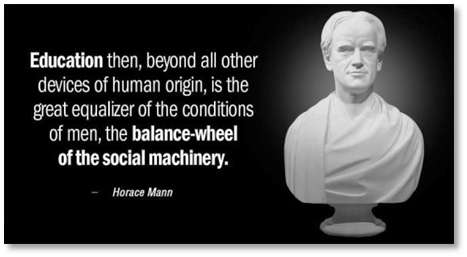
Leading us to this point has been the “common school,” established in the 1830s and 1840s in the new United States, comparable to today’s standardized public school. Considered the father of American education, Horace Mann envisioned common schools as institutions that were free and open to all students. In his role as Secretary of the Massachusetts State Board of Education (1837–1848), he established teacher training schools, improved school infrastructure, and raised educational standards. [1] He wanted those teachers to teach standardized curricula that instilled students with civic values. Catholic and other parochial schools in particular objected to Mann’s belief that schools should not adhere to any specific Christian sect, an argument that continues to the present day.

An obvious drawback of religious schools that is often overlooked is the inevitable assumption of such schools and their adherents that their beliefs are the only truth, that anything other than specific Christian dogma is a lie. Denial of science is the best example of this prejudice as scientific discoveries have slowly dismantled much of the institutionalized mythology enshrined by religion. As myth becomes ingrained in students of religious schools, their beliefs serve as a wedge between the people practicing that belief system and the needs of a nation to move forward in all areas such as advancing industry and the economy with new inventions based on new scientific discoveries and the acceptance of facts about human life previously not understood.

For the 68% of Americans who do not adhere or sympathize with the strict religious views of Christian extremists, the fundamentals of accepted education typically aligns with secular, pluralistic, and science-backed academic standards. These standards prioritize critical thinking and inclusivity rather than religious doctrine or rigid ideological frameworks. In fact, of the approximate 32% of Americans counted as Christian Nationalists, the actual adherents are only 11% while another 21% are considered sympathizers.[2]

The question of funding public schools boils down to what we expect our educational tax dollars to accomplish. Programs which teach narrow and exclusive religious doctrine are by definition not meant to support a cooperative relationship among persons of various cultural and religious backgrounds, but rather to hold up one belief system as the only truth. This becomes an impetus for authoritarian overreach and ultimately war, as history has long shown us.

While historically this conflict in the U.S. has been decided in favor of the constitutional standard not to mix church and state, the most compelling factor in the present day argument is that we all pay taxes and the majority of Americans do not agree that taxes should support the extreme Christian agenda. Tax support violates the First Amendment’s Establishment Clause by compelling taxpayers to fund the teaching of religious doctrines, essentially creating a government-sanctioned religion.

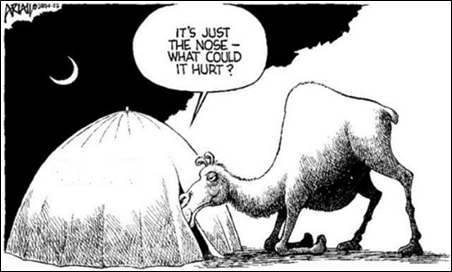
The slow but determined creep of Christian Nationalism shows every intention of overturning this Constitutional mandate. The camel’s nose is well under the edge of the tent. A 2024 investigation by The Washington Post found billions in tax dollars now pay tuition at private, mostly religious schools. For example, Florida’s voucher program is expected to exceed $3 billion, with over 80% of funds going to religious schools. Ohio is projected to spend nearly $1 billion, with 91% of voucher users attending religious institutions. Hundreds of thousands of students use these programs. The rise in funding is attributed to the expansion of voucher programs in Republican-led states, which now allow more or all families to qualify, shifting from programs once aimed only at low-income students.

Reduced funding for public education leads to layoffs, larger class sizes, and reduced individualized attention for students. Schools that serve the vast majority of students are forced to cut essential services, including arts, music, athletic programs, and after-school programming. There is less money for modern technology, up-to-date textbooks, and lab equipment. Meanwhile, private schools receiving public funds can exclude students based on religion, academic performance, disability, or sexual orientation, narrowing the educational options for those students. Vouchers can deepen racial and socioeconomic segregation by subsidizing tuition at private schools that often lack the diversity of public schools. Continued siphoning of funds can result in the closure of neighborhood public schools, particularly in rural areas where the school is a central community institution.

Long term erosion of financial support for public education puts the entire nation at risk, not only from prejudicial curricula in religious classrooms, but also from the inevitable schism between people educated in stringently oppositional systems. In a nation that has long pursued unity despite our different origins and beliefs, such divisive practices are a form of violence against the existing government.

The Supreme Court has said the Establishment Clause forbids, among other things, financial support of religious activity. Subsequent cases challenging the longstanding interpretation of the First Amendment have brought us to the Espinoza vs. Montana case, allowing tax dollars to flow to the parents/students of religious schools. This is by far not established law. While Espinoza reaffirmed that governments may not discriminate against beneficiaries solely on the basis of their religious character, it left open the possibility that governments might still be able to bar beneficiaries that would put public funds to religious uses.

The U.S. majority has become increasingly aware of the conflict between a religious agenda and our multicultural society. The percentage of Americans who say religion is “very important” has dropped from over 88%-95% in the 1960s to 47% in 2025. The latest Religious Landscape Study, fielded over seven months in 2023-24, finds that only 62% of U.S. adults identify as Christians. That is a decline of nine percentage points since 2014 and a 16-point drop since 2007. Within Christianity, 19% are Catholic, 3% are Mormon, Orthodox, Jehovah’s Witness, and other, and 42% are Protestant divided into Evangelical (23%), Mainline (14%),[3] and Historically Black Protestant (5%).

Projections indicate that by 2070, Christians could shrink from 64% (2020) to between 35% and 54% of Americans, while “Nones” (no religion) rise from 30% to over 50% in some scenarios. This shift drives religious zealots to push a movement which seeks to assert “dominion” over societal institutions, including government, education, and media, believing that Christian moral values should dictate law.

Growing concern within the U.S. public is slowly building into a response to Christian Nationalism, Dominionism, Christian Reconstructionism, and the New Apostolic Reformation (NAR) including tracking by civil rights organizations, legal challenges, and theological counter-movements from within Christianity. These initiatives aim to counter the rising influence of these new Puritan groups. Organizations like the Southern Poverty Law Center (SPLC) are actively documenting the spread of Dominionism,[4] profiling key leaders in the New Apostolic Reformation, and tracking associated hate groups. (This is directly connected to the Trump Administration’s May 2026 lawsuit against the SPLC in an effort to intimidate all civil rights organizations from speaking out and doing their work.)[5]

Scholars and progressive faith leaders are working to produce public-facing biblical interpretations that contradict Dominionist, coercive, and authoritarian interpretations of Scripture. Efforts are underway to inform the public and Christians about the anti-democratic nature of white Christian Nationalism and Dominionism to “inoculate” them against its appeal. The ACLU of North Dakota and other organizations actively fight against initiatives promoted by Dominionists, such as forcing religious prayer into public schools, banning books, and promoting anti-LGBTQ+ policies. Organizations like American Atheists oppose lobbying efforts to pass laws that violate the separation of church and state, such as those permitting discrimination under the guise of religious freedom. Researchers such as Dr. Matthew D. Taylor are working to expose the ties between modern charismatic prophets and the political, antidemocratic, and “spiritual warfare” approaches used to influence elections.

Defenders of the United States Constitution emphasize the importance of religious pluralism and the separation of church and state, arguing that Christian supremacy rejects these principles. Organized efforts underway to combat Christian supremacy include

  • A grassroots movement launched by the Baptist Joint Committee for Religious Liberty (BJC). It unites Christians across the theological spectrum to speak out against the merging of Christian and American identities.
  • Interfaith Alliance: A national, pro-democracy organization that mobilizes diverse faith communities to challenge Christian nationalism, protect civil rights, and uphold religious pluralism.
  • State Ecumenical Groups: Various regional faith networks, such as the Wisconsin Council of Churches, that host educational campaigns, study groups, and sermons to counter nationalist theology.
  • Americans United for Separation of Church and State: A leading organization dedicated to preserving the constitutional wall separating church and state. They actively litigate cases and advocate against policies that advance white Christian nationalism.
  • Freedom From Religion Foundation (FFRF): A prominent secular organization working to defend the constitutional principle of separation of church and state, frequently challenging religious favoritism in the public and political spheres.
  • Southern Poverty Law Center (SPLC): Monitors far-right and extremist movements. The SPLC identifies and exposes the ideologies and groups—including Christian supremacist and Dominionist networks—that threaten democratic institutions.
  • Public Religion Research Institute (PRRI): While not an activist group, PRRI conducts rigorous data-driven research and polling on Christian nationalism. Their work tracks the demographics and organizations that resist these movements.

These efforts fight against the adoption of “biblical authoritarianism” and the idea that Christians are mandated to take over societal institutions.


[1] Little, Becky. “Who Invented Public School in America,” History, Sept 10, 2025. https://www.history.com/articles/public-school-america-horace-mann

[2] More than half of U.S. Republicans are either adherents (20%) or sympathizers (33%).

[3] a group of historically established, traditional Protestant denominations in North America, often associated with a theologically liberal, progressive, or moderate approach to Christianity

[4] Dominionism (or Dominion Theology) is the religious belief that Christians are divinely mandated to take control of secular political and cultural institutions to establish the Kingdom of God on Earth. It is smaller and more fringe than broad Christian nationalism, but it holds disproportionate sway in certain fundamentalist, charismatic, and Pentecostal factions. While closely related, Dominionism and Christian Nationalism differ in their ultimate goals, theological roots, and how they view the relationship between religion, government, and the end of the world. Apparently neither group is familiar with the writings attributed to John in 18:36 where Jesus clarifies the nature of his realm: “My kingdom is not of this world.”

[5] https://www.aljazeera.com/news/2026/4/21/trump-administration-sues-southern-poverty-law-center-on-fraud-charges

This is the 4th chapter in the booklet New Puritans and the U. S. Peerage: The Willful Destruction of Public Education
The Education Problem: Bigger than the New Puritans

In 1975, Congress passed a law that mandated mainstreaming students with disabilities. The majority of funding for such programs was never enacted, leaving schools crippled with lower student achievement, increased teacher turnover, and wider educational equity gaps, particularly impacting low-income and minority students. These well-intentioned programs have led to overcrowded classrooms, reduced access to specialized services (such as special education), and fewer extracurricular opportunities, hindering long-term student success and limiting workforce readiness.

The inevitable subsequent shortcomings of education opened the door to other assaults. In the lack of adequate funding, schools frequently cut arts, music, advanced placement courses, and crucial special education, behavioral intervention, and occupational therapy services, most of which offset the likelihood of substance abuse and are key for some students’ success in life. Opportunities are increasingly lost for the social bonding which occurs for participants in school extracurriculars like band or debate to form important relationships that can extend throughout lifetimes. [1]

When Congress passed a broad law on educating children with disabilities in 1975, it agreed to kick in federal dollars to help cover the excess costs of meeting students’ individual education needs. In the time since, federal funding for what’s now known as the Individuals with Disabilities Education Act (IDEA) has consistently fallen short of the target included in the law, leaving state and local officials on the hook. Education groups, who call that shortfall an unfulfilled promise, have long campaigned for “fully funding” IDEA, which underpins services for nearly 7 million students with disabilities. More federal funding for IDEA, which gets $13.6 billion in the current budget, would help special education programs, they say, but it would also more broadly affect all students as schools would no longer have to pull as much from their general education budgets to meet the law’s mandates.

The failure of Congress in 1975 has meant fifty subsequent years of underfunded public education in the United States. Despite some improvements and recoveries, experts note that student achievements have not consistently regained the levels reached in the mid-1960s, while international rankings for math and science have dropped in more recent decades.[2] This educational decline has served as a convenient back door which religionists began using as a justification (along with civil rights legislation forcing school integration and other factors) to put children in private schools.

Currently, according to the Congressional Research Service, funding is at less than 12 percent, and the IDEA shortfall in the 2024-2025 school year nationwide was $38.66 billion. A bipartisan bill currently in Congress, the IDEA Full Funding Act, would fully fund the IDEA programs. By forcing the federal government to meet its obligation of funding 40% of special education costs, local districts could free up their general budgets—currently used to fill the special education funding gap—to support regular education initiatives.

As a result of this deficiency and along with the obsessive intentions of the new Puritans, even greater burden now falls upon public schools as private and religious school vouchers allow those schools to deny admission to special education students. Only about 58.7% of all private schools in the U.S. enroll at least one student with an Individualized Education Program (IEP) or a formally identified disability. While overall enrollment is lower in Catholic schools, they have higher inclusion rates, with 72.7% to 83.8% serving students with disabilities. This means that only about 1.4% of total students in private schools have formally identified disabilities, although studies suggest a higher 6-9% of students may actually have needs.

This funding gap causes inadequate disability services in public schools. Ironically, as more funding is diverted from public schools via vouchers, schools have even fewer resources to serve students with disabilities, accelerating the demand for school choice and further diminishing public education resources.

Exacerbating this problem is a continuing increase in the number of handicapped students. The number of students with disabilities served under federal programs has roughly doubled since the mid-1970s, growing from approximately 3.6 million in 1976-77 to over 7.5 million by 2022-23. Students with disabilities now account for 15% of total public school enrollment, up from 8.3% in 1976, dramatically increasing the financial burden on public schools. This rise is driven by increased diagnoses of ADHD, autism, and severe anxiety (especially post-pandemic), coupled with reduced stigma, better screening, and greater awareness of legal rights for accommodations.

In classrooms where students with disabilities lack a dedicated personal attendant, responsibility for bathroom and feeding needs falls on school-provided staff, typically special education teachers, para-educators (TAs), or classroom aides. These services are legally mandated under a student’s IEP (Individualized Education Program) or 504 Plan to ensure participation in the least restrictive environment, but are often not provided but to inadequate funding.

As a result, classroom teachers have been forced to step away from teaching the rest of the class to personally attend key tasks including toileting support, feeding, dressing, hygiene (such as nose wiping, menstrual care), and mobility assistance like transfers or repositioning. This care often includes behavior management, medication supervision, and facilitating meal times. Ideally, such duties would fall to paraprofessionals trained and hired to provide such care, but lack of school funds often leaves these duties up to classroom teachers who are not only not trained for such efforts, but also not able to accommodate the needs of the rest of their students.

No wonder teachers are leaving the profession. Data indicates that 51% of classroom teachers feel ill-equipped to implement required IEP services, and high turnover exists due to excessive workloads in special education. One elementary teacher stated that by the time she had tended one student’s temper tantrums and assaults on other students plus feeding and bathroom duties in her first grade class, she had almost no time left to actually teach the other 23 students in her classroom.[3] 

That unfunded mandate continues to echo through much of the failure cited today in justification for school vouchers. No one can claim that promoters of IDEA foresaw the lack of funding perpetuated by Congress or the long term role that failure would have in the promotion of school vouchers, but in hindsight the facts are clear: the compromise of public education quality due to the underfunded mandate of IDEA contributed significantly to a rising call for school vouchers.

Adding Insult to Injury

Eliminating the federal department overseeing education is just one of several recent attacks on U.S. public education. As recently as 20 years ago, the United States was ranked No.1 in high school and college education. Sadly, by 2025, in the World Top 20 Project’s Final Rankings of 201 nations’ education systems, the list of best twenty educated countries for 2025 does not include the United States. The U.S. education system generally ranks in the middle to lower tier of developed nations for K-12, particularly struggling in mathematics while performing better in science and reading. According to 2022 PISA data, the U.S. ranked 34th in math, 16th in science, and 9th in reading among 81 education systems, though it remains a global leader in higher education.[4]

Although funding is a critical criterion for the system, American students are also falling behind due to a combination of pandemic-era learning disruptions, increased technology distractions, a deepening teacher shortage, and systemic inequality. Scores in reading and math dropped to historic lows following 2020, with declines continuing due to, in part, reduced student focus, weak accountability, and declining mental health. While remote learning during COVID-19 accelerated losses, student performance in math and reading was already declining since roughly 2013. Heavy use of smartphones and social media is linked to reduced attention spans and lower academic engagement. A 30% drop in teacher enrollment (2010–2019) and low salary growth have made it harder to fill positions.

The U.S. system leaves behind low-performing students more than other developed nations, with significant achievement gaps linked to school funding and location. Schools are facing lower standards and fewer consequences for poor performance compared to previous decades. In 2022–2023, schools reported that roughly half of their students were behind grade level. Many students arrive at college underprepared, leading to high drop-out rates and debt, as schools struggle to align with modern workforce demands. Experts suggest focusing on tutoring, intensive learning recovery, and addressing student mental health.

But that’s hardly enough. American schools face severe faculty shortages, largely due to high turnover rates and a shrinking pipeline of new teachers. Key causes include stagnant, low salaries relative to the cost of living, heavy workloads, declining professional prestige, and intense political scrutiny. These factors drive roughly 40% of new teachers to leave the profession within five years. To gain and maintain sufficient faculty, U.S. schools need competitive compensation, improved retention through mentorship, and broadened hiring criteria—such as valuing professional experience alongside terminal degrees.

Lack of respect for educators is most obvious in the approach to curriculum and teaching methods. Teachers in U.S. public schools often lack a voice in curriculum due to top-down mandates from state and district leaders, high-stakes testing pressures, and increasing political interference. Curricula and textbooks are frequently chosen by politicians and administrators to meet standardized goals or as sold by companies, forcing teachers to follow rigid plans rather than exercising their professional expertise to meet the needs of their students.

Evidence suggests U.S. education rankings and student achievement would likely improve if teachers had greater control over curriculum, textbooks, and school operations. Schools with high teacher leadership in school policy and curriculum development can see student proficiency scores in math and reading increase by at least 10 percentile points.

Teachers are the only persons in the entire educational system certified to have the necessary tools to actually educate. Specialized coursework educates prospective teachers in educational psychology, child development, curriculum planning, assessment methods, classroom management, and technology integration, alongside supervised student teaching. Their college educations for secondary education provide knowledge of history, mathematics, science (biology, chemistry, or physics), social studies, and English and language arts, and depending on their major field of study, experience with arts, music, foreign language, or physical education. Students preparing to teach at the elementary level focus on reading development, foundational math, science, and social studies.

Policymakers, politicians, and district leaders often prioritize compliance over teacher expertise, leaving educators restricted in what they can teach. Many educators self-censor their curriculum choices due to fear of backlash over political or social issues, knowing they lack support from administration if complaints arise. School leadership and state governments often impose curricula rather than collaborating with classroom experts, reducing teachers to implementers rather than creators. Also, the obsession with high-stakes testing encourages, or requires, teachers to follow a rigid script that ensures covering tested materials. In an Alice-in-Wonderland twist, potential backlash is itself a symptom of failed education among the voting public.

A love of learning significantly helps people later in life by protecting against cognitive decline, fostering adaptability, and increasing fulfillment in retirement. It boosts mental health by creating new neural pathways, reduces risks of dementia, and provides a sense of purpose. Lifelong learners maintain better social connections and professional relevance. A love of learning fosters critical thinking and curiosity, and empowers citizens to analyze complex issues rather than blindly following narratives, directly strengthening democracy. Educated individuals are more likely to participate in political processes, stay informed, and tolerate diverse viewpoints, reducing polarization.

Individuals with a love of learning often have higher education levels, which strongly correlates with increased voter turnout, political discussion, and civic engagement. Education teaches citizens to gather empirical evidence and analyze political issues rather than merely accepting rhetoric. A committed, curious citizenry is essential for identifying misinformation, especially as AI makes fabricated media harder to detect which, in turn, leads to the kind of political chaos currently occurring in the United States.

Teachers can and do foster a love of learning by cultivating curiosity, building safe environments, and modeling passion for their subjects. Teachers inspire this through student-centered learning, rather than just lecturing, which transforms students into active participants. Yet in a 2003 survey, only 24% of teachers identified “inspiring a love of learning” as the most important part of good teaching. While almost all teachers value curiosity, studies indicate that only a minority consistently implement high-level curiosity-promoting behaviors, with one study finding that only about 60% provide general opportunities to think or participate.

A group of University of California, Berkeley researchers found that when young children were shown exactly how to do something, they subsequently engaged in less exploration on their own than those who had received no explicit direction. Likewise, enthusiasm about reading—a key predictor of proficiency—tends to be lower when children are subjected to systematic phonics-based instruction rather than a literature-based approach, as Dominic Wyse and Charlotte Hacking explain in their new book The Balancing Act. Math teacher and research mathematician Paul Lockhart, meanwhile, wryly described the conventional curriculum in his field as “a proven cure for curiosity”—also an apt epithet for worksheets.[5]

Research also shows a sharp decline in curiosity as students get older, often due to school practices.[6]

This isn’t a failure of teachers, who often struggle to encourage student curiosity in the quagmire of rigid, test-driven school structures, packed curricula, and a focus on compliance over exploration. Structural constraints like inflexible schedules and standardized testing force teachers to prioritize efficiency over organic, student-led inquiry, which requires time to explore. Further, many teacher training programs prioritize classroom management and content delivery over teaching storytelling, curiosity hooks, or how to spark wonder.

Decreasing educational outcomes in the U.S. diminish long-term economic growth by reducing workforce productivity, lowering lifetime earnings, and increasing public expenditures on social services. A less skilled workforce slows innovation and global competitiveness, with gaps in achievement potentially causing trillions in lost GDP. These declines fuel social inequality, as students from lower socioeconomic backgrounds are disproportionately affected, hindering social mobility. Long-term consequences include increased income inequality, higher crime rates, and strained public resources.

Perhaps more importantly, these shortcomings significantly alter the political landscape by driving educational realignment, widening the partisan divide, and potentially lowering overall voter turnout. Voters without college degrees increasingly favor the Republican Party, while college graduates lean Democratic, shifting party platforms and strengthening political polarization.

This political alignment resulting from diminished educational success is without question a driving principle behind Trump’s aggressive attack on the nation’s flagship universities.[7]

The Trump administration has gutted scientific research funding in the United States to punish ‘liberal’ universities and threatened research institutions with sanctions.  …Universities are now afraid to collaborate with any other country.  Private industry has not stepped up to fund basic research.  Science and technology are collapsing in America and we are steadily falling behind the rest of the world.  China, Japan, the European Union, and the United Kingdom have all maintained robust scientific research programs. Trump’s failure to understand the value of scientific knowledge is creating a Sputnik-like technology deficit in the U.S. that will be extremely difficult to overcome.

As reported in October 2025, the Trump administration sent schools a 10-point memo titled “Compact for Excellence in Higher Education.” Largely rejected, the compact would limit international student enrollment, force universities to share student information with the federal government, enforce the adoption of a specific definition of gender and threaten affinity spaces, and take action against actors that “punish, belittle, and even spark violence against conservative ideas.”

Enter the Heritage Foundation

Project 2025, a policy blueprint authored primarily by The Heritage Foundation, envisions a nation without a department of education. Currently more than 50 high-level officials and approximately 70 percent of the Cabinet have documented ties to the Heritage Foundation and the groups allied behind the Project 2025 agenda. The goal is to install a “4-pillar” plan to restructure the executive branch, focusing on conservative, and often right-wing, ideals. The project explicitly targets for removal or avoidance several ideologies and policies it deems anti-conservative, “woke,” or contrary to its vision of American society. A review of this “blueprint” reveals an absolute denial of science that puts human existence at risk.  

The main ideas, policies, and ideologies to be avoided or eliminated by Project 2025 include: [8]

  • The project treats “gender ideology” and “transgender ideology” as “social contagions” to be removed from public life, education, and government. It calls for outlawing transgender rights, ending protections for trans people in the military, and equating “transgender ideology” with pornography. Yet science has confirmed that gender identity exists on a spectrum, an unavoidable physical condition set in the womb including being born appearing female but have a 5-alpha reductase deficiency and grow a penis at age 12.

Such conditions of gender dysphoria often remain hidden until adolescence when hormones rise to manifest their genetic directives. What a tragedy for young people with one of these conditions who may be forced to suffer a condition becoming increasingly obvious as they move through adolescence. Medical treatments can mitigate the advancing crisis, but those represented by the Heritage Foundation (and others ignorant of science) would deny the existence of their conditions, creating not only a physical crisis but also emotional and psychological trauma. Needless to say, such a crisis severely undercuts a young person’s ability to gain an effective education.

Another hidden tragedy in this ignorance of science is that it embeds hypocrisy into religious thinking. Modern science has discovered not only the cause of such genetic factors, but also hormonal means of helping these people gain greater equilibrium in their conditions. In a rational consideration, to deny both the medical diagnosis as well as an effective treatment for gender dysphoria would also deny diagnosis and treatment for a myriad of other medical conditions: cancer, for example, or tuberculosis, epilepsy, or diabetes, all of which were considered total mysteries, frequently believed caused by divine punishment or demonic possession. What other conditions and treatments would the new Puritans discard from our society?

  • Whether or not a person identifies as Lesbian, Gay, Bisexual, Transgender, and Queer (or Questioning) (LGBTQ) also falls into the science denialism of Christian Nationalists. As typical of religious extremists, other people’s private activities, in particular their sexual relationships, form a primary target for authoritarian control. Yet despite wishes to the contrary, sexual identity is not a matter of choice or ‘perversion.’

Genetics play a role in a person’s sexual identity, but it is highly complex. Hundreds of genetic variants can predispose a person to same-sex behavior, meaning DNA alone cannot predict a person’s sexuality. Scientists believe that conditions in the womb significantly influence sexual orientation. Factors such as fetal exposure to varying levels of sex hormones (like androgens) during critical periods of brain development and maternal immune responses during pregnancy help wire attraction before birth.

Separately, the environment can influence how genes work without changing the DNA sequence itself, a process called “epigenetics.” Some theories suggest epigenetic “switches” are passed down across generations and act to protect parents from hormonal extremes in the womb, which can subsequently influence brain development and attraction in their offspring.

The reality of science should serve to deny religionists the ability to blame matters of gender and identity as a sinful choice. It should eliminate any idea of forcing such persons into conversion therapy, either private practice or facilities operating under the scientifically debunked premise that LGBTQ+ identities are a mental illness, defect, or choice and using harmful practices such as faith-based boot camps or church-operated programs that use prayer, isolation, and guilt to “cure” same-sex attraction along with extreme measures including physical labor, emotional abuse, and deprivation.

  • Another Puritan initiative seeks to purge DEI programs, race-conscious admissions, and “wokeism” from federal agencies, the military, and educational institutions, labeling them “managerialist left-wing race and gender ideology.” These include Critical Race Theory, calling for the removal of critical race theory from public schools and federal funding for programs that teach it. CRT is an academic and legal framework, developed in the 1970s and 80s that examines how racism is systemic and embedded in legal systems and societal institutions, rather than just a product of individual prejudice. Denialism by religionists does not erase the reality of prejudice in cultural traditions driving racism and other harmful discriminations.
  • Project 2025 also calls for eliminating all references to climate change and the need to reduce greenhouse gas emissions. The policy seeks to stop the “war on oil and natural gas,” leaving young people without the knowledge of how to address the warming of our climate.
  • Project 2025 advocates for the abolition of the U.S. Department of Education, returning control of education to states, and promoting school choice over public schools. It aims to remove “pornography” and “woke propaganda” from school libraries, often targeting books with LGBTQ+ content, and seeks to move the nation away from what it considers “leftist” and “woke” ideologies, focusing instead on a “biblically-based,” traditional, and nationalistic approach to American governance and society.

Despite the new Puritan efforts, every thinking person knows that public education must embrace the truths revealed by modern science, bestowing upon our coming generations the insights and understanding necessary to motivate participation in our democracy. Above all, secular education must ensure the survival of our Constitution in its original intent, that religion remains utterly separate from the operations of our government.


[1] Blad, Evie. “Why the Fed Still Falls Short on Special Education Funding,” Education Week, Jan 10, 2020.  https://www.edweek.org/teaching-learning/ why-the-feds-still-fall-short-on-special-education-funding/2020/01

[2] For a more detailed overview, see Shimabukuro, Jim. “The Decline of U.S. Public Education Began in 1967,” Educational Technology & Change, Feb 13, 2026.  https://etcjournal.com/2026/02/13/the-decline-of-u-s-public-education-began-in-1967/

[3] Author’s personal correspondence with the teacher

[4] New Jersey Minority Educational Development (NJMED) organization. Each country’s ranking is based on five educational levels: early-childhood enrollment rates, Elementary Math, Science and Reading scores, Middle-School Math, Science and Reading scores, High School Graduation rates, and College Graduation rates. https://worldtop20.org/worldbesteducationsystem/

[5] Kohn, Alfie. “All Learning, No Questioning: How Schools Smother Curiosity,” Education Week, Sept. 23, 2024. https://www.edweek.org/teaching-learning/opinion-all-learning-no-questioning-how-schools-smother-curiosity/2024/09

[6] Regarding student curiosity as part of classroom outcomes, see Jirout JJ, Zumbrunn S, Evans NS, Vitiello VE. Development and Testing of the Curiosity in Classrooms Framework and Coding Protocol. Front Psychol. 2022 Apr 7;13:875161. doi: 10.3389/fpsyg.2022.875161. PMID: 35465531; PMCID: PMC9022842.

[7] Soeder, Daniel J. “Science, Technology, and Society Discussion Corner,” Facebook, Dec 1, 2025. https://www.facebook.com/groups/ScienceTechnologyAndSocietyDiscussionCorner/posts/10173237402565008/

[8] See, for example, Boucher FJO, Chinnah TI. Gender Dysphoria: A Review Investigating the Relationship Between Genetic Influences and Brain Development. Adolesc Health Med Ther. 2020 Aug 5;11:89-99. doi: 10.2147/AHMT.S259168. PMID: 32801984; PMCID: PMC7415463. https://pmc.ncbi.nlm.nih.gov/articles/PMC7415463/

This post is from Chapter 3, New Puritans and the U.S. Peerage: The Willful Destruction of Public Education
Washington County Court Fails Its Duty and Presumes to Infringe on Constitutional Rights

Joseph Wood, Washington County Judge

In an ideal world, government provides for its citizens by addressing problems so complex or so large in scope that citizens alone or even in groups cannot address them. Our tax dollars support government agencies that regulate the costs of necessary utilities, the purity of our food and drugs, and the safety of our mass transportation systems such as airlines and trains, among many other things. Under our U. S. Constitution, matters of personal conscience such as privacy and religious belief are left to the individual.

At the local level, we here in Washington County, Arkansas now find ourselves with a county government which has forgotten—if indeed they ever knew—their proper role. For example, about a year ago, the county government closed their south Fayetteville hazardous waste collection center. There was no public notice of this decision.

Meanwhile, a resolution introduced by Quorum Court Republican Patrick Deacon and passed through committee last night quotes a Bible passage and presumes to embed certain religious beliefs into county law. A more experienced county judge would have stopped this presumption in its tracks.

A deeper look at the county judge’s tenure finds that upon taking office, he not only fired experienced county employees but replaced them with cronies from his former position at Ecclesia College. He gutted several of the county’s departments and ended up defending his actions in court.[1] Environmental affairs, tasked with protecting our natural springs, streams, and the rest of our land, was reduced to one employee. The county archives, a priceless repository of old deeds, marriage records, and other arcane and fascinating bits of our local history, was relieved of its professional archivist and its open hours reduced to a few hours one day a week. Other departments suffered similar cutbacks, all in the name of saving money and, to the Republican mantra, reducing government.

Hazardous waste isn’t something to toy with. These subtle poisons are found in virtually every household—cleaning products, solvent-based paints, pesticides, weed-killers, and other garden chemicals, batteries, motor oil, kerosene, swimming pool or hot tub chemicals, pharmaceuticals (all medicines), obsolete computer equipment and televisions, thermometers, barometers, thermostats, fluorescent tubes and compact fluorescent globes (CFLs), and more. Educating the public about household hazardous waste (HHW) over the last thirty years has been a major effort for community recycling and solid waste departments.

Washington County had made some headway not only in educating residents about the nature of HHW but also in providing a convenient drop-off location where such items could be safely collected for appropriate disposal. This has meant that tons of these chemicals have NOT ended up being poured on the ground or dumped into landfills where someday, no matter how great the liners, they will leak into the ground. Chemicals in the ground don’t just sit there. They don’t decompose into harmless biomass. They migrate through fragmented limestone and clay and every other type of strata until at some point they join groundwater. And sooner or later, that groundwater becomes the water we must drink.

Now perhaps Judge Wood and his cohort were not aware of the dangers inherent in HHW. Perhaps their only thought was to make other use of that small building on the county’s south campus that would save the county a few dollars. (The building is currently used for storage.) And perhaps their thought was that any solid waste issue, including HHW, properly fell into the domain of the Boston Mountain Solid Waste District (BMSWD).

Whatever the considerations which entered into the decision to close the HHW collection center, these considerations did not include the cardinal rule about the safe disposal of HHW: disposal should be convenient for the greatest number of people.

In a society acculturated to the concept of convenience, it is the burden of public officials to ensure that the solution to important problems like proper HHW disposal is made as convenient as possible. Number 1 consideration should be to accommodate the operation of a facility which has become well known and well used by area residents.

When the county closed its HHW collection center in south Fayetteville, BMSWD scrambled to open a new collection center in Prairie Grove. However, Prairie Grove has a population of about 5,800 people whereas Fayetteville’s population is over 85,000, which raises the question of who is being served with this location change. The tenuous justification for the move hinted that it wasn’t the county’s responsibility to collect HHW for Fayetteville. Also, that Prairie Grove was more rural and therefore more suitable for HHW collection from county residents.

Questions posed in early April to Judge Wood were diverted to Brian Lester, formerly county attorney and now assistant to the judge.

Q: How much money did the county spend on the south Fayetteville HHW collection center?

Didn’t know.

Q: What was the tonnage collected annually at the Fayetteville HHW center? Has that tonnage increased or decreased in the year since the south Fayetteville facility closed?

Didn’t have any data.

Q: Why did the county not notify Fayetteville solid waste officials about the planned termination of the south Fayetteville site and ask for a cost sharing solution?

No answer.

Q: Is the county’s population center at or near Prairie Grove?

A: No, the center is just south of Fayetteville.

Mr. Lester alleged that BMSWD now offers local HHW pickup at various outlying communities such as Elkins. Not true. The district’s plan for HHW collection is that if a community decides it needs a HHW collection, it will provide a location and staff and the district will provide education and disposal of said waste. At the present time, the only HHW collection service in the county is a weekly one-day collection event in Fayetteville, which began AFTER early April when we circulated our questions to not only Mr. Lester, but also a quorum court member, BMSWD employees, and Fayetteville solid waste representatives.

BMSWD confirms that they received no advance warning that the county judge planned to terminate their contract to use the county’s building in south Fayetteville for the HHW collection center. Likewise, Fayetteville solid waste officials confirm that they received no warning or offer of cost sharing or other arrangements to secure the south Fayetteville location for the program.

No one advising Judge Wood or his staff on this decision seems to have considered that lots of residents of small towns and rural areas of Washington County used the Fay’vl HHW facility because Fayetteville is the largest city and the county seat and serves as the shopping, entertainment, and employment destination for most of the small town/rural residents of the entire county. Which, obviously, means Fayetteville is the most convenient HHW disposal location for most county citizens.

The allegation that Prairie Grove is a more convenient disposal location for rural citizens than Fayetteville is a fabrication based on the need to cover ass after the issue was raised with hard questions.

Government and only government has the power and scope to make decisions that provide protection for the region’s water supply for decades and centuries to come. Unfortunately, Judge Wood and his cohort’s interests seem to center on his religious beliefs and how to best impose those beliefs on individual county residents.

Despite Judge Wood’s administrative experience in various posts, his primary interest seems to follow his Masters of Christian Leadership degree (2016). Aside from imposing religious beliefs on county government, Joseph Wood’s righteousness apparently suffers lapses.

“In the 2016 race for County Judge, former Ecclesia board member Joseph Wood replaced Republican nominee Micah Neal when he abruptly withdrew from the race.  Neal later pled guilty to federal bribery charges over state funds he directed to the school.  Wood’s first actions as judge were to fire employees without cause, and violate county policy by hiring Ecclesia cronies without posting the position. It’s not gotten any better from there. Despite running on fiscally conservative credentials, Wood has presided over dwindling reserves and a budget shortfall in the county.”[2]

Not only Neal, but another state senator Jon Woods (appealing a fifteen-year sentence) and a well-known lobbyist Rusty Cranford (serving a seven year sentence) were part of this scheme to divert tax dollars to a religious school while lining their own pockets. As investigators ultimately discovered, the scam involved sixteen people in two states.

“As part of his guilty plea, Neal admitted that, between January 2013 and January 2015, while serving in the Arkansas House of Representatives, he conspired with an Arkansas state senator [Jon Woods –ed.] to use their official positions to appropriate government money known as General Improvement Funds (GIF) to a pair of non-profit entities in exchange for bribes.”

While Joseph Wood may not have been complicit in this scheme, his position as Ecclesia College board member made him responsible for the activities of its representatives. If he knew about this illegal scheme, perhaps he viewed it in the same way he views the unconstitutional overreach of the proposed resolution declaring the county ‘pro-life’ – that the end justifies the means. The end, in this case, would be a ‘Christian nation.’

Joseph Wood announced in May 2021 that he is running for lieutenant governor, a position one step away from the power of state leadership. In his lengthy press release announcing his candidacy, Wood extolls his career and adds his blessings to the Trump presidency:

“President Trump will go down in history as one of the greatest Presidents because he pushed ahead in the face of adversity and delivered results. Arkansas needs a proven leader for the future of Arkansas. I am running as a strategic thinker and leader who consistently delivers results. I am running as a conservative, committed to faith, family, and fighting for what’s possible in Arkansas.”

The tenure of Judge Wood has been a black mark on our county’s reputation. If elected to state office, this man and his supporters will only drag the state further down, and we’re already scraping the bottom.

We aren’t the only person to speak out about egregious behavior by Republicans on the Quorum Court. This letter to the editor was published in the Northwest Arkansas edition of the Democrat-Gazette on February 7, 2021. Please note that this Patrick Deakins is the same member of the court who put forth the pro-life resolution cited above.

“Public’s voice provided little time in meetings

“On Tuesday, Feb. 9, after months of the public calling for a public discussion regarding over $4 million in CARES Act relief funds being sent to Washington County, the public was finally offered an opportunity for discussion. Or so we thought.

“I was excited for this opportunity as my own Justice of the Peace, Lance Johnson, will not respond to my other attempts to reach him. At the beginning of the meeting, JP Patrick Deakins was elected chair of the committee, then rudely and sarcastically breezed his way through the entire agenda and insisted the only time for public comment would be at the very end, even though an agenda item was named for “public discussion.” At the end, under a brand new rule, only 12 minutes were allowed total for the entire agenda, 10 items in total.

“Five members of the community, in a county of over 230,000, were allowed to speak. Five. And, the last person speaking was yelled over and cut off, on an item that hundreds of us have waited months to discuss.

“I hope the public is aware that whether for or against any items, we have been completely shut out of participating in our local government. This 12-minute rule applies to all county business. The county received “reimbursement” for over $4 million dollars in funds they claim they spent on covid-related expenses, yet detailed as their justification were expenses that were budgeted prior to the pandemic. They have hijacked our tax dollars and our democracy. That is our money and our Quorum Court, and we are not allowed to have an opinion? This should rock every one of us to our core and they should be ashamed of themselves.

“Start talking to your neighbors, friends or family about running. We have a Quorum Court to take back.” Written by ReBecca Graham.

~~~

See https://www.nwaonline.com/news/2019/apr/12/corruption-case-spans-16-people-2-state/


[1] See https://arktimes.com/arkansas-blog/2018/03/30/washington-county-official-resigns-amidst-lawsuit-over-county-judge-joseph-woods-hiring-practices

[2] http://www.forfayetteville.com/2018-elections/washington-county-races

Where Trump voters come from

Arkansas continues its dereliction of duty in educating its young people with the May 22 announcement by Gov. Asa Hutchinson that he will promote current Education Commissioner Johnny Key to the governor’s new cabinet position of Education Secretary. With this promotion, Key will add another $3,450 per year to his already ridiculous salary of $239,540 and gain ever greater leverage over the hapless citizenry of our state.

Readers may remember the insidious maneuvering required to cram Key into the commissioner position in the first place. Back in 2015, Key’s work history and educational achievements did not qualify him for the job. The law required a master’s degree and ten years teaching experience. When Gov. Hutchinson seized on the idea of putting Key in the post, a bill rushed through the legislature allowed the commissioner to evade these requirements if the deputy commission held those credentials.  Not that the commissioner would be required to obtain the advice or consent of the deputy in any given matter.

Key graduated from Gurdon (Arkansas) High School then received a Bachelor of Science in Chemical Engineering in 1991 from the University of Arkansas at Fayetteville. He never taught a day in his life. That is, unless you count his and his wife’s operation of two pre-schools in Mountain Home, Noah’s Ark Preschool and Open Arms Living Center, operations that for years applied for and received tax-funded grants while flagrantly teaching religion. Another state legislator, Justin Harris (West Fork) also operated illegally with such dollars for his Growing God’s Kingdom preschool. All three schools received funding from the state under the Arkansas Better Choice (ABC) program administered by the Department of Human Service (DHS). After complaints were filed by Americans United for Separation of Church and State, the state had no choice but to amend its grant guidelines.

AU Staff Attorney Ian Smith told Church & State. “The administrators of the Arkansas Better Choice (ABC) program violated the Constitution by funding [these] religious activities.”

According to a 2011 Arkansas Times report, “Sen. Johnny Key gets almost $200,000 in public money a year in support of his Noah’s Ark Preschool in Mountain Home, which also provides Bible lessons and daily prayers. Nearly 300 agencies — many of them with religious roots — receive $100 million a year in public Arkansas Better Chance funding to provide preschool for poor children.”[1]

The stated mission of the Harris preschool was to “share the love of Jesus” with students, and the school operated with a Christian curriculum that included a “Bible time” for verses, stories and prayer. The school’s handbook also assured parents that staff members will “strive to ensure that your child feels the love of Jesus Christ while preparing them for Kindergarten.” The preschoolers, it continues, would be taught “the word of God” so that they can “spread the word of God to others.” They also prayed over students with disciplinary problems and laid on hands to “cast out demons.”

~~~

Key began his career in public service in 1997 when he was elected to serve as a justice of the peace on the Baxter County Quorum Court. He was elected to three two-year terms in the House of Representatives, followed by a tenure in the Senate that began in 2008. Term limited out of the legislature, Key served as associate vice president for university relations at the University of Arkansas system, a position he began in August 2014, a half-year before his friend the governor found him a cozy role at the helm of the state’s education system.

Yet even while in the legislature, Key demonstrated his dedication to the extremist religious agenda in education:

He was active in education issues, including responsibility for exploding the number of seats that receive state dollars to essentially finance home-schooling, by qualifying millions in spending on “virtual charter schools” that provide assistance to students who don’t attend conventional brick-and-mortar schools. His special language, never debated on the floor, lifted the cap on such payments from 500 to 5,000 students.[2]

Simultaneously, the state excused itself from any oversight of home-schooled students. There are no tests, no monitoring, no method by which to ensure thousands of Arkansas home-schooled kids are actually learning anything,

Key has also been a champion of public charter schools in the model promoted by the Walton heirs. While first lauded as a path for parents dissatisfied with their children’s education, charter schools have come under increasing scrutiny for siphoning money away from public schools with less than excellent results. Even worse, soon after taking over as education commissioner, Key became the default school board for Little Rock’s troubled schools. The district struggles with low-income, high minority populations where schools routinely earn “D” and “F” ratings in student outcomes. Key’s answer? Charters.

Much ink has been spilled over the Little Rock situation including Key’s desire to terminate the state’s Teacher Fair Dismissal Act and the Public School Employee Fair Hearing Act in the 22 traditional schools in Little Rock. As noted by one observer, “In the absence of democratic governance and oversight, Arkansas schools are hiring unqualified teachers without a public disclosure requirement, undermining labor standards for teachers, contributing to school re-segregation, and defrauding the public.”[3]

Tracking the details of the Little Rock fiasco, the Arkansas Times reported that the previous superintendent, Baker Kurrus, who was fired by Key before his takeover, thought charter schools “probably unconstitutional when operated as parallel, inefficient and not particularly innovative or successful ventures in Little Rock. He mentioned then that the loss of 120 students for this latest expansion potentially meant a loss of approaching another $1 million in annual state support to the Little Rock District for lost students.”[4]

~~~

No effort was made by the state to require Key or Harris to refund the millions in tax dollars they had appropriated over a period of years to operate their religious schools. And of course they didn’t honorably offer to do so. The ABC program only marginally amended its procedures for granting funding. The guidelines now require that no religious instruction occur during the “ABC day,” a set number of hours of purely secular instruction. Whether religious instruction occurs before the ABC day commences or after it ends is not the state’s concern. Since children are often picked up by school vans or dropped off by parents before the parents’ work hours and held until the end of the work day, anywhere from two to four hours of religious instruction is usually possible.

And who would know if these schools violate the ABC day with a little prayer at lunch or a few minutes of casting out demons?

The ABC program, as it stands, does not require any kind of viability test where a school would have to prove that its religious instruction could stand on its own two feet without the use of tax dollars. In fact, if tax dollars didn’t support the rent, utilities, insurance, and salaries for general operations, these schools would cease to exist. Repeated questioning of DHS / ABC money managers has yielded zero interest in developing or implementing such a test.

Neither Harris nor Key were censured for their illegal use of public funds for their religious schools. And while Harris quietly served out his remaining term in office before retreating to private life, Key has been awarded one of the highest paid positions in state government. If Key didn’t know he was breaking the law in accepting ABC grants, he’s incredibly stupid. Surely somewhere in his years of college he must have brushed up against the idea of separation of church and state and the hard line between tax dollars and religion. If he did know, he deliberately violated the U. S. Constitution, aided and abetted by the state’s willfully ignorant wink and nod.

Now Key reigns supreme over the state’s educational systems, welcomed with open arms by a governor whose own dedication to religion is no secret. After all, Asa Hutchinson is a proud graduate of none other than Bob Jones University, a private, non-denominational evangelical university in Greenville, South Carolina, known for its conservative cultural and religious stance. Refusing to admit African-American students until 1975, the school lost federal funding and ended up in court for not allowing interracial dating or marriage within its student body. BJU hit the news again in 2014 after a report revealed that administrators had discouraged students from reporting sexual abuse. [See the New York Times report.]

Apparently Johnny Key’s religious beliefs and willingness to breach the Constitution’s bright line between church and state are the primary criterion by which he has been judged the perfect man to be in charge of Arkansas education. It’s past time to assume ignorance as the underlying problem in Key’s malfeasance. The fact is that Hutchinson, Key, and every other complicit authority over our state’s educational systems knowingly evade the Constitutional separation of church and state in order to pursue their “higher calling” to religion.

~~~

See also this recent Forbes article on the failure of charter schools.

~~~

[1] https://arktimes.com/columns/max-brantley/2011/11/09/state-paid-bible-school

[2] https://arktimes.com/arkansas-blog/2015/02/10/whats-afoot-on-bill-to-change-qualifications-for-state-education-commissioner

[3] https://medium.com/orchestrating-change/272-broken-promises-the-lawless-aftermath-of-arkansas-act-1240-a8e26ce751e8

[4] https://arktimes.com/arkansas-blog/2016/05/07/johnny-key-fast-tracks-lr-charter-school-expansion-in-walton-helped-enterprise

Religious Zealots Strike Again

A recent letter to the editor here in Arkansas perfectly portrays the bizarre mindset of certain Christians. The author wrote not about morally-bankrupt Trump, nor about people dying from chemical warfare and barrel bombs, nor about the continuing horror of mass shootings in our gun-mad country. No, that wasn’t the source of this woman’s righteous indignation.

She’s upset about a comic strip.

I wanted to express my outrage at the blasphemy and sacrilege in this cartoon [Wumo]. This disgusting disregard of Christianity expresses all the evils in troubles in our world today… A holy family, Christians, as [a previous letter writer] said, is fair game for those who want to bully and disparage those with whom they do not agree. (Satan is working overtime.)

People should be very careful when targeting others, especially those of us who will indeed make a stand for our God and his precious son, our lord and savior Jesus Christ. Our beliefs and our love for spiritual and heavenly knowledge and healing far supersedes anyone or anything this world (earthly) has to offer.[1]

The letter writer, a woman from Marion, Arkansas, goes on to demand the comic strip be removed from the newspaper. She concludes: “Christians are offended.”

Oh, my. Where to begin?

Might one suggest that she and others of her ilk SIMPLY NOT READ WUMO?

I mean, does that not seem the logical choice here? I go to the comic pages pretty much every day, but I only read four. Those are the only ones I enjoy. Perhaps this Christian extremist doesn’t understand the concept of enjoyment but rather flogs herself through a daily exercise of holy suffering by reading comics that enrage her.

This would be highly amusing to the rest of us if it weren’t for the awful reality that such people have no idea how ridiculous they are. They are convinced that the world must operate by their rules and anything that draws their personal censure is surely Wrong.

A long list of human tragedy unfolds from this viewpoint. The Inquisition springs to mind, an endeavor of the Catholic Church beginning around 1100 AD and continuing in various forms for the next 600 years. Any form of “blasphemy and sacrilege” could result in church leaders taking offense similar to our letter writer.

Sometimes it was difficult to guess, as any of the following were considered serious crimes: changing bedding on a Friday, not eating pork, dressing in certain ways, wearing earrings, speaking in foreign languages, owning foreign books, casual swearing, criticizing a priest, or failing to show due reverence to the Inquisition… People were executed for failing to fast during Lent, for homosexuality, fornication, explaining scientific discoveries, and even for professional acting..[2]

Or, in our case, publishing a cartoon.

Leg crusher

Generously, inquisitors utilized various forms of torture to provide the greatest possible opportunity for the accused to confess his or her sins. Serious effort went into the invention and construction of torture devices including the infamous ‘rack’ and various other gleeful methods of inflicting pain.

When a suspect was convicted of unrepentant heresy, the inquisitorial tribunal was required by law to hand the person over to the secular authorities for final sentencing, at which point a magistrate would determine the penalty, which was usually burning at the stake although the penalty varied based on local law.[3]

Historically, other than the necessary torture required to bring a confession from those blasphemers in order to declare them guilty and then burn them at the stake, religious extremists have demonstrated a fervent interest in killing anyone who doesn’t agree with their point of view. Is this what the letter-writer threatens in her statement that: “People should be very careful when targeting others, especially those of us who will indeed make a stand for our God.”

What exactly is she suggesting? Would her “stand for God” include Inquisition-style discipline on the newspaper publishers or the creator of the Wumo comic strip?

Sadly, we don’t have to look far, even today, to find exactly that kind of violence bestowed upon those who draw the critical attention of religious authorities. Syrian cartoonist Ali Farzat dared to make fun of certain leaders in his cartoons. Assailants hunted him down and used clubs to break his hands.[4] Chinese censors called for a “severe punishment” for a star TV anchor over jokes he made at a dinner party mocking the People’s Republic of China’s founding father, Mao Zedong.[5] Then there was the Islamist terrorist attack on the French satirical weekly publication Charlie Hebdo which resulted in the deaths of twelve people.[6] Their justification? Charlie Hebdo made fun of Allah.

There’s a reason we Americans treasure our right to free speech. We can criticize our leaders, laugh at Saturday Night live skits, and even poke fun at entrenched religious views, all without fear of having our hands broken or being burned at the stake. Somehow in all her years of life, this letter writer missed out on all but the first part of First Amendment to the U. S. Constitution.

Congress shall make no law respecting an establishment of religion, or prohibiting the free exercise thereof; or abridging the freedom of speech, or of the press; or the right of the people peaceably to assemble, and to petition the Government for a redress of grievances.

All this brings to mind the question of why certain religious types find it imperative to force their point of view on everyone else. Is that they are so insecure in their beliefs that they’re comfortable only if they’re certain everyone around them believes the same thing? Isn’t faith the foundation of religious practice, the assurance that no matter what happens, God’s got your back? Wouldn’t that pretty much cover being the only Christian in a sea of infidels? Why so insecure?

Is it that they see it as their duty to convert the rest of the world to their belief system? This certainly seems to be the case, a duty not only to police the statewide newspaper’s comics section for blasphemy but also to righteously demand enforcement of their judgement against a comic deemed offensive. After all, “Christians are offended!”

Do these folks not understand that this exact attitude is responsible for most of the world’s suffering? Most of the wars? Most of the violence currently taking place in the Middle East?

Education is a wonderful thing. But in a state where parents merely need to sign a form to withhold their kids from public schools and then indoctrinate them with whatever folderol fits their world view, people like this benighted letter-writer proliferate, aided and abetted by fundamentalist preachers who don’t hesitate to cast judgement despite the Biblical edict against judging.

Matthew 7: 1-3

Judge not, that you be not judged. 2 For with the judgment you pronounce you will be judged, and with the measure you use it will be measured to you. 3 Why do you see the speck that is in your brother’s eye, but do not notice the log that is in your own eye?

National educational standards exist for a reason. They put us all on a more-or-less level playing field where we all understand the basics of our rule of law, our history as a Western culture, and yes, even the good bad and ugly of religious traditions. Public schools also help us learn to exist in a multicultural, multiracial world where even cartoonists like the creator of Wumo possess as much right to their opinions and creative efforts as the person who goes to church every time the door opens.

It’s a sad testament to the modern evangelical movement that such intolerance is not only accepted but encouraged. This letter writer seems oblivious to the irony in her remark about being “fair game for those who want to bully and disparage those with whom they do not agree…” That would be a thought to reflect on.

~~~


[1] Letters to the Editor, Northwest Arkansas Democrat-Gazette, Saturday March 31, 2018. 7B

[2] http://www.badnewsaboutchristianity.com/gbg_inquisition.htm

[3] https://en.wikipedia.org/wiki/Inquisition

[4] http://www.dw.com/en/arab-cartoonists-walk-a-fine-dangerous-line/a-18184330

[5] https://www.hollywoodreporter.com/news/chinese-tv-host-mao-jokes-814168

[6] https://en.wikipedia.org/wiki/Charlie_Hebdo_shooting

A Sword Cuts Both Ways

swordFor decades, the religious right has gained access to tax dollars by filling a niche in the education system. In addressing an ‘at risk’ population among children, these religious activists have made great strides toward the use of tax dollars for religious instruction.

It’s a clever end-run around the law. In Arkansas until 2012, a quietly growing swarm of such preschools illegally utilized millions of tax dollars for programs that began each day with prayer and Bible study. (Which they have never been required to pay back.) Classroom activities included coloring images of Biblical scenes, singing hymns, and the occasional time-out at the principal’s office where the recalcitrant child might be prayed over to cast out the demons causing his/her unruly behavior.

Tipped off by thoughtful journalists, Americans United for Separation of Church and State (AU) threatened a lawsuit against the state. Specifically cited in the complaint was the Growing God’s Kingdom preschool at West Fork. The Arkansas Times, arguably the state’s only non-rightwing media, reported that “According to the school’s handbook, parents are assured that staff members will ‘strive too [sic] ensure that your child feels the love of Jesus Christ while preparing them for Kindergarten.’ The preschoolers, it continues, will be taught ‘the word of God’ so that they can ‘spread the word of God to others.’”

Outrageous not only because the preschool blatantly advertised its religious intent in its name and literature without the state blinking an eye before handing over tax dollars, its owner/operator Justin Harris also served as an elected representative in the state’s legislature. And he wasn’t the only elected official sworn to uphold the Constitution who grabbed illegal tax dollars hand over fist. Similar preschools operated under the leadership of Johnny Key, also a legislator and – incredibly – in 2015 designated by the Republican governor Asa Hutchinson as head of the Department of Education, even though Hutchinson had to massage the state’s rules about qualifications for the department head because Key didn’t meet them.

Specifically targeted by religious preschools in order to boost their standing for ever greater grant funding, potential ‘students’ are rounded up from problematic environments.

  • The ABC Program serves educationally deprived children, ages birth through 5 years, excluding a kindergarten program. The Arkansas Better Chance for School Success Program serves children ages 3 and 4 years from families with gross income not exceeding 200% of the federal poverty level.
  • Eligible children for the ABC program shall have at least one of the following characteristics: § Family with gross income not exceeding exceeding 200% of FPL  § Has a demonstrable developmental delay as identified through screening  § Parents without a high school diploma or GED  § Eligible for services under IDEA  § Low birth weight (below 5 pounds, 9 ounces)  § Income eligible for Title I programs  § Parent is under 18 years of age at child’s birth  § Limited English Proficiency  § Immediate family member has a history of substance abuse/addiction  § Parent has history of abuse of neglect Or is a victim of abuse or neglect
  • An age-eligible child who falls into one of the following categories shall be exempt from family income requirements: § Foster child § Child with an incarcerated parent § Child in the custody of/living with a family member other than mother or father § Child with immediate family member arrested for or convicted of drug-related offenses § Child with a parent activated for overseas military duty

Further enticement for struggling parents is that ABC funded programs provide free child care and pick-up/delivery services for children. What low income parent would not rush to place their child in such a program whether or not they want their child indoctrinated in fundamentalist Christian religion?

State employees at the Department of Human Services, which oversees this particular realm of education and tax dollars and in charge of the Arkansas Better Chance (ABC) program, could not account for how the money was spent by these schools, citing chaotic bookkeeping methods. The state did not require any particular accounting method. The state then or now does not know whether tax dollars granted to preschools and other educational programs serving ‘at risk’ children actually are used for that purpose, only requiring that grants be kept in a separate bank account.

Despite the wimpy crackdown in 2012, random yet infrequent inspections by state enforcement personnel lack the ability to determine whether prayers, hymn singing, and exorcising of demons might yet continue, stopping only the moment an inspector walks through the door.

In the aftermath of unwanted scrutiny by AU, the state allowed these powerful religious entities to fabricate an imaginary line between religious instruction and the so-called ‘ABC Day,’ a block of seven hours where secular education supposedly occurs without any religious indoctrination. While delineating these requirements in a new section of is program codes (see Section 23 at the DHS website), the restrictions on how tax dollars might be used fail to include rent, insurance, utilities, and other overhead expenses of the overall operation. Children bused to the school before the ABC day begins or who remain after are immersed in religious instruction, a convenient sleight of hand since parents’ work hours rarely coincide with ABC instruction hours.

As specifically stated in Section 23.04.4 of ABC Rules:

  • No religious activity may occur during any ABC day and no ABC funds may be used to support religious services, instruction or programming at any time.

Without a viability test by which religious preschools must prove their religious instruction could continue without tax dollars, there is no method to determine if ABC funds are used to support religion. Such a viability test would have to show that without tax dollar grants, these schools generate enough income from other sources to keep the rent paid and the lights on. The state has made no effort to devise such a test.

Now let’s take a sharp turn to a similar situation on the other side of the coin. As the newly installed majority Republican Congress rubs its hands in glee over its sudden ascension to total control over the nation’s lawmaking, no issue is more eagerly addressed than the longstanding thorn in the abortion debate—Planned Parenthood. Early calls for defunding this nonprofit organization cite exactly the same argument as those opposed to tax dollars for religious education.

Recently questioned by CNN’s reporter Jake Tapper, Speaker of the House Paul Ryan explained the need to stop tax dollars from supporting Planned Parenthood.

Well, there is a long-standing principle that we’ve all believed in. And—by the way, this is for pro-choice, pro-life people—that we don’t want to commit taxpayer funding for abortion. And, Planned Parenthood is the largest abortion provider.

So, we don’t want to effectively commit taxpayer money to an organization providing abortions. But, we want to make sure that people get their coverage. That’s why there’s no conflict by making sure that these dollars go to federal community health centers, which provide these services and have a vast larger network than these Planned Parenthood clinics, which—which are surrounded by a lot of controversy.

And, we don’t want to commit people’s taxpayer dollars to effectively funding something that they believe is morally unconscionable. Not everybody believes that and I understand that. But, that’s a long-standing principle that we’ve had in this country that we want to maintain.

Tapper countered Ryan’s remarks by citing the Hyde Amendment which ensures that federal funding isn’t paying for abortion, Tapper asked “of course, taxpayers don’t fund abortions, right now, right?”

“Right,” Ryan fumbled. “But, they get a lot of money and—and you know, money is fungible and it effectively floats these organizations which then use other money. You know, money is fungible.”

Ah. Money is fungible.

Of course it’s beyond Ryan’s comprehension that anyone would consider early childhood religious indoctrination to be “morally unconscionable.”

If Ryan and his cabal of rightwing religionists pursue their effort to kill Planned Parenthood (and thereby leave millions of women without reproductive health care), their argument goes against them in the wholesale religious perversion of our nation’s youth.

Religionists cite the helpless condition of a fetus and the ruthless medical procedures which may be used to terminate its life all while they discount the agonized decision-making women engage in before choosing such a path. Yet what is more helpless than a barely verbal child relinquished to a daily dose of brainwashing?

More to the point central to any federal legislation, what has longer and more consequential ramifications for the nation? While those terminated in the womb are removed from the overall population, the clear agenda for youthful brainwashing is to “Grow God’s Kingdom.”

Let’s not kid ourselves. The Religious Right will not stop until they have forced the United States of America to fit their definition of a Christian nation.

Compare the two programs: one provides financial assistance for medical care to women old enough to bear children and therefore old enough for reasoned decision-making. The other takes children not old enough to reason or speak for themselves and forces them to undergo religious indoctrination.

Imagine, if you will, religious tax-funded preschools which teach Islam.

~~~

Note: The red herring in Ryan’s argument centers on his theory that community clinics could provide adequate replacement services for those now available through Planned Parenthood. It would take significant expansion and investment for such clinics to equal the services offered by PP to over five million people per year.

Dazed and Confused

ID-100184515For every new technology, archaeological discovery, or advancement in medical science, there is an equal and opposite reactionary impulse to dive deeper into the ignorance enshrined in fundamentalist religion. Evidence of this mind-jarring disconnect can be found on all fronts.

In March, Florida’s Governor Rick Scott issued a fatwa forbidding state employees from including the terms ‘climate change’ or ‘global warming’ in their studies and reports. He justified his stance by stating that he wasn’t a scientist, which of course is all the more reason he has no business restricting educators, researchers, and scientists on the state’s payroll from using whatever scientific terms they may deem appropriate. Ultimately, this rightwing Republican deferred to his religious beliefs, intimating that God is in control of everything.

Including, evidently, the weather.

A recent proliferation of similar inanities include the appointment of science-denier Sen. Ted Cruz (R-Texas) to the chairmanship of the Senate Subcommittee on Space, Science, and Competitiveness, the placement of rabidly anti-science Sen. James Inhofe (R-Oklahoma) in charge of the committee that oversees the Environmental Protection Agency, and the positioning of Sen. Marco Rubio (R-Florida) to chair the Subcommittee on Oceans, Atmosphere, Fisheries, and Coast Guard, which oversees the NOAA. As noted by one report, “Rubio is a climate change denier…and the NOAA is, after all, the National Oceanic and Atmospheric Administration. Putting him in charge of the NOAA is like installing an atheist as Pope.”[1]

In the same vein of self-righteous stupidity, last fall the House passed a bill that forbids scientific experts from “participating in ‘advisory activities’ that either directly or indirectly involve their own work. In case that wasn’t clear,” says Salon columnist Lindsay Abrams, “experts would be forbidden from sharing their expertise in their own research — the bizarre assumption, apparently, being that having conducted peer-reviewed studies on a topic would constitute a conflict of interest.” Abrams cites Union of Concerned Scientists director Andrew A. Rosenberg in his editorial in RollCall: “…academic scientists who know the most about a subject can’t weigh in, but experts paid by corporations who want to block regulations can.”[2]

The rush to deny science is hardly new. At least since the Middle Ages, persons in the thrall of religion have ignored, repudiated, tortured, and/or burned at the stake anyone who tried to break out of the prevailing mythological bubble. One might have hoped such mindsets were things of the past, but alas, the tendency has picked up steam in recent years. It seems the more we learn about our world, the greater the rush to fundamentalism.

Why and how can this trend occur in the United States of America, where supposedly we enjoy a higher level of literary and education than much of the world?

Would you be surprised if I told you that your tax dollars are part of the reason?

Would you care if substantial portions of state and federal education dollars find their way into funding for religious instruction, much of it extremist?

How can this be? What happened to separation of church and state?

A quick survey finds that through its Child Care Development Fund, the U. S. Department of Education hands out vouchers for low-income working parents to use on childcare anywhere including religious programs. Government similarly looks the other way while handing out tax money to pre-school programs which acknowledge a religious mission, as long as the school claims to isolate the religious instruction to hours before and after the ‘education’ hours, a convenient ruse.

Another effort to spread religion through public education has focused on athletics. Since 1954, the Fellowship of Christian Athletes (FCA) has built a multi-level, global Christian outreach targeting junior high, high school and college campuses. They sponsor team Bible studies, chaplain programs and Bible studies for coaches. One of the requirements for its adult leaders is ‘sexual purity,’ a blanket term covering marital fidelity as well as sexual orientation. So called ‘team-building’ exercises for college athletes include mandatory attendance at church services.

The push for religion in college athletics has resulted in use of tax dollars to pay salaries for chaplains who pray over athletes, counsel coaches, and lead college athletes in religious activities. In some instances, chaplains volunteer for such powerful positions while a few have wages paid by the FCA. Whether on the public dime or not, Christian advocates are given unfettered access to captive audiences in our schools, access provided to no other outside group.

In recent weeks, Freedom From Religion Foundation (FFRF) has singled out the University of Georgia as “one of the major offenders.” The organization noted that Kevin “Chappy” Hynes, UGA’s chaplain, is head coach Mark Richt’s brother-in-law, and cited Hynes as saying, “Our message at Georgia doesn’t change, and that’s to preach Christ and Him crucified, it’s to win championships for the state of Georgia and win souls for the Kingdom of God, so we’re going to continue down that path.”[3] All chaplains investigated by FFRF were promoting Christianity, usually with an evangelical bent.[4]

Aside from the outrage of forced religious activity for non-religious athletes, there’s the mind-boggling absurdity underlying this effort. Does God Almighty care who wins a football game?

All this and still the steady drumbeat of demand for prayer in schools.

The insidious creep of religion into public education and the equally alarming rise in religion-based home schooling steadily increases the number of adults who are functionally illiterate in terms of reasoning capacity. Given the dedicated efforts of fundamentalists to infiltrate all levels of education for our young people, it’s not difficult to understand why an increasing number of legislators don’t understand climate change and refuse to accept any responsibility for the condition of the environment.

The rejection of science and reason in terms of public policy results in steadily increasing collateral damage. The longer we continue to use fossil fuels, the more severe climate change becomes. The more restrictions are placed on sex education, birth control, and abortion services, the more unwanted children are born to desperate lives of deprivation and abuse. The more religion commands top role in policy making, the more likely we will wage war on those of different faiths.

In short, reliance on religion as the most important element in public policy ensures greater human suffering.

It’s not supposed to work that way, as any reasonable person of faith would attest. Religion is supposed to be a path toward love for our fellow man, among other things. The extent to which extremist religion has become an agent of harm is the measure of how its use has been twisted to a less than divine agenda.

Unlike previous times when religion ruled nations, voters still retain the power to rule the United States. Even though approximately 75% of the population claims to embrace some religious belief, only 25% are evangelical Christians. It’s a bigger interest group than any other force in American politics, but they are ultimately less than one out of five of the rest of us.

Reality demands a change in how we regulate tax dollars. Too many inroads have been made in allowing those who cling to outdated beliefs to risk the future of every life form on the planet. It’s time to stand up to the extremist bullies in our midst.

[1] http://www.slate.com/blogs/bad_astronomy/2015/01/13/nasa_trouble_science_denier_ted_cruz_will_oversee_senate_committee_for_oversight.html

[2] http://www.salon.com/2014/11/19/house_republicans_just_passed_a_bill_forbidding_scientists_from_advising_the_epa_on_their_own_research/

[3] https://www.washingtonpost.com/news/early-lead/wp/2015/08/21/why-25-public-universities-have-been-asked-to-drop-their-college-football-chaplains/

[4] http://ffrf.org/news/news-releases/item/23528-state-church-watchdog-issues-report-damning-college-football-chaplains-coaches#sthash.KhWg2v2N.dpuf

Image courtesy of stock images at FreeDigitalPhotos.net