The Very Scary Mike Pence

The former vice-president has been making the media tour these past several days, touting his new book So Help Me God and sticking his toe in the water for a possible run for the presidency. His appearance in those media events reflects the nature of the man—somber, speaking in controlled low tones, and wearing a dark gray suit. He didn’t once crack a smile (ABC interview) nor did he show any emotion, although when asked about his feelings regarding Trump’s inciting remarks during the January 6 insurrection that he lacked courage, he did duck his head briefly before changing the subject.

We were left to assume he became emotional over the betrayal by his commander in chief. Instead, he seemed an automaton, not truly human but rather a creation of his own religious obsession.

While we can be thankful that his determination to “do the right thing” prevented him from aiding Trump’s attempt to overturn the 2020 election, that same determination drives Pence toward goals that violate the freedoms of Americans. Just because he kissed Trump’s ass for four years then refused his last most important command doesn’t mean he has given up his religious beliefs.

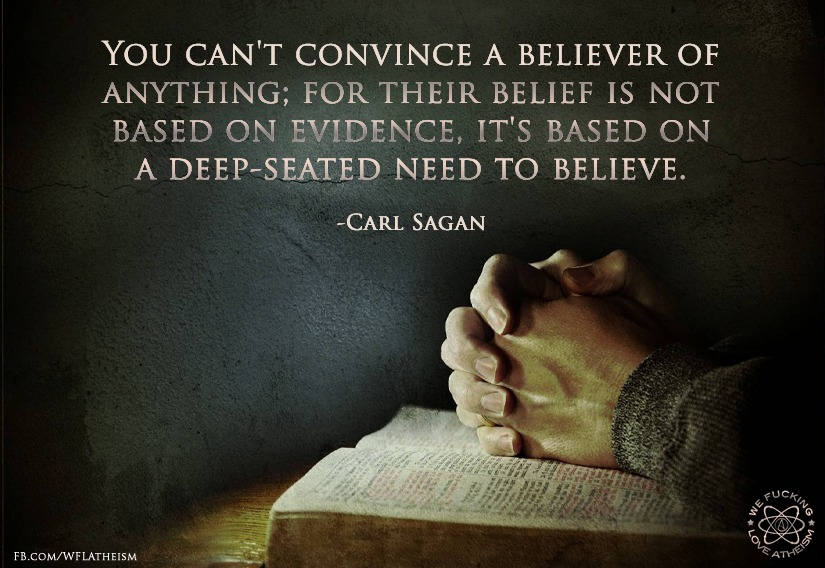
Never forget. Mike Pence is an extremist evangelical, modeled on the Pilgrim mindset that God reigns in all things. His interpretation of God’s rules bears closer examination if we are to understand exactly how well he fit into Trump’s presidency. He, not Trump, attracted the votes of the many evangelical voters responsible for Trump’s election. Finally, evangelicals had a man who shared their point of view on virtually every issue.

Pence has repeatedly fought against abortion rights and has pursued all possible channels to block financial support for any entity which provides abortions. He has criticized sex education and supports promotion of abstinence. He has also voiced opposition to embryonic stem cell research. He supported the overturn of Roe v Wade but when asked in the 2020 vice presidential debate what he would do if it was overturned, he refused to endorse criminalizing abortion—yet another example of his fishtailing in the face of reality.

Pence is staunchly anti-LGBT rights. He has opposed non-discrimination legislation and allowing gays to openly serve in the military. He opposes same sex marriage and civil unions.

Pence has proposed a flat federal tax rate, opposed the auto industry bailout of 2008-09, and voted against raising the federal minimum wage from $5.15/hour to $7.35.

Voting against the Medicare Part D that helped provide prescription drug coverage, Pence continues to reveal his lack of medical knowledge with such assertions as “smoking doesn’t kill.” He came out firmly against needle exchange programs as a method of decreasing spread of AIDS.

Pence is opposed to the birthright citizenship policy wherein children born in the United States to non-citizens automatically become citizens. He also promoted an immigration plan that would have increased border security and implemented strict enforcement of laws against hiring undocumented immigrants.

Pence supported a 2005 plan to partially privatize Social Security but since has backed away from any specific plan, saying only that cuts to Social Security would need everyone at the table.

After many years of denying that human activity is the primary driver of climate change, in 2016 Pence stated that there was no doubt the human activity “affects” the climate. Despite this equivocation, “While in the House, Pence ’voted to eliminate funding for climate education programs and to prohibit the Environmental Protection Agency from regulating greenhouse gas emissions.’ Pence also ‘repeatedly voted against energy efficiency and renewable energy funding and rules’ and voted ‘for several bills that supported fossil fuel development, including legislation promoting offshore drilling.’”[1]

Pence is a hardliner on drugs, protesting any steps to decrease penalties for low-level marijuana offenses. He worked to reinstate mandatory minimum sentences for drug crimes. He supports federal restrictions on online gambling.

Mike Pence has been one of the most public voices in asserting that ‘All Lives Matter’ rather than supporting the understanding that ‘Black Lives Matter’ addresses specific problems faced by formerly enslaved people. He supported the Citizens United ruling by the U.S. Supreme Court which allowed corporations to act as individuals in donating to political campaigns. He supported the impeachment of President Bill Clinton.

Pence imagines himself as an upright Christian man, what an observer might consider as ‘smug’ in his satisfaction with his rigid stance on all the above-named issues. His primary role in the Trump White House was to uphold the pretense of religiosity that kept evangelical Christians firmly in support of Trump while simultaneously ignoring Trump’s many and repeated violations of the Ten Commandments and common decency. Pence was willing to scorch his coattails with his proximity to Trump because he, like so many other evangelicals, believed that their conservative agenda would be fulfilled through the presidency of a ‘flawed vessel.’ In their view, God made Trump president largely because Pence was there quietly steering policy toward a Christian nation.

Whether or not Pence seeks the Republican nomination for president, his dogmatic stance on so many important issues is not his alone. Rather, he epitomizes the increasingly familiar face of the Republican Party as one of extremist religious objectives. In embracing his faith, Pence (and others like him) plod toward the seditious goal of enforcing Christianity in U.S. laws and policies.

The entire extremist belief system Pence embraces ignores the reality of our evolution as humans, moving toward greater knowledge and understanding of processes that previously seemed magical, from the hand of God. As our scientific advancements allow us to develop vaccines against viruses, travel in motor vehicles, and interact with people anywhere in the world via the Internet, we gain greater opportunity and willingness to improve human life in every way. We are learning every day to become more humane, more tolerant. Yet despite appreciating the benefits of these technological advancements (pretty sure Pence uses a cell phone and the Internet), the collateral expansion of understanding and tolerance escapes the evangelical.

The deal Pence and his fellow religionists have made with God is a simple quid pro quo. We’ll do everything we can to force people to see it our way and in return, God will grant us a place at his right hand in Heaven. This magical thinking follows in a direct line from the most primitive religious practices wherein sacrifices were made to a god in order to improve some aspect of existence—fewer earthquakes, the withdrawal of enemy troops, release from slavery, relief of illness, et cetera ad infinitum. Sacrifice of pleasure, of our most valuable foods or assets, even of our children, has been the key element of religion.[2] Whatever has been a trial upon human life was within the power of a god to mitigate if only the people could hit on the best method of pleasing that god.

While the Constitution of the United States assures that church and state are to remain entirely separate, written as it was by those who knew the history of unending wars caused by religion, the evangelicals of our country either choose to ignore or ignorantly second guess the basis and importance of this provision. They will not stop their attempts to make the nation a manifestation of Christianity. The appearance of decency and patriotic intent in Pence’s refusal to grant Trump his wish to overturn the 2020 election is a throw-away relic of Pence’s true motivation, which was and remains his ‘duty’ to do right, thereby pleasing his god.


[1] This quote and much of the preceding information gleaned from https://en.wikipedia.org/wiki/Mike_Pence

[2] It can be argued that Christianity is itself a carryover of primitive death cults whose sacrifices ensured God’s benevolence. The crucifixion of Christ and the practice of communion in which the faithful partake of bread and wine as symbols of Christ’s body and blood is a direct link to the ancient belief that a life had to be sacrificed in order to please the god.

South County

1972. A Yankee learns the Ozarks way and lives to tell his tales. Now almost a native, Denny fondly reminisces about the people and places of his adopted home.

Denny Luke is an adventurer. During his years as a Navy man, he built hot rods with money he made with shipboard loansharking. He returned to his native Ohio where he soon tired of the mechanic’s life. Computers had just started to break the surface in 1966, the perfect attraction to a young man with a sharp mind and plenty of ambition.

Hot cars and Enduro motorcycle racing occupied Denny’s next few years as he helped usher in the computer age in Minneapolis. But another adventure awaited when in 1970 he fell in with a bunch of hippies. By 1972, he had found his way to the Ozarks.

An avid photographer and storyteller, Denny shares the adventures of his life as he recalls the outrageous backwoods tales and colorful characters who populate the southern fringe of Washington County in Northwest Arkansas.

Paperback, $9.95 Amazon

Rex Perkins: A Biography

Rex Warren Perkins left his mark in the courtrooms of Arkansas and on the lives of all who knew him. Bold, articulate, and full of himself, he arrived at the University of Arkansas in 1928 with his fiddle, five dollars, and a blue serge suit. Within five years, he graduated law school, was elected to public office, and ran headlong into a federal grand jury. The biography of Rex Perkins documents his rise to fame as the preeminent trial attorney of the state and recounts the scandals, losses, and most famous cases of his thirty-year career.

“Of all the stories still told about Rex Perkins, none has enjoyed such ongoing and avid public interest as the murder trial of Virginia “Queenie” Rand. Mrs. Rand, an attractive brunette and wife of J. O. Rand, a prominent Rogers businessman, was charged with the crime of second degree murder for the killing of Harry V. “Buddy” Clark on August 9, 1959. Clark, married and father of two, was shot late at night in Virginia Rand’s bedroom.

“…In Mrs. Rand’s first trial, held in Benton County before the case involved Rex Perkins, Prosecutor Coxsey had faced defense attorneys Jeff Duty and his uncle Claude Duty. The jury for the Benton County trial found Mrs. Rand guilty, and her attorneys appealed to the Arkansas Supreme Court.

“The Arkansas Supreme Court’s decision in Rand v. State was delivered December 12, 1960. Their summary of the offense follows: It appears from the record that on the evening of August 8, 1959, the deceased, Clark, and his wife entertained Mr. and Mrs. Sam Davis in their home. At about 1:15 a.m. on August 9, Mr. and Mrs. Davis left the Clark home and at the same time Clark left in his car to check the receipts at the Horseshoe Grill, a café which he owned located some 8 blocks from the Clark home in Rogers. Although the evidence is somewhat uncertain, it is clear that Clark finished his work at the café and at 1:30 a.m. the night police radio operator received a call from a woman identifying herself as appellant, who said: “Send someone out here, I have had some trouble.” After the radio operator sent a patrolman to the Rand home, the appellant called again and said: “I have shot a man. I shot Buddy Clark.” Upon arrival at the Rand home, the patrolman was told by appellant that she shot Clark in her bedroom. The patrolman immediately went to the hospital where he found Clark on the floor in the hall. Nurses at the hospital testified that Clark came in the front door and fell to the floor. The records show he was admitted at 1:45 a.m. He expired at 4:17 a.m. that same morning.

“The patrolman testified he found tracks in the heavy dew going in and out of the Rand house and found a gun about 4 to 6 feet from these tracks. There were two bullet holes in the bedroom walls and 5 empty cartridges were found in the bedroom. The deceased was shot 4 times—3 times in the chest and one time in the right arm. No trace of blood was found in or around the Rand house but there was blood on the steering wheel and door of Clark’s automobile.

“Preserved in the Special Collections section of the library of the William H. Bowen School of Law at the University of Arkansas at Little Rock, the transcript of this trial runs 796 pages. After a review of the transcript index, librarian Kathryn Fitzhugh wryly observed that “everyone in town must have testified.” Such a massive body of information presented an enormous task to Justices Jim Johnson, J. McFaddin, and Ed. F. McFaddin in their work to review the case.”

The case was remanded back for retrial, at which point Rex Perkins managed to gain a change of venue. The rest of the story would take place at the Washington County courthouse where Perkins wielded all his legal maneuvering in support of Mrs. Rand. The outcome would shock the entire region.

Fascinating anecdotes, riveting legal challenges, and a personal story of this man, still a storied figure even in today’s legal community.

Paperback, $14.95, Amazon

Durward’s Cart

My uncle Durward seemed to be older than his years, a result of his bashful traits which I now, belatedly, attribute to the overbearing nature of his mother Sylvia Clark Morrow. Always ready with the harsh critique, she sought perfection and never found it, either in herself, her spouse, or her nine children of which Durward was the oldest. He learned at an early age there was no pleasing her. As far as I could tell, she was never pleased about anything.

So he fretted and obsessed and squirmed through life, marrying a spinster neighbor when he was forty and producing one child. They adopted a second one. He devoted his energy to his job, working in a newspaper printing operation, and to his flourishing garden. He also kept chickens. Gardening and chickens were necessity for the family, dirt poor hill folk in the Arkansas Ozarks.

He was sixty or so when I married a wild man and set up housekeeping on a wooded hilltop in a half finished house. We—husband, baby, and I—pursued the hillfolk life with a passion. Among other things like firewood and a garden, we needed chickens. That was about the same time that Durward decided he no longer wanted to mess with chickens, and so a project was born, to dismantle his chicken house and bring the walls, roof, and other bits up to our place. We had a pickup, but it alone wasn’t enough to perform the task, and so Durward also gave us his cart.

The cart—and the chicken house—were handcrafted by Durward himself, pulled together from scraps and, in the case of the cart, an old rear axle of some early vehicle. Our load of dismantled walls and roof of the approximately 10’ x 10’ coop were laboriously positioned into the lovingly-framed bed and the modest sideboards of his trailer, and the long journey from his farm near Johnson to our farm near West Fork began.

The distance of about twenty miles progressed slowly, red flags whipping in the breeze as the conveyances edged toward forty miles per hour. In due time, the roof became a wall to our fledgling barn while Durward’s chicken house walls were reborn as our chicken house walls with a new metal roof. The trailer was parked in the expectation there might be future use.

There wasn’t. It sits today, forty-six years later, where we parked it in 1976. The bed has rotted away as has the chicken house and the barn. One of the trailer’s sidewalls lingers. The rear axle and attached tires also remain, I suspect because they are solid rubber and probably the original tires that came with the vehicle. A phantasm of welds connect the original drive shaft to various pieces of metal to accommodate hauling.

Durward died in 2005 at the age of 89, but his cart lives on. I see it and think of him, remember his anxious ways, wringing his hands at family gatherings when the daylight started to fade. He’d mutter, “Gotta get home, it’s late.” He’d pace and entertain a few exhortations from his attending siblings to relax, hang around, but he’d shake his head and repeat “Gotta go” under his breath until he escaped the chaos to find his way home.

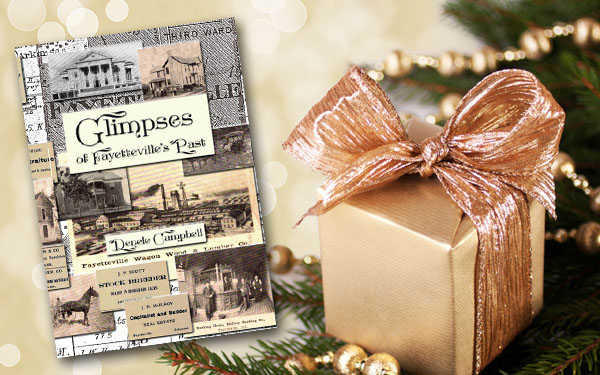
Glimpses of Fayetteville’s Past

From 1835 to the present day, the City of Fayetteville in Washington County, Arkansas, has enjoyed a vibrant and colorful history. Its reputation as a regional center for arts, culture, and education began early in its history. Frequently named one of the nation’s Top 10 cities, Fayetteville hosts the University of Arkansas and its famous Razorback athletic teams.

The five articles contained in “Glimpses of Fayetteville’s Past” focus on under-reported aspects of that history. Published initially by the county’s historical society in their quarterly journal Flashback, these intensively-researched works have been revised and expanded with illustrations, photographs, and maps.

  • “The History of Fayette Junction and Washington County’s Timber Boom” an in-depth review of the city’s first major industry plus three appendices which examine wagon production in Fayetteville, the name and tradition of Sligo, and the Fulbright mill.
  • “Quicktown” delves into the story behind this quirky short-lived suburb in south Fayetteville.
  • “546 West Center” tracks the development of a landmark Fayetteville property from its earliest use as a site for an ice factory in the 1880s.
  • “The Rise and Fall of Alcohol Prohibition” documents the use, production, and regulation of alcoholic drink in Washington County from before statehood through the repeal of Prohibition in 1933, and features indictment and other crime data.
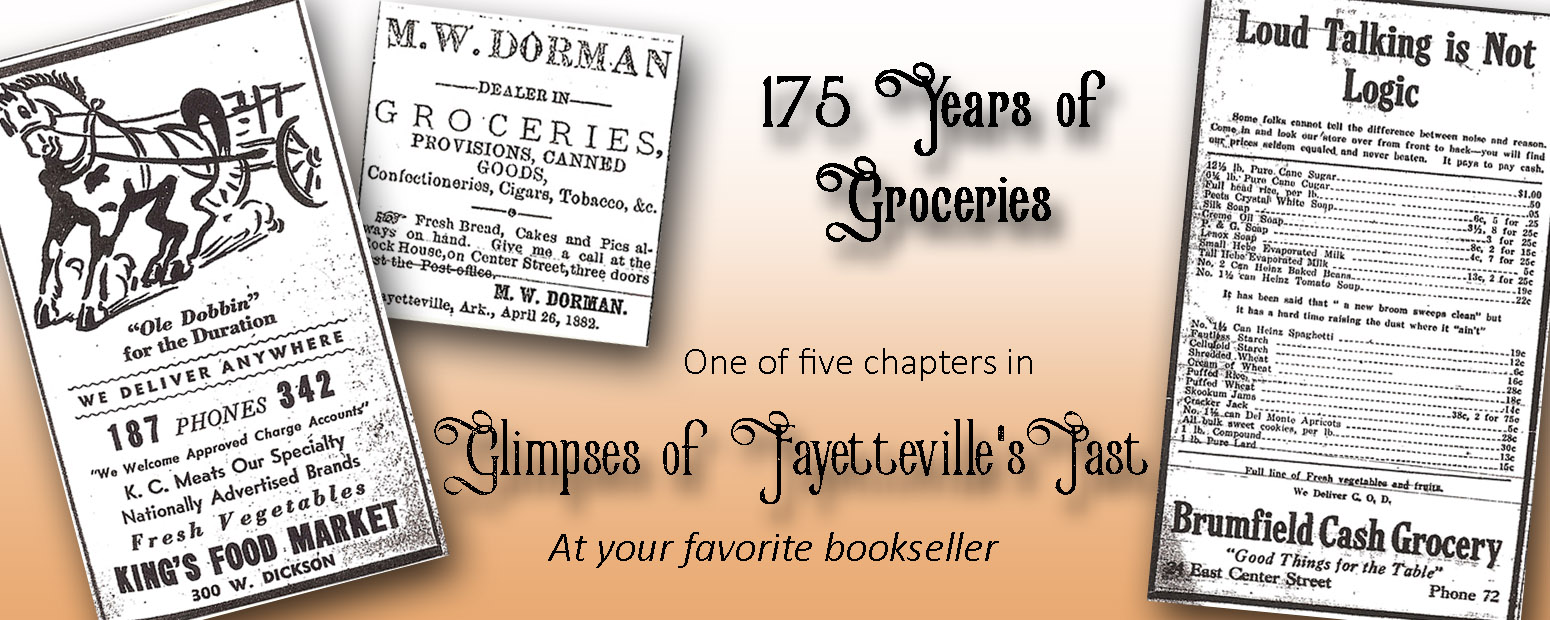
  • “175 Years of Groceries” follows the transition from country store to supermarkets to big box stores and includes newspaper advertisements showing price changes over those decades.

Paperback, $9.95 — Amazon

A Crime Unfit to be Named: The Prosecution of John William Campbell

In fact, this was a crime soon to be named and ruled not a crime. But obscure laws often become weapons used selectively against people who offend prevailing social sensibilities. This mindset was behind the case examined in A Crime Unfit To Be Named. In 1949, a local man in this small Bible belt town of Fayetteville, Arkansas, became the target of extraordinary police scrutiny. Despite his advanced age and the private, intimate nature of his activities, if found guilty John William Campbell would face hard time. Swept up in this vendetta, two younger women would also become entangled in Arkansas’ notorious criminal justice system.

John Campbell’s grown children and their families, well known and respected around town, struggled to cope with the humiliating fallout of his arrest. His sons hired the best attorneys money could buy in hopes of mounting a successful defense. But given the precedents established twenty years earlier in an Arkansas Supreme Court appeal, only one tenuous avenue of defense offered any hope: that John William Campbell was insane.

This true account tracks indictments, court records, family history, and newspaper articles to tell an outrageous story of zealous lawmen, personal tragedy and a small Southern town hell bent on moral order.

“The two-story rock house constructed by John William and his hired men included a western wall embraced by a high earthen embankment. This feature made it possible for a person standing there to look into the upper floor bedroom windows. And it is this unfortunate feature of the house that led to the discovery of his “unnatural sexual activity.”

25 South Locust, Fayetteville, Arkansas, south and east facades. The downstairs space housed a café at the time of John’s arrest. The bedrooms where John’s illegal activity occurred were at the back of the house, not visible in this photograph. Since the time of this photograph in 2015, this structure has been town down and new townhouses built in its place.

Paperback, $9.95, Amazon

Aquarian Revolution

In the late 1990s, I pursued a project that called to me, which was to interview people of the 60s generation who lived in Northwest Arkansas. Many of these were immigrants to the area, the hippies, the drop-outs, the radicals. They came from New York, Detroit, Chicago, Los Angeles, New Orleans, and bought cheap Arkansas land where they could build lives with meaning. Some of the interviewees were locals, also of the Baby Boom generation who saw, rightly, that “the times, they were a changin’.”

What I found in common among those interviewed was a profound understanding that they and the rest of this cohort were responsible for what the future would become. Each acting passionately in his or her own way in arenas of personal interest, these people brought important changes to the region and the world. Whether protecting the environment, furthering the rights of women or racial minorities, or opening their hearts to so many other problems, these were the engines of social changes that are still being fought in our politics.

Often the topic of heated rhetoric and armchair analysis, those who went ‘back to the land’ are rarely heard in their own voice. Now documented in these breathtakingly honest, personal interviews, their stories reveal the guts, glory, and grief of the 1960s social revolution.

Paperback, $12.95, Amazon

I Met a Goat on the Road

A visiting guinea? A ‘possum in the dining room? What strange and wondrous occurrences can one expect while living on an Ozark mountaintop for forty years?

These lyrical adventure stories feature chickens, raccoons, bugs, dogs, cats, and natural critters of this woodland home. Throw in a few neighbors who shoot copperheads or remodel the dirt road. Ponder the passage of time through a philosophical lens of wonder and delight. The seasons bring summer heat, winter snow, pouring rain, the power of fire. Lessons learned, questions posed–who has lived and died on this land? What is our responsibility to this place, its creatures, each other?

 Come meet the goat on the road.

Three of these stories gained the Rosa Zagnoni Marinoni Writer’s Grant 2002 Award from the Northwest Arkansas branch of the National League of American Pen Women.

Paperback, $11.95, Amazon

Recipes!

Just in time for the holidays, this collection of recipes includes great ideas for entertaining!

Originally, this collection preserved the recipes of Fayetteville’s popular Trailside Café and Tea Room. Plate lunches of Pot Roast or Ribs ‘n’ Kraut became overnight hits. Now, with new additions, crowd pleasers like Cheeseball or Hummus will fit any occasion.

Your guests on a cold night will snuggle in with a steaming bowl of Potato Leek Soup or Spicy Chicken Chili. Or how about platters of Tea Sandwiches for those hungry relatives, bread of your choice plus a delicious array of fillings, from Apple & Cream Cheese to Chicken & Chutney (with our own recipe of Mango Chutney), or try the venerable standard, Egg & Dill.

Test your baking chops with a batch of Brown Butter Cookies (You’ll run out!). Basics for a scrumptious dinner include Chicken & Dumplings and Salmon Fillet with Curried Rice, always great options, but salads sometimes hit the spot. Try Curried Chicken Salad or a delicious Fruit Salad with Tahini-Coconut Milk Dressing.

The greatly expanded last chapter includes Herb Roasted Potaotes and Persimmon Cookies plus many more family recipes sure to be a hit in anyone’s kitchen. Recipes of Trailside Café and Tea Room offers over 200 recipes for easy, down home food. Makes a great gift, too!

Only $9.95, paperback. Available at Amazon.

Black Diamond Orchestra

The Black Diamond Orchestra first appeared in Fayetteville’s entertainment venues in 1903. They would continue to enjoy bookings in a wide variety of programs for the next thirty years, one of the longest running local talents in the town’s history. Even more remarkable, this entity rose from the depths of the “Holler,” otherwise known as Tin Cup, where the majority of Fayetteville’s Black population lived.

Engagements for the orchestra over the next several years included private parties and receptions as well as bookings by the Shamrock Club, White Chapel Club, and other civic and university entities. By 1911, the group had become a featured event at gatherings such as a Kappa Sigma fraternity dance and a celebration at Fern Dells, “the handsome country home of Mr. and Mrs. W. L. Stuckey on the occasion of the 20th anniversary of their marriage. Over 300 guests were “allowed perfect liberty of choice in the viands [and] left likewise free to choose the place he was to sit and partake of them while listening to the strains of the Black Diamond Orchestra … After the last guests had been served the orchestra was removed from the basement to the stair landing of the big hall where music was furnished throughout the evening and dancing was indulged in by the young and old…”

In September 1924, the University of Arkansas’ new radio station KFMQ featured the Black Diamonds asking listeners to send postcards if they heard the broadcast. “Weeks later, the Fayetteville Democrat reported that the station received postcards from listeners as far away as Canada, New Mexico, and Washington D.C.”

“Colored programs are becoming quite the thing in Fayetteville, with an aroused interest in negro music and African folk-lore. On Friday night a colored troop of entertainers including a local celebrity, E. Young, formerly end–man with Field’s Minstrels when that company had colored end-men, will give an entertainment at Peabody Hall, University of Arkansas, as joint colored church and white school benefit. The Leverett school PTA is sponsoring the event, featuring Black Diamond Orchestra.”

Much more about the celebrated Black Diamond Orchestra and its personnel in The Music Men of Turn-of-the-Century Fayetteville, available in paperback for $19.95.