In Conclusion

The drumbeat of Puritan religious beliefs has never ceased in the four hundred years since those colonists landed on North American shores, carrying forward the intolerance of the Dark Ages. In the last century as industrialization has expanded into the digital age, the zealous efforts of these extremists have entered a feeding frenzy over the social changes which have arrived in tandem with cultural advancement. As women have become more empowered by gaining the right to vote and ensuring bodily autonomy, as well as taking their place alongside men in the workplace, horrified conservatives pushing the ‘way back’ button have been joined by a new class of super-wealthy tech industrialists looking for more power over the government.

While serving as early leaders in support of education and representative governance, never think for a minute that Puritans only fostered positive change in society. They supported and participated in slavery. They encouraged child labor and state-sanctioned corporal and capital punishments, warfare against Indigenous peoples including women and children, and the persecution of religious dissenters. Their use of violence was heavily shaped by their strict religious adherence to Old Testament laws.
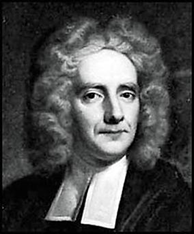
“If a horse knew as much as a man, I should be loth to be his rider… To make the Society Happy and People Easy under the meanest Circumstances, it is requisite that great numbers of them should be Ignorant as well as Poor.”
Bernard Mandeville 1670-1733

Commonalities between the British peerage and today’s super-rich include immense concentrated wealth, significant influence over infrastructure and information, and the creation of insular, exclusive, and self-reinforcing social networks. Both groups operate outside traditional constraints, using their resources to shape policy, maintain elite status, and protect their assets for their heirs, a trademark of aristocracy in earlier regimes. Traditionally, the peerage leaned conservative and was historically resistant to rapid social change, a stance shared by many of today’s economic elites who support the expansion of existing power structures. Both the traditional British peerage and today’s U.S. peerage need voters in order to penetrate the nation’s seats of power, centering on the desire to enforce a specific cultural identity, uphold traditional power structures, and leverage a “golden era” narrative for political influence. While separated by centuries, both often position themselves as guardians of a Christian national heritage.
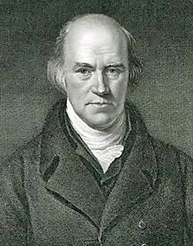
“However specious in theory the project might be, of giving education to the labouring classes of the poor, it would, in effect, be found to be prejudicial to their morals and happiness; it would teach them to despise their lot in life, instead of making them good servants in agriculture, and other laborious employments; instead of teaching them subordination, it would render them factious and refractory… it would enable them to read seditious pamphlets, vicious books, and publications calculated to poison the principles of that class of society… It would be subversive of the very foundations of all social order.”
Davies Gilbert 1767-1839
Member of Parliament, President of the Royal Society

To date, the forward thrust of the super-rich, especially those with interests in artificial intelligence, is applauded by approximately one-third of the United States electorate, largely religious extremists, racists, and xenophobes, who remain in lockstep with the Trump Administration despite Trump’s conspicuous violation of basic Christian tenets.

Despite Trump’s conspicuous abuse of the exacting moral standards advocated by Christian Nationalists, the new Puritans embrace him because they view him as a “chosen” leader ordained by God to protect their interests, restore the United States to a perceived Christian foundation, and battle against secular, liberal, and globalist forces. Despite his personal history being flagrantly in violation of traditional Christian moral standards, his support among white evangelicals and Christian Nationalists is strong.

It’s worthy of note that Christian Nationalism has gained strength in tandem with the termination of the Fairness Doctrine, a Federal Communications Commission (FCC) policy (1949–1987) requiring radio and television broadcasters to cover controversial issues of public importance and present contrasting viewpoints fairly. It aimed to ensure balanced public discourse due to limited broadcast frequencies, but was repealed in 1987 under President Reagan. Ronald Reagan knew Rupert Murdoch before the Reagan FCC formally ended the Fairness Doctrine, and records show the two men met in the Oval Office in early 1983. Murdoch had already developed connections with Reagan’s inner circle in the early 1980s.That repeal was pivotal to Rupert Murdoch’s expansion in the U.S.

Murdoch is widely recognized as a conservative media mogul whose outlets, including Fox News, The Wall Street Journal, and The New York Post, generally promote right-of-center, populist, and conservative viewpoints. While he has self-identified as a libertarian focusing on free markets and reduced regulation, his career has centered on supporting conservative politicians and parties globally. This deregulation enabled the rise of modern ideological talk radio and cable news.
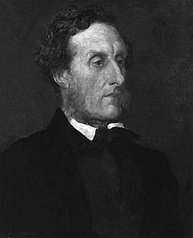
“The state should not step in to do that which a parent is bound to do… [State control] would rapidly secularize the minds of our people and lead to infidel democracy.”
Anthony Ashley-Cooper 1801-1885
7th Earl of Shaftesbury

By Reagan’s removal of the Fairness Doctrine requirements, Murdoch was able to launch Fox News in 1996 as a distinctly conservative and partisan channel. It should not pass notice that Dominion Voting Systems v. Fox News Network (colloquially Dominion v. Fox) was a U.S. defamation lawsuit filed in March 2021 by Dominion Voting Systems against Fox News Channel and its corporate parent Fox Corporation. Dominion’s complaint sought $1.6 billion in damages, alleging several Fox programs had broadcast false statements that Dominion’s voting machines had been rigged to steal the 2020 United States presidential election from then-president Donald Trump. Fox News agreed to pay Dominion $787.5 million and acknowledged the court’s earlier ruling that Fox had broadcast false statements about Dominion. The settlement did not require Fox News to apologize.

With the door open to dishonest and/or slanted ‘news,’ what we stand to lose is no less than the backbone of our constitution. Perhaps in 1975 no one could have foreseen that Congress, strapped financially by nearly 20 years of war in Vietnam, would refuse to fully fund the IDEA program. Reagan essentially guaranteed our current crisis in his tax cuts, signing into law in August 1981 a top marginal income tax rate for the highest earners from 70% to 50% and lowered the maximum capital gains tax rate from 28% to 20%. In 1986, a further drop in wealth tax dropped the top individual income tax rate to 35% in 1987, and eventually down to 28% in 1988.

Even now, many legislators cringe at the prospect of providing adequate financial support for this mandate. Yet the outcome is clear. Real and perceived failures of the public school system has led to a crisis wherein religious advocates and their advocates such as Fox News, acting on their perception of their Christian duty, have managed to work their way through the court system to force tax dollars to support religious education.

The effort to at least gain sufficient funding for the IDEA legislation continues. As reported by Peter Greene for Forbes magazine, published April 17-18, 2026, a Senate bill introduced by Senators Mark Kelly, Mazie Hirono, and an additional 28 senators have introduced the Keep Public Funds in Public Schools Act.

  • One portion of the President Donald Trump’s “One Big Beautiful Bill” was a federal school voucher program that any state could join. But before that plan can go into effect, a new Senate bill has been proposed that would undo the vouchers entirely.
  • … The act would strike IRS Code Section 25, the portion of the IRS code that was inserted to create the federal school voucher program, eliminating that program.
  • The new voucher program was sold as a tax credit program. It would allow taxpayers to claim a $1,700 tax credit by diverting that payment from the IRS to a scholarship granting organization that would then award at least $1,530 of that donation to a student (the rules governing the program allow SGOs to keep 10% of the donated funds).
  • Kelly cites his home state of Arizona as a cautionary tale, where taxpayer-funded school vouchers have become costly:
  • “Since 2022, our state’s universal voucher program has diverted and drained money from public schools; last year alone cost Arizona taxpayers nearly $1 billion. Instead of investing in classrooms, special education services, or school safety, lawmakers pushed massive tax giveaways and created a parallel education system that lacks transparency and accountability.”[1]

News reporters including Craig Harris have run a series of reports showing much of voucher money has gone to questionable and disallowed purposes, including dirt bikes, custom tires and luxury hotel stays. Voucher advocates such as EdChoice have pushed back, but have had difficulty debunking Harris’s results. [2]

  • “In Arizona, we’ve already seen how universal vouchers are leading to rampant fraud and benefiting people who already had the means to send their kids to private school, while decimating public education for everyone else,” said Kelly.
  • …When Kentucky’s similarly-structured tax credit scholarship program was challenged in court, the state made a similar argument that the program did not use any public taxpayer funds. But when the Kentucky Supreme Court ruled against the program, they rejected that argument. “The money at issue cannot be characterized as simply private funds,” they wrote, “rather it represents the tax liability that the taxpayer would otherwise owe.”
  • When it comes to granting tax credits, the federal government has one power that states do not. Most states require a balanced budget; the state needs to find a way to cover the money it lost by offering credits rather than collecting on the tax liability. The federal government can just add the uncollected taxes to its deficit tab. Kelly noted in an interview, “It is a deficit bomb, this federal program.”
  • The Joint Committee on Taxation, a nonpartisan entity that assists Congress on tax legislation, estimated that the credit could cost $25.9 billion between 2025 and 2034 or around $3 billion to $4 billion a year. That would mean potential income of $300-$400 million for SGOs [Scholarship Granting Organizations]; several organizations are preparing to launch national SGOs to work with the federal voucher program.

In addition to Kelly and Hirono, the Keep Public Funds in Public Schools Act is cosponsored by 28 other Democratic senators.

Response to the bill has come from multiple arenas of American society.

  • In response to the introduction of the Keep Public Funds in Public Schools Act, Rev. Paul Brandeis Raushenbush, President and CEO of Interfaith Alliance, said:
  • “Public schools are sacred to our multi-faith democracy. They are fertile ground for religious freedom — places where students from all walks of life can learn and grow together, no matter their faith. We should be strengthening our public schools, not abandoning them and violating religious freedom in the process.”
  • “This disastrous federal voucher scheme is straight from the Christian nationalist playbook. It would force every taxpayer to pay for religious education, bolster private schools that can advance extreme religious agendas, and invite the government into religious education, undermining the autonomy of families, houses of worship, and religious schools. To reject this assault on religious freedom and help set students up to thrive in our multi-faith democracy, Congress must pass the Keep Public Funds in Public Schools Act.”[3]

First Focus on Children is a bipartisan advocacy organization dedicated to making children and families the priority in federal policy and budget decisions. In November 2024, the organization issued the following statement: [4]

  • Voucher programs may use terminology like “education savings accounts,” “opportunity scholarships,” or “tax credit scholarships.” While policymakers use a range of terms to describe voucher programs, they all function similarly: by diverting public school funding to private schools. Since the term “voucher” can be associated with negative perceptions by constituents, using alternative terminology has become a common strategy to pass unpopular policies.
  • While “school choice” sounds good in theory, the privatization of public school funds exacerbates educational inequity and increases the disparities it claims to mend. Data continues to reaffirm that school vouchers are riddled with fraud, show unimpressive results, defund public education, and amount to a handout to the wealthy. Supporters argue that vouchers expand equity and opportunity, but in fact, vouchers divert public money to the private, often religious, education of a handful of students.

The Economic Policy Institute examined the economics involved with vouchers versus public schools: [5]

  • The growing popularity of vouchers raises a host of crucial questions and concerns. Key to informing the debate are questions of public finance and education quality. Is allowing public money to leave the public school system and follow kids to private schools the most effective or equitable way to make sure every child has access to an excellent education? Our view is that it’s not. Public dollars allocated to education should go to boosting spending in public systems, not subsidizing private education.
  • Proponents of vouchers try to claim that expanding them would not harm public resources for education. Their argument hinges on the fact that public school spending is generally determined by governments setting a per-pupil allocation and then multiplying this allocation by projected enrollment. This funding model allows voucher proponents to claim that if vouchers pull children out of public schools, it still leaves per-pupil spending untouched, even though vouchers might reduce overall spending. In effect, proponents are arguing that vouchers would not degrade public schools’ ability to provide educational services.
  • But there are many flaws in this argument. Most obviously, introducing any new demand on public expenditures will lead to some pressure throughout public budgets—including school budgets—even if it does not immediately come directly from public school allocations. Many vouchers end up going to students who have never been in public schools, so funding these students’ private school expenses introduces new pressures on public budgets.

This perverse drive to compromise public education by using tax dollars in support of religious teaching didn’t happen overnight, nor will it end any time soon. But what’s at risk is nothing less than our nation itself, founded on principles now dangling on a precipice. Equal opportunity to education means not only that each child has the right to an education, but also that all education provides balanced exposure to the same fundamental subject matter. The current divide in this nation’s society cannot be remedied without a truly equal education of our young. Our tax dollars must not support religious education.[6]

[1] Greene, Petere. “Senate Bill Proposes Rollback of Federal School Vouchers,” Forbes, Apr 17, 2026. https://www.forbes.com/sites/petergreene/ 2026/04/17/senate-bill-proposes-rollback-of-federal-school-vouchers/

[2] Links provided in the article include the full text of the proposed bill. https://www.forbes.com/sites/petergreene/2026/04/17/senate-bill-proposes-rollback-of-federal-school-vouchers/

[3] McDonald, Tranée. “Keep Public Funds in Public Schools,” Interfaith Alliance, April 16, 2026. https://www.interfaithalliance.org/post/keep-public-funds-in-public-schools

[4] Klam, Lily. “Privatizing Public Schools Funds: Threats to Equity, Access, and Educational Quality,” First Focus on Children, Nov 15, 2024. https://firstfocus.org/resource/privatizing-public-school-funds-threats-to-equity-access-and-educational-quality/

[5] Wething, Hilary. “How vouchers harm public schools,” Economic Policy Institute, Dec 19, 2024.  https://www.epi.org/publication/vouchers-harm-public-schools/

[6] For insights on how minorities can rule over the majority in our republic, see https://www.ie.edu/insights/articles/minority-rules-in-the-united-states/

This is the 8th chapter in the booklet  New Puritans and the U. S. Peerage: The Willful Destruction of Public Education

Why the Puritan Agenda Must Not Prevail

The Founding Fathers’ collective vision of education in a democratic republic reflected their profound understanding of education’s essential role in ensuring the sustainability and robustness of the new nation. We were fortunate that the wealthy early leadership of the nation—Thomas Jefferson, John Adams, James Madison, and George Washington—shared a common conviction: that education was indispensable for self-government and the preservation of liberty. Jefferson and Madison insisted on the widespread diffusion of knowledge as foundational to liberty. They were acutely aware that an ignorant populace could be easily manipulated, that education was the bulwark against tyranny and mob rule.

Today in the United States, secular education is seen as a threat to religious belief by about ten percent of the population, which to a thinking person would hint at a problem with their religious beliefs. But it seems this small portion of the population instead sees the outlier status of their beliefs as a badge of honor, somehow proving they are right and everyone else is wrong. Yet while most Christian extremists rely on the science behind cell phones, modern medicine, and public health standards governing water and air quality, they suffer cognitive dissonance between their religious mythology and the realities of scientific advancement. The fear of new information is so deeply ingrained that these religionists cannot escape it. This is the kind of ‘knowledge’ and ‘faith’ that Christian extremists seek to embed in the minds of their children, and not just theirs.  

The intention is to force institutional ignorance onto the entire nation. For our own good, of course. Because otherwise their loving God will condemn us all to burn in hell for eternity.

We’ve seen this before, as elaborated in the first chapter, times when religious power brokers forced a population to adhere to specific doctrines and if refused, initiated imprisonment, torture, and death for the “infidels.” Christian Nationalist ideas of proper acceptance of authority are rooted in a belief that God holds supreme authority and has delegated power to specific earthly institutions—primarily the church, family, and state—to maintain order and enforce a Christian social hierarchy.

Adherents believe that specific leaders are chosen by God to “save the country,” as demonstrated by their continuing support of presidents such as Ronald Reagan, George H. W. Bush, George Bush, and now Donald Trump. A significant segment of Christian Nationalists and their supporters believe that Trump is a divinely ordained leader sent to save the United States, viewing him as a “warrior for Christ” tasked with restoring America to its perceived Christian roots. Because such leaders are seen as advancing a divine plan, supporters can overlook their breaches of democratic rules or norms as well as their personal immorality and perfidiousness, believing such actions are necessary to uphold a rightly ordered society.

It follows then that control over education and tax support for schools teaching these theories are a primary objective. But that was not the vision of the Founding Fathers or the visionary early 19th century government in establishing tax-support public schools. Fortunately, as science and other fields of study have advanced over the last 250 years, religious power over learning has diminished.

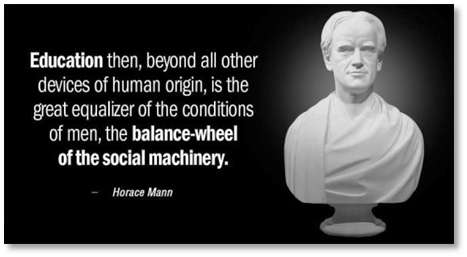
Leading us to this point has been the “common school,” established in the 1830s and 1840s in the new United States, comparable to today’s standardized public school. Considered the father of American education, Horace Mann envisioned common schools as institutions that were free and open to all students. In his role as Secretary of the Massachusetts State Board of Education (1837–1848), he established teacher training schools, improved school infrastructure, and raised educational standards. [1] He wanted those teachers to teach standardized curricula that instilled students with civic values. Catholic and other parochial schools in particular objected to Mann’s belief that schools should not adhere to any specific Christian sect, an argument that continues to the present day.

An obvious drawback of religious schools that is often overlooked is the inevitable assumption of such schools and their adherents that their beliefs are the only truth, that anything other than specific Christian dogma is a lie. Denial of science is the best example of this prejudice as scientific discoveries have slowly dismantled much of the institutionalized mythology enshrined by religion. As myth becomes ingrained in students of religious schools, their beliefs serve as a wedge between the people practicing that belief system and the needs of a nation to move forward in all areas such as advancing industry and the economy with new inventions based on new scientific discoveries and the acceptance of facts about human life previously not understood.

For the 68% of Americans who do not adhere or sympathize with the strict religious views of Christian extremists, the fundamentals of accepted education typically aligns with secular, pluralistic, and science-backed academic standards. These standards prioritize critical thinking and inclusivity rather than religious doctrine or rigid ideological frameworks. In fact, of the approximate 32% of Americans counted as Christian Nationalists, the actual adherents are only 11% while another 21% are considered sympathizers.[2]

The question of funding public schools boils down to what we expect our educational tax dollars to accomplish. Programs which teach narrow and exclusive religious doctrine are by definition not meant to support a cooperative relationship among persons of various cultural and religious backgrounds, but rather to hold up one belief system as the only truth. This becomes an impetus for authoritarian overreach and ultimately war, as history has long shown us.

While historically this conflict in the U.S. has been decided in favor of the constitutional standard not to mix church and state, the most compelling factor in the present day argument is that we all pay taxes and the majority of Americans do not agree that taxes should support the extreme Christian agenda. Tax support violates the First Amendment’s Establishment Clause by compelling taxpayers to fund the teaching of religious doctrines, essentially creating a government-sanctioned religion.

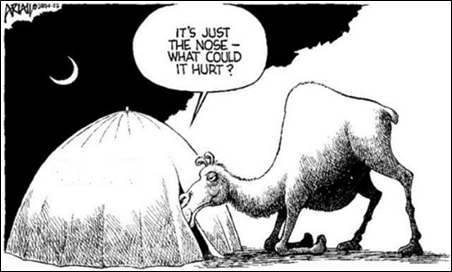
The slow but determined creep of Christian Nationalism shows every intention of overturning this Constitutional mandate. The camel’s nose is well under the edge of the tent. A 2024 investigation by The Washington Post found billions in tax dollars now pay tuition at private, mostly religious schools. For example, Florida’s voucher program is expected to exceed $3 billion, with over 80% of funds going to religious schools. Ohio is projected to spend nearly $1 billion, with 91% of voucher users attending religious institutions. Hundreds of thousands of students use these programs. The rise in funding is attributed to the expansion of voucher programs in Republican-led states, which now allow more or all families to qualify, shifting from programs once aimed only at low-income students.

Reduced funding for public education leads to layoffs, larger class sizes, and reduced individualized attention for students. Schools that serve the vast majority of students are forced to cut essential services, including arts, music, athletic programs, and after-school programming. There is less money for modern technology, up-to-date textbooks, and lab equipment. Meanwhile, private schools receiving public funds can exclude students based on religion, academic performance, disability, or sexual orientation, narrowing the educational options for those students. Vouchers can deepen racial and socioeconomic segregation by subsidizing tuition at private schools that often lack the diversity of public schools. Continued siphoning of funds can result in the closure of neighborhood public schools, particularly in rural areas where the school is a central community institution.

Long term erosion of financial support for public education puts the entire nation at risk, not only from prejudicial curricula in religious classrooms, but also from the inevitable schism between people educated in stringently oppositional systems. In a nation that has long pursued unity despite our different origins and beliefs, such divisive practices are a form of violence against the existing government.

The Supreme Court has said the Establishment Clause forbids, among other things, financial support of religious activity. Subsequent cases challenging the longstanding interpretation of the First Amendment have brought us to the Espinoza vs. Montana case, allowing tax dollars to flow to the parents/students of religious schools. This is by far not established law. While Espinoza reaffirmed that governments may not discriminate against beneficiaries solely on the basis of their religious character, it left open the possibility that governments might still be able to bar beneficiaries that would put public funds to religious uses.

The U.S. majority has become increasingly aware of the conflict between a religious agenda and our multicultural society. The percentage of Americans who say religion is “very important” has dropped from over 88%-95% in the 1960s to 47% in 2025. The latest Religious Landscape Study, fielded over seven months in 2023-24, finds that only 62% of U.S. adults identify as Christians. That is a decline of nine percentage points since 2014 and a 16-point drop since 2007. Within Christianity, 19% are Catholic, 3% are Mormon, Orthodox, Jehovah’s Witness, and other, and 42% are Protestant divided into Evangelical (23%), Mainline (14%),[3] and Historically Black Protestant (5%).

Projections indicate that by 2070, Christians could shrink from 64% (2020) to between 35% and 54% of Americans, while “Nones” (no religion) rise from 30% to over 50% in some scenarios. This shift drives religious zealots to push a movement which seeks to assert “dominion” over societal institutions, including government, education, and media, believing that Christian moral values should dictate law.

Growing concern within the U.S. public is slowly building into a response to Christian Nationalism, Dominionism, Christian Reconstructionism, and the New Apostolic Reformation (NAR) including tracking by civil rights organizations, legal challenges, and theological counter-movements from within Christianity. These initiatives aim to counter the rising influence of these new Puritan groups. Organizations like the Southern Poverty Law Center (SPLC) are actively documenting the spread of Dominionism,[4] profiling key leaders in the New Apostolic Reformation, and tracking associated hate groups. (This is directly connected to the Trump Administration’s May 2026 lawsuit against the SPLC in an effort to intimidate all civil rights organizations from speaking out and doing their work.)[5]

Scholars and progressive faith leaders are working to produce public-facing biblical interpretations that contradict Dominionist, coercive, and authoritarian interpretations of Scripture. Efforts are underway to inform the public and Christians about the anti-democratic nature of white Christian Nationalism and Dominionism to “inoculate” them against its appeal. The ACLU of North Dakota and other organizations actively fight against initiatives promoted by Dominionists, such as forcing religious prayer into public schools, banning books, and promoting anti-LGBTQ+ policies. Organizations like American Atheists oppose lobbying efforts to pass laws that violate the separation of church and state, such as those permitting discrimination under the guise of religious freedom. Researchers such as Dr. Matthew D. Taylor are working to expose the ties between modern charismatic prophets and the political, antidemocratic, and “spiritual warfare” approaches used to influence elections.

Defenders of the United States Constitution emphasize the importance of religious pluralism and the separation of church and state, arguing that Christian supremacy rejects these principles. Organized efforts underway to combat Christian supremacy include

  • A grassroots movement launched by the Baptist Joint Committee for Religious Liberty (BJC). It unites Christians across the theological spectrum to speak out against the merging of Christian and American identities.
  • Interfaith Alliance: A national, pro-democracy organization that mobilizes diverse faith communities to challenge Christian nationalism, protect civil rights, and uphold religious pluralism.
  • State Ecumenical Groups: Various regional faith networks, such as the Wisconsin Council of Churches, that host educational campaigns, study groups, and sermons to counter nationalist theology.
  • Americans United for Separation of Church and State: A leading organization dedicated to preserving the constitutional wall separating church and state. They actively litigate cases and advocate against policies that advance white Christian nationalism.
  • Freedom From Religion Foundation (FFRF): A prominent secular organization working to defend the constitutional principle of separation of church and state, frequently challenging religious favoritism in the public and political spheres.
  • Southern Poverty Law Center (SPLC): Monitors far-right and extremist movements. The SPLC identifies and exposes the ideologies and groups—including Christian supremacist and Dominionist networks—that threaten democratic institutions.
  • Public Religion Research Institute (PRRI): While not an activist group, PRRI conducts rigorous data-driven research and polling on Christian nationalism. Their work tracks the demographics and organizations that resist these movements.

These efforts fight against the adoption of “biblical authoritarianism” and the idea that Christians are mandated to take over societal institutions.


[1] Little, Becky. “Who Invented Public School in America,” History, Sept 10, 2025. https://www.history.com/articles/public-school-america-horace-mann

[2] More than half of U.S. Republicans are either adherents (20%) or sympathizers (33%).

[3] a group of historically established, traditional Protestant denominations in North America, often associated with a theologically liberal, progressive, or moderate approach to Christianity

[4] Dominionism (or Dominion Theology) is the religious belief that Christians are divinely mandated to take control of secular political and cultural institutions to establish the Kingdom of God on Earth. It is smaller and more fringe than broad Christian nationalism, but it holds disproportionate sway in certain fundamentalist, charismatic, and Pentecostal factions. While closely related, Dominionism and Christian Nationalism differ in their ultimate goals, theological roots, and how they view the relationship between religion, government, and the end of the world. Apparently neither group is familiar with the writings attributed to John in 18:36 where Jesus clarifies the nature of his realm: “My kingdom is not of this world.”

[5] https://www.aljazeera.com/news/2026/4/21/trump-administration-sues-southern-poverty-law-center-on-fraud-charges

This is the 4th chapter in the booklet New Puritans and the U. S. Peerage: The Willful Destruction of Public Education
The Continuing Israeli-Palestinian Agony

Many Israelis and Jewish people worldwide recognize the futility of Netanyahu’s relentless attack on Gaza under the excuse of protecting Israel from Hamas. The United States is caught up in a tangle of its historical sympathy and generosity toward Israel and the current reality of Israel’s genocidal violence against Palestinians. The truth is, the more Palestinian deaths, the more certainty that Hamas will never die. Every bomb dropped recruits more support for Hamas.

The U. S. and President Biden’s situation is a classic Catch 22. Should we take a hard line with Netanyahu and his rightwing government, setting down an unequivocal rule that no more financial or military support will be forthcoming if Israel does not step back and reorient its Palestinian policies? The logical (and fair) solution would be the formation of a Palestinian state and returning the Israel/Palestine borders to the 1967 boundaries.

[My personal view is that the attempt to create a state of Israel was a mistake from the start. The fond dream of Zionists, this effort to reestablish a Jewish state after 2,000-plus years, was absurd and unnecessary. No other religion has its own ‘state.’ Religion is a personal choice, not appropriate justification for the establishment of a nation. Imagine if we forced a partition of England as a homeland for Methodists!]

Back to the Catch 22. If Biden takes such a step, he risks losing political support from American Jews and evangelicals. This comes at a critical time in American politics as the extreme right wing hopes to bring Trump into a second term as president, which in itself could spell the end of our democracy.

For Biden, evangelicals won’t be much of a loss, since most are already lined up for Trump in the deluded belief he is a “flawed vessel” for the hand of God. This is a form of religious schizophrenia. Historically, Christians hate Jews because they killed Jesus. BUT THAT WAS GOD’S PLAN, right? Creating then sacrificing his “son” in order to provide forgiveness for humans? So logically, Christians should LOVE Jews for the crucifixion as a manifestation of God’s plan.

In reality, Christian ‘love’ of Israel is a self-serving strategy. “American evangelicals are among Israel’s most ardent advocates, compelled in part by their interpretation of scripture that says God’s ancient promise to the Jewish people designating the region as their homeland is unbreakable.”[1] American evangelical support for Israel has exacerbated conflict along Israel’s boundaries in encouraging settler expansion.[2]

  • “For many “Christians Zionists,” and particularly for popular evangelists with significant clout within the Republican Party, their support for Israel is rooted in its role in the supposed end times: Jesus’ return to Earth, a bloody final battle at Armageddon, and Jesus ruling the world from the Temple Mount in Jerusalem. In this scenario, war is not something to be avoided, but something inevitable, desired by God, and celebratory.”[3]
  • BUT: “When it comes to anti-Semitism the Religious Right falls under two great clouds of suspicion. First, contemporary anti-Semitism originated in and was nourished for millennia by Christian condemnation of Jews for the crucifixion of Christ and for their continued rejection of Christ as the Messiah. Second, political anti-Semitism has most frequently and disastrously arisen from right-wing governments and ideologies from the Czarist pogroms to Hitler’s Final Solution. …Historically, the strong and traditional religious beliefs of evangelicals and fundamentalists have both engendered religious particularism that makes them critical of followers of other faiths … and encourages antipathy toward Jews for rejecting Christ now and in the past.[4]
  • The right also loves to use the phrase “Judeo-Christian values” to promote a conservative Christian agenda that conveniently erases the several thousand years during which “Christian values” included beating, forced conversion and murder of Jewish people. …Christian philosemitism, especially on the political right, is often linked to support for Israel. Evangelical conservatives have long embraced Israel in part because many believe it’s important for fulfilling end times prophecies (in which Jews convert or go to hell). Evangelicals also have a strong connection with Israel and the holy sites located there. Israel’s oppression of Palestinian people and its conflicts with its Muslim neighbors also feed into right-wing ideology, specifically Islamophobia.[5]
  • The Southern Baptist Convention (SBC), the largest Protestant Christian denomination in the U.S., has explicitly rejected suggestions that it should back away from seeking to convert Jews, a position which critics have called anti-Semitic, but a position which Baptists believe is consistent with their view that salvation is solely found through faith in Christ. In 1996 the SBC approved a resolution calling for efforts to seek the conversion of Jews “as well as the salvation of ‘every kindred and tongue and people and nation.'” …Most Evangelicals agree with the SBC’s position, and some of them also support efforts which specifically seek the Jews’ conversion. Additionally, these Evangelical groups are among the most pro-Israel groups. (For more information, see Christian Zionism.) One controversial group which has received a considerable amount of support from some Evangelical churches is Jews for Jesus, which claims that Jews can “complete” their Jewish faith by accepting Jesus as the Messiah.  [6]

Without doubt, for Joe Biden facing the November 2024 election, he must temper his choices of policies toward Israel in consideration of the American Jewish vote, which has traditionally aligned with Democrats.

  • For most of the 20th century since 1936, the vast majority of Jews in the United States have been aligned with the Democratic Party. During the 20th and 21st centuries, the Republican Party has launched initiatives to persuade American Jews to support their political policies, with relatively little success.[7]

Are enough American Jews outraged by the Palestinian death toll and allied threat to Israel’s future to vote for Biden even if he places firm conditions on the continuance of U.S. financial and military aid? As reported January 8, 2024 in the Jerusalem Post, “Gallup’s tracking of Americans’ views on Netanyahu since 1997 indicates a recent negative shift, with a 47% unfavorable rating against a 33% favorable rating. Notably, Republicans maintain a more positive view of Netanyahu, with 55% favorability, in contrast to 14% among Democrats and 30% among independents.”[8]

Whether this shift in opinion would hold if the U.S. no longer supplied Israel with 2000-pound bombs and other weapons in its relentless attack on Gaza remains an open question. But world opinion increasingly demands a change of U.S. policy toward Israel, and the U. S. is the only entity with sufficient leverage—the threat of withholding all U.S. aid—to force Israel to make changes that Netanyahu and his cohort adamantly oppose.

The so-called two-state solution is unquestionably an important first step, with boundaries between the Palestinian state and the Israeli state established along the fraught 1967 lines (with updated adjustments). Additional terms would include U.N. peacekeeping troops in place to enforce demilitarization on both sides as well as U.N. and mandatory Israeli funding in restoration of Gazan infrastructure.

Solutions rely on the Arab world’s acceptance of Israel’s existence in their midst and on Israel’s acceptance of its new boundaries without any expansion. If ARab states expect to hold a respected position in world affairs, it’s past time for the Arab world to embrace modern social norms—no more cutting off fingers, heads or other body parts, no more burning people alive or other bloody jihad. The savagery of Arab attacks on its ‘enemies’ is contrary to their own best interests, just as is Israel’s genocide against Gazans.

It’s time for Israel to live up to its religion with its idea that Jews are “God’s chosen people” not in order to believe themselves above any laws or superior in some way, but in order to fulfill the mission of proclaiming his truth among all the nations of the world.[9] Contrary to the “buy my ticket to heaven” ideas of the evangelical Christians in its support for Israel as a nation, it seems the message preserved in the 2,000 to 2,500 year-old-writings of Jews is that anyone embracing the Jewish faith must serve as a messenger “to make God known to the world.”


[1] https://www.nytimes.com/2023/10/15/us/american-evangelicals-israel-hamas.html

[2] See https://theconversation.com/us-giving-to-israeli-nonprofits-how-much-jews-and-christians-donate-and-where-the-money-goes-201920

[3] https://www.msnbc.com/opinion/msnbc-opinion/truth-many-evangelical-christians-support-israel-rcna121481

[4] Smith, Tom W. “The Religious Right and Anti-Semitism.” Review of Religious Research 40, no. 3 (1999): 244–58. https://doi.org/10.2307/3512370.

[5] https://www.nbcnews.com/think/opinion/christian-led-caucus-protecting-jewish-values-no-thanks-ncna1287802

[6] https://en.wikipedia.org/wiki/Antisemitism_in_Christianity

[7] https://en.wikipedia.org/wiki/American_Jews_in_politics

[8] https://www.jpost.com/israel-news/article-781227

[9] See, for example, https://www.jewishvirtuallibrary.org/the-quot-chosen-people-quot