
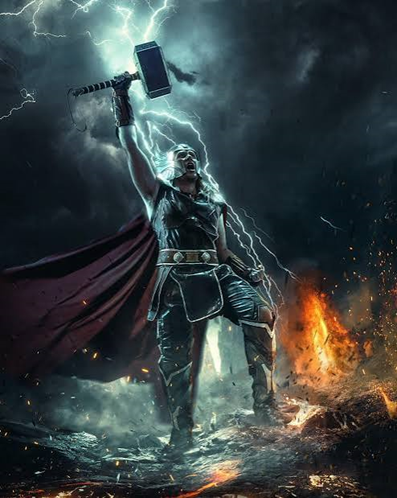
It seems natural to believe in the supernatural. Fundamentally, it is fear of the unknown. Early humans trembled in terror over lightning and thunder, earthquakes and floods, and scrambled together means of propitiation to these imagined supernatural beings who held such powers. Egyptians worshiped the sun god Ra, whose chariot rose in the east each morning and traversed the skin to pass into the underworld each evening. For the next four thousand years, everyone thought the sun moved around the earth rather than the earth around the sun as established by Nicolaus Copernicus in 1543.
Early gods reflected the stimulus for their creation, for example the original thunder deity Perkwunos from Proto-Indo-European mythology circa 6000 BC, often described as “the Striker” or “Lord of Oaks,” who fought a water-serpent to release rain. This root deity evolved into regional figures like Perun (Slavic), Thor (Germanic), Indra (Hindu), and Zeus (Greek).
In the same mental process, humans believed diseases came from non-living material, such as mud, dust, or decaying organic matter and were inflicted on humans by God’s judgment for sin, or in some faiths, caused by curses or demons. It wasn’t until the mid-to-late 19th century (1860s–1880s), that Louis Pasteur and Robert Koch developed the germ theory of disease, showing that germ-focused, preventative practices like antiseptics, sterilization, and vaccinations prevented disease.
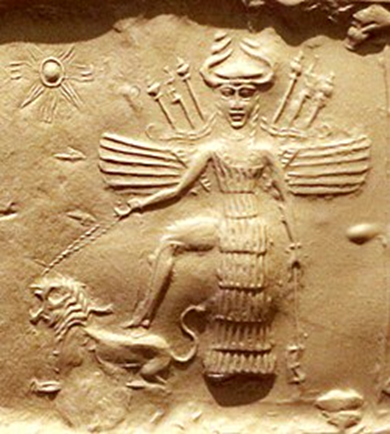
Nearly six billion, or 84 percent of the global population, belong to a religion, and these figures are expected to rise in the coming decades.[1] In the U.S., surveys show 90 percent of adults believe in some higher power, spiritual force or God with a capital G, of which over 18,000 gods, goddesses, and spiritual entities are worshipped. Even self-proclaimed atheists have supernatural leanings. The same study found all atheists reject God, but one-in-five accept higher powers or spiritual forces. Increasingly, up to 34% of Americans believe that extraterrestrials may have created or guided human history. Which is, basically, the same kind of idea—except there is potential evidence of ET in the form of photographs of “unidentified anomalous phenomena.”
Most early religious worship involved sacrifice as a way to bargain with the appropriate god. If a certain valued person, animal, or object was “given” to that deity, a reward of some kind would be bestowed upon the supplicant. Or, at least, a reward of eliminating some form of distress.
- An analysis of more than seven dozen Austronesian cultures[2] revealed that the practice of human sacrifices tended to make societies increasingly less egalitarian and eventually gave rise to strict, inherited class systems. In other words, ritual killings helped keep the powerful in power and everyone else in check.
- The fear that sacrifices allowed the practice to function “as a stepping-stone to help build and maintain power in early hierarchical societies,” Watts, a psychologist at the University of Auckland, wrote on his website. Once their authority was absolute, elites could use more traditional methods—policing, taxation, war—to keep the class system in place. [3]
It’s important to realize that ritual killings and public executions served as a highly visible display of authority, demonstrating who held control over life and death. Researchers theorize that these gruesome rituals helped early egalitarian groups transition into complex, unequal societies by violently keeping the lower classes in check. By framing the sacrifices as supernatural decrees, elites shifted the blame for the violence away from themselves and onto the gods, minimizing the chance of retaliation. This tradition of sacrifice likely formed the context of God’s demand that Abraham sacrifice his son Isaac as well as being predecessor of Christianity’s core belief in Christ’s sacrifice to mitigate human sin. This is akin to the Spanish Inquisition and early Puritan witch burning.
Are the majority of U. S. citizens prepared to hand over our freedoms to a minority who wish to gain glory with their god by sacrificing the foundational principles of our republic?
The modern age with its industrialization and now a digital universe speeding toward us like a meteorite has affected each of us in different ways. Up until about one hundred years ago, the majority of humans had spent their lives growing food, harnessing the usefulness of domesticated animals, and enjoying the home fires surrounded by loved ones. Suddenly, within less than a couple of centuries, we have been displaced by machines. New inventions function in god-like ways through radio, telephones, television, automobiles, and machinery like looms that produce textiles which only human hands had previously made. Who can understand how artificial intelligence operates or how scientists can look inside our cells or examine our DNA to determine our ancestry backwards in time?
All these rapid changes, incomprehensible to most of us, disrupt the flow of human existence in a global flood of new ideas and information, displacing us from traditional daily lives. One response to these rapid changes has been to embrace religion for comfort. Nothing is more reassuring than a set of rules governed by a supposedly loving God, and nothing might seem more important than to do everything possible to obey and enforce those rules. Such efforts to impose God’s will surely buy entry to the Promised Land.
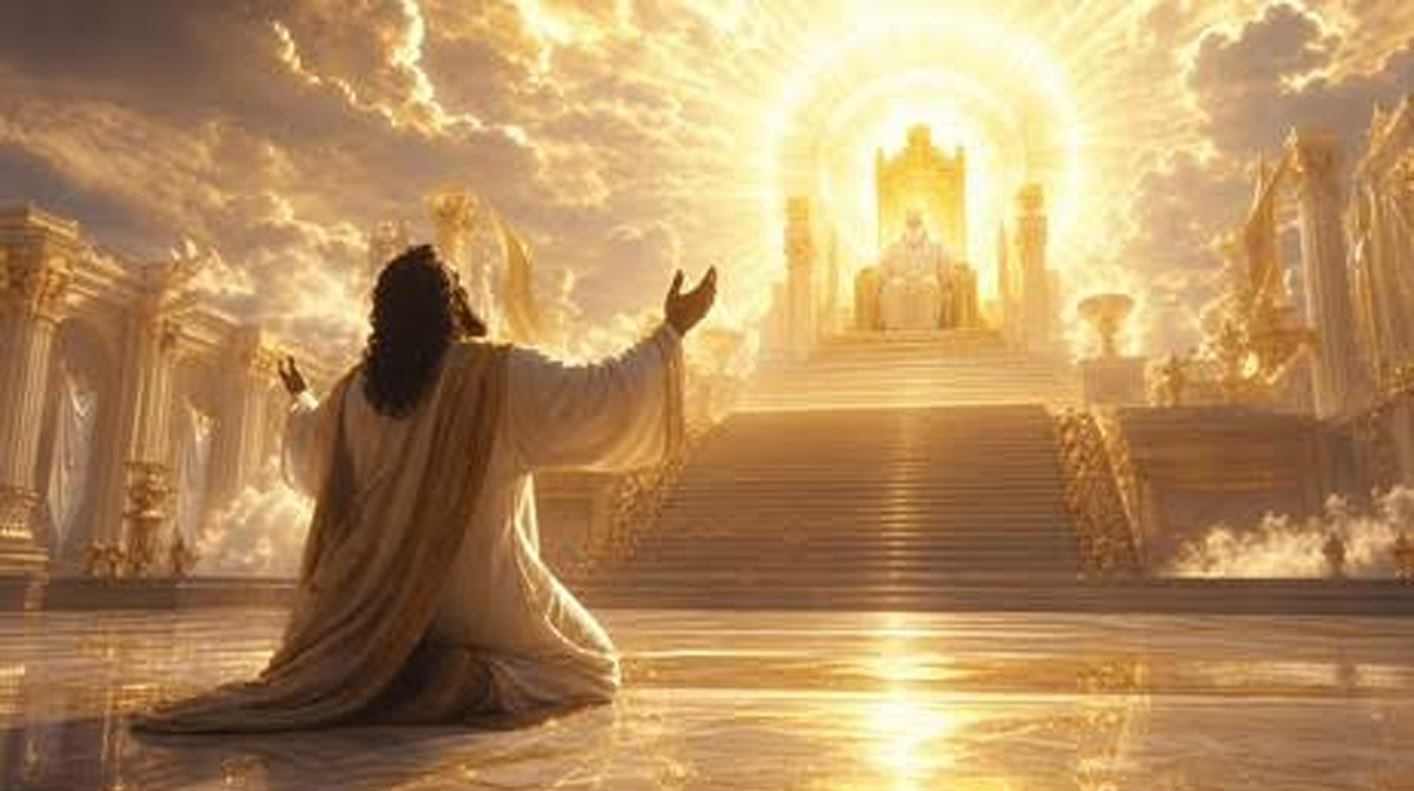
This particular segment of our society (and of other nations) will continue to shrink in fear of so many changes, which drive them further into their mythological havens. There is nothing inherently wrong with religious beliefs. What we address in this booklet is the compulsion of a small minority of religious believers to force everyone else to live by the minority’s beliefs. The more they don’t understand, the more the details of their daily lives are forced to change, the greater is their fervent embrace of religion. Therein lies the conundrum of our times.
Without question, forcing religion upon others is a fear-based response. Psychological and sociological perspectives show that this behavior typically stems from deep-seated fears regarding one’s own existential anxiety, the need for community validation, or a terror of perceived spiritual threats. In environments where people are uncertain or afraid, they often gravitate toward strict, absolute truths to regain a sense of control. Forcing others to conform to these absolutes serves as an emotional defense against ambiguity. People may use coercion because they perceive outsiders or differing views as direct threats to their own salvation, cultural identity, or worldview. When ideologies rely on fear-based doctrines (such as eternal damnation or divine wrath), followers often internalize this terror. This compels them to convert others as a way to “save” them, or to validate their own righteousness and ensure security.[4]
While I may have sympathy for those whose lack of understanding for science leaves them terrified in the face of human experience, I find I also have little patience for their choice not to understand. It is a choice. Plenty among us have pursued greater understanding, seeing within ourselves and our societies the power to prevent or cure disease or anticipate and mitigate the damage from violent storms. The same type of intellect which has created cell phones or heart surgery has also figured out that the use of fossil fuels has filled our atmosphere with enough carbon dioxide to cause the atmosphere to heat up, melting glaciers which in turn causes sea levels to rise. And that the Earth is 4.54 billion years old. And that over twenty pre-human hominid species have existed in the human lineage over the last seven million years—their bones have been found and dated by radiocarbon, radiometric dating on surrounding volcanic rock or by biostratigraphy, and preserved for further study.
The cognitive dissonance affecting the Christian Nationalists in the face of these facts is powerful. The result is what we see occurring with their flight from the facts to hide in words written by humans over the last three thousand years. It’s not that these folks can’t understand; it’s that they’ve been taught since leaving the womb that they should believe only one ‘truth’ or face violent punishment. But Neolithic religion is grossly inadequate to understanding what we are experiencing in the 21st century.
Those who learned to believe religious dogma rather than how to gather and process information for themselves are in great distress. They can’t get rid of the programming they’ve been subjected to since infancy. The only solution for them is to attempt forcing their religious dogma onto the rest of us, our children, and our nation in order to settle their internal conflict. This puts them in the same position as medieval priests who inflicted torture and cruel death to anyone who didn’t accept their religion.
This in turn puts the future of our republic in extreme danger. And we face enough danger without this. We need all Americans to help in the oncoming fight for not only our rights to personal liberty, but also the onslaught of climate change and the nightmares it will bring to our water and food supply. We need all hands on deck to deal with the inevitable rounds of pandemics including mutations of existing disease alongside new pathogens. It will take our communal effort as loving humans to protect the planet’s wonders—wildlife, wild rivers, vast forests, springs of fresh pure water. Most of all, we must find a way to protect and encourage truth telling, currently under severe attack and driven by an escalating crisis of misinformation, political polarization, and the rapid spread of AI-generated content. This information landscape has deeply eroded public trust in democratic institutions and the media.
While we must respect the rights of those among us who choose to embrace a religious path in life, the best we can do for the most extreme of them is not enable their delusional approach to the 21st century, hiding their heads in the sand while using our tax dollars to spread their narrow beliefs. They have the right to worship however they believe. They do not have the right to force anyone else to believe it. No matter how desperately they wish to coerce their children and their neighbors’ children to believe as they believe, we as taxpaying Americans have a patriotic duty to not let that happen on our dime.
[1] Alex, Bridget. “The Human Brain Evolved to Believe in Gods,” Discover, Oct 15, 2018. https://www.discovermagazine.com/ planet-earth/the-human-brain-evolved-to-believe-in-gods
[2] These cultures inhabit island Southeast Asia, Oceania, and Madagascar, with key populations in Indonesia, the Philippines, Malaysia, and New Zealand.
[3] Kaplan, Sarah. “The ‘darker link’ between ancient human sacrifice and our modern world,” The Washington Post, Apr 5, 2016. https://www.washingtonpost.com/news/morning-mix/wp/2016/04/05/the-darker-link-between-ancient-human-sacrifice-and-our-modern-world/
[4] See Tietjen RR. Fear, Fanaticism, and Fragile Identities. J Ethics. 2023;27(2):211-230. doi: 10.1007/s10892-023-09418-9. Epub 2023 Jan 26. PMID: 37180409; PMCID: PMC10169874.
This is the final chapter in the booklet New Puritans and the U. S. Peerage: The Willful Destruction of Public Education

