Why the Puritan Agenda Must Not Prevail

The Founding Fathers’ collective vision of education in a democratic republic reflected their profound understanding of education’s essential role in ensuring the sustainability and robustness of the new nation. We were fortunate that the wealthy early leadership of the nation—Thomas Jefferson, John Adams, James Madison, and George Washington—shared a common conviction: that education was indispensable for self-government and the preservation of liberty. Jefferson and Madison insisted on the widespread diffusion of knowledge as foundational to liberty. They were acutely aware that an ignorant populace could be easily manipulated, that education was the bulwark against tyranny and mob rule.

Today in the United States, secular education is seen as a threat to religious belief by about ten percent of the population, which to a thinking person would hint at a problem with their religious beliefs. But it seems this small portion of the population instead sees the outlier status of their beliefs as a badge of honor, somehow proving they are right and everyone else is wrong. Yet while most Christian extremists rely on the science behind cell phones, modern medicine, and public health standards governing water and air quality, they suffer cognitive dissonance between their religious mythology and the realities of scientific advancement. The fear of new information is so deeply ingrained that these religionists cannot escape it. This is the kind of ‘knowledge’ and ‘faith’ that Christian extremists seek to embed in the minds of their children, and not just theirs.  

The intention is to force institutional ignorance onto the entire nation. For our own good, of course. Because otherwise their loving God will condemn us all to burn in hell for eternity.

We’ve seen this before, as elaborated in the first chapter, times when religious power brokers forced a population to adhere to specific doctrines and if refused, initiated imprisonment, torture, and death for the “infidels.” Christian Nationalist ideas of proper acceptance of authority are rooted in a belief that God holds supreme authority and has delegated power to specific earthly institutions—primarily the church, family, and state—to maintain order and enforce a Christian social hierarchy.

Adherents believe that specific leaders are chosen by God to “save the country,” as demonstrated by their continuing support of presidents such as Ronald Reagan, George H. W. Bush, George Bush, and now Donald Trump. A significant segment of Christian Nationalists and their supporters believe that Trump is a divinely ordained leader sent to save the United States, viewing him as a “warrior for Christ” tasked with restoring America to its perceived Christian roots. Because such leaders are seen as advancing a divine plan, supporters can overlook their breaches of democratic rules or norms as well as their personal immorality and perfidiousness, believing such actions are necessary to uphold a rightly ordered society.

It follows then that control over education and tax support for schools teaching these theories are a primary objective. But that was not the vision of the Founding Fathers or the visionary early 19th century government in establishing tax-support public schools. Fortunately, as science and other fields of study have advanced over the last 250 years, religious power over learning has diminished.
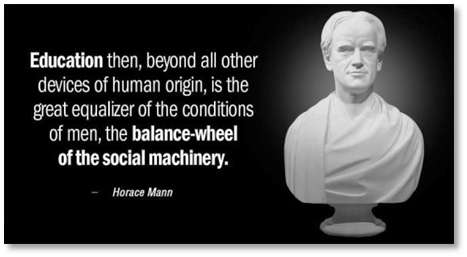
Leading us to this point has been the “common school,” established in the 1830s and 1840s in the new United States, comparable to today’s standardized public school. Considered the father of American education, Horace Mann envisioned common schools as institutions that were free and open to all students. In his role as Secretary of the Massachusetts State Board of Education (1837–1848), he established teacher training schools, improved school infrastructure, and raised educational standards. [1] He wanted those teachers to teach standardized curricula that instilled students with civic values. Catholic and other parochial schools in particular objected to Mann’s belief that schools should not adhere to any specific Christian sect, an argument that continues to the present day.

An obvious drawback of religious schools that is often overlooked is the inevitable assumption of such schools and their adherents that their beliefs are the only truth, that anything other than specific Christian dogma is a lie. Denial of science is the best example of this prejudice as scientific discoveries have slowly dismantled much of the institutionalized mythology enshrined by religion. As myth becomes ingrained in students of religious schools, their beliefs serve as a wedge between the people practicing that belief system and the needs of a nation to move forward in all areas such as advancing industry and the economy with new inventions based on new scientific discoveries and the acceptance of facts about human life previously not understood.

For the 68% of Americans who do not adhere or sympathize with the strict religious views of Christian extremists, the fundamentals of accepted education typically aligns with secular, pluralistic, and science-backed academic standards. These standards prioritize critical thinking and inclusivity rather than religious doctrine or rigid ideological frameworks. In fact, of the approximate 32% of Americans counted as Christian Nationalists, the actual adherents are only 11% while another 21% are considered sympathizers.[2]

The question of funding public schools boils down to what we expect our educational tax dollars to accomplish. Programs which teach narrow and exclusive religious doctrine are by definition not meant to support a cooperative relationship among persons of various cultural and religious backgrounds, but rather to hold up one belief system as the only truth. This becomes an impetus for authoritarian overreach and ultimately war, as history has long shown us.

While historically this conflict in the U.S. has been decided in favor of the constitutional standard not to mix church and state, the most compelling factor in the present day argument is that we all pay taxes and the majority of Americans do not agree that taxes should support the extreme Christian agenda. Tax support violates the First Amendment’s Establishment Clause by compelling taxpayers to fund the teaching of religious doctrines, essentially creating a government-sanctioned religion.

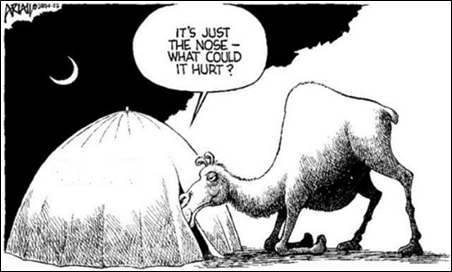
The slow but determined creep of Christian Nationalism shows every intention of overturning this Constitutional mandate. The camel’s nose is well under the edge of the tent. A 2024 investigation by The Washington Post found billions in tax dollars now pay tuition at private, mostly religious schools. For example, Florida’s voucher program is expected to exceed $3 billion, with over 80% of funds going to religious schools. Ohio is projected to spend nearly $1 billion, with 91% of voucher users attending religious institutions. Hundreds of thousands of students use these programs. The rise in funding is attributed to the expansion of voucher programs in Republican-led states, which now allow more or all families to qualify, shifting from programs once aimed only at low-income students.
Reduced funding for public education leads to layoffs, larger class sizes, and reduced individualized attention for students. Schools that serve the vast majority of students are forced to cut essential services, including arts, music, athletic programs, and after-school programming. There is less money for modern technology, up-to-date textbooks, and lab equipment. Meanwhile, private schools receiving public funds can exclude students based on religion, academic performance, disability, or sexual orientation, narrowing the educational options for those students. Vouchers can deepen racial and socioeconomic segregation by subsidizing tuition at private schools that often lack the diversity of public schools. Continued siphoning of funds can result in the closure of neighborhood public schools, particularly in rural areas where the school is a central community institution.

Long term erosion of financial support for public education puts the entire nation at risk, not only from prejudicial curricula in religious classrooms, but also from the inevitable schism between people educated in stringently oppositional systems. In a nation that has long pursued unity despite our different origins and beliefs, such divisive practices are a form of violence against the existing government.

The Supreme Court has said the Establishment Clause forbids, among other things, financial support of religious activity. Subsequent cases challenging the longstanding interpretation of the First Amendment have brought us to the Espinoza vs. Montana case, allowing tax dollars to flow to the parents/students of religious schools. This is by far not established law. While Espinoza reaffirmed that governments may not discriminate against beneficiaries solely on the basis of their religious character, it left open the possibility that governments might still be able to bar beneficiaries that would put public funds to religious uses.

The U.S. majority has become increasingly aware of the conflict between a religious agenda and our multicultural society. The percentage of Americans who say religion is “very important” has dropped from over 88%-95% in the 1960s to 47% in 2025. The latest Religious Landscape Study, fielded over seven months in 2023-24, finds that only 62% of U.S. adults identify as Christians. That is a decline of nine percentage points since 2014 and a 16-point drop since 2007. Within Christianity, 19% are Catholic, 3% are Mormon, Orthodox, Jehovah’s Witness, and other, and 42% are Protestant divided into Evangelical (23%), Mainline (14%),[3] and Historically Black Protestant (5%).

Projections indicate that by 2070, Christians could shrink from 64% (2020) to between 35% and 54% of Americans, while “Nones” (no religion) rise from 30% to over 50% in some scenarios. This shift drives religious zealots to push a movement which seeks to assert “dominion” over societal institutions, including government, education, and media, believing that Christian moral values should dictate law.

Growing concern within the U.S. public is slowly building into a response to Christian Nationalism, Dominionism, Christian Reconstructionism, and the New Apostolic Reformation (NAR) including tracking by civil rights organizations, legal challenges, and theological counter-movements from within Christianity. These initiatives aim to counter the rising influence of these new Puritan groups. Organizations like the Southern Poverty Law Center (SPLC) are actively documenting the spread of Dominionism,[4] profiling key leaders in the New Apostolic Reformation, and tracking associated hate groups. (This is directly connected to the Trump Administration’s May 2026 lawsuit against the SPLC in an effort to intimidate all civil rights organizations from speaking out and doing their work.)[5]

Scholars and progressive faith leaders are working to produce public-facing biblical interpretations that contradict Dominionist, coercive, and authoritarian interpretations of Scripture. Efforts are underway to inform the public and Christians about the anti-democratic nature of white Christian Nationalism and Dominionism to “inoculate” them against its appeal. The ACLU of North Dakota and other organizations actively fight against initiatives promoted by Dominionists, such as forcing religious prayer into public schools, banning books, and promoting anti-LGBTQ+ policies. Organizations like American Atheists oppose lobbying efforts to pass laws that violate the separation of church and state, such as those permitting discrimination under the guise of religious freedom. Researchers such as Dr. Matthew D. Taylor are working to expose the ties between modern charismatic prophets and the political, antidemocratic, and “spiritual warfare” approaches used to influence elections.

Defenders of the United States Constitution emphasize the importance of religious pluralism and the separation of church and state, arguing that Christian supremacy rejects these principles. Organized efforts underway to combat Christian supremacy include

  • A grassroots movement launched by the Baptist Joint Committee for Religious Liberty (BJC). It unites Christians across the theological spectrum to speak out against the merging of Christian and American identities.
  • Interfaith Alliance: A national, pro-democracy organization that mobilizes diverse faith communities to challenge Christian nationalism, protect civil rights, and uphold religious pluralism.
  • State Ecumenical Groups: Various regional faith networks, such as the Wisconsin Council of Churches, that host educational campaigns, study groups, and sermons to counter nationalist theology.
  • Americans United for Separation of Church and State: A leading organization dedicated to preserving the constitutional wall separating church and state. They actively litigate cases and advocate against policies that advance white Christian nationalism.
  • Freedom From Religion Foundation (FFRF): A prominent secular organization working to defend the constitutional principle of separation of church and state, frequently challenging religious favoritism in the public and political spheres.
  • Southern Poverty Law Center (SPLC): Monitors far-right and extremist movements. The SPLC identifies and exposes the ideologies and groups—including Christian supremacist and Dominionist networks—that threaten democratic institutions.
  • Public Religion Research Institute (PRRI): While not an activist group, PRRI conducts rigorous data-driven research and polling on Christian nationalism. Their work tracks the demographics and organizations that resist these movements.

These efforts fight against the adoption of “biblical authoritarianism” and the idea that Christians are mandated to take over societal institutions.

[1] Little, Becky. “Who Invented Public School in America,” History, Sept 10, 2025. https://www.history.com/articles/public-school-america-horace-mann

[2] More than half of U.S. Republicans are either adherents (20%) or sympathizers (33%).

[3] a group of historically established, traditional Protestant denominations in North America, often associated with a theologically liberal, progressive, or moderate approach to Christianity

[4] Dominionism (or Dominion Theology) is the religious belief that Christians are divinely mandated to take control of secular political and cultural institutions to establish the Kingdom of God on Earth. It is smaller and more fringe than broad Christian nationalism, but it holds disproportionate sway in certain fundamentalist, charismatic, and Pentecostal factions. While closely related, Dominionism and Christian Nationalism differ in their ultimate goals, theological roots, and how they view the relationship between religion, government, and the end of the world. Apparently neither group is familiar with the writings attributed to John in 18:36 where Jesus clarifies the nature of his realm: “My kingdom is not of this world.”

[5] https://www.aljazeera.com/news/2026/4/21/trump-administration-sues-southern-poverty-law-center-on-fraud-charges

This is the 4th chapter in the booklet New Puritans and the U. S. Peerage: The Willful Destruction of Public Education

Education Is A National Priority

Throughout our national history, conflict over education has erupted with tiring regularity. Soon after the Revolution, common schools were designed by Protestant elites to foster “Americanization,” but they used the King James Bible and Protestant curriculum. Irish Catholic immigrants in New York and Philadelphia resisted what they saw as forced indoctrination and demanded public funds for their own schools. These tensions led to riots in Philadelphia in 1844, where Catholic homes and churches were burned. This conflict cemented the shift towards non-sectarian public schools, although they often retained a general Protestant character.

Many citizens, particularly wealthier ones, were reluctant to pay taxes for other people’s children to be educated. Some workers resisted the invasiveness of compulsory education, as it kept children out of the workforce, forcing some towns to temporarily abandon or reduce public school efforts, such as in Beverly, Massachusetts, in 1860.[1] Child labor was highly widespread in the U.S. during the late 19th and early 20th centuries, with over 1.75 million children aged 15 and under (roughly 18% of the workforce) reported as working in 1910. Children as young as 3 or 4 were sometimes used for small, specialized tasks, while 5 to 8-year-olds were frequently employed in hazardous textile mills, mines, and factories. Child labor was finally curbed by the Fair Labor Standards Act of 1938.[2]

Before the Civil War, most Southern states passed laws making it illegal to teach enslaved people to read or write out of fear that they would read abolitionist literature, such as David Walker’s Appeal, and communicate, fueling organized uprisings like Nat Turner’s Rebellion of 1831. Also, literate enslaved people could read maps, forge travel passes, or write passes for themselves to escape to free states, a method used by many to escape bondage. Slaveholders believed an illiterate, ignorant enslaved person was easier to manage and obey, whereas literacy made them “disconsolate and unhappy” in their captivity. And literacy challenged the white supremacist justification that Black people were inherently inferior, unintelligent, or “less than human.”

Even in northern states, black children were largely denied access to public schools, often being forced into segregated, inferior schools, leading to early school desegregation battles, such as Roberts v. City of Boston in the 1840s. The “Slave Bible”—formally titled Select Parts of the Holy Bible for the use of the Negro Slaves—was used in the 19th-century United States, particularly in the South, though it was primarily produced in London in 1807 for British Caribbean colonies. It was a heavily redacted version of the Bible created to promote obedience and prevent slave revolts, with 90% of the Old Testament and 50% of the New Testament removed.

Following the Civil War, southern schoolhouses became battlegrounds to teach the “Lost Cause” narrative—a false interpretation of history that portrayed slavery in a positive light and argued the war was over states’ rights, not slavery. School officials strictly monitored textbooks to ensure they did not challenge Confederate interpretations of history. This led through coming decades to culminate in Brown v. Board of Education (1954) in which the Supreme Court ruled that separate schools were “inherently unequal.” Decades of “massive resistance” from Southern states ensued. In the 1970s, court-ordered busing forced integration in schools resulting in violent protests, most notably in Boston in 1974, and contributed to “white flight” to suburban schools. In response to integration orders, numerous private, segregated religious schools were established, particularly in the South, to circumvent desegregation.

Concurrently, the Scopes “Monkey” Trial in 1925 was a landmark confrontation between traditionalists (conservatives) and modernists (progressives), focusing on a Tennessee law prohibiting the teaching of evolution in public schools, effectively curbing the teaching of science for several decades.

School prayer remains a hot topic for both religionists as well as those defending the Constitution, with two lawsuits serving to define the subject. Engel v. Vitale (1962) and Abington School District v. Schempp (1963) declared that state-sponsored Bible reading and prayer in public schools were unconstitutional, fueling long-term debates over the secularization of public education. The fact is that public school children have always been able to pray when and wherever they pleased. What upsets religionists is that children in public schools cannot be led in prayer by adults—not teachers, not parents, not the principal. The desire to inculcate all children through prayer voicing religious doctrine drives this falsehood.

The later part of the century was marked by “curriculum wars” over the inclusion of diverse, non-European perspectives in history and literature curricula, which opponents claimed was a political attack on traditional national identity. Like the prayer argument, the textbook/curriculum battles continue unabated today, with most book content decided by heavily-conservative boards. [3]

“Given the high concentration of students in Texas and California, textbook makers know…they need to create books that are going to be approved by those large states.” said Dr. Max Altman, director of research and policy at the Southern Education Foundation. Altman said that requests for changes and outright rejections based on the inclusion of certain concepts are what make California, Florida and Texas so influential.

“This small group of people who approve textbooks within a couple of states have a very, very large effect on what students across the bottom of the United States and really across the country as a whole are able to learn,” he said.

[This 2022 article reports that] …[i]n April, the Florida Department of Education initially rejected 41% of all K-12 mathematics textbooks submitted for state adoption approval — the most in Florida’s history. The dismissal of the 54 textbooks — including 71% of K-5 math materials — stems from several claims: references to Critical Race Theory (CRT), inclusions of Common Core and “unsolicited” inclusions of Social Emotional Learning.

The public push to provide evidential examples of the above reasons for rejection made national headlines, as the state’s Department of Education did not initially release any specifics. Later, it published four visual examples from the rejected textbooks.

Experts suggest that overseeing public school curricula in a small number of highly populated states has an outsized influence on what children are learning throughout the country. Because publishers often create uniform national editions, major state adoption boards, particularly in Texas (conservative-leaning) and California (liberal-leaning), exert outsized influence on nationwide content. Texas, one of the largest purchasers of textbooks, often pushes to emphasize “positive aspects” of American history, de-emphasize the role of slavery, increase the influence of Christianity, and promote gun rights. Conservative, evangelical, or religious viewpoints have often driven content to prioritize patriotism and limit topics like climate science or critical race theory.

California often pushes for inclusive, multicultural narratives, ensuring that textbooks feature stories of LGBTQ+ individuals, marginalized groups, and a more critical view of historical events. Due to this, publishers often create different regional versions or compromise by including, for instance, both more critical and more patriotic interpretations of events, creating a “whitewashed” or highly contentious final product.

Textbook selection and other elements of public schools are the task of school boards, both local and state level. While curricula are determined by state boards of education, there are no educational standards required of state board members. Eligibility for state boards of education typically requires candidates to be residents of the state, registered voters, and often residents of the specific district they aim to represent.

Not requiring a college degree for state boards of education is part of a broader, bipartisan shift towards skills-based governance and a move away from formal credential requirements, which are increasingly seen as unnecessary barriers to entry. While education policymakers need expertise, proponents of this shift argue that a degree is not a guarantee of competence, effective leadership, or relevant experience.

On the other hand, without a deep background in subject matter and education policy, board members may rely on ideological rather than research-based solutions to solve problems like low student achievement, leading to increased political polarization in schools. Members may struggle to evaluate curriculum standards, assessment tools, and learning theories, potentially leading to decisions that do not align with evidence-based practices. More concerning is that without the experience of the wide array of college coursework, members may focus on short-term political issues or “quick fixes” rather than the long-term, systemic changes needed to improve student outcomes.

State boards typically adopt standards (e.g., in reading, math) that outline skills students must master, hopefully informed by state law, national benchmarks, and expert input. State-level entities create frameworks, which may act as official requirements or recommended guidelines for local curriculum. State laws often mandate specific topics (e.g., specific subjects, or in some cases, restricting approaches) that schools must adopt. The degree of control varies by state; some states have highly centralized, mandatory curriculum lists, while others allow local districts greater flexibility. Boards often adopt standards at public meetings, occasionally with guidance from curriculum committees and teacher panels.

Local level textbook adoption policy leaves decisions to a local education agency (i.e. school district). State level textbook adoption policy leaves decisions to a state agency (i.e. state board of education) California has a statewide adoption policy at the elementary level. Secondary textbooks are chosen by local governing boards. The state of Hawaii comprises a single school district.
Map: Emily Schmidt, APM Research Lab Source: Education Commission of the States

Curricula

There are no federally mandated national education standards in the United States, as education is primarily managed by states and local districts. However, the nation utilizes voluntary, state-led standards like the Common Core State Standards, adopted in June 2010 by most states to ensure consistent math and English learning goals. Not adopting the standards are Alaska, Nebraska, Texas, Virginia, and Oklahoma. The reasons for common standards for curricula include the obvious, that children of a family moving from one state to another meet the same basic education as at their previous location. Also obvious is the need for all Americans to share the same understanding of national history, the operations of government, and fundamentals of reading, writing, and mathematics, as well as science.

School boards and districts have been empowered to make curriculum decisions in order to prepare future citizens. State constitutions require the operation of systems of education, and we elect school boards to make important decisions for community schools, including those related to materials and instruction. In some cases, parents object to these decisions, arguing that their constitutional rights have been violated. For example, in the [2008] federal appeals case of Parker v. Hurley, parents objected to their children being presented with books depicting diverse families, including families with parents of the same gender. The district refused to grant the children an exemption from the instruction. The parents argued that the refusal of an exemption amounted to an infringement on their constitutional rights as parents and their free exercise of religion rights under the First Amendment. The court disagreed, citing a long line of cases establishing that while parents have a constitutional right to raise their children, there is no right to direct how a public school teaches those children. [4]   

The New Puritans at Work

The overarching religious education agenda is not a single project but rather a continuous political tug-of-war for the control of educational narratives. The division between these two fundamentals of education has led, in part, to today’s division in American society.

We can identify the ways that the Puritan ethic drives Christian Nationalism. The Puritans sought to build a “city on a hill” defined by severe piety, communal surveillance, and strict adherence to moral codes, rather than by religious freedom. Christian Nationalists interpret the “city on a hill” phrase, derived from John Winthrop’s 1630 sermon,[5] as a divine mandate that the United States is a uniquely ordained, Christian nation meant to act as a moral, religious beacon to the world. This vision, often championed by President Ronald Reagan, blends national identity with biblical prophecy, suggesting America holds a special, providential covenant to embody Christian principles enforced by the government.

Puritan men held public office, imposing religious law to govern social and legal life. Only adult male church members (“the elect”) could vote in elections and participate in town government. Laws were based on Old Testament teachings. Today, many within the Christian Nationalist movement believe that men are specifically ordained by God to lead in government, politics, and the public sphere. This ideology is rooted in a belief in “biblical patriarchy” or complementarianism, which argues that God established distinct roles for men and women, where men are designed to lead and protect while women are called to support and submit.

Puritan leaders were intolerant of dissenting religious views, which were seen as dangerous to the community’s mission. Christian Nationalists generally believe that America was founded as a Christian nation and that its laws and public life should reflect Christian, specifically Protestant, values. Other religions are viewed as subordinate, threats to national identity, or demonic, with many proponents supporting the restriction of non-Christian practices.

Puritan households were strictly hierarchical, with the father as the head. Women were viewed as “helpmeets” for their husbands with fewer rights, though they held significant responsibility in managing the home, raising children, and tending the gardens. Likewise, many proponents of Christian Nationalism believe that women should prioritize staying at home, focusing on raising children and submitting to their husbands’ leadership.

During the early Puritan period, the “Old Deluder Law” required every town of fifty or more families to pay for a teacher, and they founded Harvard College in 1636 for training ministers. They believed in the active presence of the devil and witches, leading to the Salem witch trials in 1692, which occurred when religious political control was waning. Christian Nationalists view public education as a vital, yet currently hostile, battlefield for the nation’s cultural and spiritual direction. They generally aim to dismantle the traditional secular public school system by promoting school choice vouchers to fund private religious education, instilling conservative Christian values, banning certain books, and reversing LGBTQ+ inclusion.

The Trump administration (2017-2021 and 2025-2028) has adopted key elements of the Christian Nationalist agenda by prioritizing policies that blur the line between church and state, fostering religious exemptions for conservative Christians, and appointing individuals aligned with this ideology to high-ranking positions. Trump has appointed conservative Christian judges, including three Supreme Court justices (Neil Gorsuch, Brett Kavanaugh, and Amy Coney Barrett), who have delivered rulings expanding religious exemptions. They joined John Roberts and Samuel Alito, both appointed by evangelical adherent George W. Bush; Clarence Thomas, the sixth conservative on the nine-member court, was appointed by Bush’s father, George H. W. Bush.

At the prompting of his Christian Nationalist backers, Trump initiatives aim to review federal actions for “anti-Christian” sentiment and protect “religious freedom,” defined by Christian nationalists not as the separation of church and state, but as the right to embed a specific, conservative Christian worldview into government, law, and public life including the use of taxpayer dollars in support of religious education and eliminating government support for advancing educational effectiveness.

Based on 2026 budget proposals and actions, we see that the Trump administration has sought to cut or eliminate over $8.5 billion in K-12 education programs and $2.7 billion in higher education, while targeting programs like TRIO (outreach and student services initiatives funded by the U.S. Department of Education to help low-income, first-generation college students, and individuals with disabilities succeed in education, ranging from middle school through adult education), GEAR UP (a federal discretionary grant program designed to increase the number of low-income, underserved, or first-generation students who are prepared to enter and succeed in postsecondary education), and Federal Work-Study for elimination or massive reductions. (Initiated in 1964, the program provides part-time jobs for undergraduate and graduate students with financial need, allowing them to earn money for education expenses.)

The Trump administration’s cuts to K-12 education focus on slashing, consolidating, or eliminating programs like after-school, summer, and mental health grants. More than 760 in-progress grants, worth over $2 billion, were discontinued in 2025, including cuts to college prep ($300m+), civics ($35m), and racial integration ($26m). Other cuts target teacher training ($2.2 billion) and English learner services ($890 million). The administration also proposed the “Make Education Great Again” block grant, which would overhaul K-12 education by consolidating federal funding, cut federal oversight, and shift control to states. It prioritizes school choice, patriotic education, and literacy/math, while reducing the Department of Education’s role. This would cut existing program funding by 70%.

Trump’s cuts aren’t the first to take the U.S. educational efforts backwards despite extensive research showing the benefits of programs now being eliminated. This has been an ongoing effort by Christian Nationalists over the last fifty years. During the 1980s, Ronald Reagan campaigned on abolishing the Department of Education, with his 1981 budget reducing spending and consolidating grants.

This despite findings on the effectiveness of public education funding showing that increased spending per pupil yields significant social returns, especially in high-poverty districts. State cutbacks to K–12 spending, the rise of voucher programs, and Trump’s attacks on the federal Department of Education threaten to rob the majority of U.S. children of an adequate education.[6] The vast majority of our youth (90%) are in our public school system. Approximately 49-50 million K-12 students attend public schools in the U.S., while roughly 4.7 to 5.5 million (9%-11%) students are enrolled in private schools, based on 2021-2022 data.

Despite Trump’s claim that such cuts are necessary to reduce the outrageous federal deficit, the numbers prove him wrong. The U.S. national debt increased by approximately $1.78 trillion to $2.25 trillion since January 2025, pushing the total gross national debt past $38 trillion. The debt stood at roughly $36.22 trillion around Jan. 20, 2025, and reached $38 trillion by late October 2025. By March/April 2026, total debt crossed $39 trillion.

As for national security and a sound economy, inadequate education is a root cause of significant social issues, primarily driving cycles of poverty, high unemployment rates, and increased crime. It limits economic mobility, reduces workforce productivity, and fosters gender inequality, while also contributing to poor health outcomes, political instability, and social unrest.

Finally, in studies comparing the racial and ethnic composition of charter schools to public schools, researchers generally find that charter schools preserve or intensify racial and economic segregation, and/or facilitate white flight from public schools. Furthermore, studies that compare individual students’ demographic characteristics to the schools they are leaving (public schools) and the schools they are switching to (charter schools) generally demonstrate that students “leave more diverse public schools and enroll in less diverse charter schools.”[7]

Hardly the path toward a unified nation.


[1] Vinovskis, Maris A. “The Politics of Educational Reform in Nineteenth-Century Massachusetts: The Controversy Over the Beverly High School in 1860. Final Report,” Institute of Education Sciences, Aug 15, 1980. https://eric.ed.gov/?id=ED200495

[2] Indiana, Iowa, West Virginia, Idaho, and Arkansas have passed legislation loosening these protections, with Arkansas eliminating work permits and age verification requirements for children under sixteen.

[3] Schmidt, Emily. “Required Readings: How Textbook Adoption in 3 States Influences The Nation’s K-12  Population,” APM Research Lab,  June 2, 2022. https://www.apmresearchlab.org/10x-textbook-adoption

[4] Paige, Mark. “Constitution vs. Curriculum,” Resource Hub, National Association of Elementary School Principals, Mar 14, 2022.  https://www.naesp.org/resource/constitution-vs-curriculum/

[5] See https://www.americanyawp.com/reader/colliding-cultures/john-winthrop-dreams-of-a-city-on-a-hill-1630/

[6] Wething, Hilary, Bivens, Josh. U.S. Investment in Public Education Is At Risk,” Economic Policy Institute, Aug 21, 2025.  https://www.epi.org/publication/u-s-investment-in-public-education-is-at-risk-vouchers-state-budget-austerity-and-federal-attacks-on-the-department-of-education-threaten-childrens-futures

[7] “School segregation in the United States,” Wikipedia. https://en.wikipedia.org/wiki/School_segregation_in_the_United_States

This material is Chapter 2 of New Puritans and the U.S. Peerage: The Willful Destruction of Public Education

History of Church as State

Why devote tax dollars to teach children to read? Why do they need to understand how numbers work? What do we benefit from learning about our history, the past 250 years of this nation, the past millennia of human existence? Why not let churches provide education?

Why? Because a review of the past warns us of where religious government can lead. Colonists sailing to these shores in the early 1600s taught reading to support religion, a purpose that continued through the mid-19th century. Warring among themselves over which doctrine would be in control, Protestant-Catholic conflicts were driven by intense religious prejudice, political fears of loyalty to the Pope, and imperial wars against France and Spain. While Maryland was founded as a Catholic refuge, Protestants often took control, passing anti-Catholic laws. Maryland’s 1649 Toleration Act, providing freedom, was twice overturned by Puritans. In 1654, Puritan forces overthrew the proprietary government, outlawing Catholicism. Later, in 1689, “Protestant Associators” led by John Coode defeated Maryland’s Catholic proprietarial government, leading to the prohibition of public Catholic worship and the loss of their political rights.

Needless to say, religious violence didn’t start with American colonists. As far back as you care to examine European history, you find religious wars. The Crusades (11th–13th centuries) were launched by Western European Christians, sanctioned by the Pope, primarily to reclaim the Holy Land (Jerusalem) from Muslim rule, assist the Byzantine Empire against the Seljuk Turks, and reunite Christendom. Total deaths are estimated between two to six million. While exact breakdowns are impossible due to limited records, contemporary estimates suggest hundreds of thousands of Muslims died, while Christian losses included roughly one to two million Europeans.

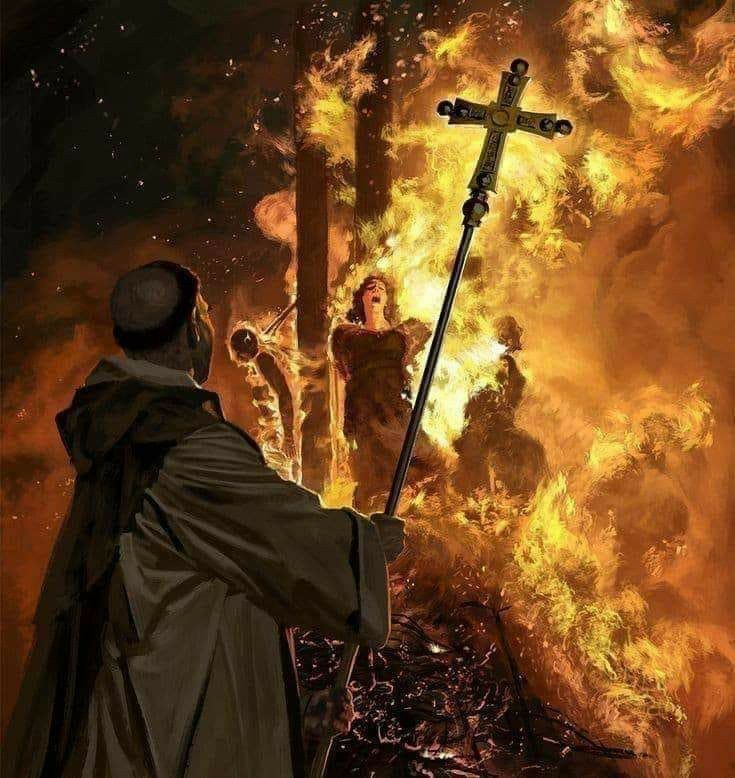
Perhaps most horrific of these bloody religious wars were the years of the so-called Spanish Inquisition (1478–1834) which used systematic, often bureaucratic, methods to enforce Catholic orthodoxy including secret interrogations, psychological coercion, property confiscation, and calculated torture to extract confessions. Common torture methods included waterboarding, the rack, and pulley-based limb dislocating to force confessions which led to public auto-da-fé ceremonies and executions. Roughly 150,000 people, with an estimated 3,000–5,000 burned alive, were caught up in this religious insanity. As a global power, Spain engaged in religious wars against Protestantism, including conflicts with England, culminating in the 1588 Spanish Armada.

These actions were driven by Spain’s determination to create a uniformly Catholic society.  Sound familiar?

Other similar conflicts included:

  • The Wars of the Three Kingdoms (1639–1653): A series of armed conflicts, including the Bishops’ Wars, the English Civil War (1642–1651), and the Irish Confederate Wars. This involved Anglicans (Royalists/Cavaliers) fighting Puritans (Parliamentarians/Roundheads), who were often allied with Scottish Presbyterians, against a backdrop of Catholic uprising in Ireland.
  • The English Civil War: A fundamental conflict between Anglicans (supporters of King Charles I) and Puritans (supporters of Parliament), leading to over 100,000 battle deaths and thousands more non-combat deaths.
  • Cromwellian Conquest of Ireland (1649–1653): Part of the wider civil war, aimed primarily at Catholic forces.
  • The Glorious Revolution (1688–1689) and Williamite War: A shift in power from Catholic King James II to Protestant forces (Anglicans and others), featuring battles between Anglicans and Catholics, particularly in Ireland.
  • Persecution of Quakers: Quakers were not an army but faced severe persecution from Puritans in New England (1656–1661) and both Anglicans and Puritans in England.

Other European religious wars included the Thirty Years’ War (1618–1648) resulting in 4.5 to 8 million deaths, while the French Wars of Religion (1562–1598) caused 2 to 4 million deaths.

The period after “discovery” of the New World featured the slaughter of millions of indigenous people. Upon arriving on these lands, still thriving with wildlife and virgin forests despite 40,000+ years of indigenous settlement, Europeans viewed these peoples as inferior and un-Christian, a view which justified brutal violence. Estimates suggest that roughly 55 to 56 million native people died in the Americas due to European colonization between 1492 and the early 1600s. This mass mortality, known as the “Great Dying,” represented about 90% of the indigenous population and was primarily caused by introduced diseases, alongside warfare, forced labor (slavery), and societal collapse.

Based on a 1493 papal decree, Christian explorers believed they had the right to claim land belonging to non-Christians, often viewing themselves as bringing civilization and God to “pagan populations.”

One wonders, what would Jesus do?

Religious conflicts in colonial America were widespread, characterized by Puritan persecution of Quakers and Baptists in New England, anti-Catholic laws in Maryland, and violence against dissenting evangelicals by Anglican authorities in the South. Conflicts also occurred between “Old Light” traditionalists and “New Light” revivalists during the Great Awakening. Puritans in Massachusetts Bay exiled dissenters like Roger Williams and Anne Hutchinson, and hanged four Quakers between 1659 and 1661.

Intermingled among these loving brothers and sisters in Christ were the witch hunts driven by Puritan beliefs and fear of the devil, culminating in the 1692–1693 Salem witch trials, which saw 19 people hanged, one pressed to death,[1] and over 200 accused. While Salem is most famous, over 100 cases occurred across New England and Virginia between 1626 and 1730, including a significant 1662 panic in Hartford, Connecticut.

You’ll notice that in all that violent turmoil, it was the Puritans who were the most intolerant, the most determined to force everyone to their chosen faith. The Puritans believed they had a divine mandate to establish a “Holy Commonwealth” that would influence all areas of life, including public morality, law, and social behavior. This strongly parallels the Catholic crown’s effort to create a uniformly Catholic society across Europe.

Nothing could be closer to this four-hundred year old depraved mindset than the present-day reality of the Christian Nationalists’ ongoing determination to force their beliefs on everyone else, that “God has called Christians to exercise dominion over all areas of American society.” They seek secure political power, social dominance, and the implementation of policies based on their religious worldview.

Small wonder that by 1776, the Founding Fathers emphasized the importance of separating the powers of the church and the function of government in writing the new nation’s fundamental governing document and its First Amendment: “Congress shall make no law respecting an establishment of religion or prohibiting the free exercise thereof.”

In the same line of thinking, founders like Thomas Jefferson and later reformers argued that a republic could not survive on ignorance. They viewed tax-supported public education as an insurance premium paid for by the wealthy to ensure political stability, create good citizens, and prevent social unrest. Nativism, driven by fears that newcomers would steal jobs, lower wages, threaten national identity, bring crime, and fail to assimilate particularly targeted Catholicism in the 19th century and non-northern European immigrants later. As immigration increased, particularly in the mid-19th century, public schools were viewed as a mechanism for assimilating children from diverse cultural and religious backgrounds into a shared “American” culture.

Education’s role today is all that and more, critical to our role as citizens of a nation meant to be governed by the people. We are tasked with self-governance as well as developing our moral character, intellectual growth, science-based literacy, and academic proficiency. Few would argue that most modern employment would be possible without these skills.

The chaos permeating United States society today is a primary outcome of our compromised educational system. It’s only going to get worse as budget cuts further undermine school operations and digital media becomes more permeated by artificial intelligence. But the greatest threat is the insidious creep of religious indoctrination, a largely unrecognized form of subversion which demands tax dollars in support of religious teachings in specific opposition to the Founding Fathers’ intent.

These efforts have simmered through our nation’s history, but only in the last fifty years have they made strides in overthrowing our constitutional foundations. We truly face a crisis.


[1] “Pressing” was a method where victims were laid down with heavy weights placed on their bodies, causing breathing to become impossible as ribs fractured, lungs collapsed, and internal organs failed over several hours or days. This happened to Giles Corey, an 81-year-old farmer.

New Puritans

Like the slow spread of a fatal disease, certain interest groups within the United States have been working to undermine the nation’s education system. Their goal, as so clearly outlined in the 900 pages of Project 2025, is to change our democratic republic into plutocratic theocracy. Ruling from the top, the wealthiest citizens (U.S. Peerage) will enjoy virtually no restrictions on their profits or the damage caused by their industries, while ruling from the bottom, the Christian Nationalists and other religious extremists (New Puritans) will ensure the population lives by Christian rules.

This is not a theory. This is the fact of the current situation as recent Supreme Court decisions have opened the door for unregulated homeschooling and students at religious private schools to receive our tax dollars in support of their operations. This is in direct opposition to the Constitution’s First Amendment, which specifically prohibits any government support for any religion.

This workaround has been steadily advancing since colonial days but has increased significantly since the 1940s when the “Red Scare” brought a fresh level of religious fanaticism to the public arena. The result? Today, billions of our tax dollars flow into religious school instruction while public schools suffer from inadequate funding even though 90% of K-12 students attend public schools. Perhaps more damaging than the financial costs are the lessons learned under religious instruction: that the Earth is only 6,000 years old; that vaccinations are harmful; that men are superior to women. These are the seeds of a modern nation’s destruction.

91 page booklet $6 https://www.amazon.com/dp/B0H3NW358F

Table of Contents

Preface

History of Church as State

Education Is A National Priority

The Education Problem: Bigger than the New Puritans

Why the Puritan Agenda Must Not Prevail

Unregulated Private and Home Schooling

The Arkansas Situation

Christian Nationalism’s Goal: Overturn the Constitutional Separation of Church and State 

In Conclusion

Afterword

Next Step

On Thursday, May 9, 2024, Senators Katie Britt (R-AL), Marco Rubio (R-FL), and Kevin Cramer (R-ND) introduced the More Opportunities for Moms to Succeed (MOMS) act. Britt … said the measure would provide a federal database of resources for pregnant women and women parenting young children, but that information excludes anything that touches on abortion. The measure is clear that it enlists the government in opposition to abortion, but more than that, it establishes that the government will create a database of the names and contact information of pregnant women, which the government can then use “to follow up with users on additional resources that would be helpful for the users to review.” Heather Cox Richardson, May 13, 2024 (Monday)

Then,

  1. Create a database of all females of child bearing age.
  2. Require monthly reports of pregnancy tests from all females in the database, on penalty of felony prosecution.
  3. Once pregnancy is reported, the female will be confined in a gestation facility.
  4. Any employment or domestic duties of that female will be suspended until she gives birth.
  5. If complications occur in the pregnancy, the embryo/fetus will be the priority consideration.
  6. Upon birthing, the female and newborn will be returned to her former place in the community.

Arkansas Government of the Church, by the Church, for the Church

Arkansas State Capitol

Never before has the heavy hand of religion gripped so hard in its effort to control a state government. The Republican majority of the 2021 legislative session has strained to enact every conceivable moral judgment on the state’s citizenry, promising that a large sum of taxpayer dollars will be tossed into the maw of federal courts defending the church’s agenda.

Since many of these laws intrude into the private homes, bedrooms, and bodies of Arkansans in violation of their Constitutional rights, they will—hopefully—be overturned.

Established by Jerry Cox in 1991, the Family Council is again the force behind another disgraceful session, wielding its medieval outrage over Republican legislators who can’t seem to see beyond the church hymnal. It’s as if science never existed, which is exactly what the Council wants. The Council’s agenda could not be more conspicuous: strangle the privacy and individual rights of the people of Arkansas through the enactment of laws that move social norms backwards a century or more.

“The Family Council is a conservative education and research organization based in Little Rock, Arkansas. Our mission is to promote, protect, and strengthen traditional family values found and reflected in the Bible by impacting public opinion and public policy in Arkansas.”

Purportedly a 501(c) 3 nonprofit, the Council lists its areas of concern as Abortion, End of Life Issues, Stem Cell Research, Human Cloning, Physician-Assisted Suicide, Same-Sex Marriage, Religious Liberty, Homosexuality, Gambling, Judicial Activism, Education Choice, Home Schooling, Divorce, Taxes, and Healthcare.

Seven of these fifteen ‘areas of concern’ are very personal, private matters, yet the Council has convinced legislators they have the right, yea, even verily the responsibility, to wade in and slam a fist down on the dinner table.

What follows is taken from the Council’s website.

“What a week at the Arkansas Legislature!

“The legislators stood strong and enacted H.B. 1570, a really good bill protecting children from dangerous gender-reassignment procedures. Lawmakers did this despite immense pressure from liberal groups across America.”

Following  ‘a brief look back at the week,’ the Council gets down to passing judgment on the legislation passed so far:[1]

Good Bills Passed So Far

H.B. 1570 (Prohibiting Sex-Reassignment on Children): This good bill by Rep. Robin Lundstrum (R – Springdale) and Sen. Alan Clark (R – Lonsdale) prohibits sex-reassignment procedures on children. The bill also prevents funding of sex-reassignment procedures performed on children. This bill will protect children from being subjected to surgeries and procedures that can leave them sterilized and permanently scarred. The bill has passed the Arkansas House of Representatives and been sent to the senate. See how your state representative voted hereSee how your state senator voted hereRead The Bill Here.

S.B. 474 (Prohibiting Fraudulent Fertility Treatments): This good bill by Sen. Charles Beckham (R – McNeil) and Rep. Jimmy Gazaway (R – Paragould) prohibits fraud and abuse in fertility treatments. The bill ensures people performing fertility treatments are honest, ethical, and abide by principles of informed-consent. See how your state senator voted hereSee how your state representative voted hereRead The Bill Here.

Act 562 / H.B. 1402 (Abortion-Inducing Drugs): This good bill by Rep. Sonia Barker (R – Smackover) and Sen. Blake Johnson (R – Corning) updates Arkansas’ restrictions on abortion-inducing drugs like RU-486. It outlines requirements that abortionists must follow in administering abortion-inducing drugs, and it prohibits abortion drugs from being delivered by mail in Arkansas. It also updates current law to ensure doctors who perform chemical abortions are credentialed to handle abortion complications and can transfer the woman to a hospital if she experiences complications. The bill has passed the Arkansas House. See how your state representative voted hereSee how your state senator voted hereRead The Bill Here.

Act 561 / H.B. 1589 (Transactions With Abortionists): This good bill by Rep. Harlan Breaux (R – Holiday Island) and Sen. Bob Ballinger (R – Ozark) prohibits government entities, including public schools, in Arkansas from engaging in transactions with abortion providers and affiliates of abortion providers. See how your state representative voted hereSee how your state senator voted hereRead The Bill Here.

https://familycouncil.org/wp-content/uploads/2021/04/IMG_2744-768x1024.jpgJerry Cox visits with Capitol Police officers ahead of a press conference in support of H.B. 1570, the SAFE Act.

Act 560 / H.B. 1572 (Informed-Consent to Chemical Abortion): This good bill by Rep. Robin Lundstrum (R – Springdale) and Sen. Scott Flippo (R – Mountain Home) outlines the informed-consent process for chemical abortion. Arkansas’ current informed-consent laws for abortion are geared primarily for surgical abortion procedures. H.B. 1572 will help ensure women get all the facts about chemical abortion — including its risks, consequences, and pro-life alternatives. This will help save many unborn children from abortion. The bill has passed the Arkansas House. See how your state representative voted hereSee how your state senator voted hereRead The Bill Here.

Act 461 / S.B. 354 (Fairness in Women’s Sports): This good bill by Sen. Missy Irvin (R – Mountain View) and Rep. Sonia Barker (R -Smackover) would prevent male student athletes from competing against girls in women’s athletics. This would protect fairness for girls’ sports at school in Arkansas. See how your state senator voted hereSee how your state representative voted hereRead The Bill Here.

Act 462 / S.B. 289 (Conscience): This good bill by Sen. Kim Hammer (R – Benton) and Rep. Brandt Smith (R – Jonesboro) protects healthcare workers’ rights of conscience. Arkansas’ current conscience protections are narrowly focused on abortion, abortifacients, and end of life decisions, and they protect only a limited number of people. S.B. 289 helps broaden these protections for healthcare workers. See how your state senator voted hereSee how your state representative voted hereRead The Bill Here.

Act 498 / S.B. 85 (Abortion): This good bill by Sen. Cecile Bledsoe (R – Rogers) and Rep. Joe Cloud (R – Russellville) requires an abortionist to show an ultrasound image of the unborn baby to the pregnant woman before an abortion. Currently, Arkansas law says an abortionist must offer to let the woman see the ultrasound image. Research indicates that some women are less likely to have an abortion once they see an ultrasound image of their unborn child. That means pro-life bills like S.B. 85 can help further decrease the number of abortions in Arkansas. Arkansas Right to Life is the chief proponent of this bill, and we fully support their efforts. See how your state senator voted hereSee how your state representative voted hereRead The Bill Here.

Act 309 / S.B. 6 (Prohibiting Abortion): This good law by Sen. Jason Rapert (R – Conway) and Rep. Mary Bentley (R – Perryville) prohibits abortion in Arkansas, except in cases when the mother’s life is in jeopardy. Family Council worked closely with Sen. Rapert to pass this good bill that could save the lives of thousands of children and give the courts an opportunity to overturn decades of bad, pro-abortion rulings. See how your state senator voted hereSee how your state representative voted hereRead The Bill Here.

Act 358 / H.B. 1408 (Abortion): This good bill by Rep. Robin Lundstrum (R – Springdale) and Sen. Gary Stubblefield (R – Branch) helps prevent abortion providers and their affiliates in Arkansas from receiving Medicaid reimbursements from the state. The bill has passed the Arkansas House and Arkansas Senate. See how your state representative voted hereSee how your state senator voted hereRead The Bill Here.

Act 94 / H.B. 1211 (Religion is Essential): This good law by Representative Mary Bentley (R – Perryville) and Senator Kim Hammer (R – Benton) recognizes that religion and religious organizations are essential in Arkansas. H.B. 1211 will protect churches and religious groups without hampering the government’s ability to respond during a pandemic. See how your state representative voted hereSee how your state senator voted hereRead The Bill Here.

Act 90 / H.B. 1195 (Pro-Life): This good bill by Rep. Jim Dotson (R – Bentonville) and Sen. Bob Ballinger (R – Ozark) enacts legislation ensuring that women are offered information, assistance, and resources that could help them choose an option besides abortion. See how your state representative voted hereSee how your state senator voted hereRead The Bill Here.

Act 226 / H.B. 1116 (Simon’s Law): This good bill by Rep. Jim Dotson (R – Bentonville) and Sen. Bart Hester (R – Cave Springs) is named in honor of an infant in Missouri who died after doctors put a Do Not Resuscitate order on his chart without his parent’s knowledge or permission. If passed, it would help protect children in Arkansas from being denied life support or having a DNR placed on their medical charts without parental consent. The bill has passed into law. See how your state representative voted hereSee how your senator voted hereRead The Bill Here.

Act 392 / H.B. 1544 (Pro-Life Cities Resolution): This good bill by Rep. Kendon Underwood (R – Cave Springs) and Sen. Gary Stubblefield (R – Branch) affirms the right of municipalities in Arkansas to declare themselves pro-life. H.B. 1544 outlines some of the findings and language that cities can put in their pro-life resolution. The bill also clarifies that Pro-Life Cities can install signs or banners announcing that they are pro-life. The bill has passed the Arkansas House and the Senate City, County, and Local Affairs Committee. See how your state representative voted hereSee how your state senator voted hereRead the Bill Here.

H.R. 1021 (Home School): This good resolution by Rep. Cameron Cooper (R – Romance) recognizes and celebrates 35 years of homeschooling in Arkansas. The resolution passed the Arkansas House on a voice vote. Read The Resolution

H.B. 1882 (Privacy): This good bill by Rep. Cindy Crawford (R – Fort Smith) and Sen. Gary Stubblefield (R – Branch) protects physical privacy and safety of Arkansans in showers, locker rooms, changing facilities, and restrooms on government property. Read The Bill Here.

S.B. 662 (Prayer): This good bill by Sen. Ricky Hill (R – Cabot) and Rep. Cameron Cooper (R – Romance) establishes a Day of Prayer for Arkansas Students annually on the last Wednesday of September. Read The Bill Here.

S.B. 388 (Abortion Facilities): This good bill by Sen. Dan Sullivan (R – Jonesboro), Rep. Joe Cloud (R – Russellville), and Rep. Robin Lundstrum (R – Springdale) requires any facility that performs abortions to be licensed by the Arkansas Department of Health as an abortion facility, and it prohibits abortions in hospitals except in cases of medical emergency. S.B. 388 will help ensure that every clinic that performs abortions follows all of Arkansas’ laws concerning abortion facilities. This has the potential to save many women and unborn children from abortion. See how your state senator voted hereRead The Bill Here.

S.B. 527 (Abortion Facilities): This good bill by Sen. Ben Gilmore (R – Crossett) and Rep. Mary Bentley (R – Perryville) requires abortion facilities to have transfer agreements with hospitals, and it fixes a flawed definition in a pro-life law passed in 2019. Read The Bill Here.

S.B. 463 (Abortion Facilities): This good bill by Sen. Blake Johnson (R – Corning) and Rep. Tony Furman (R – Benton) requires the State of Arkansas to report abortion data to the federal Centers for Disease Control. It also tightens Arkansas law concerning abortion facility inspections, and it requires abortionists to file certain documentation when the woman is a victim of rape or incest. The bill has passed the Arkansas Senate. See how your state senator voted hereRead The Bill Here.

H.B. 1830 (Religious Freedom): H.B. 1830 by Rep. Jim Dotson (R – Bentonville) protects the right of public school students to express a religious viewpoint in class assignments the same way they could appropriately express a secular viewpoint in an assignment. See how your state representative voted hereRead The Bill Here.

S.J.R.14 (Religious Freedom): S.J.R. 14 by Sen. Jason Rapert (R – Conway) and Rep. Jimmy Gazaway (R – Paragould) amends the Arkansas Constitution. It prevents the government from burdening a person’s free exercise of religion. The measure is similar to Arkansas’ state Religious Freedom Restoration Act. Family Council strongly supports this good amendment to the Arkansas Constitution. Read The Bill Here.

H.J.R.1024 (Religious Freedom): H.J.R. 1024 by Rep. Jimmy Gazaway (R – Paragould) and Sen. Jason Rapert (R – Conway) amends the Arkansas Constitution. It prevents the government from burdening a person’s free exercise of religion. The measure is similar to Arkansas’ state Religious Freedom Restoration Act. Family Council strongly supports this good amendment to the Arkansas Constitution. Read The Bill Here.

H.J.R.1025 (Life): H.J.R. 1025 by Rep. Jimmy Gazaway (R – Paragould) amends the Arkansas Constitution. It says that the sanctity of life is paramount to all other rights protected by the constitution. It states that Arkansas citizens, acting as jurors, have the sole authority to determine the amount of compensation or civil penalty imposed because of injuries resulting in death or resulting from acts that create a significant risk to life. H.J.R. 1025 will help prevent the State of Arkansas from placing a price tag on human life. Family Council strongly supports this good amendment. Read The Bill Here.

H.J.R.1010 (Casino Gambling): H.J.R. 1010 by Rep. Joe Cloud (R – Russellville) amends the Arkansas Constitution to remove authorization of a casino in Pope County. This is a good amendment that will help curtail casino gambling in Arkansas. Family Council supports H.J.R. 1010. Read The Bill Here.

H.J.R.1011 (Casino Gambling): H.J.R. 1011 by Rep. Joe Cloud (R – Russellville) amends the Arkansas Constitution. It changes the casino amendment that authorizes casino gambling in Pope, Jefferson, Garland, and Crittenden counties. Under H.J.R. 1011, the Arkansas Racing Commission would not issue a casino license in Pope County unless the voters of the county approve conducting casino gaming at a local election. Family Council supports H.J.R. 1011. Read The Bill Here.

S.J.R.16 (Boys and Girls Athletics): S.J.R. 16 by Sen. Alan Clark (R – Lonsdale) would amend the Arkansas Constitution to require public schools to designate their athletic teams as “male” or “female,” and require student athletes to compete according to their biological sex. This would prevent boys who claim to be girls from competing in girls’ sports at school — and vice versa. Family Council supports this measure. Read The Bill Here.

H.C.R. 1007 (Abortion): This good resolution by Rep. Jim Wooten (R – Beebe) and Sen. Jason Rapert (R – Conway) recognizes January 22 — the anniversary of the U.S. Supreme Court’s Roe v. Wade abortion decision — as “The Day of Tears” in Arkansas. The resolution acknowledges the 61 million of unborn babies killed in abortion in America over the past five decades, and encourages Arkansans to lower their flags to half-staff on January 22 to mourn the innocent children who have lost their lives. Read The Resolution Here.

H.B. 1429 (Home School): This good bill by Rep. Mark Lowery (R – Maumelle) and Sen. Ben Gilmore (R – Crossett) makes it easier for a student to withdraw from a public school to home school. The bill reduces the fourteen-day waiting period currently in Arkansas law for families wishing to transfer out of a public school. It also makes technical corrections to the home school law. Read The Bill Here.

[My note on Arkansas home schooling policies: There are no educational requirements for parents/guardians who provide a home school for their child(ren). The law does not give the Division of Elementary and Secondary Education or the school district the authority to review or monitor a home school student’s work. Home schools are not accredited by the state. There are no grades, credits, transcripts, or diplomas provided by the state, education service cooperative, or by the local school district for students enrolled in home school. Parents are not required to test their students.]

[Additional note: Home schooling allows parents to teach religious beliefs while leaving out those pesky topics like history, civics, and science.]

Bad Bills Filed So Far

S.B. 622 (Hate Crimes): This bad bill by Sen. Jimmy Hickey (R – Texarkana) and Rep. Matthew Shepherd (R – El Dorado), commonly being called a “hate crimes law,” outlines vague, protected classes in state law. This bill is so ambiguous that it’s impossible to know just how far-reaching this legislation may be. S.B. 622’s protections for religious liberty are not adequate. The bill does not contain sufficient safeguards to prevent cities and counties from enacting their own, more stringent hate crimes ordinances. It does not do enough to protect free speech or prevent thought-policing. Read The Bill Here.

H.B. 1685 (End-of-Life Care): This bad bill by Rep. Michelle Gray (R – Melbourne) and Sen. Breanne Davis (R – Russellville) guts the intent of the Arkansas Healthcare Decisions Act. It lets healthcare workers who are not physicians work through end-of-life decisions with patients and family members. It does not require healthcare workers making these decisions to have appropriate training in end-of-life care. It makes it easier to deny a dying person food or water. Family Council strongly opposes this bad bill. Read The Bill Here.

H.B. 1686 (End-of-Life Care): This bad bill by Rep. Michelle Gray (R – Melbourne) and Sen. Breanne Davis (R – Russellville) guts the intent of the Physician Order for Life-Sustaining Treatment Act. It lets healthcare workers who are not physicians complete Physician Order for Life-Sustaining Treatment (POLST) forms. It removes an important provision in state law that says a POLST form is not intended to replace an advance directive. It inadvertently prevents consulting physicians — such as palliative care physicians — from completing POLST forms with patients. Family Council strongly opposes this bad bill. Read The Bill Here.

S.B. 655 (Sex-Education): This bad bill by Sen. Greg Leding (D – Fayetteville) and Rep. Megan Godfrey (D – Springdale) implements Planned Parenthood-style comprehensive sex-education in public schools in Arkansas. Read The Bill Here.

H.B. 1869 (Gambling): This bad bill by Rep. Aaron Pilkington (R – Russellville) would legalize internet gambling and Keno under the Arkansas Lottery. Read The Bill Here.

S.B. 3 (Enacting Hate Crimes Legislation): This bad bill by Sen. Jim Hendren (I – Gravette) and Rep. Fred Love (D – Little Rock) enacts hate crimes legislation by enhancing penalties for crimes committed against certain protected classes of people listed in the bill. The bill is virtually identical to H.B. 1020. Family Council has opposed hate crimes legislation for more than 20 years, and we oppose this bill as well. Read The Bill Here.

H.B. 1020 (Enacting Hate Crimes Legislation): This bad bill by Rep. Fred Love (D – Little Rock) and Sen. Jim Hendren (I – Gravette) enacts hate crimes legislation by enhancing penalties for crimes committed against certain protected classes of people listed in the bill. The bill is virtually identical to S.B. 3. Family Council has opposed hate crimes legislation for more than 20 years, and we oppose this bill as well. Read The Bill Here.

H.J.R.1008 (Initiatives and Referenda): H.J.R. 1008 by Rep. DeAnn Vaught (R – Horatio) amends the Arkansas Constitution. It requires initiatives and referenda submitted to voters via petition drives to be approved by at least 60% of the votes cast on the measure in order to pass. However, it would not require constitutional amendments submitted by the General Assembly to be approved by 60% of the vote. Family Council opposes this measure. Read The Bill Here.

H.B. 1228 (Public Drinking): This bad bill by Rep. Lee Johnson (R – Greenwood) and Sen. Breanne Davis (R – Russellville) would let cities in dry counties approve public drinking in “entertainment districts” if the city contains a private club that serves alcohol. Under Arkansas’ “entertainment district” law, alcohol can be carried and consumed outdoors on city streets and sidewalks around bars and restaurants, if approved by the city council. The bill has passed the Arkansas House of Representatives, but has not been approved by the Arkansas Senate. See how your state representative voted hereSee how your state senator voted hereRead The Bill Here.

H.B. 1066 (Alcohol): This bill by Rep. Aaron Pilkington (R – Clarksville) would let microbrewery operators ship beer directly to private residences anywhere in the state of Arkansas or to residences in other states that allow direct shipment of alcohol. The bill may not contain sufficient safeguards to prevent alcohol from being delivered to someone who is under 21. Read The Bill Here.

H.B. 1148 (Alcohol): This bill by Rep. Frances Cavenaugh (R – Walnut Ridge) and Sen. Missy Irvin (R – Mountain View) overhauls Arkansas’ local option election law concerning alcohol. The bill reduces the threshold for taking a county wet or dry via a petition drive. Liquor stores in wet counties would be able to continue operating even if the county voted to go dry. The bill would make it easier for some cities or towns in a dry county to be wet while the rest of the county is dry. Read The Bill Here.

S.B. 510 (LGBT Counseling): This bad bill by Sen. Greg Leding (D – Fayetteville) and Rep. Tippi McCullough (D – Little Rock) would prohibit healthcare professionals from helping children overcome unwanted same-sex attraction and gender confusion. However, the bill would permit pro-LGBT counseling that encourages children embrace a different sexual orientation or gender identity. This is a bad bill that hurts healthcare professionals and endangers the welfare of children. Read The Bill Here.

H.B. 1697 (No-Fault Divorce): This bad bill by Rep. Ashley Hudson (D – Little Rock) and Sen. Greg Leding (D – Fayetteville) permits no-fault divorce in Arkansas. Under current law, couples in Arkansas can divorces in cases such as infidelity, abuse, following a lengthy separation, and other circumstances. H.B. 1697 would permit divorce due to irreconcilable differences, discord, or conflict of personalities regardless of if the husband or wife is at fault. Read The Bill Here.

Other Legislation to Watch

H.B. 1069  (Contraceptives): This bill by Rep. Aaron Pilkington (R – Clarksville) and Sen. Breanne Davis (R – Russellville) lets pharmacists dispense oral contraceptives to women without a prescription from a doctor. Family Council previously opposed this bill. However, Rep. Pilkington has filed amendments to the bill. His amendments address objections Family Council raised against H.B. 1069. Family Council is neutral on this bill. Read The Bill Here.

S.B. 32 (Alcohol): This bill by Sen. Jane English (R – North Little Rock) and Rep. Karilyn Brown (R – Sherwood) would let retail liquor permit holders — such as liquor stores — deliver alcoholic beverages to private residences in the county where the store is located. The bill may not contain sufficient safeguards to prevent alcohol from being delivered to someone who is under 21. The bill has passed the Arkansas Senate and the Arkansas House. See how your senator voted hereSee how your state representative voted hereRead The Bill Here.

S.B. 76 (Alcohol): This bill by Sen. Lance Eads (R – Springdale) and Rep. Robin Lundstrum (R – Springdale) lets “excursion trains” serve alcoholic beverages to passengers. It has passed the Arkansas Senate and the Arkansas House. See how your senator voted hereSee how your representative voted hereRead The Bill Here.

H.B. 1341 (Alcohol): This bill by Rep. Karilyn Brown (R – Sherwood) and Sen. Jane English (R – North Little Rock) permits on-premises consumption of alcohol on Christmas Day. Currently, Arkansas law generally prohibits bars and liquor stores from selling alcohol on Christmas. This bill would allow alcohol to be sold for on-premises consumption in bars and restaurants on Christmas. It would not let liquor stores sell alcohol for off-premises consumption. Read The Bill Here.

H.B. 1522 (Marijuana Transportation and Possession): This bill by Rep. Robin Lundstrum (R – Springdale) and Sen. Cecile Bledsoe (R – Rogers) prohibits a person from being under the influence of marijuana in public or at a marijuana dispensary or marijuana cultivation facility. It clarifies that it is unlawful for a person to use marijuana by inhalation in a place where marijuana is prohibited by the Arkansas Medical Marijuana Amendment of 2016. It also imposes penalties for possessing more marijuana than Arkansas’ medical marijuana amendment allows. And it makes it a crime to transport medical marijuana into Arkansas from another state. See how your state representative voted hereSee how your state senator voted hereRead The Bill Here.

S.B. 389 (Parental Review of Sex-Education): This bill by Sen. Bob Ballinger (R – Ozark) and Rep. Mary Bentley (R – Perryville) requires public schools to notify parents about sex-education material and give parents the option of opting their students out of the class or activity. See how your state senator voted hereRead The Bill Here.


[1] Some bills pertaining to non-personal/privacy concerns are excluded from this article.

Where Trump voters come from

Arkansas continues its dereliction of duty in educating its young people with the May 22 announcement by Gov. Asa Hutchinson that he will promote current Education Commissioner Johnny Key to the governor’s new cabinet position of Education Secretary. With this promotion, Key will add another $3,450 per year to his already ridiculous salary of $239,540 and gain ever greater leverage over the hapless citizenry of our state.

Readers may remember the insidious maneuvering required to cram Key into the commissioner position in the first place. Back in 2015, Key’s work history and educational achievements did not qualify him for the job. The law required a master’s degree and ten years teaching experience. When Gov. Hutchinson seized on the idea of putting Key in the post, a bill rushed through the legislature allowed the commissioner to evade these requirements if the deputy commission held those credentials.  Not that the commissioner would be required to obtain the advice or consent of the deputy in any given matter.

Key graduated from Gurdon (Arkansas) High School then received a Bachelor of Science in Chemical Engineering in 1991 from the University of Arkansas at Fayetteville. He never taught a day in his life. That is, unless you count his and his wife’s operation of two pre-schools in Mountain Home, Noah’s Ark Preschool and Open Arms Living Center, operations that for years applied for and received tax-funded grants while flagrantly teaching religion. Another state legislator, Justin Harris (West Fork) also operated illegally with such dollars for his Growing God’s Kingdom preschool. All three schools received funding from the state under the Arkansas Better Choice (ABC) program administered by the Department of Human Service (DHS). After complaints were filed by Americans United for Separation of Church and State, the state had no choice but to amend its grant guidelines.

AU Staff Attorney Ian Smith told Church & State. “The administrators of the Arkansas Better Choice (ABC) program violated the Constitution by funding [these] religious activities.”

According to a 2011 Arkansas Times report, “Sen. Johnny Key gets almost $200,000 in public money a year in support of his Noah’s Ark Preschool in Mountain Home, which also provides Bible lessons and daily prayers. Nearly 300 agencies — many of them with religious roots — receive $100 million a year in public Arkansas Better Chance funding to provide preschool for poor children.”[1]

The stated mission of the Harris preschool was to “share the love of Jesus” with students, and the school operated with a Christian curriculum that included a “Bible time” for verses, stories and prayer. The school’s handbook also assured parents that staff members will “strive to ensure that your child feels the love of Jesus Christ while preparing them for Kindergarten.” The preschoolers, it continues, would be taught “the word of God” so that they can “spread the word of God to others.” They also prayed over students with disciplinary problems and laid on hands to “cast out demons.”

~~~

Key began his career in public service in 1997 when he was elected to serve as a justice of the peace on the Baxter County Quorum Court. He was elected to three two-year terms in the House of Representatives, followed by a tenure in the Senate that began in 2008. Term limited out of the legislature, Key served as associate vice president for university relations at the University of Arkansas system, a position he began in August 2014, a half-year before his friend the governor found him a cozy role at the helm of the state’s education system.

Yet even while in the legislature, Key demonstrated his dedication to the extremist religious agenda in education:

He was active in education issues, including responsibility for exploding the number of seats that receive state dollars to essentially finance home-schooling, by qualifying millions in spending on “virtual charter schools” that provide assistance to students who don’t attend conventional brick-and-mortar schools. His special language, never debated on the floor, lifted the cap on such payments from 500 to 5,000 students.[2]

Simultaneously, the state excused itself from any oversight of home-schooled students. There are no tests, no monitoring, no method by which to ensure thousands of Arkansas home-schooled kids are actually learning anything,

Key has also been a champion of public charter schools in the model promoted by the Walton heirs. While first lauded as a path for parents dissatisfied with their children’s education, charter schools have come under increasing scrutiny for siphoning money away from public schools with less than excellent results. Even worse, soon after taking over as education commissioner, Key became the default school board for Little Rock’s troubled schools. The district struggles with low-income, high minority populations where schools routinely earn “D” and “F” ratings in student outcomes. Key’s answer? Charters.

Much ink has been spilled over the Little Rock situation including Key’s desire to terminate the state’s Teacher Fair Dismissal Act and the Public School Employee Fair Hearing Act in the 22 traditional schools in Little Rock. As noted by one observer, “In the absence of democratic governance and oversight, Arkansas schools are hiring unqualified teachers without a public disclosure requirement, undermining labor standards for teachers, contributing to school re-segregation, and defrauding the public.”[3]

Tracking the details of the Little Rock fiasco, the Arkansas Times reported that the previous superintendent, Baker Kurrus, who was fired by Key before his takeover, thought charter schools “probably unconstitutional when operated as parallel, inefficient and not particularly innovative or successful ventures in Little Rock. He mentioned then that the loss of 120 students for this latest expansion potentially meant a loss of approaching another $1 million in annual state support to the Little Rock District for lost students.”[4]

~~~

No effort was made by the state to require Key or Harris to refund the millions in tax dollars they had appropriated over a period of years to operate their religious schools. And of course they didn’t honorably offer to do so. The ABC program only marginally amended its procedures for granting funding. The guidelines now require that no religious instruction occur during the “ABC day,” a set number of hours of purely secular instruction. Whether religious instruction occurs before the ABC day commences or after it ends is not the state’s concern. Since children are often picked up by school vans or dropped off by parents before the parents’ work hours and held until the end of the work day, anywhere from two to four hours of religious instruction is usually possible.

And who would know if these schools violate the ABC day with a little prayer at lunch or a few minutes of casting out demons?

The ABC program, as it stands, does not require any kind of viability test where a school would have to prove that its religious instruction could stand on its own two feet without the use of tax dollars. In fact, if tax dollars didn’t support the rent, utilities, insurance, and salaries for general operations, these schools would cease to exist. Repeated questioning of DHS / ABC money managers has yielded zero interest in developing or implementing such a test.

Neither Harris nor Key were censured for their illegal use of public funds for their religious schools. And while Harris quietly served out his remaining term in office before retreating to private life, Key has been awarded one of the highest paid positions in state government. If Key didn’t know he was breaking the law in accepting ABC grants, he’s incredibly stupid. Surely somewhere in his years of college he must have brushed up against the idea of separation of church and state and the hard line between tax dollars and religion. If he did know, he deliberately violated the U. S. Constitution, aided and abetted by the state’s willfully ignorant wink and nod.

Now Key reigns supreme over the state’s educational systems, welcomed with open arms by a governor whose own dedication to religion is no secret. After all, Asa Hutchinson is a proud graduate of none other than Bob Jones University, a private, non-denominational evangelical university in Greenville, South Carolina, known for its conservative cultural and religious stance. Refusing to admit African-American students until 1975, the school lost federal funding and ended up in court for not allowing interracial dating or marriage within its student body. BJU hit the news again in 2014 after a report revealed that administrators had discouraged students from reporting sexual abuse. [See the New York Times report.]

Apparently Johnny Key’s religious beliefs and willingness to breach the Constitution’s bright line between church and state are the primary criterion by which he has been judged the perfect man to be in charge of Arkansas education. It’s past time to assume ignorance as the underlying problem in Key’s malfeasance. The fact is that Hutchinson, Key, and every other complicit authority over our state’s educational systems knowingly evade the Constitutional separation of church and state in order to pursue their “higher calling” to religion.

~~~

See also this recent Forbes article on the failure of charter schools.

~~~

[1] https://arktimes.com/columns/max-brantley/2011/11/09/state-paid-bible-school

[2] https://arktimes.com/arkansas-blog/2015/02/10/whats-afoot-on-bill-to-change-qualifications-for-state-education-commissioner

[3] https://medium.com/orchestrating-change/272-broken-promises-the-lawless-aftermath-of-arkansas-act-1240-a8e26ce751e8

[4] https://arktimes.com/arkansas-blog/2016/05/07/johnny-key-fast-tracks-lr-charter-school-expansion-in-walton-helped-enterprise

War — What’s It Good For?

A lot of talk among those on the left focuses on ending war. I’ve heard plenty of Lefties say they didn’t vote for Hillary because she supported war. As if that had any bearing on reality, since so does Trump.

At any rate, I’m seeking input from anyone who can offer a thoughtful analysis on what the U.S. gains in war and why removing ourselves from those situations would be good or bad.

Why is this important? Consider this:

The Watson Institute for International and Public Affairs reports that by the end of the 2019 fiscal year, the U.S. will have spent $5.9 trillion on military spending in Afghanistan, Iraq, Syria, and other countries, as well as veterans’ care, interest on debt payments, and related spending at the Homeland Security and State Departments.

It’s not just about the Middle East. We support military forces around the globe.

The 2015 U.S. Department of Defense Base Structure Report states that the DOD has property in 587 bases in 42 countries, the majority located in Germany (181 sites), Japan (122 sites), and South Korea (83 sites). The Department of Defense classifies 20 of the overseas bases as large, 16 as medium, 482 as small and 69 as “other sites.” (Now up to over 800.)

These smaller and “other sites” are called “lily pads” and are generally in remote locations and are either secret or tacitly acknowledged to avoid protests that might lead to restrictions on their use. They usually have a small number of military personnel and no families. They sometimes reply on private military contractors whose actions the U.S. government can deny. To maintain a low profile, the bases are hidden within host country bases or on the edge of civilian airports. (Citation)

So let’s take this region by region. Wikipedia gives details on our involvement in the Middle East where we are actively engaged in the following locations:

Afghanistan – the reason we went there was to retaliate for 9/11 and destroy the Islamic insurgents known as the Taliban. Not sure why we care what happens now in Afghanistan but I do hear there are important rare earth deposits we’d like to monopolize. Yes, of course the Taliban still exists but anyone who has taken even a cursory glance at Afghan history will know that no one ever wins in Afghanistan.

Afghanistan footage at https://www.youtube.com/watch?v=0a8Zo77_W5c

Iraq – the reason we invaded Iraq had to do with the false claim they had developed weapons of mass destruction. The only credible excuse I’ve heard is that Cheney had vested interests in the oil fields on behalf of his company Halliburton. Also, Halliburton was contracted for billions of dollars in field support during and after the ‘war.’ Pretty sure we can all see now that Bush’s ill-advised invasion created a crisis for most religions in Iraq which had previously been more or less protected by Hussein’s tolerance policies. The invasion also created an environment where the long-festering religious conflict between Sunni and Shia Islamists could flare into violence and spawn extremists like the Sunni Al-Qaida.

https://www.greenleft.org.au/content/iraq-war-15-years-counting-dead

Yemen – we’re supplying arms and ‘advisors’ to Saudi Arabia (and of course money) for its support of the old regime of Yemen in the face of a rebel takeover. Supposed Iranian support for the rebels reportedly triggered Saudi involvement in this Yemeni conflict. So why does the U.S. think this is so important that we are supporting Saudi brutality and genocide in Yemen? Is it just about Iran? Or the shadow of Russia behind Iran?

Over 17 million Yemen people are currently at risk of starvation. https://www.albawaba.com/news/senate-vote-whether-end-us-involvement-yemen-war-1105240

Libya – we stuck our nose into Libya because we wanted to get rid of Kaddafi. Now there is chaos and devastation as dueling factions fight for control. What the hell was the strategic expectation in nations like this and Iraq where decades of strongman rule had carved out a relatively peaceful nation? Is our goal simply to create devastation and turmoil in the entire region in order to help Israel remain powerful?

https://www.foreignaffairs.com/articles/libya/2017-07-18/filling-vacuum-libya

Syria – U.S. ‘advisors’ on the ground in Syria are dependent on Kurdish fighters in this ongoing cluster f**k that began as an uprising by educated Syrians against their dictator Bashar al-Assad. (Evidently despite our partnership with the Kurds, we’re too afraid of retribution by Turkey to advocate for Kurds to have their own homeland.)

Early on, our involvement in the Syrian civil war had to do with atrocities Assad committed against his own people, but then things became more complicated with the rise of Al-Quida/ISIS/ISIL in the war zones. At this point, as far as I know, we’re only trying to get rid of ISIL and allowing Assad to perpetuate his genocide against Syrians who want him out of power.

https://www.telegraph.co.uk/news/picturegalleries/worldnews/9584216/Syria-conflict-massive-bomb-blasts-hit-Aleppo.html

Israel — Although we are not directly involved in military activities between Israel and Palestine (and other Arab nations who formerly controlled the area where Israel was given land), we’ve funneled trillions of dollars into the formation and sustenance of Israel. I have yet to understand this investment, other than a) sympathy for what Jews suffered during WWII; and b) the usefulness of a fierce U.S. ally in the region.

For the record, I’ll ask why anyone thinks a nation based on religion is a good idea. Catholics live all over the world. So do all other religions. Where is the State of Methodists?

Why take away land from people who have lived there for hundreds of years (Palestinians) and create an ongoing crisis just because Jews once claimed it as their homeland? That was back around 30 BC before the Romans took over. Since then, Jews were a minority in that region, only 10-15% of the population by 614 AD. Jews fared no better after the start of the Crusades when invading European Catholics installed Christianity. In 1517, the Muslim Ottoman Empire conquered the area and ruled until 1917 when the British took over.

So based on what existed 2,000 years ago, the Jews should once again have Israel? By that logic, should all other current nations be subject to occupation by the people who ‘owned’ the place 2,000 years ago? The mind boggles.

Is our involvement in the Jewish state mostly about U.S. Christians, Jews, and Biblical prophecies? Why is Israel important to the U.S., to the extent that Israel receives the following?

P.L. 115-141, the FY2018 Consolidated Appropriations Act, provides the following for Israel:

  • $3.1 billion in Foreign Military Financing, of which $815.3 million is for offshore procurement;
  • $705.8 million for joint U.S.-Israeli missile defense projects, including $92 million for Iron Dome, $221.5 million for David’s Sling, $310 million for Arrow 3, and $82.3 million for Arrow 2;
  • $47.5 million for the U.S.-Israeli anti-tunnel cooperation program;
  • $7.5 million in Migration and Refugee Assistance;
  • $4 million for the establishment of a U.S.-Israel Center of Excellence in energy and water technologies;
  • $2 million for the Israel-U.S. Binational Research & Development Foundation (BIRD) Energy program; and
  • The reauthorization of War Reserves Stock Allies-Israel (WRSA-I) program through fiscal year 2019.

For FY2019, the Trump Administration is requesting $3.3 billion in Foreign Military Financing for Israel and $500 million in missile defense aid to mark the first year of the new MOU. The Administration also is seeking $5.5 million in Migration and Refugee Assistance (MRA) funding for humanitarian migrants to Israel. (Citation)

Note: This problem will NEVER be solved as long as Israel continues to bully its way into more and more Palestinian land. The least we can do is withdraw from the drama and let them all kill each other.

Oh, and there’s this: The top five source countries of U.S. petroleum imports in 2017 were Canada, Saudi Arabia, Mexico, Venezuela, and Iraq. Hmm.

~~~

As for other places in the world where our troops are involved in local violence and imperialist ambitions, consider Africa where U.S. forces are stationed in over 20 locations.

When U.S. troops were ambushed in Niger last October (2017), the widespread reaction was surprise: The U.S. has military forces in Niger? What are they doing there?

Yet in many ways, the Niger operation typifies U.S. military missions underway in roughly 20 African countries, mostly in the northern half of the continent. The missions tend to be small, they are carried out largely below the radar, and most are focused on a specific aim: rolling back Islamist extremism. (Citation)

Might I humbly submit that Islamist extremism in Africa didn’t exist until American evangelists started messing with native African beliefs and European/American colonialists swept in to exploit the natural resources.

From https://www.politico.com/magazine/story/2015/06/us-military-bases-around-the-world-119321

Or how about Asia where we have maintained a heavy military presence since BEFORE World War II.  A Wall Street Journal report from May 2017 states that “the Pentagon has endorsed a plan to invest nearly $8 billion to bulk up the U.S. presence in the Asia-Pacific region over the next five years by upgrading military infrastructure, conducting additional exercises and deploying more forces and ships.”

In Central and South America, the U.S. has a long tradition of meddling with our neighbors’ affairs. Through our C.I.A. and black ops, we have assassinated, deposed, and otherwise destroyed Central and South American governments we didn’t like primarily for their socialist or communist leanings. U.S. policymakers evidently failed to consider the benefits of socialist policies in largely rural countries where most arable land has been taken over by multinational corporations for use as food crop plantations or grazing land for cattle production, or in some cases mining, oil production and other natural resources.

These practices have left the average native citizens without a place or occupation by which to support themselves, creating the need for governments to level the playing field. Instead, any government that has hinted it might take back land for its people has been ruthlessly eradicated.

… the U.S. military school initially called School of the Americas, now called the Western Hemispheric Institute for Security Cooperation (WHINSEC), [has fostered graduates] who have tortured and murdered citizens of their countries who opposed their governments’ oppressive policies-in Honduras, Guatemala, El Salvador, Chile, Argentina. Some of the most notorious of these murderers that sought asylum in the United States in the 1980s are now being extradited back to their home countries, particularly to El Salvador… (Citation)

(Anyone still wondering why these migrants keep arriving at our southern border?)

Is it naïve to think that in a time of a mushrooming global digital community and escalating economic challenges due to climate change that we could start to look at new world order that’s beyond war?

What exactly does the U.S. stand to lose by stepping back from armed conflict?

Well, there’s the money. The combined arms sales of the top 100 largest arms-producing companies amounted to an estimated $395 billion in 2012. The five biggest exporters in 2010–2014 were the United States, Russia, China, Germany and France, and the five biggest importers were India, Saudi Arabia, China, the United Arab Emirates and Pakistan. (Citation) In the top ten arms producers, eight are U.S. corporations. Among them, they provide 831,000 jobs, one of the primary justifications for perpetuating the industry of war.

Then there are military jobs. For FY2018, these were the following budget items:

  • Personnel costs: $141B
  • Family support: $10B
  • The VA: $178B

That’s a total of $329 Billion. For 1.4 million jobs. That’s $235,000 per job. Per year.

The total number of deaths and the amount of human suffering is incalculable.

To Christians who support war in support of Israel or otherwise, I’ll ask what Christ meant when he said to turn the other cheek. Etc.

Is violence ever justified? Is war ever moral? Is it really kill or be killed? Are migrants seeking refuge a threat requiring military action?

Have we come so far and still remain, at our core, savages?

~~~

The Long Road

I’m firmly convinced that protesting the Senate’s confirmation vote to place Brett Kavanaugh on the Supreme Court is a waste of time. Many of us saw this exact development looming back in 2016 with the election of Trump to the presidency. Putting conservative judges on the high court has been the primary goal of the far right for decades.

All manner of maneuvering has gone into saving the fetus, that pre-human internal development unique to women. The interests of corporate wealth have long since learned how to use this hot-button issue to inflame the religious right, driving voters to the polls. The result has been the increasing power of the One-Percenters to influence politics for their own gain. Thus we have Trump, a One-Percenter, appointing conservative justices who fulfill this fetus-obsessed promise.

One wonders what issue the One-Percenters will use to control the right when Roe v Wade is overturned.

The movement toward tamping down women’s rights didn’t start with the protest against Roe v Wade. It has been ongoing since well before women won the right to vote in 1920. Conservative men and women opposed voting rights for women based on strongly held beliefs which continue to echo through conservative views today.

There were several concerns that drove the anti-suffrage argument. Anti-suffragists felt that giving women the right to vote would threaten the family institution …that women’s highest duties were motherhood and its responsibilities. Some saw women’s suffrage as in opposition to God’s will.  [Many opponents] shared a religiously based criticism of suffrage and believed women should be only involved with children, kitchen and church. Some anti-suffragists didn’t want the vote because they felt it violated traditional gender norms.

There were also those who thought that women could not handle the responsibility of voting because they lacked knowledge of that beyond the domestic sphere and they feared government would be weakened by introducing this ill-informed electorate…

… Anti-suffragists claimed that they represented the “silent majority” of America who did not want to enter the public sphere by gaining the right to vote…

[After 1917], the anti-suffrage movement focused less on the issue of suffrage and began to spread fear of radical ideas and to use “conspiratorial paranoia.” Suffragists were accused of subversion of the government and treason. They were also accused of being socialists, “Bolsheviks” or “unpatriotic German sympathizers.”

Anti-suffrage movements in the American South included an appeal to conservatism and white supremacy. In Virginia, the National Association Opposed to Woman Suffrage chapter even linked race riots to women’s suffrage.[1]

The idea of women as flawed humans in need of male control rests at the foundation of Abrahamic religions and most early world cultures, so it’s not surprising that women’s suffrage and subsequent gains of women’s rights are painted by the same brush. It all goes back to mythological Eve and her temptation of Adam in the Garden of Eden which caused God to banish the couple to the mortal world where man would labor by the sweat of his brow and women would suffer the agonies of childbirth; “a view that women are considered as bearers of Eve’s guilt and that the woman’s conduct in the fall is the primary reason for her universal, timeless subordinate relationship to the man.”[2]

We can’t examine prehistory to unveil the root causes of such ideas about women, though many have tried. Were early tribal cultures primarily matriarchal along the same lines as other mammalian species? In this theory, subjugation of women occurred when men serving as warriors in early civilizations conquered their rulers, holding women under their control thereafter as a result of superior physical strength.[3] Possibly evolution has played a role by the forced attrition of women who rebelled against their larger, stronger male overlords and either died at men’s hands or suffered rape, abuse, and the loss of offspring in situations where the woman alone could not feed herself or her children. Thus the genetics of originally-dominant women dwindled.

Arguably, in the modern first world where men and women are educated equally and have gained, at least in theory, the right to equal treatment under the law, whatever happened in the past can be set aside in favor of a new view of all humans. Thus the fervent belief of many modern women that the U.S. Senate would hear the truth of Christine Blasey Ford in her testimony about her ill treatment at the hands of fellow high school student Brett Kavanaugh.

But such a belief would be incredibly naïve and ignores the growing rush to homeschooling and private schools where religion determines the curriculum, now encouraged by Trump’s education secretary Betsy DeVos. We haven’t come that far, not when it’s been only 100 years since women gained the right to vote and less than fifty years since women gained the legal right to determine what happens inside her own body.

Not when 4,000-plus years of civilization record the systematic suppression of women in all avenues of life, owned by men for the purpose of bearing children and keeping the home fires burning.

Not when so many women want to be owned and reject the idea of being independent.

Conservatives, by nature, want to hold onto the past. In times changing as rapidly as the 20th and now the 21st centuries – from horse and buggy and subsistence farming to cell phones, bionic limbs, and worldwide Internet – a sincere fear grows deep in the hearts of those who only want to maintain the existing order of things. It’s no surprise that something as fundamental as the subordination of women would serve as one of the guideposts of modern conservatism. It follows then that the primary outrage over women’s rise to equality would nestle in her womb, formerly the property and future of male power.

So it’s not about Kavanaugh. It’s not about Christine Blasey Ford. It’s about the last institution of the United States government that must be converted to a conservative view in order to put the genie back in the bottle. That this conversion violates the fundamental premise of the judicial branch of government flies past in the rear view mirror in this increasingly frantic need to cling to the past. Any corruption of the Founding Fathers’ intent is justified.

The problem isn’t that Ford’s testimony was brushed aside in the rush to fulfill the Republican objective. Despite the heartfelt (45-minute) justification by Senator Susan Collins (R-Maine) for her vote to confirm Kavanaugh, the day will come when Kavanaugh and other conservative justices will face a case challenging Roe v Wade. Whether Collins’ belief in Kavanaugh’s statement that Roe is “established law” is proven justified remains to be seen. Of greater import will be the decisions of conservative justices, all men, in answering the question of how far women have really come.

Are women still lesser than men, unequal and incapable of making the right decision about their bodies and the potential offspring their bodies might produce? Is the reasoning of the 1973 decision still reasonable, that “criminalizing abortion in most instances violated a woman’s constitutional right of privacy, which it found to be implicit in the liberty guarantee of the due process clause of the Fourteenth Amendment (“…nor shall any state deprive any person of life, liberty, or property, without due process of law”).”[4]

I believe Collins ignored the subtext in Kavanaugh’s statements to her about his stance on Roe being “settled law.” He made it clear there were exceptions to established law, that being “rare circumstances where a decision is ‘grievously wrong’ or ‘deeply inconsistent with the law.”[5] It doesn’t take a genius to see the enormous loophole here for Kavanaugh to vote against Roe by citing laws against “murder,” as abortion has been framed, thus seeing legal abortion as “grievously wrong.”

https://en.wikipedia.org/wiki/Ideological_leanings_of_United_States_Supreme_Court_justices

I take comfort in statistics about the ideology of justices which seem to show a moderating effect on initial stances resulting from experience on the high court. This parallels the experience of journalists who, as a result of working on the front lines of social upheaval, become more “liberal” in their viewpoint. Liberal, Progressive — “favoring or implementing social reform,” “moving forward or onward : advancing.” We can only hope.

And vote. Like our lives depend on it.

~~~


[1] https://en.wikipedia.org/wiki/Anti-suffragism

[2] https://en.wikipedia.org/wiki/Fall_of_man

[3] See for example https://www.abctales.com/story/lailoken/rise-and-fall-goddess-and-descent-woman

[4] https://www.britannica.com/event/Roe-v-Wade

[5] https://www.collins.senate.gov/newsroom/senator-collins-announces-she-will-vote-confirm-judge-kavanaugh

Greetings from Utopia Park — A Review

Greetings from Utopia Park: Surviving a Transcendent Childhood by Chaire Hoffman

If you plan to read this book, be warned there are spoilers ahead.

This book was hard to read in places, not because of poor writing. If the writing had been less skillful, I wouldn’t have been able to read it at all. It was hard to read because I kept having an intellectual argument about how people could be so stupid.

The transcendental meditation movement, in particular the cult following of Maharishi Mahesh Yogi, never made sense to me. I had carefully extricated myself from another cult, that of the Church of Christ so fully embraced by my parents, so I never remotely entertained the idea of allowing another rigid structure to sit on my head and eat the days of my life.

I get that some people want to run and hide inside concepts like this, like someone has figured shit out and if you just listen to them and do what they say, you’ll see the light. Sorry, but it really doesn’t work that way. You can’t find nirvana on someone else’s path.

As far as I’m concerned, that’s the entire problem with all religions. Somebody has an epiphany and tells others about this amazing understanding. They they decide to start spreading the word — what the person was doing/eating/wearing when the epiphany occurred, what he thinks the epiphany means, and then creating a set of rules on how to live and what to believe in order to duplicate that epiphany.

What you get that way is a life of servitude to someone else’s explanation of what they saw/heard/believe all while guaranteeing that you will not ever experience an epiphany of your own.

Anyway.

So this story of a woman’s growing up years with an alcoholic father and a mother who took refuge in TM rubbed me completely the wrong way. Even more upsetting was the author’s failure, after living through this and theoretically reaching adulthood able to think for herself, to ultimately call BS on the whole process.

Yes, maybe meditation is a useful practice. I choose not to waste my time that way, but if it works to bring relaxation and peace of mind to some, that’s fine. It’s your life. But nowhere in this book does the author really come out and say that TM under the Maharishi was a bucket of warm spit engineered with his personal satisfaction and enrichment as the goal. She doesn’t say that her mom, herself, and all the other people she knew were suckered into feeding this weasel’s grandiose scheme.

She does manage to accurately report the ultimate scandal resulting from media exposure of his scheme and share with readers the timeline of his rise and fall. That’s valuable. And it’s valuable that she acknowledges the time and effort it took for her to distance herself from the cult aspect of his teachings.

What disappointed me so greatly was her inability to disavow TM and its impact on her life. She never criticized her mother for being a gullible slave to the Maharishi and for dragging her children through the poverty and deprivation of a cult family. There’s still a lot of introspection due this author which, hopefully, might lead to a later work with more anger about what was inflicted on her.

For me, the book was an eye opener, yet another one, on the subject of how deluded people can be about issues of religion and spirit. Very depressing.