
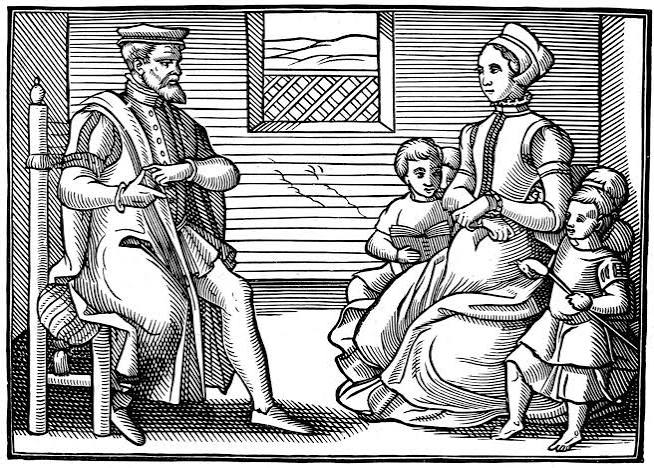
The Puritans never went away. Rather, they perpetuated their beliefs through a variety of phases over subsequent generations. The intense Puritan drive to create a “Holy Commonwealth” (a society aligned with God’s law) was transformed in the 19th and 20th centuries into secular or civic efforts, such as temperance movements, anti-slavery activism, and educational reforms. The development of Christian Nationalist ideology before the 1960s was triggered by a desire to defend white Protestant dominance rooted in the “Christian nation” myth against social, economic, and demographic changes. Key drivers included early 20th-century anti-communism, the 1930s anti-New Deal push, and 1950s Cold War fears of “godless” Communism. Puritan millennialism—the anticipation of Christ’s kingdom—has been re-engineered into modern political urgency, treating the U.S. as the central battleground for cosmic good vs. evil.
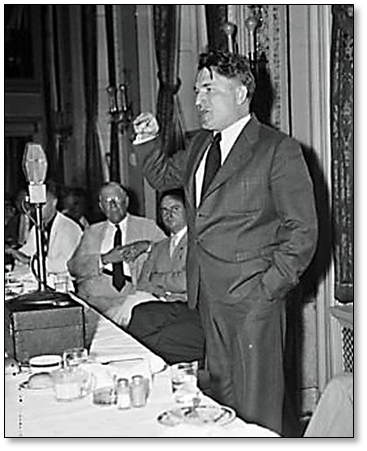
It was the 1940s when a formal “Christian Nationalist” movement began, led by Gerald L.K. Smith, who started the “Christian Nationalist Crusade.” A political organizer for U.S. Sen. Huey Long (D-LA) in the 1930s, he changed parties and ran in the Republican primary for the U.S. Senate in Michigan in 1942. Smith was a fascist, a rabid anti-Semite and anti-communist. His Christian Nationalism was meant to privilege a particular set of cultural values held by a portion of the founding generation of America, a culture to which people of any and every national or ethnic origin could assimilate.[1]
Nevertheless, at a popular level, Christian nationalism almost invariably devolves into rhetoric and language that has elements of white supremacy, discrimination, and xenophobia. And that is because, by its very nature, the Christian nationalist’s definition of “Christian culture” is collocated with white culture. “…[W]e saw this play itself out in the origins of the private Christian school movement, which was wrapped in the language of returning to “Christian values” but was largely a response to racial integration in public schools.”[2] This sharp increase in “segregation academies” in the South following school desegregation rulings saw private school enrollment in the region growing nearly 130% between 1950 and 1965.
Along with the glaring intent to undermine the First Amendment in the use of tax dollars for Christian Nationalist education in defiance of the nation’s constitution, a further elaboration along these lines must examine the potential failure of private and home schooling to teach students the basic subject matter necessary to function in American society and the further failure of such programs to meet basic measures of accountability. One must wonder how the tech moguls who facilitate the political success of Christian Nationalists expect to fulfill their business ambitions with workers who are not well educated in key areas of mathematics or science. The solution so far, as seen in Silicon Valley, is that roughly 66% of tech workers are foreign-born as of early 2025. The conclusion might be that the moguls aren’t concerned about finding adequate workers as long as they can import better educated workers from China or India whose employment and immigration status are held hostage by their mega-rich employers. The mogul attention is focused on deregulation of their processes and reduced taxes on their billions.
A key interest of the modern American peerage is the usefulness of a dedicated demographic of voters. Based on 2024 campaign data, a significant portion of U.S. billionaire political spending heavily favored Republicans, with roughly 65%–80% of top donor funds going to conservative causes. Data indicates that a small but highly influential number of wealthy individuals use their fortunes to advance Christian nationalist causes, with some notable, high-dollar examples. The alliance between the super-rich and Christian nationalists is rooted in a shared desire to reshape American society by dismantling the separation of church and state, reducing government regulation, and limiting the power of labor. It doesn’t take much thought to deduce which groups pursue which objectives.
Wealthy donors, including figures like the Wilks family and Tim Dunn (both Texas oilmen), Jeff Yass (cofounder of Susquehanna International Group, a massive, privately held global quantitative trading and technology firm), and the Koch brothers (oil; their father co-founded the far-right John Birch Society) fund this movement to secure political influence that favors lower taxes and unregulated capitalism, which they often equate with a “biblical worldview.”[3] Other tech moguls and corporate tycoons supporting the religious/political cabal include Elon Musk, Miriam Adelson, Richard and Elizabeth Uiblein, Timothy Mellon, Ken Griffin, Marc Andreessen, Jan Koum, Peter Thiel, Steve Schwarzman, Diane Hendricks, Phil Ruffin, Steven Witkoff, Harold Hamm, Andrew Beal, and Bernie Marcus.
As in so many other hypocrisies, the teachings of the New Testament stand in direct opposition to such efforts. The concept of not building earthly kingdoms, based on John 18:36, emphasizes that God’s Kingdom is not established through political power, violence, or worldly, selfish ambition. Instead, it is built through the inward transformation of hearts, humility, love, and service, aligning with divine, rather than human, desires. In essence, wealthy donors often adopt the “Judeo-Christian values” rhetoric in name only in order to protect their wealth. In turn, they use their wealth to buy legislators while ignoring the religious message because bought legislators provide a powerful, populist vehicle for achieving political and economic dominance.
Court rulings have made clear that the expenditure of tax dollars is obligated to uphold the U.S. Constitution, primarily through the 14th Amendment’s Equal Protection and Due Process clauses, which prohibit states from violating federal rights. While education is not a fundamental right granted by the federal Constitution, any tax-funded education system is supposed to operate within constitutional limits.
The legal standing for private religious schools and home schooling remains largely protected under the Free Exercise Clause, which prevents the government from interfering with a parent’s right to provide a religious education. Legal challenges have primarily focused on preventing the state from promoting religion, rather than regulating the private curricula of religious schools or homeschools, unless those institutions seek direct government aid or public charter status. While the state cannot start a religious charter school, the Supreme Court has ruled in cases like Carson v. Makin (2022) that if a state provides public funds for private education, it cannot exclude schools solely because they are religious. This creates a “gray area” wherein public money frequently flows to private religious schools.
It’s a thin line. The Oklahoma Supreme Court ruled in 2024 (and upheld in 2025) that establishing a religious public charter school violates both the Oklahoma Constitution and the federal Establishment Clause. The court reasoned that because charter schools are government entities and recipients of public funding, they cannot impose religious teachings, distinguishing them from private religious schools.
In Mahmoud v. Taylor (June 2025), the U.S. Supreme Court ruled that public school districts must allow parents to opt their children out of curriculum that includes LGBTQ+-inclusive books, if those books conflict with their religious beliefs. The Court found that denying opt-outs for curriculum designed to “disrupt” traditional views on gender and sexuality constitutes an unconstitutional burden on the free exercise of religion, breaking from lower court precedents that allowed such curriculum. It seems a natural result of such a ruling would also allow parents to opt their children out of science classes that teach evolution or the geological age of the planet.
Courts have addressed attempts to mandate religious texts in public schools. A federal district court in Arkansas (2026) issued a permanent injunction blocking a law requiring the Ten Commandments be displayed in classrooms, citing violations of the Establishment Clause and improper state proselytizing. However, in a different case, the Fifth Circuit upheld a similar Texas law, demonstrating a split in lower courts on this issue.
In cases brought after the Supreme Court gained a conservative majority, it has held that school vouchers for religious education are permissible under the First Amendment because, according to the court, the aid is indirect, meaning it is not provided directly to schools but instead funneled to individual students and families who then decide which schools to attend, a disingenuous approach at best. However, the court has also recognized that state constitutions can, and often do, provide stronger protections than the federal Constitution against government funding of religion.
ACLU commentary on the 2020 SCOTUS decision in Espinoza vs. Montana Department of Revenue included the following:
…[T]he Supreme Court appears to be marching toward a legal paradigm that would virtually destroy a fundamental principle on which the Establishment Clause of the First Amendment was built. As James Madison, the architect of the First Amendment, explained, even “three pence” in compelled aid to religion was too much of a threat to religious liberty. Madison believed that forcing individuals to financially support religion was a direct assault on the fundamental human right of freedom of conscience. He and the other framers also worried that taxpayer funding of religion would weaken religious institutions by making them dependent on the government aid and engender religious divisiveness.[4],[5]
What Does This Future Hold
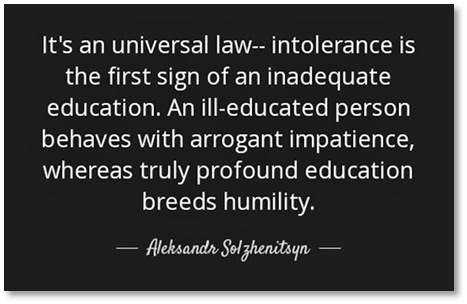
Clearly the health of our constitution’s first amendment is under attack by religious interests. These efforts not only threaten the core of our democracy, they also bolster the extreme minority’s satisfaction with their intellectual laziness. It’s important to note how one Christian homeschooling website glorifies willful ignorance and laments that “there are so many deceitful things [read: facts] being taught in public schools these days…,” citing Corinthians 3:19. “For the wisdom of this world is foolishness to God.”
But that’s not the consensus on Paul’s meaning. Paul was not condemning the pursuit of knowledge or education altogether. He was warning believers against adopting worldly values as the measure of truth or spiritual success. The passage is an invitation to embrace the humility of the gospel, not the golden dressings of a political figure.
Sadly, that passage is often misinterpreted as an excuse for willful ignorance. Yet biblical context suggests it emphasizes humility, not intellectual laziness. It contrasts arrogant human self-reliance against divine wisdom. While it warns against valuing worldly intellect over God’s truth, scripture also calls for diligence, knowledge, and wisdom, indicating that willfully refusing to understand is distinct from rejecting human arrogance.
In 2 Corinthians 8:7: The Apostle Paul commends the church for excelling in faith, speech, knowledge, and diligence, while encouraging them to apply those same traits to the grace of giving. Additionally, 2 Peter 1:5-8 urges believers to make every effort to supplement their faith with virtue, virtue with knowledge, and knowledge with self-control, ultimately emphasizing the necessity of this diligence to remain fruitful. Two specific Old Testament passages also address this point: Proverbs 2:1-6 calls for the diligent pursuit of understanding, noting that if you search for it like hidden treasure, the Lord will grant wisdom and knowledge. Ecclesiastes 9:10 advises doing everything with your might while on Earth, as there is neither work, plan, knowledge, nor wisdom in the grave.
If taken literally and alone, the Corinthians 3:19 passage should also ban Christian Nationalists (and other strict interpreters of religious texts) from using inventions made possible by modern science. Such ‘fruits’ of non-religious ‘foolishness’ are pervasive in our society, things like cell phones and automobiles, medical care including cancer treatment and drugs for erectile dysfunction, television and TV dinners. Shouldn’t a steadfast Christian Nationalist also avoid these products of “wisdom of this world”?
The lack of respect for or knowledge of the basic workings of science, or our political system, or the responsibilities of citizenship are just a few of the destructive consequences of willful ignorance, just as is blind acceptance of authoritarian rule in a nation where the government is meant to be “of the people, by the people, for the people,” as stated in 1863 by Abraham Lincoln in his Gettysburg Address. At the very least, a person must know enough to know when he/she is being lied to, of increasingly critical importance in the growing use of artificial intelligence. Or, the acceptance of, as disingenuously stated by U.S. Counselor to President Trump, Kellyanne Conway in 2017, “alternative facts.” [6]
Without a healthy body and effective education along with the ability for rational thought, Americans face more of the division and violence that have marked recent years. This is how the extremists guiding the Republican Party make progress in putting people like current Arkansas governor Sarah Huckabee Sanders and current president Donald Trump into powerful authoritarian roles. The longer the uber-wealthy forces behind this trajectory are able to sway the votes of the willfully ignorant, the greater will be the slide toward authoritarian rule in our democracy.
These markers of religious ‘progress’ are enthusiastically noted by the nation’s adversaries, who take every opportunity to accelerate the division and discord. Erosion of our constitution’s principles takes us further from our unity and responsibilities as a free people, none of which is possible without equal education.
That suits the new peerage just fine. While about 19% of political contributions are made by the super-rich, the donor group is dominated by a small group of billionaire megadonors across finance, tech, and inherited wealth. The top contributors are heavily divided by party, though they lean heavily toward the Republican party and conservative issues. These oligarchs use their wealth to shape policy through lobbying, campaign donations, and efforts to repeal taxes, such as the inheritance tax. As it existed in centuries past, the peerage accepted as their due a certain renown, even deference, from the public. Benefits included high social status, immense prestige, and legal privileges, including exemption from certain legal processes. It afforded nobility direct access to the monarch to advise on matters of state.
Historically, the wealthiest elites attained god-like status primarily in civilizations with divine kingship, where economic control and religious authority were merged. Throughout antiquity and the Middle Ages, the richest figures—who were usually monarchs, pharaohs, or high clergy—used this perceived divinity to legitimize their immense power. During the Middle Ages, Christian theology strictly forbade the wealthy from literally claiming to be gods. However, wealthy nobles and high-ranking clergy accrued so much power that contemporaries expressed fear they would act “as gods among men.” The interchangeable use of the word “Lord” applied both to members of the British peerage was well as the Christian God. To justify their monopoly on wealth while the peasantry struggled, these elites constructed elaborate narratives of divine favor, often attributing their extreme privilege to God’s will.
Does any of this sound familiar?
The beneficiaries of Project 2025 include corporations and billionaires who seek massive tax cuts, fewer restrictions on wages and labor rights in their companies, diminished environmental protections while prioritizing oil, gas, and coal industries, rolling back climate protections, drilling restrictions, and workplace safety, and weakened labor unions, to name a few. Employers can legally discriminate against workers based on race, gender, or sexual orientation under recent religious freedom exemptions. The plan expands executive power, making it easier for a puppet president to control agencies, law enforcement, and judicial appointments. Dismantling career civil service allows politicians to fire government workers and replace them with loyalists as well as dismantling watchdog agencies.
Christian extremists and their children are more likely to bow down to the authority of corporate titans and the superrich. This acceptance is driven by a shared, long-term political strategy designed to reshape the United States into a theocracy that supports unregulated capitalism. This explains the fervent embrace of Christian extremists by tech moguls and billionaires. This alliance is largely driven by a combination of shared political goals, economic incentives, and a desire to dismantle existing democratic institutions in favor of a more controlled, “meritocratic” society.
While this may seem contradictory given the secular nature of Silicon Valley, the partnership is viewed by experts as a durable “marriage of convenience” known as a plutocratic theocracy. Financial backing for legislation that supports much of the Christian Nationalist agenda comes through backing by this sector of the uber-rich. Legislation like the proposed SAVE Act makes it harder for women plus Black, brown, young, and poor voters—groups that tend to vote Democrat—to cast ballots. This helps ensure conservatives remain in power, even if their policies are unpopular. The plan promotes religious exemptions in laws, allowing businesses, schools, and healthcare providers to discriminate based on religious beliefs. Plans to cut federal funding for education, healthcare, and public infrastructure open the door for private companies to take over those endeavors.
Already corporations profit from privatized prisons, healthcare, and even schools at higher costs to taxpayers. In reality, private ownership adds to consumer costs with profits to the private owners, whereas government-supported programs for healthcare, prisons, and schools have no profiteers. Users pay for cost of operations, that’s it. There is nothing new about taking profit out of products and services essential to the operations of our society. 70% of electricity and 95% of natural gas in the U.S. are provided by private monopolies (investor-owned utilities) whose rates are regulated by state public utility commissions. Water and sewage are almost universally managed by public or municipally regulated entities.
Many municipalities have regulations that cap the maximum amount landlords can charge or limit how fast rent can increase. Medicare and Medicaid programs establish reimbursement rates for hospitals, doctors, and pharmaceutical products, acting as effective price controls on those services. The Inflation Reduction Act (Joe Biden) grants Medicare the authority to negotiate prices for specific drugs, setting a “maximum fair price.” Bus, subway, and commuter rail fares are typically regulated or directly set by local government authorities. Many cities set maximum rates or fare structures for taxis. Usury laws act as price controls on the maximum interest rates banks can charge.
Government bodies like the Consumer Financial Protection Bureau (CFPB) work to regulate or cap fees, such as ‘swipe fees” or “junk fees.” No wonder that the Trump Administration’s hatchet man and director of the Office of Management and Budget Russell Vought now serves as CFPB’s temporary head of the agency, which has been reduced to one-third its manpower and remains at risk of total demolition.
In the drive to implement the Project 2025 agenda, Vought and others are attempting to privatize everything that can drive profits for the oligarchs while regulating personal behaviors to satisfy their cabal of extreme religionists. The administration and its activist legislators create Christian “sharia” laws with abortion bans and anti-LGBTQ+ laws aligned with religious conservative values. Bans on gender-affirming care and restrictions on contraception access give conservative religious groups more control over everyone’s private life.
We need look no further than nations currently ruled by religious law to see where we are headed under Christian extremism.
- In Iran, for example, we find mandatory hijab for women, severe censorship of media and internet, limitations on freedom of assembly, bans on alcohol, restrictions on social interactions between unrelated men and women, and severe penalties for perceived moral crimes.
- In Afghanistan, the Taliban has enforced severe, systematic restrictions largely targeting women and girls, aimed at eliminating them from public life. Key restrictions include a ban on education beyond grade six, prohibiting most employment for women, requiring strict covering and male guardianship for travel, and censoring media, music, and entertainment.
- Social restrictions in Saudi Arabia are based on a strict interpretation of Sharia law, prohibiting public criticism of the government or Islam, alcohol consumption, and non-marital relationships. Key restrictions include severe limitations on free expression, mandatory modest dress codes, gender segregation in some public spaces, and remnant male guardianship systems affecting women’s freedom of travel and family decisions.
Worldwide, where religion permeates government, restrictions on personal behavior include the following:
- Islam prohibits the consumption of alcohol, while Jewish laws often dictate specific ways food must be prepared.
- Baptized Sikh men and women must not cut their hair (Kesh) and often wear a turban (dastaar) to cover it.
- Orthodox Jews may restrict activities on the Sabbath, including avoiding using electronics, driving, or conducting business from Friday sunset to Saturday sunset.
- Some religious practices involve the separation of men and women in public or worship spaces, most recently Southern Baptists moving forward to ban women from holding the office of pastor and prohibits women from performing the functions of a pastor, specifically “preaching to the assembled congregation.” Critics say this could be interpreted to prohibit women from any leadership in the church.
- Some religious traditions discourage or prohibit marrying or having sexual relations with people outside their faith.
- Certain religious groups, often considered restrictive, may discourage members from maintaining close friendships with people outside the faith to maintain purity or focus.
- Certain Christian denominations, such as many Pentecostal or Evangelical groups, may restrict or prohibit activities like gambling, dancing, or viewing certain media.
- Certain interpretations within Catholicism, such as those emphasizing the Vatican’s teachings, restrict the use of artificial contraception.
Which regulations on your private or religious behavior would you prefer to have enforced in the United States?
[1] Long, Rhys. “Origin story: The history of Christian Nationalism is littered with hate and extremism,” Aug 29, 2023, Americans United. https://www.au.org/the-latest/church-and-state/articles/origin-story-the-history-of-christian-nationalism-is-littered-with-hate-and-extremism/
[2] Chamberlain, Dale. “3 Dangers of Christian Nationalism,” Christianity.com, Jan 17, 2023 https://www.christianity.com/wiki/ christian-life/dangers-of-christian-nationalism.html
[3] By this logic, so would doing away with antibiotics, electricity, industrialization, and other modern developments.
[4] Weaver, Heather L. “Taxpayers Shouldn’t Have to Fund Religious Education: How Today’s Supreme Court Decision Further Erodes the Separation of Church and State.” ACLU, June 30, 2020. https://www.aclu.org/news/religious-liberty/taxpayers-shouldnt-have-to-fund-religious-education-how-todays-supreme-court-decision-further-erodes-the-separation-of-church-and-state
[5] Espinoza vs Montana, 2020. https://www.scotusblog.com/cases/ espinoza-v-montana-department-of-revenue/
[6] The phrase “alternative facts” was coined by former U.S. Counselor to the President, Kellyanne Conway. She used the term during a January 22, 2017, interview on NBC’s Meet the Press while defending White House Press Secretary Sean Spicer’s false claims about the inauguration crowd size for President Donald Trump. When host Chuck Todd confronted her about Spicer uttering provable falsehoods, Conway replied that Spicer was providing “alternative facts.” Todd immediately pushed back, stating, “Look, alternative facts are not facts. They’re falsehoods.”
This is the 7th chapter of my booklet New Puritans and the U.S. Peerage: The Willful Destruction of Public Education

