

Arkansas is a textbook example of what happens when the government is controlled by Christian extremists. The state ranks among the top states in the nation for support of fundamentalist views, with studies indicating that roughly 54% of residents hold these viewpoints. As of 2026, Arkansas ranks 1st in the nation for support of Christian Nationalism, with Mississippi (52%), West Virginia (51%), and Oklahoma (49%) close behind.
It follows that Arkansas generally falls in the bottom tier of U.S. states for education, frequently appearing between 34th and 47th depending on the metric (e.g., K-12 achievement or overall attainment). While 86% of residents hold a high school diploma, the state faces challenges with reading proficiency and higher education attainment. Arkansas consistently ranks in the bottom ten states for education due to high poverty rates, low college attainment, and historical underfunding. Challenges include a 16.3% poverty rate (above the 11.6% national average), significant rural divides, and low teacher salaries, contributing to achievement gaps and lower academic performance in math and reading.
Predictably, Arkansas also consistently ranks among the top two states with the highest teen birth rates in the U.S., frequently appearing at 1st or 2nd place. With around 23.8 to 27.8 births per 1,000 females aged 15–19, the state’s rate is over 90% higher than the national average. Arkansas also consistently holds pride of place among the worst states for maternal mortality in the U.S., often appearing in the bottom three. Recent reports place Arkansas with one of the highest rates in the nation (e.g., 44 deaths per 100,000 live births from 2018-2021), with 92% of these deaths deemed preventable, often driven by rural health deserts.
As of 2024–2026 data, Arkansas stands among the worst states in the U.S. for sexual violence, holding the 2nd highest rate of rape in the nation and ranking 3rd highest in registered sex offenders per capita. As of late 2024, Arkansas had the second-highest rate of registered sex offenders in the nation, with roughly 640 offenders per 100,000 residents. Reports indicate roughly 77 rapes per 100,000 residents. Reports indicate that the state has often ranked at or near the top nationwide for these instances.
Arkansas has historically ranked as the highest state in the nation for the rate of child sexual abuse reports. The state’s highest rate of child sexual abuse reports in 2020 was 254 cases per 100,000 children; in 2022, the numbers had increased to 267 per 100,000. During SFY 2025, sexual abuse accounted for 20% (1,384) of the 6,922 victim children involved in “true” maltreatment investigations. Neglect accounted for 64% of cases, and physical abuse accounted for 23%. That year the Arkansas Child Abuse Hotline processed over 32,574 reports for investigation or differential response through the Department of Human Services (DHS) and the Arkansas State Police Crimes Against Children Division (CACD). Of the substantiated victims, 48% were ages 5 and under, 54% were female, and 61% were white.
According to the 2025 America’s Health Rankings report, Arkansas shines forth as 49th out of 50 states, placing it among the lowest in the nation for overall population health for metrics like smoking rates, obesity, and dental visits, although it has shown improvements in reducing drug-related deaths, dropping from 637 in 2021 to 371 in 2025. Nevertheless, despite the recent drop in fatal overdoses, a 2026 study by WalletHub ranked Arkansas as the 2nd worst state in the nation for overall drug abuse, lagging due to a high rate of opioid prescriptions per capita and a scarcity of substance abuse counselors.
Arkansas typically stands among the lowest in the nation for median household income, usually appearing in the bottom three to five states, often ranking 47th or 48th. Recent data indicates a median household income of roughly $55,000 to $60,773, which is significantly lower than the national median, though the state also has a lower cost of living.
As of 2024-2025, the state was distinguished to sit in the bottom five for child well-being (45th) and has a child poverty rate of 21-22%. In keeping with the state’s abysmal performance in all these arenas, its school voucher program ranks near the top, among the top three to four states nationwide for school choice, specifically regarding its Education Freedom Accounts (EFA) program. The program has grown rapidly since implementation in 2023, with over 46,000 students approved for the 2025-26 school year. The 2026 Arkansas state budget for the upcoming fiscal year includes a base allocation of $309 million for the Educational Freedom Account school voucher program. Lawmakers set aside an additional $70 million in surplus funds to account for further anticipated growth in the voucher program.
Money
One might argue that the voucher program is meant to lead Arkansas to higher rankings in all these important areas. Would that this were so. But 95% of Arkansas students attend public schools, which were already under-financed and otherwise hamstrung from adequately educating the state’s youth. Now, with vouchers sucking down tax dollars, public schools will be even less able to provide adequate education to the majority of the state’s youth.
The increasing adoption of universal voucher policies threatens to divert even more funds away from public-school systems and to worsen the quality of education for students remaining in public schools. In recent years, debates about banning books and diversity, equity, and inclusion curricula decisions have eclipsed discussions on the damage caused by pulling back resources from public schools. Wherever one comes down on debates about the precise curricula taught in public schools, arguing that it should be taught with less funding and under-resourced teachers and classrooms is misguided at best.
The Arkansas voucher programs are not without critics.
For the upcoming school year (2026-2027), all parents in Arkansas qualify for about $6,800 in state subsidies for private school tuition or homeschool expenses, no matter how much money they make or the test results of the public schools their children attend. So not surprisingly, as of this writing, 45,500 applicants have stepped up to the trough, blowing through not only the $187 million legislators appropriated for the program in the state budget but another $90 million in reserve funds set aside just in case the appropriation ran out. …Whether the money runs out this year or not, what’s clear is that the vouchers program, [Governor] Sanders’ pet project, has become a voracious consumer of taxpayer dollars, with more than $374 million spent in the first three years — on a program that hasn’t, doesn’t, and won’t improve a single public school anywhere in Arkansas and which research shows will negatively affect educational outcomes for students who use it.
More than a few taxpayers might also be chagrined that voucher money has been used to subsidize enrichment activities for homeschool students that include horseback riding, ninja warrior training, cooking classes, and archery — activities that parents of public school students must pay for themselves. Or that vendors getting money from the program operate largely on an honor system when it comes to complying with program rules.
…They could pay for vouchers by raising taxes, clearly a nonstarter for the Republican supermajority. They could also keep costs in check by limiting the number of participants. However, telling parents no after promising them free money would create intolerable political pressures, given that the point of the program is to allow parents with ideological opposition to public schools to escape from them. [1]
This last bit is key to understanding the embrace of school vouchers in Republican-majority states like Arkansas. Over the past five years, 14 states—all with Republican-dominated governments—passed universal Education Savings Account (ESA) or voucher laws, allowing public funds for private tuition. These programs face significant criticism for draining funding from public school districts, showing mixed or negative student achievement results, and lacking academic and financial accountability. These programs benefit families already enrolled in private school rather than low-income families.
During the 2021-22 academic school year, six percent of Arkansas’ K-12 students were homeschooled, more than the number of students in the state who attend private schools. In some areas of the state, the percentage is much higher, with districts like Eureka Springs and Searcy topping out at twenty percent. As of late 2025, 6.7% to over 8% of Arkansas K-12 students are taught at home, with recent data estimating over 32,000 students. Homeschooling in Arkansas surged post-pandemic and continues to grow, representing one of the highest percentages in the nation, particularly in Northwest and Central Arkansas. [2]
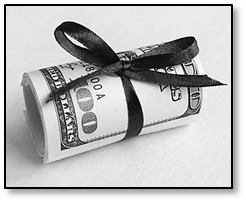
Arkansas pays families for homeschooling and for private school costs, as described in the Tulane study cited on Page 38. Funds are deposited quarterly into a ClassWallet account and are not given directly to parents as cash. Parents can use the funds to purchase:
- Curriculum and instructional materials;
- Tutoring services and educational therapies;
- Extracurricular activities (e.g., gymnastics, dance, music);
- Technology (computers, printers, software); and
- Transportation costs.
While payments through the ClassWallet program are meant to ensure money goes specifically to allowed materials and activities, some lawmakers and critics have raised concerns that, once goods are purchased, the program relies on an “honor system” to ensure the items are actually used for education; physical home checks are not conducted. While expensive items like computers are intended for educational use, they do not remain the property of the state once purchased by the family, a de facto gift of taxpayer dollars to that household.[3]
These expenditures might be justified if there were some method in place to test the academic success (or lack thereof) of homeschooled students. But following the repeal of testing requirements by Act 832 of 2015, Arkansas does not require any state-standardized testing for homeschool students. Parents have complete autonomy in choosing their own assessments for academic progress, and there are no mandatory subject tests, even for high school “graduation.” If the parents wish, some school students can participate in optional state-funded tests, such as the PSAT (10th grade) or ACT (11th grade). To opt for homeschool, parents only must file an annual “Notice of Intent” with their local school district superintendent between June 15 and August 15, declaring responsibility for their child’s education. No state-mandated curriculum, teacher qualifications, testing, or hours of instruction are required.
Once an Arkansas parent has filed notice of intent to homeschool with the local school superintendent, the parent is free to choose his/her own curriculum. Parents are blissfully free to do whatever they like, including nothing at all, toward the ability of their child to function productively and with understanding of their responsibility as a citizen in American society.
Apparently, “Education Freedom” means two things—the ‘freedom’ to demand tax dollars for religious teaching and the freedom not to be educated while spending tax dollars.
As reported by Arkansas Advocates for Children and Families, based on a report compiled by the Arkansas Educational Freedom Accounts Program Annual Report:
The 2024-2025 Arkansas Education Freedom Accounts Program Annual Report does not demonstrate that Arkansas’s voucher program is fiscally modest. Evidence from the first two years shows that the program has created substantial new spending obligations, with costs already exceeding initial projections and only a small fraction of expenses offset by switchers. The overwhelming majority of EFA recipients were never enrolled in public schools, meaning the program largely subsidizes private education for those who already had the ability to choose which school to attend. Outcomes from other universal voucher states further illustrate the long-term budgetary risk this program poses, including escalating costs and reductions in public school funding. As Arkansas begins to determine adequate and equitable funding for public education amid a challenging economic environment, policymakers must carefully weigh the growing financial burden the school voucher program creates. [4]
The cultural changes which have allowed women to vote and work outside the home, that freed Blacks from slavery and granted equal rights, that more recently have recognized the right to privacy in matters such as abortion rights, gender identity and LGBTQ+ existence are all grist for the Christian Nationalist mill. These advances they wish to overturn stem from court decisions upholding these rights as constitutionally-guaranteed rights for all Americans.
Court battles yet to be fought include whether or not tax-funded promotion of Christian Nationalism is a form of sedition. Those battles can’t come soon enough.
[1] Shumate, Rich. “’Free Money’ is popular but never really free,” Arkansas Advocate, July 7, 2025. https://arkansasadvocate.com/2025/07/07/free-money-is-popular-but-never-really-free/
[2] https://www.arkansasonline.com/news/2022/sep/22/state-of-education/
[3] Hardy, Benjamin. “School vouchers will soon get another $32 million, bringing total for year to $309 million,” Arkansas Times, Jan 13, 2026. https://arktimes.com/arkansas-blog/2026/01/13/school-vouchers-will-soon-get-another-32-million-bringing-total-for-year-to-309-million
[4] “Arkansas’s K-12 Voucher Program: Rising Costs, Limited Savings, Growing Fiscal Concerns,” https://www.aradvocates.org/arkansass-k-12-voucher-program-rising-costs-limited-savings-growing-fiscal-concerns/
This is the 6th chapter in the booklet New Puritans and the U. S. Peerage: The Willful Destruction of Public Education


How do you stand it? And no testing? I know “teaching to the test” has a bad rep for good reasons (at least here in Virginia), but to a level you describe. Hard to defend. Thank you for sharing this.
Mara Seaforest