The Poverty of Conservatism


A continuing crisis plagues Arkansas. Like a snake eating its tail, poverty, addiction and mental illness, teen pregnancy, sexual violence against women, and low educational achievement perpetuate themselves as a result of entrenched conservative thinking. Costs for addressing these problems continue to skyrocket while the state’s earning power lingers near the bottom.

Where do we cut the snake?

Arkansas ranks 48th out of 50 states in terms of poverty. In 2015, 19.1% percent of the state’s households—one fifth—have incomes below the federal poverty line of $24,250 for a family of four.[1]  For 2016, the state’s population of 2,887,337 included 550,508 people living in poverty.[2]

In a direct correlation to the poverty rate, the state ranks 39 out of 50 states in how well students are educated.[3] The state slips further down the scale for persons 25 years of age when considering the following factors: Only 84.8% graduate high school. Only 21.1% obtain a bachelor’s degree, a ranking that puts Arkansas at 48th out of 50. And only 7.5% obtain graduate degrees, a rank of 49 out of 50.[4]

We hover near the bottom at 46 in terms of mental illness in a compilation of 15 factors including all ages, availability of treatment, and addiction rates.[5] Between 2010 and 2014, over one third of teens in need of mental health treatment did not receive it while over 53% of adults did not. Only 20% of Arkansas residents with drug dependence and 10% with alcohol dependence received treatment.[6]

The state consistently ranks in the top five for teen pregnancies with up to 80 births per 1000 occurring among teen girls ages 15 to 19. Of these, 60% are white, 27% are black, and 11% are Hispanic. Counties with the highest rates included Sevier, Nevada, Arkansas, St. Francis, Mississippi, Jackson, and Randolph.[7]

According to a 2014 report by the National Conference of State Legislatures:

Children born to teen parents are more likely to enter the child welfare or juvenile justice systems and to become teen parents themselves. Every year, thousands of young Arkansans enter one or both systems. Research shows that, nationwide, the children of teen mothers are twice as likely to be placed in foster care as their peers born to slightly older parents. Sons of teen mothers are 2.2 times more likely to be incarcerated than the sons of mothers aged 20 to 21.[8]

The crisis becomes most apparent in the number of Arkansas children in foster care. From March 2015 to March 2016, the total number of available and in-use beds in foster homes increased from 2,801 to 3,306, but the number of foster children also increased, from 4,178 to 4,791. A 2016 report states that substance abuse by caregivers accounts for over 50% of children in foster care.[9]

Despite such high rates of teen pregnancies, many Arkansas school districts do not provide any sex education. Many others offer abstinence-only education including a virginity pledge (14 districts[10]), a ridiculous non-starter since census records show that over 52% of Arkansas teens are sexually active. Only seven school districts provide comprehensive sex education addressing contraceptives, sexually transmitted infection, abortion, and sexual orientation.

The Centers for Disease Control report that 37.4% to 38.5% of women in Arkansas experience at least one event of sexual violence during their lifetimes. These experiences include rape, sexual coercion, and/or unwanted sexual contact.[11] Among sexually active teens, 18% of females report acts of violence (being hit, slammed into something, or injured with an object or weapon on purpose by someone they were dating) and 16% reported being raped.[12]

Are Arkansas citizens somehow genetically predisposed to suffer these conditions? Is it something in the water? Or might the answer be found in the conservative mindset of a majority of Arkansas citizens?

Arkansas ranks 5th in the number of churches per capita. Seventy percent of adults define themselves as ‘highly religious’ with 65% saying they pray daily and 77% saying they believe in God with absolute certainty.[13] The predominant religion practiced in Arkansas is Southern Baptist, a conservative Protestant sect which believes in a literal interpretation of the Bible.

Predictably, any push for sex education and contraceptives in public schools provokes conservative outrage. By religious thinking, unwanted pregnancies serve as punishment for illicit sex. The burden borne by women in unwanted pregnancy, childbirth, and childcare is God’s retaliation for the sins of Eve. As stated in Southern Baptist doctrine, “A wife is to submit herself graciously to the servant leadership of her husband.”[14] Prevention either through birth control or abortion upends the natural order of things as ordained by God.

The prevailing idea of conservative parents is that talking about sex and especially advocating for birth control of any kind creates a permissive attitude wherein teens are more likely to have sex. Data clearly dispute this belief. But the refusal to accept widely accepted evidence about the effectiveness of sex ed fits perfectly with the greater mindset of religious conservatives: willful ignorance about any and all information that doesn’t square with religious teachings.

Under the belief that addiction or non-marital sexual activity are moral failings, many efforts to address non-marital sex, sexual abuse or substance abuse rely on faith-based programs. Yet as noted by a counselor with twenty years in faith-based addiction treatment, “Often times, Christian programs view the secular approach to recovery as counterproductive to their message and will often discredit and even disregard medical or empirical based advice to addiction recovery.”[15]

While embracing some aspects of modern science and the advances of civilization such as automobiles, cell phones, DVRs, and medical progress, conservatives refuse to acknowledge other key findings of our times. Early religions strictly regulated a woman’s sexual activity out of concern for proving paternity and reducing conflict between competing males, among other things.  None of that matters today. Genetic testing quickly solves questions of paternity. But religion has become so institutionalized its practitioners can’t back up far enough to consider its origins or usefulness.
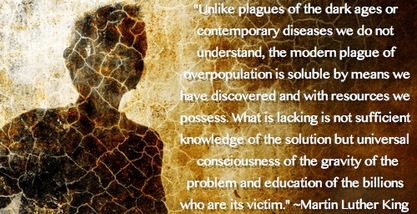
There’s a blind adherence to the tradition of making babies as the primary goal in life.

It doesn’t take a genius to figure out that teen pregnancy leads to lack of education which in turn leads to poor employment opportunities, or that a state with a high rate of poorly educated adults won’t attract many employers. It also doesn’t take a rocket scientist to understand that poorly educated people with poor job opportunities are more likely to turn to drugs or alcohol or suffer other forms of mental illness. Inadequate nutrition also plays a role, another cause and result of mental illness and poverty.

Further, an embattled position in poverty with subpar education leads people directly to unreasoned fear of Other—xenophobia and racism.

We have to start with the head of the snake. If we hold any hope of interrupting this vicious cycle, our state and national educational standards must require sex education. Such requirements must be imposed even in private, religious, and home school settings.

The requirements can’t stop there. All children must be required to learn the basics of science, history, political science, and other fields that serve as major elements in critical thinking about the modern world. While the state cannot dictate whether someone embraces any particular religion, we can dictate that our children are adequately prepared to make an informed choice about what to believe.

We cannot allow reactionary religious beliefs and tribalism to undo what civilization has achieved thus far.

The hue and cry against such reforms in education will be loud and long. State and federal legislators will be hard pressed to maintain a firm stance in the face of entrenched dogmatic beliefs. It will take true leaders to enact reforms in a time when leadership seems missing from public life. That means we must elect educated progressives who will carry the weight. The future of our nation depends on it.

~~~


[1] https://en.wikipedia.org/wiki/List_of_U.S._states_by_poverty_rate

[2] https://talkpoverty.org/state-year-report/arkansas-2016-report/

[3] https://www.usnews.com/news/best-states/rankings/education  The

[4] https://en.wikipedia.org/wiki/List_of_U.S._states_by_educational_attainment

[5] http://www.mentalhealthamerica.net/issues/ranking-states

[6] https://www.samhsa.gov/data/sites/default/files/2015_Arkansas_BHBarometer.pdf

[7] “Say no to sex, most state districts teach,” Ginny Monk. Arkansas Democrat Gazette. Sunday September 24, 2017. Page 1.

[8] http://www.ncsl.org/research/health/teen-pregnancy-in-arkansas.aspx

[9] “Children in foster care in Arkansas reaches all-tine high.” Brian Fanney. Arkansas Democrat-Gazette, August 22, 2016. Online access October 18, 2017

[10] “Say no to sex, most state districts teach”

[11] https://www.cdc.gov/violenceprevention/pdf/NISVS-StateReportBook.pdf

[12] https://www.hhs.gov/ash/oah/facts-and-stats/national-and-state-data-sheets/adolescent-reproductive-health/arkansas/index.html

[13] http://www.pewresearch.org/fact-tank/2016/02/29/how-religious-is-your-state/?state=arkansas

[14] http://www.sbc.net/aboutus/basicbeliefs.asp

[15] http://www.addictioncampuses.com/resources/addiction-campuses-blog/3-reasons-christian-rehabs-dont-work-according-to-a-pastor/


 

The Old West

In the completion of my recent book, Murder in the County: 50 True Stories of the Old West, I discovered that three of the fifty murders profiled there were committed by members of the same family! Intrigued, I researched more about these folks and the result is now published under the title The Violent End of the Gilliland Boys. Fascinating and shocking, this story features more twists and turns than an Ozarks dirt road.

Christmas Day horse races 1872, Middle Fork Valley.  Young Bud Gilliland waits, eager for another chance at his neighbor Newton Jones. Only this time, after two years of sparring, Newton gallops up in a cloud of dust, aims his Spencer rifle, and sends Bud to a well-earned grave.

The death of Bud surely grieved his father. But before the curtains closed on these descendants of J. C. and Rebecca Gilliland in 1891, two other sons and a grandson would die a violent death while yet another grandson served hard time for murder.

What was it about the Gillilands?

This recounting of the family tracks their ancestry, their pioneer years on untamed land, and the hard work that made them one of the wealthiest families in Washington County, Arkansas. A fascinating tale of brash ego, brave gallantry, and plain old bad luck.

Paperback now available for only $9.95 at. Don’t miss it!


Lost Song

Lurking in the back of my mind, an emotional revelation waits. What it is, I couldn’t tell you. A memory from my past? An understanding about myself? About life in general, the world? I don’t know.

I think that if I waited long enough, carved away the distractions like a pending visit from one of my kids, or the telephone that might ring, or the dog barking outside at falling leaves, whatever It is might reveal itself. It might stand fully formed in front of me, shimmering in magnificence. Terrifying. Fulfilling.

It won’t come, though. I know this because I’ve felt this way before. It never comes, at least, not lately. Now when I need it the most.

In the past, it came with LSD and mescaline. It came with sex. It came when I pounded out the last bars of “The Long and Winding Road” on the piano and tears ran down my face. It came when I reeled off the walls, tequila rushing through my veins, and the truth was made known.

This is different.

I get nowhere with booze. Won’t even consider psychedelics or sex. I can’t look at a piano, much less sit down to play one.

This is like singing, something I once did well. Singing came out of me like some truth too profound to express any other way. I can’t sing now. My voice is old and broken. In my dreams, I can sing. In my dreams, I’m also younger, lovely, strong.

When I try to sing, my voice breaks around middle C, something I noticed after one of several surgeries and which I assign to a tube being forced down my throat. Vocal cords pushed aside, deformed or broken. I want to open my mouth and let a pure note emerge, then another and another until the last note shines off into the distance. I feel it inside me, waiting to come out.

One of my expectations, now that I think on it, was to surround my older years with the things I had no time for when I was young, things like painting where my brush would drift over the paper spreading colors into magical swirls and hues. Things like strumming a guitar again, forming chords that drifted off into the evening air. I would sing along, remember “Scotch and Soda,” “Girl from Ipanema,” “Turn Around”…

I can still paint. I have the supplies. The method has become rusty, but if I applied myself, I could remember how to make shadows while the paper is still damp. I could let orange fade into indigo along a sunset horizon.

Somewhere in all that is the thing I can’t quite reach.

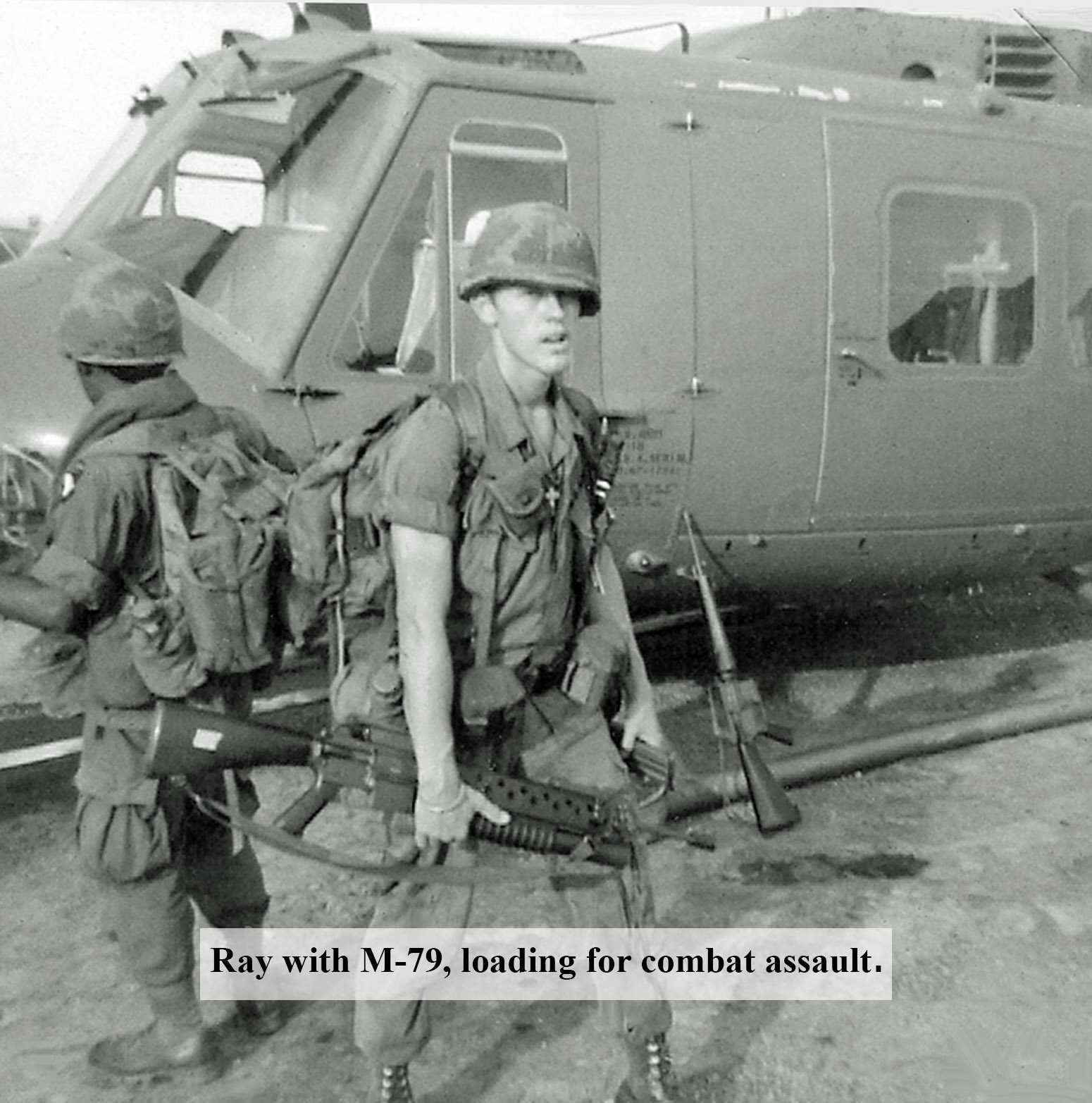
Ray’s Vietnam

Excerpt from Ray: One Man’s Life

We went into A Shau valley at least four times, maybe five. Or into the mountains around the valley. The valley itself is something to talk about. They almost never shut the doors on those choppers. They’re up there, thousands of feet in the air. You’re flying straight for a long time. When they make that left hand swing, you see that valley. It’s a big green lush beautiful valley, lots of high mountains around it. It has a little haze on it, makes it looks eerie but beautiful. One of the prettiest things I’ve ever seen. But also one of the scariest.

We’d already heard about it, but once you’ve gone there, it’s scary. Once you know what’s on the ground, it’s different. When they make that left hand swing into the valley, no matter how brave you are, a cold chill goes thru you. You realize you may be about to die. The valley isn’t that big, and it comes quick. It’s always a combat assault, you never land. It was the most dangerous place on earth at the time.

We hit the valley, come in at the bottom at the foothills. We started out with two platoons and soon as we got there called in the reserve platoon. I remember we knew there’d already been contact and already long range patrols on the ground, some dead, some wounded. We were going after them and trying to get the dinks that were there. Before we landed, some of the wounded got out with medevac. What was left of the long range patrol, three, four was all that survived out of the six. Not from our troop, but they were from our regiment. Our sister companies, part of the same group. Our own long range patrols, just not our company.

I don’t know how those medevacs got them out. Their choppers were wobbling. The Cobras were trying to put in, Cobras above us spitting out machine gun fire trying to support our assault. Our chopper was the first one of the assault, one of twelve. The Cobras backed up a little to let us in.

We knew it was going to be a jump in. Harley was standing out on the skids and opened with his M-60 as we made the assault. That was extra fire they weren’t expecting. They usually try to take out door gunners, but they weren’t expecting somebody out front on the skids. It’s a bumpy ride, coming in to an assault. The copter comes in fast and then slows down fast, and I don’t know how Harley hung on. That last bump is when you have to jump because we’re under fire. Our assault was made without any casualties, at least in our bird.

Me and Shibe tried to stay together, but only half the time could we do that. We were the first team in that landing zone which was just jungle in the foothills. We throwed our backpacks, jumped on them, and then we done what we had to do trying to get some all-around security. There’s only six men on a bird. There was pretty much nobody in charge at that point but we knew what we had to do, which was secure the place and get to higher ground. We knew our lieutenant would be on the next bird.

We seen him get in and didn’t think anybody on his bird got hit, but we were taking fire. He started gathering up his men as they’re coming in. We’re trying to spread out and get further into the jungle. The long range patrol had told them there was still another man there, but the lieutenant was the only one who knew that. He was in communication with a different squad and headquarters. We knew other birds were coming in, and we’re trying to put out suppressant fire to help the other troops coming in. We couldn’t wait for our reserve platoon so at that point we only had 48 men. Four squads.

Fire is getting heavier. We’re starting to realize there’s a lot more NVA there than we realized. We realized they had us trapped because they were in the valley floor waiting for us. The official army report called this an ambush.

We’d landed just a little bit higher. The long range patrol was in a little higher elevation but they were already gone. We’re doing what we’d been trained to do, which was cover for the other choppers landing.

The valley floor has tall grass and holes the size of basketballs where they’re hiding to shoot at us. That’s why the valley is so scary. We’re starting to realize they’re above us and below us. They waited for us to get in there. They let us get our guys in there so we wouldn’t know they were waiting for us. The lieutenant came in, the other birds are down, we’ve got everybody who’s going to be there for at least forty minutes. We had them backed off, enough for everyone to land. It was done well. But the bastards were already above us.

The lieutenant starts leading. I mean, he’s out front. We’re starting to get into our sections and get more organized. Shibe and I were still together. We’re trying to find this other man. We figured we’d do what we’d done many times before, which was disappear in the jungle just like they did. In these hills above, they had tunnels and could fire at us through little damn holes. Pretty dangerous environment. Lots of cover but it was hard to move because the minute you move, you’re a target.

The jungle was wet. We were having a hell of a time trying to move. We had our 65 pound packs. We’d try to grab a plant and it would pull out of the dirt. These vines, dammit vines, have little thorns that catch on your clothes or helmet cover. They let you walk six to fifteen feet and then throw you back on your ass. When it throws you back like that, you’re on a slippery ass hill with nothing to hold onto with all this shit on your back. Once it throws you back, you’re unable to fight for a second or two and you’re completely vulnerable.

And it starts to drizzle rain. We realize time could be a factor. We’ve got to get out of there before we get stuck there. We didn’t have enough of anything to stay very long.

We get as high as we’re supposed to go. The lieutenant is scouting with Gator and somebody else. He’s gone out front. The lieutenant tells us to stop, says ‘When you see me coming back, pull up.’

We’re there maybe ten minutes. We don’t like being still.  That’s a target too. We’re trying to hide. We’re still taking fire. We see the lieutenant come back from his scout and he’s on a small hill. We have to get to him, and that means going through a twenty to thirty foot patch of jungle that’s even thicker. So we went through that, and as me and Shibe pop out of that, the lieutenant pops up. It seemed like all of sudden he was there.

We were standing on a narrow ledge. We’d just stopped. He said, okay, we’ve got to go get a man down there. He pointed where that was, saying it was about thirty to fifty yards down there. We could hear things going on. As soon as he said that, Shibe and I stepped off. They said we volunteered, but we just went. Didn’t say a fucking thing.

Two other men and a sergeant went with us, an E6, good guy. This hill we’ve got to go down is really bad—mud, blood, and leaves. There’s massive jungle to our left and no cover to our right, the worst. Where the guy was at, as we started going down the hill, we could hear him then. Screams. Moans. Sometimes low, sometimes not so low. He’d been hit less than an hour before. He was trying to get out and we were coming after him. He was the last man of his LRP (long range patrol) team that was going to get out before he got hit. We’re going down the hill, trying to see if there’s any way to get more cover. There’s only five of us, and we’re completely exposed.

We get to this flat spot, about ten to twelve feet across with a little hill on the right that provided a tiny bit of cover, maybe half a guy could hide behind it. I seen that little knob, and because I was on the right and first, that’s where I went.

I’m three feet from this guy that’s hit. I’m trying to find a place to lay my rifle so I could get ahold of it with both hands in case we started taking fire. This guy is screaming. He was blowed in half. They shot him with a rocket propelled grenade (RPG). That was something they do demoralize the troops. No legs, no ass. I don’t know how he wasn’t already dead. Part of his ass was still there. His shirt was intact above the waist. He’s still alive and we’re trying our goddamnest to do this as quick as we can. The sergeant told me to keep it secure for a second while everyone else tried to do something. We were trying to pick him up…

~~~

The devastating account of Ray’s experience in Vietnam is only part of the even more devastating account of his life.

“I’ve had my jaw broke three times, my nose broke five times to the point that the VA had to do the operation they do to boxers. My hand’s been broke and on fire once, enough that the skin was gone clear back to my wrist. I’ve fell off buildings, ladders, and mountains. Somehow I survived all that craziness.”

How he survived the incredible journey of his life is indeed a question for the ages. Polio, combat assault jumps from helicopters in Vietnam, and three children by three different wives didn’t kill him. Neither did the flagrant murder of his father by his father’s latest wife. But the traumas changed him, as they would change any man.

Told in his own words, Ray’s life story rushes from one shocking experience to the next and brings him to the last days as he faces end stage lung disease. Turkey killer, outlaw, entrepreneur, and disabled vet, this boy from the horse farms and tobacco fields of Kentucky relates his adventures with wry wit and breathtaking honesty.

Paperback and ebook available at Amazon.com


Behind Chroma

Feedback from readers of my novel Chroma: Light Being Human has revealed the need for some clarification. Specifically, there’s an issue with the character names, which are a series of numbers along with color names. As one reader said, the numbers made it hard to remember the characters and reminded her of the Dewey decimal system.

While her point of reference here might have something to do with her career as a librarian, I realize that many readers may not ‘get it.’

So here’s the thing. The characters are manifestation of sound and light. The numbers refer to frequencies of sound waves as measured in Hertz. The light is broken into the spectral array of the rainbow. They are called  the Aspects of Chroma in the story because they are aspects of electromagnetic and sound energy, ‘chroma’ meaning ‘chromatic’ as in all the notes of a musical scale and also ‘chroma’ meaning color.

With the main character B4 Indigo, her frequency of ‘B’ refers to the note in our Western musical scale that falls on the keyboard just below Middle C. But as most know from exposure to keyboards, there are several ‘B’ notes on a keyboard. B4 is the 4th B when you start counting from the bottom. Her kinsmen are all the B range; the next B up the keyboard would be B5.

B4’s color is indigo, a bluish purple color at the far end of the electromagnetic spectrum of visible light between 420 and 450 nanometers. At this point, she is the fundamental waveband, a role that drives her story.

Several connotations of Indigo as a spiritual aspect, as a cited in Wikipedia, are:

  • The color electric indigo is used in New Age philosophy to symbolically represent the sixth chakra (called Ajna), which is said to include the third eye. This chakra is believed to be related to intuition and gnosis (spiritual knowledge).
  • Alice A. Bailey used indigo as the “second ray,” representing “Love-Wisdom,” in her Seven Rays system classifying people into seven metaphysical psychological types.
  • Psychics often associate indigo paranormal auras with an interest in religion or with intense spirituality and intuition. Indigo children are said to have predominantly indigo auras.
  • People with indigo auras are said to favor occupations such as computer analyst, animal caretaker, and counselor.

To an aware reader, these spiritual connotations add depth to the understanding of B4 Indigo’s character and her role in the story of Chroma.

The premise of Chroma is that light energy traveling through space/time sought the experience of embodiment. In reaching the threshold of this pursuit, they came into the physical by forming in sound and color light energy. Their explorations after this threshold comprise the rest of their story, at least to the point of full embodiment. If I live long enough, I hope to write a couple more books that continue this story line into the year 2540.

I hesitated to delve into these details in any kind of preface for the book and hoped that readers would be able to enjoy the story by accepting the character names such as B4 Indigo, D3 Red, A4 Blue, etc. But I concede that these names especially in their full presentation as B493.883 Hertz or D293.665 or especially B4’s ancient partner F369.994 (F-sharp) may not immediately appear in an understandable way to the average reader. For those who don’t have a musical background, I can only say that B and F-sharp are acoustic partners in what is called a perfect 5th, and conversely, they are a perfect 4th, thus their inescapable partnership in acoustical phenomena.

Similarly, Indigo and Yellow are complimentary on the color wheel. In the mid-1600s, Isaac Newton linked the seven notes of the Western scale with the array of prismatic colors. In painting, complimentary colors yield useful applications. For example, when painting in yellow or gold, to create shadow effects, the artist would not darken with gray or black, but rather indigo or purple.

A reader’s understanding of these arcane details is not necessary to enjoy the story of Chroma. But for those like the librarian who are frustrated by the apparent nonsensical nature of the naming, hopefully this explanation will be helpful.

Chroma wasn’t an easy story to write. How do you assign emotion to sound and light? The main characters can’t cry or hit or sleep, at least not for several millennia. Yet emotional responses and physical actions form traditional elements in fiction, so that  norm further complicates the telling of this alternative-history story.

I wanted to present a creation story of humanity on Earth that explored possibilities of extraterrestrial influence that didn’t involve little green men. Some form of man does appear, but those are visions of a future or a past that isn’t fully revealed. I also wanted to express the idea that music and its deep appeal to us on a non-verbal level suggests that there may be more to our connection to musical tones than we have previously known. Same theory applies to our appreciation of color.

Chroma is a story that wouldn’t go away. I chewed on it, wrote it, tossed it, recreated it and labored over it for over twenty years. I’ve never been completely happy with it. I’m tormented with the second book, partially written, elusive, and inescapable. I have to do it, so please–wish me luck!


Conscious Evolution

Conscious evolution. We know enough. We know why. We know how.

Back when we wore skins and only knew our own tribe, we needed clues to identify the ‘Other.’ They would kill us, take our women and homes and food. We noted their skin color, how they dressed, what insignia they carried. We didn’t need to greet them or get to know them. We killed them before they had a chance to kill us.

Our fear and hatred of Other has followed us. It’s embedded in our DNA. Our survival depended on it.

Today, our survival no longer depends on fearing and hating Other. Now our survival depends on recognizing shared humanity. The majority of people understand this. But there’s that tiny minority, emboldened now by Trump, who just don’t get it.

We need to investigate what some white men fear that pushes them to march in the street with torches. Why they resort to violence. Why they feel oppressed.

They fear losing their concept of themselves as the best, most important, top-of-the-food chain guy. Their very identity is threatened.

Their fear derives from

  • Ignorance, a failure of our public schools in educating about history and anthropology. Supremacists assume that because whites have been predominant in the development of machines and other hallmarks of modern civilization, whites are therefore superior. This view fails to acknowledge the advanced machinery of ancient cultures like China, India, and the Middle East—non-white civilizations. This view also fails to reflect the harm machines have brought to all life forms on the planet—pollution, disease, and arguably a pace of living that destroy human peace and health.
  • Rapid change in requirements for earning a living. It’s no longer enough to hunt, fish, manage livestock, plow fields, and stack rock fences, occupations that served men well for thousands of years.
  • Loss of primacy in male-female relationships. That’s not to say alt-right men don’t seek out submissive women who will stroke their egos. Many do, and sadly there are plenty of women who accept, even enjoy, this kind of relationship. But in the workplace, on the streets, and elsewhere in our culture, women have gained a more equal position. They can vote, earn a living, and walk away from men who refuse to relinquish outdated ideas. They can abort rape impregnation, an age-old tool of male domination.
  • Loss of control over formerly subordinate groups. Such as slaves (African). Such as field workers (Hispanic). Such as ethnic groups (Jew). Now their kids go to school together. At least, until pressure from the alt-right succeeds in shifting sufficient tax dollars to private and ‘religious’ schools to allow low and middle income racists to send their kids to the same segregated right-wing private schools that the more affluent racists have been sending their kids to since integration.
  • Loss of power to control the terms by which our society operates. Through the courts, America’s promise of liberty and justice for all has gradually gained greater implementation. This has fueled the swelling alt-right push to place sympathetic right-wingers on the SCOTUS as well as lower courts across the country. They want courts that will give men the primacy they once enjoyed over women. They want courts to reinforce alt-right beliefs about marriage, sexuality, race, and all the other arenas where white male dominant beliefs have been challenged.
  • For many modern men, their ability to consider themselves men has been compromised by loss of sexual function or diminished genitalia as a result of exposure to toxic chemicals. This is only going to get worse as exposures increase. If such exposure doesn’t affect them personally, it may affect their sons. If they have any. Researchers confirm that sperm count continues to drop at a rapid pace. They also remark on the increase of boys born with compromised genitalia, now up to one in 350 male births. ‘Endocrine-disrupting chemicals are substances present in the environment that can interfere with normal hormonal balance and thus exert potentially adverse health effects on the human organism. Male reproductive system development and function may be susceptible to the effects of such environmental toxicants.’ Endocrine disruptors include multiple chemicals routinely appearing in pesticides, herbicides, plastics, and many other products as well as in chemicals that have now been outlawed such as PCBs, DDT, and atrazine, to name a few. Effects of exposure to these chemicals can carry through to subsequent generations.  (Also this article.)
  • Fear of Other derives from conscious and subconscious effects. A man may have a normal penis size and function fine sexually yet still feel insecure about his sexuality. He may experience urges that he can’t explain, which repulse him and defy his religious beliefs, such as same-sex attraction. In many cases, a man’s ability to feel secure in his sexuality depends on his ability to see himself in a dominant role both at home and in society. Yet many jobs require men to work under the supervision of a woman or a gay man or a racial or ethnic minority, all of which some men consider subordinates.
  • Desire for clear lines of authority. Hierarchy serves men well by defining exact ranks of dominance. Men can accept not being at the top of a hierarchy if at the same time they see that others rank below them. With hierarchy come prescribed methods of moving up through the ranks as well as methods for working within the system. Complaints flow up the chain of command. Men know who they’re working for and what to do if problems arise. In our modern world, traditional chains of command have been interrupted. Even in the military, men today may find themselves working alongside or even in lower rank than a woman or a transgender person. This flies in the face of many men’s instinctive expectation that those within the hierarchy are their peers, their own kind. Admiration and support for Trump derives in part from his authoritarian stance, his willingness to invoke violence, and other aspects of his personality which hearken back to old white hierarchical traditions. Hierarchy as a mind-set also dictates that people believe what their parents believed, and before that their grandparents.
  • Authority for racist views are encoded in the Old Testament, at least as alt-right adherents believe. “Genesis 9:18–29 has been popularly understood to mean that Ham was cursed, and this understanding has often been used to justify oppression of African people, the descendants of Ham. In this view Ham offended his father, Noah, and because of this his descendants are also cursed, and Ham is presented as the father of African people. The text does give the impression that Ham was cursed, but a more careful reading of the passage reveals that this is not so.” (quote source)

Efforts to stamp out alt-right beliefs only succeed in escalating the problem. We must re-think our approach to this threatening yet benighted portion of the population and consider them as injured children who must be nurtured through a re-training process. Many are under-employed, and must be taught how to perform jobs that fit into the modern workplace. Many are suffering severe emotional and psychological problems and need the best therapy our professionals can provide. Many also suffer illness including obesity, sexual dysfunction, and other medical conditions that impinge on their ability to feel whole. Many may suffer the effects of poor nutrition either from ignorance about proper diet or insufficient income.

For all these ills, men of the alt-right seek someone to blame other than the person they see in the mirror.

  • It can’t possibly be that they themselves have fallen into poor health through lack of exercise or poor nutrition. Rather, the reason they feel bad is that ‘commies’ and Jews have taken over their country.
  • It can’t possibly be that their workplace exposure to hazardous endocrine-disrupting chemicals has caused their impotence. Rather, it’s ball-busting women in general.
  • It can’t possibly be that their lack of curiosity or inability to learn has caused them to slip to the bottom in job skills or educational achievement. Rather, it’s the government sending their jobs overseas. It’s immigrants taking up jobs they might have had.

The alt-right is a manifestation of a pervasive illness affecting a certain portion of our population. They are the unevolved among us. We need to immediately start to design interventions that will effectively address their fears and failings. We need to tighten the standards of education to significantly limit homeschooling and improve curriculum for political science and history. We need to implement laws that punish those advocating violence against others and require attendance in appropriate therapy, job training, and/or health and nutrition treatment, just as in earlier years we have required certain groups to attend ‘sensitivity’ training.

These challenged humans suffer from delusions that they alone see the truth. Without an effective strategy to encourage their conscious evolution, there will be more blood in the streets.

New Release: Murder Stories!

Murder in the County: 50 True Stories of the Old West

Contrary to popular notion, Arkansas was part of the Old West along with Texas and the rest of those more familiar dusty southwestern places. Its western border joined up with the Indian Nations where many a weary marshal rode out with his bedroll and pistol carrying writs from the U. S. District Court at Fort Smith in a search for a steady stream of men rustling livestock, stealing horses, selling whiskey, or running from the law.

From its earliest days, Washington County, Arkansas, experienced some of the worst the Old West had to offer. At unexpected moments, county settlers faced their fellow man in acts of fatal violence. These murderous events not only ended hopeful lives but also forever changed those who survived them. Not to say that the murders in the county all stemmed from conflict along its western border—plenty of blood spilled within its communities and homesteads.

The fifty chapters of this collection each focus on one violent incident. Through family histories, legal records, and newspaper accounts, the long-dead actors tell their shocking stories of rage, grief, retaliation, and despair.

Available now at Amazon.com

Those Southern Baptists!

From “Our Great American Heritage” at http://www.ourgreatamericanheritage.com/2015/11/slavery-was-supported-by-white-southern-pastors/

Behold the Southern Baptists! Meeting recently for their annual conference, they decided to extend the warm hand of evangelical brotherhood to Blacks and Native Americans. As one headline put it: “American Indians seen in need of evangelism.” Because, you know, those folks are struggling. Who better to help than the Baptists?

Surely this benevolence isn’t due to the continuing drop in the denomination’s membership. No, surely not. And with that drop, we might point out, tithes flowing to the denomination’s treasury also dropped.

Oh my God!

Okay, there are undoubtedly those within these ranks who honestly and sincerely want to help the downtrodden. But the group’s recent convention exposed a painful truth: on a personal level, racism is alive and well among the Southern Baptists.

There’s nothing new about the Southern Baptist’s narrow-minded view. While they’re courting membership from Blacks and Natives, they’re at the same time refusing to have anything to do with the LBGTQ community. Guess they don’t need membership that bad. Yet.

It’s only been 170 years since the Southern Baptist denomination sprang into existence to embrace racism. In a 2015 article in The Atlantic by Emma Green, she reviewed that year’s Southern Baptist convention, citing the founding rationale:

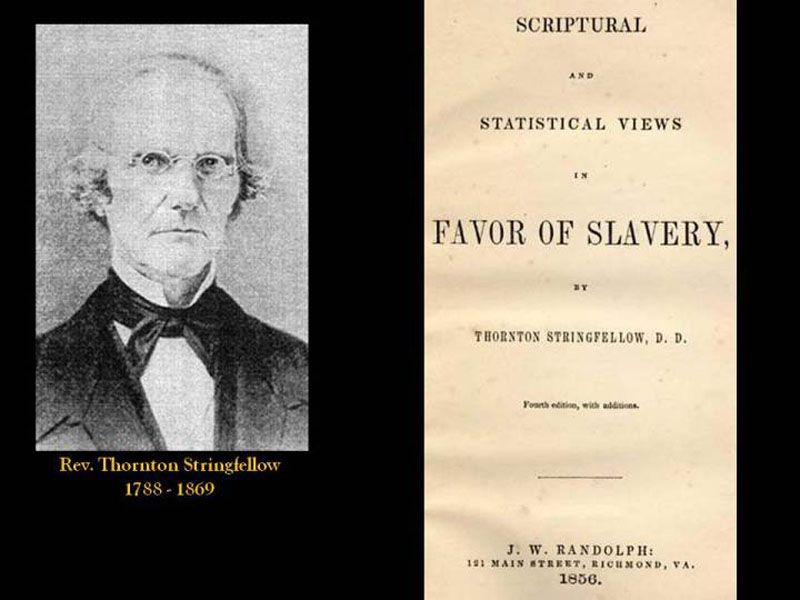
In 1860, a Southern Baptist pastor from Virginia, Thornton Stringfellow, defended the institution of forced enslavement of millions of African men and women in Cotton Is King, and Pro-Slavery Arguments, with the full force of scripture: “Jesus Christ has not abolished slavery by a prohibitory command. … Under the gospel, [slavery] has brought within the range of gospel influence, millions of Ham’s descendant’s among ourselves, who but for this institution, would have sunk down to eternal ruin.”[1]

To the Southern Baptists (and many others), God’s chosen people are white, descended from God’s favored sons of Noah. That was not Ham. As the story goes, Noah got pretty deep into the wine and passed out naked. Ham saw this and told his two brothers Shem and Japheth. These two backed up to their father with a blanket between them so as to cover Noah without looking on his nakedness. So when ole Noah sobered up and learned what had happened, he cursed Ham as the progenitor of Canaan:

And Noah awoke from his wine, and knew what his younger son had done unto him. 25 And he said, Cursed be Canaan; a servant of servants shall he be unto his brethren. 26 And he said, Blessed be the LORD God of Shem; and Canaan shall be his servant.

27 God shall enlarge Japheth, and he shall dwell in the tents of Shem; and Canaan shall be his servant.

Multiple interpretations of this scripture lead pretty much anywhere you’d want to go. Noah was supposedly over 500 years old when this happened and pretty tight with God. Why God let him get away with cursing one of his sons for something he himself did remains an unanswered question. Some interpretations claim the event actually involved Ham giving his dad oral sex. Another says he castrated Noah. These quirky ideas are based on scholars’ erudite studies of Biblical text.[2]

This is why there are over 33,000 Protestant denominations, a number argued when the concerned parties take a breath from discussing what happened with Noah and Ham as well as countless other minutia preserved in religious writings. According to one Catholic observer, 33,000 is an inflated number.[3] Be that as it may, the point is that when modern-day beliefs, laws, and actions are based on materials passed down orally for centuries before ever gaining the permanence of writing, and then those written records are subjected to successive centuries of translation, revision, and interpretation, these beliefs might as well have been snatched out of midair.

Which is exactly what happens when people formalize their spiritual beliefs in a way that excludes, discriminates, and otherwise separates them from other groups of people. These aren’t spiritual teachings. They are an outward expression of the smallest darkest part of primitive humans, fearful and ready to do violence. The only legitimacy such beliefs can claim is that our animal instinct assesses threat from another human first by how they look. If they look like us and talk like us, then there’s less chance they’re going to harm us.

In the times of slavery, any spiritual belief system other than the Baptist belief was counter to God’s will. Any effort to see minorities as ‘equal’ came hard up against the reality of life circumstances of minorities, a self-fulfilling prophecy of a sort, that there they are, those ignorant Africans, not well educated, not able to even clearly speak English, living in poverty—how can you say we are equal?

Or the Natives, living like savages in shelters made of skins, painting their faces, hunting with spears. They’re not like us.

A rational analysis points out that as slaves, Blacks were purposefully kept from learning to read or write, denied the right of marriage, and not taught skills of any trade other than the manual labor for which they were kept. In their homelands of Africa, from which they were torn against their will, they enjoyed well-established social order. They had family structures, spoke their language fluently, and otherwise had achieved a culture that succeeded for millennia.

As whites, we’ve got a few more millennia to go before we can say the same.

The same level of prejudice supported violent racism against Native Americans. Aside from genocidal acts such as outright slaughter or distributing blankets contaminated with smallpox, white invaders of the North American continent mitigated their murderous inclinations with attempts to bestow a “relationship with Christ” upon the Natives.

Take, for example, the ripping away of Native American children from their parents and forcing them into residency at schools where they were forbidden use of their native language. The schools intended to teach them to live like white men. In all ways—clothing, language, and worship—Native children were cut off from their ancient heritage and forced into a social construct for which they had no foundation or kinship.[4]

Like taking Africans from their successful societies and forcing them to labor at white’s man pursuit of wealth, ripping Natives from their ancient traditions and cramming them into reservations under the supervision of white law destroyed their foundations of belief and self-worth. They held value only by the metric of white civilization. In that, they hardly reached the scales.

Which makes it all the more outrageous that now, in 2017, as Southern Baptist membership continues to plummet, the conference decides to target reservations because “American Indians are 510% more likely to die of alcoholism and 62% more likely to commit suicide in comparison with the rest of the U. S. population.”[5]

Gee, can they possible be more ridiculous?

It’s not that the Southern Baptists don’t understand that their predecessors were wrong in declaring slavery the will of God or in trampling the ancient traditions of the Natives. They do. Some even claim to pray for forgiveness for their previous ignorance and the misdeeds committed against these minorities.

It’s that no matter what they do, these and other religionists seem to always conclude that their current decision is righteous and unerring and God’s will. They embrace their decision with fervor, rushing out to force the rest of the world to follow.

This is the hubris that created the Southern Baptists in the first place, and all the other evangelical denominations, and arguably every single religion that has plagued the world since such organized activities began. With the force of God’s blessing behind them, they have mounted wars and inquisitions and executions, overthrown governments and imprisoned the wayward, and marched across the globe leaving devastation in their path.

~~~

Recently with the shooting of Rep. Steve Scalise, Arkansas’ own Southern Baptist Pastor Ronnie Floyd opined that this level of violence against the Trump Administration is a new and abominable level of hatred.

In my life, I have never seen a more volatile political environment. Hyperbolized speech, wild accusations and blatant character assassinations have taken stage front and center … as a society we must be able to recognize that celebrating an ideology that says violence, especially against our elected officials, affects the way we think. Words have power. As the ancient biblical proverb says, “The tongue has the power of life and death.”

Floyd never once blinked in the face of the hypocrisy of his remarks despite living through eight years of outrages perpetrated against former-President Barack Obama that included effigies of Obama being lynched and burned, his daughters and wife smeared in every possible way, and the conservative Christian stance embodied in a Republican Party that obstructed every effort of Obama’s rightful governance.[6]

This year’s Southern Baptist conference heard a resolution put forth by Dwight McKissic, a black pastor from Texas, that would have affirmed the denomination’s opposition to white supremacy and the so-called ‘alt-right.’ At first, the committee in charge of resolutions refused to advance McKissic’s contribution to the full assembly. After all, they had resolutions about Planned Parenthood and gambling that needed consideration.

The next day, McKissic attempted to present it on the floor. According to one observer, “Chaos reigned.”

Once more attendees realized what had happened (and the glaring hypocrisy of their actions), “a number of leaders started lobbying to get the motion reconsidered.” After emotional debate on both sides of the issue and another twenty-four hours to confront the situation, leaders brought an amended version of the resolution to a vote.[7] Newly-elected leader Steve Gaines announced the results: “The affirmative has it. Praise the living God.”[8]

Oh yeah, membership.

~~~

[1] https://www.theatlantic.com/politics/archive/2015/04/southern-baptists-wrestle-with-the-sin-of-racism/389808/

[2] Wikipedia article on Ham: https://en.wikipedia.org/wiki/Ham_(son_of_Noah)

[3] http://www.ncregister.com/blog/scottericalt/we-need-to-stop-saying-that-there-are-33000-protestant-denominations

[4] https://en.wikipedia.org/wiki/American_Indian_boarding_schools

[5] Quoting the National Congress of American Indians, from an article by Francisca Jones, “American Indians seen in need of evangelism,” Northwest Arkansas Democrat Gazette, Tuesday, June 13, 2017. Pages 1 and 4.

[6] http://www.christianpost.com/news/america-dont-forget-words-have-power-188393/

[7] Amended resolution may be found at https://static.coreapps.net/sbc-am2017/documents/f618b2f02b1fc085697b4f5d147cb58e.pdf

[8] http://www.npr.org/sections/thetwo-way/2017/06/14/532998287/southern-baptist-convention-votes-to-condemn-white-supremacy

The Luddites Were Right

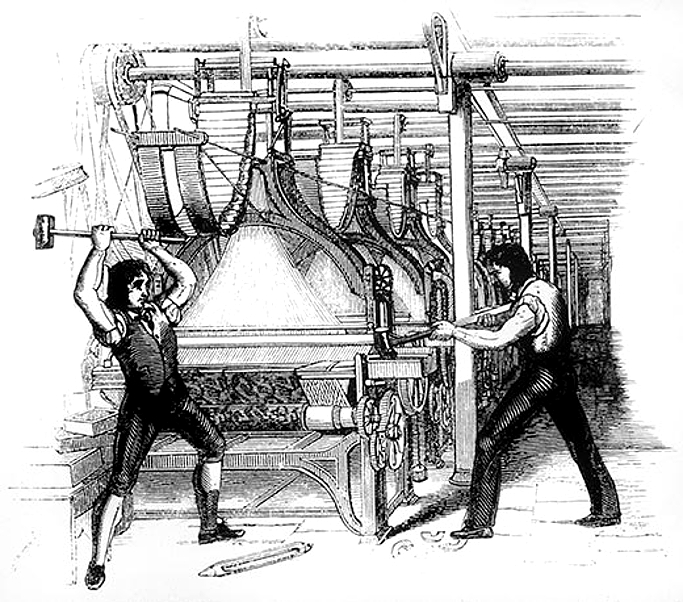
On March 11, 1811, hand loom weavers swarmed the streets of Arnold, Nottingham in the dark of night. They broke into textile factories equipped with the latest technologies, smashed pieces of factory equipment and burned the mills. Over the next five years, the movement spread throughout England. Industrialists invested in safe rooms inside their factories to protect themselves from attack.

The movement died in its tracks when the government stepped in with mass trials, with over thirty men ultimately executed or transported to penal colonies in Australia. The government went on to pass legislation making equipment destruction a capital offense.[1]

The Luddites didn’t start with violence. Rather, like regular hardworking people, they expected their industrialist employers to make nice as new machines were brought in to replace workers. The employers didn’t bother because nobody made them. They found that higher profits fit quite nicely into their fattening pocketbooks.

The Luddite eruption speaks to a trend that ticked up to light speed in the twentieth century.  More and more workers are forced to find new careers. No one could argue that this has been a bad thing. Gone are the backbreaking labors of producing food, clothing, and life’s many necessities. We have refrigeration, vacuum cleaners, washing machines, automobiles, and iPhones. But for each of these inventions, there has been a devastating impact on jobs.

Without the sense of accomplishment and self-respect that a job well done provides, modern people face an unexpected dilemma. Latest job forecasts say if you want a job in the next twenty years, you’ll need to plan for one of the following careers: registered nurse, retail salesperson, home health aide, personal care aide, office clerk, food service, customer service representative, truck driver, laborers and movers in freight, or post-secondary teaching.

Jobs that have no future include farming and ranching, postal workers, sewing machine operators, telephone operators including answering services, and data entry.[2] Some might argue that even these forecasts are overly optimistic. Consider this May 2017 report from Pew Research:

Machines are eating humans’ jobs talents. And it’s not just about jobs that are repetitive and low-skill. Automation, robotics, algorithms and artificial intelligence (AI) in recent times have shown they can do equal or sometimes even better work than humans who are dermatologists, insurance claims adjusters, lawyers, seismic testers in oil fields, sports journalists and financial reporters, psychological testers, crew members on guided missile destroyers, retail salespeople, and border patrol agents. Moreover, there is growing anxiety that technology developments on the near horizon will crush the jobs of the millions who drive cars and trucks, analyze medical tests and data, perform middle management chores, dispense medicine, trade stocks and evaluate markets, fight on battlefields, perform government functions, and even replace those who program software – that is, the creators of algorithms.[3]

Observers from all sides are split pretty much 50-50 on whether the result of increased technology in the workplace will be a vast reduction in available jobs or a burgeoning growth of new jobs. One could argue that for every robot providing legal services, there will be a robot repair person lingering in the hallway. Yet present-day robotics in factories don’t require a repair person for every job lost to a former factory worker, and there’s no reason to believe this would change in the future.

Especially since robotic repairs are increasingly performed primarily by robots.

Complicating the labor marketplace of the future is the rapid rate of change in our technology. Retraining workers for new jobs, some argue, can’t keep up with the rate of change. John Sniadowski, a systems architect and participant in the Pew Study noted:

By the time the training programs are widely available, the required skills will no longer be required. The whole emphasis of training must now be directed towards personal life skills development rather than the traditional working career-based approach.[4]

Whether or not education and training programs can keep up with the rate of technological change, none of that addresses the more personal issues of job loss. Does a former factory worker yank his kids out of school to move to another city? What about trying to sell the family home in a city that has become a ghost town? What about the aging parents who live down the street and depend on you for care?

What about that skill set so laboriously learned now heaped in the trash bin as a machine produces a crude facsimile?

Personal losses mount up as jobs disappear, even if free training and relocation costs are provided—which mostly they aren’t. Loss of community means, in many cases, loss of identity. Who are you in a new town where nobody knows your name?

The success of Donald Trump in playing these emotions depended on his promise to workers to get their old jobs back. In just a few months since he took office, it’s become increasingly clear that those were empty promises. Coal jobs aren’t coming back. Factory jobs aren’t coming back. It doesn’t matter how many grandstanding press conferences Trump holds.

In opposition to Trump’s promises to turn back the clock, the harsh realities are that not only is automation and not immigration increasingly displacing America’s middle and lower-class workers but also that the government must step in to provide relief. While conservatives fervently argue that shrinking government will reduce taxes and therefore provide much needed economic relief for Americans, the opposite is true. Government is the only entity that can solve the problem of job loss resulting from increased automation. Government must grow in order to accomplish such a gargantuan task.

Luddites didn’t hate machinery nor did they wish to turn back the clock to eliminate machinery. They recognized that a reduction in body-breaking labor served people well. At its core, their movement hoped to bring workers together into unions that could bargain for better working conditions, protection in cases of sickness, and in general promote solidarity among workers. This in turn would offset the power of capital’s investment in machines instead of workers and its disregard for labor as a disposable element in production.

As noted in a recent Smithsonian article:

People of the time recognized all the astonishing new benefits the Industrial Revolution conferred, but they also worried, as Carlyle put it in 1829, that technology was causing a “mighty change” in their “modes of thought and feeling. Men are grown mechanical in head and in heart, as well as in hand.” Over time, worry about that kind of change led people to transform the original Luddites into the heroic defenders of a pre-technological way of life.[5]

The same anxiety led to the ‘back to the land’ movement of the 1960s and ‘70s where college-educated young people left the cities to occupy remote rural farms where they consulted with old timers and publications like the Foxfire books about how to farm, tend animals, and put in sufficient stores to survive the winter in makeshift homes.

Once traditional knowledge is lost, whether it’s how to grow and preserve food or how to build hand looms to knit stockings, how many millennia would it take to re-invent those skills? What repository of knowledge exists, outside of libraries which require literacy and—even more fragile—digital information, that can transfer thousands of years of human learning to the next generation?

Once we rely on automatons to build our homes, provide our medication dosages, and produce our crops, what happens when they fail?

At its core, the Luddite movement sought protection for workers so that in the case of advancing technology, mechanisms installed by the industrialist and enforced by the government would provide for the workers’ welfare. Whether retraining, retirement, or a modest stipend in unemployment income, some provision must be made to care for those displaced by technology. After all, machines vastly increase profits by speeding up production. Some of those profits should benefit the former workers instead of lining the pockets of the already wealthy.

The discussion needs to be had. We need to understand that corporate investment in advancing automation does not necessarily mean that it rests on the workers alone to solve their under- or unemployment problems. They didn’t cause the problem. Corporations should be taxed at rates sufficient to provide better options for cast-off workers. Increased profits resulting from automation should automatically be taxed at a very high rate to offset worker losses from displacement.

Modern culture needs to recognize that as we move deeper into a post-industrial, automated world, increasing numbers of people will not have jobs as we understand them today. Political leaders are sorely needed who will clearly voice this reality and put forth meaningful alternatives to ridiculous and empty proposals like Trump’s promise to bring back coal jobs.

~~~

More discussion on this:

Michael Coren’s article “Luddites have been getting a bad rap for 200 years. But, turns out, they were right.” at Quartz

David Auerbach’s article: “It’s OK To Be a Luddite.” at Slate

Bryan Appleyard’s article: “The new Luddites: why former digital prophets are turning against tech” at New Statesman

Paul Krugman’s column: “Sympathy for the Luddites” in the New York Times


[1] https://en.wikipedia.org/wiki/Luddite

[2] https://www.forbes.com/forbes/welcome/?toURL=https%3A//www.forbes.com/pictures/efkk45fmhd/the-jobs-with-the-brightest-future-2/&refURL=https%3A//www.google.com/&referrer=https%3A//www.google.com/

[3] http://www.pewinternet.org/2017/05/03/the-future-of-jobs-and-jobs-training/

[4] Ibid

[5] http://www.smithsonianmag.com/history/what-the-luddites-really-fought-against-264412/

Dear DNC

I am in receipt of your letter (undated) and the “Urgent Annual Renewal Statement.” I thought this would be a good opportunity to communicate with you about my concerns with the party.

The only chance in hell of uniting progressives is for the leadership of the DNC to start immediately with an outreach to enfranchise new voices. That means real grassroots outreach. Do you actually know how to do this? Because if you don’t, you need to hire some new people.

Grassroots outreach means not deciding what you’re going to do until you listen to what people are saying. How do you do that? The national party depends on local and state affiliates to do their own thing, and many are doing a great job. But appropriate leadership from the DNC means ensuring that all state and local affiliates are building strong grassroots participation. You don’t do that by sending out donation form letters with a token mention of what the party stands for.

You missed an opportunity with this mail-out soliciting my donation. Why wasn’t there a questionnaire seeking input on issues ranging from how to improve the DNC to how to address the problems of domestic terrorism? Such a questionnaire should be formulated by the best strategists money can buy, people with experience in building grassroots campaigns and in dissecting big problems into identifiable components. Why aren’t you thinking about things like that? Involve the people in constructive dialogue about the future of the party and money will follow.

Create a national forum on social media. Once you’ve organized a method of outreach, the responses in turn will inform leaders and help frame the party’s platform. With a coherent plan of questions/topics, the national party then provides those questions to state parties who present these questions on their Facebook pages, soliciting feedback and engaging with persons who post comments.

Maybe you think you already know the answers, and that’s a big problem. You’re missing the point. It is the process that matters, developing a dialogue, listening, negotiating, arbitrating. Building consensus among those who desperately want to move the nation forward and don’t know what to do next. You have to tap that energy, help funnel it toward constructive action.

Right now liberals are arguing among themselves, pro Bernie, anti Bernie, pro Jill Stein, revolution, stay the course. It’s sickening.

Plan for two questions/discussions per month, no less. On alternate weeks, present a new face with background info on the person. Once a month, the new face is a potential presidential candidate. For the other once-a-month person, state parties plug in a potential candidate for state office. Include links to each potential candidate’s Facebook page.

State Democratic Party Facebook pages should include postings from any local chapters in that state even if such material is being posted on individual local committee FB pages. Minutes of meetings would be useful posts, local and state. Nationally, the DNC should also post on state FB pages any news from their various committees. Let the state parties be the active link that voters come to rely on for news about local, state, and national Democratic Party plans, ideas, and activities.

This is a starting place.

Surely I don’t need to list all the topics in need of discussion, but here are a few to get you started.

How do we develop clear recommendations about how to make the Affordable Care Act more viable? We need to present that in opposition to the Republican efforts to repeal and replace.

We need to solicit effective statements on why climate change threatens our future – specifics for each locality and when those changes can be expected.

We need to develop clear data on domestic terrorism and how it is tied to white supremacy and racism and outline how this parallels the rise of groups like ISIS. We need to develop creative ways to dismantle extremism in all its forms, understand the role of poor health and lack of education and other factors that contribute to a person’s sense of threat that underlies prejudice.

We need to have a thorough vetting of the school voucher idea and lay out the ways such programs violate the First Amendment as well as how they undermine public schools. Address the problems with public schools that cause parents to want vouchers – how do we make schools better?

These are but a few of the many pressing issues facing us. Elected officials current and future need to hear from the grassroots, not only concerns and ideas for solutions, but also the roar of their support as Election Day nears. This is the ultimate task of the national party, to develop effective ways to hear from the people. Everything else follows from that.

You may say that social media is easily infiltrated by trolls who would disrupt and spread false information. Well, that’s already going on. As long as we have public appearances by Hillary Clinton and Tom Perez rehashing old news, we’re going nowhere. Enough already!

Here are some potential presidential candidates for the next election. Warning up front: no women appear on this list. Let me point out that I am a woman, have been active in NOW, and believe women are in many ways the future of politics in this nation. But my objective is to elect a Democratic president in 2020. A female this time around is like shooting yourself in the foot and then a week later shooting the other foot.

Among the men I’m listing are very few minorities. Please refer to the last sentence of the previous paragraph.

Current governors:

Jay Inslee, Washington State. Governor since 2013, 20 years in the U.S. Congress, state legislature before that. Born 1951.

Roy Cooper, North Carolina governor since January this year. Attorney general from 2001-2017, previously state senate. Born 1957. **Extra points for beating an incumbent Republican.

Steve Bullock, governor Montana since 2013. Attorney general 2009-2013. Born 1966.

John Hickenlooper, governor Colorado since 2011, mayor of Denver CO 2003-2011. Born 1952.

Currently in U. S. Senate:

Michael Bennett, Colorado. Born 1964. Long track record in government office.

Chris Murphy, Connecticut. Born 1973. Long track record in state government.

Cory Booker, New Jersey. Born 1969. Previously Newark mayor, active outreach ongoing.

Sherrod Brown, Ohio. Born 1952. Long career in elected positions.

Sheldon Whitehouse, Rhode Island. Born 1955. US Attorney 1993-1998; attorney general 1999-2003

Bob Casey, Pennsylvania. Born 1960. Government office since 1996. ***Extra points for defeating a Republican.

Mark Warner, Virginia. Born 1954. Lots of elected positions

House of Representatives:

Tim Ryan, Ohio

Jim Crowley, New York

Eric Swalwell, California

Ruben Gallego, Arizona

Joe Kennedy III, Massachusetts

Seth Moulton, Massachusetts

State Offices:

Pete Buttigeig, Mayor South Bend, Indiana

Joaquin Castro, Texas

Julian Castro, Texas (twins)

Jason Kander, Missouri

Of all these, I’ve seen only a few mentioned in media or Facebook posts. This is the point in time when voters need to consider possible candidates and rule them in or out. These decisions need to come from the bottom up.

Speaking for my home state, our Democratic Party Facebook page has seen about twenty posts since Trump took office. I’ve not seen any potential 2018 candidates put forth. Our local party is active, and in our region we’ve seen one potential Congressional candidate throw his hat in the ring. This is completely unacceptable. MORE!

As far as Bernie supporters go, the bitching needs to stop about what happened last year. That’s a good example of living in the past. It’s over. Now what? Let’s realize that plans to forge ahead as a Bernie/Independent Party has about as much chance to get a president elected as the success enjoyed by the American Independent Party candidate George Wallace, Reform Party candidate Ross Perot, or last year’s Libertarian Party nominee Gary Johnson and Green Party nominee Jill Stein.

The DNC must make a bigger demonstration of how it is incorporating Bernie ideas and people into the party. Bernie has a responsibility to bring his supporters to engagement with the Democratic Party. Where are his innovative ideas about how to do that? What ideas do his supporters have that could move the Democratic Party closer to positions they could embrace? It can’t just be about big banks and warmongering and money from billionaires and all those other old worn-out leftist rants. What are concrete, realistic steps that party needs to make to get Bernie supporters on board?

My hopes for the future remain invested in the Democratic Party. It hurts me to see how much we’ve lost over the last several election cycles. It’s the DNC’s job to figure out why and develop solutions to reverse this trend. You won’t figure that out with consultants or policy wonks. The PEOPLE have the answers. Ask us.