

Chapter 1 from Artificial Intelligence: A Pandora’s Box
People work to earn a livelihood, which in turn provides for their needs for housing, food, clothing, transportation, and caring for their loved ones. But people also work because they have goals to accomplish in their chosen field and satisfaction to be gained, maybe teaching kids how to read, or helping sick people, or taking care of a herd of unruly cows. As a retired piano tuner/technician, I can say that hardly anything in my professional life gave me as much satisfaction as sitting at a freshly tuned nine-foot grand and striking a few chords, the vibrations resonating through my chest.
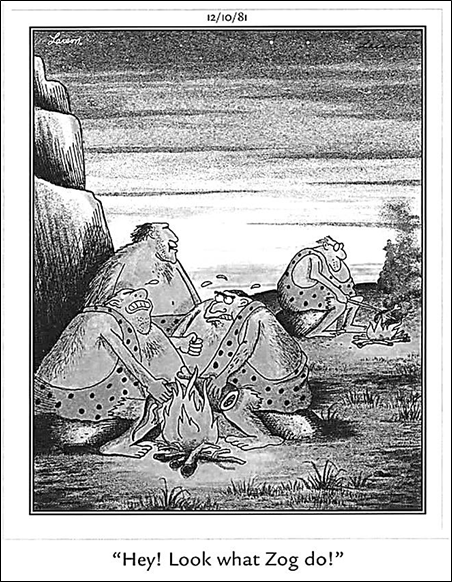
All kinds of occupations have been carried out by humans since the earliest times. Archaeologists are still discovering the products of those early occupations—works of art carved in mammoth tusk ivory, imprints of hands profiled on cave walls, remnants of houses built on stilts over prehistoric lakes, burials of early humans with graves containing prized possessions like pierced shells, animal teeth, and ornaments colored with red ochre dating back 100,000 to 130,000 years. Even earlier discoveries are regularly uncovered. These were people wandering the forests or jungle picking up fallen nuts or climbing trees for ripe fruit. As appetites became more sophisticated, eating might have required specialized flint daggers and copper tools in capturing animals to roast over fire. Then tools made by farmers, archers, and metalworkers became more specialized professions while cylinder seals developed by record keepers and administrators documented words over 4,000 years ago.
One wonders what kind of grave goods will be found one hundred thousand years from now. Will it be rusting fragments of a robot, its mechanism long since gone dark, its accomplishments unknown? Will anyone be around to find it?
In the fevered minds of AI techs, the future is a world where artificial intelligence augments human intelligence and amplifies creativity, acting as intuitive partners in science, medicine, and art, a time when vast computational power can eradicate diseases, model climate solutions, and solve complex systemic problems. This work would shift from rigid programming to dynamic systems that can independently perceive, navigate, and learn from their environments. For researchers, a deeper, long-term dream is unlocking the mathematical and algorithmic nature of human thought and consciousness itself—a dream roughly 400 years old as a formal mathematical pursuit, while its philosophical roots stretch back over 2,000 years to ancient Greek logic. Or further.
We have used tools for tens of thousands of years, in our hands or at our control to accomplish work for us. Now we have artificial intelligence, the first tool that thinks and carries out work for itself.
With the modern advance of this quest, we now stand at the threshold of a new kind of human existence. With the introduction of AI, we’ve started to see in real time how this technology will impact human life. This is where the rubber hits the road, as they said way back in the mid-20th century. By 2030, AI and automation could displace up to 92 million jobs globally.
Techies rush on to say that, oh, but wait! Even more jobs than that will be created by AI. No worries!
But what kind of jobs? Will AI help employ the average human with his/her IQ of 85 to 115? The short answer: No. Witness the shift to self-checkout, self-sign-in at computer screens at your friendly medical clinic. Any jobs held by people of average IQ in the AI industry would focus on implementation, training, and operation rather than complex algorithmic design. These roles prioritize practical skills, empathy, communication, and domain knowledge over advanced mathematics or computer science. [1]
Aldous Huxley envisioned a version of this reality in his novel, Brave New World. In the 1932 novel, World Controller Mustapha Mond explicitly explains that absolute stability requires controlling brainpower. If the entire population were highly intelligent, they would quickly become bored of their jobs, demand change, and incite civil war. By limiting the intelligence of the lower castes, the state ensures they are perfectly happy in their roles and incapable of rebelling. To ensure the right mix of a controlled population, the government uses mechanized, state-run factories and scientific processes, such as the Bokanovsky process (for mass-cloning lower-caste embryos), artificial fertilization, and artificial wombs to intentionally restrict their mental capacity (and physical size) so they are capable of performing only repetitive, menial tasks without becoming bored or questioning their roles. The intellectual elite possess the highest mental acuity and act as the scientists, writers, and administrators. Alphas represent the peak of unadulterated human capacity, while Betas are engineered to be only slightly less intelligent so they don’t threaten Alpha leadership. Gammas, Deltas, & Epsilons, the laboring masses, are chemically and genetically stunted during the embryonic stage.
It seems we may not need a whole new world order for these various classes to come into being. Rather, current populations, at least in the United States and with the increasing help of artificial intelligence, are already sorting themselves.
Industry solutions to loss of jobs suggested so far by developers of artificial intelligence include investment in rapid, accessible training programs (e.g., Google Career Certificates, technical bootcamps) to transition workers into high-demand fields like IT, cybersecurity, and data analysis; development of government programs similar to trade adjustment assistance; offering wage insurance to support workers forced into lower-paying roles; and focusing career shifts toward roles requiring high empathy, creativity, and complex decision-making, such as healthcare (therapists, nurses) and skilled trades.[2]
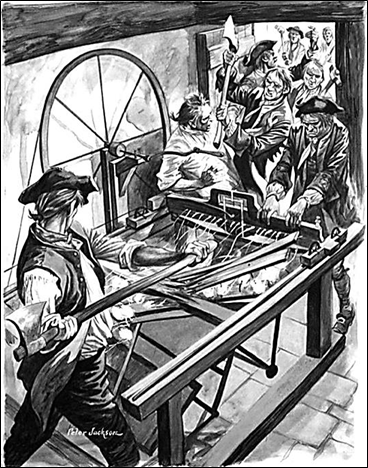
But wait! Didn’t this happen before? Short answer: Yes. Industrialization transformed America and most of Europe from a rural, agrarian society into an urban, industrial powerhouse between roughly 1876 and 1900. But early mechanization hit before 1876. On October 9, 1779, English textile workers in Manchester rebelled against new automated machinery. The earliest widespread riots explicitly targeting mechanization were the Luddite Riots in England, which began in earnest in 1811. Highly skilled textile artisans, facing job loss and reduced wages from the sudden introduction of automated weaving looms and knitting frames, violently destroyed machinery under the mythical leader “General Ludd.” The Luddites were then violently suppressed by the British government, which deployed thousands of troops to mill towns, passed laws making machine-breaking a capital offense punishable by death, and executed or exiled dozens of protesters to penal colonies in Australia.
On the upside, the so-called “Industrial Revolution” created national markets through massive railroad expansion, triggered mass production, fueled rapid urbanization, and fostered a new, diverse working class while elevating technology like electricity and steel. That sounds great, and for a lot of reasons, it was. But those changes meant the roughly twelve-thousand year old tradition of rural lifestyles in farming and self-sufficiency virtually disappeared. Alongside that shift, high levels of social cohesion, access to common land for resources, a slower pace of life attuned to nature, and strong family integration also disappeared, all qualities of life supportive of human satisfaction. Now, most people residing in a rural location amid the joys of Nature must be retired, independently wealthy, or willing and able to commute to a town job (which involves new levels of expense). This transformation also brought significant challenges, including severe economic inequality, massive pollution, political corruption (crony capitalism), and labor struggles.[3]
Corporations did this again in the U.S. a century later, in two stages: key manufacturing jobs migrated to Mexico and Asia starting in the 1960s/70s, while a larger chunk of jobs moved in the 1990s by shifting U.S. manufacturing to Third World countries where workers could be employed for a few bucks a week, currently $3 to $6.40 per hour and without those pesky labor laws or organized labor unions. Major U.S. corporations making this move included Apple, General Electric, IBM, Nike, and Walmart. Over five million U.S. manufacturing jobs were lost between 1998 and 2021 due to trade deficits, devastating local economies and decreasing worker opportunities. This outsourcing of manufacturing created massive reliance on global supply chains, leaving the U.S. vulnerable to supply shortages, which were exposed during crises like the COVID-19 pandemic.
Now some of the same corporations are rapidly adopting AI including tech giants Microsoft, Google (Alphabet), Amazon, Nvidia, and Meta, currently integrating AI into their core products and infrastructure. Other fast-movers adopting AI to automate operations, enhance customer service, or optimize supply chains include Klarna, Salesforce, Walmart, JPMorgan Chase, and General Motors. While high potential for savings is expected in certain industries including retail, consumer staples distribution, transportation, and real estate management, the long-term goal for many corporations is to drive down production costs, leading to a potential “$1 trillion a year” in savings for businesses.
Don’t kid yourself. Corporate leaders expect a significant cut in operational costs—often by 5–20%—but generally do not lower customer prices. Instead, businesses are using AI for “dynamic pricing”[4] to tailor costs to individual willingness-to-pay, aiming to increase profit margins. Never forget the primary corporate objective is generally to maximize shareholder value (or wealth) over the long term. Companies are focusing on using AI for “next best experience” strategies to increase customer satisfaction by 15-20% while cutting service costs, primarily aiming to boost their own profitability rather than reducing customer costs.
We have to face the reality. Many people will lose their jobs as AI advances through the layers of our culture. Already we see a growing class of tech billionaires and even a trillionaire riding the wave of artificial intelligence. It’s an ongoing argument whether we as humans will truly benefit.
[1] Coreen, David. “AI Job Replacement Statistics (2025-2030): Industries Most Affected,” DAVRON Feb 12, 2026. https://www.davron.net/ai-job-replacement-statistics-2025-2030/
[2] Note that an unspoken admission in this rationale is that AI functions without empathy or complex decision making capability.
[3] More information at https://courses.lumenlearning.com/wm-ushistory1/chapter/the-impact-of-early-industrialization/
[4] a strategy that adjusts prices in real-time to match the maximum amount a specific customer is willing to spend at any given moment
From my booklet, Artificial Intelligence: A Pandora’s Box

