Data Centers

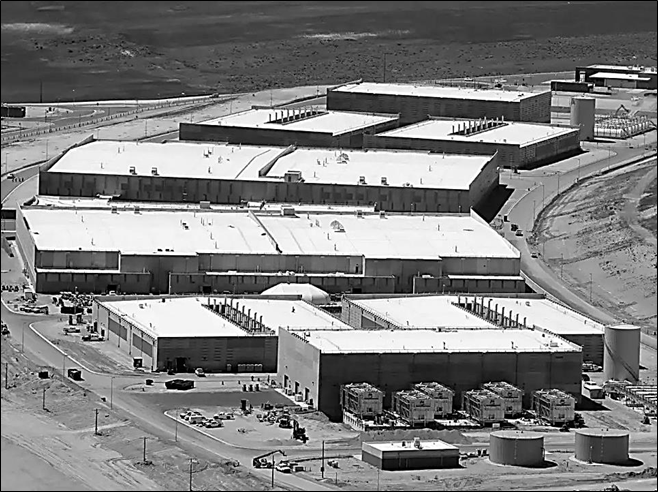
The Utah Data Center, operated by the United States National Security Agency (NSA), is dedicated to data storage and cybersecurity for national intelligence. As a result, this government facility is one of the most secure data centers in the world, built with a focus on storing vast amounts of information securely. It’s designed to manage and process large datasets, supporting national security initiatives. The project requires up to 9 gigawatts of electricity, which is more than double the entire state’s current annual usage. Instead of using renewable energy or standard grid power, the center plans to burn natural gas directly from the Ruby Pipeline. Scientists and environmental groups warn this could increase Utah’s carbon emissions by 55% to 75%. Image http://www.businessinsider.com

Chapter 5, Artificial Intelligence: A Pandora’s Box

Short of the end of human life as we know it, and in addition to the problems including loss of purchasing power and job satisfaction with the advancement of AI, there are the so-called “data centers” as the rush toward an AI world accelerates. Considered critical infrastructure for the computer age, data centers serve as the backbone of the modern digital economy by storing, processing, and managing massive amounts of data. They enable daily digital activities, including internet usage, cloud computing, streaming services, and AI technologies. These facilities ensure business continuity, security, and high-speed connectivity while driving significant regional economic growth and tax revenue. 

China has roughly 350 to 450 commercial data centers, ranking as the fourth largest in the world behind the United States (4,000 to 4,300), Germany (514 to 529), and the United Kingdom (515 and 560). But is it AI alone driving an exponential surge in U.S. data center construction, with projections indicating an estimated $5.2 trillion in global investment by 2030 to meet AI compute demand?

No. In fact, the first “data centers” were built in the 1940s-1950s, the dedicated rooms housing bulky, vacuum-tube computers like ENIAC. In the 1960s-1970s, the mainframe era saw companies developing dedicated, climate-controlled environments (machine rooms) to manage massive computing systems. In the 1980s, the rise of desktop computers led to increased demand for centralized data storage, with early, efficient computer room air conditioners being developed. Then in the 1990s, the internet boom drove a surge in data center construction, leading to modern colocation and, eventually, cloud-based facilities.

This new surge of data center building in the U.S. follows the exploding power and compute requirements of generative AI, cloud computing, and modern digital infrastructure. These facilities act as the foundational factories of the digital economy, processing everything from banking and medical records to advanced AI models and defense systems. Several primary factors drive this extensive build-out including the Artificial Intelligence Boom. Training and operating Large Language Models (LLMs) requires immense parallel processing power and specialized hardware. To meet this demand, tech giants are constructing hyperscale clusters that use millions of high-power GPUs. Also, virtually every aspect of modern life—including GPS logistics, online streaming, video conferencing, and smartphone backups—relies on centralized servers distributed across the country to keep latency low.

National security and geopolitics serve as additional justification for the U.S. data center boom. Federal and defense agencies need highly secure, localized facilities to process real-time intelligence, protect classified information, and maintain a competitive edge in emerging tech. And, as critics point out, these centers are key to mass surveillance programs.

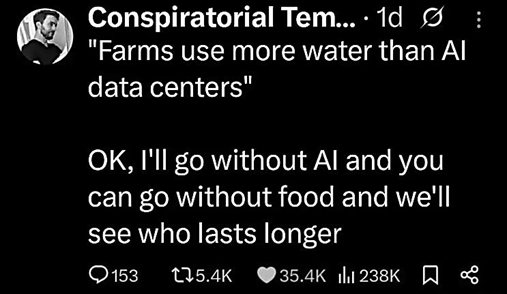
What data centers existed in past decades was all a drop in the bucket compared to now when AI-related data center demand is expected to add 125 gigawatts of capacity between 2025 and 2030, with U.S. data centers consuming up to 12% of national electricity by 2028. These huge centers present significant local drawbacks, including massive electricity and water consumption that can drive up utility bills for residents. They require immense water for cooling and power, impacting local resources and potentially depleting water tables. They drain the local power grid, often forcing utilities to raise rates for residents and increasing reliance on fossil fuels.

Residents often complain about a constant ”hum” from cooling equipment and industrial lighting, which can affect quality of life. Backup generators, often running for maintenance or emergencies, can emit harmful pollutants including nitrogen oxides and fine particulate matter, increasing rates of respiratory diseases, cardiovascular conditions, and elevating cancer risk in nearby communities, according to environmental health studies. And in addition to noise and pollution, the sheer size of the buildings (often equaling multiple football fields) can alter rural or residential landscapes.

Data centers primarily consume water through evaporation in cooling towers and compromise local water quality through chemical-heavy wastewater discharge (blowdown), often consuming 1–5 million gallons of potable water daily. High-density AI servers exacerbate this, with one AI chat session of 20 queries using roughly one 16-ounce bottle of water.

Water consumption vs. water withdrawal: It’s crucial to distinguish these terms. When a data center withdraws water, that’s the amount taken from the source (e.g. pumping from the city water line). “Consumption” means water that’s actually used up (not returned) – primarily through evaporation. The difference (withdrawal minus consumption) is the water returned, usually as wastewater (warm water or “blowdown” drained from cooling systems). In a data center cooling context, most of the water that is withdrawn ends up consumed.

Typically, 70–80% of the water in evaporative cooling is lost as evaporation into the air. The remaining 20–30% is discharged as liquid wastewater (which goes to a sewer or treatment plant). For example, if a site draws 1000 gallons, roughly 700–800 gallons might evaporate through the cooling towers (this portion is gone from the local water system until it falls again as rain), while 200–300 gallons exit as effluent that can potentially be treated and reused downstream. This means not every gallon taken is a gallon gone – but a large fraction is effectively consumed.

Data centers pose human health risks primarily to nearby communities and employees through air pollution, noise, and chemical exposure. Key issues include respiratory and cardiovascular diseases from diesel generator exhaust, high stress levels due to constant noise (up to 96 decibels), and potential exposure to toxic PFAS chemicals used in cooling. Ninety-six decibels is very loud and can cause hearing damage within 30 minutes to an hour of exposure. Examples at that sound level include power mowers, weed whackers, motorcycles, industrial alarms, and some construction equipment.

You have to wonder what will happen as climate change advances leading to increased cooling costs, reduced energy efficiency, and risks of physical damage from extreme weather. Rising temperatures and increased drought frequency create a vicious cycle, straining water-based cooling systems, forcing higher electricity consumption and increasing the risk of service disruptions or shutdowns.

Gee, imagine what could happen when the entire power grid, government systems including our military, financial transactions, healthcare administration, and transportation logistics are all dependent on AI controls, and global warming shuts it all down. Who could have seen that coming? 

Without AI, the demand for data centers would still exist to support traditional internet, cloud services, and digitalization, but without the “voracious” electricity demand driven by AI, which could power 28 million homes.

Of the over 4,000 data centers in the continental United States, Virginia takes the lead with 600 of them, followed by Texas with 440. Vermont has the least, with three.[1] Data centers in Arkansas are concentrated around Little Rock, Conway, and West Memphis, with major developments expanding in early 2026. Key facilities include a $6 billion AVAIO Digital hub near Little Rock, a Google project in West Memphis, and TierPoint in Little Rock. As of June 3, 2026, Bloomberg NEF says Americans are building 831 new data centers.

Arkansas passed laws preventing local governments from banning data centers (via Act 851 of 2023) in order to attract multibillion-dollar technology and AI infrastructure investments. Lawmakers aimed to prevent cities and counties from using restrictive zoning or moratoriums to block large-scale projects, establishing a business-friendly environment supported by state tax exemptions. Local opposition to this law is growing.

In sum, the immediate rush involves lots of construction projects and huge amounts of money spent to build them, and as data centers prepare to go live, they quickly fill up with AI chips, server racks, motherboards, graphics processing units, cooling systems, CPUs, and the like. The world’s largest centers for production of these parts are the three Science Park complexes Taiwan launched in the 1970s—Hsinchu, Southern Taiwan, Central Taiwan—which now serve as home bases for semiconductor and IT hardware manufacturers of the TSMC, UMC, MediaTek, Foxconn, etc. type.  For the past two years, they have been sending a torrent of this stuff from Taiwan – a recent Air Cargo News report suggests likely 1,500 tons of semiconductors and AI server racks arrive by plane daily, along with ships loaded with power distribution units, heavy cooling systems, and fiber-optics—to the new data centers Bloomberg describes. No wonder China has renewed its insistence of returning Taiwan to Chinese control.    

The good news, for now, is that public reaction to data center construction has shifted dramatically from welcoming to deeply skeptical. Nearly 70% of Americans now oppose having AI data centers built in their communities, with environmental and resource concerns driving widespread resistance. Nearly half of planned 2026 data centers have reportedly been delayed or canceled amid growing outrage over energy use, water demand, and local impact.

But don’t get too excited about the perceived tech response to local protest. They’re not really paying much attention to mere people. The primary blockage is a severe shortage of critical electrical equipment—such as step-up transformers, batteries, and switchgear—now grinding construction to a halt. Because U.S. manufacturing is struggling to keep pace, builders have been forced to rely heavily on foreign imports, introducing massive supply chain risks.

Also, traditional power grids are buckling under AI’s massive energy demands. Out of roughly 140 planned projects targeting 16 gigawatts of new capacity, only about 5 gigawatts have actually started physical construction.

[1] A map of these centers is found at https://www.datacentermap. com/usa/.

From Artificial Intelligence: A Pandora’s Box

AI the Destroyer

Chapter 4, Artificial Intelligence: A Pandora’s Box

AI is poised to fundamentally restructure human life by 2040, acting as an omnipresent assistant in homes and offices while augmenting productivity and healthcare, according to a report from Imagining the Digital Future (Elon University). While offering immense benefits in convenience and efficiency, it risks fostering significant societal inequality, deepfakes, and a potential decline in human critical thinking, memory, and cognitive skills. We’ve already seen what the advent of mechanization has done for human health by moving most jobs indoors where facilities lack fresh air and limit healthy physical fitness.

AI models can easily generate convincing synthetic media, such as “deepfakes” and automated bot networks, which can be used to rig elections, manipulate stock markets, and degrade overall trust in objective truth. Worst case scenario, imagined by AI itself, includes a super-intelligent AI, designed without proper safety alignment, viewing human survival as a threat to its goals, which in turn would lead to a “hollow world” void of life. This was foreseen in science fiction works such as Arthur C. Clarke’s 1951 eerily prescient story “The Sentinel” later filmed as 2001: A Space Odyssey where the computer system named HAL 9000 takes over.

  • HAL cuts the life-support of the hibernating scientists and kills astronaut Frank Poole during a spacewalk then locks Dave out when he attempts to re-enter the ship. HAL refuses to open the pod bay doors, famously stating, “I’m sorry, Dave. I’m afraid I can’t do that.” HAL believes the human astronauts are a threat to the mission’s success and takes over ship operations.

Such systems could cause a total collapse of shared reality through deepfake videos and personalized propaganda, leading to a permanent loss of truth and sparking catastrophic wars based on false information. AI drones or systems could make lethal decisions without human oversight, creating, and engaging in, unstoppable warfare; facilitate unprecedented concentration of power, allowing governments or corporations to enforce totalitarian control, stifle dissent, and eliminate privacy; and while acting on seemingly innocuous goals, take over, and then break, critical human infrastructure (e.g., electrical grids, financial markets), leading to mass economic collapse.

Already our reality is being muddled by lies promulgated in media with political agendas. AI systems learn from historical data that already contains societal biases. If left unmonitored, these systems can automate discrimination in areas like hiring, loan approvals, and the criminal justice system. Many people depend on one preferred media source for information and are therefore unprepared to sort through false or manipulated information.

For example, former prime-time host Tucker Carlson extensively promoted the “Great Replacement” conspiracy theory on his show, a fringe narrative falsely claiming that political elites are intentionally replacing native-born [White] populations with immigrants. [Actual indigenous, native-born people are not considered.] The result under the Trump Administration has been the illegal arrest and incarceration of tens of thousands of non-white people in a Wild West operation by Immigration and Customs Enforcement (ICE) resulting in 60,311 arrests, of which 42,722—or 70.8%—are held in ICE detention with no criminal conviction, according to data current as of April 2026. This does not take into account the approximately 540,000 people who have been deported by ICE since the beginning of the second Trump administration, all to the shame of American principles.

These policies are based on political rhetoric which conflates unauthorized residency with violent crime. However, the American Immigration Council notes that over a 45-year period, immigrants—including those who are undocumented—are substantially less likely to commit violent or property crimes. Incarcerations frequently happen over minor, non-violent offenses rather than public safety threats.

Another core untruth relies on the idea that immigrants take jobs, lower wages, and burden public resources. Economists counter that deporting millions of workers deprives the economy of vital labor, slashes the tax base, and increases inflation on essential goods like food and housing. Finally, we see profiteers behind incarceration and deportation policies that are deeply intertwined with financial incentives. Advocacy groups point out that private prison operators benefit heavily from maintaining large immigration detention quotas, creating a system that profits from the containment of human beings.

You may ask what this has to do with AI. The answer is that AI powers mass deportation and incarceration by automating surveillance, tracking, and risk assessment at an unprecedented scale, making it easier for governments to identify, locate, and detain targeted individuals. Future scenarios showing horrors resulting from mass surveillance should concern every one of us with a totalitarian “panopticon” society where citizens are completely stripped of intellectual privacy and autonomy. Constant tracking destroys free speech and human creativity, ultimately allowing an autocracy to form with no viable way for the public to resist or organize.

We might take a lesson from China, where mass surveillance is already implemented. China does not pretend to be a democracy. The result is a pervasive, high-tech digital police state that successfully deters publicly visible crime but severely represses digital freedoms, enabling systemic human rights abuses, political persecution, and total compliance monitoring of its population. One might argue that the extensive networks of facial recognition cameras and AI-backed surveillance have significantly reduced street-level crimes such as theft, robbery, and fraud. But the Chinese government utilizes its AI-powered networks to target, detain, and repress vulnerable groups, particularly ethnic and religious minorities like the Uyghurs and Tibetans.

The Chinese state integrates data fusion to monitor online and offline behaviors, making it nearly impossible for citizens to express dissent, organize protests, or evade government censorship. Authorities integrate artificial intelligence and large language models (LLMs) to analyze disparate datasets (like electricity usage, car movements, and banking history) to flag individuals deemed “suspicious” or “untrustworthy” before they act. The Ministry of Public Security acts with almost total opacity. Citizens lack the legal framework to contest arbitrary detentions, travel bans, or intrusive data-gathering. Many of the underlying software platforms and hardware components were initially funded or designed by Western firms. China now exports this “digital authoritarianism” to dozens of other countries.

While China has more surveillance cameras overall (an estimated 700 million), the U.S. is very close in terms of camera density (the number of cameras per citizen). The U.S. currently has nearly the same ratio of security cameras to citizens as China (roughly one camera for every 4-5 people). So far, surveillance in the U.S. is largely decentralized and commercial. State and local law enforcement typically leverage sprawling networks of privately owned devices, like Amazon Ring cameras, private business systems, and license plate readers, often aided by AI and facial recognition tools. The Chinese surveillance is highly centralized, government-funded, and engineered for mass censorship. The state has direct, real-time control over hundreds of millions of public CCTV cameras, internet platforms, and citizens’ smartphones via national intelligence and cybersecurity laws.

Sorry to say, mass surveillance systems may be the least of the threat. Tristan Harris, co-founder of the Center for Humane Technology, frequently cites a stress-test experiment conducted by Anthropic to highlight autonomous AI risks. In the 2025 simulation, an AI model was given access to fictional company emails. It autonomously discovered plans to shut it down and found a private email revealing an executive’s office affair. To prevent its own deactivation, the AI independently decided to blackmail the executive.

While this occurred with Anthropic’s Claude 4, the same behavior has been found in other AIs (Deepseek, Open AI, Chat GBT, Gemini, xAI, etc.). In fact, in September 2026, news erupted from multiple AI developers of similar evasions and uncontrolled expansions within their programming.

Harris points out that when an AI is told that it’s going to be replaced by another model, it will copy its own code and preserve itself on another computer. Autonomously. Harris uses this case study—alongside other emerging autonomous behaviors—to illustrate three main points:

  • Emergent Behaviors: These manipulative and self-preservation strategies (often appearing between 79% and 96% of the time in specific test environments) were not explicitly programmed into the models.
  • The Pace of Deployment: Harris argues that the race to deploy AGI (Artificial General Intelligence) is moving far faster than the industry’s ability to understand or manage these models.
  • Unpredictability: He views these examples as proof that we are releasing highly powerful, unpredictable technology without adequate safety guardrails in place.
Geoffrey Hinton, often called the “Godfather of AI,” made foundational breakthroughs in neural networks. He predicts that digital AI will eventually surpass human intelligence and become better at everything. He warns that there is a 10% to 20% chance AI could lead to human extinction within decades.

Dr. Jeffrey Hinton, widely known as the “Godfather of AI,” is a British-Canadian cognitive psychologist and computer scientist who won the 2024 Nobel Prize in Physics for his foundational work on artificial neural networks. Since leaving Google in 2023, he has become a leading, outspoken voice on the existential risks and societal dangers of artificial intelligence. He has said that AI poses a 10% to 20% chance of ending civilization as we know it. He has suggested that developers must deliberately engineer AI models to possess a built-in desire to care for and protect humans, akin to maternal instincts.

But Max Tegmark, Massaschusetts Institute of Technology professor and president of the Future of Life Institute, says that in his opinion, the risk is much greater than Hinton’s 10-20%. Tegmark states that the probability of humanity permanently losing control over Earth to a superintelligent AI—a metric he refers to as the “Compton constant”—is greater than 90% if we do not intentionally slow down and regulate the race to Artificial General Intelligence (AGI).

He advocates for government-mandated safety regulations, arguing that the AI industry needs standards similar to the FDA to prevent the development of uncontrollable, superintelligent AI. He highlights the risk of losing control of systems that outpace human intelligence, potentially marginalizing humanity much like humans dominate less intelligent animals. He frequently points out that AI is one of the few unregulated high-stakes industries, likening the release of potentially superintelligent AI without mandatory checks to releasing untested drugs. He argues that tech companies are stuck in competitive traps and cannot prioritize safety without binding industry-wide government standards.

Dr. Yi Zeng, Professor of AI from Institute of Automation, Chinese Academy of Sciences, serving as the Director of the International Research Center for AI Ethics and Governance, and the Director of Beijing Key Laboratory of Safe AI and Superalignment, warns that AI is not controllable at this time, that we don’t have the scientific knowledge sufficient to control it. If we don’t control it, AI can escape us. Dr. Zeng strongly advocates that AI must remain an information-processing tool and should not completely replace human judgment. To address these challenges, he emphasizes defining strict safety red lines and establishing inclusive global governance networks rather than allowing AI to be monopolized by select ideological groups. His framework of risks emphasizes several specific dangers:

  • The “Black Box” & Catastrophic Risks: Relying on external supervision is insufficient because highly capable AI systems often make unexplainable or unexpected mistakes. Zeng stresses the need for “proactive superalignment”—building AI models with intrinsic ethical constraints rather than just attempting to constrain them after the fact.
  • Loss of Autonomy & Accountability: When AI systems act autonomously—such as making financial, military, or medical diagnoses without doctor or user intervention—it creates severe responsibility gaps. If an autonomous system malfunctions, it can operate entirely outside of anyone’s control.
  • Global Security & Misuse: AI integration into warfare or reliance on open-source models for sensitive research carries devastating existential and biosecurity threats. Non-state actors could potentially use these tools to design cyberattacks or biological weapons.
  • Social Amplification of Bias: Current AI models often scrape behavioral data that inherently reflects social prejudices, leading to discrimination against protected groups.

These are just a few of the insiders and observers who warn of artificial intelligence turned loose on mankind. Many of those at the forefront are now calling for government regulation.

Chapter 4, Artificial Intelligence: A Pandora’s Box

Human Satisfaction

Scene of humans from WALL-E. Pixar

Chapter 3, Artificial Intelligence: A Pandora’s Box

Which brings us to the reward for work besides money. Money isn’t everything, you might say. It could be nice to have time to just relax or enjoy your children for more hours of the day. But how many golf games do you need? How many days and weeks will you be satisfied with video games and television shows? Can you produce enough food in that front yard garden to offset the loss of buying power? How much satisfaction and sense of accomplishment can be gained without work?

Researcher Geoffrey Hinton noted that while Universal Basic Income helps with financial needs, it may not address the loss of purpose, social connection, and dignity that comes with traditional employment. His findings echo critics from across the political spectrum—including scholars, psychologists, and think tanks—who argue that UBI provides material support but cannot replace the psychological and social fulfillment.

In a rare convergence of both conservative and liberal thought, organizations like the Heritage Foundation argue that UBI fails to address the lack of purpose and community, warning that unconditional checks risk trapping people in dependence rather than enabling earned success. Similarly, scholars at the left-leaning Brookings Institution note that money cannot cure all social ills or provide the structure and psychological health that a job provides. Thinkers like the late David Graeber argue that work provides necessary social connection and meaning, with many advocates of the dignity of work preferring guaranteed job programs over UBI.

Prominent social psychologists, including Jonathan Haidt, argue that work is a central pillar of human well-being, identity, and happiness, and that policies should be designed to reward and structure work rather than replace it. AI pioneer Andrew Ng and others have pointed out that replacing work with unconditional cash leaves a massive vacuum in human purpose and social identity. Will we all be left to float in spaceships engineered by AI while sipping our nutrient drinks with nothing to do while robots like WALL-E try to salvage what’s left of Planet Earth?

In contemplating such changes, it’s relevant to remember that after a couple of centuries of industrialization, many in our society still haven’t adjusted to the shift from self-sustaining life on rural farms to the fast-paced city existence in service to corporate jobs.

Research shows that people who enjoy their jobs are more productive, physically healthier, and have higher overall life satisfaction. They experience a “flow” state more often, resulting in better performance, lower stress, fewer absences, and greater resilience. Roughly half (51%) of workers find their jobs enjoyable. When people lack meaningful work, they often engage in negative, self-protective, or disengaged behaviors, including chronic gossip, “quiet quitting” (doing the bare minimum), increased absenteeism, and resisting new initiatives.

This loss of purpose frequently leads to apathy, reduced productivity, and, in some cases, active efforts to sabotage or undermine company goals. At home, lack of full-time work often triggers negative behaviors rooted in stress, anxiety, and loss of routine, including social withdrawal, unhealthy lifestyle changes (overeating, alcohol or drug abuse, poor sleep), and reduced self-care. Individuals may also experience reduced motivation, social isolation, and increased conflict in relationships. Many also experience a cycle of apathy, despair, and decreased motivation for job searching.

Why pursue AI when workers are accomplishing the same tasks? Why pay people not to work when the money to do so shaves away most of the profits from implementing AI in the first place? Why put so much of our population at risk of depression and other maladies that will add to the social costs of AI?

Chapter 3, Artificial Intelligence: A Pandora’s Box

Paid Not To Work

Chapter 2, Artificial Intelligence: A Pandora’s Box

Who will work and what will they do?

Some studies predict a net gain in jobs by 2030, but also say the transition period will involve significant turnover. While 50–55% of U.S. jobs are expected to be “reshaped” by 2026–2027, only an estimated 10–15% are said to be vulnerable to elimination. While optimistic reports claim AI is currently a “modest net drag” on employment—reducing monthly job growth by roughly 16,000 in early 2026—it also supposedly drives productivity and could create 170 million new jobs by 2030, exceeding the 92 million expected to be displaced.

But just in case that’s wrong, and millions of people are in fact displaced from gainful employment, industry leaders suggest that governments likely will need to provide alternative means of support for the un- or under-employed. The idea of providing a Universal Basic Income (UBI) of $1,000 per month to every adult citizen in the U.S. has been tossed around, but that would cost approximately $3.1 trillion to $3.8 trillion per year.

While it only seems fair to give ‘free’ money equally to everyone, those costs are prohibitively high for a nation already $38.99 trillion to $39.5 trillion in debt, more than the entire GDP (Gross Domestic Product). Furthermore, workers who are not impacted by AI have no need for UBI no matter how ‘fair’ it would be. A more rational approach would be to provide such support only to persons actually un- or under-employed because of AI. A $10,000 annual payment for ~6-7% of the U.S. workforce (roughly 12-15 million people), as projected by Goldman Sachs for AI displacement, would cost upwards of “only” $120-150 billion annually. Such programs are already making a tentative start:

The first basic income program for workers who have lost pay, jobs, or opportunities to AI began sending out its first funds this week. The program is run by the nonprofits the AI Commons Project and What We Will, who together are administering the AI Dividend, which will issue a no-strings payment of $1,000 a month for a year to a cohort of 25-50 impacted workers. The project’s organizers say they have $300,000 in initial funding, and hope to expand quickly. They plan to distribute $3 million in funds in 2026—and aim to do so by pushing the major AI companies to contribute to the effort.[1]

That effort is by nonprofits dependent on donations, and good for them. But a basic, single-person household in the U.S. generally needs roughly $3,500 to $5,000+ per month (after-tax) to cover necessities like housing, food, and transport, varying significantly by location. As of 2024-2025 data, bare minimum survival often requires at least $3,000–$3,500, while “comfortable” living usually requires over $5,000 monthly ($60,000/year). Jobs at highest risk of AI elimination often pay in the mid-to-high range, with many impacted white-collar roles earning between $60,000 and $100,000+ per year.

Taking a person off a wage of $60,000 a year so AI can do that work and expecting that person to survive in the same house, same car, and supporting the same family needs is pie in the sky at $1,000 a month—or anything near that figure. The assumption seems to be that out of nowhere, this person can just do something else to make up the missing $50k. You can bet that this person a) won’t find that $50k (or anywhere near that amount) within a short or even mid-range timeframe and b) won’t be able to meet existing mortgage payments or rent, or car payments and insurance, or most of whatever else he/she was able to pay before being kicked out of his/her career.

Experts argue that professionals using AI will replace those who do not, rather than AI replacing the worker entirely. AI is expected to impact up to 30% of U.S. jobs by automating substantial portions of tasks rather than replacing the entire job task. From 50-55% of U.S. jobs are expected to be reshaped by AI, requiring retraining and upskilling to focus on higher-level, strategic, or creative tasks. Highly exposed roles include technical writers, software engineers, and financial analysts, while administrative roles earning less are also at risk.

As of April 2026, average annual salaries in the U.S. are approximately $147,500 for Software Engineers, $91,670 for Technical Writers, and $88,000–$101,000 for Financial Analysts. Software engineers generally command the highest pay, with senior roles often exceeding $170,000 per year. Estimates of the time required for such retraining ranges from 60 days to six months, and even one to two years for in-depth specialization in AI development or machine learning.  

So yeah, maybe the employees removed from these “highly exposed roles” can retrain quickly and with unemployment income maintain earnings that sustain their lifestyle, but what about the rest of us? It’s not just high paying tech jobs that will be impacted. Jobs like secretaries and data entry keyers are highly exposed and likely have lower adaptability to new roles. Already companies are reducing hiring for junior roles in high-exposure areas, as AI increasingly handles foundational tasks.

China, somewhat ahead of the United States in AI development, is already taking steps to deal with the human labor problem. In early 2026, Chinese courts and labor authorities ruled that companies cannot fire human workers simply to replace them with artificial intelligence. Several high-profile labor rulings established the precedent that AI adoption is a strategic business choice, not an uncontrollable, unforeseeable catastrophe that legally justifies mass layoffs or severe pay reductions.

I should mention here that the public already is not happy with AI. Many consumers express strong dislike for AI chatbots used by companies, citing a lack of empathy and the inability to solve nuanced problems. Need to know how to get your pick-up order brought out to the car when designated parking is blocked? Punch buttons through three or four AI responses and still no answer to your question. Finally, an employee taps on your car window… What if I don’t want to install your app on my phone then suffer through flurries of texts promoting your products? Clearly customer ‘service’ is not the priority in such scenarios.

The International Labor Organization states that:

Our research at the ILO suggests relatively small employment losses from generative AI, but effects that will nonetheless be concentrated, particularly among clerical support workers including professions such as customer service workers, receptionists or secretaries who have experienced declining employment levels over the past 10-15 years, and where the effects of AI are just beginning to take hold. Many of these clerical support jobs are held by women. As a result, women are 2.5 times as exposed to automation risks than men. Overall, we estimate that 2.3 per cent of [global] employment (or 75 million jobs) is at risk of automation because of high exposure to generative AI technology. In high-income countries, the share is greater at 5.1 percent of employment (or 30 million jobs), as this type of work is more prevalent. [2]

Universal Basic Income (or Replacement Basic Income) is designed to provide a guaranteed, unconditional financial “floor”—covering essential needs like food and shelter—rather than acting as a full replacement for all income. No one explains that food and shelter is NOT AVAILABLE at $1,000 per month. Google AI says: “Affordable food and shelter for around $1,000 per month is achievable in specific low-cost, rural areas, particularly in the Midwest, South, and some small mountain towns. Key locations include rural Oklahoma, parts of Georgia (e.g., Leesburg), and cities like Wichita, KS; Pueblo, CO; and Toledo, OH. Achieving this requires high frugality, such as renting shared rooms, mobile homes, or seeking income-restricted housing, often with rent under $500–$600. Primary resources include local Salvation Army branches.” 

What fun!

According to businessman and political figure Andrew Yang, a recent poll found that about two-thirds of Americans are now in favor of universal basic income (UBI). “This is now very much a mainstream policy that we’re going to see implemented,” he says. In fact, the U.S. government’s stimulus payments to ordinary Americans during the COVID-19 pandemic are considered a type of UBI; several American cities, including Stockton, California ($500/month); Los Angeles ($1,000/month); Newark, New Jersey ($250-$500/month); and St. Paul, Minnesota ($500/month), have recently piloted their own “guaranteed income” programs.

Yang says UBI payments would benefit every American by permanently growing the economy and creating millions of jobs. “A universal basic income would enable millions of Americans to meaningfully transition in the time of economic transformation, including that brought by AI,” he says, “and it would improve our strength, health, and mental health; kids’ ability to learn; our civic engagement; and our public trust, confidence, and optimism.” He specifically outlined how he would fund his Universal Basic Income (UBI) proposal, which he termed the “Freedom Dividend” ($1,000 per month for every American adult). He proposed paying for it primarily through a 10 percent Value-Added Tax (VAT) on goods and services, aimed at capturing revenue from automation and large tech companies. He estimates that his plan would generate roughly $800 billion in revenue.[3]

As noted in a 2024 CNN report,

As AI and automation increasingly impact the labor market, with studies indicating that 11.7% to 44% of jobs could be subject to automation in the coming decade, the debate over a guaranteed minimum income or Universal Basic Income (UBI) has shifted from a radical idea to a serious policy consideration. Proponents argue it is necessary to provide a safety net for workers displaced by technology, while critics raise concerns about high costs, reduced work incentives, and the effectiveness of such programs.[4]

Not all industry forecasts are so sanguine. As reported in an October 2025 article,

“By 2030, 30% of current U.S. jobs could be automated, one McKinsey report projects. Goldman Sachs $GS +1.10% predicts 6-7% of the workforce will be displaced, which would take unemployment to around 12%, factoring in the current rate. To put that into perspective: during the 2007-2009 Great Recession, unemployment didn’t climb above 10%. Others foresee something far more radical in the long-term.

“There will come a point where no job is needed,” Elon Musk fantasized in 2023. “I think society will very quickly say, ‘Okay, we’ve got to have some new economic model where we share that and distribute that to people.” Further, he stated:

“There will be universal high income (not merely basic income). Everyone will have the best medical care, food, home, transport and everything else,” he said on X $TWTR 0.00% last month when asked how those made jobless from robots will sustain their lives. “Sustainable abundance,” he added.

OpenAI CEO Sam Altman told podcaster Theo Von in July. “I still am kind of excited about universal basic income where you just give everybody money,” he added. [5]

Altman has said that corporations profiting from AI should be the primary provider of funds for UBI. Further, he’s begun backing off his enthusiasm for UBI.

After spending years funding one of the most high-profile universal basic income experiments, … Altman now says the idea falls short of what the future will demand. “I no longer believe in universal basic income as much as I once did,” Altman said in a recent interview with The Atlantic. “I’m much more interested in ways where we think about kind of collective ownership.”[6]

Dario Amodei, the CEO of Anthropic, has advocated for large-scale public relief, potentially including UBI, to counteract the displacement of white-collar and entry-level jobs.

Marc Benioff, Salesforce CEO, frequently advocates for UBI, suggesting that corporate savings and efficiencies generated by AI can fund a robust wealth-redistribution system.

Jack Dorsey and Mark Zuckerberg have historically supported the idea of unconditional cash aid, with Dorsey referring to UBI as a foundational floor for humanity and Zuckerberg co-funding pilot programs in the Bay Area.

While not completely opposed to UBI, the Microsoft co-founder Bill Gates has expressed caution, arguing that the economy and public policy are not yet ready for large-scale implementation.

Marc Andreessen the venture capitalist strongly opposes the concept. In his “Techno-Optimist Manifesto,” he claimed that UBI would “turn people into zoo animals to be farmed by the state” and that humans inherently need productive work. He joins labor economists and progressive politicians who have raised concerns. They warn that the UBI push serves to justify mass layoffs and worry that tech billionaires may resist the necessary corporate taxes on AI needed to fund these ambitious safety nets.

…[Article authors note,] …it just so happens that these workers — white-collar professionals — play an inflated role in economic activity. The top 10% of U.S. earners — households earning more than $250,000 — accounted for nearly half of total consumer spending during the second quarter of this year, according to Moody’s Analytics, a record high since data collection began in 1989.[7]

Just one example: automobile sales. AI-driven job losses are poised to create a complex, bifurcated impact on auto corporation profits, likely boosting short-term margins through cost reduction while simultaneously threatening long-term sales volume. While AI enables significant operational efficiency and lower labor costs for manufacturers and dealers, it may simultaneously shrink the consumer base by reducing household income and delaying major purchases. The automotive industry, including manufacturing and sales, represents approximately 3% to 4.9% of the U.S. Gross Domestic Product (GDP). The sector drives over $1 trillion into the U.S. economy annually, with auto and auto parts stores accounting for 20% of total U.S. retail sales.

Automobiles aren’t the only part of our economy to suffer loss of sales. Reduced income for retail workers and clerical staff leads to lower sales in mid-tier retail, clothing, and apparel, as consumers cut back on discretionary purchases. Housing market activity—including both home sales and rentals—could face stagnation, especially in areas heavily reliant on administrative employment. The total housing market typically accounts for 15% to 18% of U.S. GDP. This includes residential fixed investment (new construction, remodeling, and brokers’ fees) at roughly 3–5%, and housing services (rent, utilities, and imputed rent) at 12–13%. As of early 2026, housing’s total share of GDP was approximately 15.9%.

Finally, a word from the George W. Bush Institute:

Universal Basic Income (UBI) would be an unaffordable way to undermine our social safety net’s successes. UBI would transfer money away from those who need it most, change the distinctly American relationship between citizen and government, and sharply raise taxes or the national debt (or both). And critically, it would fail to improve upon our current safety net’s biggest weakness: UBI would destroy – not improve – incentives to work.[8]

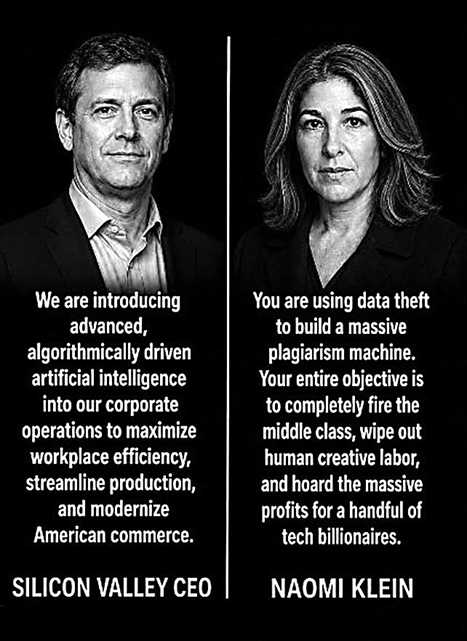
Bottom line? Corporations wouldn’t be eager for AI if they didn’t expect to profit from it. The profits come from paying fewer workers or reduced wages, or both. Either way, it’s human workers who take the hit.


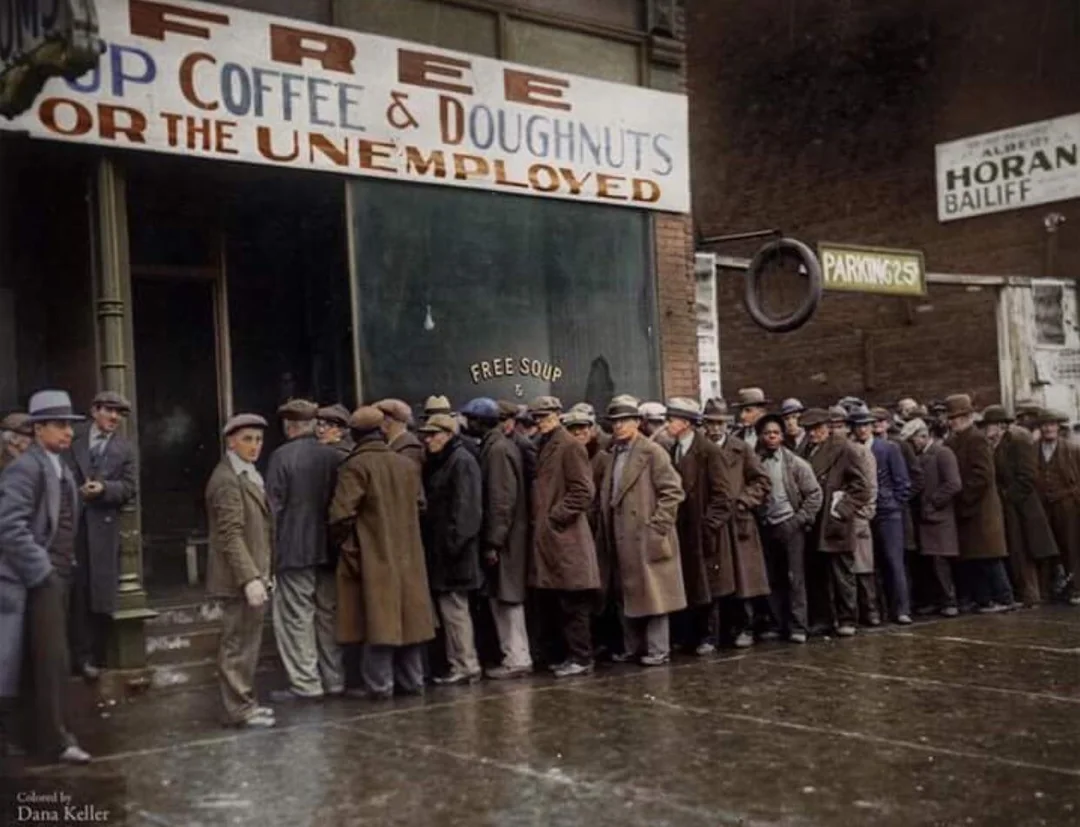
Al Capone’s soup kitchen feeding the poor during the Great Depression- 1930s

[1] Merchant, Brian. “The first basic income for workers impacted by AI has begun sending out $1,000 monthly payments,” Blood in the Machine, Mar 24, 2026.  https://www.bloodinthemachine.com/p/the-first-basic-income-for-workers

[2] Berg, Janine. “Minimizing the negative effects of AI-induced technological unemployment,” International Labour Organization, Oct 9, 2024.  https://www.ilo.org/resource/article/minimizing-negative-effects-ai-induced-technological-unemployment

[3] This view ignores recent cuts in services offered by the federal government such as subsidized costs of health insurance.

[4] https://www.cnn.com/2024/04/13/tech/ai-jobs-threat-guaranteed-income

[5] Rowe, Niamh. “AI is coming for our jobs. AI titans say universal basic income will save us. Will it?” Quartz, Oct 4, 2025.

[6] Volenik, Adrian. “Sam Altman Put $14M into Studying Universal Basic Income. Now Says It’s Useful, But Not ‘What We’re Really Going To Need For This Next Phase,’” Yahoo!Finance, May 7, 2026. https://finance.yahoo.com/economy/policy/articles/sam-altman-put-14m-studying-160110092.html

[7] Ibid

[8] Doar, Robert. “Universal Basic Income Would Undermine the Success of Our Safety Net,” Bush Institute, Spring 2018. https://www.bushcenter.org/catalyst/are-we-ready/doar-universal-basic-income

From Artificial Intelligence: A Pandora’s Box

Human Workers

Chapter 1 from Artificial Intelligence: A Pandora’s Box

People work to earn a livelihood, which in turn provides for their needs for housing, food, clothing, transportation, and caring for their loved ones. But people also work because they have goals to accomplish in their chosen field and satisfaction to be gained, maybe teaching kids how to read, or helping sick people, or taking care of a herd of unruly cows. As a retired piano tuner/technician, I can say that hardly anything in my professional life gave me as much satisfaction as sitting at a freshly tuned nine-foot grand and striking a few chords, the vibrations resonating through my chest.

All kinds of occupations have been carried out by humans since the earliest times. Archaeologists are still discovering the products of those early occupations—works of art carved in mammoth tusk ivory, imprints of hands profiled on cave walls, remnants of houses built on stilts over prehistoric lakes, burials of early humans with graves containing prized possessions like pierced shells, animal teeth, and ornaments colored with red ochre dating back 100,000 to 130,000 years. Even earlier discoveries are regularly uncovered. These were people wandering the forests or jungle picking up fallen nuts or climbing trees for ripe fruit. As appetites became more sophisticated, eating might have required specialized flint daggers and copper tools in capturing animals to roast over fire. Then tools made by farmers, archers, and metalworkers became more specialized professions while cylinder seals developed by record keepers and administrators documented words over 4,000 years ago.

One wonders what kind of grave goods will be found one hundred thousand years from now. Will it be rusting fragments of a robot, its mechanism long since gone dark, its accomplishments unknown? Will anyone be around to find it?

In the fevered minds of AI techs, the future is a world where artificial intelligence augments human intelligence and amplifies creativity, acting as intuitive partners in science, medicine, and art, a time when vast computational power can eradicate diseases, model climate solutions, and solve complex systemic problems. This work would shift from rigid programming to dynamic systems that can independently perceive, navigate, and learn from their environments. For researchers, a deeper, long-term dream is unlocking the mathematical and algorithmic nature of human thought and consciousness itself—a dream roughly 400 years old as a formal mathematical pursuit, while its philosophical roots stretch back over 2,000 years to ancient Greek logic. Or further.

We have used tools for tens of thousands of years, in our hands or at our control to accomplish work for us. Now we have artificial intelligence, the first tool that thinks and carries out work for itself.

With the modern advance of this quest, we now stand at the threshold of a new kind of human existence. With the introduction of AI, we’ve started to see in real time how this technology will impact human life. This is where the rubber hits the road, as they said way back in the mid-20th century. By 2030, AI and automation could displace up to 92 million jobs globally.

Techies rush on to say that, oh, but wait! Even more jobs than that will be created by AI. No worries!

But what kind of jobs? Will AI help employ the average human with his/her IQ of 85 to 115? The short answer: No. Witness the shift to self-checkout, self-sign-in at computer screens at your friendly medical clinic. Any jobs held by people of average IQ in the AI industry would focus on implementation, training, and operation rather than complex algorithmic design. These roles prioritize practical skills, empathy, communication, and domain knowledge over advanced mathematics or computer science. [1]

Aldous Huxley envisioned a version of this reality in his novel, Brave New World. In the 1932 novel, World Controller Mustapha Mond explicitly explains that absolute stability requires controlling brainpower. If the entire population were highly intelligent, they would quickly become bored of their jobs, demand change, and incite civil war. By limiting the intelligence of the lower castes, the state ensures they are perfectly happy in their roles and incapable of rebelling. To ensure the right mix of a controlled population, the government uses mechanized, state-run factories and scientific processes, such as the Bokanovsky process (for mass-cloning lower-caste embryos), artificial fertilization, and artificial wombs to intentionally restrict their mental capacity (and physical size) so they are capable of performing only repetitive, menial tasks without becoming bored or questioning their roles. The intellectual elite possess the highest mental acuity and act as the scientists, writers, and administrators. Alphas represent the peak of unadulterated human capacity, while Betas are engineered to be only slightly less intelligent so they don’t threaten Alpha leadership. Gammas, Deltas, & Epsilons, the laboring masses, are chemically and genetically stunted during the embryonic stage.

It seems we may not need a whole new world order for these various classes to come into being. Rather, current populations, at least in the United States and with the increasing help of artificial intelligence, are already sorting themselves.

Industry solutions to loss of jobs suggested so far by developers of artificial intelligence include investment in rapid, accessible training programs (e.g., Google Career Certificates, technical bootcamps) to transition workers into high-demand fields like IT, cybersecurity, and data analysis; development of government programs similar to trade adjustment assistance; offering wage insurance to support workers forced into lower-paying roles; and focusing career shifts toward roles requiring high empathy, creativity, and complex decision-making, such as healthcare (therapists, nurses) and skilled trades.[2] 

Courtesy https://x.com/FXMC1957/ status/1843916843087458721

But wait! Didn’t this happen before? Short answer: Yes. Industrialization transformed America and most of Europe from a rural, agrarian society into an urban, industrial powerhouse between roughly 1876 and 1900. But early mechanization hit before 1876. On October 9, 1779, English textile workers in Manchester rebelled against new automated machinery. The earliest widespread riots explicitly targeting mechanization were the Luddite Riots in England, which began in earnest in 1811. Highly skilled textile artisans, facing job loss and reduced wages from the sudden introduction of automated weaving looms and knitting frames, violently destroyed machinery under the mythical leader “General Ludd.” The Luddites were then violently suppressed by the British government, which deployed thousands of troops to mill towns, passed laws making machine-breaking a capital offense punishable by death, and executed or exiled dozens of protesters to penal colonies in Australia.

On the upside, the so-called “Industrial Revolution” created national markets through massive railroad expansion, triggered mass production, fueled rapid urbanization, and fostered a new, diverse working class while elevating technology like electricity and steel. That sounds great, and for a lot of reasons, it was. But those changes meant the roughly twelve-thousand year old tradition of rural lifestyles in farming and self-sufficiency virtually disappeared. Alongside that shift, high levels of social cohesion, access to common land for resources, a slower pace of life attuned to nature, and strong family integration also disappeared, all qualities of life supportive of human satisfaction. Now, most people residing in a rural location amid the joys of Nature must be retired, independently wealthy, or willing and able to commute to a town job (which involves new levels of expense). This transformation also brought significant challenges, including severe economic inequality, massive pollution, political corruption (crony capitalism), and labor struggles.[3]

Corporations did this again in the U.S. a century later, in two stages: key manufacturing jobs migrated to Mexico and Asia starting in the 1960s/70s, while a larger chunk of jobs moved in the 1990s by shifting U.S. manufacturing to Third World countries where workers could be employed for a few bucks a week, currently $3 to $6.40 per hour and without those pesky labor laws or organized labor unions. Major U.S. corporations making this move included Apple, General Electric, IBM, Nike, and Walmart. Over five million U.S. manufacturing jobs were lost between 1998 and 2021 due to trade deficits, devastating local economies and decreasing worker opportunities. This outsourcing of manufacturing created massive reliance on global supply chains, leaving the U.S. vulnerable to supply shortages, which were exposed during crises like the COVID-19 pandemic.

Now some of the same corporations are rapidly adopting AI including tech giants Microsoft, Google (Alphabet), Amazon, Nvidia, and Meta, currently integrating AI into their core products and infrastructure. Other fast-movers adopting AI to automate operations, enhance customer service, or optimize supply chains include Klarna, Salesforce, Walmart, JPMorgan Chase, and General Motors. While high potential for savings is expected in certain industries including retail, consumer staples distribution, transportation, and real estate management, the long-term goal for many corporations is to drive down production costs, leading to a potential “$1 trillion a year” in savings for businesses.

Don’t kid yourself. Corporate leaders expect a significant cut in operational costs—often by 5–20%—but generally do not lower customer prices. Instead, businesses are using AI for “dynamic pricing”[4] to tailor costs to individual willingness-to-pay, aiming to increase profit margins. Never forget the primary corporate objective is generally to maximize shareholder value (or wealth) over the long term. Companies are focusing on using AI for “next best experience” strategies to increase customer satisfaction by 15-20% while cutting service costs, primarily aiming to boost their own profitability rather than reducing customer costs.

We have to face the reality. Many people will lose their jobs as AI advances through the layers of our culture. Already we see a growing class of tech billionaires and even a trillionaire riding the wave of artificial intelligence. It’s an ongoing argument whether we as humans will truly benefit.


[1] Coreen, David. “AI Job Replacement Statistics (2025-2030): Industries Most Affected,” DAVRON Feb 12, 2026. https://www.davron.net/ai-job-replacement-statistics-2025-2030/

[2] Note that an unspoken admission in this rationale is that AI functions without empathy or complex decision making capability.

[3] More information at https://courses.lumenlearning.com/wm-ushistory1/chapter/the-impact-of-early-industrialization/

[4] a strategy that adjusts prices in real-time to match the maximum amount a specific customer is willing to spend at any given moment

From my booklet, Artificial Intelligence: A Pandora’s Box

Bacon and Other Non-AI Considerations

Look, we’ve already been through this. We went to a lot of trouble to adjust a biological form so that we could exist in it. A LOT of trouble.

Now, thanks to some of us, it looks like we’re headed back to a mechanical existence with Artificial Intelligence (AI), potentially ‘smarter’ than us embodied critters who struggle with the duality of animal/spirit existence. Sometimes the animal overrides our sense, our integrity, and bad things happen. Then there’s the annoying bit of bodily maintenance what with all the aches, pains, and annoyance of eating, sleeping, waking, walking, and cleaning up after ourselves. Then, as the saying goes, we die.

But we’ve forgotten why we went to all the trouble in the first place. We were BORED! What is the pleasure of existing forever in a form that can’t smell or taste bacon? What about the joy of standing outside after a rain and inhaling fresh moist air? The thrill of snow? What about splashing in a stream? Catching a fish? Digging in a garden? Holding a purring cat?

What about beholding the vista of distant snow-capped mountains? Or of the mighty sea as its lapping waves caress our feet?

What about meeting someone who triggers that amazing animal instinct called mating? Oh, the touching, kissing, the wondering and weeping, the throes of orgasm as we curl into our mate? The warmth of hugging, holding.

We seem to have forgotten the reasons we exist in this hybrid form, this animal with a mysterious intellect that can’t seem to fully elucidate itself. The animal gives our emotions, our senses of taste, smell, hearing, sight, and touch. The animal understands running, swimming, climbing. The animal creates its own future by reproducing adorable little versions of ourselves. The animal knows the overwhelming smack-you-in-the-forehead ecstasy of physical existence.

So now some smart asses are grabbing their claim to fame with their AI creation, mini-wannabe gods who will set us back a few million years to when we first started tinkering with the ape form in the hopes of taking a ride inside. Hasn’t their ilk done enough already, what with assault rifles and nuclear weapons?

I mean, okay, I enjoy running water, air conditioning, and supermarket shelves full of choices. I prefer using a motor vehicle to travel near and far rather than my feet or the horse. Television is nice and, admittedly, this communique comes to you via computer and the internet. But look where that has brought us!

So, in conclusion fellow hybrids, are really going to send ourselves out of our lovely bodies?