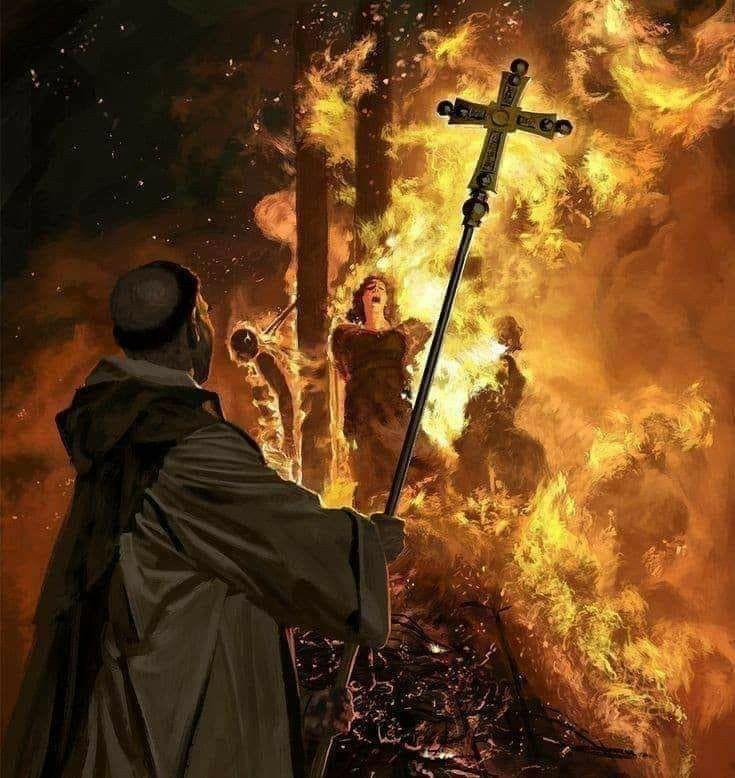
Throughout our national history, conflict over education has erupted with tiring regularity. Soon after the Revolution, common schools were designed by Protestant elites to foster “Americanization,” but they used the King James Bible and Protestant curriculum. Irish Catholic immigrants in New York and Philadelphia resisted what they saw as forced indoctrination and demanded public funds for their own schools. These tensions led to riots in Philadelphia in 1844, where Catholic homes and churches were burned. This conflict cemented the shift towards non-sectarian public schools, although they often retained a general Protestant character.
Many citizens, particularly wealthier ones, were reluctant to pay taxes for other people’s children to be educated. Some workers resisted the invasiveness of compulsory education, as it kept children out of the workforce, forcing some towns to temporarily abandon or reduce public school efforts, such as in Beverly, Massachusetts, in 1860.[1] Child labor was highly widespread in the U.S. during the late 19th and early 20th centuries, with over 1.75 million children aged 15 and under (roughly 18% of the workforce) reported as working in 1910. Children as young as 3 or 4 were sometimes used for small, specialized tasks, while 5 to 8-year-olds were frequently employed in hazardous textile mills, mines, and factories. Child labor was finally curbed by the Fair Labor Standards Act of 1938.[2]
Before the Civil War, most Southern states passed laws making it illegal to teach enslaved people to read or write out of fear that they would read abolitionist literature, such as David Walker’s Appeal, and communicate, fueling organized uprisings like Nat Turner’s Rebellion of 1831. Also, literate enslaved people could read maps, forge travel passes, or write passes for themselves to escape to free states, a method used by many to escape bondage. Slaveholders believed an illiterate, ignorant enslaved person was easier to manage and obey, whereas literacy made them “disconsolate and unhappy” in their captivity. And literacy challenged the white supremacist justification that Black people were inherently inferior, unintelligent, or “less than human.”
Even in northern states, black children were largely denied access to public schools, often being forced into segregated, inferior schools, leading to early school desegregation battles, such as Roberts v. City of Boston in the 1840s. The “Slave Bible”—formally titled Select Parts of the Holy Bible for the use of the Negro Slaves—was used in the 19th-century United States, particularly in the South, though it was primarily produced in London in 1807 for British Caribbean colonies. It was a heavily redacted version of the Bible created to promote obedience and prevent slave revolts, with 90% of the Old Testament and 50% of the New Testament removed.
Following the Civil War, southern schoolhouses became battlegrounds to teach the “Lost Cause” narrative—a false interpretation of history that portrayed slavery in a positive light and argued the war was over states’ rights, not slavery. School officials strictly monitored textbooks to ensure they did not challenge Confederate interpretations of history. This led through coming decades to culminate in Brown v. Board of Education (1954) in which the Supreme Court ruled that separate schools were “inherently unequal.” Decades of “massive resistance” from Southern states ensued. In the 1970s, court-ordered busing forced integration in schools resulting in violent protests, most notably in Boston in 1974, and contributed to “white flight” to suburban schools. In response to integration orders, numerous private, segregated religious schools were established, particularly in the South, to circumvent desegregation.
Concurrently, the Scopes “Monkey” Trial in 1925 was a landmark confrontation between traditionalists (conservatives) and modernists (progressives), focusing on a Tennessee law prohibiting the teaching of evolution in public schools, effectively curbing the teaching of science for several decades.
School prayer remains a hot topic for both religionists as well as those defending the Constitution, with two lawsuits serving to define the subject. Engel v. Vitale (1962) and Abington School District v. Schempp (1963) declared that state-sponsored Bible reading and prayer in public schools were unconstitutional, fueling long-term debates over the secularization of public education. The fact is that public school children have always been able to pray when and wherever they pleased. What upsets religionists is that children in public schools cannot be led in prayer by adults—not teachers, not parents, not the principal. The desire to inculcate all children through prayer voicing religious doctrine drives this falsehood.
The later part of the century was marked by “curriculum wars” over the inclusion of diverse, non-European perspectives in history and literature curricula, which opponents claimed was a political attack on traditional national identity. Like the prayer argument, the textbook/curriculum battles continue unabated today, with most book content decided by heavily-conservative boards. [3]
“Given the high concentration of students in Texas and California, textbook makers know…they need to create books that are going to be approved by those large states.” said Dr. Max Altman, director of research and policy at the Southern Education Foundation. Altman said that requests for changes and outright rejections based on the inclusion of certain concepts are what make California, Florida and Texas so influential.
“This small group of people who approve textbooks within a couple of states have a very, very large effect on what students across the bottom of the United States and really across the country as a whole are able to learn,” he said.
[This 2022 article reports that] …[i]n April, the Florida Department of Education initially rejected 41% of all K-12 mathematics textbooks submitted for state adoption approval — the most in Florida’s history. The dismissal of the 54 textbooks — including 71% of K-5 math materials — stems from several claims: references to Critical Race Theory (CRT), inclusions of Common Core and “unsolicited” inclusions of Social Emotional Learning.
The public push to provide evidential examples of the above reasons for rejection made national headlines, as the state’s Department of Education did not initially release any specifics. Later, it published four visual examples from the rejected textbooks.
Experts suggest that overseeing public school curricula in a small number of highly populated states has an outsized influence on what children are learning throughout the country. Because publishers often create uniform national editions, major state adoption boards, particularly in Texas (conservative-leaning) and California (liberal-leaning), exert outsized influence on nationwide content. Texas, one of the largest purchasers of textbooks, often pushes to emphasize “positive aspects” of American history, de-emphasize the role of slavery, increase the influence of Christianity, and promote gun rights. Conservative, evangelical, or religious viewpoints have often driven content to prioritize patriotism and limit topics like climate science or critical race theory.
California often pushes for inclusive, multicultural narratives, ensuring that textbooks feature stories of LGBTQ+ individuals, marginalized groups, and a more critical view of historical events. Due to this, publishers often create different regional versions or compromise by including, for instance, both more critical and more patriotic interpretations of events, creating a “whitewashed” or highly contentious final product.
Textbook selection and other elements of public schools are the task of school boards, both local and state level. While curricula are determined by state boards of education, there are no educational standards required of state board members. Eligibility for state boards of education typically requires candidates to be residents of the state, registered voters, and often residents of the specific district they aim to represent.
Not requiring a college degree for state boards of education is part of a broader, bipartisan shift towards skills-based governance and a move away from formal credential requirements, which are increasingly seen as unnecessary barriers to entry. While education policymakers need expertise, proponents of this shift argue that a degree is not a guarantee of competence, effective leadership, or relevant experience.
On the other hand, without a deep background in subject matter and education policy, board members may rely on ideological rather than research-based solutions to solve problems like low student achievement, leading to increased political polarization in schools. Members may struggle to evaluate curriculum standards, assessment tools, and learning theories, potentially leading to decisions that do not align with evidence-based practices. More concerning is that without the experience of the wide array of college coursework, members may focus on short-term political issues or “quick fixes” rather than the long-term, systemic changes needed to improve student outcomes.
State boards typically adopt standards (e.g., in reading, math) that outline skills students must master, hopefully informed by state law, national benchmarks, and expert input. State-level entities create frameworks, which may act as official requirements or recommended guidelines for local curriculum. State laws often mandate specific topics (e.g., specific subjects, or in some cases, restricting approaches) that schools must adopt. The degree of control varies by state; some states have highly centralized, mandatory curriculum lists, while others allow local districts greater flexibility. Boards often adopt standards at public meetings, occasionally with guidance from curriculum committees and teacher panels.

Map: Emily Schmidt, APM Research Lab Source: Education Commission of the States
Curricula
There are no federally mandated national education standards in the United States, as education is primarily managed by states and local districts. However, the nation utilizes voluntary, state-led standards like the Common Core State Standards, adopted in June 2010 by most states to ensure consistent math and English learning goals. Not adopting the standards are Alaska, Nebraska, Texas, Virginia, and Oklahoma. The reasons for common standards for curricula include the obvious, that children of a family moving from one state to another meet the same basic education as at their previous location. Also obvious is the need for all Americans to share the same understanding of national history, the operations of government, and fundamentals of reading, writing, and mathematics, as well as science.
School boards and districts have been empowered to make curriculum decisions in order to prepare future citizens. State constitutions require the operation of systems of education, and we elect school boards to make important decisions for community schools, including those related to materials and instruction. In some cases, parents object to these decisions, arguing that their constitutional rights have been violated. For example, in the [2008] federal appeals case of Parker v. Hurley, parents objected to their children being presented with books depicting diverse families, including families with parents of the same gender. The district refused to grant the children an exemption from the instruction. The parents argued that the refusal of an exemption amounted to an infringement on their constitutional rights as parents and their free exercise of religion rights under the First Amendment. The court disagreed, citing a long line of cases establishing that while parents have a constitutional right to raise their children, there is no right to direct how a public school teaches those children. [4]
The New Puritans at Work
The overarching religious education agenda is not a single project but rather a continuous political tug-of-war for the control of educational narratives. The division between these two fundamentals of education has led, in part, to today’s division in American society.
We can identify the ways that the Puritan ethic drives Christian Nationalism. The Puritans sought to build a “city on a hill” defined by severe piety, communal surveillance, and strict adherence to moral codes, rather than by religious freedom. Christian Nationalists interpret the “city on a hill” phrase, derived from John Winthrop’s 1630 sermon,[5] as a divine mandate that the United States is a uniquely ordained, Christian nation meant to act as a moral, religious beacon to the world. This vision, often championed by President Ronald Reagan, blends national identity with biblical prophecy, suggesting America holds a special, providential covenant to embody Christian principles enforced by the government.
Puritan men held public office, imposing religious law to govern social and legal life. Only adult male church members (“the elect”) could vote in elections and participate in town government. Laws were based on Old Testament teachings. Today, many within the Christian Nationalist movement believe that men are specifically ordained by God to lead in government, politics, and the public sphere. This ideology is rooted in a belief in “biblical patriarchy” or complementarianism, which argues that God established distinct roles for men and women, where men are designed to lead and protect while women are called to support and submit.
Puritan leaders were intolerant of dissenting religious views, which were seen as dangerous to the community’s mission. Christian Nationalists generally believe that America was founded as a Christian nation and that its laws and public life should reflect Christian, specifically Protestant, values. Other religions are viewed as subordinate, threats to national identity, or demonic, with many proponents supporting the restriction of non-Christian practices.
Puritan households were strictly hierarchical, with the father as the head. Women were viewed as “helpmeets” for their husbands with fewer rights, though they held significant responsibility in managing the home, raising children, and tending the gardens. Likewise, many proponents of Christian Nationalism believe that women should prioritize staying at home, focusing on raising children and submitting to their husbands’ leadership.
During the early Puritan period, the “Old Deluder Law” required every town of fifty or more families to pay for a teacher, and they founded Harvard College in 1636 for training ministers. They believed in the active presence of the devil and witches, leading to the Salem witch trials in 1692, which occurred when religious political control was waning. Christian Nationalists view public education as a vital, yet currently hostile, battlefield for the nation’s cultural and spiritual direction. They generally aim to dismantle the traditional secular public school system by promoting school choice vouchers to fund private religious education, instilling conservative Christian values, banning certain books, and reversing LGBTQ+ inclusion.
The Trump administration (2017-2021 and 2025-2028) has adopted key elements of the Christian Nationalist agenda by prioritizing policies that blur the line between church and state, fostering religious exemptions for conservative Christians, and appointing individuals aligned with this ideology to high-ranking positions. Trump has appointed conservative Christian judges, including three Supreme Court justices (Neil Gorsuch, Brett Kavanaugh, and Amy Coney Barrett), who have delivered rulings expanding religious exemptions. They joined John Roberts and Samuel Alito, both appointed by evangelical adherent George W. Bush; Clarence Thomas, the sixth conservative on the nine-member court, was appointed by Bush’s father, George H. W. Bush.
At the prompting of his Christian Nationalist backers, Trump initiatives aim to review federal actions for “anti-Christian” sentiment and protect “religious freedom,” defined by Christian nationalists not as the separation of church and state, but as the right to embed a specific, conservative Christian worldview into government, law, and public life including the use of taxpayer dollars in support of religious education and eliminating government support for advancing educational effectiveness.
Based on 2026 budget proposals and actions, we see that the Trump administration has sought to cut or eliminate over $8.5 billion in K-12 education programs and $2.7 billion in higher education, while targeting programs like TRIO (outreach and student services initiatives funded by the U.S. Department of Education to help low-income, first-generation college students, and individuals with disabilities succeed in education, ranging from middle school through adult education), GEAR UP (a federal discretionary grant program designed to increase the number of low-income, underserved, or first-generation students who are prepared to enter and succeed in postsecondary education), and Federal Work-Study for elimination or massive reductions. (Initiated in 1964, the program provides part-time jobs for undergraduate and graduate students with financial need, allowing them to earn money for education expenses.)
The Trump administration’s cuts to K-12 education focus on slashing, consolidating, or eliminating programs like after-school, summer, and mental health grants. More than 760 in-progress grants, worth over $2 billion, were discontinued in 2025, including cuts to college prep ($300m+), civics ($35m), and racial integration ($26m). Other cuts target teacher training ($2.2 billion) and English learner services ($890 million). The administration also proposed the “Make Education Great Again” block grant, which would overhaul K-12 education by consolidating federal funding, cut federal oversight, and shift control to states. It prioritizes school choice, patriotic education, and literacy/math, while reducing the Department of Education’s role. This would cut existing program funding by 70%.
Trump’s cuts aren’t the first to take the U.S. educational efforts backwards despite extensive research showing the benefits of programs now being eliminated. This has been an ongoing effort by Christian Nationalists over the last fifty years. During the 1980s, Ronald Reagan campaigned on abolishing the Department of Education, with his 1981 budget reducing spending and consolidating grants.
This despite findings on the effectiveness of public education funding showing that increased spending per pupil yields significant social returns, especially in high-poverty districts. State cutbacks to K–12 spending, the rise of voucher programs, and Trump’s attacks on the federal Department of Education threaten to rob the majority of U.S. children of an adequate education.[6] The vast majority of our youth (90%) are in our public school system. Approximately 49-50 million K-12 students attend public schools in the U.S., while roughly 4.7 to 5.5 million (9%-11%) students are enrolled in private schools, based on 2021-2022 data.
Despite Trump’s claim that such cuts are necessary to reduce the outrageous federal deficit, the numbers prove him wrong. The U.S. national debt increased by approximately $1.78 trillion to $2.25 trillion since January 2025, pushing the total gross national debt past $38 trillion. The debt stood at roughly $36.22 trillion around Jan. 20, 2025, and reached $38 trillion by late October 2025. By March/April 2026, total debt crossed $39 trillion.
As for national security and a sound economy, inadequate education is a root cause of significant social issues, primarily driving cycles of poverty, high unemployment rates, and increased crime. It limits economic mobility, reduces workforce productivity, and fosters gender inequality, while also contributing to poor health outcomes, political instability, and social unrest.
Finally, in studies comparing the racial and ethnic composition of charter schools to public schools, researchers generally find that charter schools preserve or intensify racial and economic segregation, and/or facilitate white flight from public schools. Furthermore, studies that compare individual students’ demographic characteristics to the schools they are leaving (public schools) and the schools they are switching to (charter schools) generally demonstrate that students “leave more diverse public schools and enroll in less diverse charter schools.”[7]
Hardly the path toward a unified nation.

[1] Vinovskis, Maris A. “The Politics of Educational Reform in Nineteenth-Century Massachusetts: The Controversy Over the Beverly High School in 1860. Final Report,” Institute of Education Sciences, Aug 15, 1980. https://eric.ed.gov/?id=ED200495
[2] Indiana, Iowa, West Virginia, Idaho, and Arkansas have passed legislation loosening these protections, with Arkansas eliminating work permits and age verification requirements for children under sixteen.
[3] Schmidt, Emily. “Required Readings: How Textbook Adoption in 3 States Influences The Nation’s K-12 Population,” APM Research Lab, June 2, 2022. https://www.apmresearchlab.org/10x-textbook-adoption
[4] Paige, Mark. “Constitution vs. Curriculum,” Resource Hub, National Association of Elementary School Principals, Mar 14, 2022. https://www.naesp.org/resource/constitution-vs-curriculum/
[5] See https://www.americanyawp.com/reader/colliding-cultures/john-winthrop-dreams-of-a-city-on-a-hill-1630/
[6] Wething, Hilary, Bivens, Josh. U.S. Investment in Public Education Is At Risk,” Economic Policy Institute, Aug 21, 2025. https://www.epi.org/publication/u-s-investment-in-public-education-is-at-risk-vouchers-state-budget-austerity-and-federal-attacks-on-the-department-of-education-threaten-childrens-futures
[7] “School segregation in the United States,” Wikipedia. https://en.wikipedia.org/wiki/School_segregation_in_the_United_States
This material is Chapter 2 of New Puritans and the U.S. Peerage: The Willful Destruction of Public Education